 NihontoWatchNihontoWatch
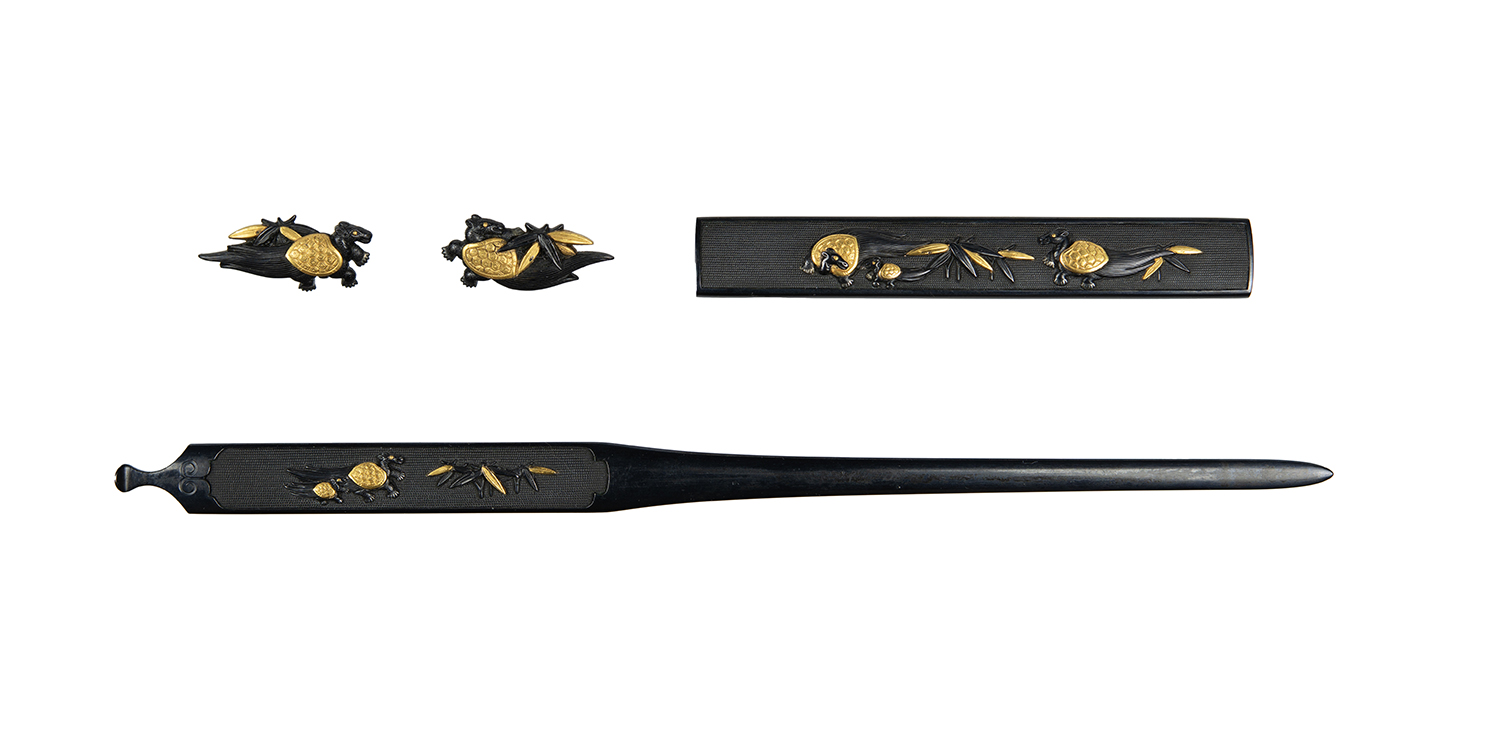
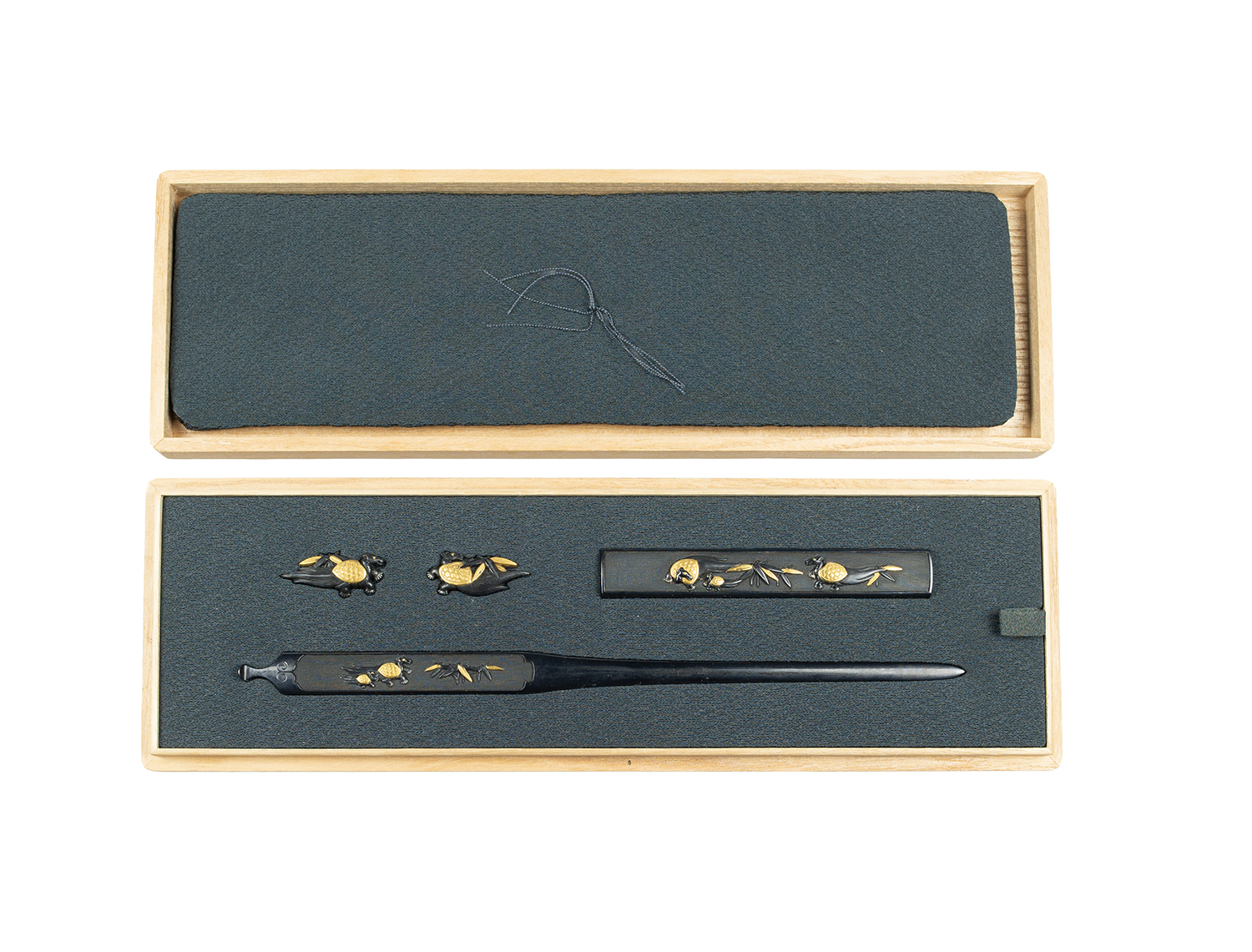
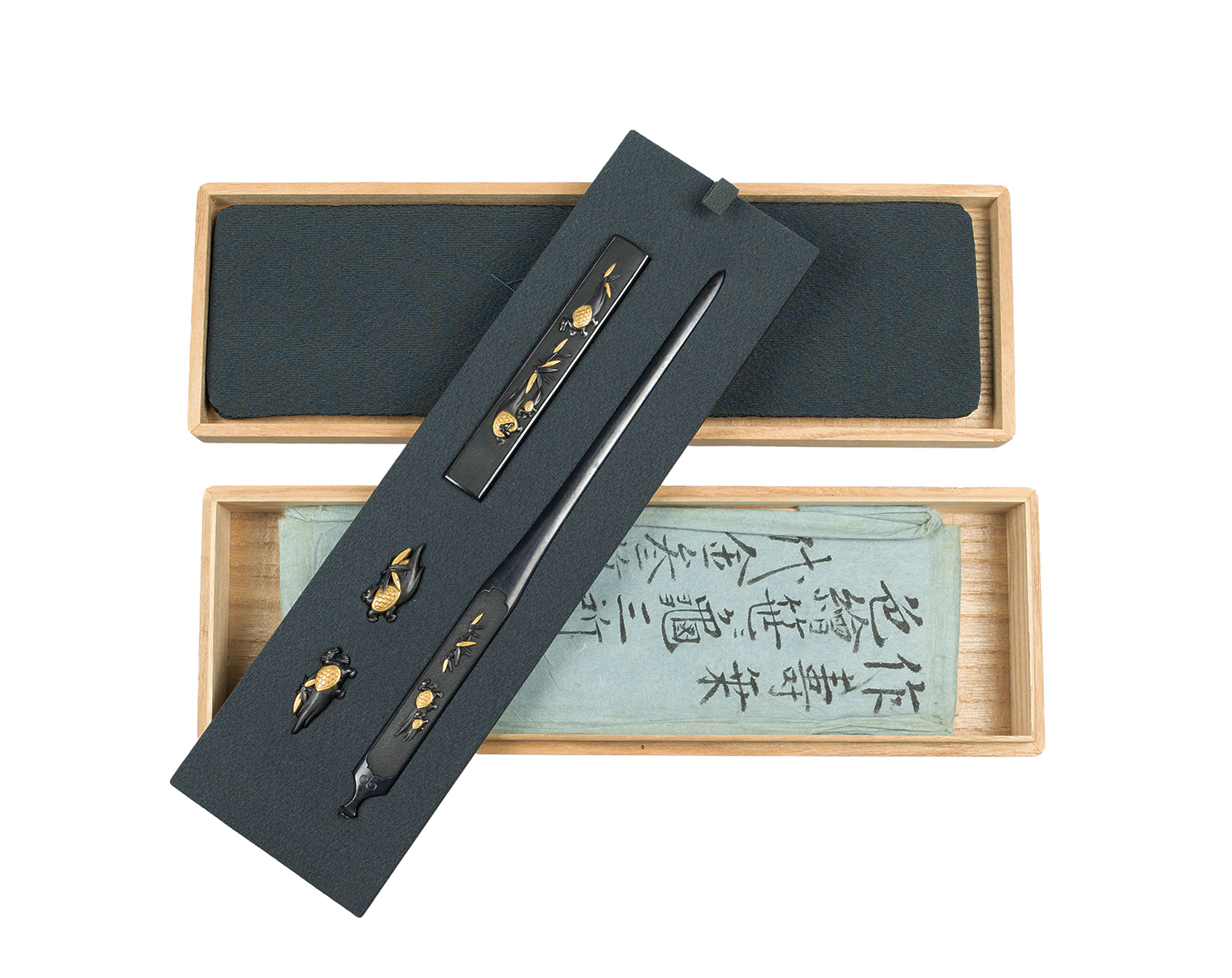
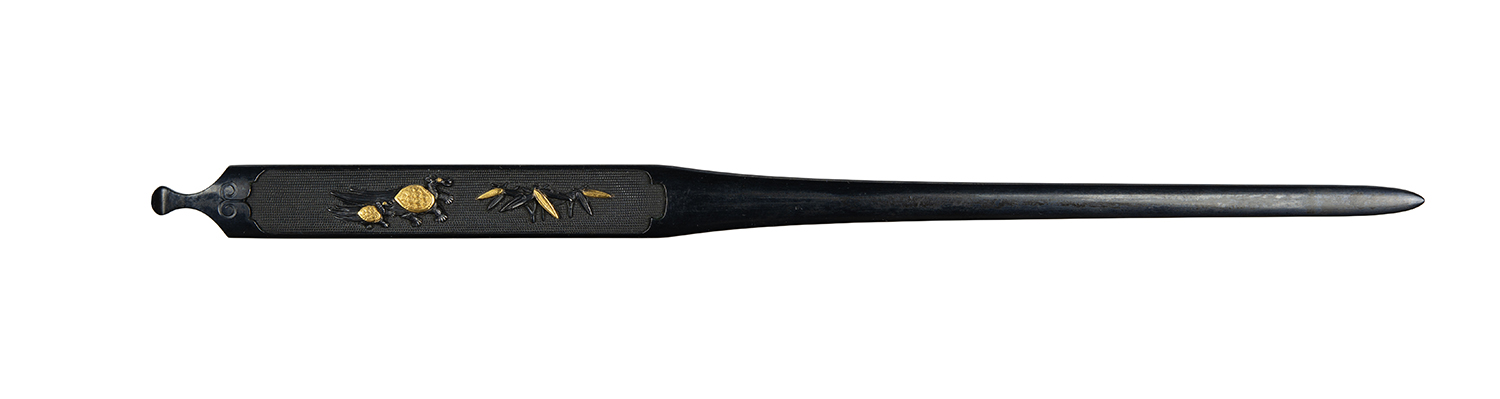
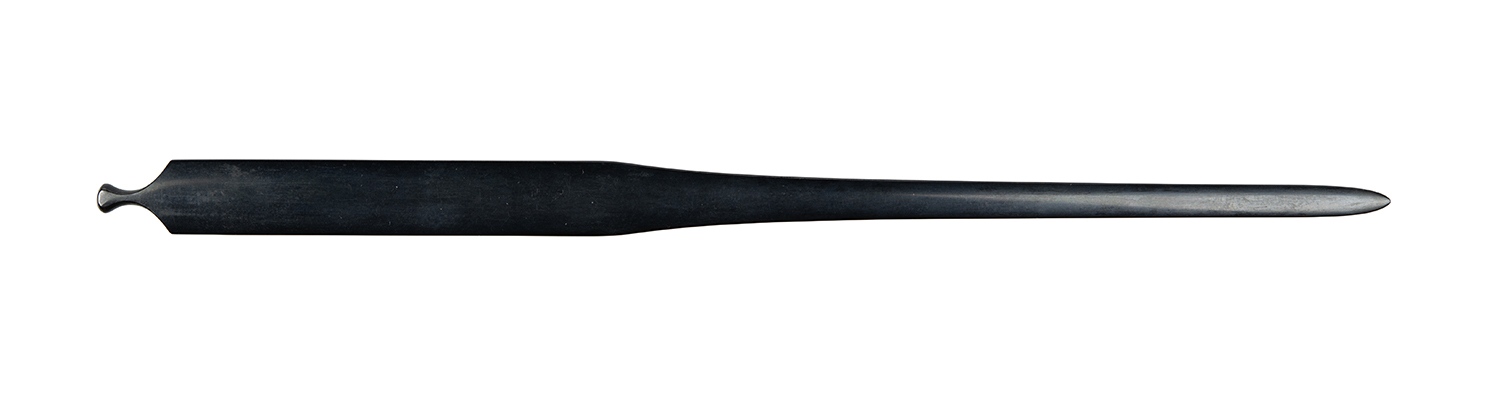
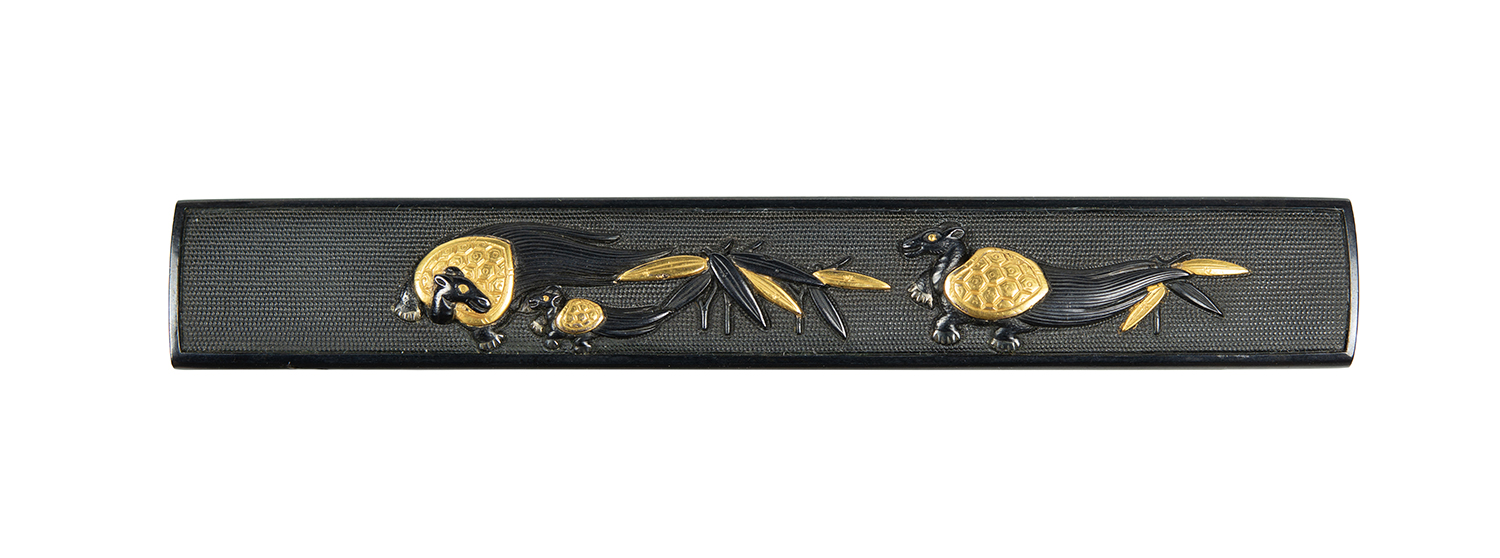
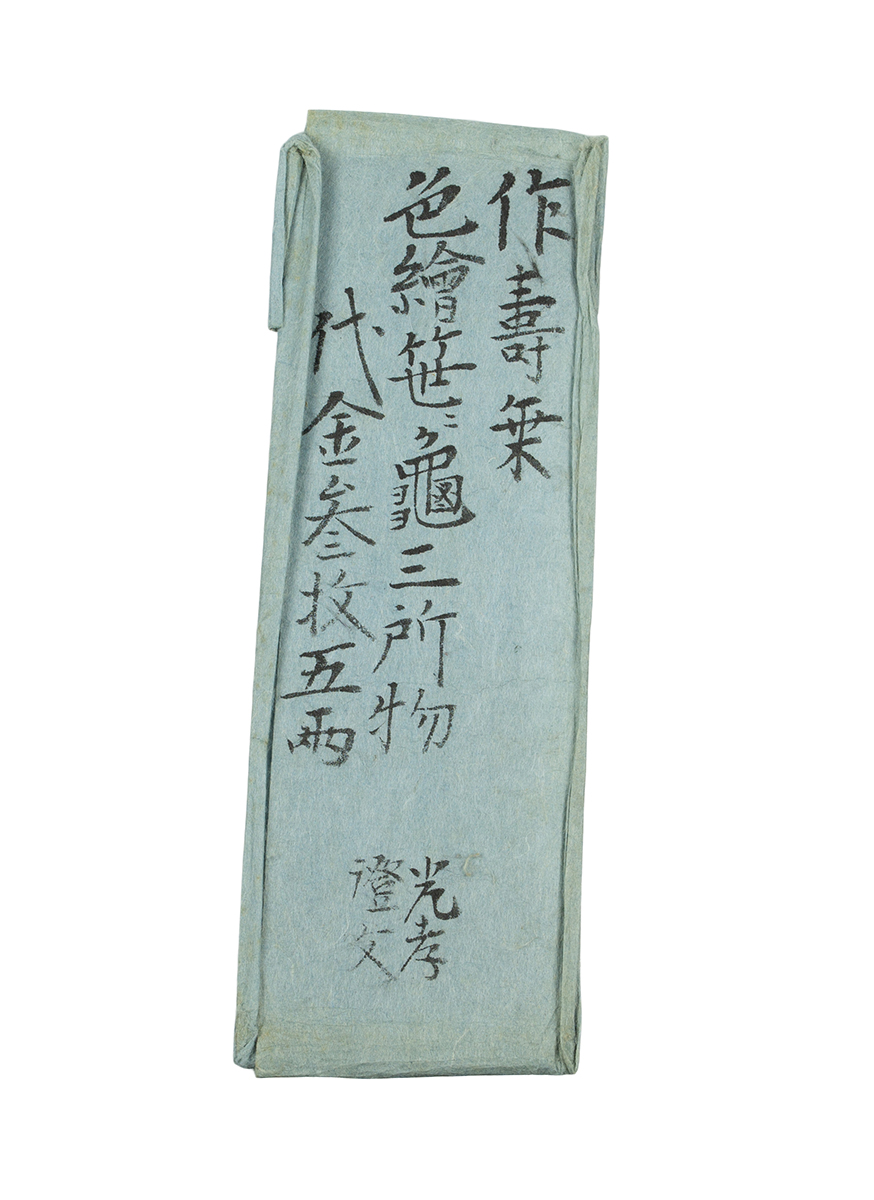
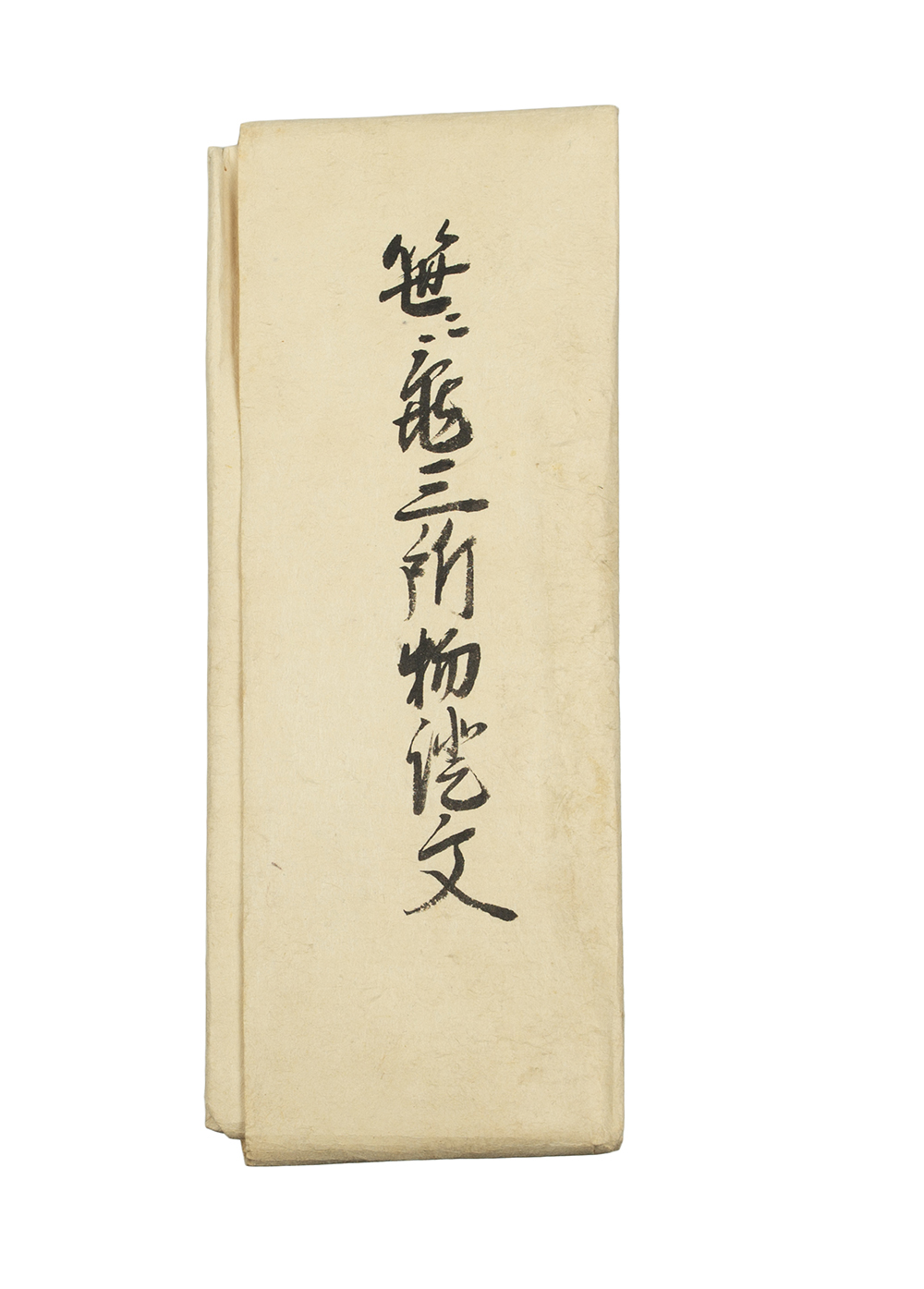
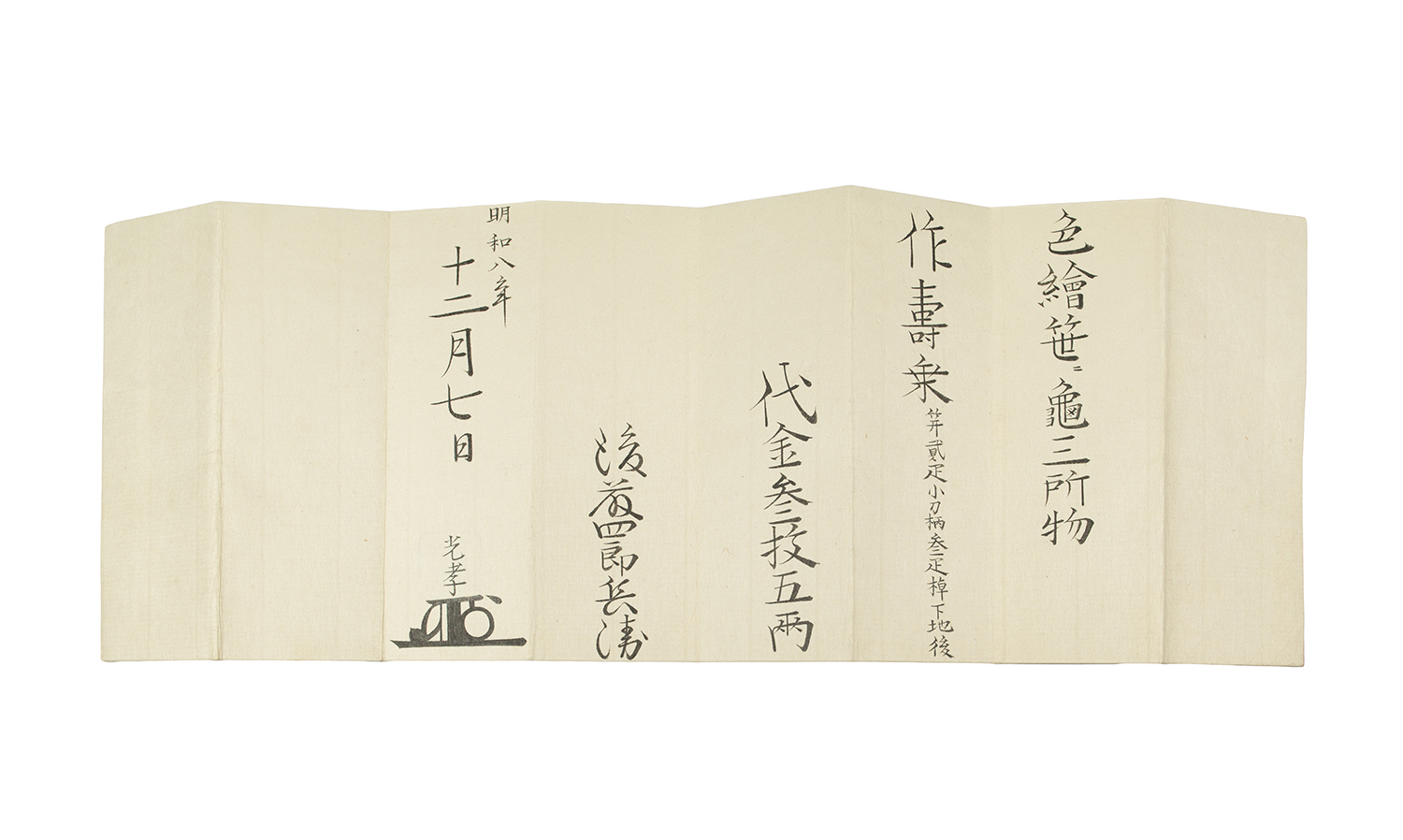
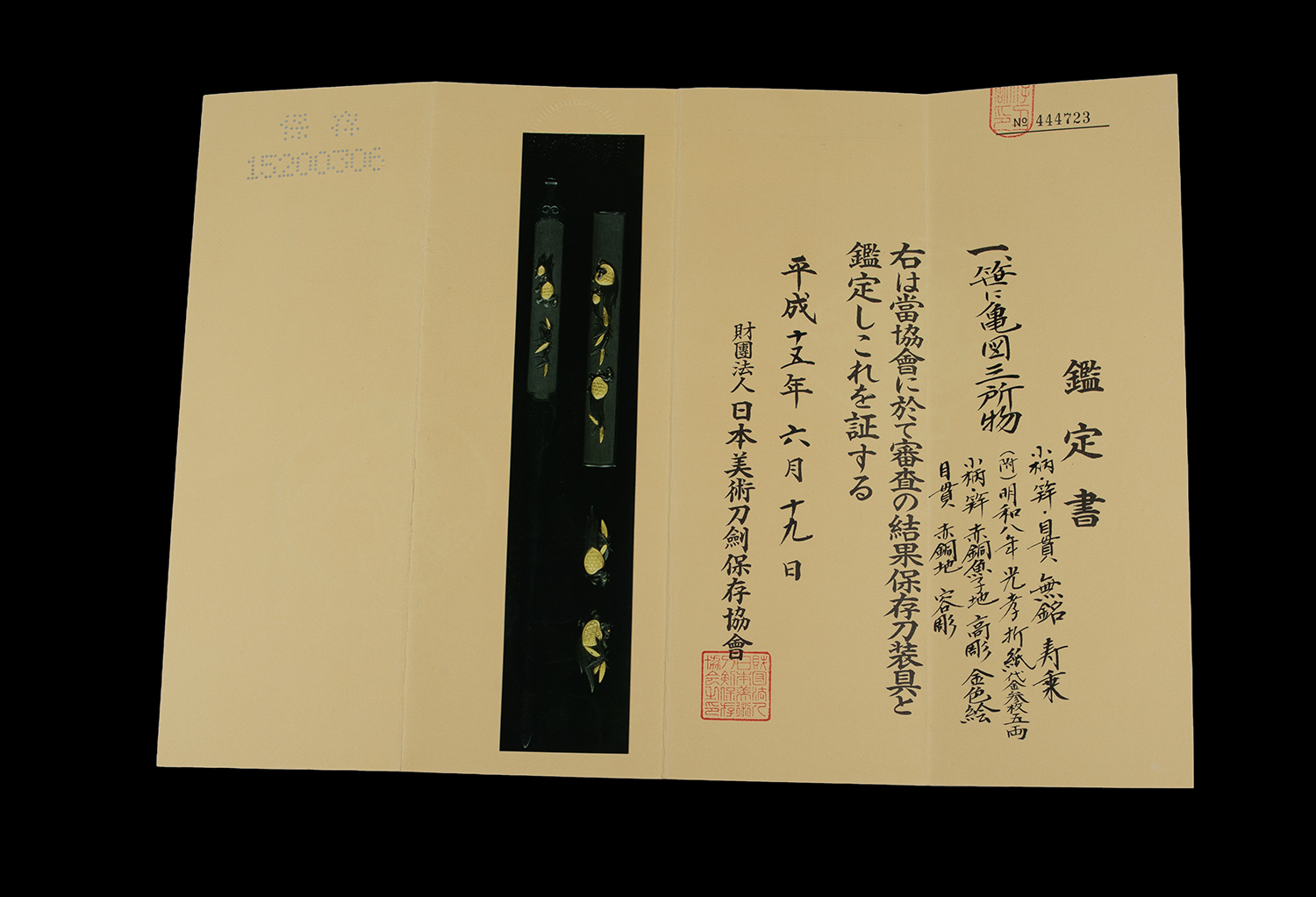
日本美術刀剣保存協会 保存刀装具 Goto Kanteisho issued by Mitsutaka (Goto Enjo) in 1771 NBTHK Hozon Kozuka Dimensions: 97 mm L x 14 mm H Kogai Dimensions: 210 mm L x 12 mm H Menuki Dimensions: 30 mm L x 13 mm H / 30 mm L x 12 mm H An outstanding mumei mitokoromono by Goto Jujo, the 12th Goto mainline master. Accompanied by an incredibly rare original Goto origami issued by Mitsutaka (Goto Enjo - the 13th mainline master) in 1771. Jujo was born in 1695 and was the third son of Goto Tsujo, the 11th mainline master. His early first names, before Shirobe, were Kameichi and Gennojo. His civilian name, used on origami and such, was Mitsuyuki and he changed this to Mitsumasa when he became head of the family. He died at the age of 48 in 1742. Because of his young age the time of his passing, he received the go of Jujo posthumously. This set is in the theme of minogane. In Japanese lore, the minogane is a turtle believed to live up to 10,000 years. It represents longevity and wisdom and often accompanies the god Jurojin, who is one of the seven lucky gods of Japan. The motif represents a wish for long life and successes in ones endeavors. The minogane has a long tail made out of seaweed that looks like a farmer's coat, or "mino", wich is why they are called minogane. The detail of workmanship in the set top-tier. Even under magnification one cannot find anything other than full control of the tagane. The condition is excellent with all of the gold uttori fully intact and no blemishes or wear. The creatures all show a personality in their faces and poses and this charm adds an undeniable allure. The old Goto paper that comes with this was issued in 1771. The 2003 NBHTK Hozon paper records the authenticity of the 1771 Goto paper specifically, and certifies the atribution of the set to Goto Jujo. This is very important to note. Both the 1771 paper and the fittings are NBHTK certified. Mitsutaka (Enjo), the man that issued this paper in 1771, was the second son of Jujo. Who better to know one's workmanship than the son of the previous master. Normally, fittings that have original Goto papers are not obtainable. This is a rare opportunity indeed. The blue outer paper is known to be from the Konoike family. The Konoike were highly wealthy financiers in Osaka and amassed a fortune in the Edo period. This comes with the 2003 NBTHK Hozon paper, 1771 Goto paper and the custom fitted kiri-bako with compartment for the old origami. A translation of the 1771 Goto Origami: 色繪笹ニ龜三所物 作壽乗 笄貳疋小刀柄参疋棹下地後 代金参枚五兩 後藤四郎兵衛 明和八年 十二月七日光孝「花押」 IROE SASA NI KAME MITOKOROMONO Saku Jujo Kogai nihiki, kogatana-tsuka sanbiki, sao shitaji ato Daikin san-mai go-ryo Goto Shirobei Meiwa hachinen Juichigatsu nanoka - Mitsutaka + kao MITOKOROMONO SET WITH IROE DECOR OF BAMBOO GRASS AND TURTLES Kogai featuring two, and kogatana hilt three (turtles), needle part Work of Jujo [of kogai] and foundation later works Value 3 gold pieces and 5 ryo Goto Shirobei Meiwa eight (1771) Twelfth month, seventh day - Mitsutaka + monogram
NihontoWatchOffered by Nihontocraft
3 on the market


Goto Jujo
Mid Edo (1700-1762)
Unsigned
Hozon (NBTHK)
Iebori · Yamashiro · around 1700-1762
3 pieces on the market now
Goto Jujo, given name Mitsumasa (光理), was the twelfth head of the Goto main line. He was born in Genroku 2 (1689), the eldest son of the eleventh head Tsujo Mitsuhisa, with the childhood name Kameichi, later Mitsuyuki. In the eleventh month of Kyoho 5 (1720), when his father took the name Tsujo and retired, he succeeded to the house and took the name Shirobei Mitsumasa. One record adds that he died of illness in the second month of Kanpo 2 (1742), at fifty-four. The Goto were the house of iebori, the official carving of the shogunal household, and the published sources place him within its mid-Edo generations as a head who looked back to the early masters of the line.
That backward look is the point they make about his manner. Among the Goto heads of the mid-Edo period and after, they write, he succeeded with many works in the old manner of house carving[[c:1]]. A self-signed mitokoromono of long-tailed birds is described as carved in "an old-fashioned, solid manner"[[c:2]], showing the house style "to the full, with dignity and elevated tone"[[c:3]]. His material is the canonical one of the house: kozuka and kogai of shakudo nanako-ji with gold crest work and a gold-covered reverse, and menuki in solid gold, carved in full sculptural katachibori.
Five pieces now stand under his name. The first is a kirin mitokoromono signed Goto Mitsumasa with his kao, the menuki unsigned but given to him. A single kirin, the auspicious beast said in China to appear before a sage, is set as a gold crest on each part, each in a different pose. The commentary writes that his work is called archaic and that this kirin recalls "the Goto works of an earlier age"[[c:4]], with a calm, dignified bearing. The second is the long-tailed bird set, signed on the kozuka and kogai, with an origami of Meiwa 5 (1768) by his son Mitsutaka. The third is a coiled-dragon set, unsigned and attributed to him by the same son with a gold signature and an origami of An'ei 3 (1774). Its gold is laid thick and generous, the roots and reinforcing pieces finished with care, and the published sources call it "a fine set with a formality like a model of the Goto house"[[c:5]].
The fourth, a turtle-in-flowing-water set, is attributed to him by the fifteenth head Shinjo Mitsuyoshi. Here the gold iroe is used only for the flowing water and the dew, set against the deep black of the shakudo for contrast, and the record calls it a fine piece handed down in the main Tokugawa house. The fifth piece stands apart: a Momoyama-period kozuka of the two immortals Hi Chobo and Cho Hakubo, which is not his own work but an earlier head's crest that he appraised as Kojo's, inscribing his name Mitsumasa beside it and issuing an origami of Kyoho 14 (1729) valuing it at one hundred kan.
The appraisals by his son matter to the record. Of the long-tailed bird set the commentary says that a son judging his father's work is the most certain of appraisals[[c:6]], and of the coiled-dragon set that such a judgment carries the same weight as the maker's own signature[[c:7]]. His self-signature, on two of the five pieces, therefore sits beside the son's appraisals as the documentary basis of his work, while his own name on the Kojo kozuka marks him as a certifying head of the house rather than its maker.
His record is five works designated Juyo, two of them self-signed. With so small a body of work, each set is a document of the Goto main line in the mid-Edo period, and a Jujo mitokoromono reaches a collector only rarely.
Where Goto Jujo stands among comparable artisans: across all of nihontō, and within tradition, era, and period. The tiers (Foremost · Leading · Major · Notable) weigh official designations from the NBTHK and Japan's Agency for Cultural Affairs, together with historical honors of lasting repute such as the Sansaku and Meibutsu-chō.
Select a lens to see how it's measured.
Iebori · Yamashiro
Phase: Goto Main Line後藤宗家· 1573–1900
317 pieces on the market now
| Smith | Era | Designated |
|---|---|---|
| Goto Joshin後藤乗真 | 1512-1562 | 68 |
| Goto Yujo後藤祐乗 | 1440-1512 | 41 |
| Goto Kenjo後藤顕乗 | 1586-1663 | 46 |
| Goto Sojo後藤宗乗 | 1461-1538 | 56 |
| Goto Teijo後藤程乗 | 1603-1673 | 42 |
Certifies a genuine blade worth preserving: a signature confirmed correct, or, if unsigned, an era, province, and school that the NBTHK can reliably identify.
The NBTHK (Nihon Bijutsu Tōken Hozon Kyōkai, the Society for the Preservation of Japanese Art Swords) is a public-interest incorporated foundation founded in 1948 and supervised by Japan’s Agency for Cultural Affairs (Bunkachō); it is based at the Japanese Sword Museum in Tokyo. Its expert panels physically examine each submitted work (shinsa) and issue a certificate (kanteishō) ranking it by artistic and historical merit. NBTHK papers are the most widely recognized standard of authentication for Japanese swords and fittings.
NBTHK official site3 day inspection period on all sales. Items can be returned for any reason for a full refund, less return shipping cost. Returned items must be in the same condition as when purchased.
$7,800