NihontoWatch MonNihontoWatchBETA
MarketEncyclopedia
NihontoWatch Mon

NihontoWatchBETA

Market
Encyclopedia
Overview·Kantei·Designations·Provenance·Work Types·Signatures·Lineage·School
OverviewKanteiDesignationsProvenanceWork TypesSignaturesLineageSchool
  1. Schools
  2. Goto
  3. Ko-Goto
  4. Goto Joshin

Goto Joshin

後藤乗真

Tokujū
Vol. 26, No. 47 · Mitokoromono

Goto Joshin

後藤乗真

67 ranked works

ProvinceYamashiroEraMuromachi (1512–1562)PeriodMuromachiSchoolGotoTraditionIeboriGeneration3TeacherGoto SojoSpecialtiesmitokoromono, kozuka, kogai, menukiTypeTosogu MakerCodeGOT003
1Jūyō Bijutsuhin
5Tokubetsu Jūyō61Jūyō Tōken

Overview

Goto Joshin, the third head of the mainline Goto house, was the legitimate son of the second master, Sojo. Born in Eisho 10 (1513), he bore the common name Jiro and the personal name (imina) Yoshihisa, later styling himself Genshiro Harumitsu. He served two successive Ashikaga shoguns, Yoshiharu and Yoshiteru, and held an estate of three hundred cho at Sakamoto in Omi Province. Joshin combined responsibilities in both metalwork and financial administration, and the consistently note that he was "not only a metalworker but also a warrior," possessed of "a bold and valiant temperament." His dual vocation as craftsman and fighting man ended on the sixth day of the third month of Eiroku 5 (1562), when, owing to conflict with the Azai clan of northern Omi, he was attacked by Azai Ryomasa and killed in battle at the age of fifty-one. Within the Goto lineage he stands as a pivotal figure between the founding generation of Yujo and Sojo and the later masters who would enter Tokugawa service; several of his works survive as composite sets in which the sixth master Eijo or the ninth master Norinori supplied supplementary carvings to complete and mitsudogu ensembles begun by Joshin's hand.

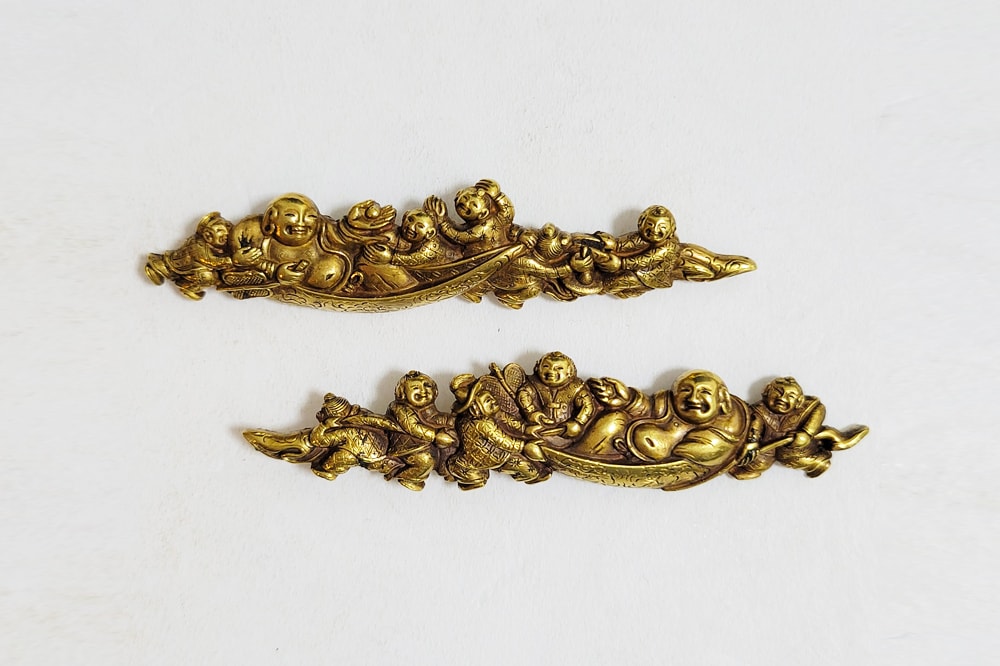
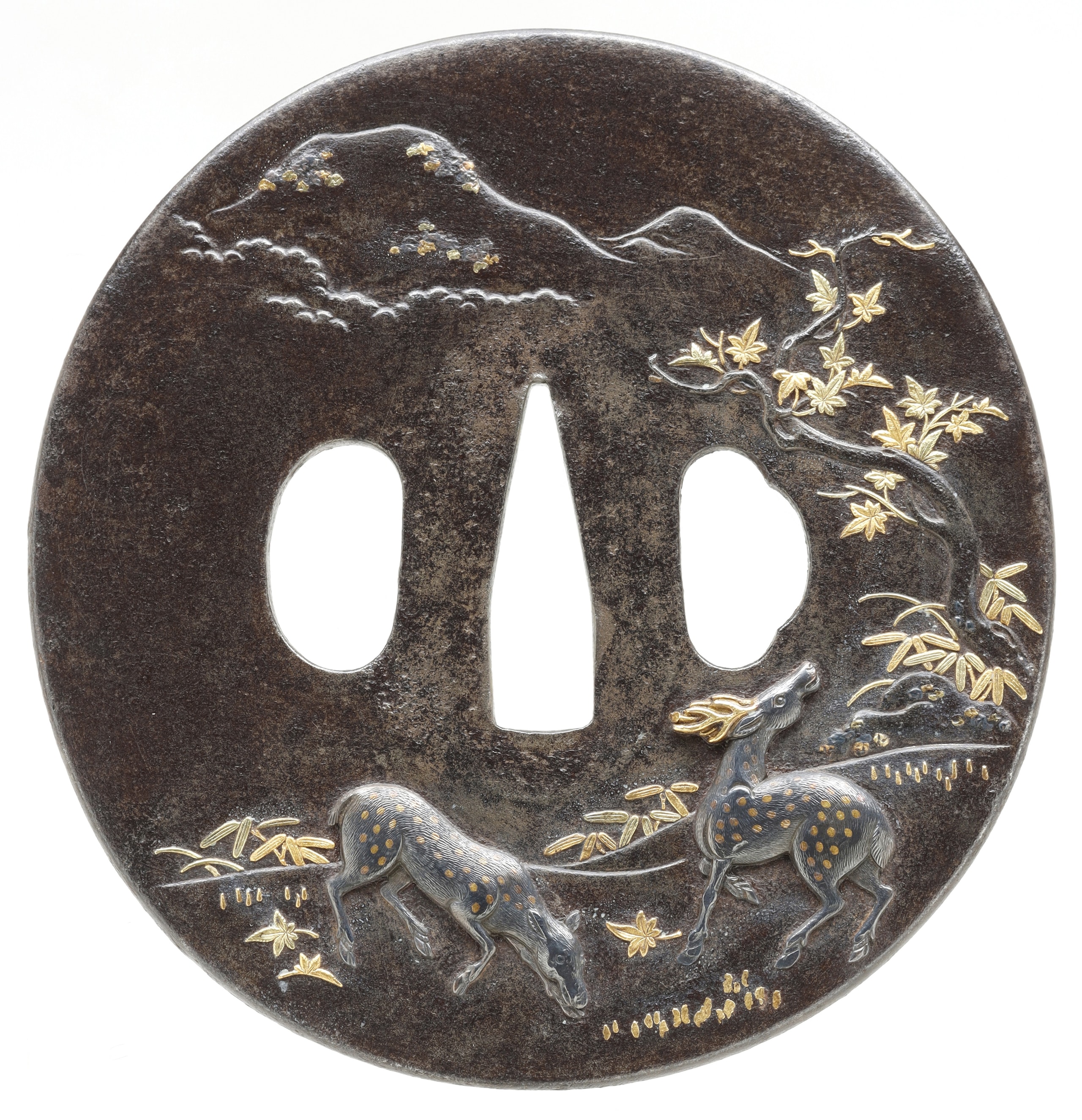
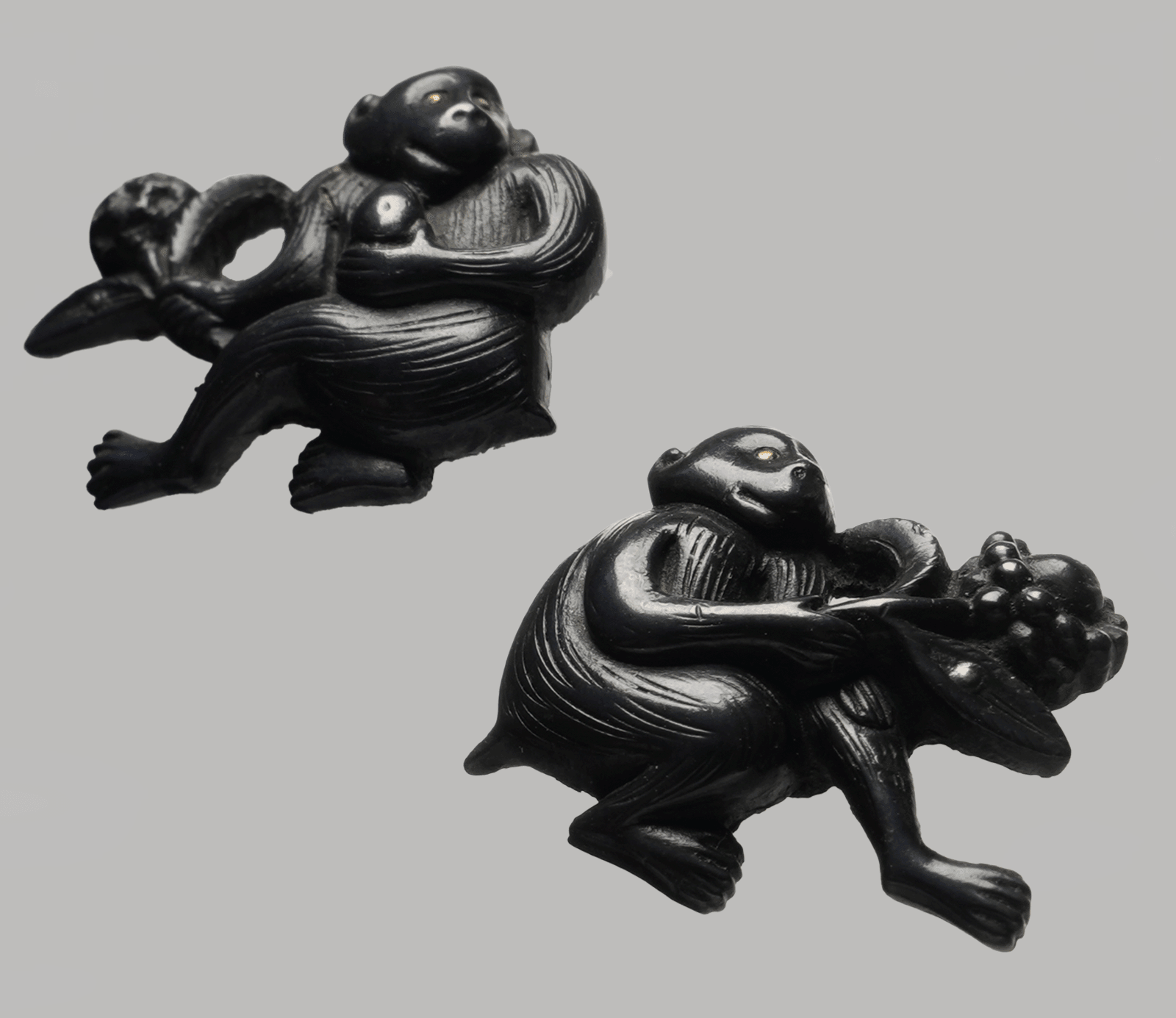
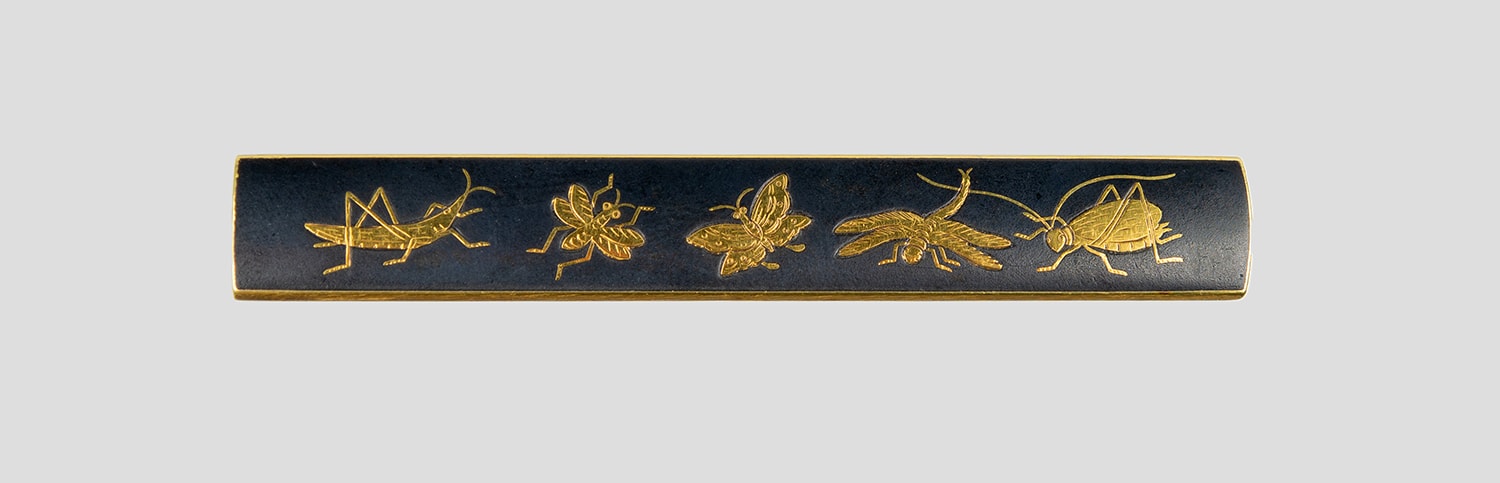
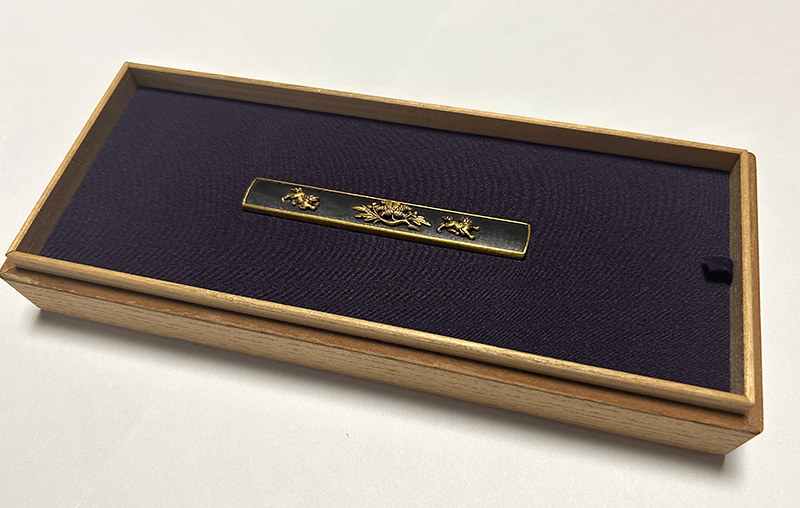
Joshin's works are executed overwhelmingly on grounds and are characterized, in the 's repeated formulation, by "large scale, forceful presence, and carving that fills the entire field." The invoke a vivid spatial metaphor to describe his relief technique: "high mountains and deep valleys" — a modulation of volume in which the modeling rises emphatically from the ground while the recesses are cut deep and clean, producing what the assessors call "a pleasing sense of dynamism." His is distinguished by "numerous triangular chisel marks" that "heighten the clarity and crispness of the workmanship," and by chisel lines that are consistently described as "tight" and "controlled." Among the Goto house's prescribed motifs (okitemono), Joshin treated the -ryu dragon, paired lions (), and crawling dragon (hairyu) across successive generations, but his interpretations are set apart by their conspicuously larger scale and by claws that are "characteristically large and long, with the tips splayed open." His subjects range from auspicious themes — dragons that "raise clouds, call rain, and ascend to the heavens" — to martial motifs befitting a warrior-craftsman, including matchlock accoutrements, horse trappings, and bow-and-arrow compositions. Regardless of subject, his gold ornaments () are described as "rich and brimming with strength," with the quality of the gold itself praised as "excellent" and "lustrous" against the deep tonality of jet-black . Works in solid gold () such as his display "superb control of volume," while his coloring in gold and silver achieves what the calls "an especially pleasing chromatic effect."

The evaluative language applied to Joshin across his designated works is remarkably consistent: his carving is "abundant in volume and mass," his compositions "grand" and "dignified," and his finished pieces exhibit "an archaic dignity" and "elevated tone" that place them among the finest achievements of the early Goto house. The repeatedly conclude that individual works "fully manifest Joshin's true merit" or "display Jōshin's true merit to the fullest," a formulaic endorsement reserved for pieces judged to be wholly representative of a master's capability. His surviving oeuvre has been authenticated across centuries by successive Goto house heads — Kenjo (seventh generation), Teijo (ninth), Renjo (tenth), Mitsumori (fourteenth), and Mitsutaka (thirteenth) — whose appraisals, some dating to the early period, are themselves regarded as documents "of great documentary value." Works bearing Joshin's attribution have been transmitted in such distinguished collections as the Konoike, Asano of Geishu, and Omaeda of families, underscoring that, even in his own era, fittings of this caliber could only have been commissioned by warriors of considerable rank.
Kantei

3 descriptive axes: material (the shakudo-nanako house grounds) x technique (takabori with iro-e) x themes (the house repertoire, with kurikara and dragons his forte). His load-bearing discriminators are the forceful 'peaks high, valleys deep' chisel and the design carried full to the frame.

Goto Joshin is the third-generation head of the orthodox Goto house, son of the second master Sojo and grandson of the founder Yujo, and is counted with them among the prized upper three generations. He served the Ashikaga shoguns Yoshiharu and Yoshiteru, held a fief at Sakamoto in Omi, was raised to Hogen, and was killed in battle by the Asai in 1562. His work is unsigned, attributed by and by signatures of later heads. Within the shared house style his individual fingerprint is force: a powerful, large-scale carving whose chisel cuts, in the words of the old text, with peaks high and valleys deep, the design carried boldly right out to the edge of the frame.

Diagnostic discriminators

the Soken Kisho describes Joshin's chisel as sharp, with peaks high and valleys deep, a dignified handling; it recurs as the cited point that individuates him within the house

carving full to the frame, with a lateral expansiveness, is repeatedly stated as his defining trait

the triangular chisel is cited as a tell of his kurikara and dragon carving

Material (grounds)

The orthodox house grounds, in fine above all, with solid-gold grounds on the and plain besides.

赤銅地

Technique

with gold and silver iro-e, for the and applied , the relief cut deep and forceful.

Themes (the house repertoire)

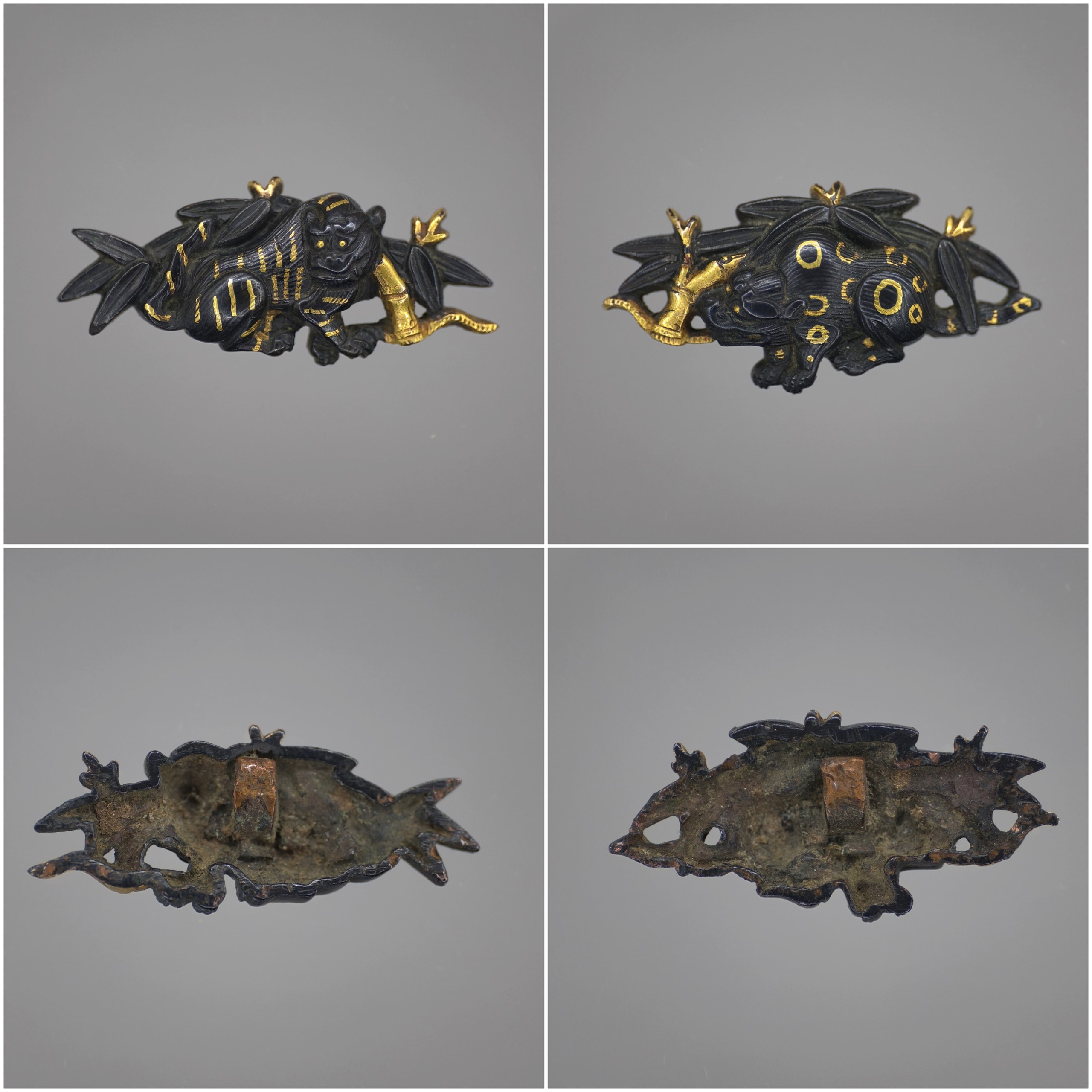
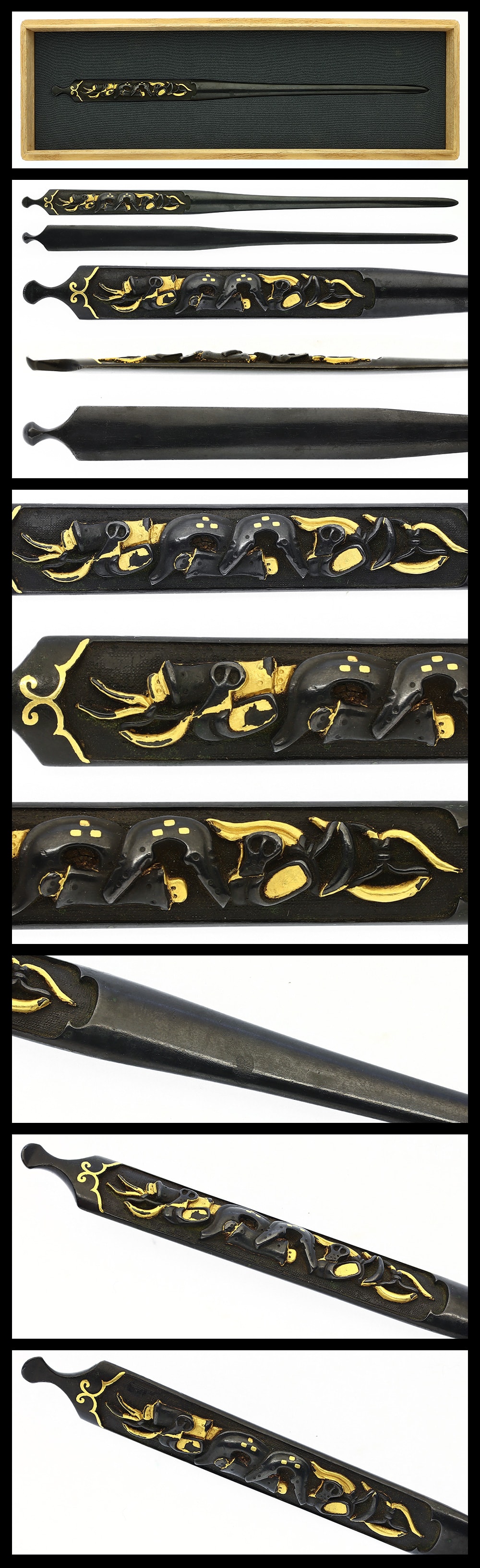
The house subjects carried with unusual force: and dragons above all, lions, and his noted matchlock-gun and horse-tackle designs.

Dragons, kurikara and lions

dragons (his specialty), crawling and cloud dragons, and lions, cut large and forceful.

Full iconography

Signature chronology

Placement

Documentary note

Joshin's work is ; no signed example exists. It is attributed by the house and by in the form '-Joshin' plus a later head's name and (Mitsutaka/Enjo, Mitsutoshi/Tsujo, Mitsumori and others), or 'Joshin-' with an appraiser's . His given names are Jiro and Yoshihisa, later Genshiro Harumitsu. Companion pieces by branch-Goto (waki-Goto) hands and by later generations occur on the mounts and should not be read as his work.

Scholarship

His matchlock-gun design is named the finest of its subject, and his horse-tackle a subject he made his own.

Designations

Kokuhō—
Jūyō Bunkazai—
Jūyō Bijutsuhin1
Gyobutsu—
Tokubetsu Jūyō5
Jūyō Tōken61

Elite Standing

0.26 across 67 designated works

Top 4% among makers

Provenance

8 documented provenances across certified works by Goto Joshin

Provenance Standing

2 works held in elite collections across 8 documented provenances

Top 12% among makers

Raw score: 2.20 / 10

Work Types

Distribution across 67 ranked works

Kōgai
1929%
Kozuka
1421%
Other
1218%
Menuki
1117%
Mitokoromono
1015%

Signatures

Signature types across 67 ranked works

Currently Available

Lineage

TeacherGoto Sojo
Goto Joshin
Student
  1. 1.Goto Kojo後藤光乗1 for sale25designated

Goto School

Other artisans of the Goto school

  1. 1.Goto Yujo後藤祐乗1 for sale41designated
  2. 2.Goto Kenjo後藤顕乗1 for sale45designated
  3. 3.Goto Sojo後藤宗乗53designated
  4. 4.Goto Tokujo後藤徳乗2 for sale31designated
  5. 5.Goto Eijo後藤栄乗9 for sale31designated
  6. 6.Goto Teijo後藤程乗10 for sale41designated
  7. 7.Goto Renjo後藤廉乗4 for sale33designated
  8. 8.Goto Tsujo後藤通乗1 for sale29designated
  9. 9.Goto Kojo後藤光乗1 for sale25designated
  10. 10.Goto Enjo後藤延乗3 for sale19designated
  11. 11.Goto Hojo後藤方乗1 for sale16designated
  12. 12.Goto Sokujo後藤即乗11designated

Goto Joshin

Goto Joshin(後藤乗真) was a maker of Japanese sword fittings (tōsōgu) of the Goto school in Yamashiro province, active during the Muromachi (1512-1562) period.

The work follows the Iebori tradition.

Designated works by Goto Joshin include 5 Tokubetsu Jūyō, 61 Jūyō.