NihontoWatch MonNihontoWatchBETA
MarketEncyclopedia
NihontoWatch Mon

NihontoWatchBETA

Market
Encyclopedia
Overview·Kantei·Designations·Provenance·Work Types·Signatures·Lineage·School
OverviewKanteiDesignationsProvenanceWork TypesSignaturesLineageSchool
  1. Schools
  2. Goto
  3. Goto Main Line
  4. Goto Eijo

Goto Eijo

後藤栄乗

Tokujū
Vol. 19, No. 53 · Mitokoromono

Goto Eijo

後藤栄乗

31 ranked works

ProvinceYamashiroEraEarly Edo (1577–1617)PeriodEdoSchoolGotoTraditionIeboriGeneration6TeacherGoto TokujoSpecialtiesmitokoromono, kozuka, kogai, menuki, fuchi-kashiraTypeTosogu MakerCodeGOT006
2Tokubetsu Jūyō29Jūyō Tōken

Overview

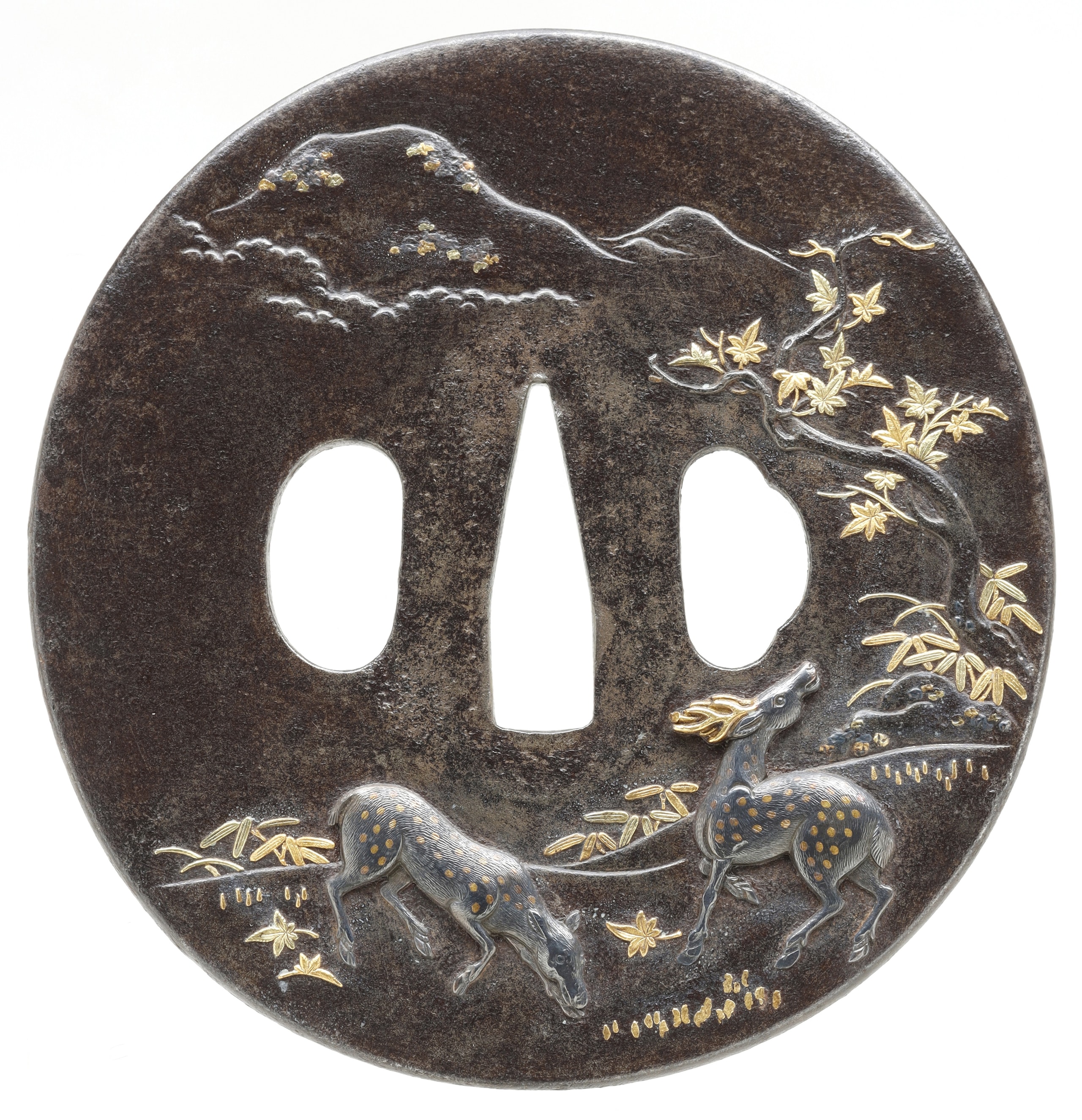
Goto Eijo, the sixth-generation head of the Goto mainline (soke), was the eldest son and heir of the fifth master Tokujo. He was born in Tensho 5 (1577); his childhood name was Kameichi, his common name Genshiro, and his personal name (imina) Masafusa. In Bunroku 3 (1594), at the age of eighteen, he succeeded to the family headship, changed his name to Shirobei Masamitsu, and became the sixth master of the main house. As a metalworker he first signed Masafusa, then Masamitsu, and after taking the tonsure adopted the art name Eijo. From his youth he served Toyotomi Hideyoshi together with his father and forebears; however, after the destruction of the Toyotomi house, the Goto family for a time became ronin. In Genna 2 (1616), upon the recommendation of his uncle Chojo -- who enjoyed the favor of Tokugawa Ieyasu -- Eijo entered Tokugawa service. Shogun Hidetada appointed him to duties connected with fundo weights, oban gold coins, and carving work (), and he was again granted the family's former holding of 250 in Yamashiro Province together with an stipend of twenty persons' rations. In his later years he was elevated to the rank of Hogen. He died of illness in Genna 3 (1617) at the young age of forty-one, predeceasing his father Tokujo.

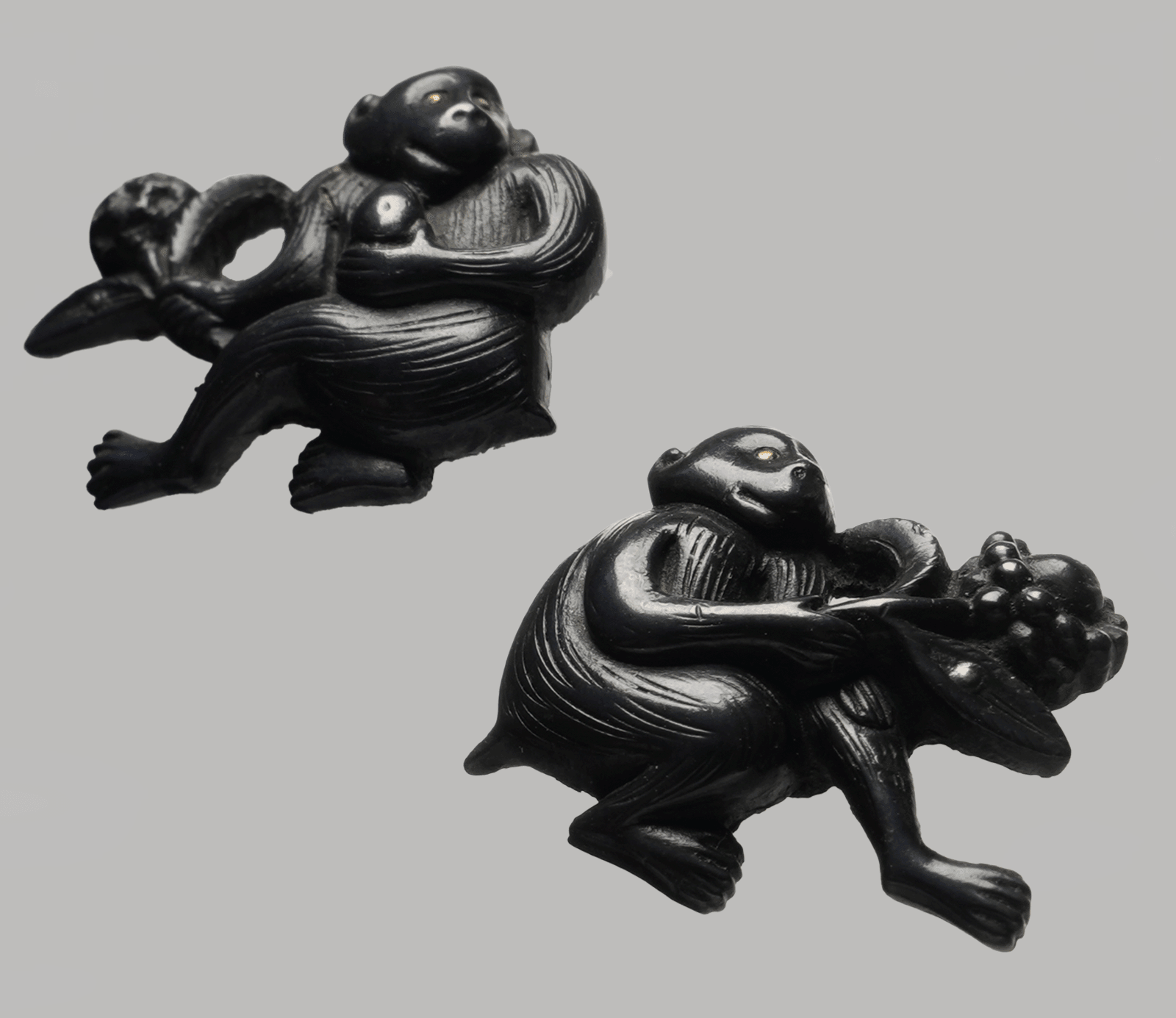
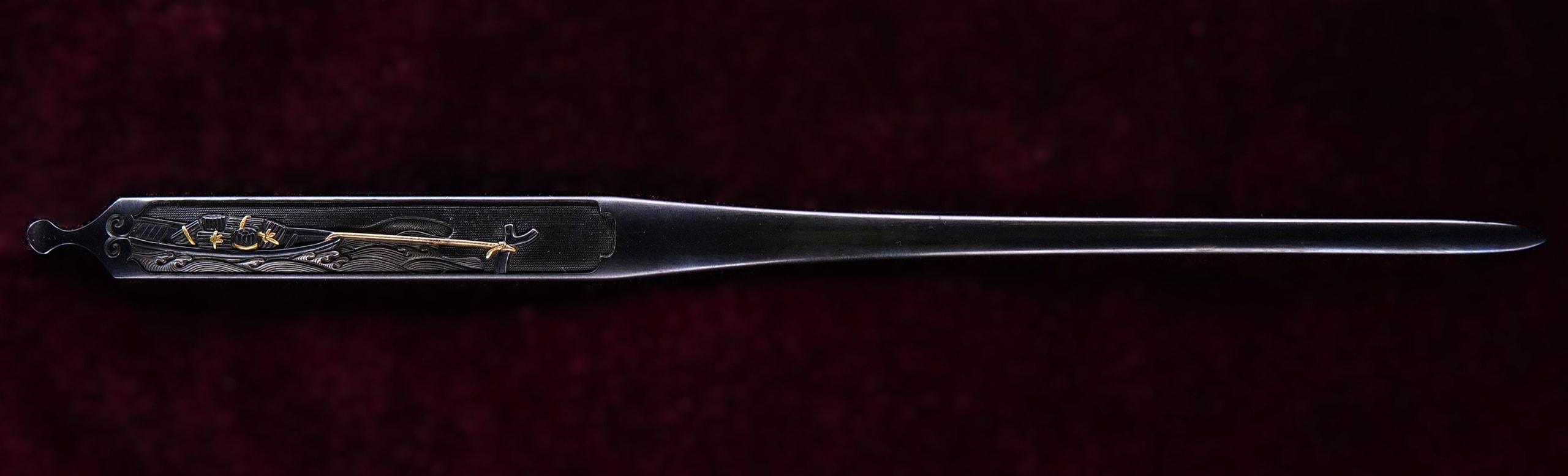
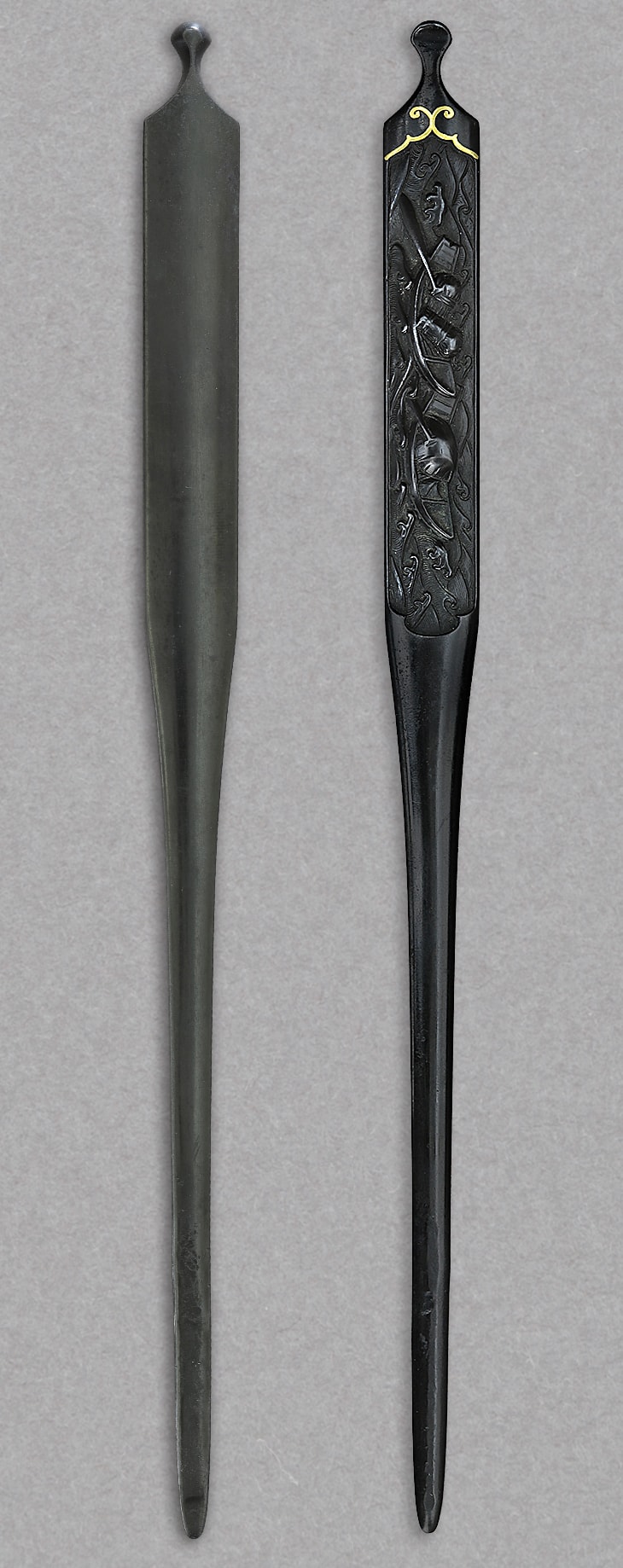
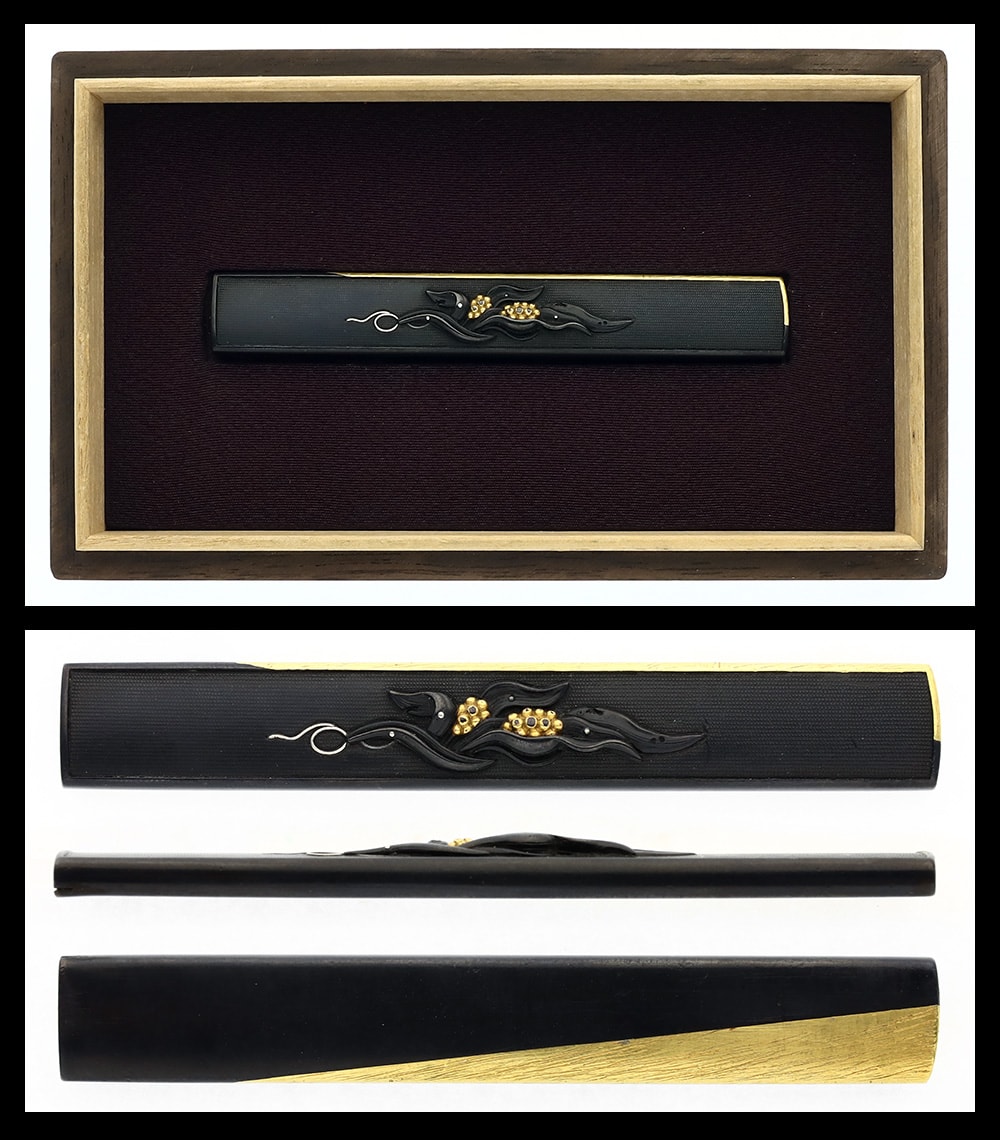
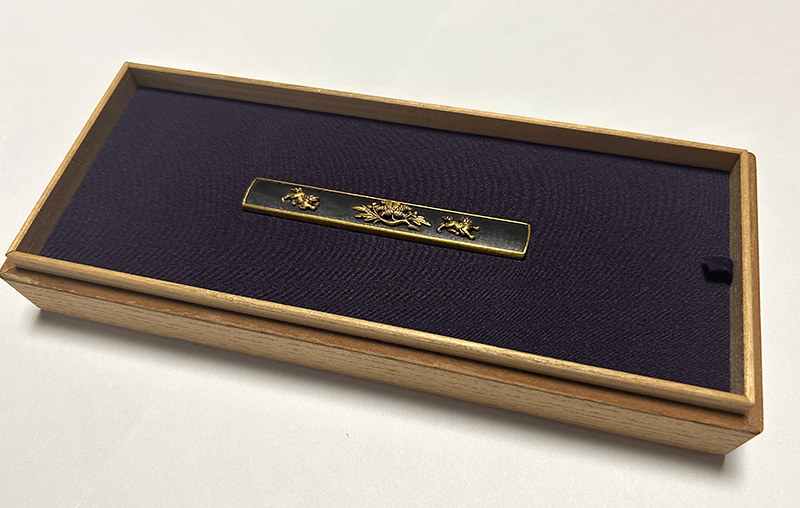
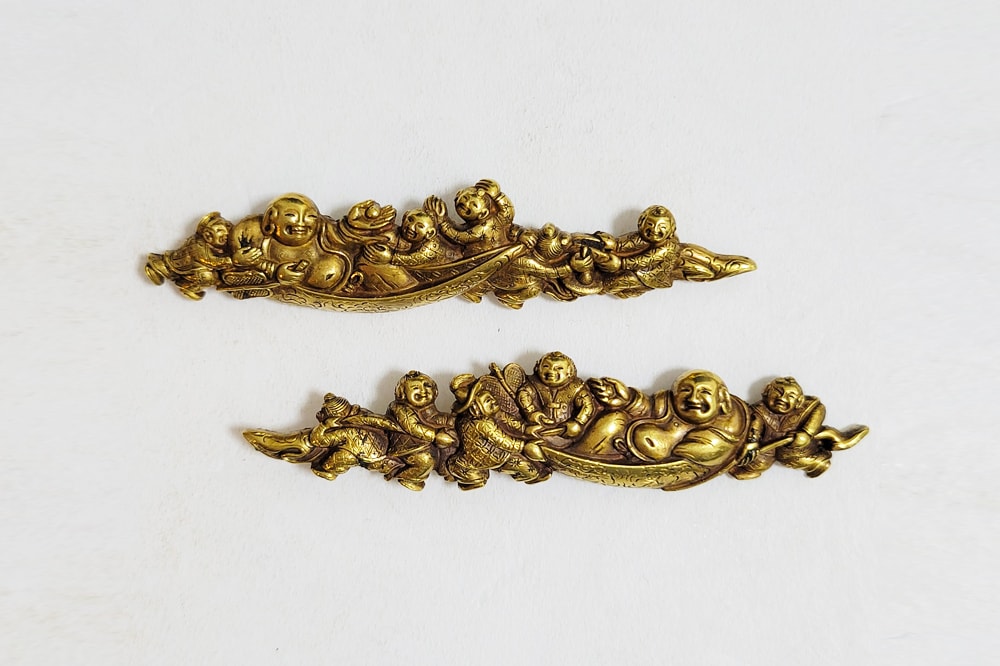
The consistently observes that Eijo's manner resembles that of Joshin, the third-generation master, and that many of his works tend toward somewhat larger-scale compositions; yet his workmanship is regarded as finer and more delicate than Joshin's. His on unites meticulous detail with a broad, open handling, while his gold crests () are boldly modeled with weighty, sculptural presence. In solid-gold , his yobori produces deeply rounded volumes so strongly modeled as to suggest sculpture in the round, with the in'-ne treatment conveying an unmistakable sense of antiquity. Triangular chisel work (sankaku-) defining horns and wrists is firm and assured, and careful attention extends to the smallest details of posture, garment folds, and the extremities of hands and feet. In figural subjects -- the dragon, parent-and-child lions, Ushiwakamaru and Benkei on the Gojo Bridge, Idaten, and sumo wrestlers -- the carving superbly captures a single instant of motion with precision, creating an overwhelming presence. The further note that characteristic features of Eijo may be observed in the warabite, mayu-gata, and elements of his compositions, and that his reverse constructions employing the three-step gold kezuri- joint are both sumptuous and stylish, vividly expressing the refined aesthetic of the period.

In discussions of Goto stylistic development, the works from the first through the sixth head are termed the kami roku-dai -- the "upper six generations" -- marking a distinct early phase, and Eijo stands as the culminating figure of that lineage. The repeatedly describes his works as projecting an elevated dignity and refinement characteristic of the Goto mainline iebori tradition, and observes that his pieces powerfully express the distinctive pleasures of -period Goto workmanship. Extant works bearing Eijo's personal signature are extremely few; the note that from his generation onward it became increasingly common for works to bear the maker's own signature, yet at present only some seventy to eighty signed examples are known across all formats. Several of his finest surviving pieces carry authentication by later Goto masters -- the twelfth-generation Mitsusato, the thirteenth-generation Mitsutaka, and the fourteenth-generation Mitsumori -- attesting to valuations ranging from 100 to 250 and to transmission through distinguished collections including the Shimazu, Konoike, and Tokugawa shogunal houses. This pattern of high appraisal by successive generations of the house underscores the institutional judgment that recurs throughout the designation records: Eijo is an outstanding master through whom the virtues of early Goto workmanship can be fully appreciated.
Kantei

3 descriptive axes: material (the shakudo-nanako and solid-gold house grounds) x technique (takabori and katachibori with iro-e and suemon) x themes (the house canon of lions and dragons, with figural narrative pieces and household-crest work). His one load-bearing discriminator is the workmanship described as finer than Joshin's within a closely Joshin-resembling hand; the fern-frond and brow-and-mokko detailing is a second, low-frequency tell. The rest is the orthodox house foundation, and the corpus offers few features that separate him from his immediate predecessors.

Goto Eijo (1577-1617), the eldest son of the fifth master Tokujo, is the sixth-generation head of the orthodox Goto house, his childhood name Kameichi, his common name Genshiro, his formal name Masafusa, later Shirobei Masamitsu, and after the tonsure he took the name Eijo. He succeeded to the headship at eighteen in 1594 and served Toyotomi Hideyoshi with his forebears; after the fall of the Toyotomi the house was for a time without a lord, until in 1616 the recommendation of his uncle Chojo, favoured by Tokugawa Ieyasu, brought him into Tokugawa service, where Hidetada charged him with the offices of the weights, the great gold coin and the carving and restored the old fief of 250 in Yamashiro; in his last years he was raised to Hogen, but he died young at forty-one in 1617. His is the generation from which the Goto heads begin to self-sign with any regularity, yet his genuine self-signed work, read 'Goto Eijo' with a , is still called few and precious; the bulk of attributed work is , carrying the appraisal-signatures of later heads. The records describe his style as resembling Joshin, somewhat large-scale, but with workmanship finer and more careful than Joshin's, and they note the fern-frond, brow and -shape detailing as showing his individual character.

Diagnostic discriminators

the records repeatedly state that Eijo's style resembles Joshin and runs somewhat large, but that his workmanship (saiku) is finer and more careful than Joshin's; this contrast against Joshin himself is the cited point that individuates him, and is the single load-bearing tell the corpus gives, since in most other respects he is described as Joshin-continuous

single setsumei is explicit that the fern-frond, brow-shape and mokko-shape detailing show Eijo's characteristic; a second piece carries the warabite finish; low-frequency and named only for his kogai work, so scoped and not over-claimed

Material (grounds)

The orthodox house grounds, in fine above all, with solid-gold and all-gold grounds on the and crest pieces, plain and silver besides, and seen rarely.

赤銅地

Technique

with gold and silver iro-e and applied for the and , with the inyo-ne post for the , the gold crest (-) work struck in relief, the backs finished with fill-gold or with three-part cut-and-join plate.

Themes (the house canon, figures and crests)

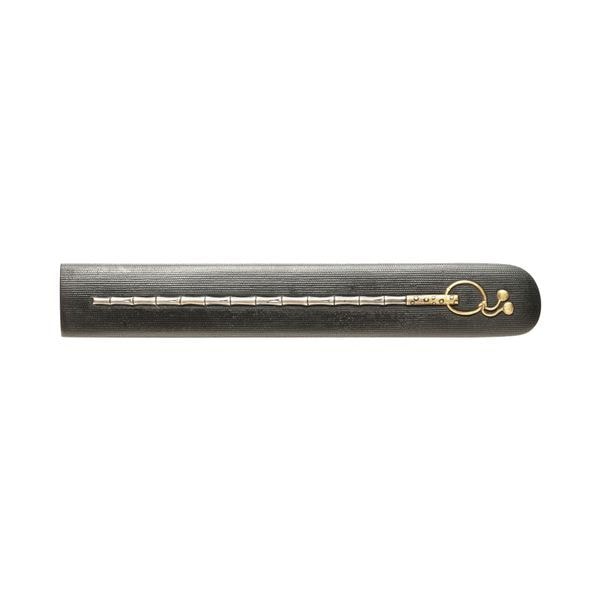
The house lions and crawling dragons and of the okite repertoire, narrative figural pieces (Ushiwaka and Benkei, the Rashomon tale, Idaten), and the household-crest work, with cranes, monkeys, pine and other subjects among his commissions.

Lions, dragons and kurikara

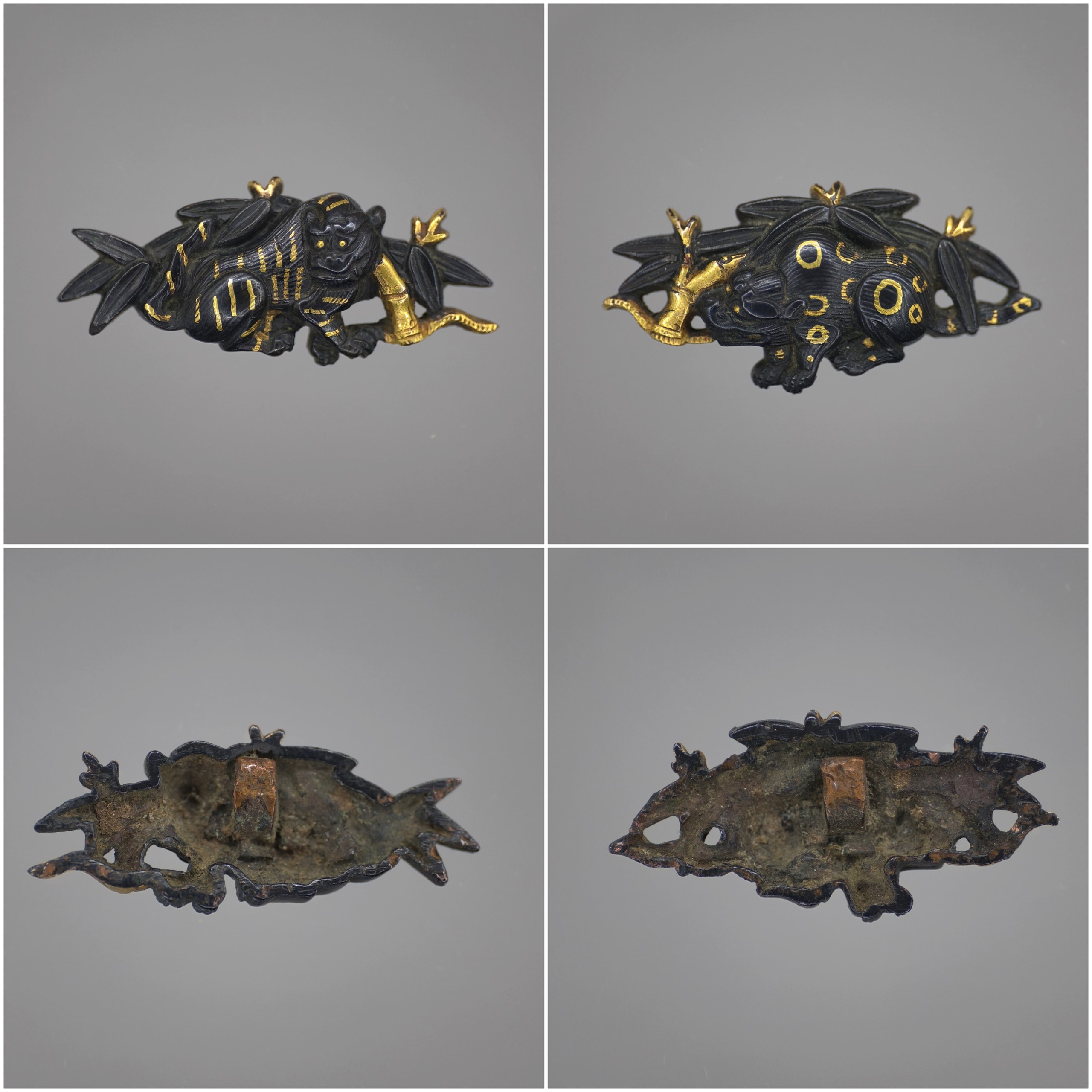
Lions singly and in herds, crawling and cloud dragons, and of the house okite, carried somewhat large in rich, heavy relief.

Narrative figures and household crestsless firmly established

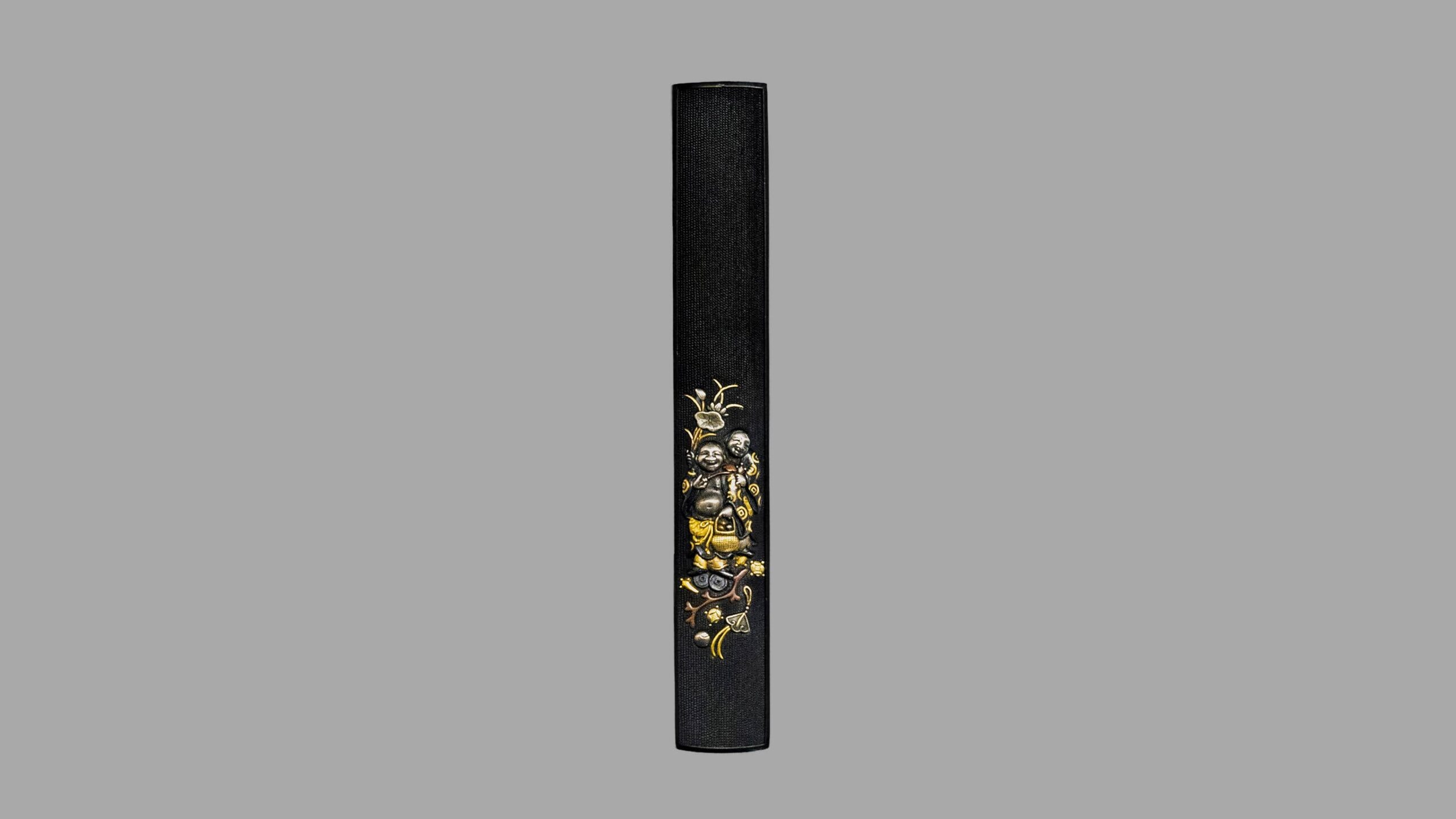
Narrative figural subjects, Ushiwaka and Benkei on Gojo bridge, the Rashomon story and Idaten among them, and the household-crest pieces in gold relief, a good record of the house crest.

Full iconography

Signature chronology

Recorded signatures

Documentary note

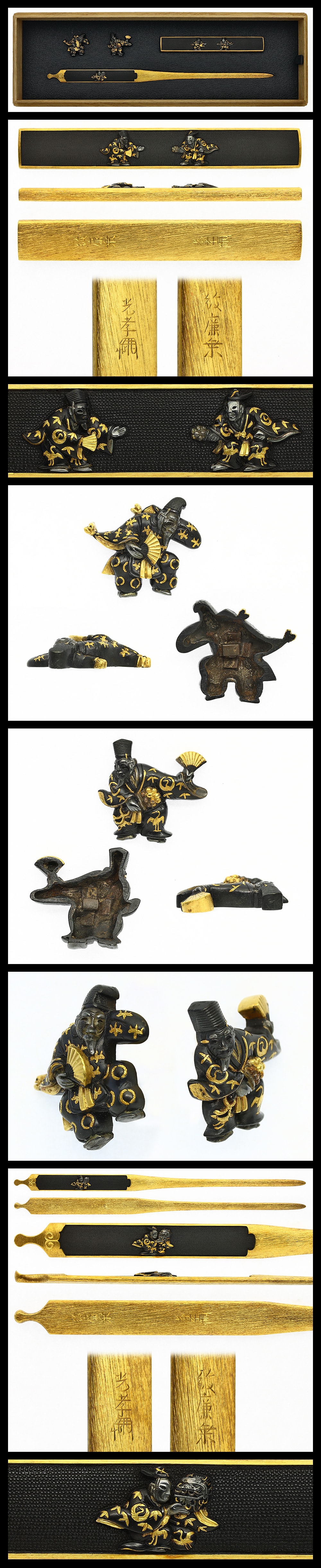
Eijo's work is largely , attributed by the house and by cut by later heads who sign with their own name and : '-Eijo' or 'Eijo-' followed by Mitsuteru (the sixteenth, Koko), Mitsutaka (the thirteenth, Enjo), Mitsumori (the fourteenth, Keijo), Mitsuyoshi (the fifteenth, Shinjo), Mitsumasa (the twelfth, Jujo) and Mitsuyo (the tenth, Renjo, read Mitsuyo here), often with a dated . Read these as later appraisals, never as his own hand. His genuine self-signature reads 'Goto Eijo' with a ; the records say signing became more common from his generation, with some seventy-odd signed pieces known, yet call the self-signed work few and precious. The pre-tonsure birth-name 'Goto Masafusa' with a is named in the records as carried on other works (an Idaten ), but does not appear as a signature on any piece in this corpus. Note also that a piece in his group pairs his work with attributions to the third master Joshin (lions and a dragon set the assign part to Joshin, part to Eijo) and to branch-Goto and later-head hands, which should not be read as his own.

Scholarship

His genuine self-signed work, read 'Goto Eijo' with a kao, is repeatedly called few and precious; his is named the generation from which the Goto heads begin to self-sign with any regularity.

Designations

Kokuhō—
Jūyō Bunkazai—
Jūyō Bijutsuhin—
Gyobutsu—
Tokubetsu Jūyō2
Jūyō Tōken29

Elite Standing

0.15 across 31 designated works

Top 8% among makers

Provenance

8 documented provenances across certified works by Goto Eijo

Provenance Standing

5 works held in elite collections across 8 documented provenances

Top 5% among makers

Raw score: 2.48 / 10

Work Types

Distribution across 31 ranked works

Other
1032%
Kozuka
619%
Mitokoromono
619%
Menuki
516%
Kōgai
26%
Tsuba
26%

Signatures

Signature types across 31 ranked works

Currently Available

Lineage

TeacherGoto Tokujo
Goto Eijo
Student
  1. 1.Goto Sokujo後藤即乗11designated

Goto School

Other artisans of the Goto school

  1. 1.Goto Joshin後藤乗真6 for sale67designated
  2. 2.Goto Yujo後藤祐乗1 for sale41designated
  3. 3.Goto Sojo後藤宗乗53designated
  4. 4.Goto Kenjo後藤顕乗1 for sale45designated
  5. 5.Goto Teijo後藤程乗10 for sale41designated
  6. 6.Goto Tokujo後藤徳乗2 for sale31designated
  7. 7.Goto Renjo後藤廉乗4 for sale33designated
  8. 8.Goto Tsujo後藤通乗1 for sale29designated
  9. 9.Goto Kojo後藤光乗1 for sale25designated
  10. 10.Goto Enjo後藤延乗3 for sale19designated
  11. 11.Goto Hojo後藤方乗1 for sale16designated
  12. 12.Goto Sokujo後藤即乗11designated

Goto Eijo

Goto Eijo(後藤栄乗) was a maker of Japanese sword fittings (tōsōgu) of the Goto school in Yamashiro province, active during the Early Edo (1577-1617) period.

The work follows the Iebori tradition.

Designated works by Goto Eijo include 2 Tokubetsu Jūyō, 29 Jūyō.