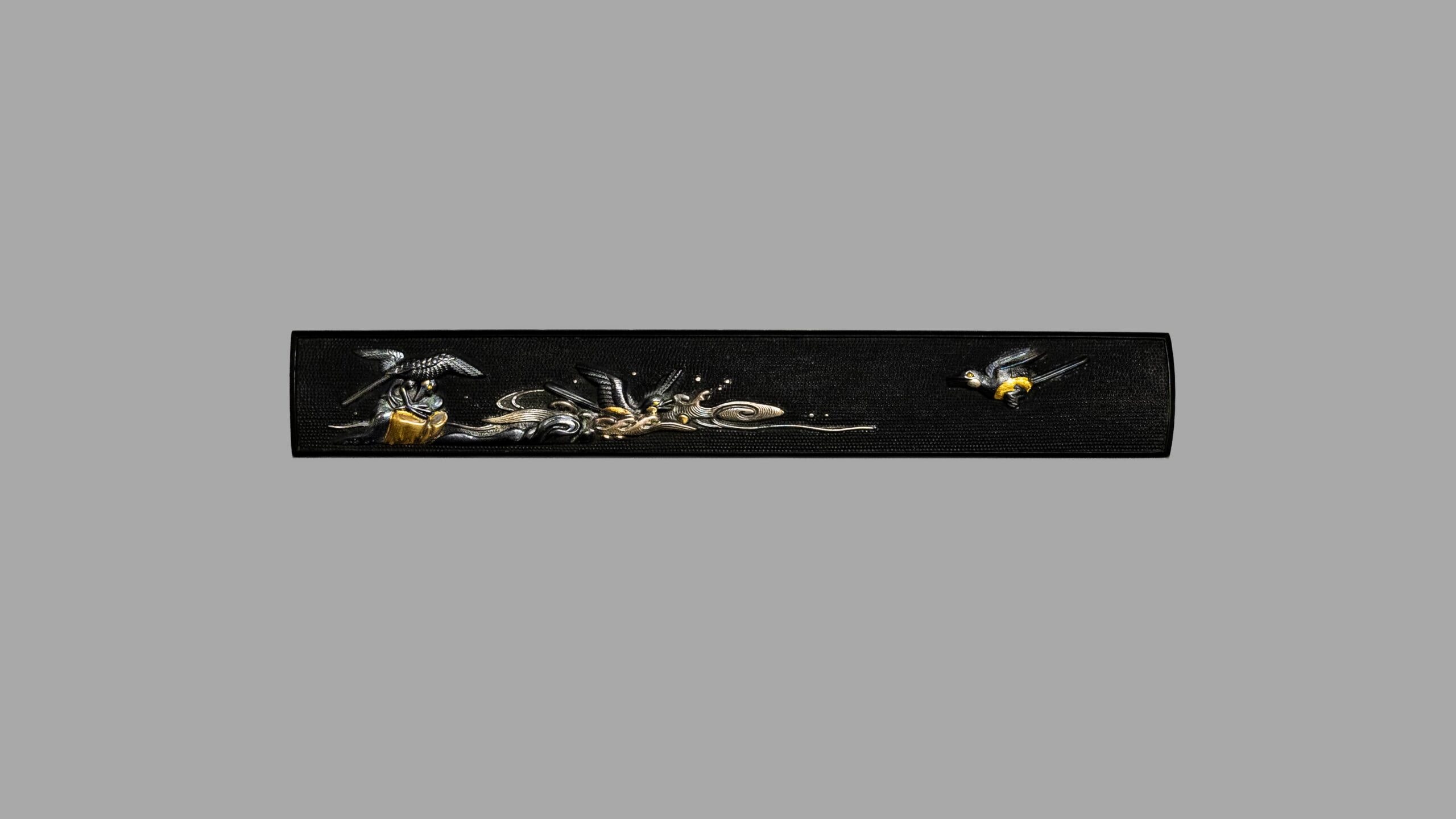
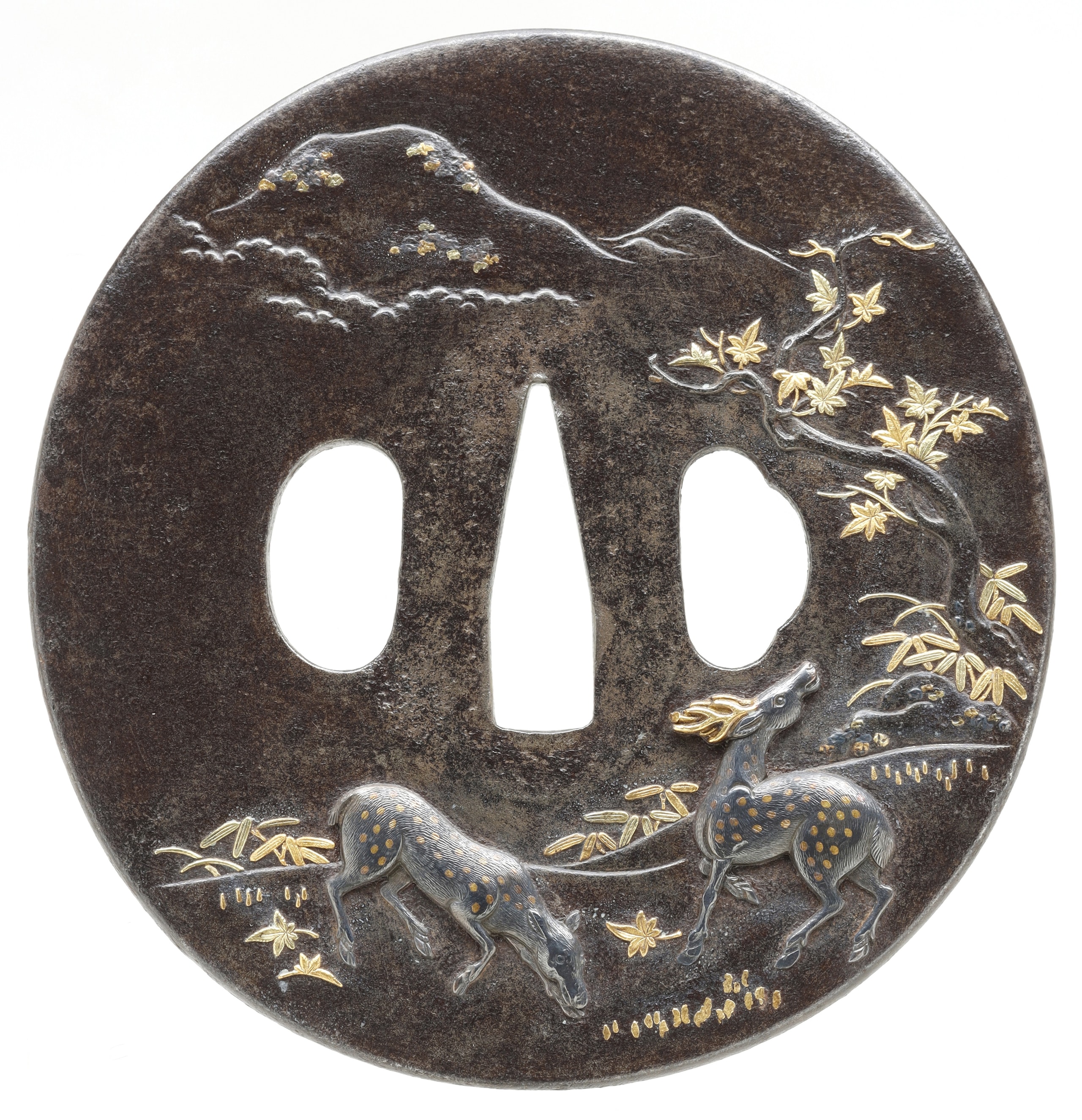
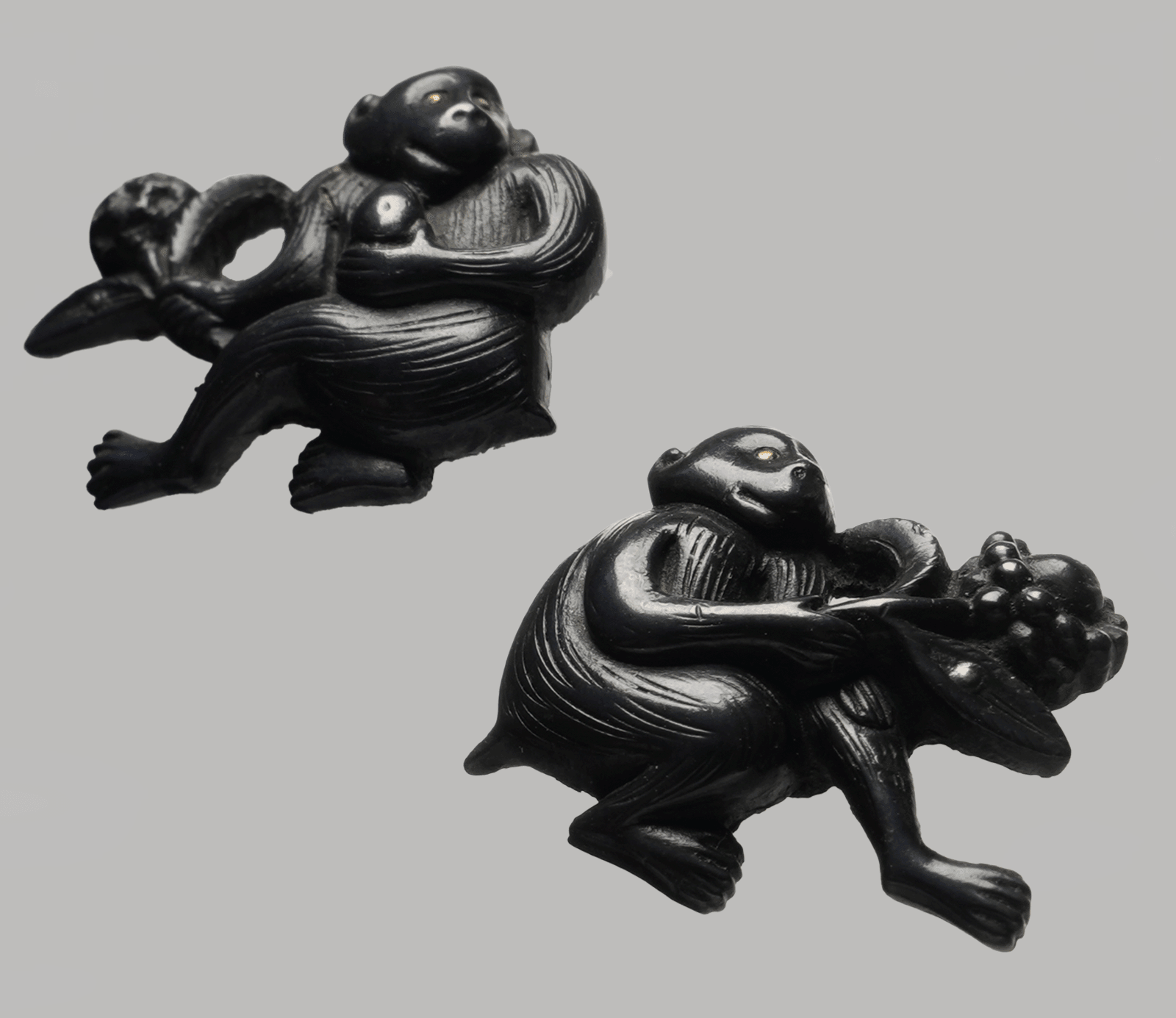
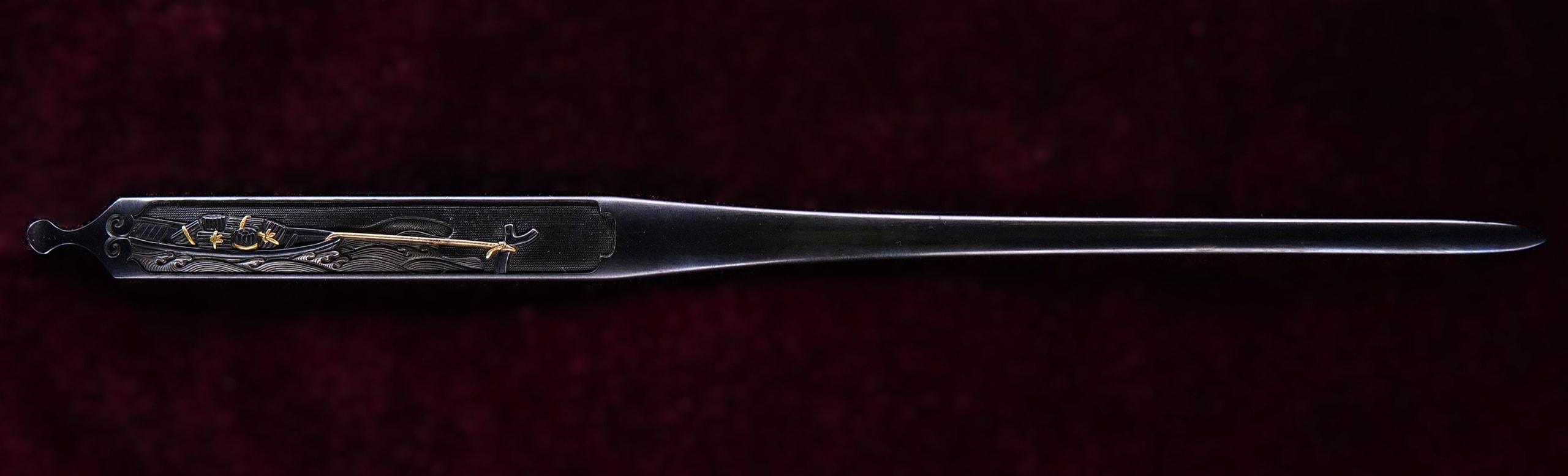
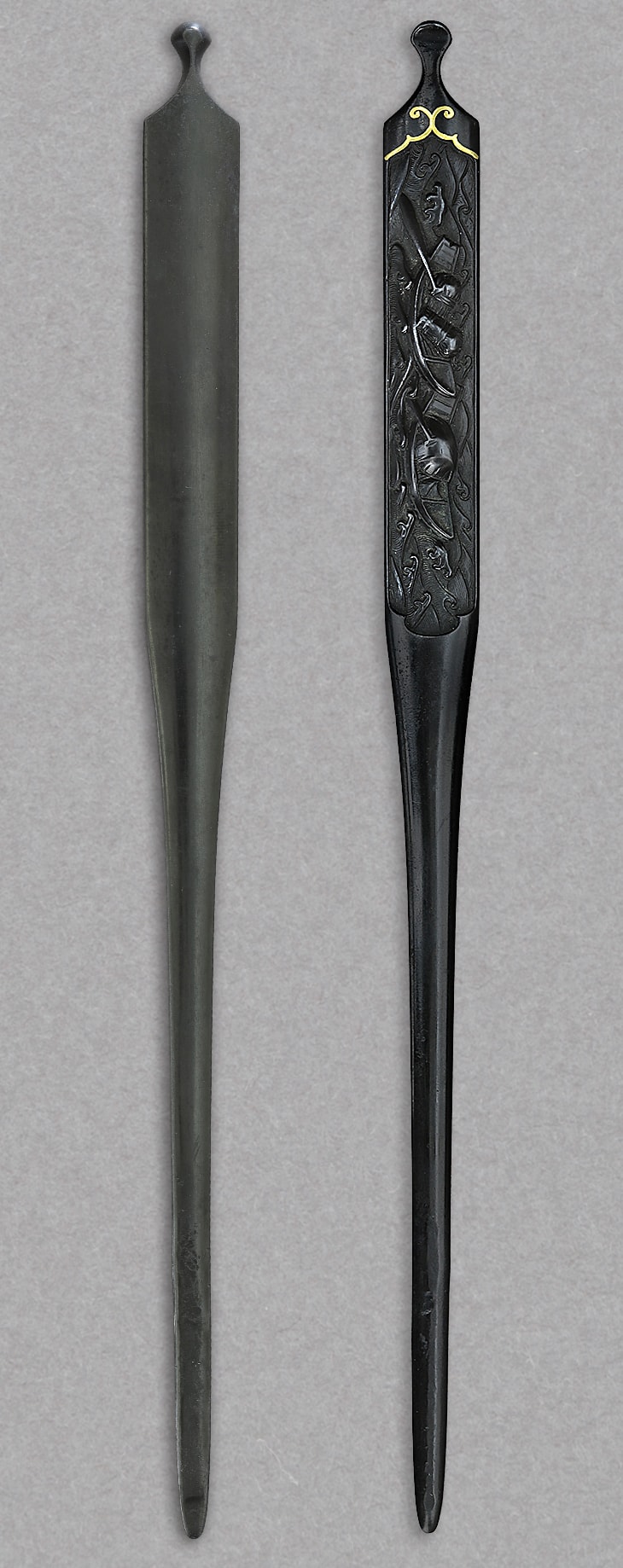
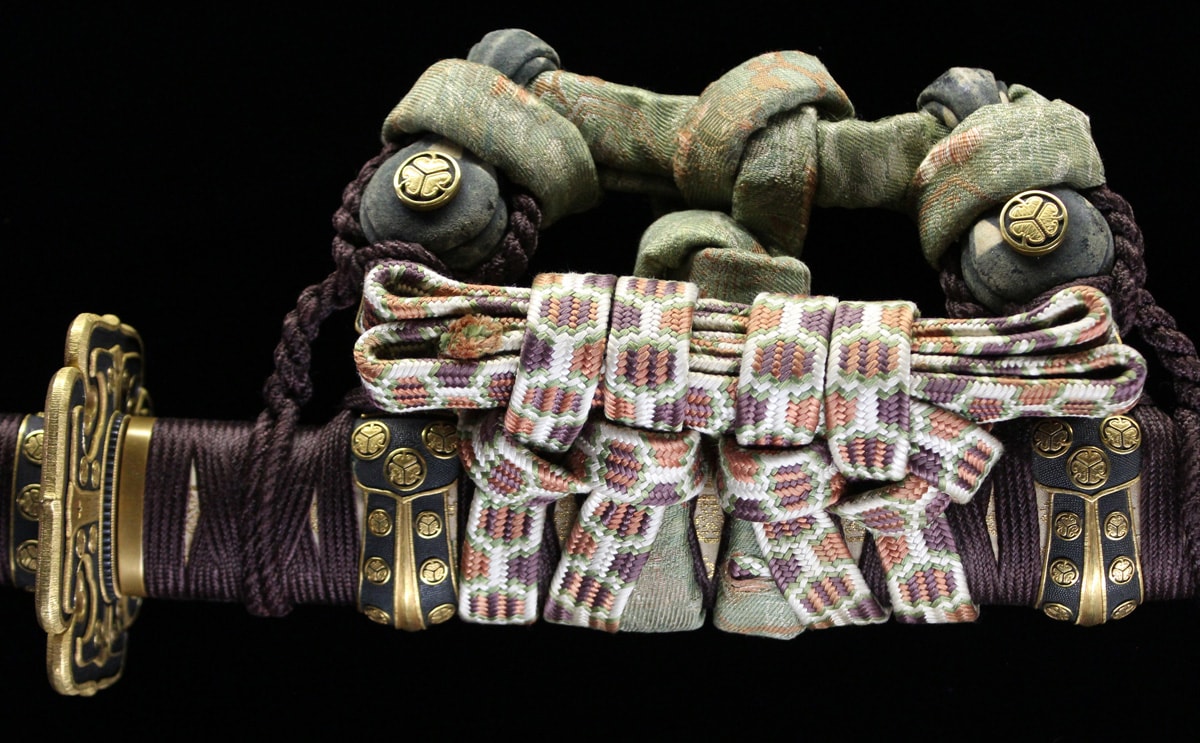
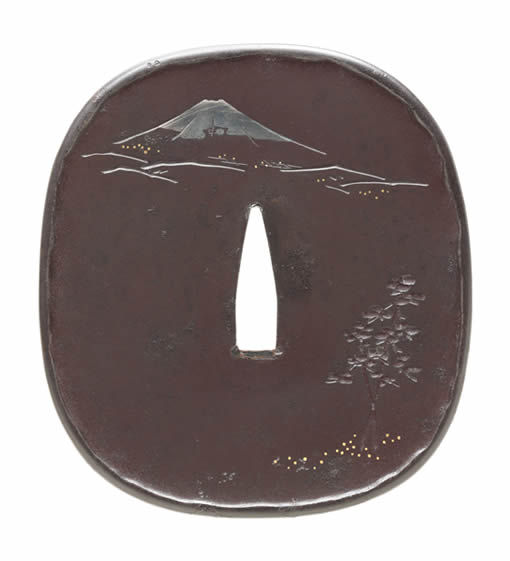
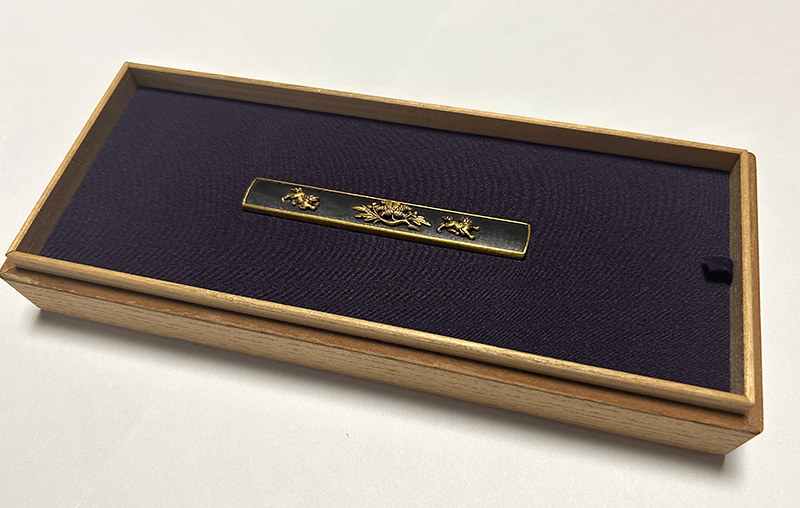
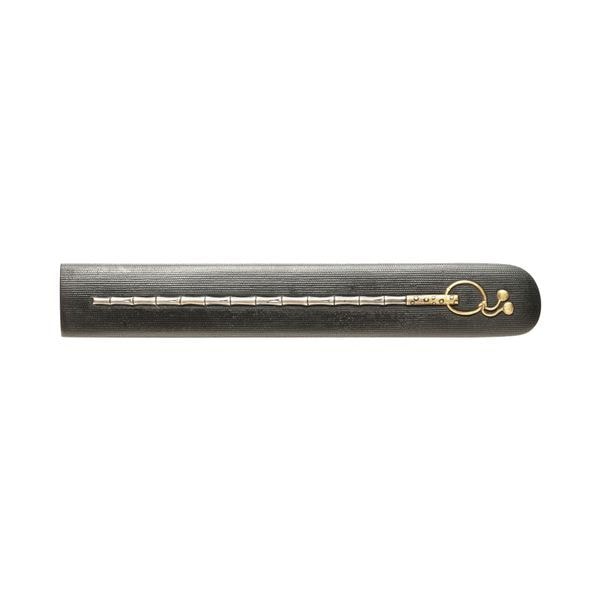
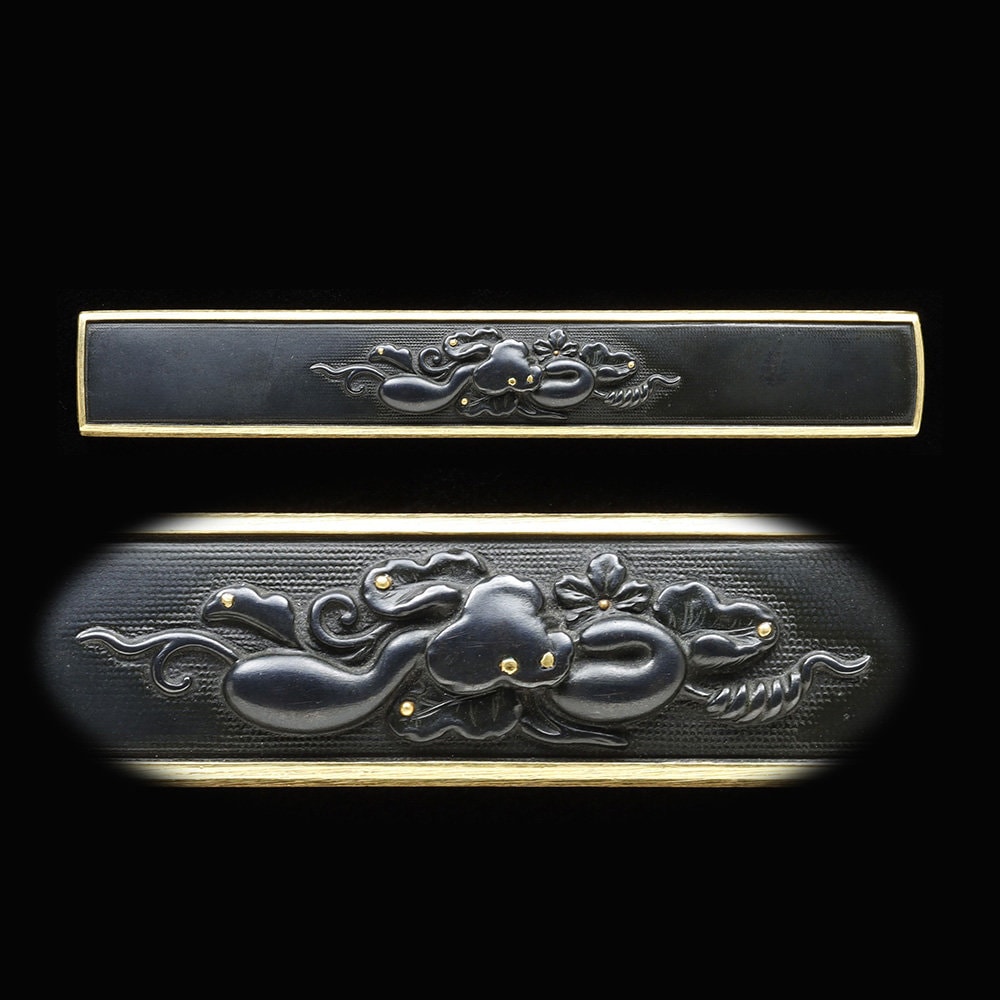
Goto Tokujo, the fifth-generation head of the Goto mainline (soke), was the eldest son and heir of the fourth master, Mitsujo. He was born in Tenbun 19 (1550) and died in 'ei 8 (1631). His common name was first Genjiro, later changed to Shirobei; his personal name (imina) is recorded as Mitsumoto and also as Masaie, and he is additionally known by the name Koryo. Since the time of the first master, Yujo, the Goto family had served the Ashikaga shogunal house generation after generation. However, during Mitsujo's tenure the Ashikaga line was extinguished, and thereafter Mitsujo and Tokujo entered the service of Oda Nobunaga. Following Nobunaga's death, they served Toyotomi Hideyoshi and were charged with three official duties: oban (large gold coinage), fundo (weights and measures), and (carved metalwork for sword fittings). In Tensho 16 (1588), Tokujo produced oban and koban gold coinage, striking upon them a paulownia hallmark known as the "Tokujo " -- also called the "Taiko " -- and writing his own name in ink upon the coins. Even after the advent of Tokugawa rule he continued in service to Ieyasu and Hidetada, and in his later years he was granted the honorary Buddhist rank of Hogen. Tokujo had five sons and four daughters; his eldest son, Eijo Masafusa, succeeded as the sixth head, while his third son, Kenjo, became the seventh head, and the fourth and fifth sons, Takujo and Kyujo, established separate branch houses. His daughters married into the , Kano, and Gold Guild (kinza) families, cementing the Goto house's central position among -period cultural lineages.
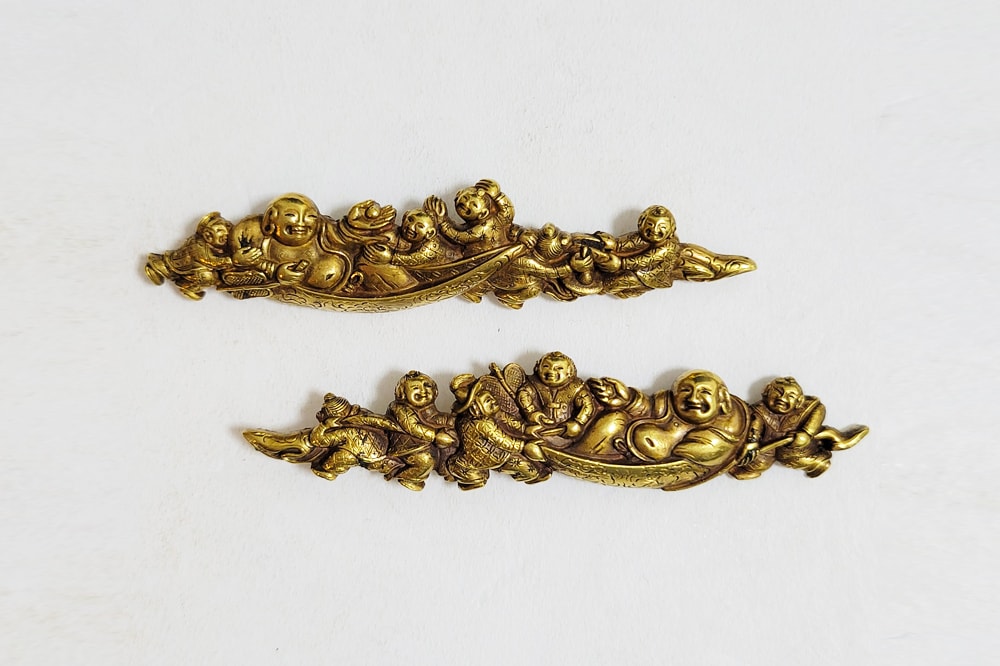
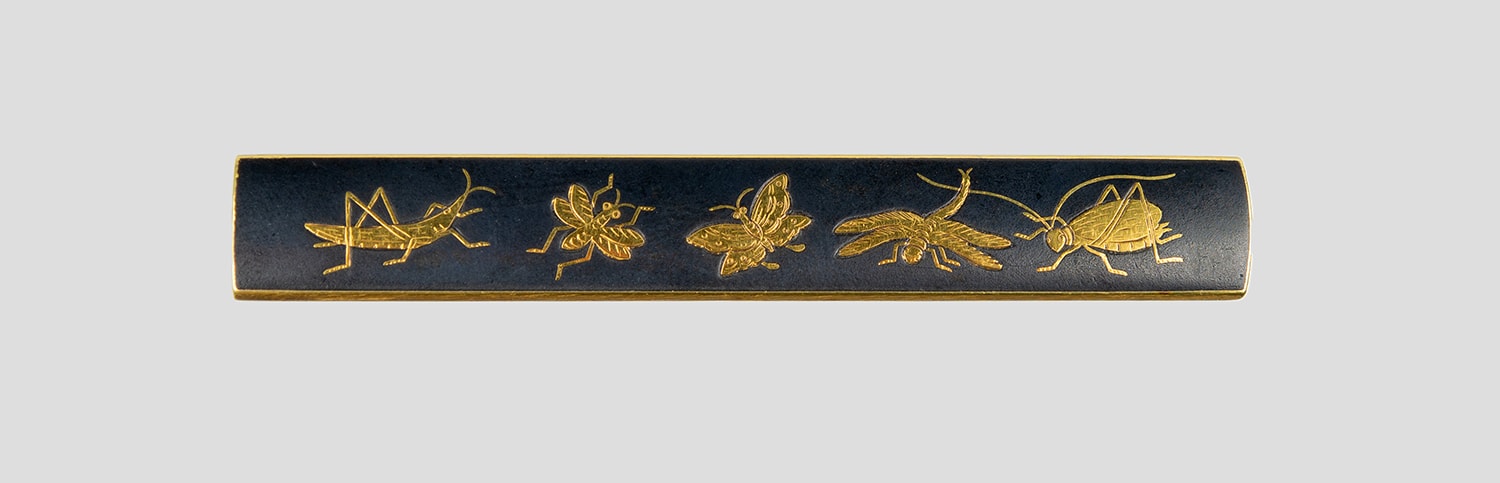
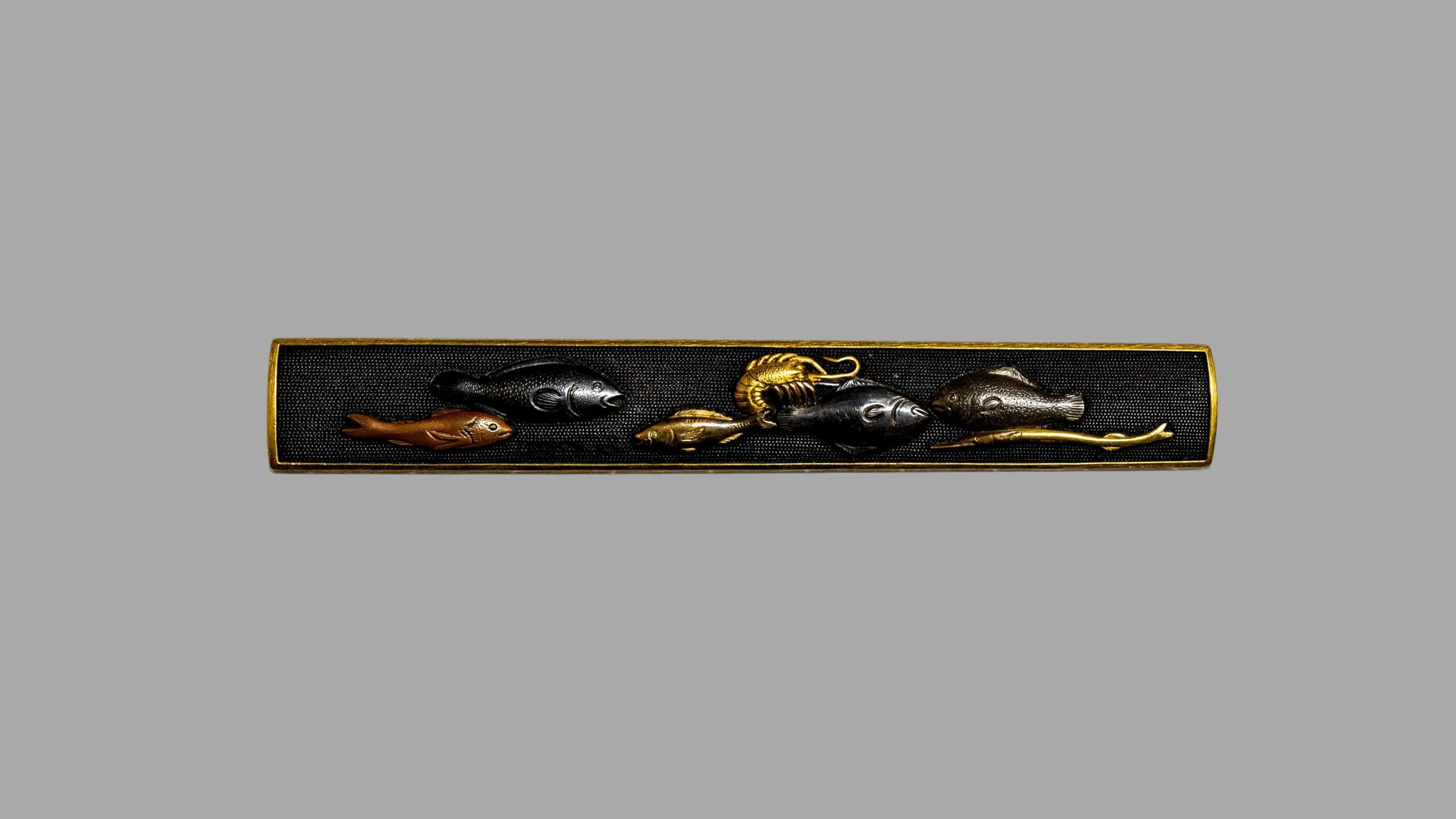
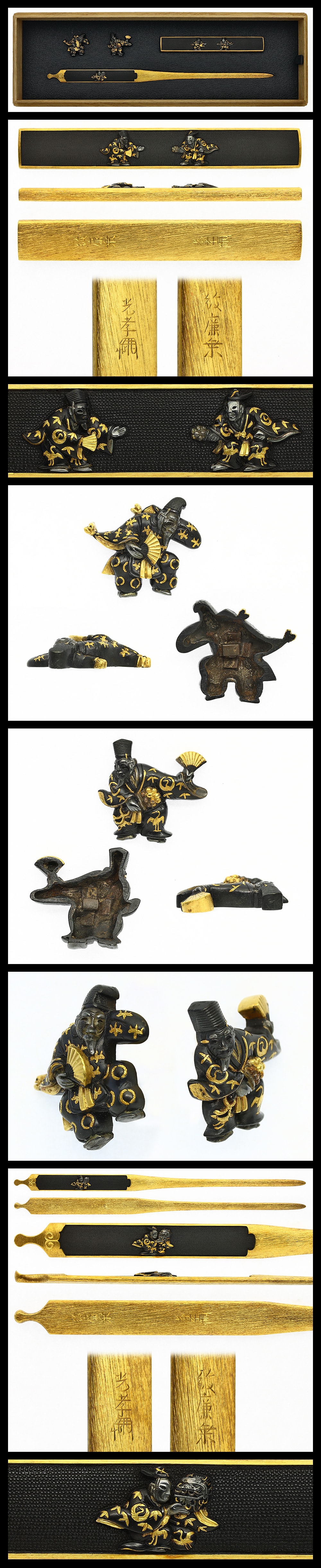
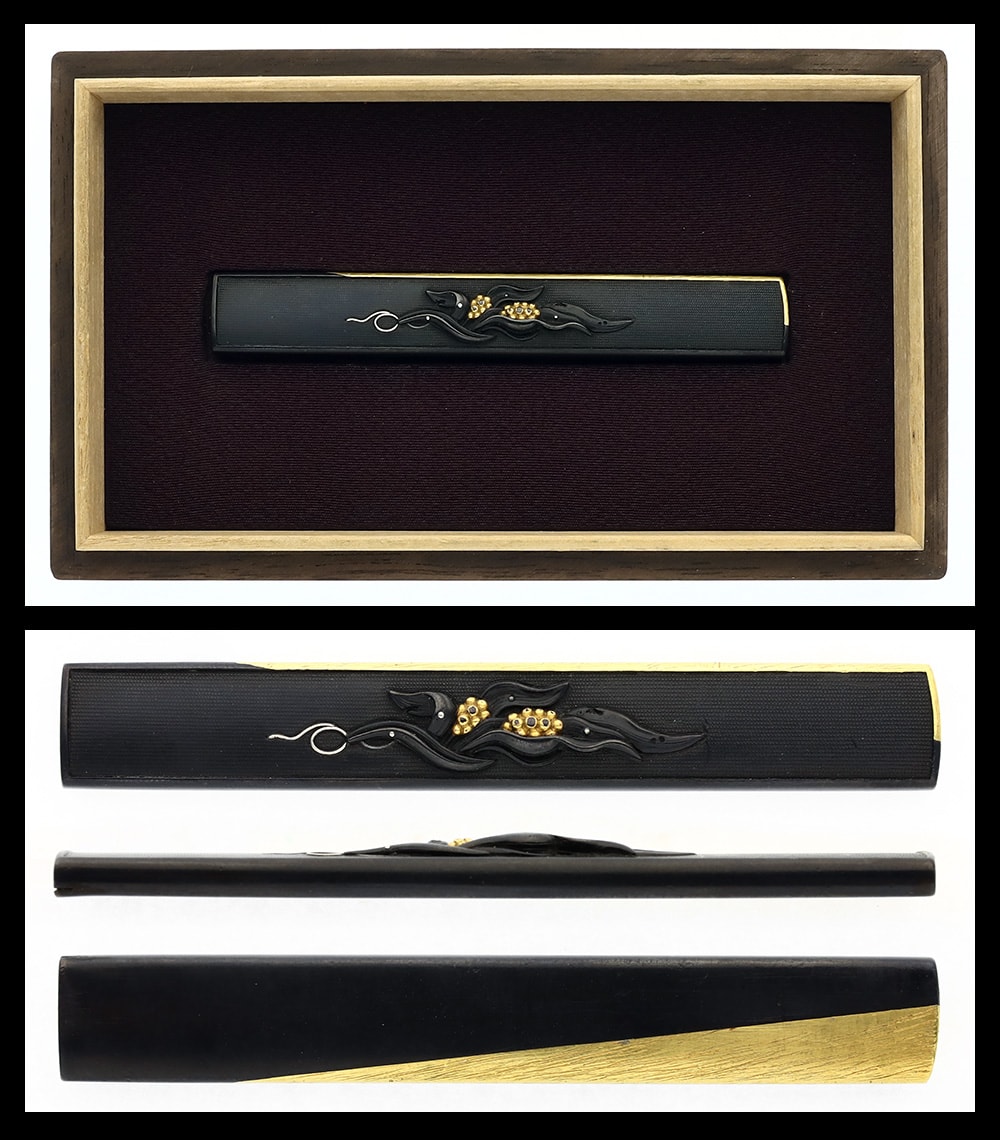
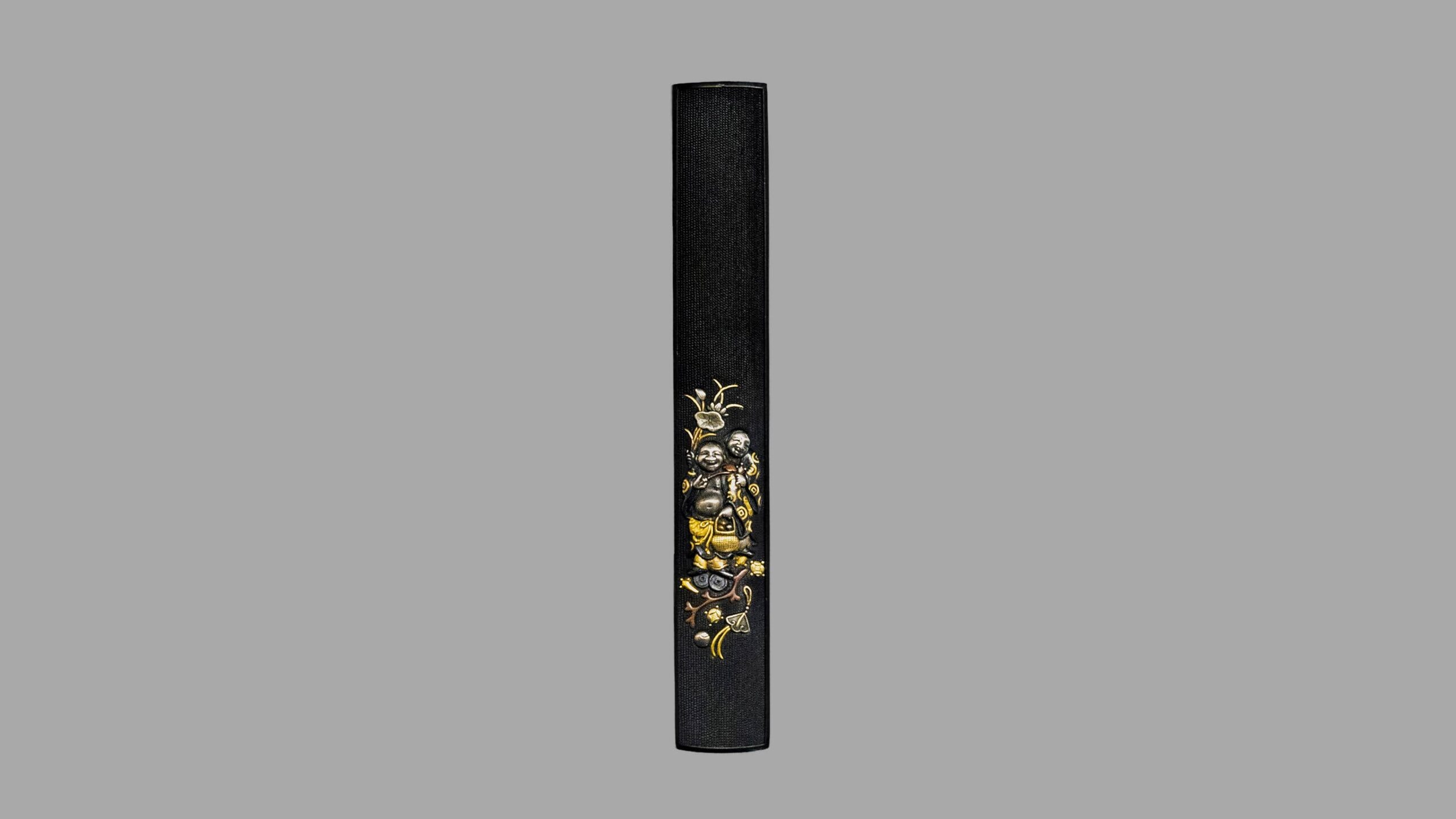
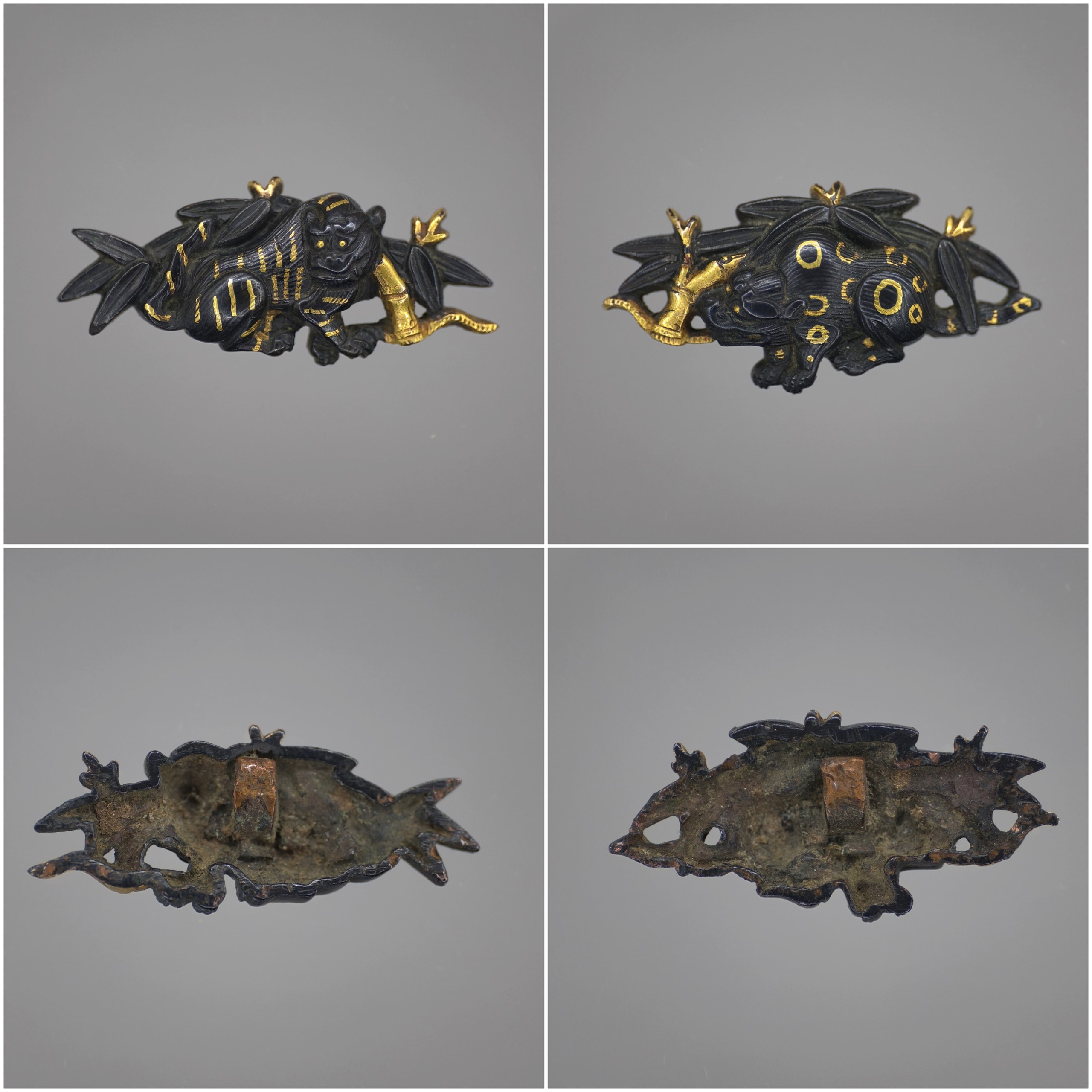
Tokujo's work is executed predominantly on grounds -- surfaces of extraordinarily minute and dense that serve as the foundation for the Goto house's formal repertoire. His principal technique is with (high-relief carving finished with gold color application), frequently supplemented by and enriched on the reverse with ' (gilt backing). For and sculptural subjects, he employs yobori and nikubori (modeled and rounded relief carving), often with in'-ne undercutting that produces pronounced depth from the reverse and emphatic contrasts of ridge and hollow when tightened from the front. His solid-gold () pieces exhibit usu--dashi (thin-gold raised work) of particular refinement, in which the modulation of sculpted volumes -- the nikudori -- stands out with exceptional clarity. Among his most celebrated formal subjects is the paulownia crest, executed with a special chisel called the mugibataki and said to be struck ten times; the distinctive chisel marks visible between the flowers are recognized as hallmarks of the Goto family's official house style (). Whether rendering crawling dragons, auspicious figures such as Hotei and Idaten, or motifs drawn from nature, his compositions display a forceful method that conveys both impact and a powerful sense of motion.
The consistently characterizes Tokujo's work as possessing a distinctive dignity and authority that is unmistakably of the Goto mainline tradition. His pieces are described as conveying the bold, sumptuous spirit characteristic of taste -- powerfully expressed and of notably elevated dignity. The reliability and precision of his okakebori (official house-style carving) are held as exemplary, and the quality of execution is repeatedly affirmed as displaying the high technical level and refined, elegant dignity of the -period Goto tradition. Several of his finest works were transmitted in the collections of illustrious houses, including the Hachisuka family and the wealthy Osaka merchant house of Konoike -- provenance that itself attests to the esteem in which his art was held. Tokujo stands as the pivotal figure who carried the Goto house through the transition from Ashikaga patronage to the unified realm of the warlords, and his production -- whether signed or authenticated by later Goto masters through and -- remains a benchmark against which the authority and sumptuousness of mainline Goto metalwork is measured.