NihontoWatch MonNihontoWatchBETA
MarketEncyclopedia
NihontoWatch Mon

NihontoWatchBETA

Market
Encyclopedia
Overview·Kantei·Designations·Work Types·Signatures·Lineage·School
OverviewKanteiDesignationsWork TypesSignaturesLineageSchool
  1. Schools
  2. Goto
  3. Goto Main Line
  4. Goto Sokujo

Goto Sokujo

後藤即乗

Jūyō
Vol. 45, No. 166 · Tsuba

Goto Sokujo

後藤即乗

11 ranked works

ProvinceYamashiroEraEarly Edo (1600–1631)PeriodEdoSchoolGotoTraditionIeboriGeneration8TeacherGoto EijoSpecialtiesmitokoromono, kozuka, kogai, menuki, fuchi-kashiraTypeTosogu MakerCodeGOT008
11Jūyō Tōken

Overview

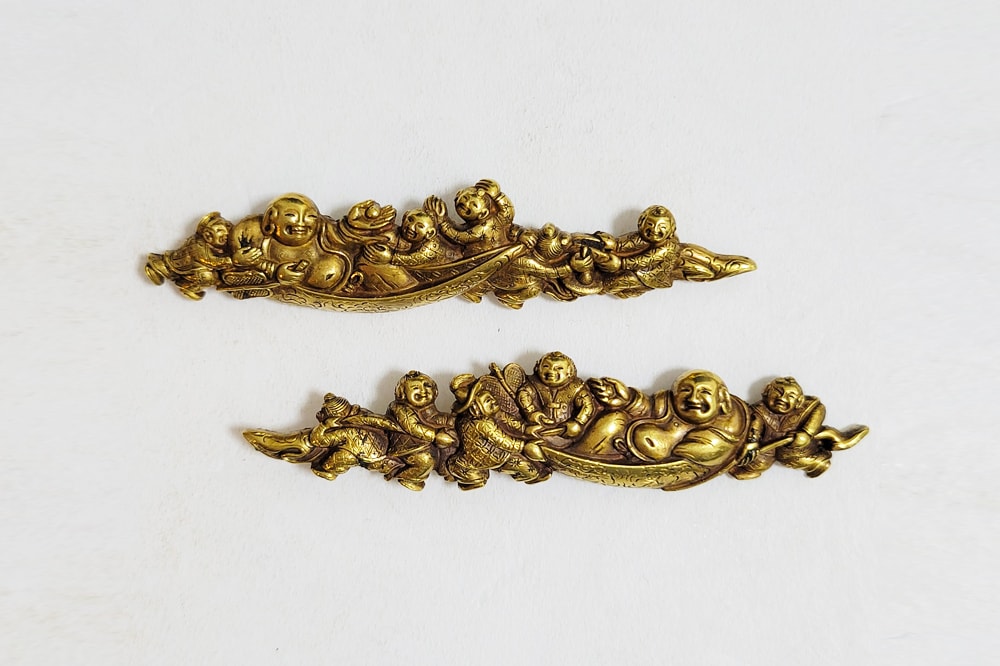
Goto Sokujo, the eighth head of the mainline Goto family, was the second son of the sixth master, Eijo. His childhood name was Kameichi and his common name Genshichiro; he was born in Keicho 5 (1600). When his father Eijo died, Genshichiro was eighteen years old. He succeeded to the name Shirobei and changed his personal name to Mitsushige. The circumstances of his succession were complicated: for reasons the notes "are not clear," the seventh headship was held in a custodial form by his grandfather Tokujo, and in Genna 9 (1623) his uncle Kenjo inherited as the seventh master, while Sokujo was assigned to service in (edozume). It was not until 'ei 5 (1628), at the age of twenty-eight, that Sokujo at last succeeded to the main house as its eighth head. His tenure, however, proved tragically brief --- "less than four years" --- and he died of illness in 'ei 8 (1631) at the young age of thirty-two. The observes with consistent emphasis that "for this reason, Sokujo's works are exceedingly few," and that among pieces bearing his own signature, "only a single set of a crawling dragon (hairyu) is presently confirmed." His known signatures include "Goto Mitsushige" with , "Mitsushige" with , and "Goto Shirobei Mitsushige" with .

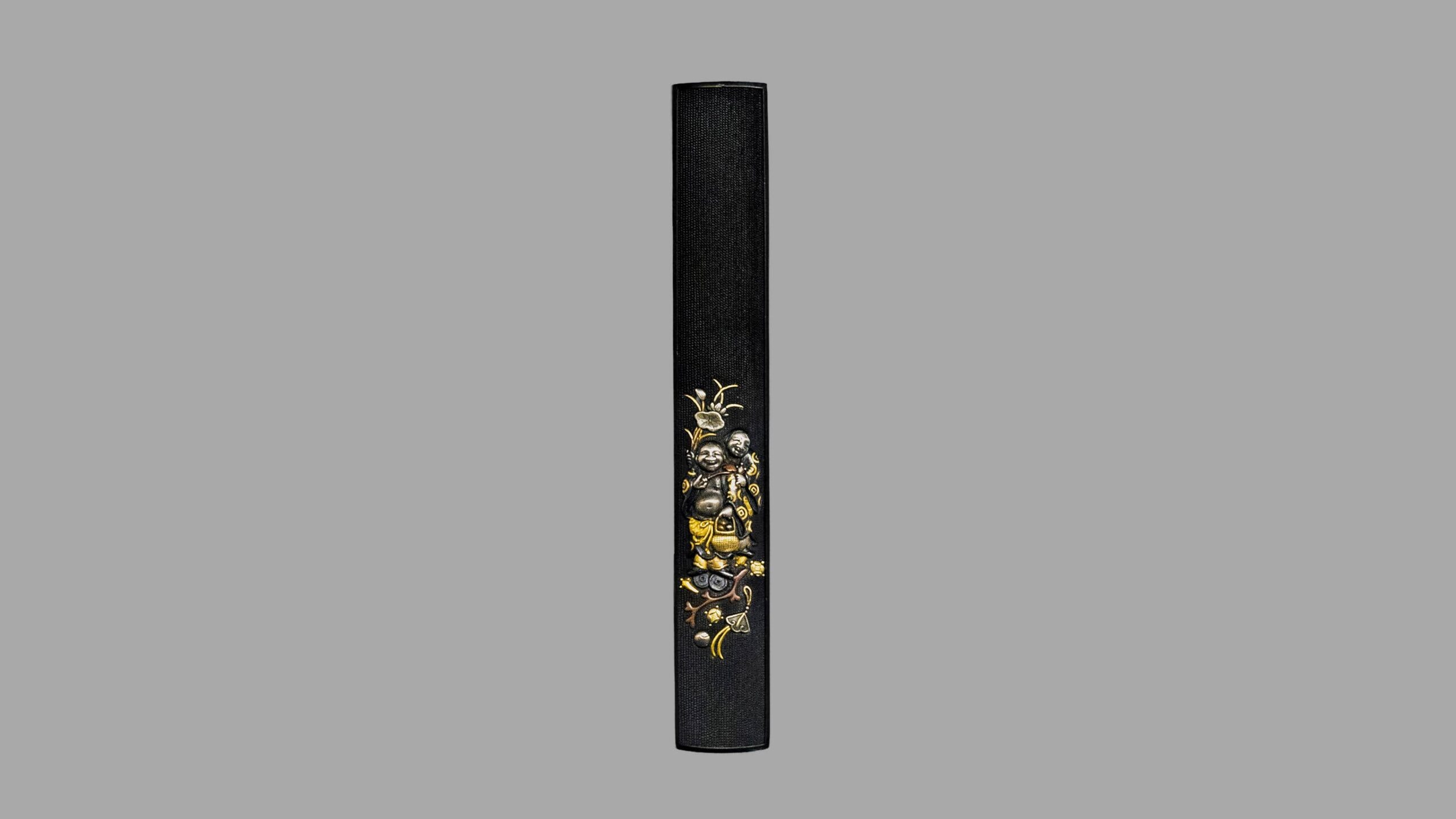
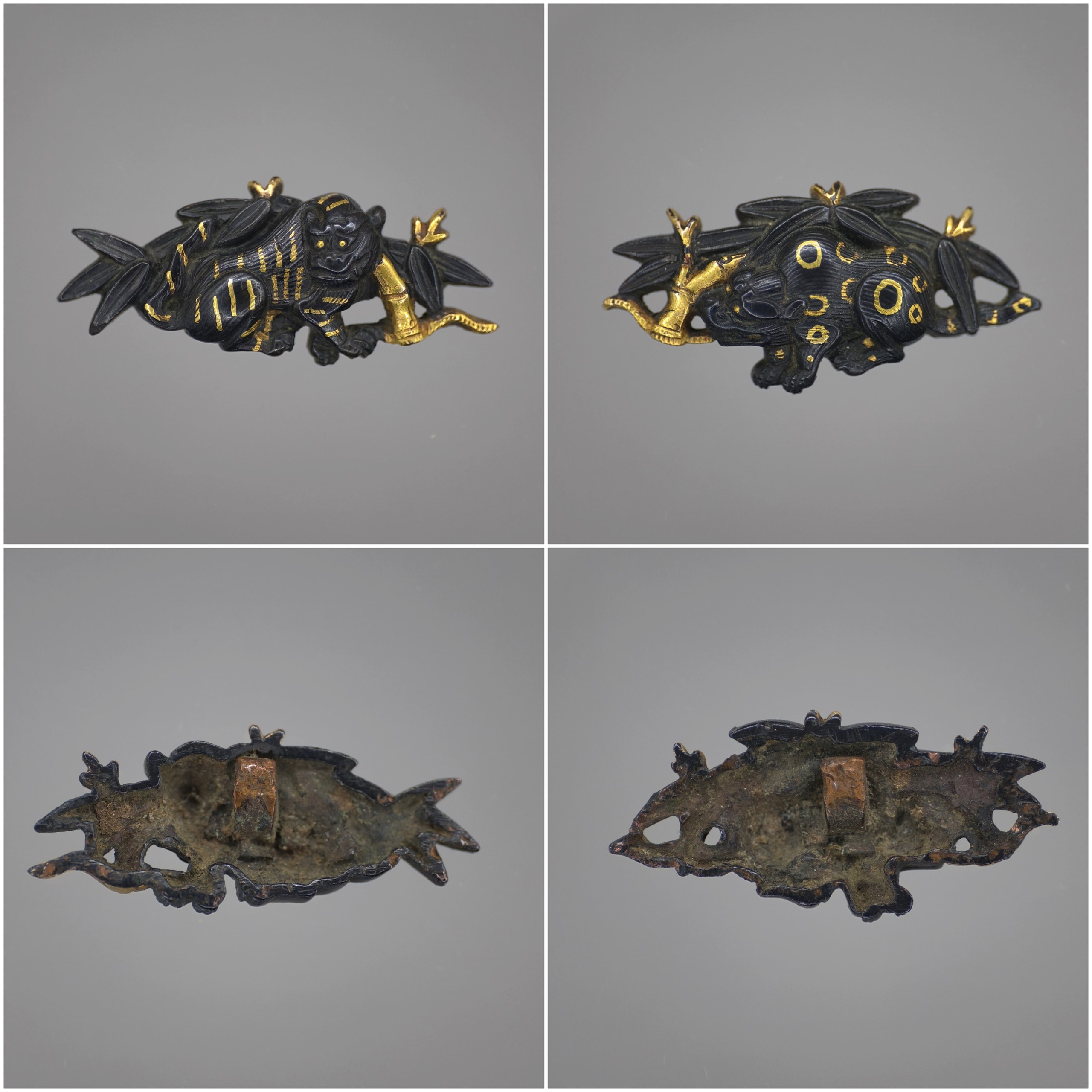
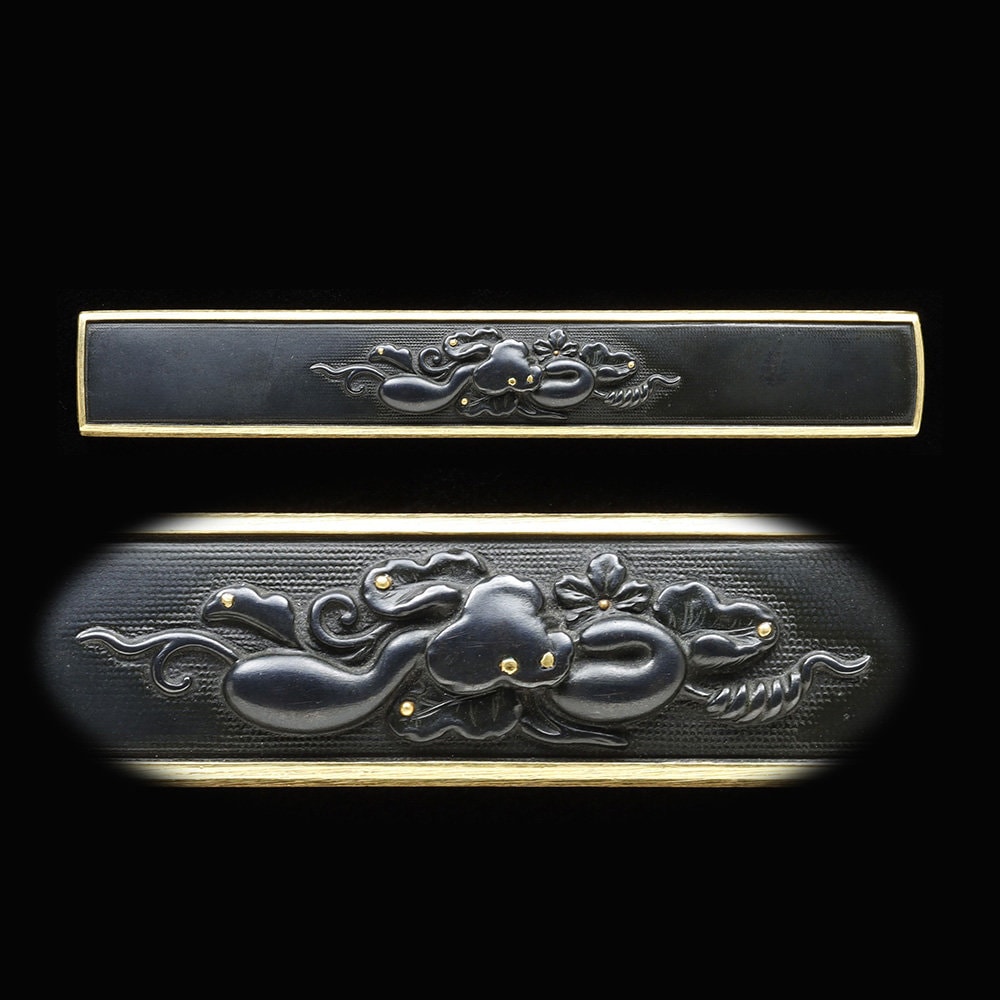
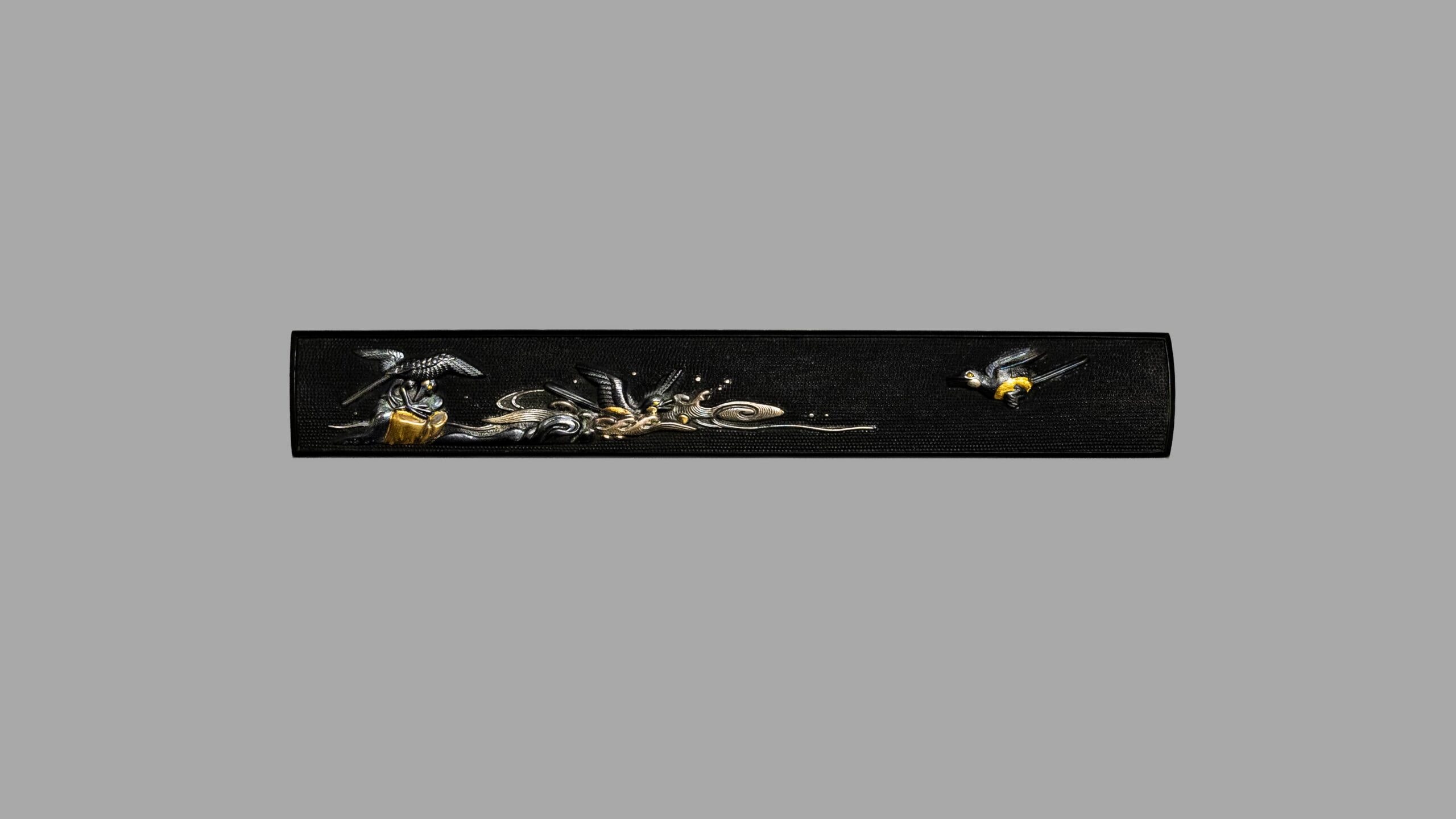
Sokujo's extant works demonstrate strict adherence to the iebori no okite --- the formal house rules of workmanship that governed mainline Goto production. His and are executed in with gold crests and gilt reverse ('), while his conform to house practice in solid gold with modeled carving (yobori). The quality of the ground is consistently noted as "superb," and the gold crest carving () is described as "exceptionally minute and of excellent quality." His subjects encompass the dragon in its several canonical forms --- the crawling dragon (hairyu), the dragon, the sword-wrapping dragon (kenmaki ryu), and the water dragon (suiryu) --- as well as narrative and auspicious themes including the Four Sacred Beasts (shirei), the shell-matching game (-awase), Emperor Xuanzong and Yang Guifei, and the gold coinage of the Goto house itself. His carving is characterized by vigorous modeling in which, as the observes, "the 'mountain' portions rise high and the 'valley' portions are cut deeply; the forceful quality is outstanding." Triangular chisel marks applied to dragon horns, ears, and foreclaws constitute a notable technical signature. His figures are described as "taut" and showing "smooth, fluent movement," while the overall compositions convey "an elevated sense of formality" and "notably high dignity."

The rarity of Sokujo's oeuvre paradoxically intensifies the significance accorded to each surviving work. Almost all designated pieces are unsigned, their attribution resting upon formal appraisals issued by later Goto masters --- the tenth head Renjo, the twelfth head Jujo Mitsusato, the thirteenth head Enjo Mitsutaka, the fourteenth head Mitsumori, the fifteenth head Mitsuyoshi, and the sixteenth head Mitsuaki --- often accompanied by certificates with recorded valuations and by reverse carving (urabori) added at the time of authentication. One work was judged by Renjo to be his own father's hand, an appraisal the describes as "carrying authority close to that of an autograph signature." This sustained chain of institutional authentication across eight generations of Goto headmasters constitutes an extraordinary provenance, and the repeatedly emphasizes its evidential weight. Sokujo's works are described as embodying "the assured tradition of the Goto house's official carving style" (Got0 ), possessing "exceptionally dignified" presence, and exhibiting "great precision" in execution and "exceptionally good" states of preservation. Despite a career cut short after barely four years at the head of Japan's most consequential metalworking dynasty, Sokujo left a small but distinguished body of work in which the formal authority and technical discipline of the mainline Goto tradition are preserved with undiminished rigor.
Kantei

3 descriptive axes: material (the shakudo-nanako house grounds, with solid-gold menuki grounds and the occasional all-gold ground besides) x technique (the orthodox takabori and katachibori with gold iro-e and gold-crest work, the carving called dense and finely cut) x themes (the house dragons, the crawling, sword-entwining and kurikara forms above all). His one load-bearing discriminator is his genuine self-signature, read Goto Mitsushige, against the mumei early-Goto norm; it is honestly low-frequency, for his tenure was so short that the records say only one self-signed three-piece set survives, and two of the eleven corpus pieces carry his transcribed self-signature while the rest are mumei work attributed to him by the later certifying heads. The corpus offers no second clean per-piece separator, because he is not credited with a personal innovation the way the records single out his son Renjo's shibuichi ground or Tsujo's left-and-right composition, and the praise as a master craftsman is a biographical note rather than a feature read off any one piece; the rest is the orthodox house foundation. Because he is one of the upper generations, his bare art-name 即乗 appears as the APPRAISED name on the later heads' kiwame-mei (紋即乗 + 光理/光孝/光守/光晃, 即乗作 光美, and his son the tenth head Renjo's 光侶), which must be distinguished from his own self-signed work.

Goto Sokujo, given name Mitsushige (read 光重), is the eighth-generation head of the orthodox Goto house, the second son of the sixth master Eijo. He was born in Keicho 5 (1600); his childhood name was Kameichi and his common name Genshichiro. When his father Eijo died he was eighteen; he took the house common-name Shirobei and changed his given name to Mitsushige, but the seventh headship was first held in trust by his grandfather, the fifth master Tokujo, and in Genna 9 (1623) his uncle Kenjo succeeded as the seventh master while Sokujo was stationed in . He then succeeded to the headship as the eighth master in Kanei 5 (1628) at twenty-eight, but his tenure was barely four years and he died young in at thirty-two in Kanei 8 (1631), praised in the records as a master craftsman. Because his tenure was so short his self-signed work is extremely rare, the records repeating that only a single self-signed three-piece set survives; his genuine signature reads Goto Mitsushige with a . He worked the orthodox house grounds and hand, his repeated subjects the crawling, sword-entwining and dragons of the house canon. He was the father of the tenth master Renjo, who was raised by his uncle the ninth master Teijo after Sokujo's early death. As one of the upper Goto generations his pieces are themselves attributed by the later certifying heads, his art-name 即乗 standing as the appraised name on their .

Diagnostic discriminators

two of the eleven corpus objects carry his genuine signature transcribed as 後藤光重(花押), read by his given name Mitsushige (the records also record the bare light-name 光重(花押) and the full 後藤四郎兵衛光重(花押)). It is honestly low-frequency: because his headship lasted barely four years the records repeat that only a single self-signed three-piece set survives, so the rest of the corpus is mumei work attributed to him. He stands against the mumei norm of the early house, but only just, and far below the regular signing of his later descendants Renjo, Tsujo and Enjo. The bare 光重 is NOT counted as his self-signature here: it appears in all eleven setsumei chiefly in the biographical recital ('四郎兵衛を襲名し光重と改名している'), and stands BOTH as the base of his own 後藤光重 self-signature; only the 後藤-prefixed run (and the explicitly-transcribed 光重(花押) self-sig) is unambiguously his hand. The bare art-name 即乗 is likewise NOT his signature: across this corpus it is the APPRAISED name on later heads' kiwame-mei (紋即乗 光理 / 紋即乗 光孝 / 紋即乗 光守 / 紋即乗 光晃 / 即乗作 光美 / 光侶 by his son the tenth head Renjo), Sokujo being certified by the twelfth through sixteenth heads and by Renjo, NOT his own carving

Material (grounds)

The orthodox house grounds, in fine above all for the , and , with solid-gold grounds on the and an all-gold ground on several three-piece sets.

Technique

for the and with gold iro-e and the formal gold-crest set on the , for the , the backs finished with fill-gold or plate-gold, the hand of the house called dense and finely cut.

Themes (the house dragons)

The house dragons above all, the crawling, sword-entwining and forms his repeated subjects, with a water-dragon and a cloud-dragon among the sets, and figural, treasure, arrow and shell-matching scenes besides.

The house dragons

Dragons of the house canon above all, the crawling dragon the records say survives self-signed, with sword-entwining and dragons besides, and the white tiger of a four-spirits set.

Full iconography

Signature chronology

Placement

Documentary note

Sokujo's genuine signature reads 後藤光重(花押) by his given name Mitsushige, with the bare 光重(花押) and the full 後藤四郎兵衛光重(花押) also recorded; the records say only a single self-signed three-piece set survives, so most of the corpus is work attributed to him. Because he is one of the upper Goto generations, his pieces are themselves certified by the later heads' : the twelfth master Jujo (read 光理) attributed a set and a coin three-piece set (紋即乗 光理, with a 享保十六年 priced at 200 ); the thirteenth master Enjo (read 光孝) signed a chrysanthemum , a gourd-and-pepper , an arrow-quiver set and a four-spirits set (紋即乗 光孝, with dated ); the fourteenth master Keijo (read 光守) attributed a shell-matching (紋即乗 光守); the fifteenth master Shinjo (read 光美) attributed a water-dragon set (即乗作 光美, with a 文政二年 priced at 250 ); the sixteenth master Hojo (read 光晃) attributed a sword-entwining-dragon set (紋即乗 光晃); and the Genso-and-Yokihi set carries a 元文五年 by Jujo (光理). Read all of these as later appraisals of Sokujo, never as his own hand. One cloud-and-water dragon set is appraised by his own son, the tenth head Renjo (read 光侶), with a 寛文三年 , and the records call this attribution by the son one to be trusted nearly as a self-signature; the coin set was remounted by Jujo and certified by Enjo, the noting the gold-fill underlay as Renjo's work. A note on the water-dragon set observes three-cornered chisel-marks struck on the dragon's horns, ears and forepaws, but this observation is single-source.

Scholarship

His headship lasted barely four years before he died at thirty-two, so the records say his self-signed work is extremely few, with only a single self-signed three-piece set confirmed to survive; this is his documented individuating character, but it is recited in the biography of nearly every setsumei rather than read off any one piece, so it is kept here and not used as a per-piece discriminator.

Designations

Kokuhō—
Jūyō Bunkazai—
Jūyō Bijutsuhin—
Gyobutsu—
Tokubetsu Jūyō—
Jūyō Tōken11

Elite Standing

0.08 across 11 designated works

Top 17% among makers

Work Types

Distribution across 11 ranked works

Other
545%
Mitokoromono
436%
Tsuba
19%
Kozuka
19%

Signatures

Signature types across 11 ranked works

Currently Available

Lineage

TeacherGoto Eijo
Goto Sokujo
Students (2)
  1. 1.Goto Teijo後藤程乗10 for sale41designated
  2. 2.Goto Renjo後藤廉乗4 for sale33designated

Goto School

Other artisans of the Goto school

  1. 1.Goto Joshin後藤乗真6 for sale67designated
  2. 2.Goto Yujo後藤祐乗1 for sale41designated
  3. 3.Goto Sojo後藤宗乗53designated
  4. 4.Goto Kenjo後藤顕乗1 for sale45designated
  5. 5.Goto Tokujo後藤徳乗2 for sale31designated
  6. 6.Goto Teijo後藤程乗10 for sale41designated
  7. 7.Goto Eijo後藤栄乗9 for sale31designated
  8. 8.Goto Renjo後藤廉乗4 for sale33designated
  9. 9.Goto Tsujo後藤通乗1 for sale29designated
  10. 10.Goto Kojo後藤光乗1 for sale25designated
  11. 11.Goto Enjo後藤延乗3 for sale19designated
  12. 12.Goto Hojo後藤方乗1 for sale16designated

Goto Sokujo

Goto Sokujo(後藤即乗) was a maker of Japanese sword fittings (tōsōgu) of the Goto school in Yamashiro province, active during the Early Edo (1600-1631) period.

The work follows the Iebori tradition.

Designated works by Goto Sokujo include 11 Jūyō.