NihontoWatch MonNihontoWatchBETA
MarketEncyclopedia
NihontoWatch Mon

NihontoWatchBETA

Market
Encyclopedia
Overview·Kantei·Designations·Provenance·Work Types·Signatures·Lineage·School
OverviewKanteiDesignationsProvenanceWork TypesSignaturesLineageSchool
  1. Schools
  2. Goto
  3. Goto Main Line
  4. Goto Kojo

Goto Kojo

後藤光乗

Tokujū
Vol. 28, No. 25 · Kozuka

Goto Kojo

後藤光乗

25 ranked works

ProvinceYamashiroEraMomoyama (1529–1620)PeriodEdoSchoolGotoTraditionIeboriGeneration4TeacherGoto JoshinSpecialtiesmitokoromono, kozuka, kogai, menukiTypeTosogu MakerCodeGOT004
1Tokubetsu Jūyō24Jūyō Tōken

Overview

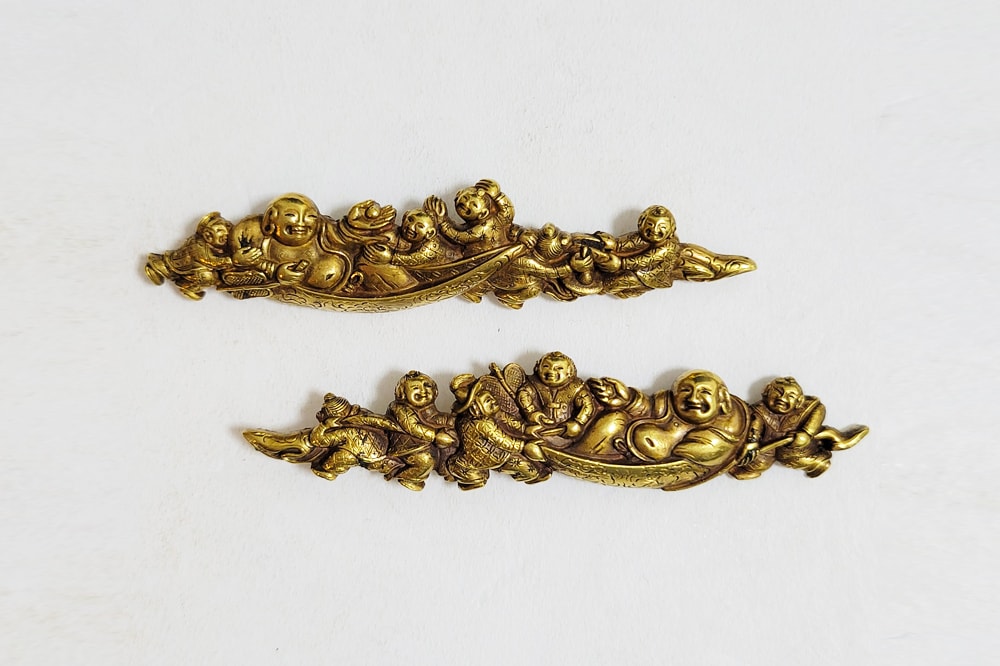
Gotō Mitsunori (後藤光乗), the fourth-generation head of the Gotō mainline (sōke), was the eldest son and heir of the third master Jōshin (乗真), born in Kyōroku 2 (1529). His common name was Kameichi, later changed to Koichirō, and his personal name (imina) was Mitsuie (光家). The Gotō family, acknowledged as the principal house of kinkō (sword-fitting metalworkers), served successive shogunal houses from the period through the period, and their productions came to be known as iebori ("house carving"), distinguished from ("town carving") made in response to ordinary public demand. Mitsunori initially served the Ashikaga shogunal house, then entered the service of Oda Nobunaga as a close retainer alongside his son Tokunori (徳乗). In Tenshō 9 (1581), by Nobunaga's command, Mitsunori and his heir Mitsumoto (Tokujō) produced the unmarked ōban (ten-ryō), regarded as the largest gold coin in the world. His reputation as a master craftsman is exceptionally high, and he is sometimes said to have been second in skill only to the founder Yūjō (祐乗).

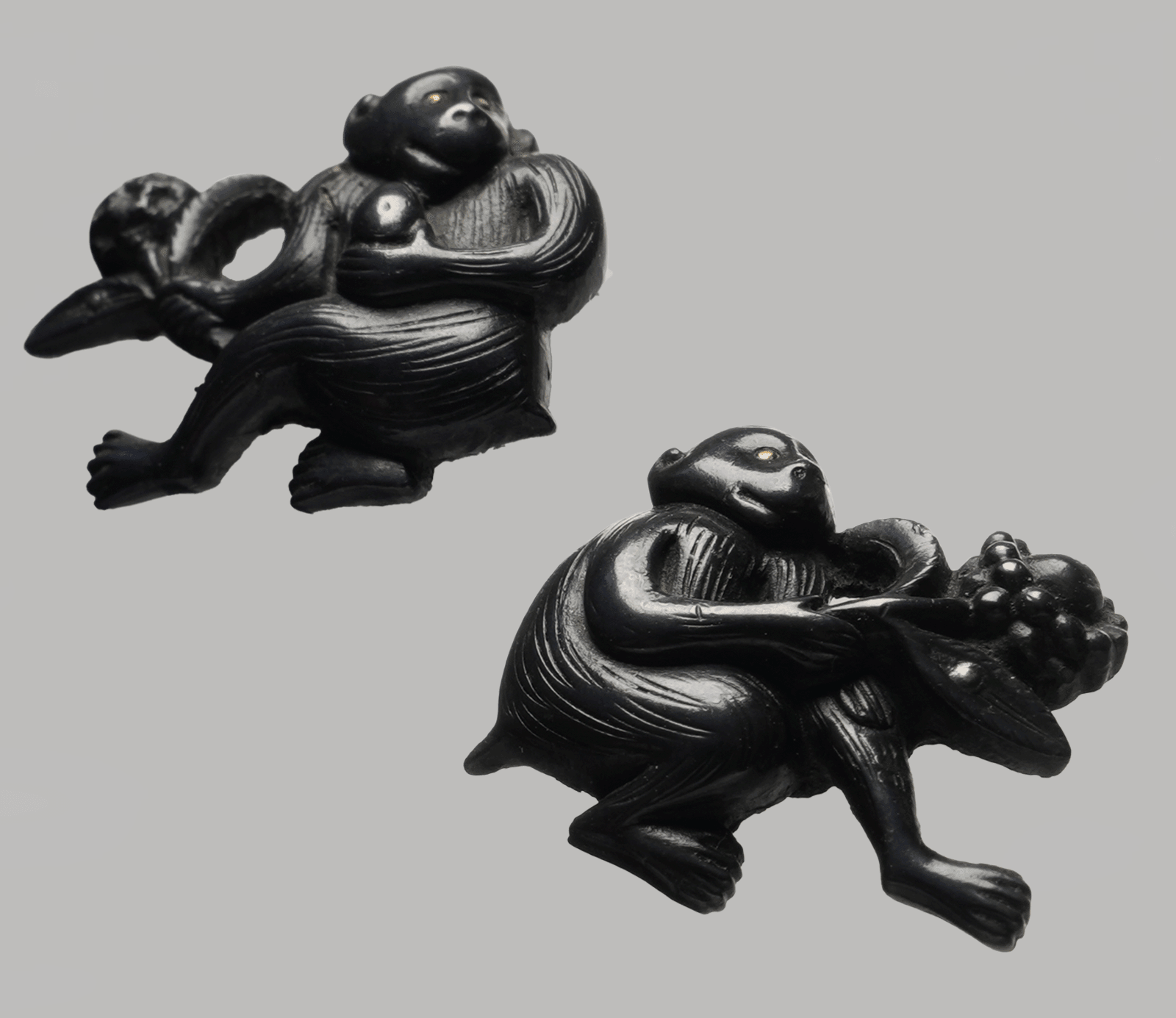
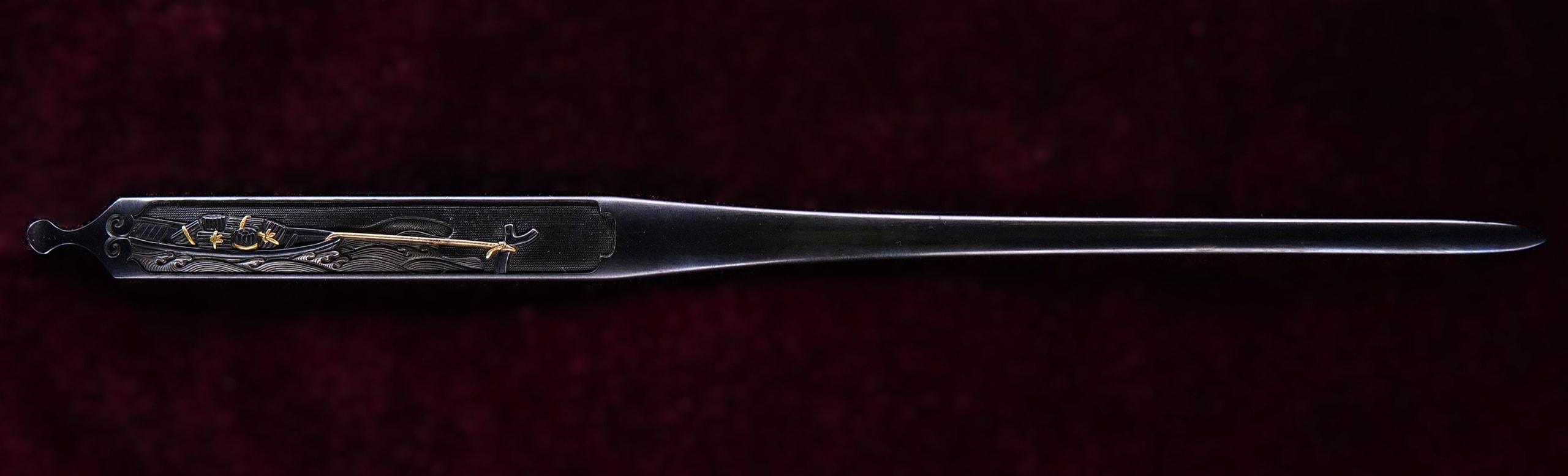
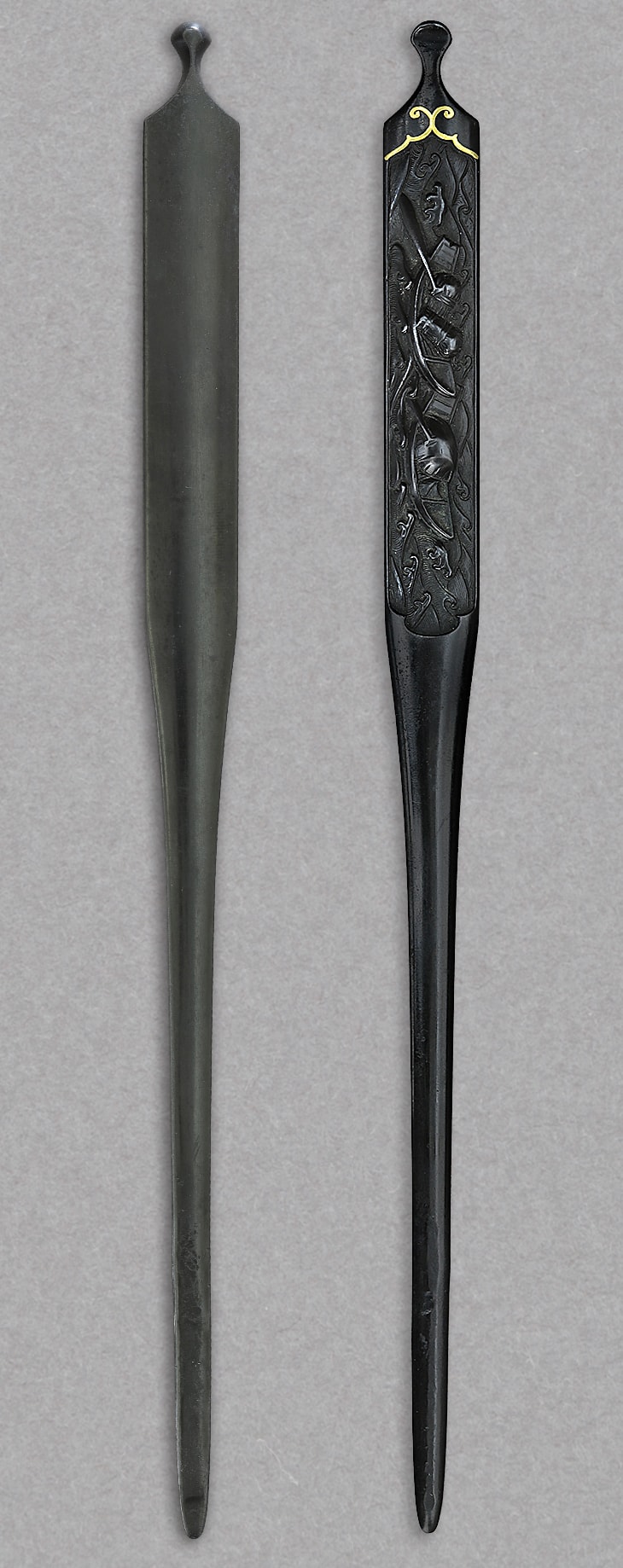
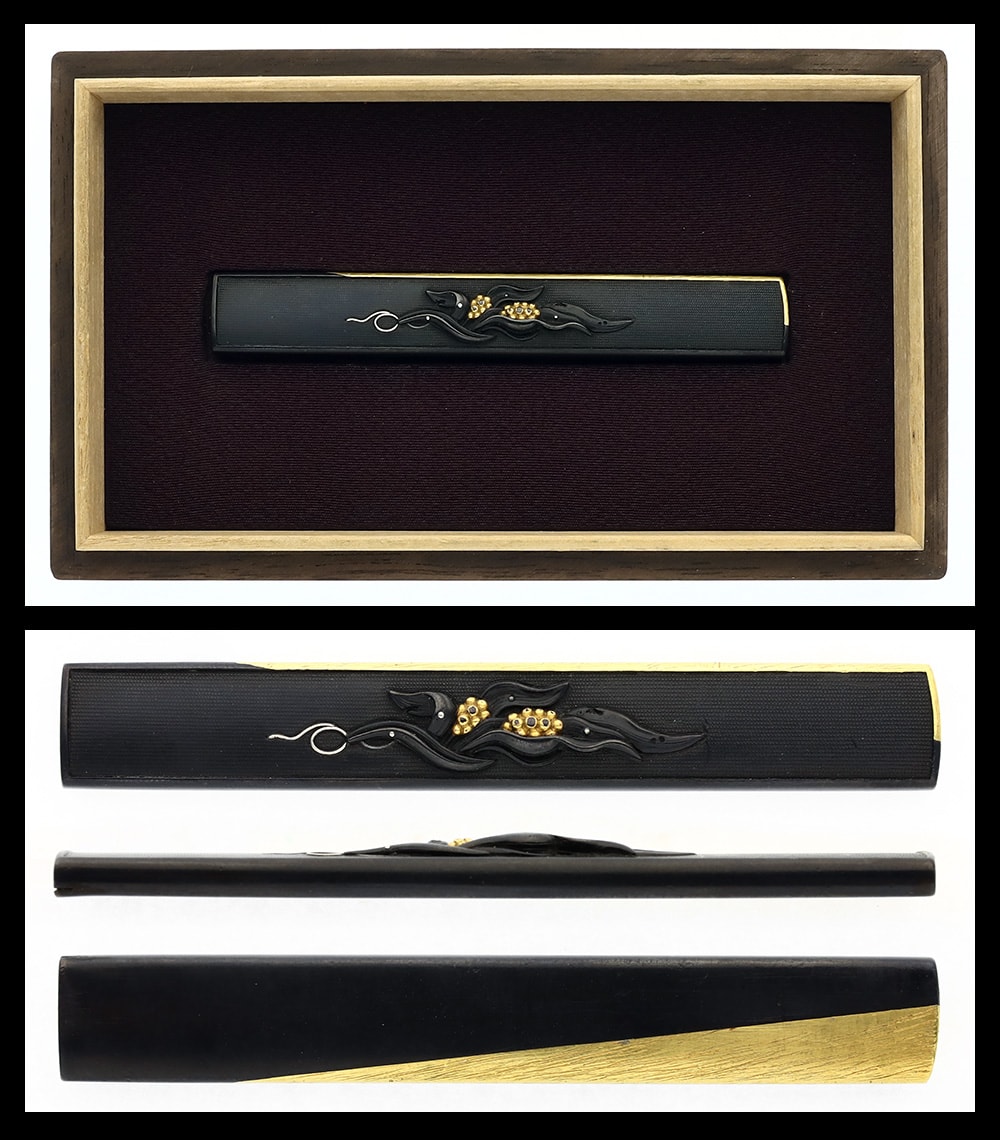
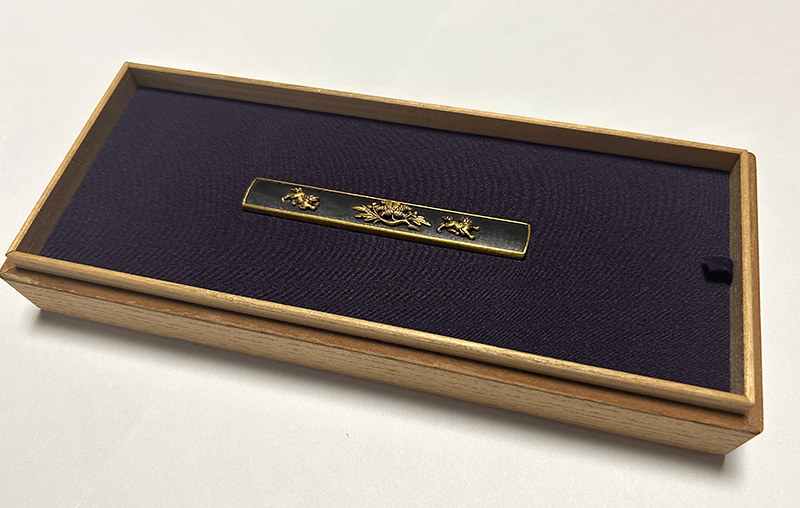
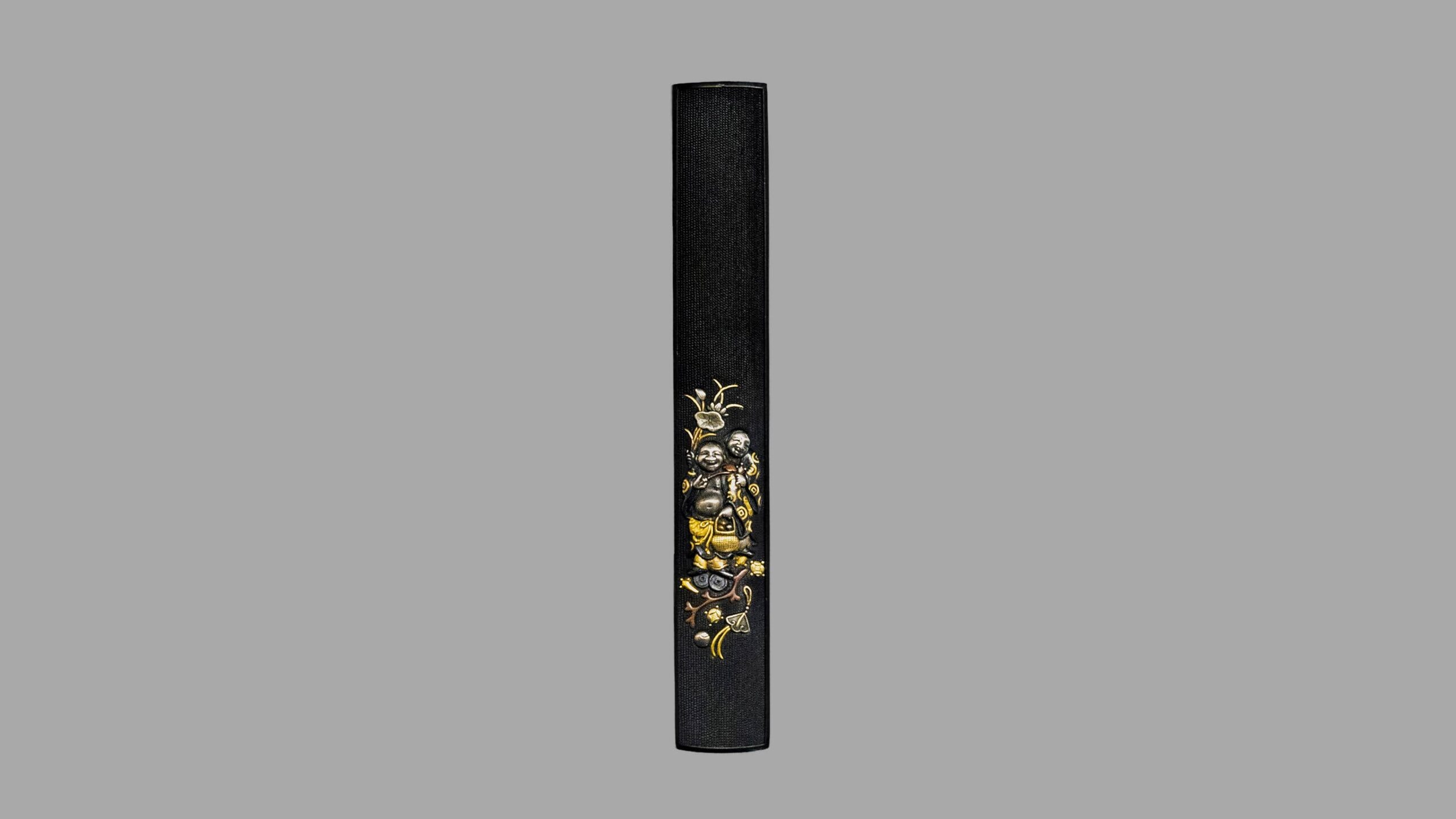
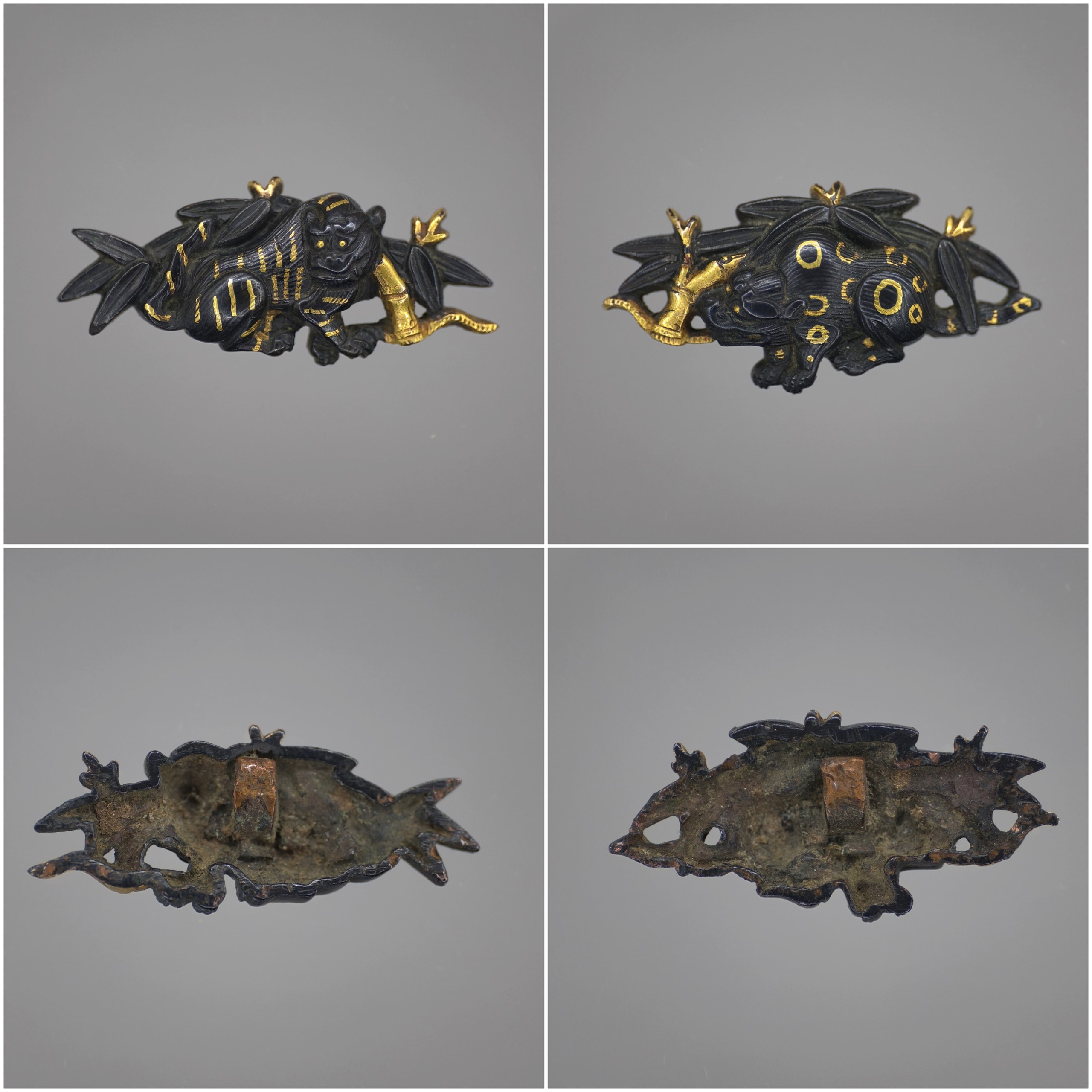
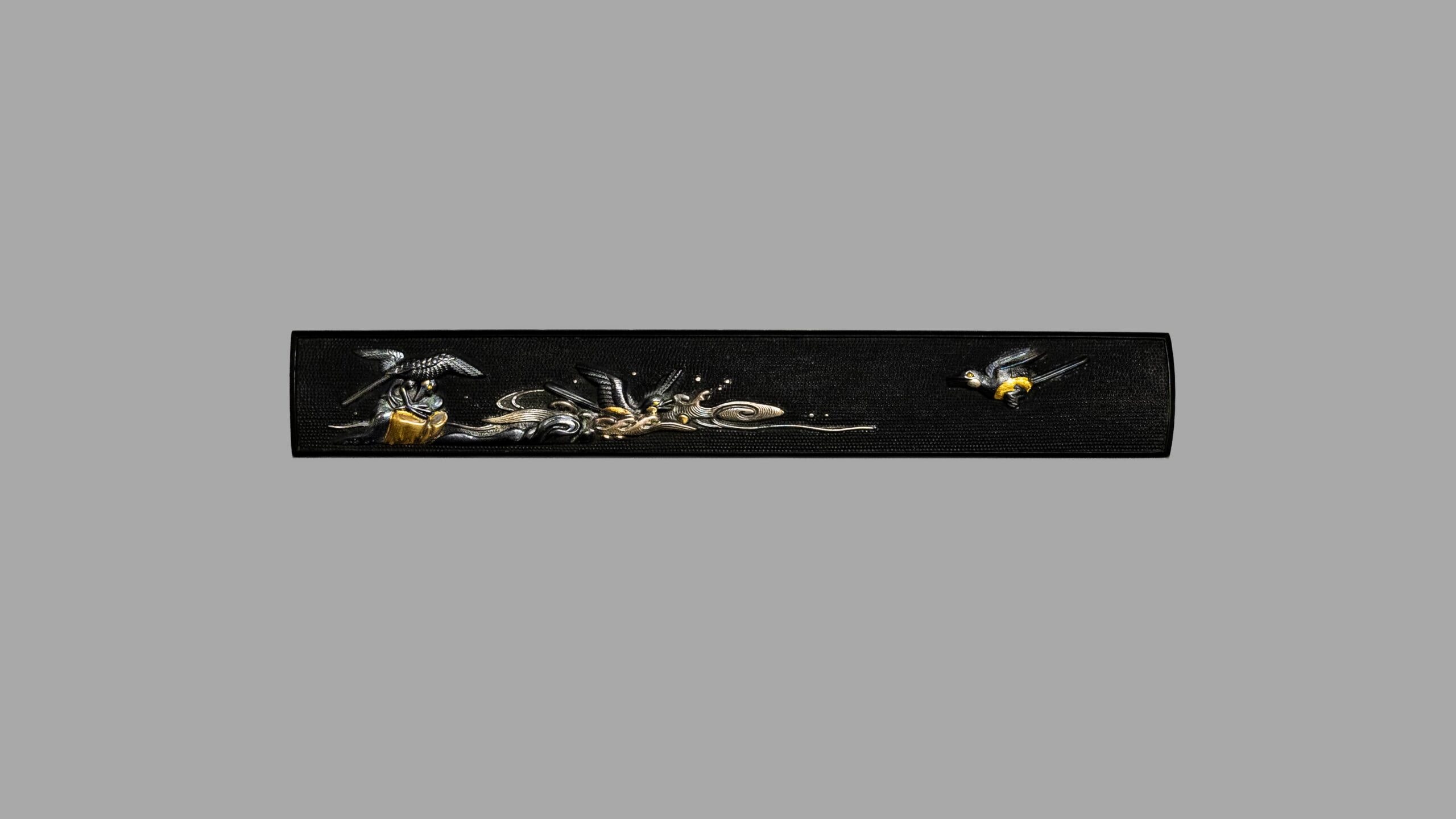
A distinguishing characteristic of Mitsunori's oeuvre is the frequent presence of strongly pictorial compositions, as he employed preparatory drawings by painters such as Kanō Motonobu and Kanō Eitoku. Within the Gotō house, he is credited as the first to introduce warrior subjects (mushabori) and designs of dragons and tigers. His works are executed primarily in with gold applied crests () and gilt reverse ('), employing (high-relief carving) enriched with gold and silver (polychrome metal inlay). The are characteristically rendered in solid gold (-muku) with sculptural yōbori and paired in'-ne attachment stems, features that later appraisers used as decisive points of attribution. His lion motifs display a distinctive manner of depiction said to occur frequently among the first three generations of the Gotō line as well as in his own work, and the triangular chisel work (sankaku-) is employed to powerful effect. Despite the limited pictorial field of the and , the carving is ample yet controlled, achieving compositions so vivid that figures seem about to spring into motion.

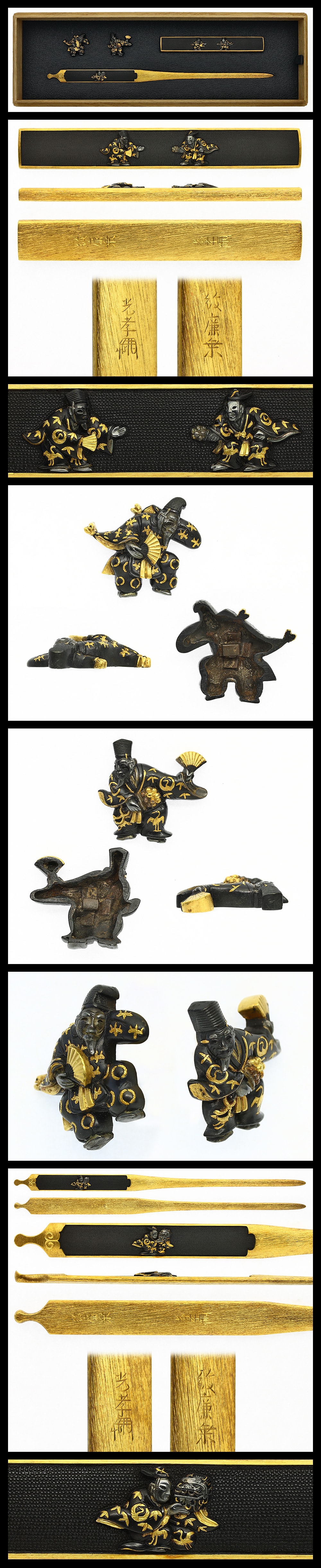
Mitsunori's works embody the spirited luxury of the age while maintaining the dignified tone of the iebori tradition. His subjects range from sacred beasts (reijū) — lions, tigers, leopards, kirin, rhinoceros, and baku — to Chinese historical narratives such as Huang Shigong and Zhang Liang and literary themes from the Twenty-four Filial Exemplars, as well as the Dragon and domestic subjects including oxen and pheasants. Many of his pieces were subsequently authenticated by later mainline masters, most notably the thirteenth head Mitsutaka (光孝), who inscribed authentication marks () and issued certificates with valuations that rank among the highest class. These works were transmitted through distinguished collections including the Shimazu, Kōnoike, Tsugaru, and Sakai families, attesting to the esteem in which Mitsunori's craftsmanship has been held across centuries of connoisseurship.
Kantei

3 descriptive axes: material (the shakudo-nanako and solid-gold house grounds) x technique (katachibori menuki and takabori with iro-e and suemon) x themes (the house lions and dragons, with his new warrior and dragon-and-tiger subjects). His load-bearing discriminators are the warrior-carving and dragon-and-tiger he first brought into the house, the painterly character drawn from Kano underdrawings, and his rare gold-inlay self-signature; the rest is the orthodox house foundation.

Goto Kojo is the fourth-generation head of the orthodox Goto house, eldest son of the third master Joshin, born in 1529, his given names Kameichi then Koichiro, his formal name Mitsuie. He first served the Ashikaga shoguns and then Oda Nobunaga, and in 1581, by Nobunaga's order, he minted with his son Mitsumoto (Tokujo) the great unmarked ten-ryo Oban, the largest gold coin in the world. The records praise him highly, calling him a master second only to the founder Yujo. Within the shared house style his individual tells are documented and individuating: he was the first of the house to take up warrior-carving and the dragon-and-tiger subject, his pieces often carry a painterly character drawn from underdrawings by the Kano painters Motonobu and Eitoku, and he is the first Goto head to leave a genuine self-signature, cut in gold-inlay and read with a distinctive single , though such self-signed works are few.

Diagnostic discriminators

the setsumei repeatedly say it is traditionally held that within the Goto house he was the first to render warrior-carving and the dragon-and-tiger design; both fall outside the inherited okite repertoire of the founding heads

the setsumei give as one of his characteristics that his pieces are often painterly, because he used underdrawings by Kano Motonobu and Eitoku; this pictorial source is named as his own, not a house inheritance

he is the first Goto head to leave a genuine self-signature, cut in gold-inlay as 後藤(花押)(光乗), 後藤光家(花押) or 光家(花押); the records say such self-signed works are few and that the single distinctive kao identifies his hand. Almost all attributed work is mumei, the 紋光乗-plus-a-later-head forms being later heads' appraisal-signatures, not his hand

Material (grounds)

The orthodox house grounds, in fine above all, with solid-gold and all-gold grounds on the , plain and gold grounds besides.

赤銅地

Technique

for the with the inyo-ne post, with gold and silver iro-e and applied for the and , with - inlay besides, the back finished with fill-gold.

Themes (the house canon and his new subjects)

The house lions and dragons of the okite repertoire, with his new warrior-carving and dragon-and-tiger subjects, and figural and Chinese-tale pieces drawn from painters' underdrawings among his commissions.

Lions and dragons of the house okite

Lions singly, in pairs and in threes, dragons and crawling dragons, the canonical Goto subjects, carried with the forceful, full relief of the manner.

Warriors, dragon-and-tiger and figural talesless firmly established

The warrior-carving and dragon-and-tiger he first brought into the house, with figural subjects from Chinese tales (Ushiwaka and Benkei, Genso and Yokihi, Kosekiko and Choryo) drawn from painters' underdrawings.

Full iconography

Signature chronology

Documentary note

Kojo's work is overwhelmingly , attributed by the house and by cut by later heads, who sign with their own name and : '-Kojo' followed by Mitsutaka (the thirteenth, Enjo, read 光孝), Renjo (the tenth), Mitsuyoshi (the fifteenth, Shinjo, read 光美) and others, or 'Kojo-', often with a dated (Teijo, Mitsuyo read 光侶, Mitsutsune read 光理, and others). Read these 紋光乗 forms as later appraisals, never as his own hand. Unlike the wholly founding heads (Yujo, Sojo, Joshin) he is the first of the house to leave a genuine self-signature: cut in gold-inlay as 後藤(花押)(光乗) on the dominant pieces, also 後藤光家(花押) and 光家(花押) (光家 = Mitsuie, his formal name), all sharing the single distinctive that the records say identifies his hand. Such self-signed works are explicitly called few. Some sets in the group are mixed-hand: a Teijo paired with a Kojo , or grounds and shafts noted in the as later repairs (geita and by Kenjo, replacement grounds by a later worker).

Scholarship

His pieces are often painterly because he used underdrawings by the Kano painters Motonobu and Eitoku, and he is traditionally said to have been the first of the house to render warrior-carving and the dragon-and-tiger.

Designations

Kokuhō—
Jūyō Bunkazai—
Jūyō Bijutsuhin—
Gyobutsu—
Tokubetsu Jūyō1
Jūyō Tōken24

Elite Standing

0.12 across 25 designated works

Top 11% among makers

Provenance

5 documented provenances across certified works by Goto Kojo

Provenance Standing

2 works held in elite collections across 5 documented provenances

Top 15% among makers

Raw score: 2.14 / 10

Work Types

Distribution across 25 ranked works

Menuki
936%
Mitokoromono
728%
Other
624%
Kozuka
28%
Kōgai
14%

Signatures

Signature types across 25 ranked works

Currently Available

Lineage

TeacherGoto Joshin
Goto Kojo
Students (2)
  1. 1.Goto Tokujo後藤徳乗2 for sale31designated
  2. 2.Kakujo覚乗2designated

Goto School

Other artisans of the Goto school

  1. 1.Goto Joshin後藤乗真6 for sale67designated
  2. 2.Goto Yujo後藤祐乗1 for sale41designated
  3. 3.Goto Sojo後藤宗乗53designated
  4. 4.Goto Kenjo後藤顕乗1 for sale45designated
  5. 5.Goto Tokujo後藤徳乗2 for sale31designated
  6. 6.Goto Teijo後藤程乗10 for sale41designated
  7. 7.Goto Eijo後藤栄乗9 for sale31designated
  8. 8.Goto Renjo後藤廉乗4 for sale33designated
  9. 9.Goto Tsujo後藤通乗1 for sale29designated
  10. 10.Goto Enjo後藤延乗3 for sale19designated
  11. 11.Goto Hojo後藤方乗1 for sale16designated
  12. 12.Goto Sokujo後藤即乗11designated

Goto Kojo

Goto Kojo(後藤光乗) was a maker of Japanese sword fittings (tōsōgu) of the Goto school in Yamashiro province, active during the Momoyama (1529-1620) period.

The work follows the Iebori tradition.

Designated works by Goto Kojo include 1 Tokubetsu Jūyō, 24 Jūyō.