NihontoWatch MonNihontoWatchBETA
MarketEncyclopedia
NihontoWatch Mon

NihontoWatchBETA

Market
Encyclopedia
Overview·Kantei·Designations·Provenance·Work Types·Signatures·Lineage·School
OverviewKanteiDesignationsProvenanceWork TypesSignaturesLineageSchool
  1. Schools
  2. Goto
  3. Goto Main Line
  4. Goto Tokujo

Goto Tokujo

後藤徳乗

Jūyō
Vol. 8, No. 91 · Mitokoromono

Goto Tokujo

後藤徳乗

31 ranked works

ProvinceYamashiroEraMomoyama-Early Edo (1550–1631)PeriodEdoSchoolGotoTraditionIeboriGeneration5TeacherGoto KojoSpecialtiesmitokoromono, kozuka, kogai, menuki, fuchi-kashira, tsubaTypeTosogu MakerCodeGOT005
1Jūyō Bijutsuhin
1Tokubetsu Jūyō29Jūyō Tōken

Overview

Goto Tokujo, the fifth-generation head of the Goto mainline (soke), was the eldest son and heir of the fourth master, Mitsujo. He was born in Tenbun 19 (1550) and died in 'ei 8 (1631). His common name was first Genjiro, later changed to Shirobei; his personal name (imina) is recorded as Mitsumoto and also as Masaie, and he is additionally known by the name Koryo. Since the time of the first master, Yujo, the Goto family had served the Ashikaga shogunal house generation after generation. However, during Mitsujo's tenure the Ashikaga line was extinguished, and thereafter Mitsujo and Tokujo entered the service of Oda Nobunaga. Following Nobunaga's death, they served Toyotomi Hideyoshi and were charged with three official duties: oban (large gold coinage), fundo (weights and measures), and (carved metalwork for sword fittings). In Tensho 16 (1588), Tokujo produced oban and koban gold coinage, striking upon them a paulownia hallmark known as the "Tokujo " -- also called the "Taiko " -- and writing his own name in ink upon the coins. Even after the advent of Tokugawa rule he continued in service to Ieyasu and Hidetada, and in his later years he was granted the honorary Buddhist rank of Hogen. Tokujo had five sons and four daughters; his eldest son, Eijo Masafusa, succeeded as the sixth head, while his third son, Kenjo, became the seventh head, and the fourth and fifth sons, Takujo and Kyujo, established separate branch houses. His daughters married into the , Kano, and Gold Guild (kinza) families, cementing the Goto house's central position among -period cultural lineages.

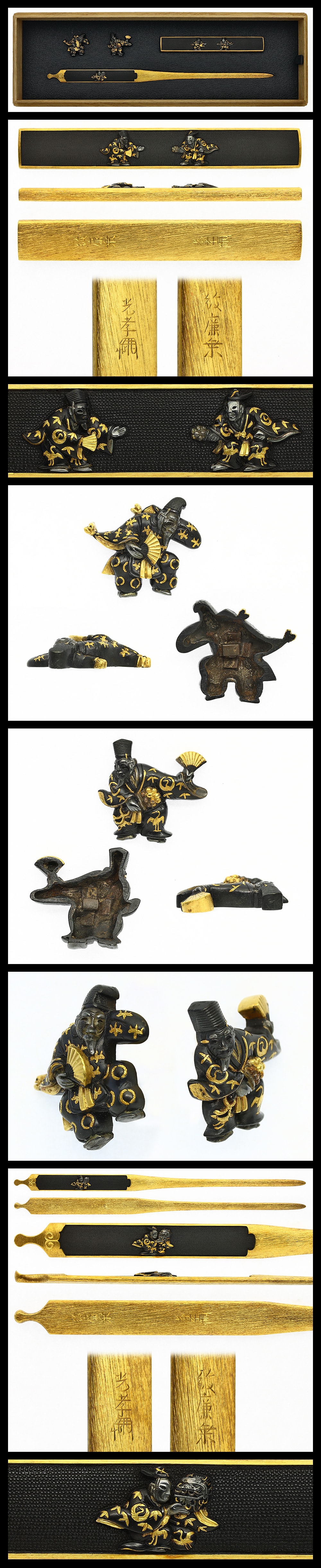
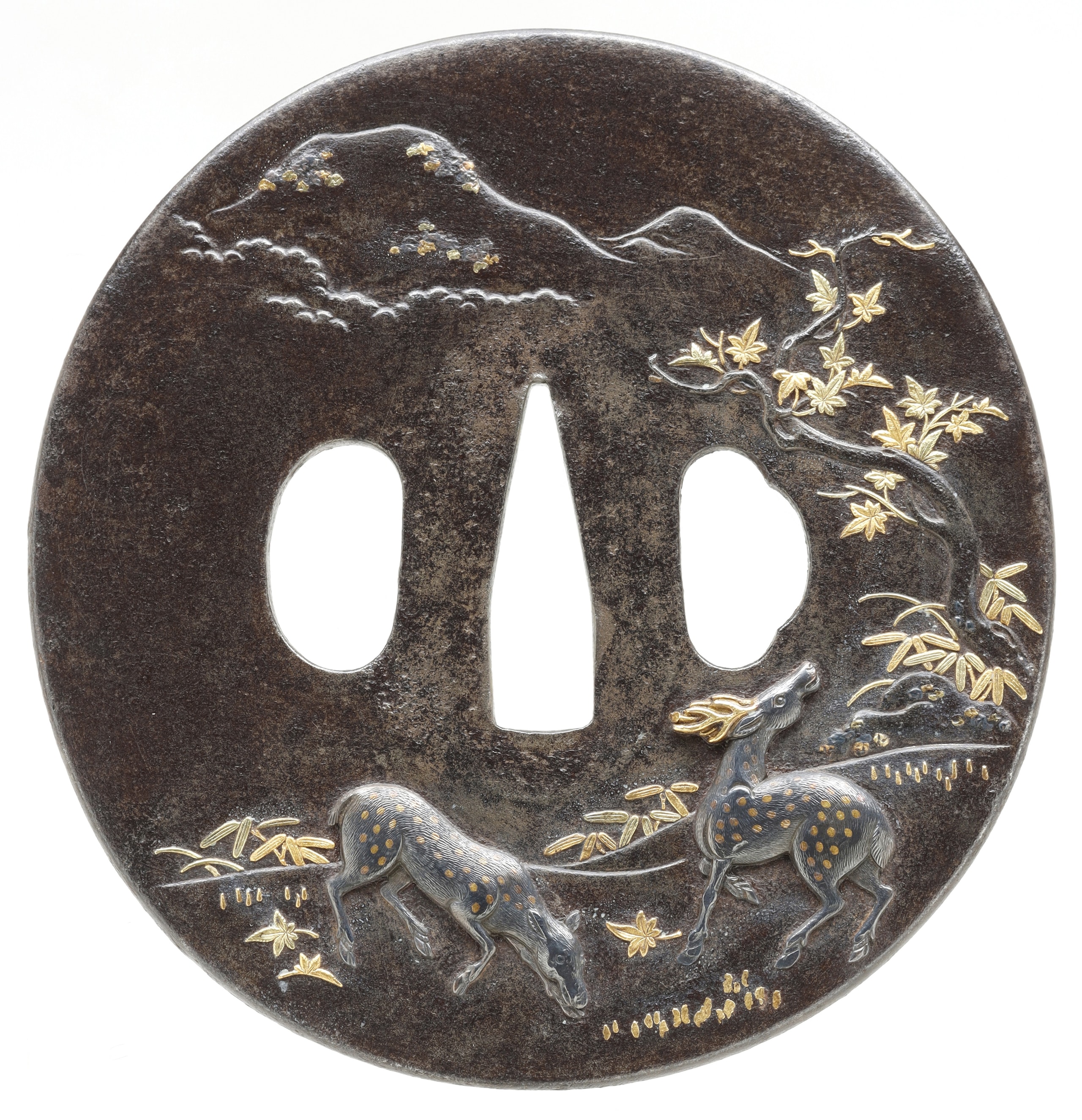
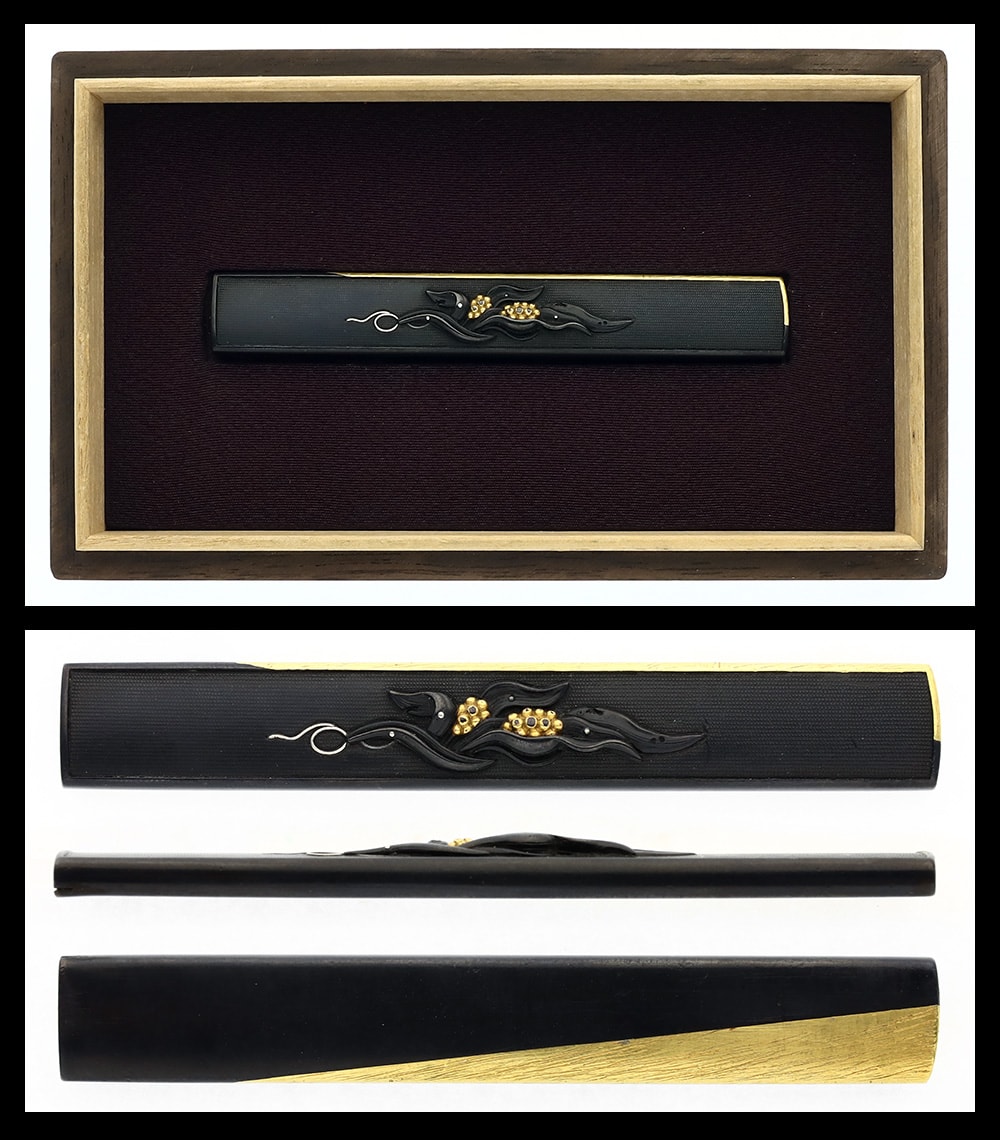
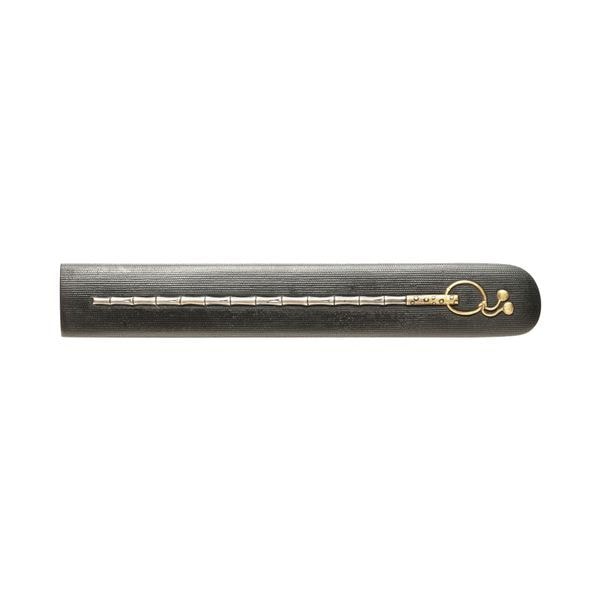
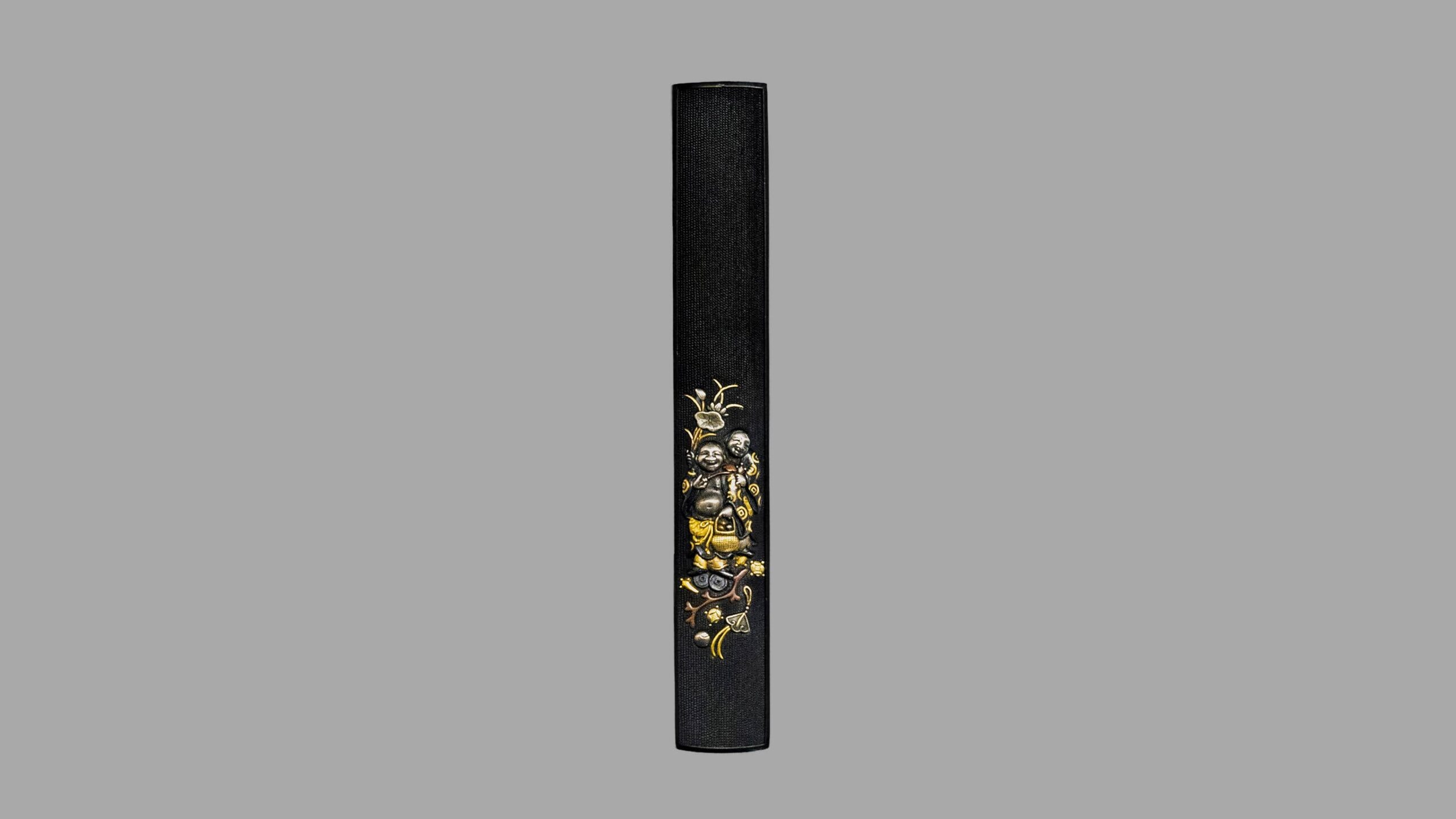
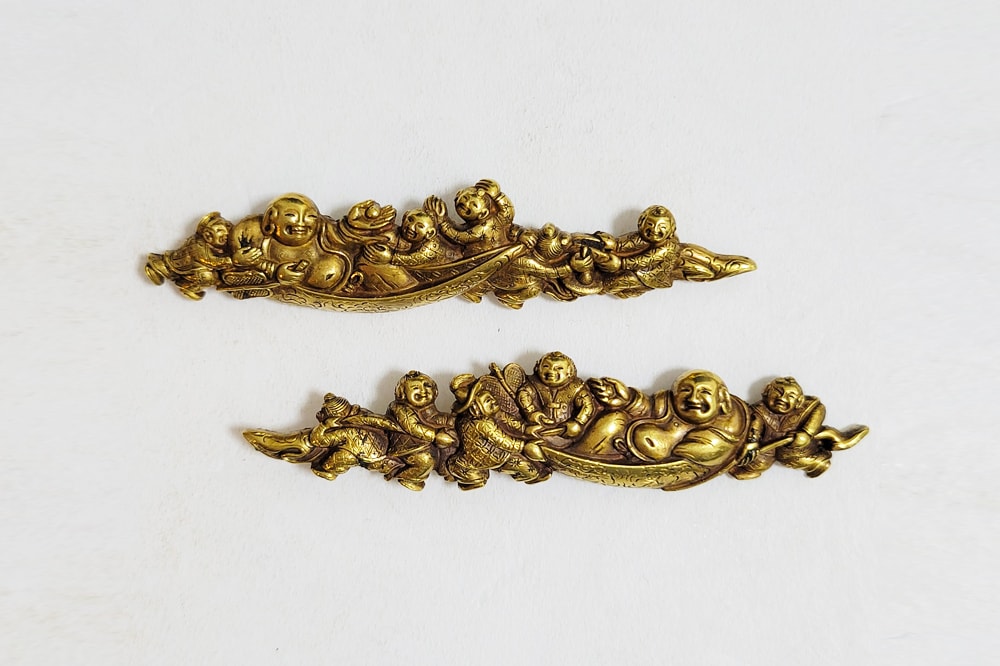
Tokujo's work is executed predominantly on grounds -- surfaces of extraordinarily minute and dense that serve as the foundation for the Goto house's formal repertoire. His principal technique is with (high-relief carving finished with gold color application), frequently supplemented by and enriched on the reverse with ' (gilt backing). For and sculptural subjects, he employs yobori and nikubori (modeled and rounded relief carving), often with in'-ne undercutting that produces pronounced depth from the reverse and emphatic contrasts of ridge and hollow when tightened from the front. His solid-gold () pieces exhibit usu--dashi (thin-gold raised work) of particular refinement, in which the modulation of sculpted volumes -- the nikudori -- stands out with exceptional clarity. Among his most celebrated formal subjects is the paulownia crest, executed with a special chisel called the mugibataki and said to be struck ten times; the distinctive chisel marks visible between the flowers are recognized as hallmarks of the Goto family's official house style (). Whether rendering crawling dragons, auspicious figures such as Hotei and Idaten, or motifs drawn from nature, his compositions display a forceful method that conveys both impact and a powerful sense of motion.

The consistently characterizes Tokujo's work as possessing a distinctive dignity and authority that is unmistakably of the Goto mainline tradition. His pieces are described as conveying the bold, sumptuous spirit characteristic of taste -- powerfully expressed and of notably elevated dignity. The reliability and precision of his okakebori (official house-style carving) are held as exemplary, and the quality of execution is repeatedly affirmed as displaying the high technical level and refined, elegant dignity of the -period Goto tradition. Several of his finest works were transmitted in the collections of illustrious houses, including the Hachisuka family and the wealthy Osaka merchant house of Konoike -- provenance that itself attests to the esteem in which his art was held. Tokujo stands as the pivotal figure who carried the Goto house through the transition from Ashikaga patronage to the unified realm of the warlords, and his production -- whether signed or authenticated by later Goto masters through and -- remains a benchmark against which the authority and sumptuousness of mainline Goto metalwork is measured.
Kantei

3 descriptive axes: material (the shakudo-nanako and solid-gold house grounds) x technique (takabori and katachibori with iro-e and suemon) x themes (the house canon of lions and dragons, with figural and warrior subjects). His load-bearing discriminators are the named Tokujo paulownia struck with the special barley-chisel, and his rare self-signature; the rest is the orthodox house foundation.

Goto Tokujo (1550-1631), the son of the fourth master Kojo, is the fifth-generation head of the orthodox Goto house, his given name Genjiro, later Shirobei, his formal names given as Mitsumoto and Masaie. With the fall of the Ashikaga he and his father Kojo served Oda Nobunaga and then Toyotomi Hideyoshi, charged with the three offices of the great gold coin, the weights, and the carving, and they remained in office under Ieyasu and Hidetada into the Tokugawa age; in his last years he was raised to Hogen. He is the maker who minted the great gold and small gold coinage from 1588 and stamped on it the paulownia called the Tokujo-giri or Taiko-giri. Like the early Goto heads his fitting work is essentially , attributed by the house and by appraisal-signatures of later heads; his own self-signature, read 'Goto Tokujo' with a , the records call especially rare. Within the shared house style his individual tells are the named Tokujo paulownia cut with the special barley-chisel, and that rare self-signature.

Diagnostic discriminators

the records say his paulownia is called the Tokujo-giri or Taiko-giri and note the special barley-chisel (mugi-tagane) struck ten times; the house is said to have worked the paulownia from the founder, but the named Tokujo paulownia with the barley-chisel is cited as his own tell

two pieces in the corpus carry his own 後藤徳乗 signature and kao, and the records call the self-signature especially rare and precious; almost all attributed work is mumei, the 徳乗作 / 紋徳乗 forms being later heads' appraisal-signatures, not his hand

Material (grounds)

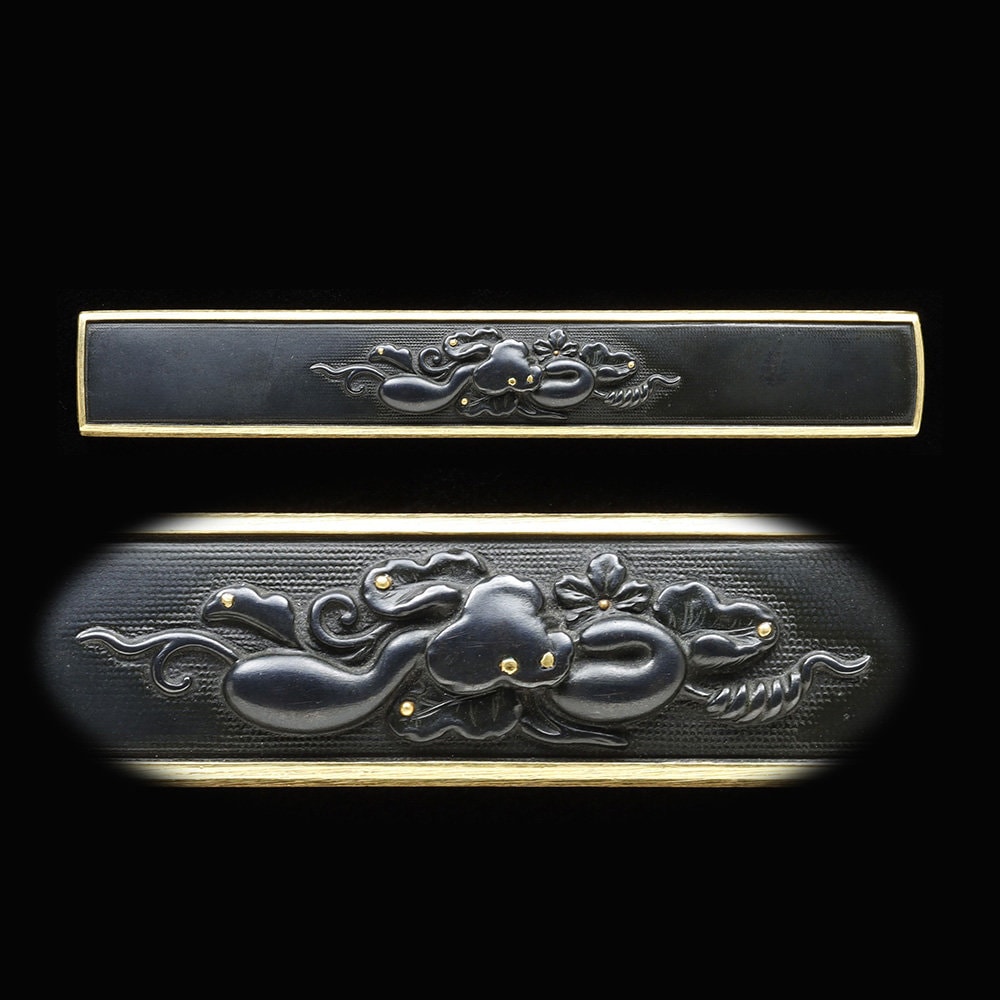
The orthodox house grounds, in fine above all, with solid-gold and all-gold grounds on the , plain and gold grounds besides, and seen rarely.

赤銅地

Technique

with gold and silver iro-e and applied for the and , with the inyo-ne post for the , with and besides, the back finished with fill-gold.

Themes (the house canon and figures)

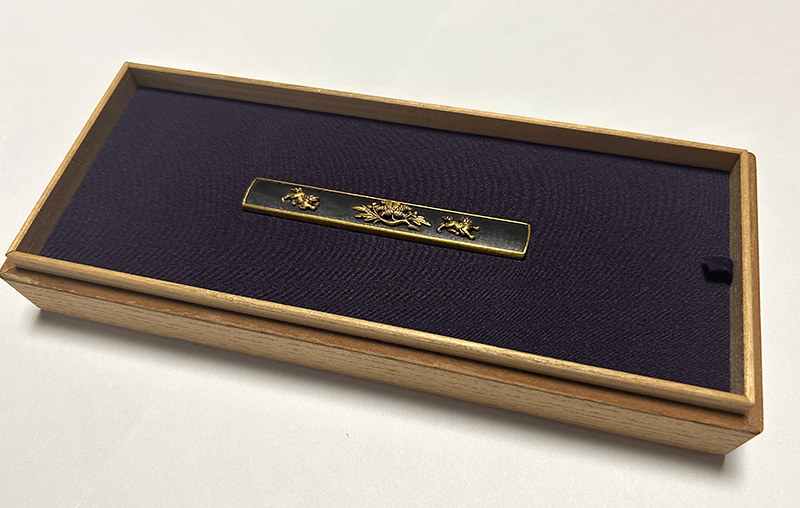
The house lions and crawling dragons of the okite repertoire, with the Tokujo paulownia his named subject, and figural pieces, longevity gods, Hotei and other Chinese figures among his commissions.

Lions, crawling dragons and the paulownia

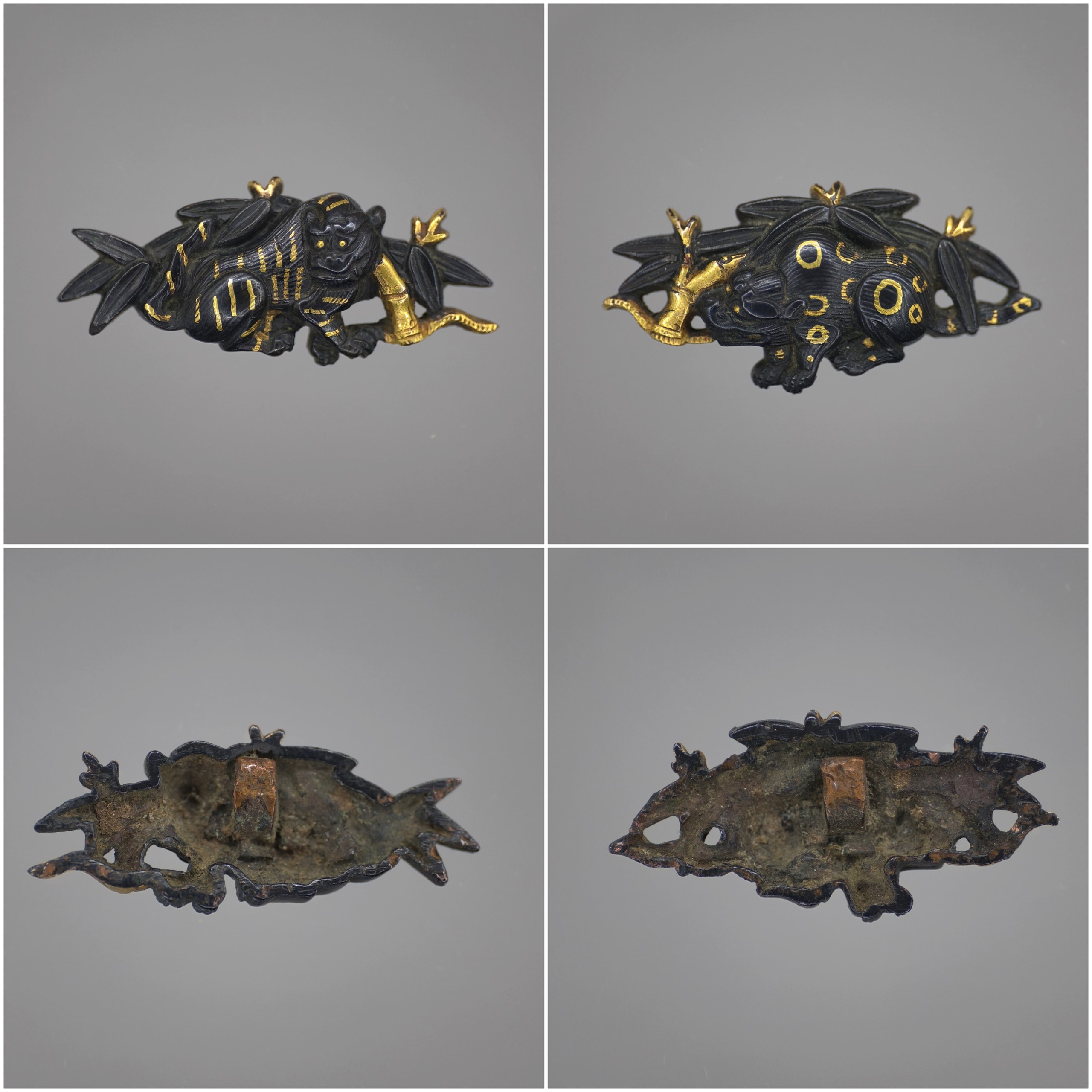
Lions and crawling dragons of the house okite, carried with full, rich relief, and the Tokujo paulownia struck with the barley-chisel.

Figures and longevity subjectsless firmly established

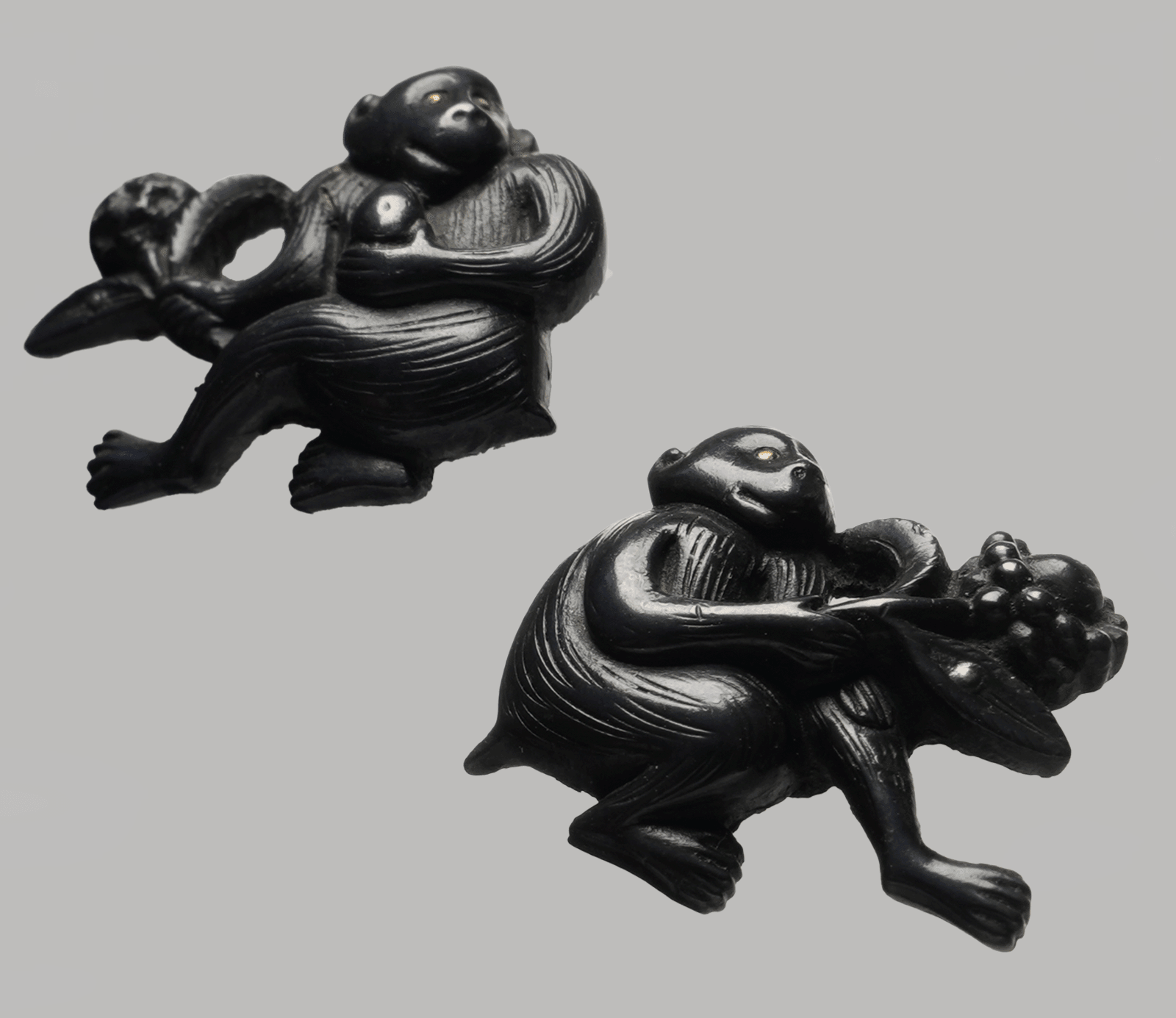
Figural subjects from the commissions: longevity gods, Hotei, and monkeys reaching for the moon among them.

Full iconography

Signature chronology

Recorded signatures

Documentary note

Tokujo's work is overwhelmingly , attributed by the house and by cut by later heads, who sign with their own name and : 'Tokujo-' or '-Tokujo' followed by Mitsumasa (the ninth, Teijo), Kenjo, Mitsutaka (the thirteenth, Enjo), Mitsuyoshi (the fifteenth, Shinjo), Mitsuyo (the tenth, Renjo, read 光侶), Mitsuhisa (Tsujo) and others, often with a dated . Read these as later appraisals, never as his own hand. His genuine self-signature, 後藤徳乗 with a , is explicitly called rare. Two Mori-family - sets in the group are manually attributed Goto fittings and carry no fitting signature.

Scholarship

His coinage paulownia and his fittings paulownia are alike said to be called the Tokujo paulownia, marked with the special barley-chisel.

Designations

Kokuhō—
Jūyō Bunkazai—
Jūyō Bijutsuhin1
Gyobutsu—
Tokubetsu Jūyō1
Jūyō Tōken29

Elite Standing

0.15 across 31 designated works

Top 8% among makers

Provenance

9 documented provenances across certified works by Goto Tokujo

Provenance Standing

4 works held in elite collections across 9 documented provenances

Top 6% among makers

Raw score: 2.44 / 10

Work Types

Distribution across 31 ranked works

Other
1137%
Mitokoromono
723%
Menuki
413%
Kozuka
413%
Tsuba
413%

Signatures

Signature types across 31 ranked works

Currently Available

Lineage

TeacherGoto Kojo
Goto Tokujo
Students (2)
  1. 1.Goto Kenjo後藤顕乗1 for sale45designated
  2. 2.Goto Eijo後藤栄乗9 for sale31designated

Goto School

Other artisans of the Goto school

  1. 1.Goto Joshin後藤乗真6 for sale67designated
  2. 2.Goto Yujo後藤祐乗1 for sale41designated
  3. 3.Goto Sojo後藤宗乗53designated
  4. 4.Goto Kenjo後藤顕乗1 for sale45designated
  5. 5.Goto Teijo後藤程乗10 for sale41designated
  6. 6.Goto Eijo後藤栄乗9 for sale31designated
  7. 7.Goto Renjo後藤廉乗4 for sale33designated
  8. 8.Goto Tsujo後藤通乗1 for sale29designated
  9. 9.Goto Enjo後藤延乗3 for sale19designated
  10. 10.Goto Kojo後藤光乗1 for sale25designated
  11. 11.Goto Hojo後藤方乗1 for sale16designated
  12. 12.Goto Sokujo後藤即乗11designated

Goto Tokujo

Goto Tokujo(後藤徳乗) was a maker of Japanese sword fittings (tōsōgu) of the Goto school in Yamashiro province, active during the Momoyama-Early Edo (1550-1631) period.

The work follows the Iebori tradition.

Designated works by Goto Tokujo include 1 Tokubetsu Jūyō, 29 Jūyō.