NihontoWatch MonNihontoWatchBETA
MarketEncyclopedia
NihontoWatch Mon

NihontoWatchBETA

Market
Encyclopedia
Overview·Kantei·Designations·Work Types·Signatures·Lineage·School
OverviewKanteiDesignationsWork TypesSignaturesLineageSchool
  1. Schools
  2. Goto
  3. Goto Main Line
  4. Goto Jujo

Goto Jujo

後藤寿乗

Jūyō
Vol. 62, No. 162 · Mitokoromono

Goto Jujo

後藤寿乗

4 ranked works

ProvinceYamashiroEraMid Edo (1700–1762)PeriodEdoSchoolGotoTraditionIeboriGeneration12TeacherGoto TsujoSpecialtiesmitokoromono, kozuka, kogai, menuki, fuchi-kashira, tsubaTypeTosogu MakerCodeGOT012
4Jūyō Tōken

Overview

Goto Jujo Mitsumasa, also recorded as Kojo Mitsusato, was born in Genroku 2 (1689) as the legitimate son of the eleventh main-line master, Tsujo Mitsuhisa. His childhood name was Kameichi, and he later used the name Mitsuyuki. In the eleventh month of Kyoho 5 (1720), upon his father's retirement under the name Tsujo, Mitsumasa succeeded to the house, assumed the style Shirobei Mitsumasa, and became the twelfth head of the Goto main line. In this capacity he served not only as a master metalworker but as the principal appraiser and certifier of works by earlier Goto generations, issuing of considerable authority.

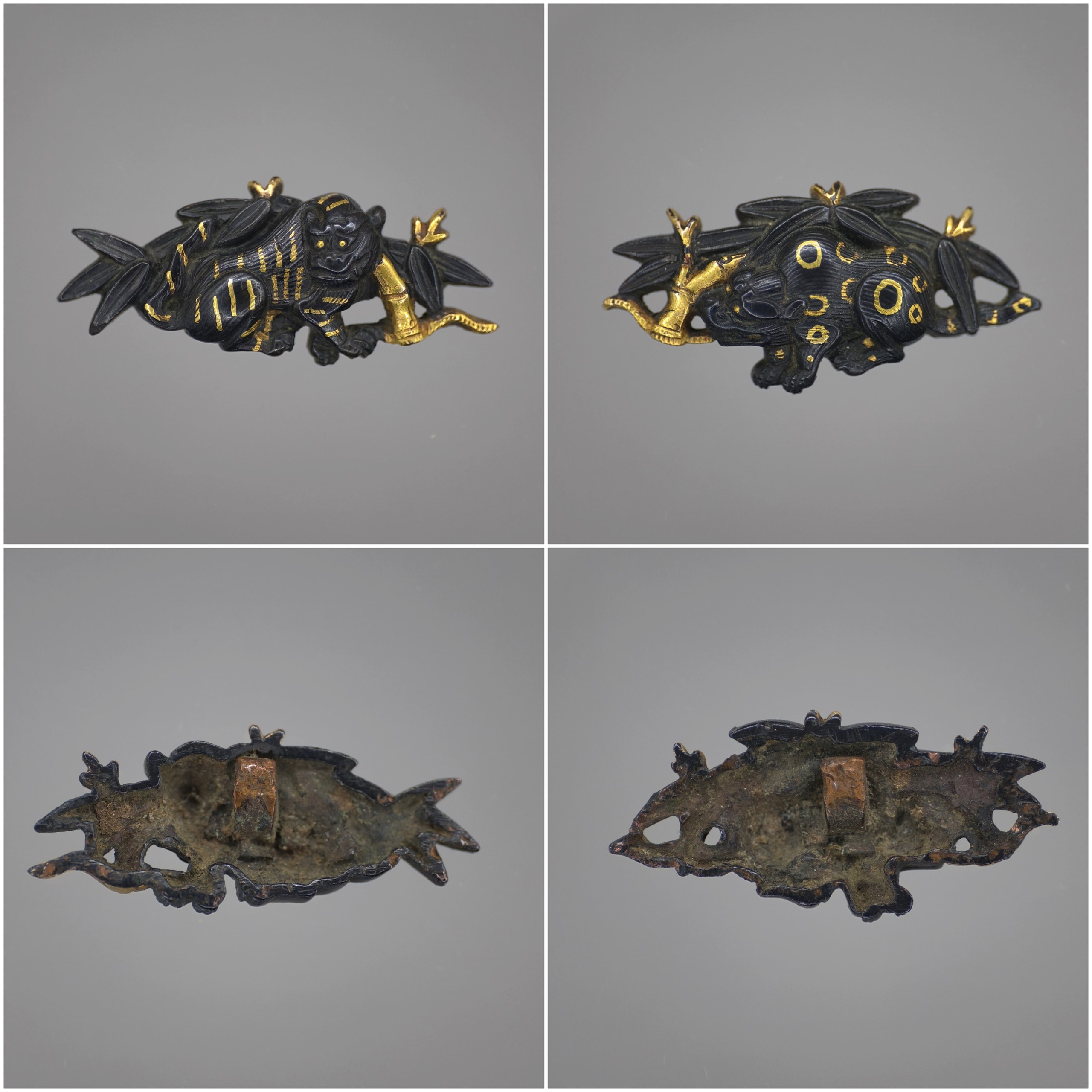
His own production is characterized by the consummate expression of the Goto house style. In works such as the coiling dragon , gold crests are arranged on grounds of the finest order, while executed in solid gold yobori display a convincingly animated bearing with great skill. The uchi-dashi is comparatively thick, and because a substantial quantity of gold is employed, the work possesses a palpable sense of weight and presence. Careful attention is given to auxiliary elements including the ne and reinforcing fittings. Throughout, the characteristic house style of the Goto is fully expressed, resulting in works of dignity and elevated tone. His appraisals of earlier masters — including certifications of third-generation Joshin's pieces — are equally discerning, attesting to deep connoisseurship of the lineage's historical methods.

As the twelfth head, Mitsumasa occupied a pivotal position bridging the classical and later Goto tradition. His carry authority comparable to an autograph signature, since they represent definitive judgments rendered with intimate knowledge of the house manner. Works bearing his authentication constitute important documentary material for the study of earlier Goto masters, while his own production stands as a model of formality and completeness. The recognizes his pieces as possessing a formality that may be taken as exemplary of the Goto house, affirming his role as both guardian and embodiment of the mainline tradition through the mid- period.
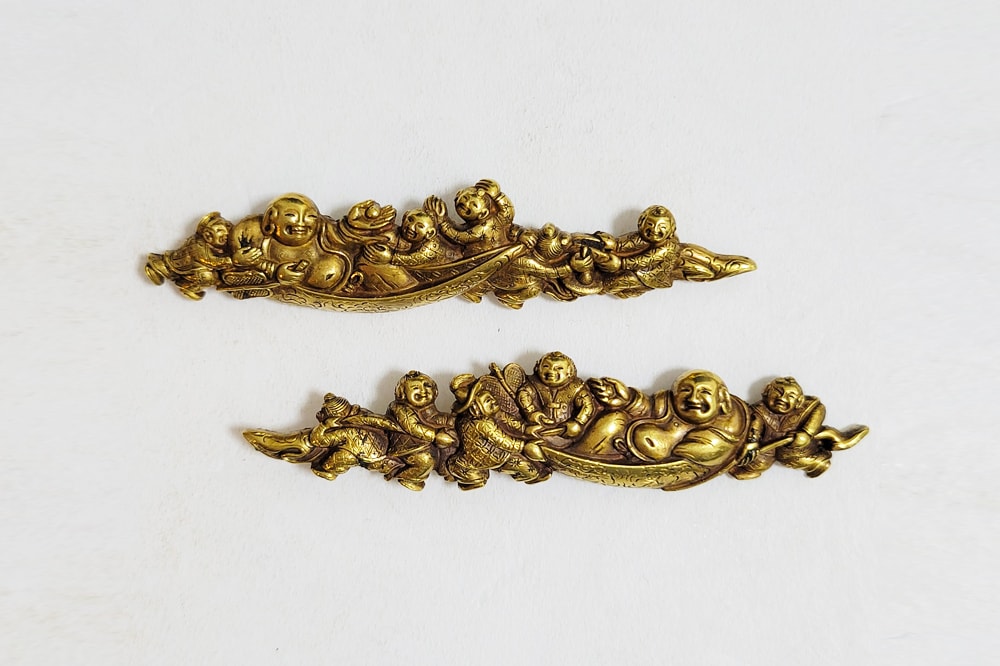
Kantei

3 descriptive axes: material (the shakudo-nanako house grounds, with all-gold menuki grounds besides) x technique (the orthodox takabori and katachibori with iro-e and gold-crest work, restrained and solid) x themes (the house canon of the kirin, winding dragon and animal motifs). His one load-bearing discriminator is that he signs, read Goto Mitsumasa, against the mumei early-Goto norm; with a corpus of only four pieces, two of them self-signed, this self-signature is the only secure per-piece separator the record offers, and an honest profile says so. His documented individuating character, an archaic ie-bori manner that recalls the older generations of the house, is recited in the biography rather than read off any single piece, and he is not credited with a distinctive personal innovation the way the records single out Renjo's shibuichi ground or Tsujo's left-and-right composition; that traditionalism is therefore kept below in scholarship and not used as a discriminator. The rest is the orthodox house foundation. As a certifying head his bare light-name 光理 also appears as a kiwame-mei on an earlier head's piece he appraised, which must be distinguished from his own self-signed work.

Goto Jujo, given name Mitsumasa (read 光理), is the twelfth-generation head of the orthodox Goto house, the eldest son of the eleventh master Tsujo Mitsuhisa (read 光寿). He was born in Genroku 2 (1689); his childhood name was Kameichi, later Mitsuyuki (read 光幸), and his common name Gennojo. In the eleventh month of Kyoho 5 (1720), when his father Mitsuhisa took the tonsure-name Tsujo and retired, he succeeded to the headship as the twelfth master and changed his name to Shirobei Mitsumasa. He signs his own work, read by his given name Goto Mitsumasa with a , on also as 後藤光理. The records say his style is reckoned archaic, that among the Goto heads of the mid- period and after he handled many works in the old classical ie-bori manner with success, his repeated subjects the kirin, winding dragon and animal motifs of the house canon carried in restrained and solid carving on the orthodox - house grounds. His son was the thirteenth master Enjo Mitsutaka (read 光孝), who appraised his father's work, his light-name 光孝 standing as the on pieces attributed to Jujo. As a certifying head Jujo's own light-name 光理 in turn stands as the on an earlier head's piece he appraised, which must be distinguished from his own self-signed work.

Diagnostic discriminators

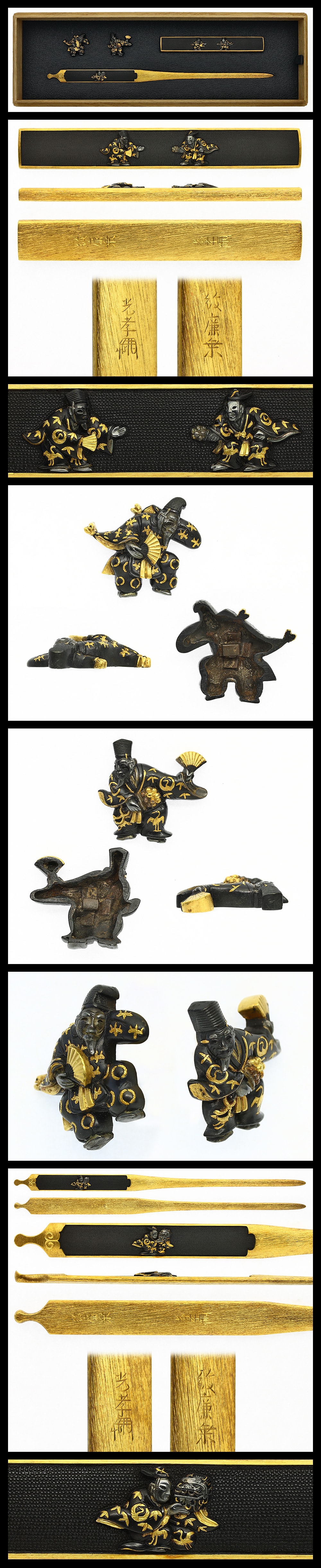
two of the four corpus objects carry his genuine signature, read 後藤光理(花押) by his given name Mitsumasa, used across his career, and on menuki as mumei 後藤光理 (the kirin and the san-jaku-cho three-piece sets). By his mid-Edo generation the Goto heads sign with regularity, against the mumei norm of the early house attributed only by origami and later-head appraisal-signatures. With a corpus of only four pieces this self-signature is the only secure per-piece separator, and an honest profile says so. The bare 光理 is NOT counted as his self-signature: it stands BOTH as the base of his own 後藤光理 self-signature AND, as a certifying head, as Jujo's own kiwame-mei light-name on an EARLIER head's piece he appraised (紋光乗 光理, certifying the gold-crests of the fourth master Kojo on a Momoyama-period two-immortals kozuka, with a Kyoho 14 / 1729 光理 origami). The one corpus object that does NOT carry his 後藤光理 self-signature in that certifying way is exactly this piece, where it is the earlier head Kojo being appraised, not Jujo's own carving. Conversely the bare 寿乗 is the ATTRIBUTED name on his son's kiwame-mei (寿乗作 光孝, the thirteenth master Enjo certifying a winding-dragon set, 無銘 寿乗, as Jujo's), where it is Jujo being appraised, not his own self-signature.

Material (grounds)

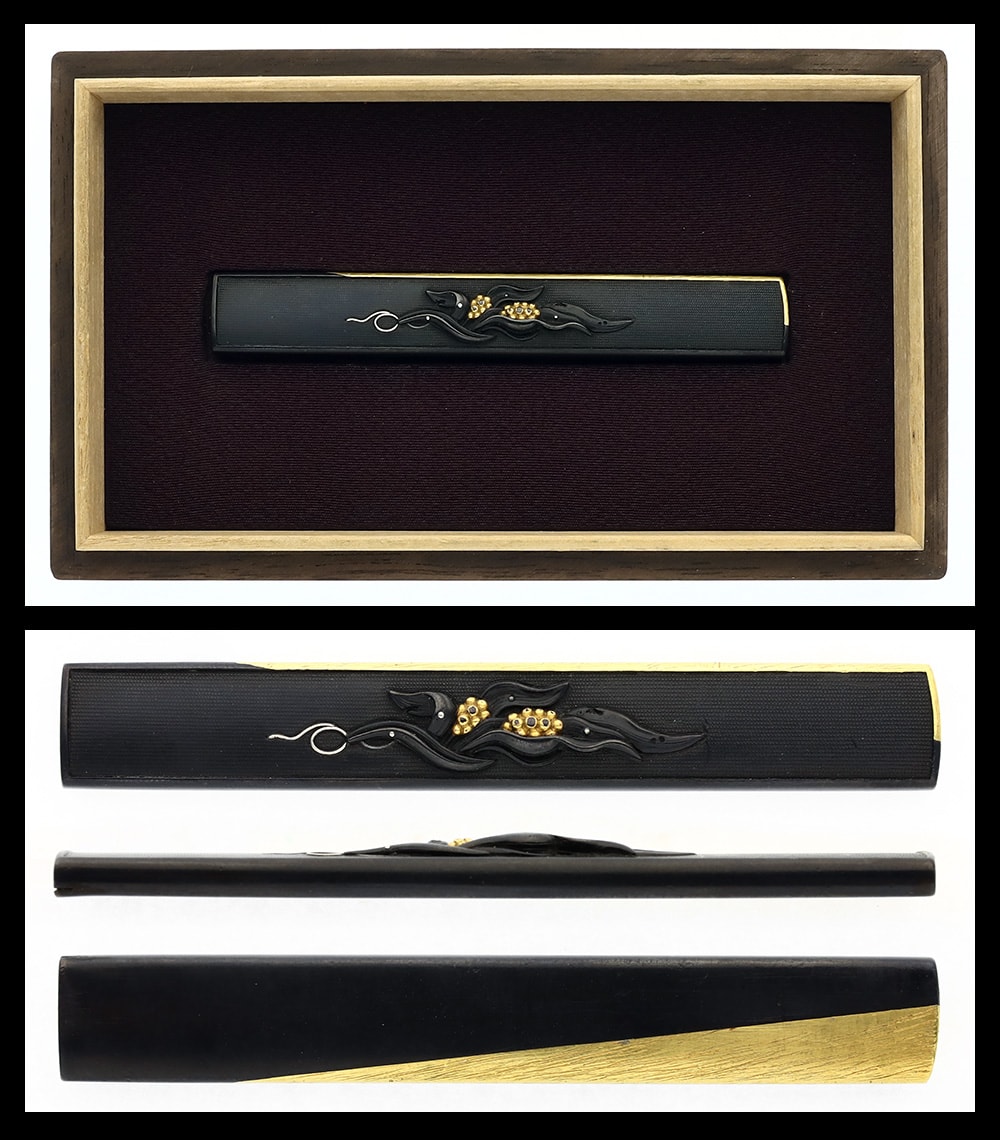
The orthodox house grounds, in fine on the and , with all-gold grounds on the , the back-gold heavy and lavishly used in the house manner.

赤銅地

Technique

with gold and silver iro-e and the gold-crest set in relief on the and , for the , the backs finished with fill-gold or plate-gold, the hand restrained and solid in the orthodox house manner.

Themes (the house canon)

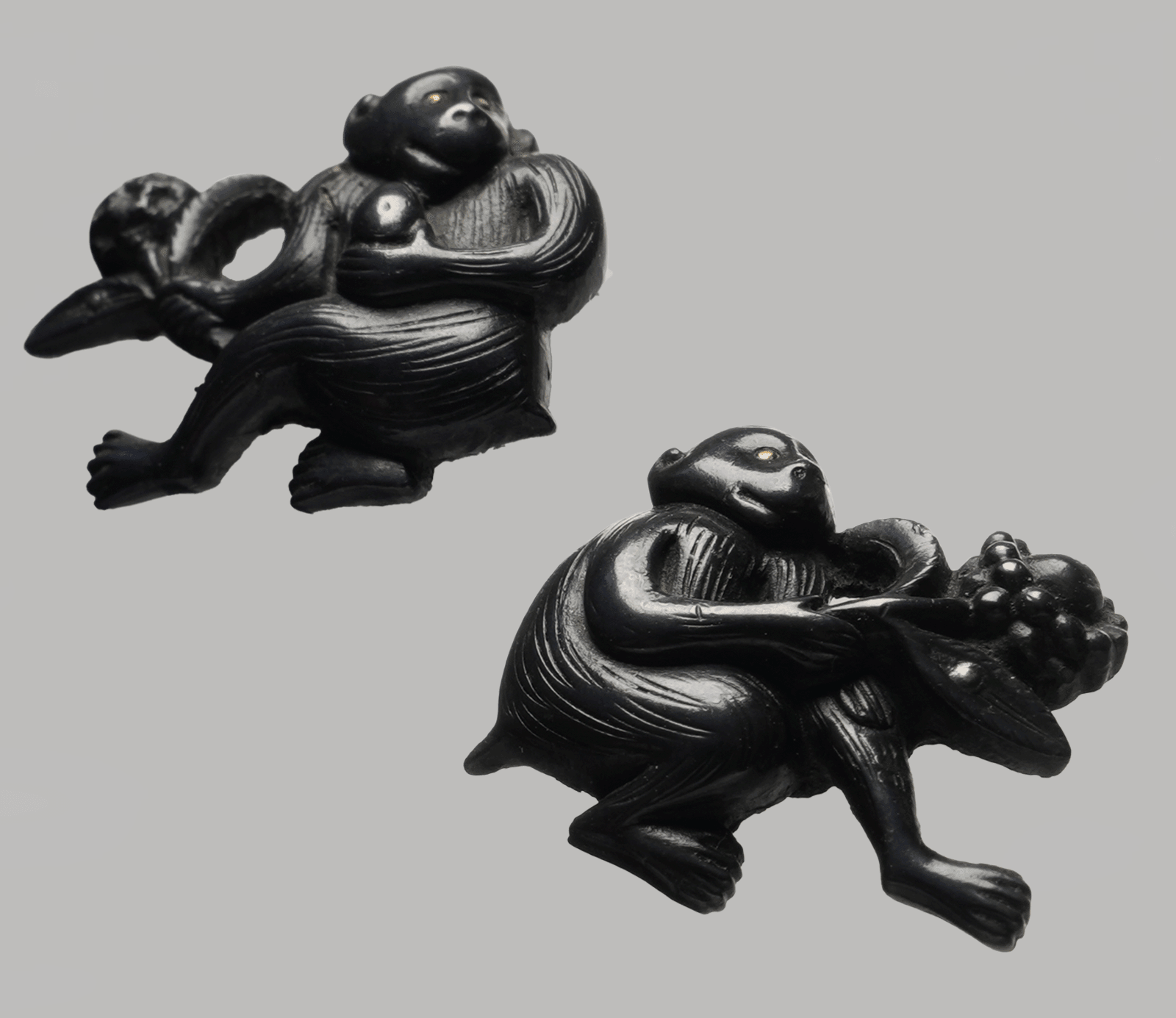
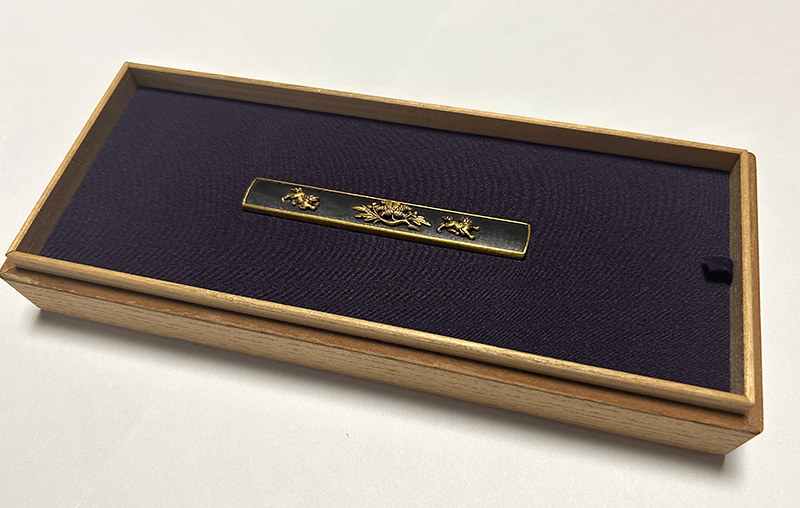
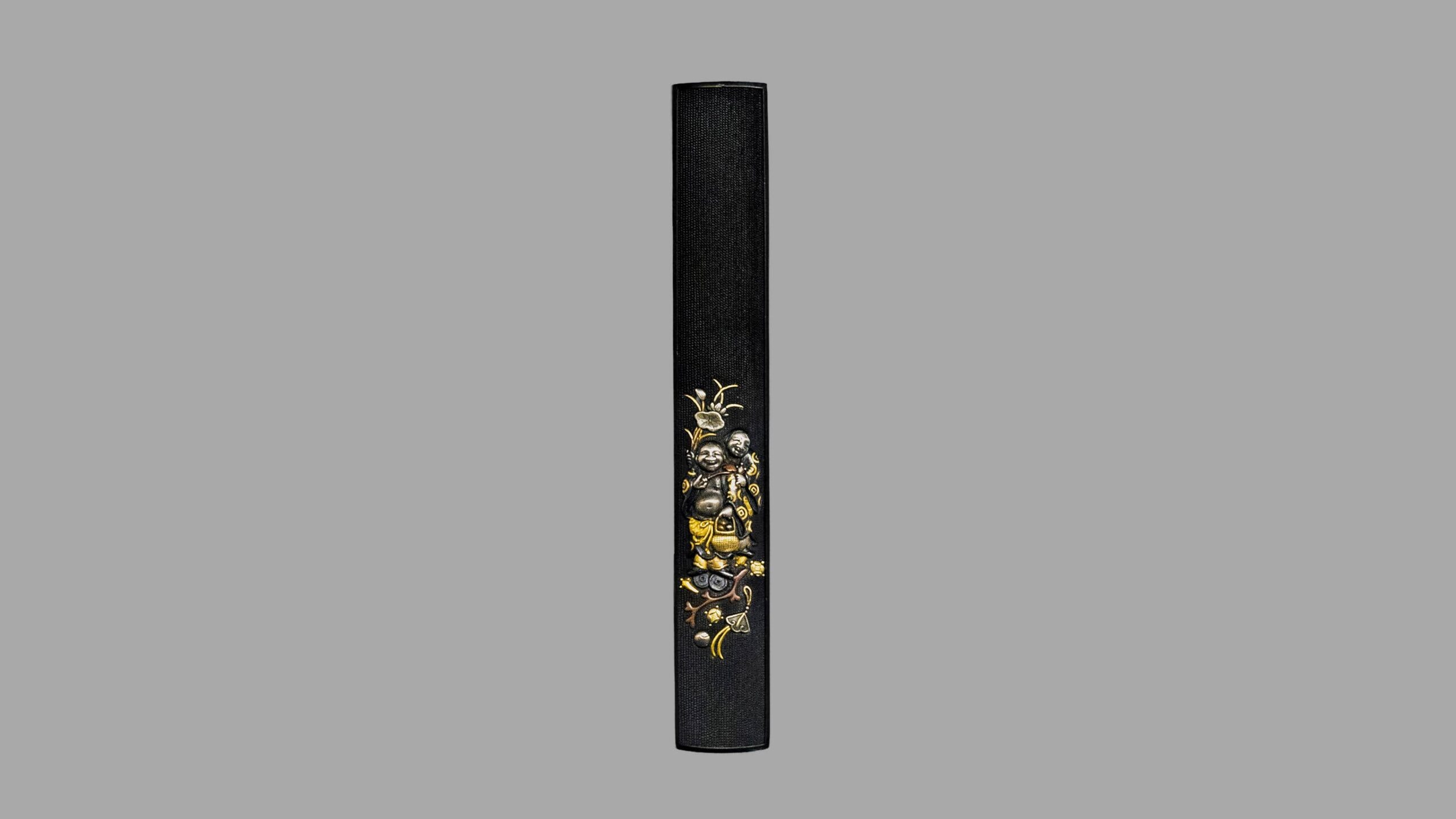
The house canon carried in the archaic manner, the kirin, the sage-beast said in China to appear before a sage is born, set on his self-signed three-piece set, with the winding dragon in gold crest on a set attributed to him, restrained and dignified in the orthodox house hand.

The kirin, dragon and house canon

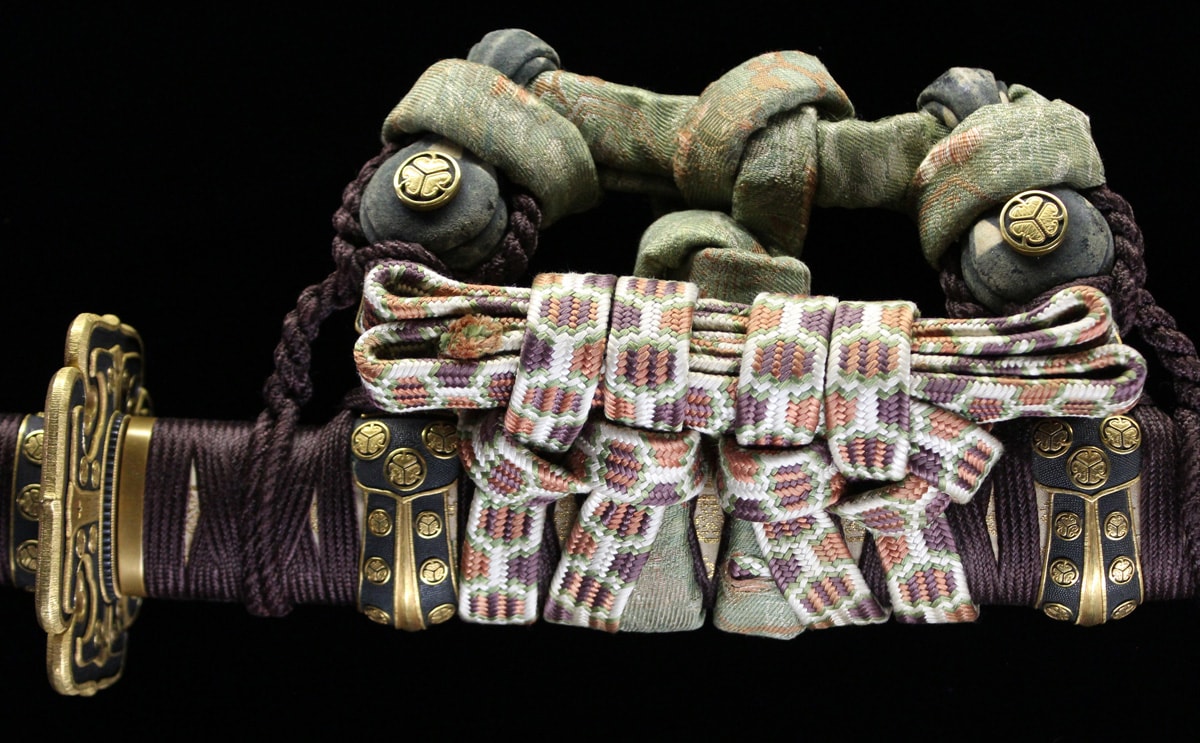
The kirin above all on his self-signed set, the figures each in a different posture and full of movement, a piece the records call evocative of the older generations of the house, with the winding dragon among the house canon besides.

Full iconography

Signature chronology

Recorded signatures

Documentary note

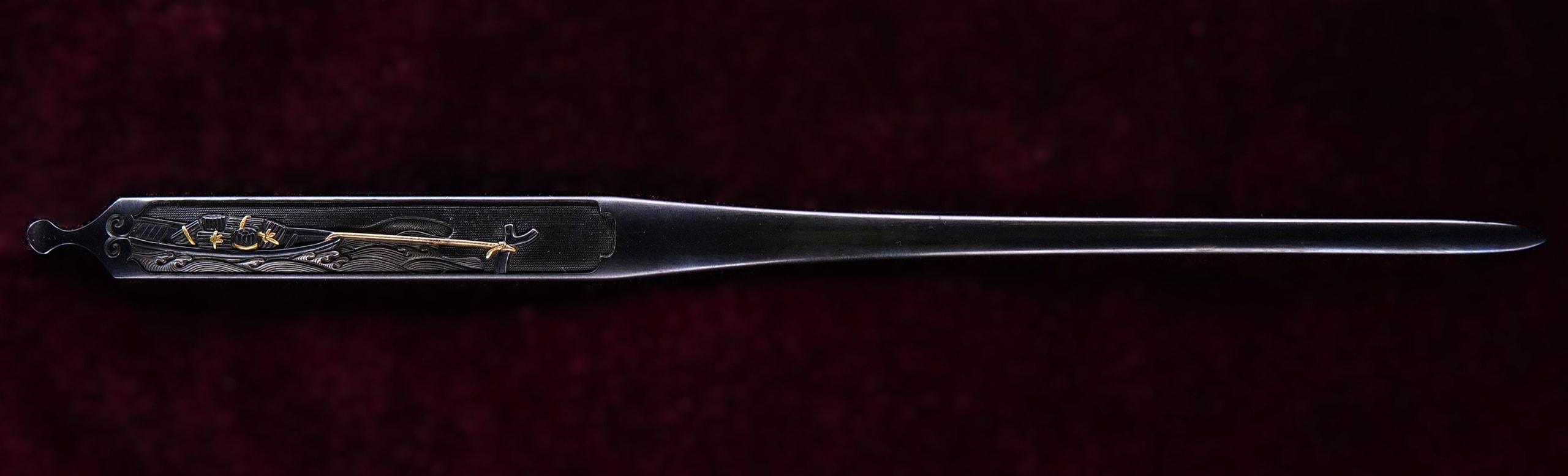
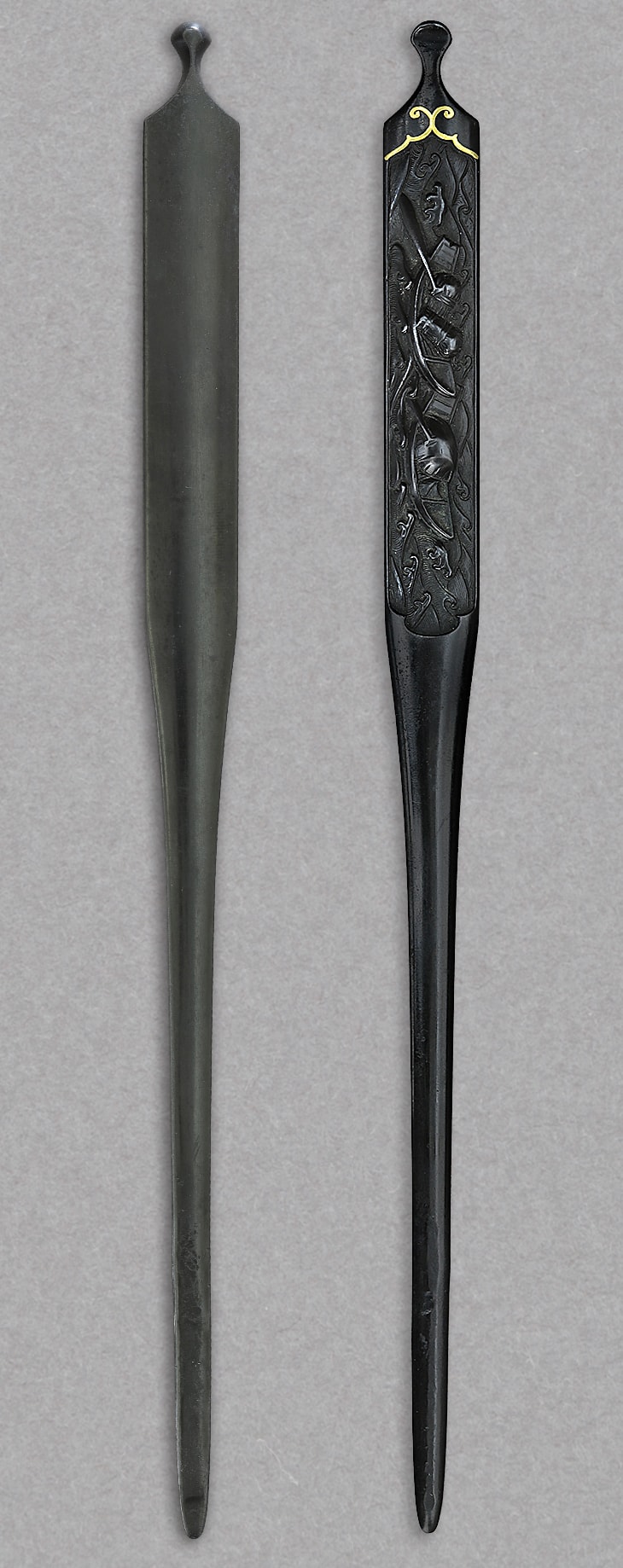
Jujo signs his own work, read 後藤光理(花押) by his given name Mitsumasa, used across his career; on a kirin three-piece set the and carry 後藤光理 and the are attributed to 後藤光理. Much of the Goto canon he handled is appraised by the house and by : his son the thirteenth master Enjo (read 光孝) certified a winding-dragon three-piece set, , as Jujo's (寿乗作 光孝, with an An'ei 3 / 1774 priced at 100 ), and another of his self-signed sets carries a Meiwa 5 / 1768 光孝 , the records noting that a son appraising the father's work makes for the most certain of attributions, the equal of a self-signature. As a certifying head, Jujo's own light-name 光理 in turn stands as the on an earlier head's piece he appraised, never as his own carving: he certified a -period two-immortals , the figure carving outstanding, to the fourth master Kojo (紋光乗 光理), with a Kyoho 14 / 1729 of his priced at 100 attached. Read 寿乗 appended to a later head's name (寿乗作 光孝) as Jujo being appraised, and 光理 appended to an earlier head's crest (紋光乗 光理) as Jujo doing the appraising.

Scholarship

The records say his style is archaic, that among the Goto heads of the mid-Edo period and after he handled many works in the old classical ie-bori manner with success; this is his documented individuating character, but it is a biographical judgment recited rather than read off any one piece, so it is kept here and not used as a per-piece discriminator.

Designations

Kokuhō—
Jūyō Bunkazai—
Jūyō Bijutsuhin—
Gyobutsu—
Tokubetsu Jūyō—
Jūyō Tōken4

Elite Standing

0.02 across 4 designated works

Top 32% among makers

Work Types

Distribution across 4 ranked works

Mitokoromono
375%
Kozuka
125%

Signatures

Signature types across 4 ranked works

Currently Available

Lineage

TeacherGoto Tsujo
Goto Jujo
Students (2)
  1. 1.Goto Enjo後藤延乗3 for sale19designated
  2. 2.Goto Keijo後藤桂乗2 for sale5designated

Goto School

Other artisans of the Goto school

  1. 1.Goto Joshin後藤乗真6 for sale67designated
  2. 2.Goto Yujo後藤祐乗1 for sale41designated
  3. 3.Goto Kenjo後藤顕乗1 for sale45designated
  4. 4.Goto Sojo後藤宗乗53designated
  5. 5.Goto Tokujo後藤徳乗2 for sale31designated
  6. 6.Goto Eijo後藤栄乗9 for sale31designated
  7. 7.Goto Teijo後藤程乗10 for sale41designated
  8. 8.Goto Renjo後藤廉乗4 for sale33designated
  9. 9.Goto Tsujo後藤通乗1 for sale29designated
  10. 10.Goto Kojo後藤光乗1 for sale25designated
  11. 11.Goto Enjo後藤延乗3 for sale19designated
  12. 12.Goto Hojo後藤方乗1 for sale16designated

Goto Jujo

Goto Jujo(後藤寿乗) was a maker of Japanese sword fittings (tōsōgu) of the Goto school in Yamashiro province, active during the Mid Edo (1700-1762) period.

The work follows the Iebori tradition.

Designated works by Goto Jujo include 4 Jūyō.