NihontoWatch MonNihontoWatchBETA
MarketEncyclopedia
NihontoWatch Mon

NihontoWatchBETA

Market
Encyclopedia
Overview·Kantei·Designations·Work Types·Signatures·Lineage·School
OverviewKanteiDesignationsWork TypesSignaturesLineageSchool
  1. Schools
  2. Goto
  3. Goto Main Line
  4. Goto Keijo

Goto Keijo

後藤桂乗

Jūyō
Vol. 49, No. 257 · Mitokoromono

Goto Keijo

後藤桂乗

5 ranked works

ProvinceYamashiroEraMid-Late Edo (1741–1804)PeriodEdoSchoolGotoTraditionIeboriGeneration14TeacherGoto JujoSpecialtiesmitokoromono, kozuka, kogai, menuki, fuchi-kashira, tsubaTypeTosogu MakerCodeGOT014
5Jūyō Tōken

Overview

Goto Mitsumori, art name Keijo, was the third son of the twelfth head of the main Goto line, Jujo Mitsusato. He was born in Kanpo 1 (1741), bearing the personal name Mitsutomo and the common name Kichigoro. Because the thirteenth head, Mitsutaka, left no heir, Mitsumori was adopted by his elder brother; after Mitsutaka's death, he changed his name to Shirobei Mitsumori and succeeded as the fourteenth head of the mainline Goto house. His position thus placed him at the summit of the most venerable metalworking lineage in the Japanese tradition, carrying forward the unbroken succession from Yujo through fourteen generations of service to the ruling authorities.

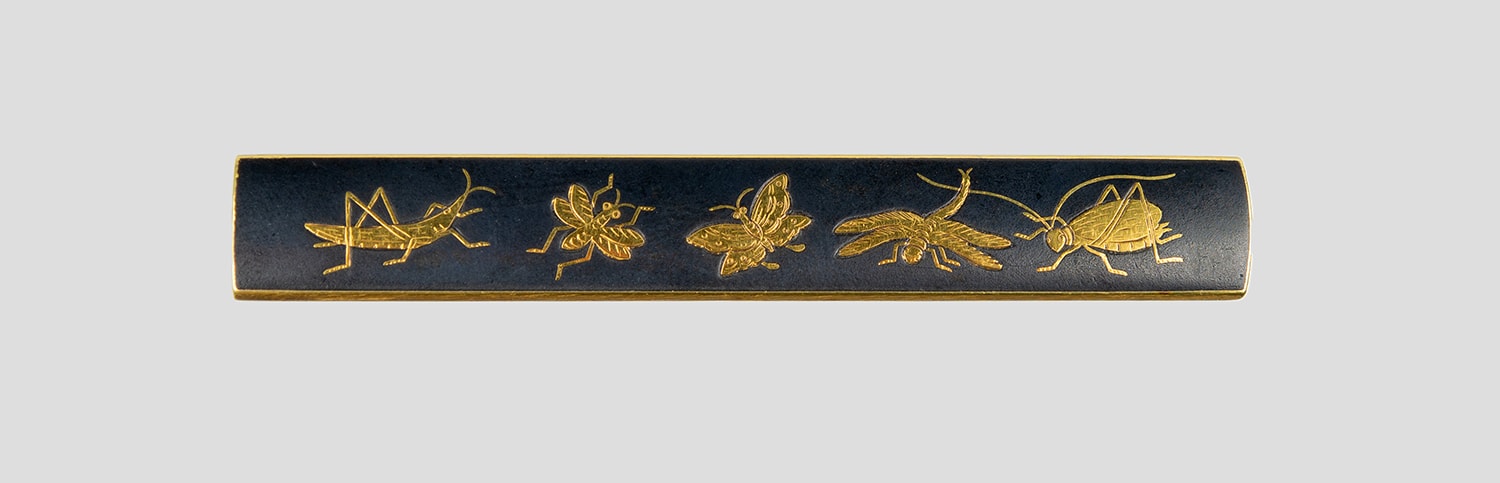
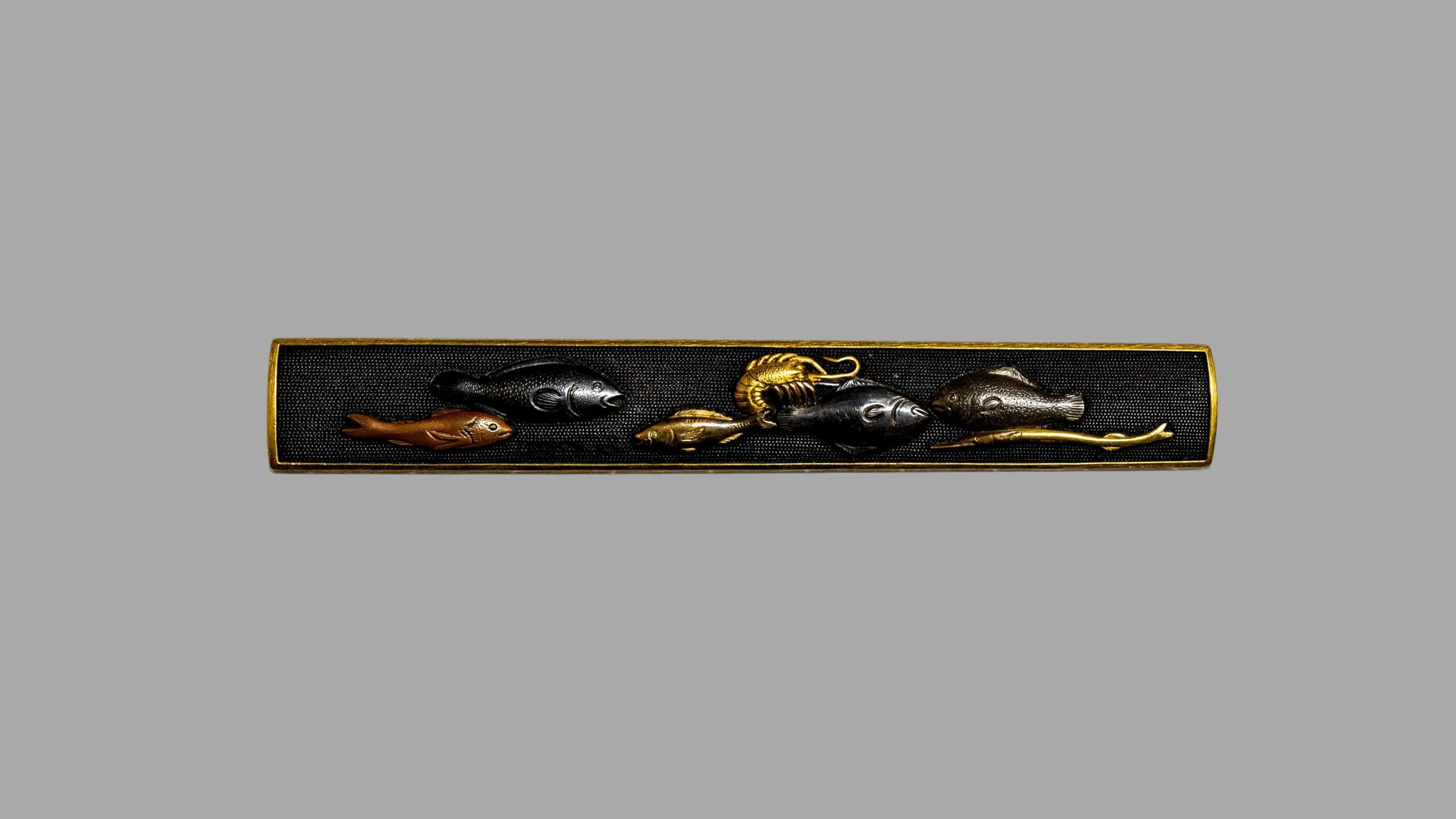
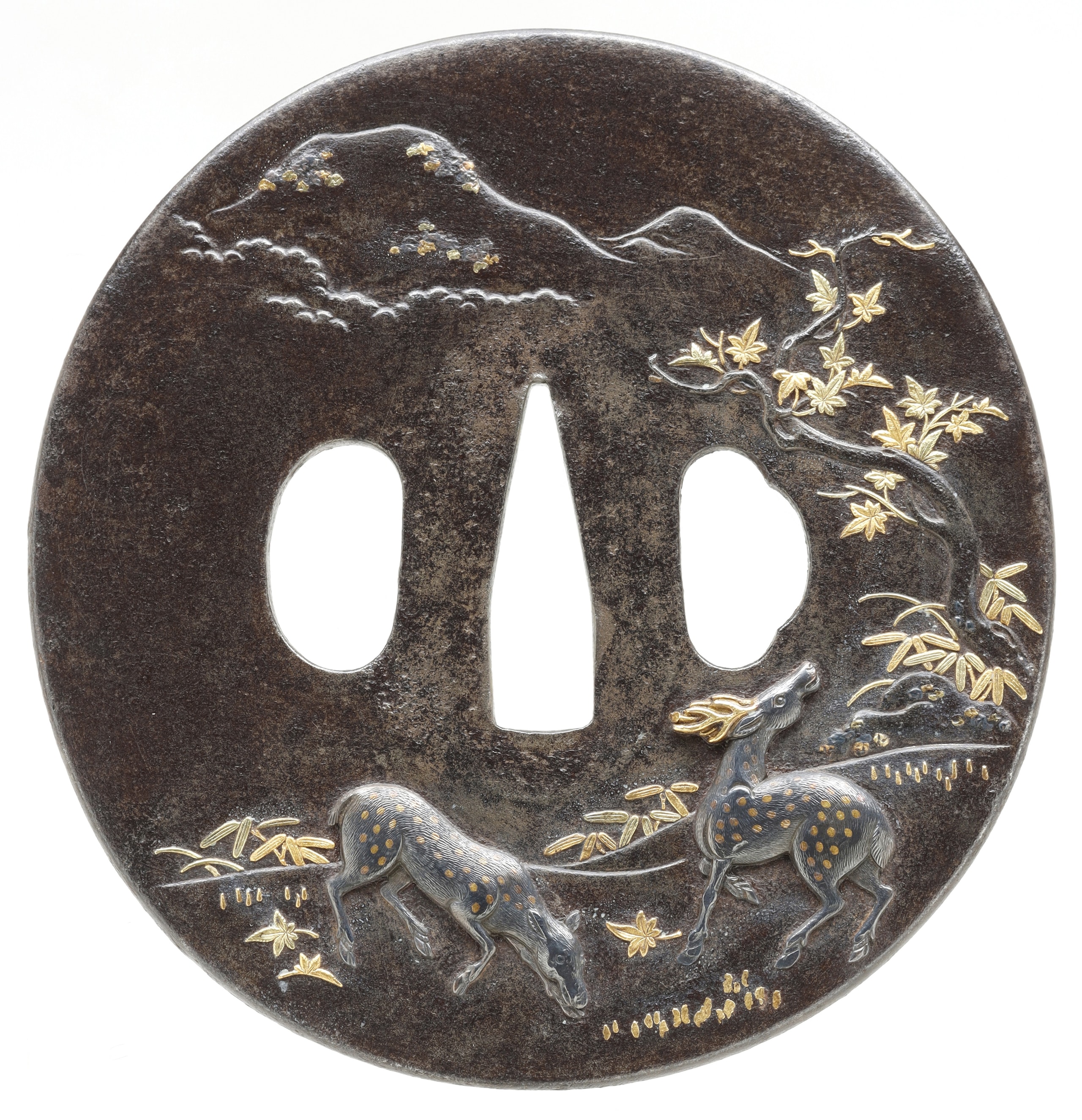
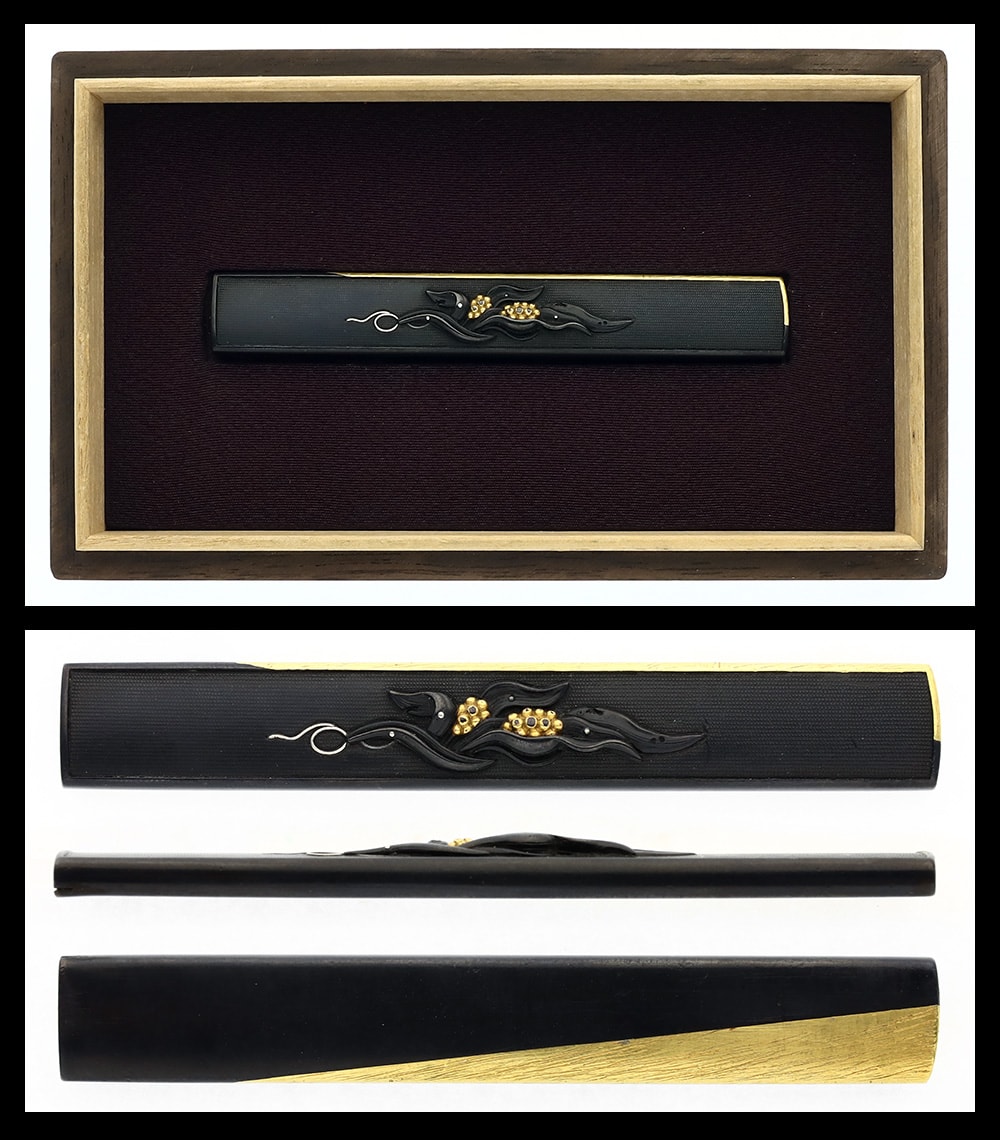
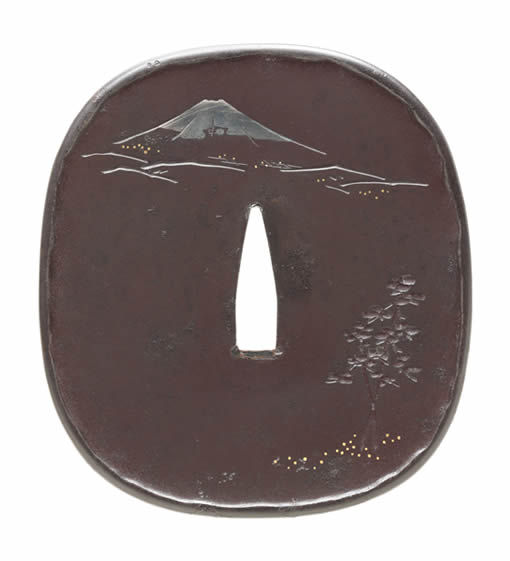
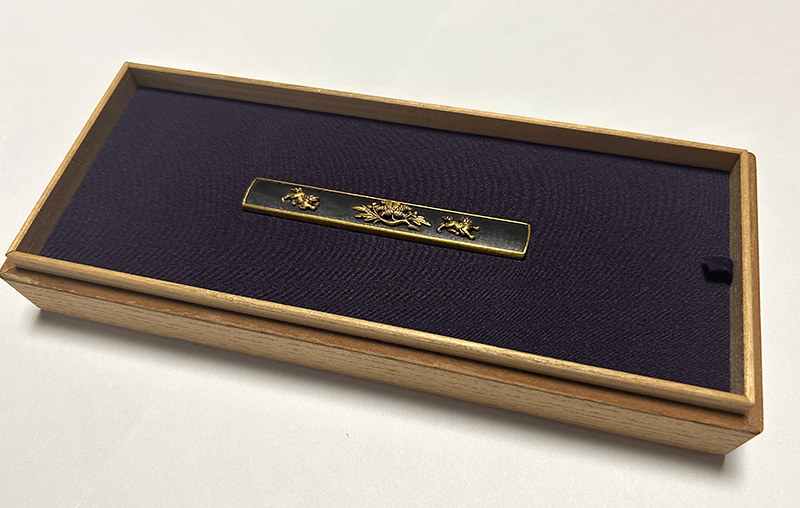
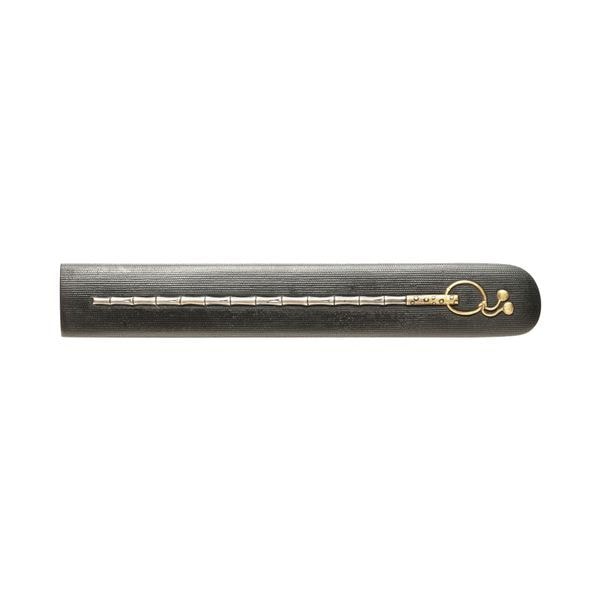
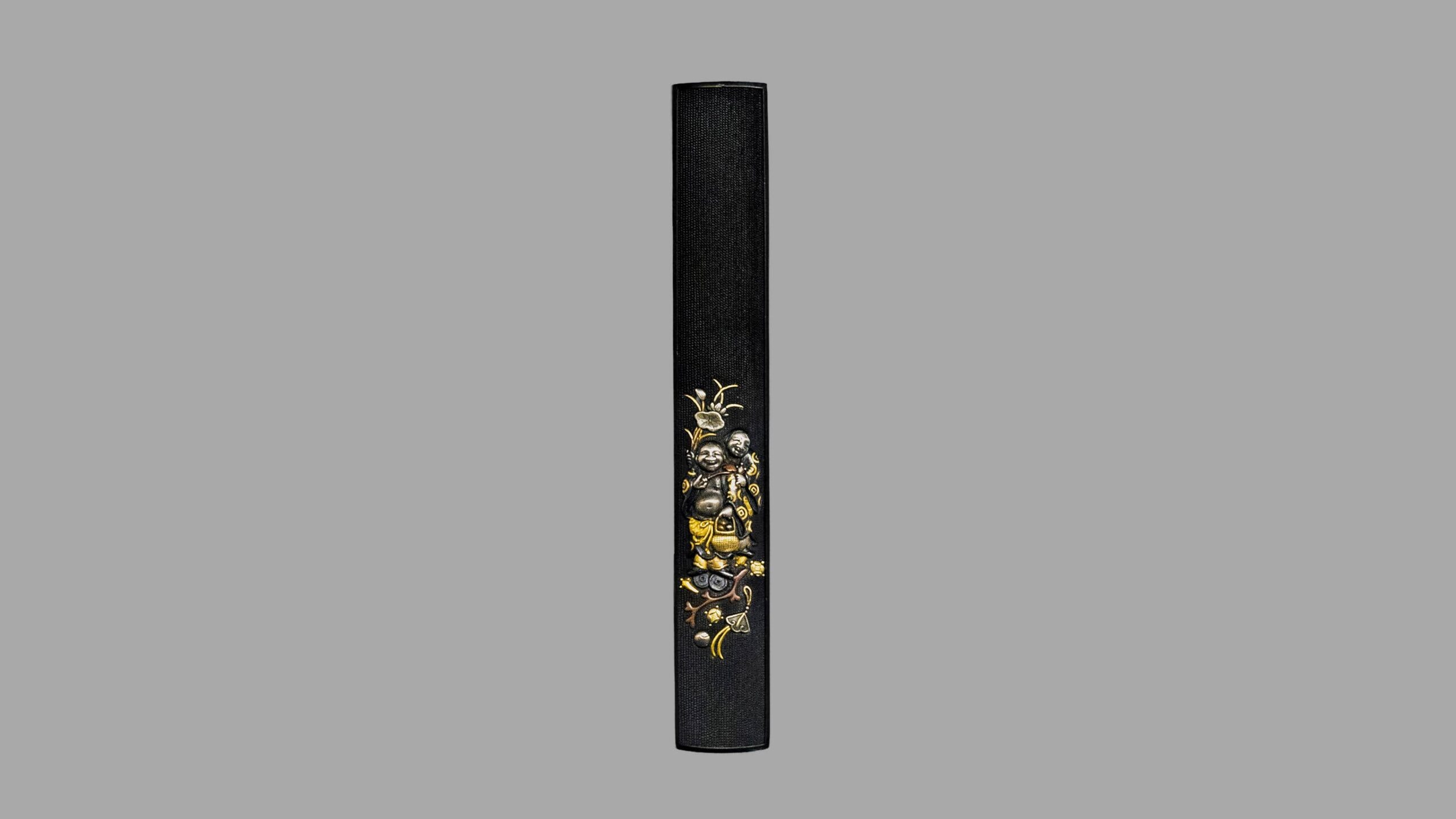
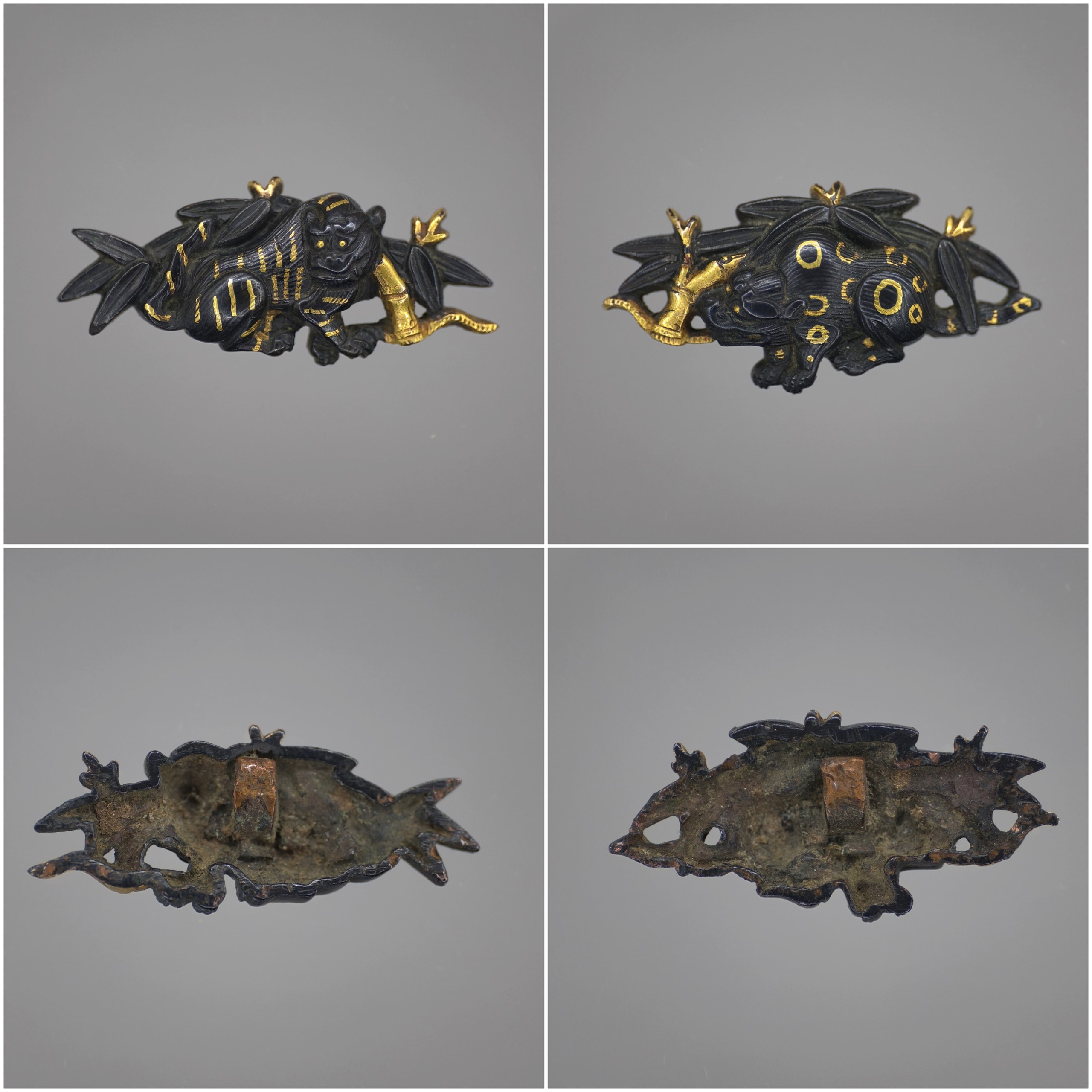
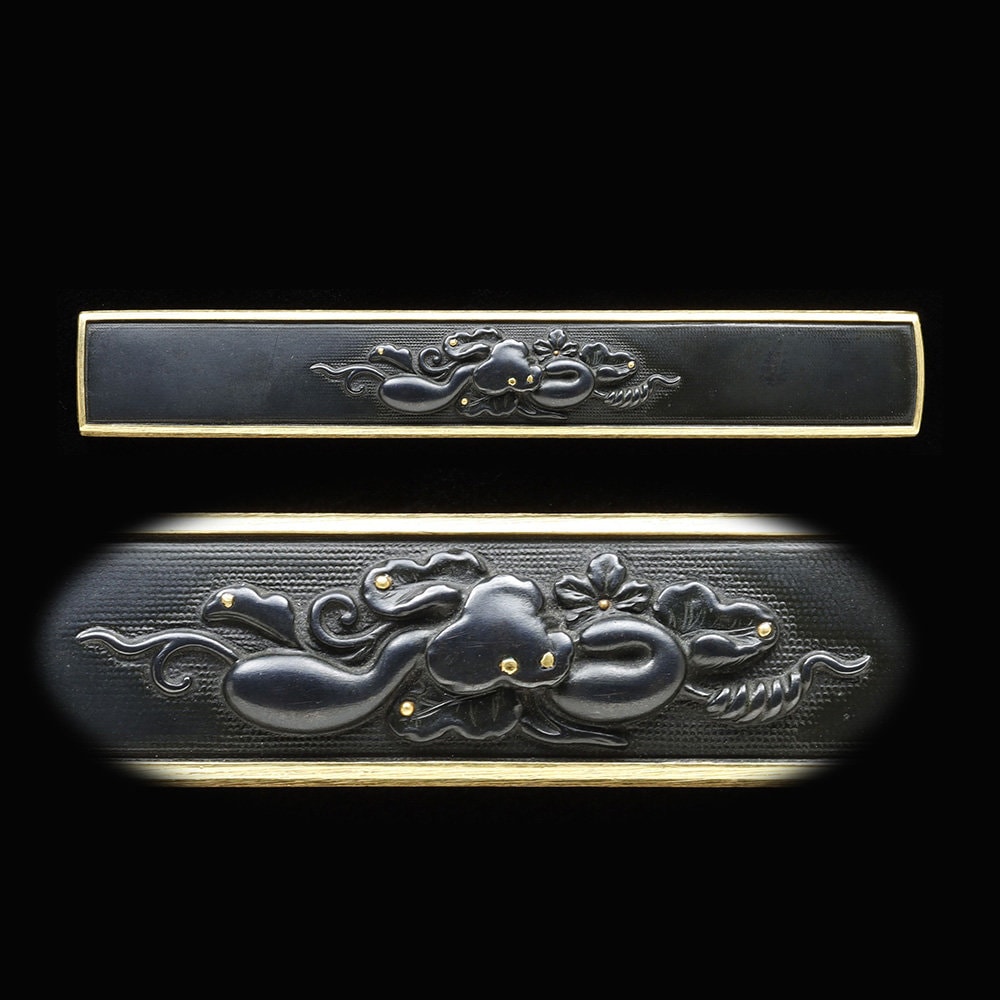
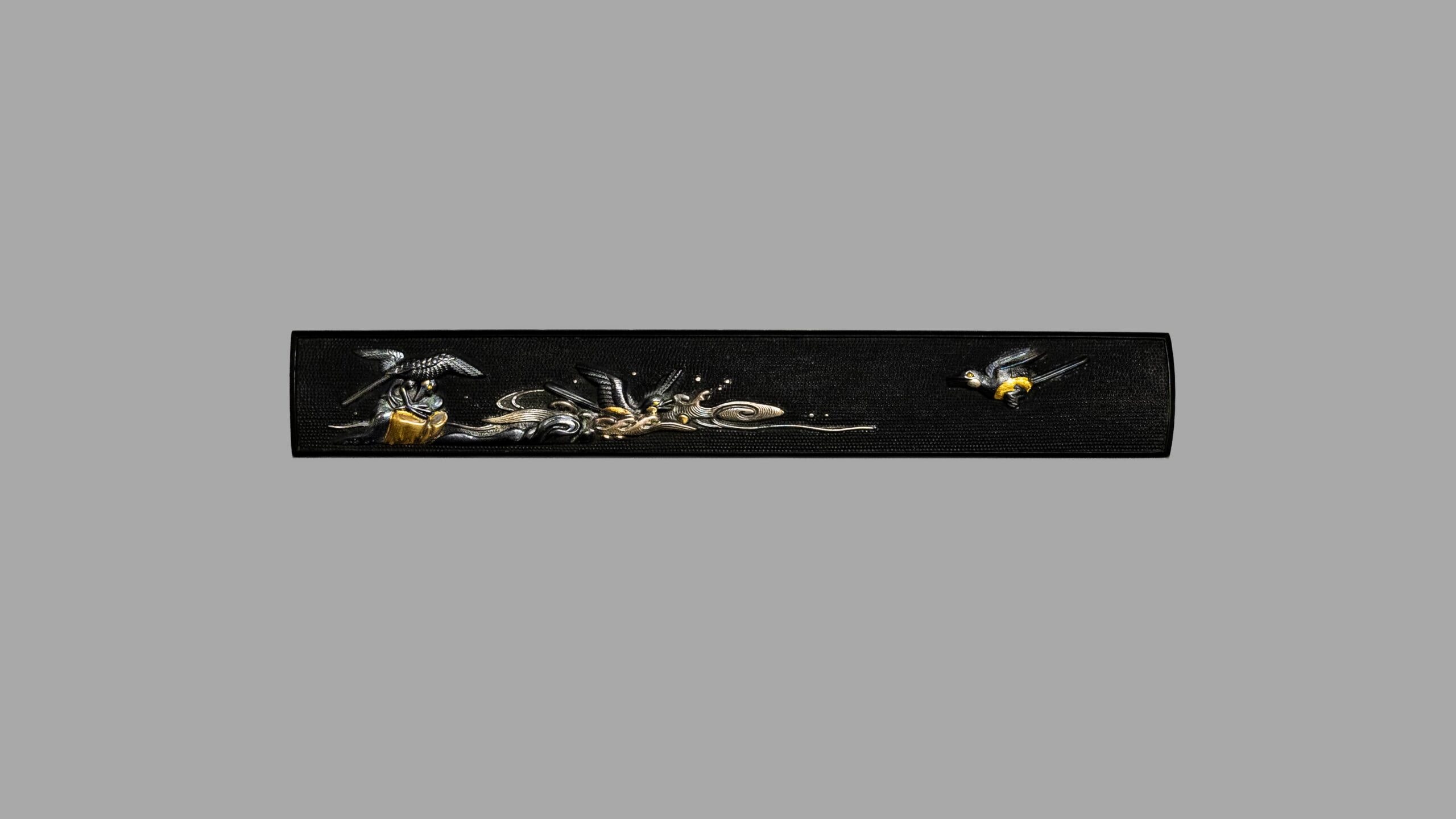
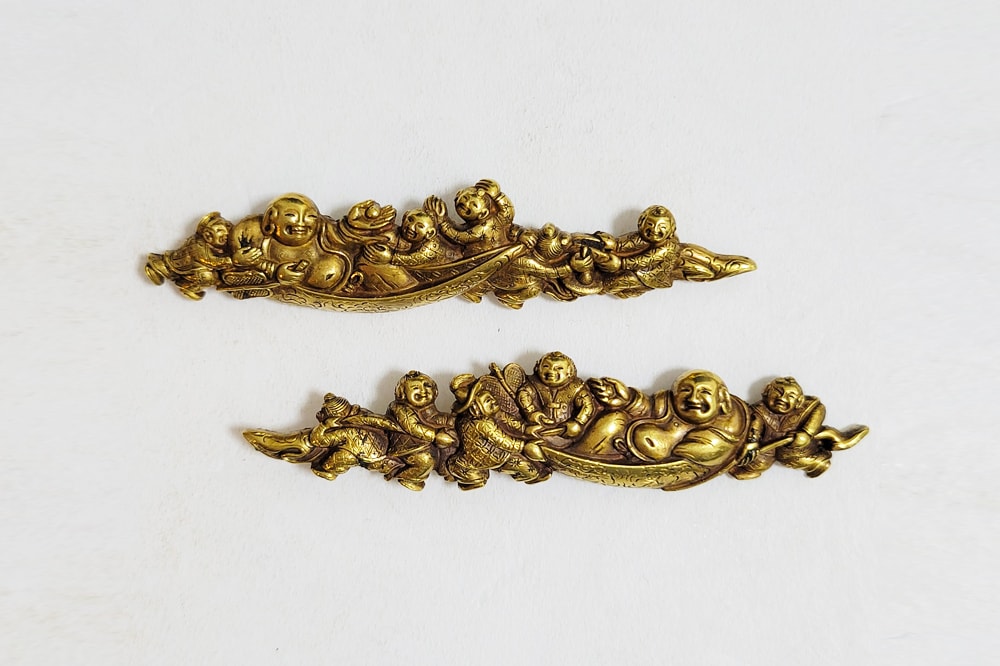
Mitsumori's oeuvre demonstrates the solid and reliable carving manner characteristic of the Goto house tradition (iebori), executed with painstaking attention throughout. His works are unified in a refreshing, pure black tonality of , rendered in both and grounds. He employed , with accents of kosuki-bori, and in gold and silver, achieving compositions of ample volume and richly rounded high relief. His subjects encompassed traditional Goto themes — , the legend of Huang Shigong and Zhang Liang, , and kirin — while also extending to more pictorial compositions in a painting-like manner. The gold crests on his and are noted for their large scale, excellent volume, and powerfully expressed presence.

The characterizes Mitsumori's finest works as possessing a distinctive sense of "inner sumptuousness" achieved through restrained coloration and confident carving — a quality that brings forth his particular strengths to the fullest. Works bearing his own signature are comparatively few, lending additional significance to signed examples as important reference pieces. His sets are especially scarce and are counted among his representative achievements. Mitsumori's contribution resides in his faithful stewardship of the mainline Goto tradition during the latter half of the eighteenth century, demonstrating that the hereditary house manner retained its vitality and high standard into the late period.
Kantei

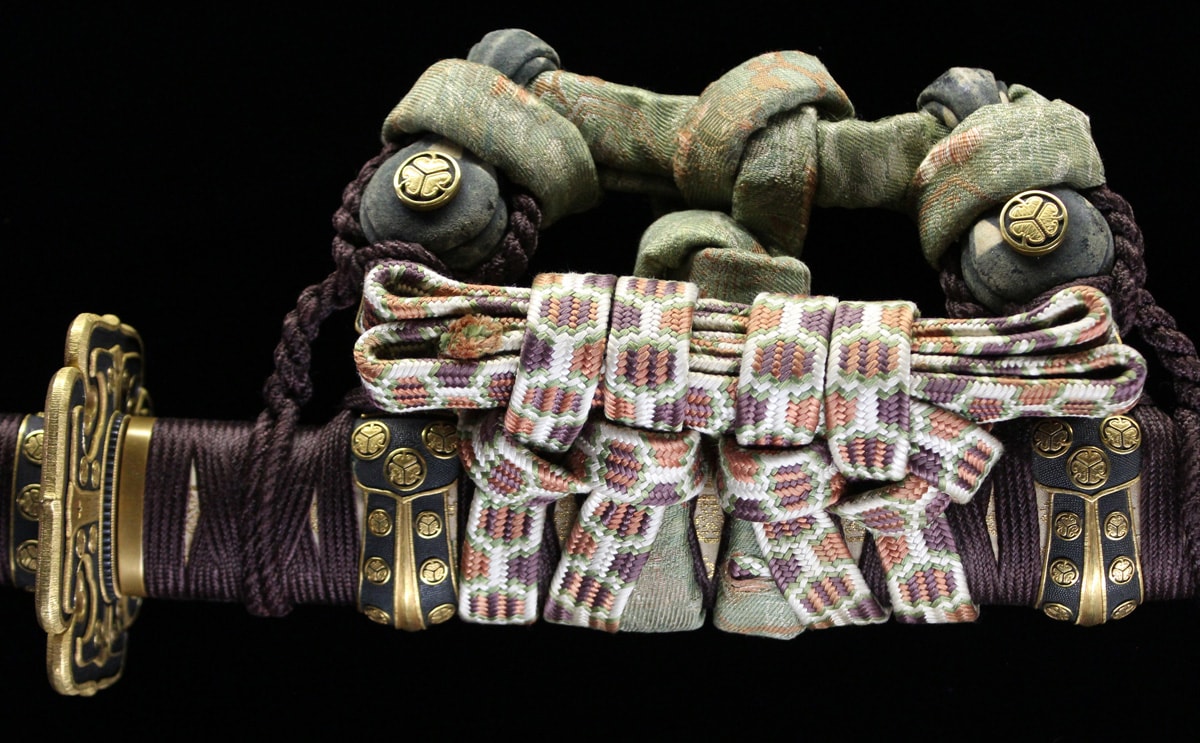
3 descriptive axes: material (the shakudo-nanako house grounds, with all-gold menuki grounds and a shakudo ishime ground on a Satsuma-koshirae tsuba besides) x technique (the orthodox takabori and katachibori with iro-e in gold and silver, applied gold-crest work, kosuki-bori with kebori on the plain-shakudo pieces and inlay-colour on the koshirae fittings, the hand dense and solid) x themes (the kurikara and treasure motifs of the house canon, the Chinese figure-tale of Kosekiko and Choryo, the qilin and a butterfly koshirae set, with pictorial Mt Fuji designs besides). His one load-bearing discriminator is that he signs, read Goto Mitsumori, against the mumei early-Goto norm. The corpus is thin, only five pieces, and offers no clean per-piece separator beyond the signature, because his documented individuating character, that his self-signed work is scarce, is a record about how rarely he signs rather than a tell read off any one piece, and he is not credited with a distinctive personal innovation the way the records single out Renjo's shibuichi ground or Tsujo's left-and-right composition; that scarcity is therefore kept below in scholarship and not used as a discriminator. The rest is the orthodox house foundation. As one of the certifying heads his bare light-name 光守 also appears as a kiwame-mei on an earlier head's piece he appraised, which must be distinguished from his own self-signed work.

Goto Keijo, given name Mitsumori (read 光守), is the fourteenth-generation head of the orthodox Goto house, the third son of the twelfth master Jujo Mitsumasa (read 光理), born in Kanpo 1 (1741); his real name was Mitsutomo (光儔) and his common name Kichigoro. Because his elder brother the thirteenth master Mitsutaka (read 光孝, Enjo) had no heir, Keijo was adopted by him and, after Mitsutaka's death, succeeded to the headship as the fourteenth master, changing his name to Shirobei Mitsumori; his son was the fifteenth master Shinjo Mitsuyoshi (read 光美). He signs his own work, read by his given name Goto Mitsumori with a , and on the given name appears unsigned but attributed to him. His subjects are the and treasure motifs of the house canon and the Chinese tale of Kosekiko and Choryo, together with the qilin and a butterfly Satsuma- set, and even pictorial Mt designs, carried in dense and solid carving on the orthodox - house grounds, his self-signed three-piece sets few but counted among his representative work. The records note that his self-signed work is scarce, so a signed piece of his is valued as good reference material. As one of the certifying heads his bare light-name 光守 also stands as the on an earlier head's piece he appraised, which must be distinguished from his own self-signed work.

Diagnostic discriminators

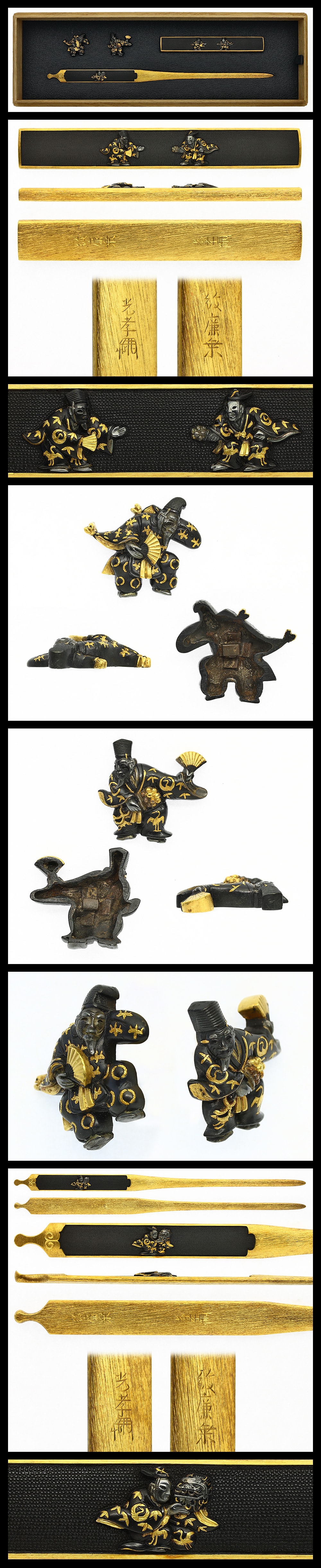
Three of the five corpus objects carry his genuine signature, read 後藤光守(花押) by his given name Mitsumori, used across his career (a qilin three-piece set, a Kosekiko-and-Choryo three-piece set, and a treasure-motif five-piece set); the fuchi of a butterfly Satsuma koshirae also carries his 後藤光守(花押), so the signature appears on four of the five, and on menuki the same given name appears unsigned but attributed to him (無銘 後藤光守 / 無銘 光守). By his later-Edo generation the Goto heads sign with regularity, against the mumei norm of the early house attributed only by origami and later-head appraisal-signatures. The bare 光守 is NOT counted as his self-signature: it stands BOTH as the base of his own 後藤光守 self-signature AND, as one of the certifying heads, as Keijo's own kiwame-mei light-name on an EARLIER head's piece he appraised (紋宗乗 光守, certifying the second master Sojo's Muromachi chimaki kozuka). The single corpus object that does NOT carry his 後藤光守 self-signature is exactly this certification (紋宗乗 光守), where it is the earlier head being appraised, not Keijo's own carving. (His real name 光儔 is recited in the biography but his 光儔-signed work is scarce and none appears in this corpus; the 光晃 wari-mei 光・晃 on the koshirae menuki is his great-grandson the sixteenth master Hojo, not Keijo.)

Material (grounds)

The orthodox house grounds, in fine above all on the , , and , with plain polished on a five-piece set, all-gold grounds, and a ishime ground on the of the Satsuma .

赤銅地

Technique

for the , , and with gold and silver iro-e, for the , the gold crest set in relief and on the details; the plain- and of the five-piece set worked in kosuki-bori with , the butterfly fittings in inlay-colour, the hand dense and solid in the orthodox house manner.

Themes (the house canon and Chinese figure-tale)

The and treasure motifs of the house canon and the Chinese tale of Kosekiko and Choryo, together with the qilin and a butterfly Satsuma- set, with pictorial Mt designs besides; his self-signed three-piece sets few but counted among his representative work.

House canon and Chinese figure-tale

The and treasure motifs of the orthodox house repertoire and the Chinese tale of Kosekiko and Choryo, the old man transmitting the secrets of strategy to the young Choryo, with the qilin among his auspicious-beast subjects, carried in dense and solid carving.

Full iconography

Signature chronology

Placement
Recorded signatures

Documentary note

Keijo signs his own work, read 後藤光守(花押) by his given name Mitsumori, used across his career; on the given name appears unsigned but attributed to him (無銘 後藤光守 / 無銘 光守). His real name was Mitsutomo (光儔), and the records note that his Mitsutomo-signed work is scarce, only a twinned-lion noted, with most of his pieces signed Goto Mitsumori, so a self-signed piece of his is prized as good reference material. As one of the certifying heads, his own light-name 光守 also stands as a on an earlier head's piece he appraised, never as his own carving: he certified a chimaki-design to the second master Sojo (紋宗乗 光守). One butterfly-themed Satsuma in his group assembles fittings of two house hands of different generations: its is his own signed work (縁銘 後藤光守(花押)) while the are signed with the 光・晃 of his great-grandson the sixteenth master Hojo Mitsuaki, the rest of the mounting , so the should not be read as Keijo's sole work.

Scholarship

The records note that his self-signed work is scarce, his real-name Mitsutomo pieces rarer still, so that a self-signed piece of his is prized as good reference material; this is his documented individuating character, but it is a record about how rarely he signs rather than a tell read off any one piece, so it is kept here and not used as a per-piece discriminator.

Designations

Kokuhō—
Jūyō Bunkazai—
Jūyō Bijutsuhin—
Gyobutsu—
Tokubetsu Jūyō—
Jūyō Tōken5

Elite Standing

0.03 across 5 designated works

Top 28% among makers

Work Types

Distribution across 5 ranked works

Other
240%
Mitokoromono
240%
Kozuka
120%

Signatures

Signature types across 5 ranked works

Currently Available

Lineage

TeacherGoto Jujo
Goto Keijo
Student
  1. 1.Goto Shinjo後藤真乗2 for sale8designated

Goto School

Other artisans of the Goto school

  1. 1.Goto Joshin後藤乗真6 for sale67designated
  2. 2.Goto Yujo後藤祐乗1 for sale41designated
  3. 3.Goto Kenjo後藤顕乗1 for sale45designated
  4. 4.Goto Sojo後藤宗乗53designated
  5. 5.Goto Tokujo後藤徳乗2 for sale31designated
  6. 6.Goto Eijo後藤栄乗9 for sale31designated
  7. 7.Goto Teijo後藤程乗10 for sale41designated
  8. 8.Goto Renjo後藤廉乗4 for sale33designated
  9. 9.Goto Tsujo後藤通乗1 for sale29designated
  10. 10.Goto Kojo後藤光乗1 for sale25designated
  11. 11.Goto Enjo後藤延乗3 for sale19designated
  12. 12.Goto Hojo後藤方乗1 for sale16designated

Goto Keijo

Goto Keijo(後藤桂乗) was a maker of Japanese sword fittings (tōsōgu) of the Goto school in Yamashiro province, active during the Mid-Late Edo (1741-1804) period.

The work follows the Iebori tradition.

Designated works by Goto Keijo include 5 Jūyō.