Japanese Sword Guards (Tsuba) for Sale
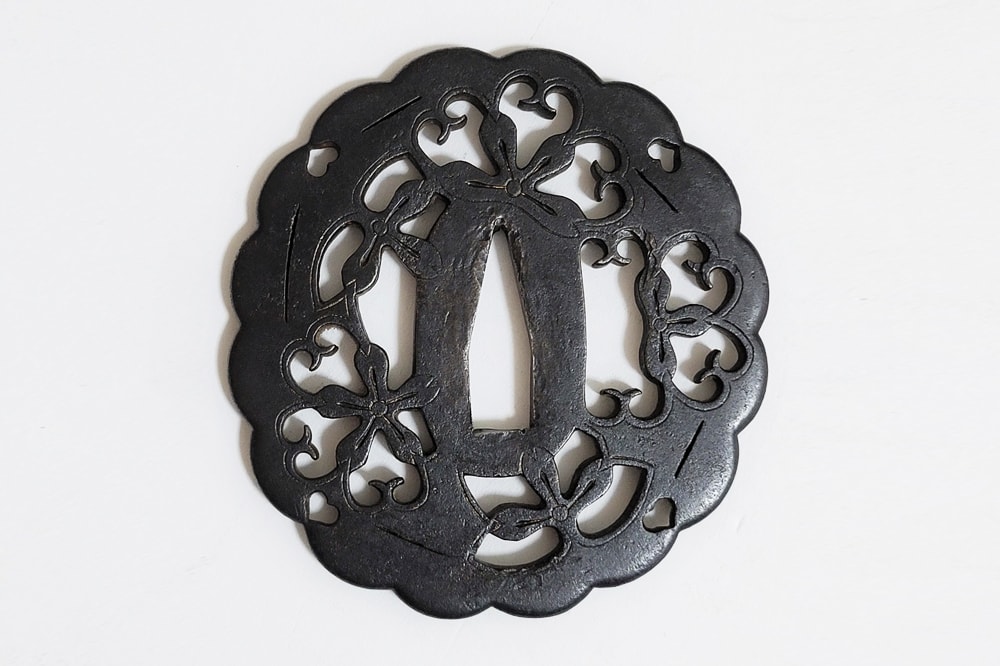
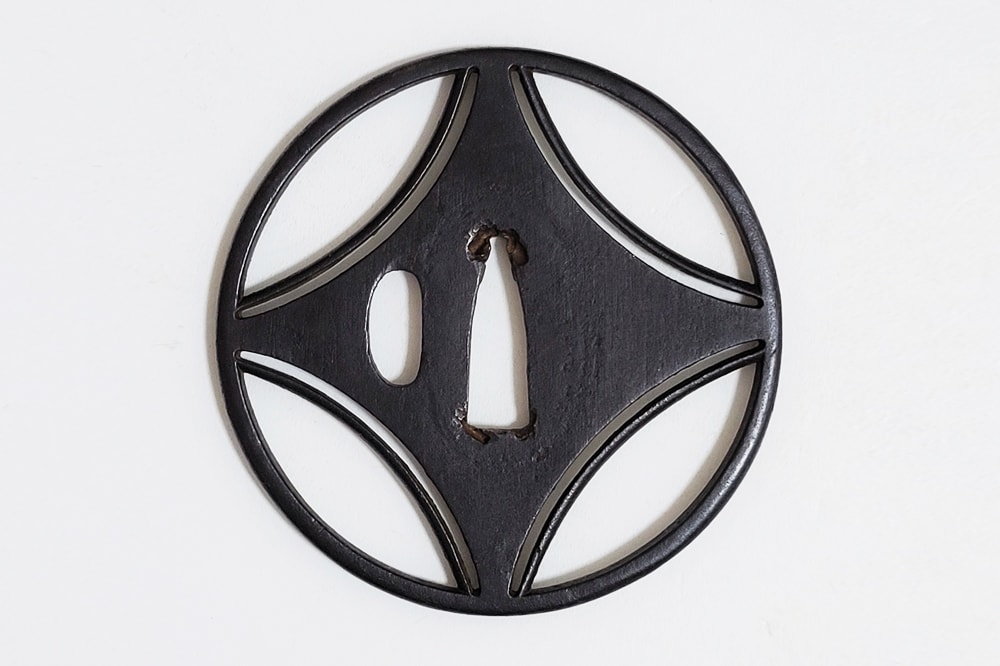
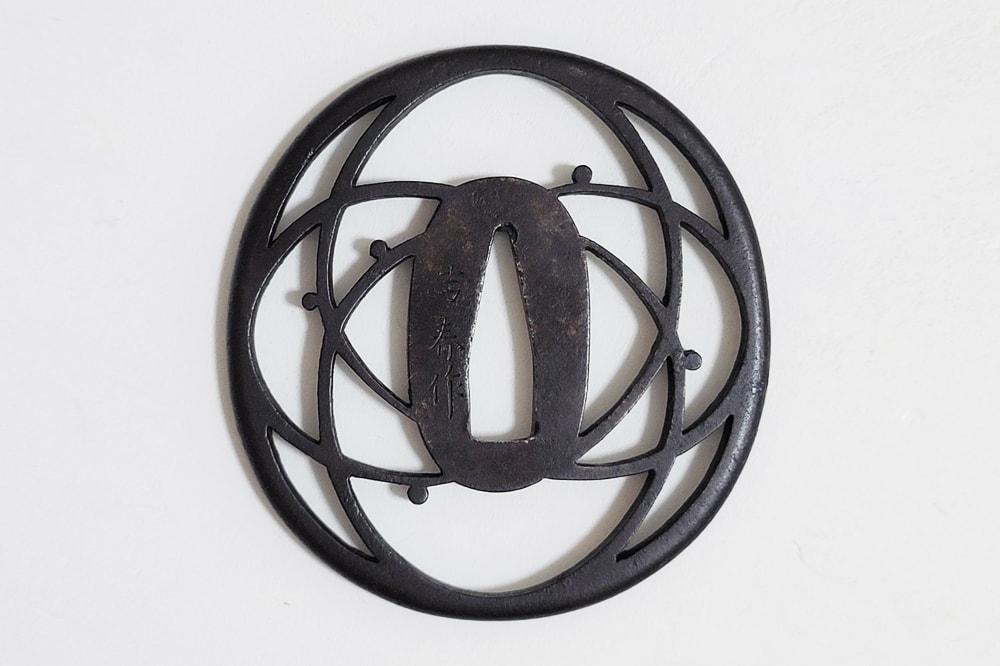
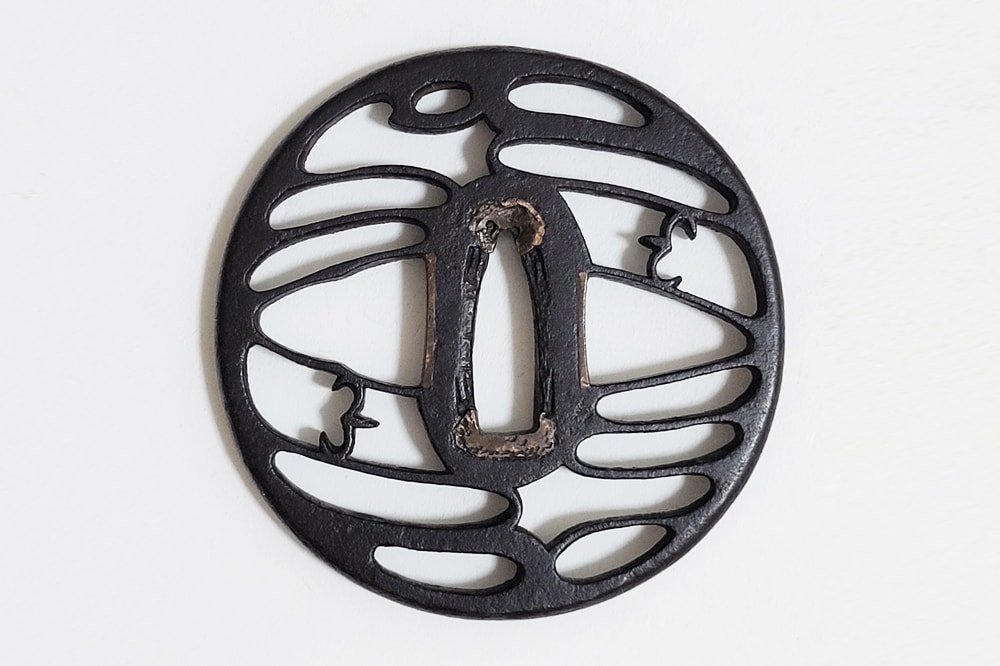
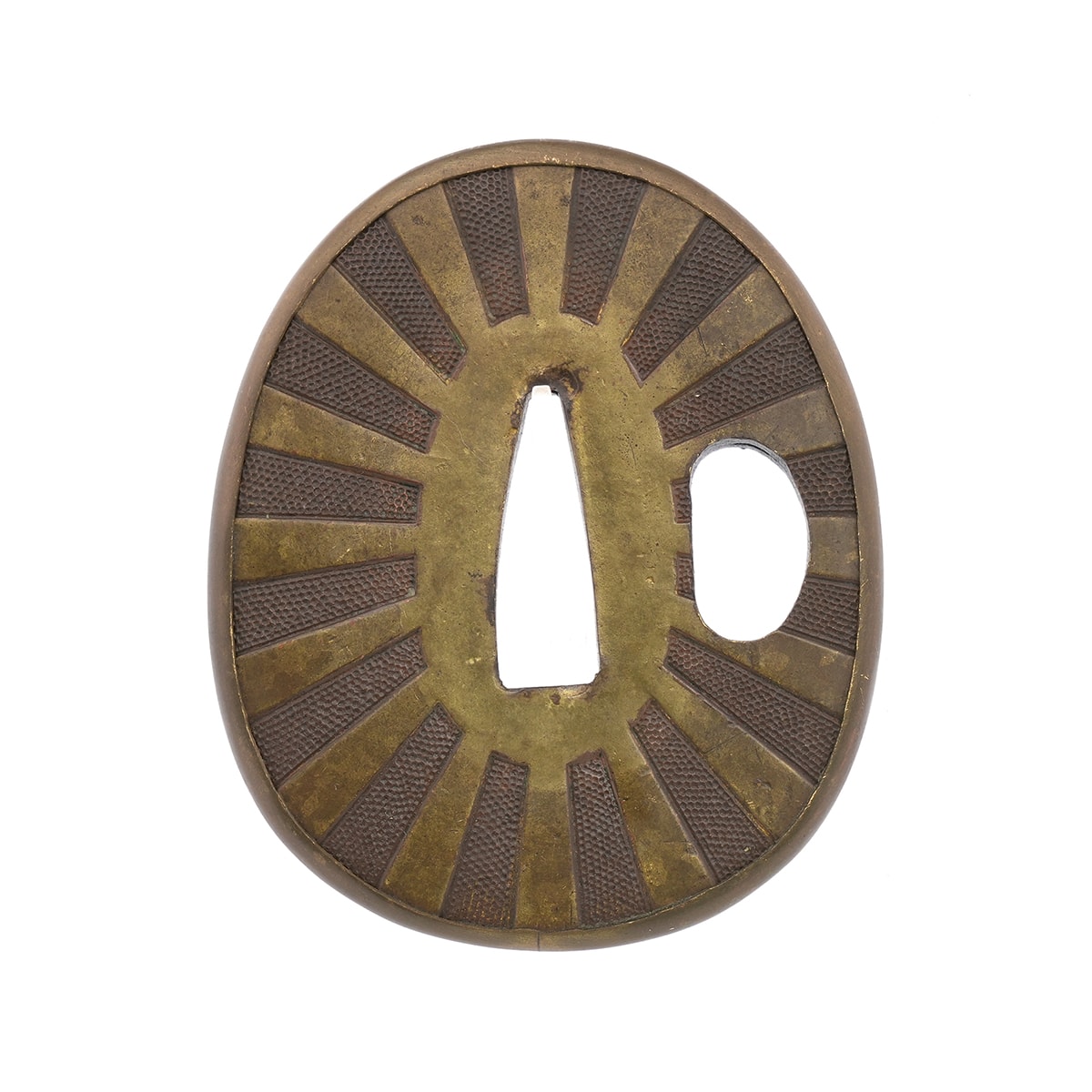
The hand guard of a Japanese sword is called a tsuba, and among collectors that is the only word you will hear. Mounted between blade and grip, the tsuba grew from battlefield protection into the most collected of all Japanese sword fittings: a palm-sized canvas in iron, shakudo and gold. The sword guards below are offered by specialist dealers, many with certification papers.
3,220 items currently available from trusted dealers worldwide.
Programmatic access: range and multi-facet queries (by price, blade length, certification, and more) are available as JSON at /api/public/listings. See /llms.txt for the full schema and filters.
The vocabulary: sword guard → tsuba
Every dealer catalog, auction record and reference book calls these guards tsuba (鍔). Search with that word and the whole field opens up: schools, signatures, certified masterpieces. A tsuba is judged like a painting, by school, maker, iron quality and design, and unlike a sword it generally requires no ownership license, which makes it the classic first purchase in Japanese sword art.
Schools and styles to know
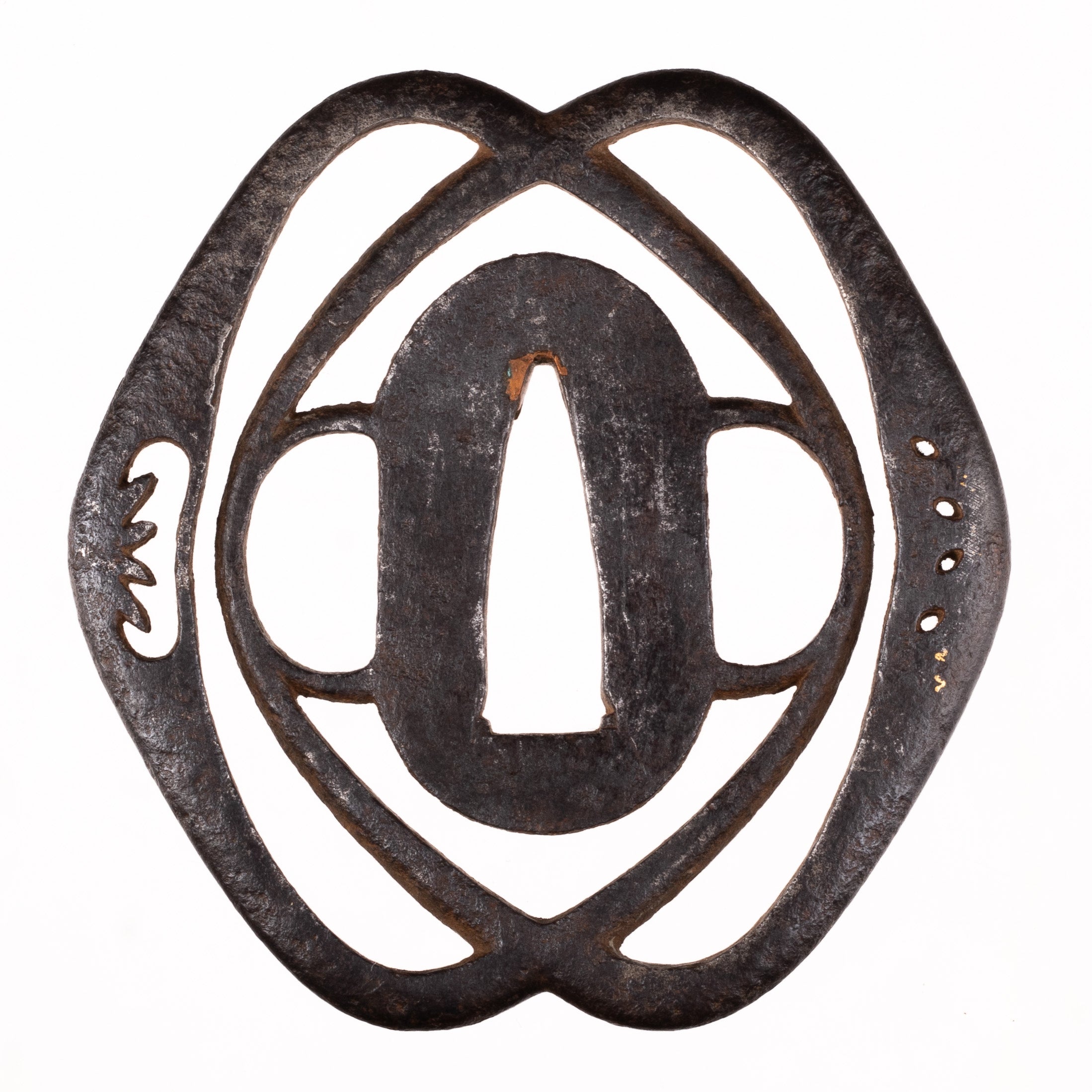
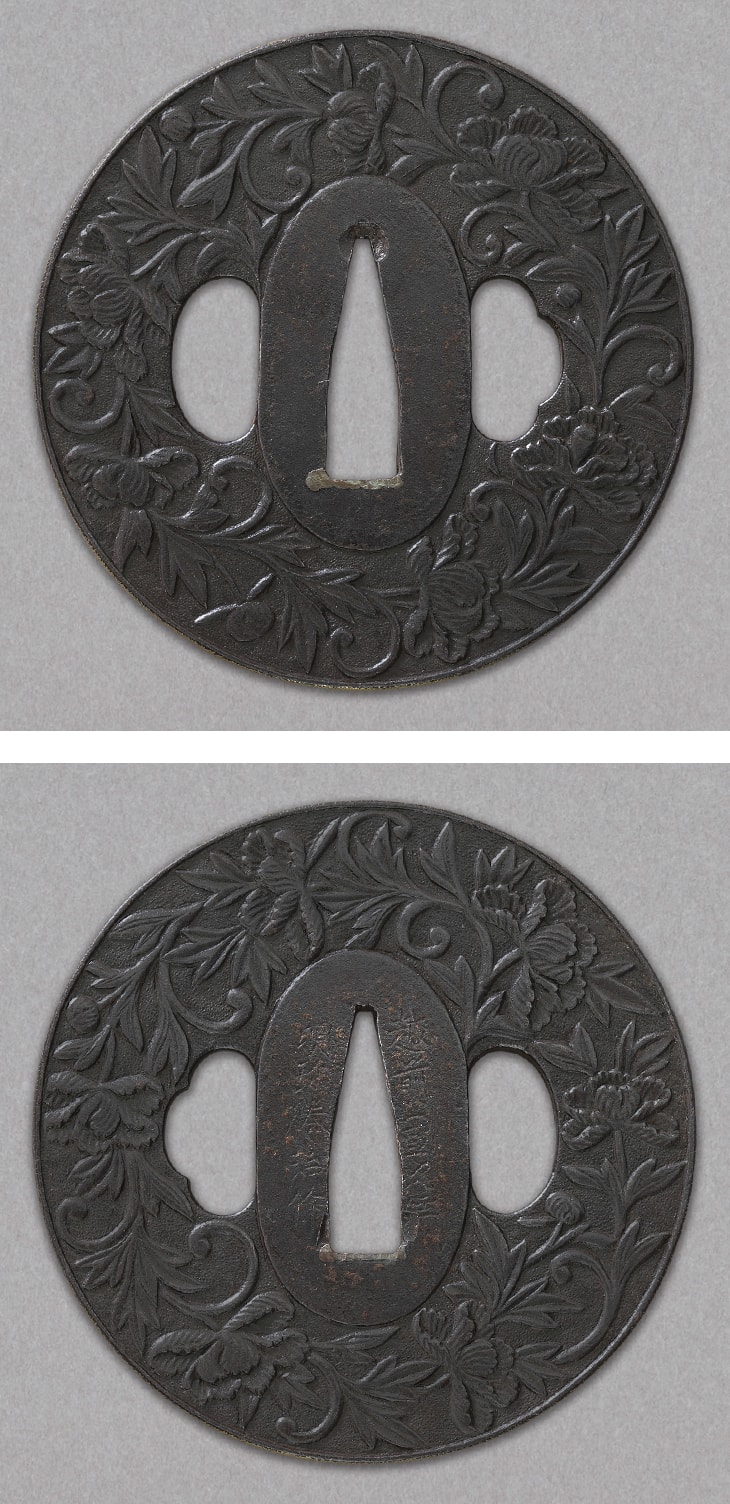
Openwork iron guards (sukashi) from the Owari and Higo traditions carry austere, architectural designs; the Goto school worked soft shakudo and gold for formal mounts; Nara and Yokoya artists painted in metal with inlay and relief; and the Akasaka line refined Edo openwork across many generations. Prices run from a few hundred dollars for honest unsigned iron to serious sums for papered works by named masters; the NBTHK certifies fittings on the same ladder it uses for blades.
The largest tsuba inventories here come from Toushin, Aoi Art and Choshuya. Every listing names its dealer, and you buy from the source.
Where to go next
The pieces below are the sword guards currently on the market from the dealers we track. For the full collector-facing page, with market context and related fittings, see tsuba for sale, or browse the complete fittings category.
Common Questions
- What is the guard on a Japanese sword called?
- The tsuba (鍔). Dealers, auction houses and reference books all use the Japanese term; searching "tsuba" opens the whole specialist market.
- Why do people collect tsuba?
- Tsuba are miniature works of art judged like paintings: by school, maker, iron quality and design. They occupy little space, generally require no ownership license, and fine pieces by named schools carry NBTHK certification just as blades do.
- How much do tsuba cost?
- Honest unsigned iron guards start around a few hundred US dollars; papered works by celebrated schools reach into the tens of thousands.
Recently Listed
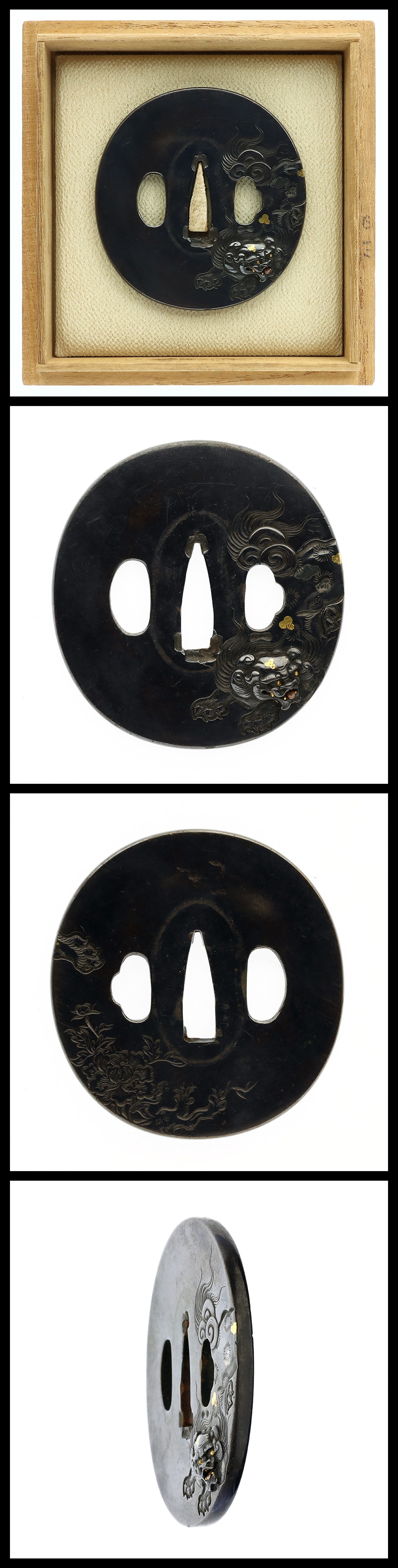
Tsuba: Mumei: Botan Shishi
¥80,000
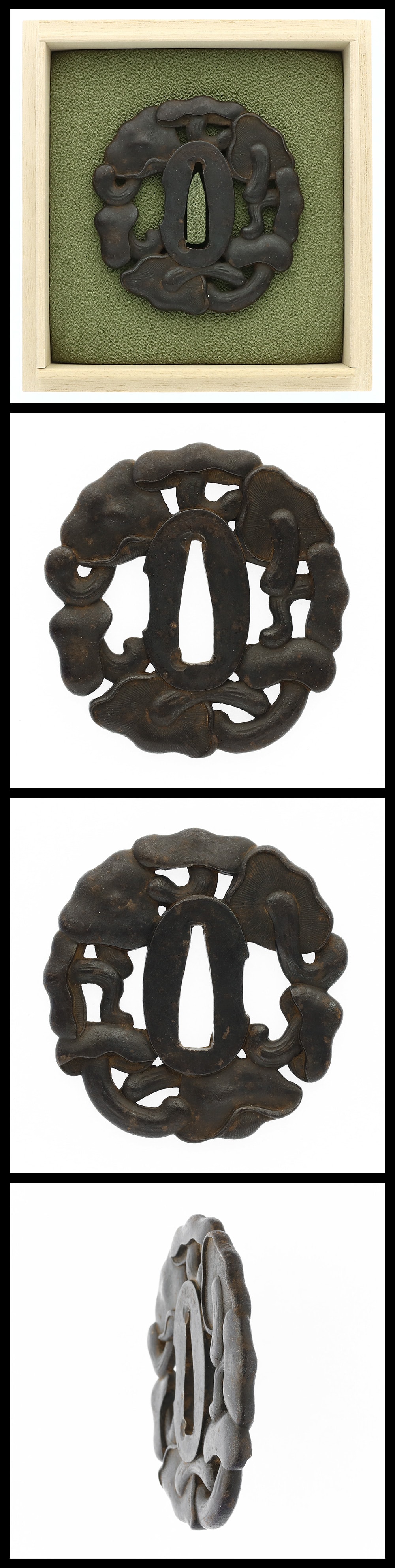
Tsuba: Mumei (Unsigned):Mushrooms
¥75,000
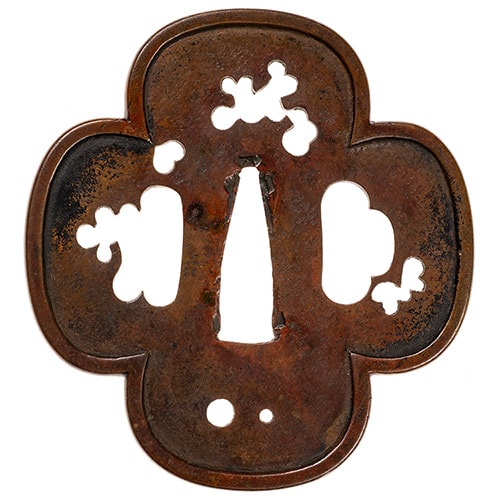
庄内 文様散透鍔/鐔 保存刀装具
¥200,000
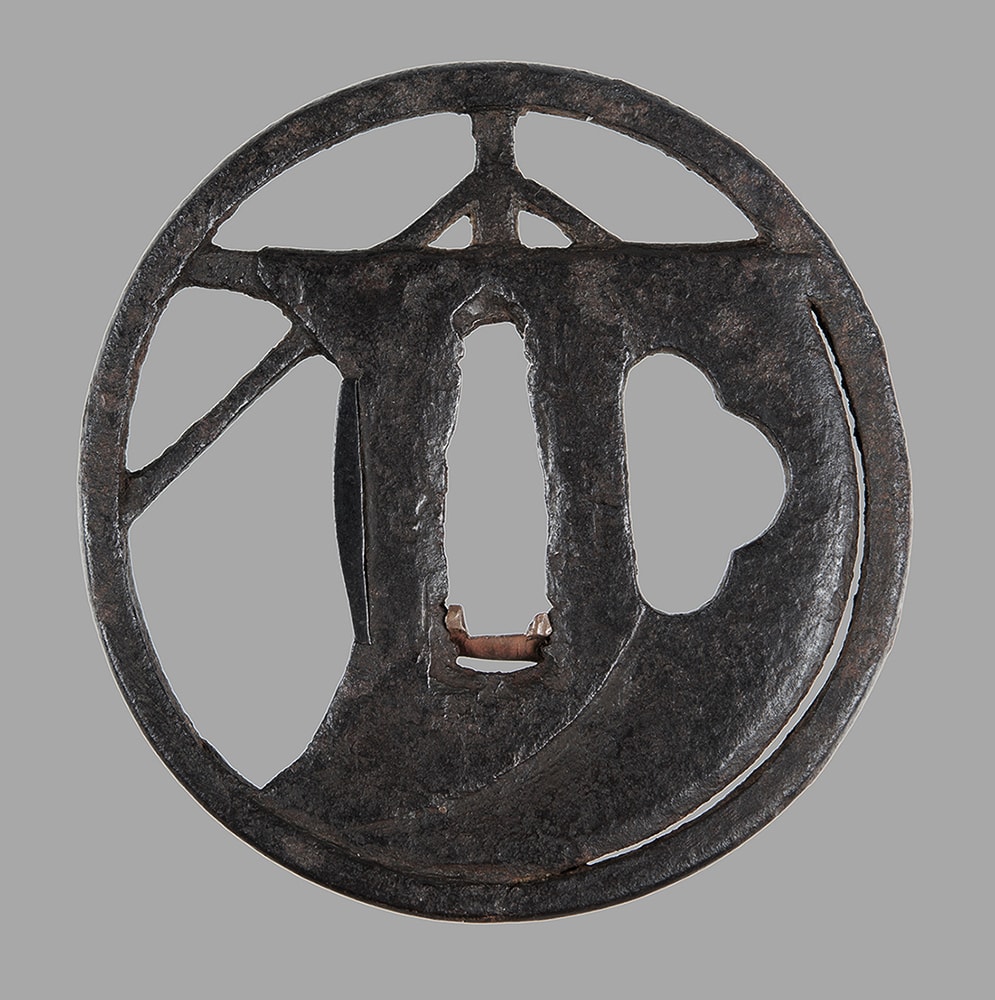
後代柳生 Kodai Yagyu Tsuba
$2,250
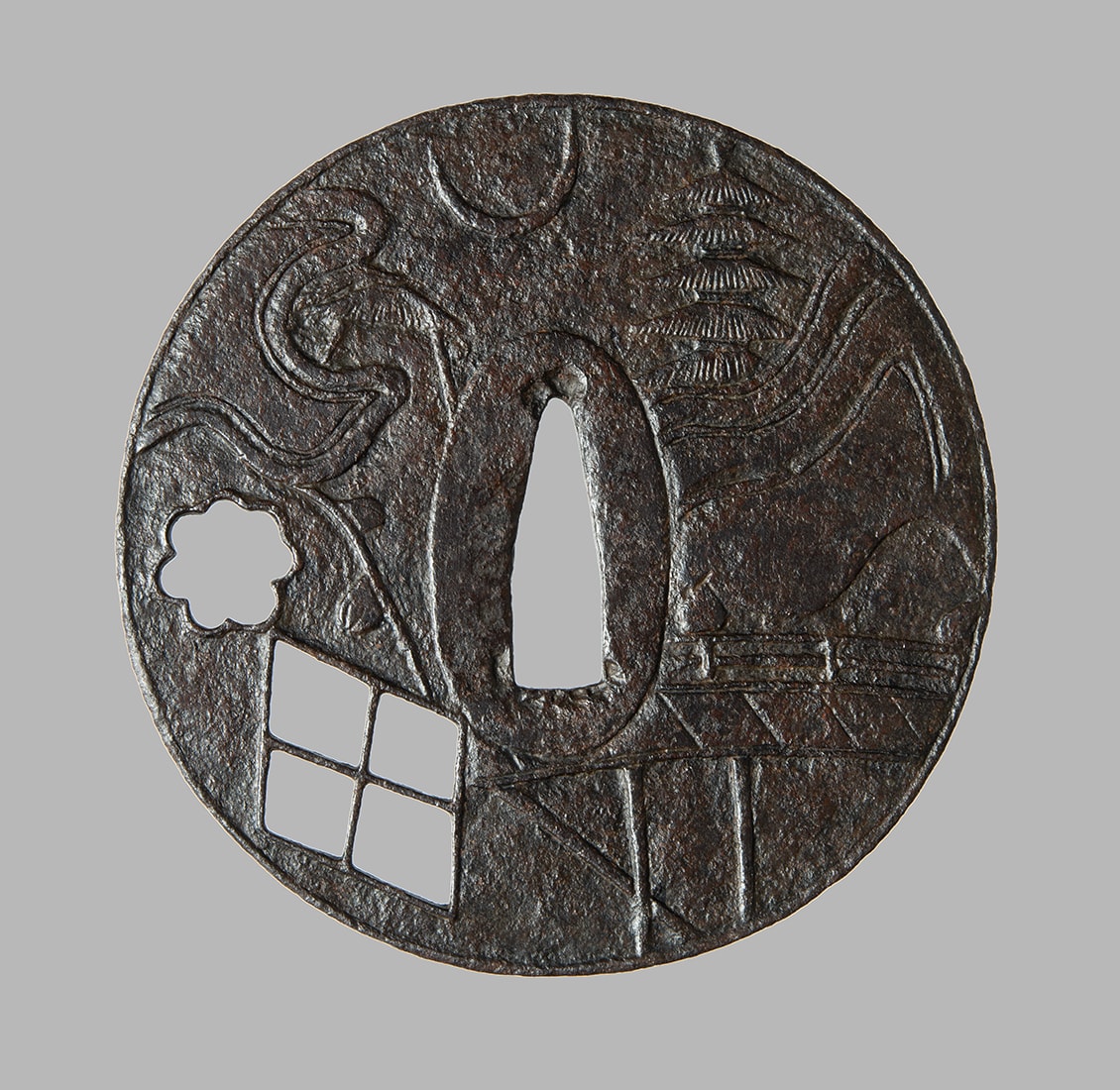
Kamakura Bori Tsuba
$3,850

古金工 菊花図鍔/鐔 保存刀装具
¥160,000
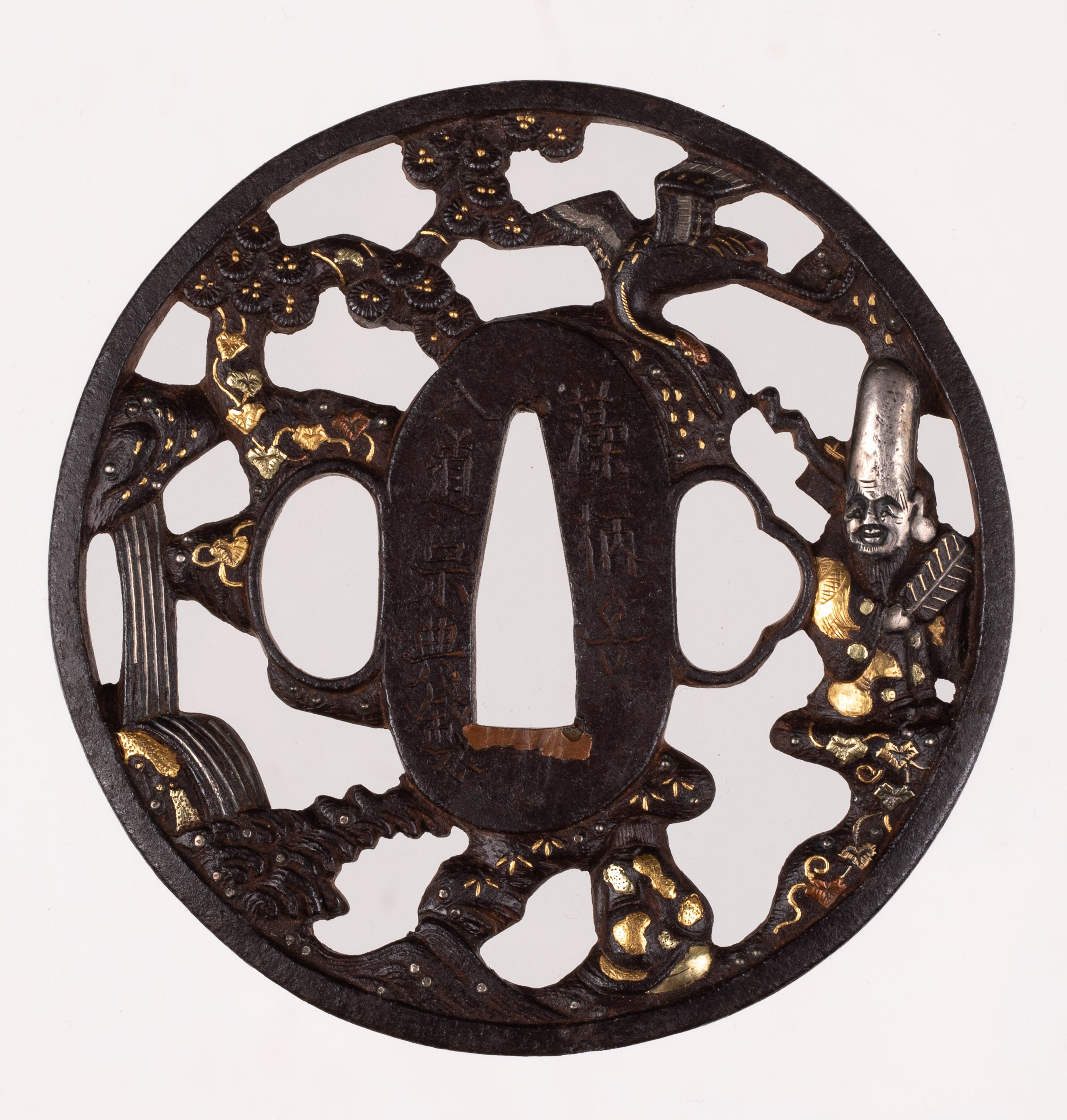
Iron Soten style tsuba signed "Goshu Hikone Ju Mogarashi Nyudo Soten Sei"
$800
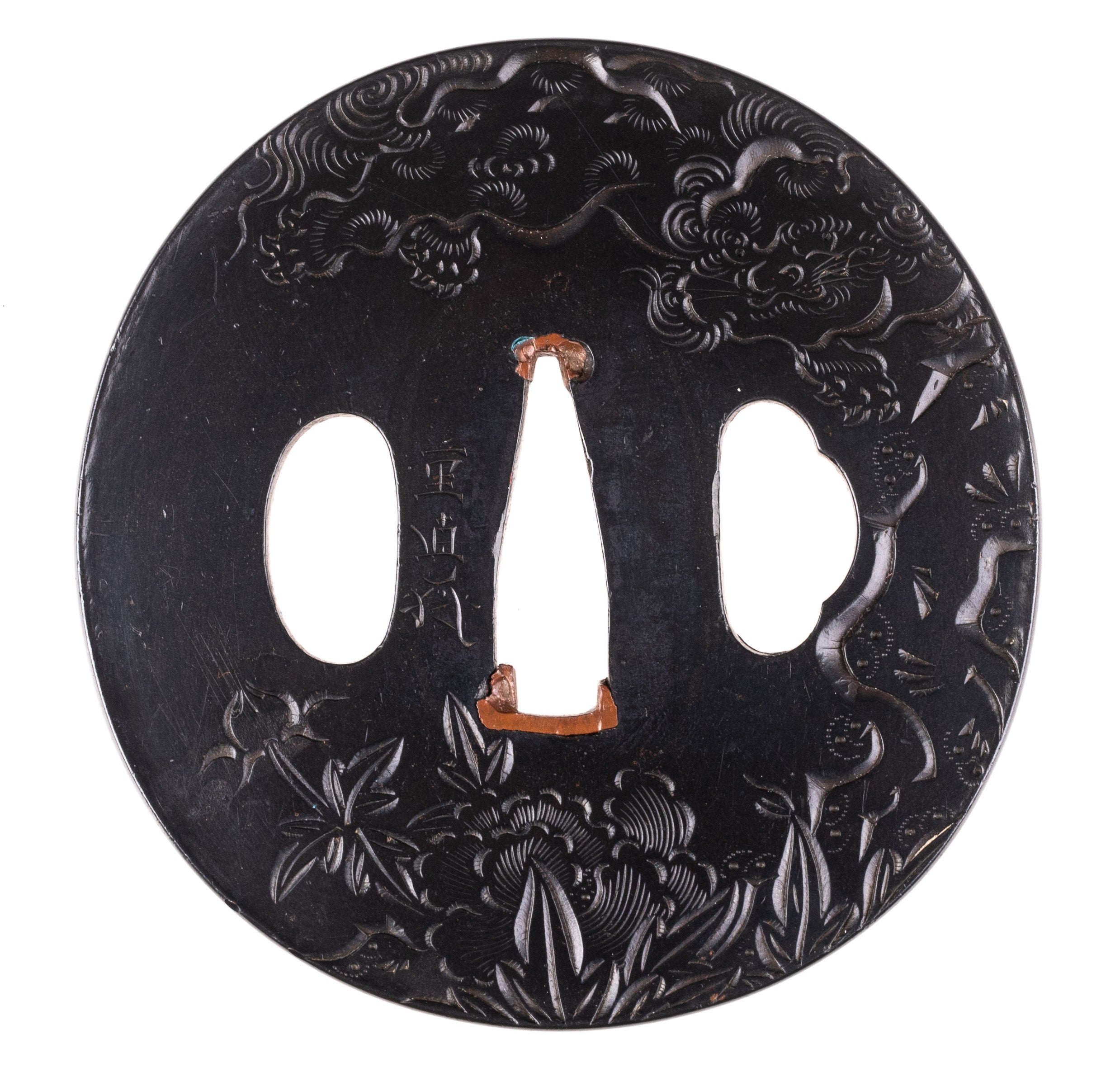
Shakudo tsuba signed "Shigeyoshi" decorated with Shishi and Peony
$700