 NihontoWatchNihontoWatch
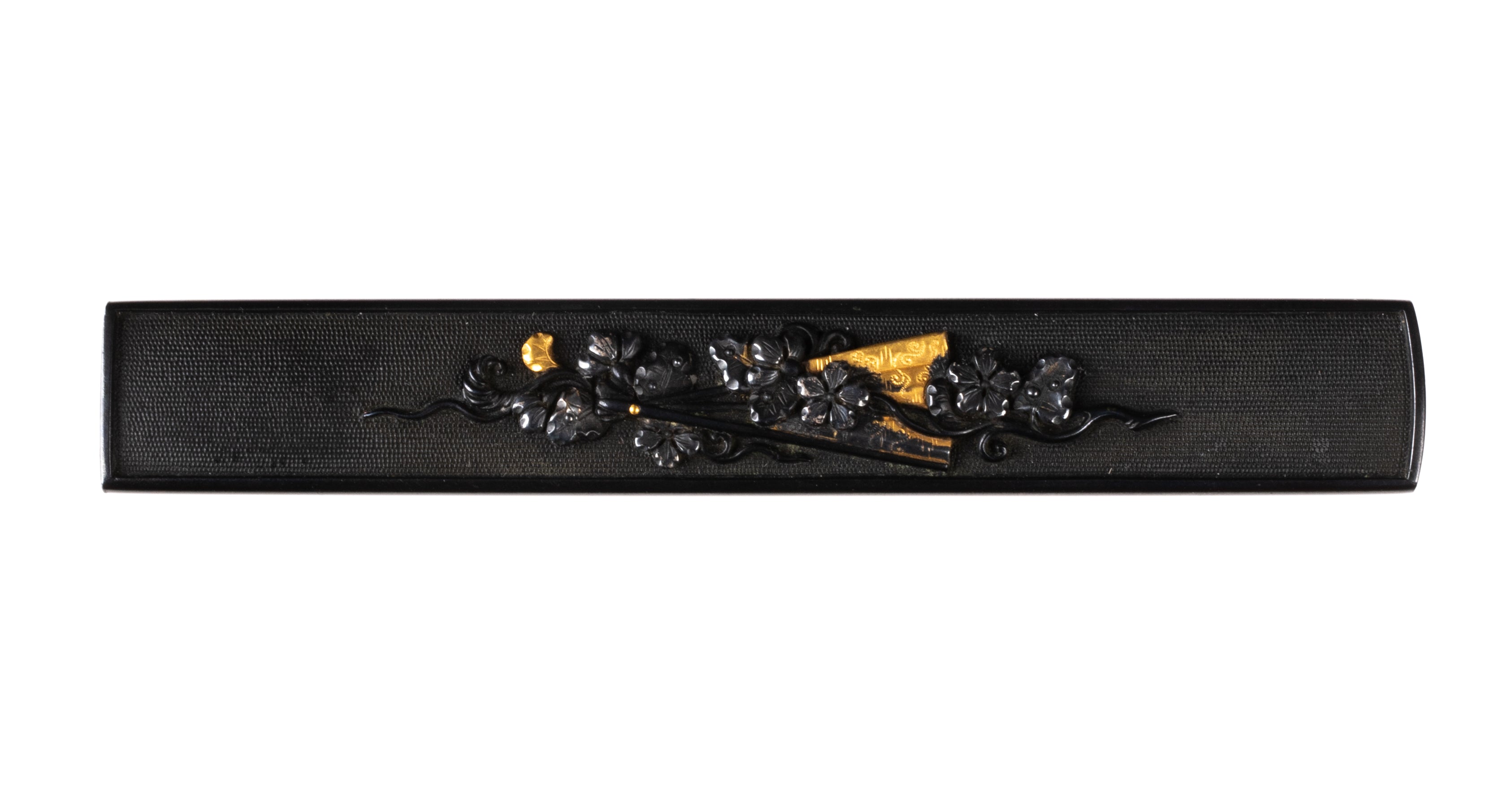
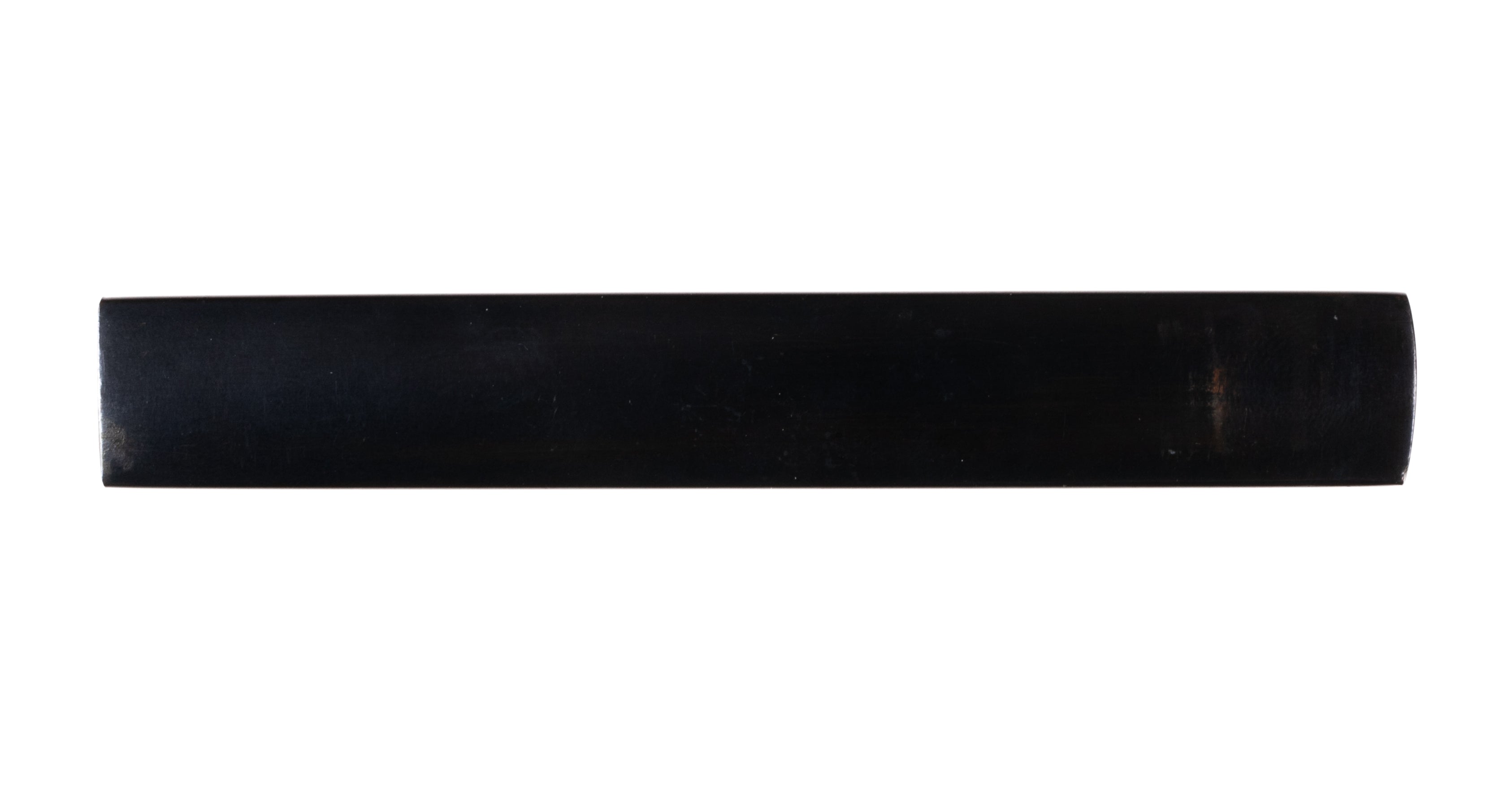
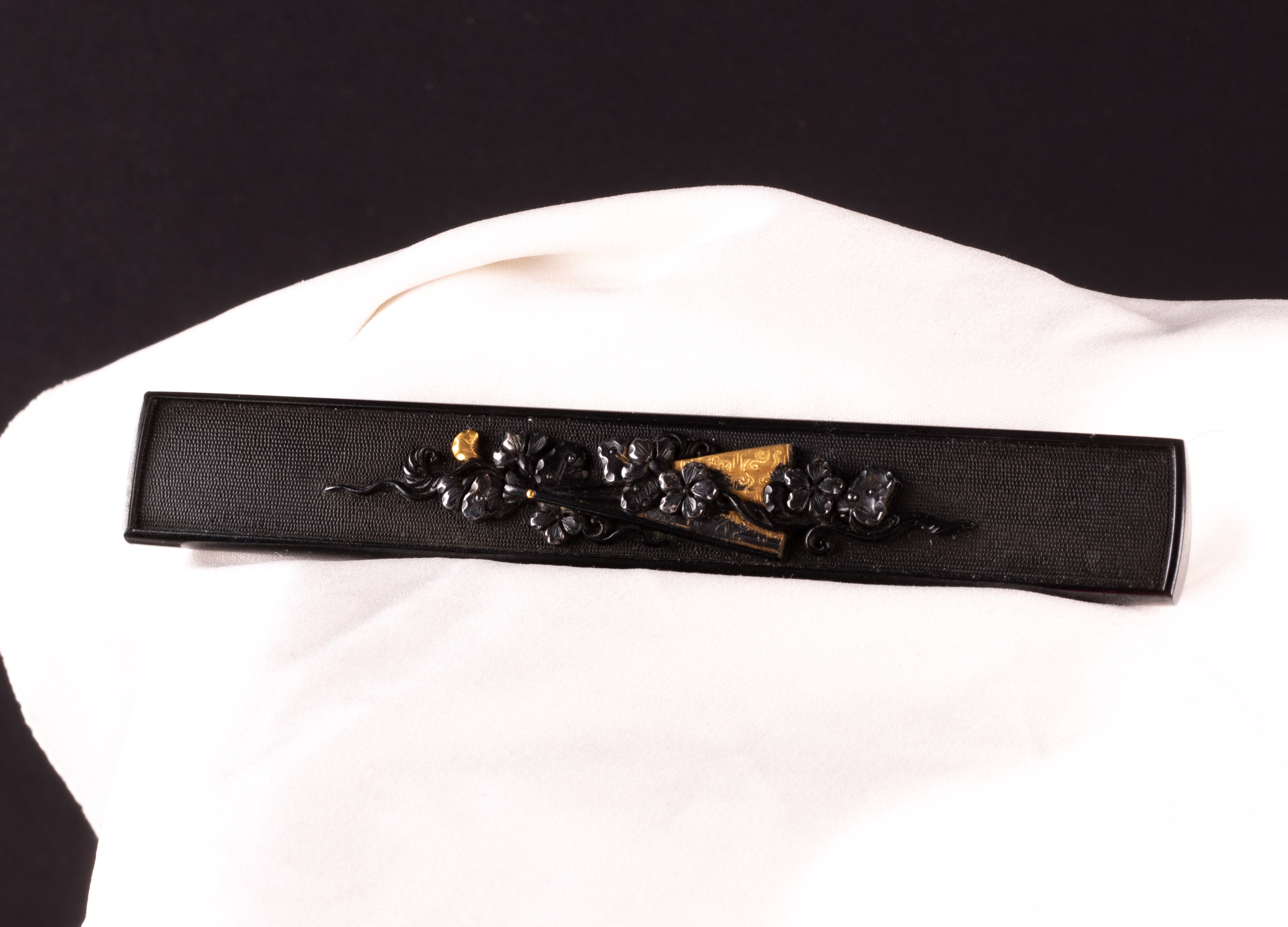
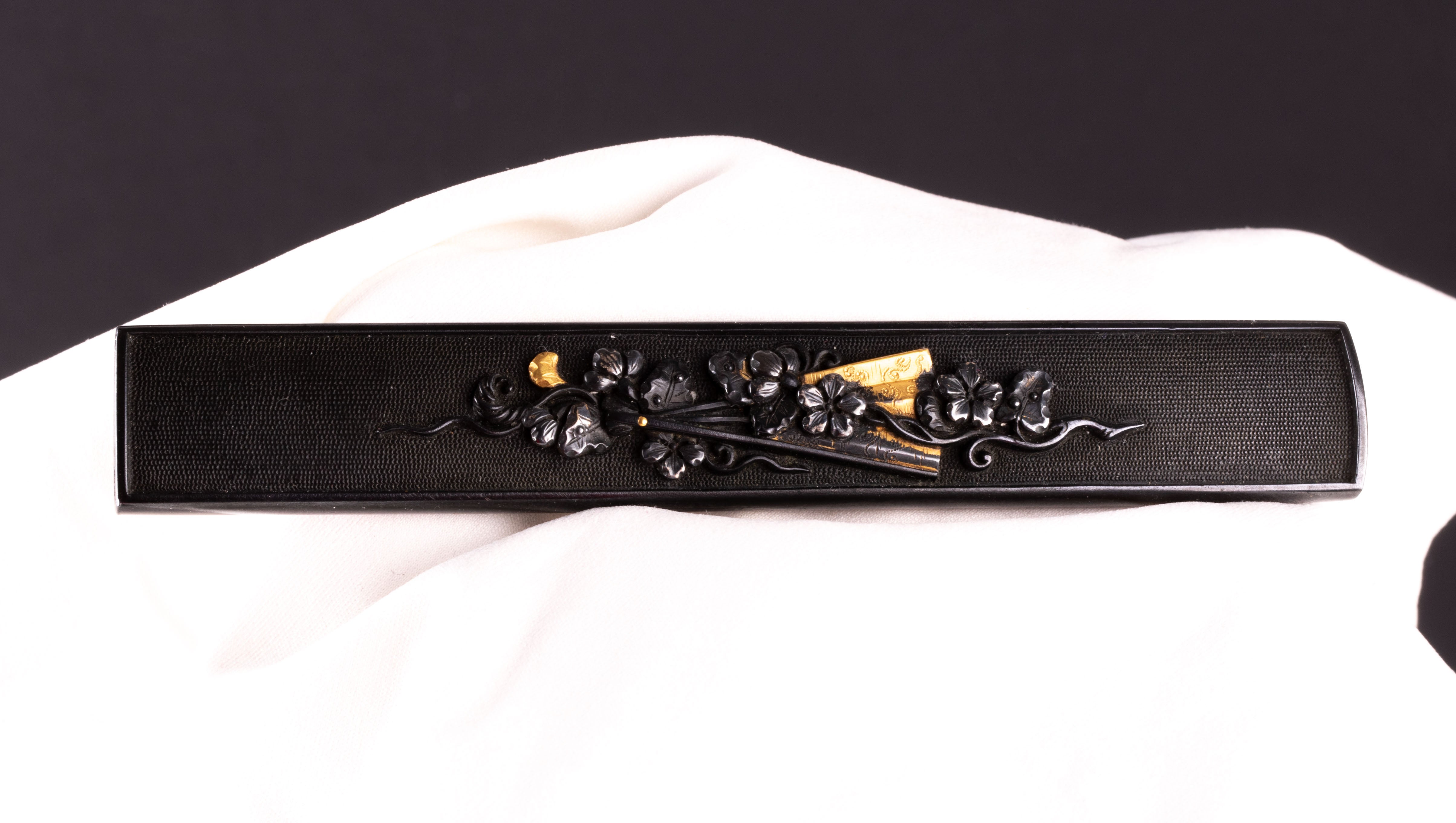
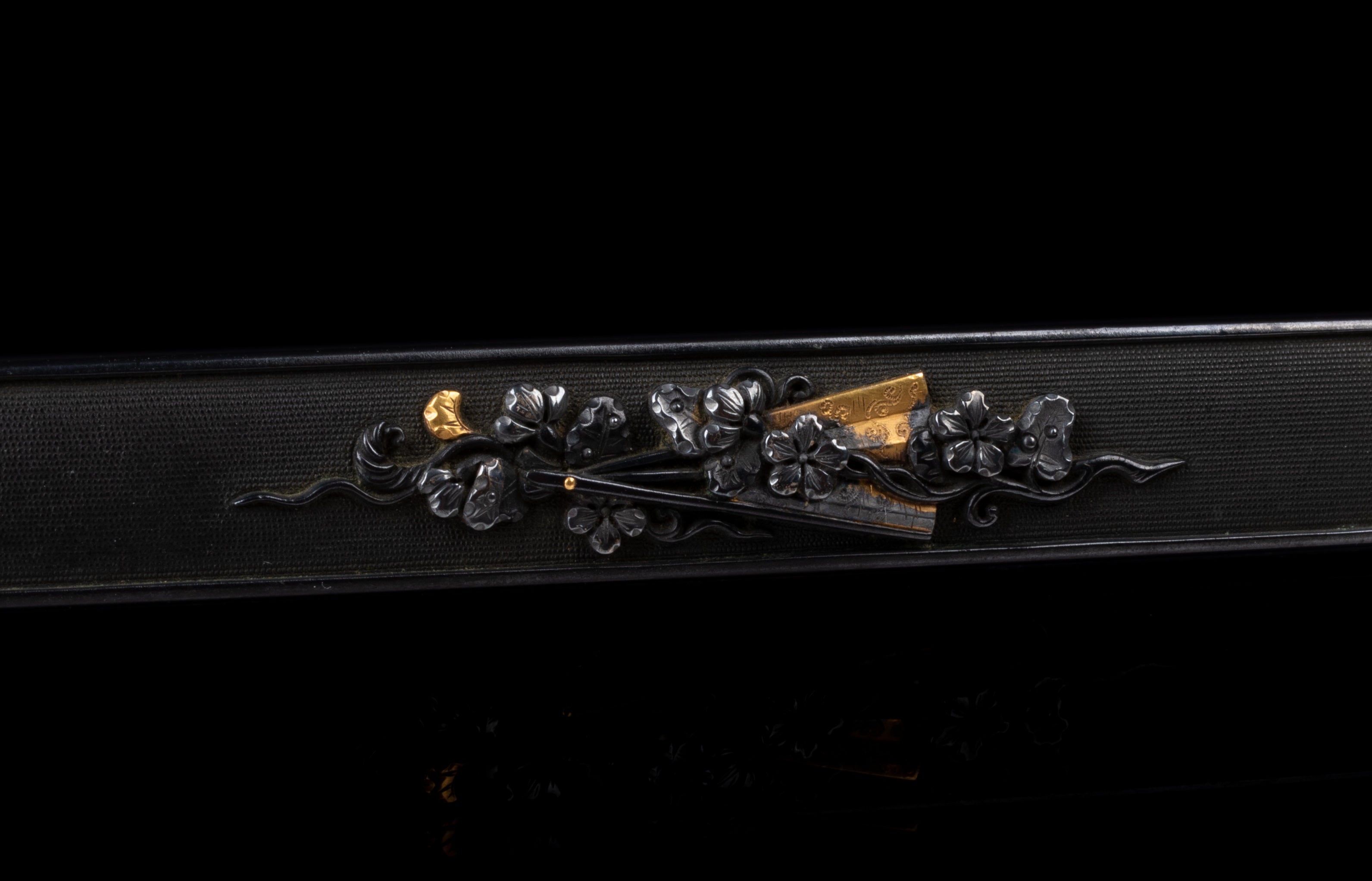
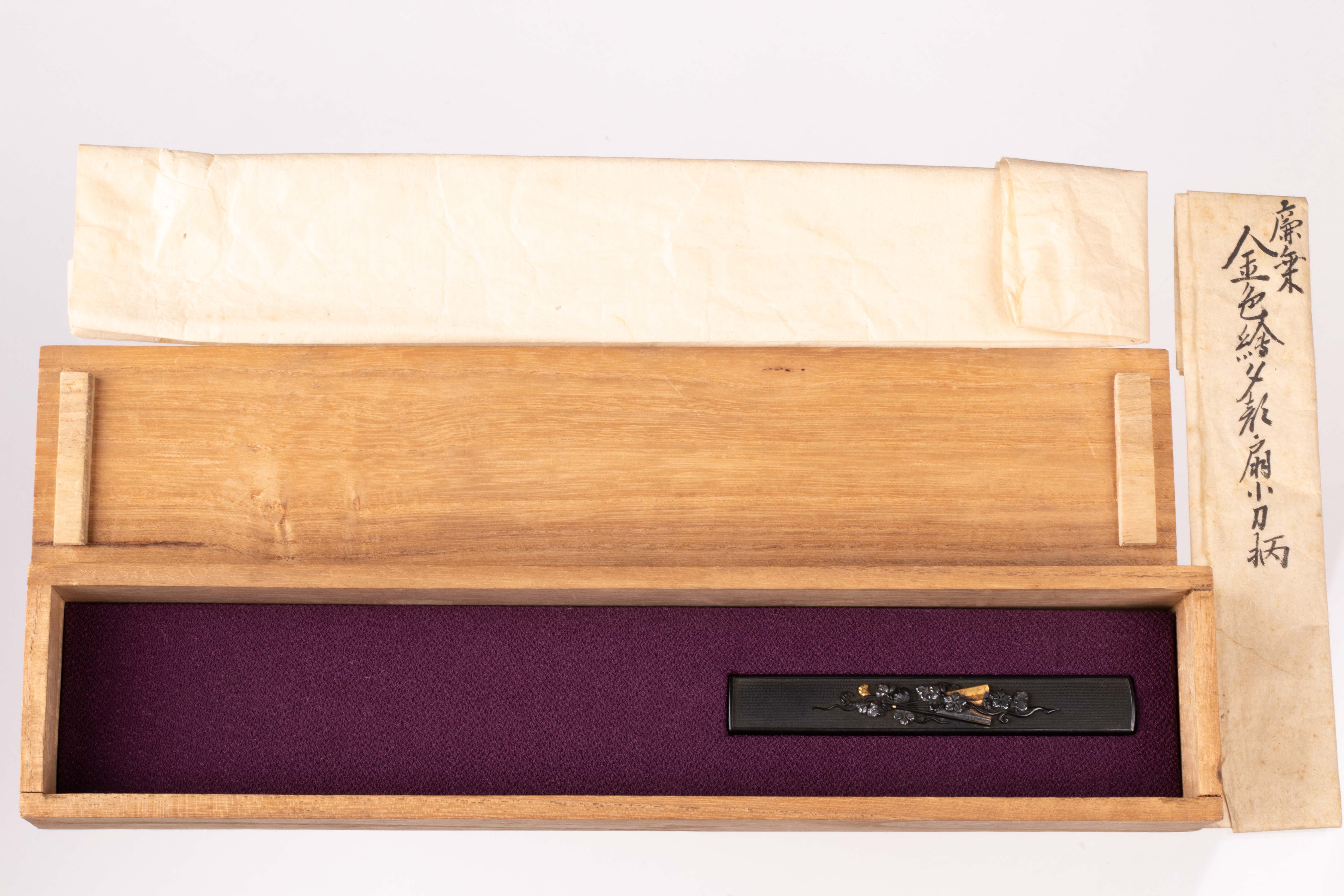
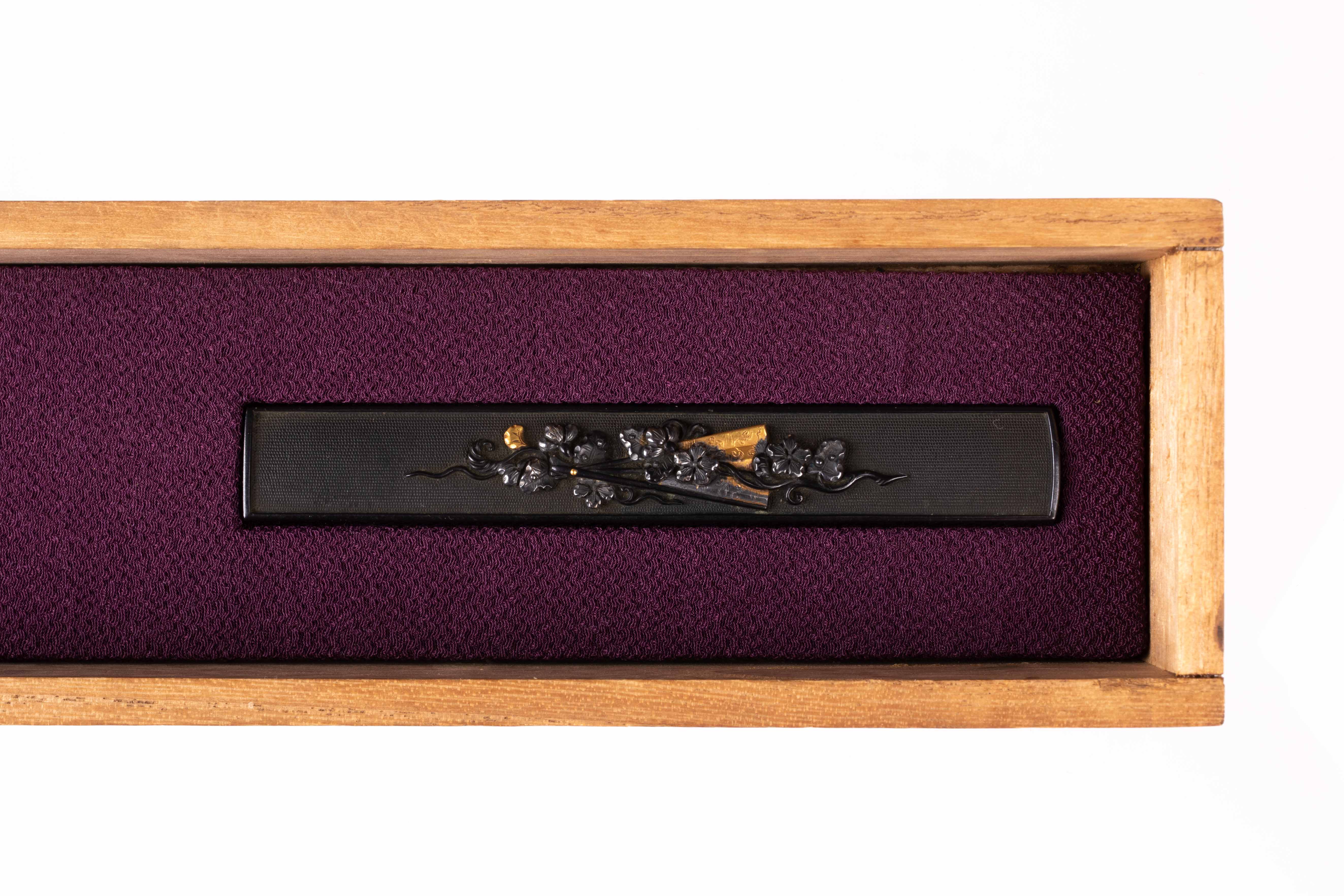
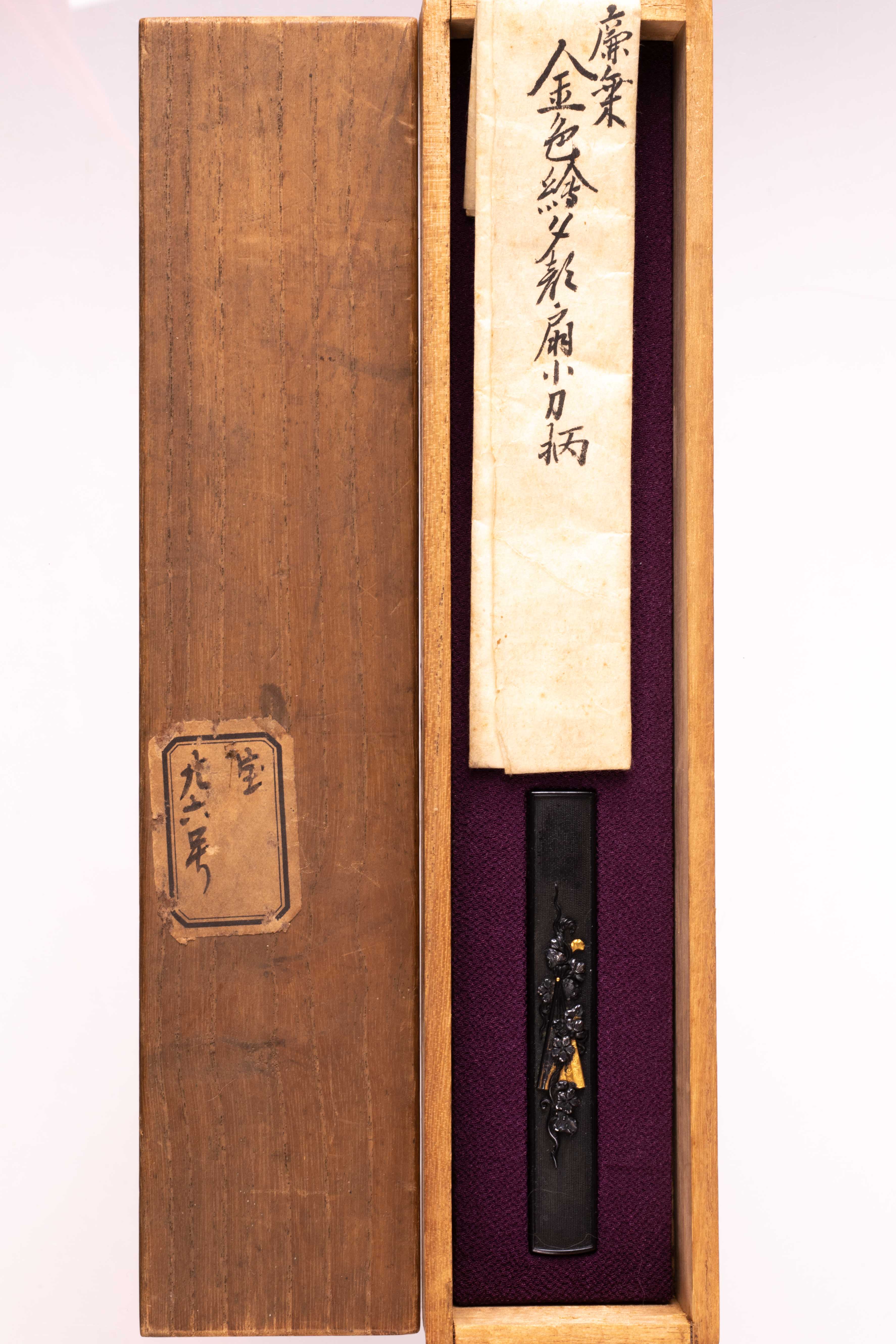
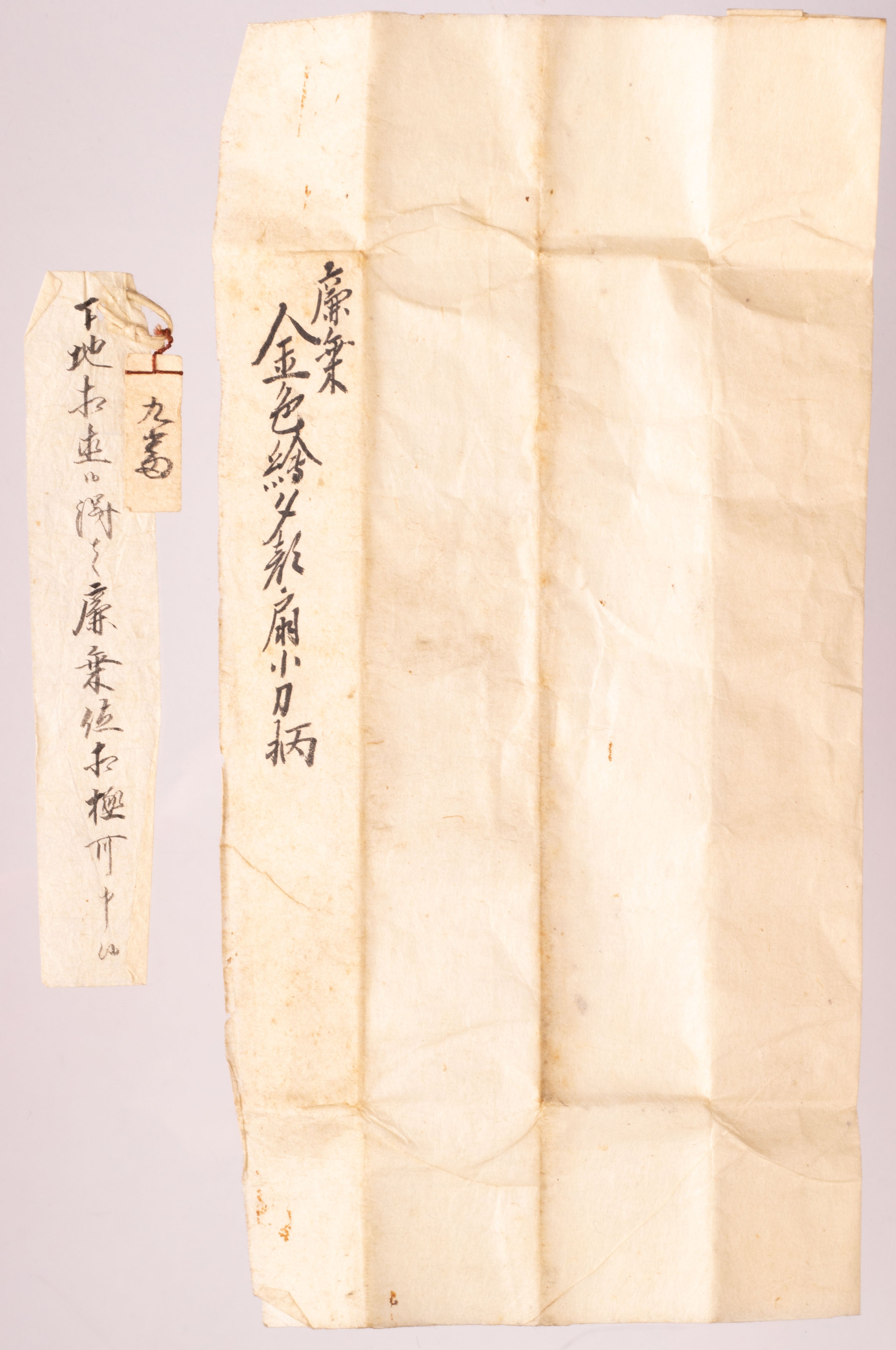
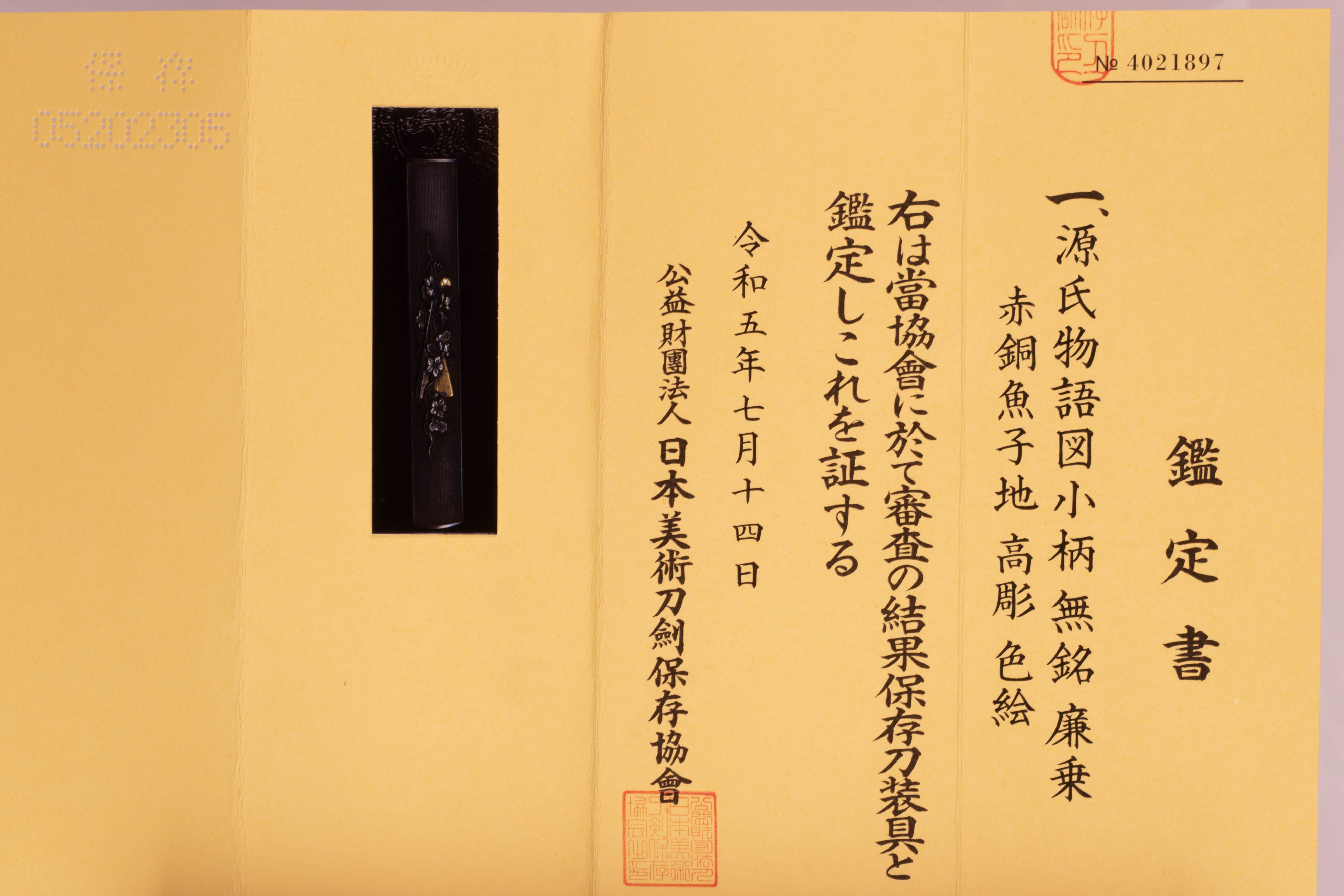
Kozuka with NBTHK Hozon Tosogu attributed to Gotō Renjō, 10th generation head of the mainline Gotō family. He was born as Mitsutomo in 1627, in 1646 he took over mainline Goto family and took the name Renjō. During his time mainline Gotō family moved from Kyoto to Edo (Tokyo). This kozuka theme is Genji Monogatari (The Tale of Genji), 11th century Japanese novel written by female poet Murasaki Shikibu. To be exact it depicts gourd vines and fan. Those attributes represent the story of Yūgao from the 4th chapter of the book. When Genji was passing a house he saw beautiful flowers and wanted to get one of the flowers for himself. In this moment a lady of the house appeared and send him one flower on the fan inscribed with poetry. Genji fall in love with beautiful lady of the house and wanted to get her attention. Finally he managed to invite her to her palace, were soon after she died. Made of shakudo with nanako ground and gold, silver iroe. Comes in a custom box with two pieces of old paper. The outer ones says " Renjō kozuka with gold iroe of bootle gourd and folding fan" In one inside says: On a small tag: "Number. 9" On the main one: "Judged to be Renjō" I am not able to read rest of the inscription
NihontoWatchOffered by Soryu
This piece has sold
Get an email when a new Goto Renjo piece hits the market.

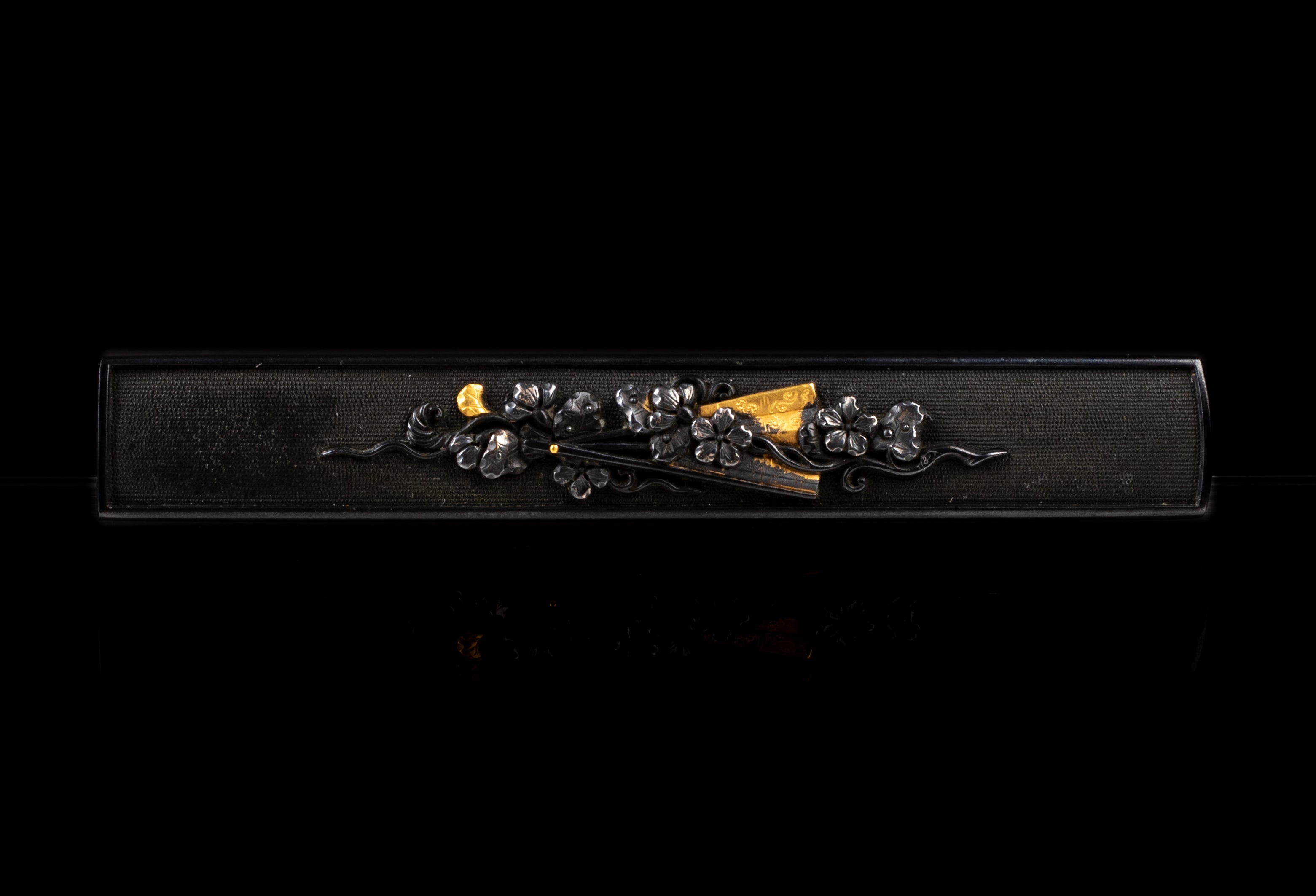
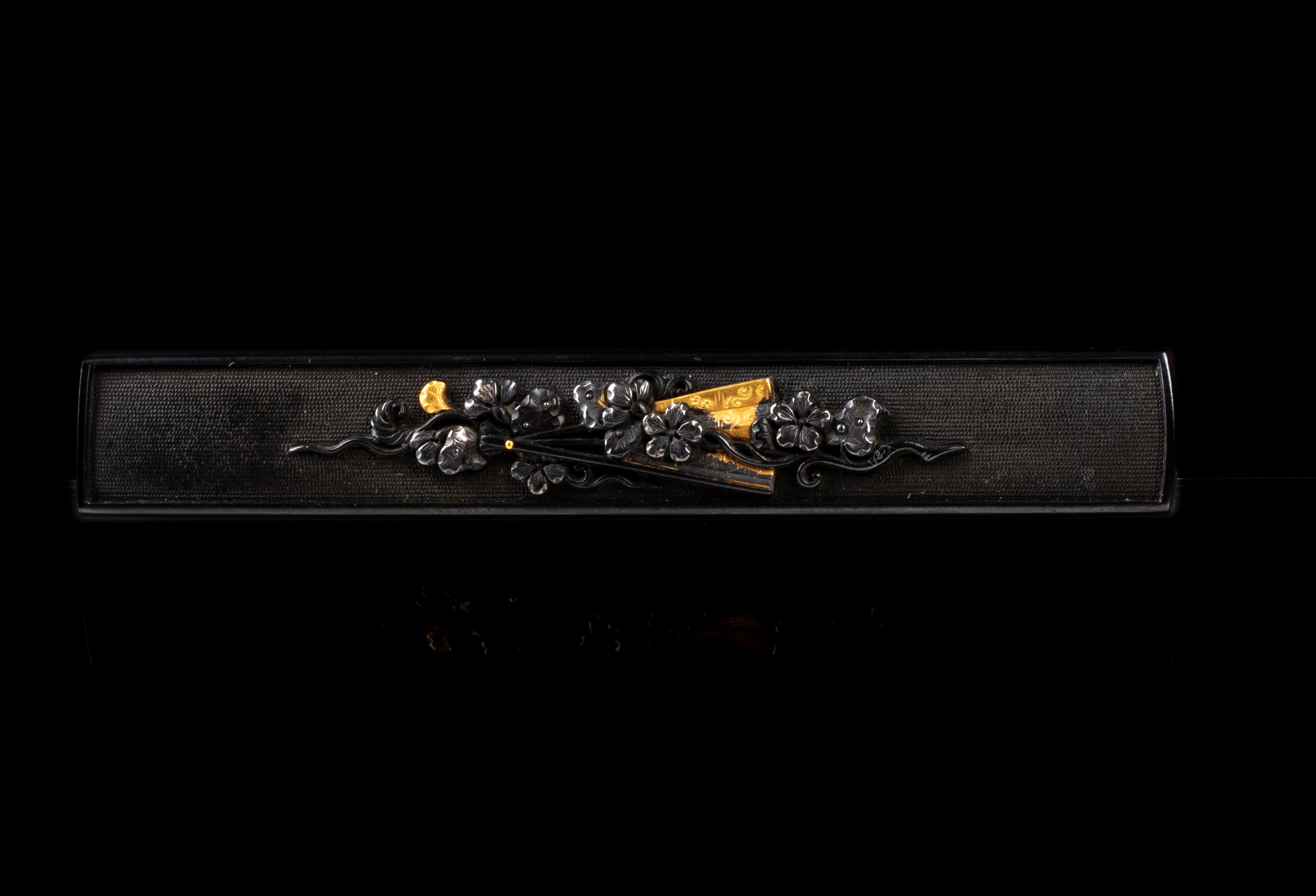
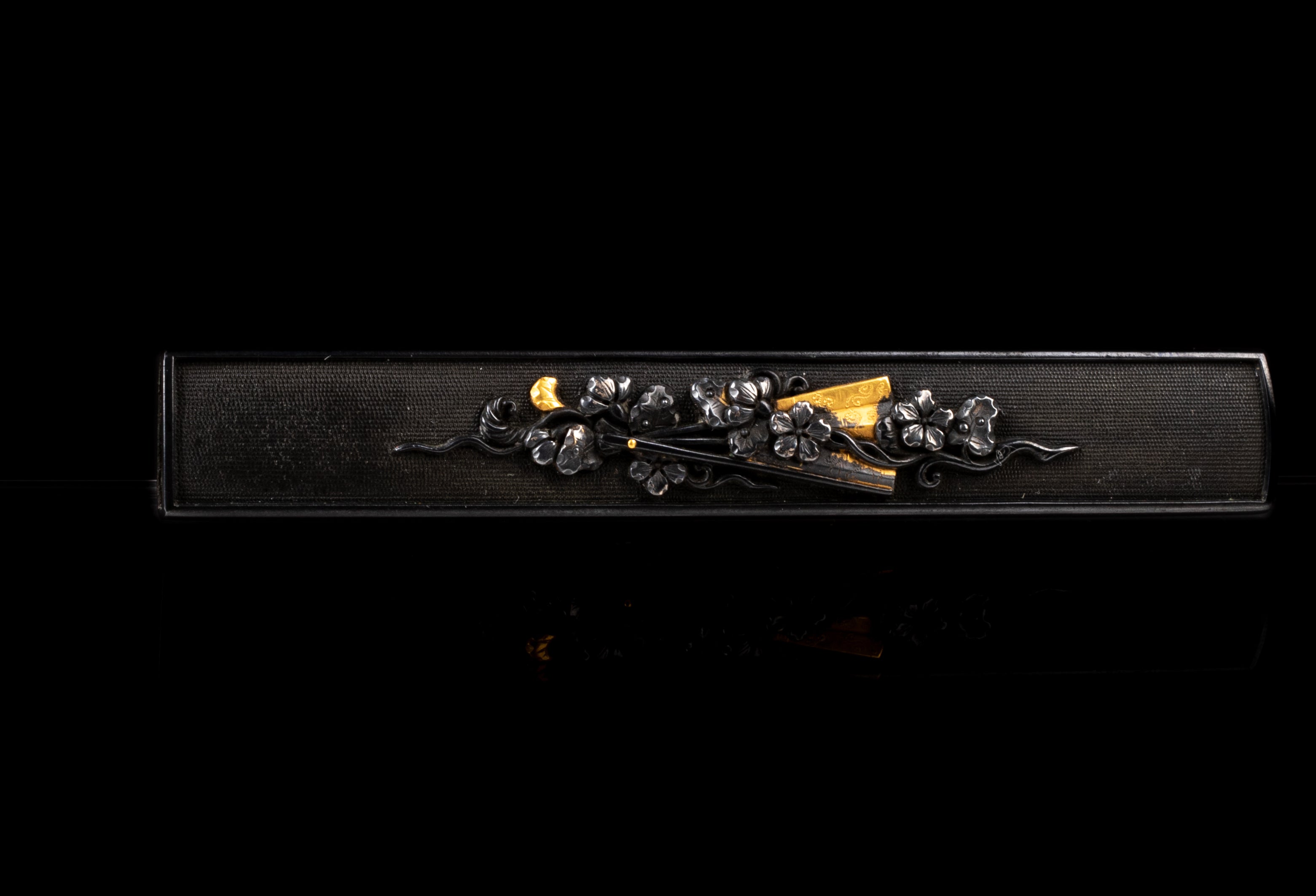
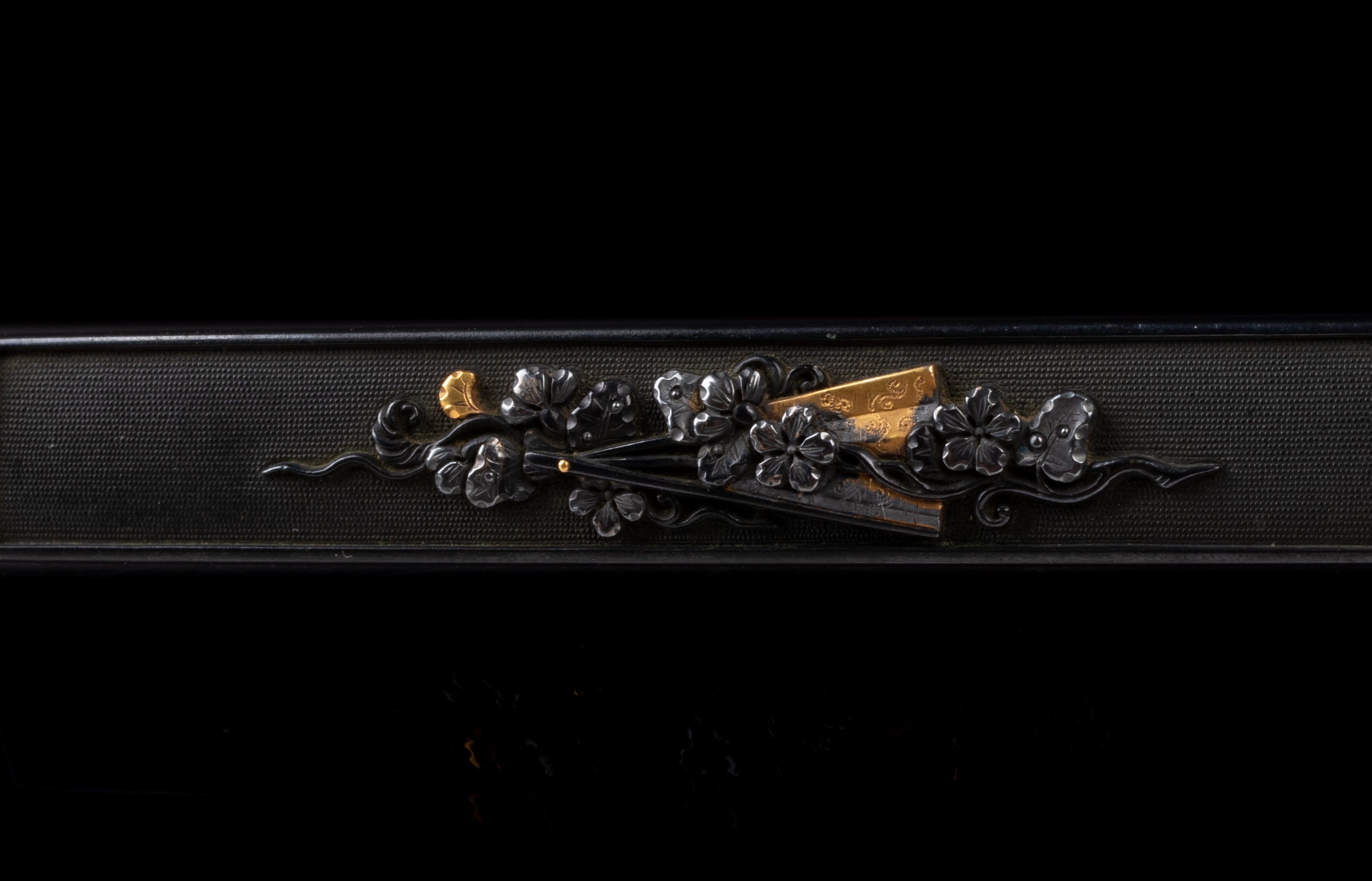
Goto Renjo
Edo
Den (attributed)
Hozon (NBTHK)
Iebori · Yamashiro · around 1627-1708
7 pieces on the market now
Gotō Renjō, the tenth master of the Gotō mainline (sōke), was born in Kyoto in Kan'ei 5 (1628) as the fourth son of the eighth master, Sokujō. His childhood name was Kameichi and his common name Genshirō. In Shōhō 2 (1645), at eighteen, he succeeded to the hereditary appellation Shirōbei and took the art name Mitsutomo; in Jōō 1 (1652), at twenty-five, he inherited leadership as tenth head of the mainline house. Because his father died while he was still young, he received guidance from his uncle Michinori. The Gotō mainline had for generations resided in Kyoto; however, by shogunal order Renjō moved to Edo for the first time in Kanbun 2 (1662), and thereafter the mainline remained in Edo through the seventeenth master, Tenjō Mitsunori. In Tenna 3 (1683), at fifty-six, he took the tonsure and adopted the name Renjō. In Genroku 10 (1697) he transferred the headship to his adopted heir Mitsuhisa, the eleventh master also known as Tsūjō, and retired to Kyoto, where he died at the age of eighty-two in Hōei 5 (1708). His signed works span roughly forty-five years, an astonishingly long period among the successive Gotō masters; many pieces bear the name Kōryo, while works signed "Renjō" are comparatively few.
Renjō's manner of work skillfully carries forward the carving methods of his predecessor Teijō, and works by his hand can be so close in feeling that they could be mistaken for Teijō's own production. Yet he also introduced fresh effects, employing shibuichi as a new ground metal and producing works featuring kebori (fine-line engraving). In addition to the hereditary Gotō subjects of lions and dragons, he excelled in figure composition and was particularly renowned for warrior subjects, capturing with precision the instantaneous movements of combatants. The Gotō house was especially known for a boldly conceived, painterly realism (sha'i) that conveys immediacy within a weighty overall presence, and Renjō's works fully capture that intent. His deeply worked takabori is full and richly modeled, the chisel-work delicate even in the smallest passages, and the color scheme of the inlaid and iroe details is strikingly clear[[c:2]]. Across mitokoromono and sanshōmono sets, the figures vary in pose while maintaining the elevated dignity characteristic of Gotō work. In accordance with the house-carving regulations (iebori), his kozuka and kōgai are executed in shakudō nanako-ji with gold crests and gold-backed reverses, while menuki are rendered in solid gold with modeled carving, always brought to completion in a manner that conveys the formality and prestige of the Gotō house.
The NBTHK has consistently recognized Renjō's output as work of the highest caliber within the mainline tradition. His pieces are described as possessing "lively movement and high dignity," with the "superior technique of Renjō fully displayed without reserve." Whether depicting celebrated Genpei battle scenes, the ceremonial figures of Okina and Sanbasō, or the paired tiger-and-leopard motif rendered with affectionate naturalism, his compositions are "executed in accordance with the Gotō house's established conventions, and the workmanship is outstanding." The surety of the carving and the scrupulous application of iroe are qualities seen in the better works of the Gotō, and Renjō's hand is further confirmed by authentication inscriptions and origami from successive later masters. His production also extends to matched daishō tsuba -- works by the Gotō in this format being few, and matched pairs rarer still -- and to heraldic fittings of daimyō grade bearing the maru-ni-mitsu-aoi crest, demonstrating both versatility and the institutional authority of his position. Renjō stands as a pivotal figure in the mainline succession: the master who carried the house from Kyoto to Edo and, across nearly half a century of signed production, sustained the forceful yet refined spirit of Gotō metalwork at its most accomplished.
Where Goto Renjo stands among comparable artisans: across all of nihontō, and within tradition, era, and period. The tiers (Foremost · Leading · Major · Notable) weigh official designations from the NBTHK and Japan's Agency for Cultural Affairs, together with historical honors of lasting repute such as the Sansaku and Meibutsu-chō.
Select a lens to see how it's measured.
Iebori · Yamashiro
Phase: Goto Main Line後藤宗家· 1573–1900
317 pieces on the market now
| Smith | Era | Designated |
|---|---|---|
| Goto Joshin後藤乗真 | 1512-1562 | 68 |
| Goto Yujo後藤祐乗 | 1440-1512 | 41 |
| Goto Kenjo後藤顕乗 | 1586-1663 | 46 |
| Goto Sojo後藤宗乗 | 1461-1538 | 56 |
| Goto Teijo後藤程乗 | 1603-1673 | 42 |
Certifies a genuine fitting worth preserving: a correct signature, or, if unsigned, an identifiable era and school, with recognized artistic and craft value.
The NBTHK (Nihon Bijutsu Tōken Hozon Kyōkai, the Society for the Preservation of Japanese Art Swords) is a public-interest incorporated foundation founded in 1948 and supervised by Japan’s Agency for Cultural Affairs (Bunkachō); it is based at the Japanese Sword Museum in Tokyo. Its expert panels physically examine each submitted work (shinsa) and issue a certificate (kanteishō) ranking it by artistic and historical merit. NBTHK papers are the most widely recognized standard of authentication for Japanese swords and fittings.
NBTHK official siteInspection period (per the shop's shipping policy): after receiving the item, each customer has two weeks for inspection. In that time you may decide to return it, and the item will be refunded in full. Shipping costs are not refunded. Returns (per the shop's refund policy): the policy lasts 30 days; once 30 days have passed since purchase, no refund or exchange is possible. To be eligible for a return, the item must be in the same condition in which it was received and in its original packaging. Customized products cannot be returned. In certain situations only a partial refund is granted. Return shipping is at the customer's expense, and shipping costs are non-refundable.