 NihontoWatchNihontoWatch
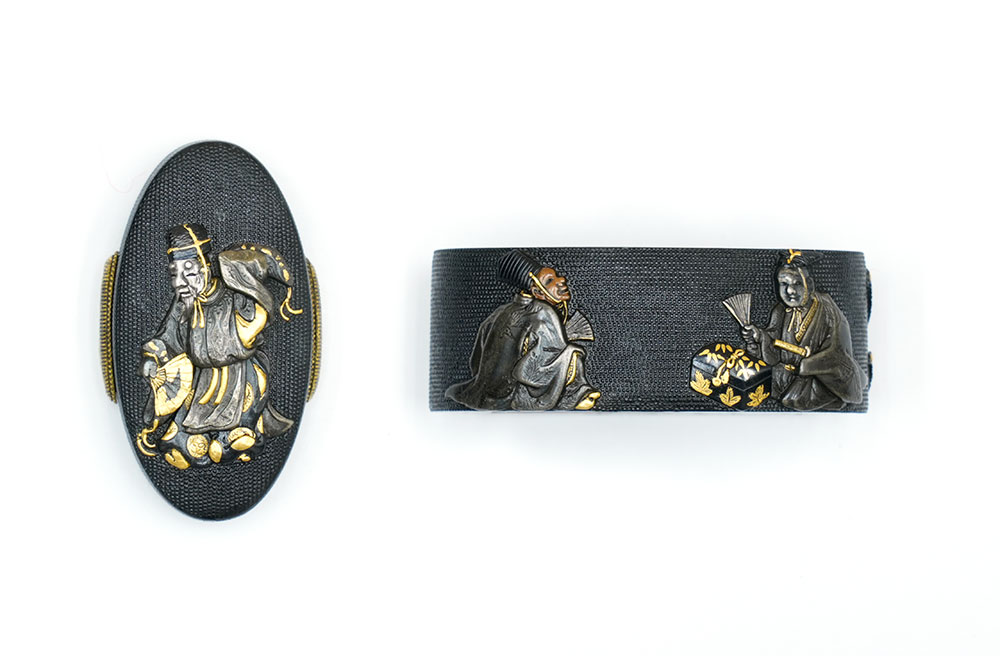
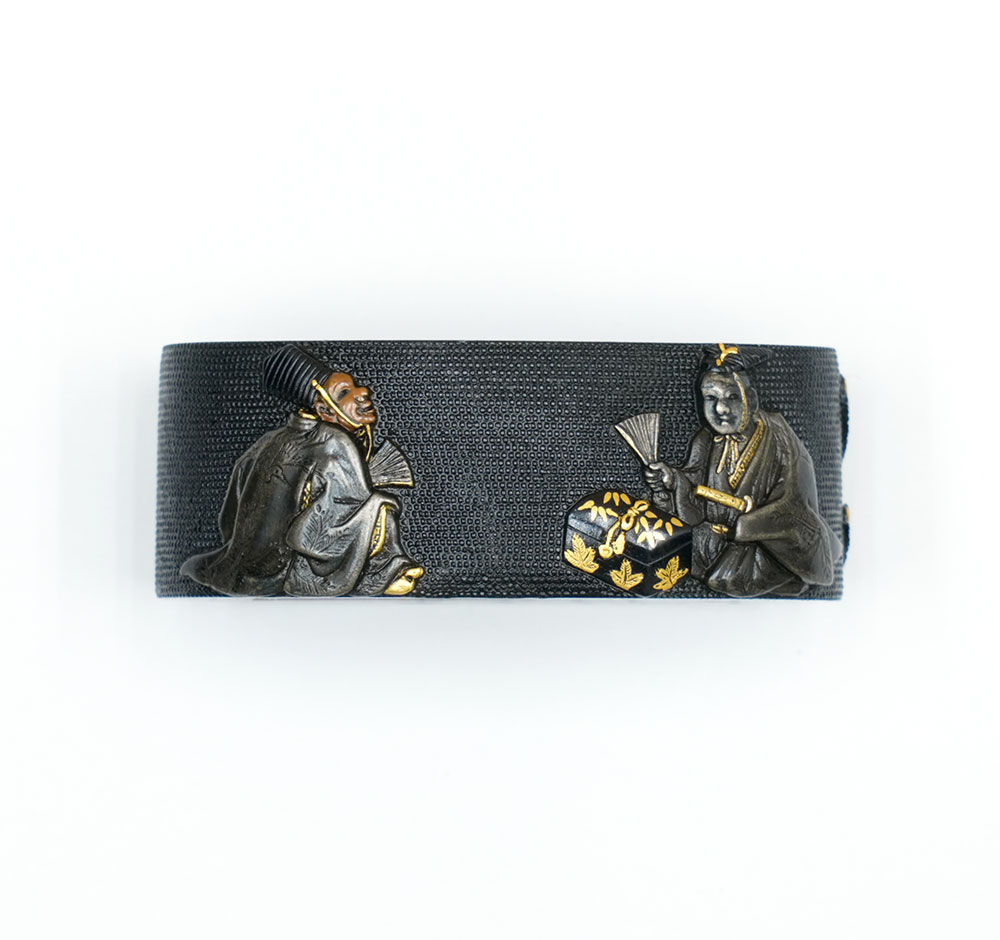
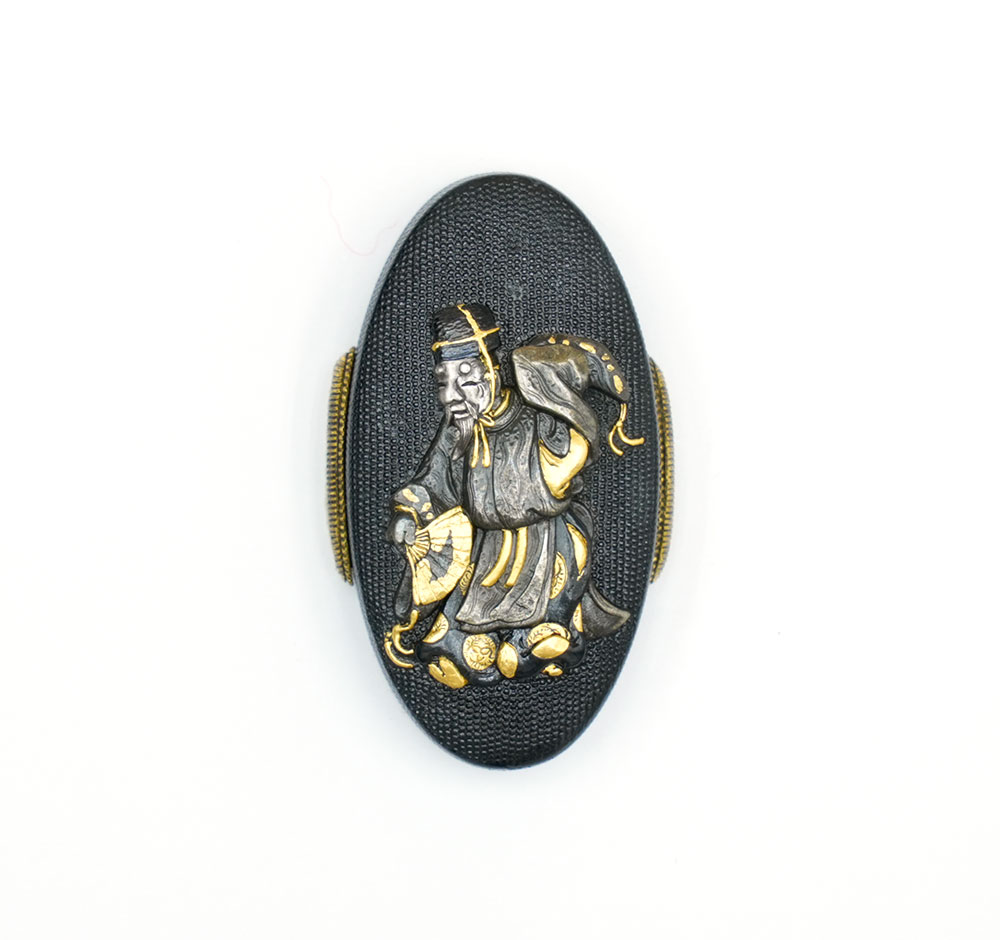
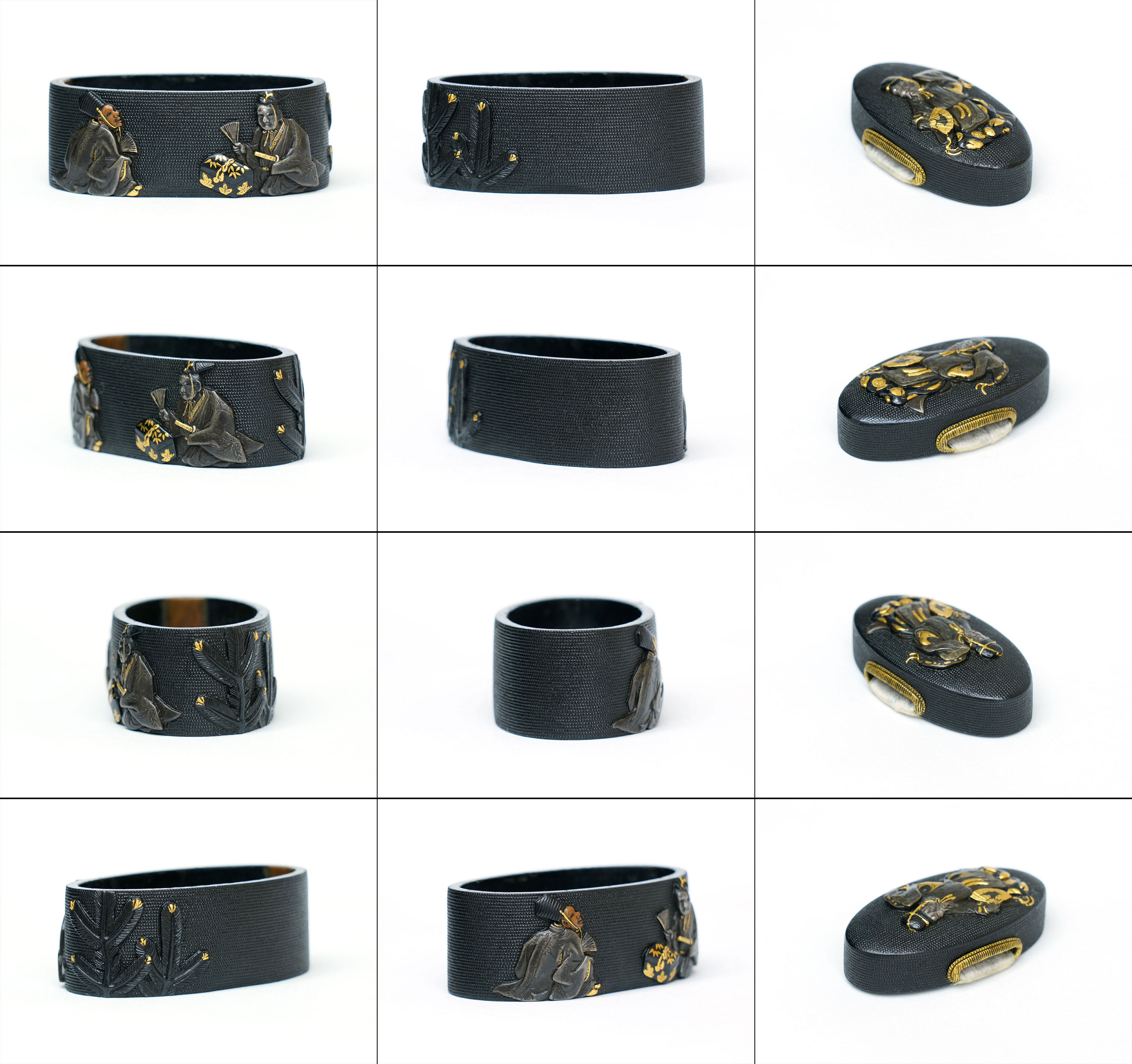
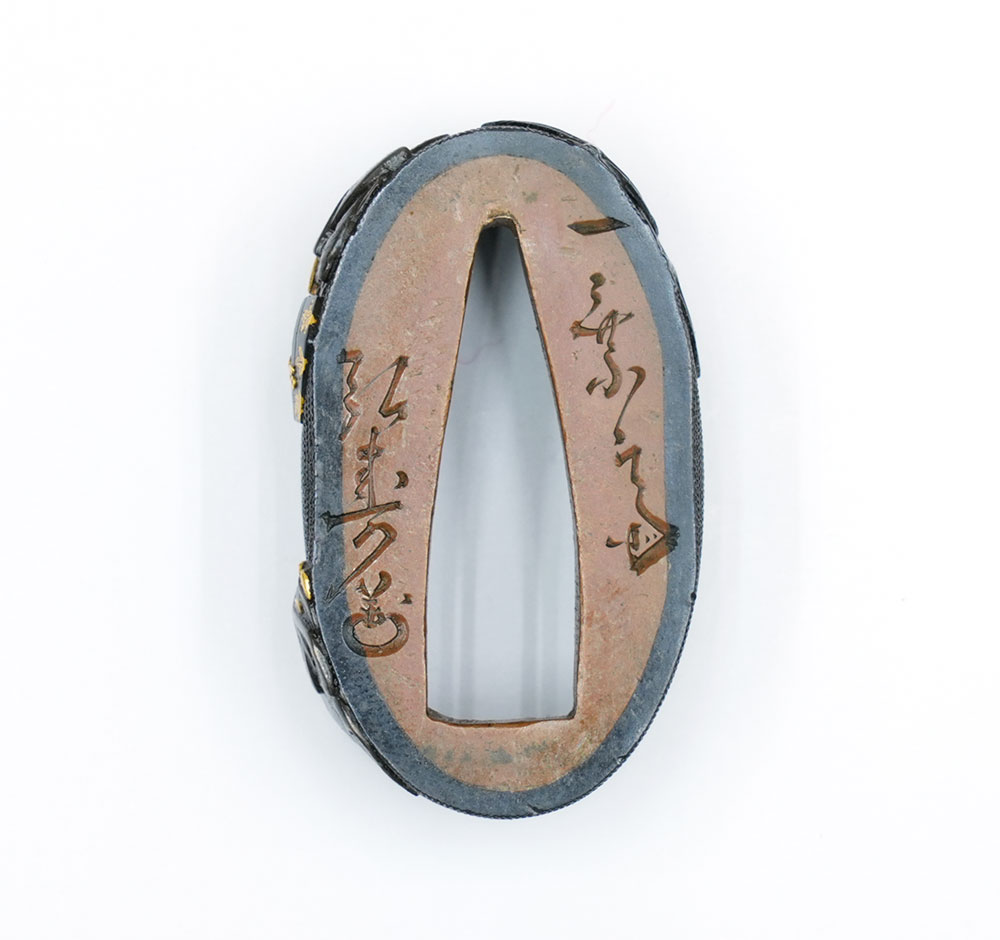
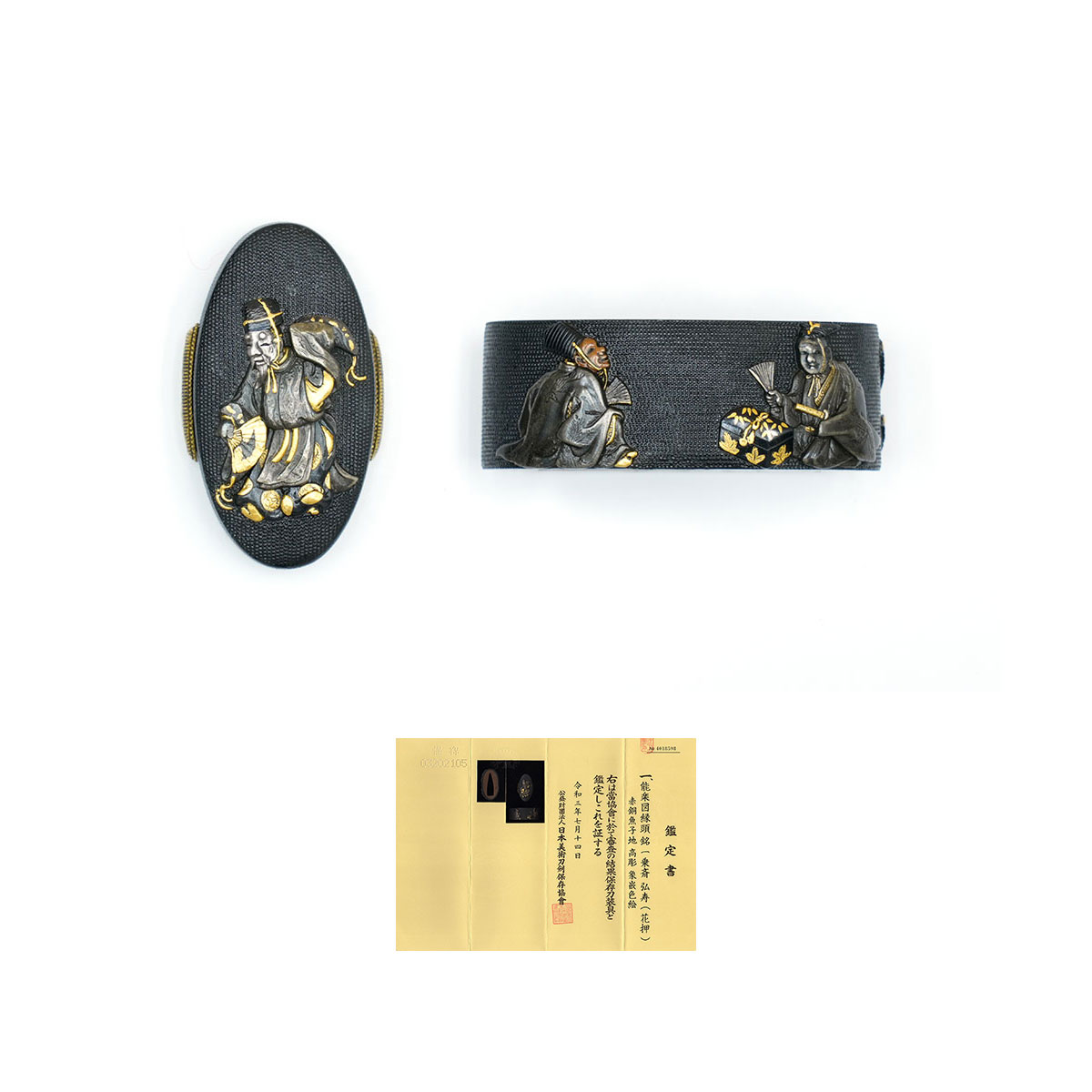
Edo jidai The Edo era Uchikoshi Hirotoshi was born in Mito, used the name Bunshichi and later Enzo, and studied under Tamagawa Yoshinaga, who succeeded the lineage of the influential Mito kinko Yatabe Michitoshi. It is also said that he went to Edo to study under the Hamano school of the Nara ha, and he was active in his hometown of Mito and Kanda in Edo, producing excellent works that were both precise and voluminous while training many disciples. These fuchigashira are a masterpiece featuring fine nanako painstakingly punched into shakudo of an elegant color, upon which the figure of a Noh performer delivering a dance is expressed with such sophisticated hori techniques that one can almost sense their very breath. The carving style, which reflects even the shadows of the Noh mask, the flow of the drapery, and the tempo of the dance, clearly demonstrates the skill of an outstanding craftsman and invites the viewer into a world of serene elegance. These are truly masterpiece fuchigashira that are not only excellent for appreciation but will also further elevate the status of any koshirae they are added to.
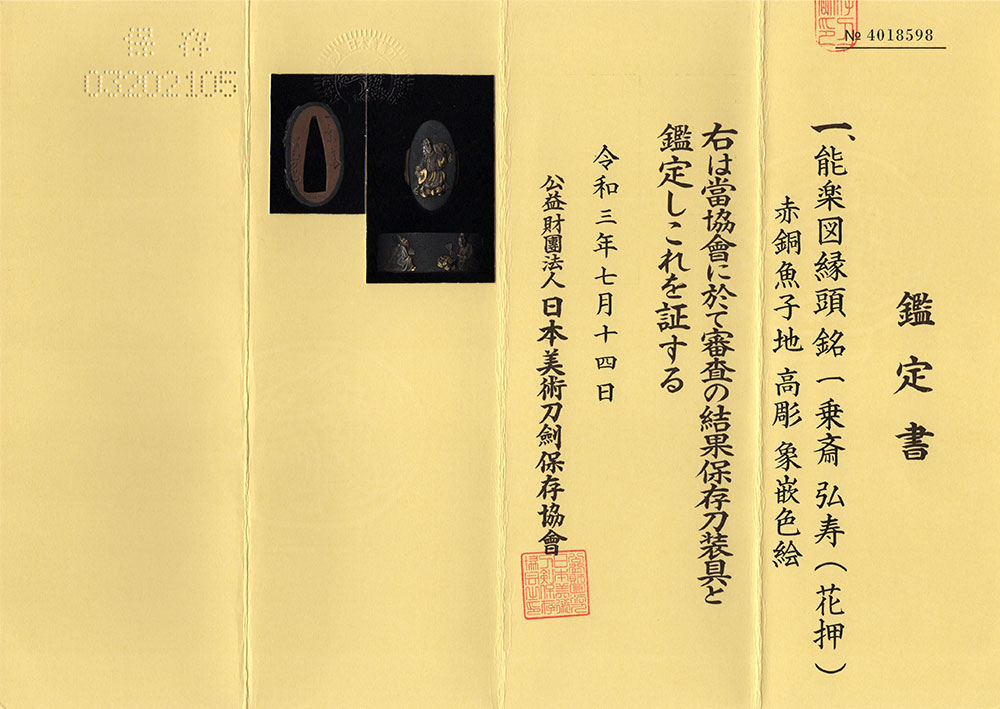
Certificate reading — 銘 一乗斎 弘寿(花押)
NihontoWatchOffered by Toushin
6 on the market

Edo
Signed
Hozon (NBTHK)
As written by the shop
Machine translation from the shop's Japanese · may contain errors ·
Machibori · Hitachi · around 1670
6 pieces on the market now
Where Hirotoshi stands among comparable artisans: across all of nihontō, and within tradition, era, and period. The tiers (Foremost · Leading · Major · Notable) weigh official designations from the NBTHK and Japan's Agency for Cultural Affairs, together with historical honors of lasting repute such as the Sansaku and Meibutsu-chō.
Select a lens to see how it's measured.
Machibori · Hitachi
73 pieces on the market now
The Mito school of sword-fitting makers emerged as an officially sponsored tradition in the domains of the Tokugawa family's Mito branch, achieving particular prominence in the late Edo period. The school's lineage traces through Shinozaki Katsushige and his successors, who served as goyō horimonoshi (official engravers) to the domain. Unlike the privately patronized workshops of Edo and Kyoto, Mito metalworkers operated within a system of domain service, producing both presentation fittings for formal occasions and richly decorated works for commission. This institutional foundation fostered both technical rigor and stylistic continuity, as masters such as Hagiya Katsuhei and his pupils transmitted the school's methods through direct apprenticeship. The Mito aesthetic is characterized by meticulous shakudō nanako-ji grounds upon which high-relief carving (takabori) is combined with precise gold and silver iroe to yield compositions of exceptional textural depth. The school showed particular mastery in figural subjects—immortals, deities, and mythological beasts—rendered with close attention to anatomical realism and dynamic poses.
The nanako punch-work is notably disciplined, each grain laid in orderly arrangement, while the relief carving rises to striking heights, with elements such as lion manes and peony petals executed in fully three-dimensional chiselwork. Color inlays are applied with exacting accuracy, and thematic coordination across entire fitting sets demonstrates a sophisticated understanding of decorative unity. The Mito school's influence extended well into the Meiji period through the achievements of second-generation masters. Hagiya Katsuhei's circle produced such celebrated artists as Namekawa Sadakatsu and Unno Shōmin, who carried the school's technical standards and stylistic vocabulary into new contexts. The tradition's emphasis on figural carving, inherited from the Tamagawa lineage, and its adherence to orthodox forms for formal presentation fittings established the Mito school as one of the principal regional traditions of late-period Japanese sword-fitting production. Learn more →
| Smith | Era | Designated |
|---|---|---|
| Katsuhira勝平 | 1804-1886 | 13 |
| Shomin勝珉 | 1844-1915 | 12 |
| Teikan貞幹 | — | 5 |
| Mototane元胤 | — | 0 |
| Unno Bishu海野美秋 | — | 0 |
Certifies a genuine fitting worth preserving: a correct signature, or, if unsigned, an identifiable era and school, with recognized artistic and craft value.
The NBTHK (Nihon Bijutsu Tōken Hozon Kyōkai, the Society for the Preservation of Japanese Art Swords) is a public-interest incorporated foundation founded in 1948 and supervised by Japan’s Agency for Cultural Affairs (Bunkachō); it is based at the Japanese Sword Museum in Tokyo. Its expert panels physically examine each submitted work (shinsa) and issue a certificate (kanteishō) ranking it by artistic and historical merit. NBTHK papers are the most widely recognized standard of authentication for Japanese swords and fittings.
NBTHK official siteAs a rule we do not accept returns, except when we have sent a different item from the one ordered or when there is a significant discrepancy between the description and the item. If you wish to return an item, please contact us within 3 days of its arrival and then send it back.
¥440,000