 NihontoWatchNihontoWatch
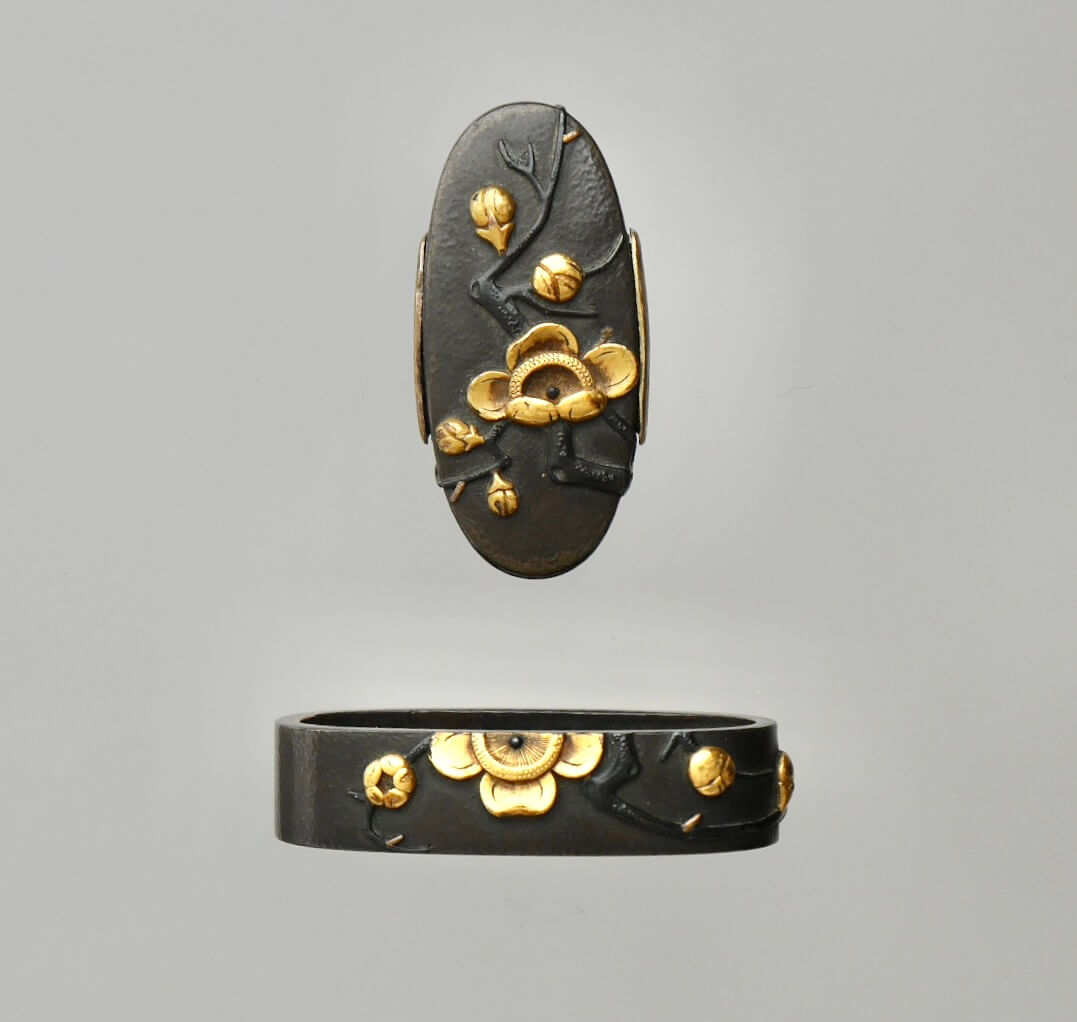
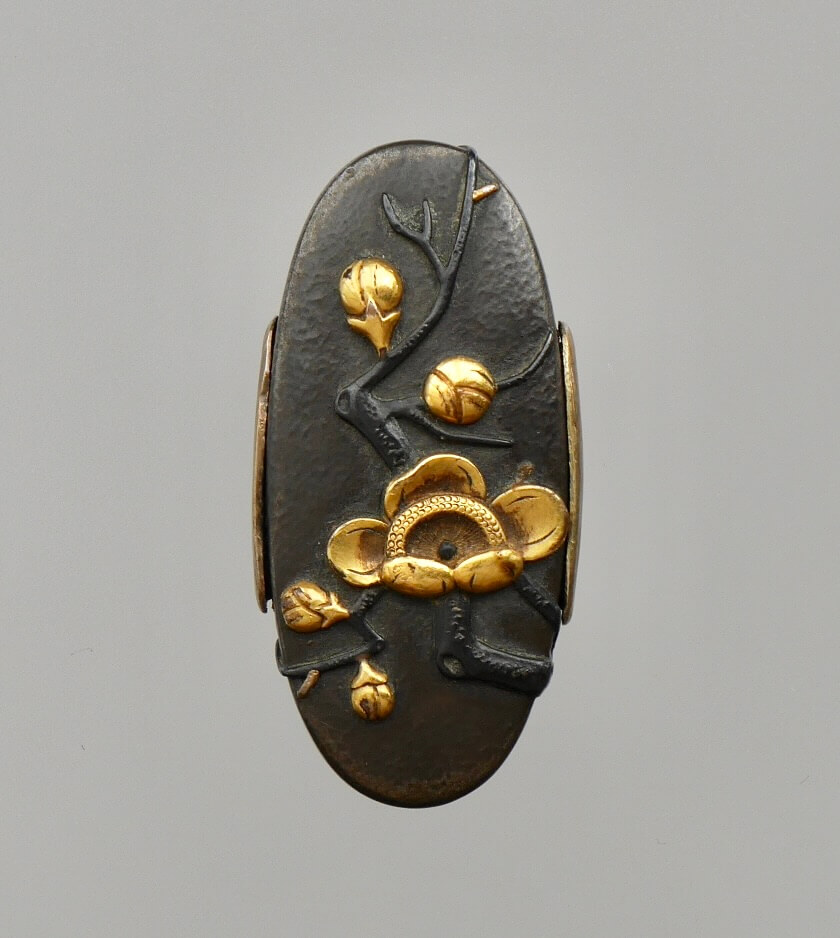
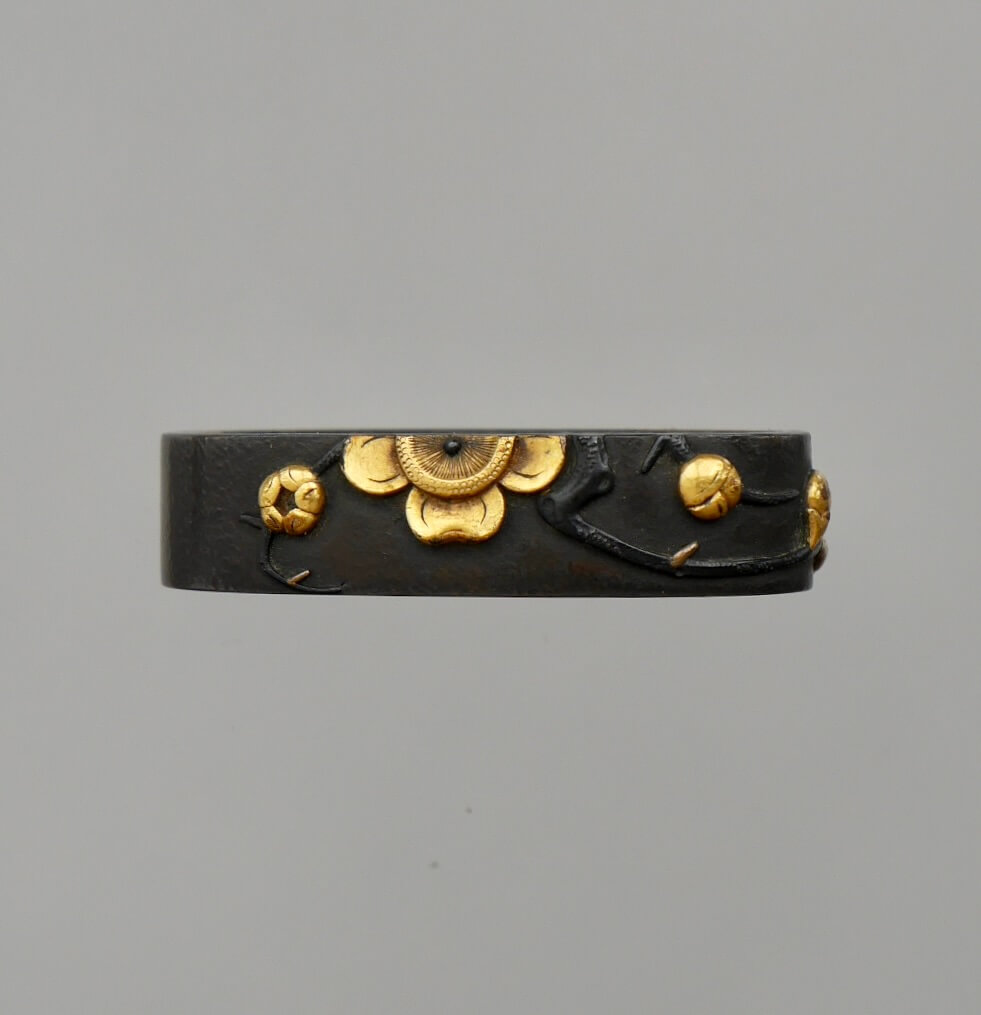
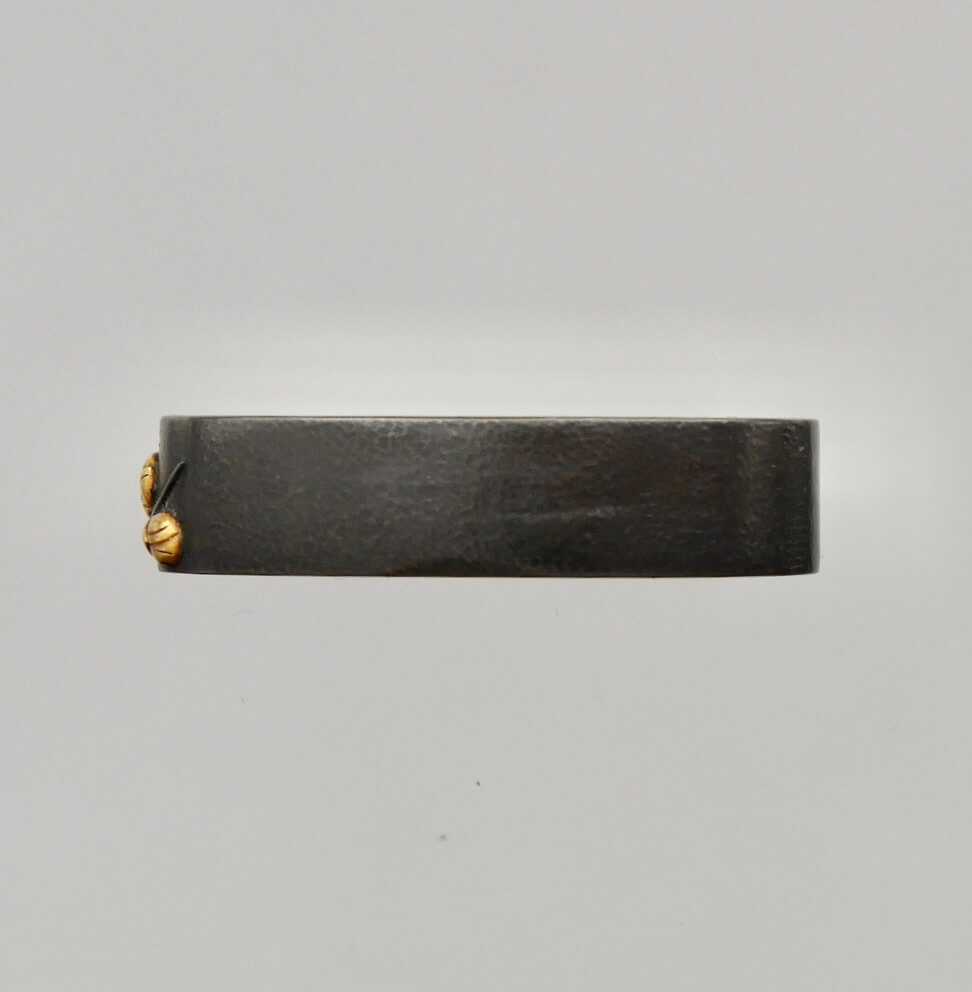
The Omori school of metalworkers is a major lineage of the Yokoya system, alongside the Yanagawa and Ishiguro schools. While Shigemitsu is considered the founder of the Omori family, no definitive works have been found, and the actual founder of the school is thought to be Terumasa, who was a disciple of Yokoya Somin. Terumasa was born in Edo in Hoei 2 (1705), and in Kyoho 18 (1733) when Somin passed away, he was 29 years old and had already established his own independent business. He died in Meiwa 9 (1772), but the Omori school continued through Teruhide and Terumitsu with numerous disciples, forming an important faction of machibori kinko. This fuchi-kashira features stylized plum branches in takabori on a shibuichi ishimeji ground, with the branches expressed in shakudo and the flowers and buds in thick iroe. There is only one large open flower, and this kind of symbolic expression is a sensibility inherited from Somin. The fuchi is crafted with a low koshi, which was a trend from around Genroku to Kyoho and is a characteristic also seen in the Nara Sansaku. It is a gorgeous and decorative work, a masterpiece worthy of cherished possession.
NihontoWatchOffered by Gallery Youyou
16 on the market

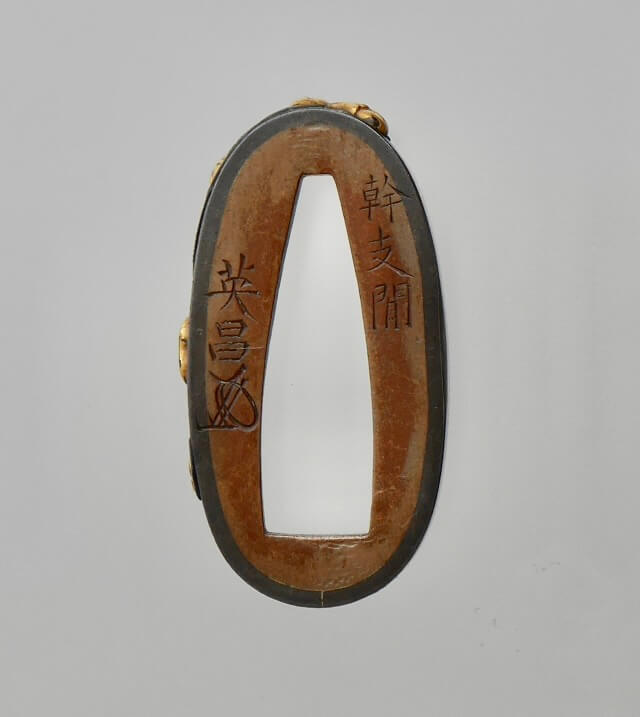
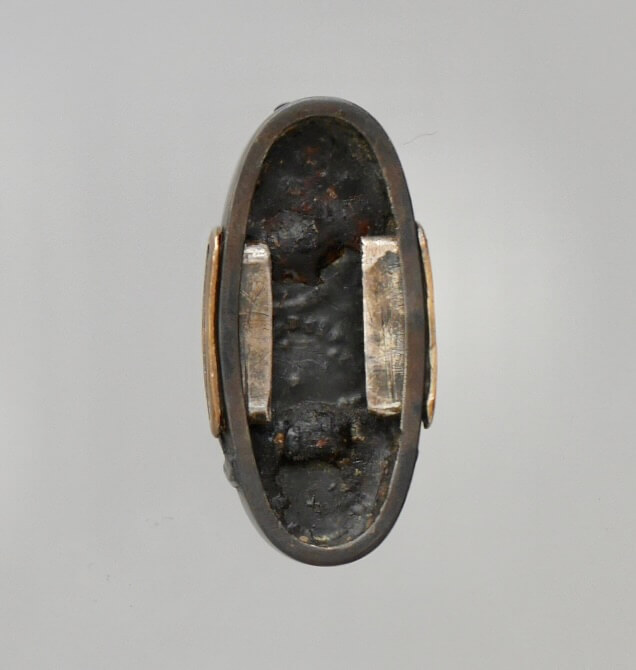
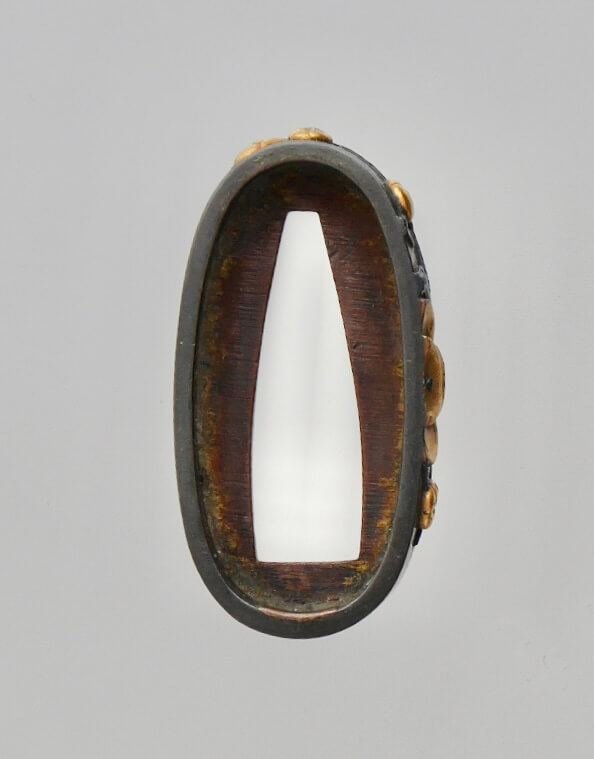
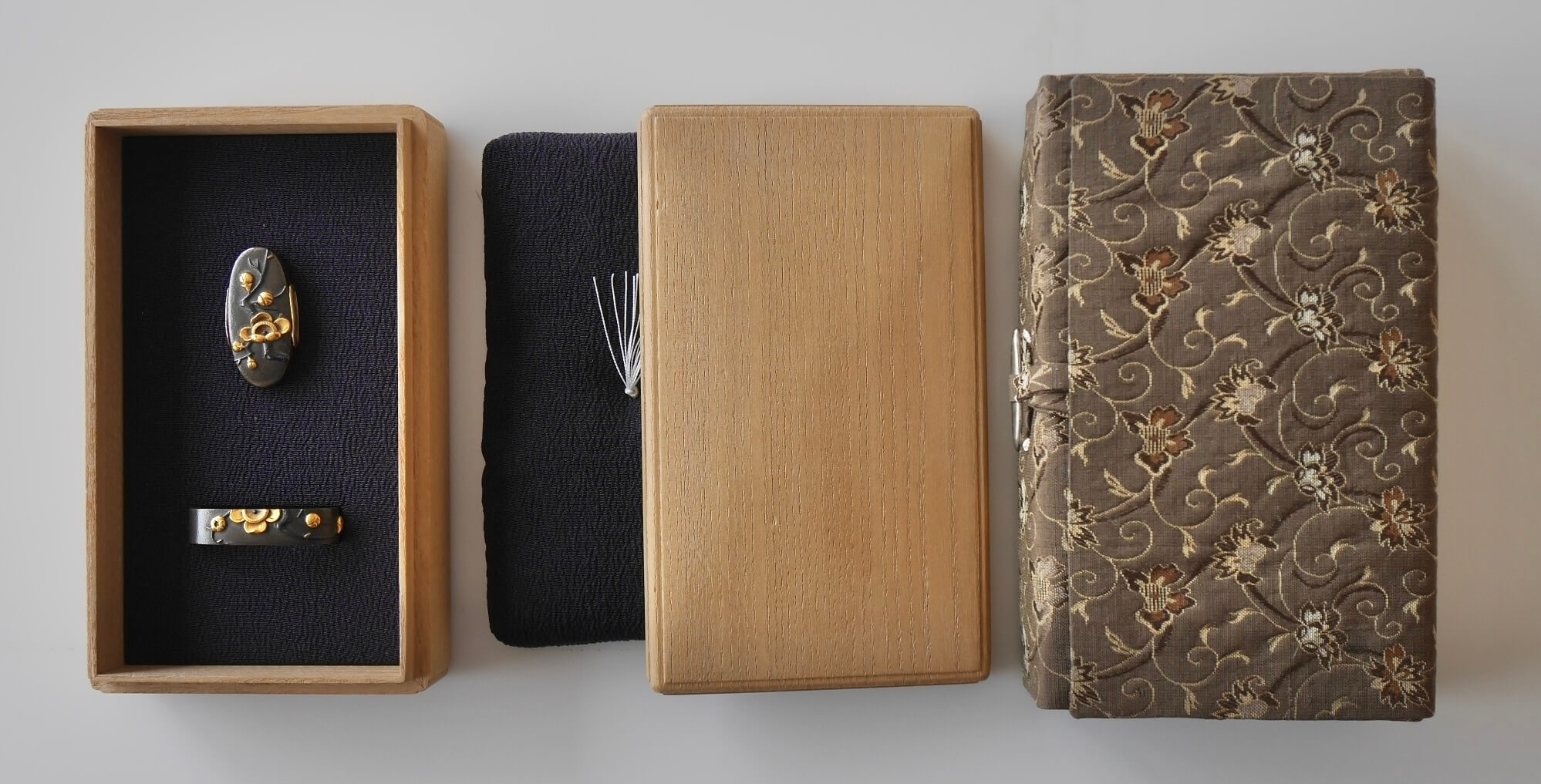
Ōmori
Edo
Signed
Hozon (NBTHK)
As written by the shop
Machine translation from the shop's Japanese · may contain errors ·
Machibori · Edo
1 piece on the market now
Machibori · Edo
16 pieces on the market now
The Ōmori school was one of the great machibori (town-carving) lineages of Edo, founded in the first half of the eighteenth century by Ōmori Terumasa (大森英昌, also read Eishō), a direct disciple of Yokoya Sōmin. " A dated tsuba of Meiwa 7 (1770) anchors his mature activity, and the workshop remained rooted in the shogunal capital throughout its history — his pupil Hidetomo proudly signed works "Tōto, by the Sumida River"[[c:1]]. The headship then passed through Hidenaga to Hidemitsu (英満), Teruhide's fifth son, carrying the line deep into the late Edo period. " Its defining invention is the strikingly three-dimensional wave design known as Ōmori-nami (大森浪), the "Ōmori waves," together with sunago-zōgan gold-dust inlay executed in the kinkeshi manner and the flush gold inlay evocative of maki-e lacquer called nashiji-zōgan or chirigami-zōgan — techniques devised, the setsumei state, to heighten the elegant, courtly taste of the work. The judges single out "the weighty takabori carving characteristic of the Ōmori style," deployed across a repertoire spanning peony-and-shishi compositions, birds of prey amid rising sun and surging waves, tigers in bamboo, waves with myriad fish (uozukushi), the vanguard crossing of the Uji River, Fan Kuai at the Banquet at Hongmen, and the treasure ship of the Seven Lucky Gods.
Later generations show measured evolution: Hidemitsu "preserved the carving methods of his forebears while accepting changes in contemporary taste," turning also to iron ishime-ji grounds in sukidashi-bori and collaborating with the painter Kanō Dōhaku Aishin, whose preparatory drawings attest to exchange with the painting ateliers of the day; substitute works (daisaku) by his disciple Ōmori Mitsutoki under the master's signature reveal a flourishing workshop practice. The school's standing is confirmed at the highest levels of patronage: a ceremonial hosodachi mounting transmitted in the Ii family of Hikone, its entire suite of fittings by Teruhide with the clan's tachibana crest in takabori and gold iroe, documents the Ōmori masters as makers of daimyo ceremonial equipment. From the atelier radiated an exceptionally influential teaching lineage: Hidetomo (Ryūrinsai Ōmori Sadabei), recorded in the Kōto Kinkō Meifu as "a foremost disciple of Teruhide"; the Mito-branch Moriyama retainer Otsuzuka Hisanori, whose "dense, richly wrought inlay reached a uniquely individual realm" and drew praise in the Natsuo Chōkin-dan; Horie Kōsei, who entered the Ōmori school after Hamano Masayuki's death and later, as retained craftsman of the Hachisuka family of Awa, "trained many pupils of his own school"; and Izumi Hidetoshi, who studied under both Teruhide and Hidetomo. Through these channels the Ōmori manner — above all its sculptural waves and sumptuous relief — passed into the broader current of late-Edo machibori metalwork, securing the school's place as one of the most powerful branches of the Yokoya tradition in the tosogu canon. Learn more →
| Smith | Era | Designated |
|---|---|---|
| Teruhide英秀 | — | 15 |
| Chizuka Hisanori遅塚久則 | 1725-1795 | 9 |
| Horie Okinari堀江興成 | — | 7 |
| Terumitsu英満 | — | 4 |
| Terumasa英昌 | — | 0 |
Certifies a genuine fitting worth preserving: a correct signature, or, if unsigned, an identifiable era and school, with recognized artistic and craft value.
The NBTHK (Nihon Bijutsu Tōken Hozon Kyōkai, the Society for the Preservation of Japanese Art Swords) is a public-interest incorporated foundation founded in 1948 and supervised by Japan’s Agency for Cultural Affairs (Bunkachō); it is based at the Japanese Sword Museum in Tokyo. Its expert panels physically examine each submitted work (shinsa) and issue a certificate (kanteishō) ranking it by artistic and historical merit. NBTHK papers are the most widely recognized standard of authentication for Japanese swords and fittings.
NBTHK official siteIf the item is not to your liking, we accept returns. As each item is one of a kind, please contact us within 7 days, counting the day of arrival, and send it back securely packed within a day or two of contacting us. Return shipping is at the customer's expense. Items delivered overseas cannot be returned.
¥450,000