NihontoWatch MonNihontoWatchBETA
MarketEncyclopedia
NihontoWatch Mon

NihontoWatchBETA

Market
Encyclopedia
Overview·Kantei·Designations·Work Types·Signatures·School
OverviewKanteiDesignationsWork TypesSignaturesSchool
  1. Schools
  2. Nara
  3. Hamano
  4. Sekibun

Hamano Sekibun

赤文

Jūyō
Vol. 50, No. 239 · Tsuba

Hamano Sekibun

赤文

8 ranked works

ProvinceDewaSchoolNara>HamanoTraditionMachiboriTypeTosogu MakerCodeDEW024
8Jūyō Tōken

Overview

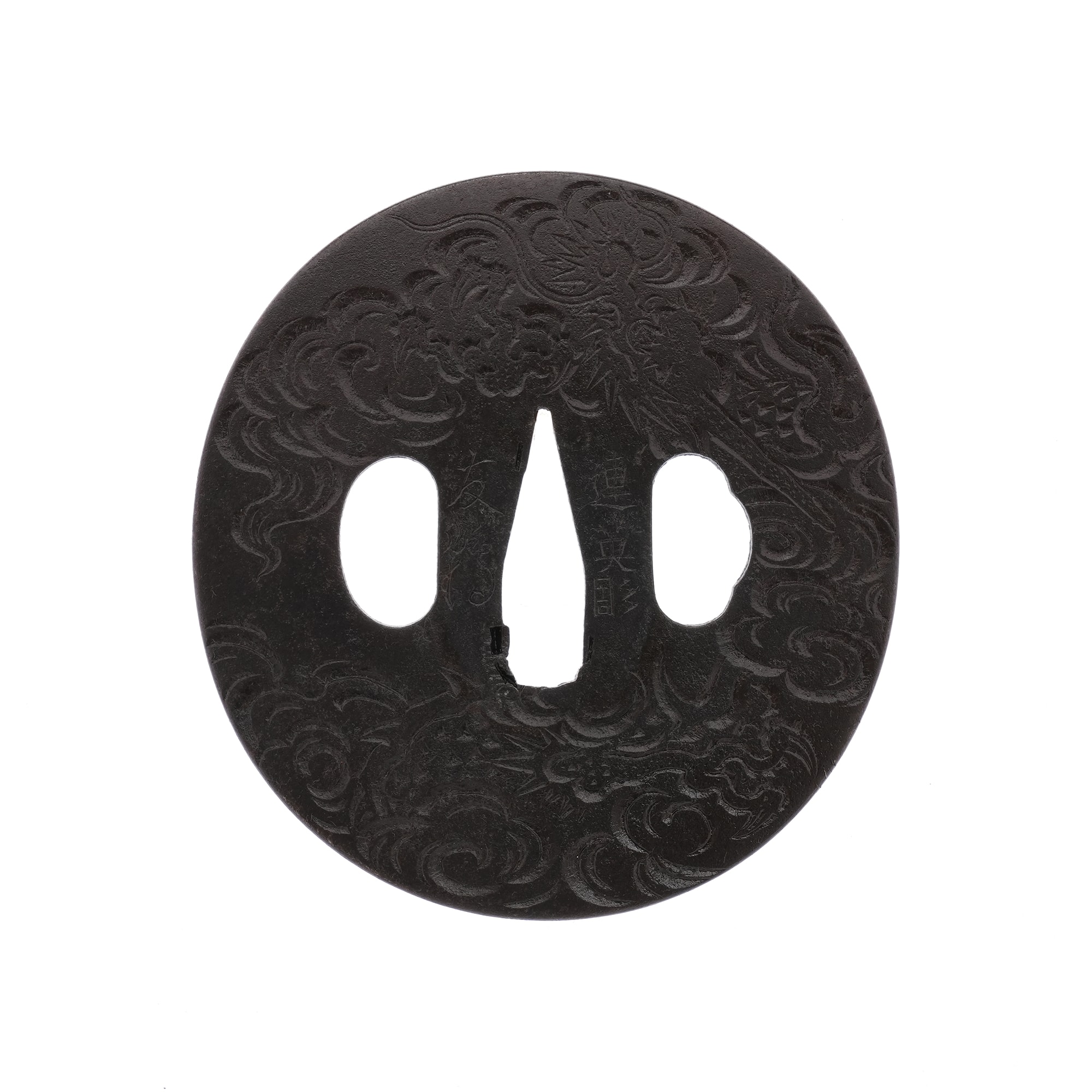
Katsurano Sekibun, who employed the art name Yurakusai, was born in Kansei 2 (1790) at Murakami in Echigo Province. As a young man he traveled to and studied under the Hamano family, acquiring the foundational discipline of that distinguished lineage. From his adoption of the art name Yurakusai, it is further conjectured that he undertook training in Kyoto, broadening his technical and aesthetic formation beyond a single school. In Bunsei 7 (1824) he entered the service of the Sakai family of Shonai domain as a retained artisan (kakae-ko), and from Koka 2 (1845) onward he settled permanently in Tsuruoka, where he continued to work until his death in Meiji 8 (1875) at the remarkable age of eighty-seven. For his inscriptions he used a distinctive cursive hand modeled on the calligraphic style of Kameda Bosai, the celebrated scholar of his native Echigo.

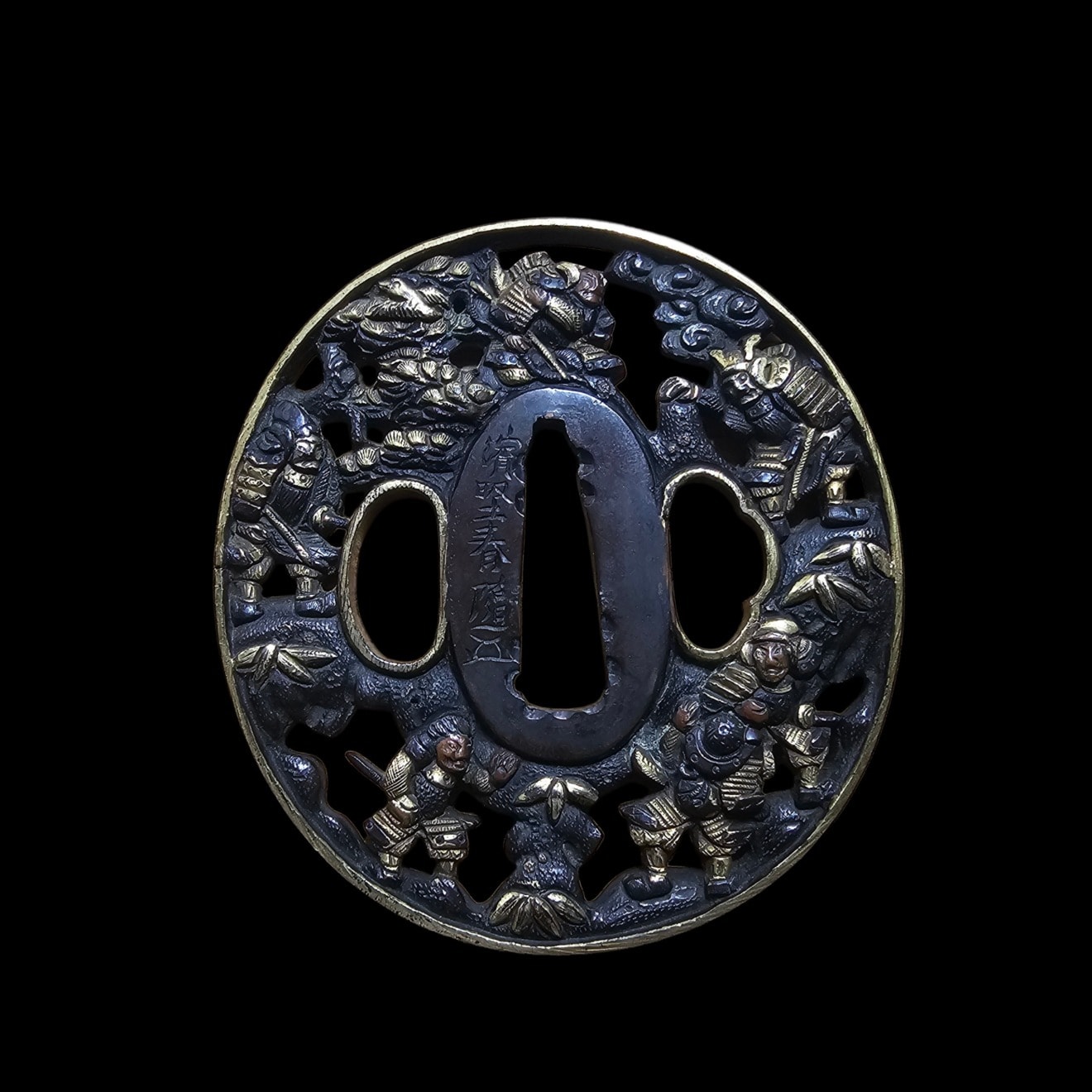
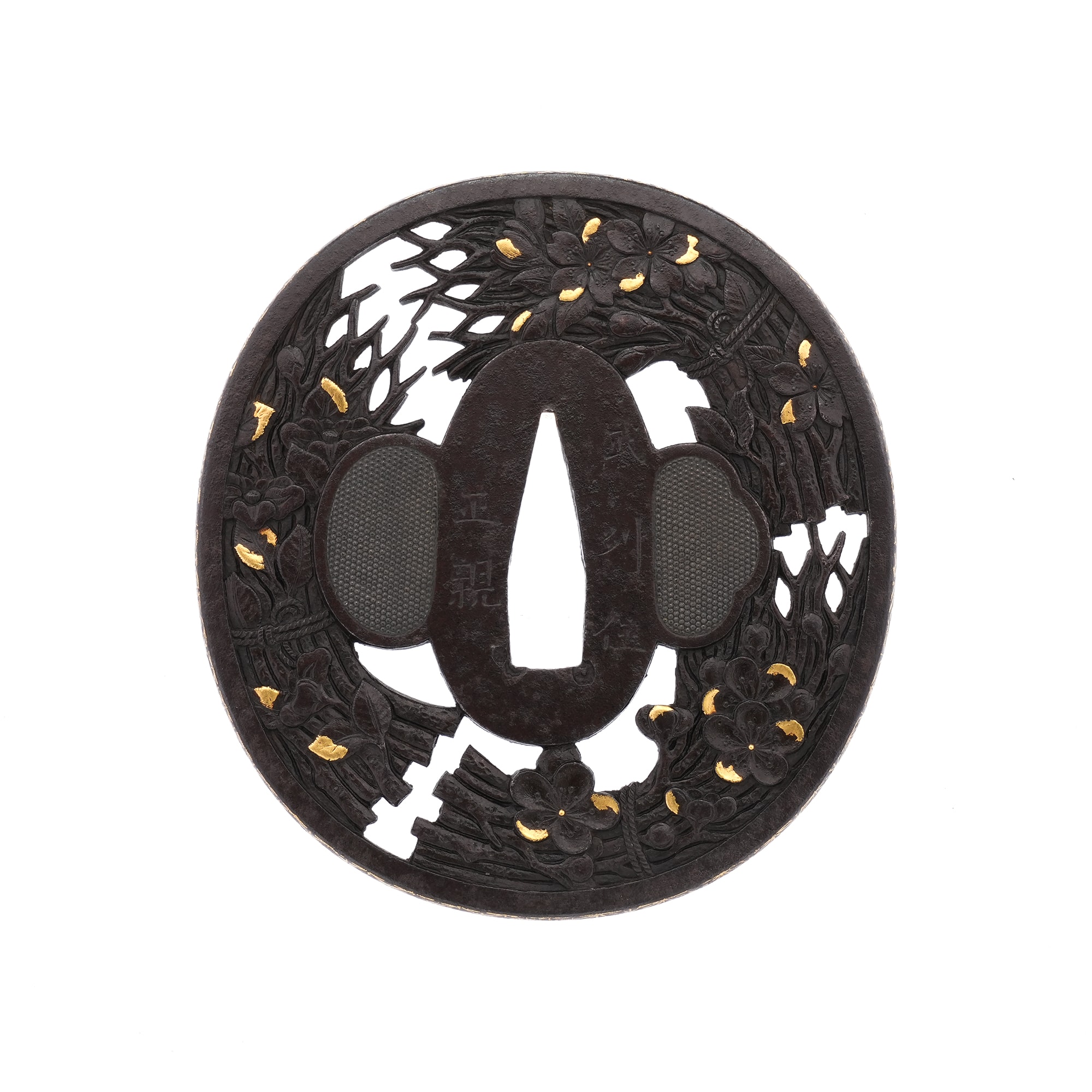
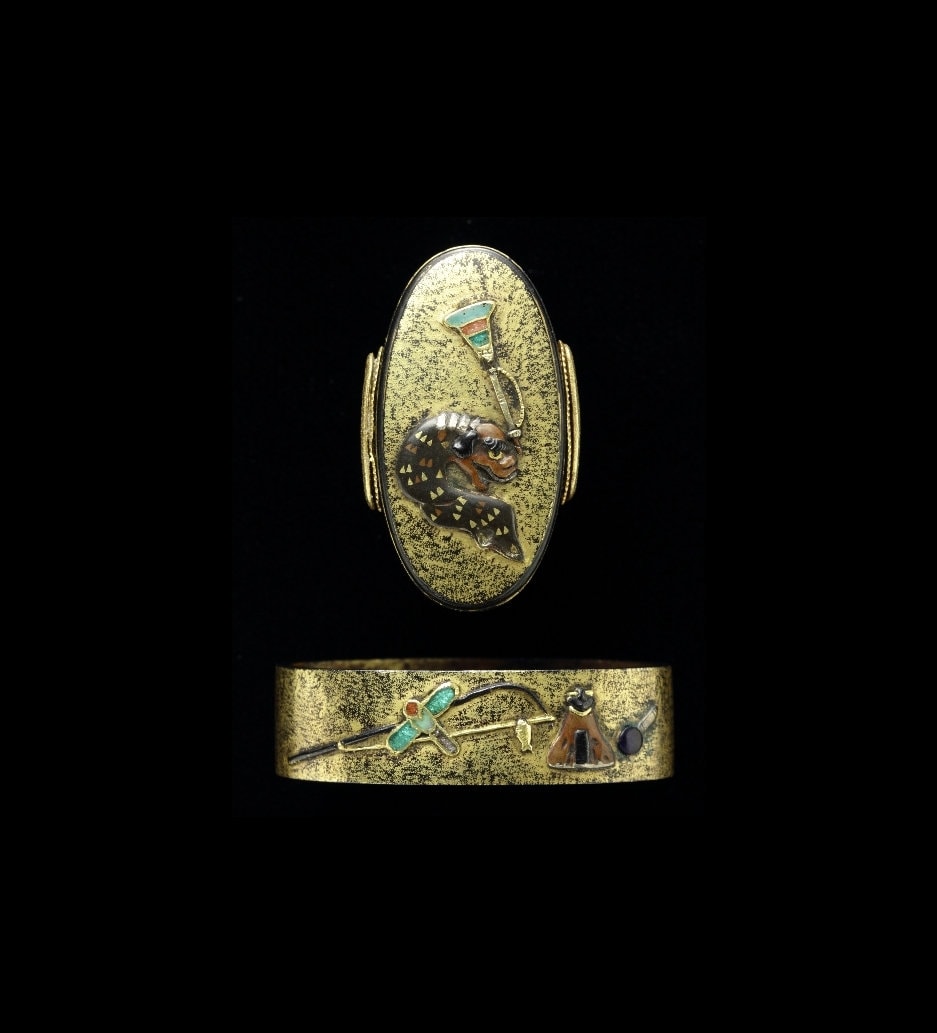
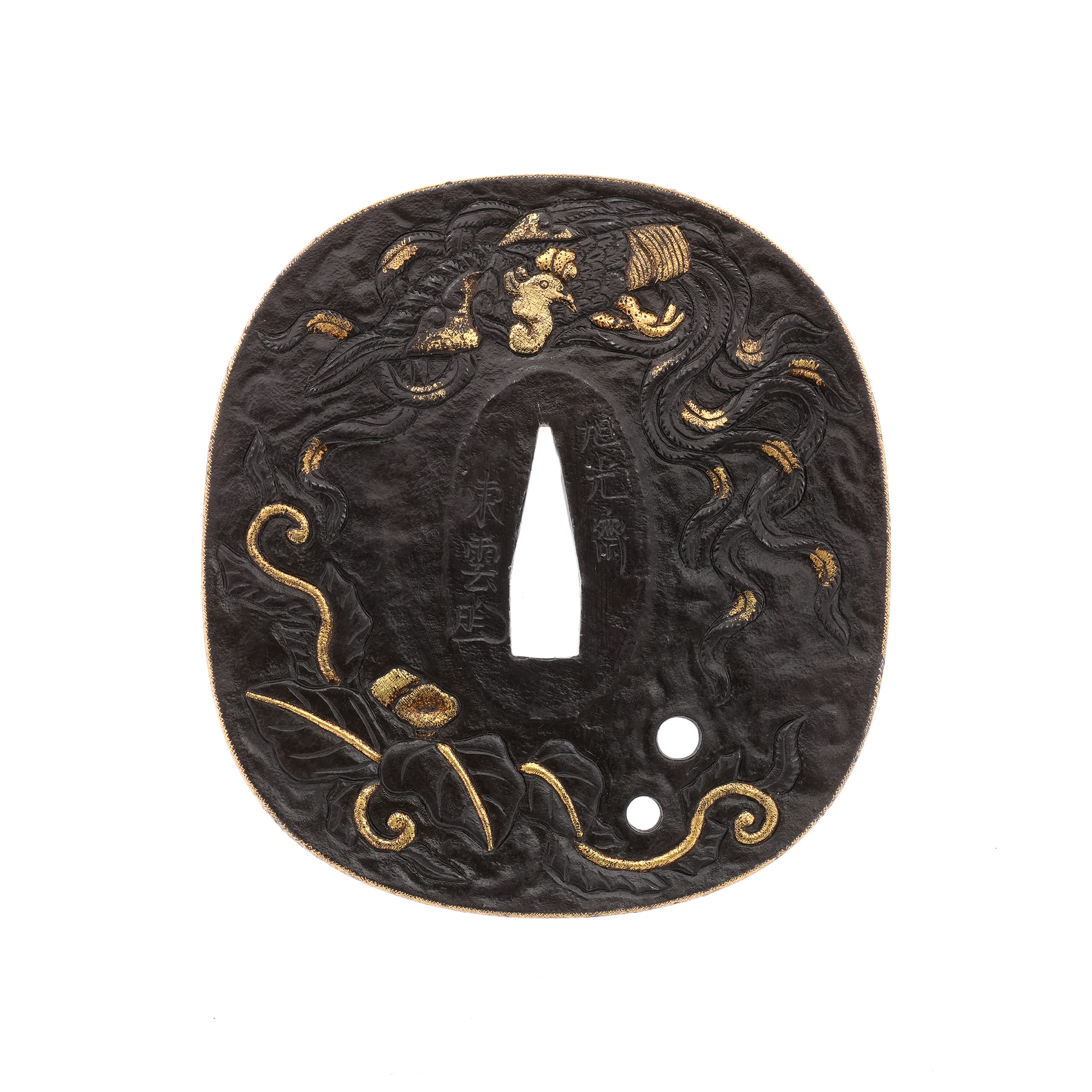
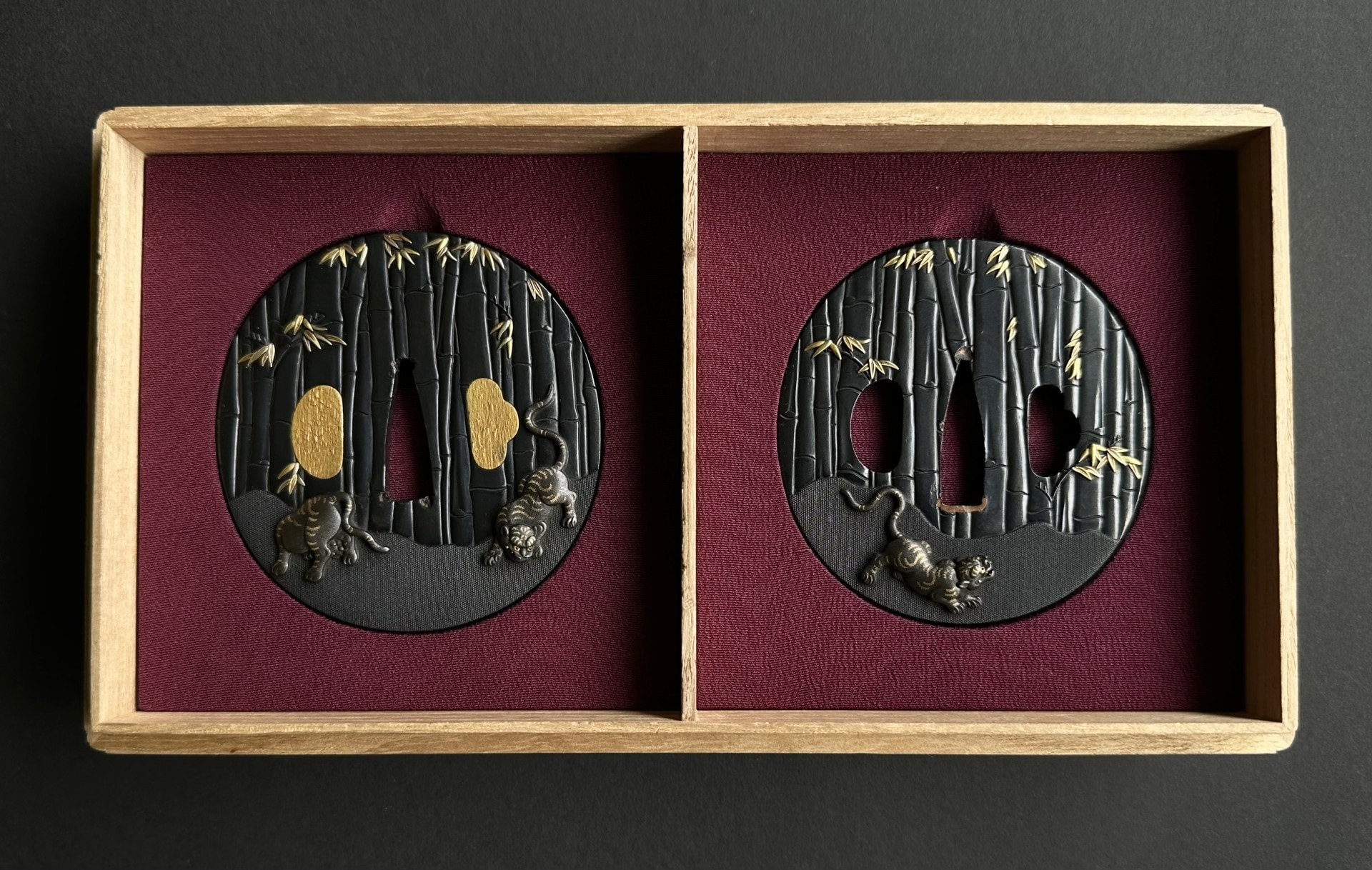
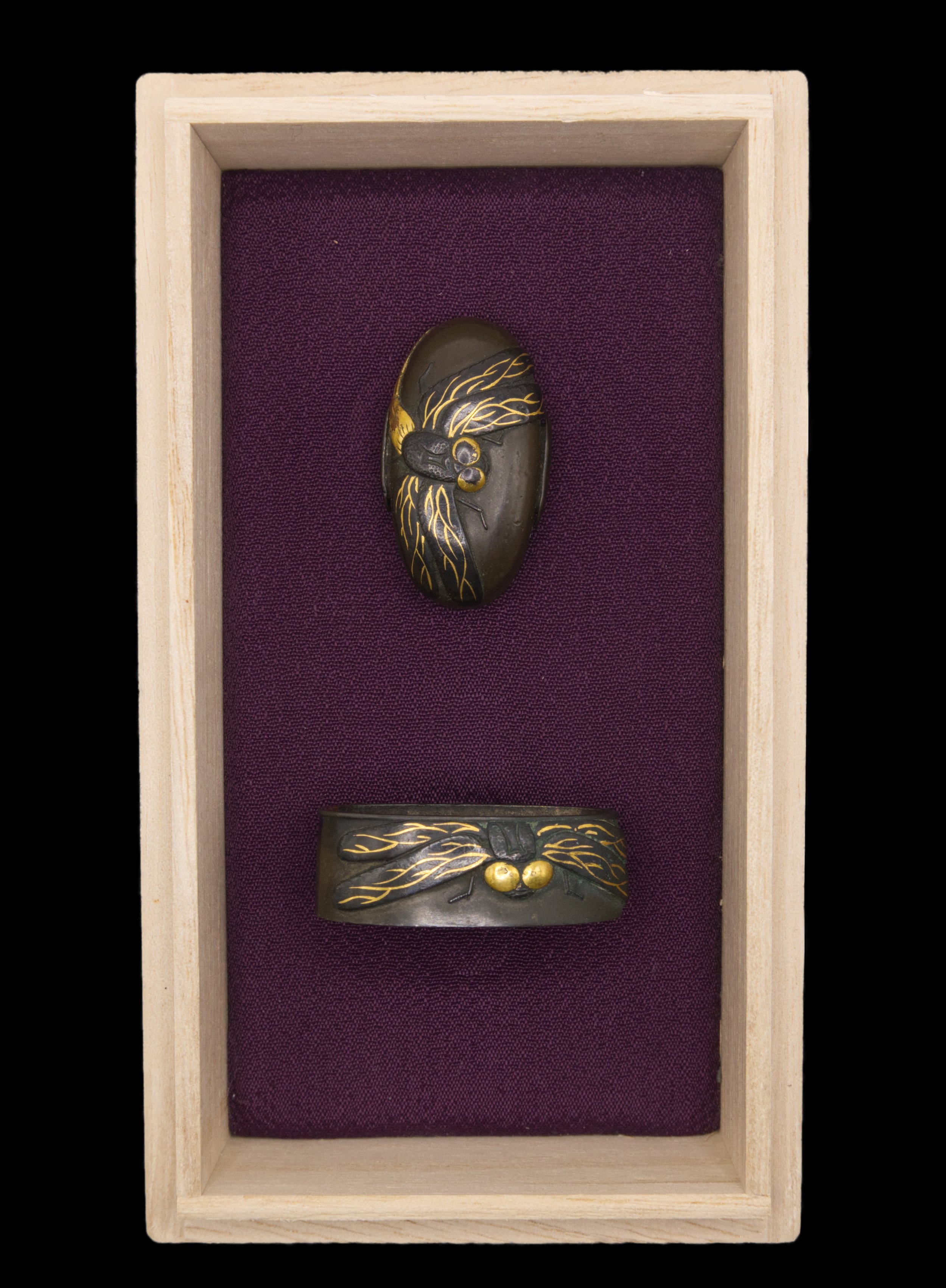
Sekibun devoted himself to the study of Tsuchiya Yasuchika, refining his skills with that master's example as his ideal, and produced an oeuvre in which are especially numerous. For the ground metal he frequently employed iron and , and he "excelled especially at applying to a style of strongly modeled high-relief carving." His technical repertoire further encompassed , , nikuai-bori, and various forms of (inlay). Among pictorial subjects he favored animals and birds, with tigers and newts (imori) counted as particular strengths. His celebrated "Dawn Crow" (Akegarasu) , conceived as the sky at daybreak with ground and - crows beating toward the , is singled out by the alongside his octagonal newt-design as among his finest achievements.

The consistently characterizes Sekibun's work as possessing a "high degree of refinement" in both composition and carving method, praising his "compositional command and carving skill" as "truly superb." His productions are recognized for their distinctive vitality -- an intensity of expression deemed "indeed characteristic of Akafumi" -- realized through the full mobilization of a wide range of carving methods together with inlay and polychrome metalwork techniques. Whether working on intimate or ambitious multi-component soroi such as his Twelve Zodiac fitting set, Sekibun's works are commended as fully demonstrating the "sharpness of the maker's abilities," securing his place as one of the most accomplished provincial metalworkers of the late period.
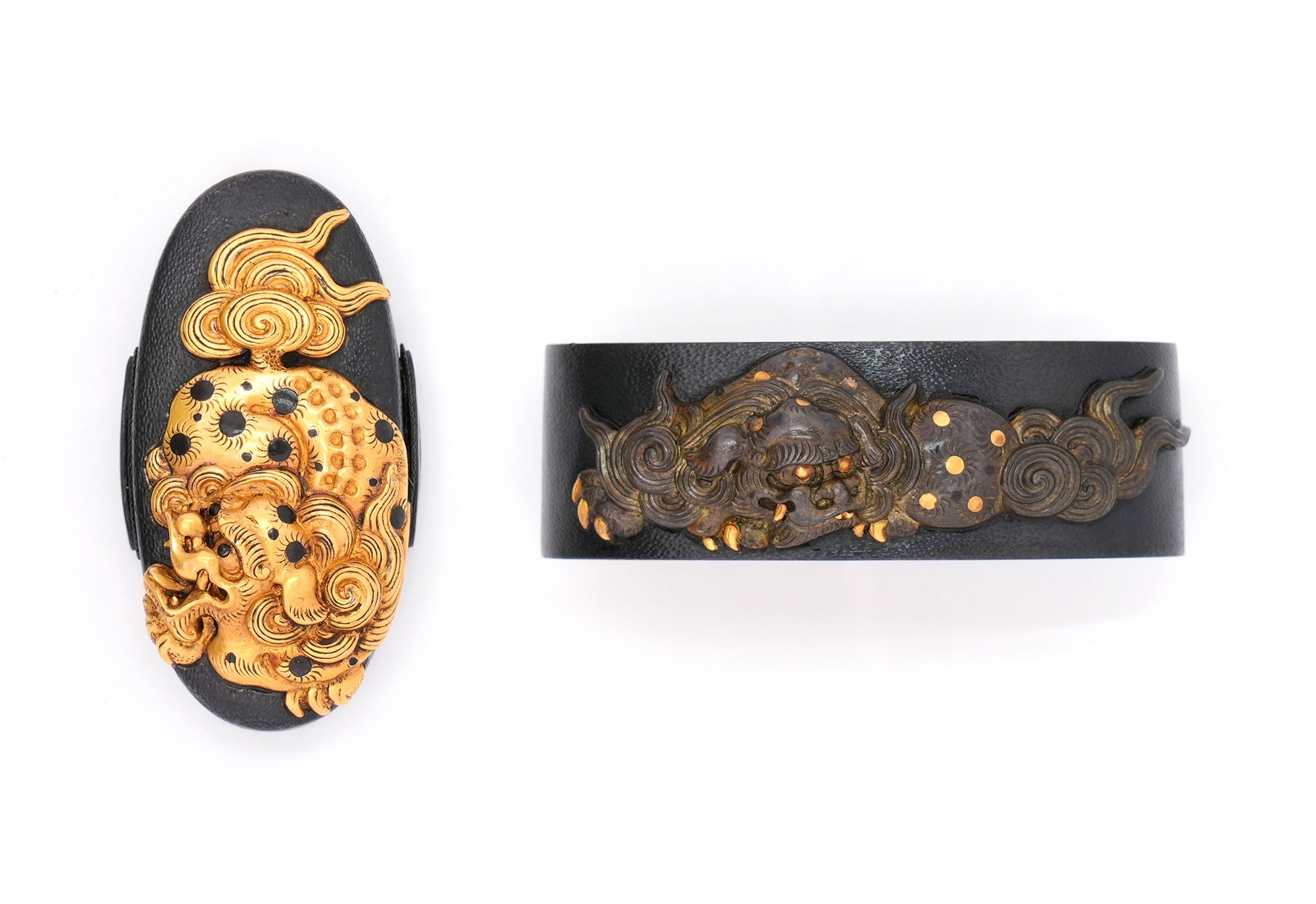
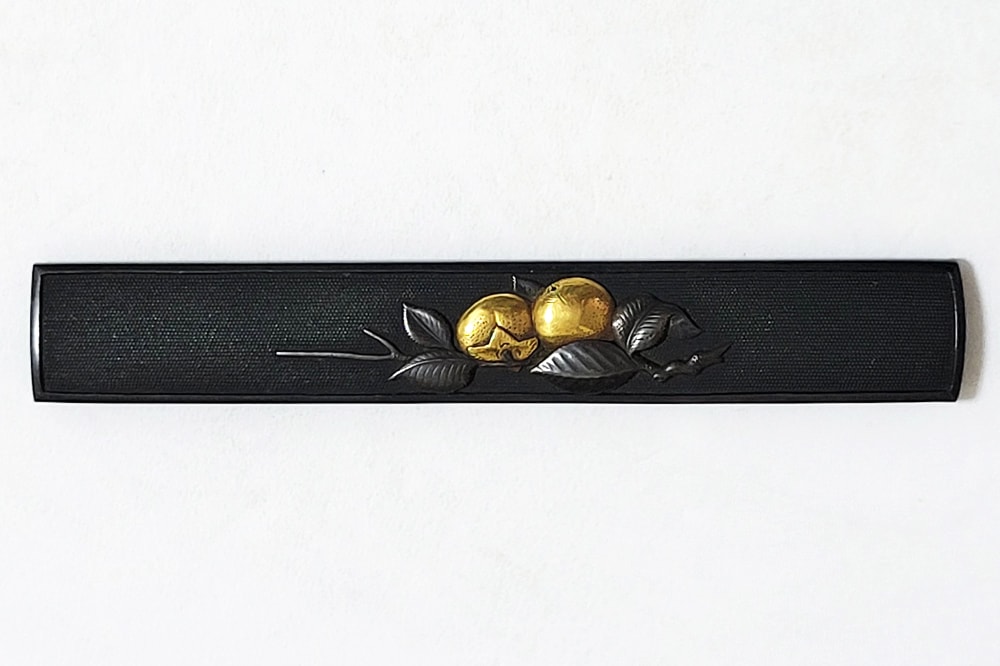
Kantei

3 descriptive axes: material (a Shonai ground palette that leans heavily on iron and shakudo, with suaka also conspicuous) x technique (a forceful sukidashi high relief with gold, silver, suaka and shibuichi iro-e and inlay, plus katakiri and nikuai-bori) x themes (animals and birds, set forcefully, the tiger his favoured subject). With only eight pieces his individual tells are few: the corpus carries one biography in nearly every record (Hamano-trained, modeled on Yasuchika, the Kameda Bosai cursive signature, the tiger named his most accomplished subject), so those recited facts cannot serve as per-piece discriminators. The one load-bearing per-piece mark is his sukidashi high relief, which the records single out as his specialty; everything else here is biography or favoured-subject, honestly held back from the signature block.

Katsurano Sekibun (1790-1875), go Yurakusai, was a metalwork artist born in Echigo-Murakami who, the records traditionally say, went to and studied at the Hamano house, his Yurakusai go suggesting Kyoto training besides. From 1824 he was a retained craftsman of the Sakai house of the Shonai domain and from 1845 settled in Tsuruoka, dying there at eighty-seven. He worked mostly in , his grounds using iron and heavily, his hand a forceful high relief with iro-e and inlay. He took Tsuchiya Yasuchika as his model, favoured animals and birds (the tiger above all), and cut his signature in the distinctive cursive of his hometown calligrapher Kameda Bosai.

Diagnostic discriminators

the records single out his sukidashi high relief as the thing he was good at and parade it as his specialty; one tsuba is praised for displaying his characteristic sukidashi high relief without reserve

Material (grounds)

His grounds lean heavily on iron and , the records noting he made much use of both; he also works (often polished or ishime), silver, and on rarer occasion a ground.

Technique

His characteristic hand is high relief, the ground cut away so the design stands proud, worked up with gold, silver, and iro-e and inlay; he commands katakiri, thin relief and nikuai-bori besides, and finishes detail with .

Themes (animals and birds)

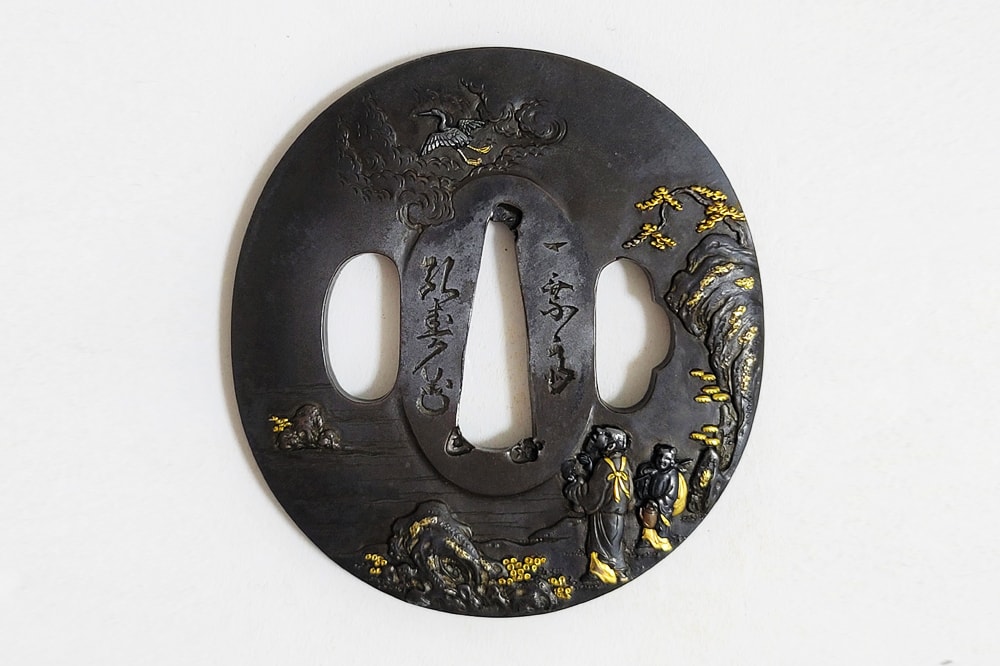
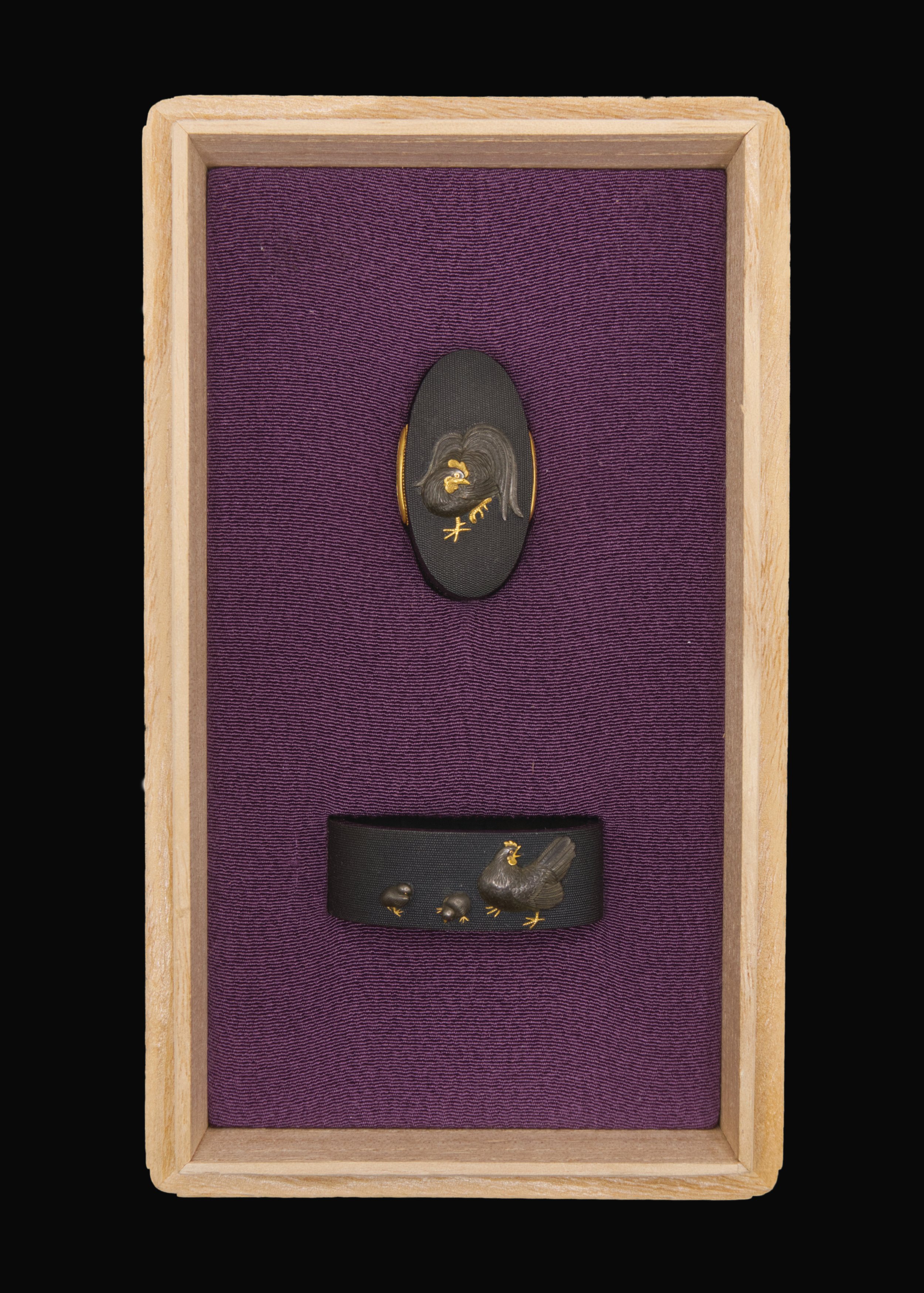
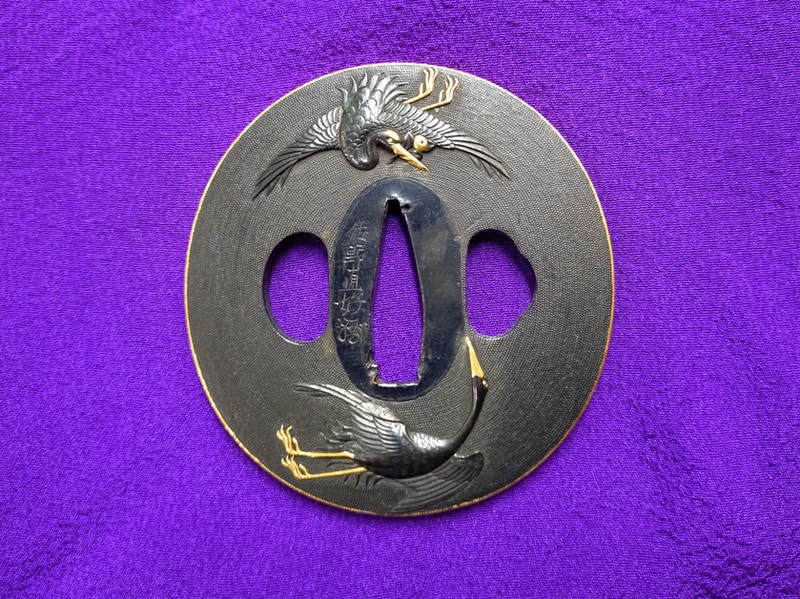
Animals and birds, set forcefully and given a weighty realism: tiger and dragon, dawn crows, plovers over waves, crane and tortoise, all carried with what one record calls a vivid, leaping life-force.

Beasts, set forcefully

Tiger and dragon above all, given a fierce mien and a leaping vigour; the tiger is named the subject he was most accomplished in.

Birds and water subjectsless firmly established

Dawn crows against the rising , plovers over waves, crane and tortoise, treated with the realistic weight as his beasts.

Full iconography

Signature chronology

Placement
Recorded signatures

Documentary note

His signature couples the go Yurakusai to the two characters Sekibun, cut in the distinctive cursive of his hometown Echigo calligrapher Kameda Bosai, and accompanied by a or a gold seal; on late pieces he dates his age (the eighty-two-year-old). His attribution rests less on a rank ladder than on this signature manner and his stated model, Tsuchiya Yasuchika, whose octagonal form and bird carving the records repeatedly read in his work.

Scholarship

His signature uses the distinctive cursive of his hometown Echigo calligrapher Kameda Bosai.

Designations

Kokuhō—
Jūyō Bunkazai—
Jūyō Bijutsuhin—
Gyobutsu—
Tokubetsu Jūyō—
Jūyō Tōken8

Elite Standing

0.06 across 8 designated works

Top 20% among makers

Work Types

Distribution across 8 ranked works

Other
450%
Tsuba
450%

Signatures

Signature types across 8 ranked works

Currently Available

Hamano School

Other artisans of the Hamano school

  1. 1.Shozui政随2 for sale17designated
  2. 2.Noriyuki矩随4designated
  3. 3.Masataka政孝1designated
  4. 4.Noriyuki矩随 (Norinobu1 for sale1designated
  5. 5.Nobuyoshi信盧2 for sale2designated
  6. 6.Naoyuki直随2 for sale1designated
  7. 7.Masatsugu政次1 for sale1designated
  8. 8.Shomin勝眠1designated
  9. 9.Masayoshi政芳2designated
  10. 10.Masanobu政信1 for sale2designated

Sekibun

Sekibun(赤文) was a maker of Japanese sword fittings (tōsōgu) of the Hamano school in Dewa province.

The work follows the Machibori tradition.

Designated works by Sekibun include 8 Jūyō.