NihontoWatch MonNihontoWatchBETA
MarketEncyclopedia
NihontoWatch Mon

NihontoWatchBETA

Market
Encyclopedia
Overview·Kantei·Designations·Work Types·Signatures·School
OverviewKanteiDesignationsWork TypesSignaturesSchool
  1. Schools
  2. Yokoya
  3. Omori
  4. Chizuka Hisanori

Omori Chizuka Hisanori

遅塚久則

Jūyō
Vol. 61, No. 210 · Mitokoromono

Omori Chizuka Hisanori

遅塚久則

9 ranked works

EraKyōhō–Kansei (1725–1795)PeriodEdoSchoolYokoya>OmoriTraditionMachiboriTypeTosogu MakerCodeMUR009
9Jūyō Tōken

Overview

Otsuzuka Hisanori (active Kyōhō 10–Kansei 7; 1725–1795) was a samurai retainer of the Moriyama Domain, a cadet line of the Mito Tokugawa house, who studied the art of chōkin (metal carving) under Ōmori Teruhide. According to the Moriyama Hanshi Ryakuden, he was "gentle in disposition and earnest and strict in conduct," serving the third lord Yorihiro and the fourth lord Yoriaki as a page with a stipend of thirty . The Natsuo Chōkin Dan further observes that "I have yet to see a work in which he engraved his family name," noting that his carving methods are "worthy of appreciation" and that his is careful, tending toward "a brilliantly colored style." Hisanori thus occupied a distinctive position among late period metalworkers: a warrior-artist whose output was shaped by both martial discipline and refined aesthetic sensibility within the Ōmori lineage.

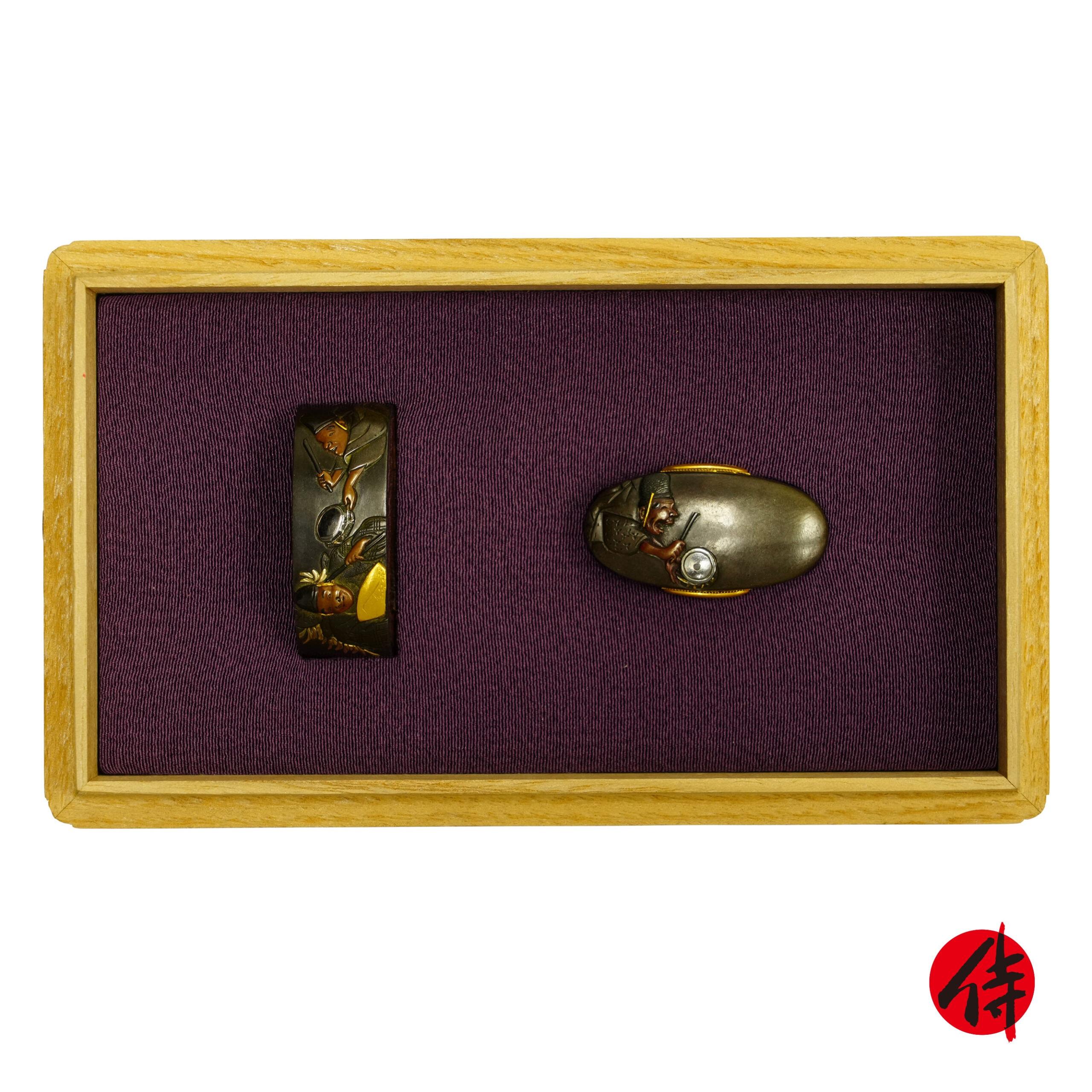
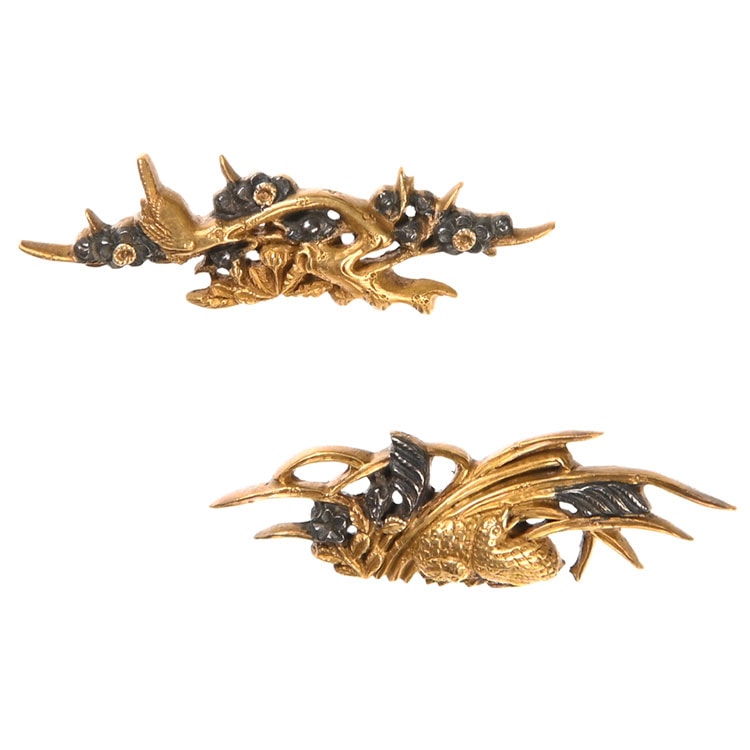
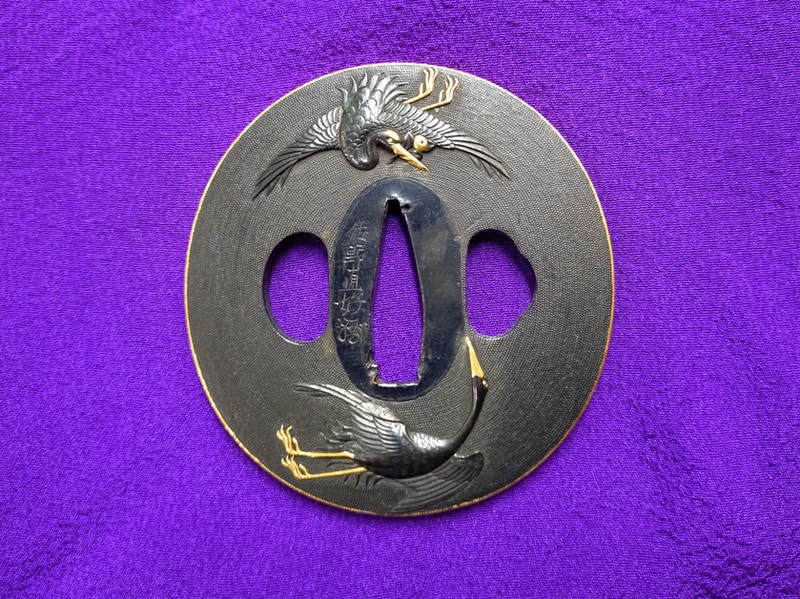
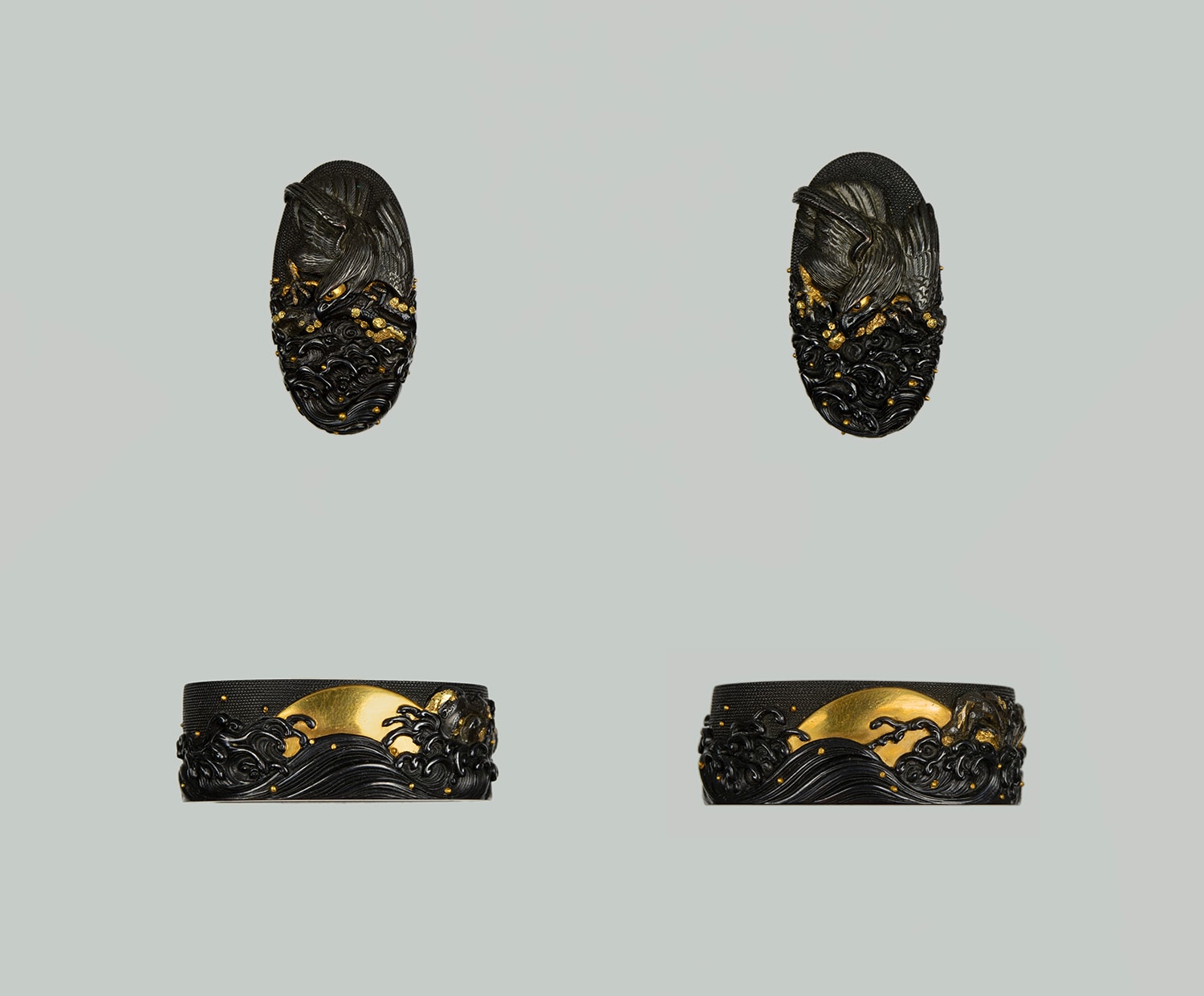
Hisanori devoted himself to metal carving with the pride of a warrior, and his dense, sumptuous inlay reached a singular level that won widespread admiration. He particularly excelled in designs of birds — peacocks and phoenixes — as well as figural subjects such as the Chinese heroes Guan Yu and Zhou Cang. His treatment of is immediately recognizable: the base metal is made thick, the (placement of flesh) is full and rounded, the raising from the reverse and the pressing-in from the front are emphatically contrasted, and the "waist" portion tightens as though cinched, producing an overall rounded contour. He further enhanced three-dimensionality by carving avian faces in a manner suggestive of fully rounded sculpture, achieving what the describes as "a truly sculptural effect." The employs a wide palette — gold, silver, , and hishoku-dō — applied with minute precision down to the smallest details.

Across his designated works, the consistently praises Hisanori's "dense, minute, and lustrous inlay work" as having reached "an individual, unsurpassed level." His pieces are recognized as fully demonstrating "the artist's particular strengths" and his "true strengths," with a "strongly three-dimensional manner rich in mass and presence." His distinctive sculptural conception of the form — thick ground, rounded modeling, cinched waist, and polychrome brilliance — constitutes a coherent personal idiom within the Ōmori school tradition. Hisanori's oeuvre stands as evidence that the samurai-artisan of the late period could achieve technical and expressive heights of the first order in the service of chōkin.
Kantei

3 descriptive axes: material (shakudo above all, both plain and nanako-ji, with suaka and shibuichi) x technique (rounded yobori and takabori built up with dense polychrome iro-e and inlay, applied suemon, gold flat inlay) x themes (birds above all, the peacock and phoenix, the chicken, the hawk and pheasant, with Chinese figures and the lion). His load-bearing discriminators are the thick, full, three-dimensional menuki modeling the records call distinctly his own, and the dense, sumptuous polychrome inlay said to reach a level all his own.

Chizuka Hisanori (1725-1795), a samurai of the Moriyama domain, a collateral branch of the Mito Tokugawa house, was a late- metalwork artist who carved as a warrior's pastime. The records say he was raised in an affluent family, took up the carving of sword fittings at twenty-eight, and studied under Omori Teruhide; the Kisho calls his work a pastime carving by a Mito retainer, yet of such exacting and brilliant workmanship that none could compare. His defining quality is a dense, sumptuous polychrome inlay said to reach a level all his own, set into a distinctly individual modeling: a thick plate, full rounded relief pushed out from the reverse and pressed in from the front, the waist cinched, and faces carved nearly in the round so the figures seem to move. He excelled above all in birds, the peacock and the phoenix, and in figure subjects.

Diagnostic discriminators

the setsumei call his menuki forms distinctly his own (独特): the plate is thick, the relief full and rounded (肉置むっくり), the push-out from the reverse and press-in from the front are emphasized, the waist is cinched, and faces are carved in a rounded, sculptural manner so the figures appear to move, a more three-dimensional effect repeatedly named the recurring point of recognition

the records repeatedly say his dense, sumptuous inlay reached a level all his own (独歩の域に達して) and drew enthusiastic admiration; the Soken Kisho adds that in the division and handling of iro-e across the pictorial surface he stood in a class of his own, with none that could compare, his fine command of colored metals the recurring point of praise

Material (grounds)

above all, worked both as a plain ground and as ; he also uses and, on one piece, , and lines the reverse of a with gilt.

Technique

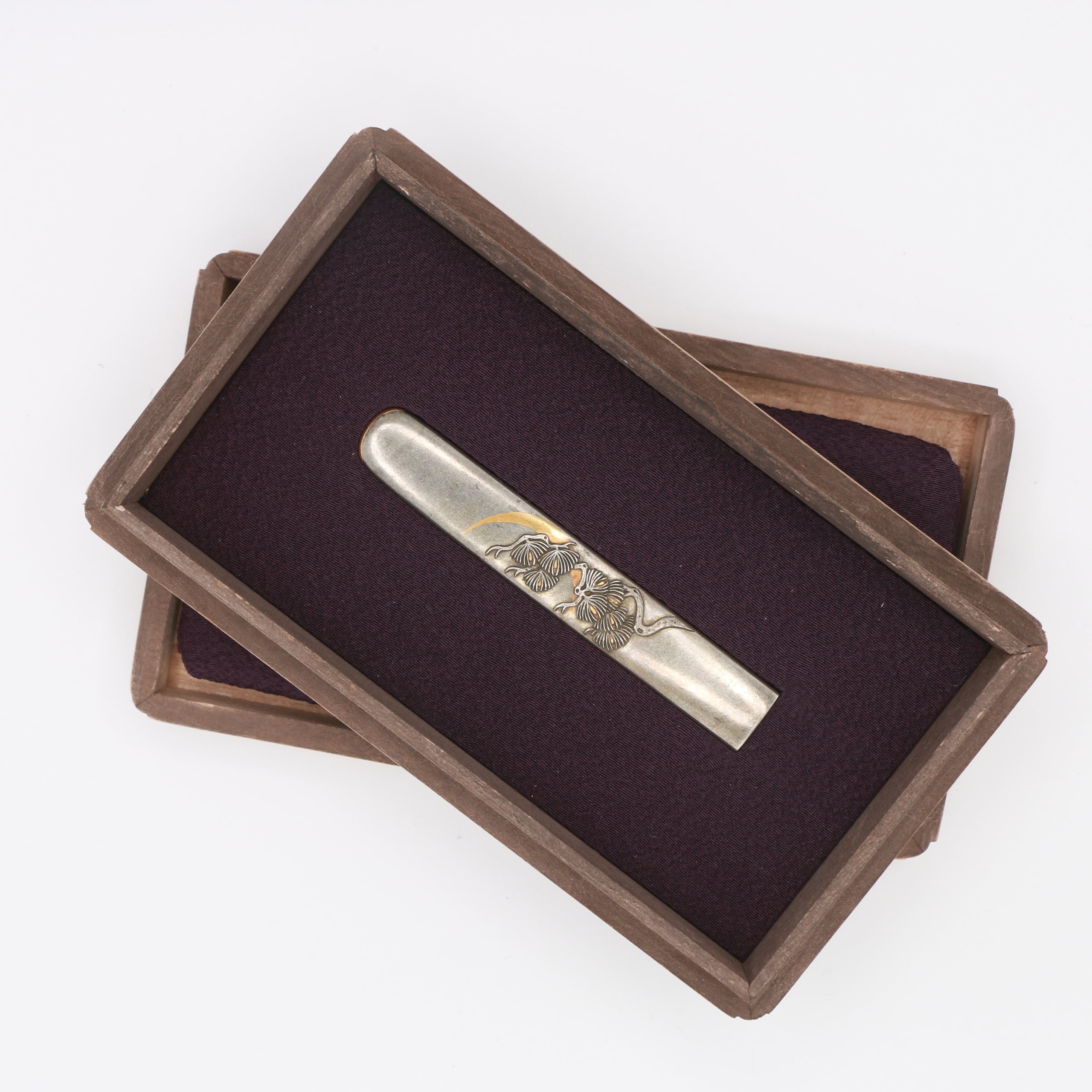
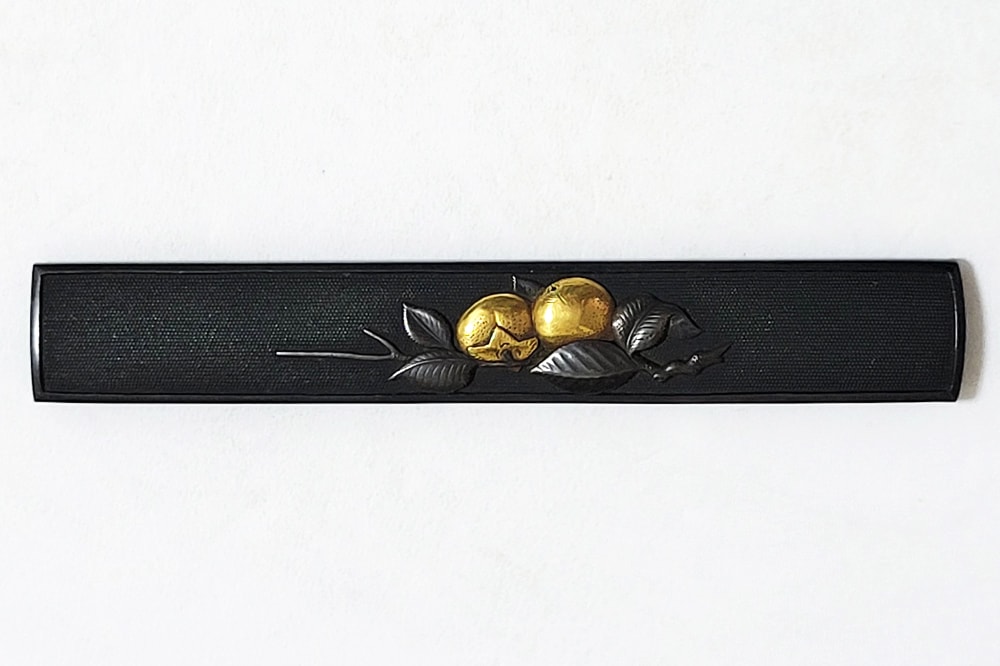
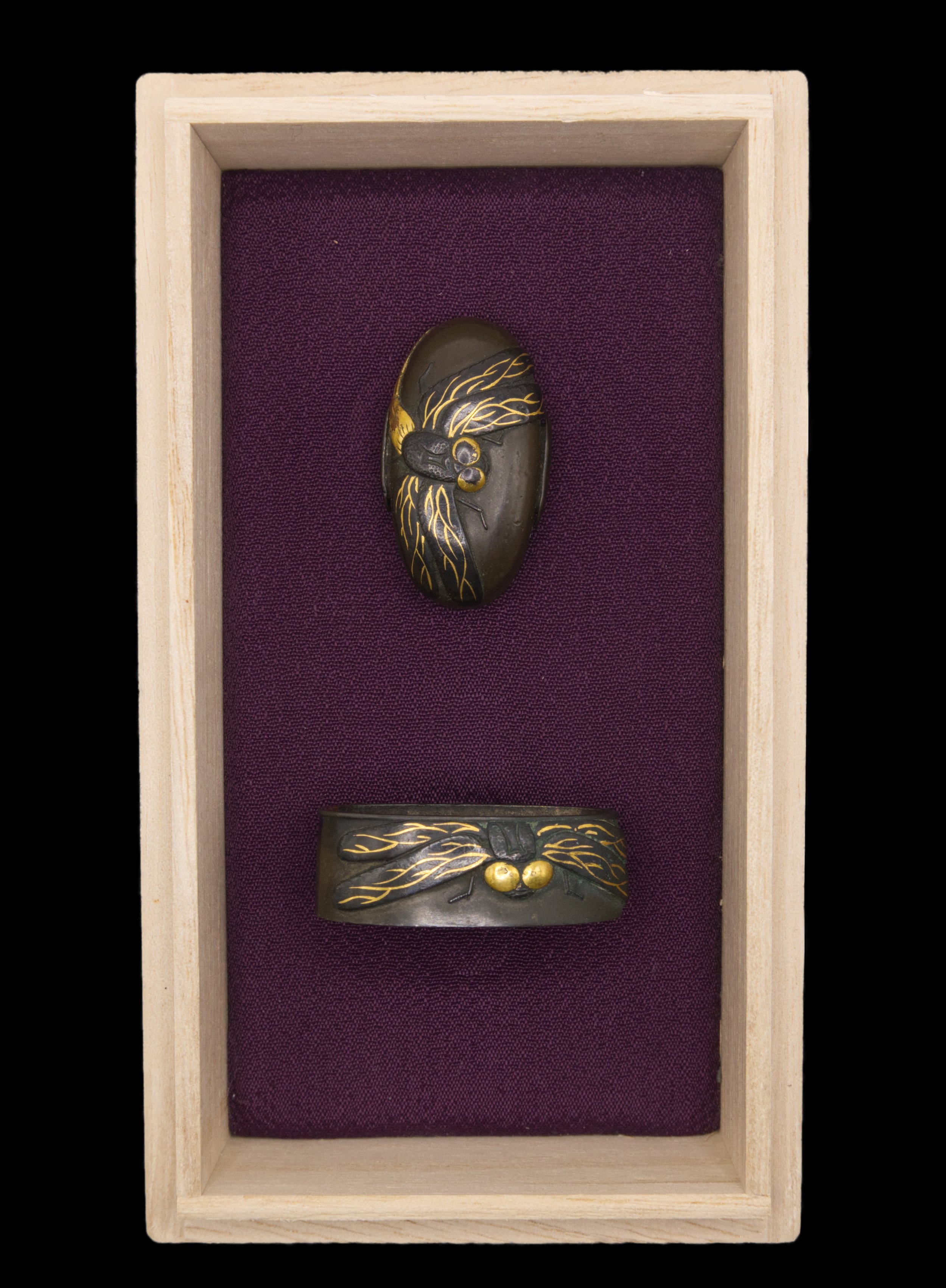
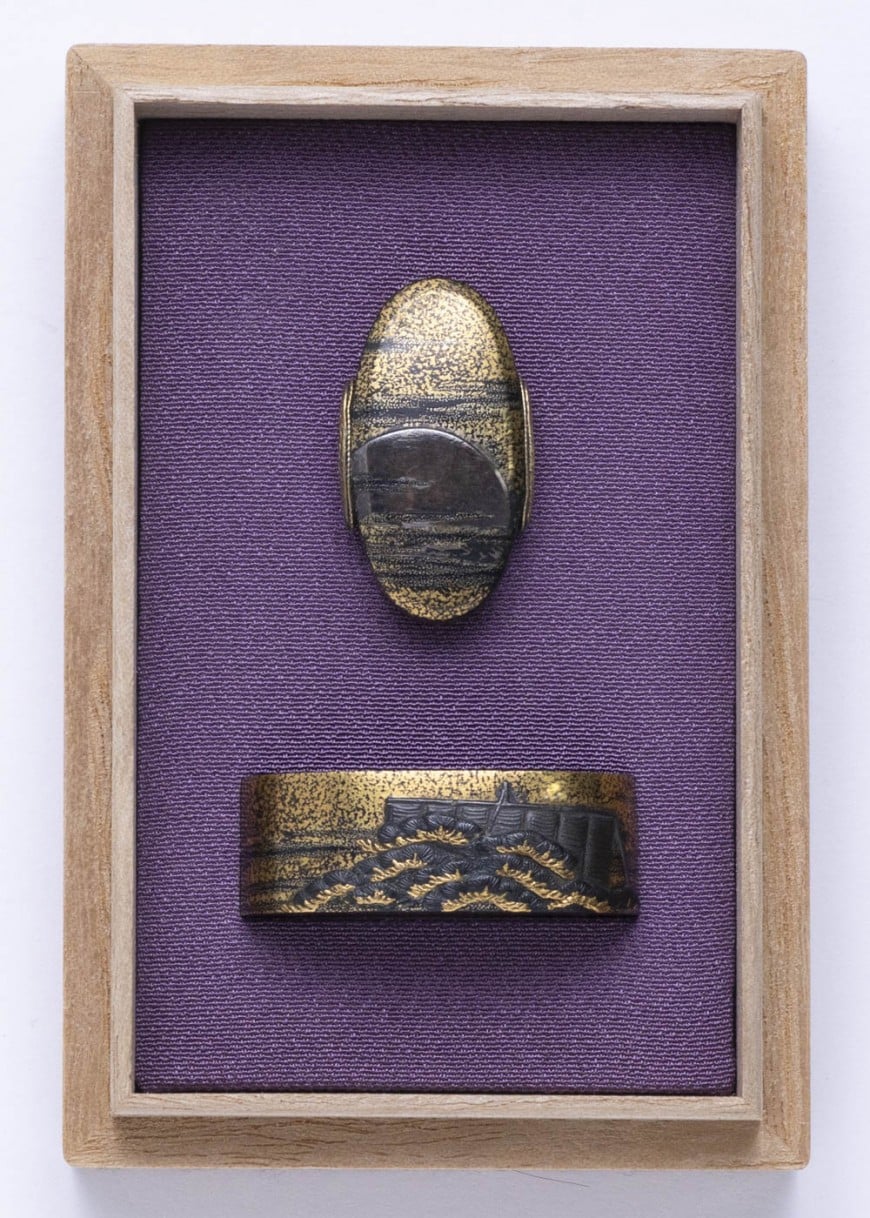
His hand is a full, rounded yobori and built up with dense, careful iro-e in many colored metals; over it he sets inlay, applied and gold flat inlay, working the whole into strong relief.

金平象嵌kin-hira-zogan

Themes (birds and figures)

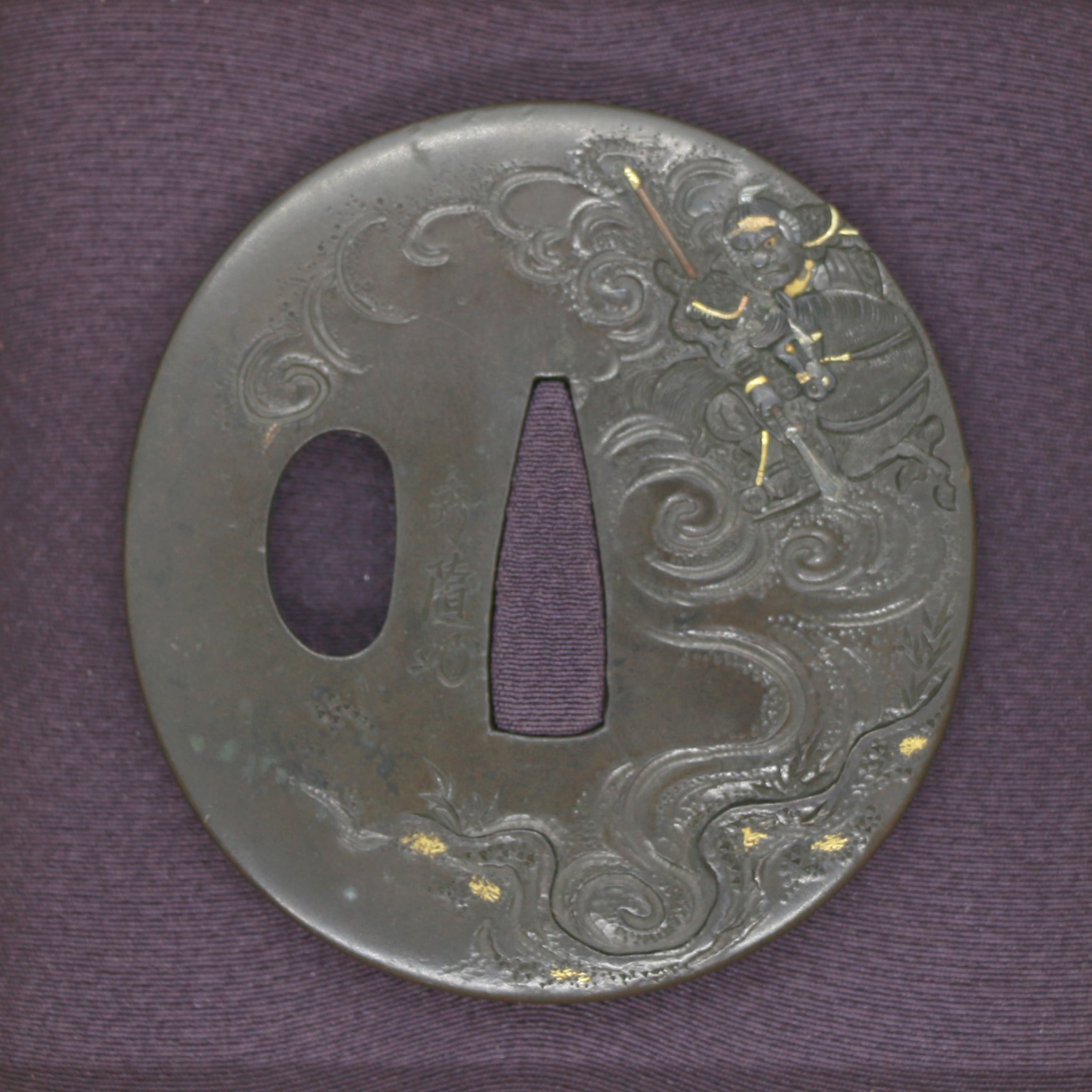
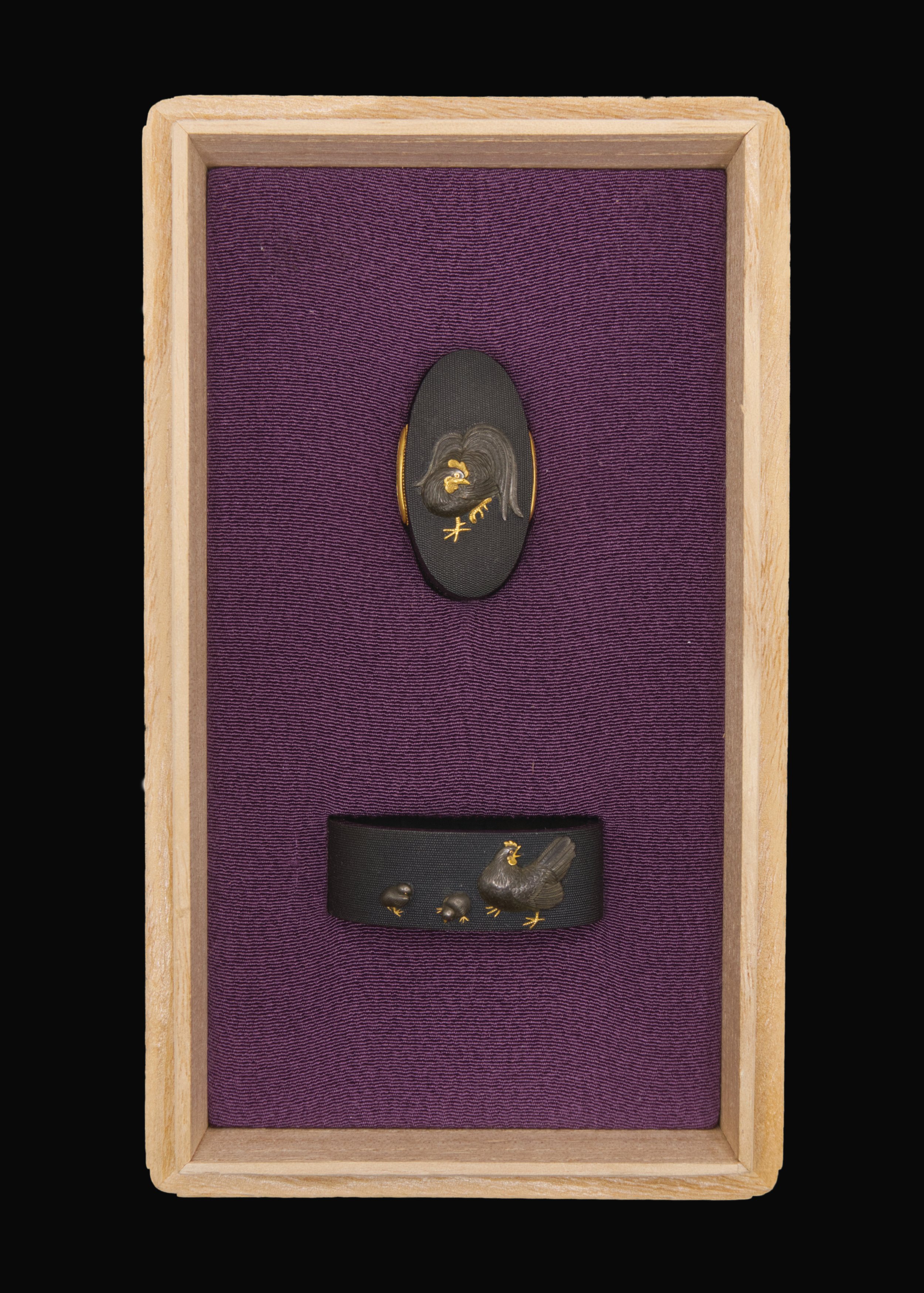
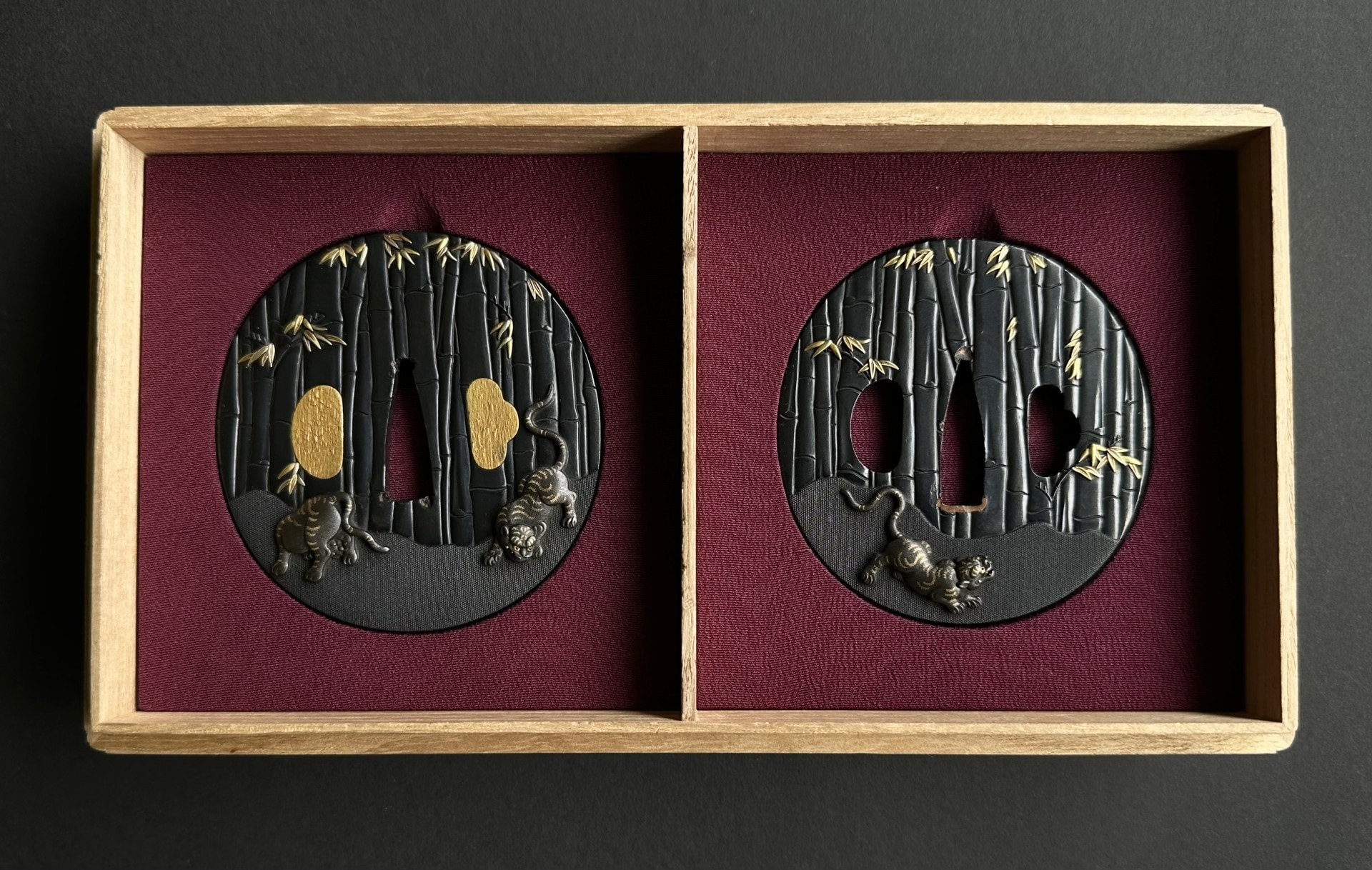
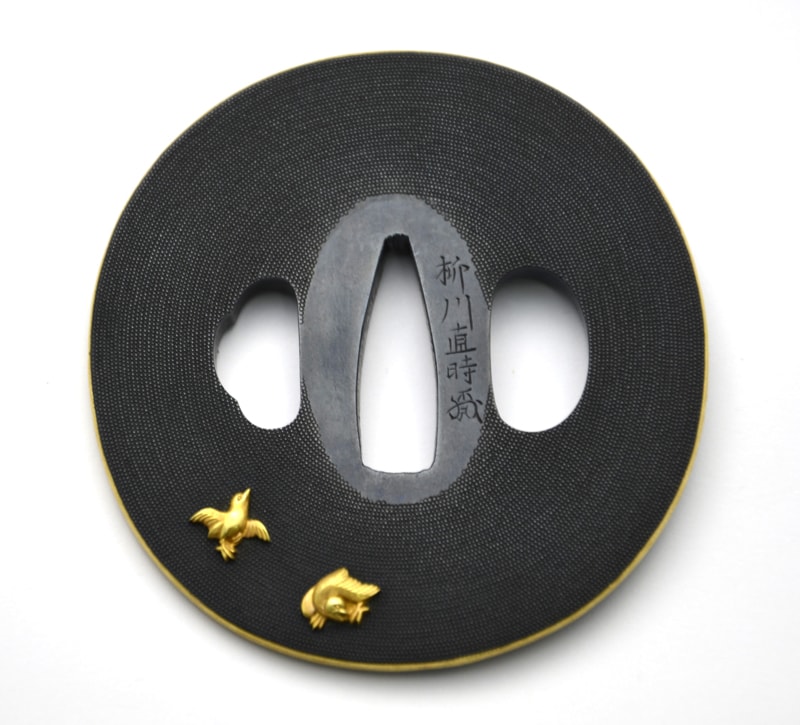
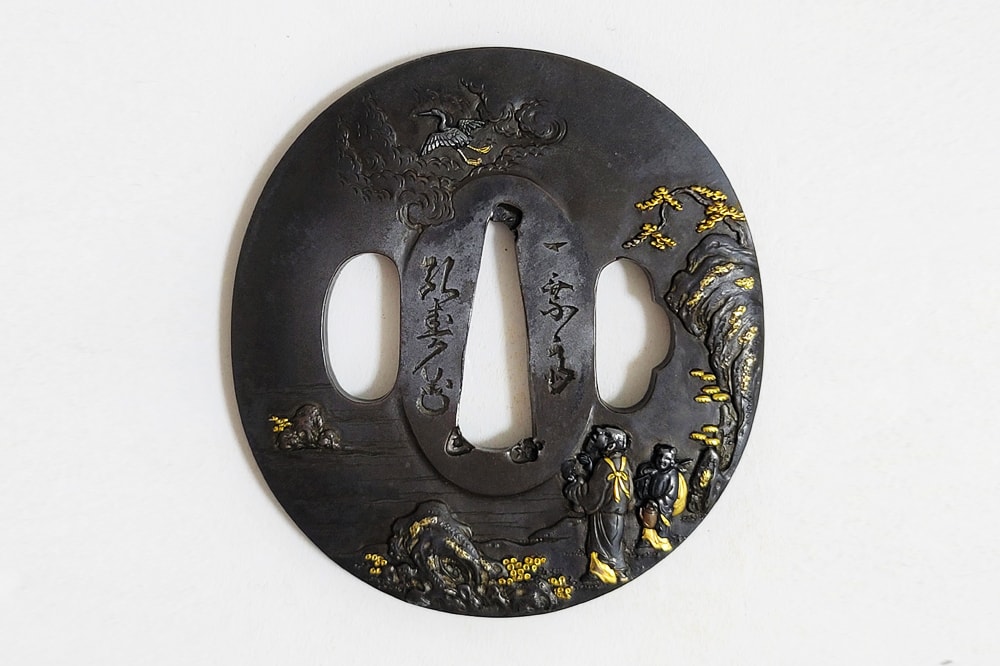
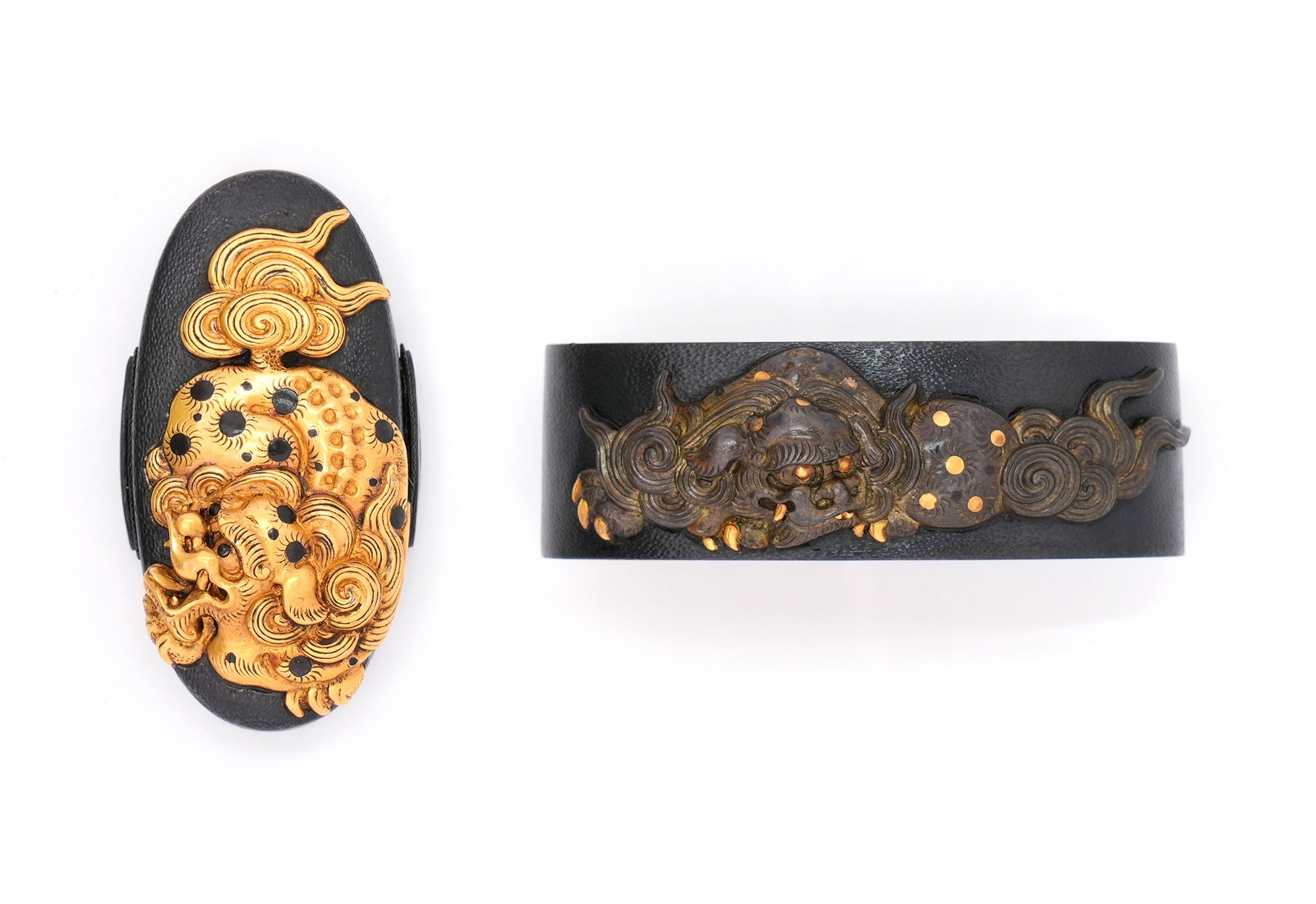
Birds above all: the records say he excelled in the peacock and the phoenix, and in this group he carves the phoenix, the parent-and-chick chicken, and a hawk paired with a pheasant. Among figures he renders Chinese personages such as Guan Yu and Zhou Cang and a god of good fortune, and he carves the lion among his animal subjects.

Birds (peacock, phoenix, chicken, hawk)

The bird subjects in which the records say he excelled: the phoenix, the parent-and-chick chicken, a hawk paired with a pheasant, with the faces carved nearly in the round so they seem to move.

Figures and animalsless firmly established

Chinese personages such as Guan Yu and Zhou Cang and a god of good fortune, and the lion among his animal subjects, given the thick, three-dimensional modeling as his birds.

Full iconography

Signature chronology

Placement
Recorded signatures

Documentary note

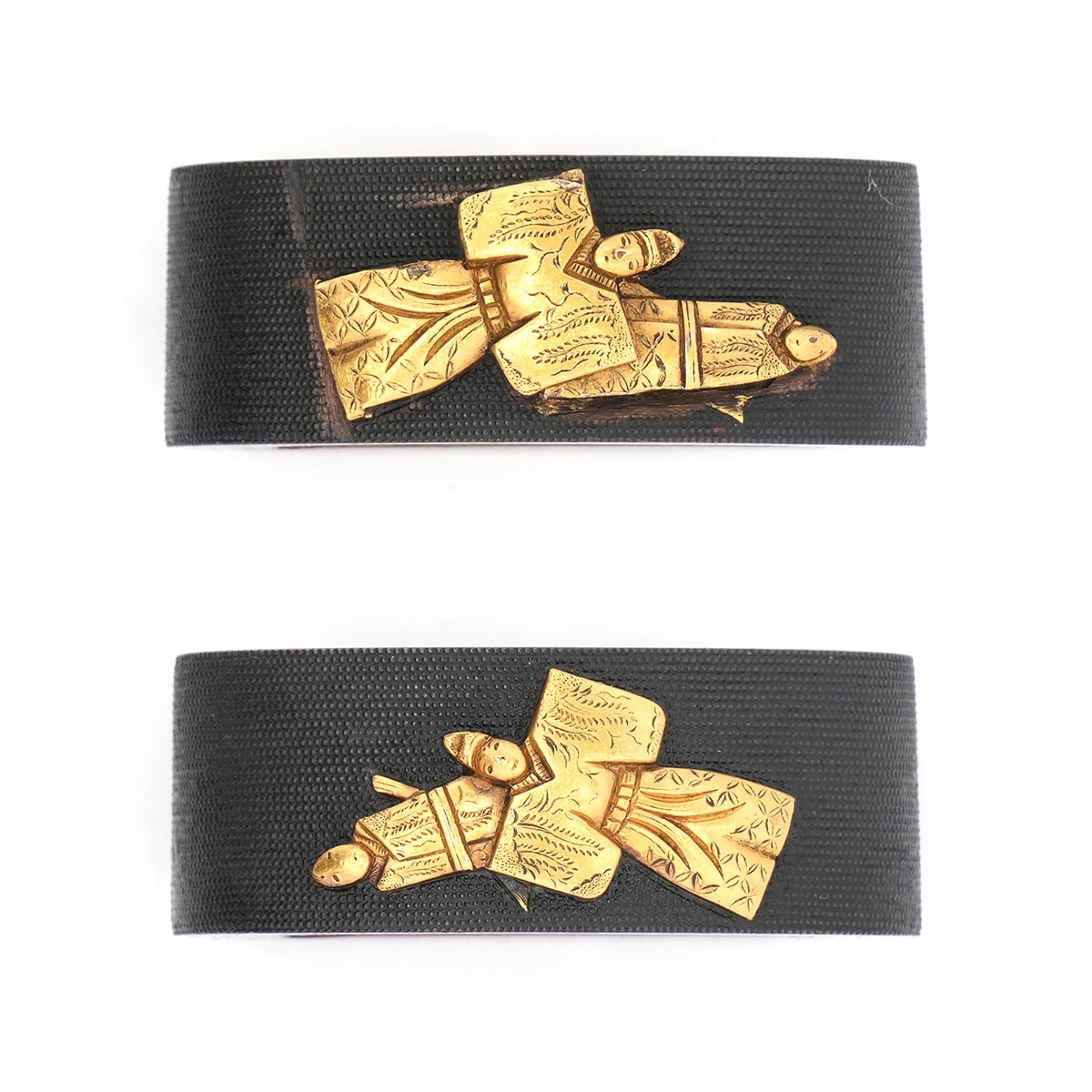
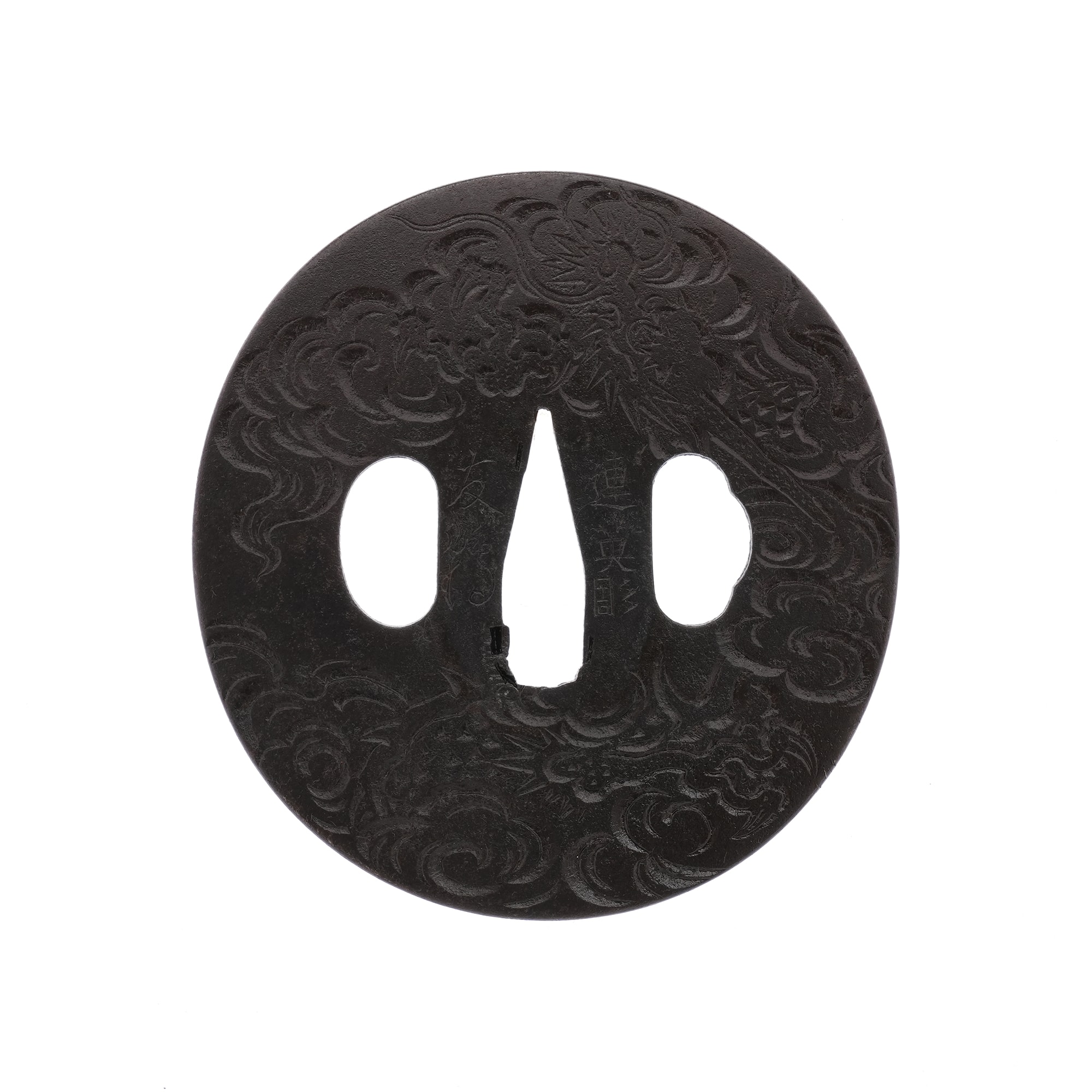
He signs the two characters Hisanori (久則) with a , most often split as a wari- (久則 with ) or cut as a plain ; one three-piece set adds the Mito residence (Mito-ju Hisanori). The records (the Natsuo Chokin-dan) note that no work is known in which he cut his surname, so the full Chizuka Hisanori (遅塚久則) is a transcription supplied by the catalogue header, not a cut signature run in this group. His surname 遅塚 is read variously (Chizuka, Osozuka, Otsuzuka) in the records. He is documented as a samurai of the Moriyama domain who served the third and fourth lords as a page on a thirty- stipend, and who took up carving at twenty-eight under Omori Teruhide, quit briefly at thirty-five, resumed at forty, retired at fifty-two, and died in 1795.

Scholarship

Although described as a warrior's pastime carving, his work is documented as a retainer's carving of the Mito domain, executed with the pride of a warrior.

Designations

Kokuhō—
Jūyō Bunkazai—
Jūyō Bijutsuhin—
Gyobutsu—
Tokubetsu Jūyō—
Jūyō Tōken9

Elite Standing

0.07 across 9 designated works

Top 19% among makers

Work Types

Distribution across 9 ranked works

Other
444%
Menuki
333%
Mitokoromono
111%
Fuchi-Kashira
111%

Signatures

Signature types across 9 ranked works

Currently Available

Omori School

Other artisans of the Omori school

  1. 1.Teruhide英秀15designated
  2. 2.Horie Okinari堀江興成7designated
  3. 3.Terumitsu英満4designated
  4. 4.Hidetomo秀知2 for sale2designated
  5. 5.Horie Okiyoshi堀江興吉1designated
  6. 6.Hidetoshi秀寿2designated
  7. 7.Kazutomo一知1designated
  8. 8.Mitsutoki満辰1designated

Chizuka Hisanori

Chizuka Hisanori(遅塚久則) was a maker of Japanese sword fittings (tōsōgu) of the Omori school, active during the Kyōhō–Kansei (1725-1795) period.

The work follows the Machibori tradition.

Designated works by Chizuka Hisanori include 9 Jūyō.