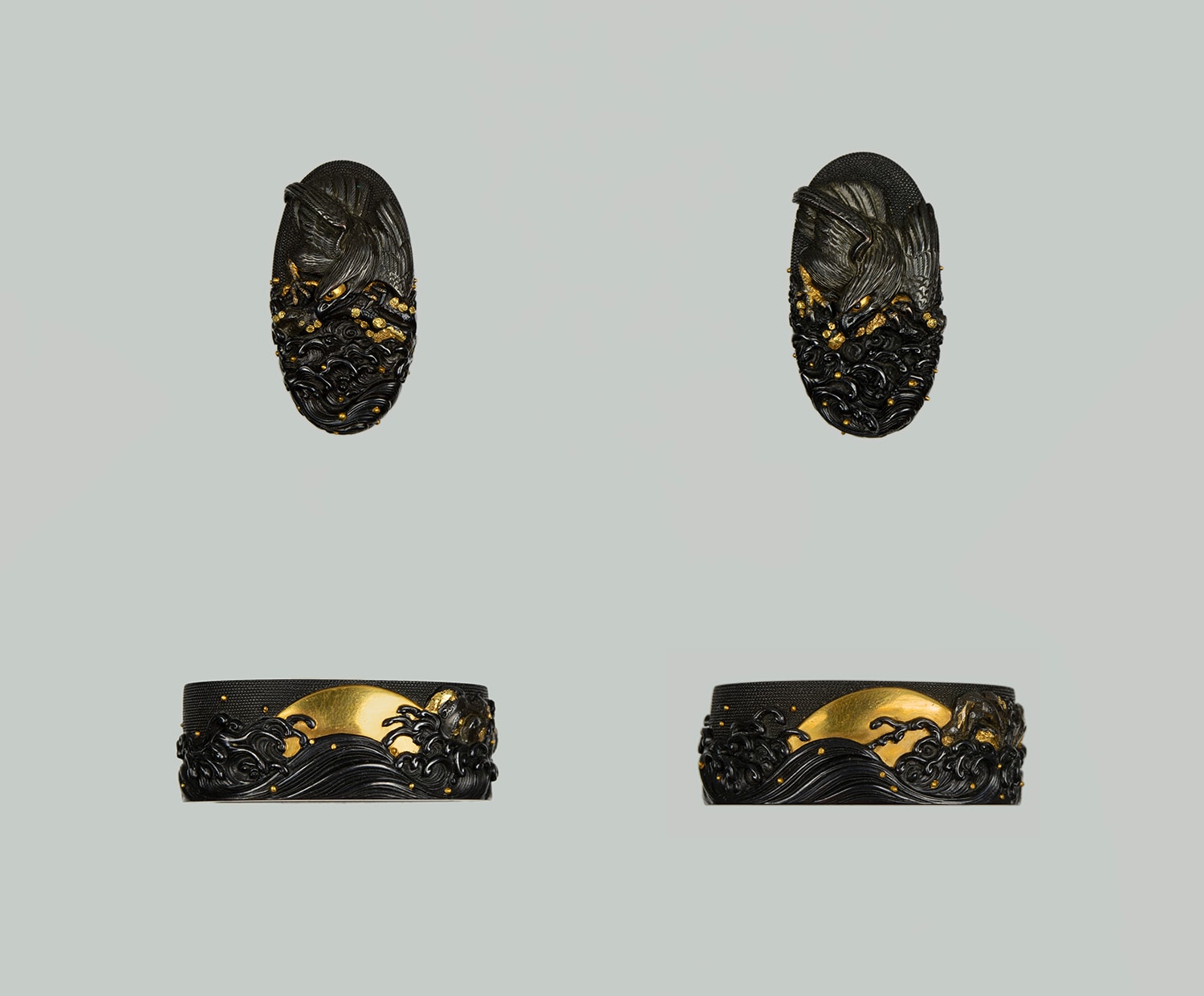
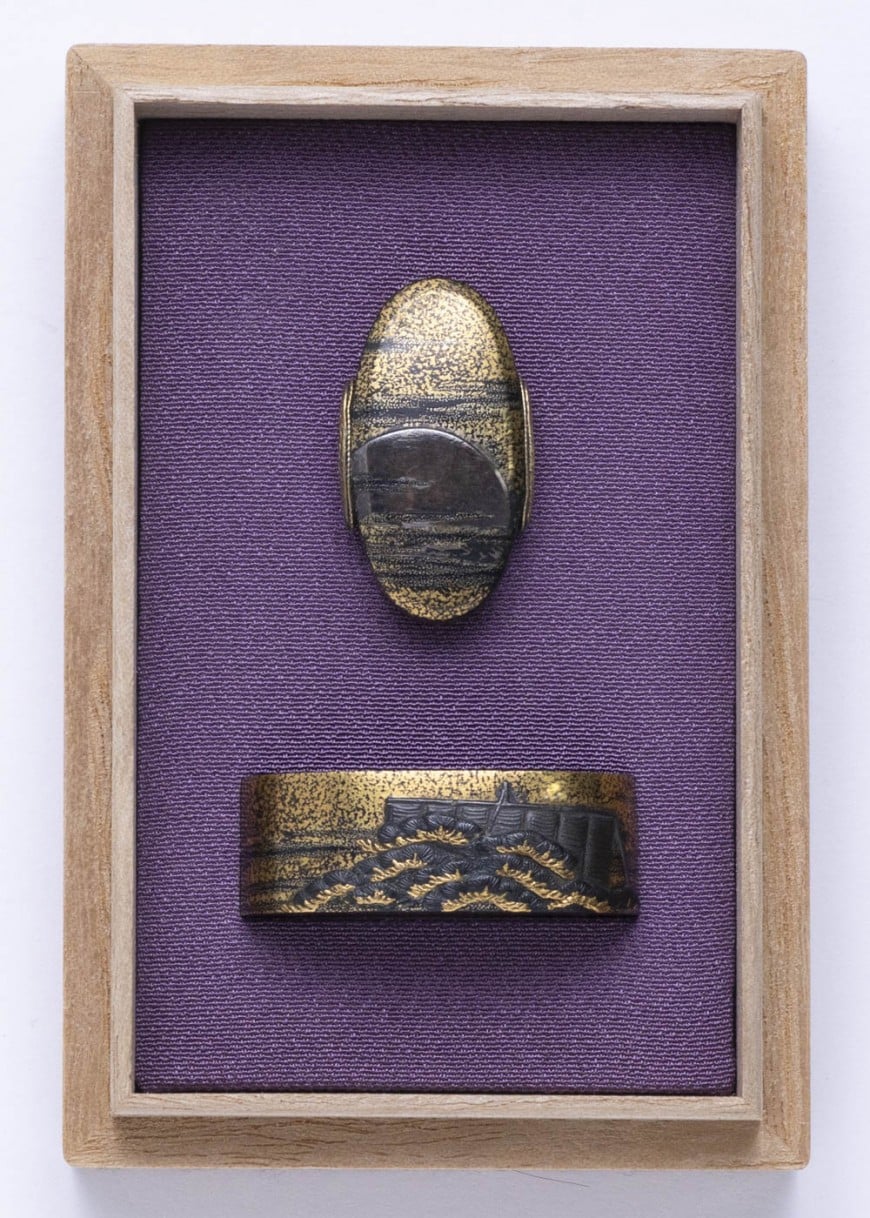
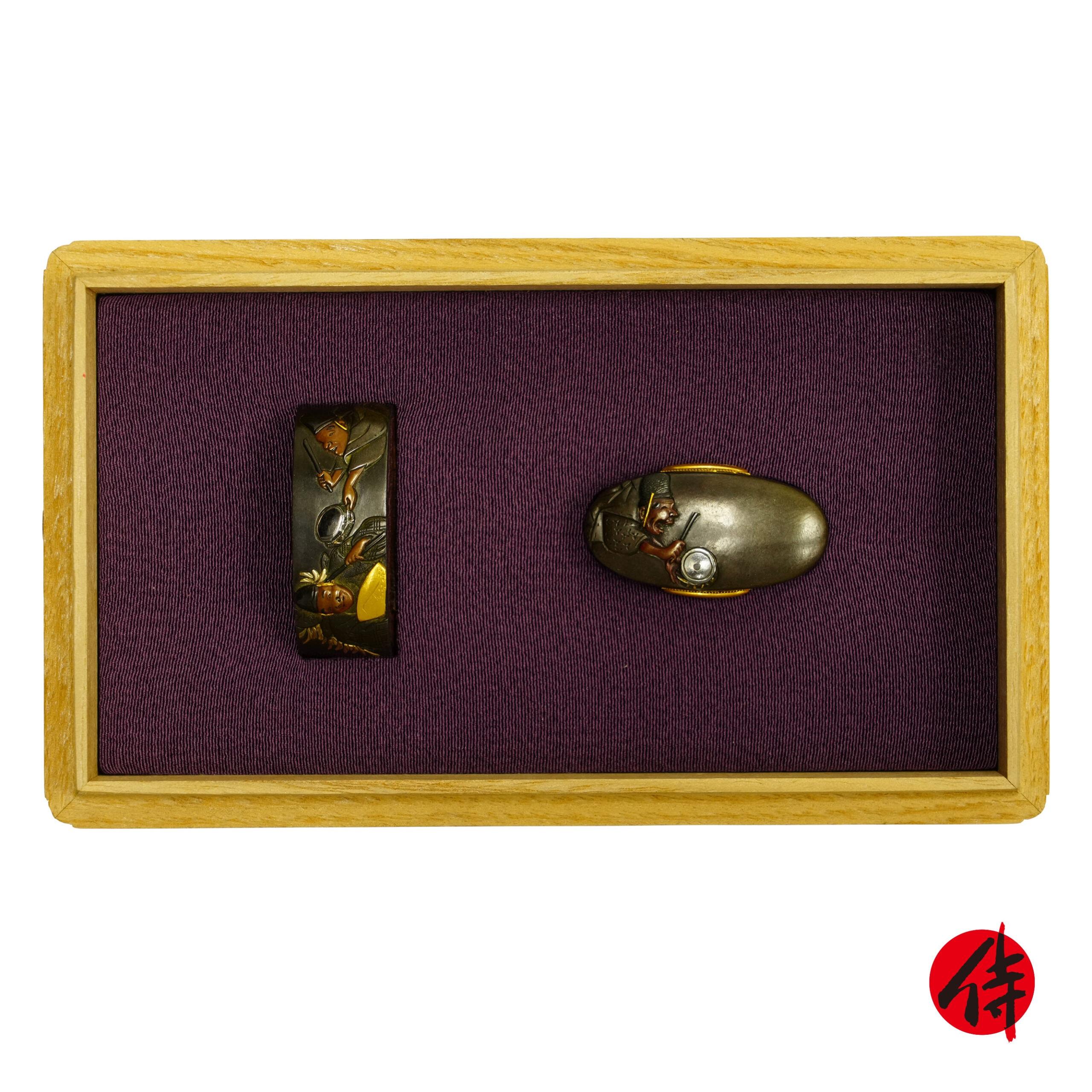
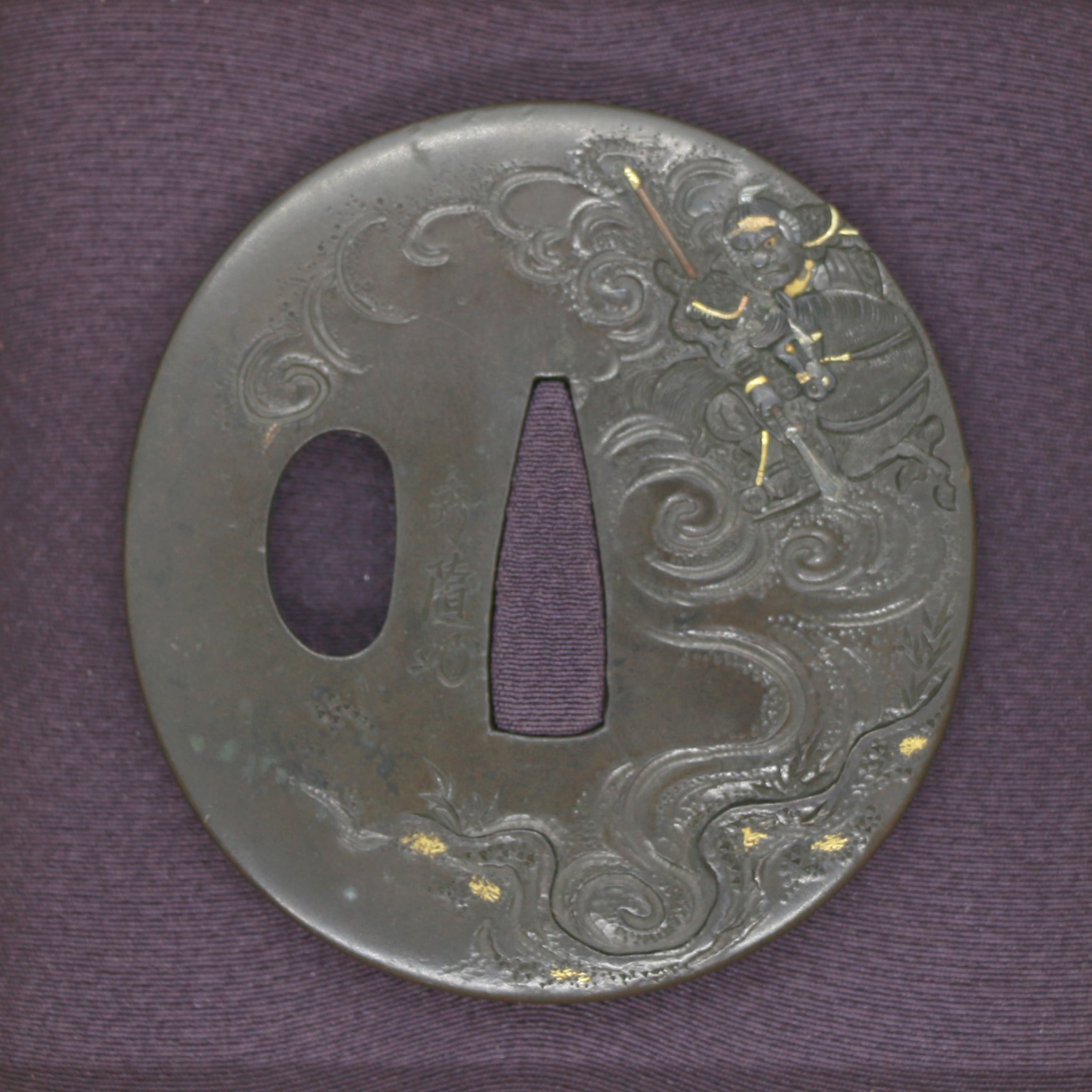
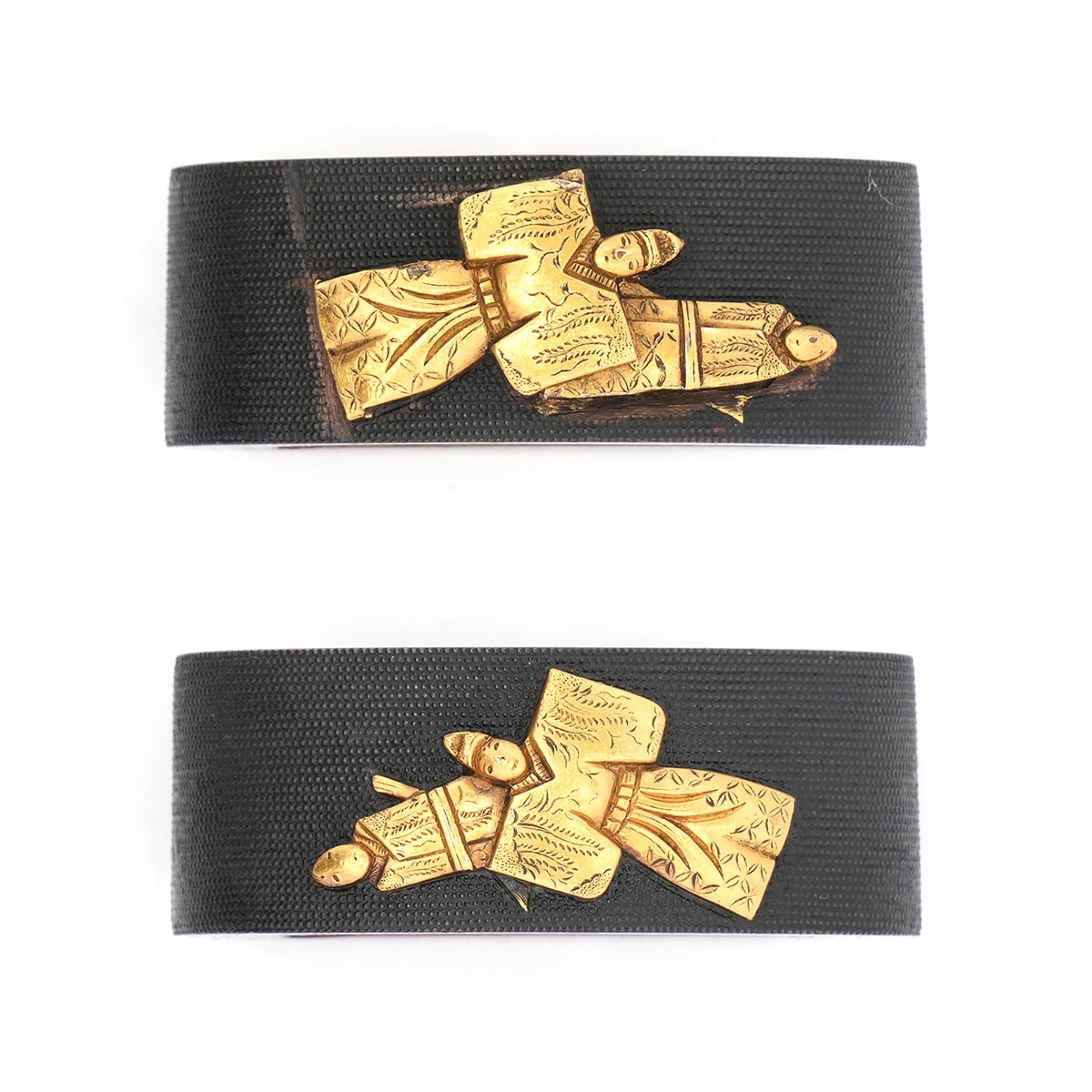
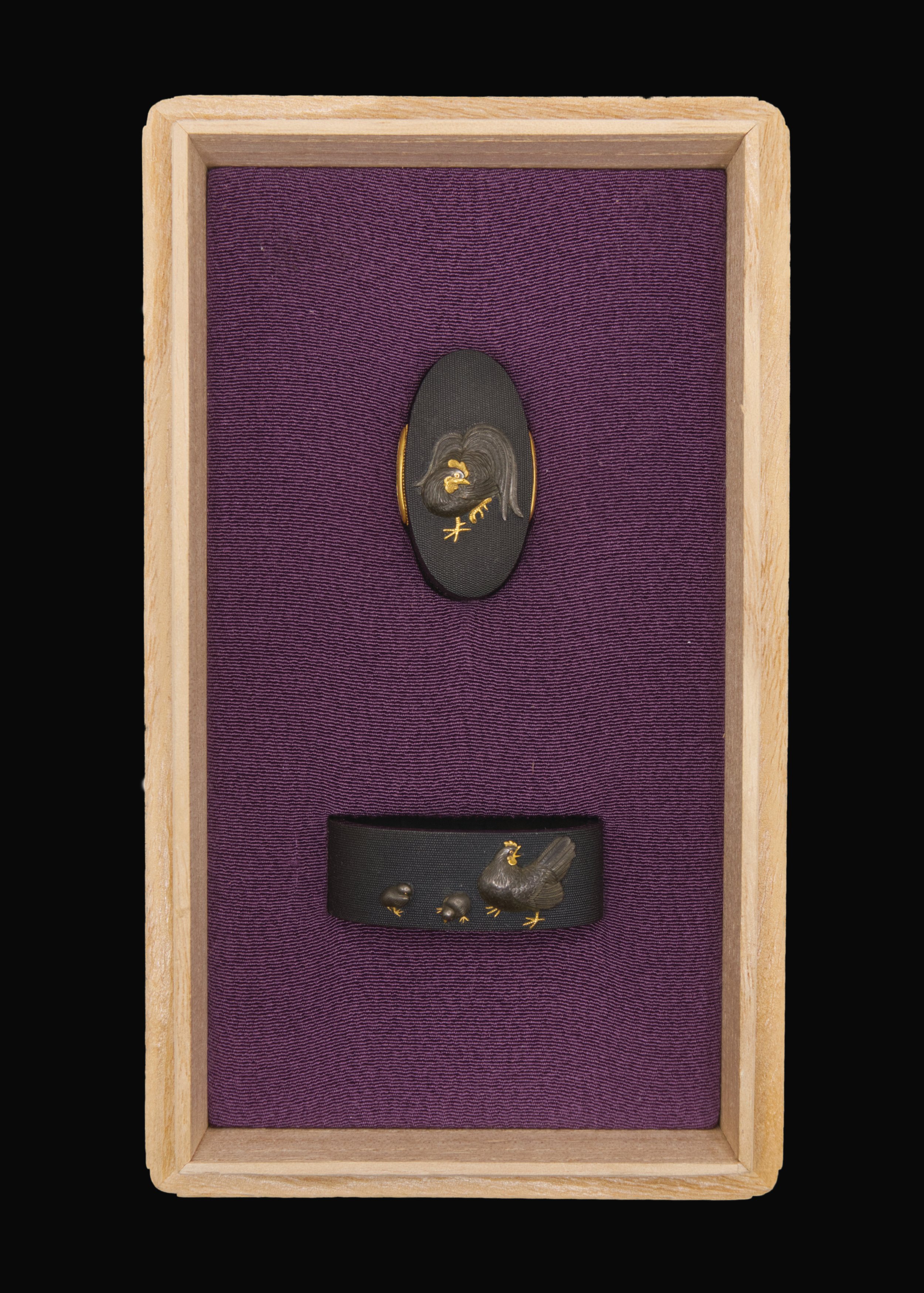
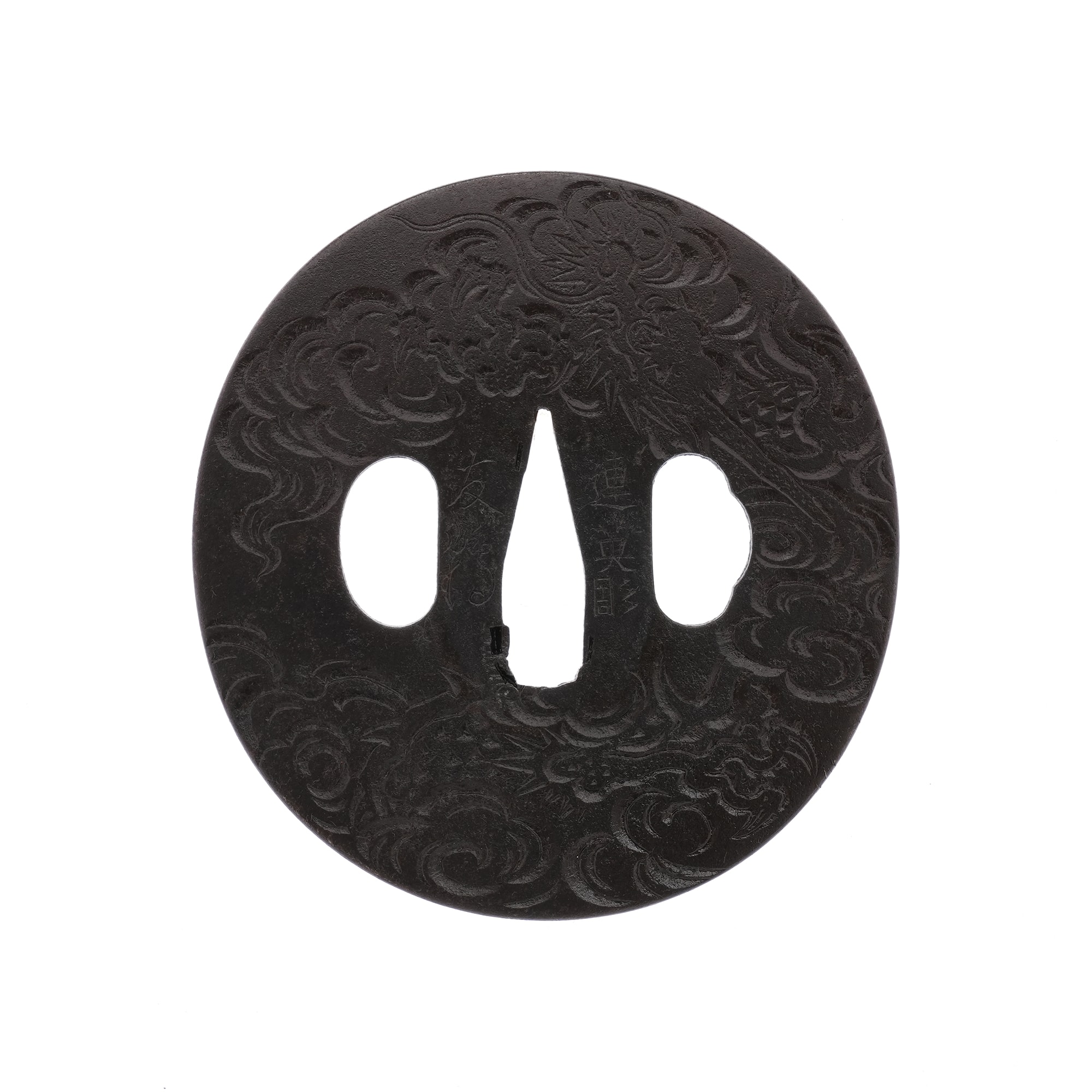
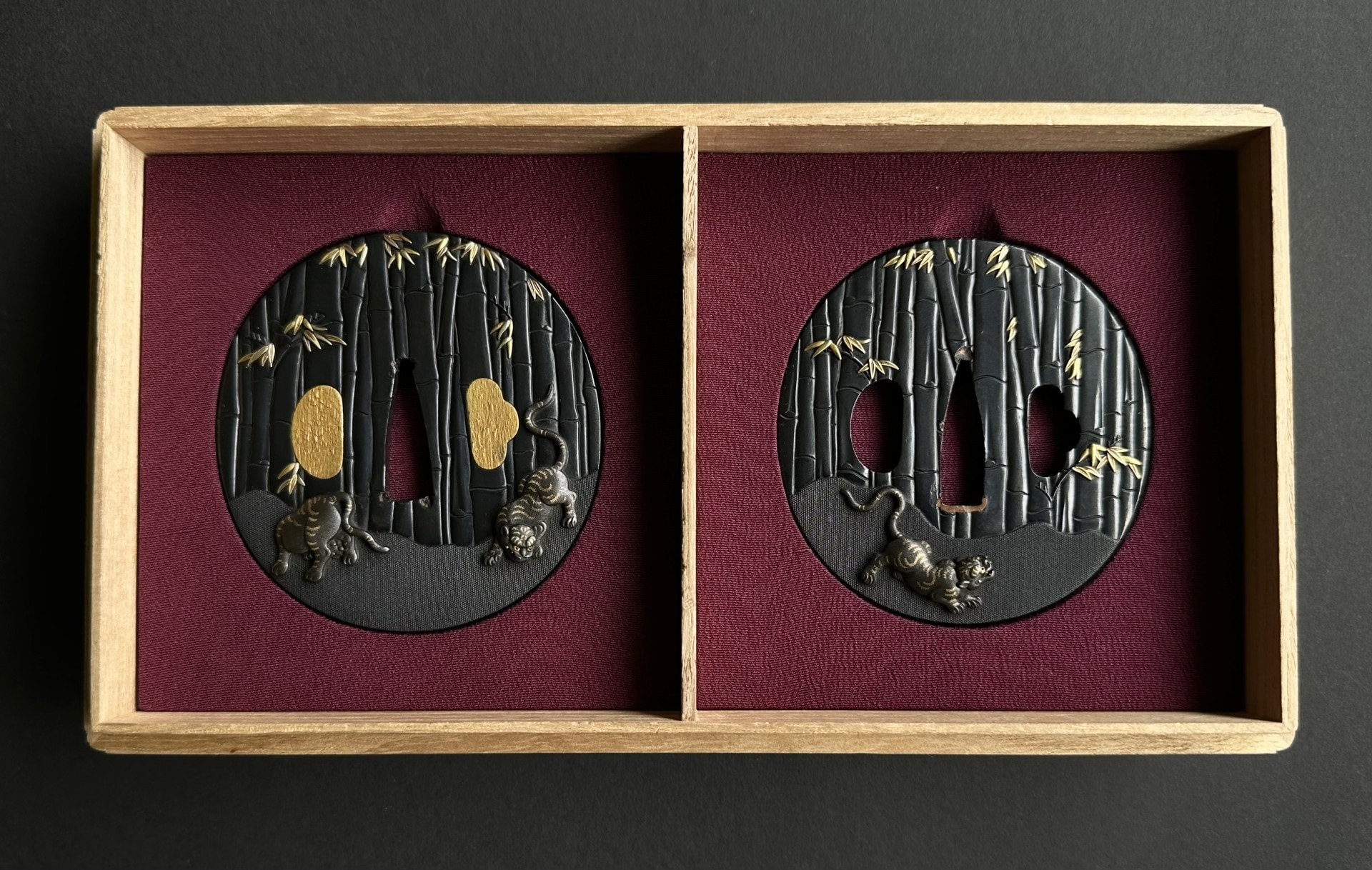
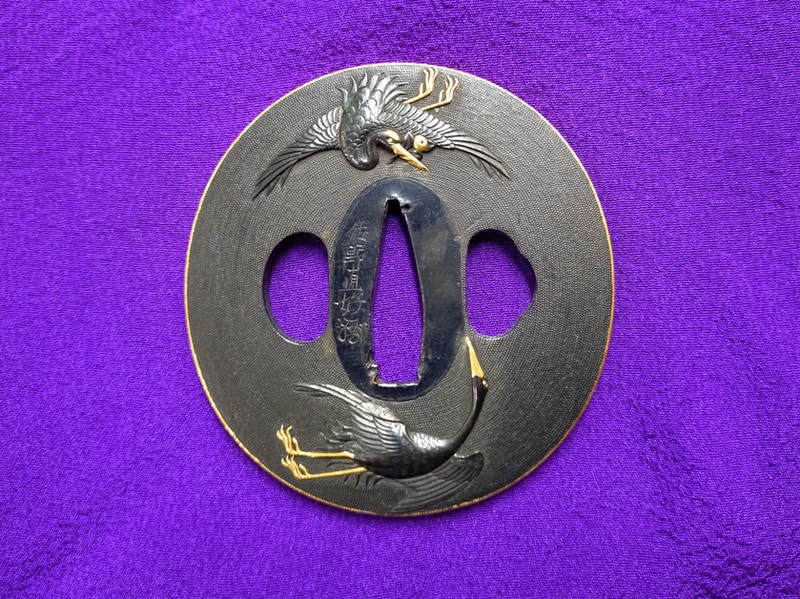
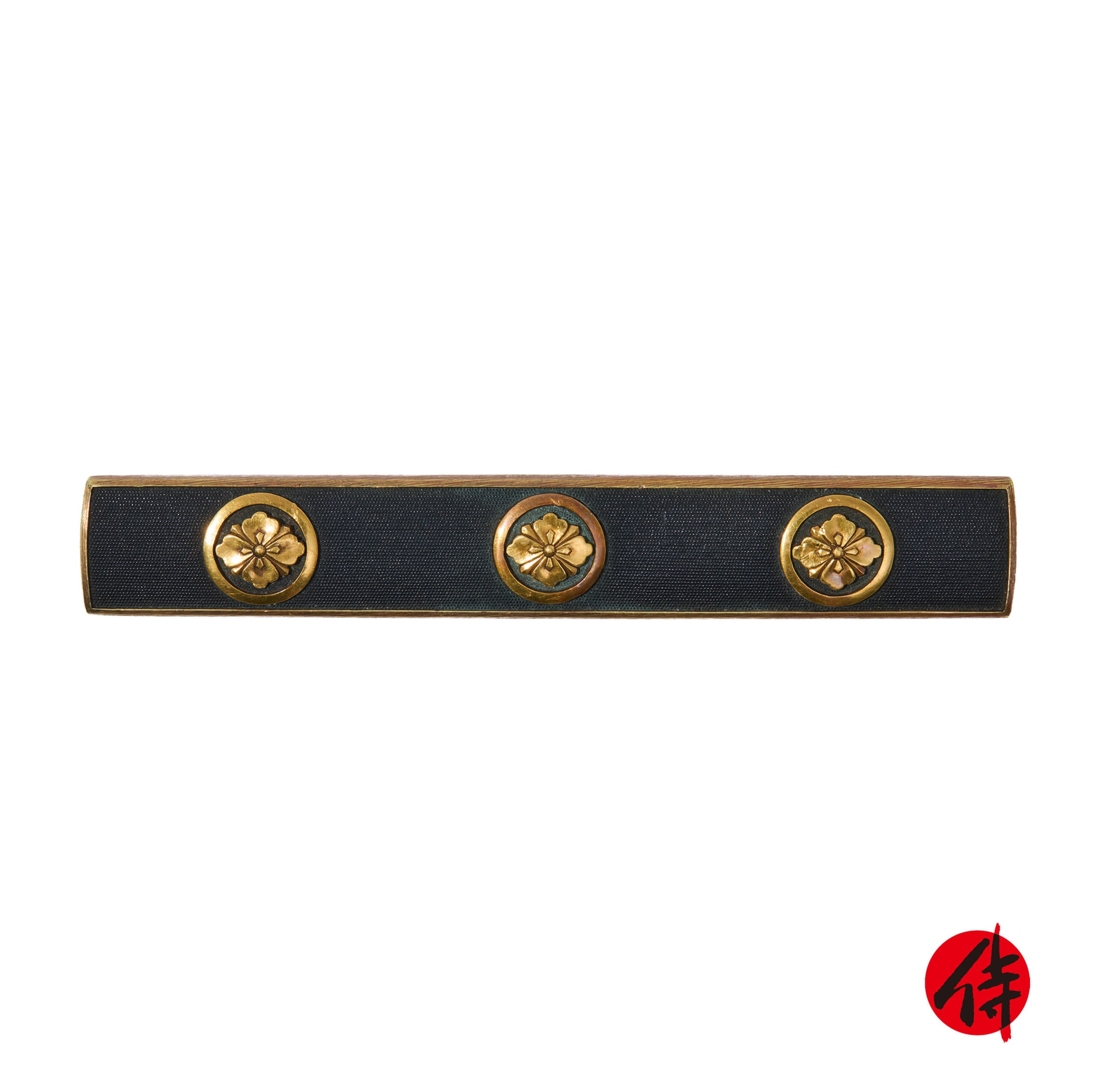
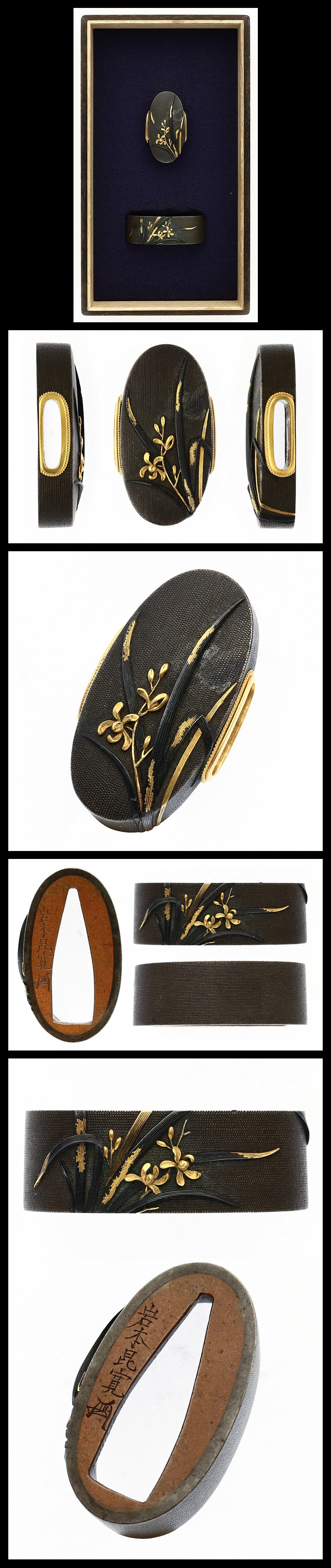
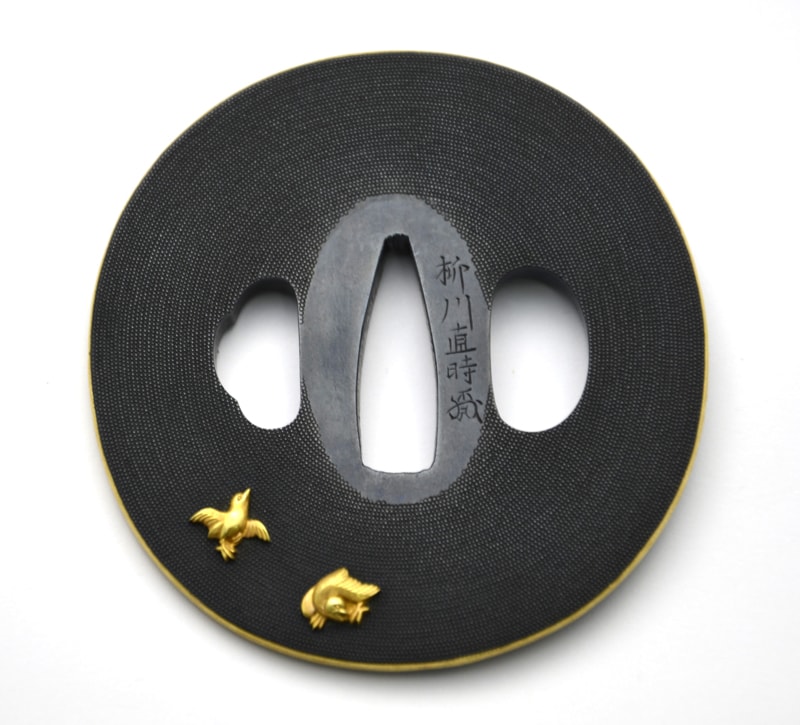
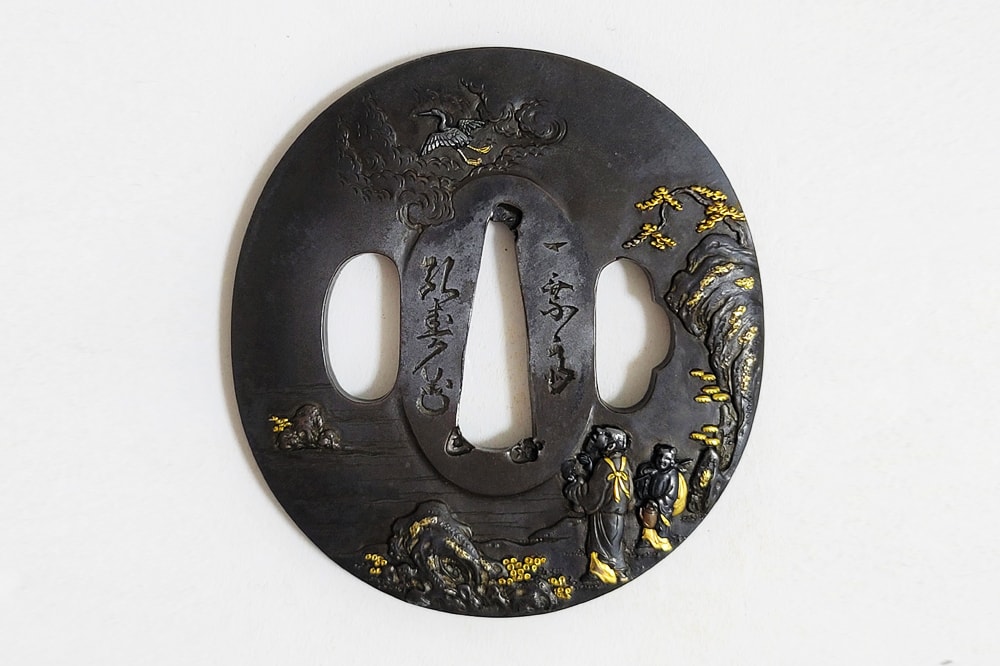
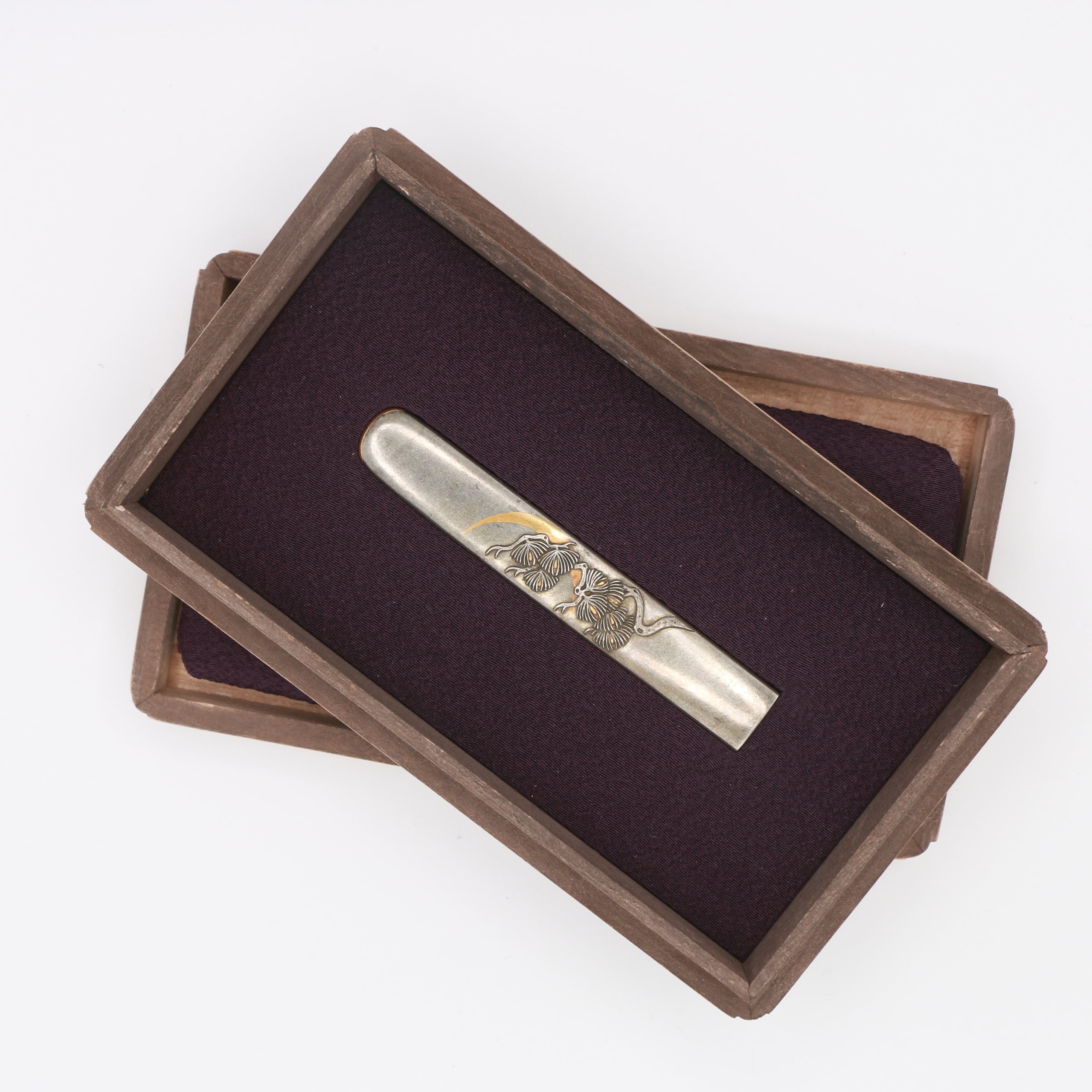
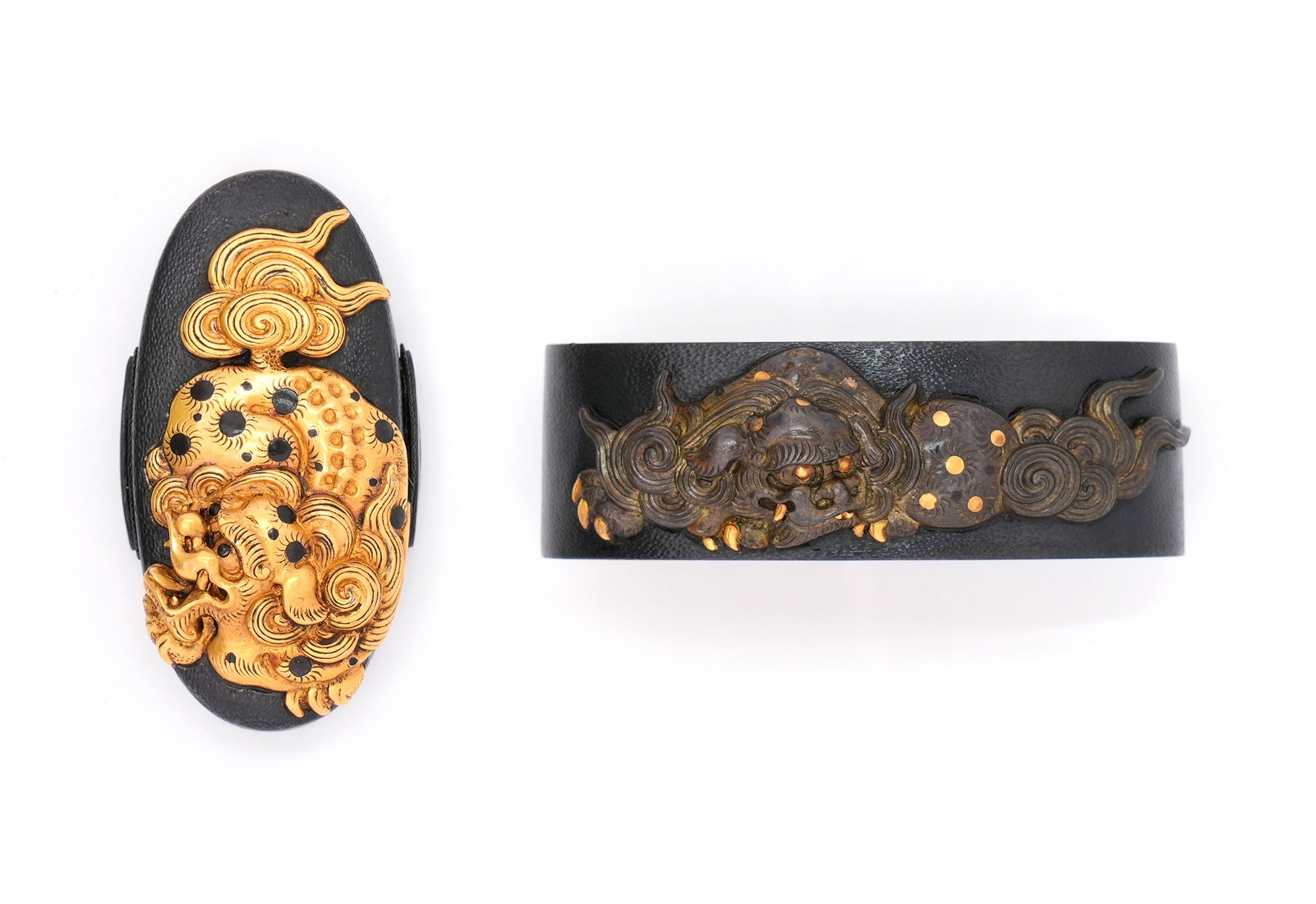
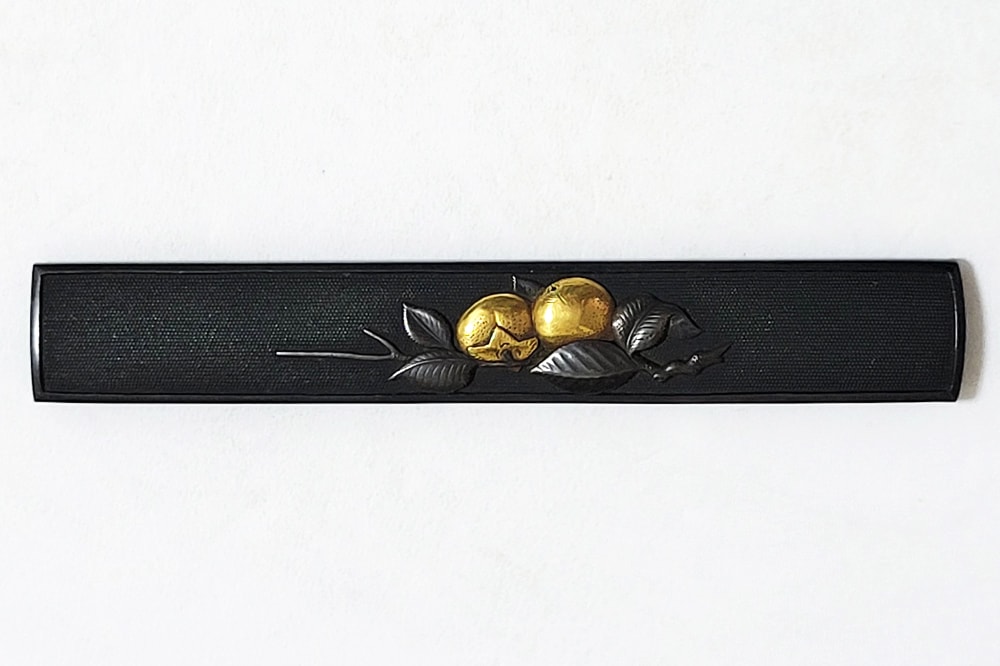
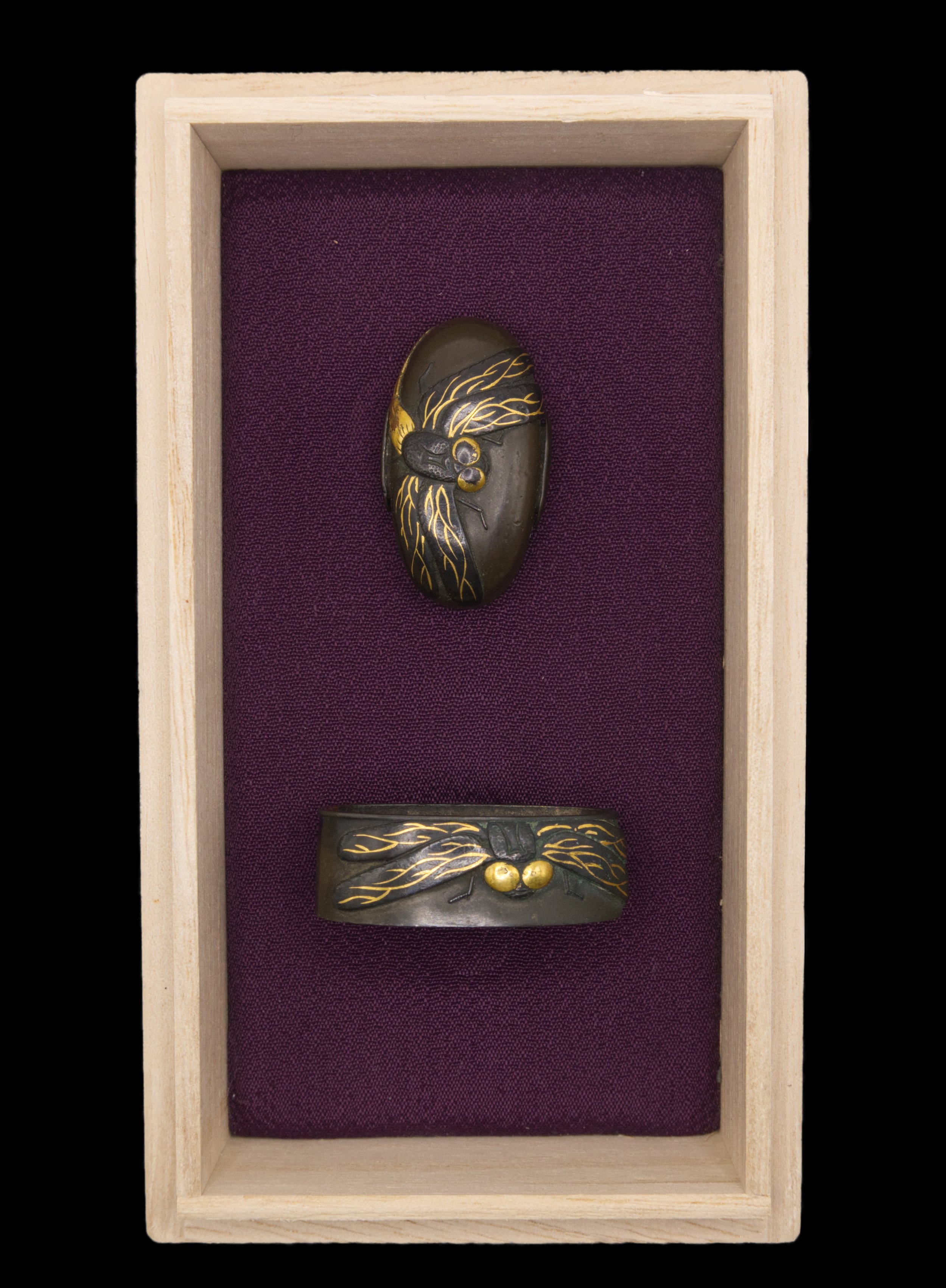
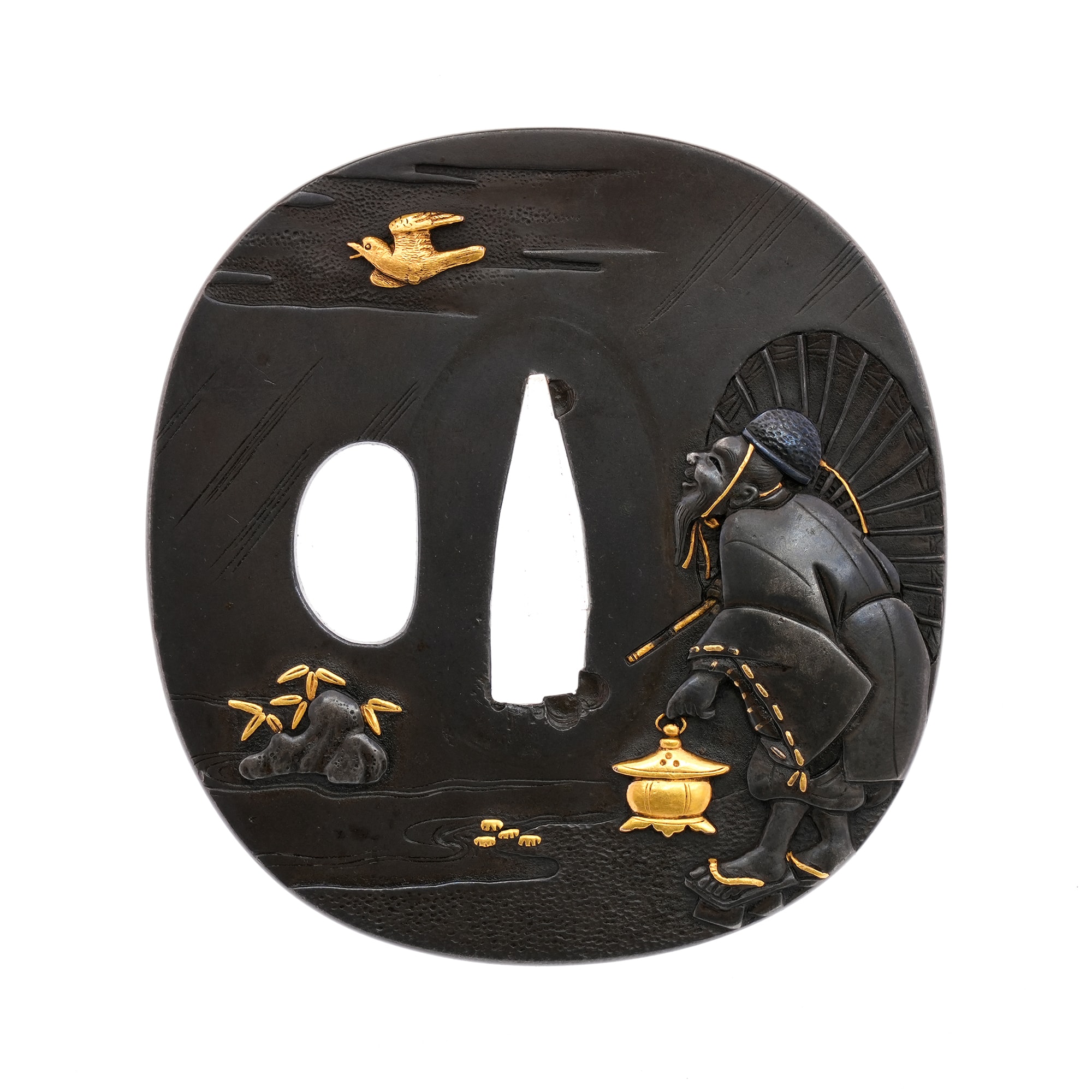
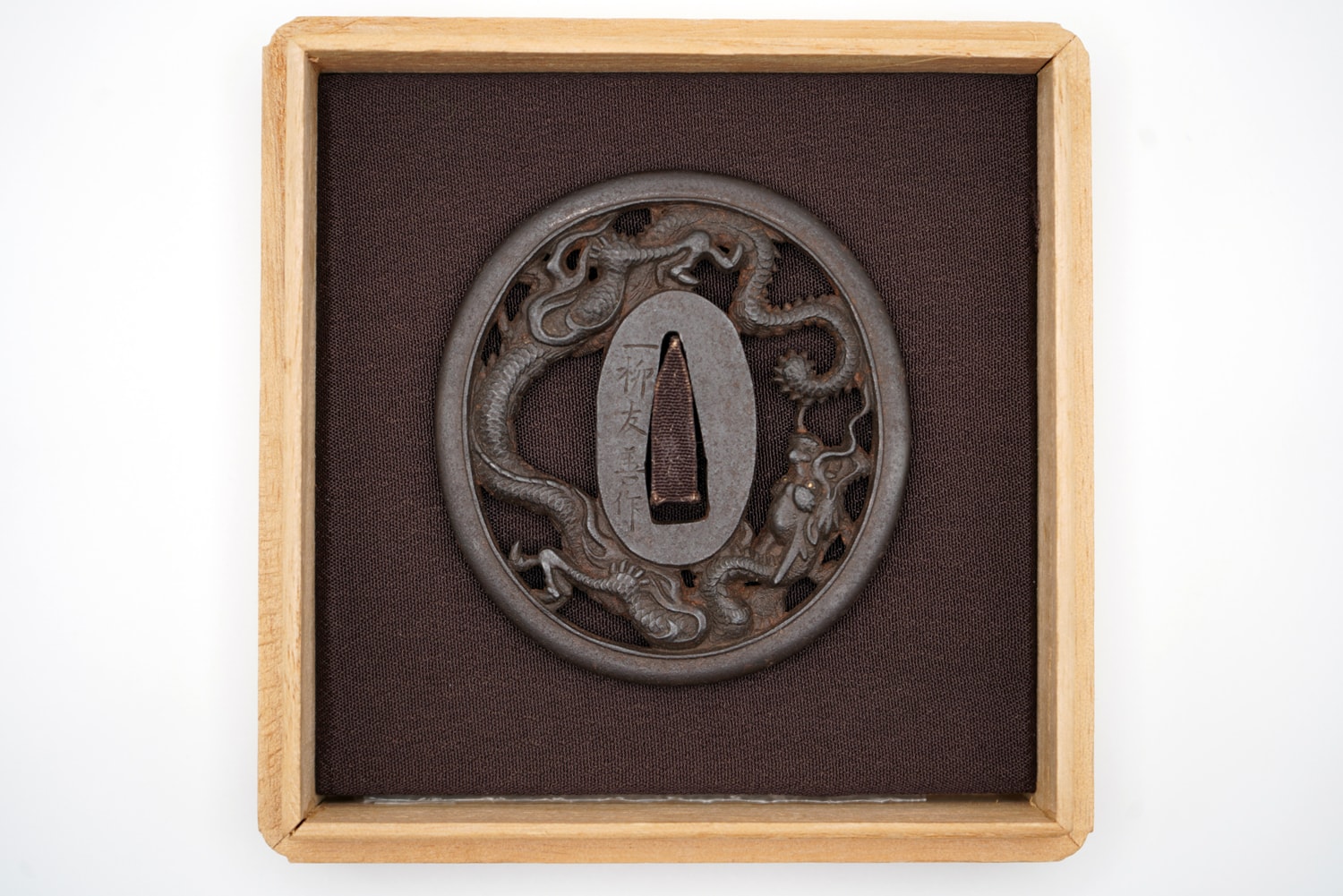
Omori Hidemitsu was the fifth son of the celebrated Omori Hidemasa (Eishu) and is understood to have inherited the headship of the family as the sixth-generation master of the Omori school, succeeding to his father's common-use name Kisoji after the death of the fifth head, Hidenaga. Originally known as Manzo, Hidemitsu came to prominence during the late period and is credited with guiding the continued prosperity of the lineage. While preserving the carving methods handed down from his forebears, he also accepted changes in contemporary taste, devising new approaches that sustained the vitality of the school across generations.
Hidemitsu's technical range is well attested in his designated works. On iron plates he employs grounds worked in , enriched with and gin - to render subjects with great skill and variation of line. On grounds his high-relief - with produces forms that are "expansive and remarkably free-flowing," while his nikubori "overflow with vitality." His lions display the distinctive characteristics of the "Omori lion" — thick-boned and solidly built — set in bold, large-scale compositions that contrast movement and repose across and . The further notes his collaborations with Kano school painters as evidence of high documentary value, and cautions that works executed as substitutes () by Mantatsu are sometimes encountered under his name, with the form of the serving to authenticate Hidemitsu's own hand.
Across his designated corpus the consistently praises Hidemitsu for compositions that generate "strong impact" and carving lines showing "continual variation, producing a rich range of expression." His works are recognized as possessing "a taut, dignified toughness" and an "outstanding level of workmanship." Standing at the intersection of inherited tradition and evolving -period sensibility, Hidemitsu exemplifies the Omori school's capacity to sustain technical excellence while responding to the aesthetic currents of his era, securing his place as a master worthy of the lineage his father established.