 NihontoWatchNihontoWatch
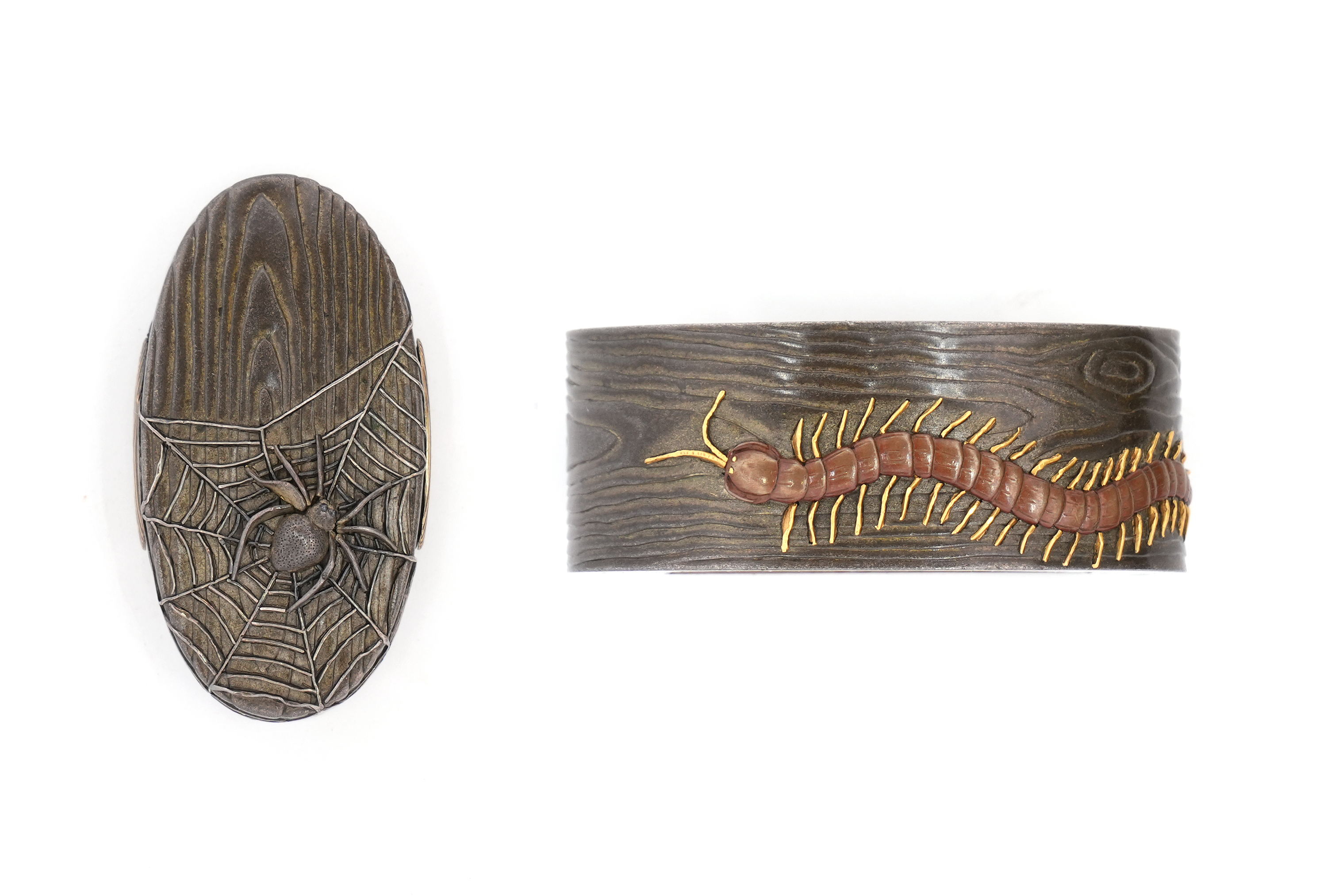
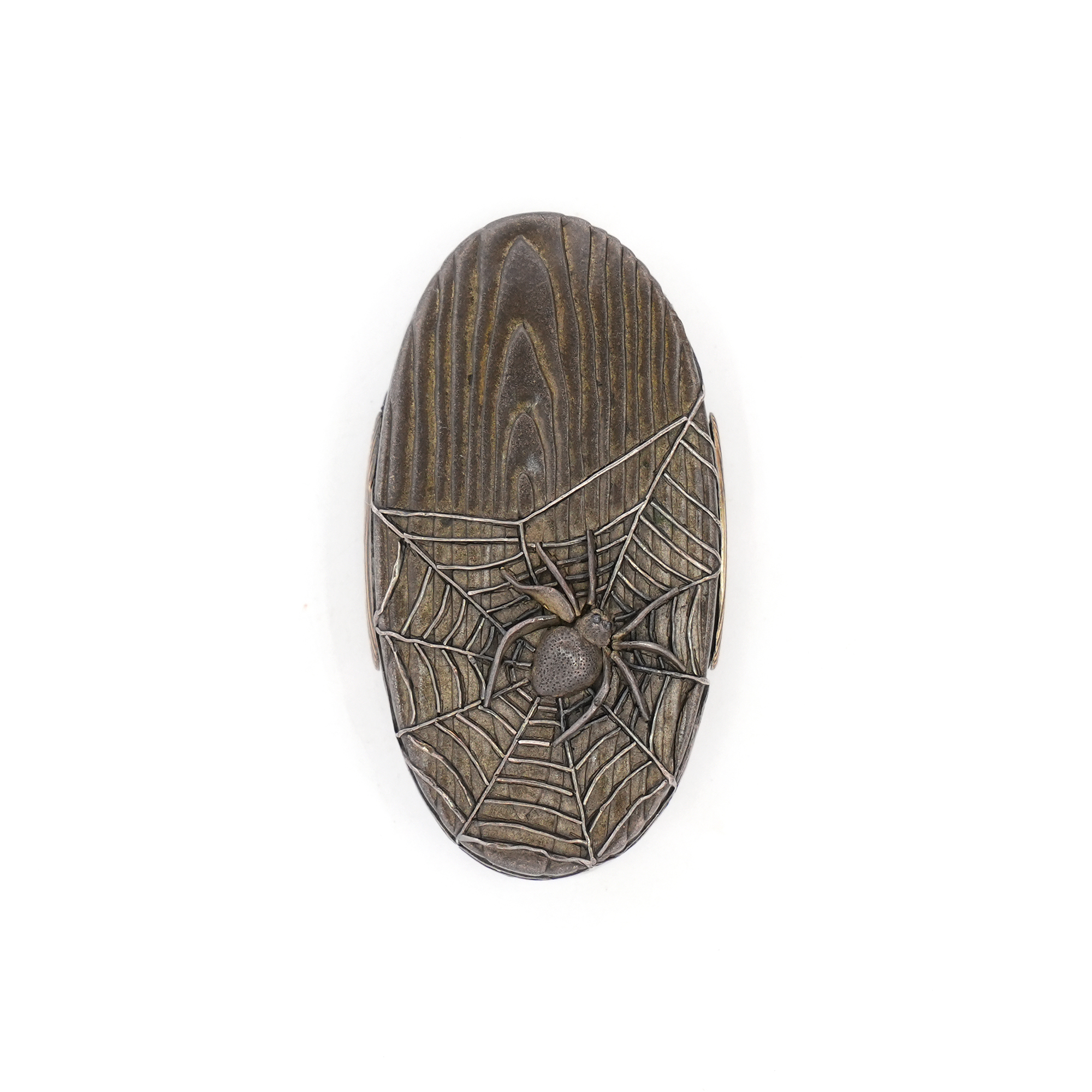
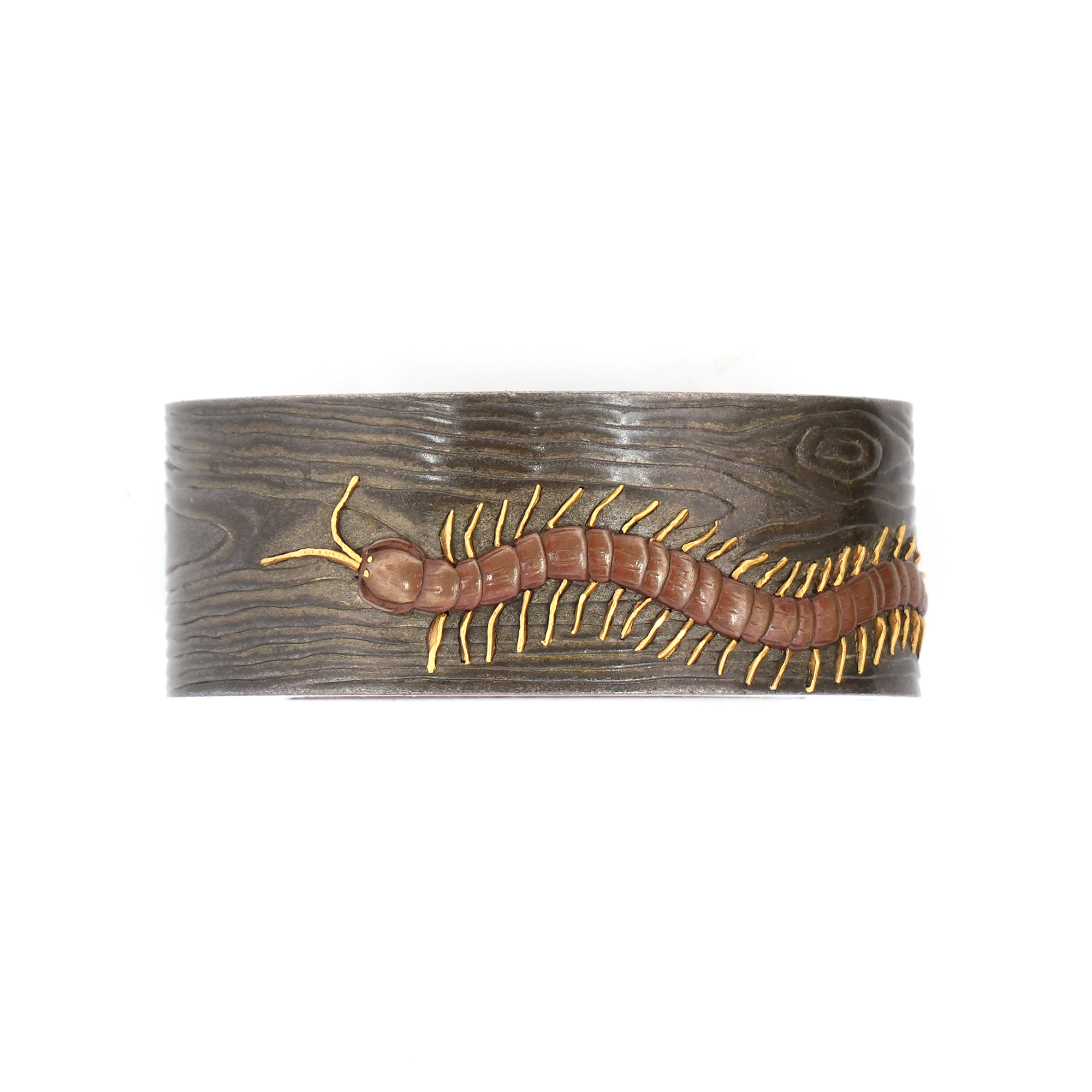
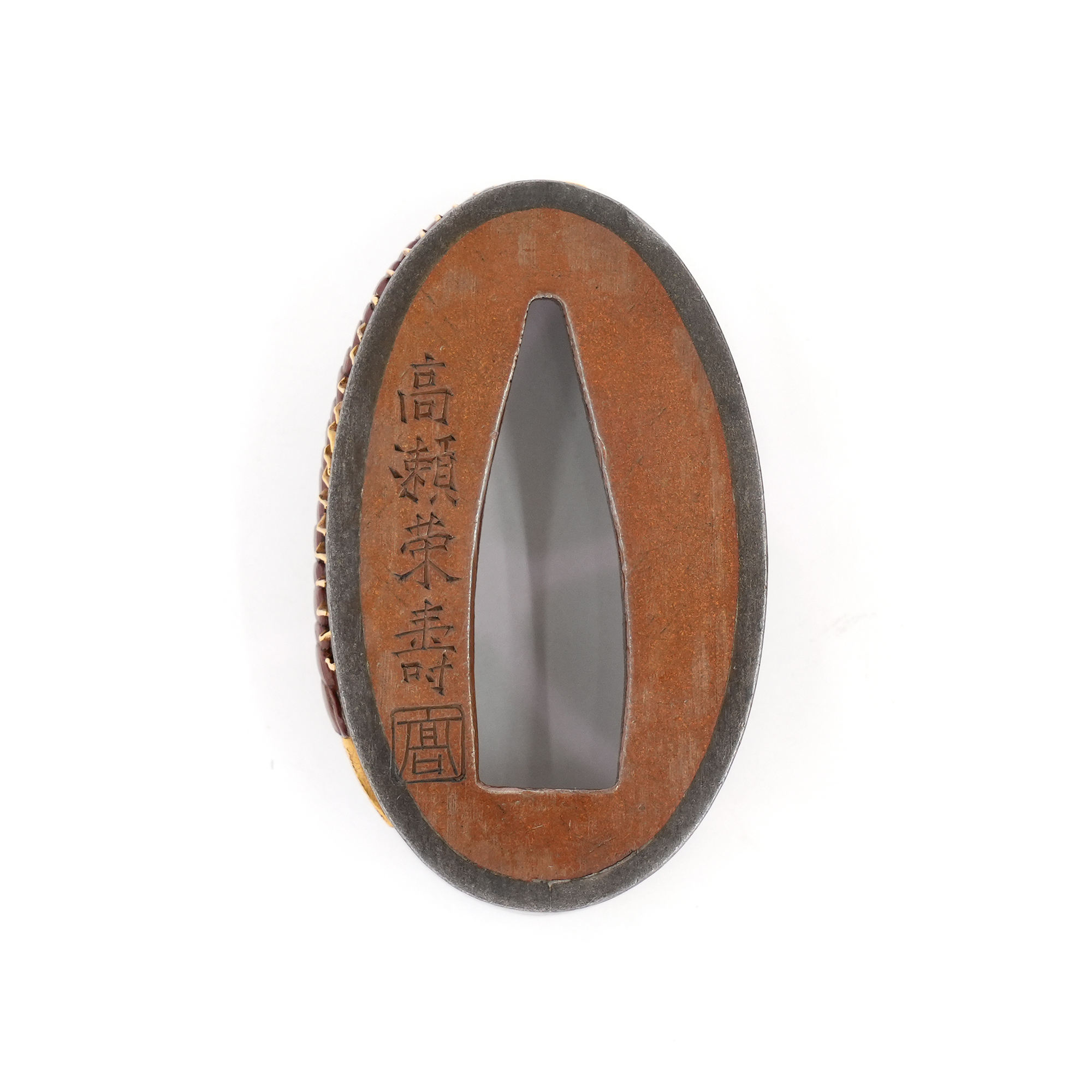
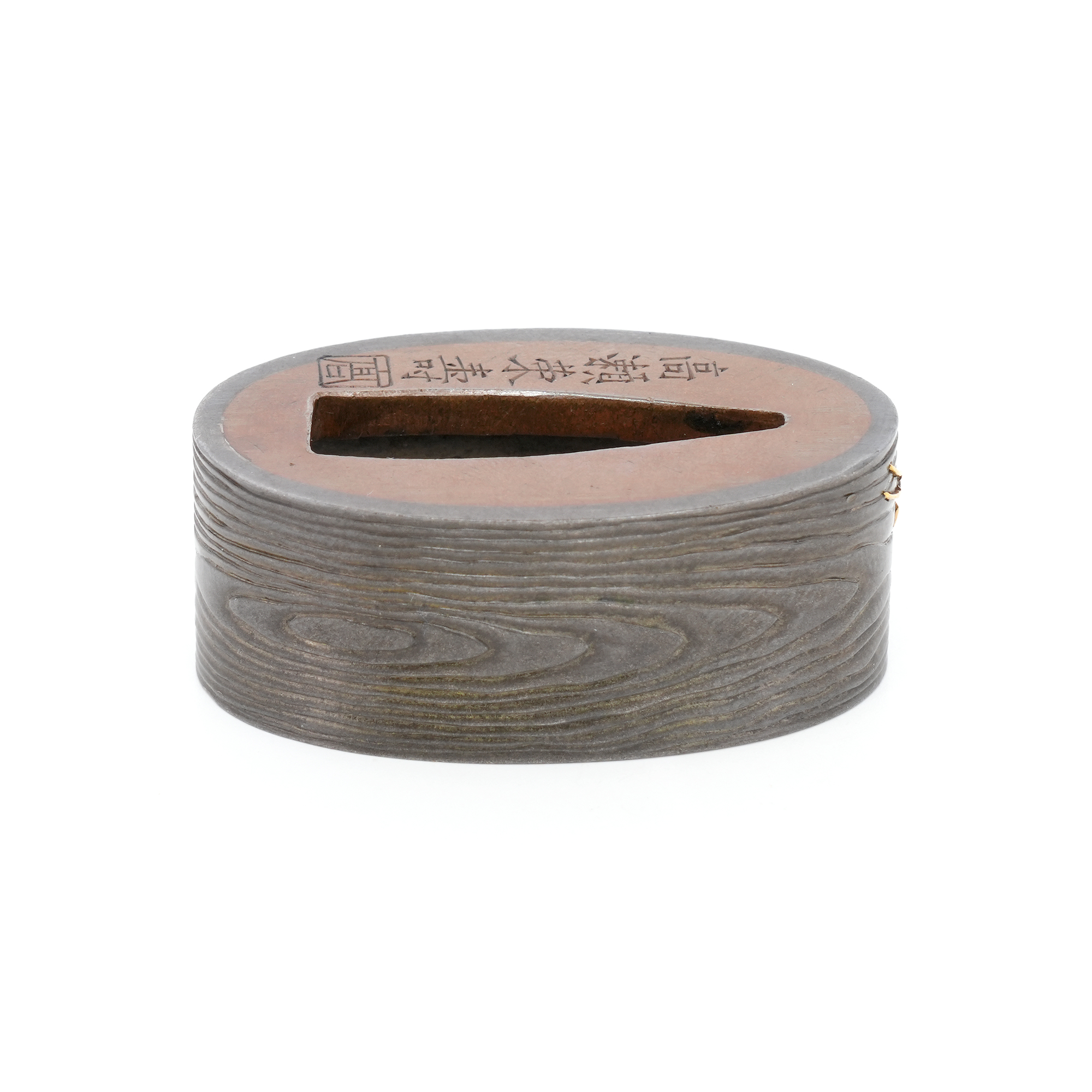
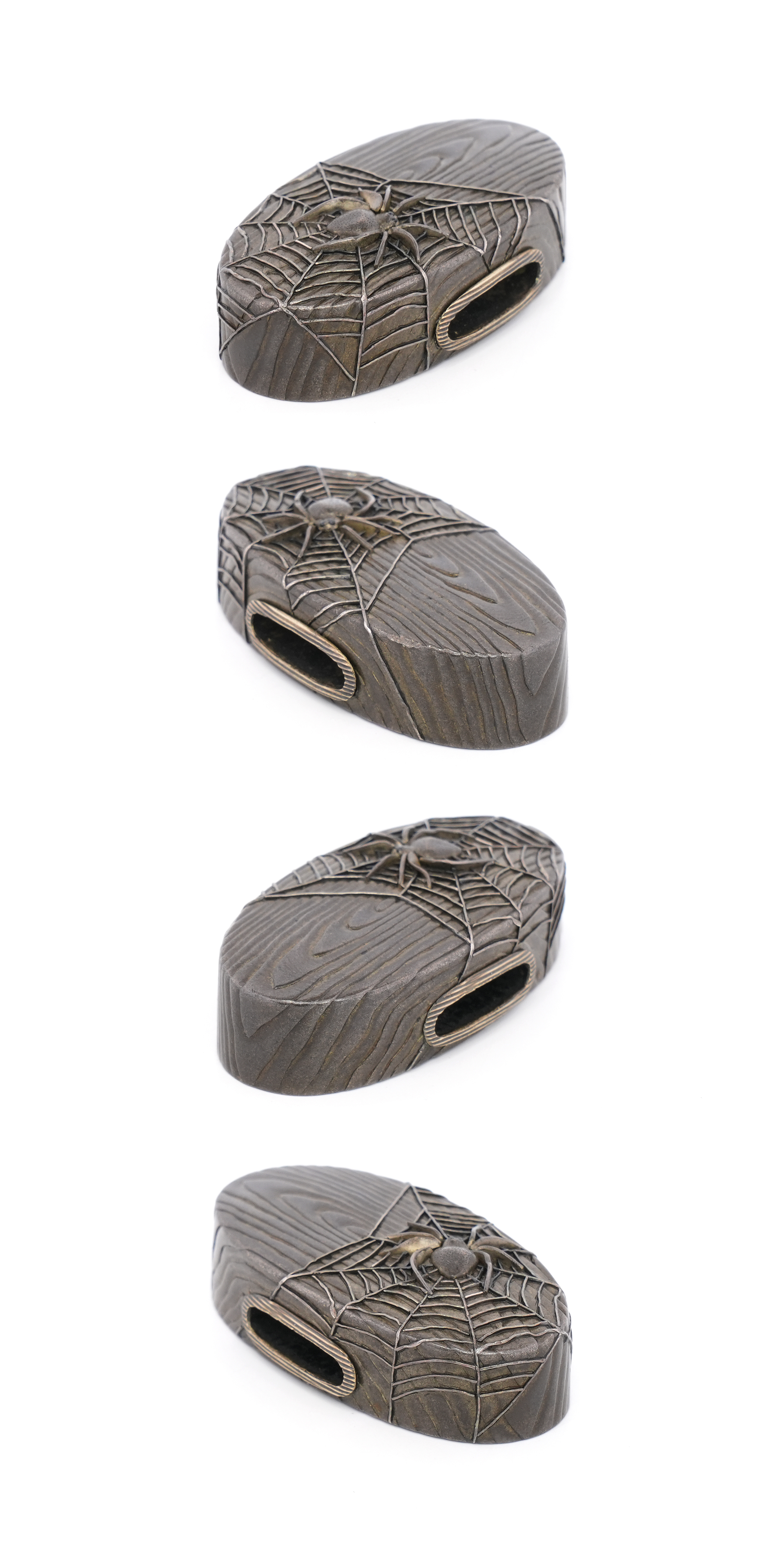
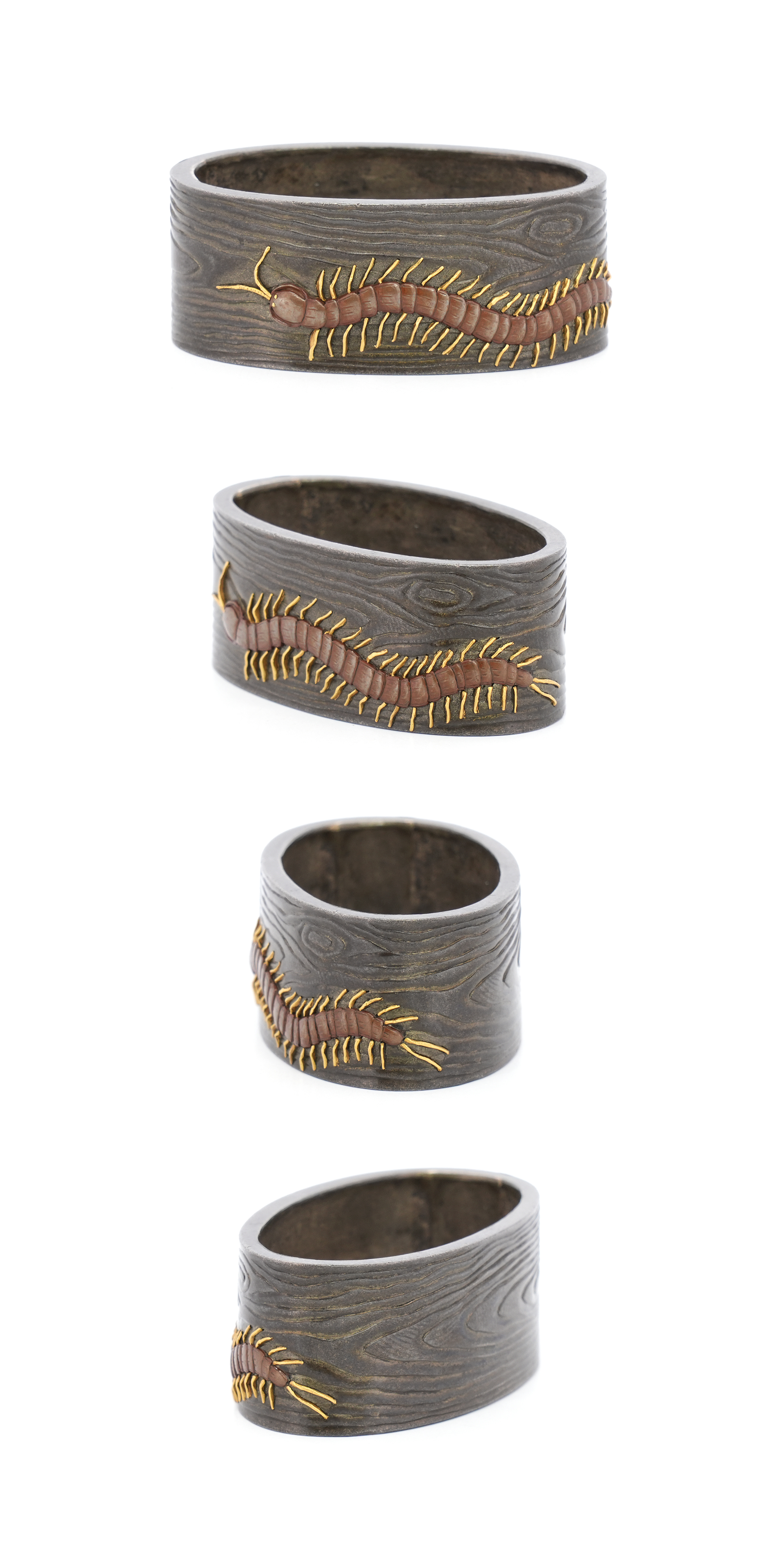
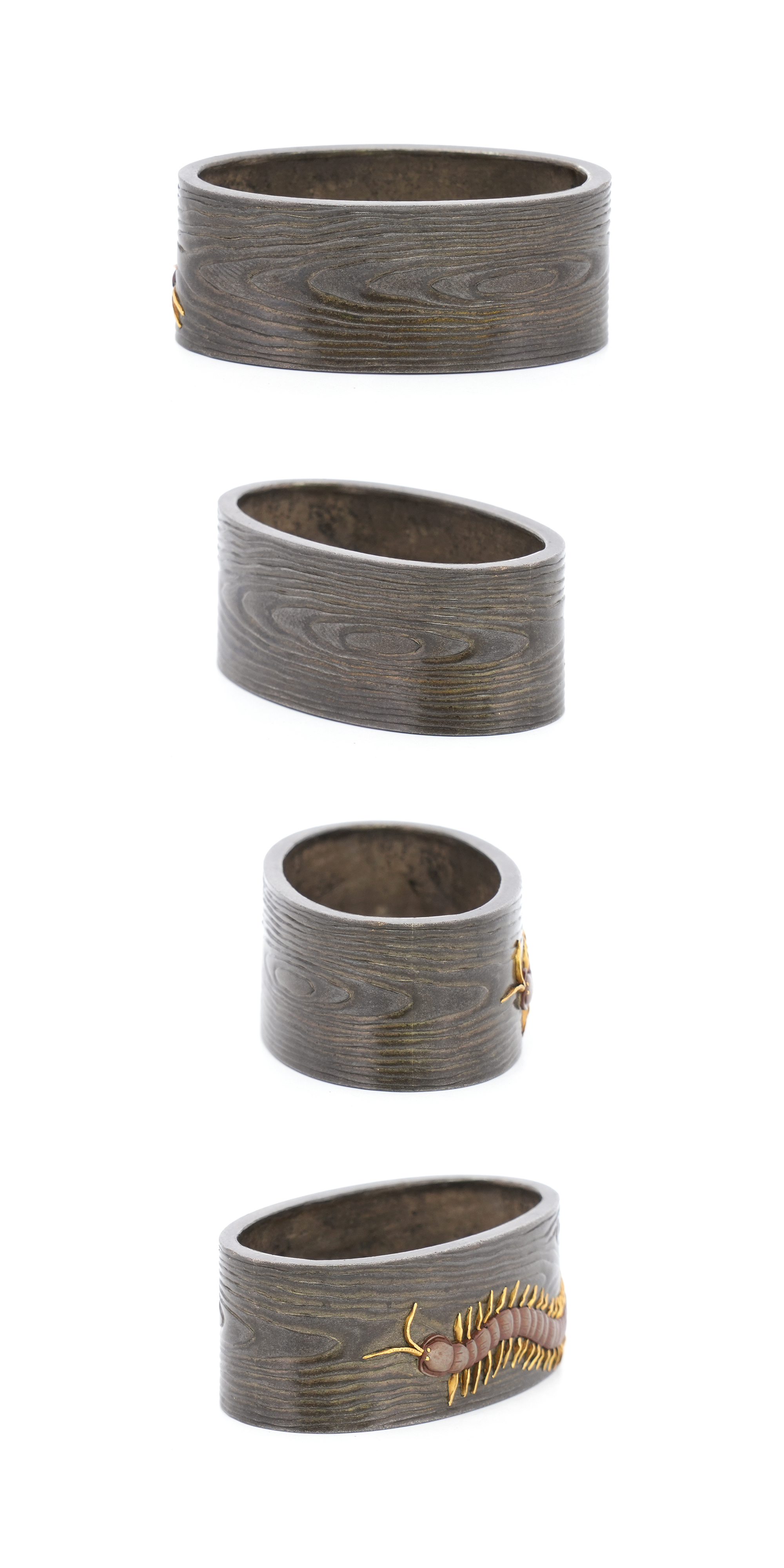
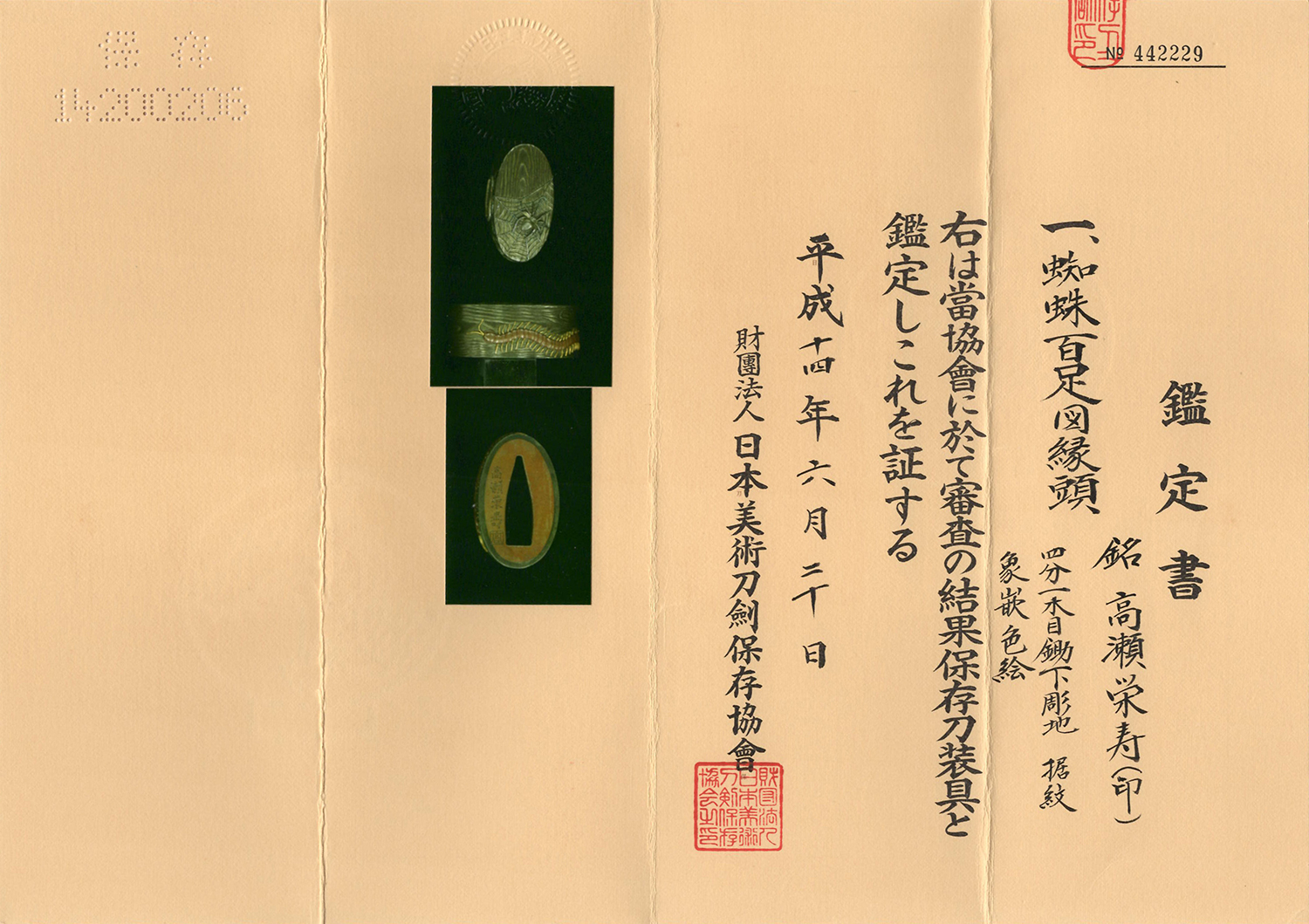
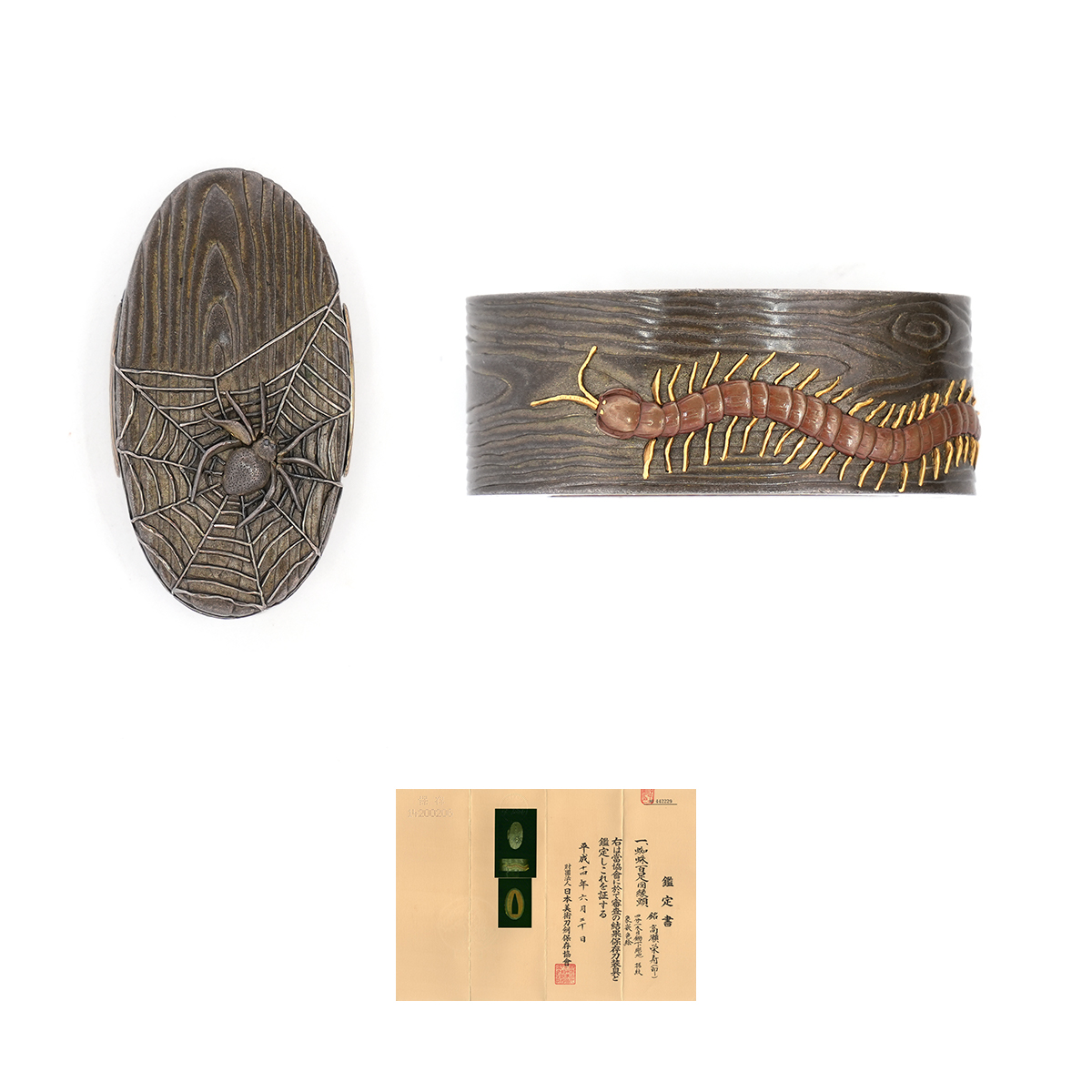
高瀬栄壽は江戸時代後期に活躍した装剣金工で、常陸国水戸の出身、通称を伊左衛門、号を風柳軒といい、赤城軒元孚に学んだのち江戸に出て一家をなした良工です。若山泡沫著の『金工事典』には、晩年に御家人の株を買い求めたこと、また遺された年紀入りの作品から少なくとも六十四歳以上の長寿であったことが記されています。 栄壽の技量は当時から高く評価され、多彩な色金と精緻な彫技を駆使した作品を遺しており、東京国立博物館にも「高瀬 栄寿(印)」銘の波に龍図縁頭や「風柳軒蔵」の金象嵌印を伴う水龍図縁頭が収蔵されています。現在も国内外で評価される水戸系金工の一人であり、刀剣博物館の企画展にも栄壽の孔雀図鐔が江戸時代後期の作品として出品されています。 蜘蛛と百足は、刀装具の画題としてもひときわ異彩を放つ存在です。本作では二つの生き物を単に並べるのではなく、古木の上に巣を張る蜘蛛と、その木肌を力強く進む百足として描き分け、縁と頭を合わせることで、ひそやかな生命が息づく一つの小宇宙を作り上げています。草花や故事人物とは趣を異にする、強い印象と独創性を備えた画題です。 本作は四分一地の全面へ幾重もの線を鋤下彫し、年輪やうねる木理を思わせる古木の肌を表しています。穏やかな灰褐色を呈する地金に、深浅を巧みに変えた木目が端から端まで流れ、光の角度によって木肌の起伏が静かに浮かび上がります。この背景自体が充実した鑑賞対象となっており、その上へ据紋、象嵌、色絵を重ねることで、写実と装飾を高い次元で結び付けています。 頭金具では、銀で細い蜘蛛の糸を古木の表面へ緻密に張り巡らせ、その中心に量感豊かな蜘蛛を据えています。放射状に広がる巣は一本一本の線を整然と組み上げながらも硬さを感じさせず、自然に張られた糸の緊張まで伝えるようです。蜘蛛は丸みを帯びた胴に細かな鏨を施し、脚の節や構えまで立体的に作り込み、静止した姿の中へ獲物を待つ気配を宿しています。 縁金具では、赤みを帯びた色金の百足が木目に沿って大きく身をくねらせています。連なる胴節を一節ずつ肉高く彫り分け、左右へ伸びる数多くの脚には鮮やかな金色を利かせることで、渋い四分一地から百足の姿を鮮烈に浮かび上がらせています。長く伸びた触角から尾端へ至るまで途切れることのない造形は見応えがあり、縁の限られた高さを最大限に生かした横長の構図によって、今にも古木の上を這い進むような躍動感を生み出しています。 頭の蜘蛛は静、縁の百足は動として互いを引き立て、銀色の蜘蛛の巣、赤褐色の胴、金色の脚が四分一地の落ち着いた木目に映える、色彩の取り合わせも秀逸です。 手元で見れば木理、蜘蛛の巣、胴節や脚先に至る繊細な鏨仕事を堪能でき、少し離れて眺めれば二つの生き物が古木の上で呼応する大胆な意匠が際立ちます。高瀬栄壽の卓越した観察眼、構成力、多彩な色金の扱いを一組の中で存分に味わえる、画題の希少性と彫金技術を兼ね備えた魅力豊かな優品です。
NihontoWatchOffered by Toushin
2 on the market

Mito
Edo
Hitachi
Signed
Hozon (NBTHK)
As written by the shop
(Translation unavailable)
Machibori · Hitachi · around 1670
2 pieces on the market now
Where Eiju/Hidetoshi stands among comparable artisans: across all of nihontō, and within tradition, era, and period. The tiers (Foremost · Leading · Major · Notable) weigh official designations from the NBTHK and Japan's Agency for Cultural Affairs, together with historical honors of lasting repute such as the Sansaku and Meibutsu-chō.
Select a lens to see how it's measured.
Machibori · Hitachi
73 pieces on the market now
The Mito school of sword-fitting makers emerged as an officially sponsored tradition in the domains of the Tokugawa family's Mito branch, achieving particular prominence in the late Edo period. The school's lineage traces through Shinozaki Katsushige and his successors, who served as goyō horimonoshi (official engravers) to the domain. Unlike the privately patronized workshops of Edo and Kyoto, Mito metalworkers operated within a system of domain service, producing both presentation fittings for formal occasions and richly decorated works for commission. This institutional foundation fostered both technical rigor and stylistic continuity, as masters such as Hagiya Katsuhei and his pupils transmitted the school's methods through direct apprenticeship. The Mito aesthetic is characterized by meticulous shakudō nanako-ji grounds upon which high-relief carving (takabori) is combined with precise gold and silver iroe to yield compositions of exceptional textural depth. The school showed particular mastery in figural subjects—immortals, deities, and mythological beasts—rendered with close attention to anatomical realism and dynamic poses.
The nanako punch-work is notably disciplined, each grain laid in orderly arrangement, while the relief carving rises to striking heights, with elements such as lion manes and peony petals executed in fully three-dimensional chiselwork. Color inlays are applied with exacting accuracy, and thematic coordination across entire fitting sets demonstrates a sophisticated understanding of decorative unity. The Mito school's influence extended well into the Meiji period through the achievements of second-generation masters. Hagiya Katsuhei's circle produced such celebrated artists as Namekawa Sadakatsu and Unno Shōmin, who carried the school's technical standards and stylistic vocabulary into new contexts. The tradition's emphasis on figural carving, inherited from the Tamagawa lineage, and its adherence to orthodox forms for formal presentation fittings established the Mito school as one of the principal regional traditions of late-period Japanese sword-fitting production. Learn more →
| Smith | Era | Designated |
|---|---|---|
| Katsuhira勝平 | 1804-1886 | 13 |
| Shomin勝珉 | 1844-1915 | 12 |
| Teikan貞幹 | — | 5 |
| Mototane元胤 | — | 0 |
| Unno Bishu海野美秋 | — | 0 |
Certifies a genuine fitting worth preserving: a correct signature, or, if unsigned, an identifiable era and school, with recognized artistic and craft value.
The NBTHK (Nihon Bijutsu Tōken Hozon Kyōkai, the Society for the Preservation of Japanese Art Swords) is a public-interest incorporated foundation founded in 1948 and supervised by Japan’s Agency for Cultural Affairs (Bunkachō); it is based at the Japanese Sword Museum in Tokyo. Its expert panels physically examine each submitted work (shinsa) and issue a certificate (kanteishō) ranking it by artistic and historical merit. NBTHK papers are the most widely recognized standard of authentication for Japanese swords and fittings.
NBTHK official siteAs a rule we do not accept returns, except when we have sent a different item from the one ordered or when there is a significant discrepancy between the description and the item. If you wish to return an item, please contact us within 3 days of its arrival and then send it back.
¥1,100,000