NihontoWatch MonNihontoWatchBETA
MarketEncyclopedia
NihontoWatch Mon

NihontoWatchBETA

Market
Encyclopedia
Overview·Kantei·Designations·Provenance·Work Types·Signatures·School
OverviewKanteiDesignationsProvenanceWork TypesSignaturesSchool
  1. Schools
  2. Mito
  3. Shomin

Mito Shomin

勝珉

Tokujū
Vol. 18, No. 88 · Tsuba

Mito Shomin

勝珉

11 ranked works

EraKōka–Taishō (1844–1915)PeriodTaishōSchoolMitoTraditionMachiboriTypeTosogu MakerCodeNAT002
1Tokubetsu Jūyō10Jūyō Tōken

Overview

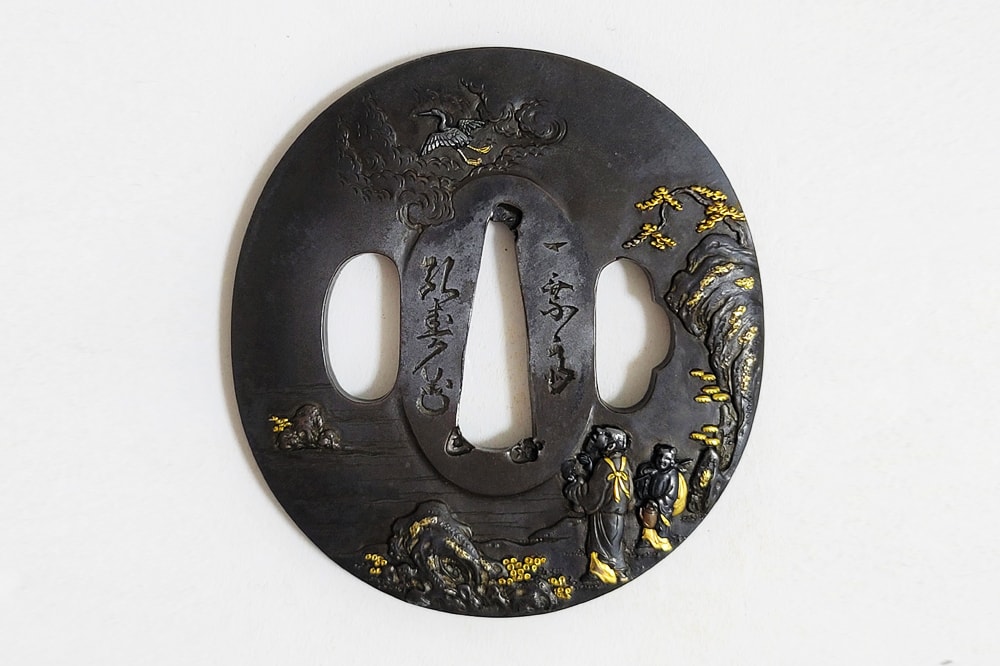
Unno Shomin was born in Mito in Tenpo 15 (1844), during the final years of the Tokugawa period. He received his earliest training under Hagiya Katsuhei, a senior artisan of the province, and under his uncle Unno Yoshimori (also known as Unno Bisho). In Meiji 4 (1871) he traveled to , where he initially styled himself Motohira; aspiring, however, to become a craftsman who could surpass Somin, he changed his name to Shomin. He entered into a master-disciple relationship with Kano Natsuo, under whom he "matured into a fully accomplished master." In Meiji 23 (1890) he was appointed to the Tokyo Fine Arts School, and in Meiji 29 (1896) he received the distinction of Teishitsu Gigeiin (Artist to the Imperial Household). He employed a number of art names throughout his career, among them Hoshu, Sososken, Teigetsuan, Kyokuto, Tokasai, and Mozeiken.

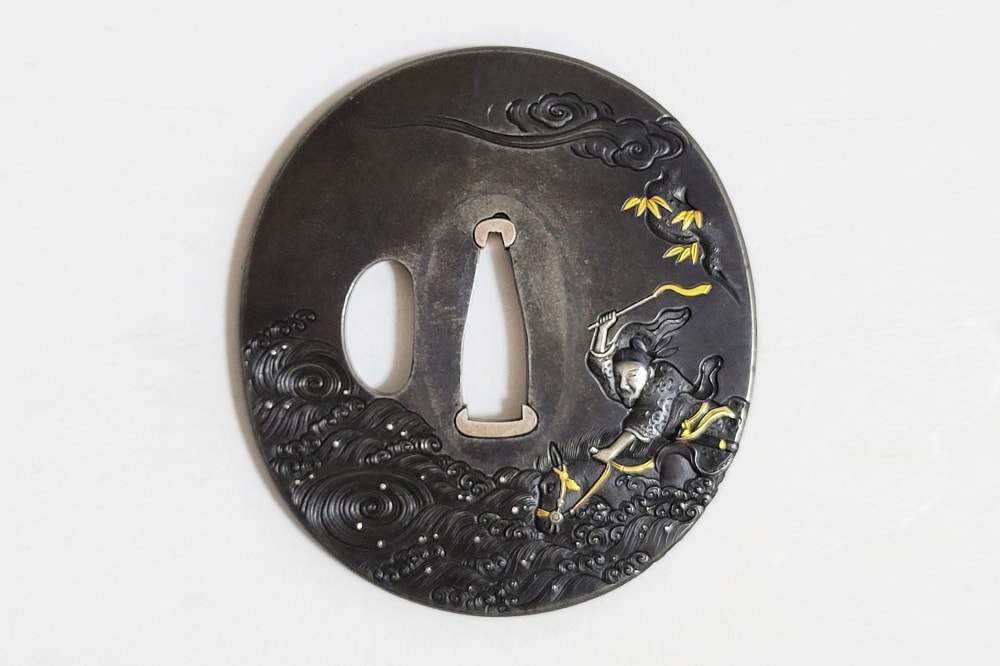
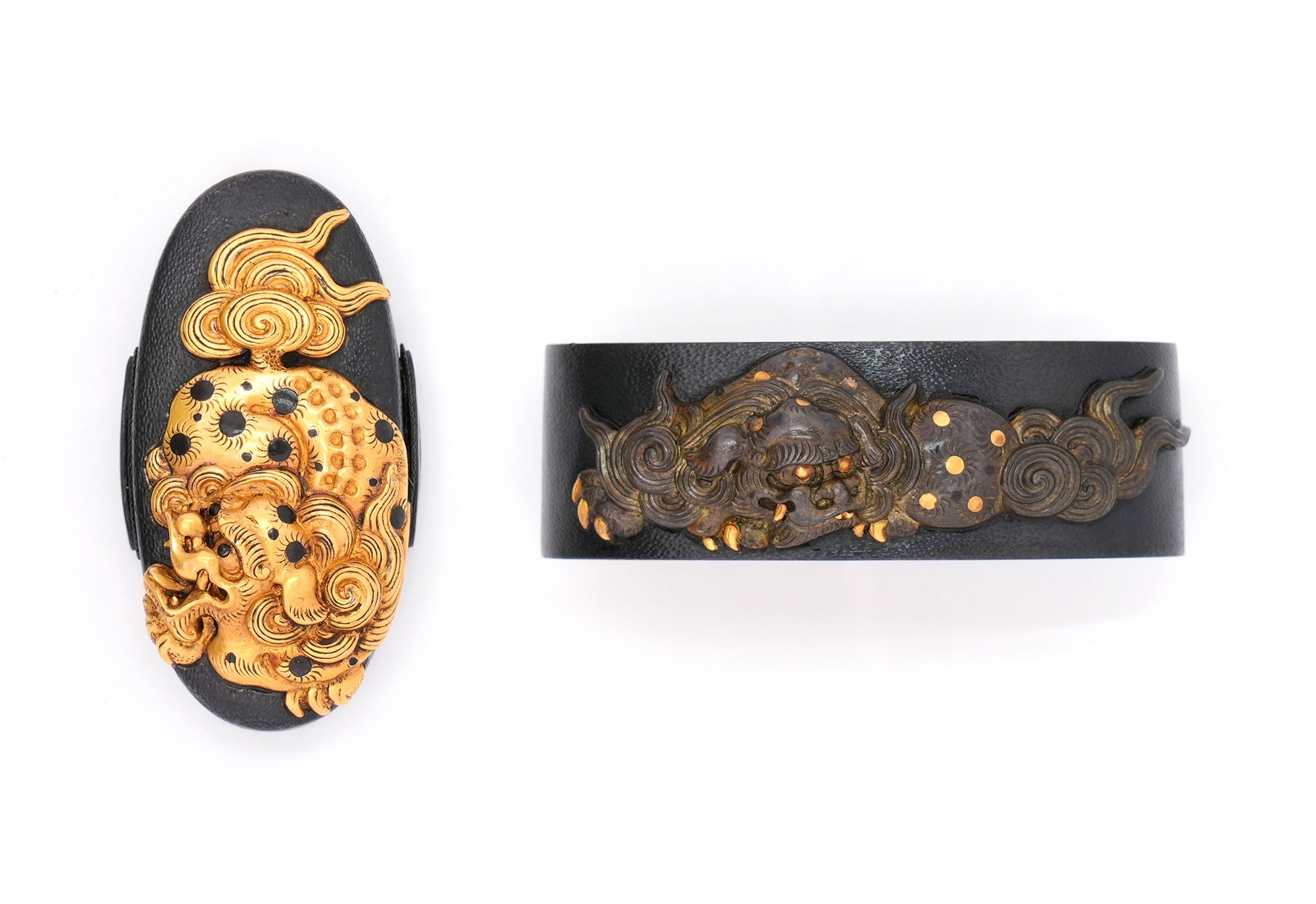
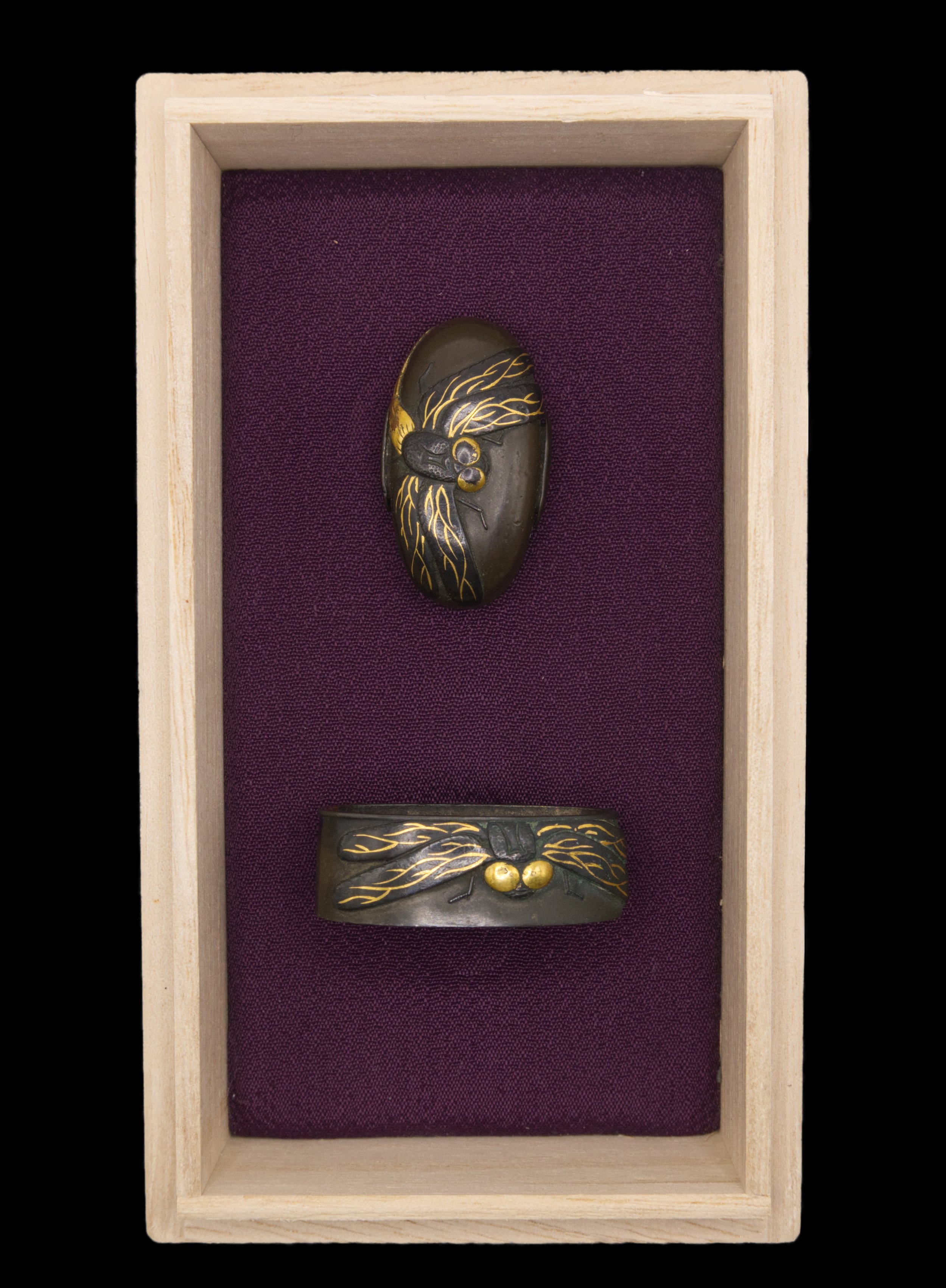
Shomin's technical range is remarkable for its breadth and integration. His signature method is — fluent, sketch-like incised carving that he deployed to render naturalistic subjects such as fierce tigers and elephants with what the describes as "chilling intensity" and a "wild vitality." He was equally commanding in (low relief), nikuai-bori (modeled carving), and multi-layered (high relief), often combining these within a single composition and enriching them with polychrome in gold, silver, , and . His preferred grounds include and worked in or finishes. He also excelled in ("day-and-night" construction), contrasting iron and solid gold to striking effect, and in - inlay of considerable boldness. Shomin himself taught that painting by means of an iron chisel on metal — so-called tetsuhitsu carving — was among the most difficult of tasks, and his oeuvre stands as a confident demonstration of that conviction.

The repeatedly characterizes Shomin's works as displaying "outstanding skill," "exceptional inventiveness," and "exquisitely precise carving manner," with particular emphasis on his ability to render subjects with compelling realism across formats as varied as , , , and . His celebrated Kanzan and Jittoku , commissioned by the Kobe patron Mitsumura Toshimo of Ryushido, is singled out as the "crowning highlight" () among his works. He is described as "revered, together with Natsuo, as a pillar of the Meiji metalworking world" — a judgment affirmed by the consistent designation of pieces spanning his career from early works of "high level of technique and expressive capacity" to the painstaking later productions of his sixties and beyond.
Kantei

3 descriptive axes: material (the full soft-metal palette: shibuichi, oborogin, suaka, shakudo, silver and gold, in ishime and migaki textures, with the iron-and-gold day-and-night ground) x technique (meticulous relief and iro-e inlay, with his own distinctive katakiri-bori and fine kebori) x themes (Zen and literati figures, and naturalist creatures drawn from life). His load-bearing separators from the Mito house are the prowling tiger drawn from life and the day-and-night ground; the records also single out his own distinctive katakiri-bori, a hand learned in the line of his master Natsuo.

Unno Shomin (1844-1915) is one of the greatest metalwork artists of the Meiji era, the Mito-born pupil who carried the soft-metal tradition into the modern Imperial age. The records say he was born at Mito at the close of the period, learned carving from his senior fellow-countryman Hagiya Katsuhira and from his uncle Unno Bisei, went out to in Meiji 4 (1871) where he then signed Motohira, and aspiring to a craftsman who should surpass Somin took the name Shomin. He became a pupil of Kano Natsuo, was made an employee of the Tokyo School of Fine Arts and rose to professor, and in Meiji 29 (1896) was appointed an Imperial Household Artist (Teishitsu Gigeiin), revered together with Natsuo as a pillar of the Meiji metalwork world. His hand is a meticulous, realist carving set on the full soft-metal palette: the prowling tiger drawn from life is his recurring subject, often as the absent-master device on the reverse of his Zen-figure , and the records single out his own distinctive katakiri-bori. His grandest pieces are signed with the Imperial-Artist title.

Diagnostic discriminators

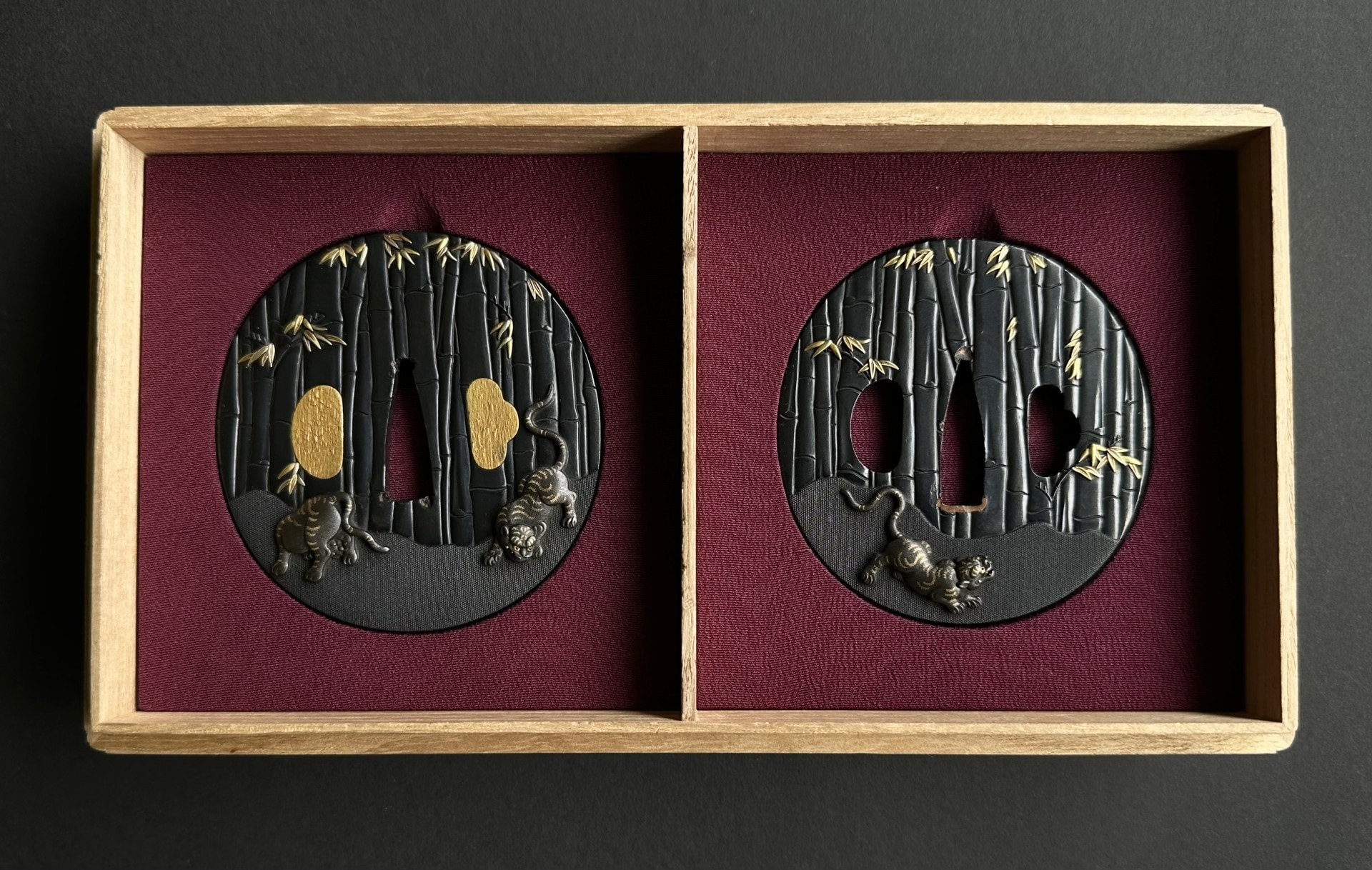
the prowling tiger drawn from life recurs across his work (n=3 of 10): on the reverse of his two Kanzan-and-Jittoku tsuba it is the tiger of the monk Bukan, carried as an absent-master device, and it is the front subject of his Storm-and-tiger tsuba and his Fierce-tiger kozuka-kogai; the setsumei praise his thorough realism and call the carving his confident work, a from-life subject foreign to the Mito narrative repertoire he came from

two of his menuki sets are built as a day-and-night ground (iron-and-gold on the crab pair, shibuichi-and-suaka on the Shoki-and-oni pair), the tonal contrast of dark and bright heightening the paired subject; an honest qualifier: this conceit is one he shares with his master Kano Natsuo, so it separates him within the Mito house but not from the Natsuo line he joined (n=2 of 10, low-n)

katakiri-bori recurs across his work (n=3 of 10) and one setsumei names it outright his own distinctive katakiri-bori (Shomin dokutoku no katakiri-bori) on the fierce-tiger kogai; an honest qualifier: the katakiri line is the painterly hand of his master Kano Natsuo's line, so the records' word distinctive marks his personal command of it rather than an invention

Material (grounds)

He works the full soft-metal palette: above all, with , , , silver and solid gold, worked as and polished , and the iron-and-gold day-and-night ground () that pairs a dark iron face against a lustrous gold reverse for tonal contrast; he adapts the surface to the subject.

Technique

His hand is a meticulous carving, deep yobori (the rounded in-the-form relief) and overlaid -bori, enriched with gold, silver, and iro-e and inlay, with and thin usuniku-bori; over it he sets his own distinctive katakiri-bori and fine , the painterly line the records name his personal tell, often carried on the reverse for the realist figure.

Themes

His subjects fall in two registers: Zen and literati figures (Kanzan and Jittoku with the Bukan tiger, Hotei, Shoki and the cowering oni) and creatures drawn from life (the prowling tiger above all, the crab, the elephant, the cockscomb). The tiger recurs as the absent-master device (rusu-moyo) on the reverse of his figure , and the records praise his thorough-going realism.

Zen and literati figures

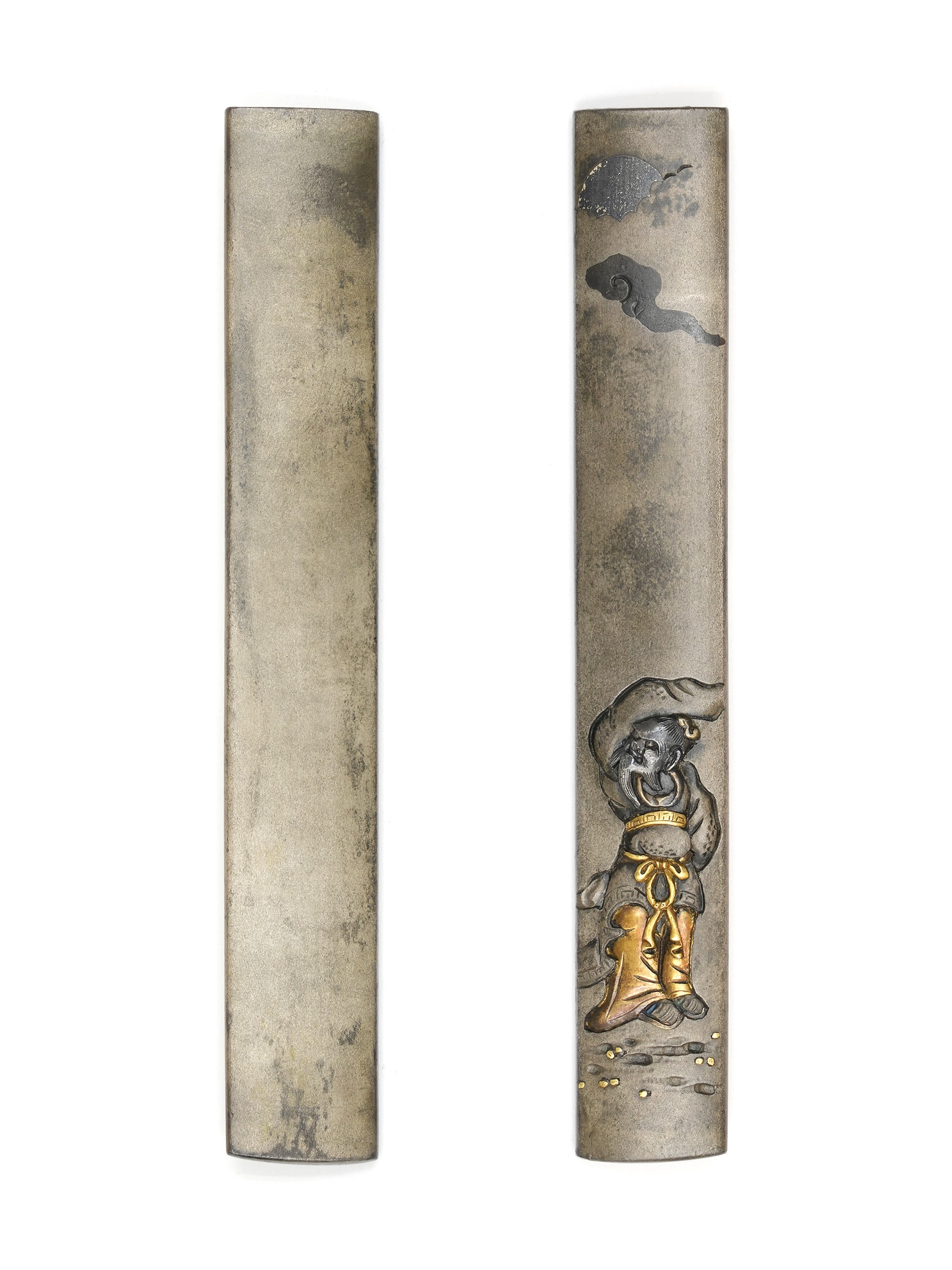
Kanzan and Jittoku with the tiger-taming monk Bukan, Hotei the pot-bellied wanderer, and Shoki striding past the demon cowering under a torn hat, carried in deep relief and iro-e.

Creatures drawn from life

The prowling tiger above all, with the crab, the great Indian elephant fitted front-and-back into a narrow , and the autumn cockscomb, observed with a realist eye.

Full iconography

Signature chronology

Placement
Recorded signatures

Documentary note

He signs the core name Shomin, built up with the go Hoshu (often with the elder-suffix so: Hoshu-so), the family Unno, and at the summit the title Imperial Household Artist of Senior Fifth Rank, Fifth Order of Merit: the corpus signatures run Hoshu Unno Shomin, Hoshu-so Shomin, Imperial-Household-Artist Unno Shomin, and the bare Shomin, with age-dated forms (sixty-one elder, seventy elder, aged sixty-eight); on paired he splits a (Hoshu-so / Shomin). His early period is signed Sosoken Motohira, the go Sosoken prefixed to his first name Motohira before he took the name Shomin. The records carry his go as Sosoken, Teigetsu-an, Kyokuto, Hoshu and Tokasai. Several pieces were commissioned by the Kobe magnate Mitsumura Toshimo of the Ryushido, publisher of the no Hana, and a number bear box-inscriptions by his second son Unno Kiyoshi.

Scholarship

His realism is documented as the fruit of his discipleship under Kano Natsuo, the last great machibori master, whom he joined after coming to Edo.

His carving is rooted in the Mito school: the records name his teacher the leading bakumatsu Mito master Hagiya Katsuhira and his uncle Unno Bisei.

Designations

Kokuhō—
Jūyō Bunkazai—
Jūyō Bijutsuhin—
Gyobutsu—
Tokubetsu Jūyō1
Jūyō Tōken10

Elite Standing

0.04 across 11 designated works

Top 25% among makers

Provenance

4 documented provenances across certified works by Shomin

Provenance Standing

0 works held in elite collections across 4 documented provenances

Top 50% among makers

Raw score: 2.00 / 10

Work Types

Distribution across 11 ranked works

Other
436%
Menuki
327%
Kozuka
218%
Tsuba
218%

Signatures

Signature types across 11 ranked works

Currently Available

Mito School

Other artisans of the Mito school

  1. 1.Katsuhira勝平2 for sale12designated
  2. 2.Teikan貞幹5designated
  3. 3.Eiju/Hidetoshi栄寿1 for sale1designated
  4. 4.Hashizume Tomoyoshi橋詰知懿1designated
  5. 5.Yoshimori/Bisei美盛2designated
  6. 6.Moritoshi盛寿1designated
  7. 7.Hirotoshi弘寿6 for sale1designated
  8. 8.Motozane/Genpu元孚1 for sale1designated
  9. 9.Mototomo元儔1designated
  10. 10.Michitoshi通寿3 for sale2designated
  11. 11.Katsutoshi勝寿1designated

Shomin

Shomin(勝珉) was a maker of Japanese sword fittings (tōsōgu) of the Mito school, active during the Kōka–Taishō (1844-1915) period.

The work follows the Machibori tradition.

Designated works by Shomin include 1 Tokubetsu Jūyō, 10 Jūyō.