NihontoWatch MonNihontoWatchBETA
MarketEncyclopedia
NihontoWatch Mon

NihontoWatchBETA

Market
Encyclopedia
Overview·Kantei·Designations·Work Types·Signatures·School
OverviewKanteiDesignationsWork TypesSignaturesSchool
  1. Schools
  2. Mito
  3. Teikan

Mito Teikan

貞幹

Jūyō
Vol. 47, No. 243 · Tsuba

Mito Teikan

貞幹

5 ranked works

ProvinceHitachiEraBunsei 11 (b. 1828), act. bakumatsuSchoolMitoTraditionMachiboriTypeTosogu MakerCodeHIT056
5Jūyō Tōken

Overview

Okawa Sadakane, also known by the art-names Chikuzan-, Shiho, Kanshu, and Hoden, was born in Mito in Bunsei 11 (1828) as the son of Motosada, himself a leading figure among Mito metalworkers and a disciple of the first-generation Taizan Mototaka. Sadakane is said to have learned metal carving under his father, and he later became an officially retained craftsman of the Mito domain. After his father's death he went to and settled at Mukojima. In his signatures he sometimes prefixed names such as usetsu, uso, and rosetsu, and he adopted both Tachibana and Minamoto as surnames. Many of his dated works fall between the Keio and Meiji eras, and from extant pieces it is possible to confirm that he was still active around Meiji 30 (1897). He had a biological son, Sadatoshi, who succeeded him.

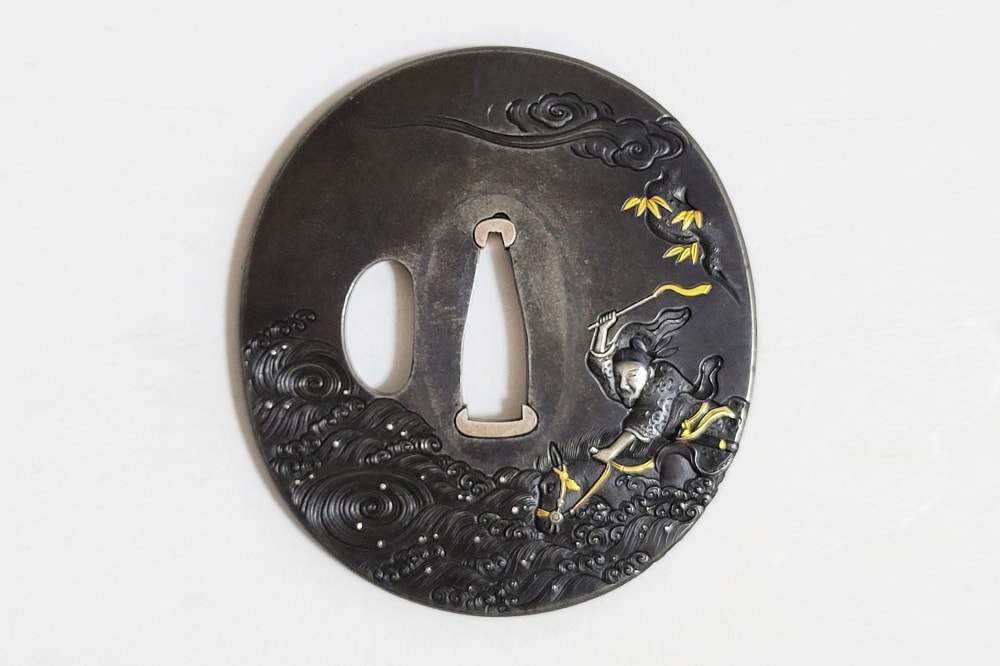
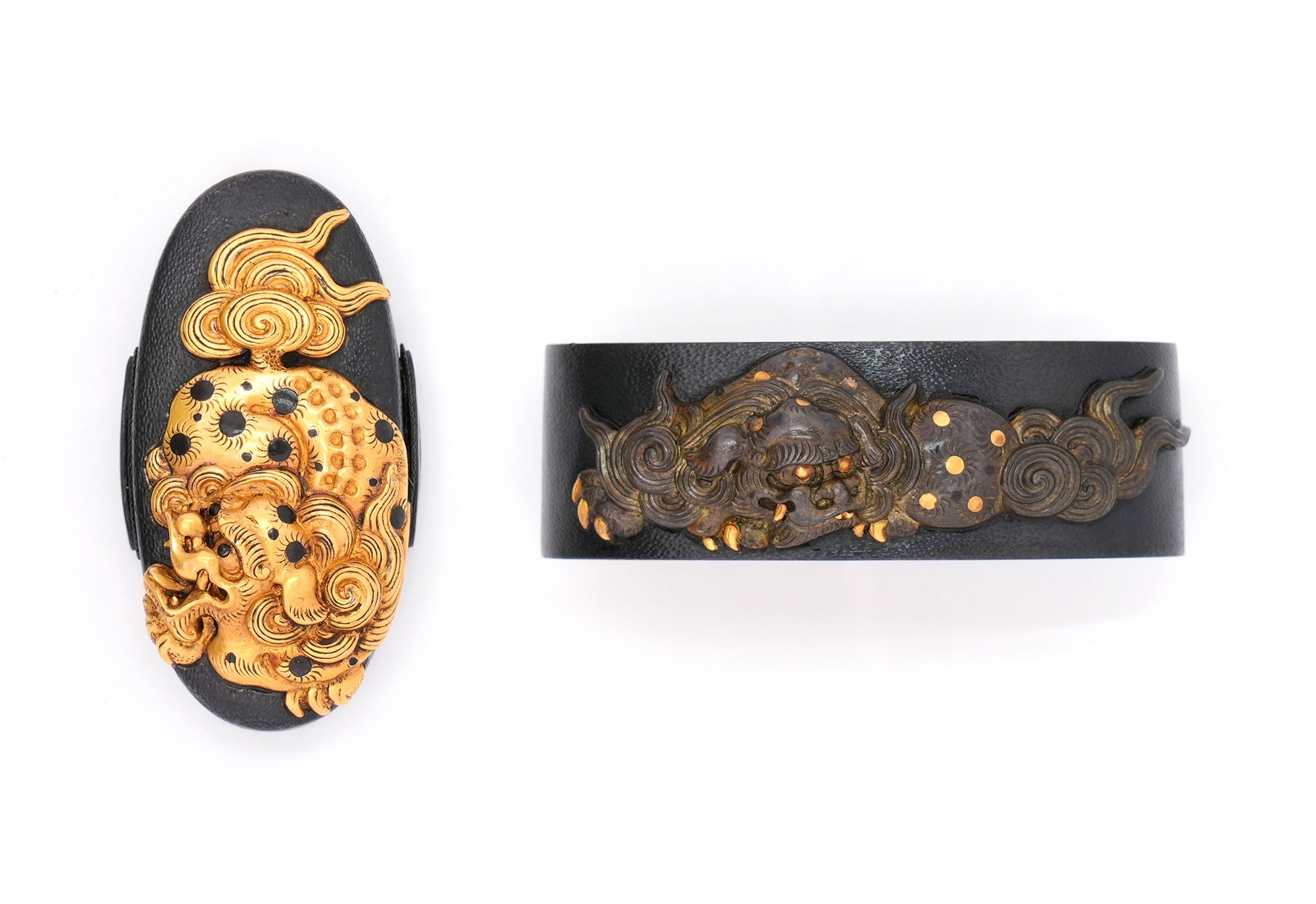
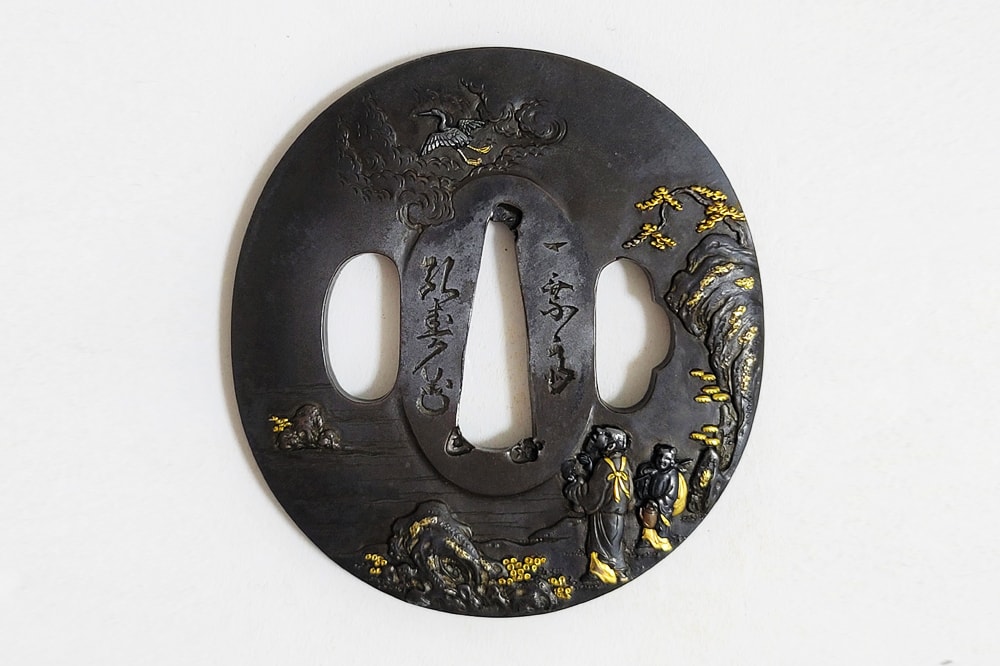
Sadakane demonstrated mastery across a broad range of carving techniques. His is filled with movement and compelling force, while his precision is fully evident in details down to each individual scale and the very tips of the claws. He handled grounds, polychrome in gold and silver, , nikubori, and gold with equal facility, distributing a variety of techniques freely throughout his ensembles. The commends his ability to organize the height differences between shallow carving and with striking accuracy, and notes that his figure portrayal is especially rich -- a hallmark of the core strengths of the Mito metalwork tradition.

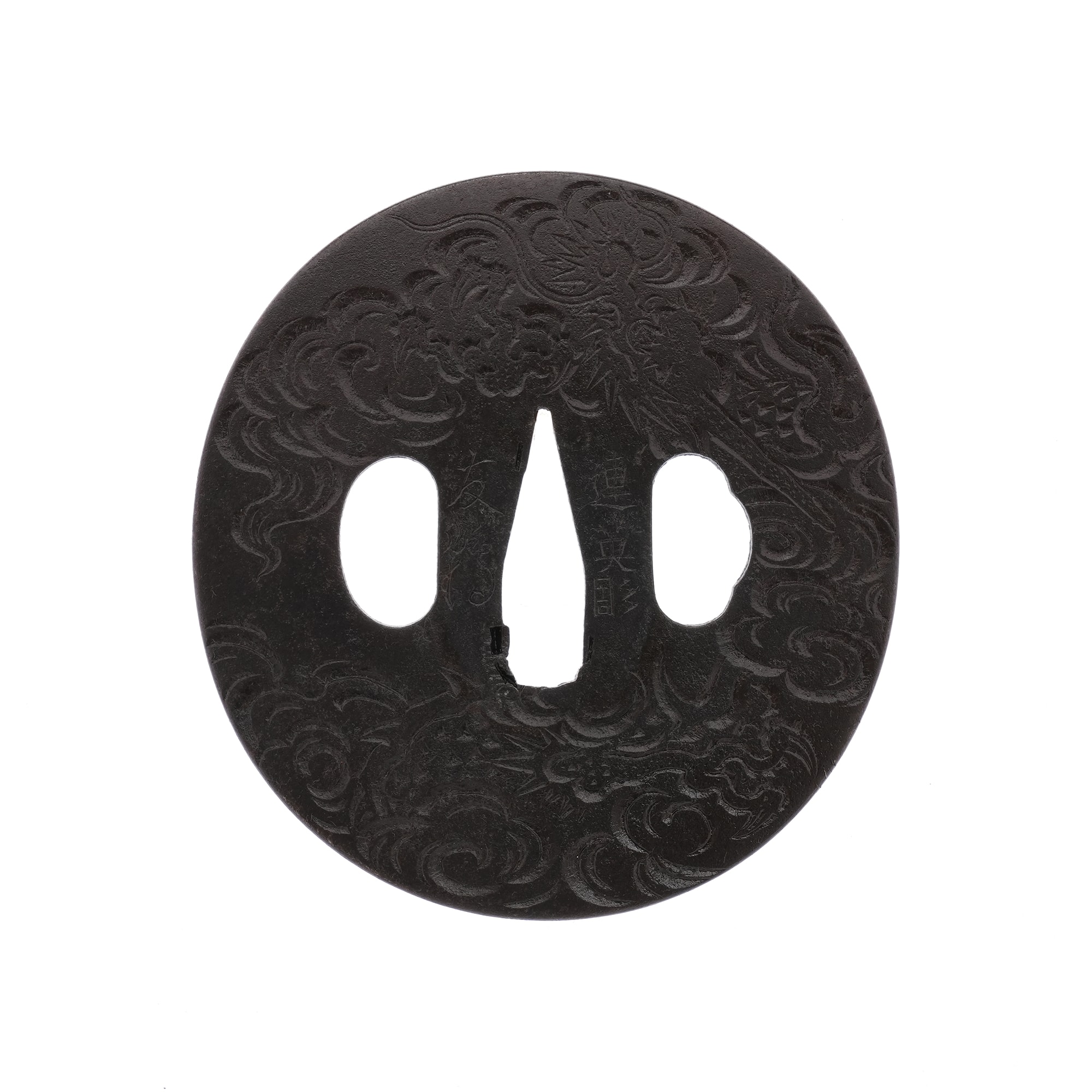
His carving is widely esteemed for its absolute precision, described by the as unmatched. Whether rendering the dynamism of twin dragons in monochromatic , the narrative immediacy of the Twenty-four Filial Exemplars, or the seasonal refinement of floral-and-insect ensembles in solid gold, Sadakane consistently achieves works of notably elevated dignity. His capacity to produce faithful counterparts to the work of other masters -- as demonstrated in a commissioned for the Tomura family of Akita -- is also highly esteemed, and his oeuvre stands as representative of late -period Mito metalwork at its most accomplished.
Kantei

3 descriptive axes: material (the bakumatsu Mito palette: shakudo above all in ishime and roughened grounds, and solid gold for his one-set fittings, with the comparatively uncommon shakudo-nanako) x technique (a precise figural high relief with colour-metal iro-e and inlay, sukidashi-takabori, applied suemon and guri-bori) x themes (the twenty-four paragons of filial piety and other narrative figure subjects, the Kurikara and Fuji dragon, peony, and grasses-and-insects). With only five recorded pieces his hand is mostly the standard Mito foundation; his one load-bearing personal separator is the unerringly precise carving technique (tekkaku-muhi) the records name his hallmark.

Okawa Teikan (born 1828), common name Yasuke, was a metalwork artist of the bakumatsu and early Meiji and the second generation of the Okawa line of Mito kinko. The records say he was born at Mito as the son of Mototsada, the line's founder, who was himself a pupil of the first Taizan Mototaka, a leading figure of Mito metalwork; Teikan learned carving from his father, served the Mito domain as a retained craftsman (kakae-ko), and after his father's death left Mito to live at Mukojima in . He used the surnames Tachibana and Minamoto, later signed Kanju, and carried the go Chikuzanken, Shiho, Tensui and Hoen; his dated works run from Karoku into the Meiji era, and his survival to about 1897 is confirmed from the pieces themselves. His hand is the full bakumatsu Mito idiom, a rich figural and narrative high relief set on the Mito ground palette and enriched with polychrome iro-e and inlay, and his defining note in the records is an unerringly precise, peerless carving technique. His son Teiju succeeded him.

Diagnostic discriminators

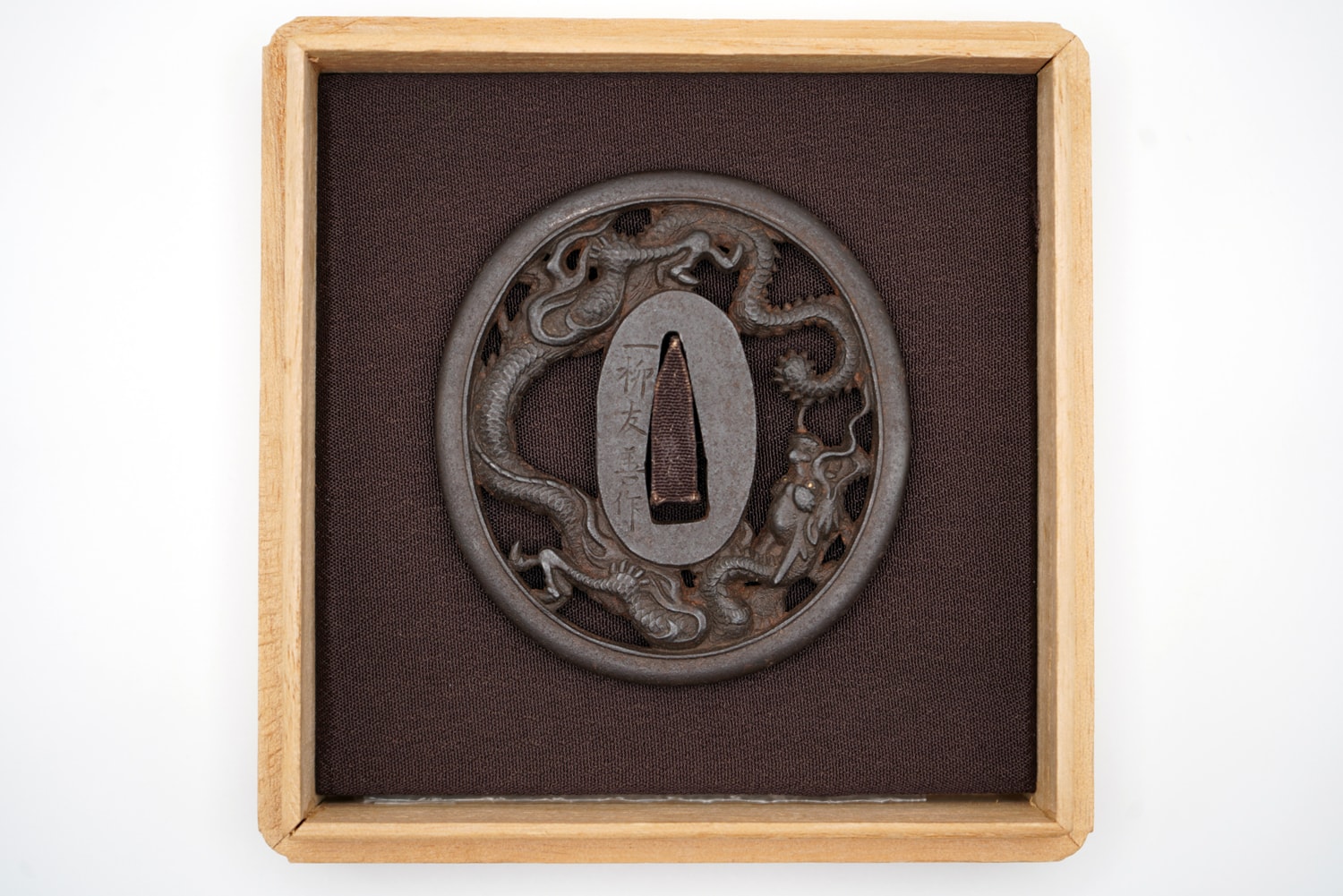
two setsumei state outright that his carving is unerringly precise and peerless (tekkaku-muhi), once of the twin-dragon tsuba carved with no second colour but the purplish shakudo, once of the Kurikara three-piece set down to each scale and claw-tip; the biography repeats that his unerringly precise carving had an established reputation, so the phrase is the connoisseur's named tell for his hand, present on n=2 of 5 pieces (low-n)

Material (grounds)

He works the bakumatsu Mito ground palette: above all, finished as or as a roughened , with , and the - ground; for his one-set fittings he uses solid gold (), polished and worked in relief, adapting the surface to the subject.

Technique

His hand is a precise figural high relief, the chisel controlled and the low-relief and high-relief levels well composed, enriched with gold, silver, and iro-e and inlay; he commands yobori, , applied and gold-sprinkle inlay, and the guri-bori scroll, building narrative scenes of figures and creatures.

Themes (narrative)

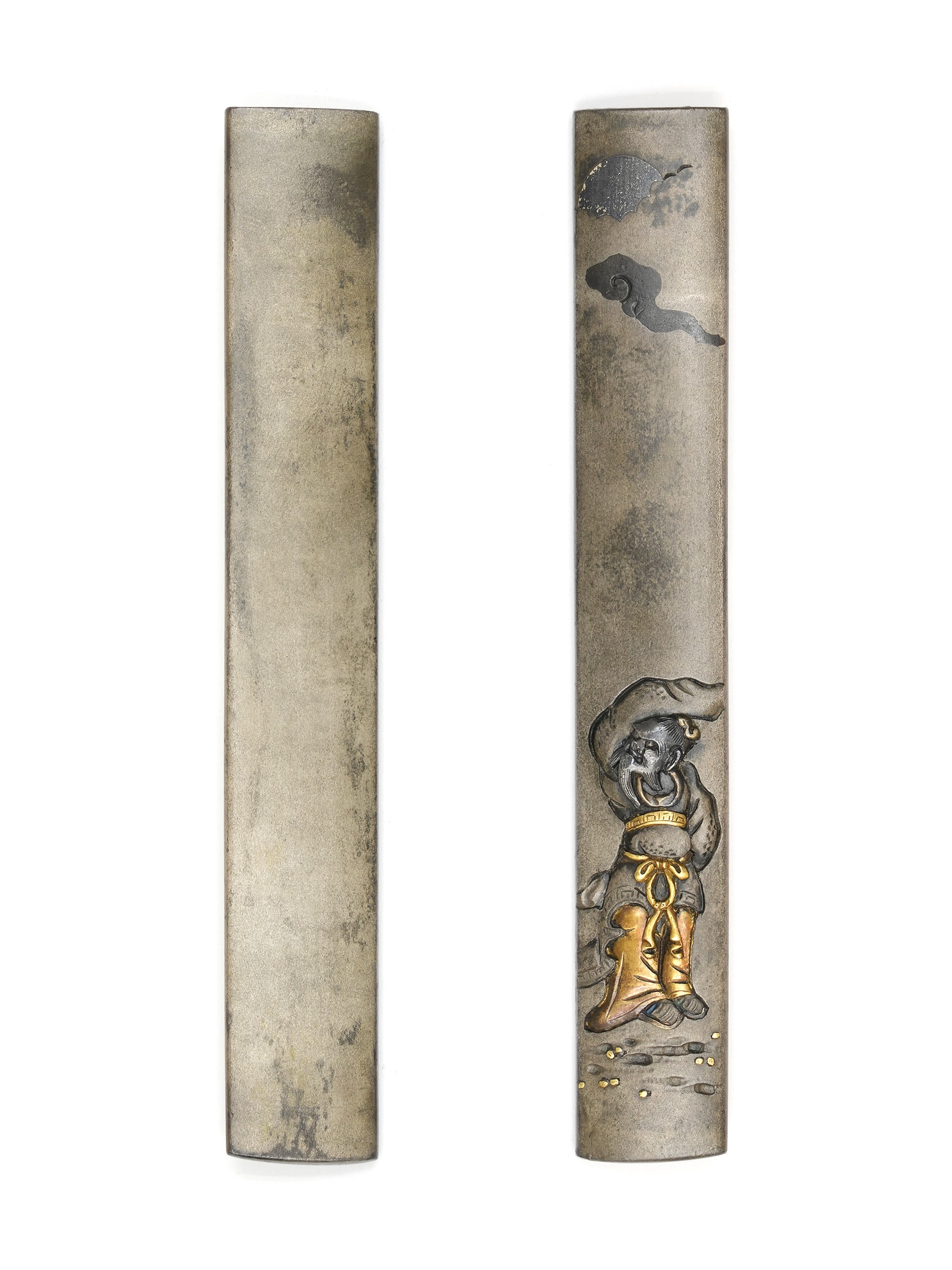
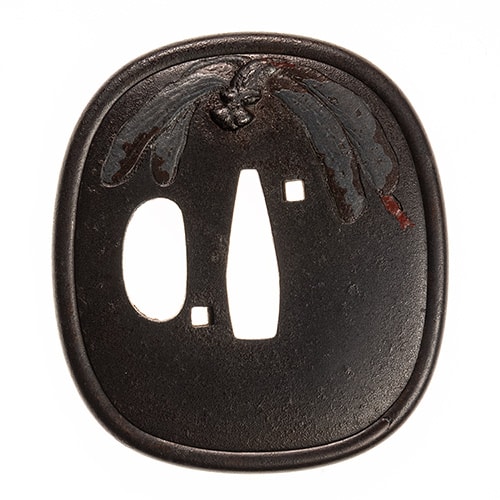
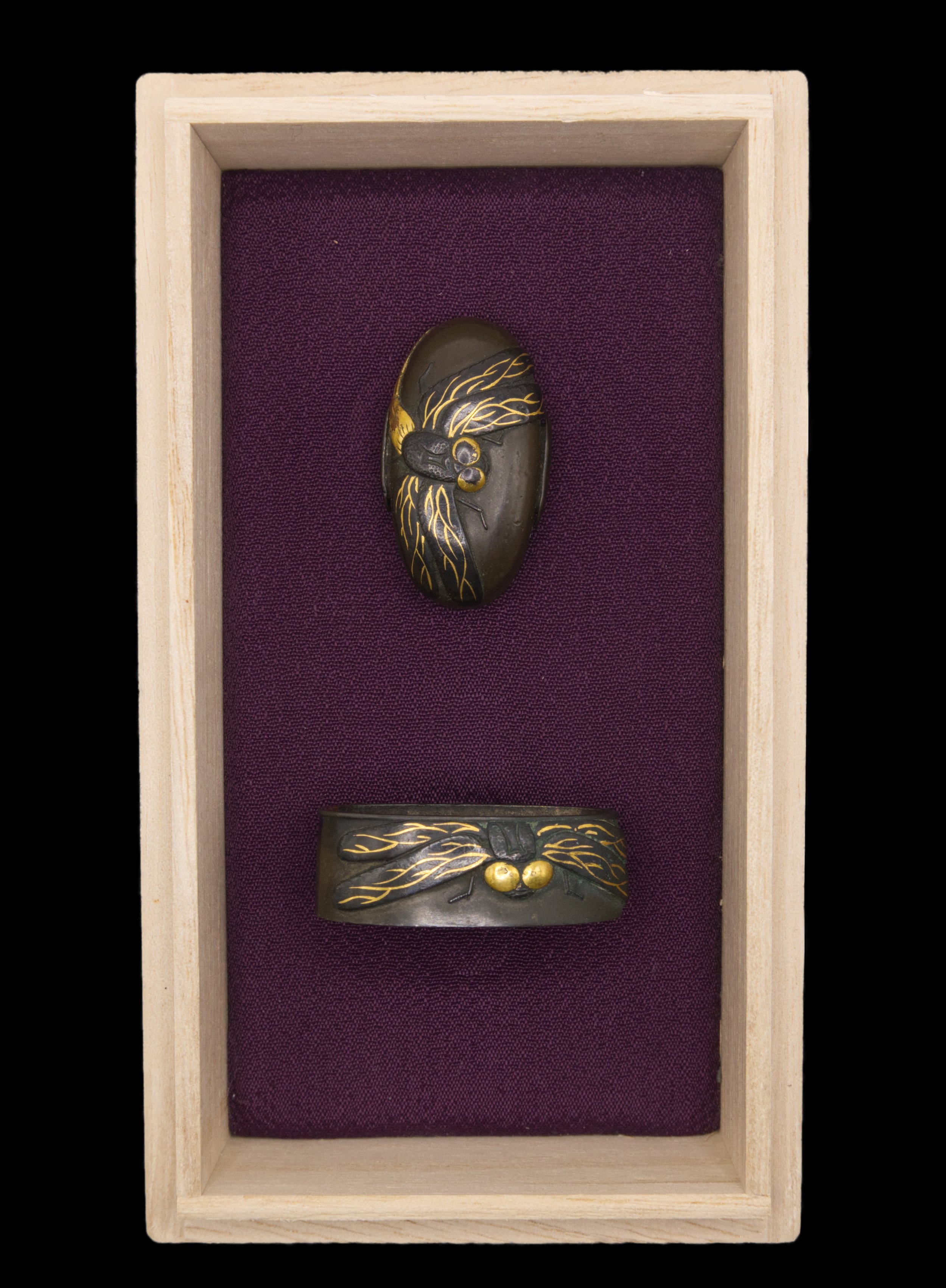
His subjects are above all narrative and figural: the twenty-four paragons of filial piety ( Ko and Shu Jusho) carried in rich figure-carving, given as the records say the abundant figural expression that is the true province of Mito kinko; with the dragon (the dragon coiled on Fudo's sword, the twin dragons soaring above Mt ), the branch-peony of his solid-gold fittings, and grasses-and-insects of the four seasons.

Narrative figure subjects

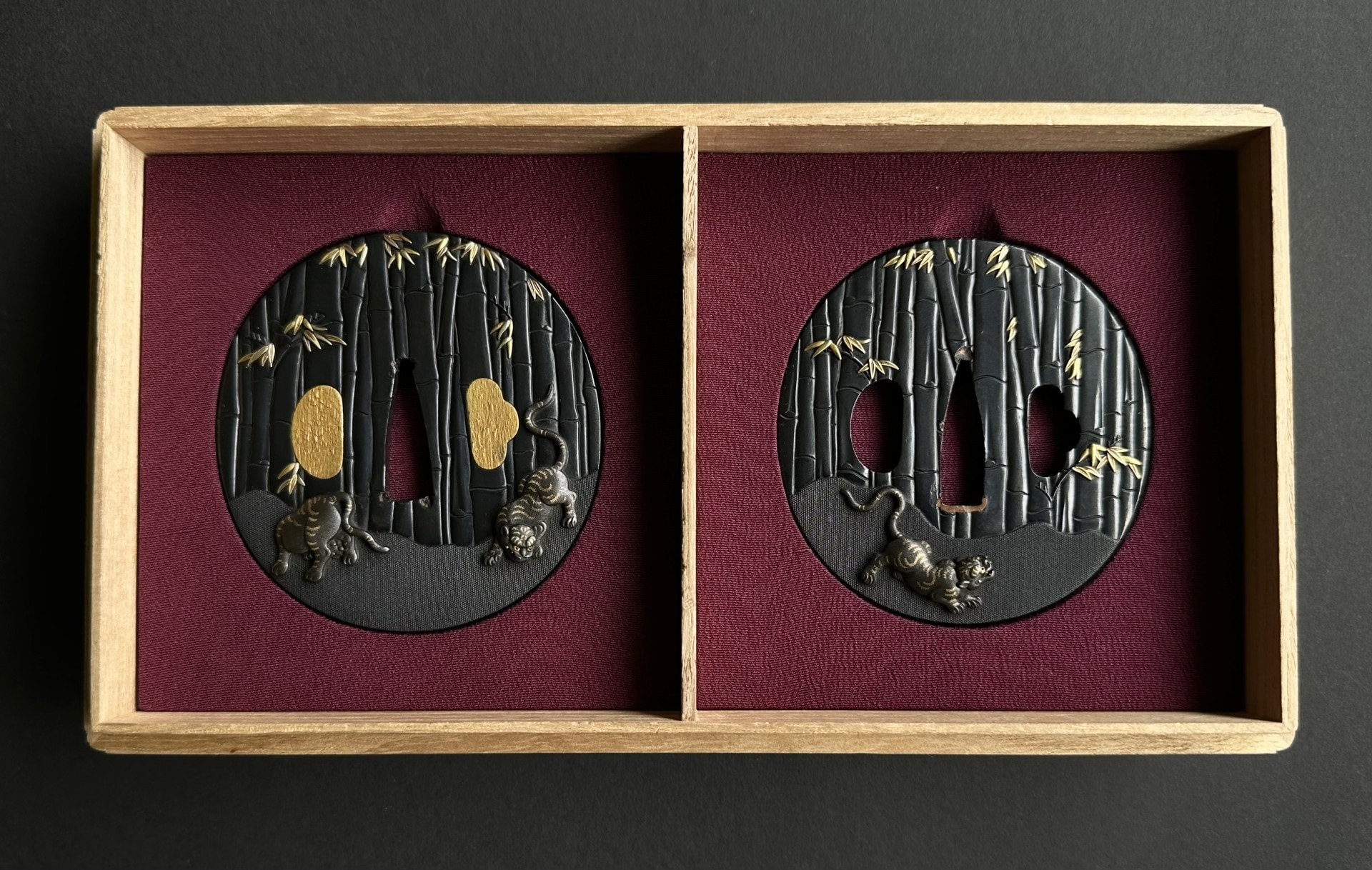
Story scenes set with rich figures: the filial-piety paragons Ko and Shu Jusho, staged front and back with tiger, robes and lattice, in the abundant figural manner the records call the true province of Mito kinko.

Dragon and ornamental subjects

The dragon carried with force and movement: the dragon coiled on Fudo's sword across a three-piece set, and the twin dragons soaring above Mt on a ; with the branch-peony of his solid-gold fittings.

Full iconography

Signature chronology

Placement
Dated signatures
Recorded signatures

Documentary note

He signs the core name Teikan with a or a seal throughout, built up with the go Chikuzanken and the Mito residence form Suifu-ju (Suifu = Mito): the corpus signatures run Suifu-ju Chikuzanken Teikan, Chikuzanken Teikan, and the bare Teikan, and on a three-piece set the are cut as the split Chikuzanken / Teikan. On one the go Shiho is appended beside the seal (Teikan-seal Shiho), and on a small horse-needle component he cuts Teikan-sanjin with the verb ; both sit inside a seal-broken or multi-component transcription block, so the automated inventory reads them as prose, but they are genuine chiselled signatures. Several pieces carry Meiji jinshin-year (1872) dated signatures cut at the Otonashi and Sumida riverside in the eastern capital, and one is dated Karoku 4 (1851), made when he was twenty-three. His common name was Yasuke; the records give his father and teacher as Mototsada, the founder of the Okawa line and himself a pupil of the first Taizan Mototaka, and his son and successor as Teiju. On the solid-gold one-set the fittings also carry the workshop co-marks Teitoku (carved this) and Teiji (made), which are workshop hands on the set, not Teikan's own signature.

Scholarship

His carving is rooted in the Okawa line of Mito kinko: the records name his father and teacher Mototsada, founder of the line and a pupil of the first Taizan Mototaka.

Designations

Kokuhō—
Jūyō Bunkazai—
Jūyō Bijutsuhin—
Gyobutsu—
Tokubetsu Jūyō—
Jūyō Tōken5

Elite Standing

0.03 across 5 designated works

Top 28% among makers

Work Types

Distribution across 5 ranked works

Other
360%
Tsuba
240%

Signatures

Signature types across 5 ranked works

Currently Available

Mito School

Other artisans of the Mito school

  1. 1.Katsuhira勝平2 for sale12designated
  2. 2.Shomin勝珉11designated
  3. 3.Eiju/Hidetoshi栄寿1 for sale1designated
  4. 4.Hashizume Tomoyoshi橋詰知懿1designated
  5. 5.Mototomo元儔1designated
  6. 6.Moritoshi盛寿1designated
  7. 7.Hirotoshi弘寿6 for sale1designated
  8. 8.Motozane/Genpu元孚1 for sale1designated
  9. 9.Michitoshi通寿3 for sale2designated
  10. 10.Yoshimori/Bisei美盛2designated
  11. 11.Katsutoshi勝寿1designated

Teikan

Teikan(貞幹) was a maker of Japanese sword fittings (tōsōgu) of the Mito school in Hitachi province, active during the Bunsei 11 (b. 1828), act. bakumatsu period.

The work follows the Machibori tradition.

Designated works by Teikan include 5 Jūyō.