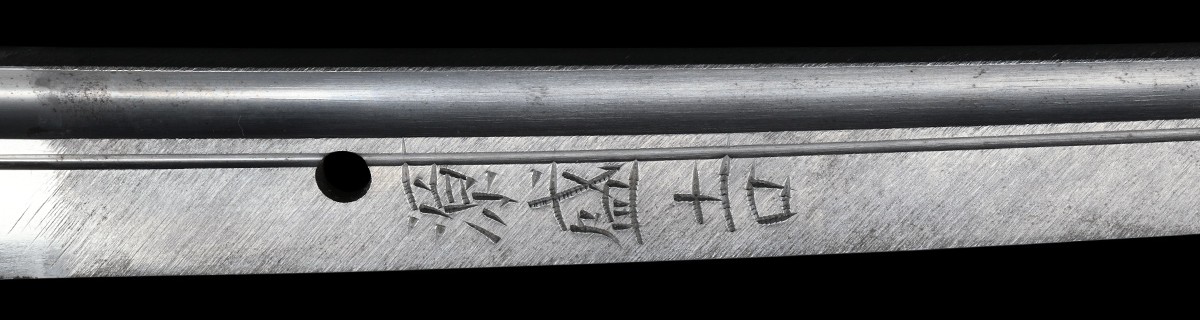
Minamoto Moriyoshi, whose real name was Tanigawa Matsukichi, is the most famous swordsmith of the modern era who was said to be a master of Kiyomaro-utsushi. (Mukansa tosho, Prefecture-designated Intangible Cultural Property Holder). Born in Taisho 9 (1920). A swordsmith from Yatsushiro City in Kumamoto, he signs his mei as Minamoto Moriyoshi, Hishu Yatsushiro Minamoto Moriyoshi, and so on. He exhibited continuously starting from the 1st Sakuto Gijutsu Hyopokai, raised his reputation with Minamoto Kiyomaro-utsushi, and became a Mukansa tosho in Showa 60 (1985). Leaving behind masterpieces of powerful Soshu-den and numerous famous works, he unfortunately passed away in Heisei 2 (1990) at the age of seventy.
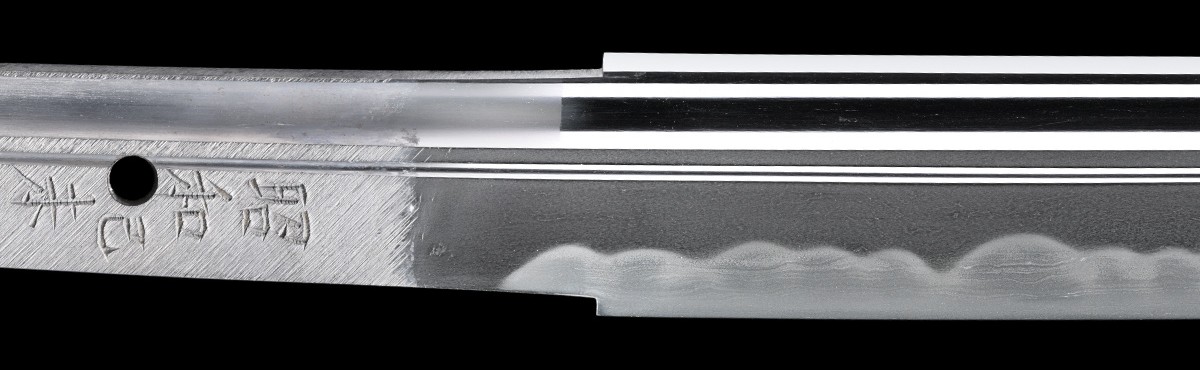
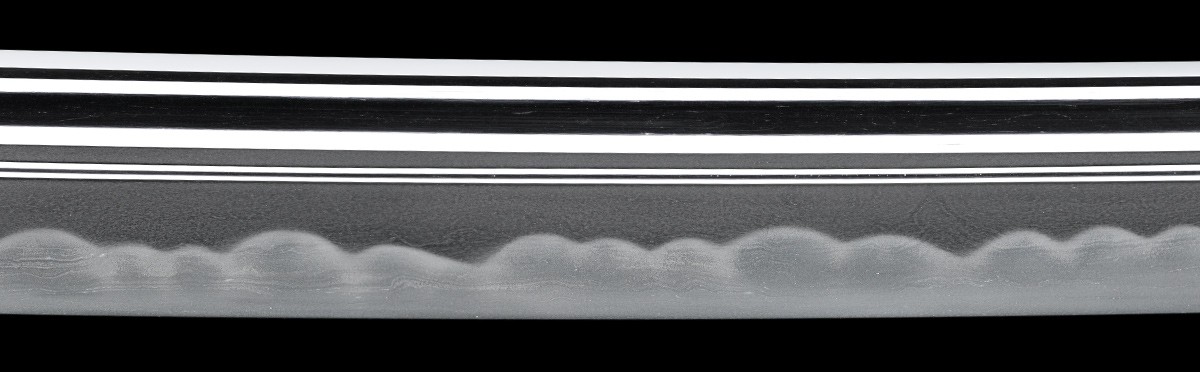
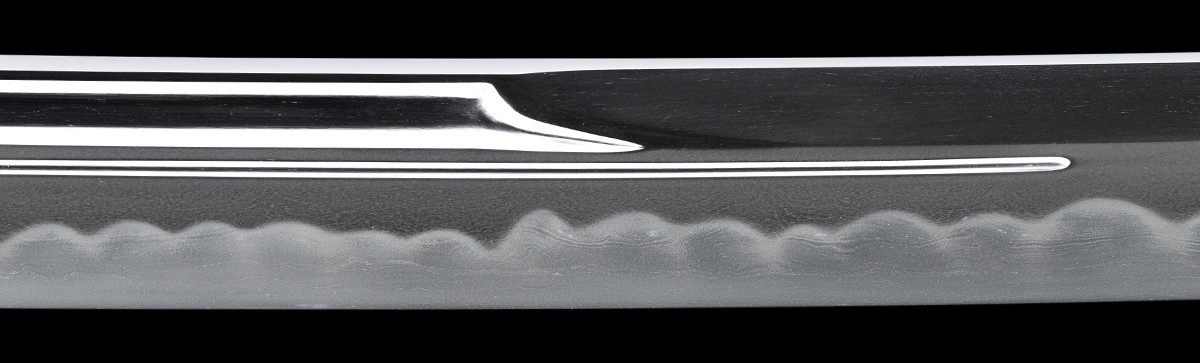
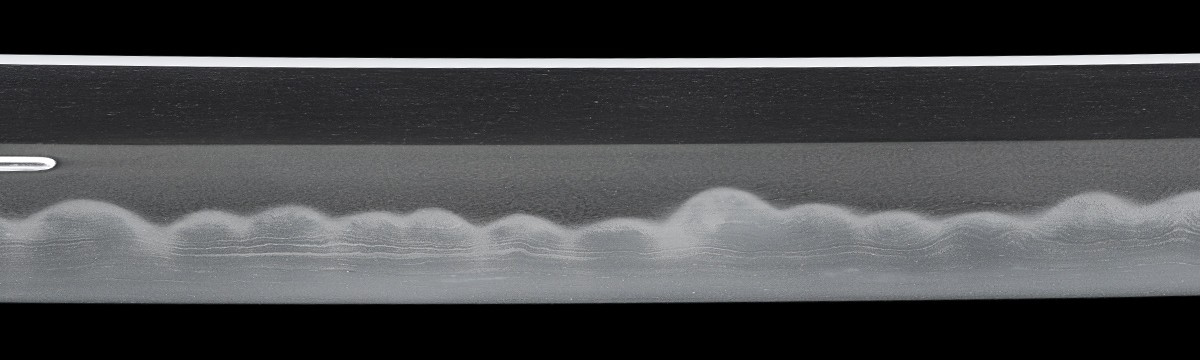
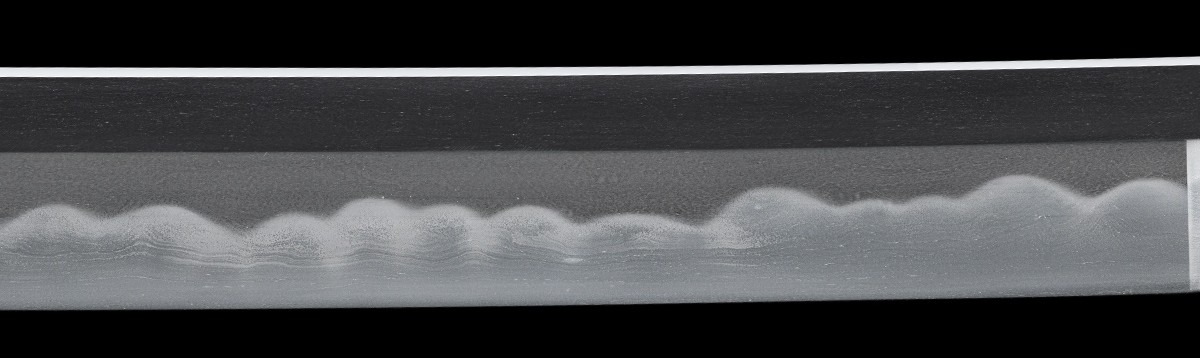
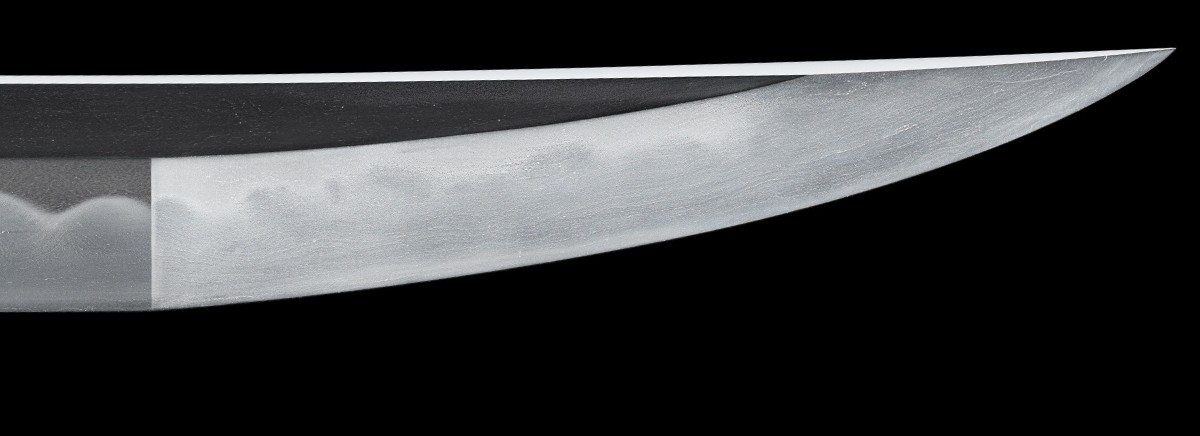
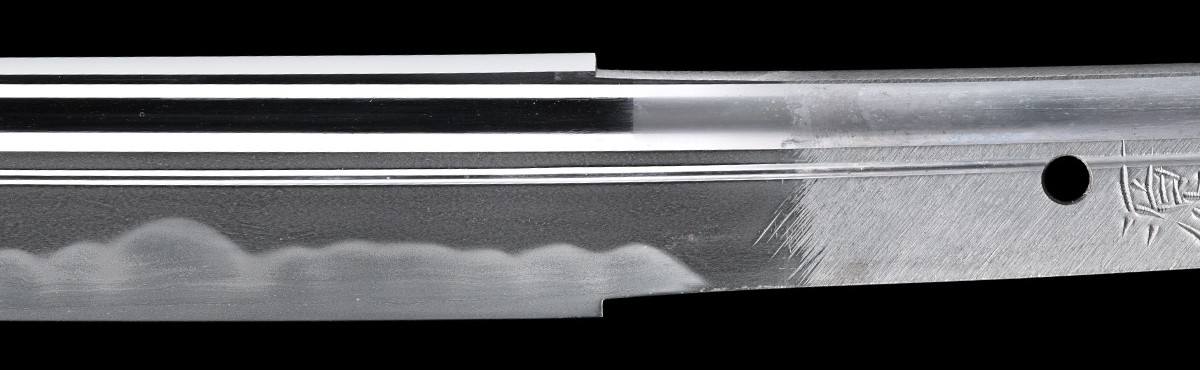
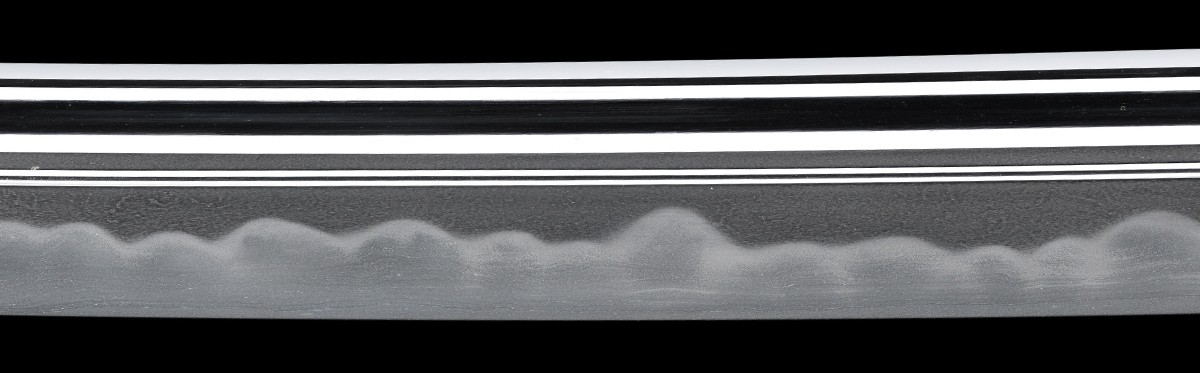
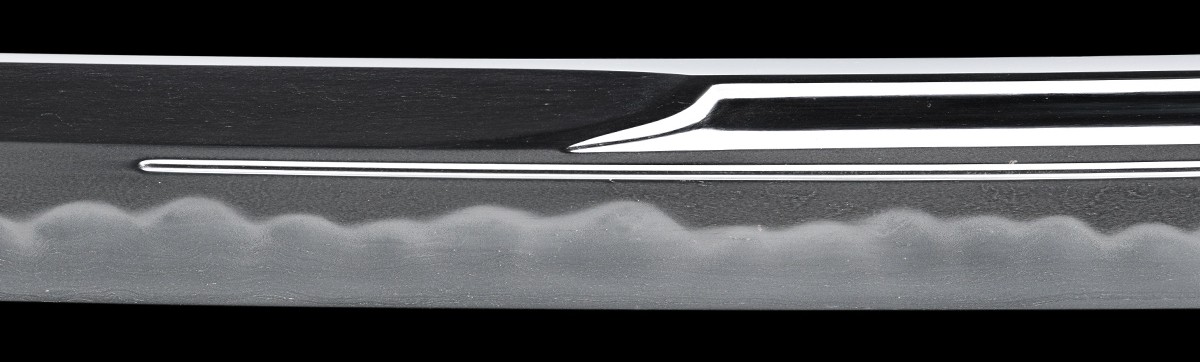
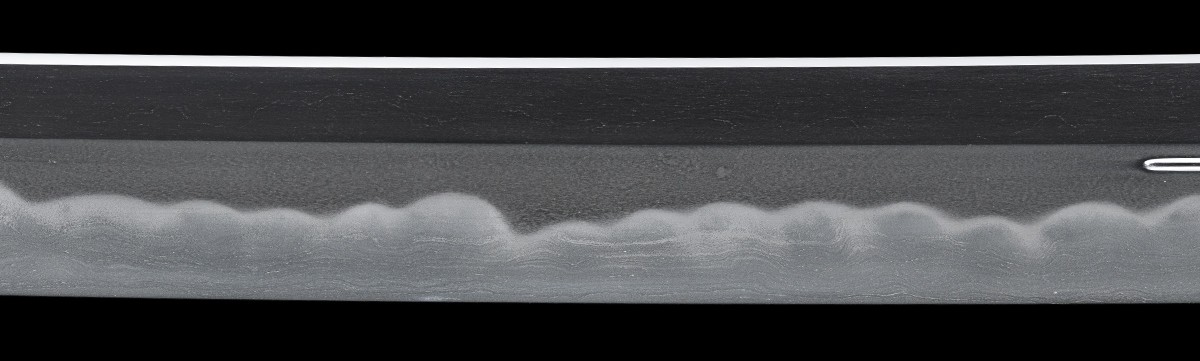
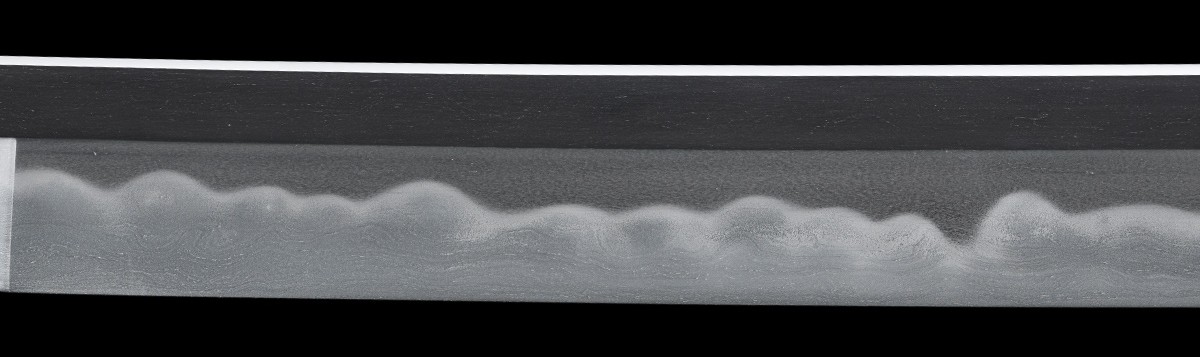
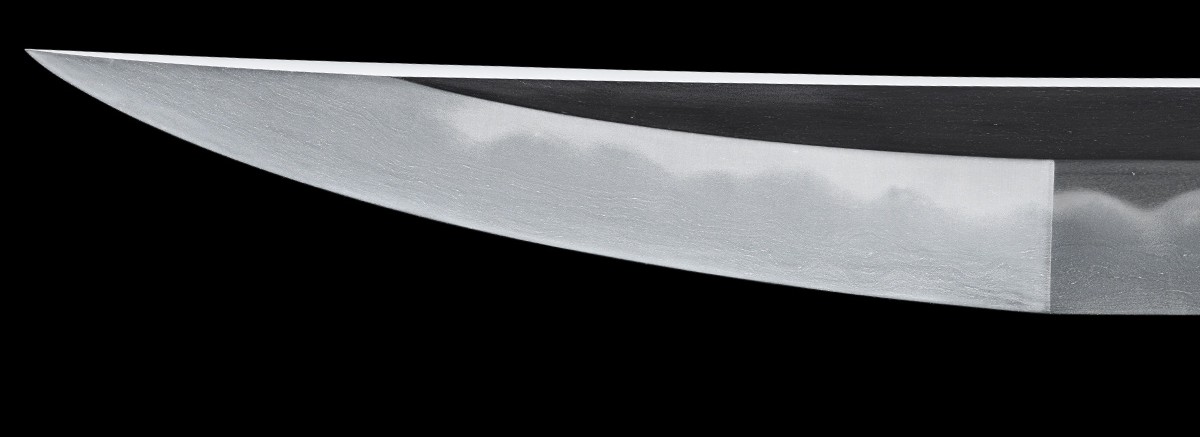
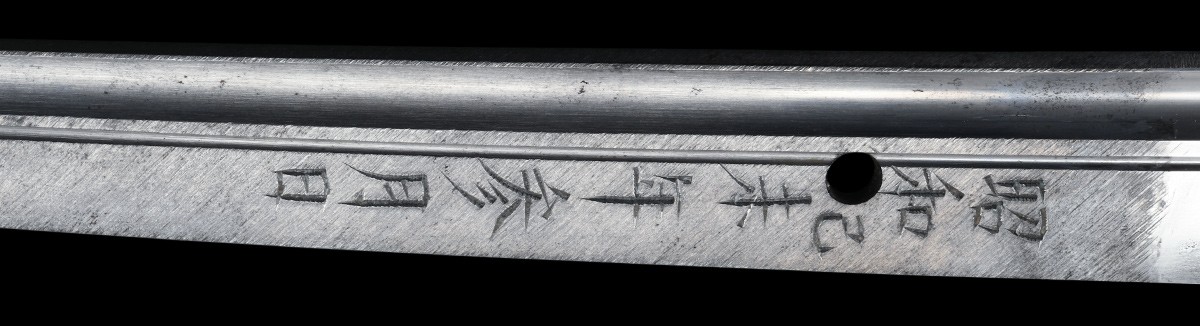
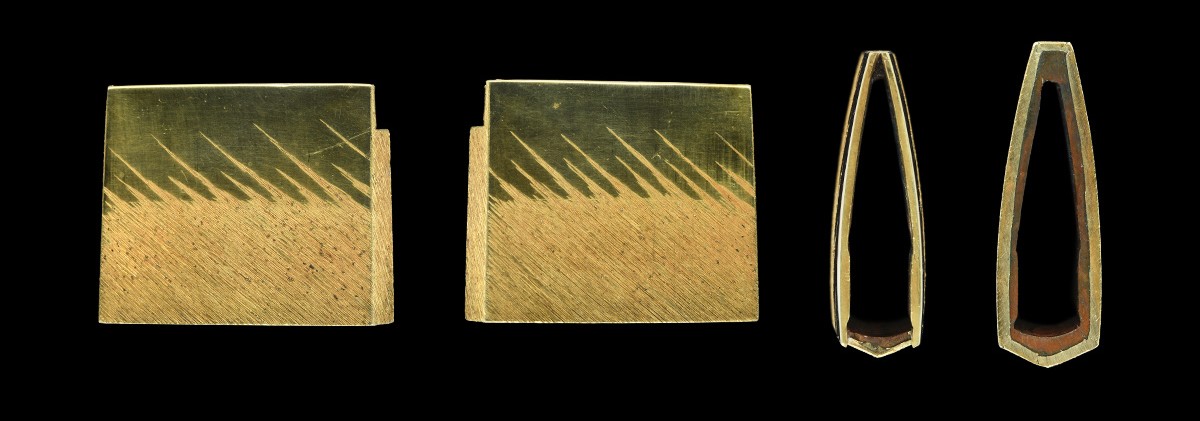
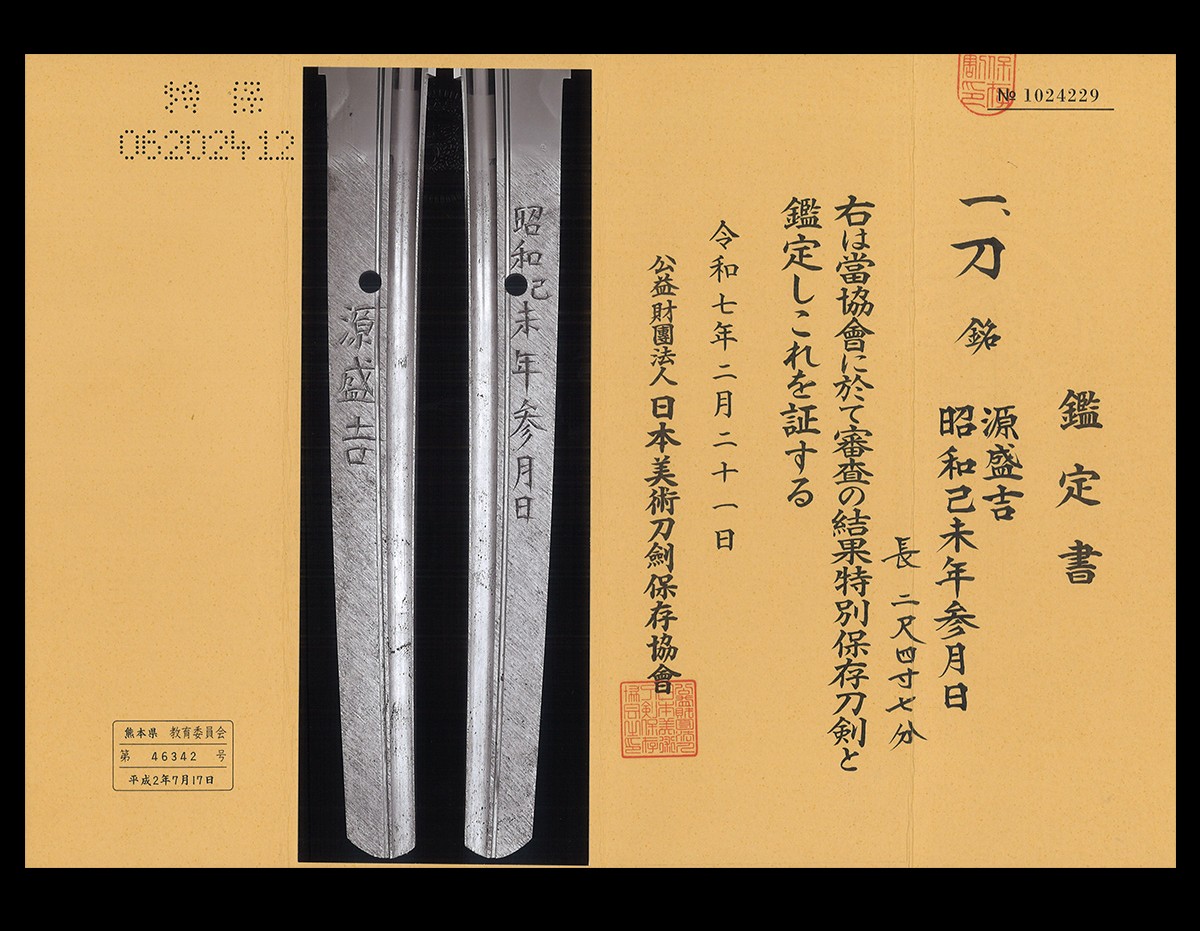
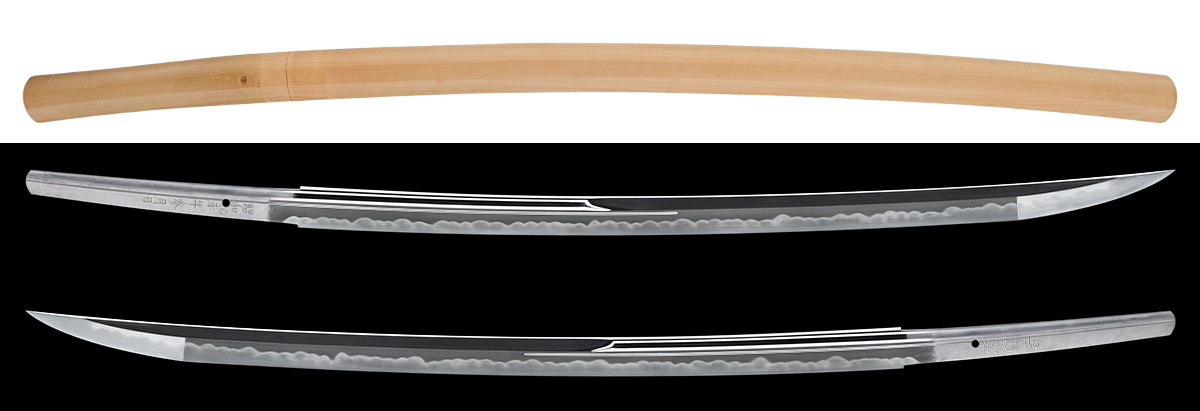
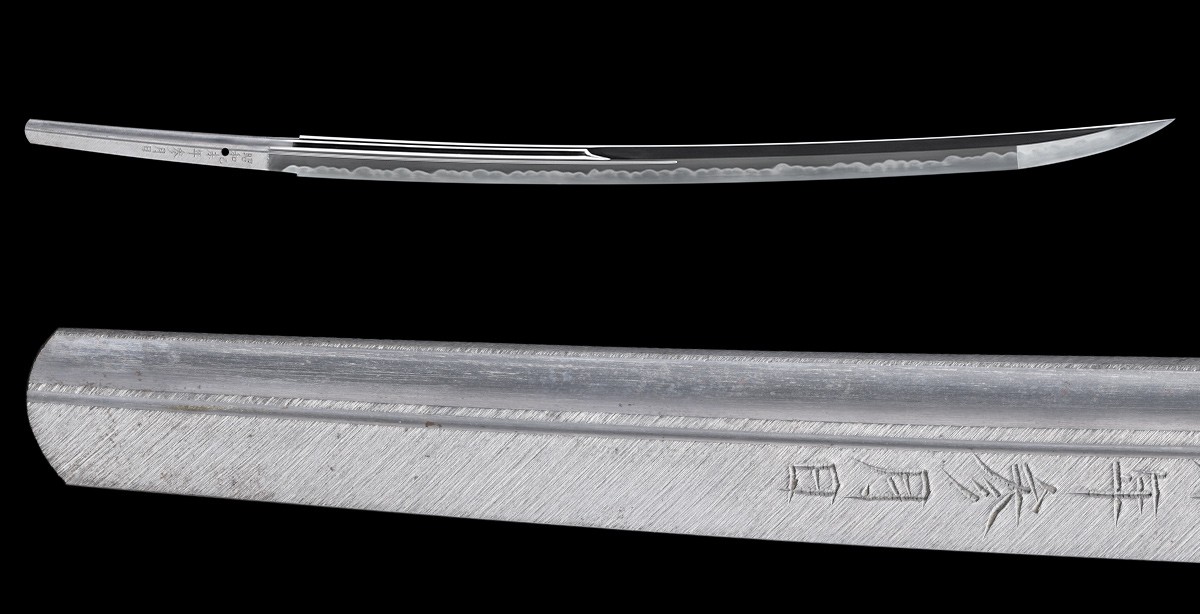
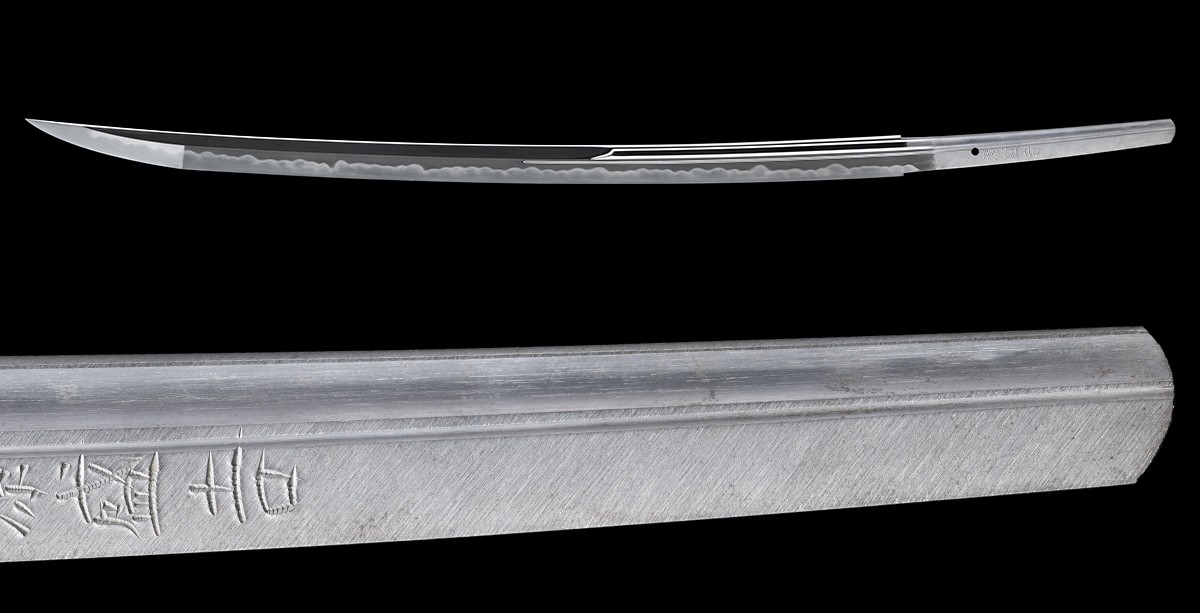
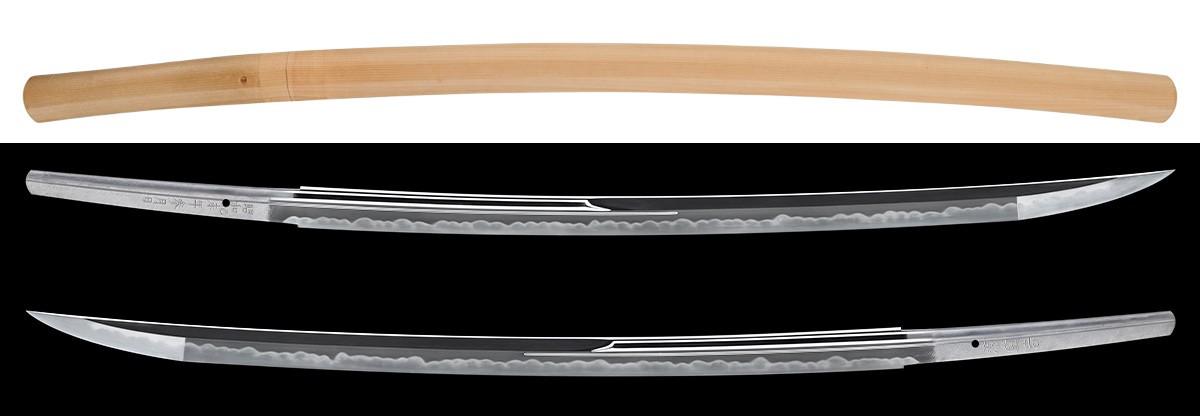
As for the taihai of this katana, the nagasa is a long 2 shaku 4 sun 7 bun, the mihaba is wide at the moto and saki, the kasane is ordinary, the sori is moderate, and it is a single sword with a grand sugata in Kiyomaro-utsushi ending in an o-kissaki. The kitae is a well-kneaded itame-hada, covered in fine ji-nie, with thick and strong chikei entering, and the steel color is a clear dark black, resulting in a powerful and solid jigane. The yakiba is gunome mixed with choji, with many ashi entering the hachū, and kinsuji and sunagashi appearing, working actively. The boshi continues as midare-komi, returning with a slightly pointed saki. A magnificent sword in nagamaki-naoshi-zukuri by the Mukansa tosho, Tanigawa Moriyoshi. It is an outstanding sword where one can feel the high skill of this smith from the ji and ha. Shirasaya, gold-clad ichiju habaki, Tokubetsu Hozon Token Kanteisho.
Machine translation from the shop's Japanese · may contain errors ·
Minamoto Moriyoshi, whose real name was Tanigawa Matsukichi, is the most famous swordsmith of the modern era who was said to be a master of Kiyomaro-utsushi. (Mukansa tosho, Prefecture-designated Intangible Cultural Property Holder). Born in Taisho 9 (1920). A swordsmith from Yatsushiro City in Kumamoto, he signs his mei as Minamoto Moriyoshi, Hishu Yatsushiro Minamoto Moriyoshi, and so on. He exhibited continuously starting from the 1st Sakuto Gijutsu Hyopokai, raised his reputation with Minamoto Kiyomaro-utsushi, and became a Mukansa tosho in Showa 60 (1985). Leaving behind masterpieces of powerful Soshu-den and numerous famous works, he unfortunately passed away in Heisei 2 (1990) at the age of seventy.
As for the taihai of this katana, the nagasa is a long 2 shaku 4 sun 7 bun, the mihaba is wide at the moto and saki, the kasane is ordinary, the sori is moderate, and it is a single sword with a grand sugata in Kiyomaro-utsushi ending in an o-kissaki. The kitae is a well-kneaded itame-hada, covered in fine ji-nie, with thick and strong chikei entering, and the steel color is a clear dark black, resulting in a powerful and solid jigane. The yakiba is gunome mixed with choji, with many ashi entering the hachū, and kinsuji and sunagashi appearing, working actively. The boshi continues as midare-komi, returning with a slightly pointed saki. A magnificent sword in nagamaki-naoshi-zukuri by the Mukansa tosho, Tanigawa Moriyoshi. It is an outstanding sword where one can feel the high skill of this smith from the ji and ha. Shirasaya, gold-clad ichiju habaki, Tokubetsu Hozon Token Kanteisho.
The twentieth century nearly killed the craft twice: wartime distortion, then the occupation ban. The NBTHK’s founding in 1948 and licensed forging from 1953 rebuilt the sword as an art, crowned by Living National Treasures and the mukansa rank.
A Hozon-certified blade judged to show notably superior workmanship and a better state of preservation. The bar is higher: re-tempered blades and most unsigned Muromachi/Edo works are excluded.
About the NBTHK›
The NBTHK (Nihon Bijutsu Tōken Hozon Kyōkai, the Society for the Preservation of Japanese Art Swords) is a public-interest incorporated foundation founded in 1948 and supervised by Japan’s Agency for Cultural Affairs (Bunkachō); it is based at the Japanese Sword Museum in Tokyo. Its expert panels physically examine each submitted work (shinsa) and issue a certificate (kanteishō) ranking it by artistic and historical merit. NBTHK papers are the most widely recognized standard of authentication for Japanese swords and fittings.
No cooling-off period or returns; refund only if the purchased sword is proven fake, capped at purchase price (excludes commission sales, accessories, auction items).


 NihontoWatch