Katana in Shirasaya (NBTHK Tokubetsu Hozon Token)
(We divide 4 sections for each sword as Saijyo Saku, Jyojyo Saku, Jyo Saku and Regular Saku).
This blade is ranked as Jyojyo Saku among the works of Moriyoshi.
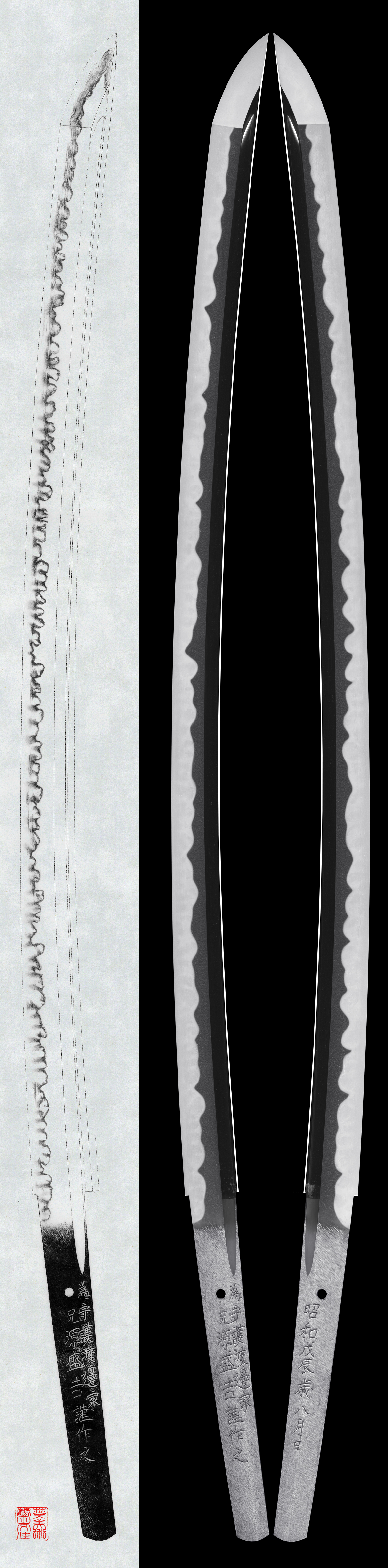
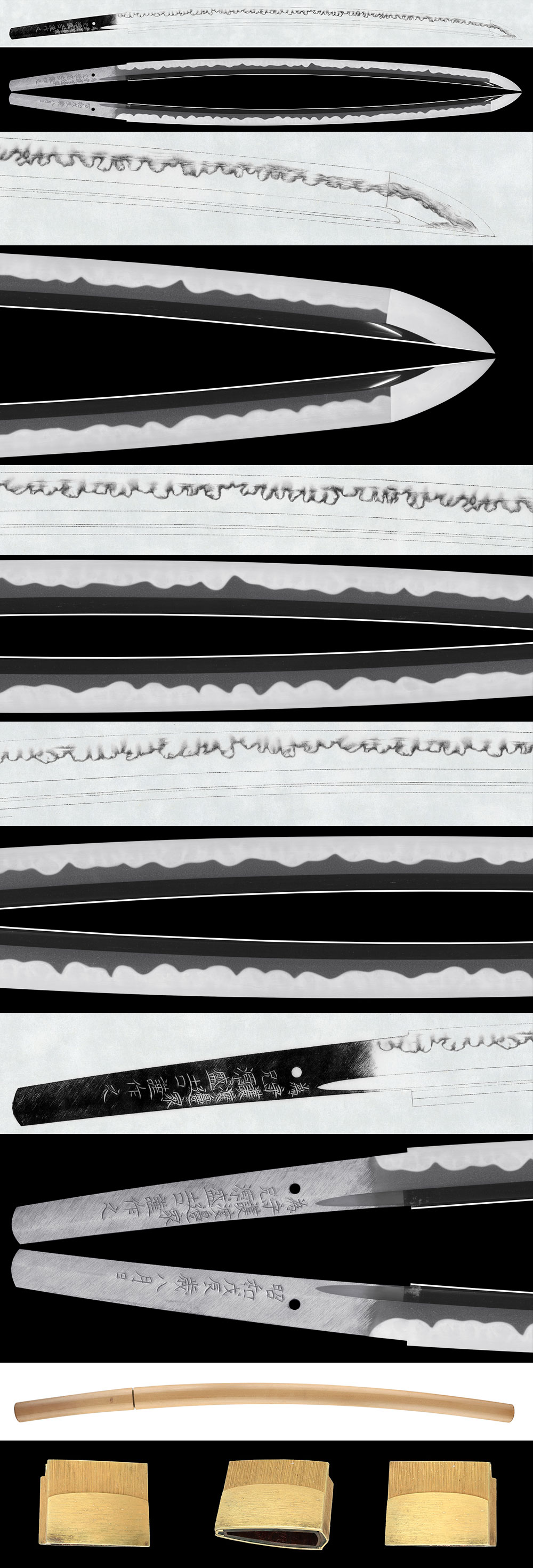
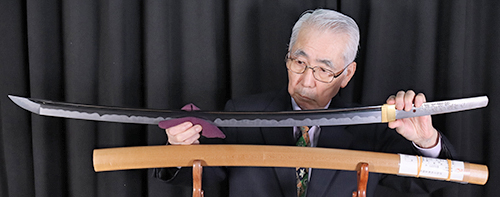
Shape: A powerful and substantial katana with a wide mihaba, thick kasane, bo-hi carved on both sides, and an elongated kissaki.
Its distinctive shape and robust construction immediately suggest the work of Moriyoshi.
Jigane: Well-forged ko-itame hada with a clearly visible and beautifully developed grain structure.
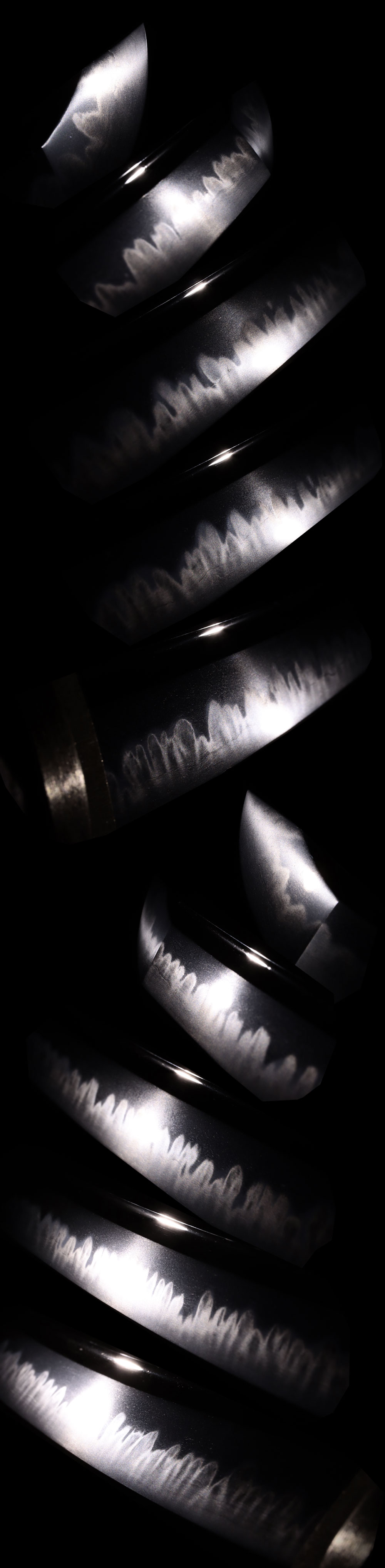
Hamon: Nie-deki gunome-midare with a deep nioiguchi and prominent kinsuji.
The boshi displays a vigorous midarekomi pattern.
Features: Minamoto Moriyoshi was a renowned Mukansa swordsmith from Yatsushiro City, Kumamoto Prefecture, who was active from the Showa period into the Heisei period.
He was particularly celebrated as a master of Kiyomaro utsushi, successfully recreating the distinctive style of the famous Edo-period swordsmith Minamoto Kiyomaro.
Minamoto Moriyoshi, whose real name was Matsuyoshi, was born in 1920 in Yatsushiro City, Kumamoto Prefecture.
In 1934, he became an apprentice to Kongo Hyoe Moritaka Yasuhiro.
He also studied under Enju Taro Nobushige, whom Moritaka had invited to Yatsushiro.
In 1941, his master Moritaka Yasuhiro bestowed upon him the swordsmith name Enju Nobutsugu Minamoto Moriyoshi.
In 1952, responding to an initiative by Kurihara Hikosaburo, he participated in the production of commemorative swords celebrating the signing of the San Francisco Peace Treaty.
A total of 300 commemorative swords were produced for this project, and Moriyoshi was responsible for making some of them.
In 1954, he received official authorization to forge Japanese swords.
He exhibited his works continuously from the 1st Sword Forging Technique Exhibition onward.
Around 1978–1979, he gained widespread recognition for his exceptional reproductions of Minamoto Kiyomaro's swords.
In 1985, he attained the prestigious rank of Mukansa swordsmith.
He left behind numerous masterpieces in the powerful Soshu tradition and passed away in 1990 at the age of 70.
Aoi Art’s Comment: Tanigawa Moriyoshi, a Mukansa swordsmith who created numerous masterpieces, devoted his career to producing swords in the Soshu and Bizen traditions.
There are indications that he may have used steel produced through his own ironmaking process, resulting in a distinctive jigane.
This particular blade displays exceptionally well-forged and refined steel.
It is regrettable that Moriyoshi was never designated a Living National Treasure, as his skill and achievements were certainly worthy of such recognition.
This blade is a magnificent reproduction of the work of Minamoto Kiyomaro, one of the most celebrated swordsmiths of the Shinshinto period.
We highly recommend this outstanding sword.
Moriyoshi devoted himself wholeheartedly to studying and reproducing Kiyomaro's masterpieces, particularly striving to create blades with abundant and vigorous kinsuji.
It would be fascinating to see how this magnificent sword will be evaluated 1,000 years from now.
Like the works of Kiyomaro, this blade features abundant kinsuji activity within the hamon and a dynamic midarekomi boshi.
We sincerely hope that its future owners will teach the next generation how to care for and preserve Japanese swords, ensuring that this remarkable work will be treasured for many generations to come.
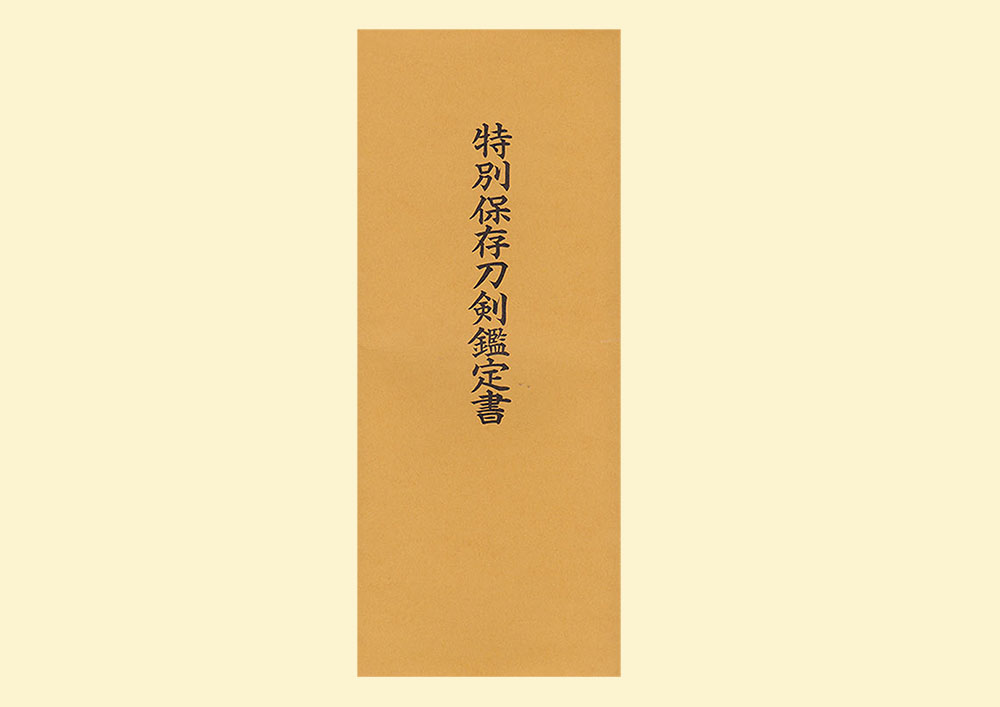
NBTHK Tokubetsu Hozon Token.(certificate to be issued soon).

 NihontoWatch