Kumamoto Prefecture Important Intangible Cultural Property.
Mukansa sword smith.
Minamoto Moriyoshi
An excellent Kiyomaro utsushi wakizashi by Mukansa swordsmith Minamoto Moriyoshi.
With a wide mihaba and a grand, powerful sugata featuring an o-kissaki, it is a superior work where active hataraki appears abundantly in the hamon.
Kiyomaro utsushi wakizashi by Moriyoshi are extremely rare and are truly precious blades.
A fine Kiyomaro-style wakizashi by Mukansa swordsmith Minamoto Moriyoshi. With its wide mihaba and large kissaki, it presents a grand and powerful sugata, while the hamon is enlivened by abundant activity. Wakizashi in the Kiyomaro style by Moriyoshi are extremely rare, making this a truly valuable example.
[sugata]
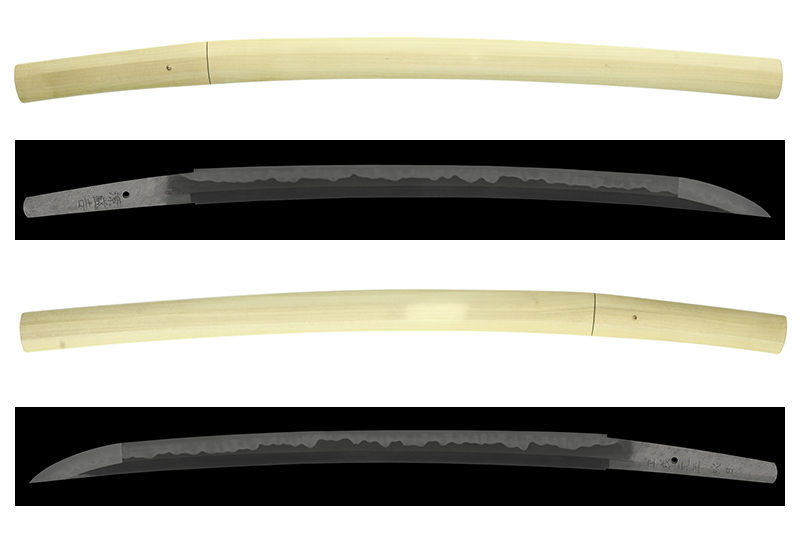
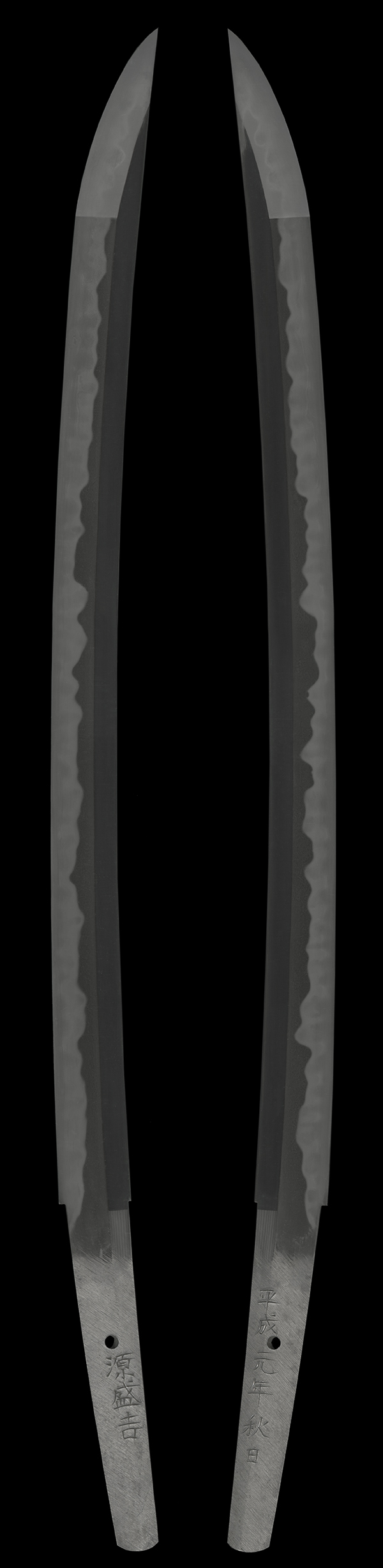
Shinogi-zukuri, iori-mune, wide mihaba, standard kasane, torii-zori, o-kissaki. Nakago is ubu, yasurime are kiri, nakago-jiri is kurijiri.
Shinogi-zukuri with an iori-mune; wide mihaba and standard kasane, with pronounced torii-zori and a large kissaki.
The nakago is ubu, with kiri yasurime, and the nakago-jiri is kurijiri.
[horimono]
The horimono is a bohi with kata-chiri that becomes kakinagashi below the habaki.
The blade is carved with a bohi of one-sided termination, which flows off in kakinagashi beneath the habaki.
[jigane]
Jigane is itame-hada mixed slightly with mokume, ji-nie attaches thickly in mijin, and thick chikei enters.
The jihada is itame, mixed with a slight mokume pattern, with dense, finely grained ji-nie forming thickly, and strong chikei running through the surface.
[hamon]
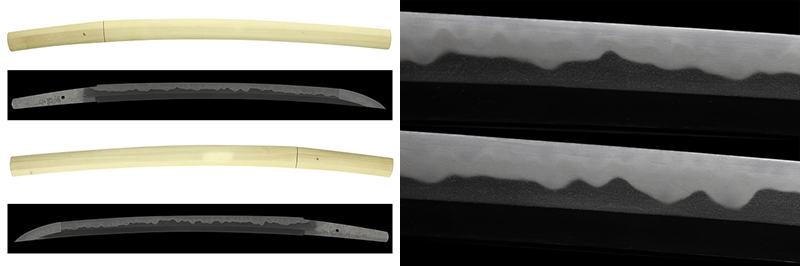
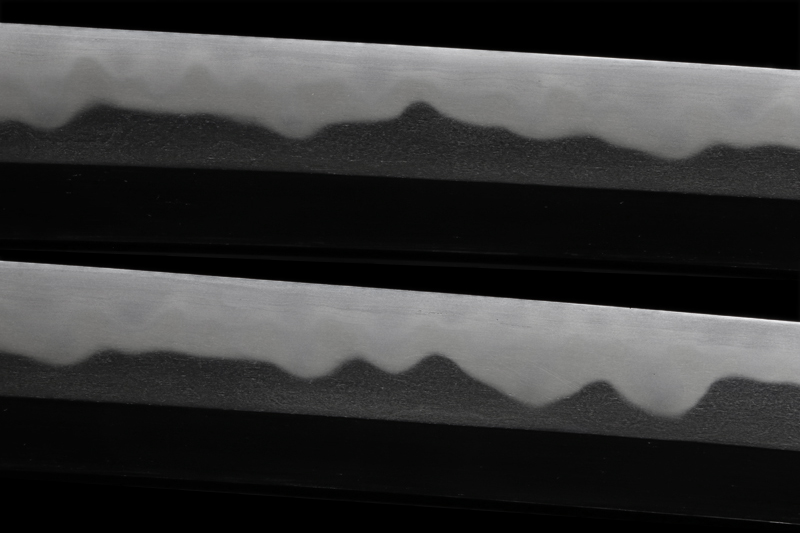
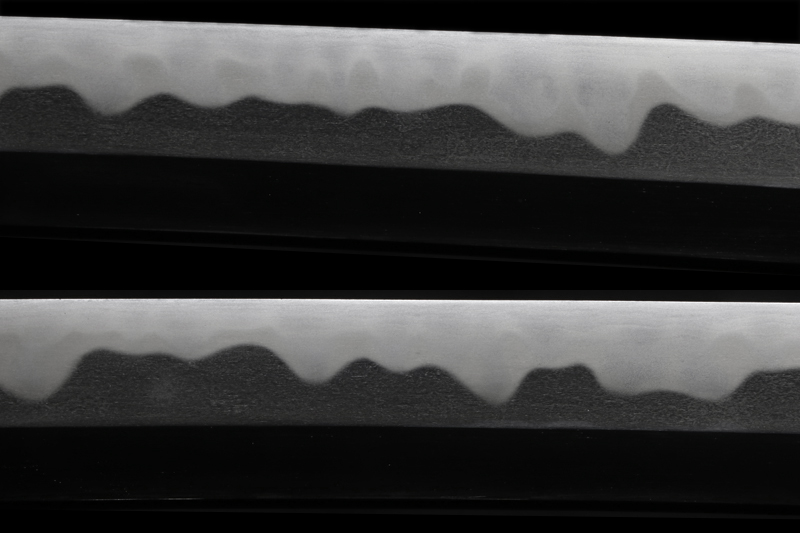
Hamon is gunome-midare, mixed with ko-gunome and choji-style ha, ashi enters, ko-nie attaches with a nioi base, kinsuji enters brilliantly, sunagashi is applied in many layers, and the nioiguchi is bright and clear. Boshi is midare-komi and returns in ko-maru.
The hamon is a gunome-midare incorporating small gunome and choji-style elements, with well-defined ashi. It is chiefly nioi-deki with ko-nie, and is further enlivened by abundant kinsuji and repeated strands of sunagashi; the nioiguchi is bright and vividly clear.
The boshi enters midare-komi and returns in a ko-maru.
[tokucho]
Minamoto Moriyoshi's real name was Tanigawa Matsukichi, born in Taisho 9. He forged swords in Yatsushiro City, Kumamoto Prefecture.
In Showa 9, Moriyoshi entered the school of Kongobyoe Moritaka Yasuhiro, and later studied under Enju Taro Nobushige.
For his mei, he took the character "Mori" from the Kongobyoe lineage and called himself "Moriyoshi," but because he was also a disciple of Enju Nobushige, he also began to use the name "Enju Nobutsugu" separately from "Moriyoshi" in Showa 16.
In Showa 52, he produced a Peace Commemoration Sword. Since the 1st Sword Making Technique Exhibition in Showa 29, he received numerous awards through continuous submissions, and became a Mukansa swordsmith in Showa 60.
He raised his reputation through Minamoto Kiyomaro utsushi and left behind many masterpieces including powerful Soshu-den works, but regrettably passed away at age 70 in Heisei 2.
This work is a Kiyomaro utsushi blade, which Moriyoshi was most skilled at, and in addition to the grand sugata, the kinsuji working actively within the blade is magnificent.
Among his works, Kiyomaro utsushi wakizashi are extremely rare, and despite being a wakizashi, it has a wide mihaba and a grand finish showing the charm of Soshu-den.
Please take this opportunity to add this superior Kiyomaro utsushi wakizashi by Moriyoshi to your collection.
Minamoto Moriyoshi, whose real name was Tanigawa Matsukichi, was born in 1920 (Taishō 9). He worked as a swordsmith in Yatsushiro City, Kumamoto Prefecture.
In 1934 (Shōwa 9), Moriyoshi entered the school of Kongobei Moritaka Yasuhiro, and later studied under Enju Taro Nobushige.
In his signature, he adopted the character “Mori” (盛) from the Kongobei lineage and took the name “Moriyoshi.” However, as he was also a disciple of Nobushige, he began using the name “Enju Nobutsugu” in 1941 (Shōwa 16) in addition to “Moriyoshi.”
In 1977 (Shōwa 52), he produced a Peace Commemoration Sword. From the 1st Sword Forging Techniques Exhibition in 1954 (Shōwa 29) onward, he exhibited continuously, receiving numerous awards, and in 1985 (Shōwa 60) he was recognized as a Mukansa swordsmith.
He gained particular renown for his utsushi works in the style of Minamoto Kiyomaro, and left behind many outstanding blades, including powerful masterpieces in the Sōshū tradition. Regrettably, he passed away in 1990 (Heisei 2) at the age of 70.
This blade is an outstanding Kiyomaro-style utsushi by Moriyoshi, a style for which he was especially renowned. It presents a bold and powerful sugata, and the vigorous kinsuji working within the hamon is particularly striking.
Kiyomaro-style wakizashi by Moriyoshi are exceedingly rare, and this piece, despite being a wakizashi, shows a wide mihaba and a grand workmanship that vividly expresses the character of the Sōshū tradition.
A superb example of Moriyoshi’s Kiyomaro-style wakizashi, it would make a distinguished addition to any collection.
[koshirae]
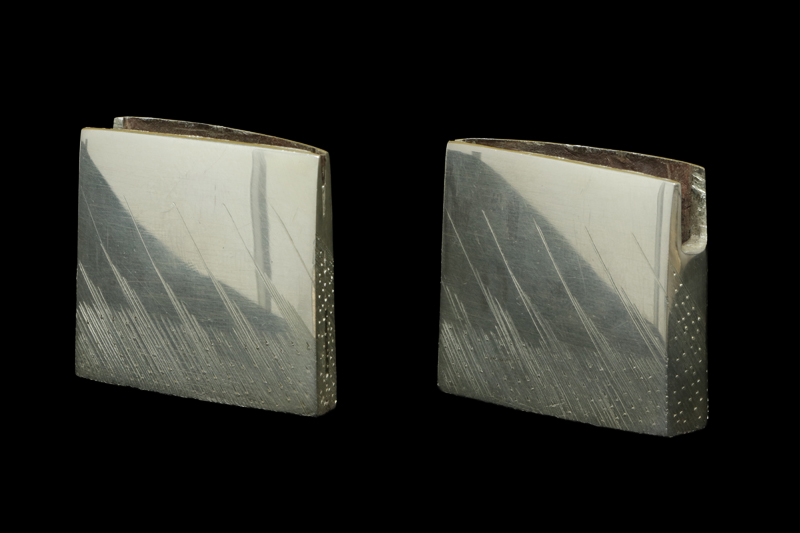
Habaki: Solid silver single-layer Koshi-yujo
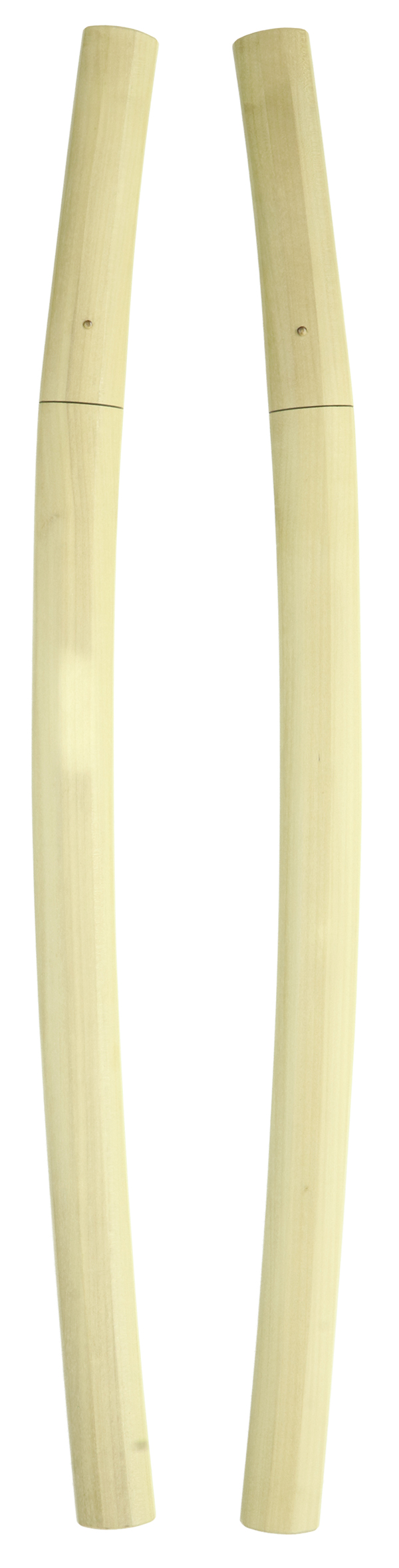
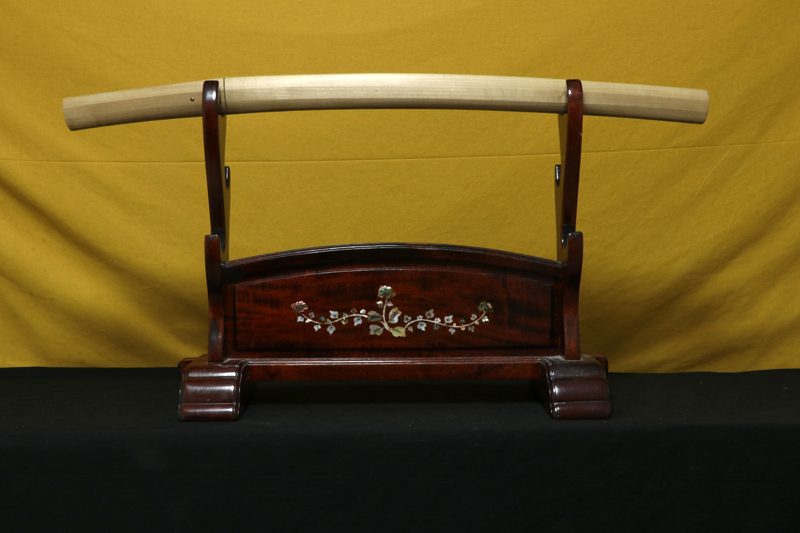
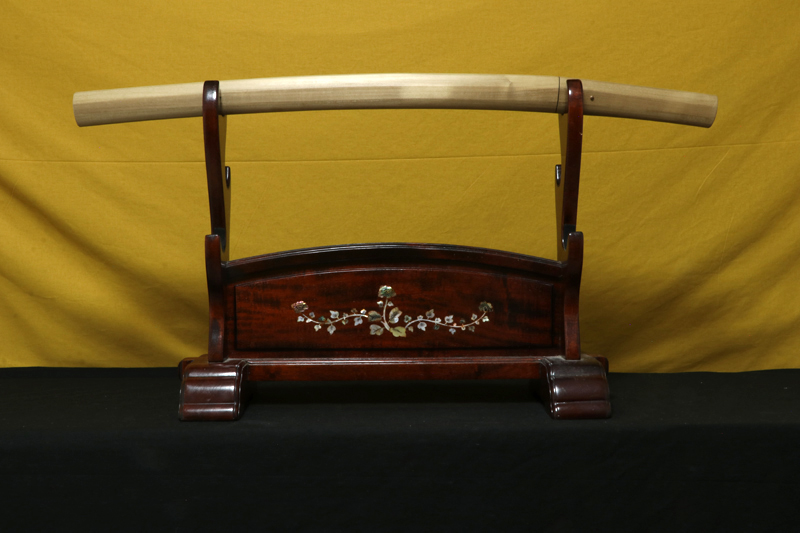
Saya: Shirasaya
[condition of blade]
Togi: Good.
Kizu: There are no flaws that would be considered defects.
Machine translation from the shop's Japanese · may contain errors ·
Kumamoto Prefecture Important Intangible Cultural Property.
Mukansa sword smith.
Minamoto Moriyoshi
An excellent Kiyomaro utsushi wakizashi by Mukansa swordsmith Minamoto Moriyoshi.
With a wide mihaba and a grand, powerful sugata featuring an o-kissaki, it is a superior work where active hataraki appears abundantly in the hamon.
Kiyomaro utsushi wakizashi by Moriyoshi are extremely rare and are truly precious blades.
A fine Kiyomaro-style wakizashi by Mukansa swordsmith Minamoto Moriyoshi. With its wide mihaba and large kissaki, it presents a grand and powerful sugata, while the hamon is enlivened by abundant activity. Wakizashi in the Kiyomaro style by Moriyoshi are extremely rare, making this a truly valuable example.
[sugata]
Shinogi-zukuri, iori-mune, wide mihaba, standard kasane, torii-zori, o-kissaki. Nakago is ubu, yasurime are kiri, nakago-jiri is kurijiri.
Shinogi-zukuri with an iori-mune; wide mihaba and standard kasane, with pronounced torii-zori and a large kissaki.
The nakago is ubu, with kiri yasurime, and the nakago-jiri is kurijiri.
[horimono]
The horimono is a bohi with kata-chiri that becomes kakinagashi below the habaki.
The blade is carved with a bohi of one-sided termination, which flows off in kakinagashi beneath the habaki.
[jigane]
Jigane is itame-hada mixed slightly with mokume, ji-nie attaches thickly in mijin, and thick chikei enters.
The jihada is itame, mixed with a slight mokume pattern, with dense, finely grained ji-nie forming thickly, and strong chikei running through the surface.
[hamon]
Hamon is gunome-midare, mixed with ko-gunome and choji-style ha, ashi enters, ko-nie attaches with a nioi base, kinsuji enters brilliantly, sunagashi is applied in many layers, and the nioiguchi is bright and clear. Boshi is midare-komi and returns in ko-maru.
The hamon is a gunome-midare incorporating small gunome and choji-style elements, with well-defined ashi. It is chiefly nioi-deki with ko-nie, and is further enlivened by abundant kinsuji and repeated strands of sunagashi; the nioiguchi is bright and vividly clear.
The boshi enters midare-komi and returns in a ko-maru.
[tokucho]
Minamoto Moriyoshi's real name was Tanigawa Matsukichi, born in Taisho 9. He forged swords in Yatsushiro City, Kumamoto Prefecture.
In Showa 9, Moriyoshi entered the school of Kongobyoe Moritaka Yasuhiro, and later studied under Enju Taro Nobushige.
For his mei, he took the character "Mori" from the Kongobyoe lineage and called himself "Moriyoshi," but because he was also a disciple of Enju Nobushige, he also began to use the name "Enju Nobutsugu" separately from "Moriyoshi" in Showa 16.
In Showa 52, he produced a Peace Commemoration Sword. Since the 1st Sword Making Technique Exhibition in Showa 29, he received numerous awards through continuous submissions, and became a Mukansa swordsmith in Showa 60.
He raised his reputation through Minamoto Kiyomaro utsushi and left behind many masterpieces including powerful Soshu-den works, but regrettably passed away at age 70 in Heisei 2.
This work is a Kiyomaro utsushi blade, which Moriyoshi was most skilled at, and in addition to the grand sugata, the kinsuji working actively within the blade is magnificent.
Among his works, Kiyomaro utsushi wakizashi are extremely rare, and despite being a wakizashi, it has a wide mihaba and a grand finish showing the charm of Soshu-den.
Please take this opportunity to add this superior Kiyomaro utsushi wakizashi by Moriyoshi to your collection.
Minamoto Moriyoshi, whose real name was Tanigawa Matsukichi, was born in 1920 (Taishō 9). He worked as a swordsmith in Yatsushiro City, Kumamoto Prefecture.
In 1934 (Shōwa 9), Moriyoshi entered the school of Kongobei Moritaka Yasuhiro, and later studied under Enju Taro Nobushige.
In his signature, he adopted the character “Mori” (盛) from the Kongobei lineage and took the name “Moriyoshi.” However, as he was also a disciple of Nobushige, he began using the name “Enju Nobutsugu” in 1941 (Shōwa 16) in addition to “Moriyoshi.”
In 1977 (Shōwa 52), he produced a Peace Commemoration Sword. From the 1st Sword Forging Techniques Exhibition in 1954 (Shōwa 29) onward, he exhibited continuously, receiving numerous awards, and in 1985 (Shōwa 60) he was recognized as a Mukansa swordsmith.
He gained particular renown for his utsushi works in the style of Minamoto Kiyomaro, and left behind many outstanding blades, including powerful masterpieces in the Sōshū tradition. Regrettably, he passed away in 1990 (Heisei 2) at the age of 70.
This blade is an outstanding Kiyomaro-style utsushi by Moriyoshi, a style for which he was especially renowned. It presents a bold and powerful sugata, and the vigorous kinsuji working within the hamon is particularly striking.
Kiyomaro-style wakizashi by Moriyoshi are exceedingly rare, and this piece, despite being a wakizashi, shows a wide mihaba and a grand workmanship that vividly expresses the character of the Sōshū tradition.
A superb example of Moriyoshi’s Kiyomaro-style wakizashi, it would make a distinguished addition to any collection.
[koshirae]
Habaki: Solid silver single-layer Koshi-yujo
Saya: Shirasaya
[condition of blade]
Togi: Good.
Kizu: There are no flaws that would be considered defects.
The twentieth century nearly killed the craft twice: wartime distortion, then the occupation ban. The NBTHK’s founding in 1948 and licensed forging from 1953 rebuilt the sword as an art, crowned by Living National Treasures and the mukansa rank.
Within 3 days of the item's arrival, we offer a refund or an exchange. Return shipping and the bank transfer fee for the refund are at the customer's expense.

 NihontoWatch