The twentieth century nearly killed the craft twice: wartime distortion, then the occupation ban. The NBTHK’s founding in 1948 and licensed forging from 1953 rebuilt the sword as an art, crowned by Living National Treasures and the mukansa rank.
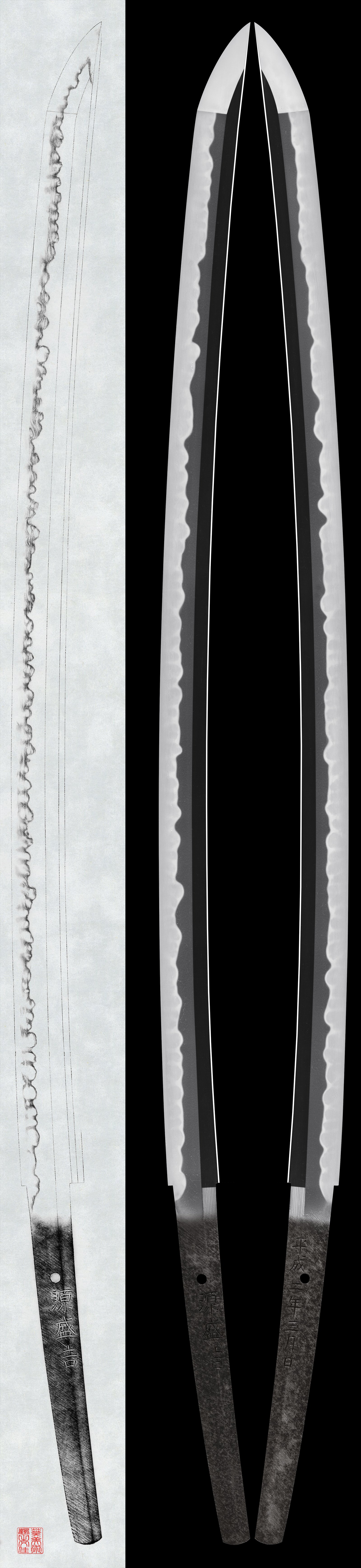
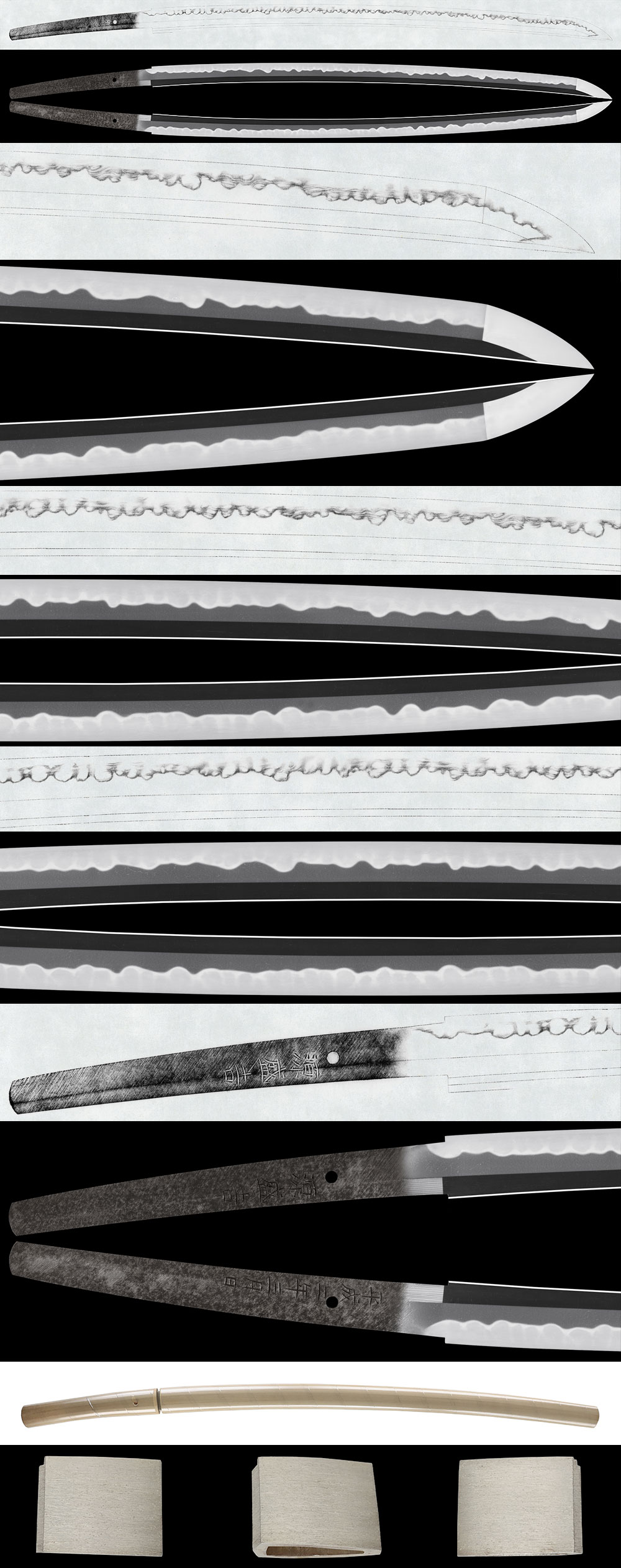
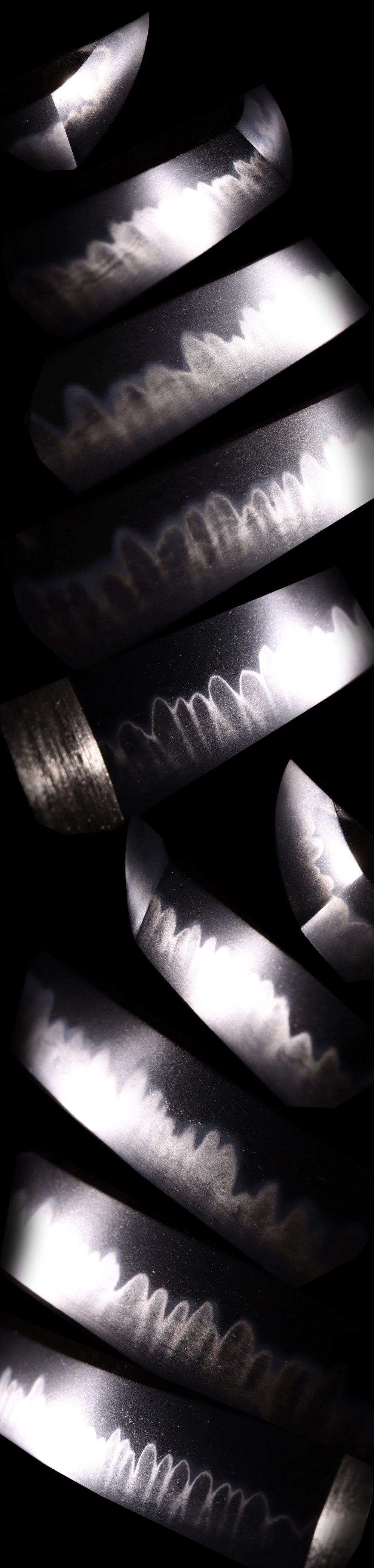
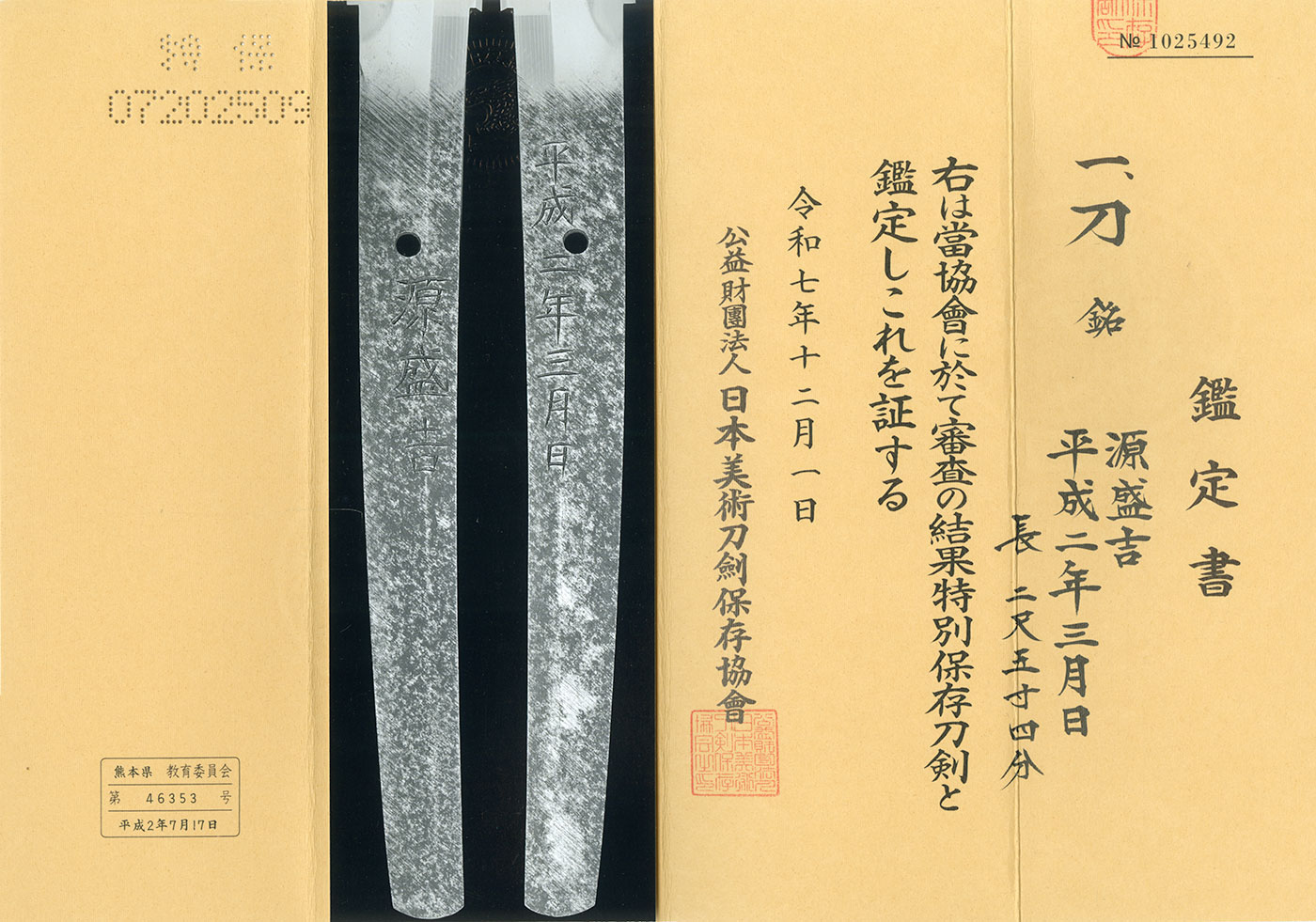
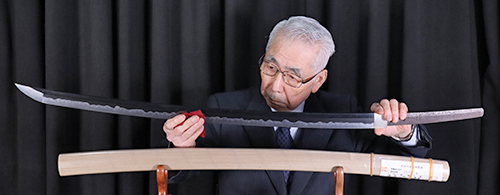
Katana in Shirasaya (NBTHK Tokubetsu Hozon Token). (We divide 4 sections for each sword as Saijyo Saku, Jyojyo Saku, Jyo Saku and Regular Saku). This work is ranked as Jyo Saku for Minamoto Moriyoshi. Shape: Wide mihaba and thick kasane with an extended kissaki, creating a powerful and magnificent work. Jigane: Ko-nie deki, the steel is well-forged and tightly compacted, forming a refined jigane. Hamon: Nie deki, gunome midare with a deep nioiguchi, the boshi is midarekomi and returns in a pointed manner. Within the ha, there are sunagashi and kinsuji activities, creating a splendid work in the style of Kiyomaro. Features: Minamoto Moriyoshi (real name Matsukichi) was a swordsmith from Yatsushiro City in Kumamoto, born in 1920. In 1934, he entered under Kongohei Moritaka Yasuhiro. He further studied under Enju Taro Nobushige, who had been invited to Yatsushiro by Moritaka. In 1941, he received the name “Enju Nobutsugu Minamoto Moriyoshi” from his master Moritaka Yasuhiro. In 1952, responding to a call from Kurihara Hikosaburo, he produced part of the Peace Commemorative Swords, of which 300 were made to commemorate the signing of the San Francisco Peace Treaty. In 1954, he received official sword-making approval. He exhibited continuously from the first Modern Swordsmith Exhibition. Around 1978 to 1979, he enhanced his reputation with works in the style of Minamoto Kiyomaro. In 1985, he became a Mukansa swordsmith. He left outstanding masterpieces in the powerful Soshu tradition and passed away in 1990 at the age of 70. Aoi Art’s Comment: As a Mukansa swordsmith, Tanigawa Moriyoshi left many notable masterpieces and continued producing works in the Soshu-Bizen tradition. There are likely traces indicating that he used self-produced steel, resulting in a distinctive jigane. In particular, the steel of this work is very well forged and refined. It is regrettable that he did not become a Living National Treasure, as he was certainly worthy of such a title. This work is a copy of the most renowned Kiyomaro of the Shinshinto period. We highly recommend acquiring this excellent piece. NBTHK Tokubetsu Hozon Token Aoi Art estimation paper. Whole Oshigata
Certificate reading — 銘 源盛吉 平成二年三月日
Offered by Aoi Art
9 on the market


As written by the shop
Kumamoto · around 1926-1989
9 pieces on the market now
Shōwa to the present: destruction and revival
The twentieth century nearly killed the craft twice: wartime distortion, then the occupation ban. The NBTHK’s founding in 1948 and licensed forging from 1953 rebuilt the sword as an art, crowned by Living National Treasures and the mukansa rank.
A Hozon-certified blade judged to show notably superior workmanship and a better state of preservation. The bar is higher: re-tempered blades and most unsigned Muromachi/Edo works are excluded.
The NBTHK (Nihon Bijutsu Tōken Hozon Kyōkai, the Society for the Preservation of Japanese Art Swords) is a public-interest incorporated foundation founded in 1948 and supervised by Japan’s Agency for Cultural Affairs (Bunkachō); it is based at the Japanese Sword Museum in Tokyo. Its expert panels physically examine each submitted work (shinsa) and issue a certificate (kanteishō) ranking it by artistic and historical merit. NBTHK papers are the most widely recognized standard of authentication for Japanese swords and fittings.
NBTHK official siteIf you wish to return an item, please notify us within 3 days of receipt. After this period we cannot accept cancellations. Please ship the return to us within 5 business days. Cancellation is conditional on the item being kept in the same condition as at the time of sale, so please handle it with care.
¥1,200,000