The Haitōrei edict of 1876 ended sword wearing and nearly ended the craft itself. Military demand and imperial patronage kept a remnant alive, and in 1906 Gassan Sadakazu and Miyamoto Kanenori were named Artists to the Imperial Household.
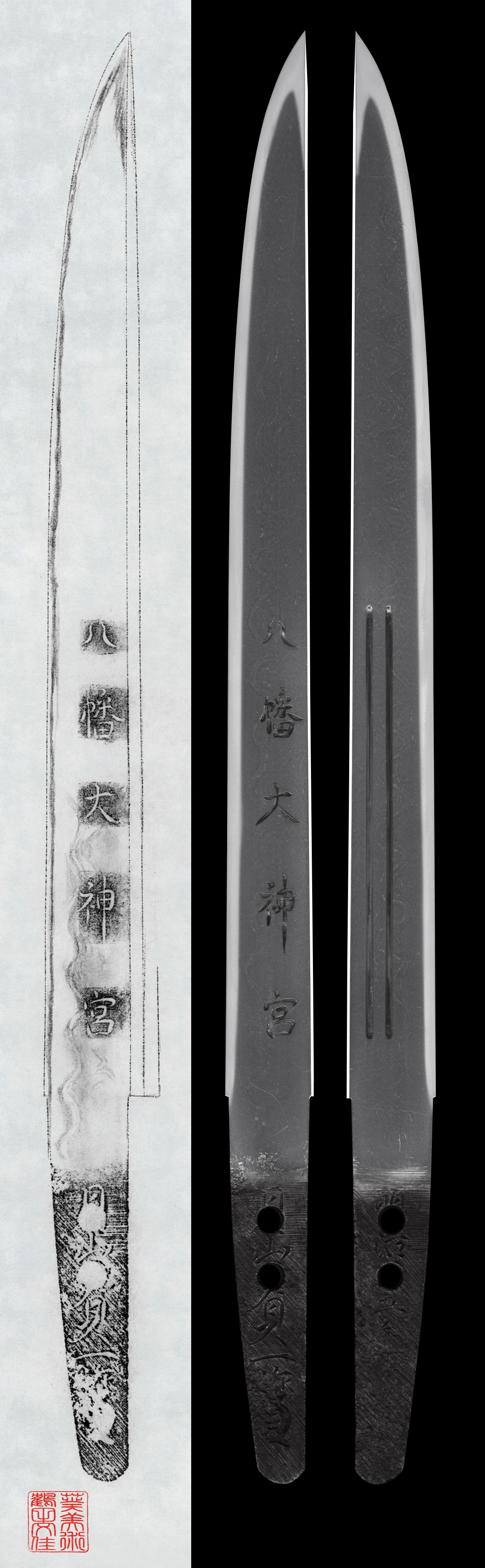
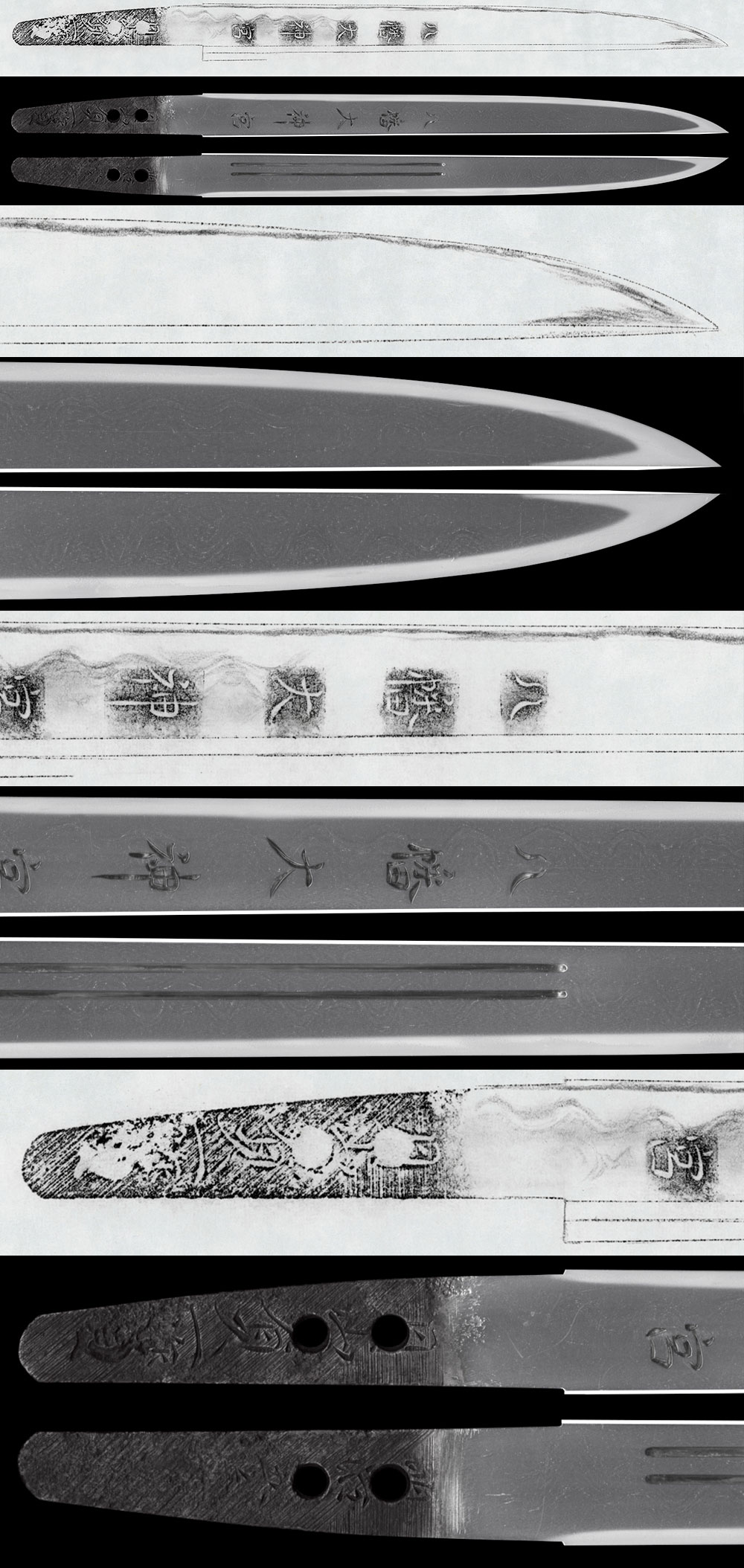
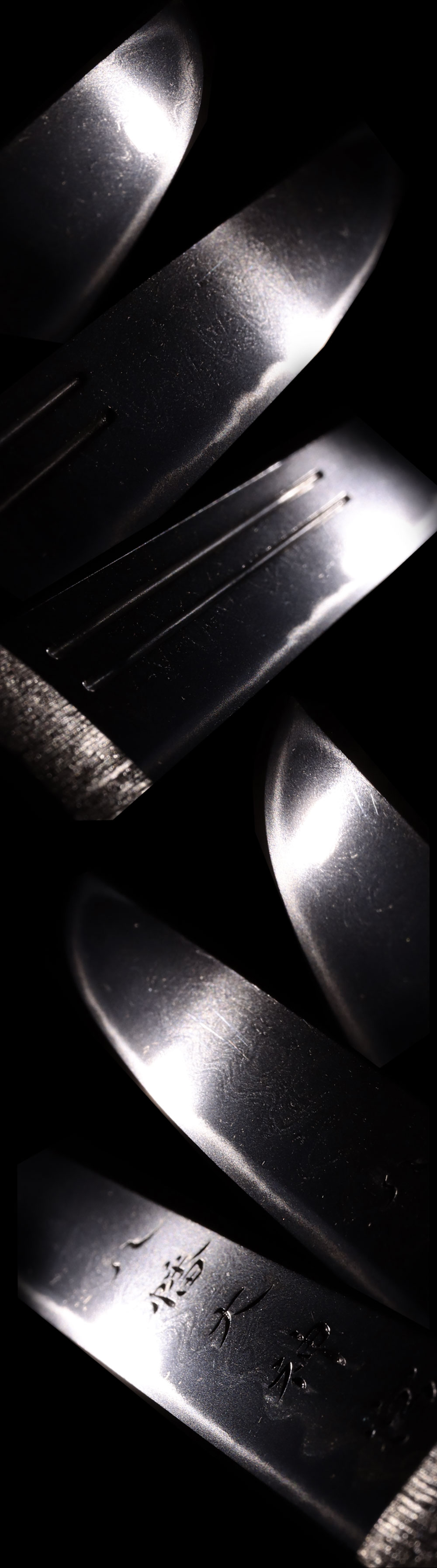
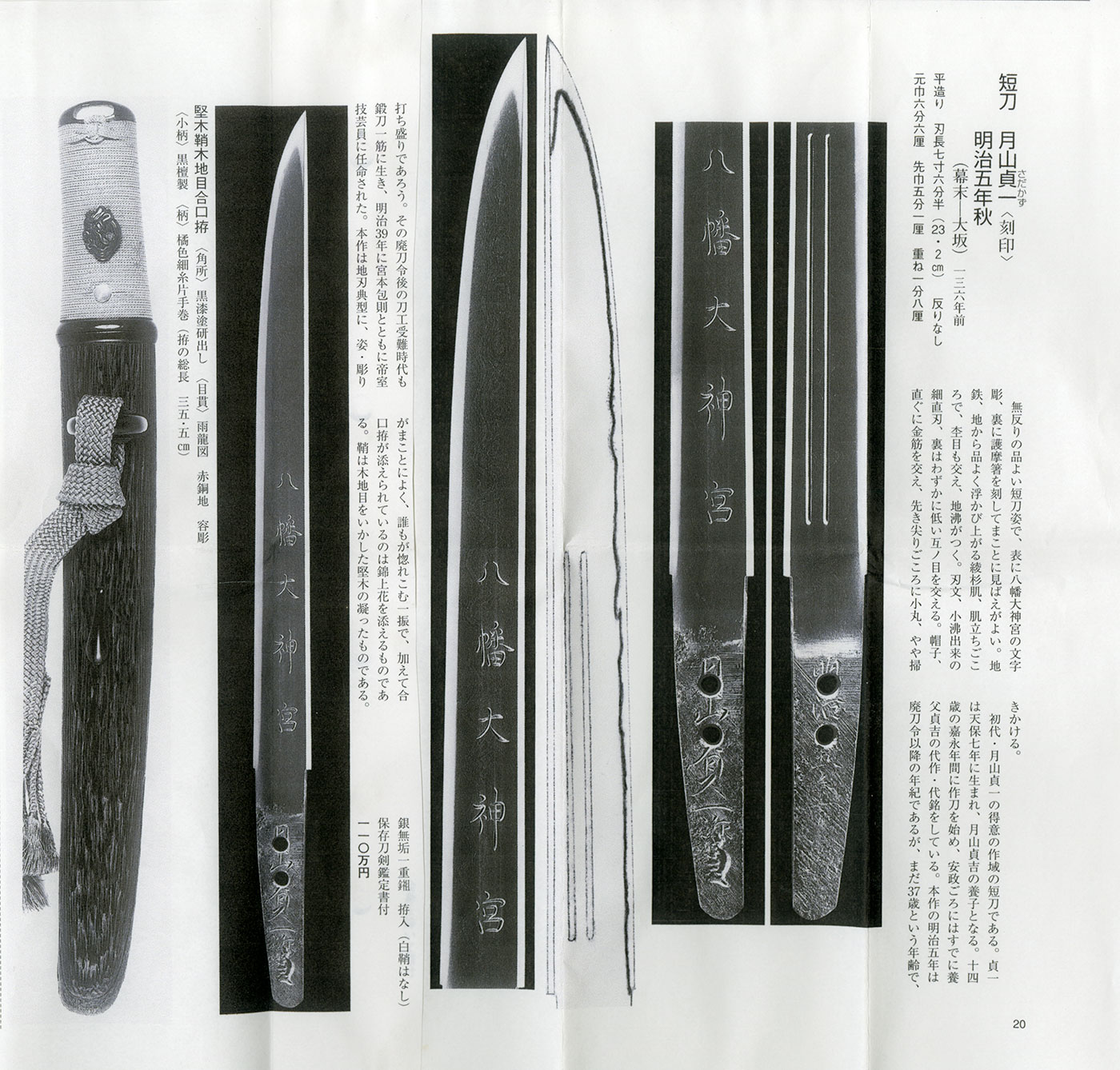
Tanto in Shirasaya, with Koshirae (NBTHK Hozon Token) (We divide 4 sections for each sword as Saijyo Saku, Jyojyo Saku, Jyo Saku and Regular Saku). This work is ranked as Jyo Saku for Gassan Sadakazu. Shape: Standard proportions in width and thickness; the omote is engraved with Hachiman Daijingu, and the ura has double grooves (futasuji-hi). Jigane: Shows a combination of fine ko-itame hada and ayasugi hada clearly. Hamon: Straight suguha with a deep nioiguchi; the boshi returns in a rounded form. Features: Gassan Sadakazu was the adopted son of Sadayoshi, also known as Yagoro, with the art name Unryushi. He was appointed Teishitsu Gigeiin (Imperial Court Artist) on April 4, 1906. He passed away in July 1918 at an advanced age. He produced swords for 70 years. Aoi Art’s Comment: The koshirae is beautiful and well refined. The blade clearly shows ayasugi hada along with a finely compacted jigane. NBTHK Hozon Token Shipping overseas is not included.
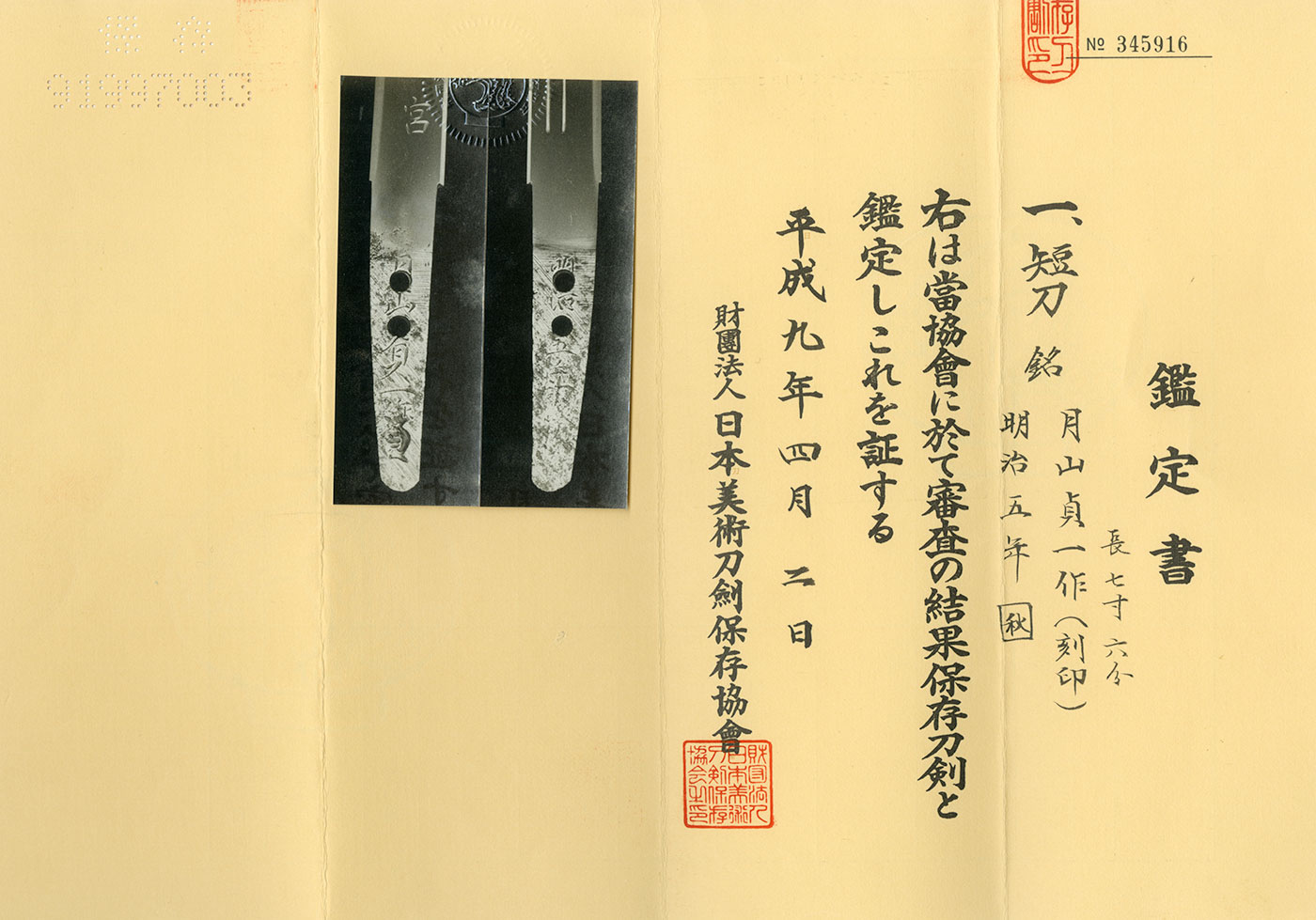
Certificate reading — 銘 月山貞一作(刻印) 明治五年秋
Offered by Aoi Art
6 on the market


As written by the shop
Yamato · around 1907-1995
Tōken Taikan top 49%
6 pieces on the market now
Meiji: survival after the edict
The Haitōrei edict of 1876 ended sword wearing and nearly ended the craft itself. Military demand and imperial patronage kept a remnant alive, and in 1906 Gassan Sadakazu and Miyamoto Kanenori were named Artists to the Imperial Household.
Certifies a genuine blade worth preserving: a signature confirmed correct, or, if unsigned, an era, province, and school that the NBTHK can reliably identify.
The NBTHK (Nihon Bijutsu Tōken Hozon Kyōkai, the Society for the Preservation of Japanese Art Swords) is a public-interest incorporated foundation founded in 1948 and supervised by Japan’s Agency for Cultural Affairs (Bunkachō); it is based at the Japanese Sword Museum in Tokyo. Its expert panels physically examine each submitted work (shinsa) and issue a certificate (kanteishō) ranking it by artistic and historical merit. NBTHK papers are the most widely recognized standard of authentication for Japanese swords and fittings.
NBTHK official siteIf you wish to return an item, please notify us within 3 days of receipt. After this period we cannot accept cancellations. Please ship the return to us within 5 business days. Cancellation is conditional on the item being kept in the same condition as at the time of sale, so please handle it with care.
¥800,000