Modern sword Chikusyu ju Muneshige saku with Koshirae.
Chikushu ju Muneshige saku. A work by a modern swordsmith who studied under Munehiro and was a fellow disciple of Munetsugu.
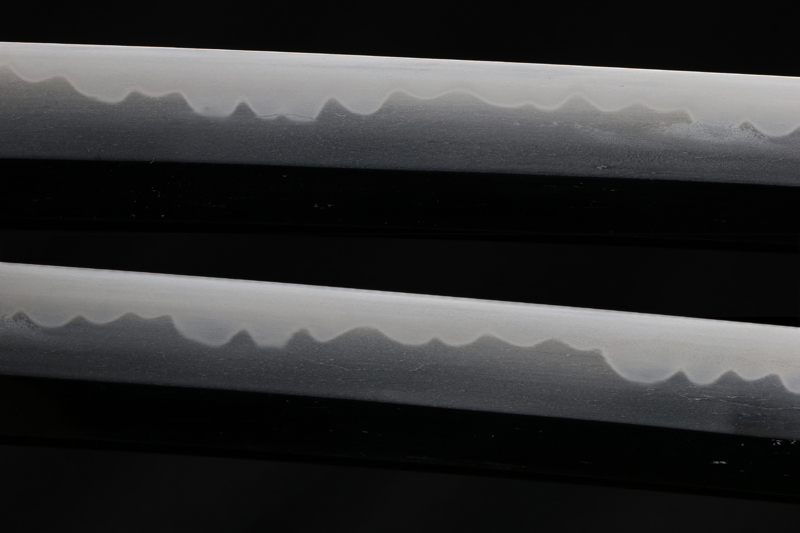
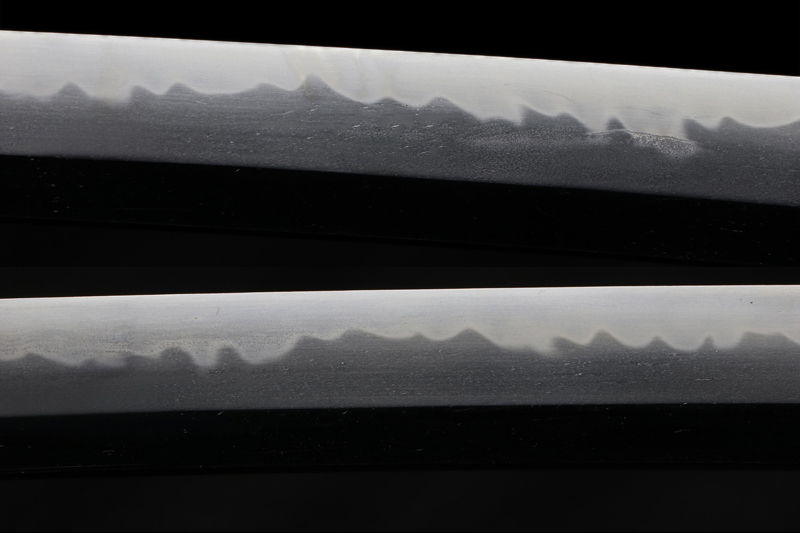
The blade has been repolished, and it is an impressive work with a well-tightened itame hada and a powerful gunome hamon.
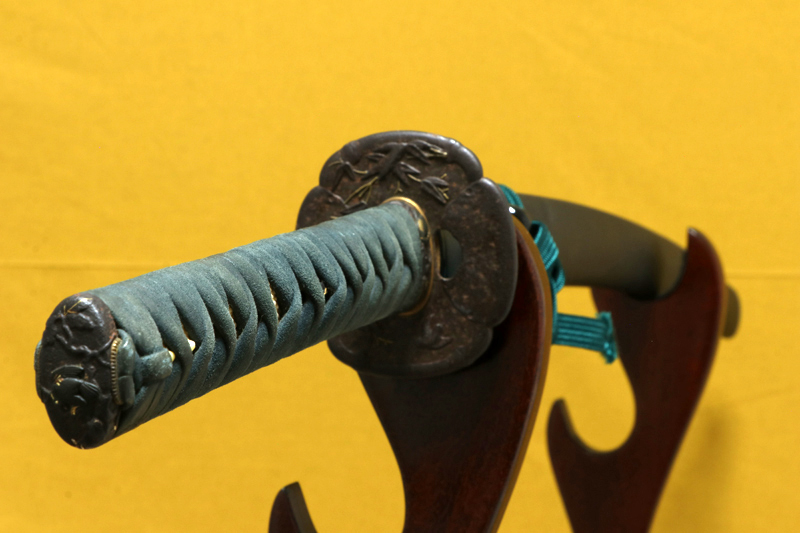
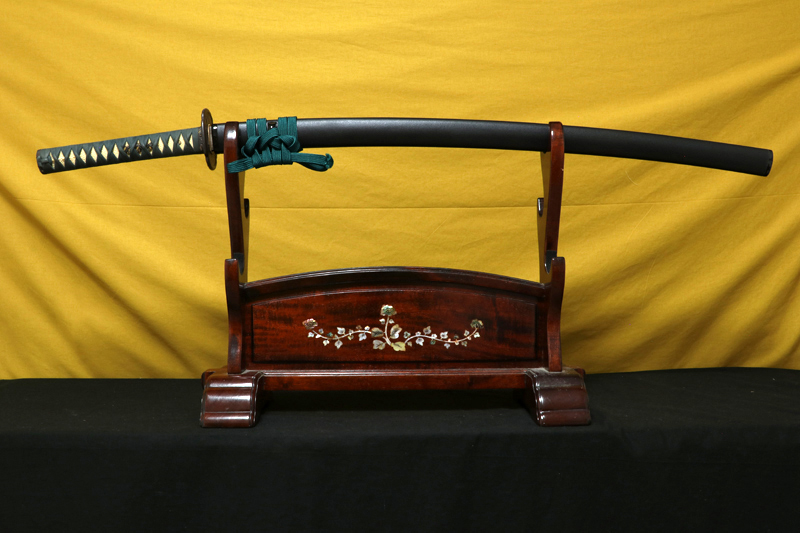
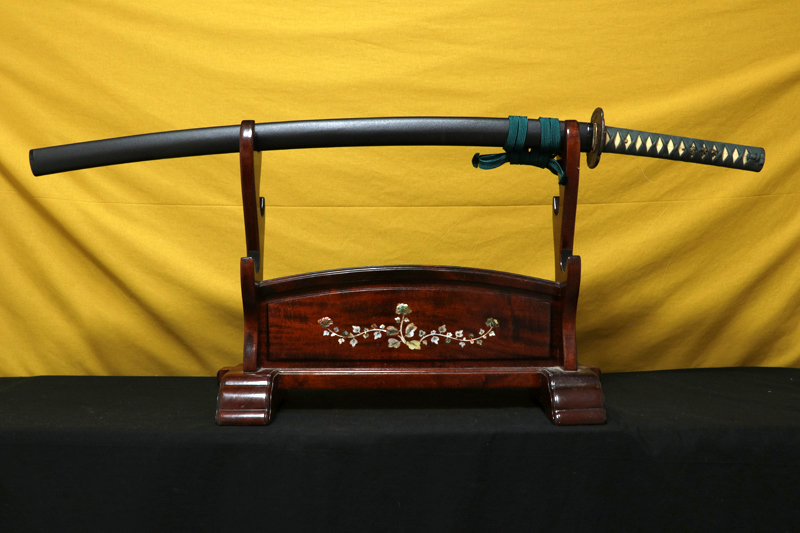
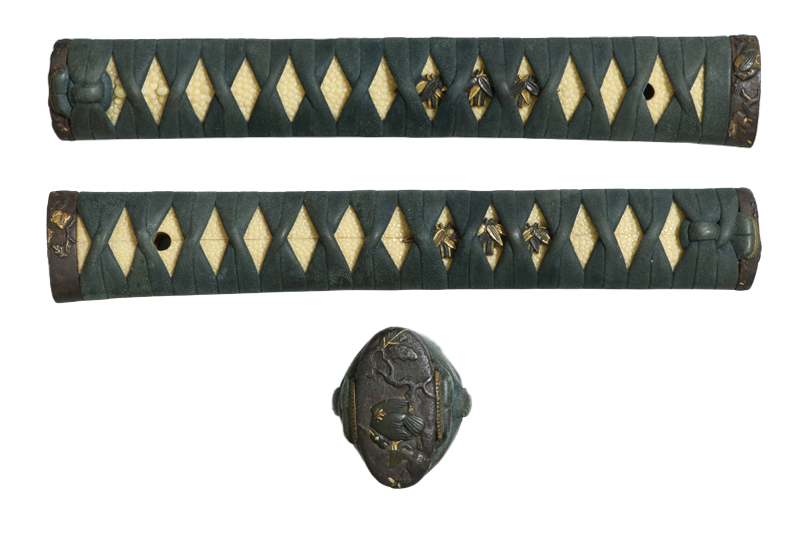
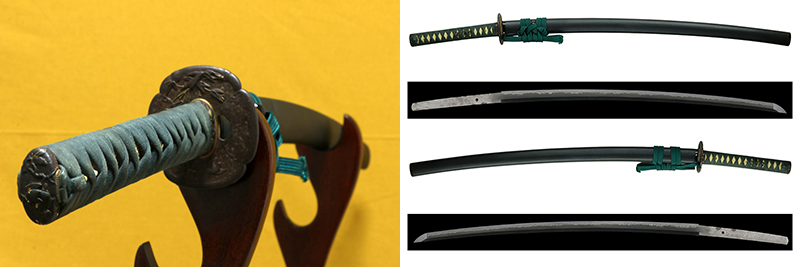
The koshirae uses Edo period fittings paired with a deerskin-wrapped tsuka, and the saya has been newly made.
It is a modern wazamono in good condition that can be used for iai and shizan as well as for appreciation.
A work by Chikushu ju Muneshige, a modern swordsmith who studied under Munehiro and was a fellow disciple of Munetsugu.
The blade has been repolished and displays a finely forged itame hada with a powerful gunome hamon, making it a highly impressive piece.
The koshirae is mounted with Edo period fittings, paired with a deerskin-wrapped handle, and the scabbard has been newly made.
In excellent condition, this modern wazamono is suitable not only for appreciation, but also for iaido and test cutting.
"Sword figure"
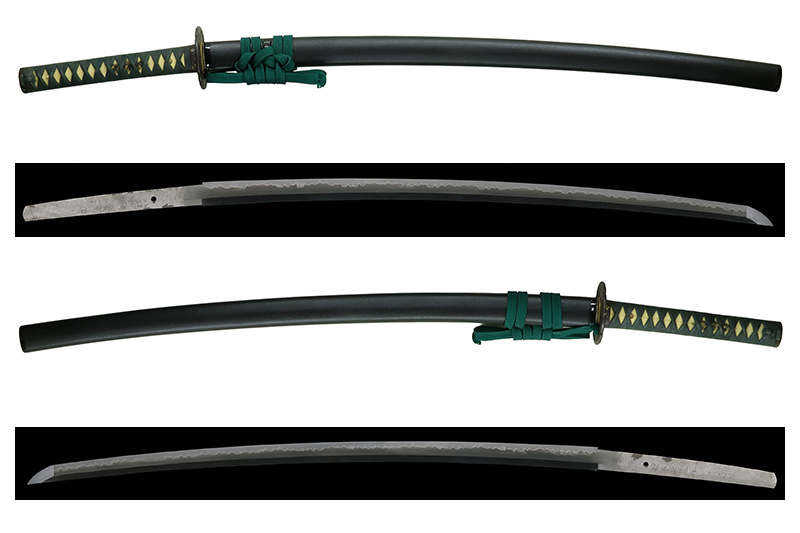
Shinogi-zukuri, iori mune, wide mihaba and standard kasane, torii sori, o-kissaki. The nakago is ubu with kesho yasurime, and the nakagojiri is iriyamagata.
"Jigane"
The jigane is itame hada that is well-tightened, mixed with mokume in places and showing a nagare-kokoro, with ji-nie and chikei; it is the strong jigane characteristic of the Mune school.
"Hamon"
The hamon is gunome with a saka-gakari, with nie on the ha-buchi and sunagashi, and there are yo and kinsuji activity in the ha. The boshi is midare-komi and returns in komaru.
"Detailed"
Chikushu ju Muneshige, real name Koshiro Shigeaki. Born in Showa 7.
His teacher was the swordsmith Munehiro, who was the father of the swordsmith Munetsugu, and he was in a fellow disciple relationship with Munetsugu.
Among the works of Muneshige, there are swords produced with the mei "Sasanotsuyu" prefixed to the swordsmith mei, and like the works of Munetsugu, they receive high praise as modern wazamono with excellent sharpness.
This work is thought to have probably been carefully preserved for appreciation. However, because rust had formed on the blade, a repolish was performed. The jigane exhibits a well-tightened itame hada, and the hamon has a powerful gunome; it is a wonderful work worth seeing.
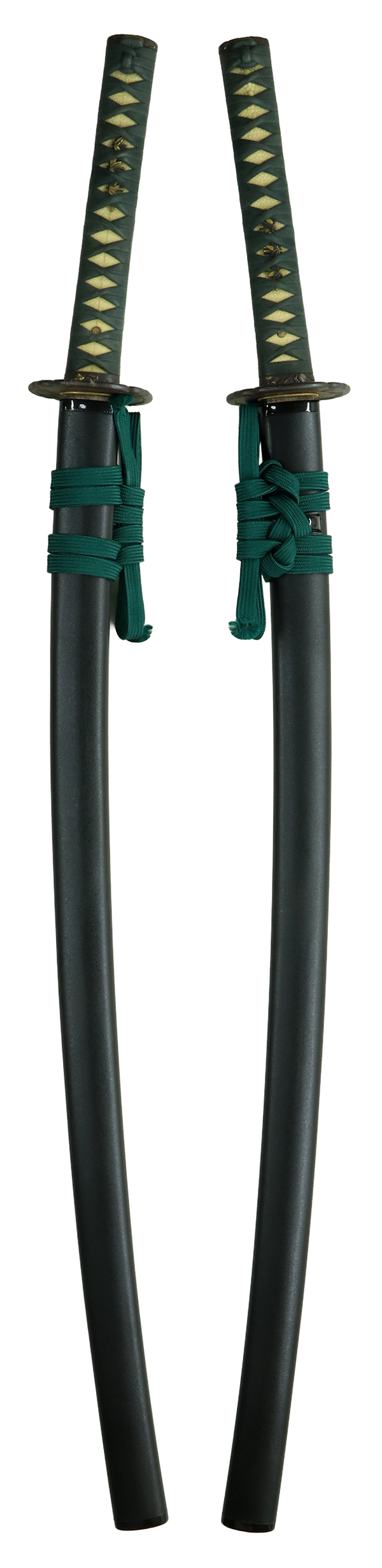
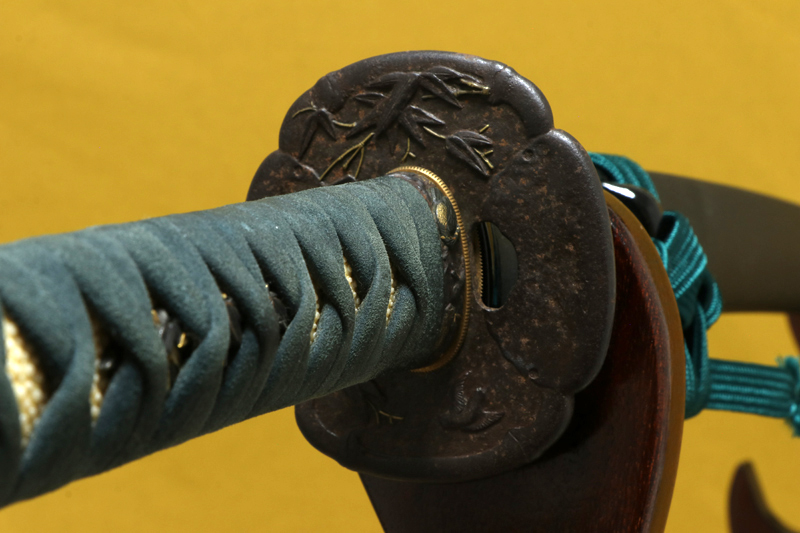
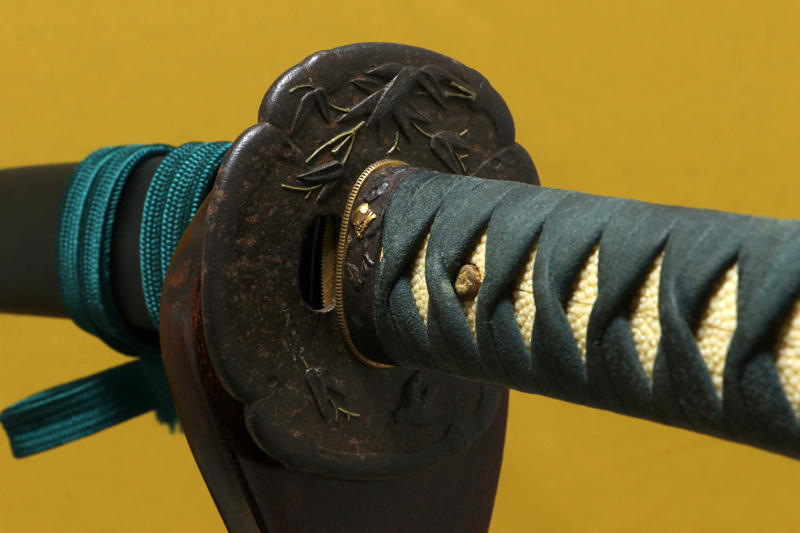
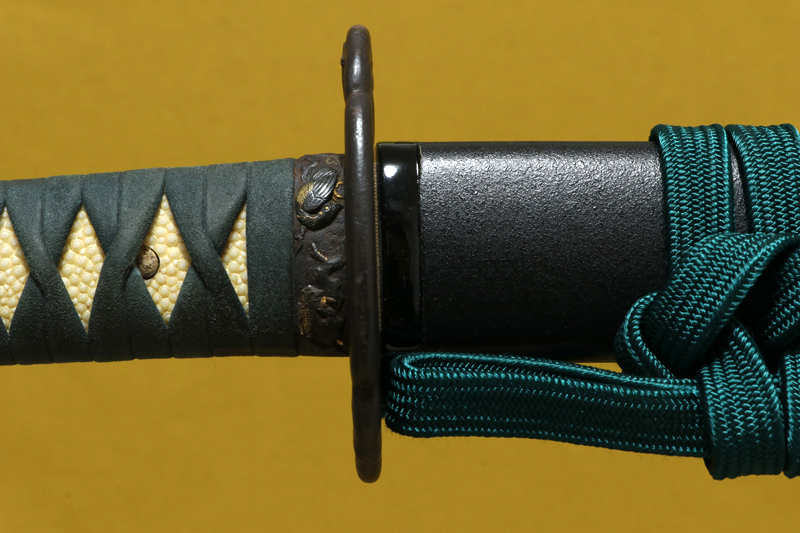
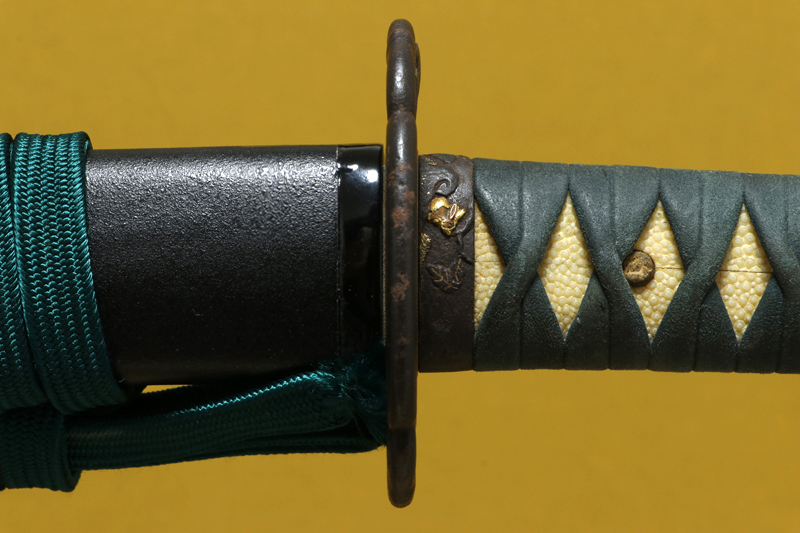
The koshirae is tailored using Edo period fittings, and the tsuka is wrapped with deerskin. The saya was newly remade.
Also, for about 15cm on the ha side near the koiguchi, Bakelite reinforcement has been added to prevent cracking.
Both the blade and koshirae maintain the best condition; the blade is excellent in balance and feels light in the hand. It is a sword that can be used for iaido and shizan immediately after purchase, as well as for appreciation.
"Koshirae"
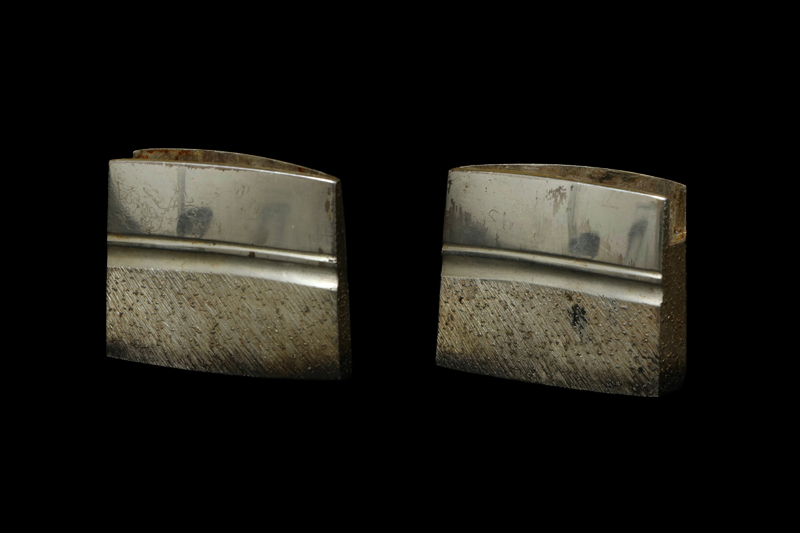
Habaki: Solid silver single-piece Koshi-Yujo.
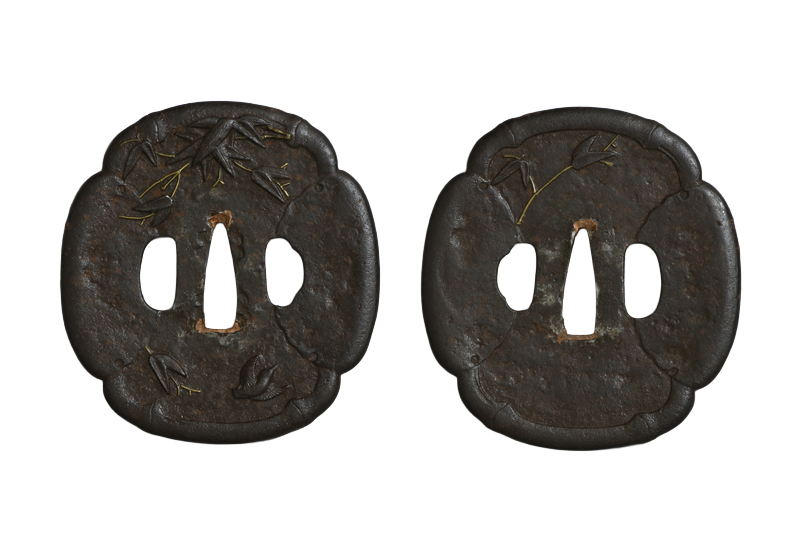
Tsuba: Iron, mokko-gata, design of bamboo grass.
Fuchi-kashira: Iron, design of acorns.
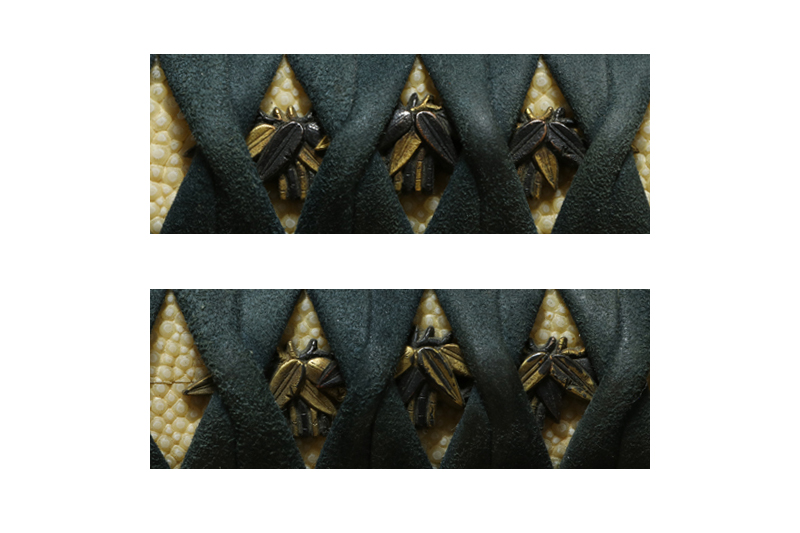
Menuki: Shakudo, design of bamboo grass.
Tsuka: Same with o-tsubu and maki-same, tsuka-ito is deerskin in tetsu-iro morotsumi-maki.
Saya: Kuro-ishime.
"Condition of blade"
Togi: It has just been polished.
Kizu: There are no flaws that would become defects.
Machine translation from the shop's Japanese · may contain errors ·
Modern sword Chikusyu ju Muneshige saku with Koshirae.
Chikushu ju Muneshige saku. A work by a modern swordsmith who studied under Munehiro and was a fellow disciple of Munetsugu.
The blade has been repolished, and it is an impressive work with a well-tightened itame hada and a powerful gunome hamon.
The koshirae uses Edo period fittings paired with a deerskin-wrapped tsuka, and the saya has been newly made.
It is a modern wazamono in good condition that can be used for iai and shizan as well as for appreciation.
A work by Chikushu ju Muneshige, a modern swordsmith who studied under Munehiro and was a fellow disciple of Munetsugu.
The blade has been repolished and displays a finely forged itame hada with a powerful gunome hamon, making it a highly impressive piece.
The koshirae is mounted with Edo period fittings, paired with a deerskin-wrapped handle, and the scabbard has been newly made.
In excellent condition, this modern wazamono is suitable not only for appreciation, but also for iaido and test cutting.
"Sword figure"
Shinogi-zukuri, iori mune, wide mihaba and standard kasane, torii sori, o-kissaki. The nakago is ubu with kesho yasurime, and the nakagojiri is iriyamagata.
"Jigane"
The jigane is itame hada that is well-tightened, mixed with mokume in places and showing a nagare-kokoro, with ji-nie and chikei; it is the strong jigane characteristic of the Mune school.
"Hamon"
The hamon is gunome with a saka-gakari, with nie on the ha-buchi and sunagashi, and there are yo and kinsuji activity in the ha. The boshi is midare-komi and returns in komaru.
"Detailed"
Chikushu ju Muneshige, real name Koshiro Shigeaki. Born in Showa 7.
His teacher was the swordsmith Munehiro, who was the father of the swordsmith Munetsugu, and he was in a fellow disciple relationship with Munetsugu.
Among the works of Muneshige, there are swords produced with the mei "Sasanotsuyu" prefixed to the swordsmith mei, and like the works of Munetsugu, they receive high praise as modern wazamono with excellent sharpness.
This work is thought to have probably been carefully preserved for appreciation. However, because rust had formed on the blade, a repolish was performed. The jigane exhibits a well-tightened itame hada, and the hamon has a powerful gunome; it is a wonderful work worth seeing.
The koshirae is tailored using Edo period fittings, and the tsuka is wrapped with deerskin. The saya was newly remade.
Also, for about 15cm on the ha side near the koiguchi, Bakelite reinforcement has been added to prevent cracking.
Both the blade and koshirae maintain the best condition; the blade is excellent in balance and feels light in the hand. It is a sword that can be used for iaido and shizan immediately after purchase, as well as for appreciation.
"Koshirae"
Habaki: Solid silver single-piece Koshi-Yujo.
Tsuba: Iron, mokko-gata, design of bamboo grass.
Fuchi-kashira: Iron, design of acorns.
Menuki: Shakudo, design of bamboo grass.
Tsuka: Same with o-tsubu and maki-same, tsuka-ito is deerskin in tetsu-iro morotsumi-maki.
Saya: Kuro-ishime.
"Condition of blade"
Togi: It has just been polished.
Kizu: There are no flaws that would become defects.
The twentieth century nearly killed the craft twice: wartime distortion, then the occupation ban. The NBTHK’s founding in 1948 and licensed forging from 1953 rebuilt the sword as an art, crowned by Living National Treasures and the mukansa rank.
Within 3 days of the item's arrival, we offer a refund or an exchange. Return shipping and the bank transfer fee for the refund are at the customer's expense.


 NihontoWatch