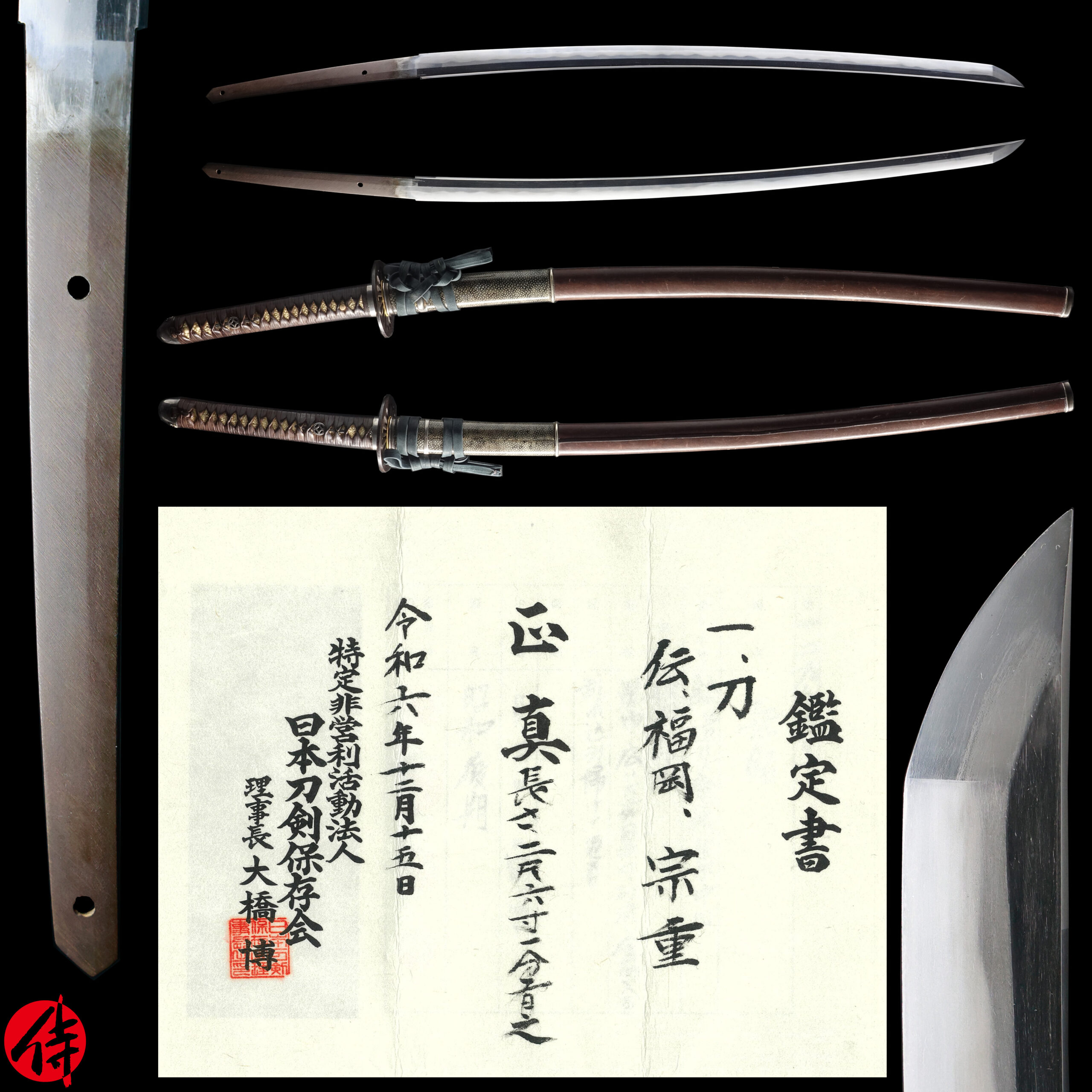
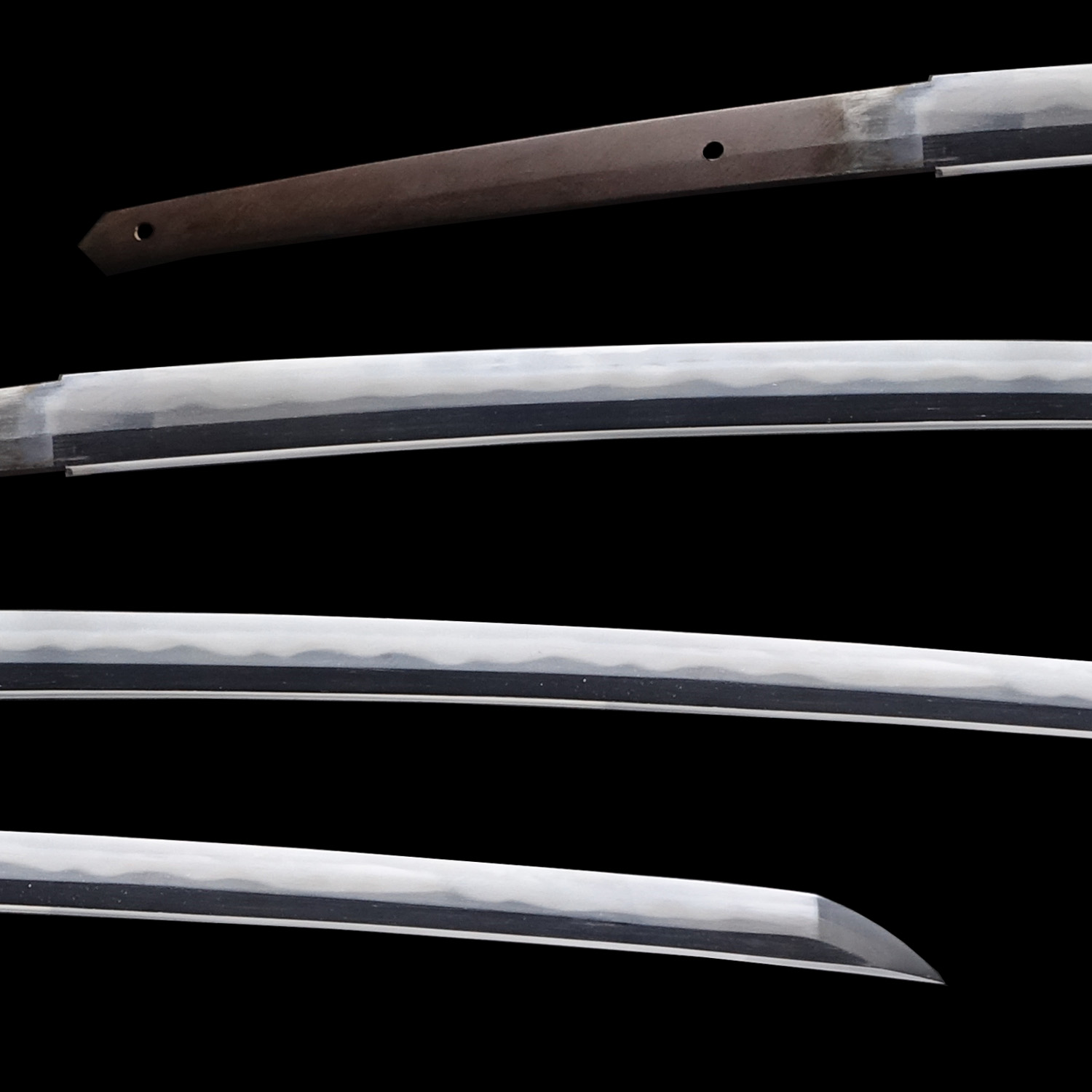
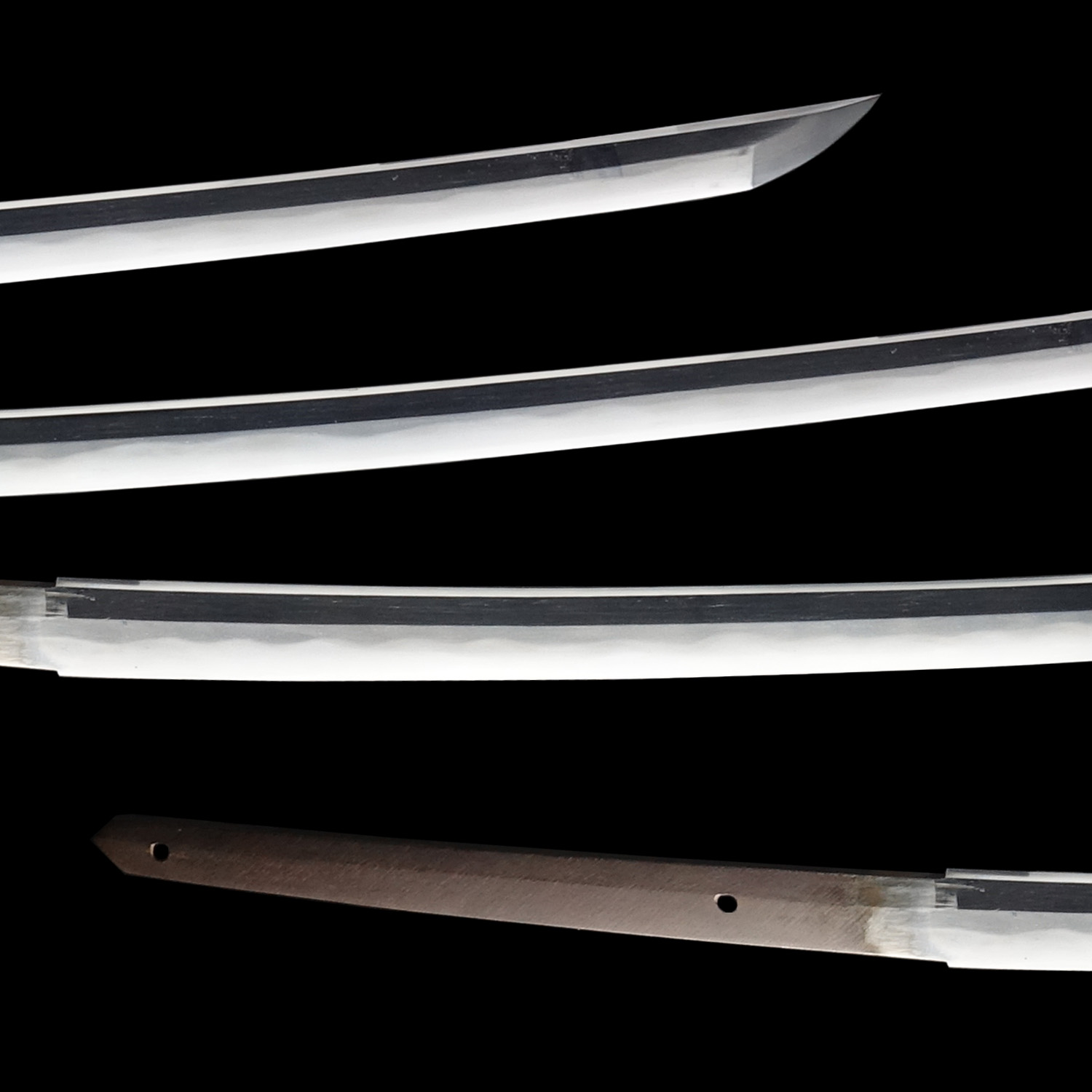
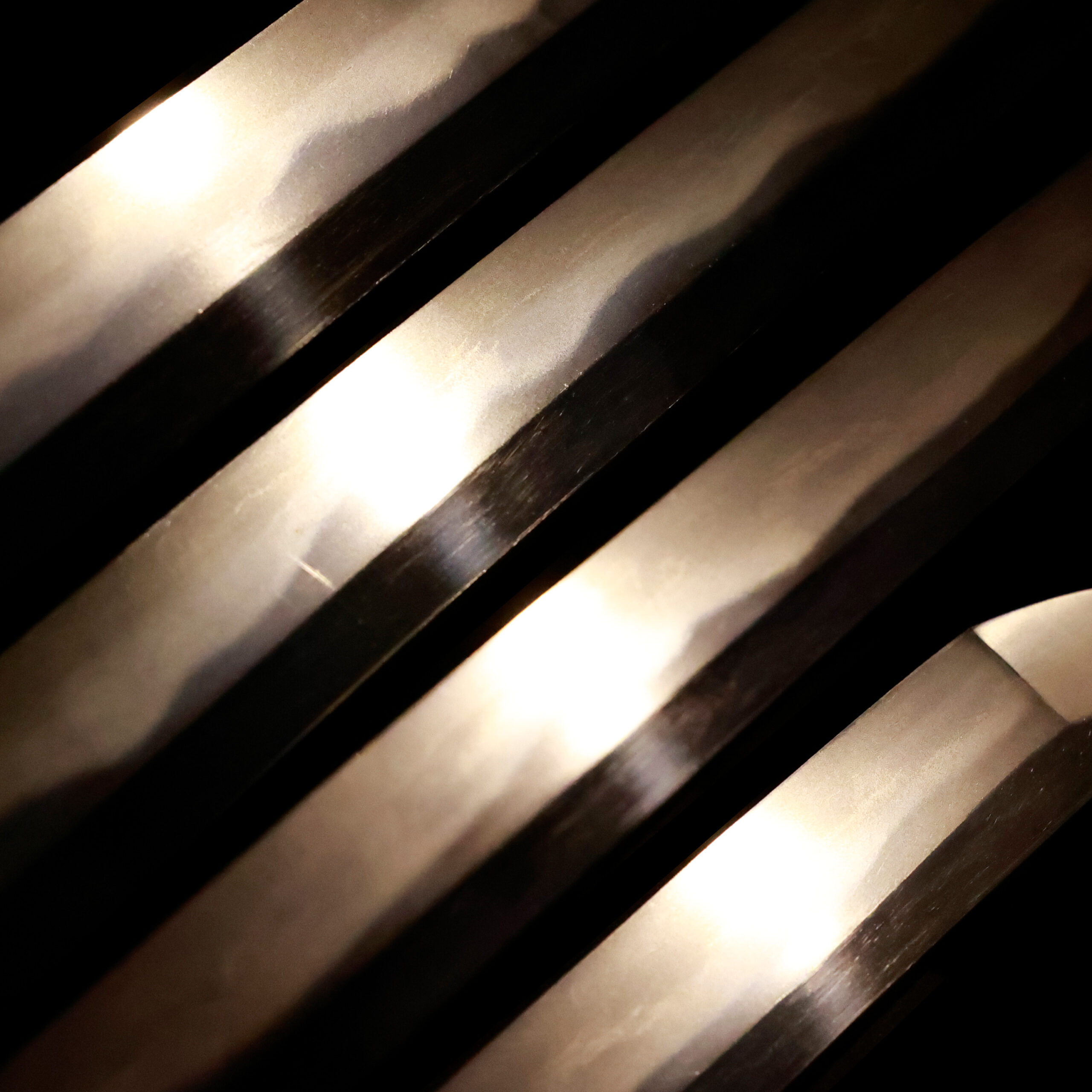
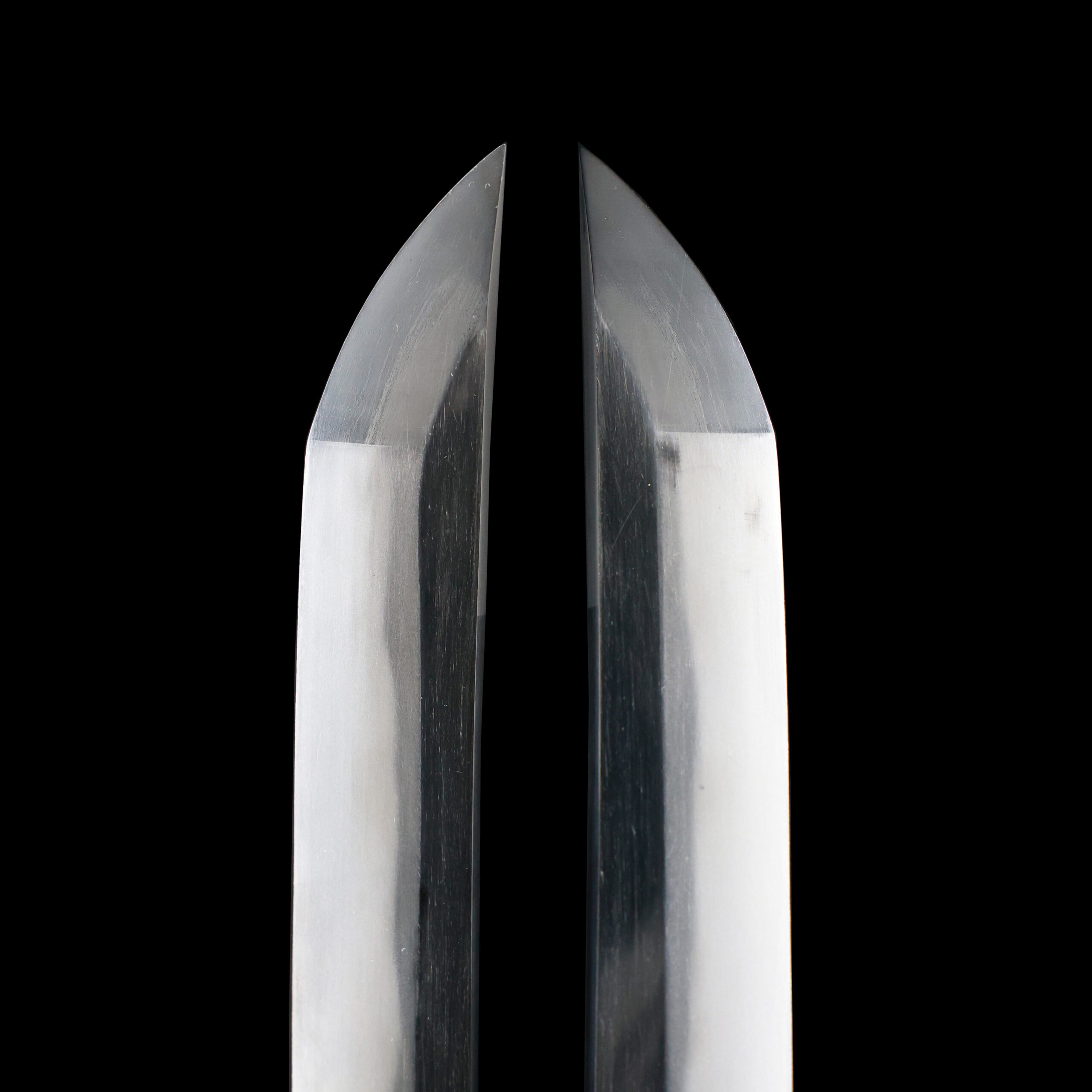
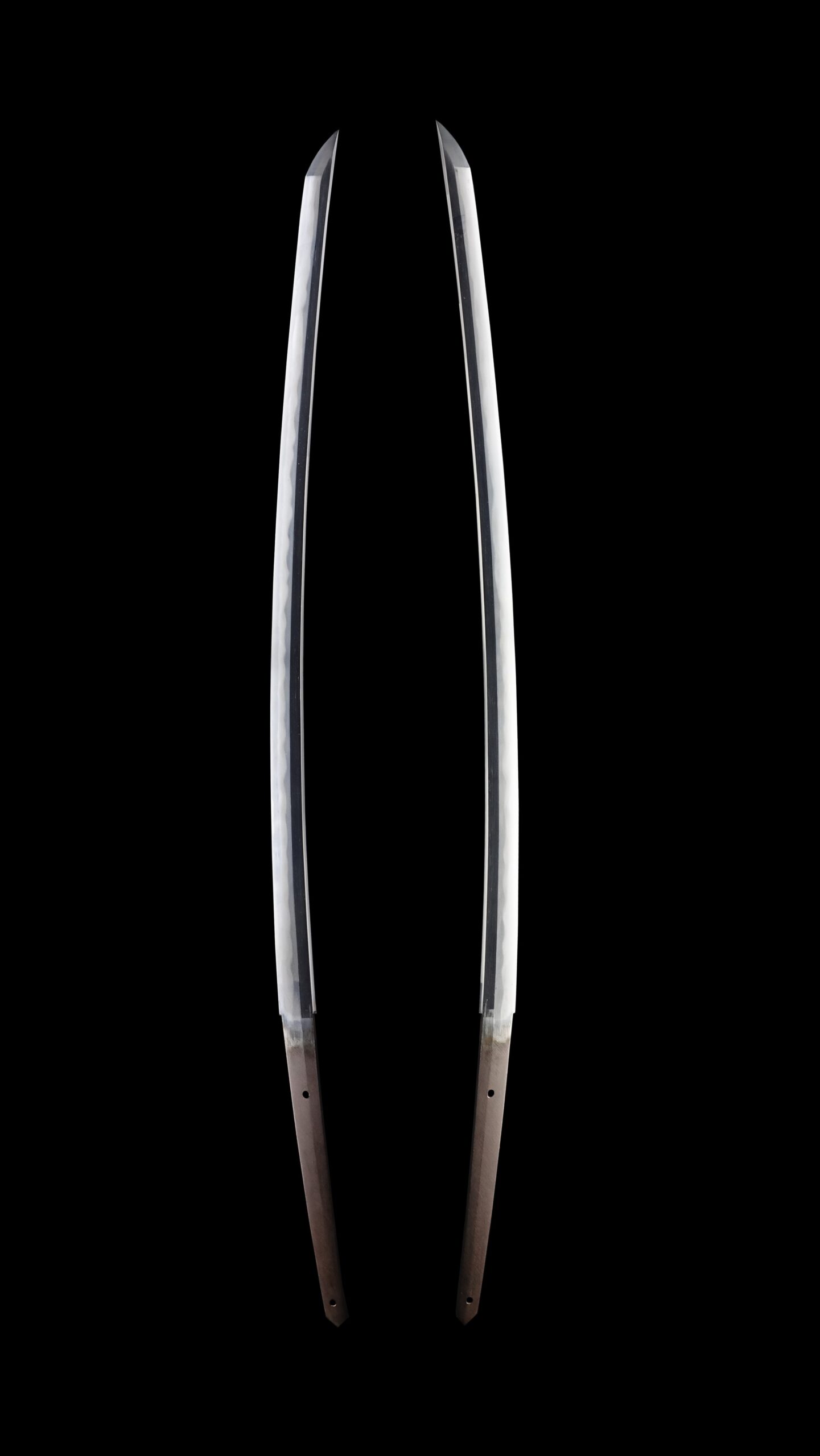
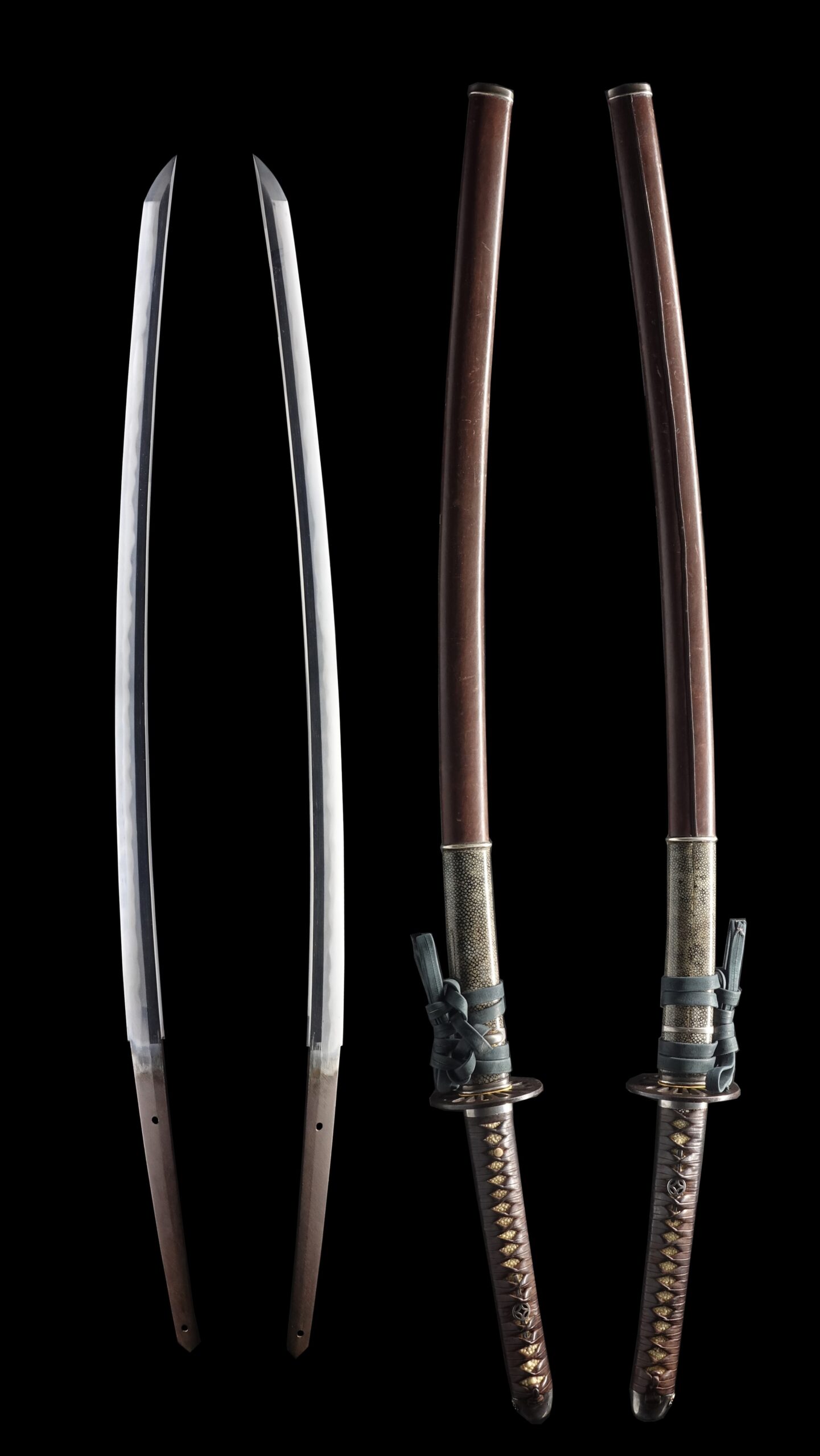
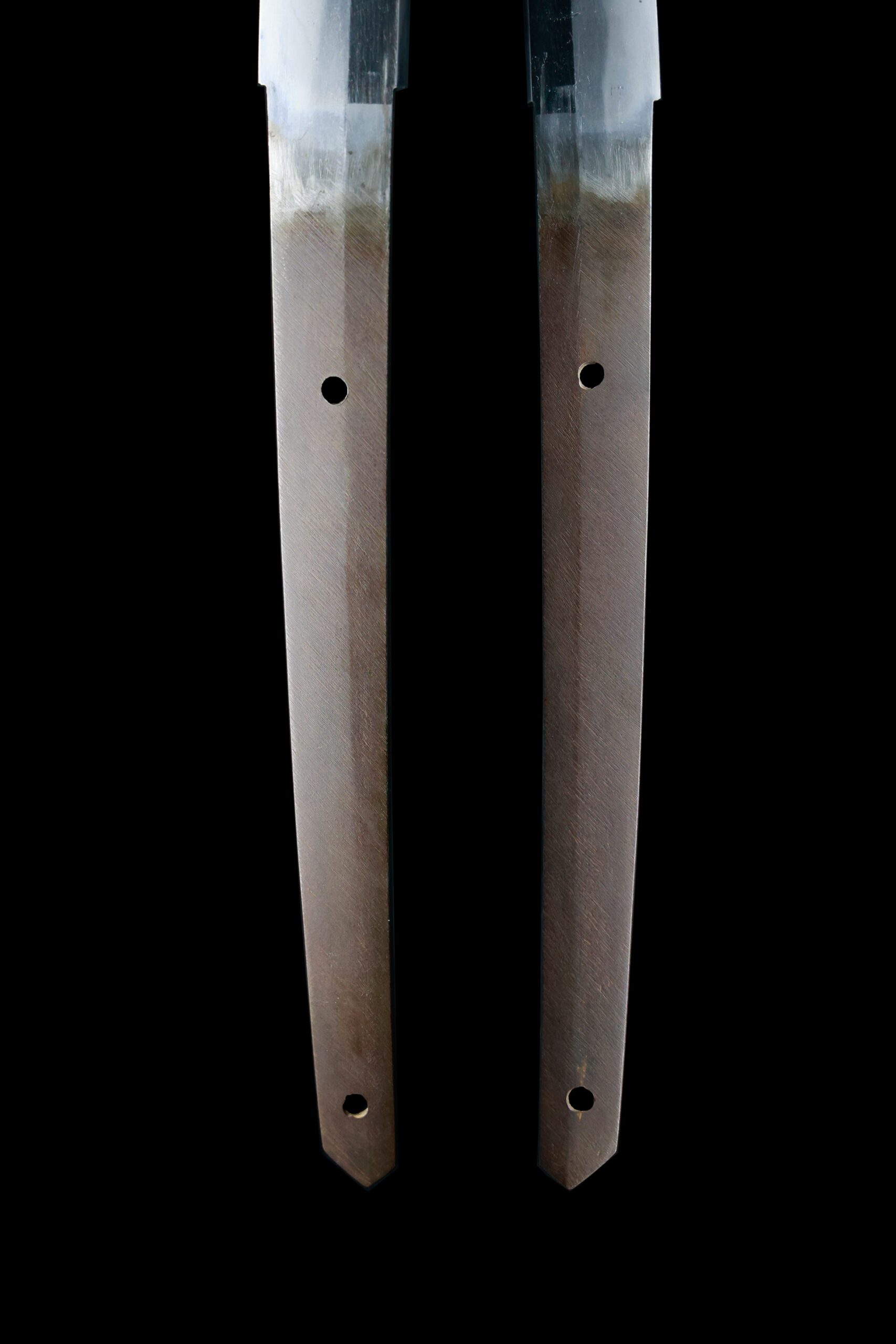
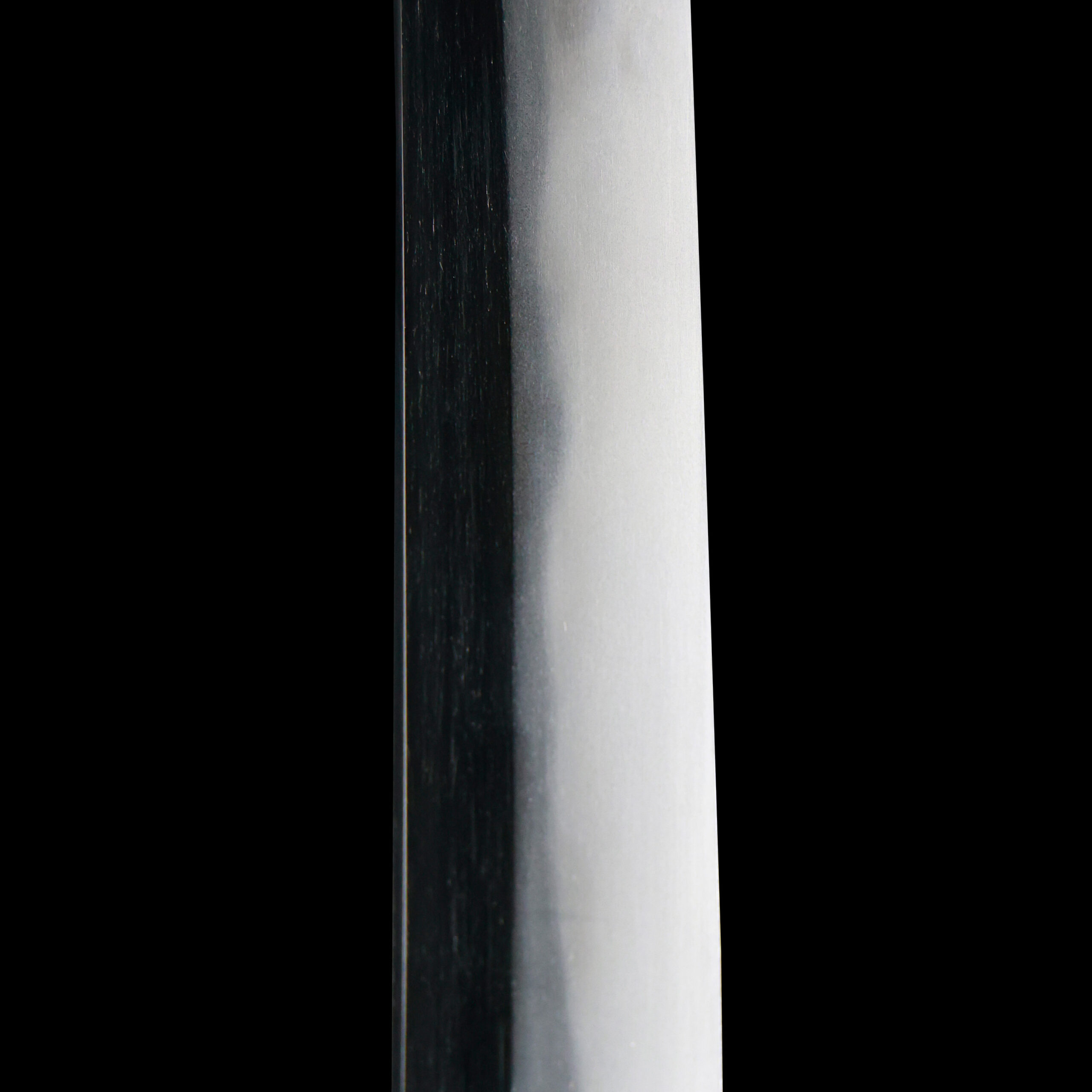
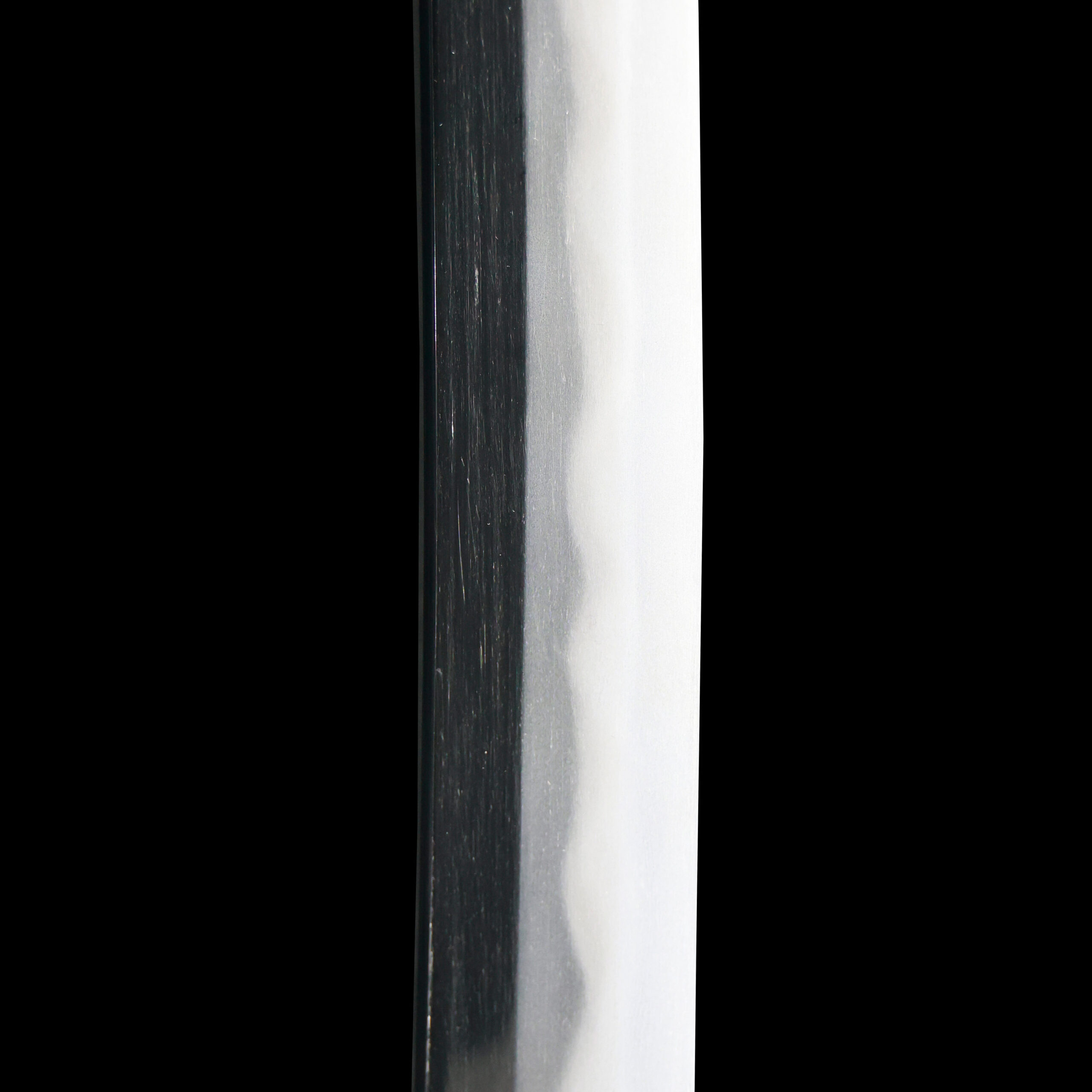
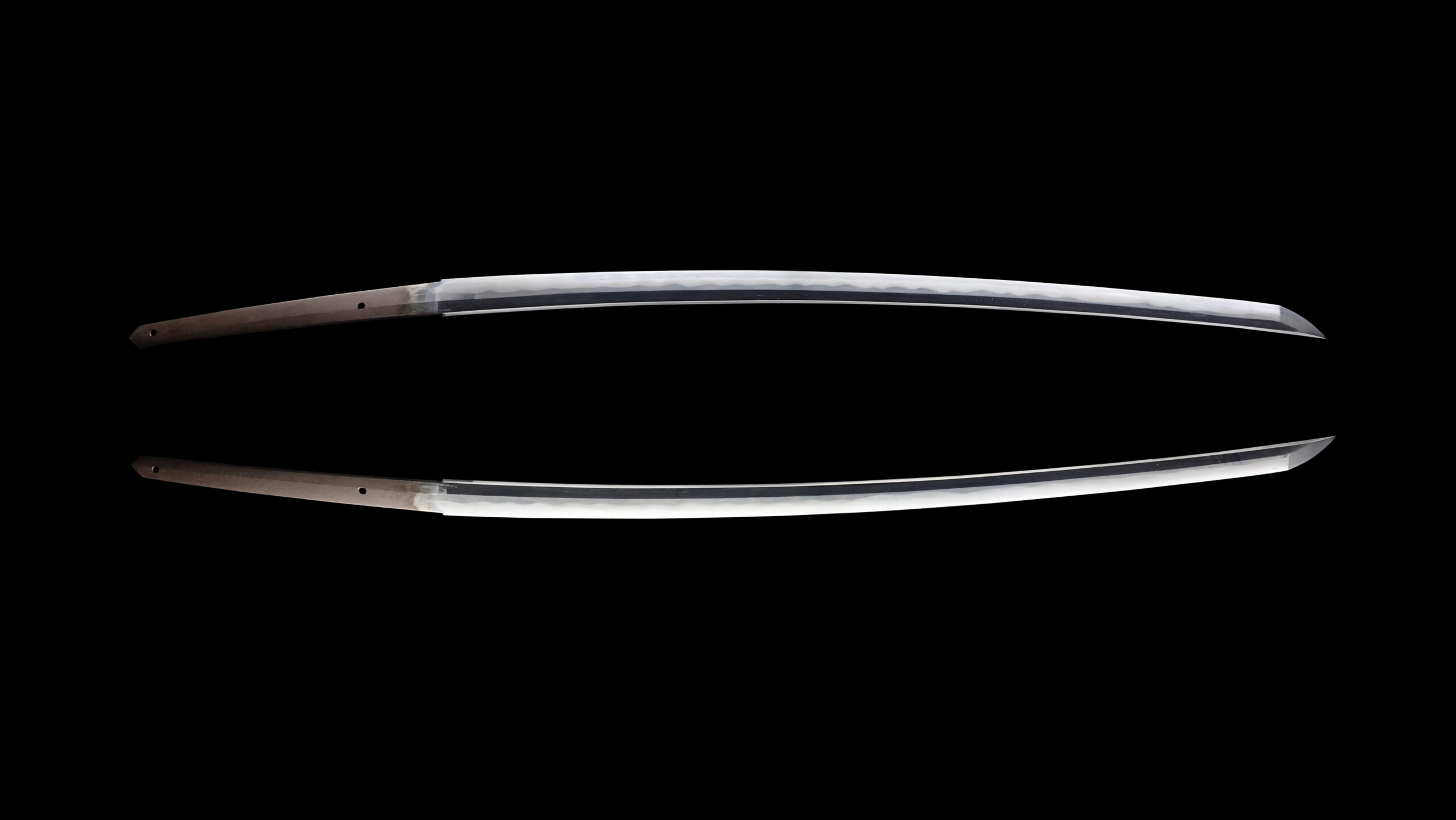
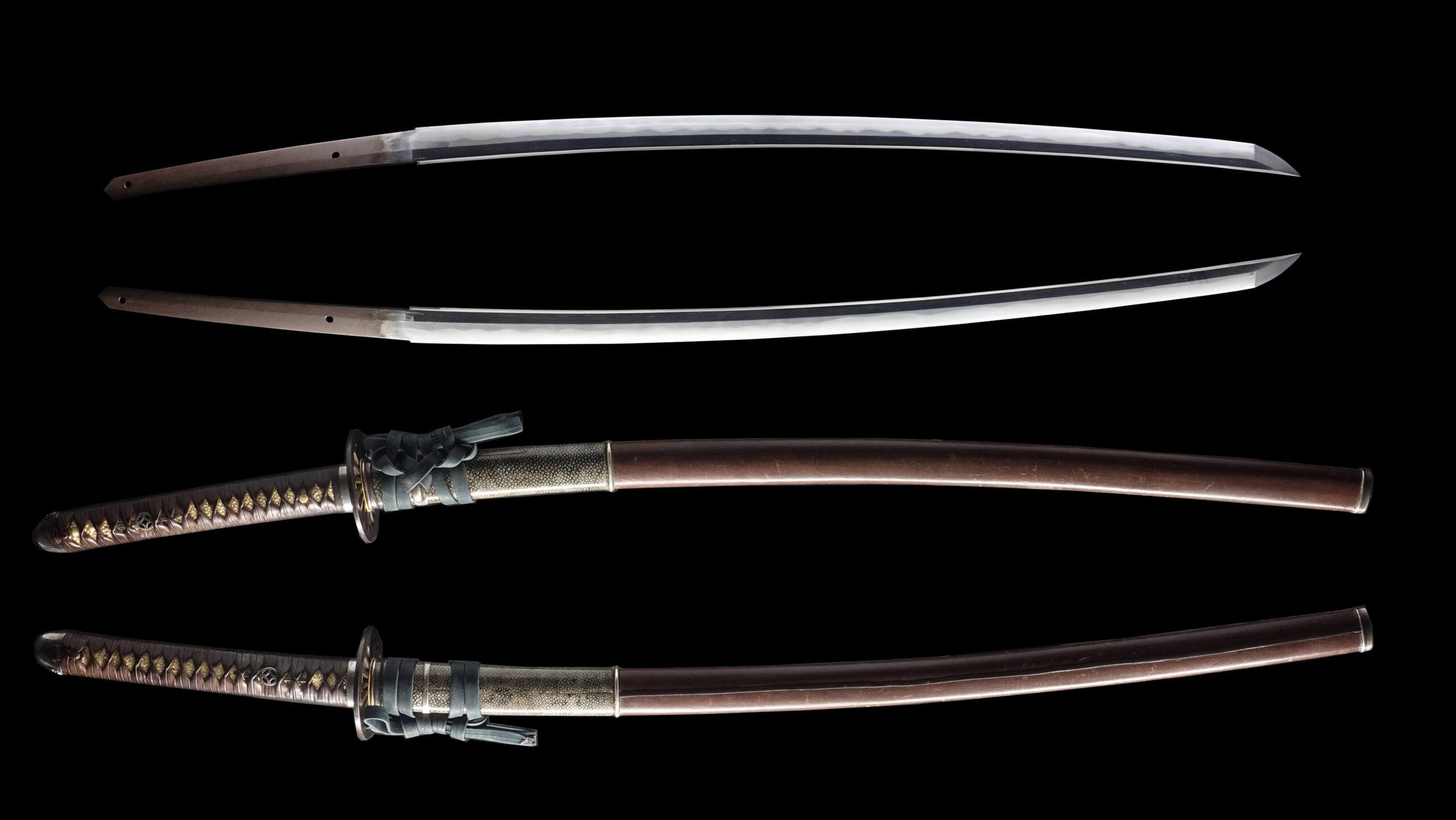
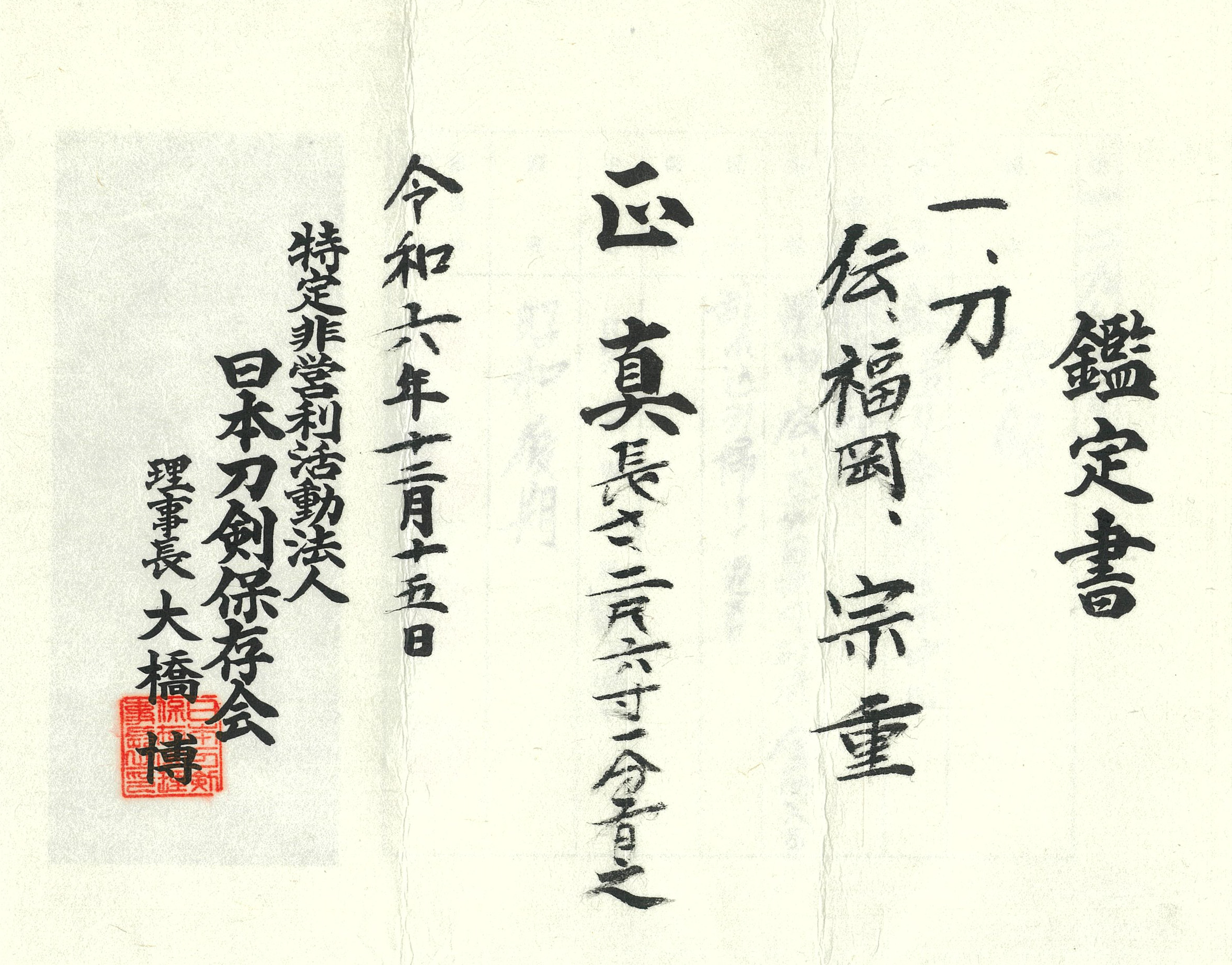
This blade is attributed to Fukuoka Muneshige (福岡宗重). His birth name was Kojō Shigeaki (古城重昭), and he was born in Fukuoka Prefecture in 1932. He learned sword-forging from his father, Munihiro (宗弘), and has won numerous awards in Japan. His work is highly regarded for its exceptional sharpness. According to its NTHK appraisal, it was made during the late Showa era (late 20th century). Fukuoka used to be named Chikushu (筑州). He often inscribed his signature as Chikushu Jyu Muneshige (筑州住宗重). It is often a case with swordsmiths in modern/ancient period that they signed their maker’s name with where they lived. The works of Muneshige was known for their sharpness.
About Modern Swordsmith
There are around 150-200 swordsmiths in Japan today. To legally produce Japanese swords, one needs to pass the national exam given by the Agency for Cultural Affairs(Bunka-Cho) and receive the license. Before taking the exam, one must finish his or her apprenticeship under a licensed master for more than five years. Those who practice Iaido(居合道) tend to use those modern swords, and there are modern Japanese sword collectors nationwide. Modern Japanese sword makers are researching old ways to forge swords and trying to recreate ancient-style swords. They are the ones who keep the tradition of Japanese history alive.
The detailed measurement of the sword
The weight of the blade: Approximately 1027 g
The weight of the sword without the Saya: Approximately 1418 g
The overall weight including the Saya: Approximately 1727 g
Motohaba/Sakihaba: 3.3cm/2.3cm
The overall length including the Tsuka :109cm (114cm when stored in the Saya)
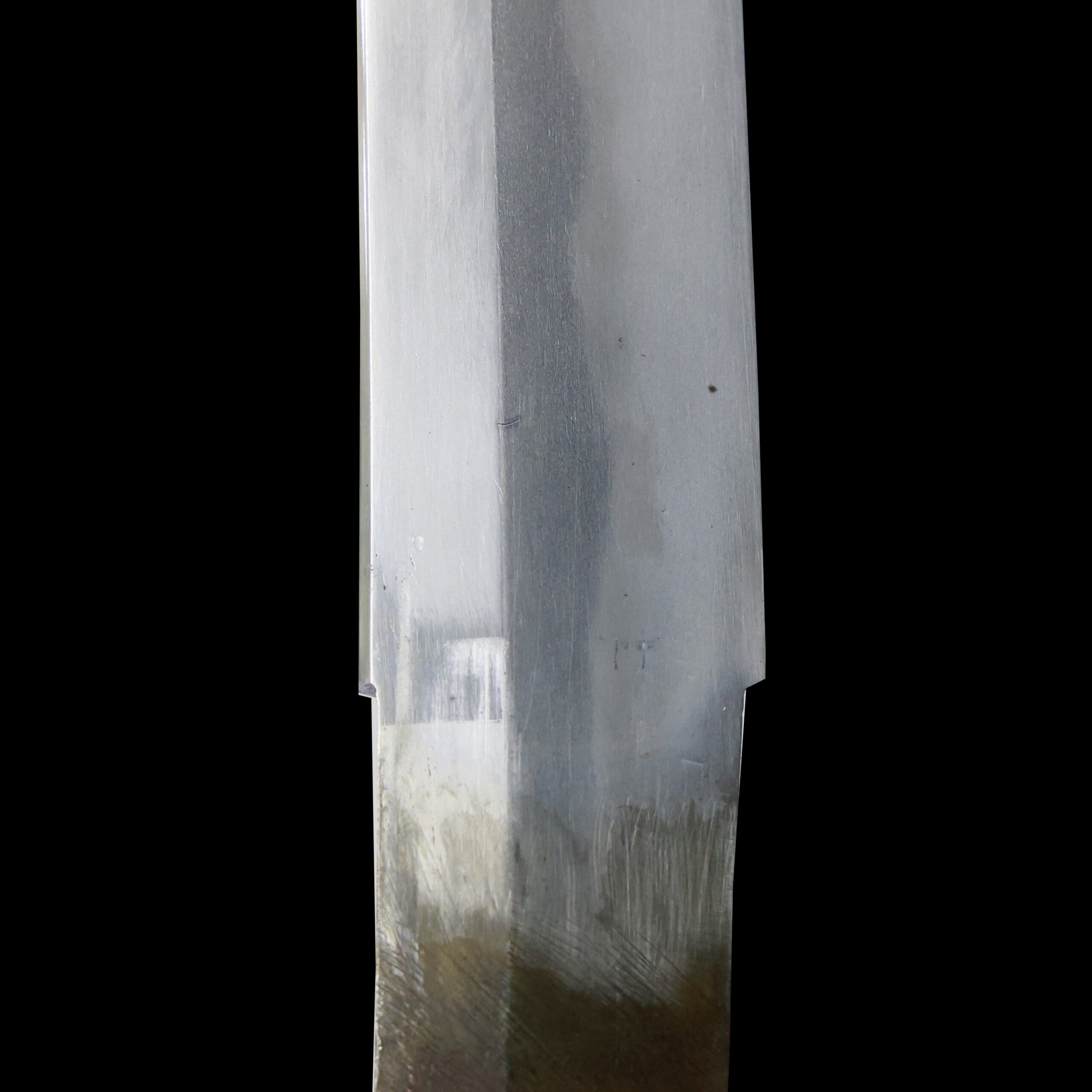
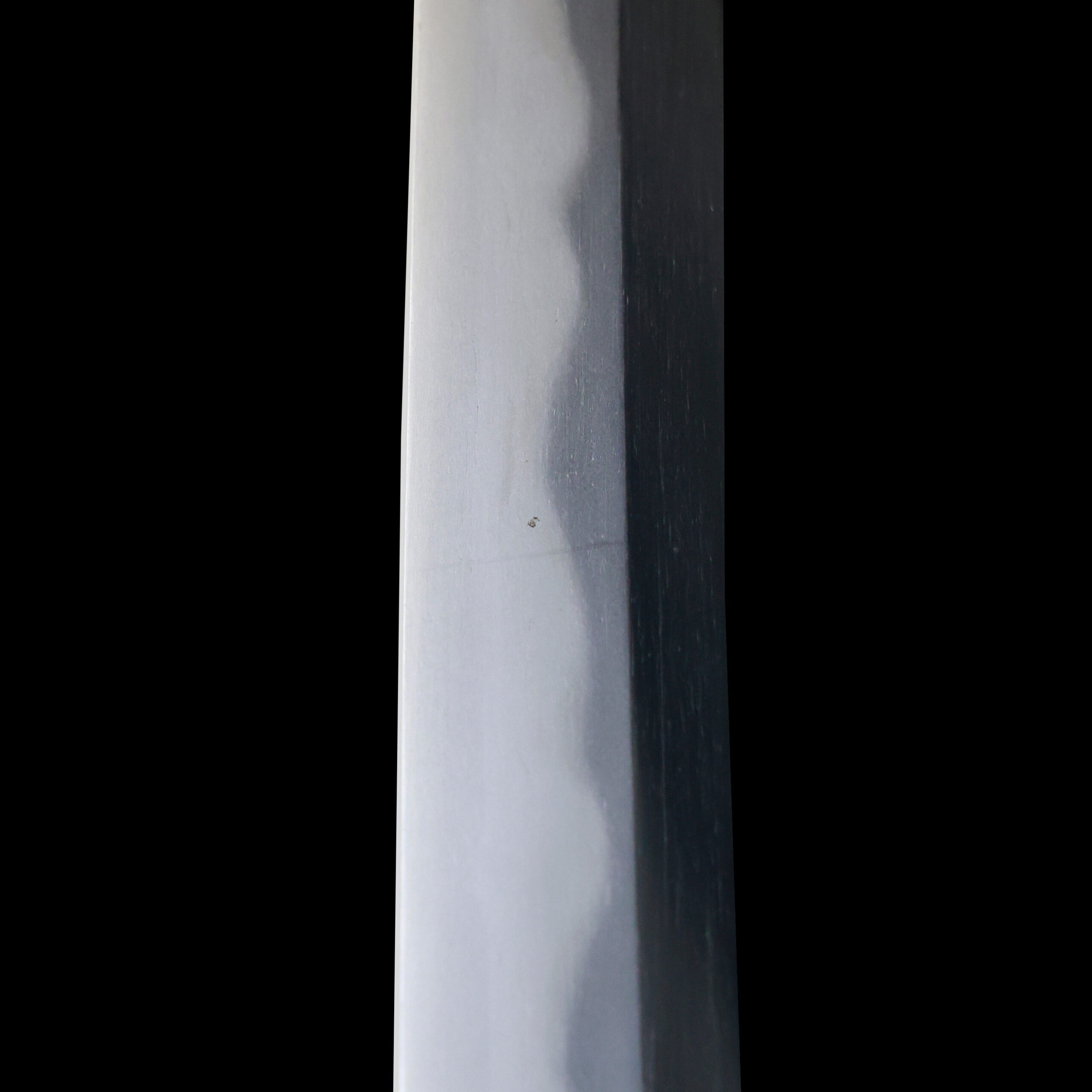
*Please keep in mind that there are a couple of tiny black rust on the blade.
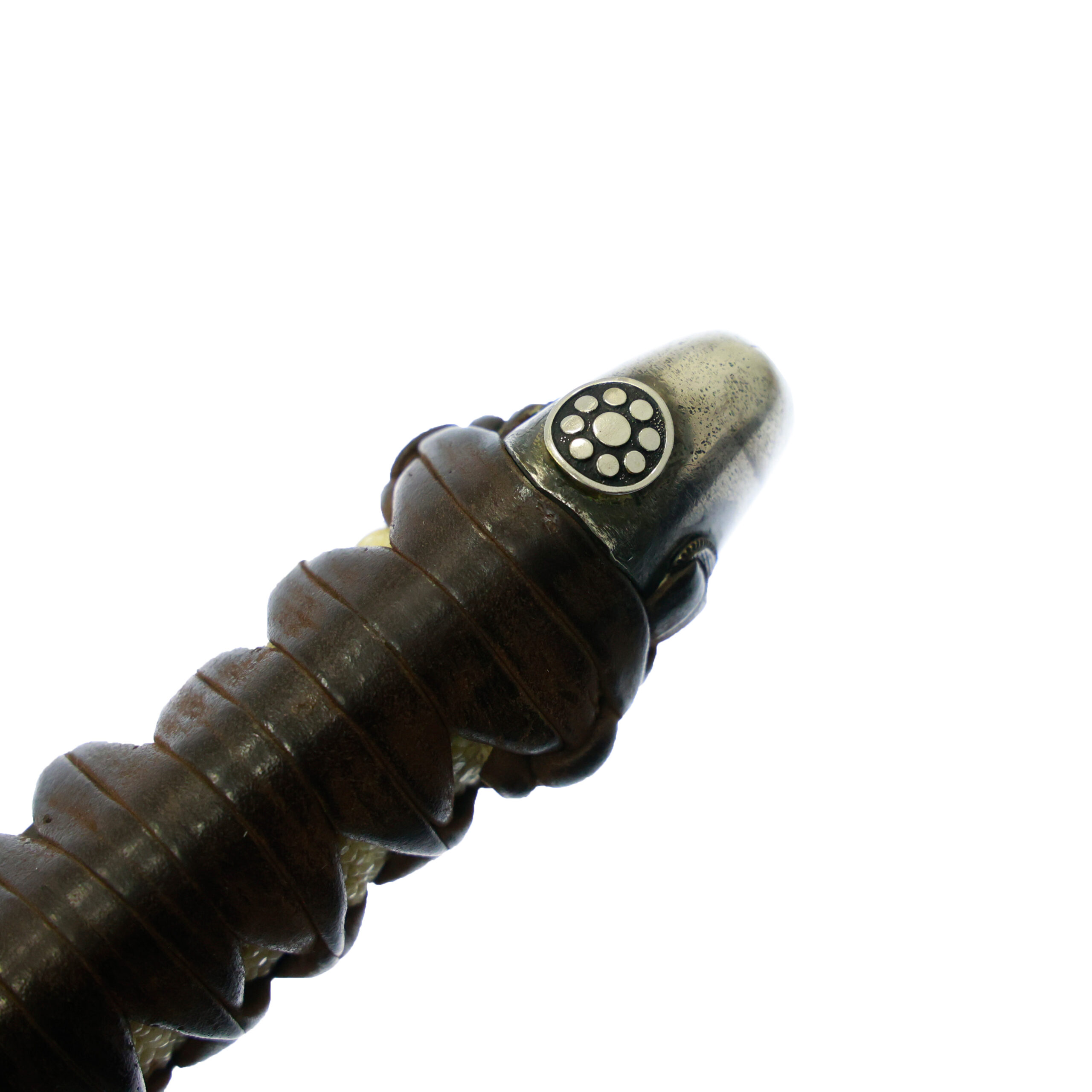
Fuchi-Kashira
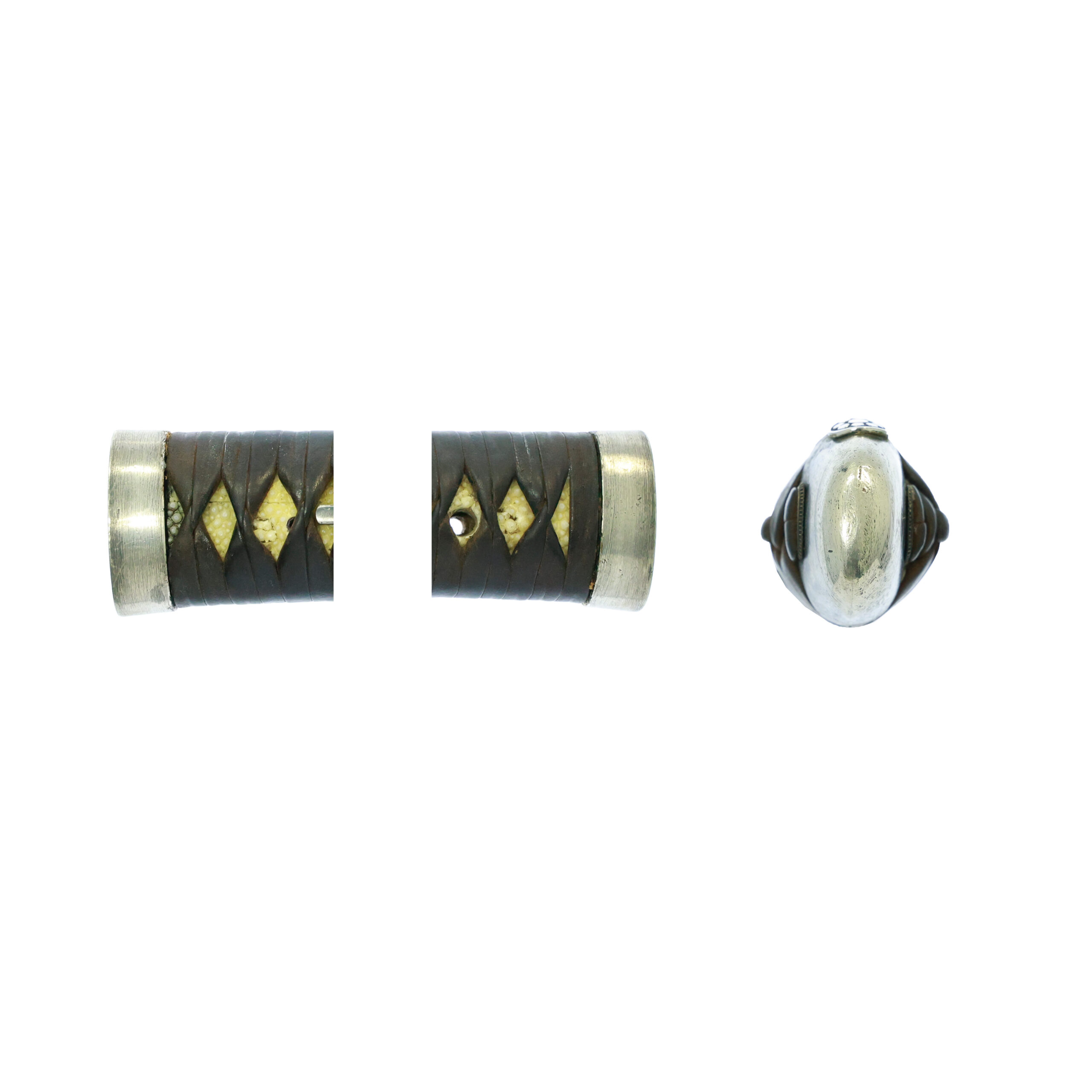
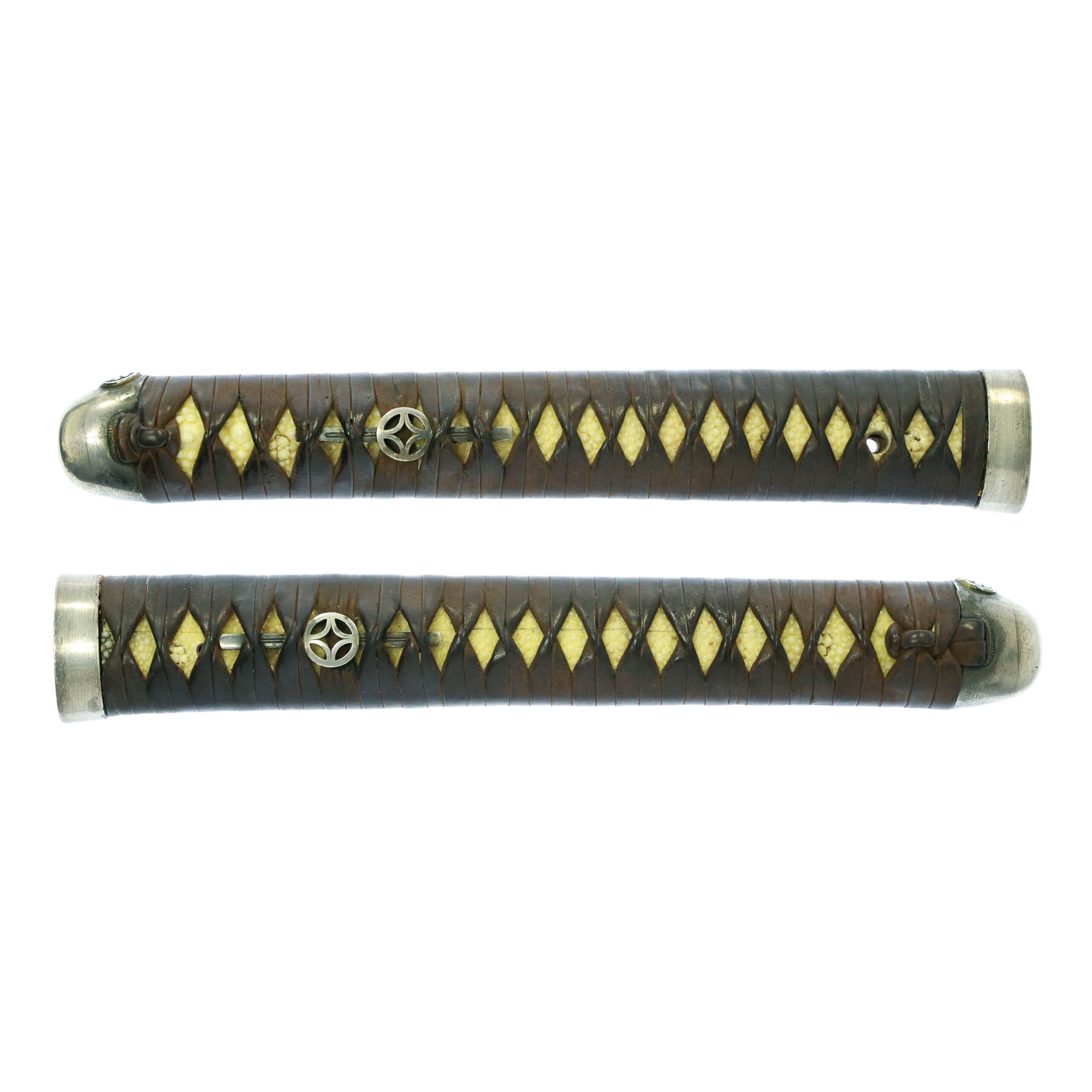
This Fuchi-Kashira is decorated with a family crest known as the Kuyo-mon (九曜紋). The nine circles represent the planets, and this arrangement and design are based on ancient Indian mythology. According to the myth, the ancient Indians worshiped seven planets—Sun, Moon, Mars, Mercury, Jupiter, Venus, and Saturn along with two additional planets, Ragō (羅睺) and Keito (羅睺), as deities. In Buddhist thought, derived from this mythology, the Kuyo-mon is believed to serve as a protector during journeys. It was especially popular as a family crest in the Kyushu region, including Fukuoka Prefecture, which is the birthplace of the swordsmith who made this blade.
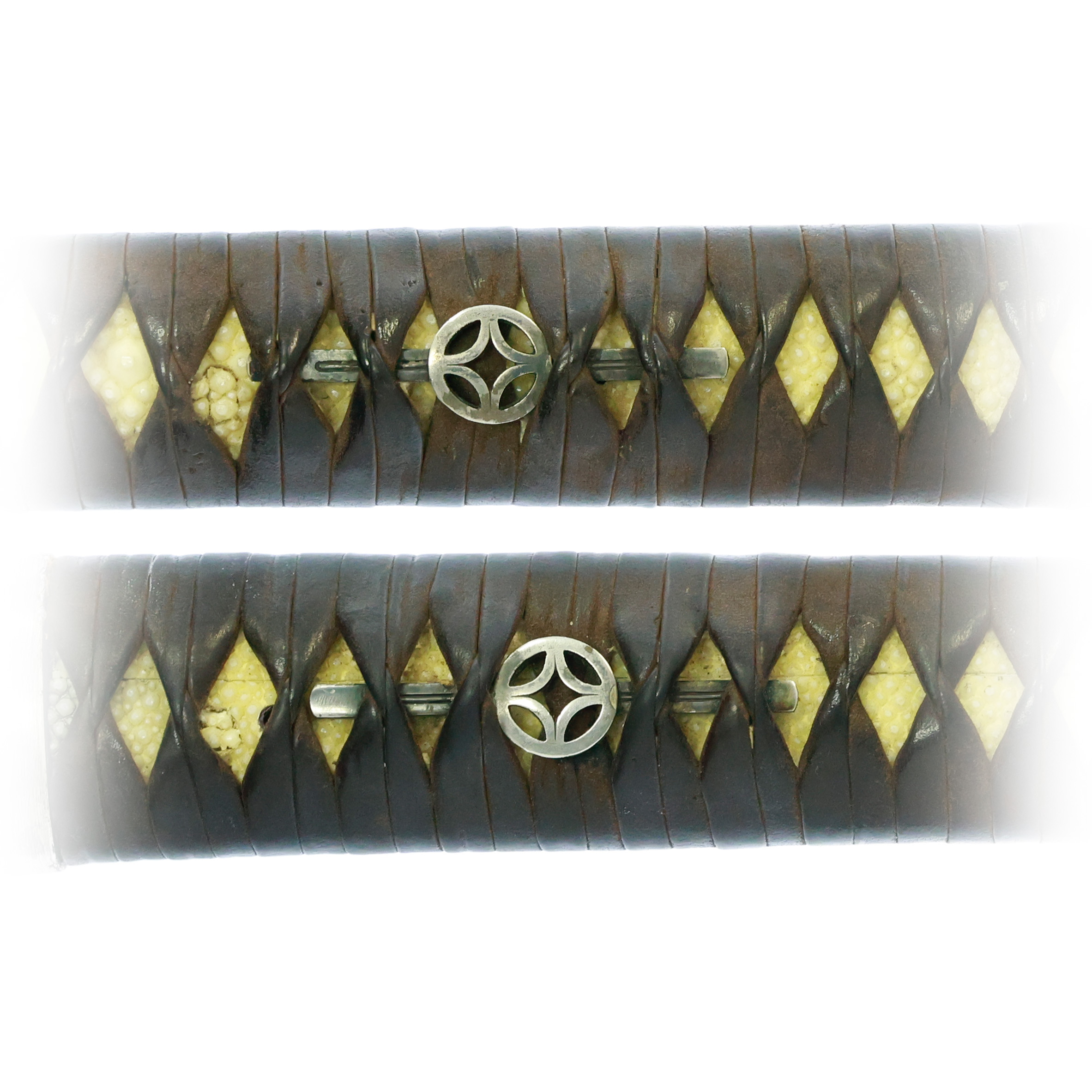
Tsuka and Menuki
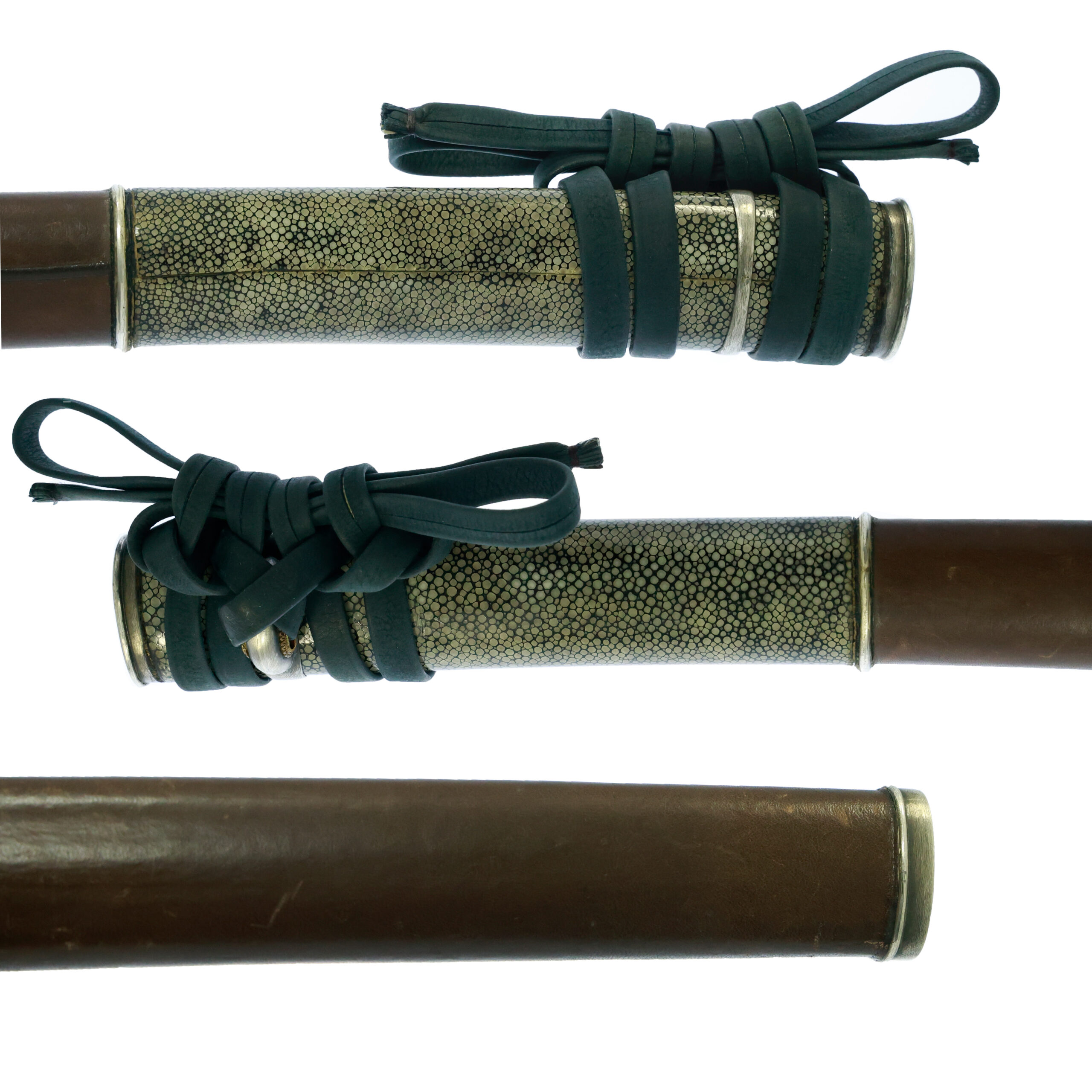
This tsuka features Shippō (七宝). In Buddhism, Shippō refers to the seven treasures, which are gold, silver, lapis lazuli, agate, coral, conch shell, and crystal.
Tsuba and Habaki
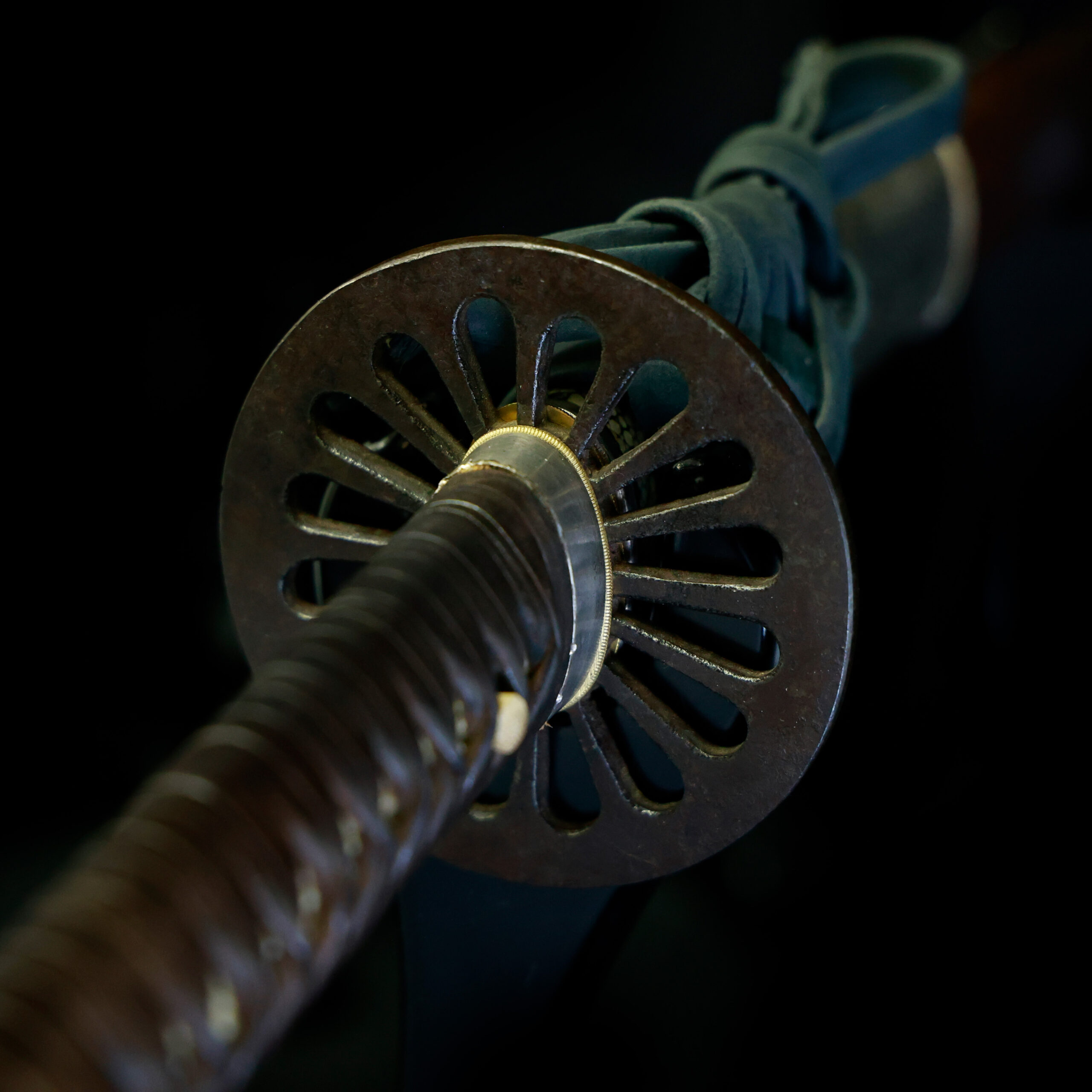
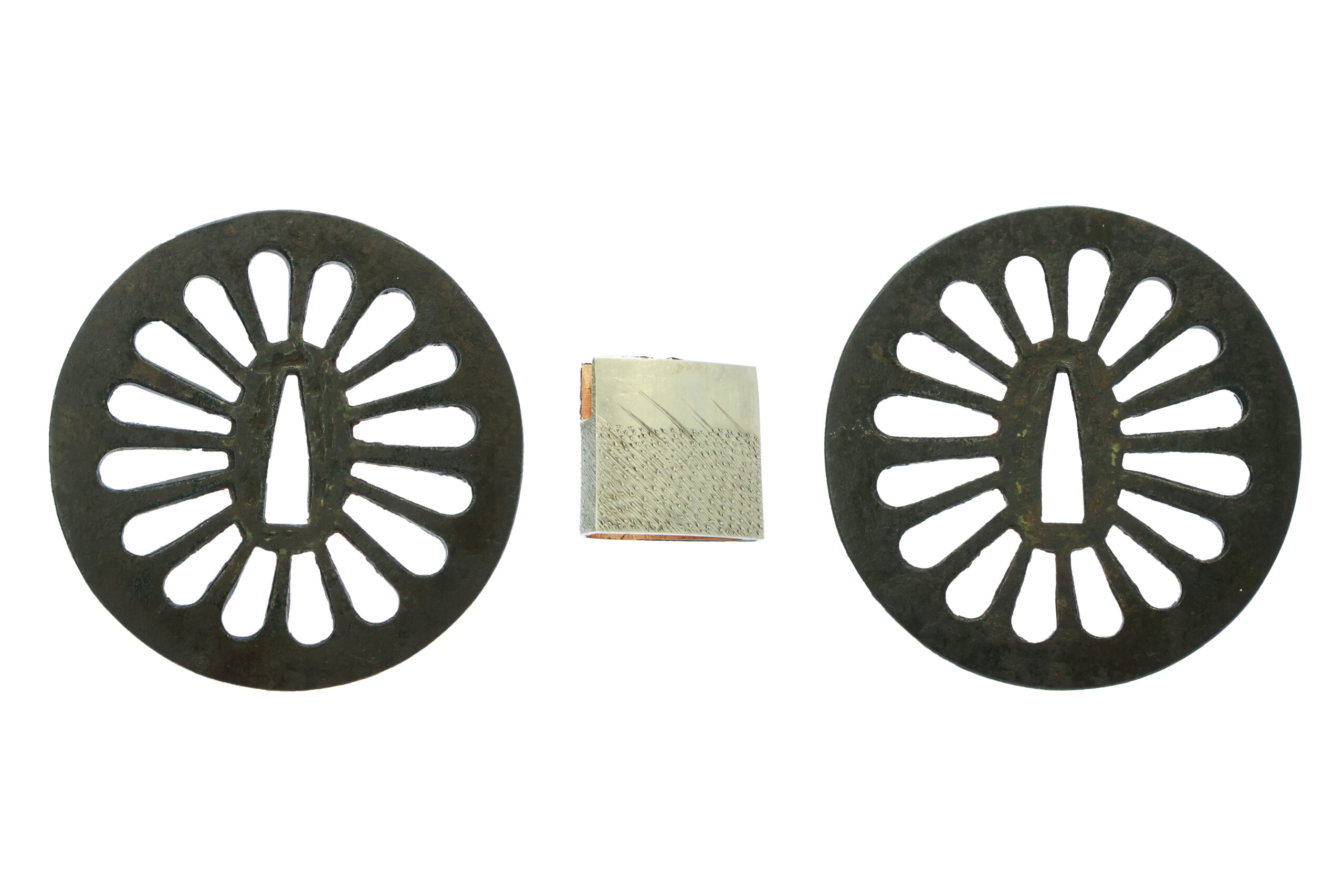
This Tsuba features a radial pattern created through the openwork technique (Sukashi-bori, 透かし彫り), which evokes the image of a chrysanthemum (Kiku, 菊). A long time ago, the chrysanthemum was used as a medicine to obtain a long life in China, and it was brought to Japan with this thought in the Nara period (648-781). The chrysanthemum is one of the flowers that symbolize fall, and people have appreciated it very much since ancient times. As its petals form radially, the chrysanthemum has been likened to the sun. That is why this flower pattern is treated as the symbol of perpetual youth and longevity or good health.
Authentication Paper
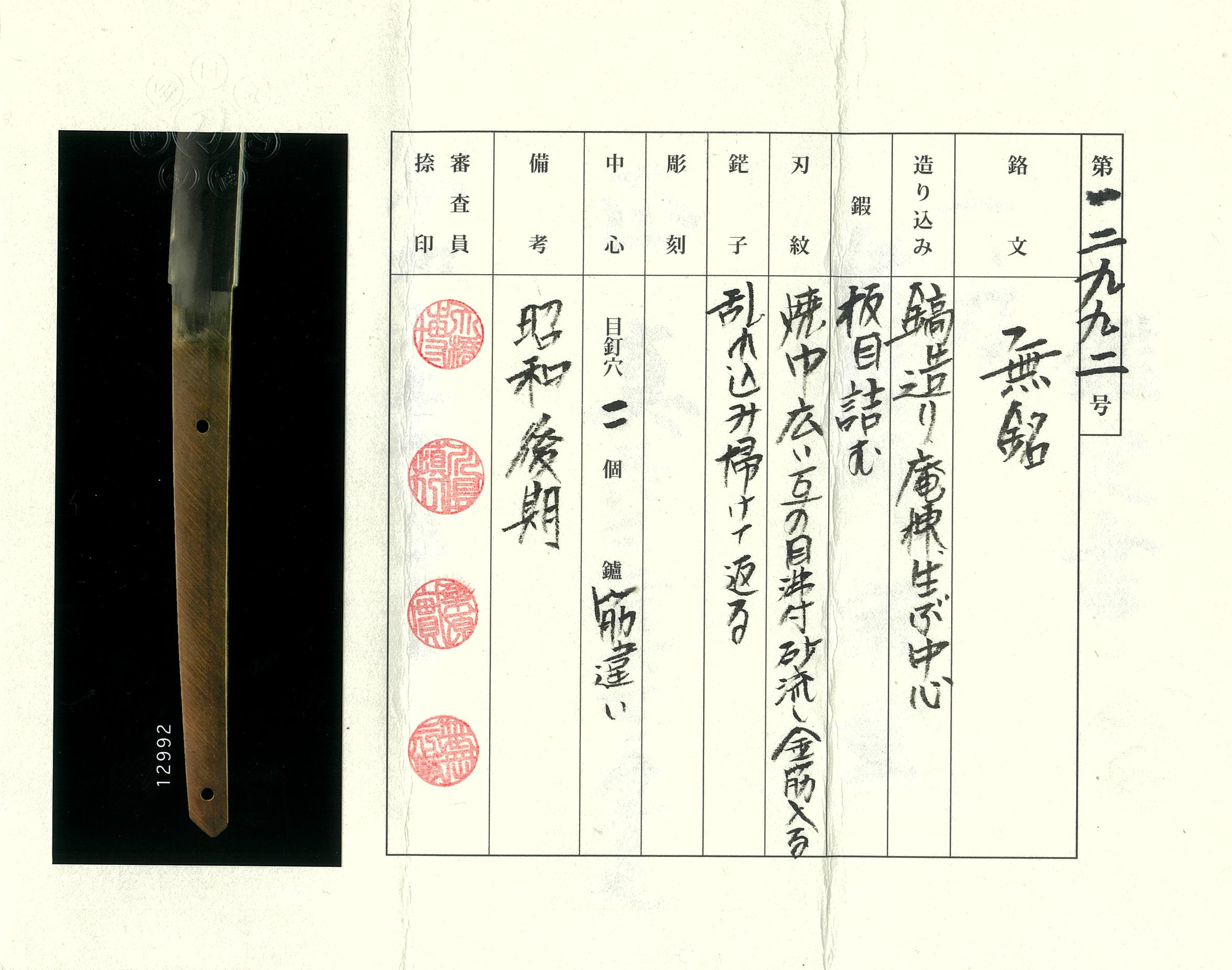
NTHK, also known as NPO Nihon Touken Hozon Kai, is the oldest organization for sword authentication of Japanese swords in modern times. It was established in 1889 during the post-Samurai era. They authenticated the blade on December in the 6th year of Reiwa (2024).
Registration Number
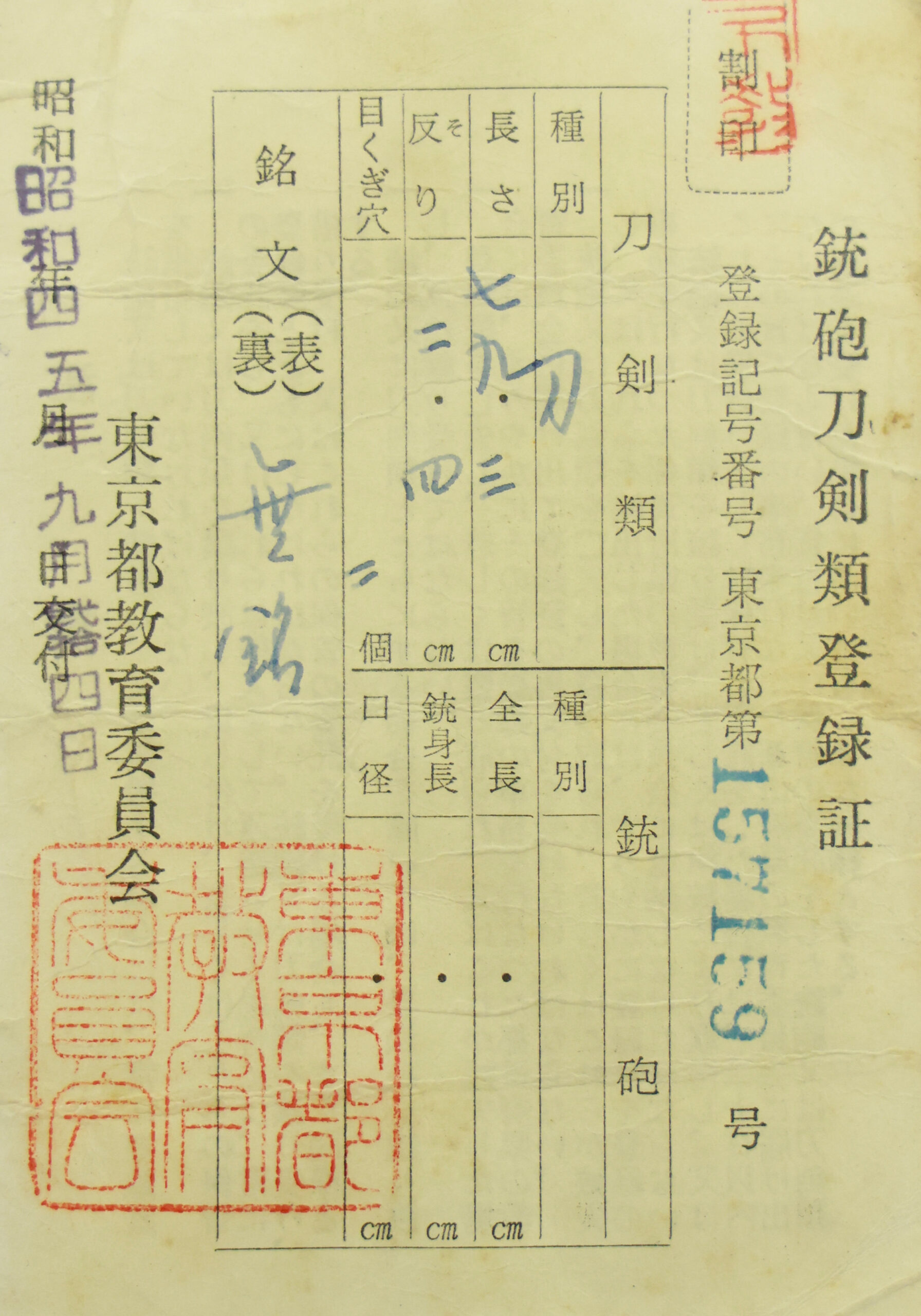
It is called Jyu Hou Touken Rui Torokusho (銃砲刀剣類登録証).

 NihontoWatch