Modern sword Chikusyu ju Muneshige saku with Koshirae.
This is a work by the swordsmith Chikushū-jū Muneshige of the Mune school, who is known as the maker of the legendary wazamono "Sasa no Tsuyu".
The previous owner did not use it for iaidō or tameshigiri, and the blade maintains a good condition. It also has excellent balance and can be used for iaidō and tameshigiri immediately after purchase.
It is an attractive blade where one can enjoy the excellent skill of the swordsmith Muneshige. Please consider it on this occasion.
A fine work by Chikushū-jū Muneshige of the Mune school, renowned as the maker of the legendary “Sasa no Tsuyu,” celebrated for its exceptional cutting ability.
The previous owner did not use this sword for iaidō or tameshigiri, and the blade remains in excellent condition. It is exceptionally well balanced and ready for immediate use in iaidō and tameshigiri after purchase.
An excellent opportunity to acquire a fine example showcasing the outstanding craftsmanship of Muneshige.
"sword figre"
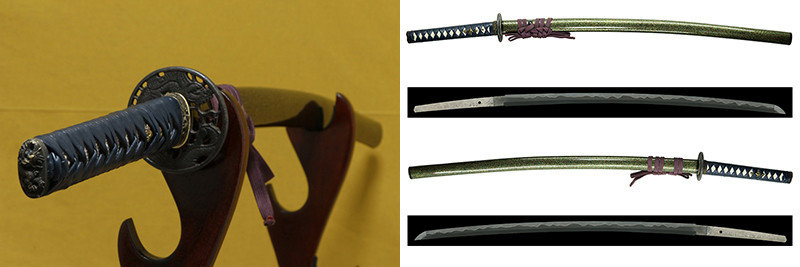
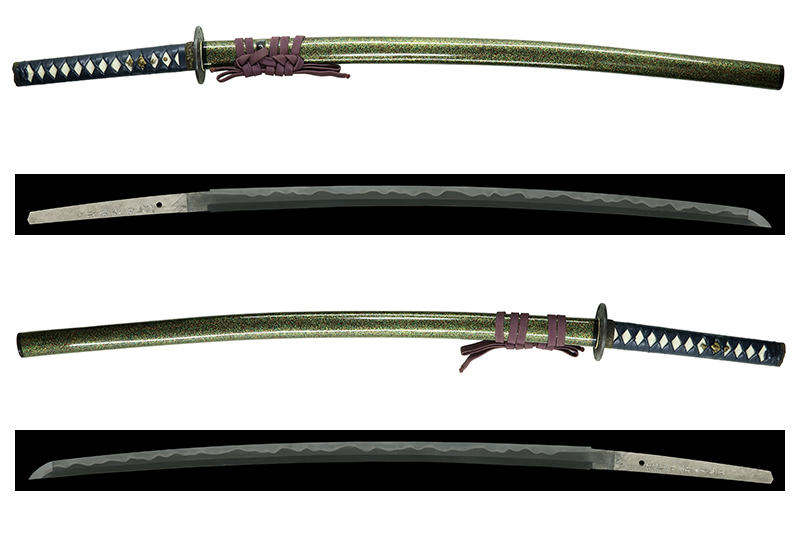
Shinogi-zukuri, iori-mune, wide mihaba and standard kasane, torii-zori, ō-kissaki. The nakago is ubu with kesho yasurime, and the nakagojiri is iriyamagata.
"jigane"
The jigane is itame-hada which is well-tightened, mixed in places with mokume and a flowing tendency; ji-nie attaches and chikei enters. It is the strong jigane characteristic of the Mune school.
"hamon"
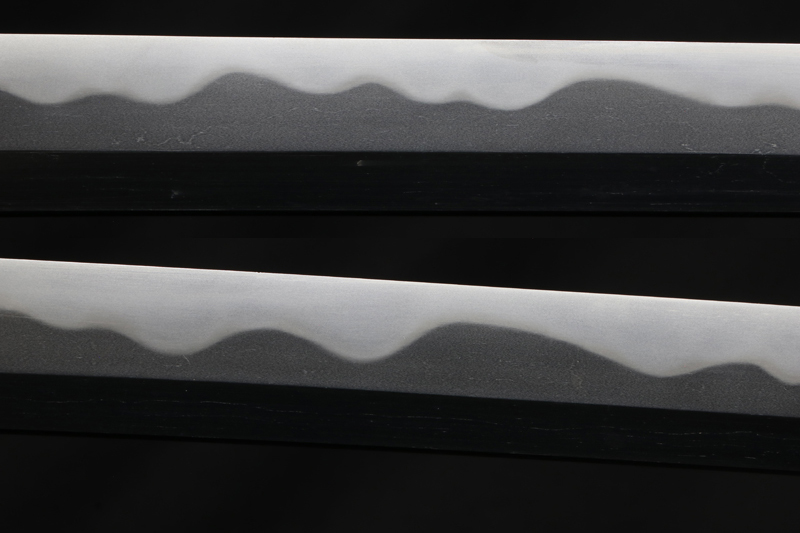
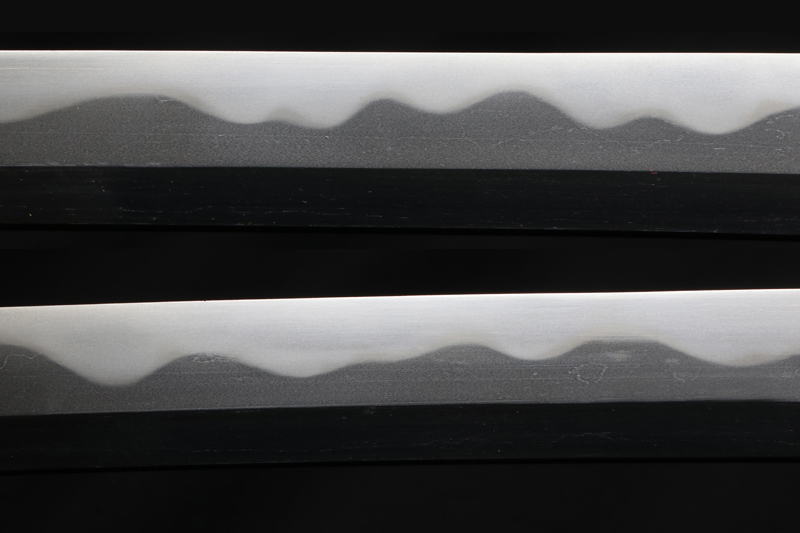
The hamon is ō-gunome, with nie at the habuchi and sunagashi, and yō enters within the ha. The bōshi is midare-komi and returns in komaru.
"detailed"
Chikushū-jū Muneshige, real name Kojō Shigeaki. Born in Shōwa 7. His teacher was the swordsmith Munehiro, who was the father of the swordsmith Munetoshi; he is in the relationship of a fellow student with the swordsmith Munetoshi.
Among the works of Muneshige, there are swords produced with "Sasa no Tsuyu" inscribed alongside the mei, and like the works of the swordsmith Munetoshi, they have earned a high reputation as modern wazamono swords with excellent sharpness.
This piece is one that has been carefully preserved for appreciation, and the condition of the blade is good. The jigane exhibits a well-tightened itame-hada, and the hamon is a powerful ō-gunome; it is a wonderful work worth seeing.
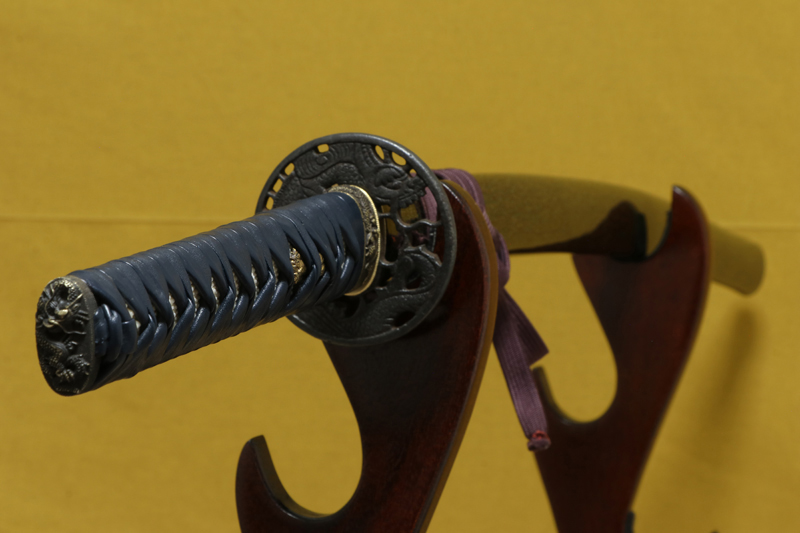
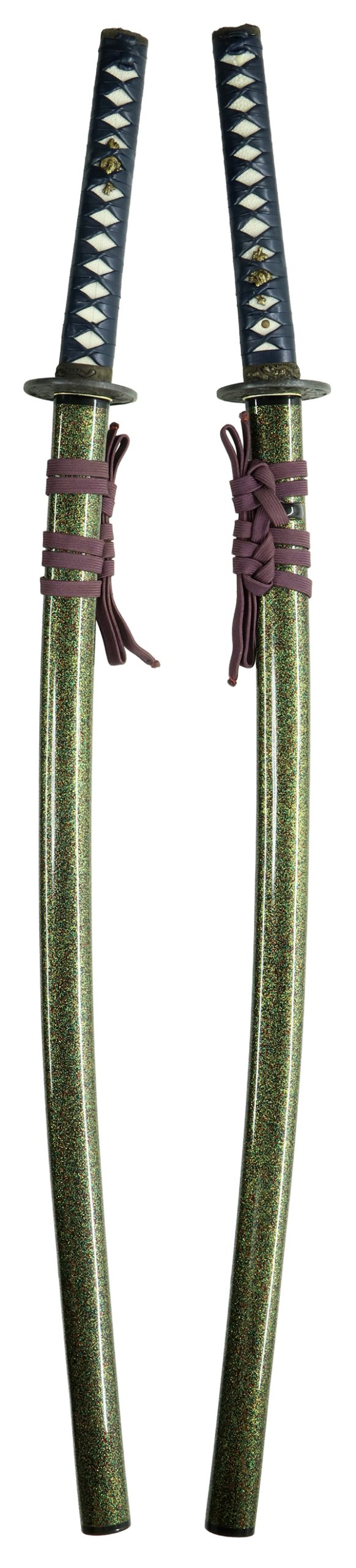
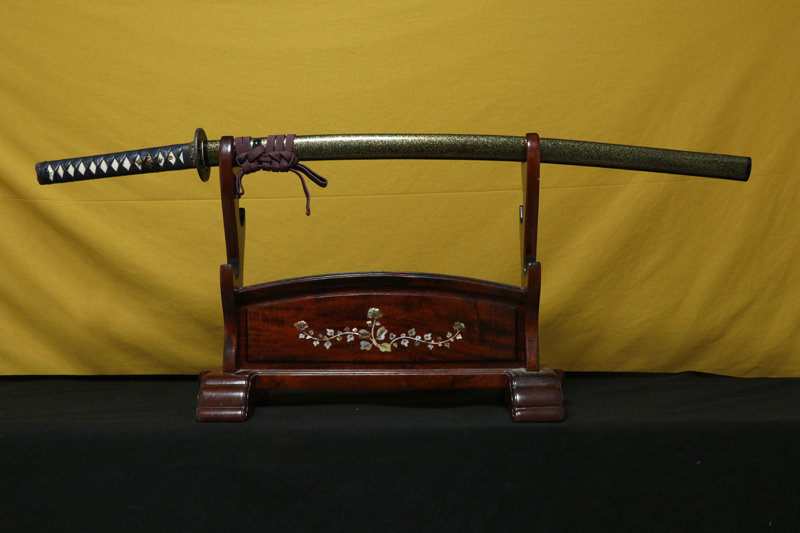
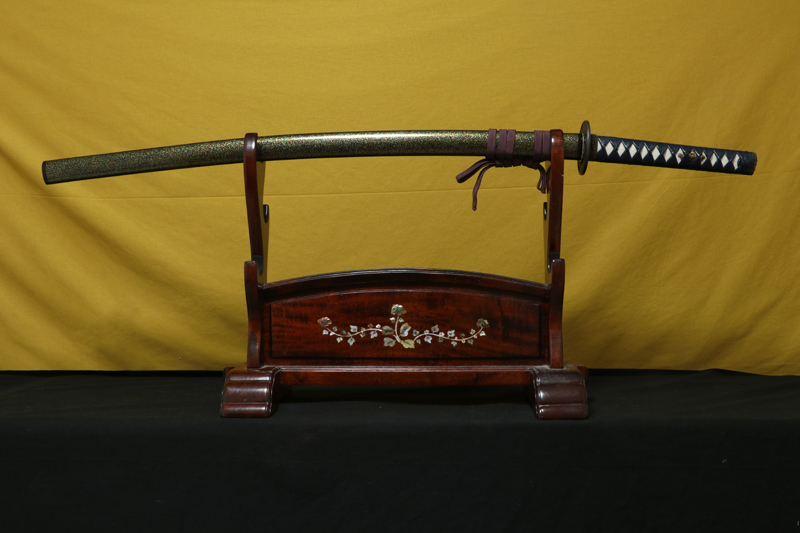
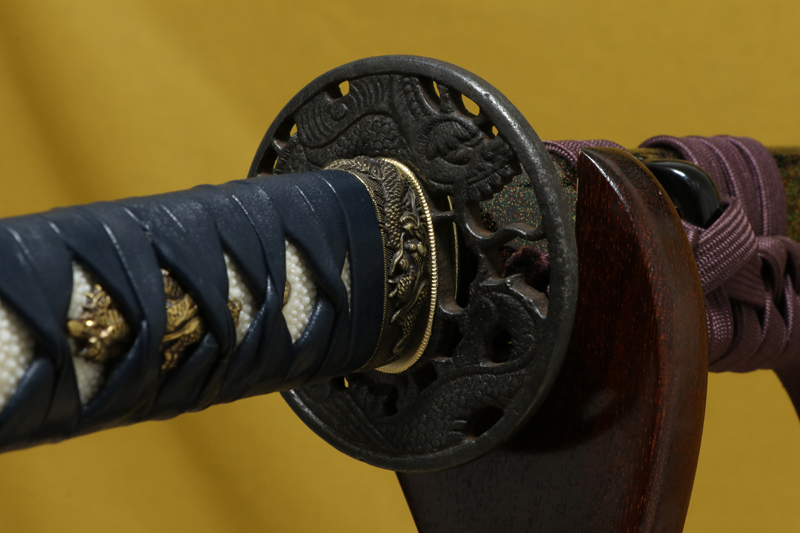
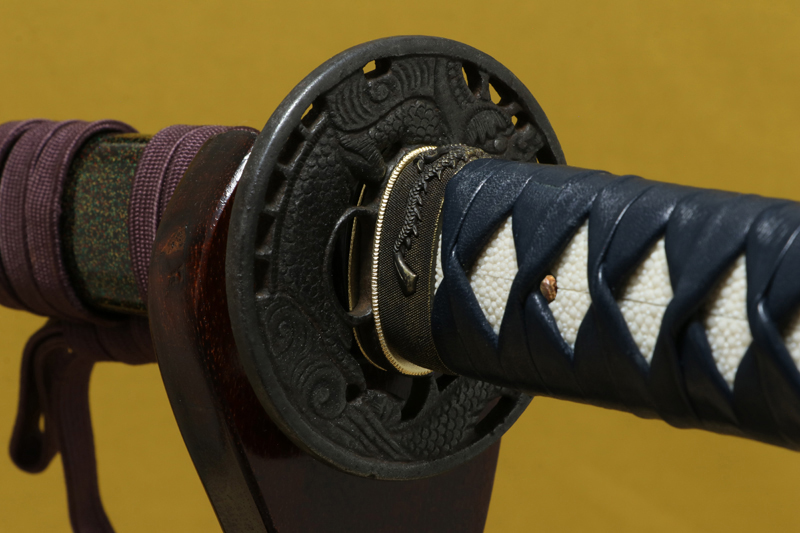
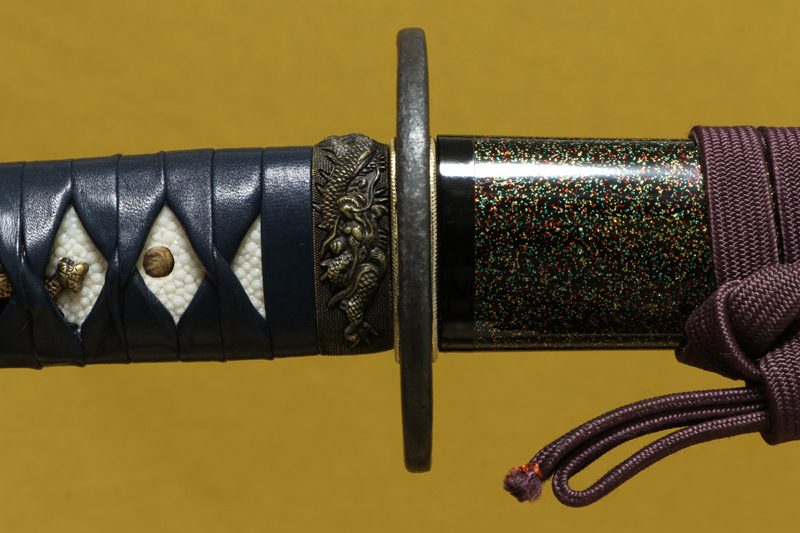
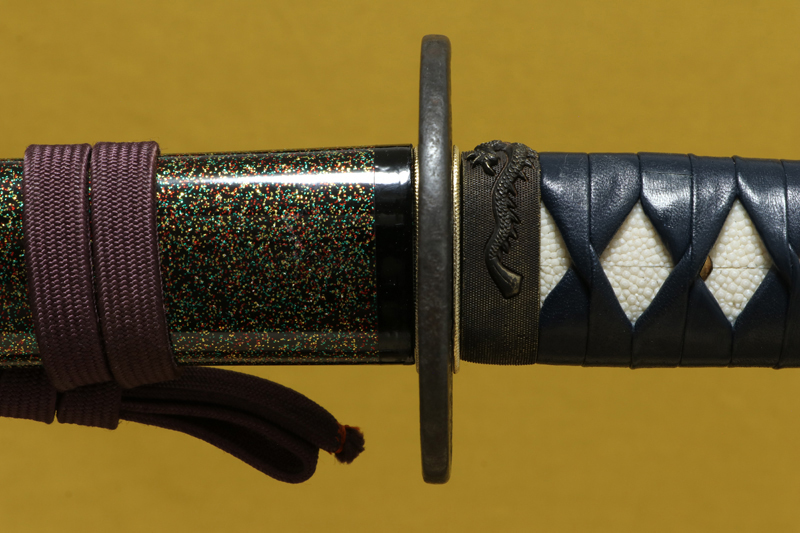
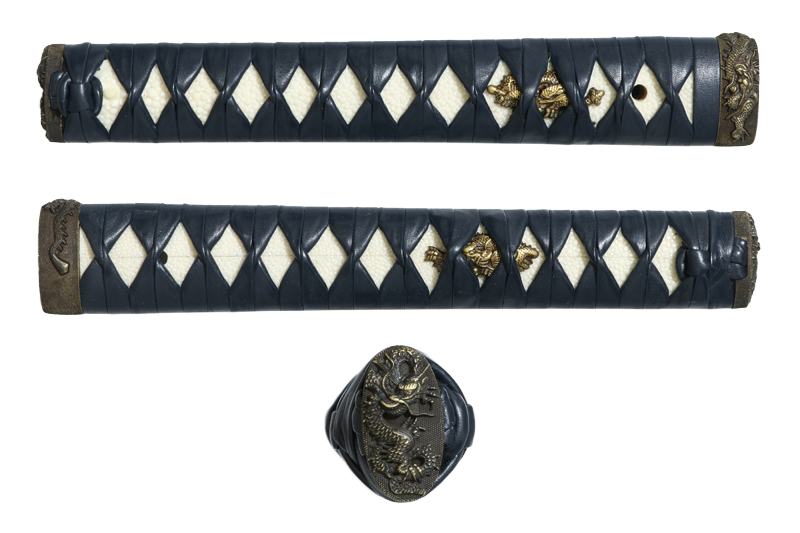
The koshirae is a high-quality masterpiece with the fittings unified in a dragon design and the saya finished in kai-chirashi lacquer. The state of preservation of the koshirae is also good.
The blade has excellent balance and feels light in the hand. It is a sword that can be used for iaidō and tameshigiri immediately after purchase, as well as for appreciation.
"koshirae"
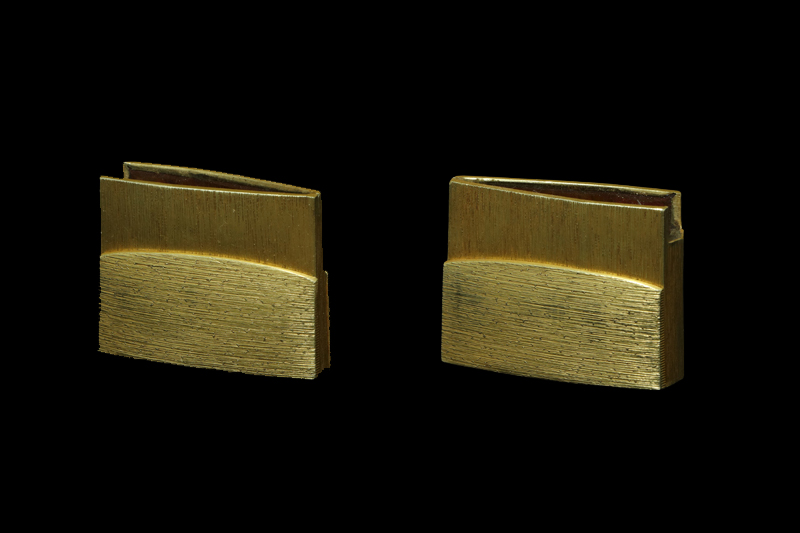
Habaki: Suaka-ji gold-clad double koshi-yūjō.
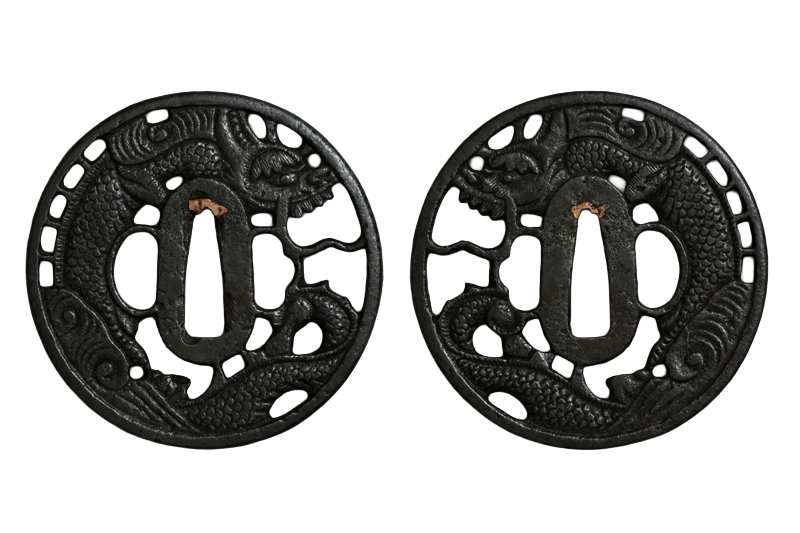
Tsuba: Tetsu-ji, dragon motif.
Fuchi-kashira: Tetsu-ji, dragon motif.
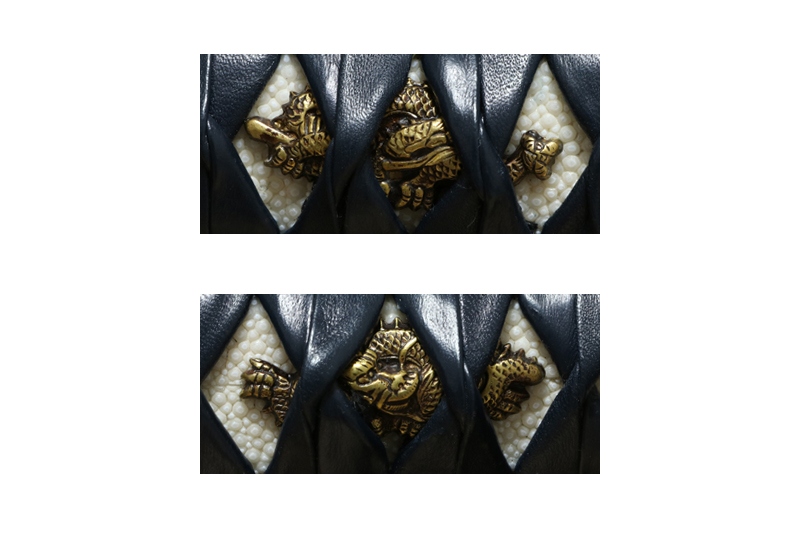
Menuki: Suaka-ji, kin-iroe, dragon motif.
Tsuka: Same has an oyatsubu and is makisame; the tsukamaki is navy blue cowhide leather in morohime-zaki.
Saya: Kai-chirashi saya.
"condition of blade"
Polishing: Good.
Flaws: There are no flaws that would become a defect.
Machine translation from the shop's Japanese · may contain errors ·
Modern sword Chikusyu ju Muneshige saku with Koshirae.
This is a work by the swordsmith Chikushū-jū Muneshige of the Mune school, who is known as the maker of the legendary wazamono "Sasa no Tsuyu".
The previous owner did not use it for iaidō or tameshigiri, and the blade maintains a good condition. It also has excellent balance and can be used for iaidō and tameshigiri immediately after purchase.
It is an attractive blade where one can enjoy the excellent skill of the swordsmith Muneshige. Please consider it on this occasion.
A fine work by Chikushū-jū Muneshige of the Mune school, renowned as the maker of the legendary “Sasa no Tsuyu,” celebrated for its exceptional cutting ability.
The previous owner did not use this sword for iaidō or tameshigiri, and the blade remains in excellent condition. It is exceptionally well balanced and ready for immediate use in iaidō and tameshigiri after purchase.
An excellent opportunity to acquire a fine example showcasing the outstanding craftsmanship of Muneshige.
"sword figre"
Shinogi-zukuri, iori-mune, wide mihaba and standard kasane, torii-zori, ō-kissaki. The nakago is ubu with kesho yasurime, and the nakagojiri is iriyamagata.
"jigane"
The jigane is itame-hada which is well-tightened, mixed in places with mokume and a flowing tendency; ji-nie attaches and chikei enters. It is the strong jigane characteristic of the Mune school.
"hamon"
The hamon is ō-gunome, with nie at the habuchi and sunagashi, and yō enters within the ha. The bōshi is midare-komi and returns in komaru.
"detailed"
Chikushū-jū Muneshige, real name Kojō Shigeaki. Born in Shōwa 7. His teacher was the swordsmith Munehiro, who was the father of the swordsmith Munetoshi; he is in the relationship of a fellow student with the swordsmith Munetoshi.
Among the works of Muneshige, there are swords produced with "Sasa no Tsuyu" inscribed alongside the mei, and like the works of the swordsmith Munetoshi, they have earned a high reputation as modern wazamono swords with excellent sharpness.
This piece is one that has been carefully preserved for appreciation, and the condition of the blade is good. The jigane exhibits a well-tightened itame-hada, and the hamon is a powerful ō-gunome; it is a wonderful work worth seeing.
The koshirae is a high-quality masterpiece with the fittings unified in a dragon design and the saya finished in kai-chirashi lacquer. The state of preservation of the koshirae is also good.
The blade has excellent balance and feels light in the hand. It is a sword that can be used for iaidō and tameshigiri immediately after purchase, as well as for appreciation.
"koshirae"
Habaki: Suaka-ji gold-clad double koshi-yūjō.
Tsuba: Tetsu-ji, dragon motif.
Fuchi-kashira: Tetsu-ji, dragon motif.
Menuki: Suaka-ji, kin-iroe, dragon motif.
Tsuka: Same has an oyatsubu and is makisame; the tsukamaki is navy blue cowhide leather in morohime-zaki.
Saya: Kai-chirashi saya.
"condition of blade"
Polishing: Good.
Flaws: There are no flaws that would become a defect.
The twentieth century nearly killed the craft twice: wartime distortion, then the occupation ban. The NBTHK’s founding in 1948 and licensed forging from 1953 rebuilt the sword as an art, crowned by Living National Treasures and the mukansa rank.
Within 3 days of the item's arrival, we offer a refund or an exchange. Return shipping and the bank transfer fee for the refund are at the customer's expense.


 NihontoWatch