The twentieth century nearly killed the craft twice: wartime distortion, then the occupation ban. The NBTHK’s founding in 1948 and licensed forging from 1953 rebuilt the sword as an art, crowned by Living National Treasures and the mukansa rank.
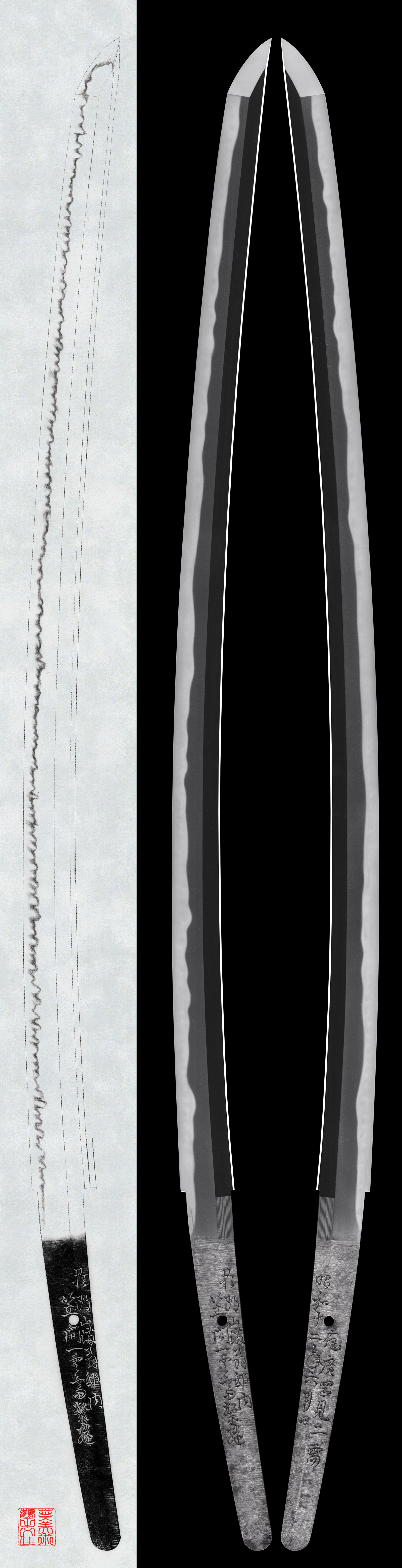
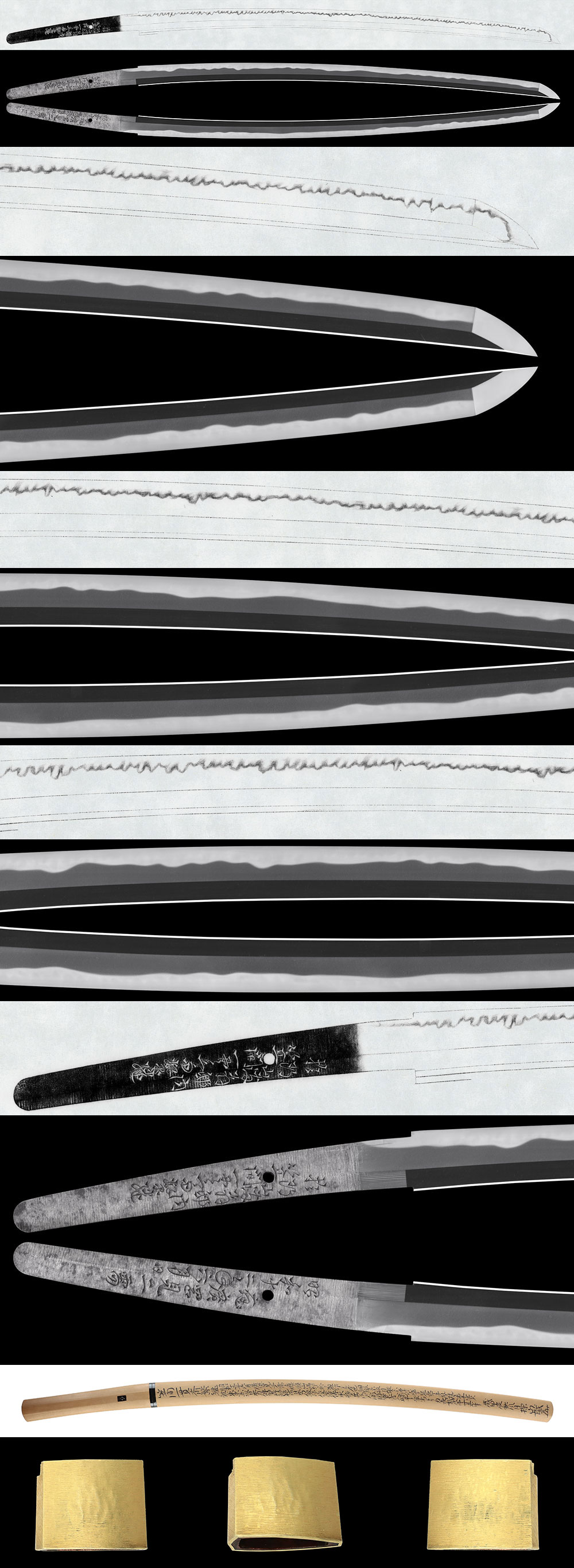
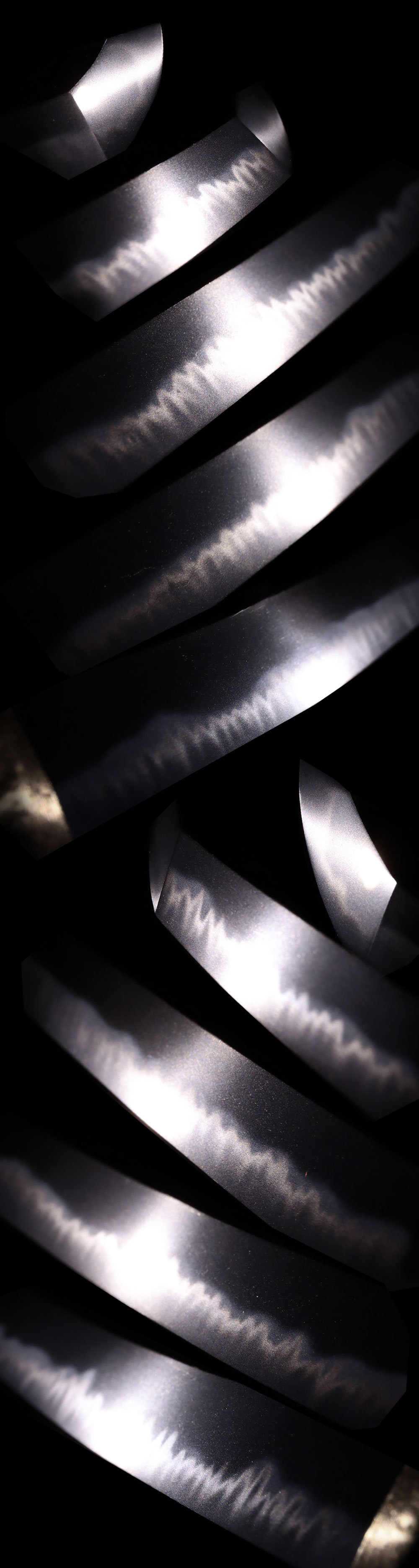
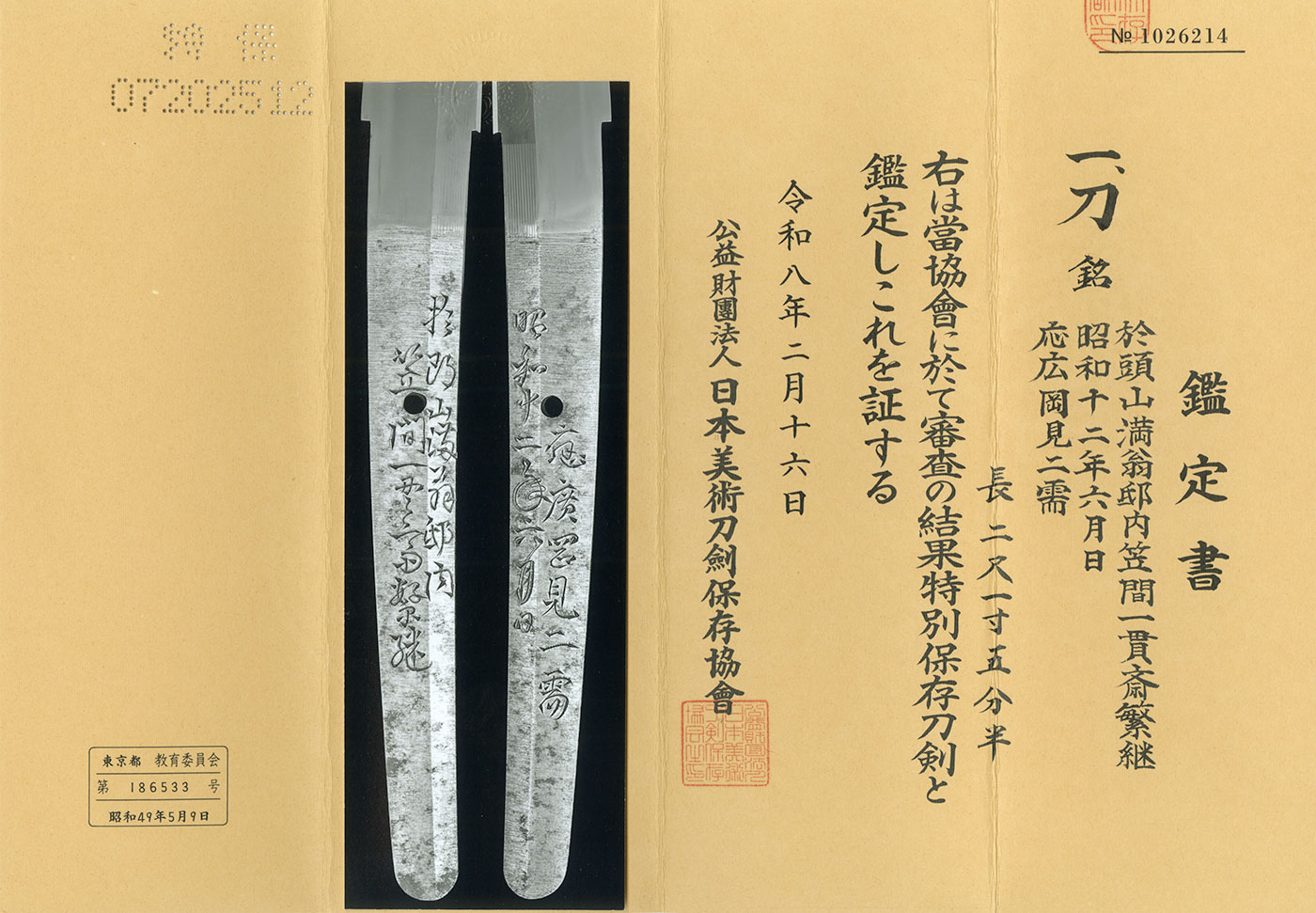
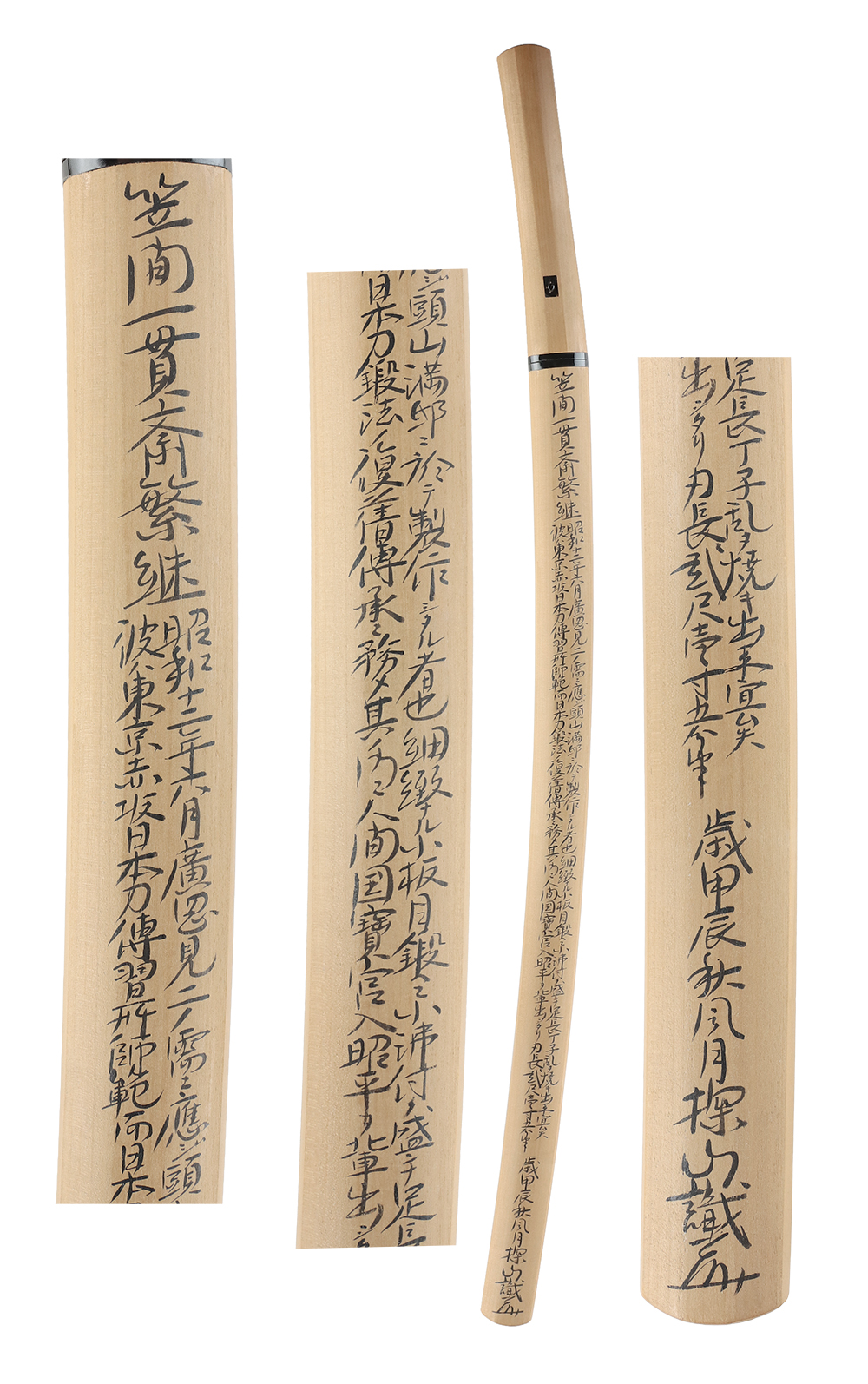
Ordering Number: 26432Katana in Shirasaya (NBTHK Tokubetsu Hozon Token)Signature: Forged at the residence of Toyama Mitsuru by Kasama Ikkansai ShigetsuguJune, Showa 12 (1937)Made upon the request of Hirooka Kenji於頭山満翁邸内笠間一貫斉繁継昭和十二年六月日応広岡見二需Sayagaki: By Dr. TanobeKasama Ikkansai Shigetsugu.Forged at the residence of Toyama Mitsuru in June 1937 in response to the request of Hirooka Kenji.The blade displays an exquisitely fine ko-itame forging with delicate ko-nie and a magnificent choji-midare with vigorous ashi, representing excellent workmanship.He served as an instructor at the Nihonto Denshujo (Japanese Sword Training Institute) in Akasaka, Tokyo, where he devoted himself to preserving and transmitting traditional sword-forging techniques. Among his distinguished pupils was Living National Treasure Miyairi Akihira.Blade length: 2 shaku 1 sun 5 bu 5 rin.Written by Tanzan in the autumn of the Kinoe-Tatsu year (kao).(We divide 4 sections for each sword as Saijyo Saku, Jyojyo Saku, Jyo Saku and Regular Saku).This blade is ranked as Jyojyo Saku among the works of Kasama Ikkansai Shigetsugu.Habaki: Single gold-foiled habaki.Blade Length: 65.4 cm (25.75 in).Curvature: 1.6 cm (0.63 in).Mekugi Hole: 1.Width at Base (Motohaba): 3.14 cm (1.24 in).Width at Yokote: 2.19 cm (0.86 in).Thickness of rim (Kasane): 0.72 cm (0.28 in).Sword Weight: 705 g.Era: June 1937.Shape: A beautifully proportioned katana with standard mihaba and kasane, deep curvature, and a slightly elongated kissaki.Jigane: Beautifully forged fine ko-itame hada.Hamon: Ko-nie-deki gunome-midare mixed with choji-midare. The boshi continues in midare and turns back in a rounded form.Features: Kasama Ikkansai Shigetsugu was born in 1885 in Shizuoka Prefecture and studied swordsmithing under his uncle, Miyaguchi Ikkansai Shigeju. His given name was Kasama Giichi. He was appointed as a swordsmith to the Imperial Household Ministry, received top honors at the Imperial Art Exhibition (Teiten), and produced numerous pre
Offered by Aoi Art
This piece has sold
Get an email when a new Kasama Ikkansai Shigetsugu piece hits the market.


Tokyo · around 1912-1926
Tōken Taikan top 63%
4 pieces on the market now
Shōwa to the present: destruction and revival
The twentieth century nearly killed the craft twice: wartime distortion, then the occupation ban. The NBTHK’s founding in 1948 and licensed forging from 1953 rebuilt the sword as an art, crowned by Living National Treasures and the mukansa rank.
A Hozon-certified blade judged to show notably superior workmanship and a better state of preservation. The bar is higher: re-tempered blades and most unsigned Muromachi/Edo works are excluded.
The NBTHK (Nihon Bijutsu Tōken Hozon Kyōkai, the Society for the Preservation of Japanese Art Swords) is a public-interest incorporated foundation founded in 1948 and supervised by Japan’s Agency for Cultural Affairs (Bunkachō); it is based at the Japanese Sword Museum in Tokyo. Its expert panels physically examine each submitted work (shinsa) and issue a certificate (kanteishō) ranking it by artistic and historical merit. NBTHK papers are the most widely recognized standard of authentication for Japanese swords and fittings.
NBTHK official siteIf you wish to return an item, please notify us within 3 days of receipt. After this period we cannot accept cancellations. Please ship the return to us within 5 business days. Cancellation is conditional on the item being kept in the same condition as at the time of sale, so please handle it with care.