The twentieth century nearly killed the craft twice: wartime distortion, then the occupation ban. The NBTHK’s founding in 1948 and licensed forging from 1953 rebuilt the sword as an art, crowned by Living National Treasures and the mukansa rank.
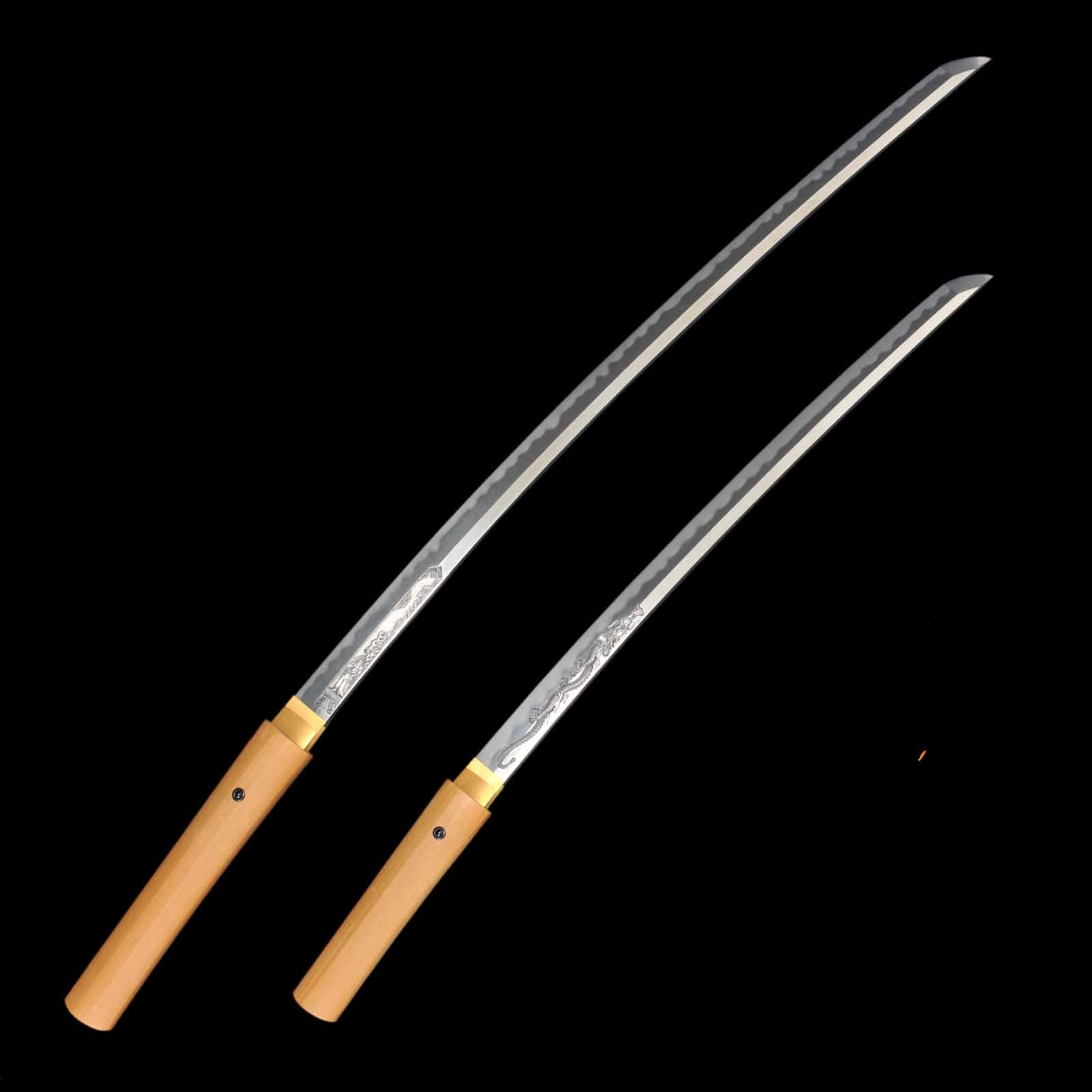
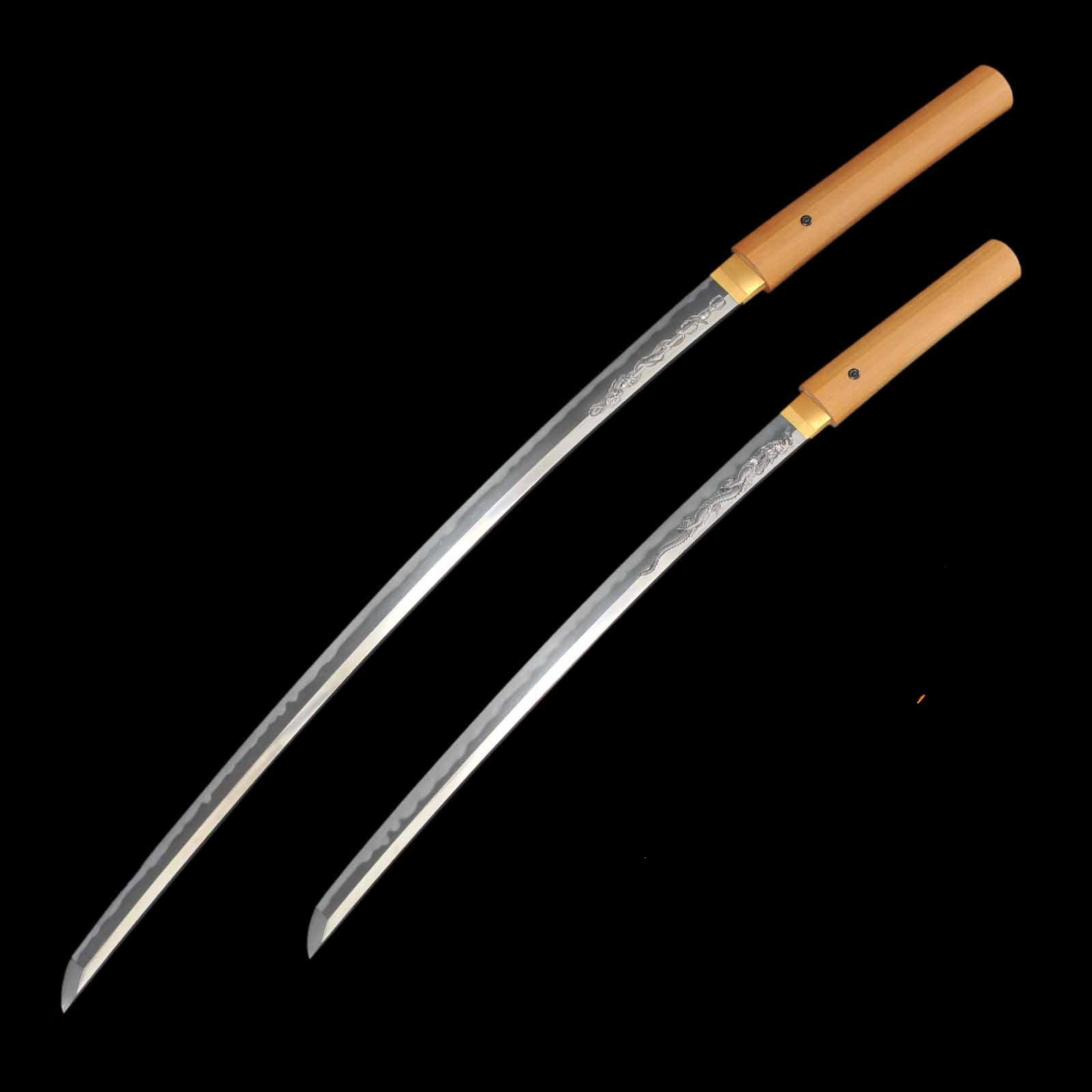
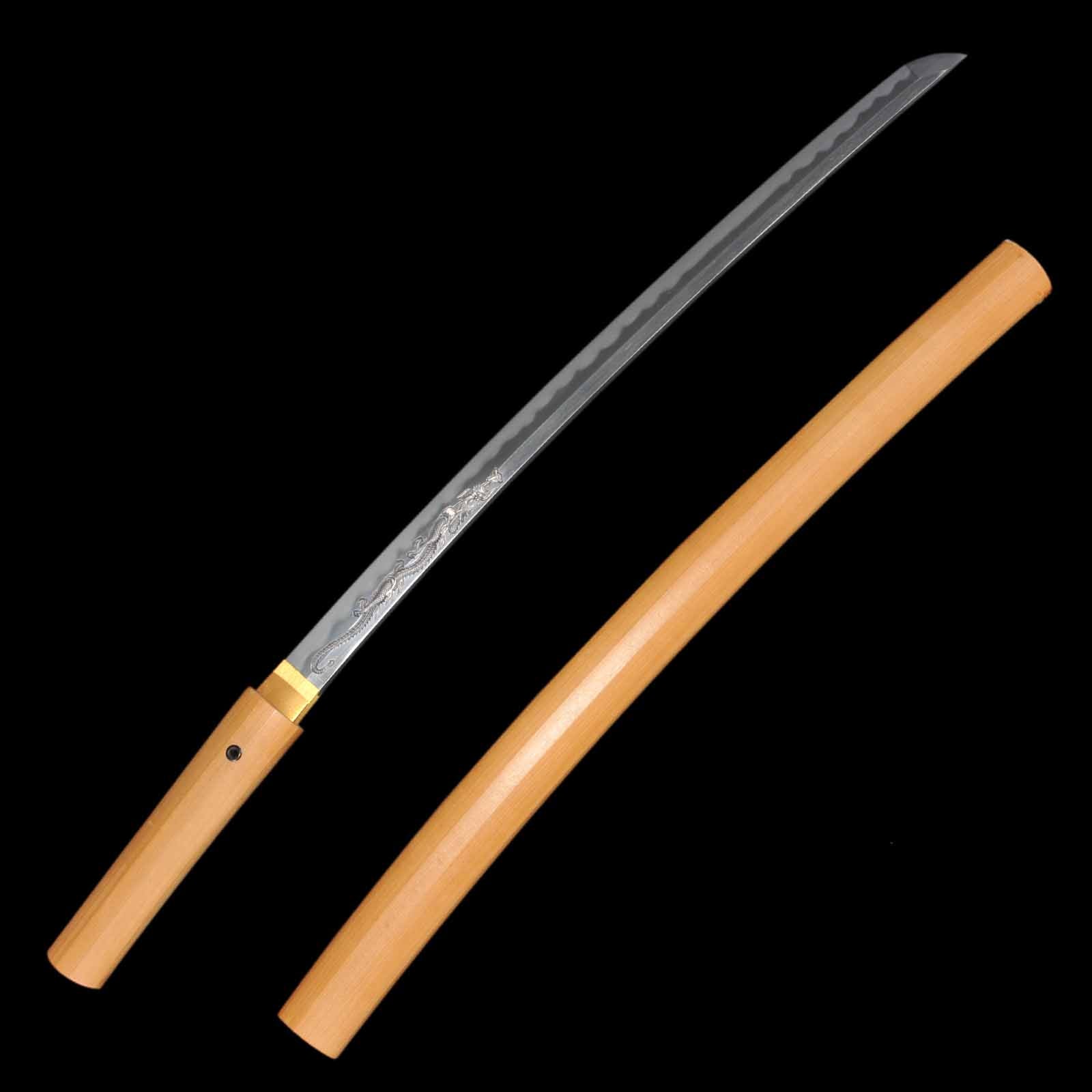
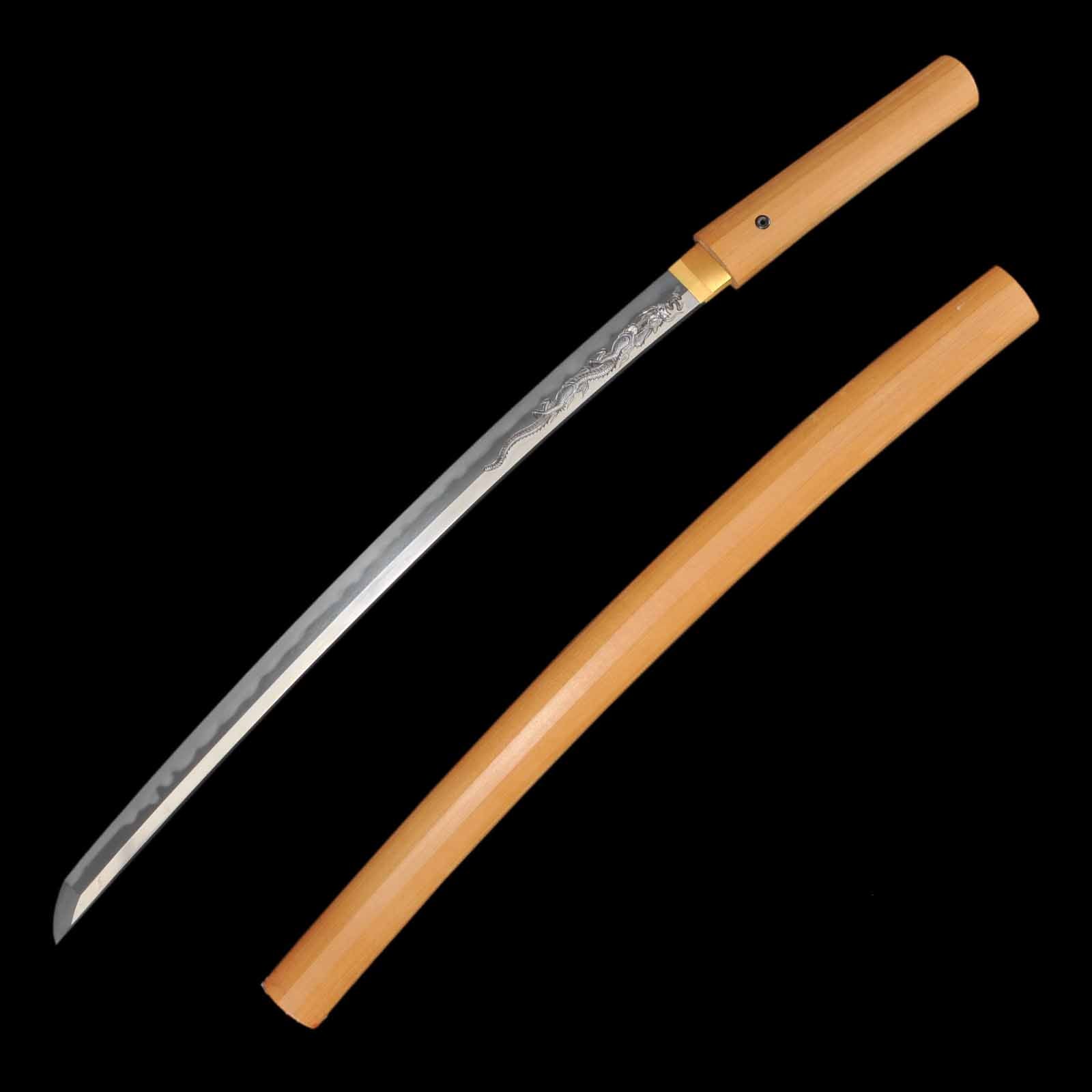
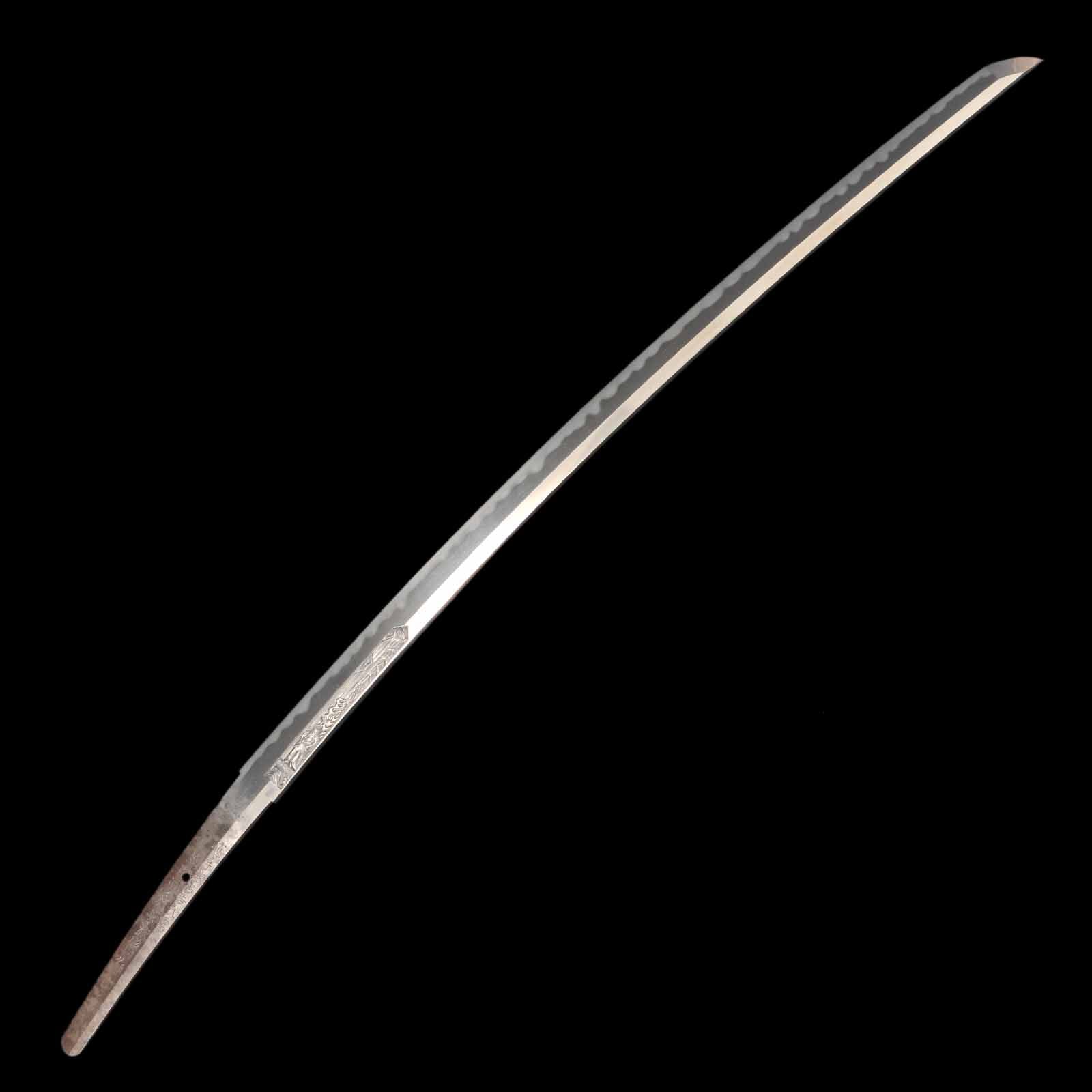
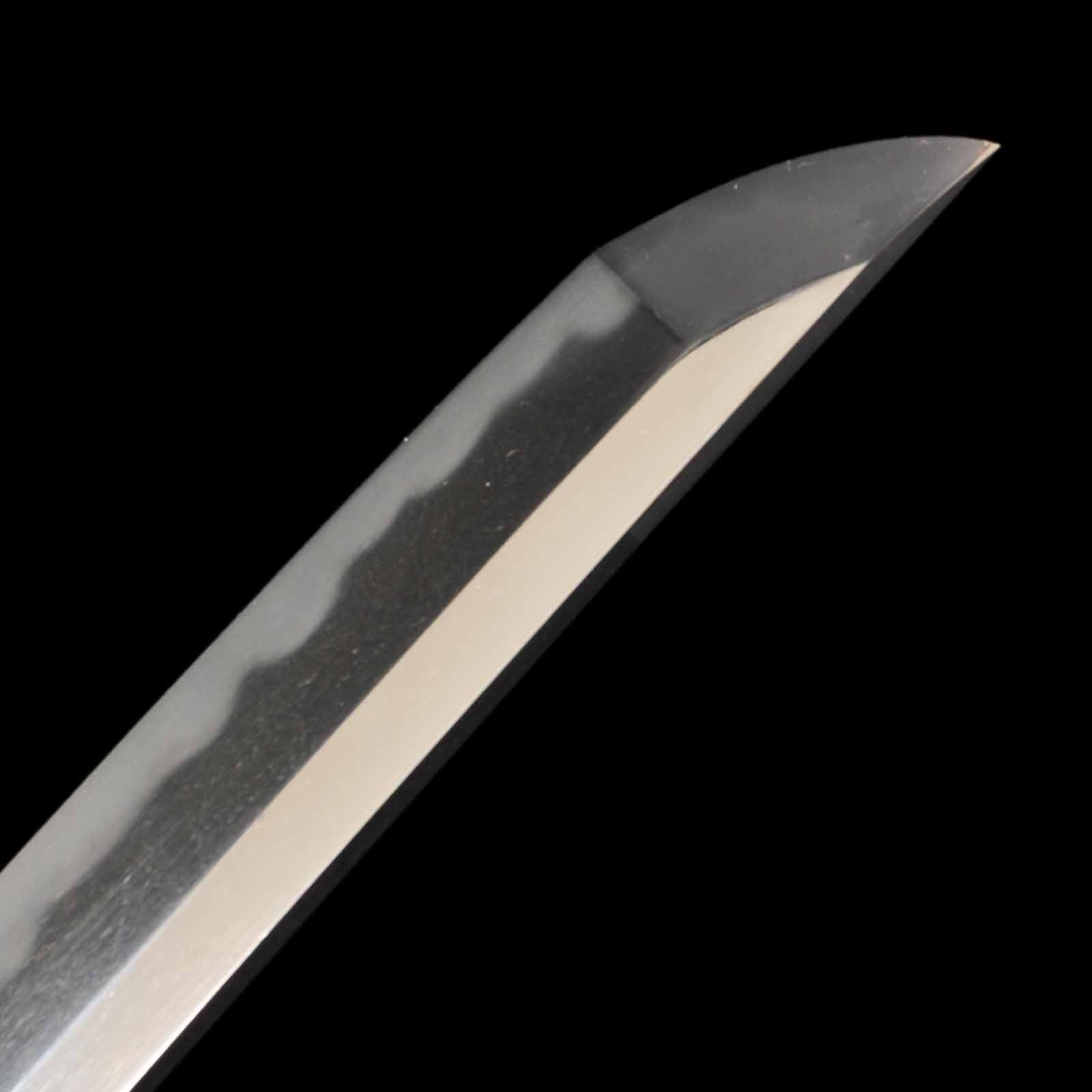
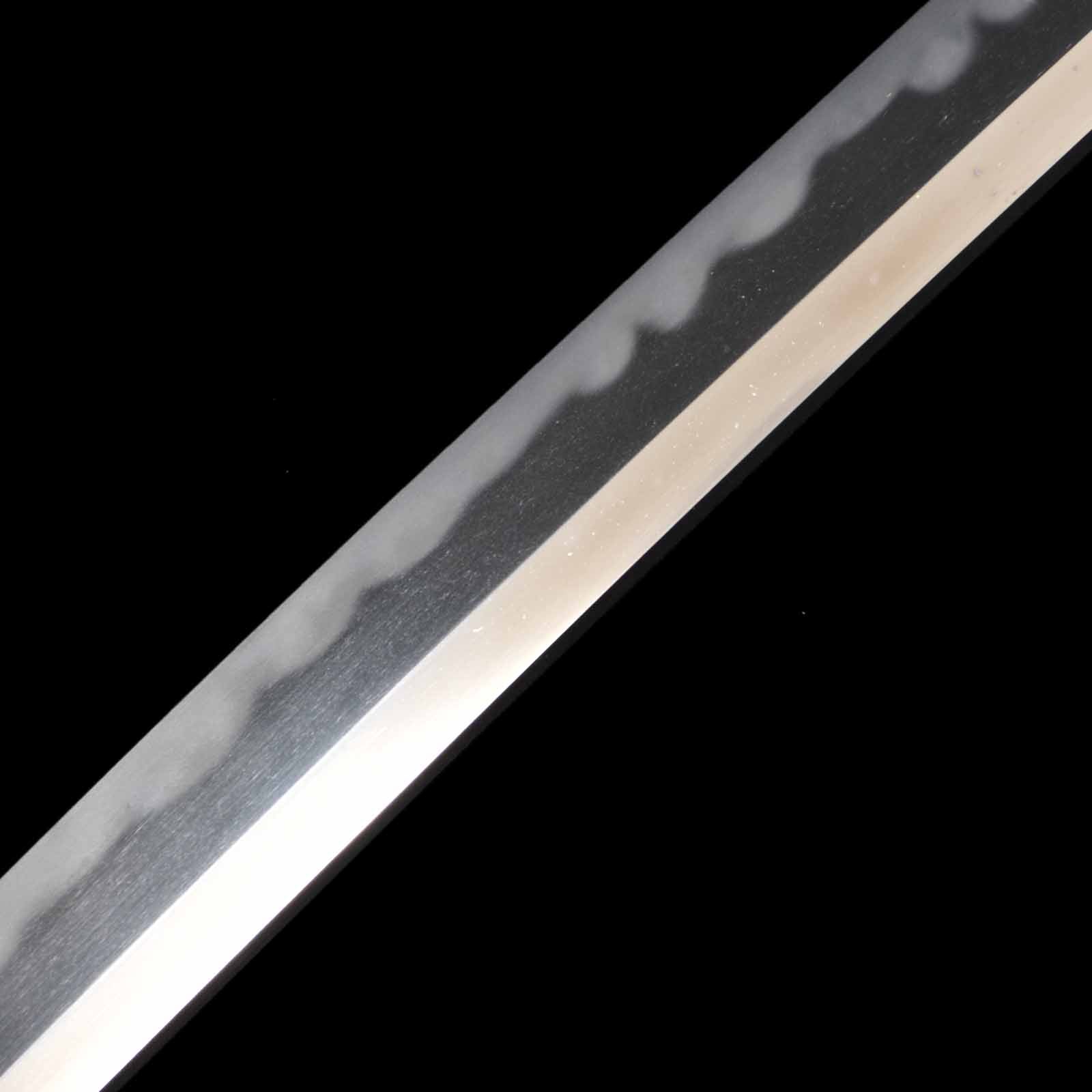
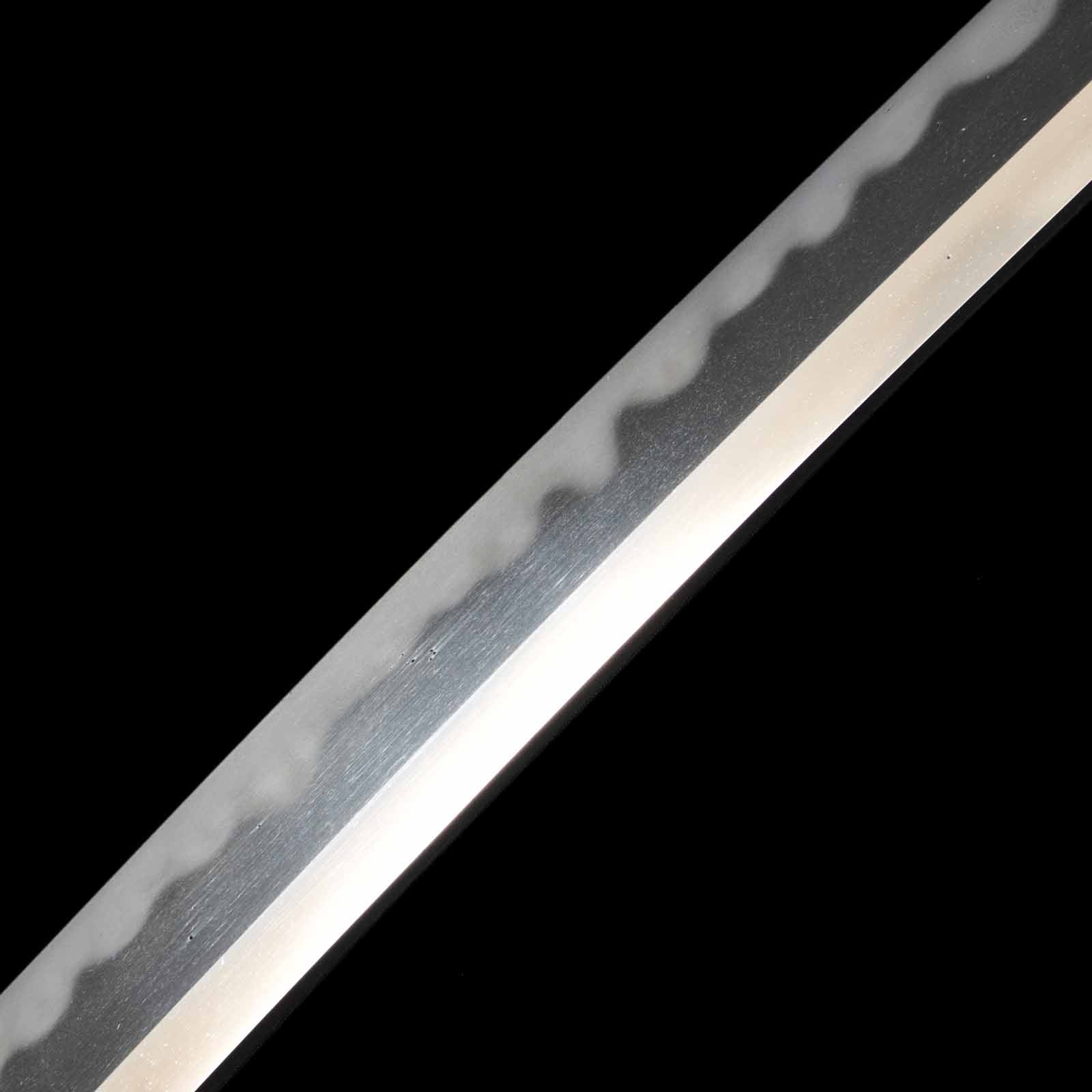
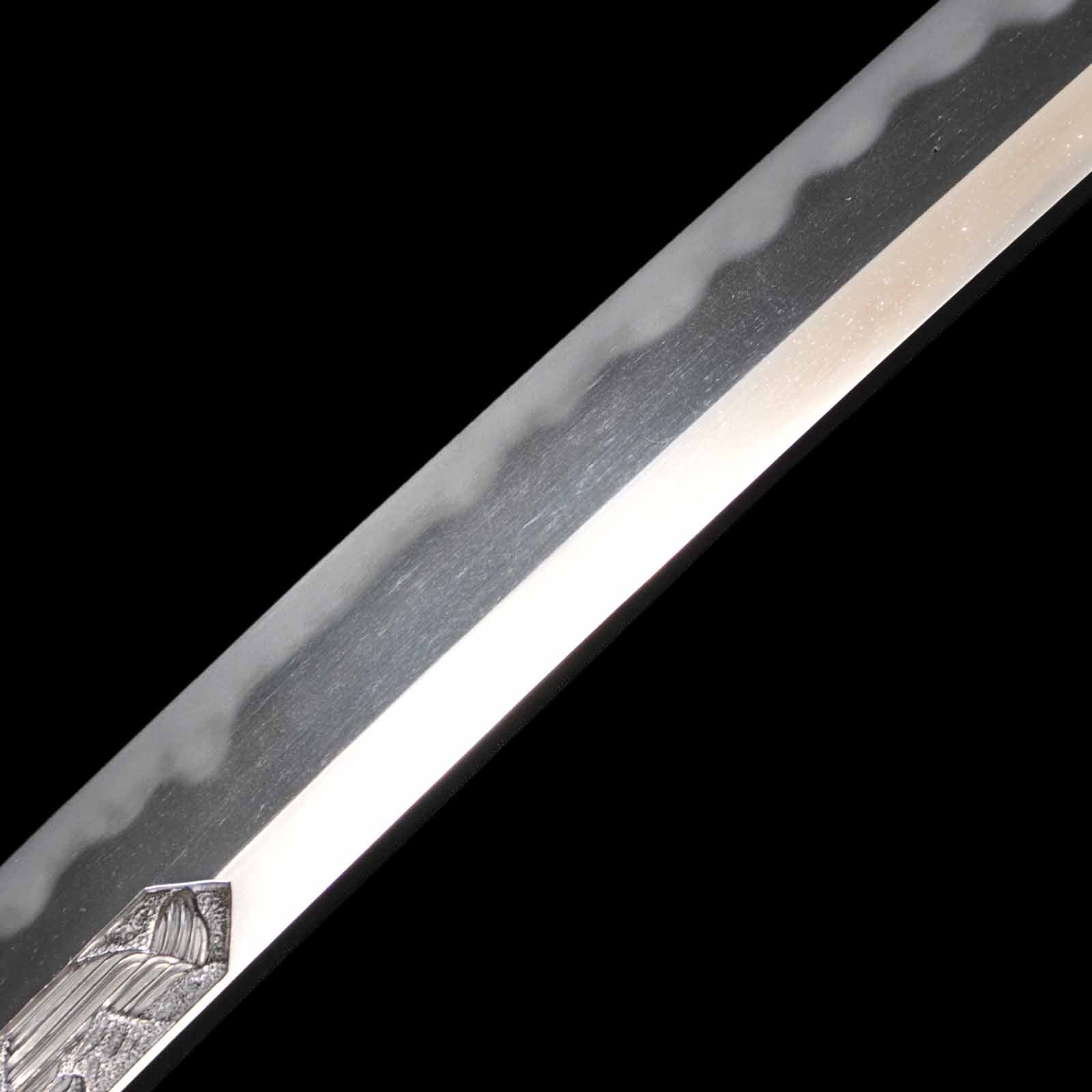
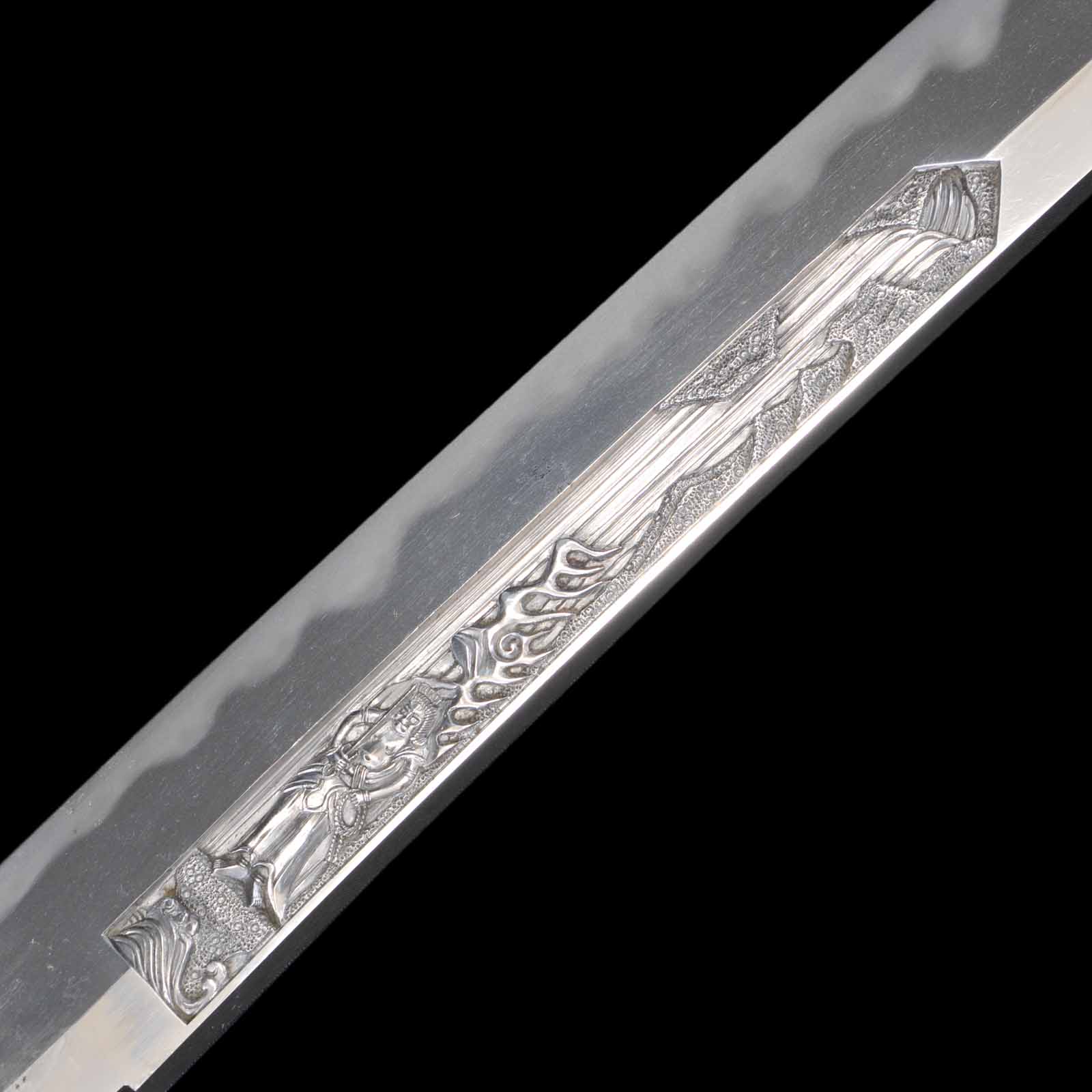
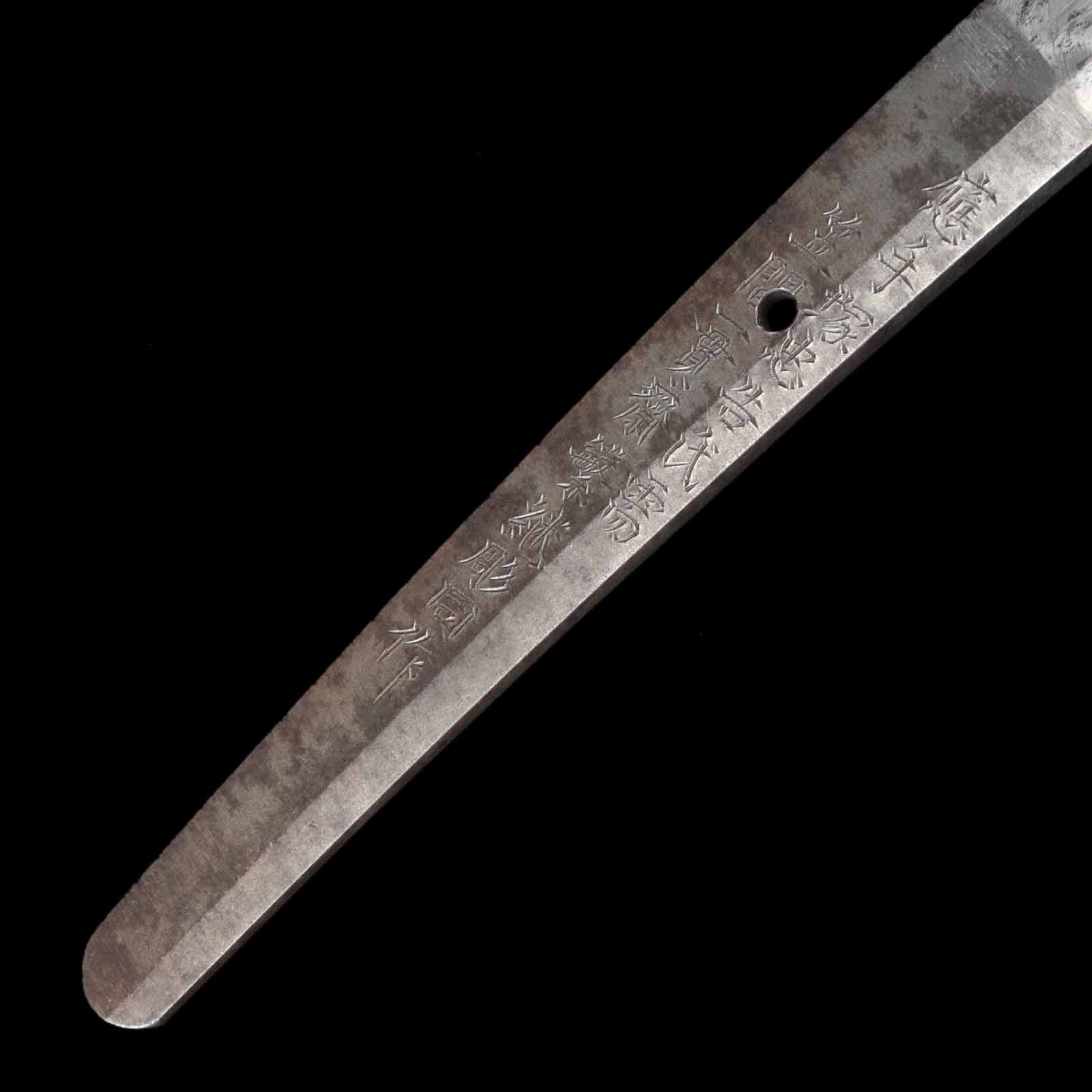
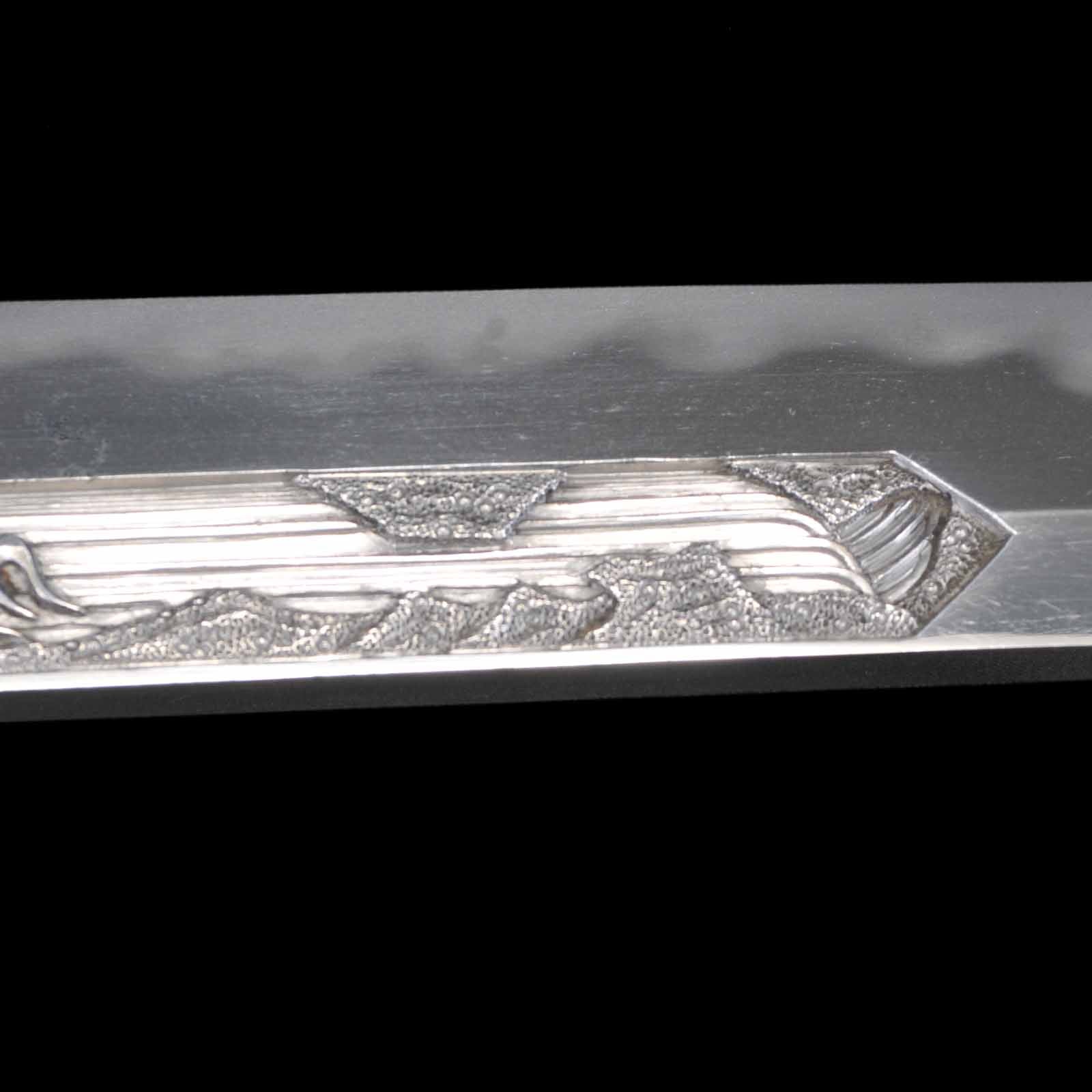
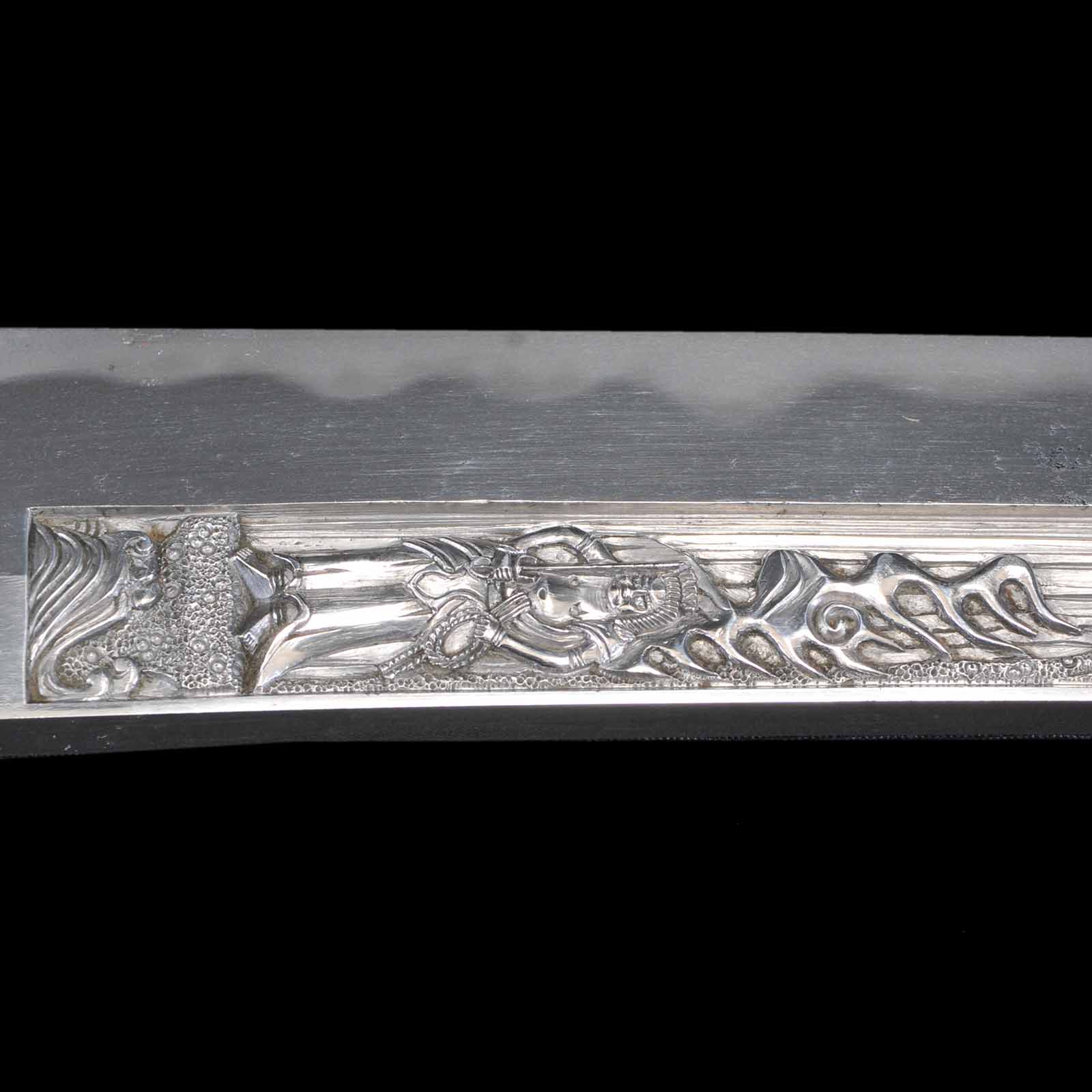
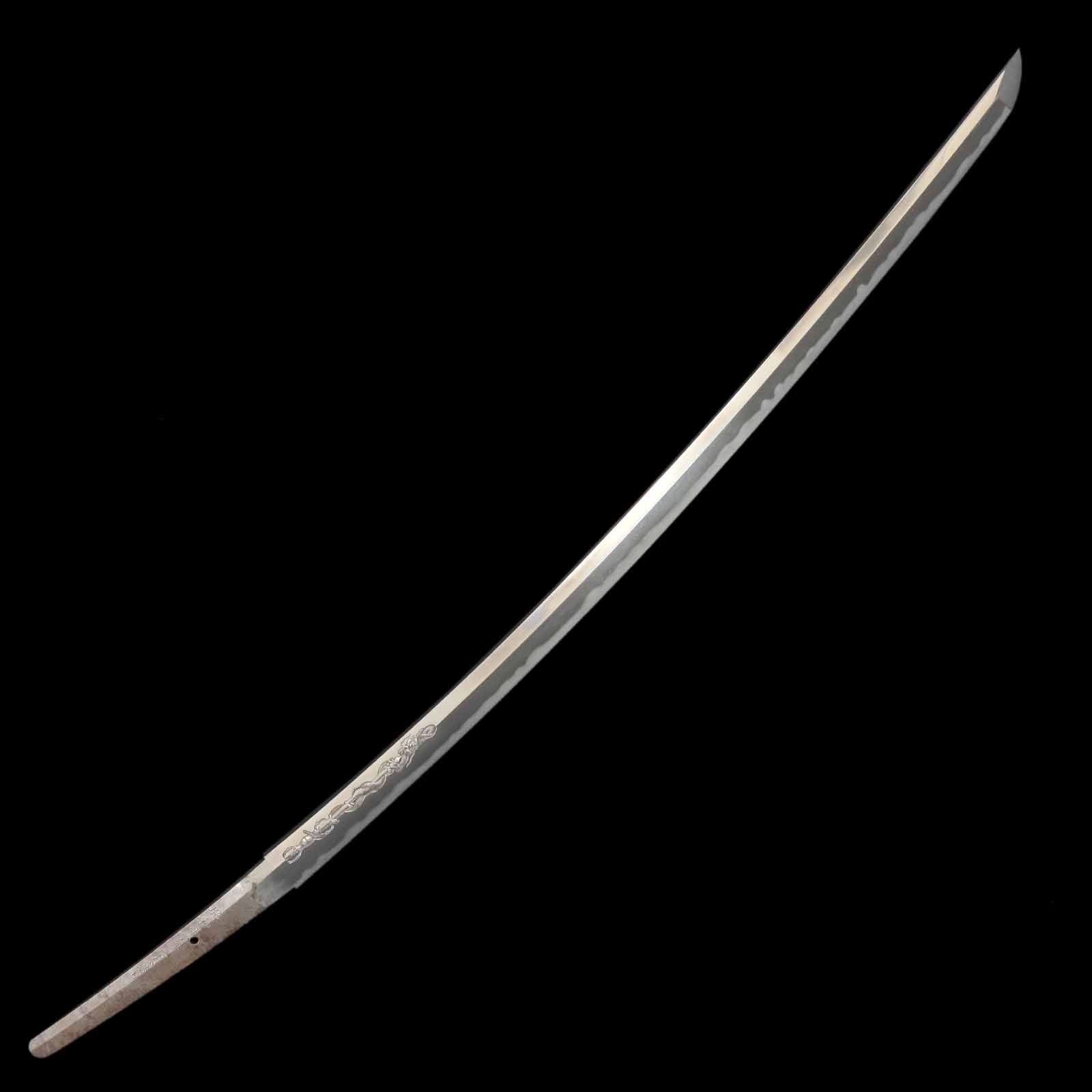
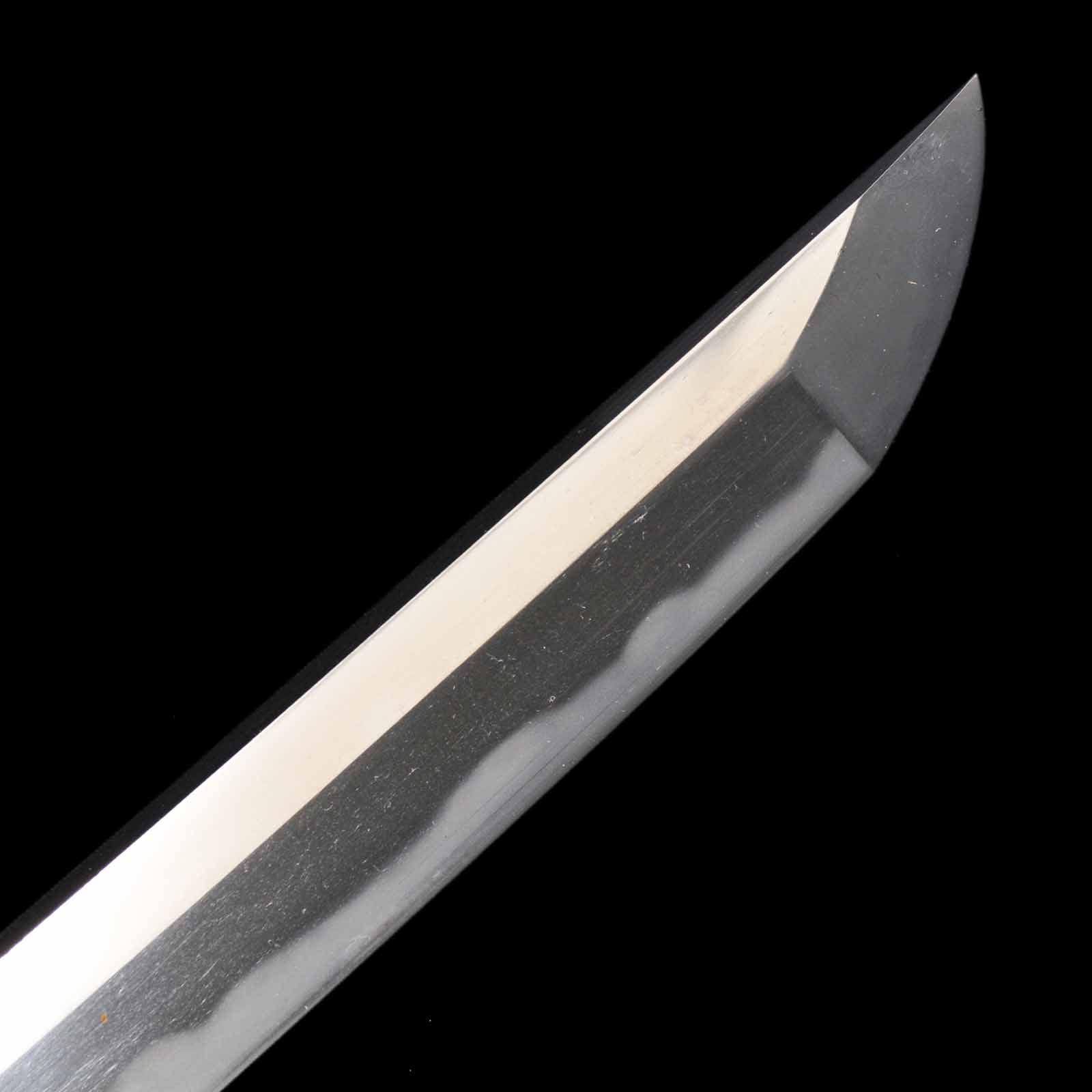
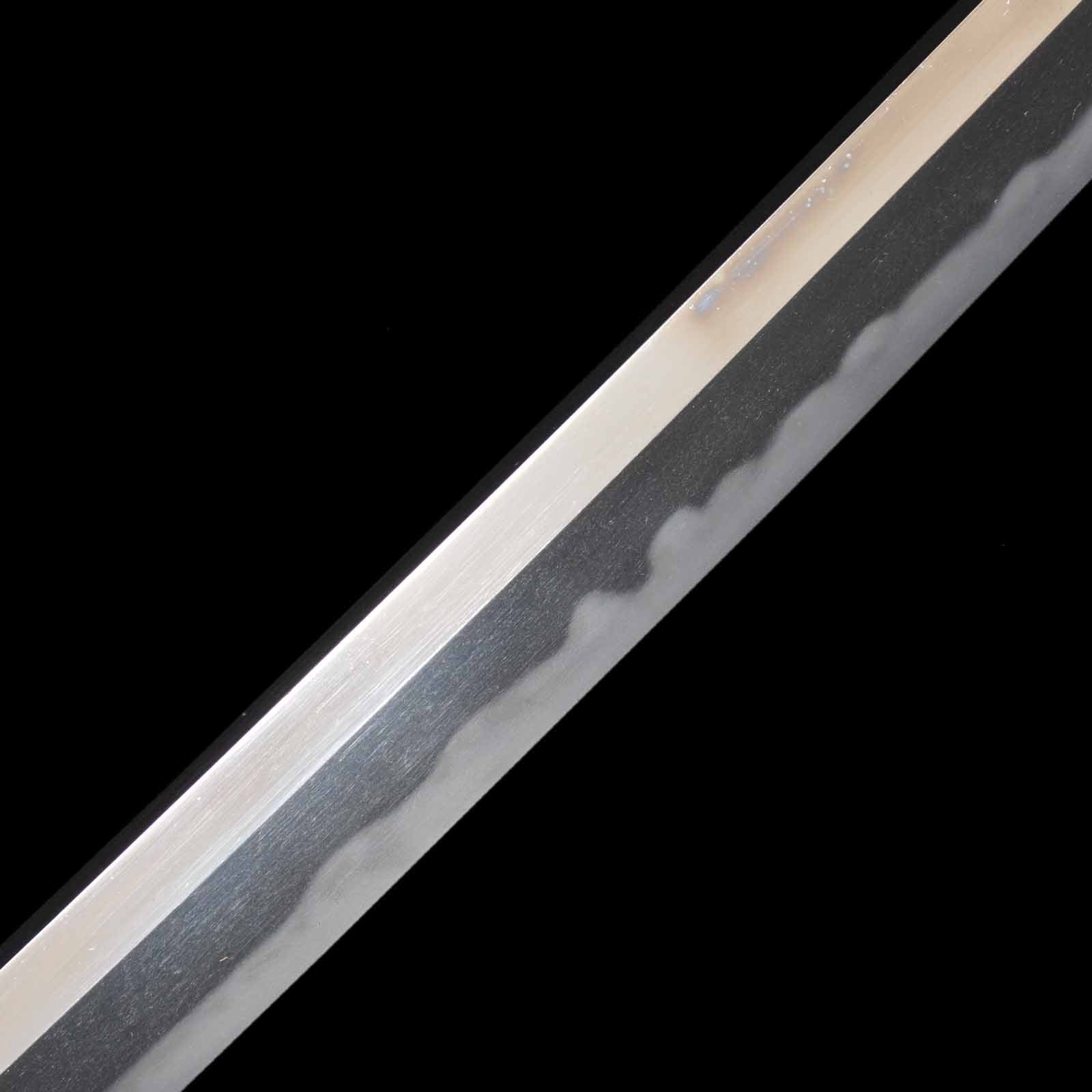
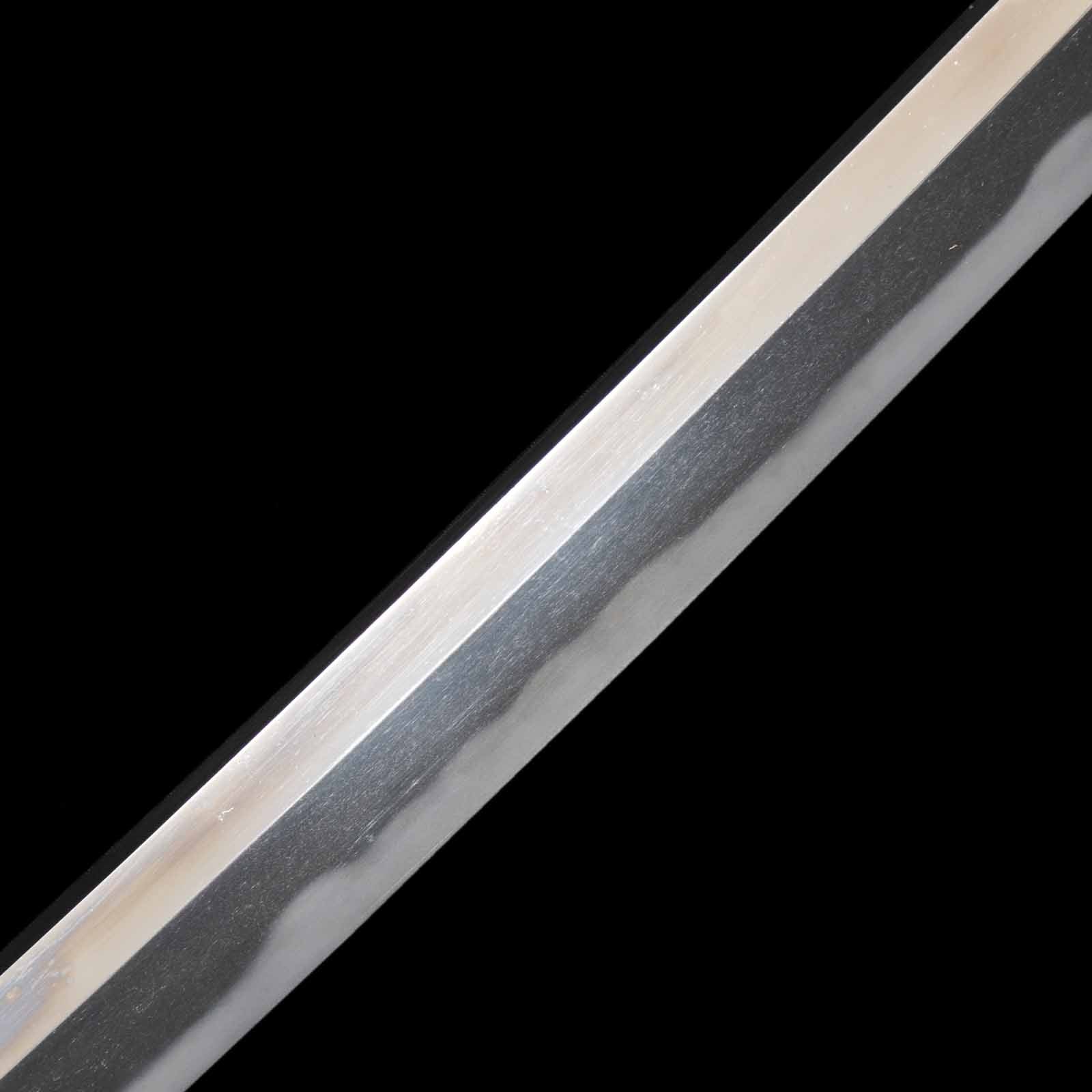
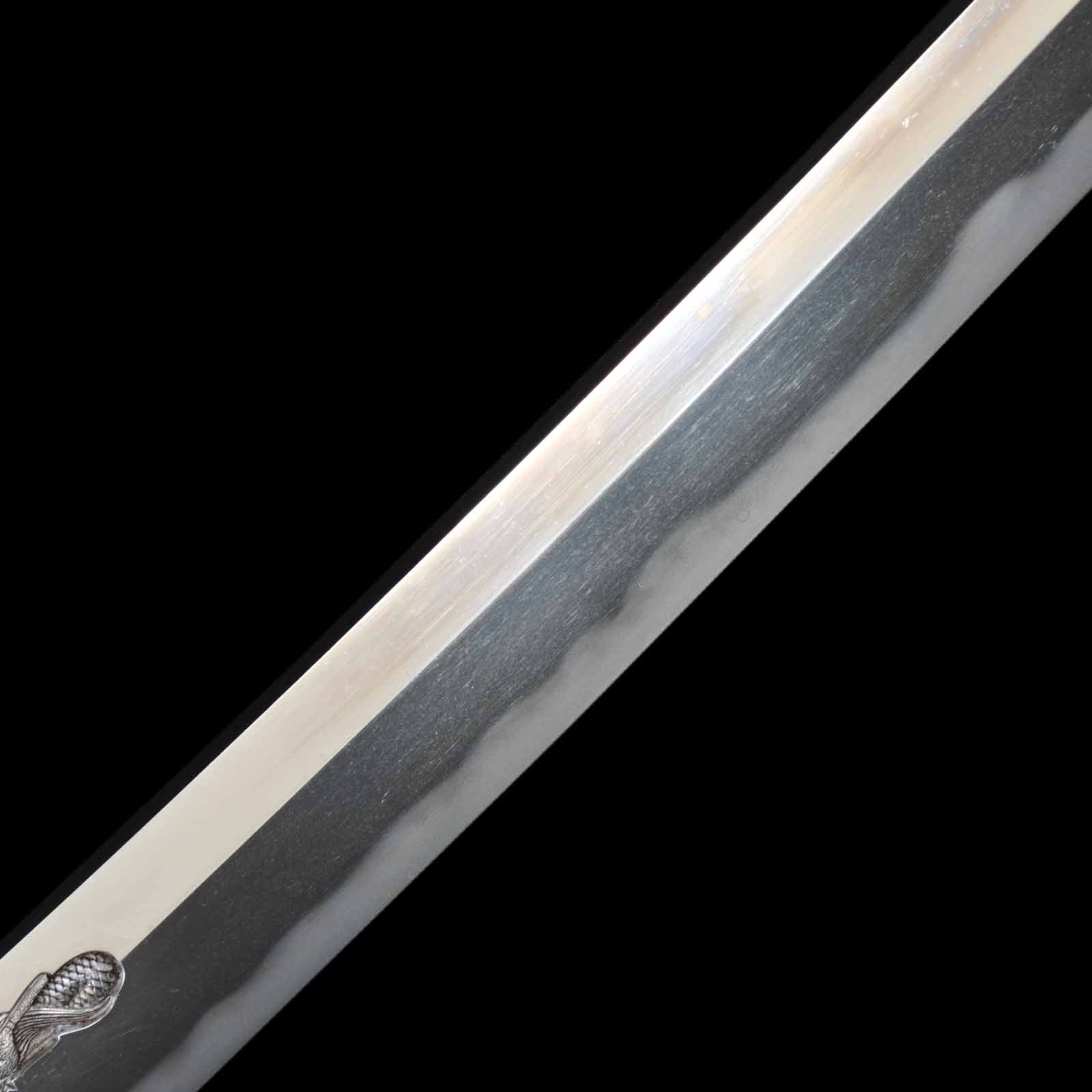
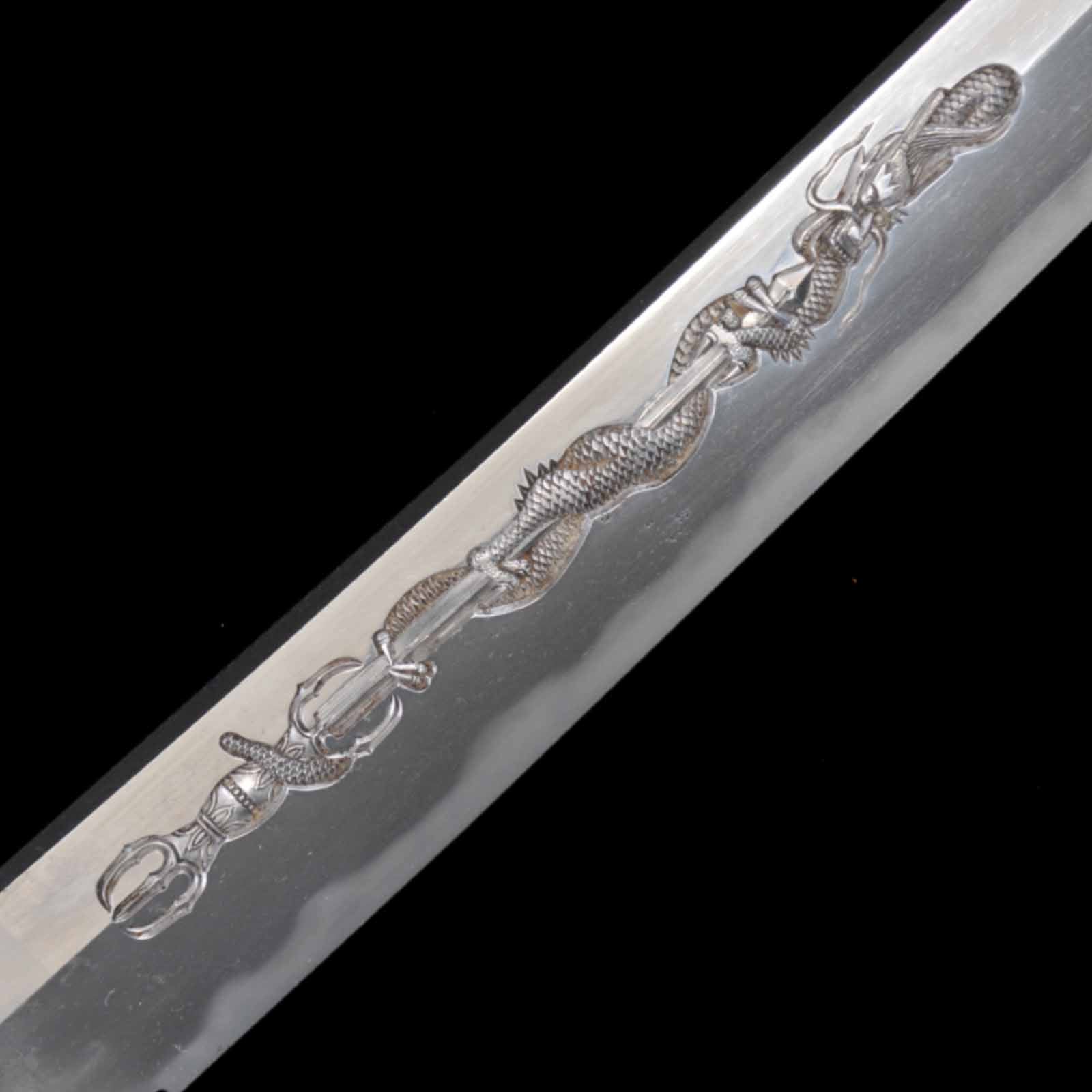
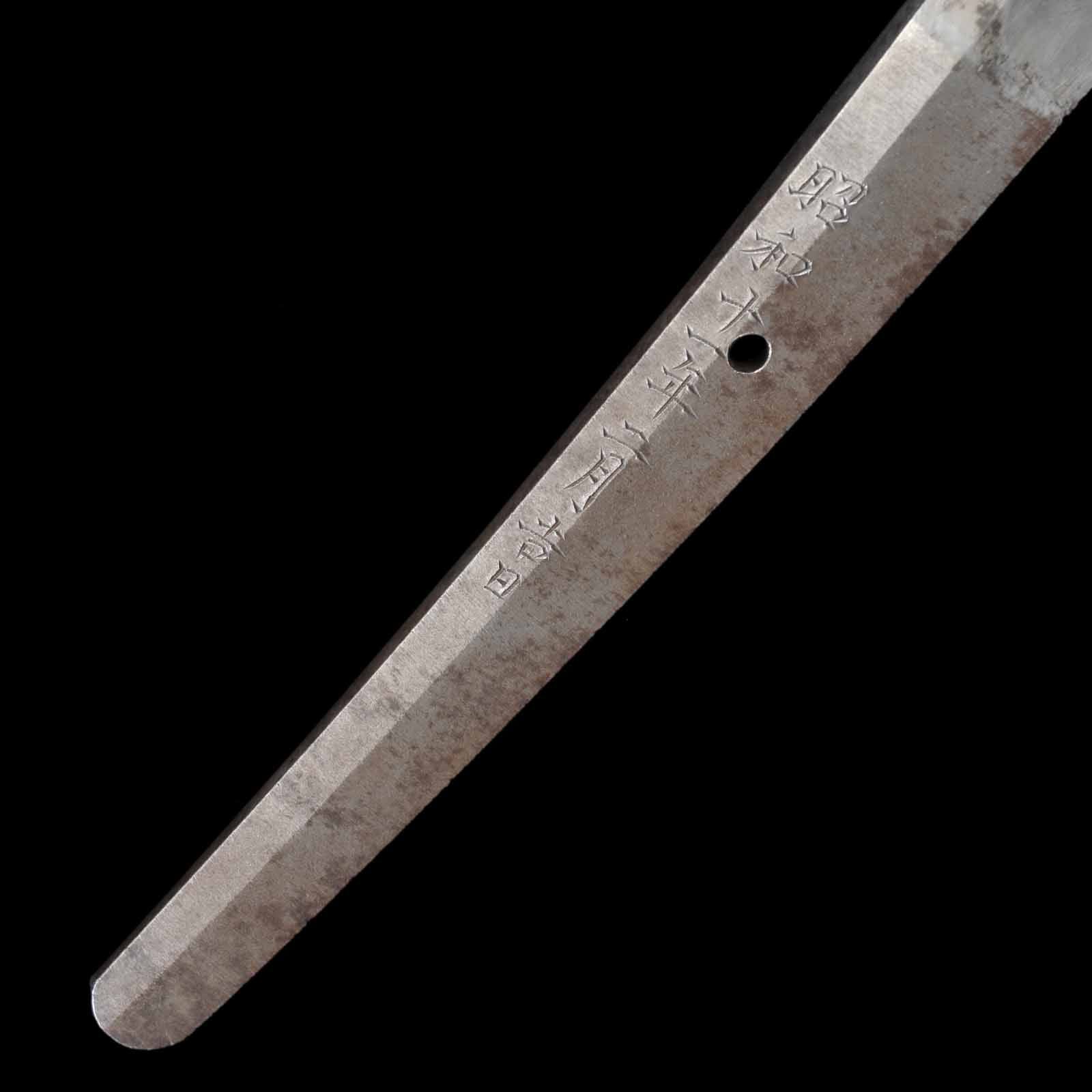
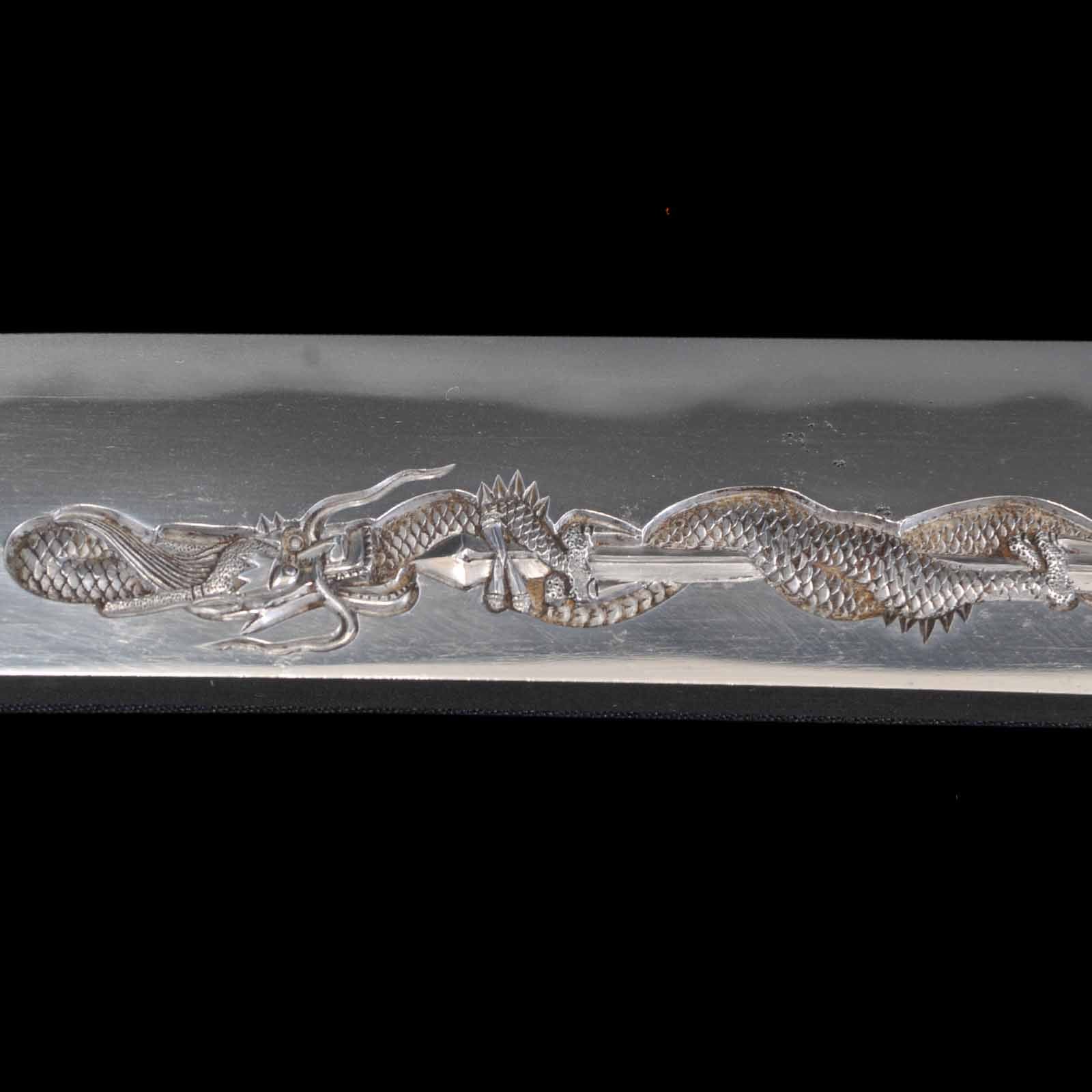
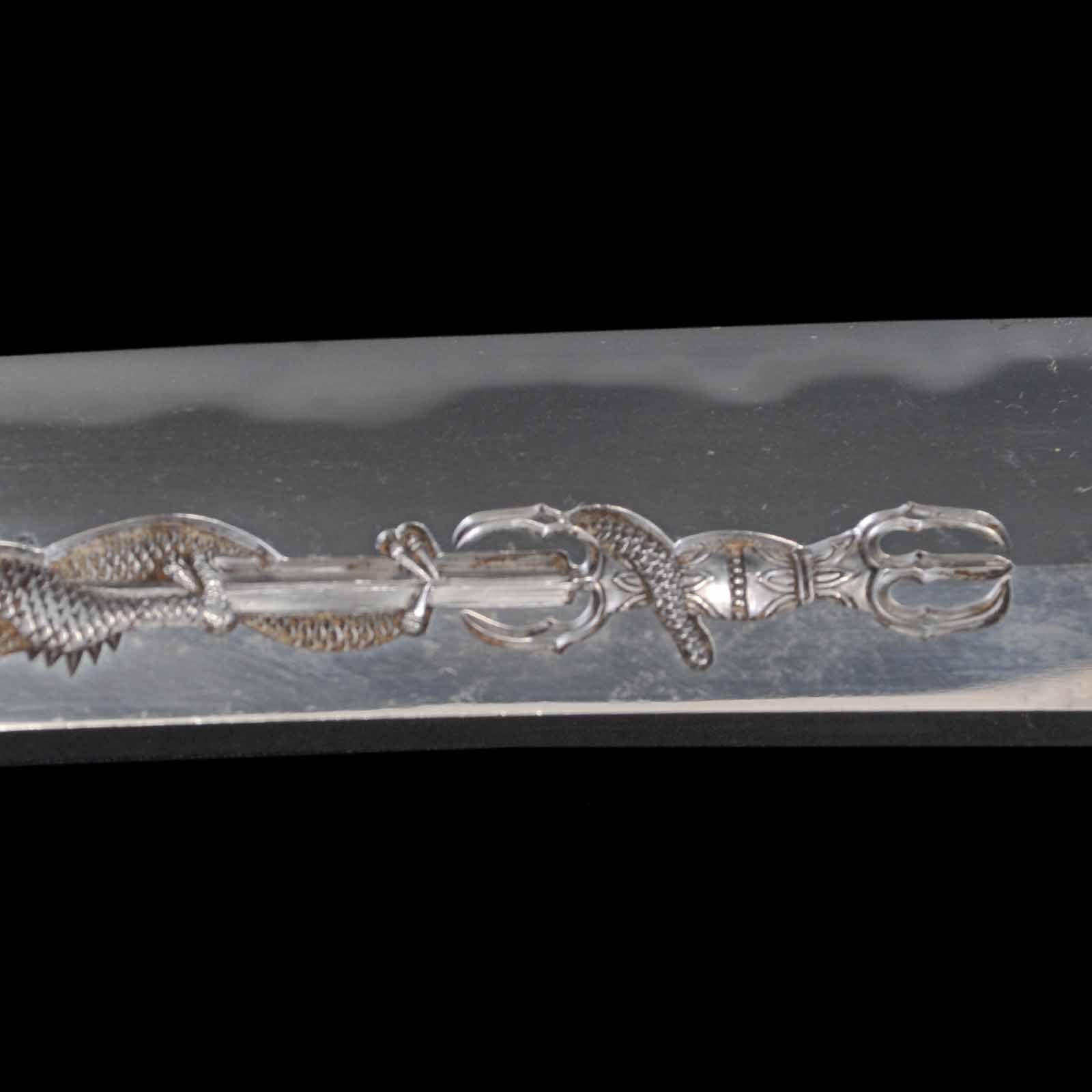
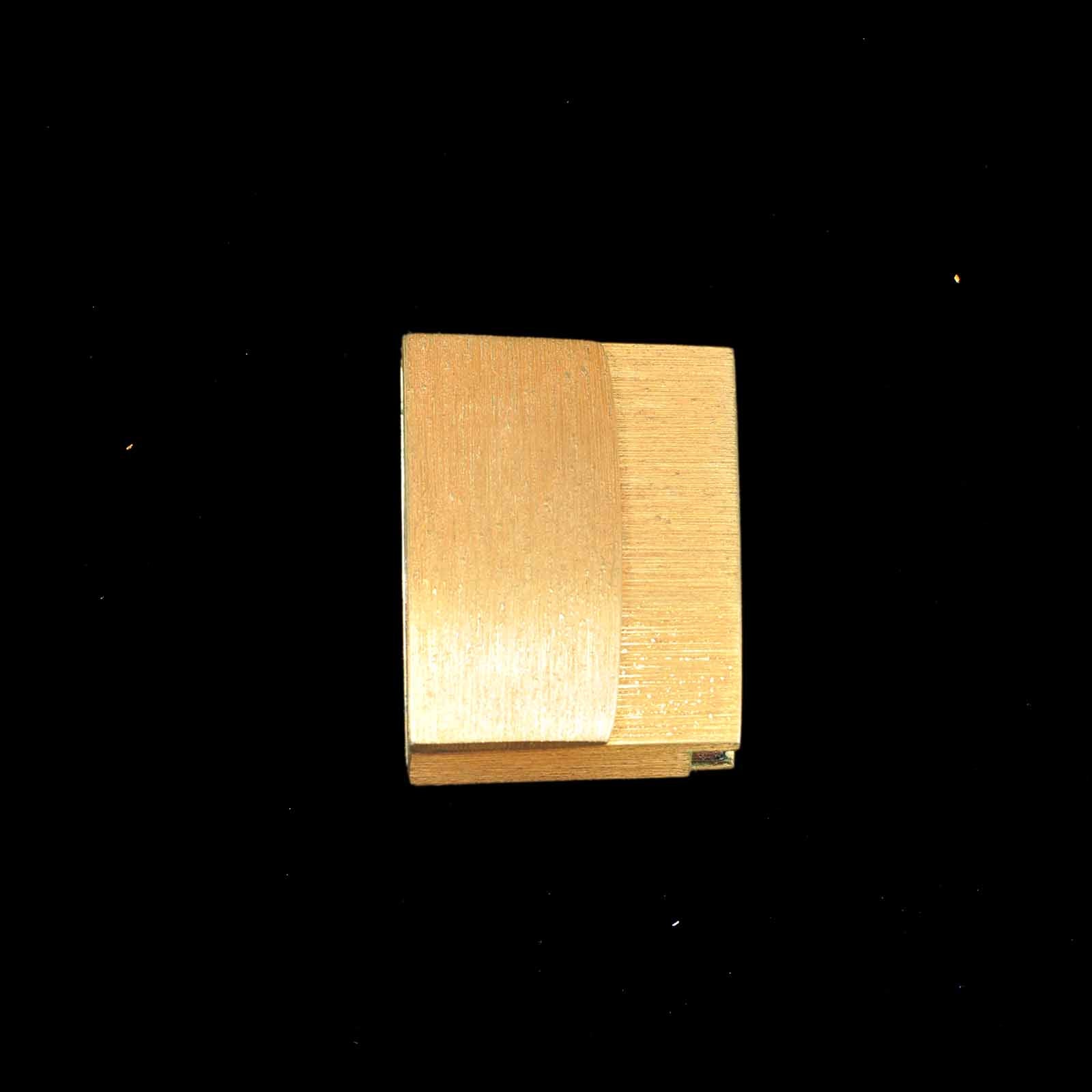
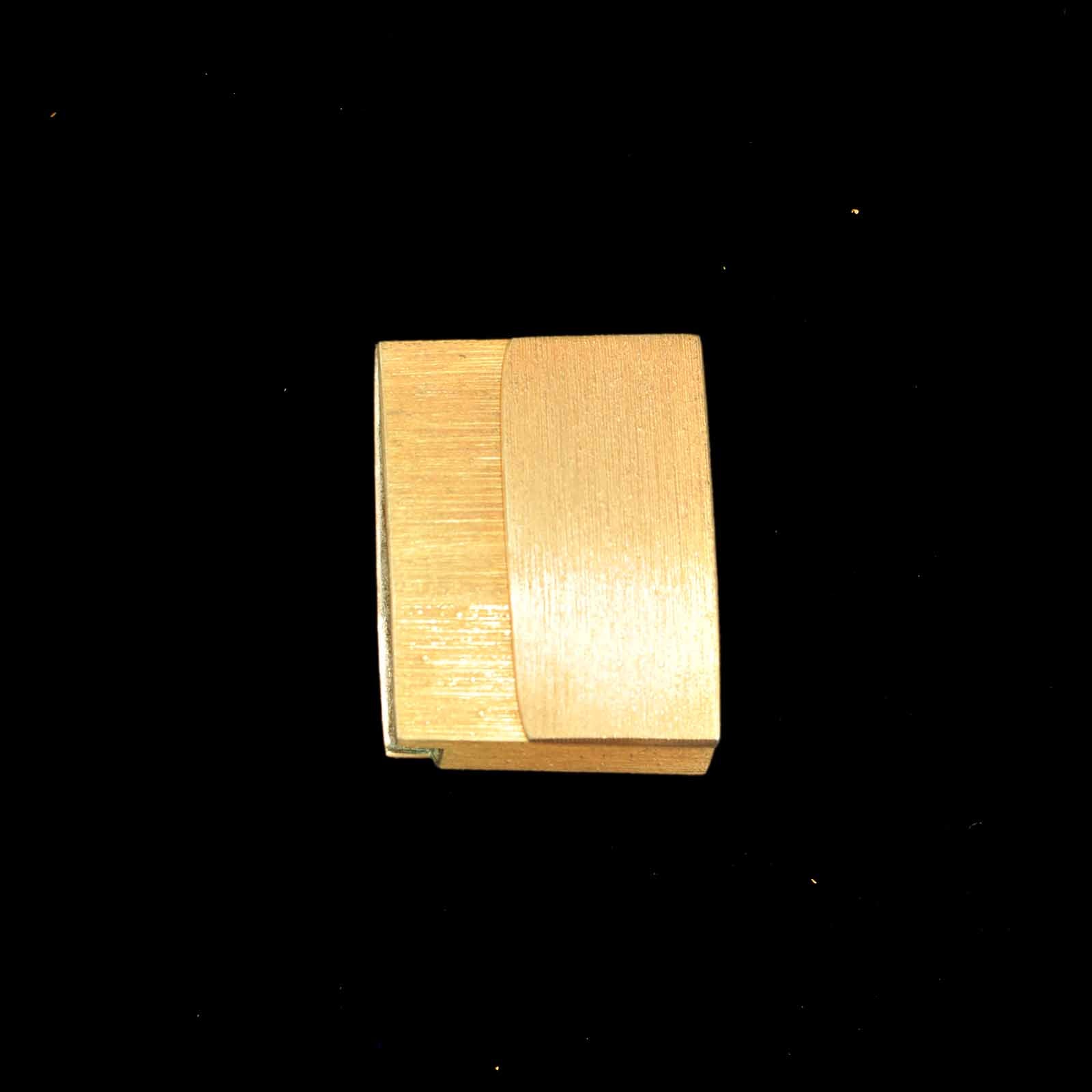
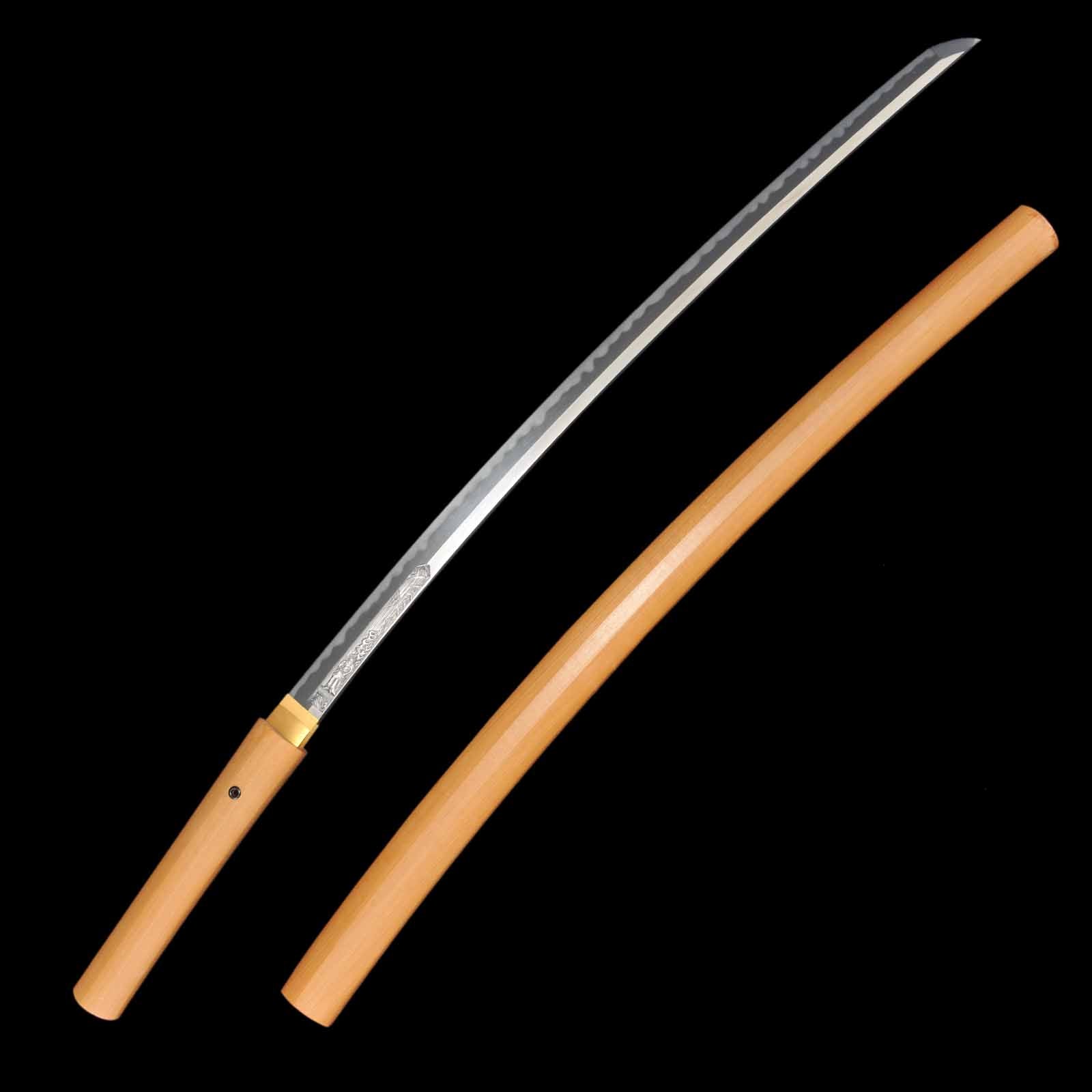
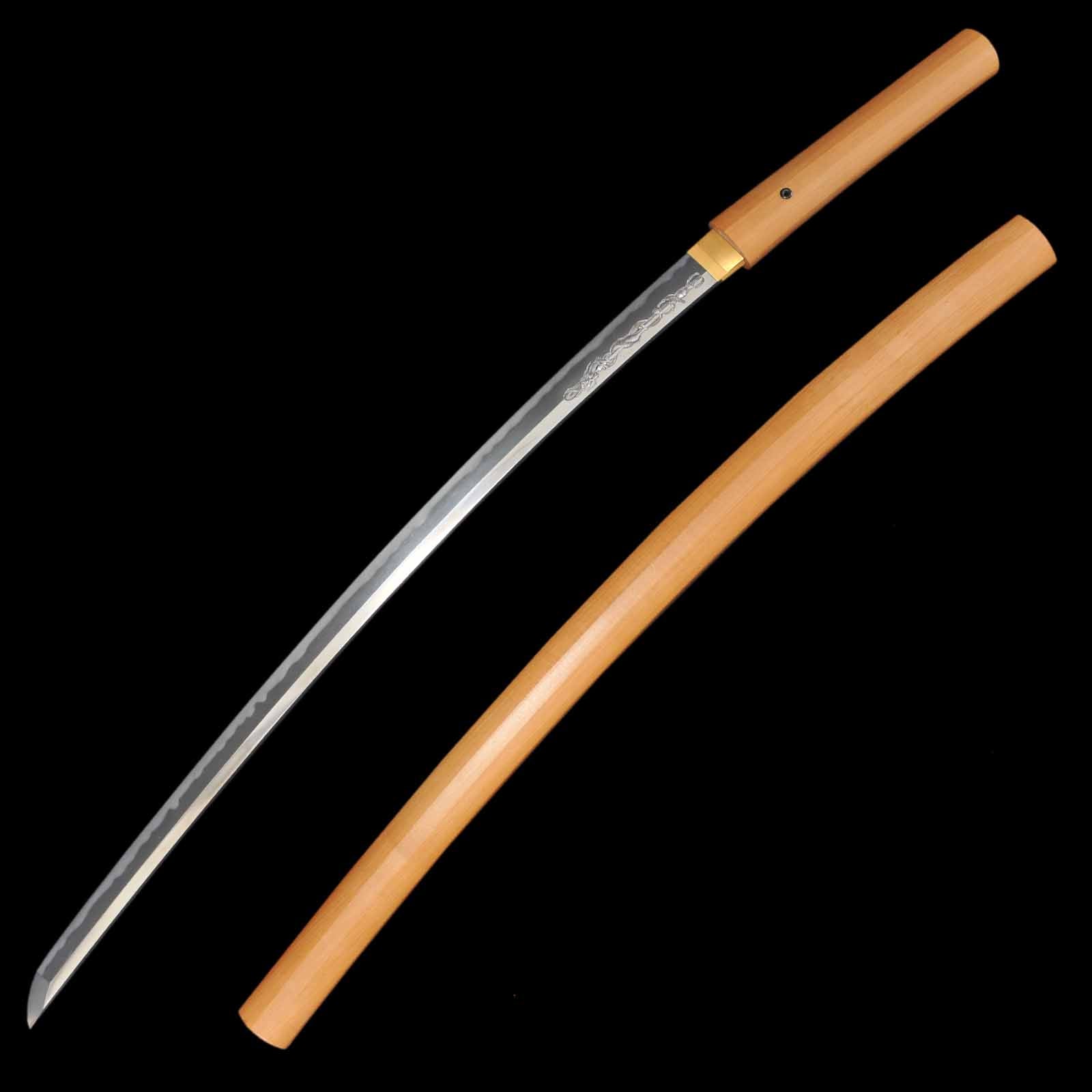
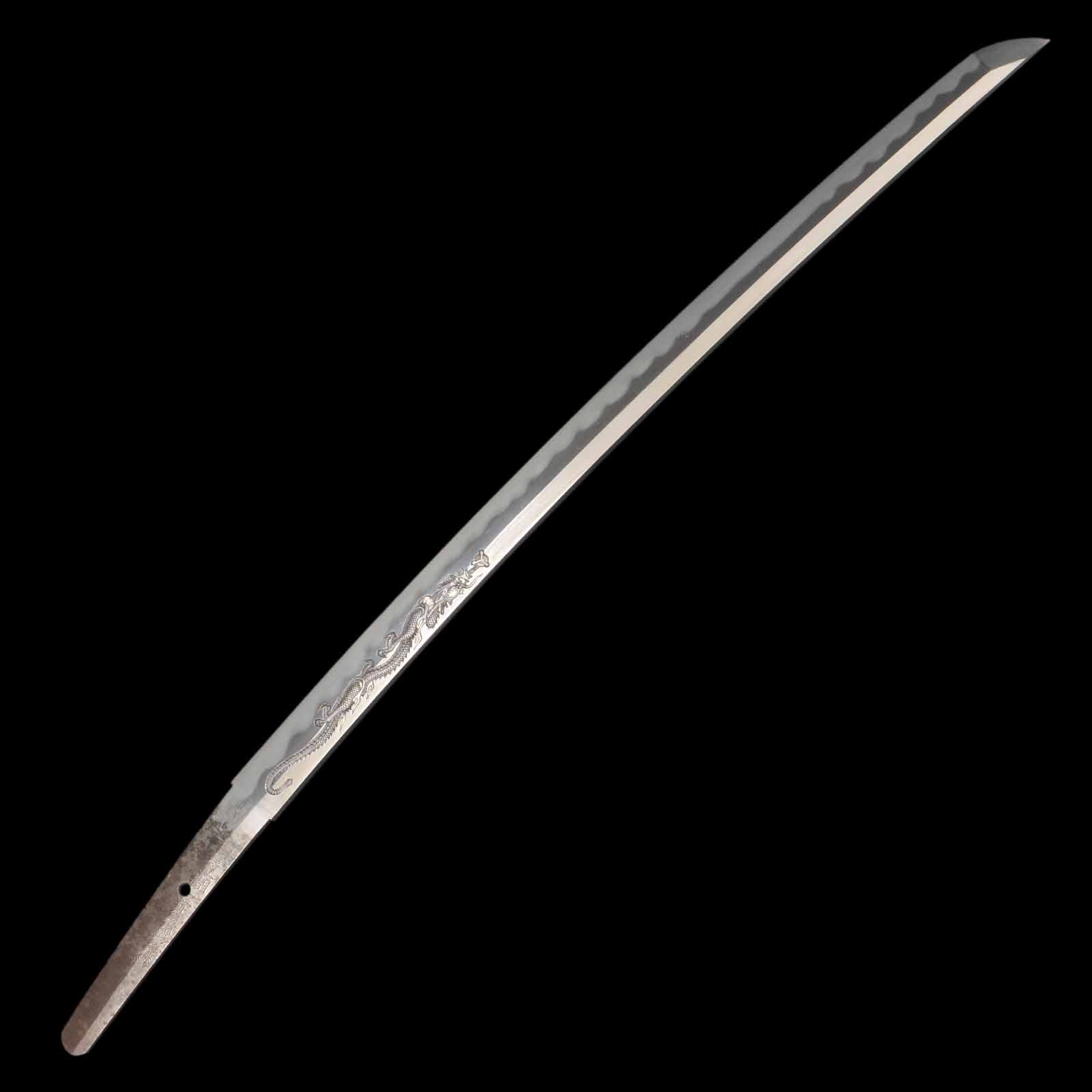
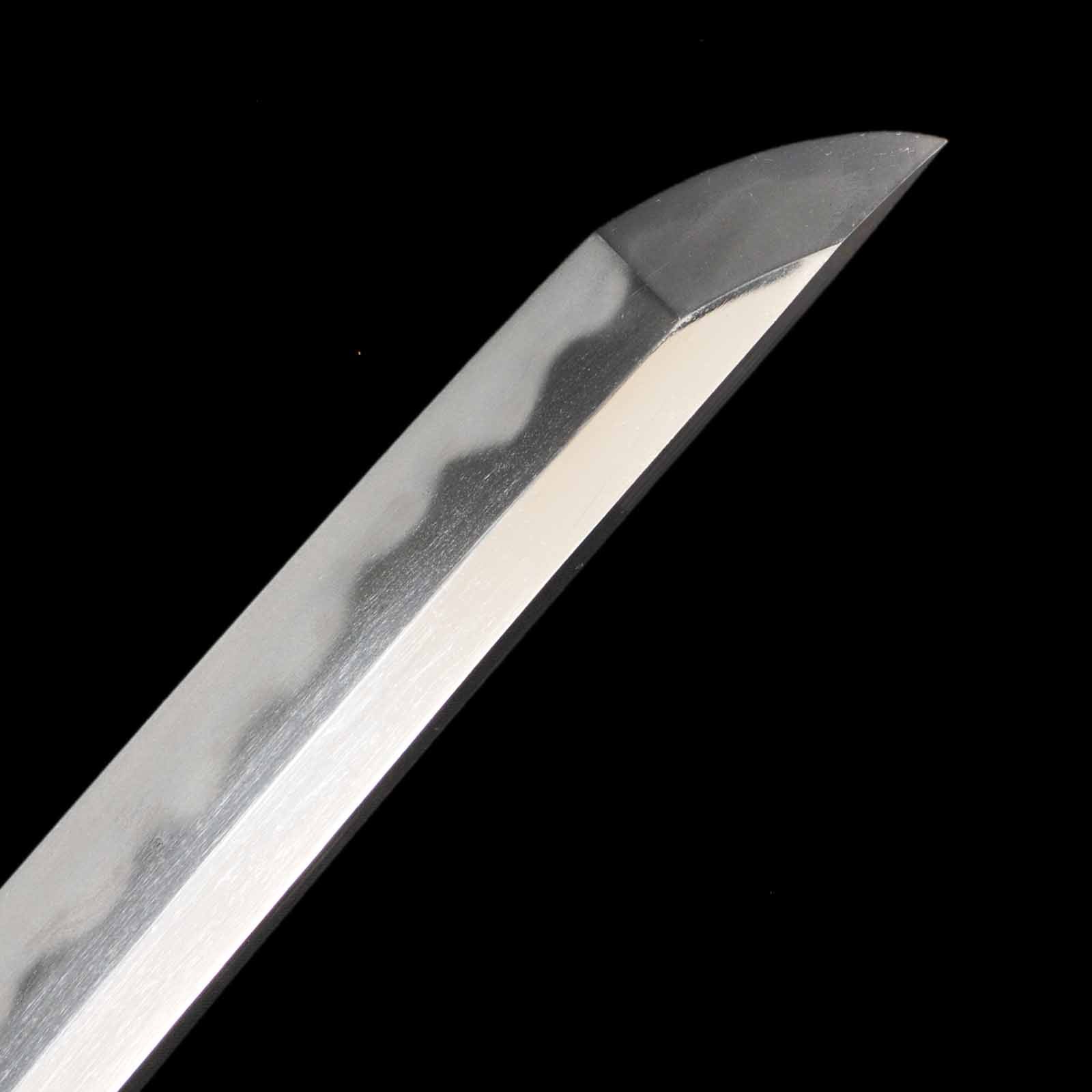
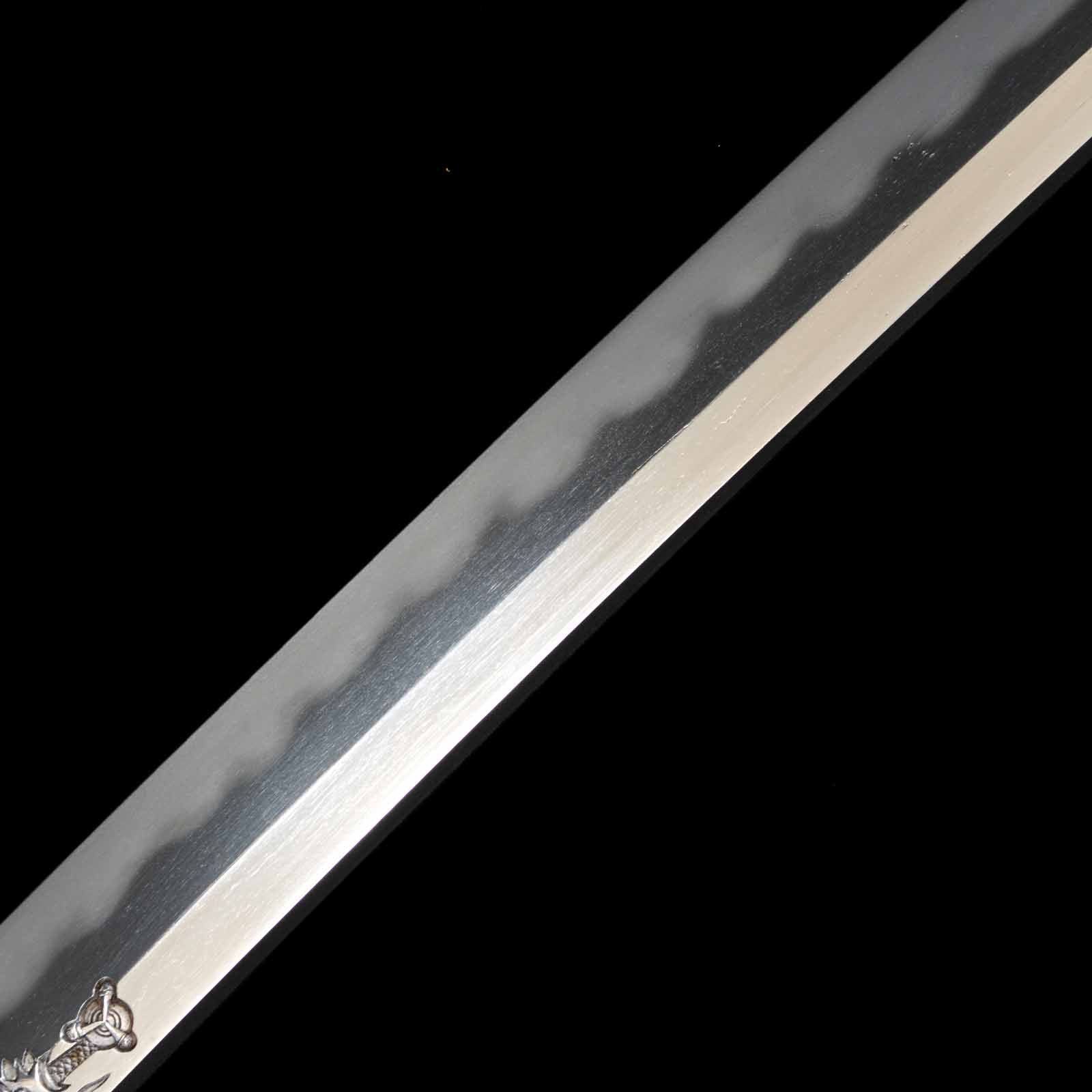
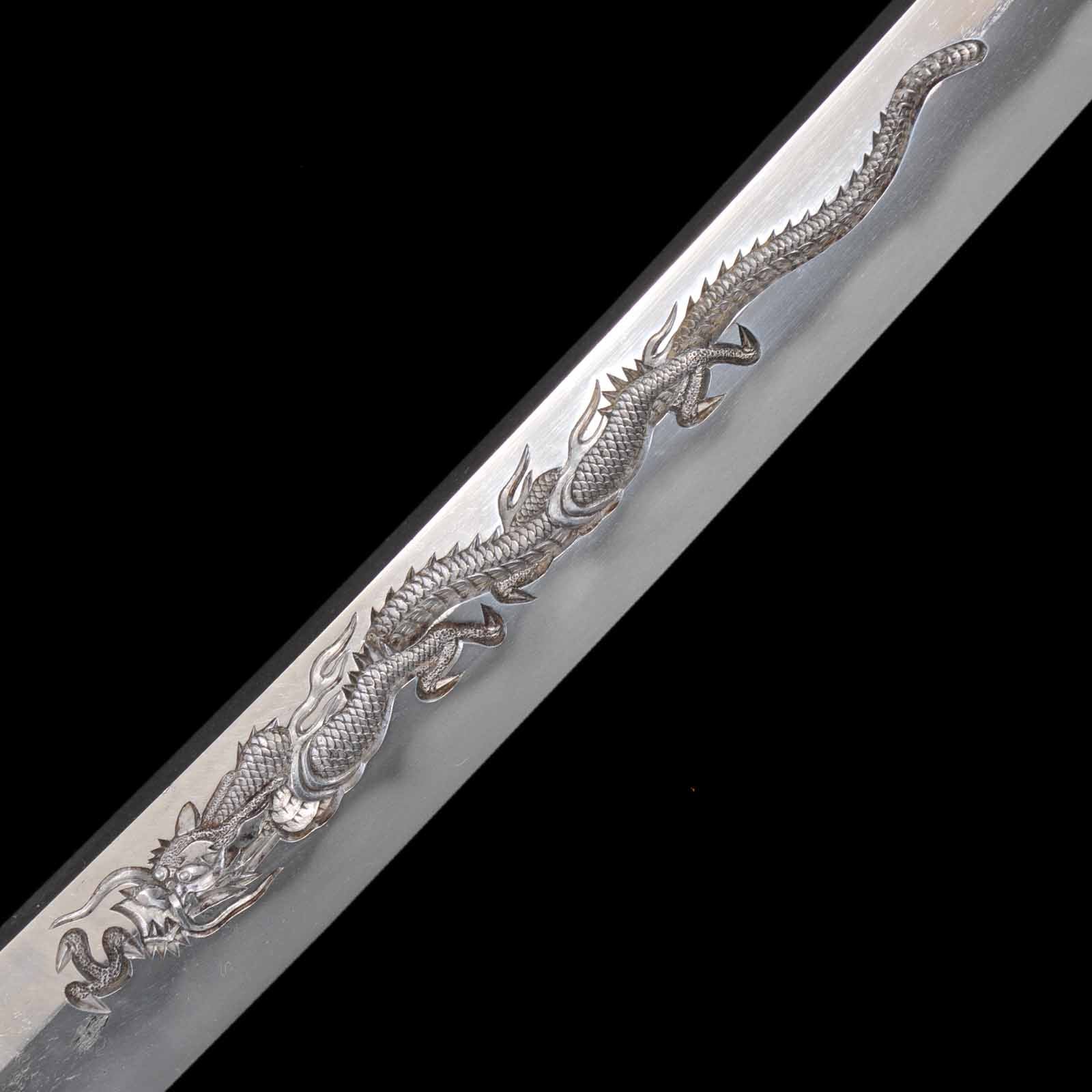
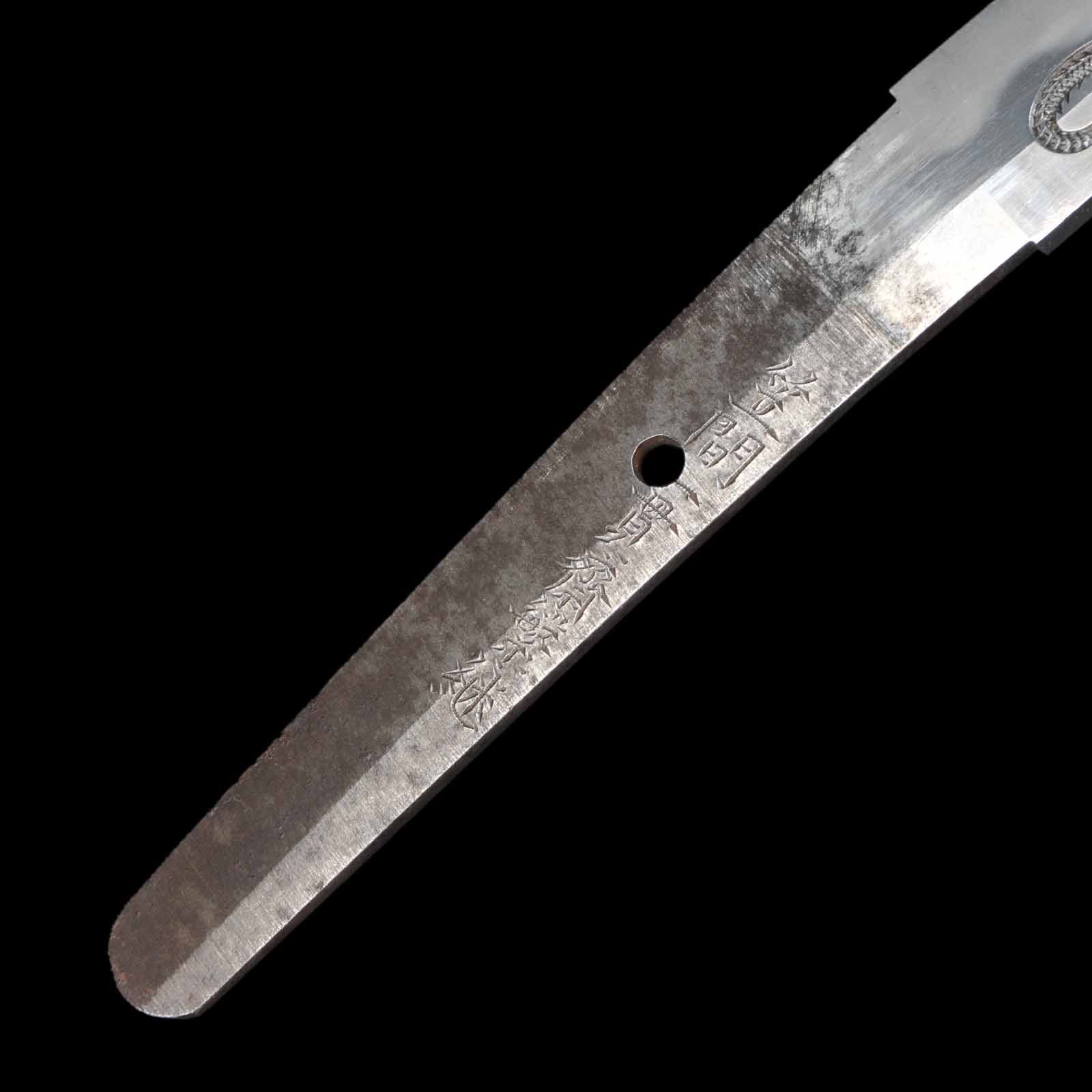
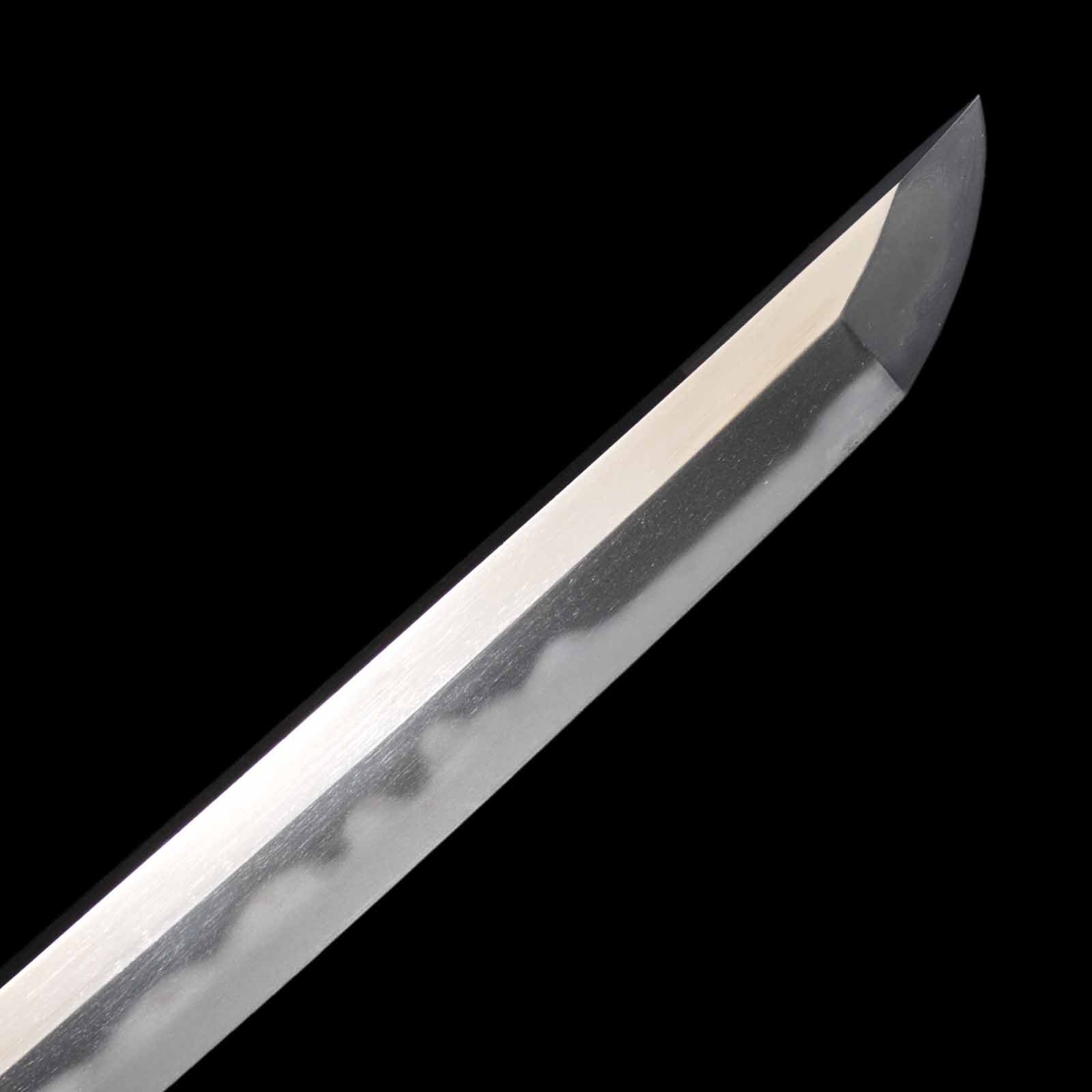
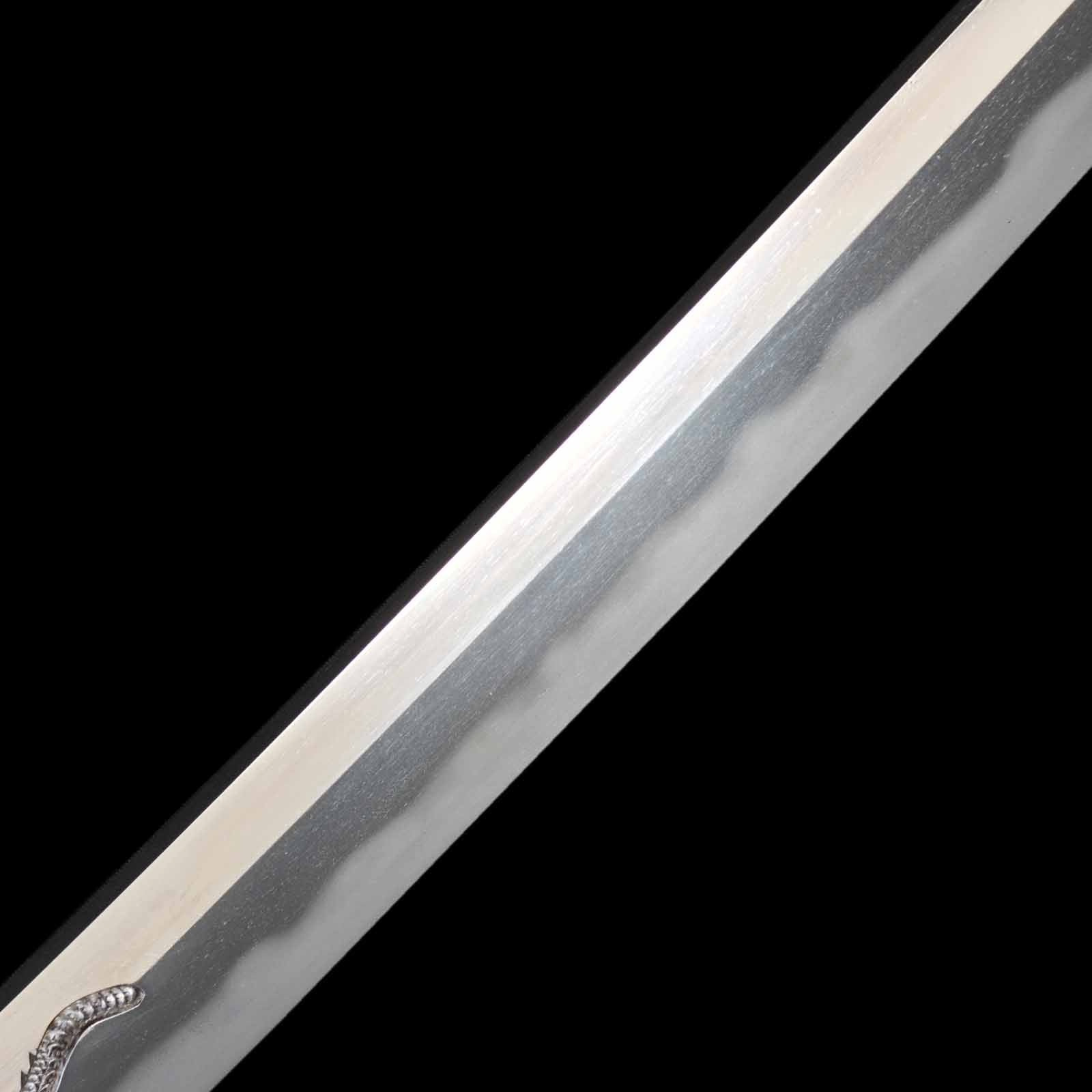
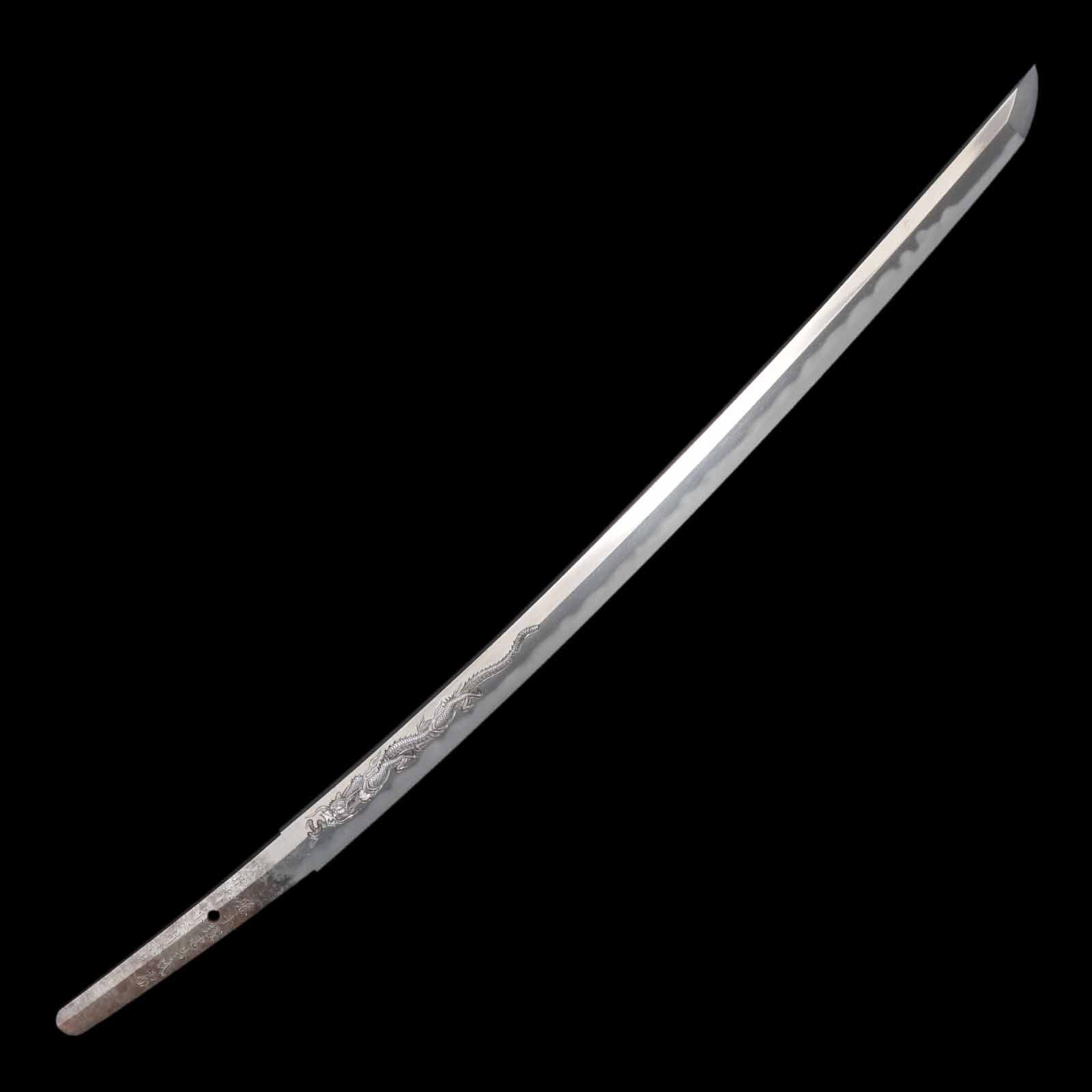
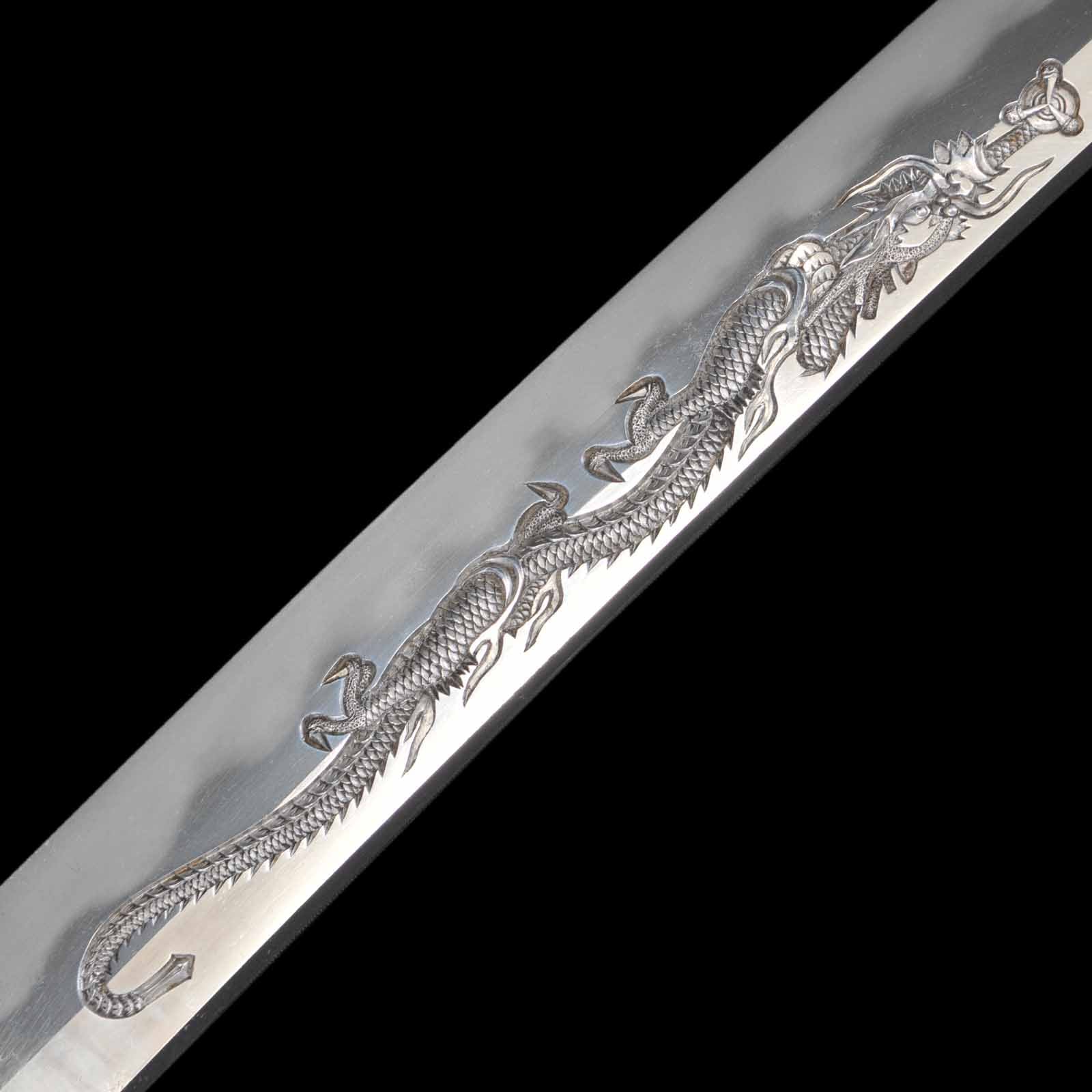
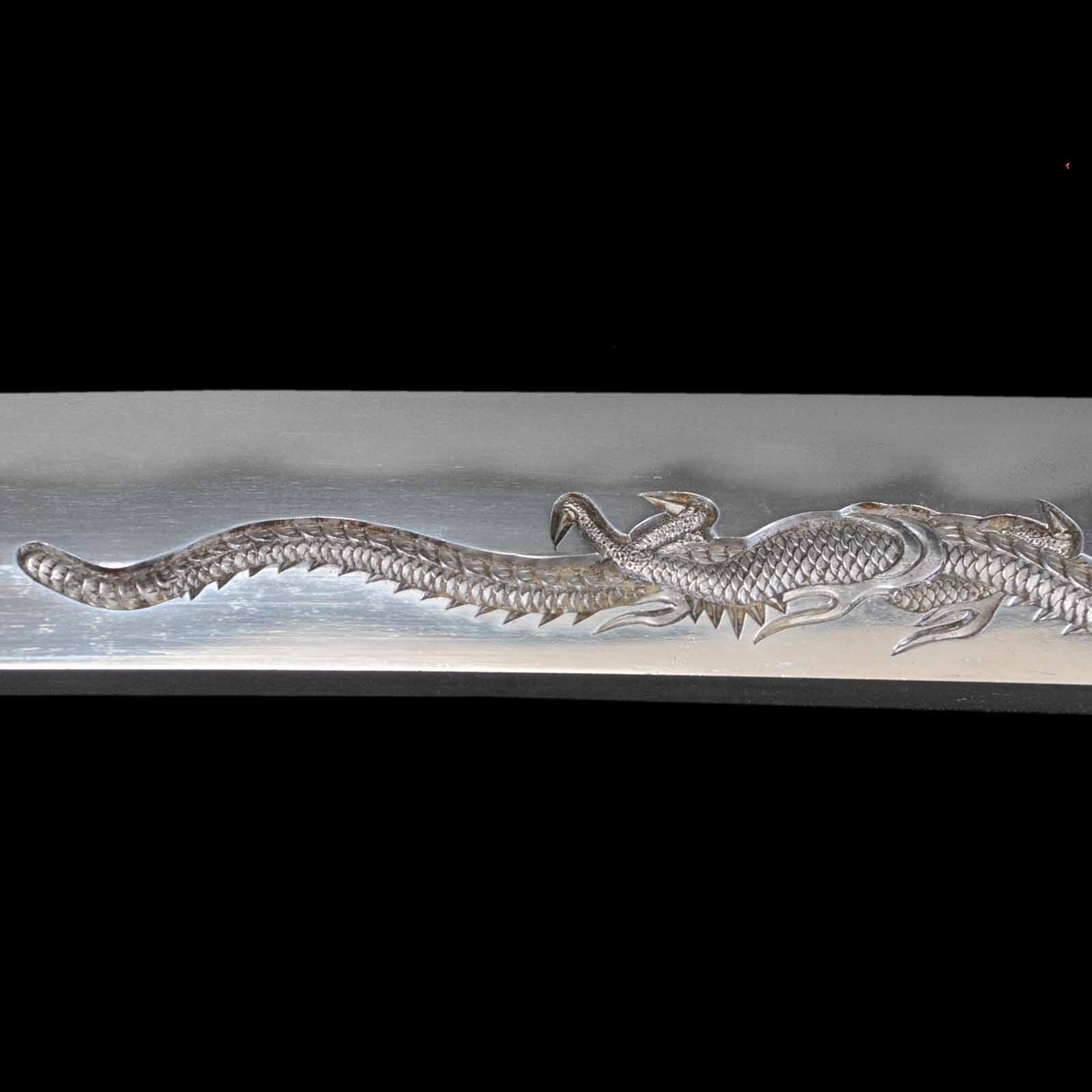
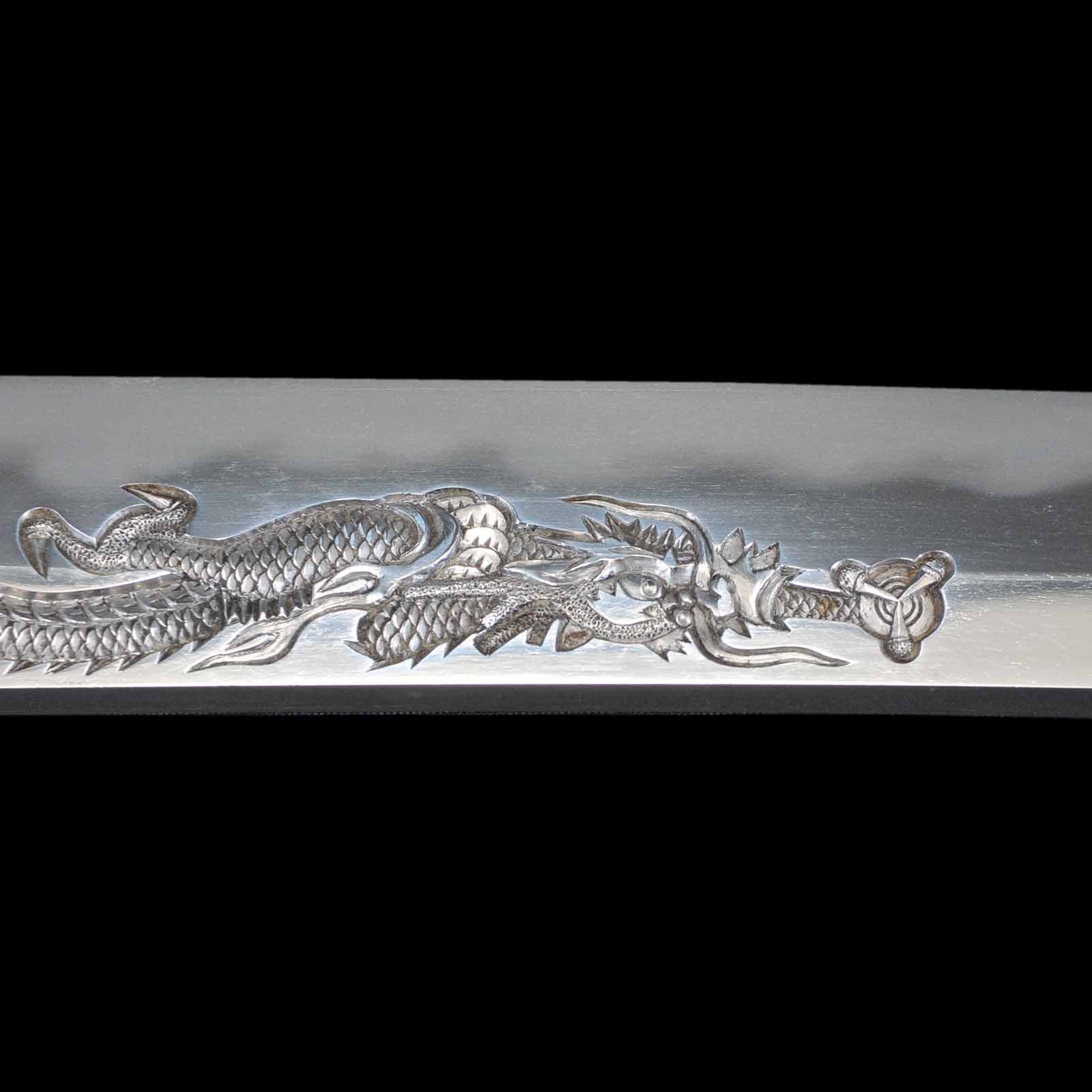
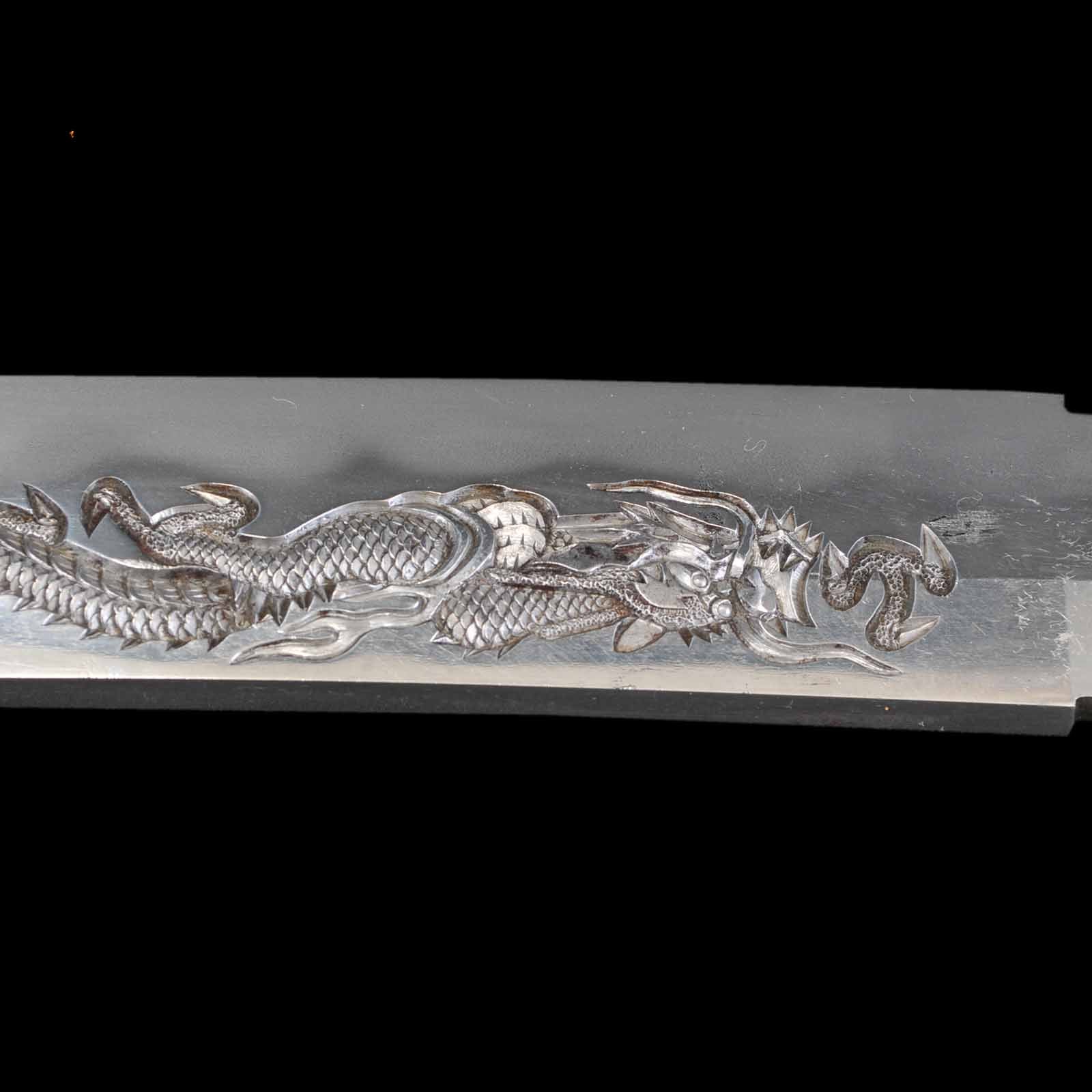
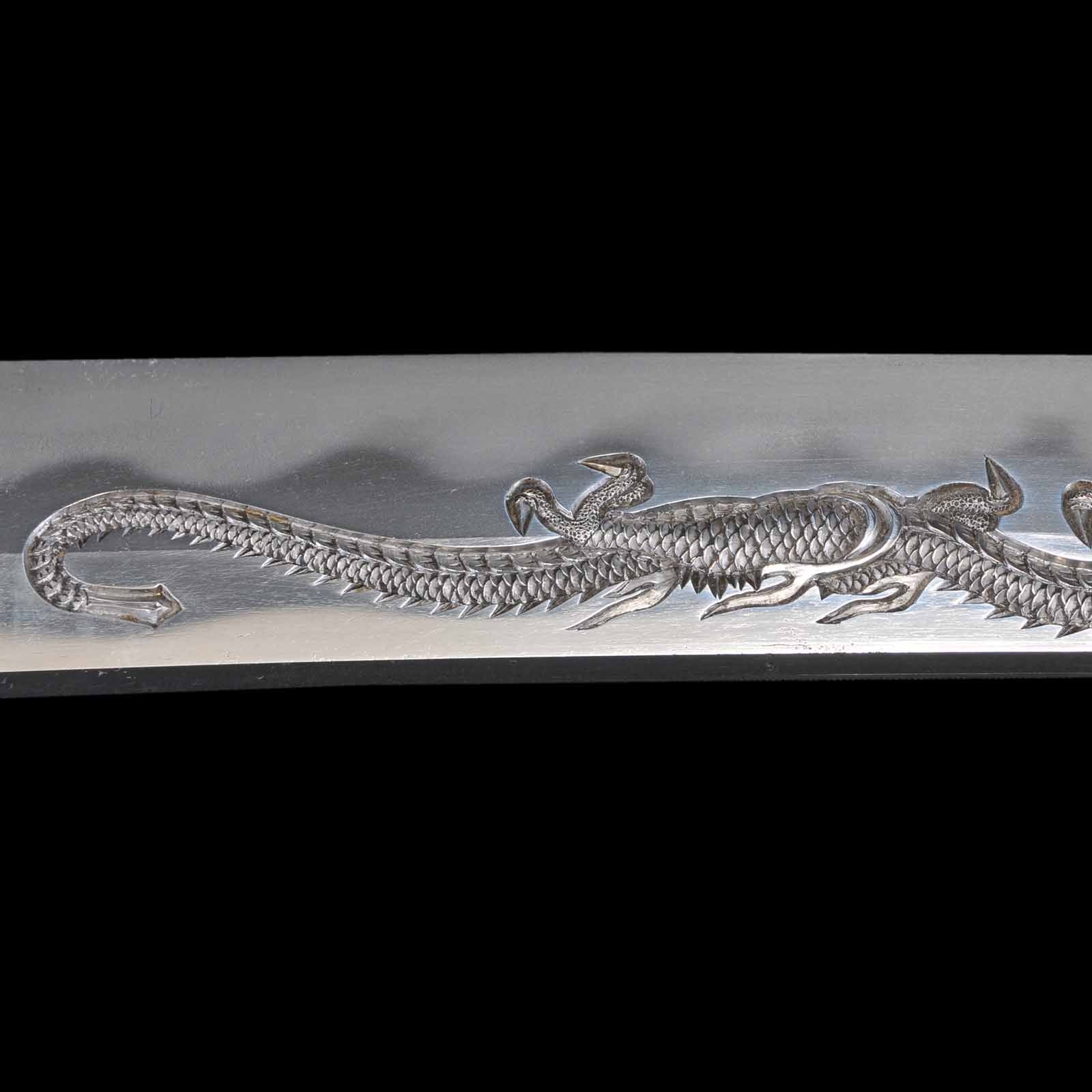
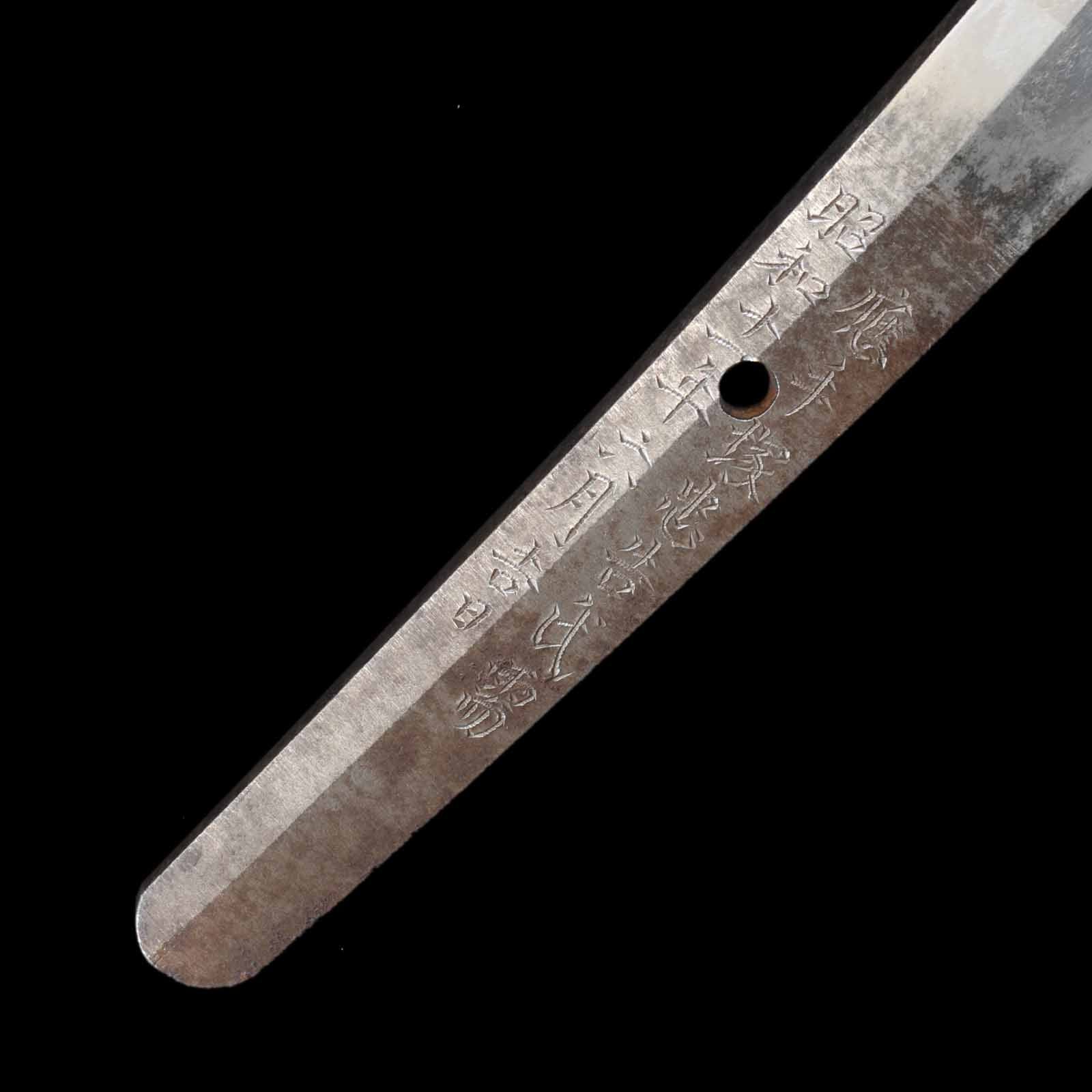
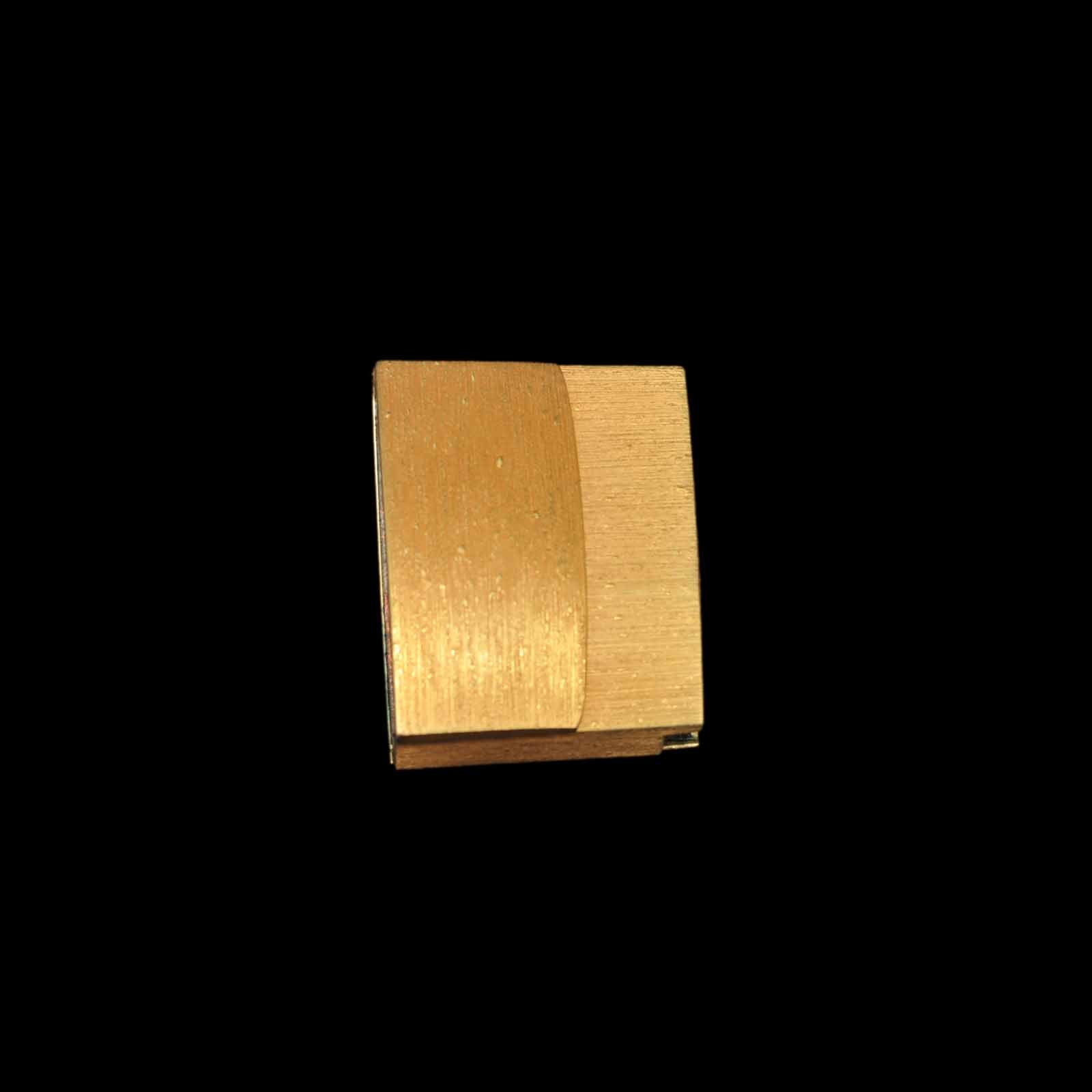
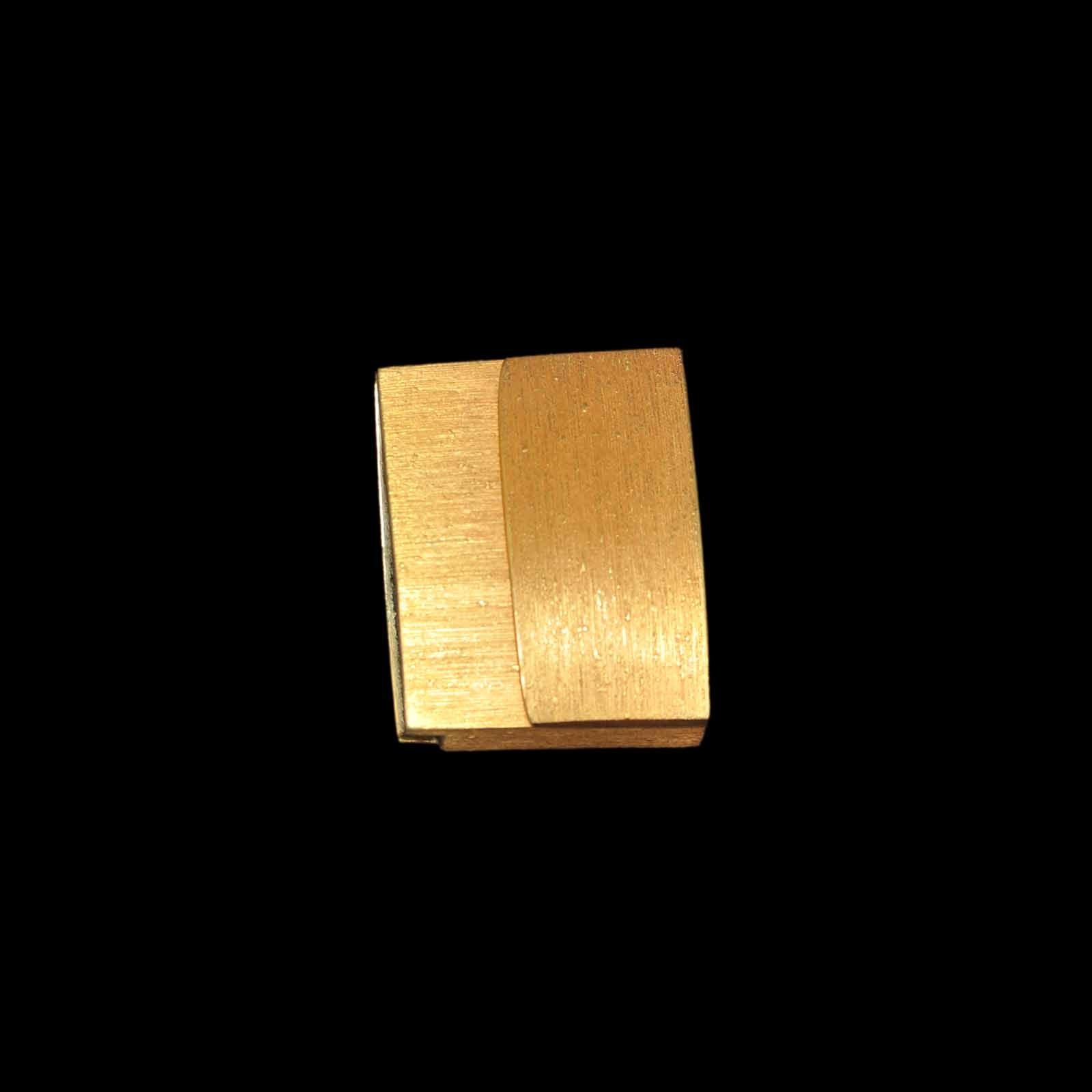
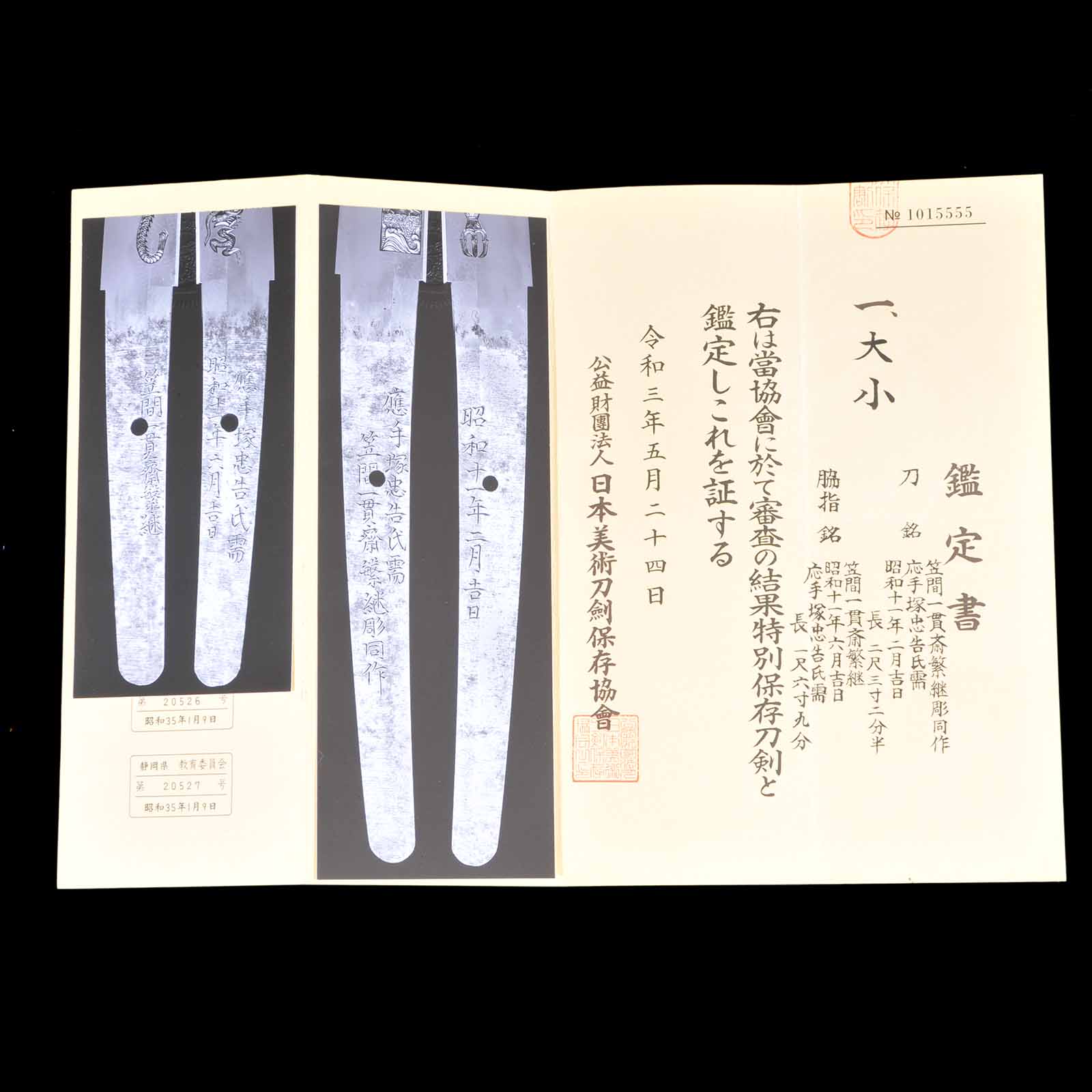
We are pleased to announce the arrival of a Daisho set by Ikkansai Shigetsugu, master of the living national treasure Miyairi Akihira, who made many excellent Japanese swords during the turbulent period from the Meiji to Showa eras. This Daisho set was made in 1936 and is in excellent condition. Let's start with the katana details. The hada is itame, with jinie attached, showing chikei, and is very strong. Hamon is a gunome with a tight nioi and a gorgeous choji forged on when held up to the light. The ha has active yo and ashi in the ha, and ends in a midarekomi boshi. Both sides of the blade are decorated with horimono, with Fudo Myo-o(Acala) on the sashi-omote and Kulika on the sashi-ura, beautifully and delicately engraved. On the nakago, the surface is engraved, “Kazama Ikkansai Shigetsugu made the carving as well, in response to Tezuka Tadatsugu's request. On the reverse side is engraved “February Good Day, 1936. Records indicate that Tezuka Tadatsugu was a wealthy merchant who lived in Shizuoka City, Shizuoka Prefecture, and paid a large amount of taxes. It is assumed that this Daisho set was made as a family heirloom of the Tezuka family. Next is the wakizashi. Like the katana, the hada is a strong and beautiful itame with a jinie attached. Hamon is a gunome with a tighter nioi, and hataraki such as tama and yo are also active. Boshi, like katana, is midarekomi. Both sides of the blade are decorated with very exquisite flying dragon horimono. The notation on the nakago differs slightly from that on the katana, with only the name “Kazama Ikkansai Shigetsugu Eengraved on the front. On the reverse side, the inscription reads, “Made on June 1, 1936, in response to Tezuka Tadatsugu's request. Kazama Ikkansai Shigetsugu was born in Shizuoka in 1878 and his name is Kazama Giichi. His uncle was Miyaguchi Ikkansai Shigetoshi, a disciple of Morioka Masakichi. He was appointed by the Ministry of the Imperial Household to work on the restoration and transmission of Japa
Offered by Tozando
This piece has sold
Get an email when a new Kasama Ikkansai Shigetsugu piece hits the market.


Tokyo · around 1912-1926
Tōken Taikan top 63%
4 pieces on the market now
Shōwa to the present: destruction and revival
The twentieth century nearly killed the craft twice: wartime distortion, then the occupation ban. The NBTHK’s founding in 1948 and licensed forging from 1953 rebuilt the sword as an art, crowned by Living National Treasures and the mukansa rank.
A Hozon-certified blade judged to show notably superior workmanship and a better state of preservation. The bar is higher: re-tempered blades and most unsigned Muromachi/Edo works are excluded.
The NBTHK (Nihon Bijutsu Tōken Hozon Kyōkai, the Society for the Preservation of Japanese Art Swords) is a public-interest incorporated foundation founded in 1948 and supervised by Japan’s Agency for Cultural Affairs (Bunkachō); it is based at the Japanese Sword Museum in Tokyo. Its expert panels physically examine each submitted work (shinsa) and issue a certificate (kanteishō) ranking it by artistic and historical merit. NBTHK papers are the most widely recognized standard of authentication for Japanese swords and fittings.
NBTHK official siteAs a general rule, returns/exchanges are not accepted on Japanese sword orders unless damaged upon delivery. Other items: returns/exchanges accepted within 7 days of delivery. Cancellation for personal reasons incurs a 30% restocking fee (70% refunded). Return shipping must be prepaid and insured by the buyer; shipping/handling fees are non-refundable. Contact katana@tozando.co.jp to initiate a return.