

The twentieth century nearly killed the craft twice: wartime distortion, then the occupation ban. The NBTHK’s founding in 1948 and licensed forging from 1953 rebuilt the sword as an art, crowned by Living National Treasures and the mukansa rank.
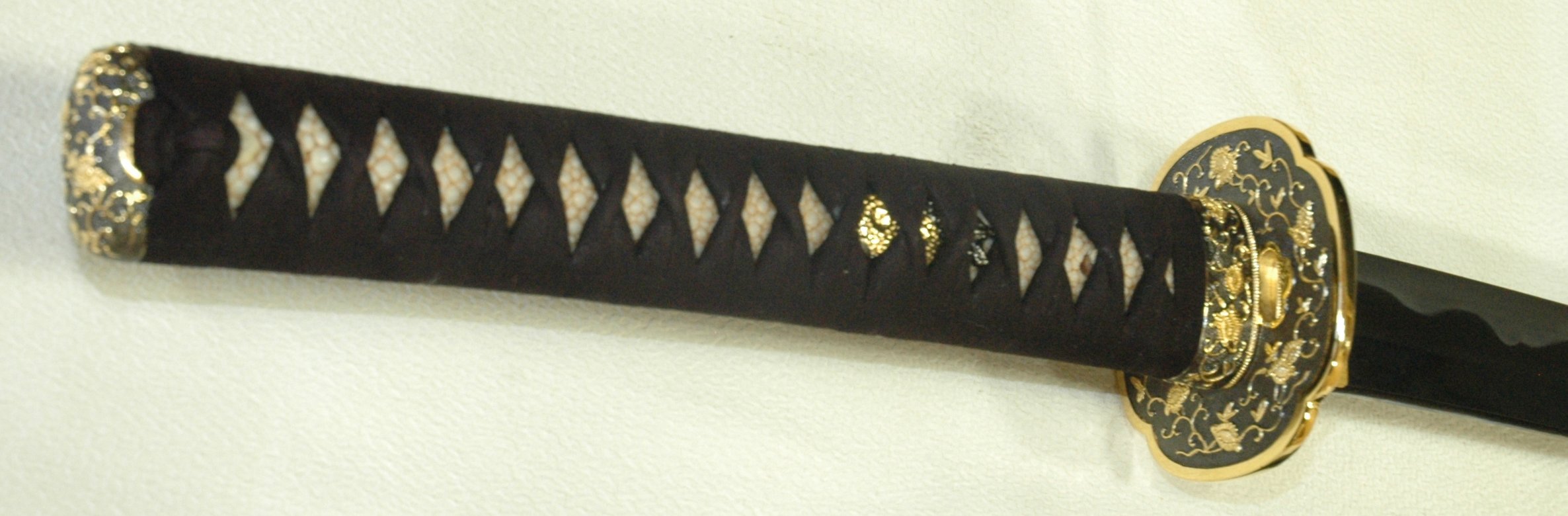
The mihaba is wide and the kasane is thick, resulting in a work with a solid feel in the hand. A grand blade with a beautifully forged jigane, featuring a masterfully tempered toranba, which is the specialty of the swordsmith Kanekuni. The swordsmith Kanekuni is a smith representing modern swordsmiths who was active in sword making as a father and son in present-day Seki-shi. This work is a masterpiece by the father, a Mukansa swordsmith, and is offered accompanied by a glittering koshirae.
Offered by Nosyudo
2 on the market


As written by the shop
Machine translation from the shop's Japanese · may contain errors ·
Gifu · around 1926-1989
2 pieces on the market now
Shōwa to the present: destruction and revival
The twentieth century nearly killed the craft twice: wartime distortion, then the occupation ban. The NBTHK’s founding in 1948 and licensed forging from 1953 rebuilt the sword as an art, crowned by Living National Treasures and the mukansa rank.
We could not find an authenticity certificate on the seller’s listing. Japanese swords and fittings are normally papered by the NBTHK (or the NTHK). Without one, the attribution is the seller’s own assessment and has not been independently verified — treat it with caution and ask the dealer about certification before buying.
¥1,300,000