The twentieth century nearly killed the craft twice: wartime distortion, then the occupation ban. The NBTHK’s founding in 1948 and licensed forging from 1953 rebuilt the sword as an art, crowned by Living National Treasures and the mukansa rank.
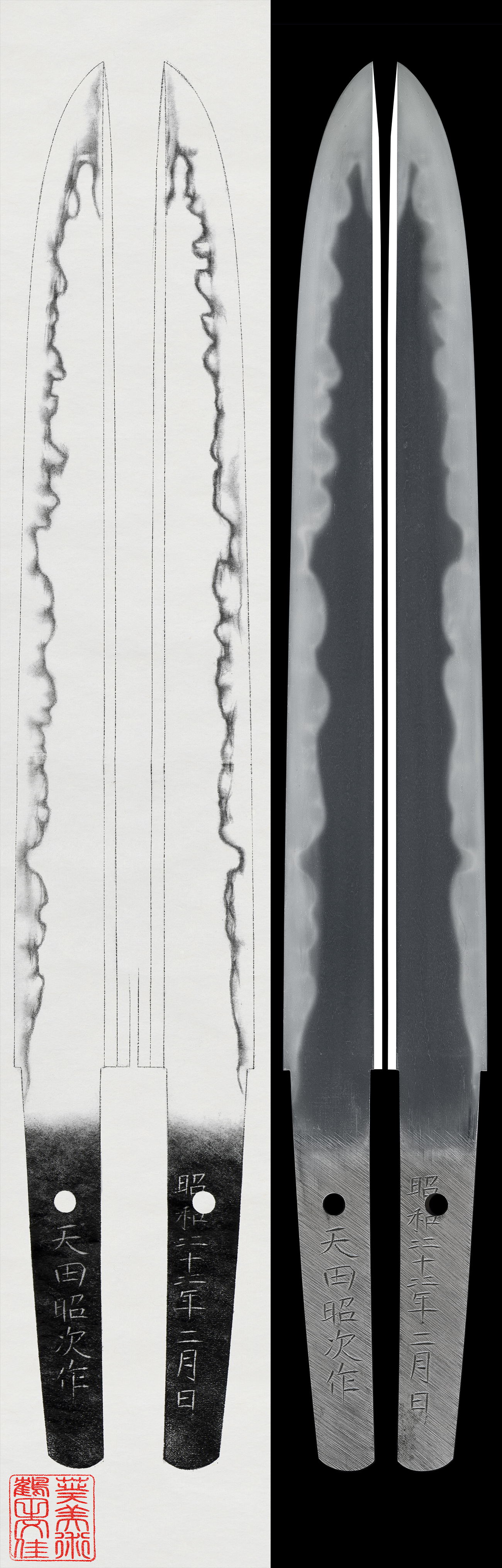
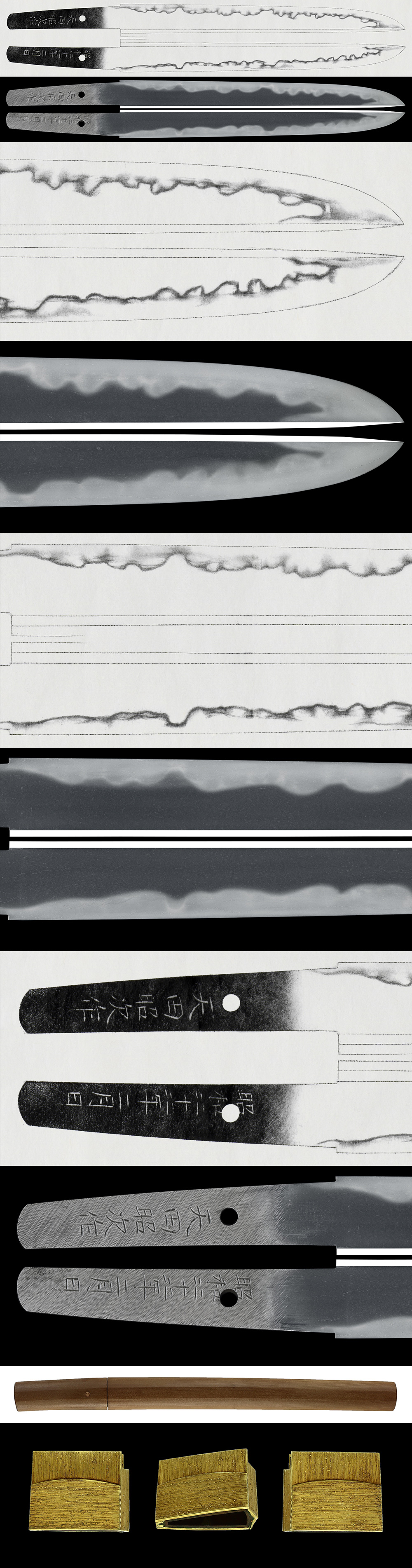
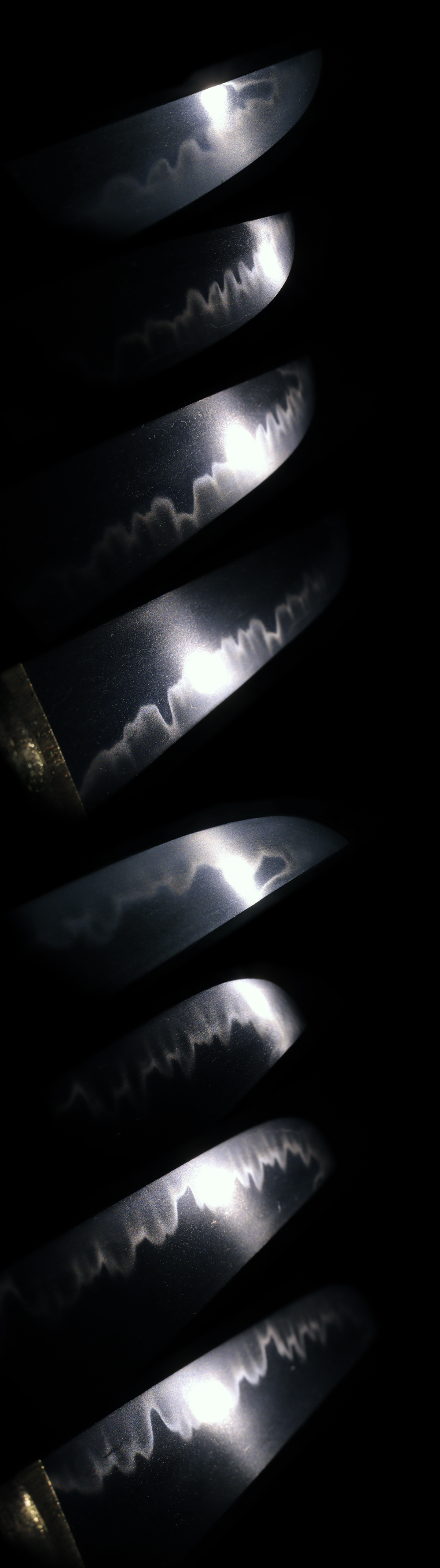
We divide 4 sections for each sword as Saijyo Saku, Jyojyo Saku, Jyo Saku and Regular Saku. This work is ranked as Saijyo Saku for Amada Akitsugu. Polished. Shape: The blade is wide with a thick kasane, maintaining a healthy condition with ubuha. Jigane: Ko-itame mixed with mokume, creating a beautiful jigane with ji-nie. Hamon: Starts with ko-gunome, resembling the style of Muramasa, with matching patterns on both sides. The boshi is rounded and returns in ko-maru. Features: The hamon features ko-nie deki with gunome-midare, which becomes larger, with well-functioning ashi, a soft nioiguchi, and a rounded boshi. The blade shows activity such as sunagashi and kinsuji. Aoi Art’s Comment: Amada Akitsugu, whose real name is Seiichi, was born as the eldest son of Amata Sadayoshi in Niigata Prefecture, known for its steel industry. He learned sword forging from his father. Akitsugu trained at the Japanese Sword Forging Training Center but had to cease swordmaking after World War II. After the war, in 1954, he was authorized to forge swords and won the Excellent Award at the first Sword Forging Technology Presentation. He subsequently won the Masamune Prize three times and dedicated swords to the Ise Shrine three times, becoming a Living National Treasure (Important Intangible Cultural Property) in 1997. His work includes various styles such as Bizen, Yamato, and Yamashiro traditions. He passed away in 2013 at the age of 85. Unlike Muramasa, whose hamon can become notable with flaws, this tanto is mostly pristine and of excellent quality. Highly recommended for collectors of important intangible cultural properties by a Living National Treasure. NBTHK Tokubetsu Hozon Token Aoi Art estimation paper Whole Oshigata
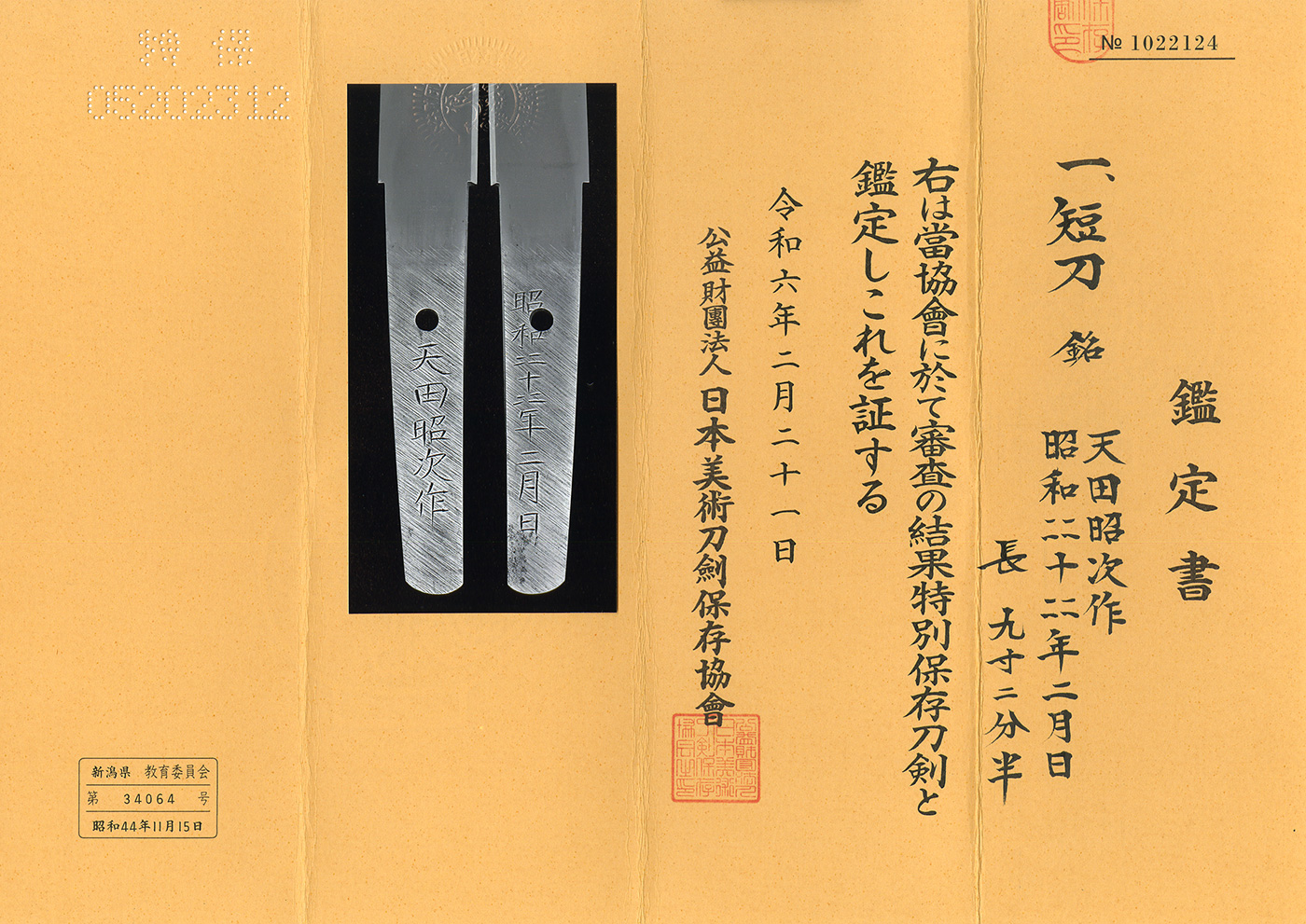
Certificate reading — 銘 天田昭次作 昭和二十二年二月日
Offered by Aoi Art
6 on the market


As written by the shop
Niigata · around 1926-1989
Tōken Taikan top 87%
6 pieces on the market now
Shōwa to the present: destruction and revival
The twentieth century nearly killed the craft twice: wartime distortion, then the occupation ban. The NBTHK’s founding in 1948 and licensed forging from 1953 rebuilt the sword as an art, crowned by Living National Treasures and the mukansa rank.
A Hozon-certified blade judged to show notably superior workmanship and a better state of preservation. The bar is higher: re-tempered blades and most unsigned Muromachi/Edo works are excluded.
The NBTHK (Nihon Bijutsu Tōken Hozon Kyōkai, the Society for the Preservation of Japanese Art Swords) is a public-interest incorporated foundation founded in 1948 and supervised by Japan’s Agency for Cultural Affairs (Bunkachō); it is based at the Japanese Sword Museum in Tokyo. Its expert panels physically examine each submitted work (shinsa) and issue a certificate (kanteishō) ranking it by artistic and historical merit. NBTHK papers are the most widely recognized standard of authentication for Japanese swords and fittings.
NBTHK official siteIf you wish to return an item, please notify us within 3 days of receipt. After this period we cannot accept cancellations. Please ship the return to us within 5 business days. Cancellation is conditional on the item being kept in the same condition as at the time of sale, so please handle it with care.
¥1,500,000