About Swordsmith
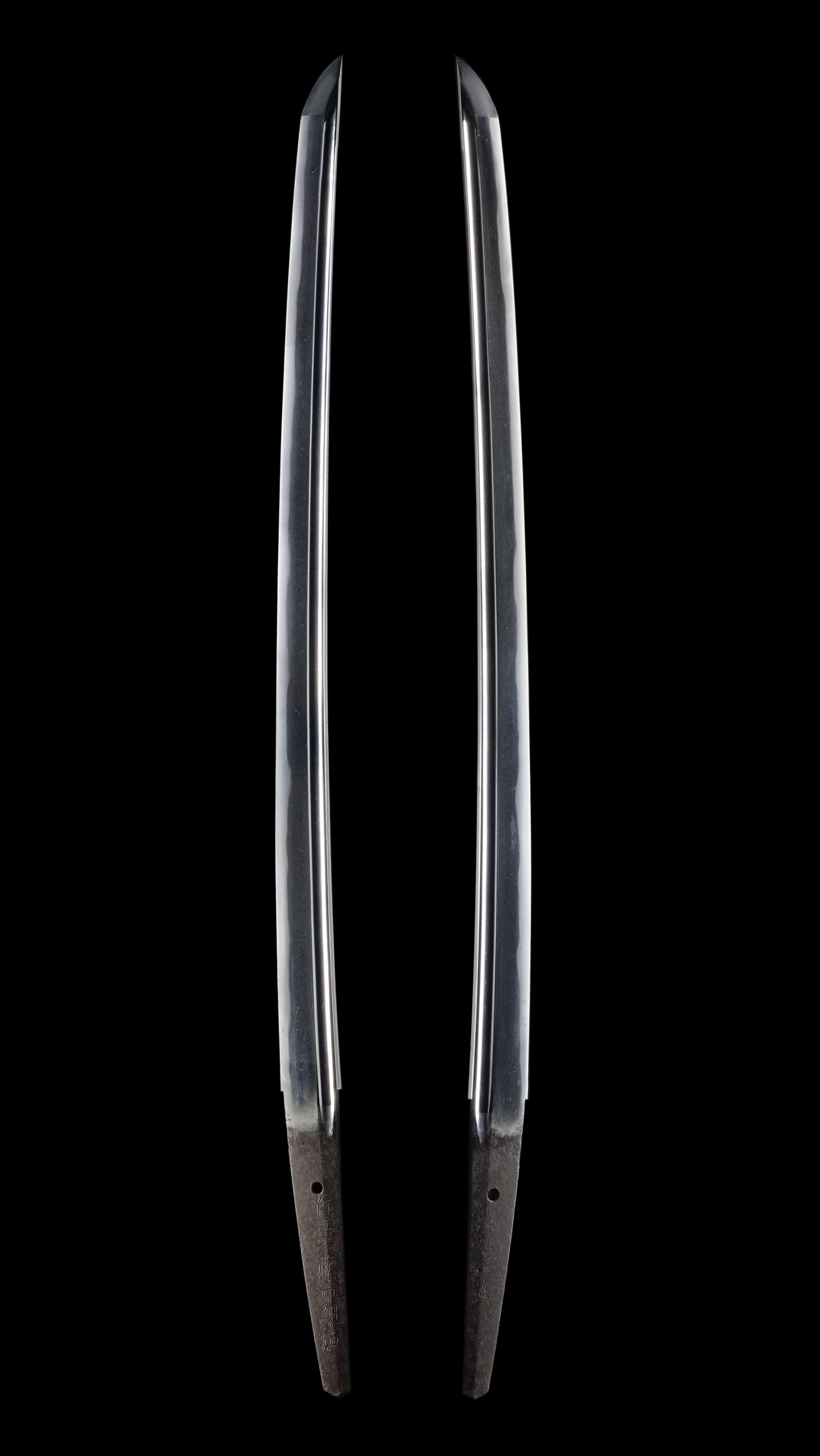
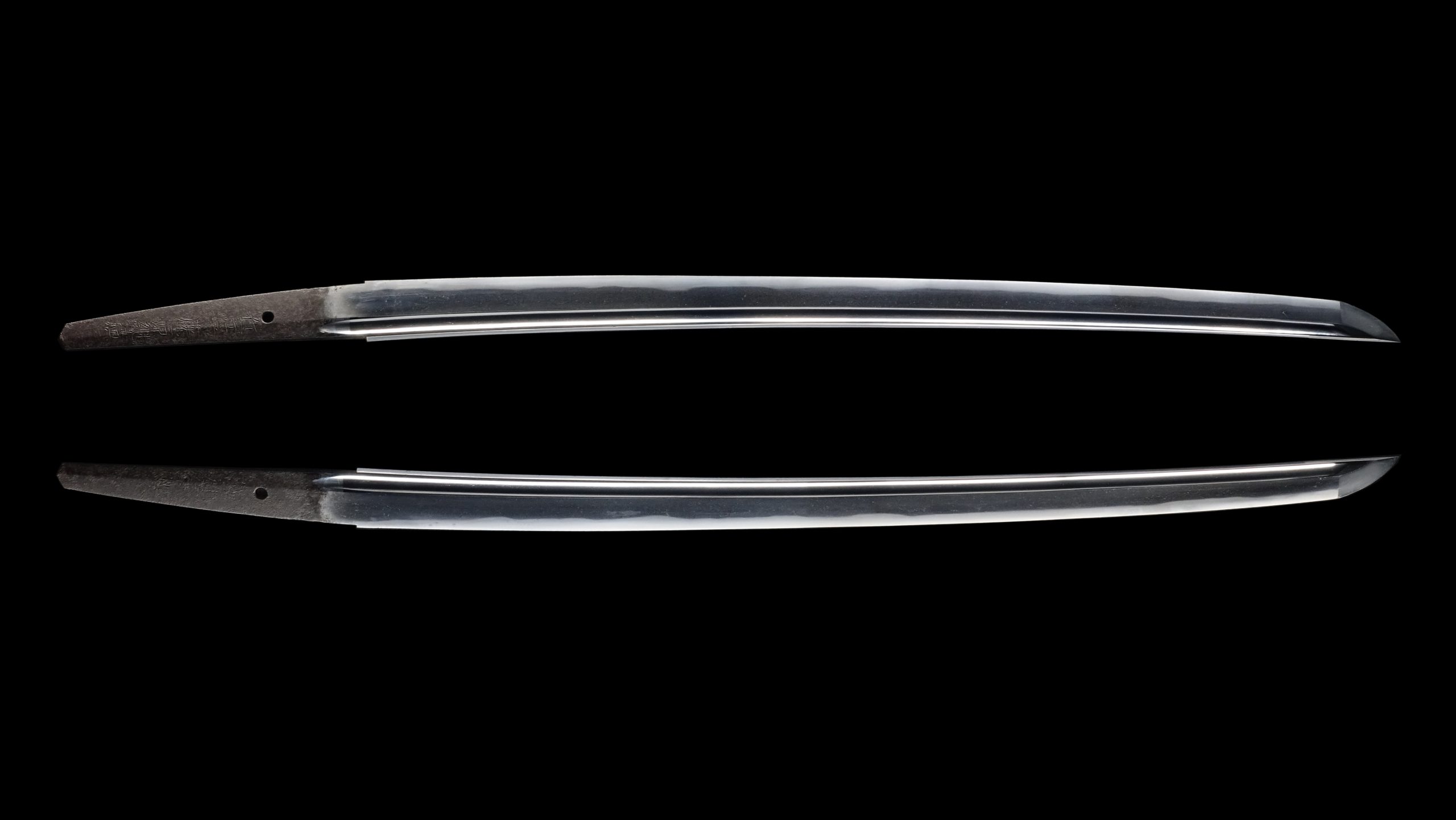
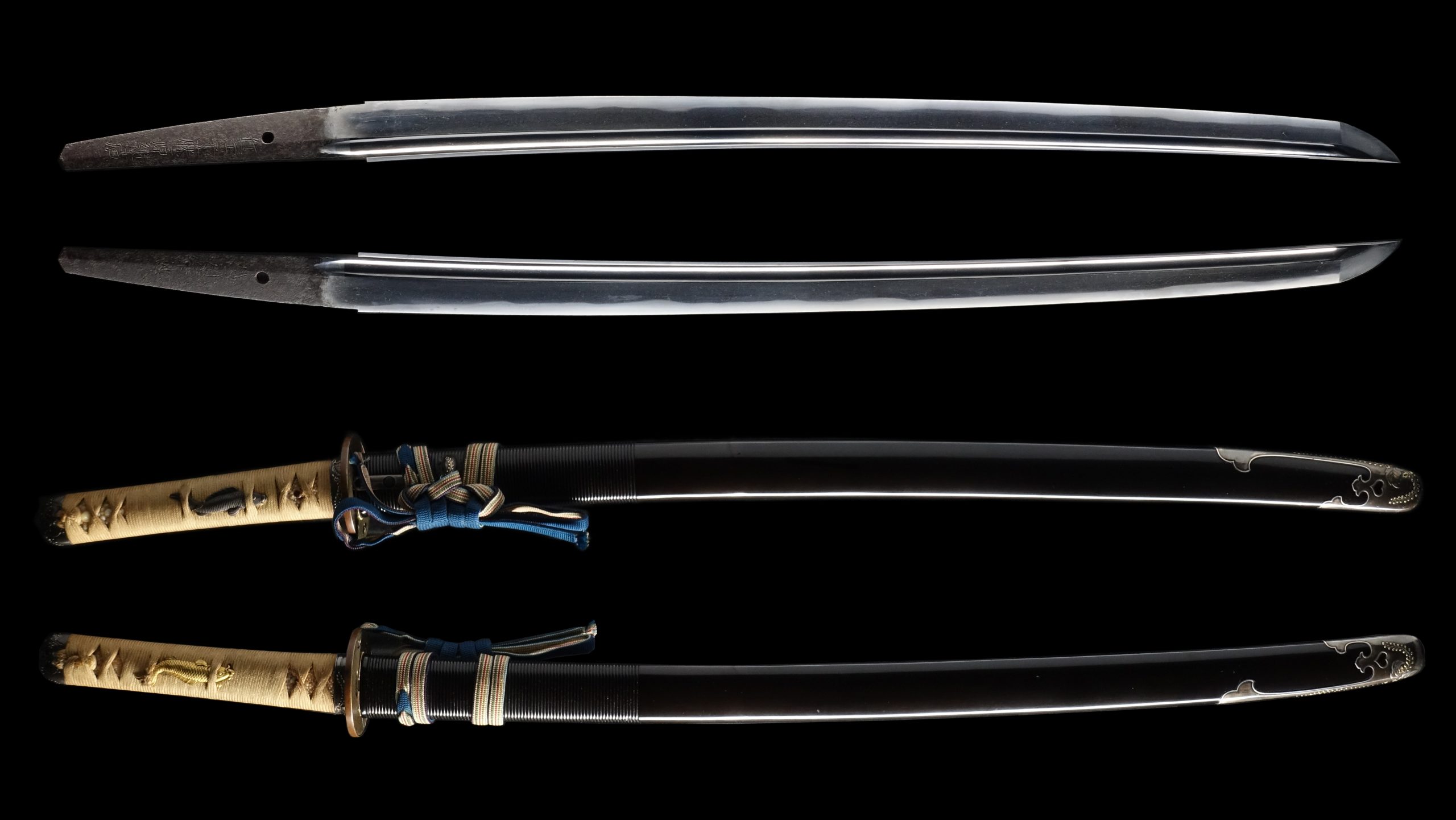
Omi no Kami Fujiwara Tsuguhiro(近江守藤原継広) is an apprentice of the third-gen Yasutsugu(the founder of Echizen Yasutsugu school). Tsuguhiro belonged to Echizen Shimosaka school and was active in sword-forging in the early Edo period(1661-1673).
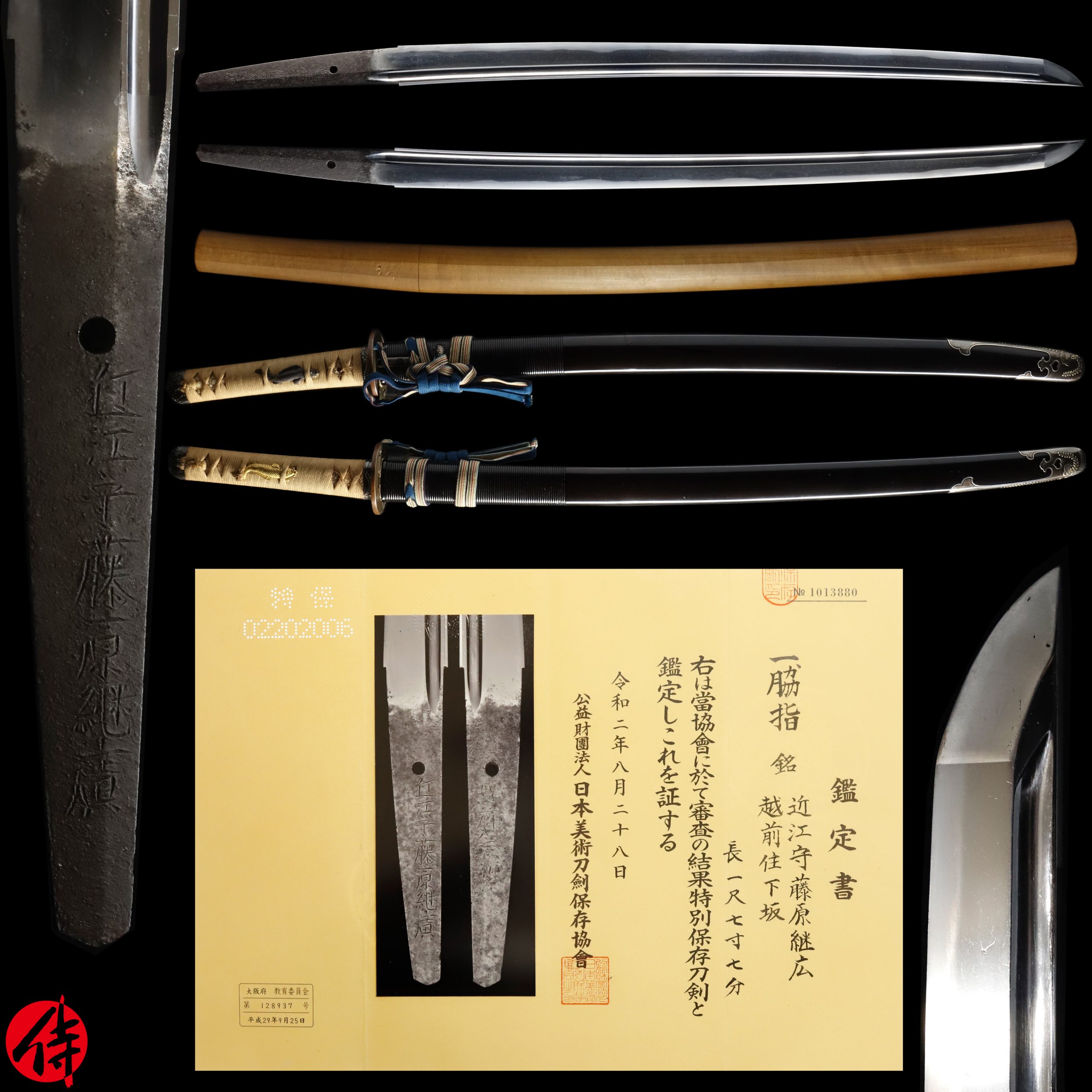
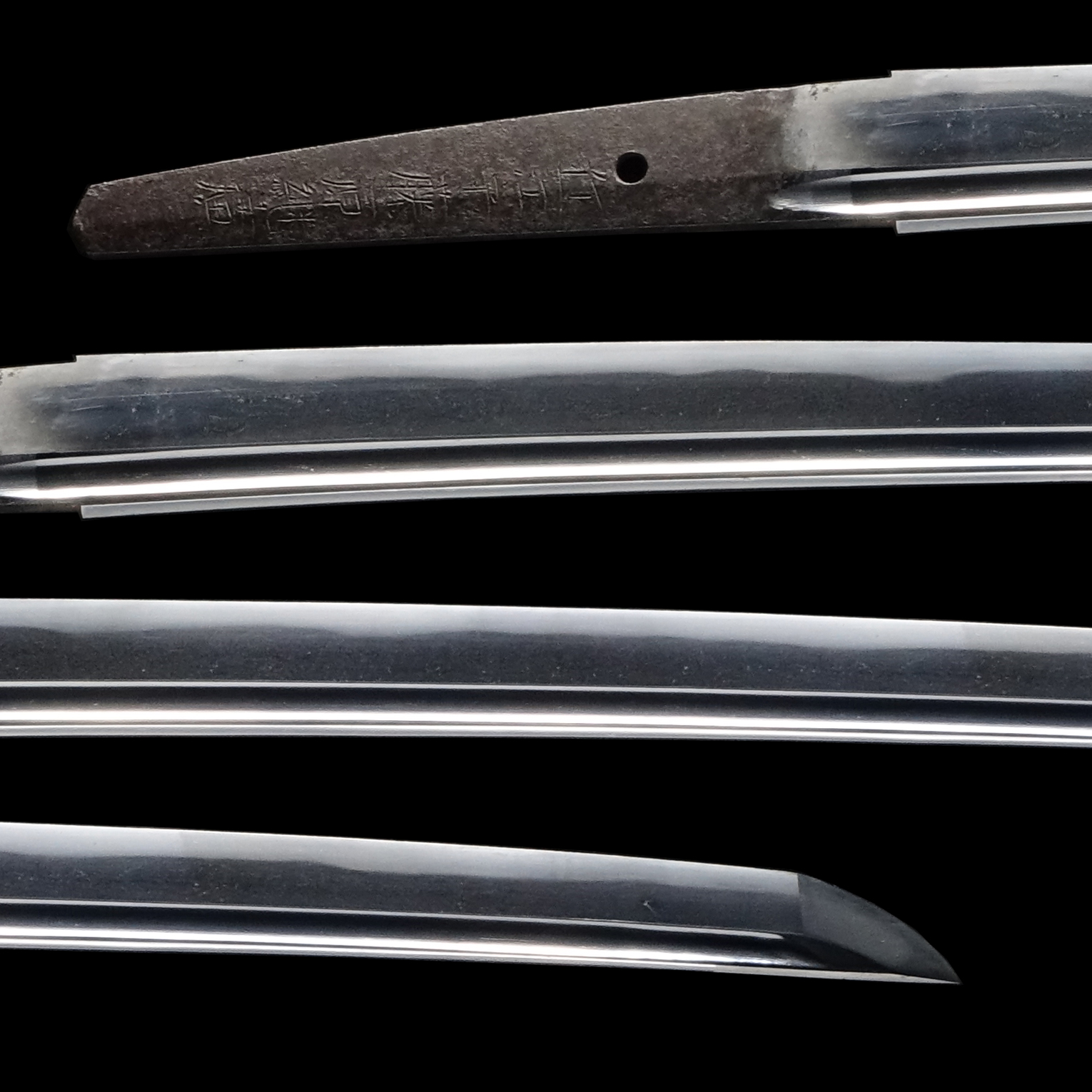
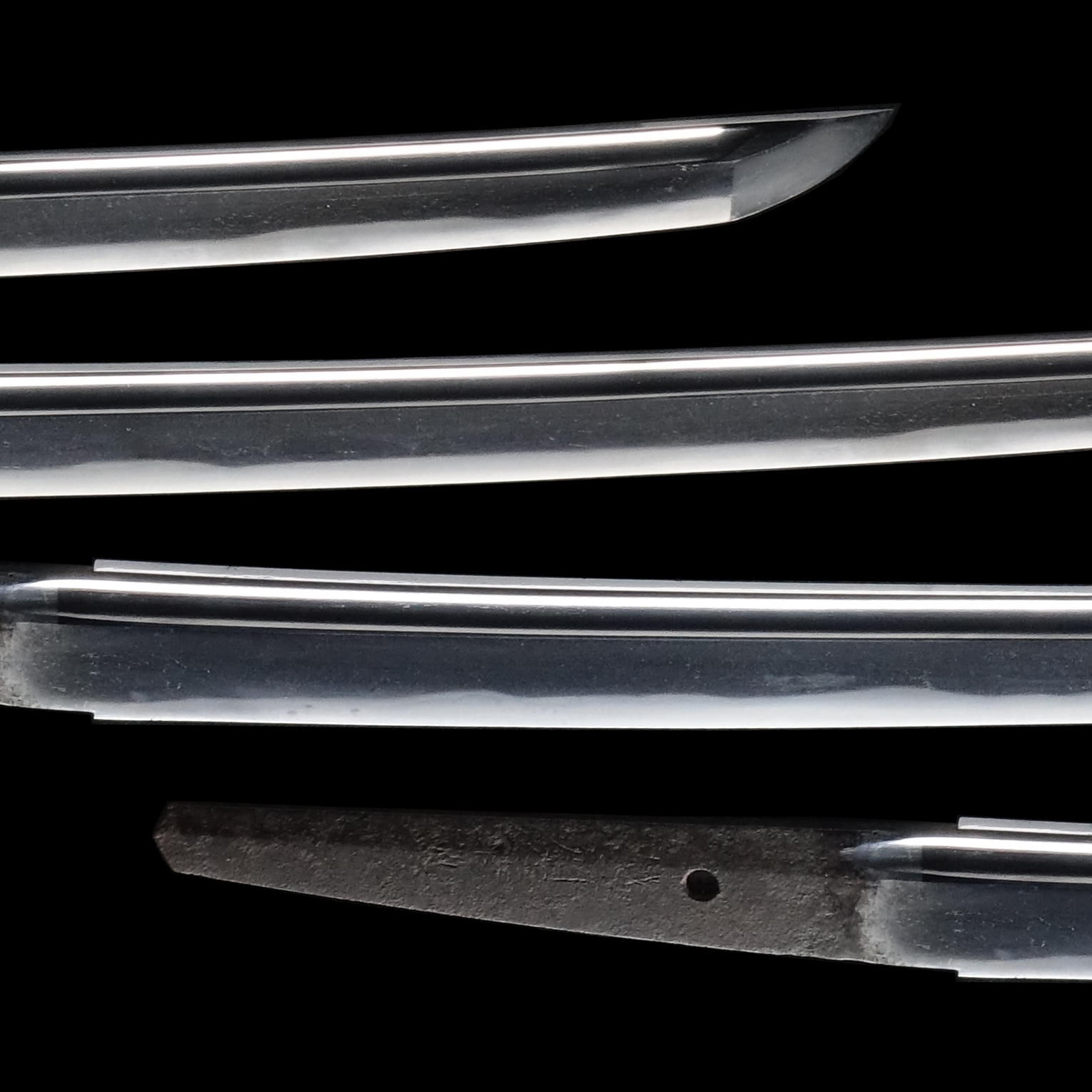
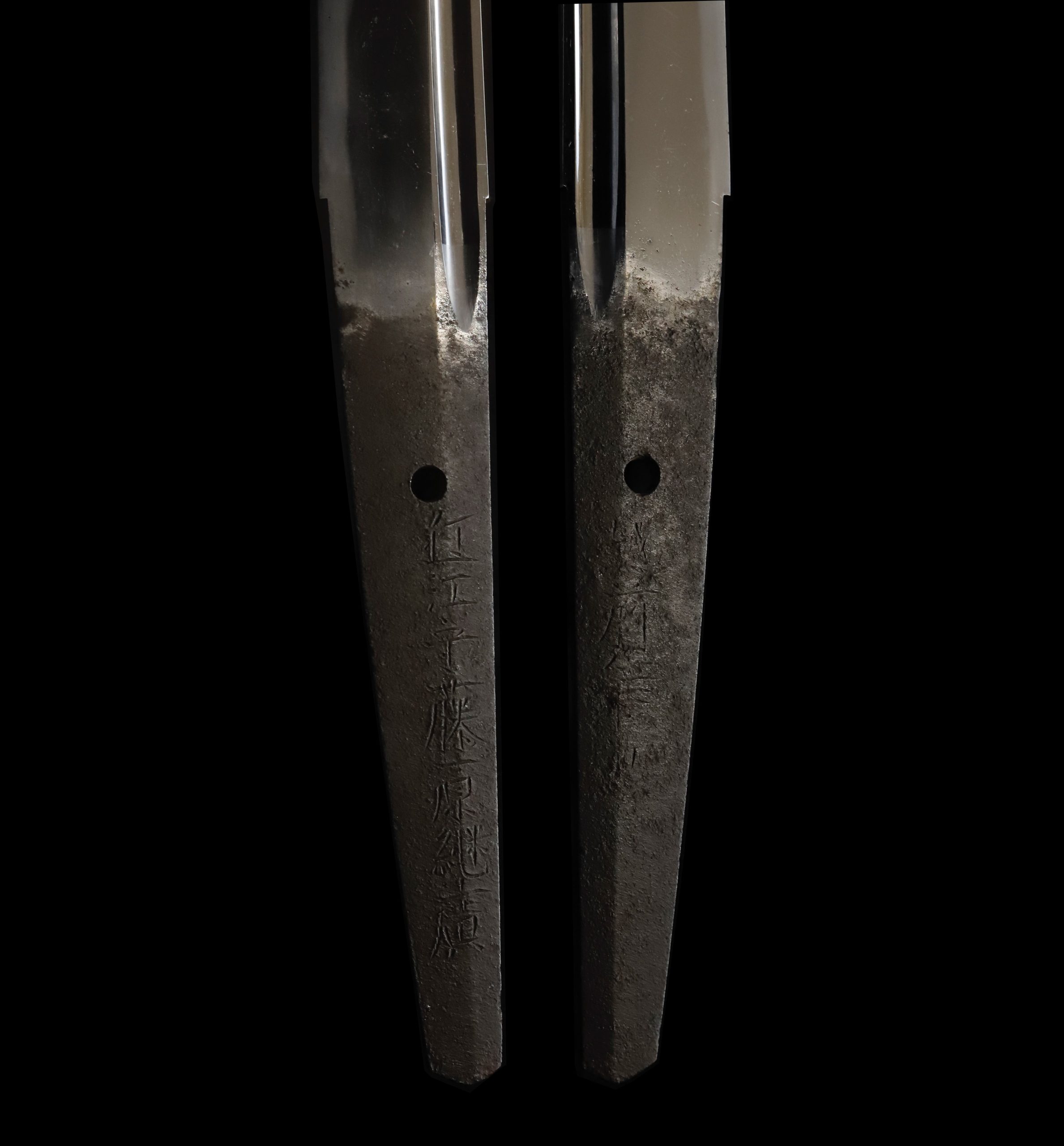
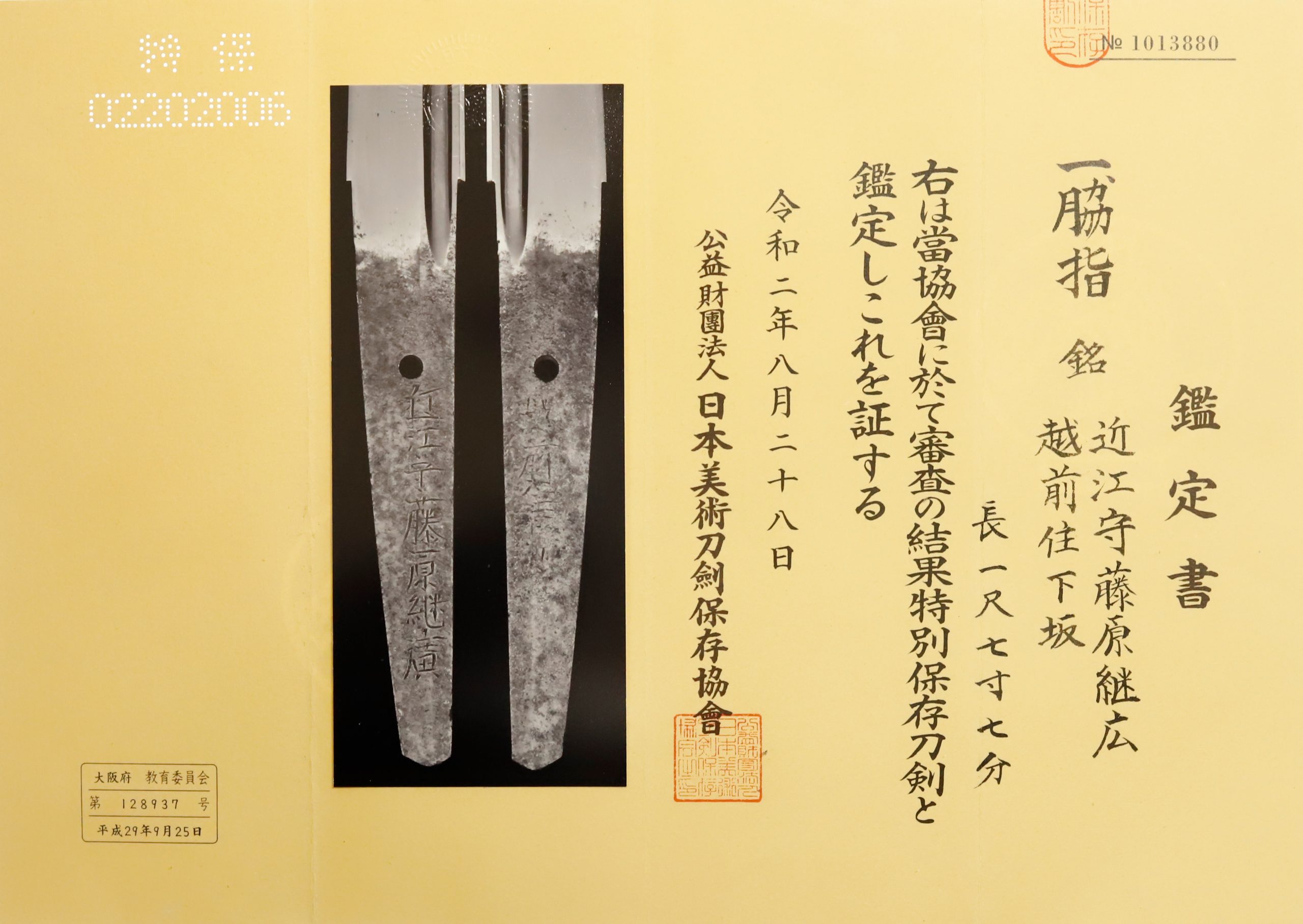
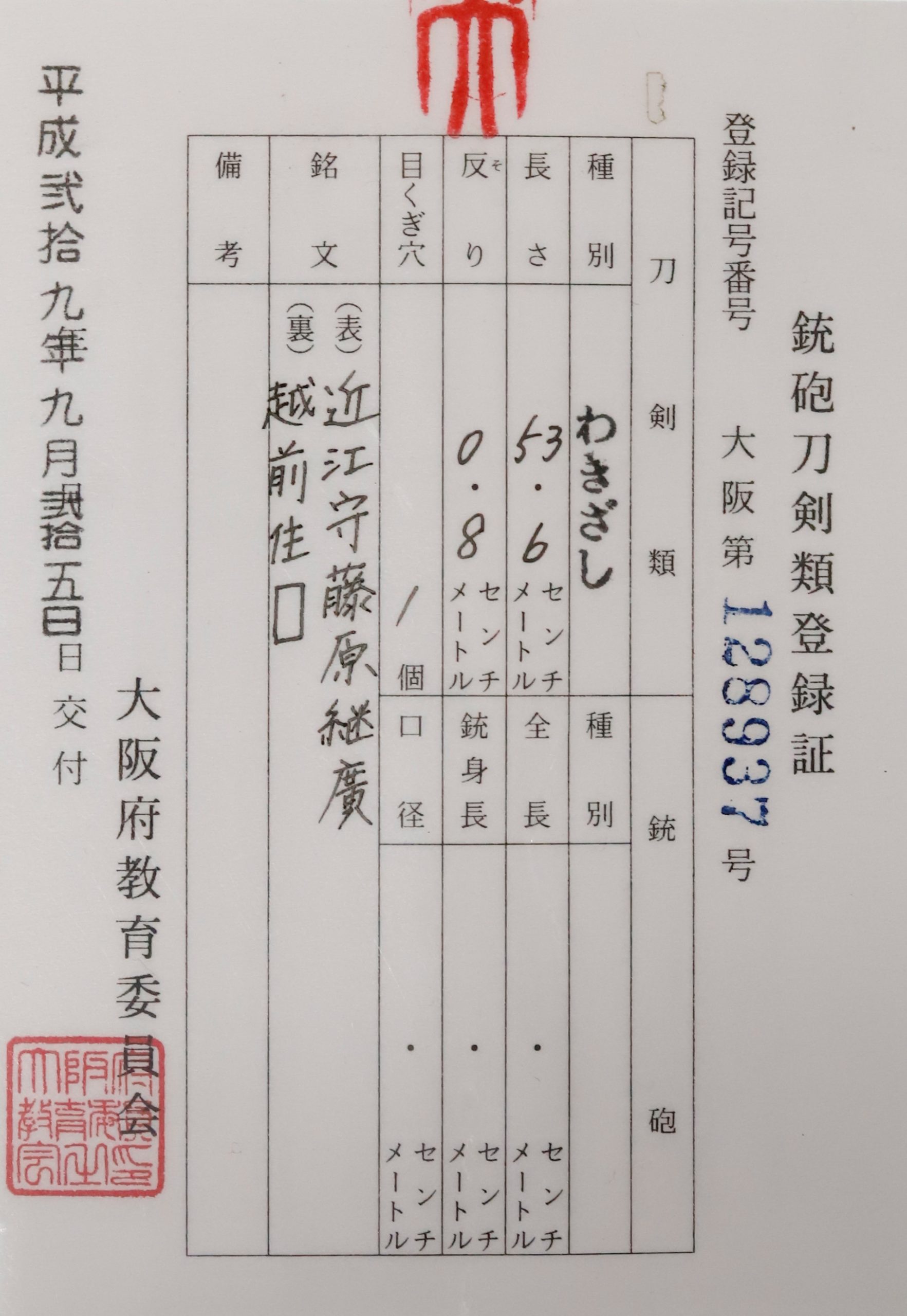
Tsuguhiro signed the title “近江守(Omi no Kami),” and his maker’s name “藤原継広(Fujiwara Tsuguhiro)” on the front. And he inscribed where he lived “越前住(Living in Echizen)” and the school’s name “下坂(Shimosaka)” on the back. There was also a record where Tsuguhiro forged swords in Edo city after leaving Echizen province.
About Echizen Shimosaka School
It is said that the first-gen Yasutsugu was the founder of the Echizen Shimoasaka school. He was born in Shimosaka town in Shiga prefecture at the end of the Muromachi period(Late 16 century ). He built his career there until the beginning of the Keicho era(1596). However, he moved to Echizen province due to the relocation of the lord he served. He eventually was noticed and supported by Matsudaira Hideyasu, the third son of Tokugawa Ieyasu, who was the founder of the Edo government. Hideysu was the feudal lord of Echizen province during the early Edo period.
With the support of Hideyasu, the first-gen Yasutsugu was able to establish the Echizen Shimosaka school. And his school’s fame became nationwide.
By Hideyasu’s recommendation, the first-gen Yasutsugu became Okakaekaji for the Tokugawa shogun family, meaning that he exclusively forged swords for the Shogun family. Yasutsu was acknowledged by the first and second Tokugawa Shoguns, Tokugawa Ieyasu, and Tokugawa Hidetada.
The first-gen Yasutsugu received 康(YASU) from Tokugawa Ieyasu and changed his maker’s name. He was also allowed to inscribe the holly oak symbol(family crest of Tokugawa) on the tang. The school flourished during the Edo period and trained many skilled apprentices. Tsuguhiro is one of the most famous apprentices among many swordsmiths who resided in Echizen province.
About Echizen province
Echizen Province was famous for forging razor-sharp, practically designed swords. The Edo government, run by the Tokugawa clan, ordered many blades from the swordsmiths in this province during the Edo period(1603-1868). There were so many swordsmiths in Echizen province, originally from the Mino province(Gifu prefecture), which is known as one of the five great Japanese sword styles MINO-DEN.
This blade is appraised as a Tokubetsu Hozon Token(特別保存刀剣) issued by NBTHK(Nihon Bijutsu Touken Hozon Kyokai:日本美術刀剣保存協会).
Fuchi-Kashira
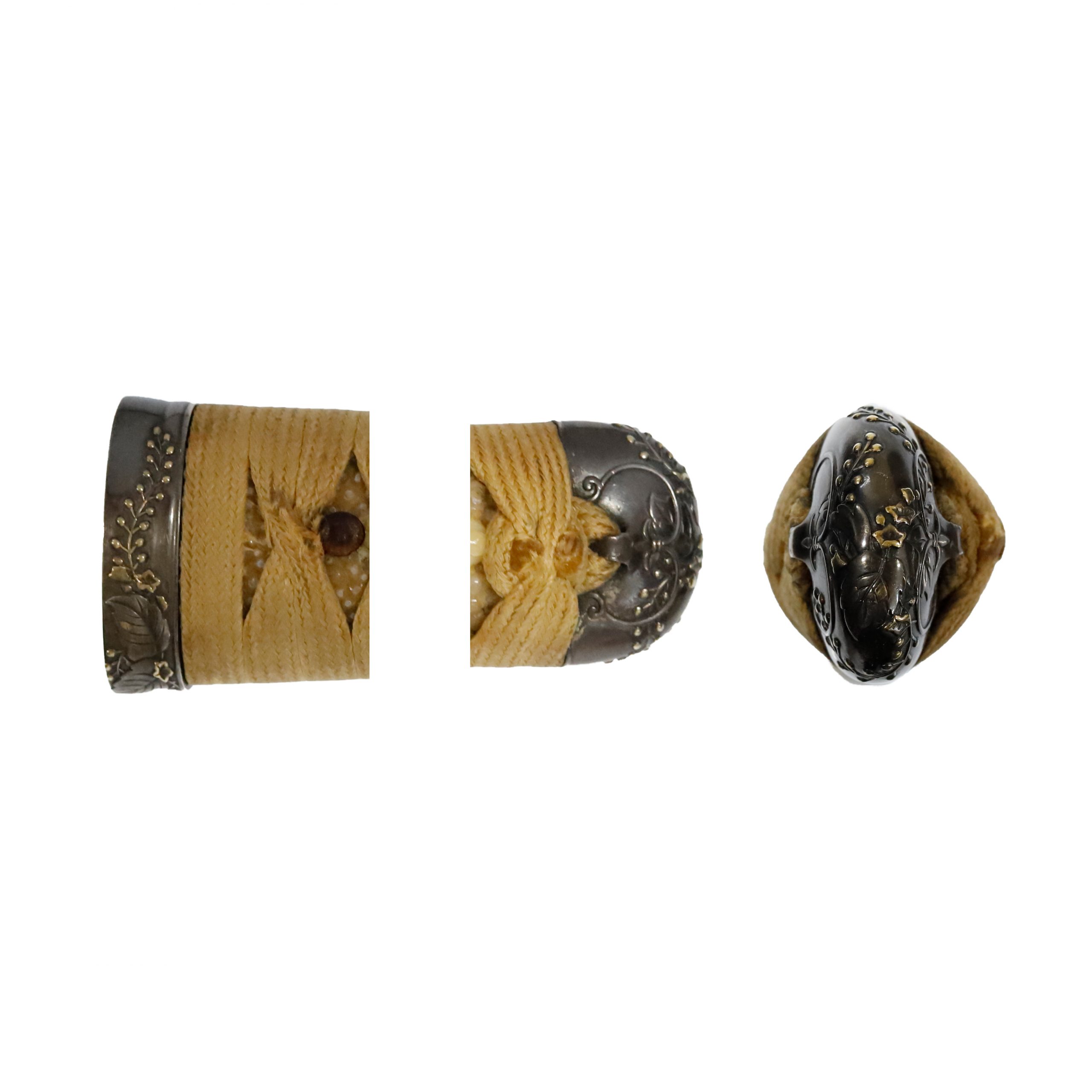
The Kiri (桐, paulownia) is designed for this Fuchi Kashira (pommel). Although some parts have already been flaked off its gold painting, it seems this Fuchi Kashira was initially colored with golden metal (probably gold or brass).
In many cases, this plant pattern is composed of three standing straight inflorescences and three leaves. The number of blooming flowers at each inflorescence means the ranks of this design. It is also famous that one of the most popular Samurais in Japan: Toyotomi Hideyoshi used the Kiri pattern for his family crest. According to a theory, Hideyoshi used Omodaka (沢瀉, arrowhead) pattern as his family crest. However, Oda Nobunaga, a well-known military commander in the Warring States period, permitted Hideyoshi to use Kiri design. This plant pattern was once used by the imperial family and national leaders of the time. Today, this plant pattern is used as the crest of the Japanese Government. Also, a tradition says that Houou (鳳凰, Fenghuang, a kind of sacred beast) rests its wings at the paulownia tree; therefore, some people regarded this holy bird as a sacred plant.
Tsuka and Menuki
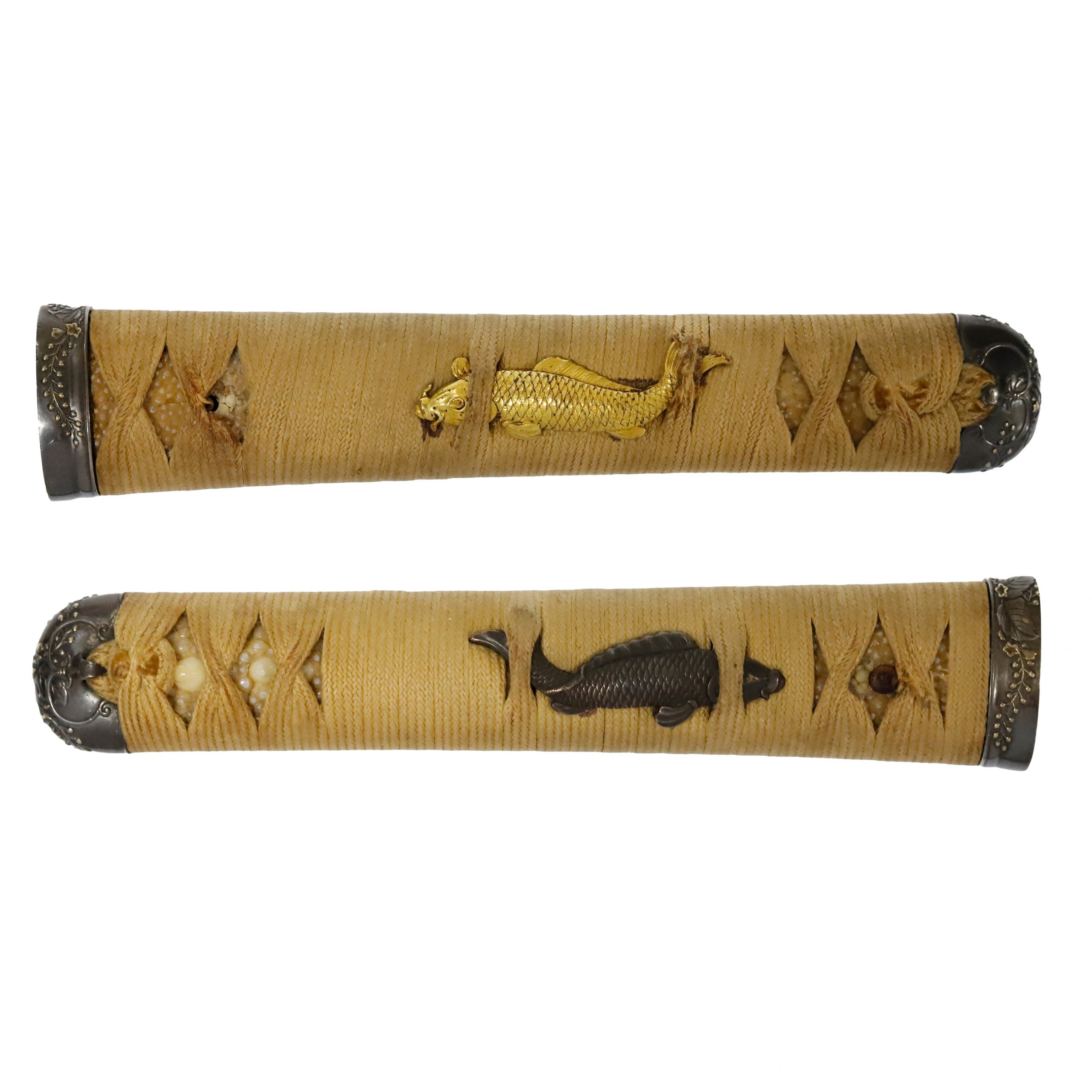
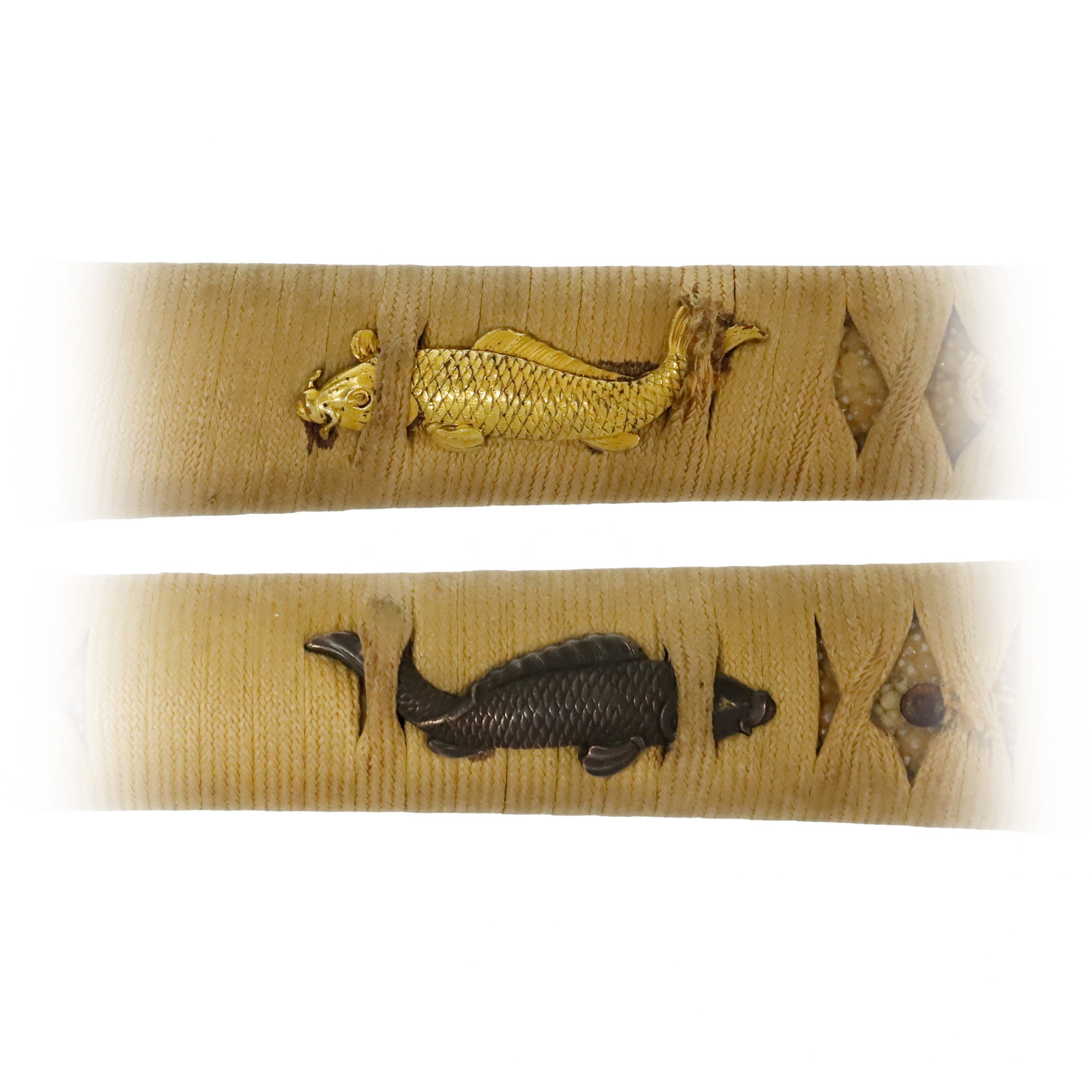
The Koi (鯉, domestic carp) is the motif of this Menuki (hilt decor). According to an ancient Chinese story, lots of fish tried to climb the waterfall called Ryumon (竜門, dragon gate) in the rapid stream of the Yellow River. As a result, only Koi climbed up and became a dragon and ran through the sky. This is the reason why “Koi-no Taki Nobori” (鯉の滝昇り, domestic carp climbing waterfall) became a symbol of success in life. The Ryumon legend is associated with this story. By living confidently and making efforts, people hoped for their children to grow up to become magnificent people. Samurai families then might have used this fish motif wishing their sons to be promoted to high-ranked Samurais.
Tsuba and Habaki
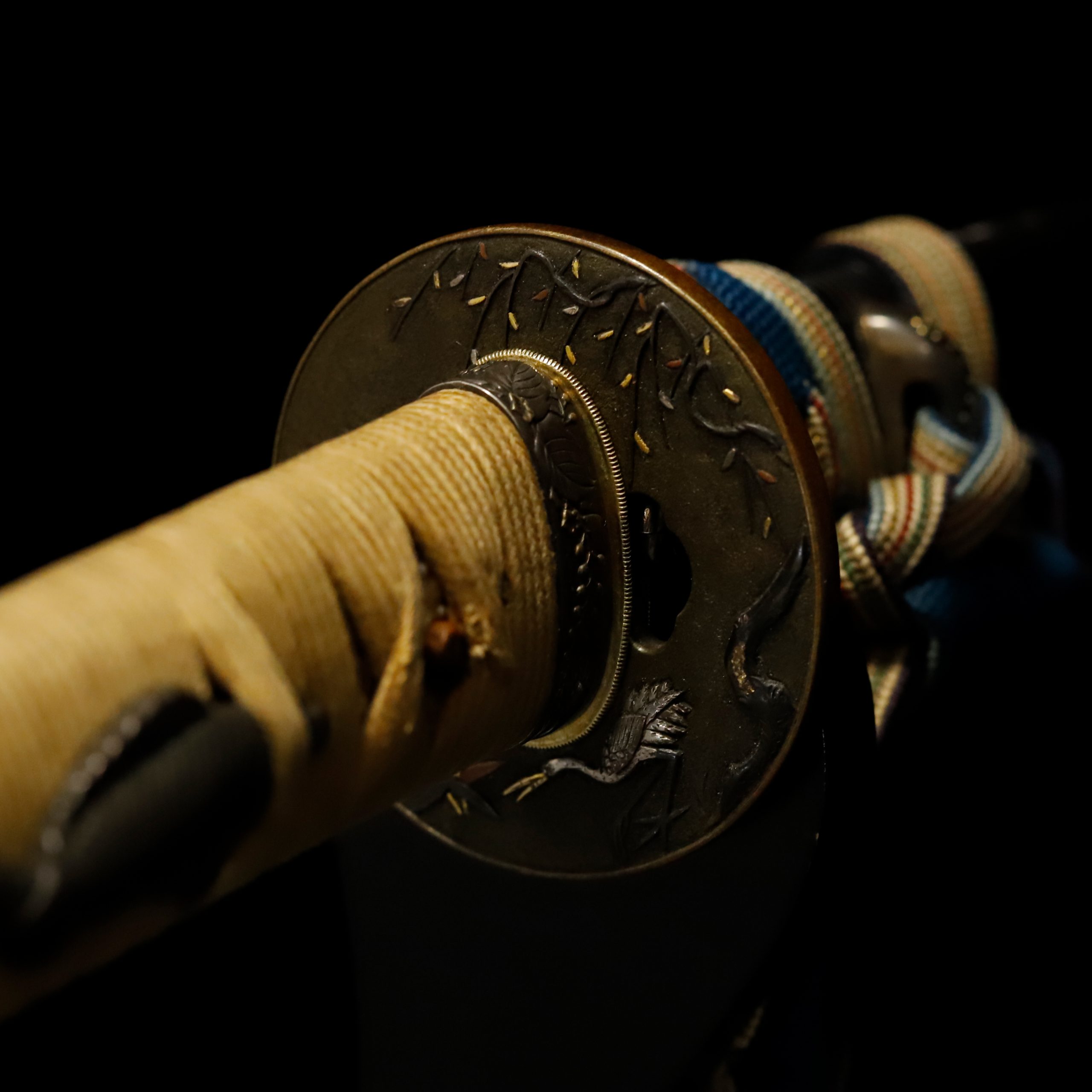
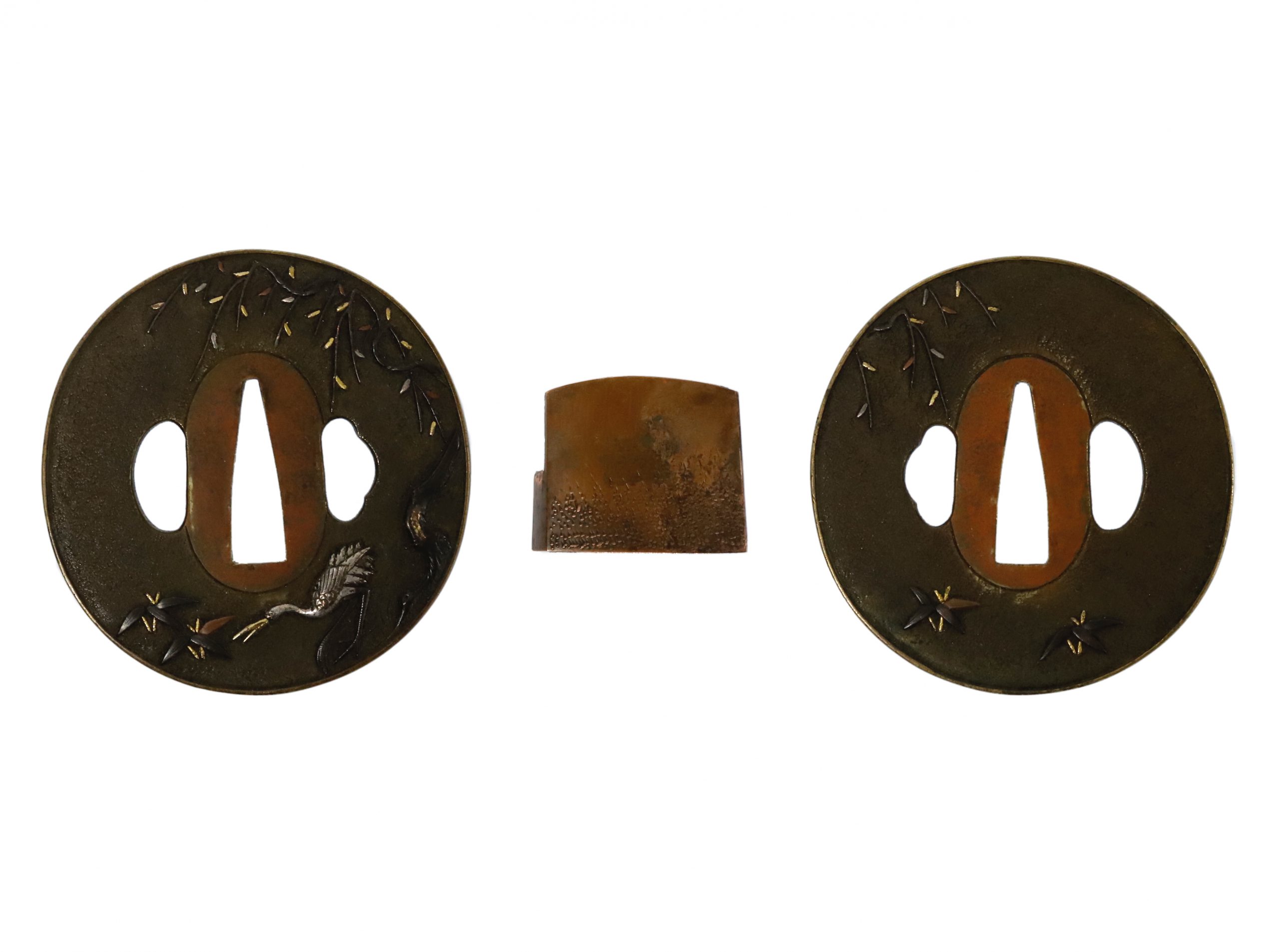
Oval-shaped antique Tsuba that has Kozuka and Kougai holes. A Shirasagi (白鷺, egret) standing under the weeping willow tree is depicted. Egret is a popular motif, especially for potteries, because of its beautiful white feathers and elegant appearance. This egret seems to look for something at its feet. The color decorations with gold, silver, and copper, are remaining in good condition. It makes an ornamental look for this work.
Authentication Paper
They authenticated the blade on August 28th in the second year of Reiwa(2020). They appraised it as Tokubetsu Hozon Touken, the blade especially worth preserving for Japanese society.
Authentication Paper
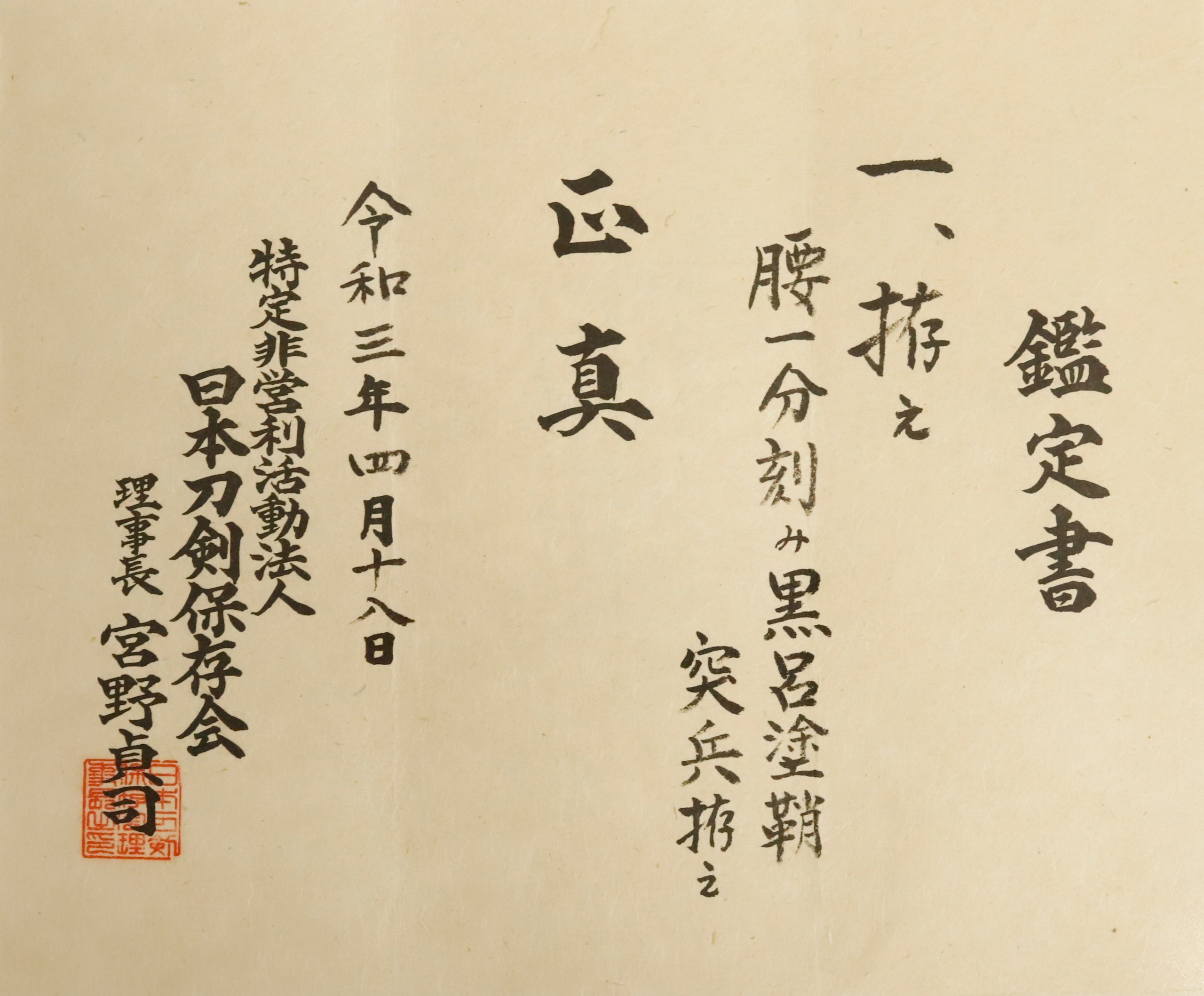
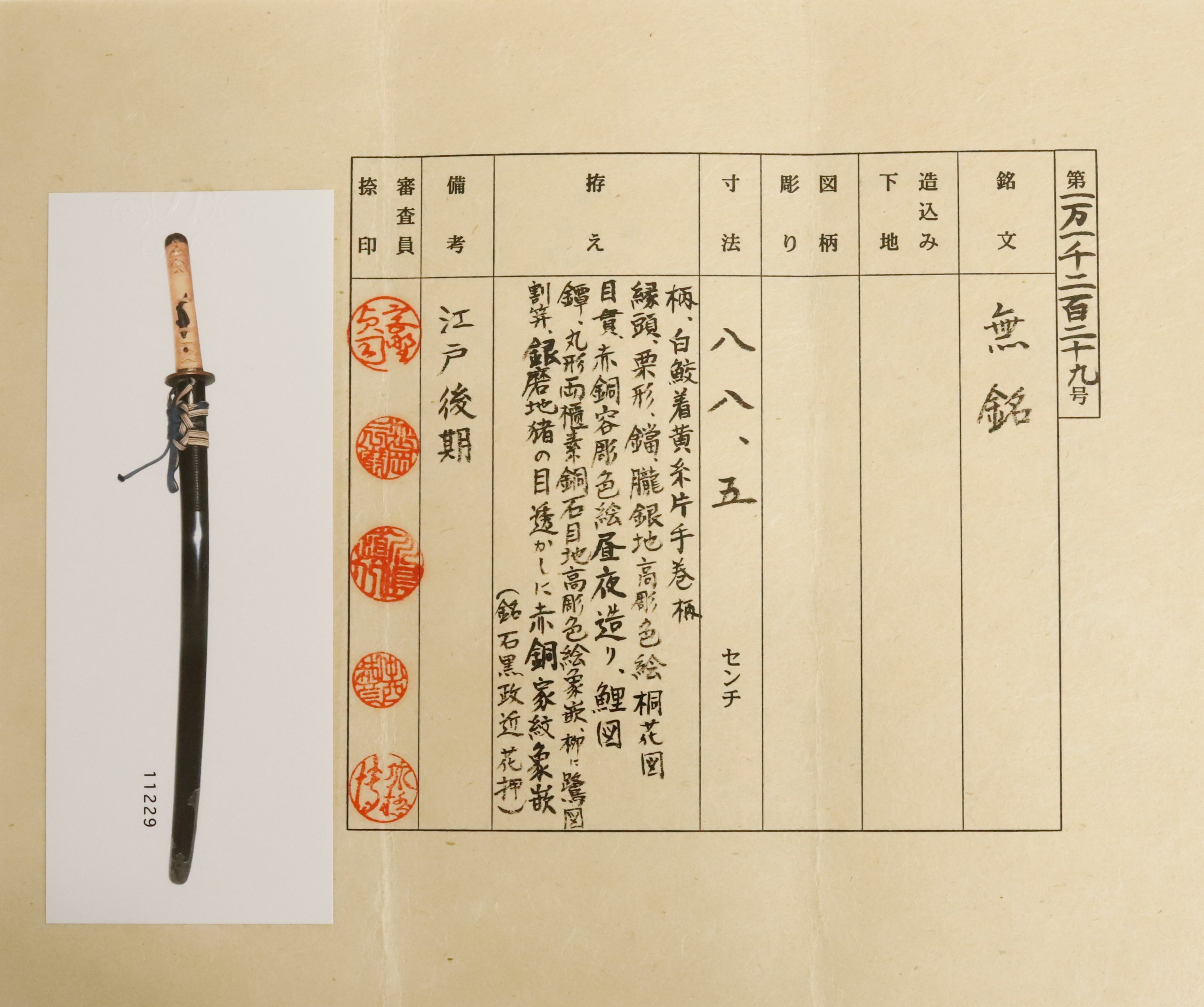
NTHK, also known as Nihon Touken Hozon Kai (the Society for the Preservation of the Japanese Sword), is one of the oldest Japanese sword appraising organizations in modern-day Japan. They authenticated the sword mounting (Koshirae) on March 18th in the third year of Reiwa (2021). They appraised it as the Kanteisho class.
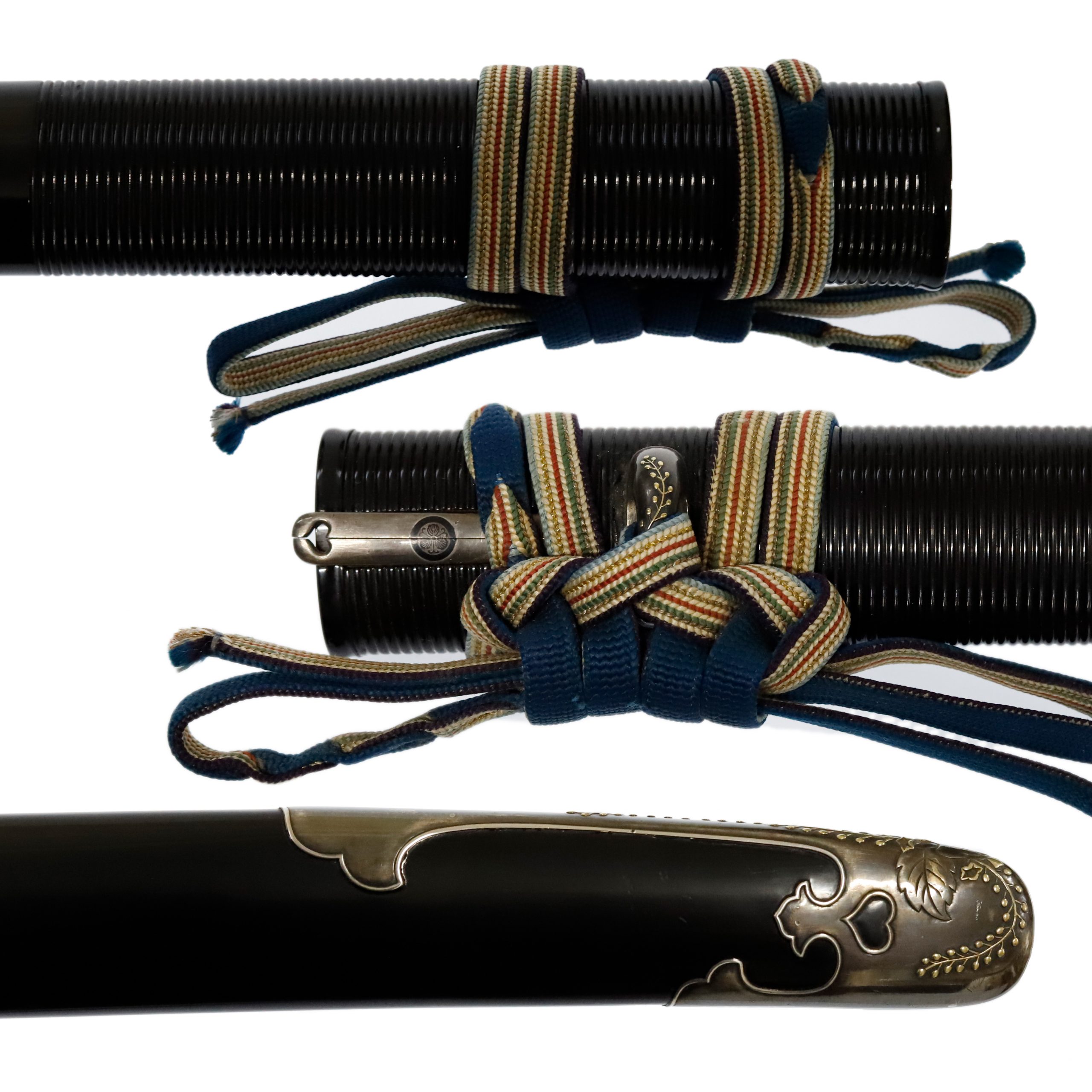
According to the certificate, this Koshirae is categorized as Toppei Koshirae (突兵拵え). Toppei Koshirae is a type of Koshirae for actual battles in accordance with the style to incorporate the Western-style training in the last days of the Tokugawa Shogunate.

 NihontoWatch