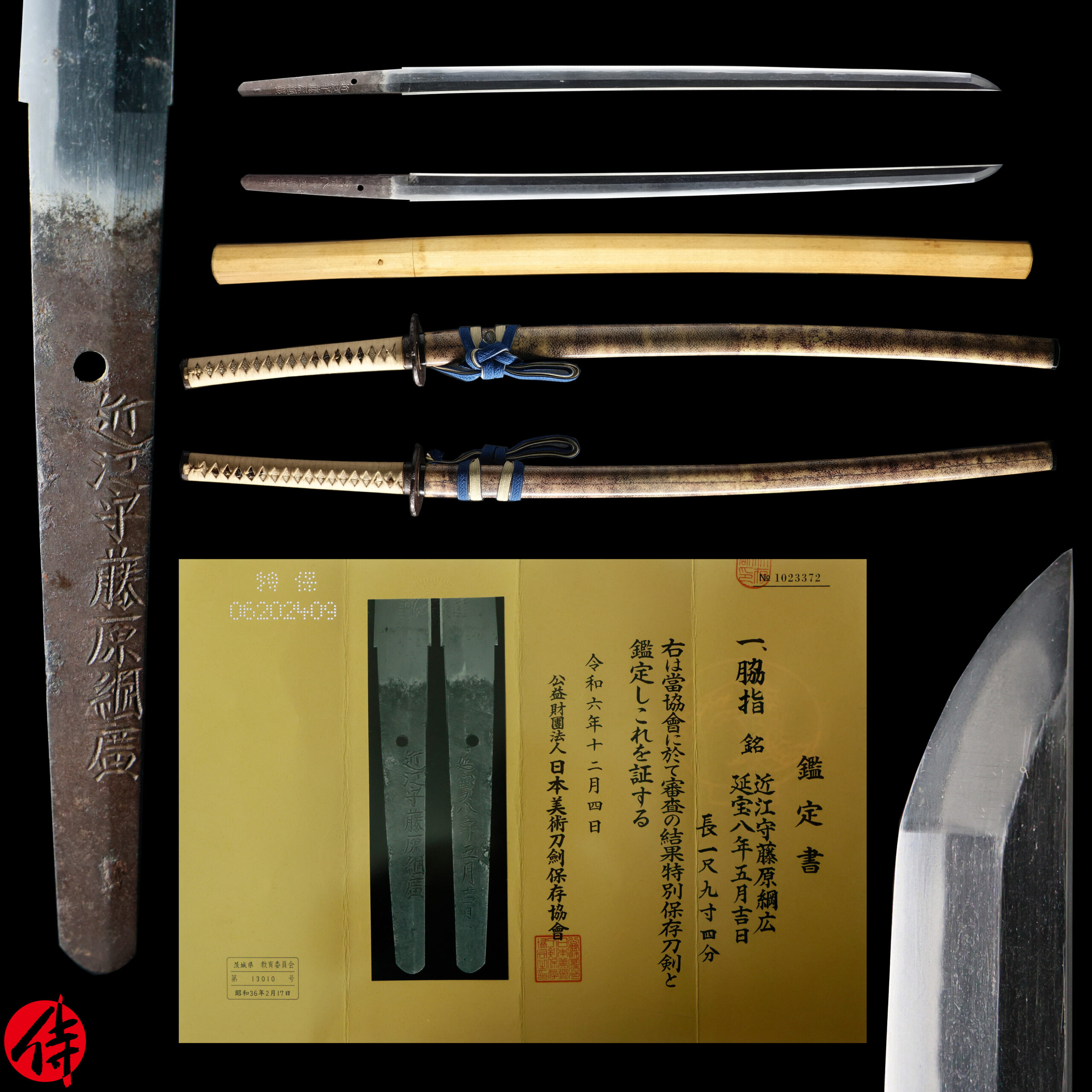
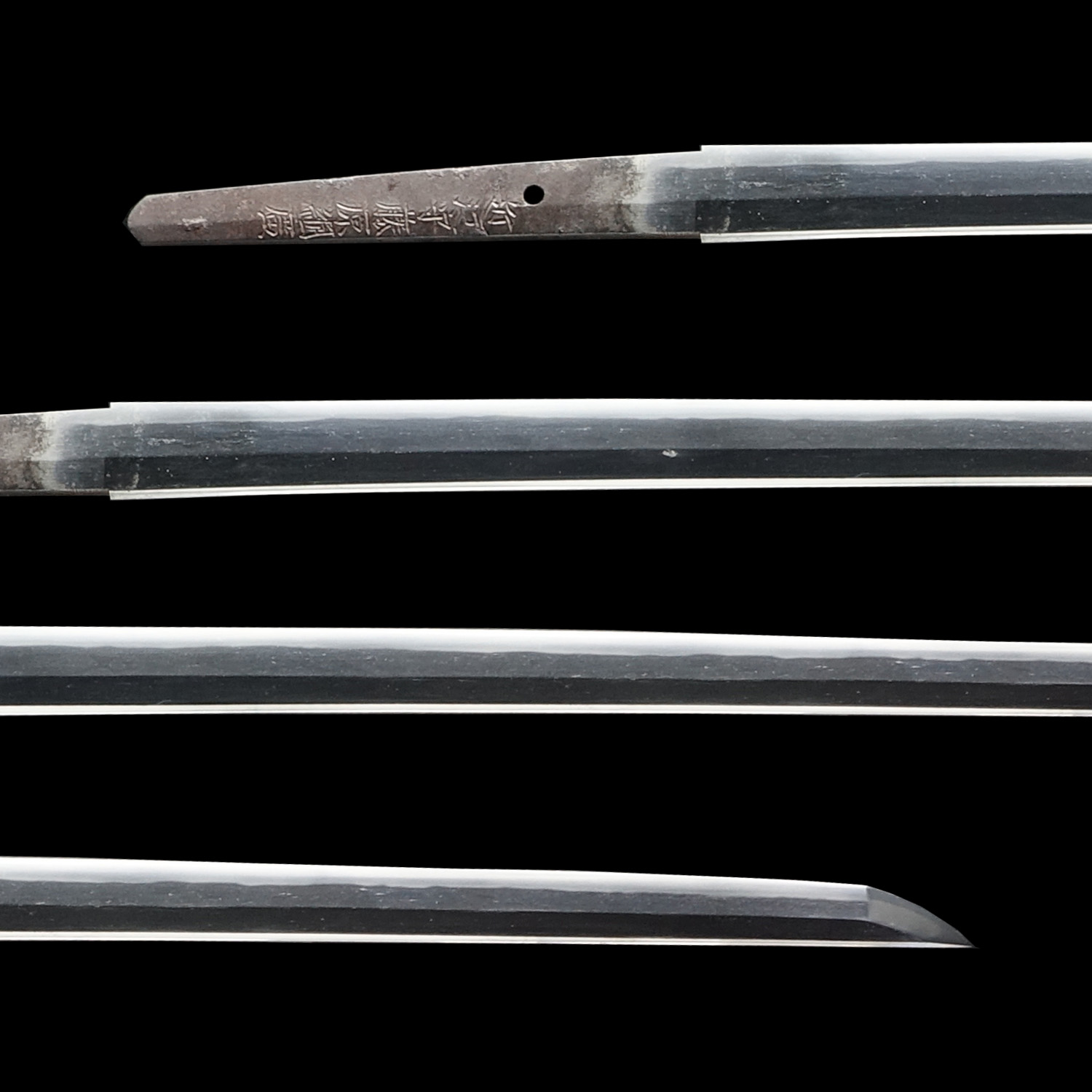
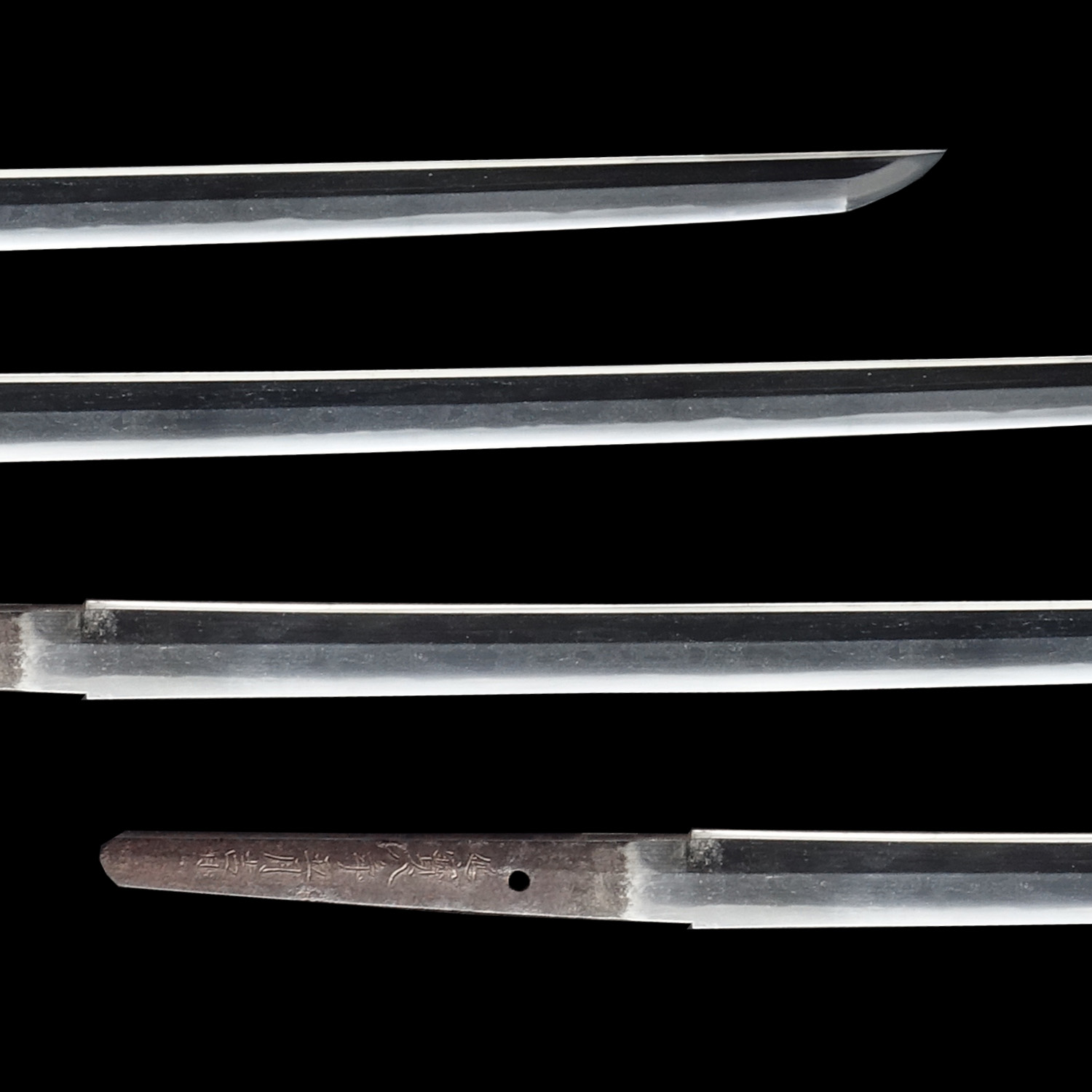
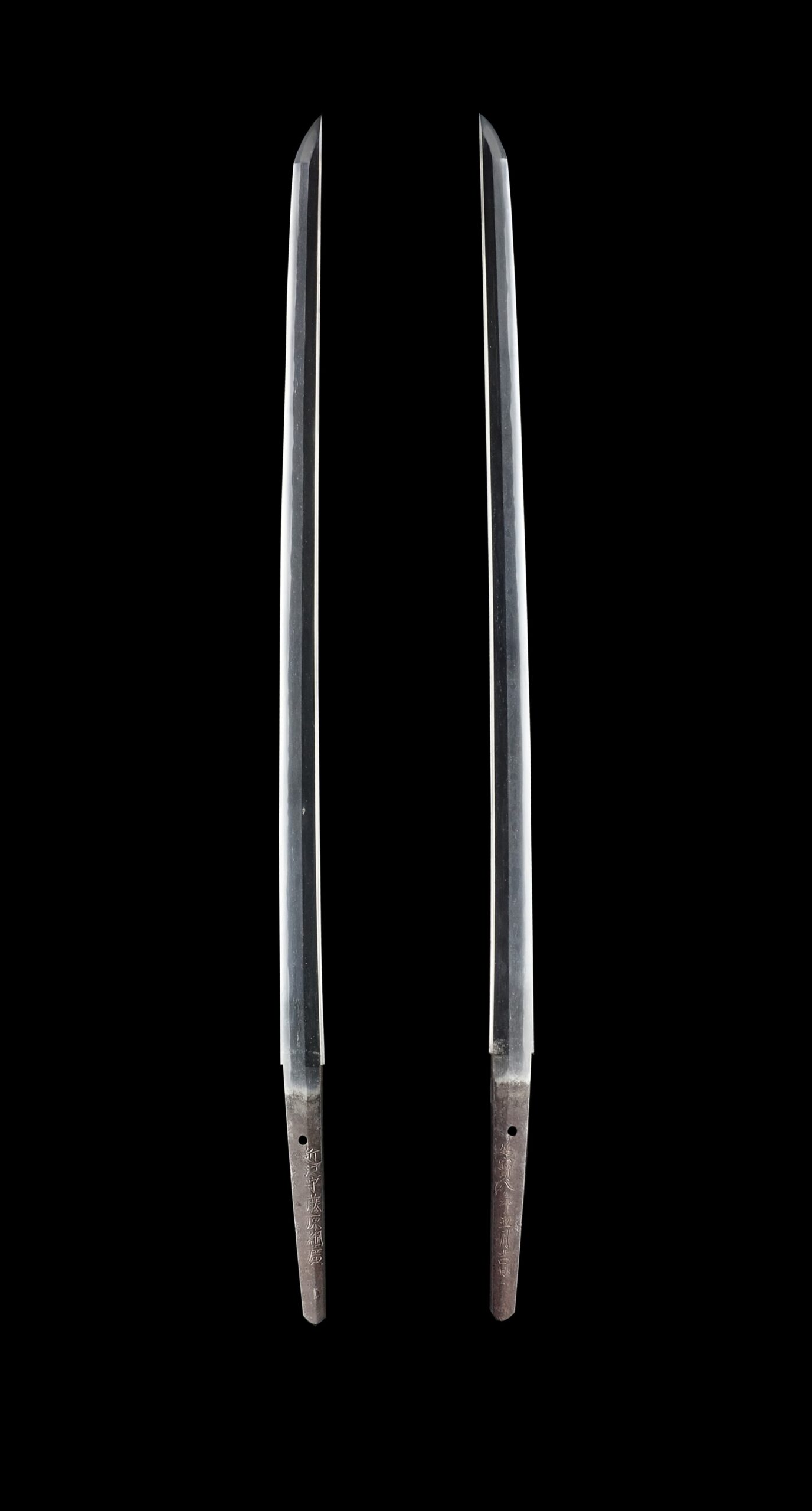
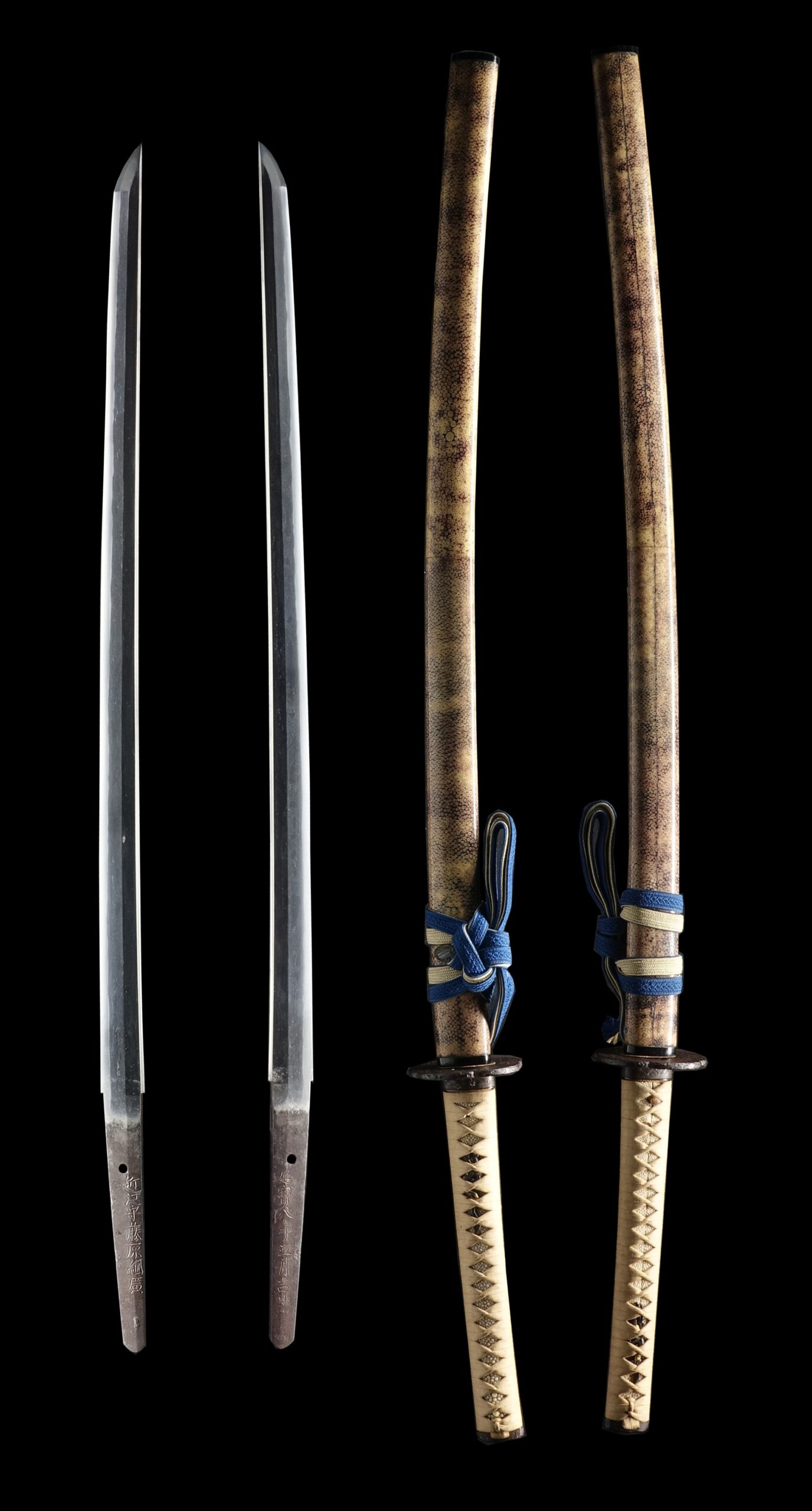
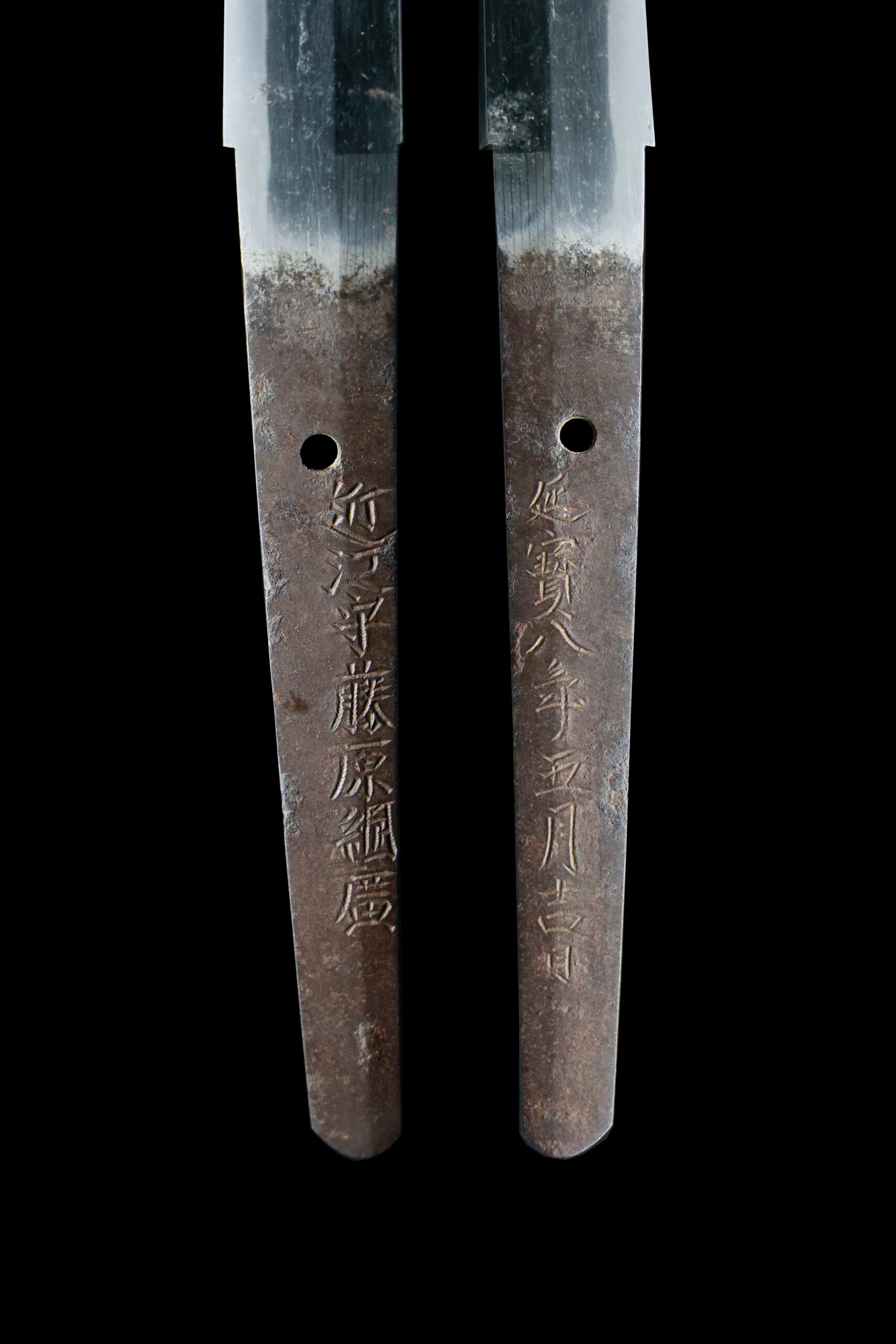
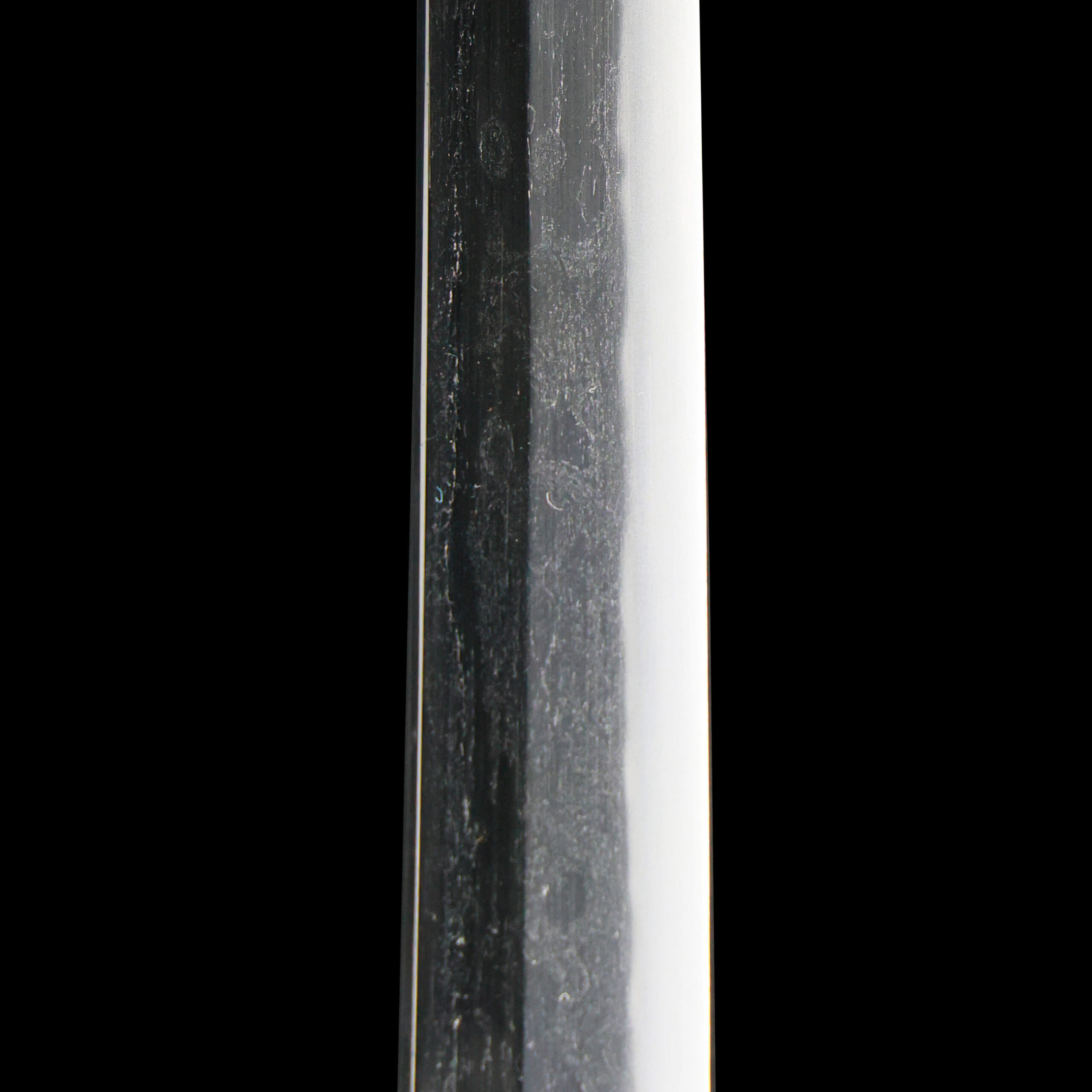
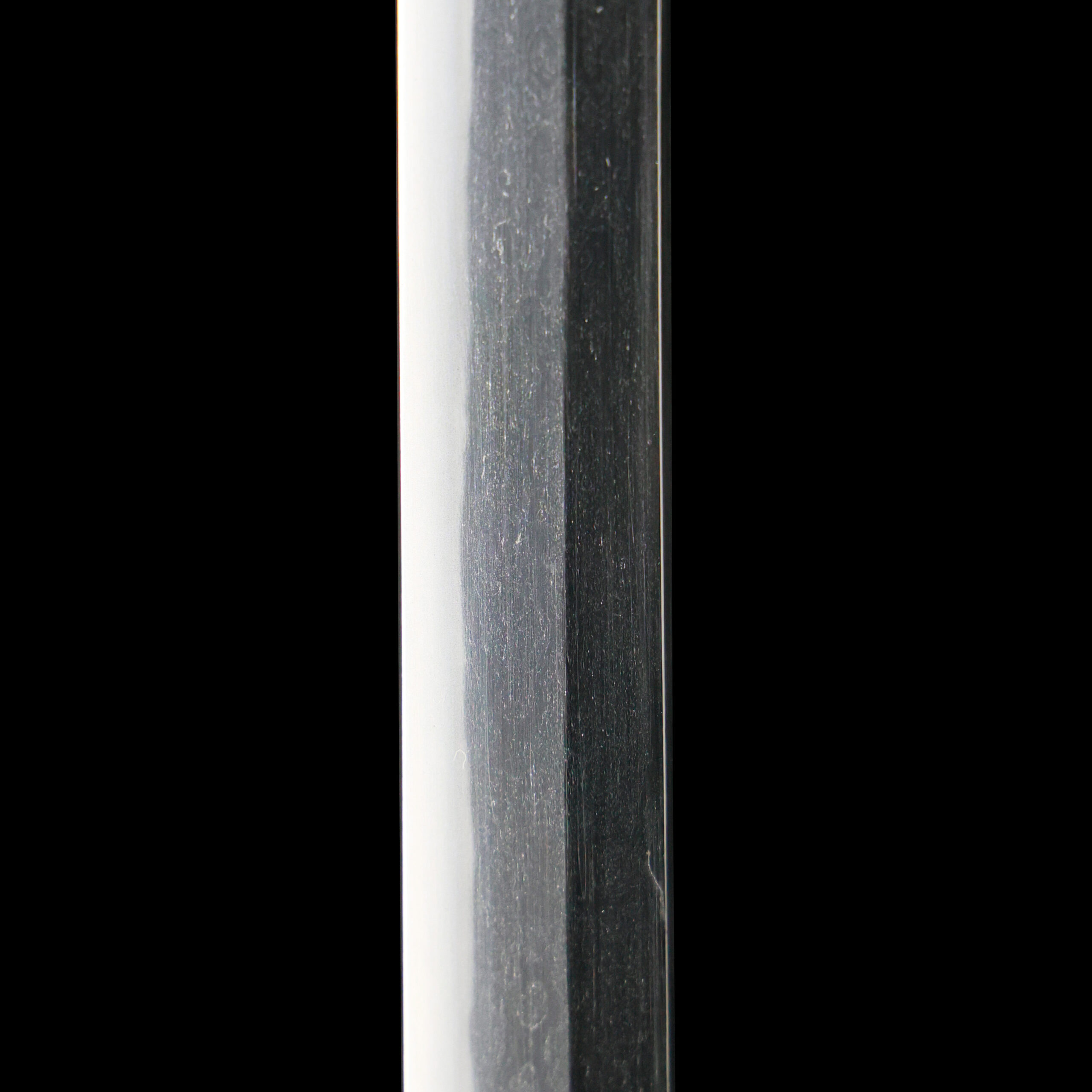
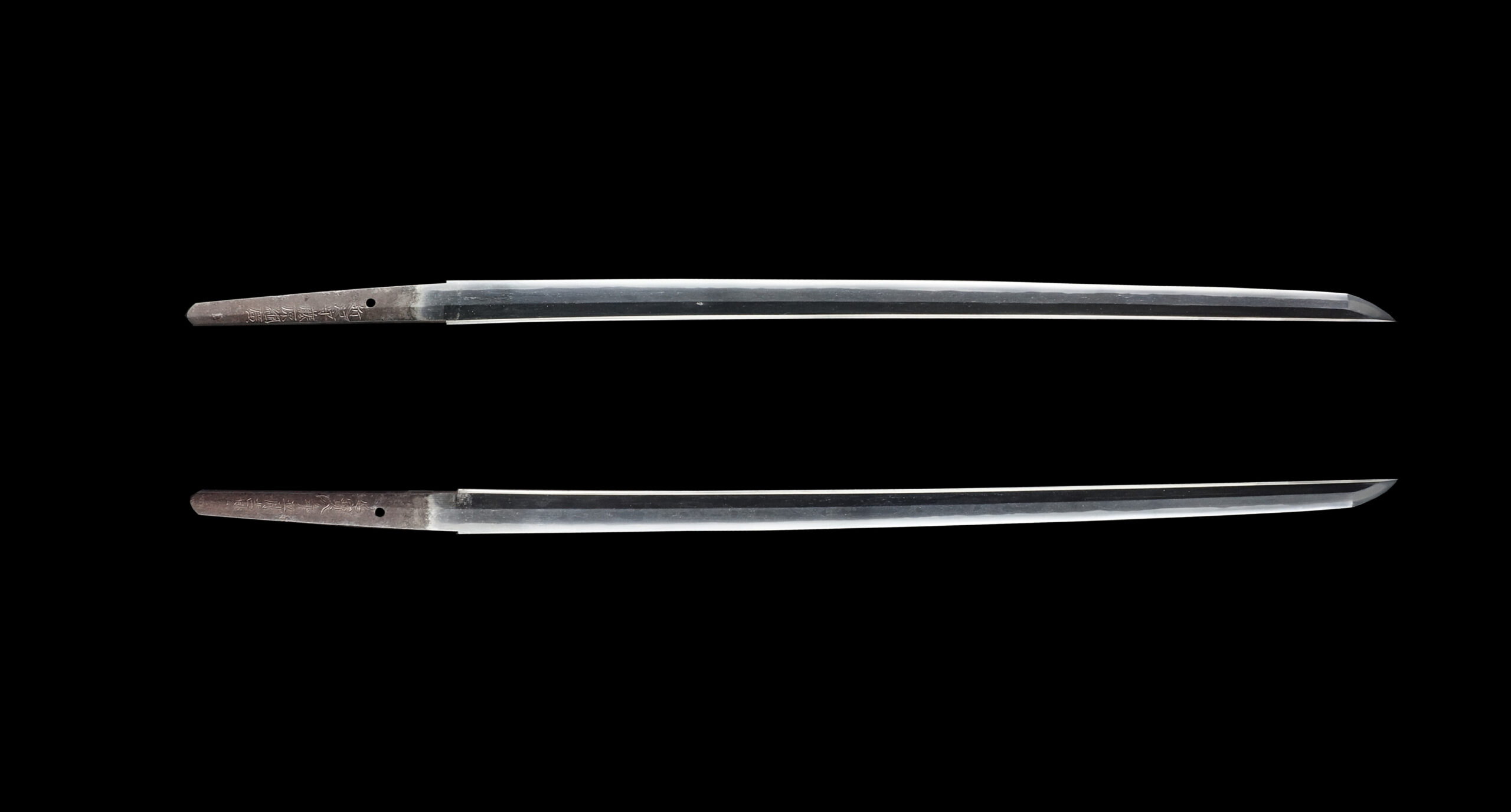
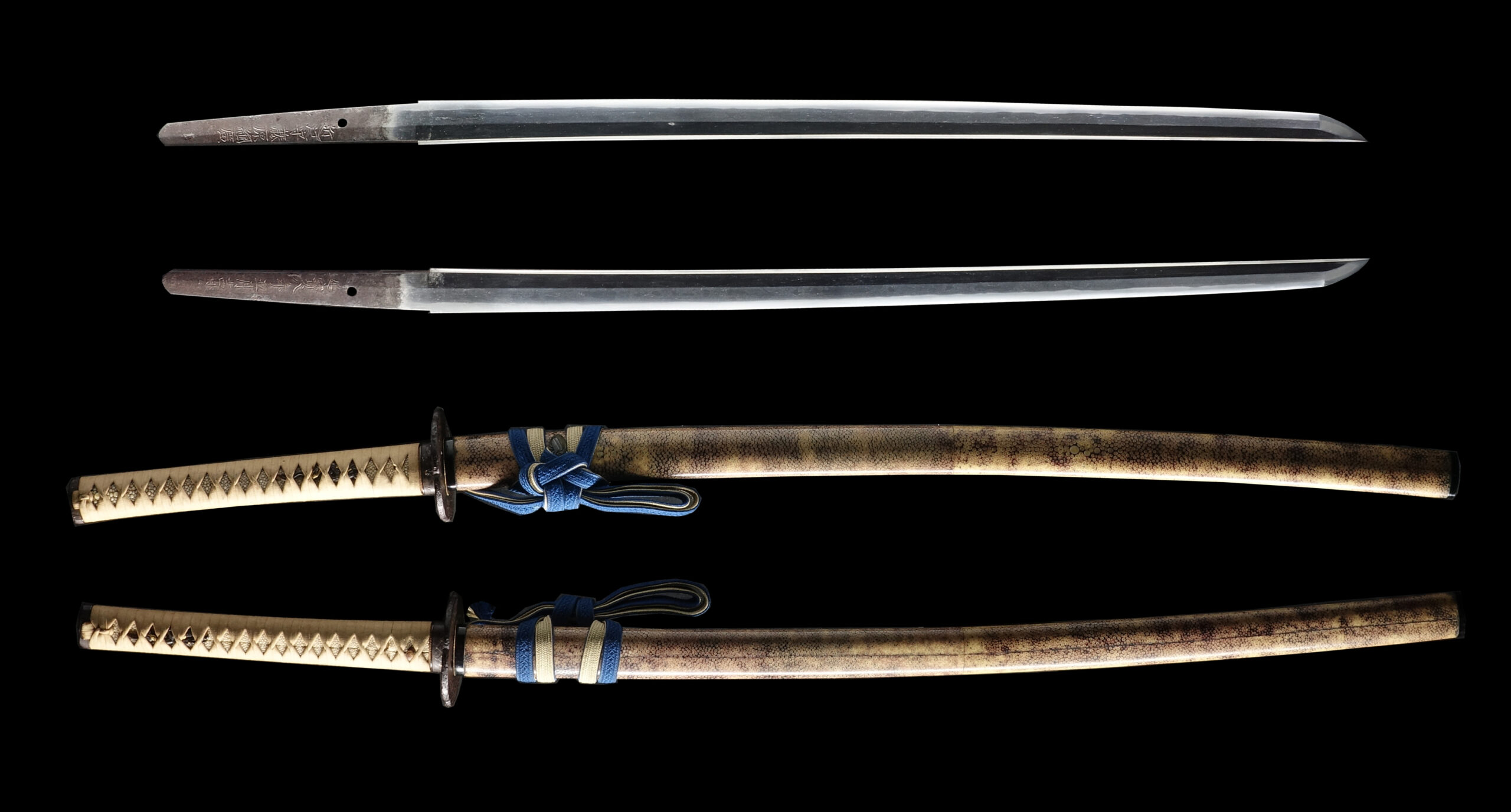
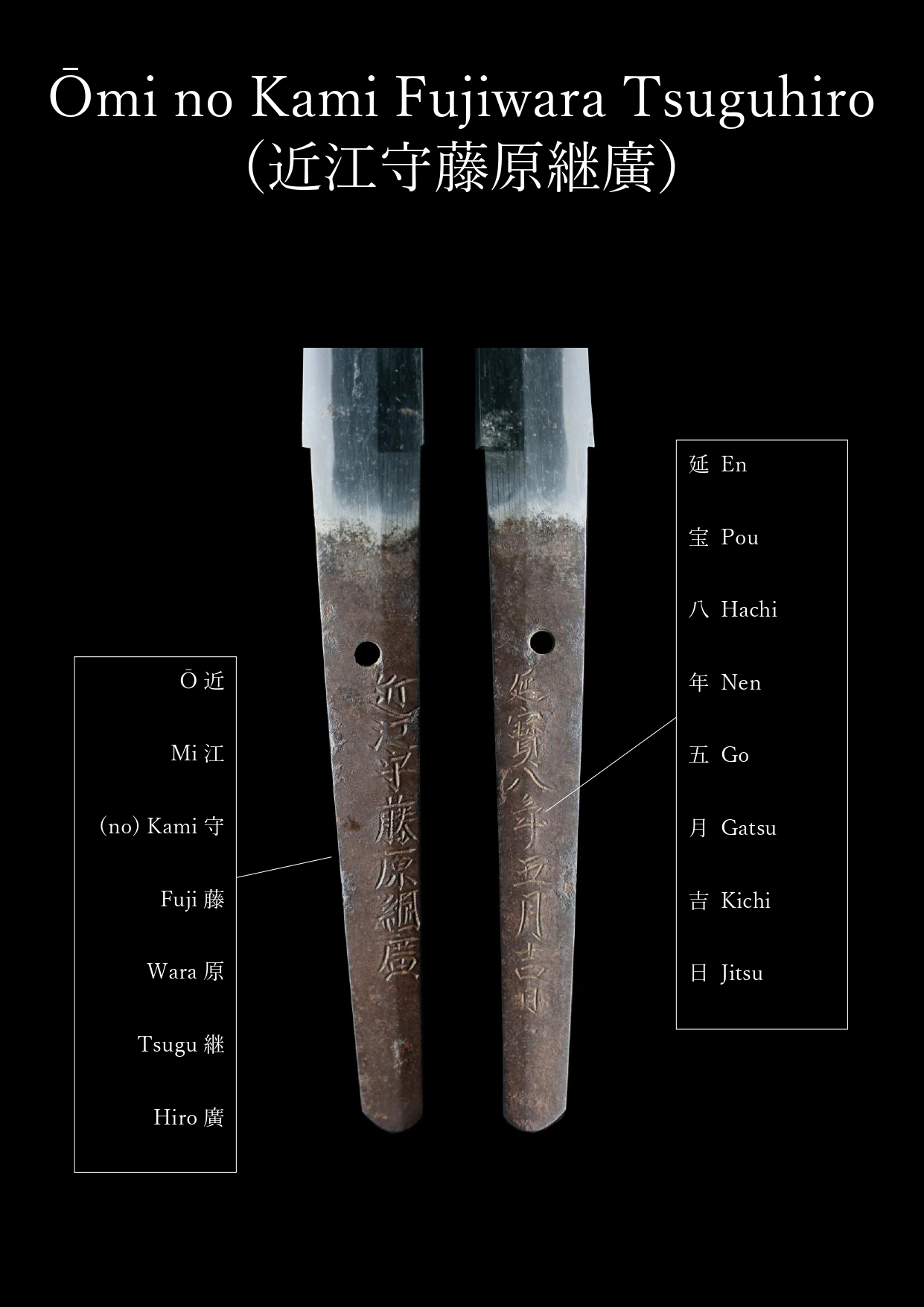
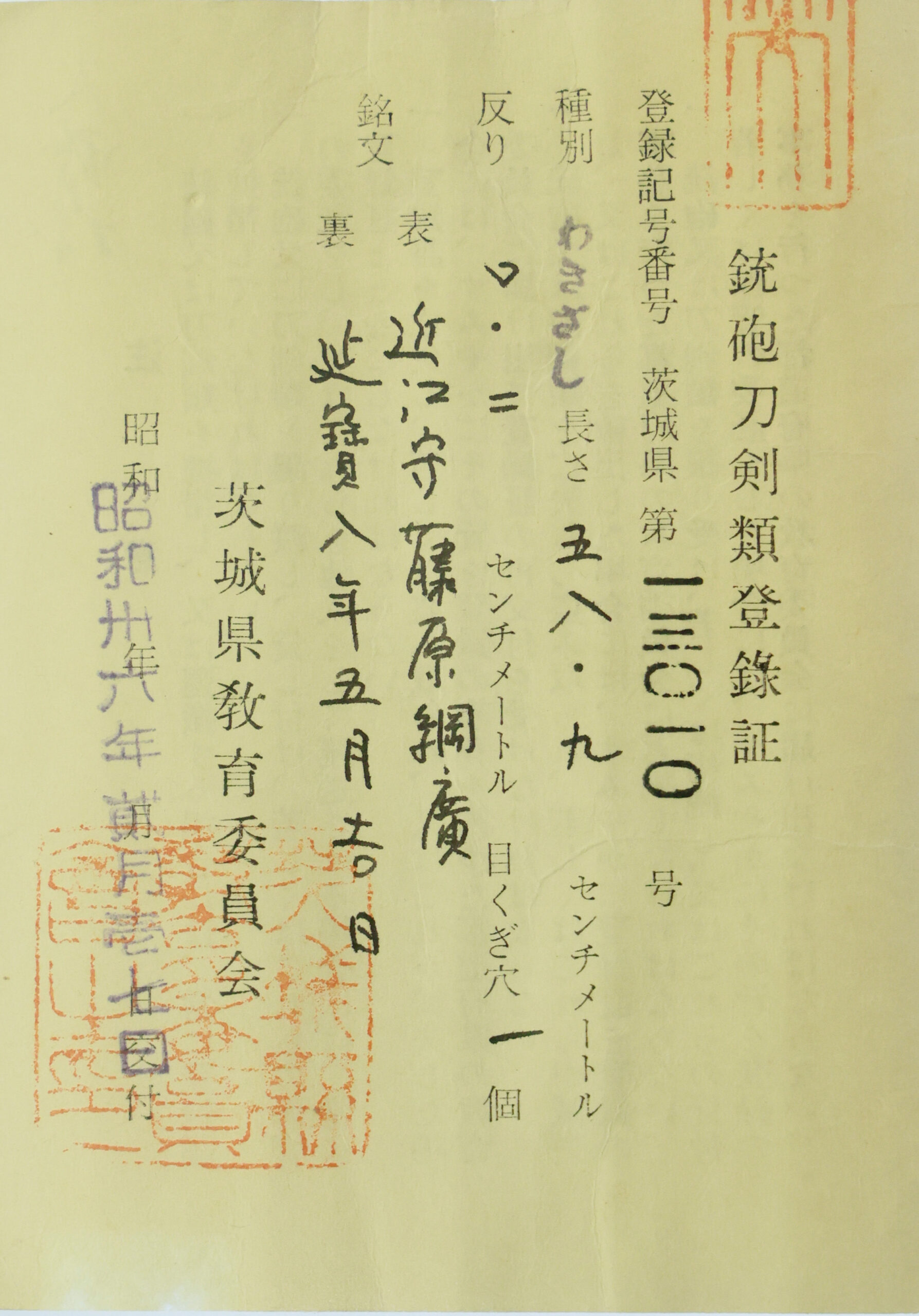
This blade was signed in May, the 8th year of Enpo era (延宝八年, 1680) by Omi no Kami Fujiwara Tsuguhiro (近江守藤原継広), who was a swordsmith of the Echizen Shimosaka school, especially active from around the Kanbun era (1661–1673). Though originally based in Echizen Province (modern-day Fukui Prefecture), he also worked in Edo (Tokyo) and Omi province (today’s Shiga prefecture), reflecting his broad appeal and high demand among samurai clientele. He was known as an apprentice of the third-gen Echizen Yasutsugu, who was the head of Ezhizen Shimosaka school. He received an honorable official title of Omi no Kami in his career. Kami is an honorable official title given by the imperial court for one’s excellent craftsmanship.
Shimosaka school
It is said that the first-gen Yasutsugu was the founder of the Echizen Shimoasaka school. He was born in Shimosaka town in Shiga prefecture at the end of the Muromachi period(Late 16 century ). He built his career there until the beginning of the Keicho era(1596). However, he moved to Echizen province due to the relocation of the lord he served. He eventually was noticed and supported by Matsudaira Hideyasu, the third son of Tokugawa Ieyasu, who was the founder of the Edo government.
Hideysu was the feudal lord of Echizen province during the early Edo period. With the support of Hideyasu, the first-gen Yasutsugu was able to establish the Echizen Shimosaka school. And his school’s fame became nationwide. By Hideyasu’s recommendation, the first-gen Yasutsugu became Okakaekaji for the Tokugawa shogun family, meaning that he exclusively forged swords for the Shogun family. Yasutsu was acknowledged by the first and second Tokugawa Shoguns, Tokugawa Ieyasu, and Tokugawa Hidetada.
The first-gen Yasutsugu received 康(YASU) from Tokugawa Ieyasu and changed his maker’s name. He was also allowed to inscribe the holly oak symbol(family crest of Tokugawa) on the tang. The school flourished during the Edo period and trained many skilled apprentices. Third-gen Yasutsugu, the master of Tsuguhiro, was a successor of the first-gen.
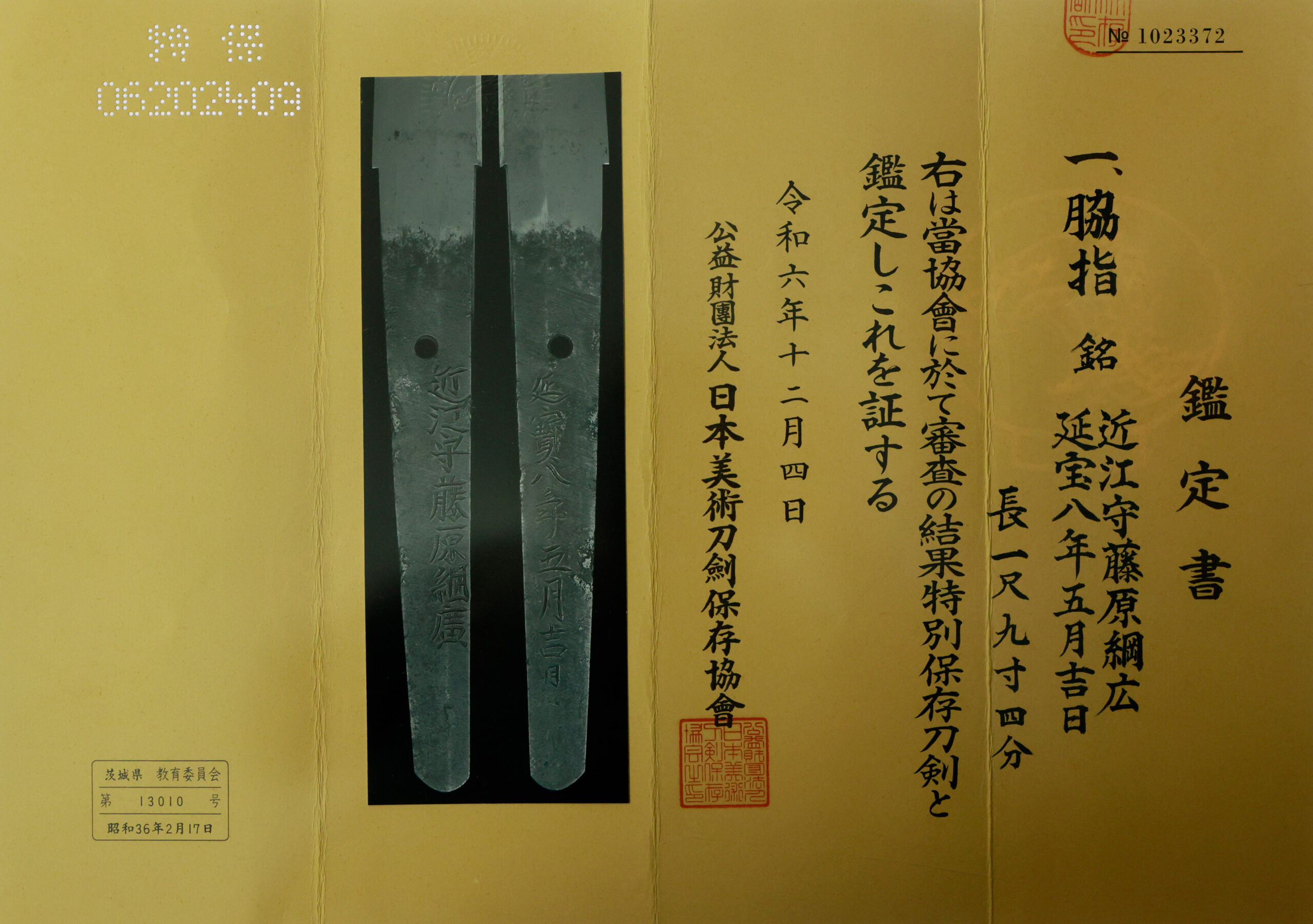
It is appraised as a Tokubetsu Hozon Token (特別保存刀剣) issued by NBTHK (Nihon Bijutsu Touken Hozon Kyokai: 日本美術刀剣保存協会).
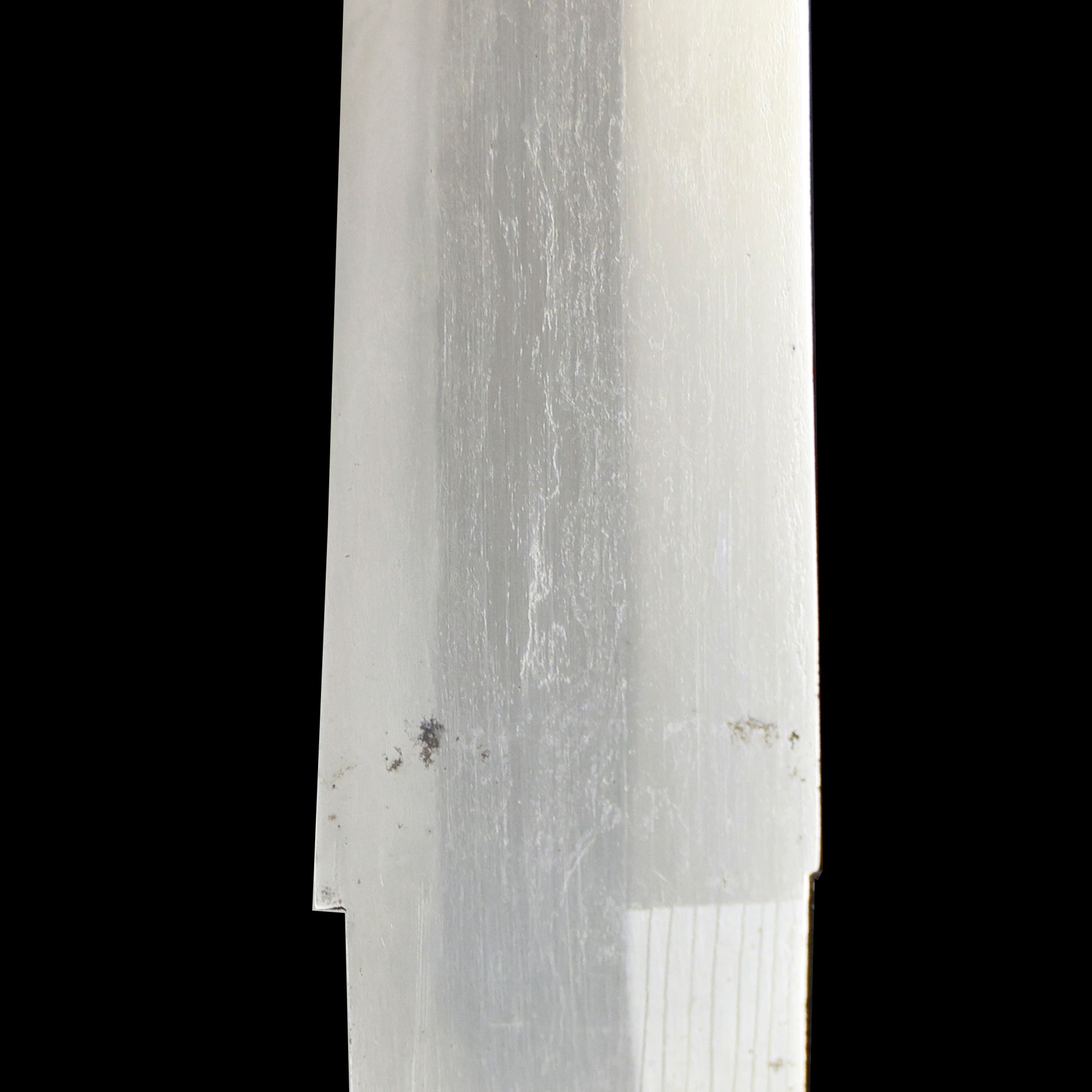
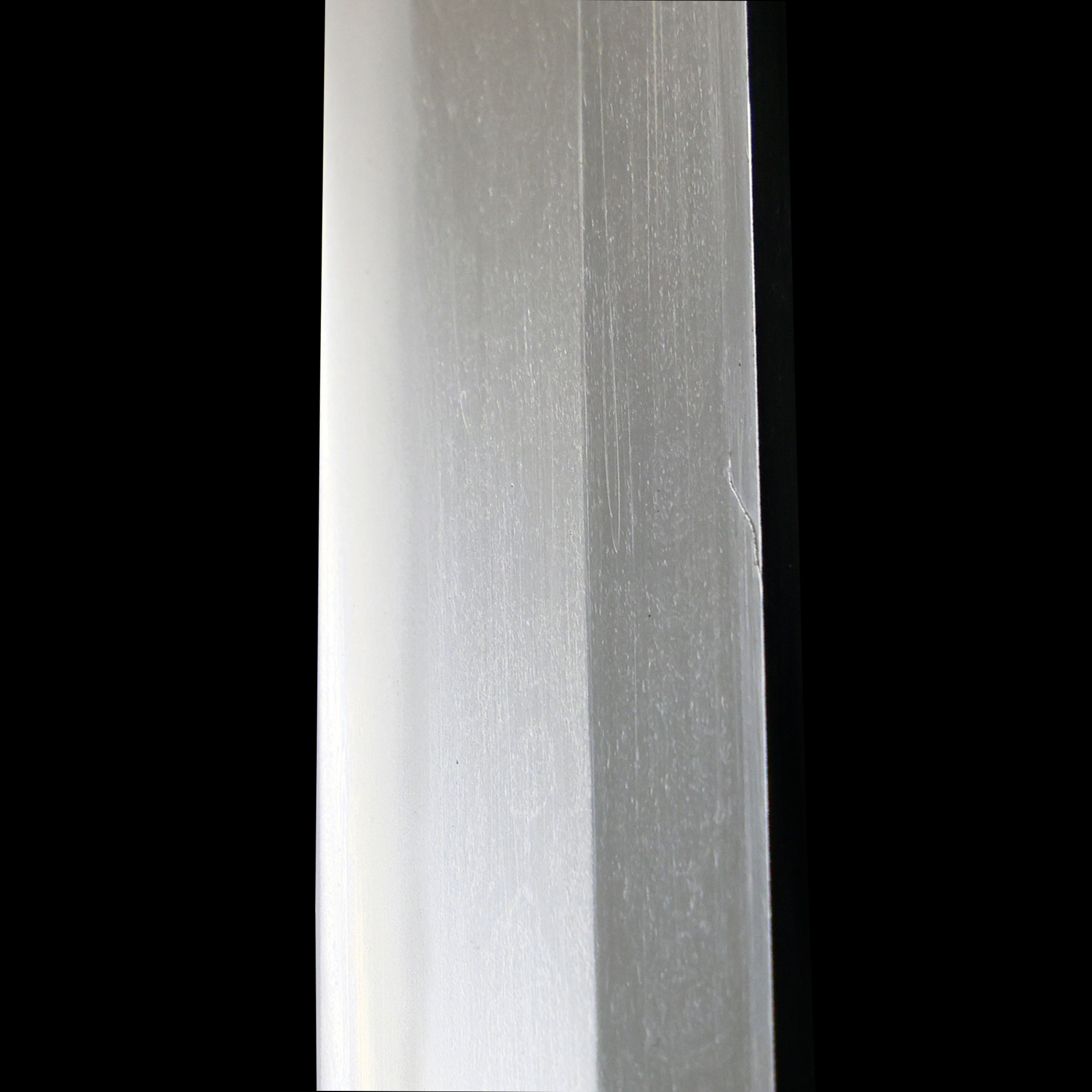
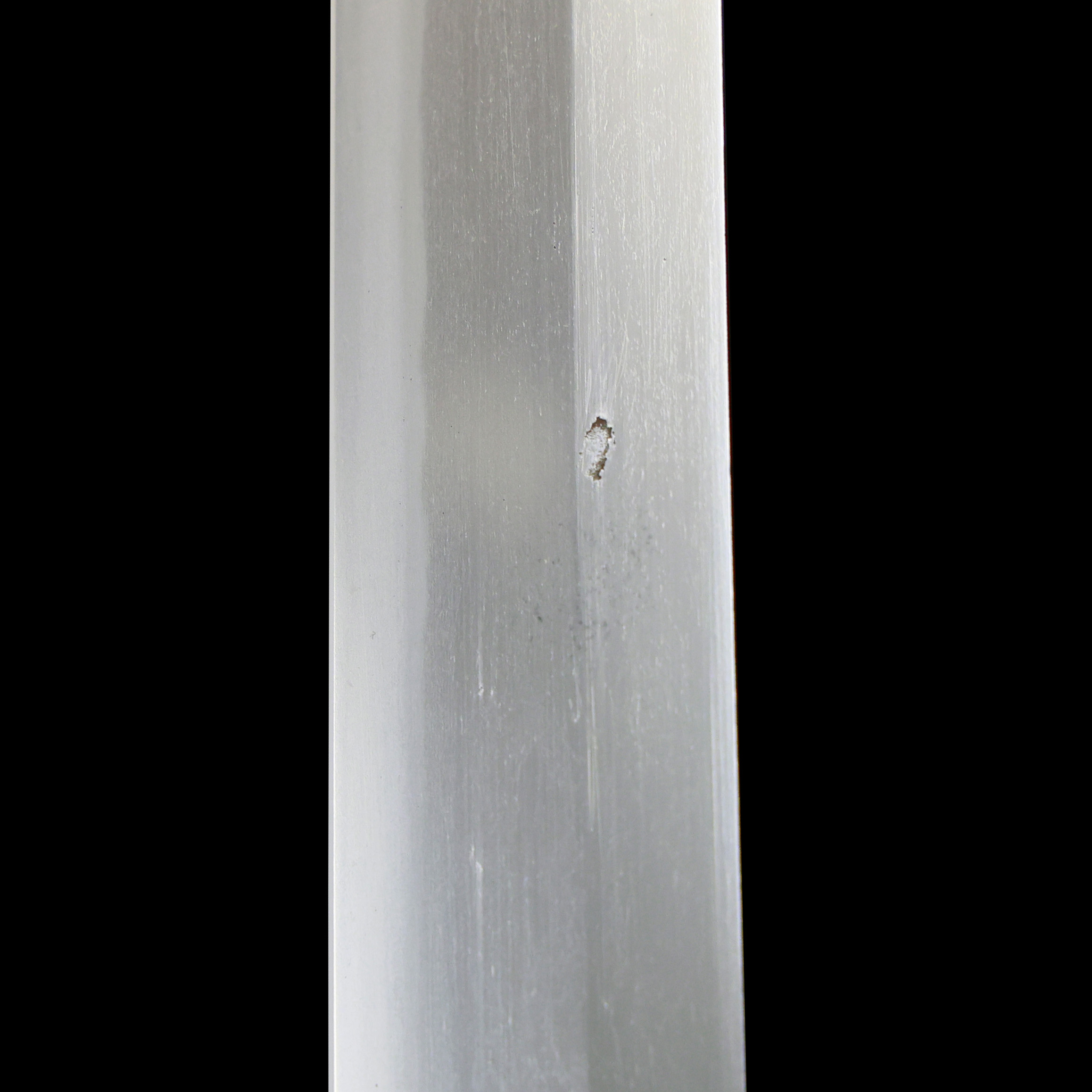
*Please keep in mind that there are a couple of Kitae Kizu on this blade.
Fuchi-Kashira
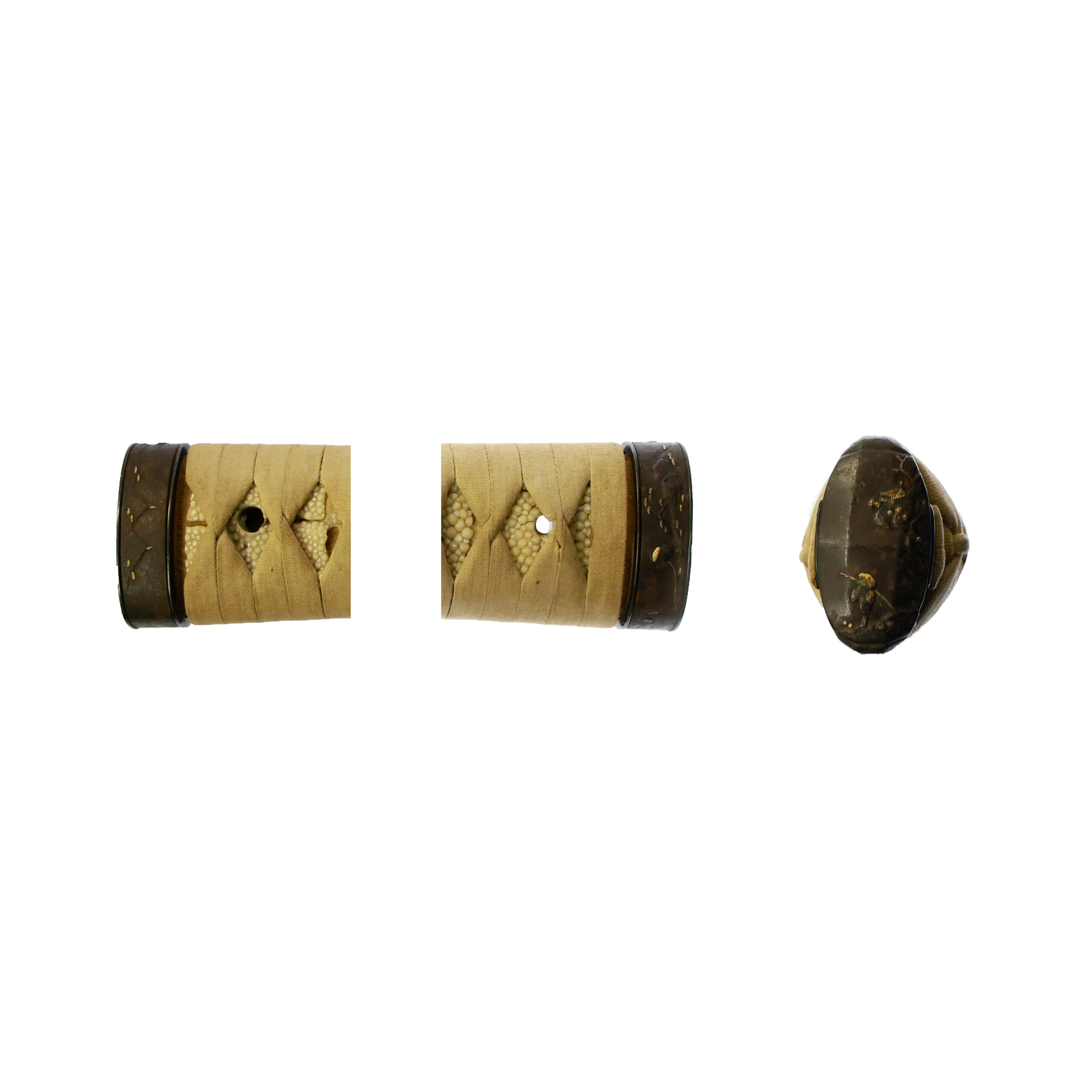
This Fuchi-kashira features a sansui-ga (landscape painting) motif, within which a lone fisherman is depicted. In traditional East Asian landscape art, fishermen frequently appear as symbolic figures admired by scholars and literati. They represent various ideals: freedom from worldly constraints, as inspired by the ancient Chinese poem Fisherman’s Song (漁夫辞, Gyofu-shi); hidden talent or sage-like wisdom, drawing from the legend of Jiang Ziya (太公望, also known as Taigong Wang); and the unique ability to access utopias like the fabled Peach Blossom Spring (桃源郷, Tōgenkyō). These associations reflect the values and aspirations of those who appreciated such artworks.
Tsuka and Menuki
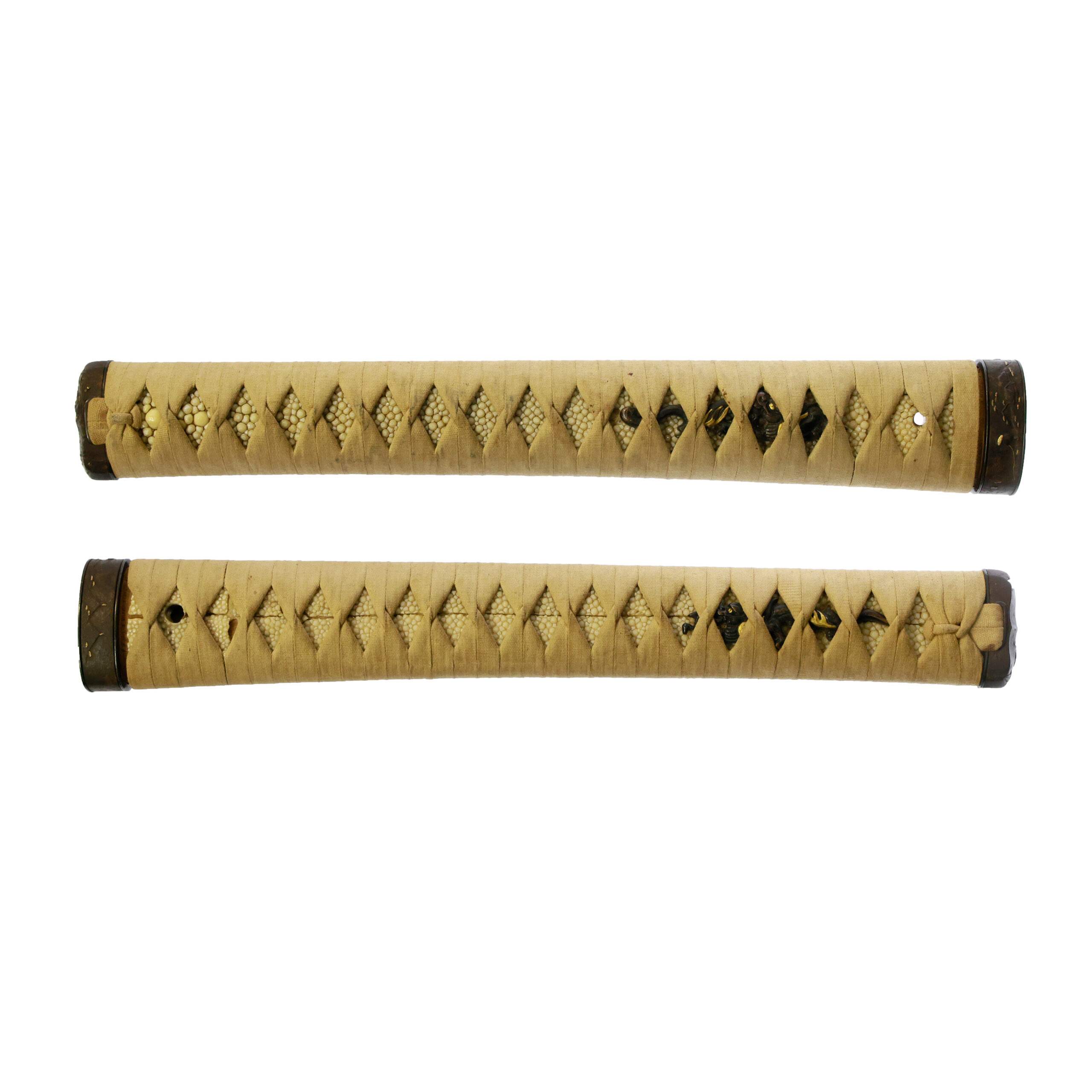
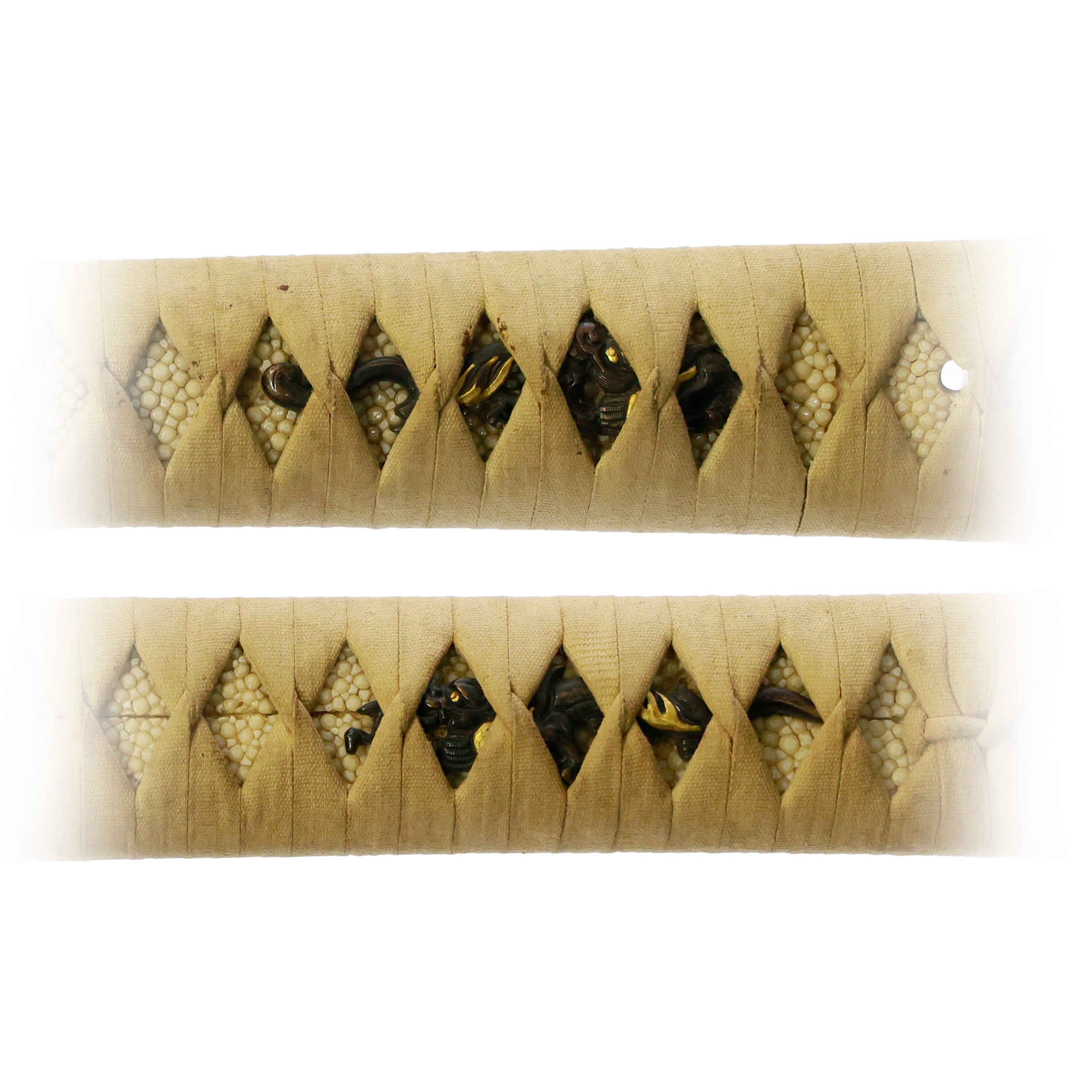
This menuki appears to feature a dragon (龍, ryū) as its motif. Dragons are highly significant mythical creatures in the cultures of East Asia, including Japan and China. In Japan, as in China, dragons are depicted with long, serpentine bodies, horns, whiskers, and scales. They are known as beings that control water and clouds. Unlike the fire-breathing dragons of Western mythology, East Asian dragons are often regarded as water deities, heavenly messengers, or symbols of imperial authority. They are auspicious symbols representing strength, wisdom, and protection.
Tsuba and Habaki
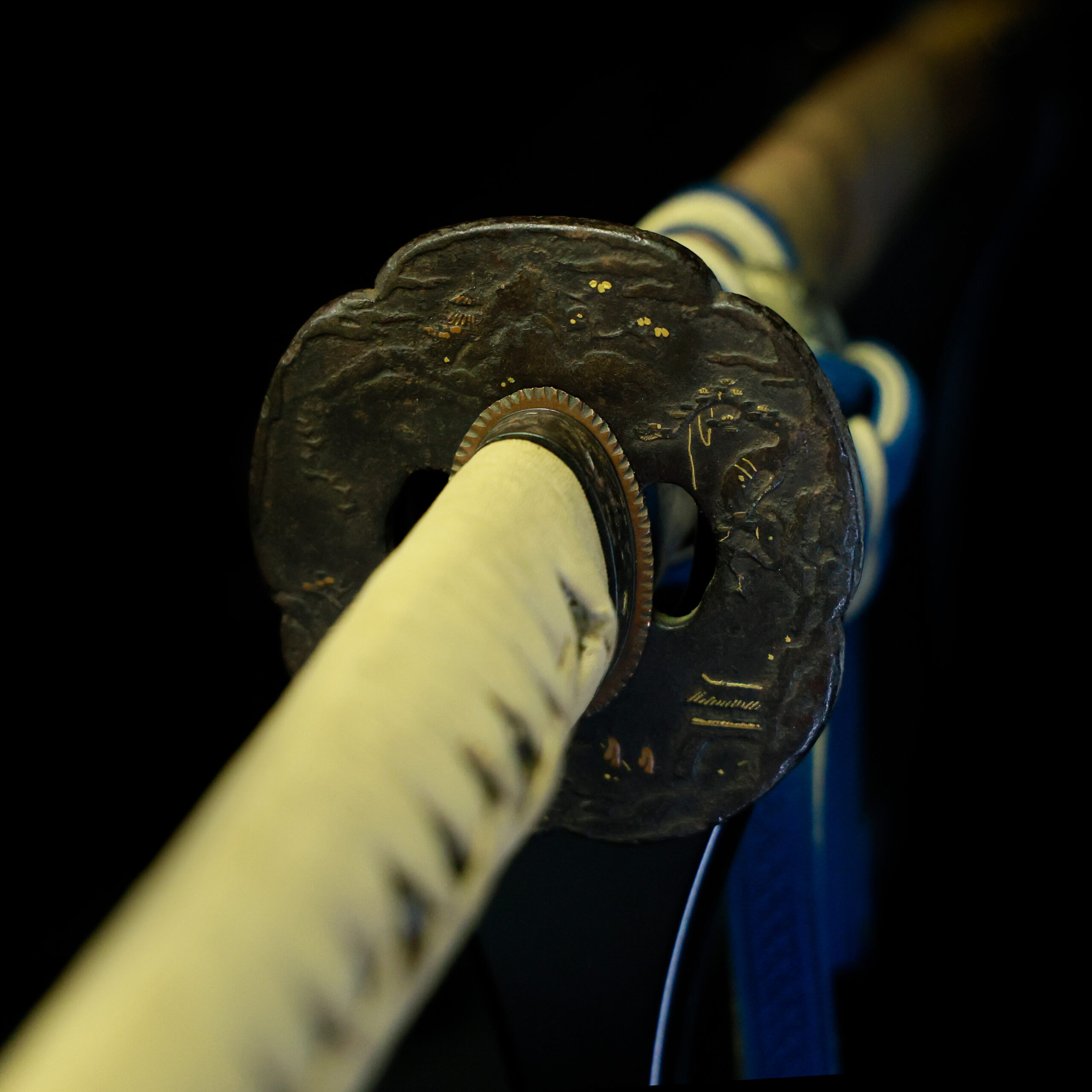
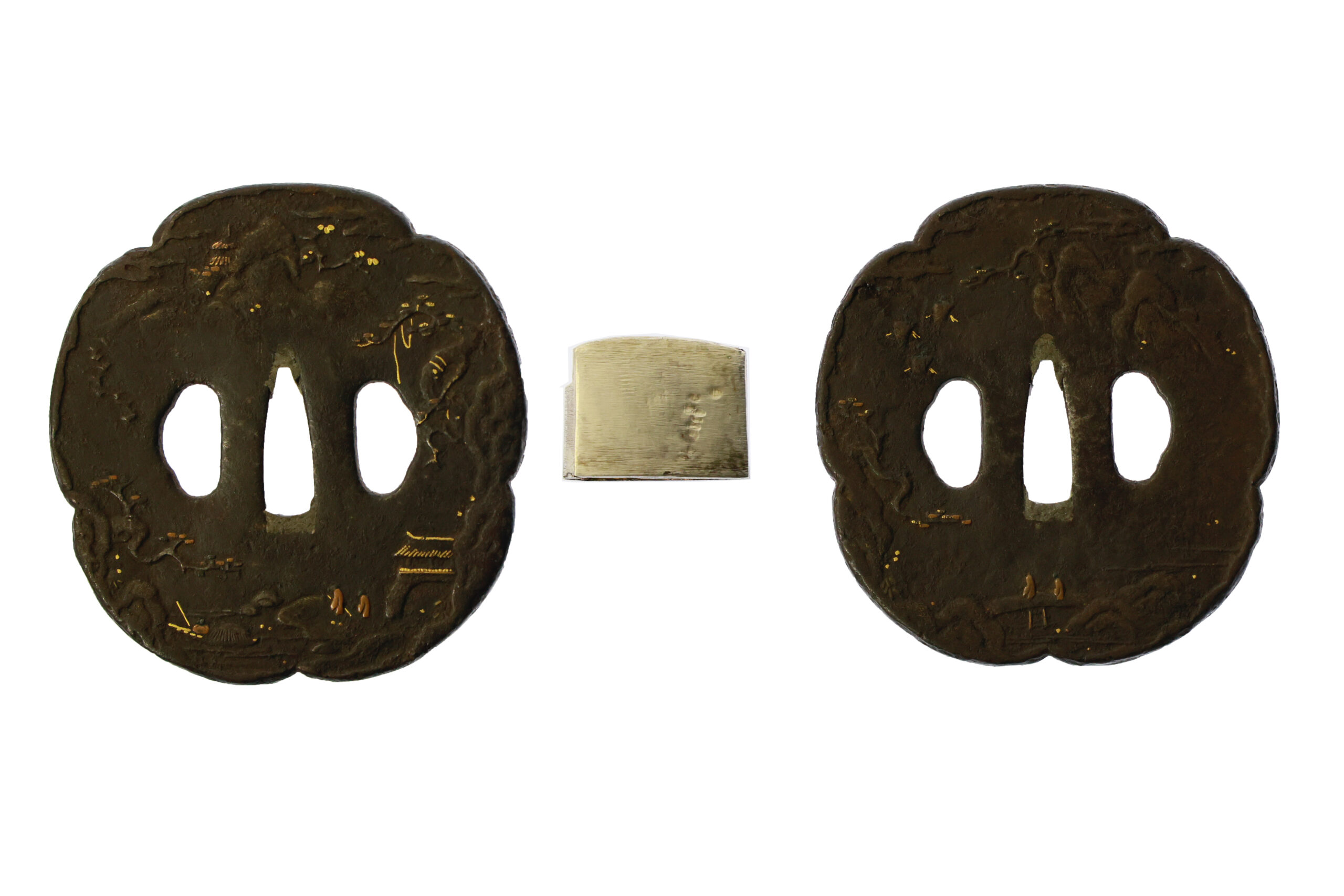
The theme of this Tsuba is “Sansui-ga” (山水画, traditional East Asian landscape painting).
Landscape motifs such as mountains and rivers are commonly found in sword fittings. Many of these scenes are not simple representations of nature, but are depicted as a means of expressing philosophical ideas and personal emotions through nature. Sansui-ga utilizes negative space to create a sense of depth, movement, and harmony. Elements like mountains, rivers, trees, rocks, clouds, and animals are used symbolically to reflect the artist’s inner values, feelings, and worldview.
This artistic tradition originates in ancient China and is deeply tied to a longing for sacred mountains believed to be inhabited by immortals. In Japan, the genre gained popularity during the Muromachi period, influenced by the spread of Zen aesthetics and ink landscape painting (sumi-e), and was eventually incorporated into sword fittings as well.
Saya
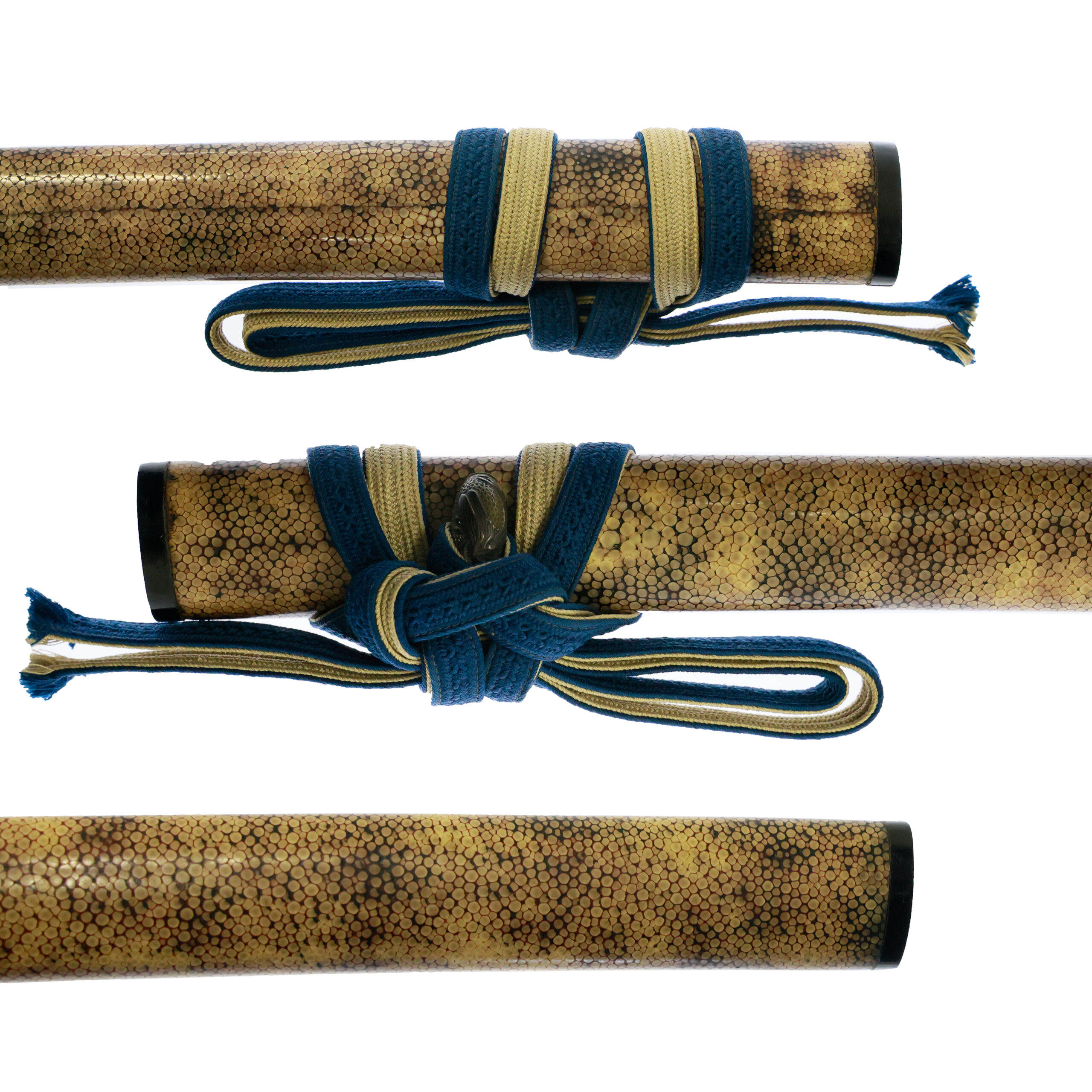
The saya appears to be made in the kairagi samegawa togidashi-zaya style(梅花皮鮫皮研出鞘), which involves wrapping the scabbard with the skin of a kairagi-zame (a type of shark known for its distinctive bumpy texture). After applying lacquer over the sharkskin, the surface is polished to reveal the unique pattern beneath. This technique highlights both the natural texture of the skin and the refined craftsmanship involved.
Authentication Paper
They authenticated the blade on December 4th in the 6th year of Reiwa (2024). They appraised it as Tokubetsu Hozon Touken, the blade especially worth preserving for Japanese society.

 NihontoWatch