Edo was the sword’s age of connoisseurship: the Hon’ami appraisers, the shogunal register of famous blades of 1719, and a thriving literature turned the sword into an object of study even as it ceased to be drawn in war.
 NihontoWatchNihontoWatch
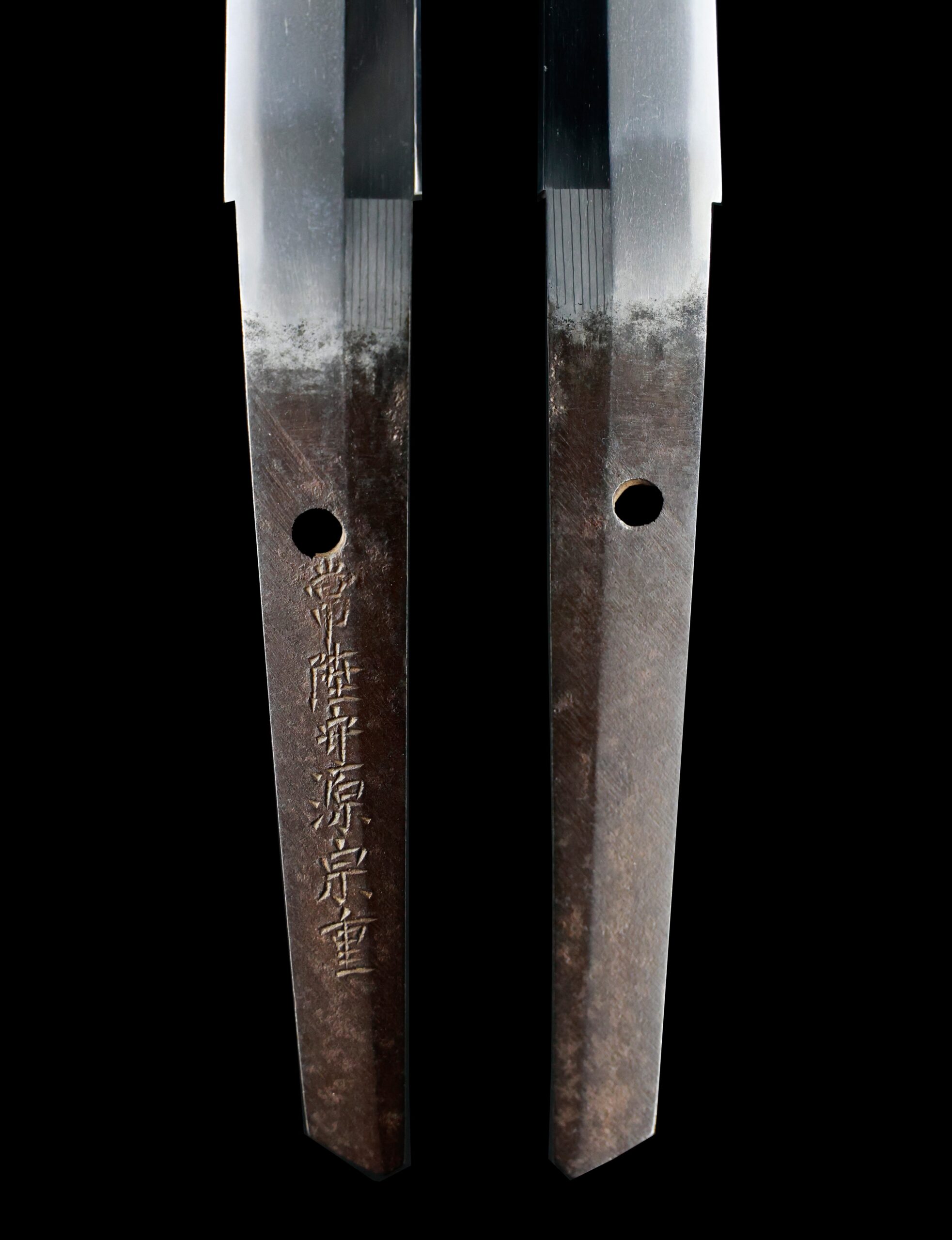
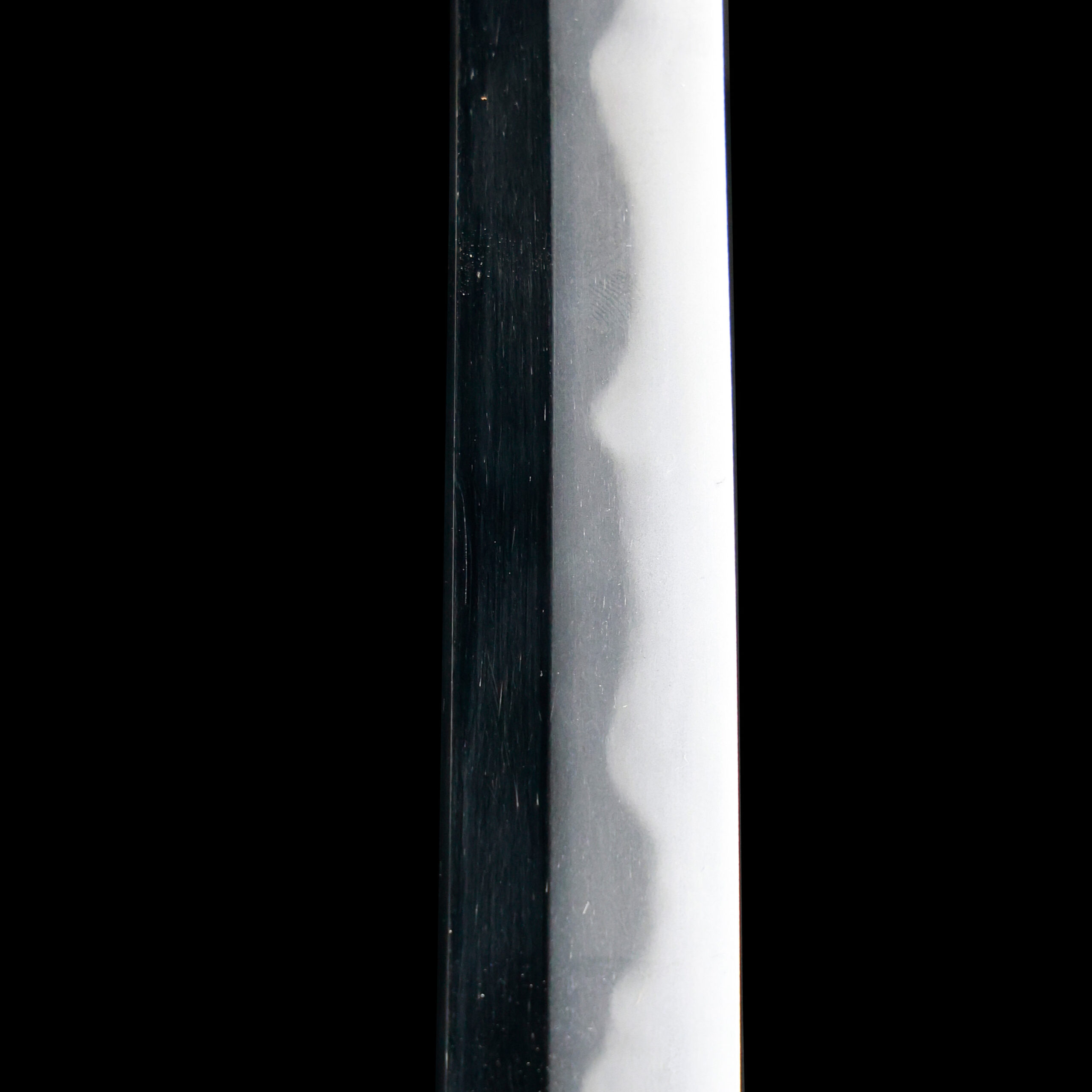
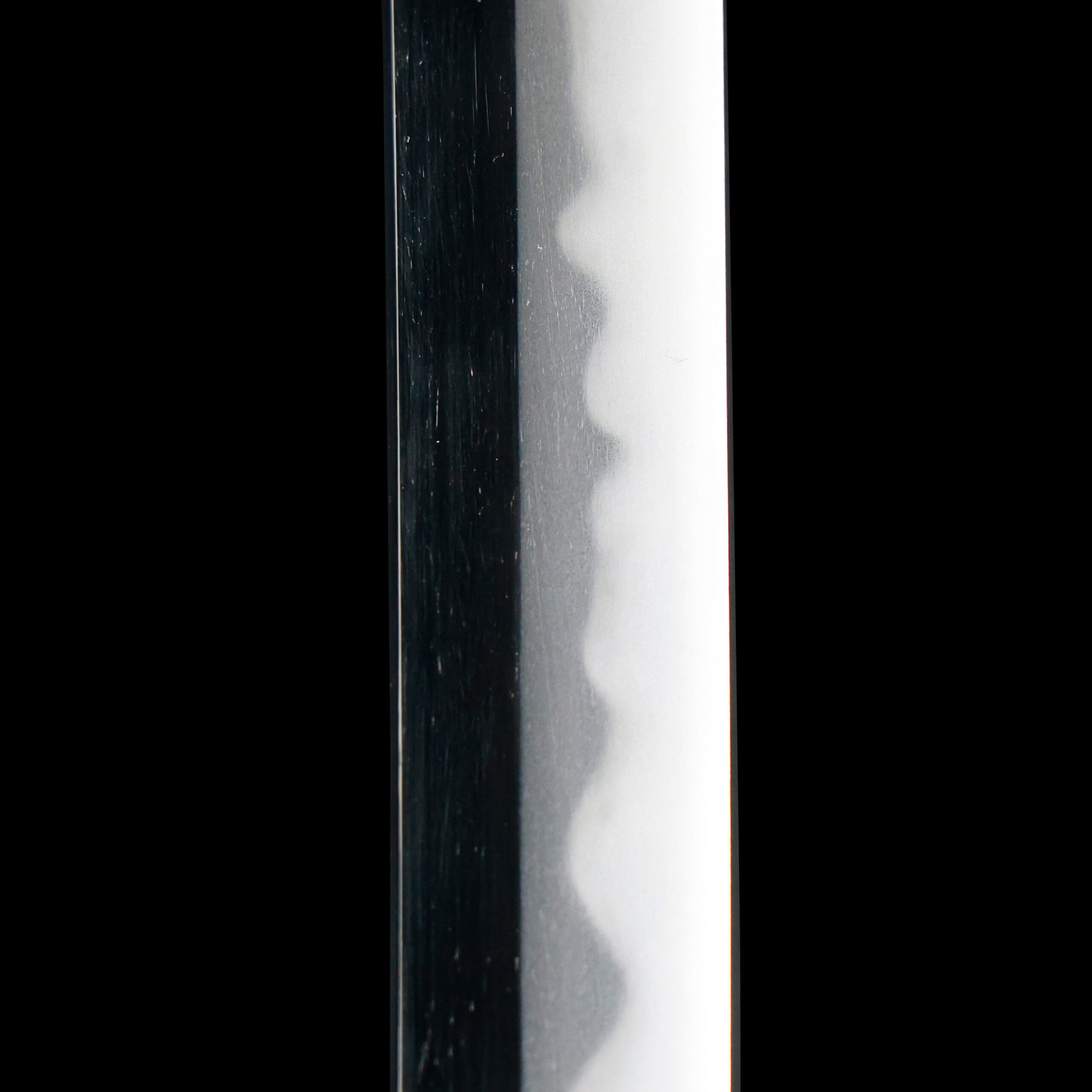
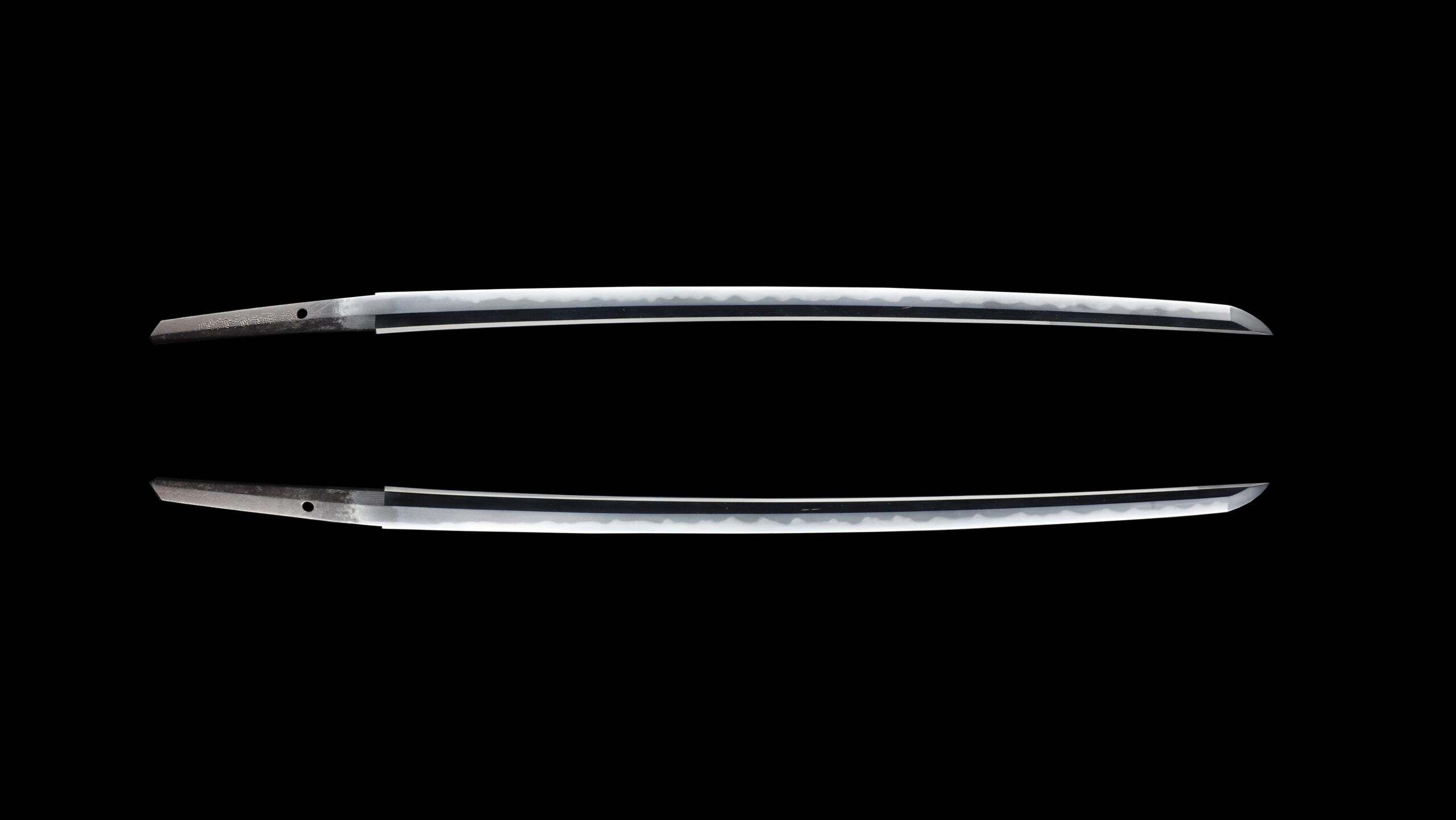
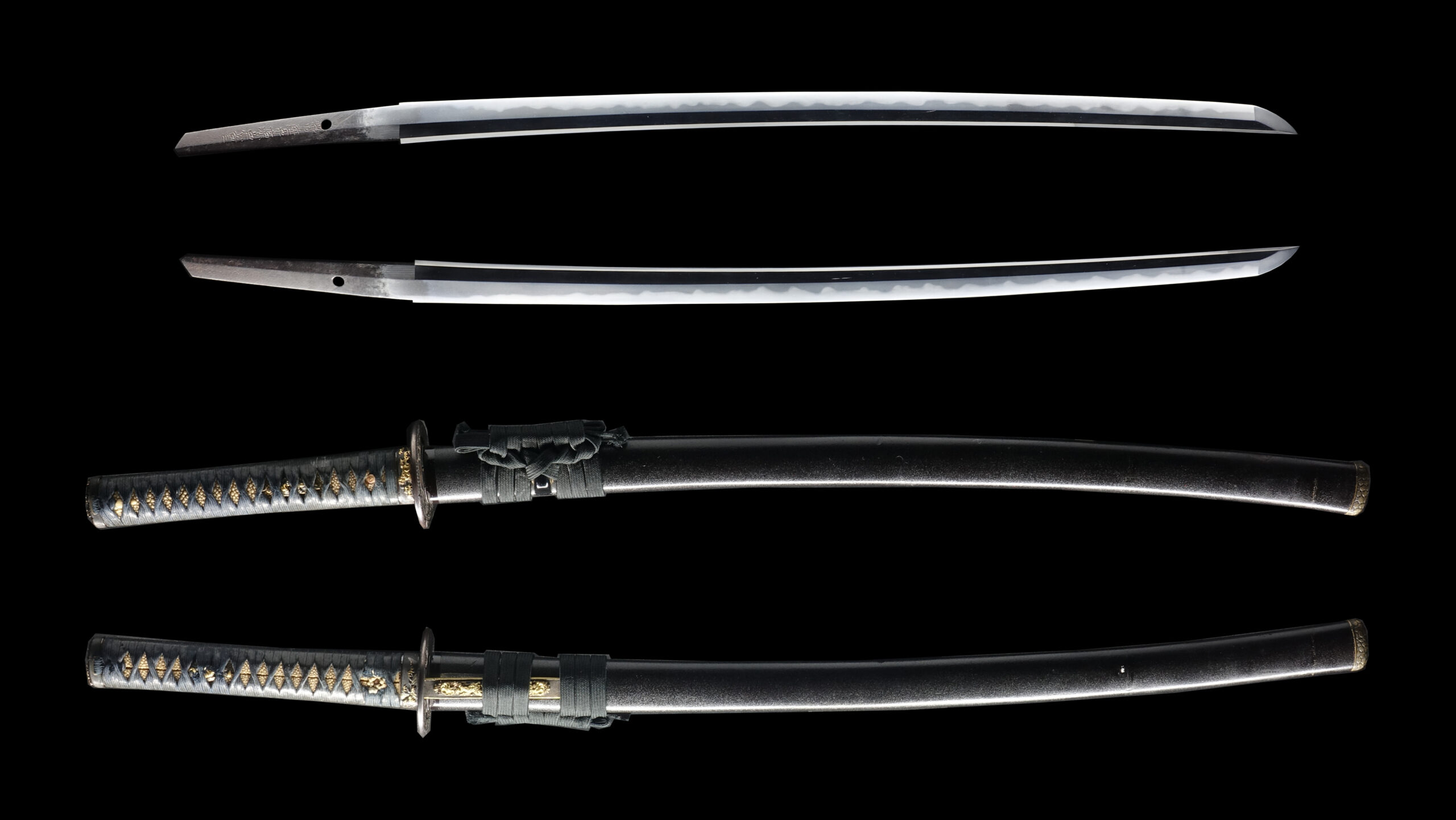
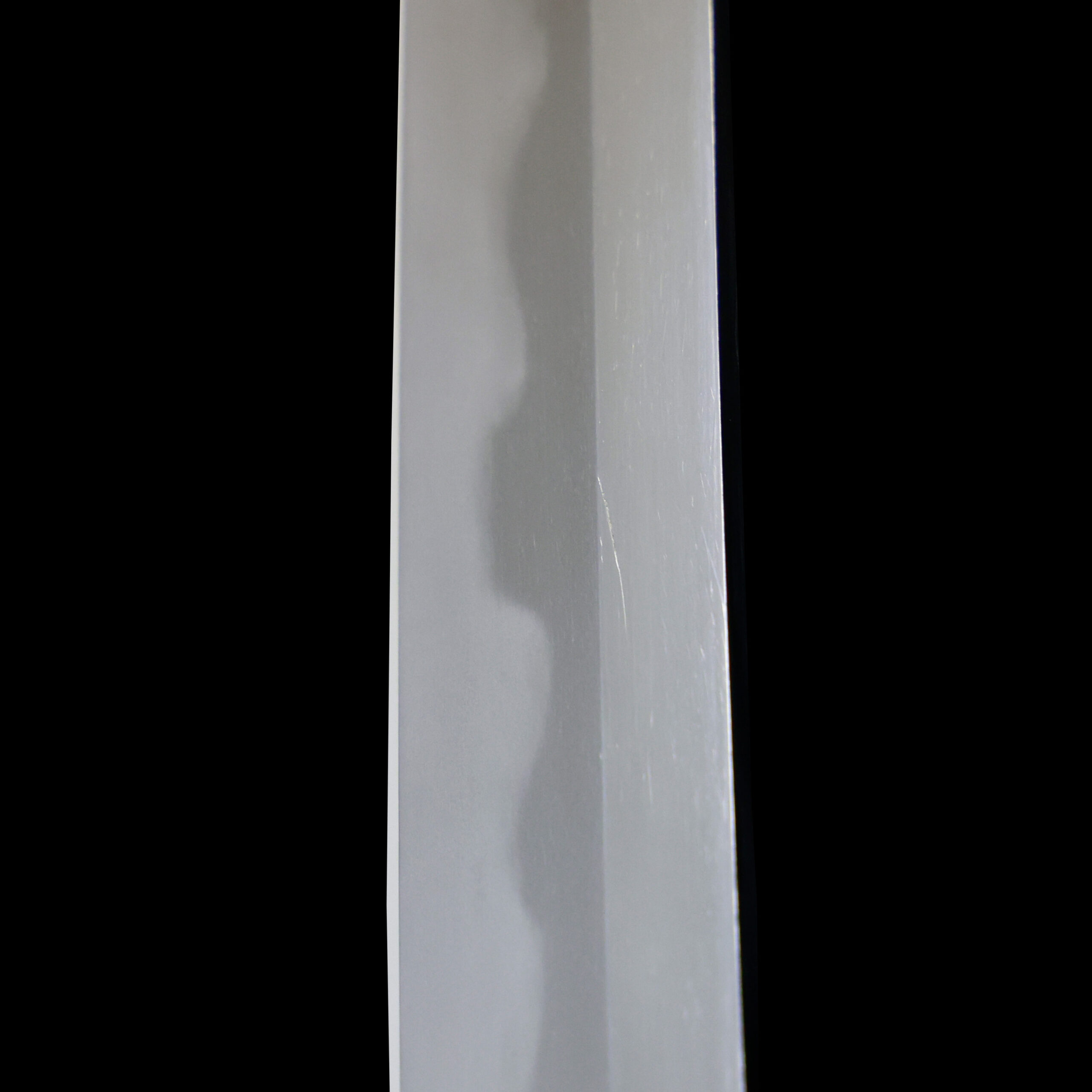
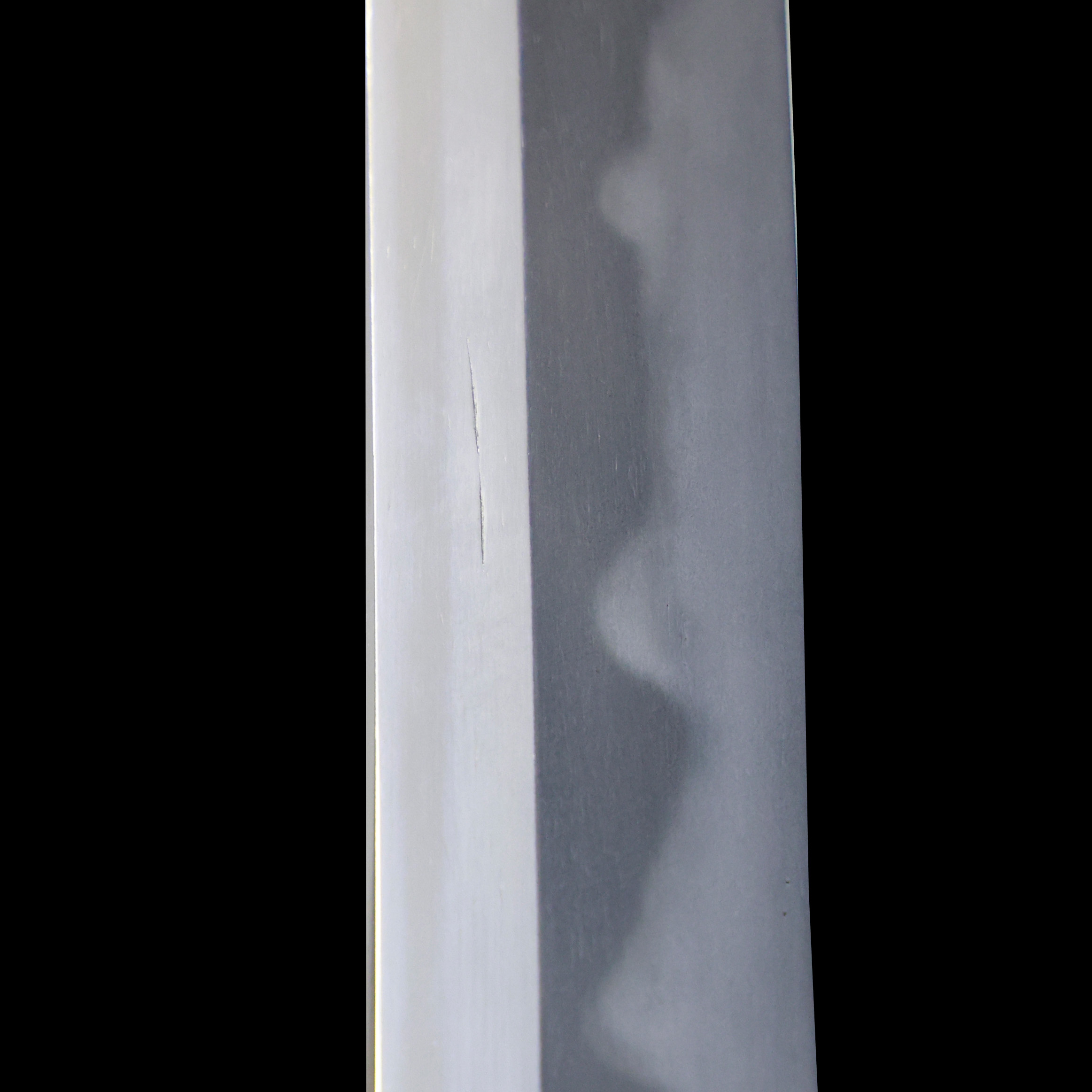
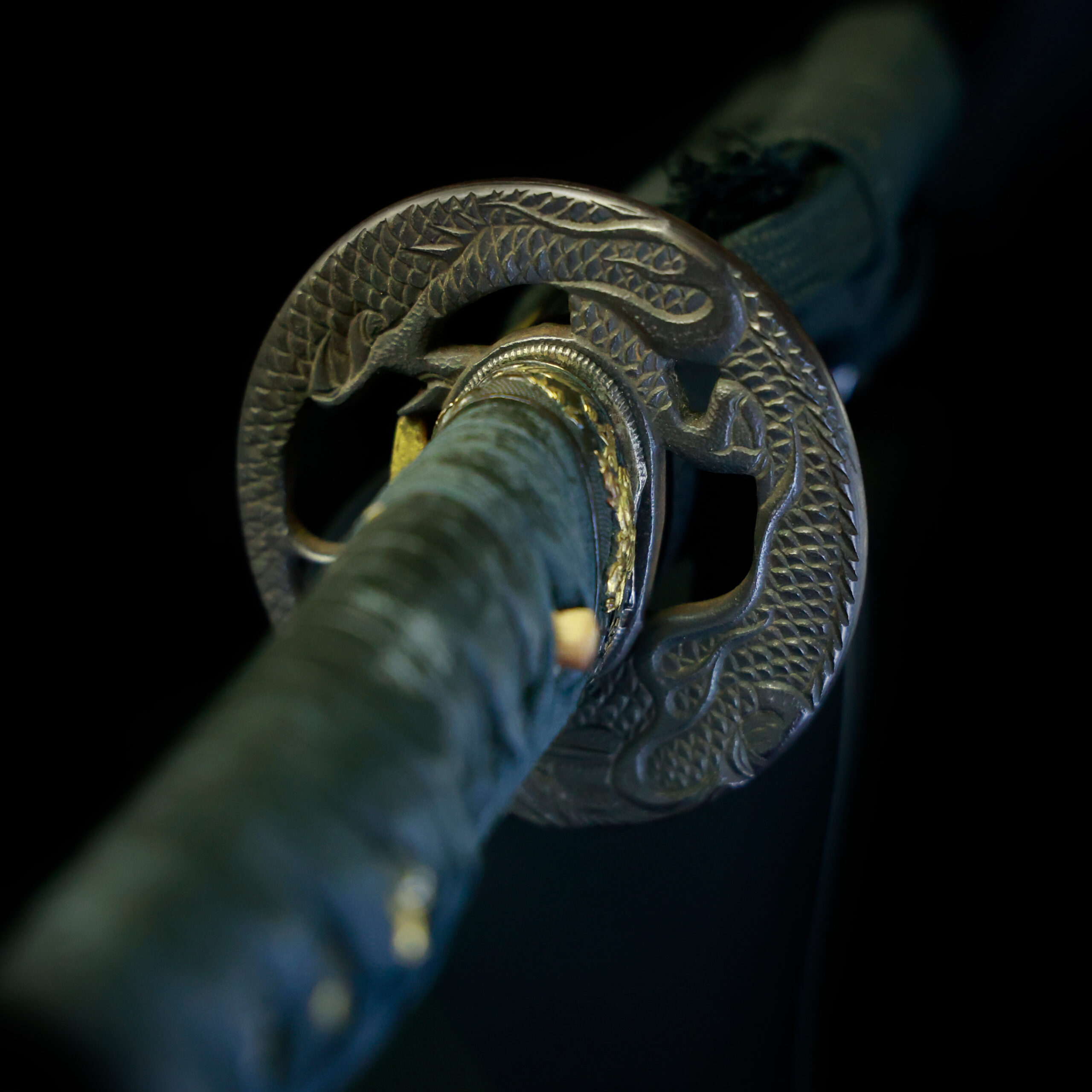
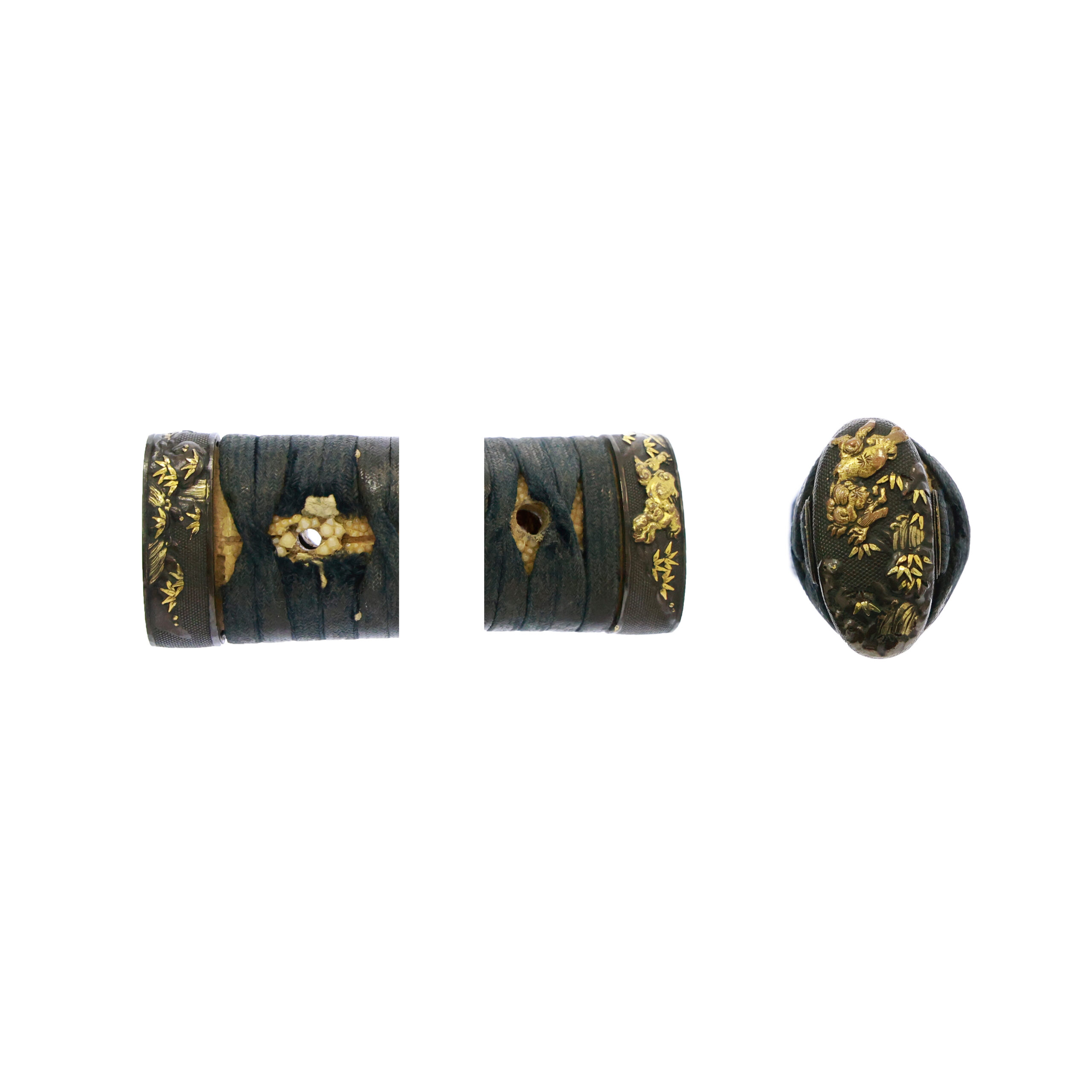
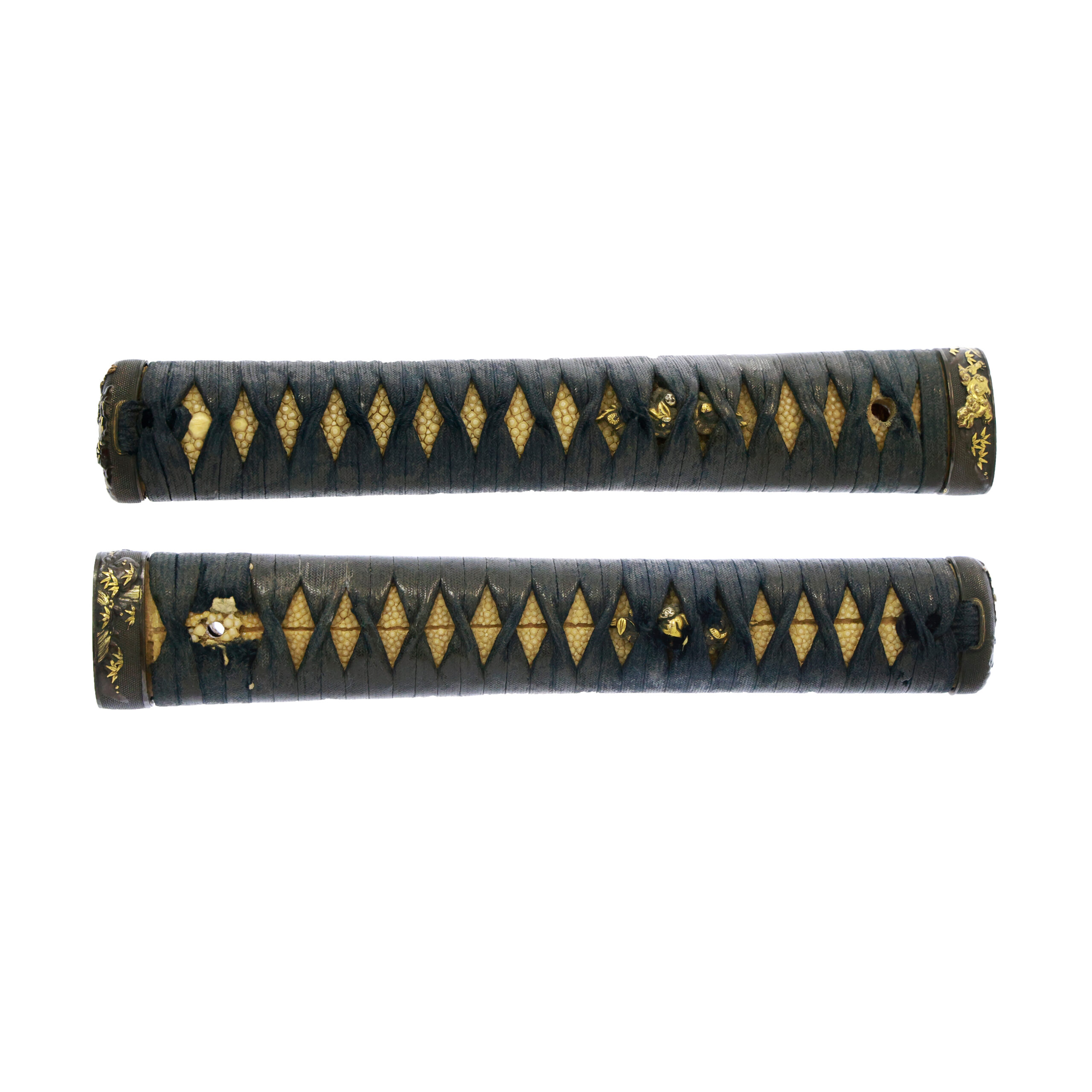
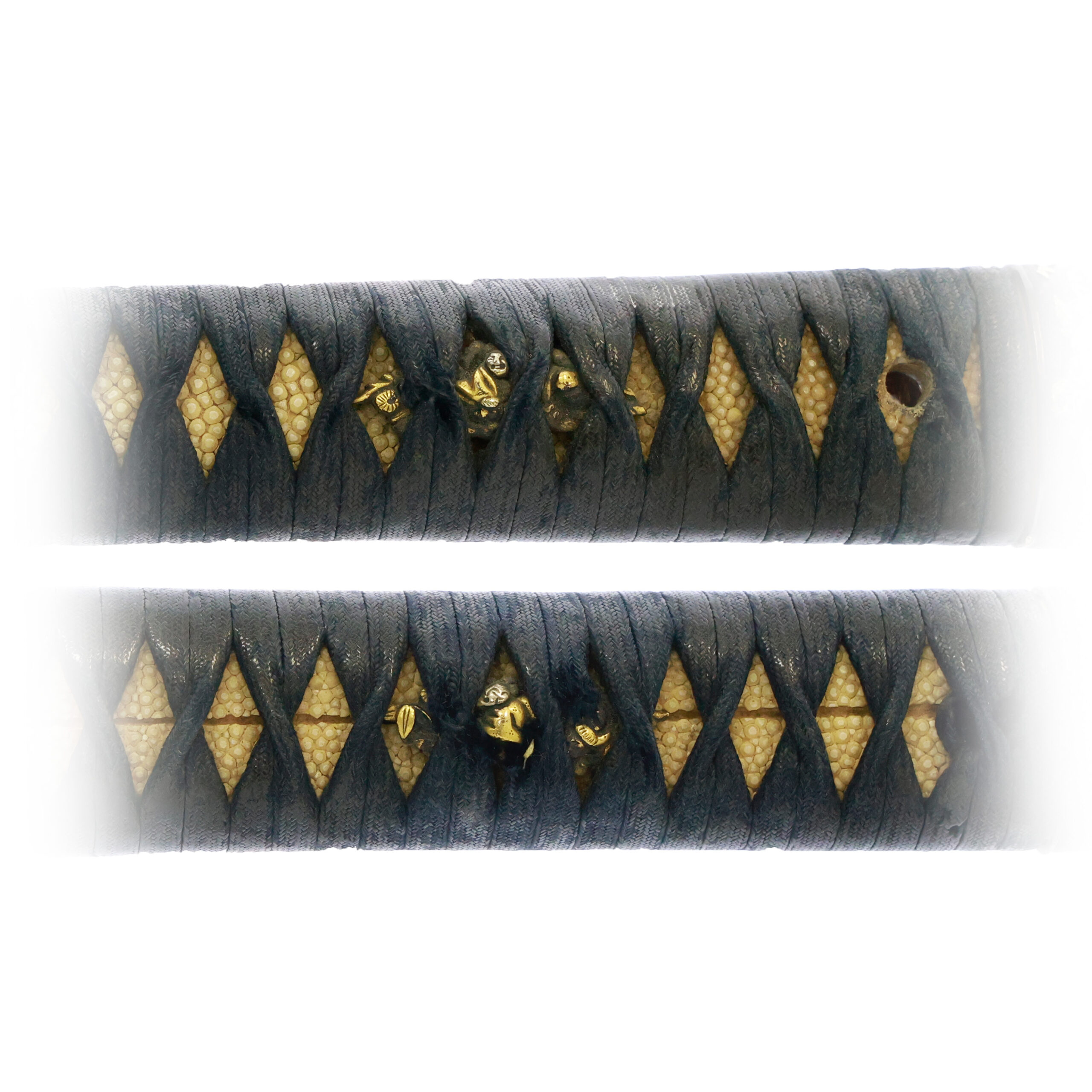
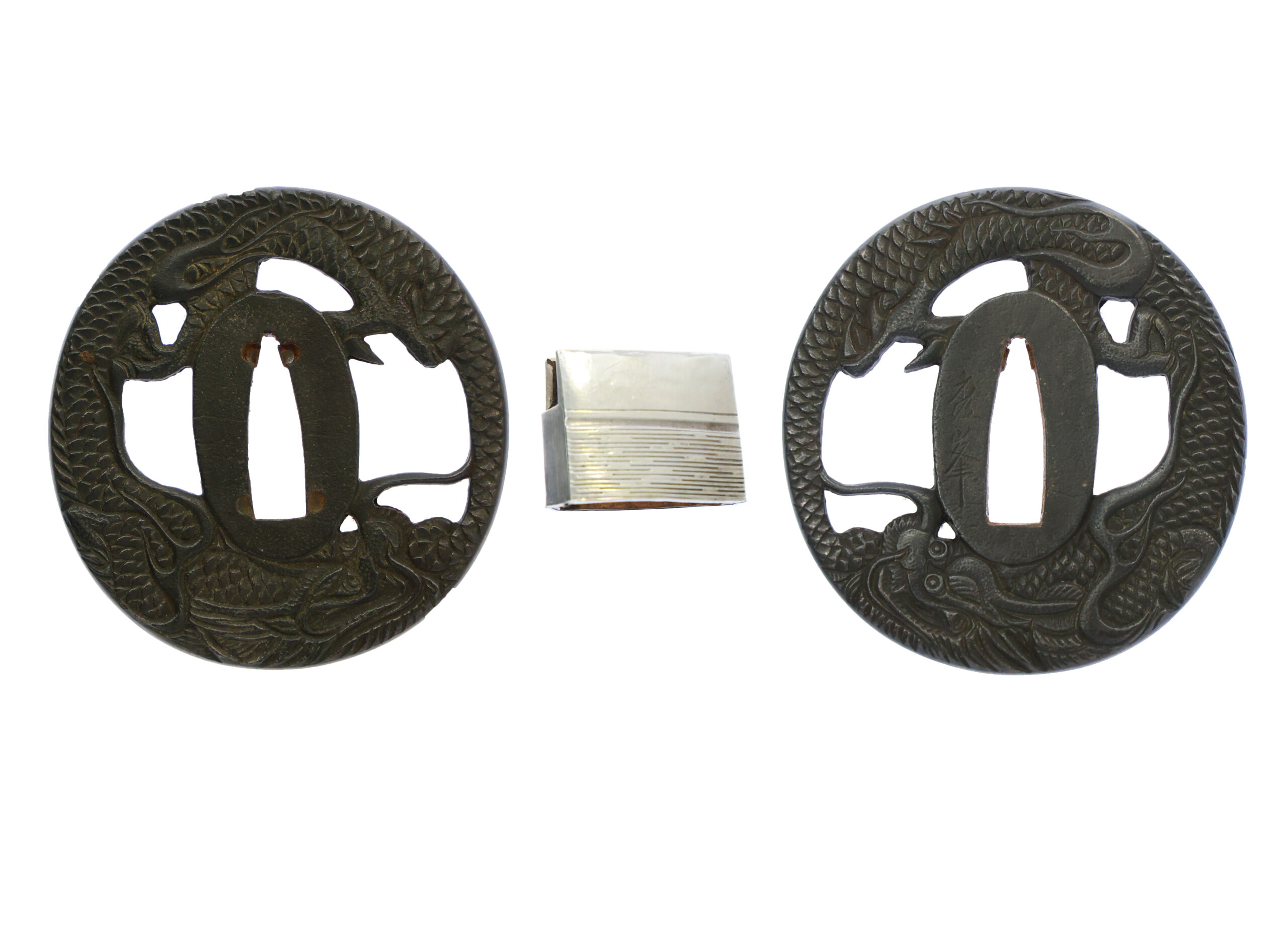
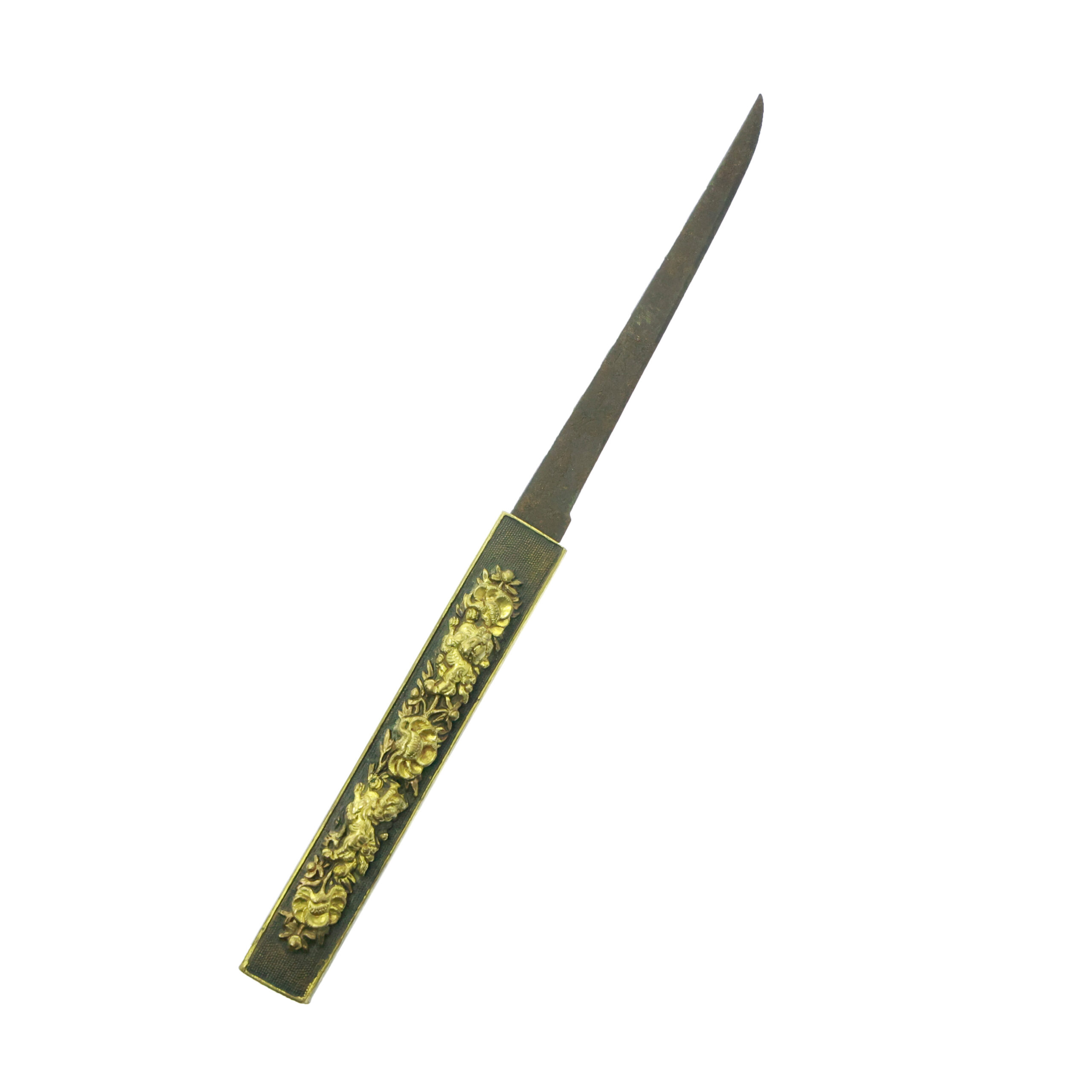
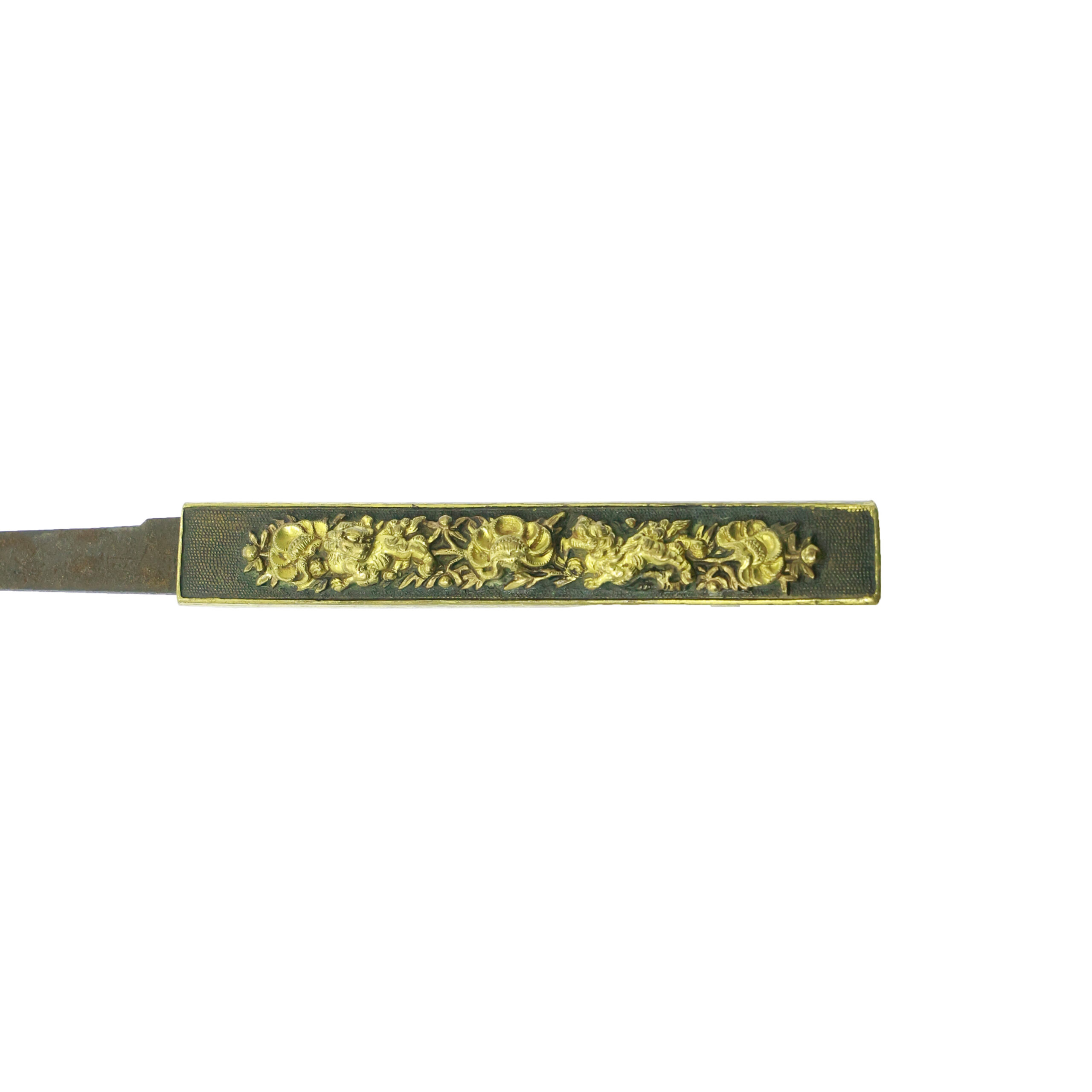
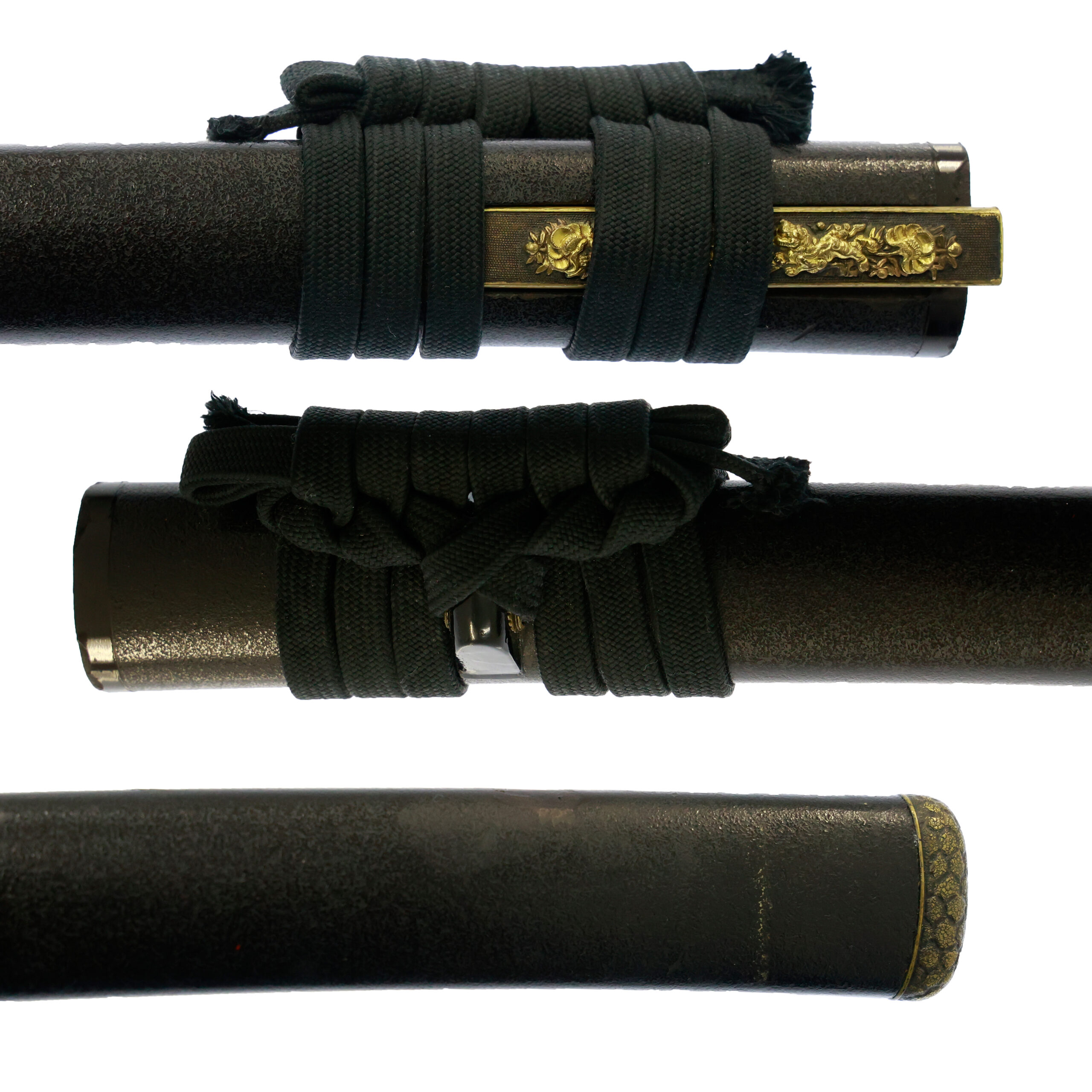
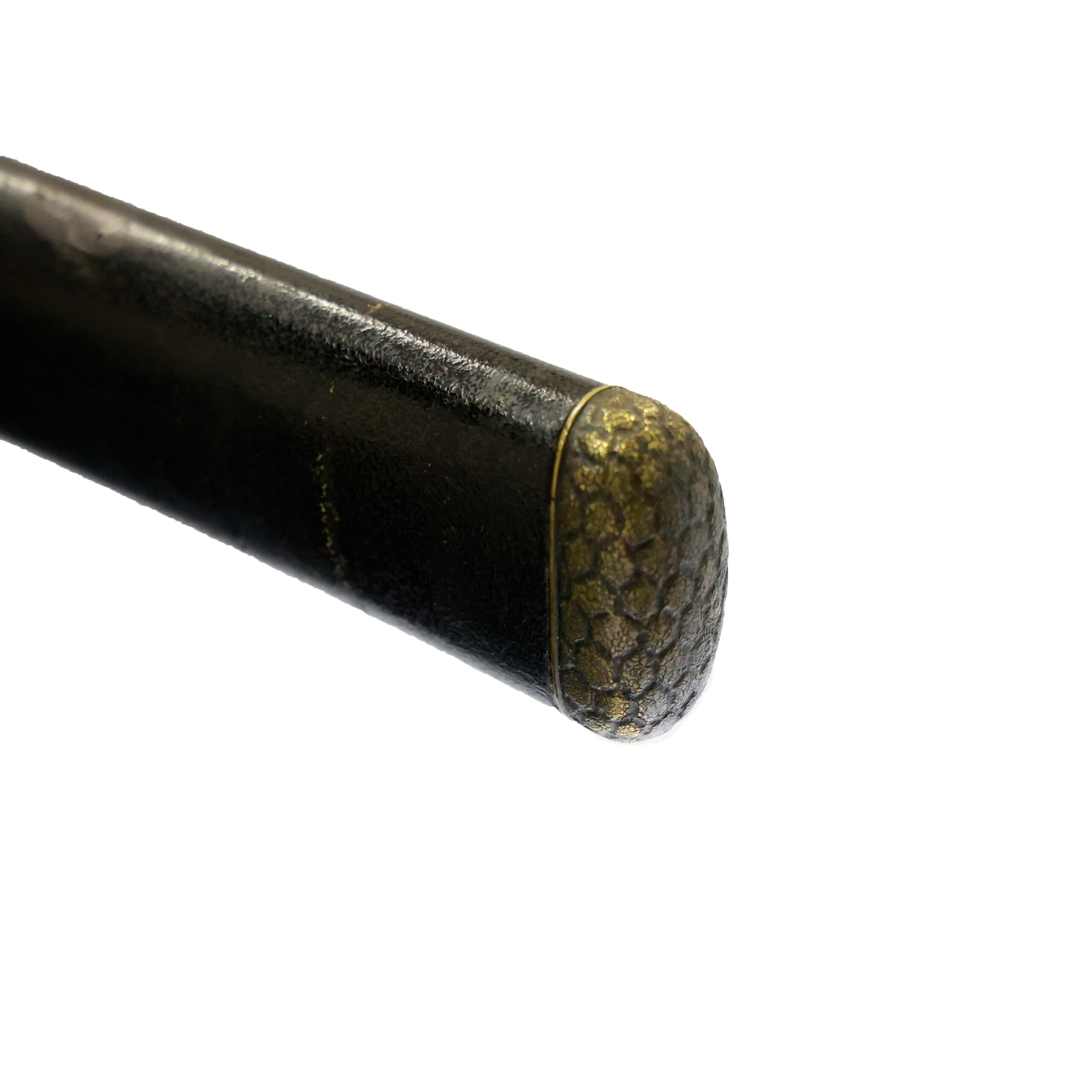
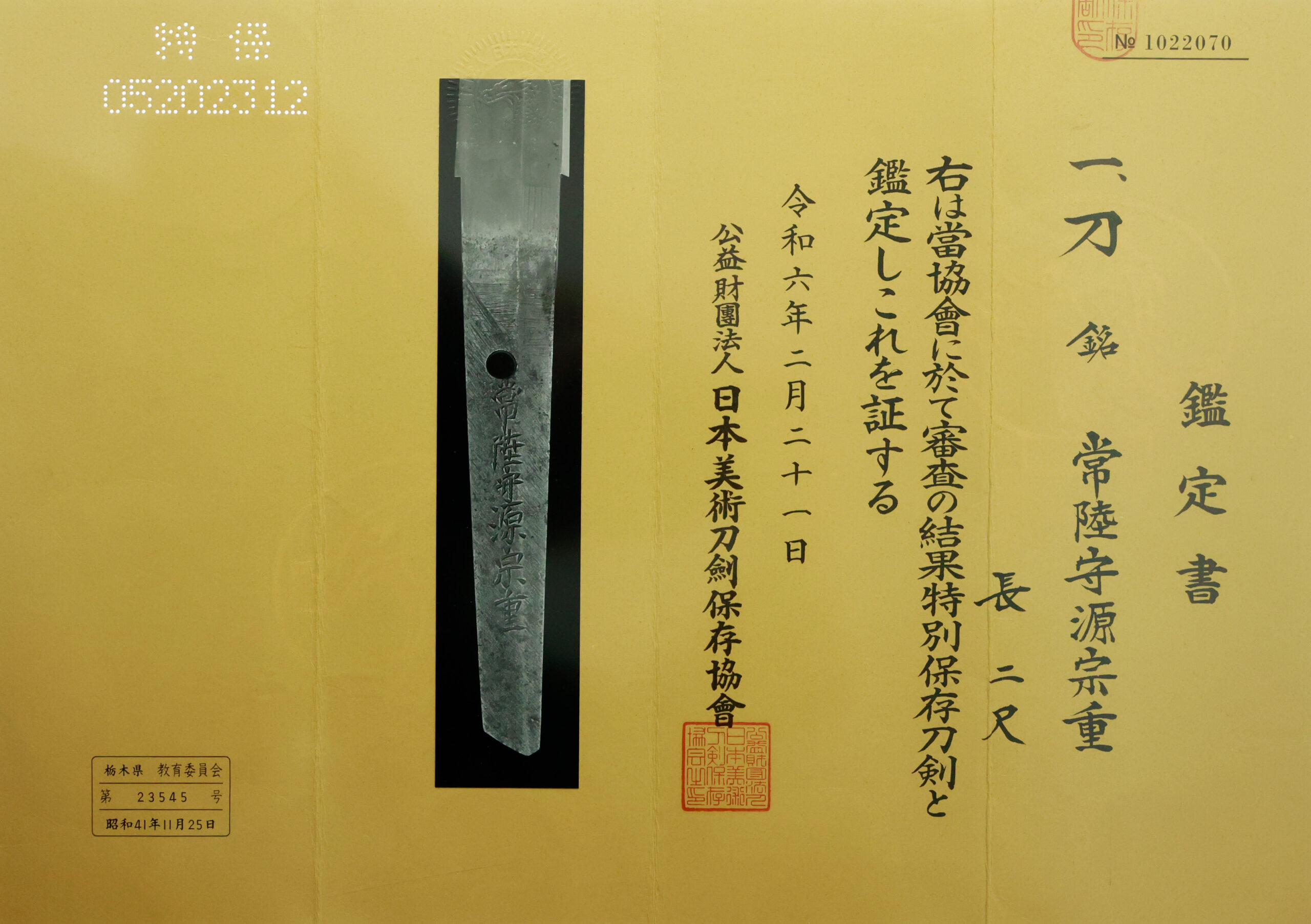
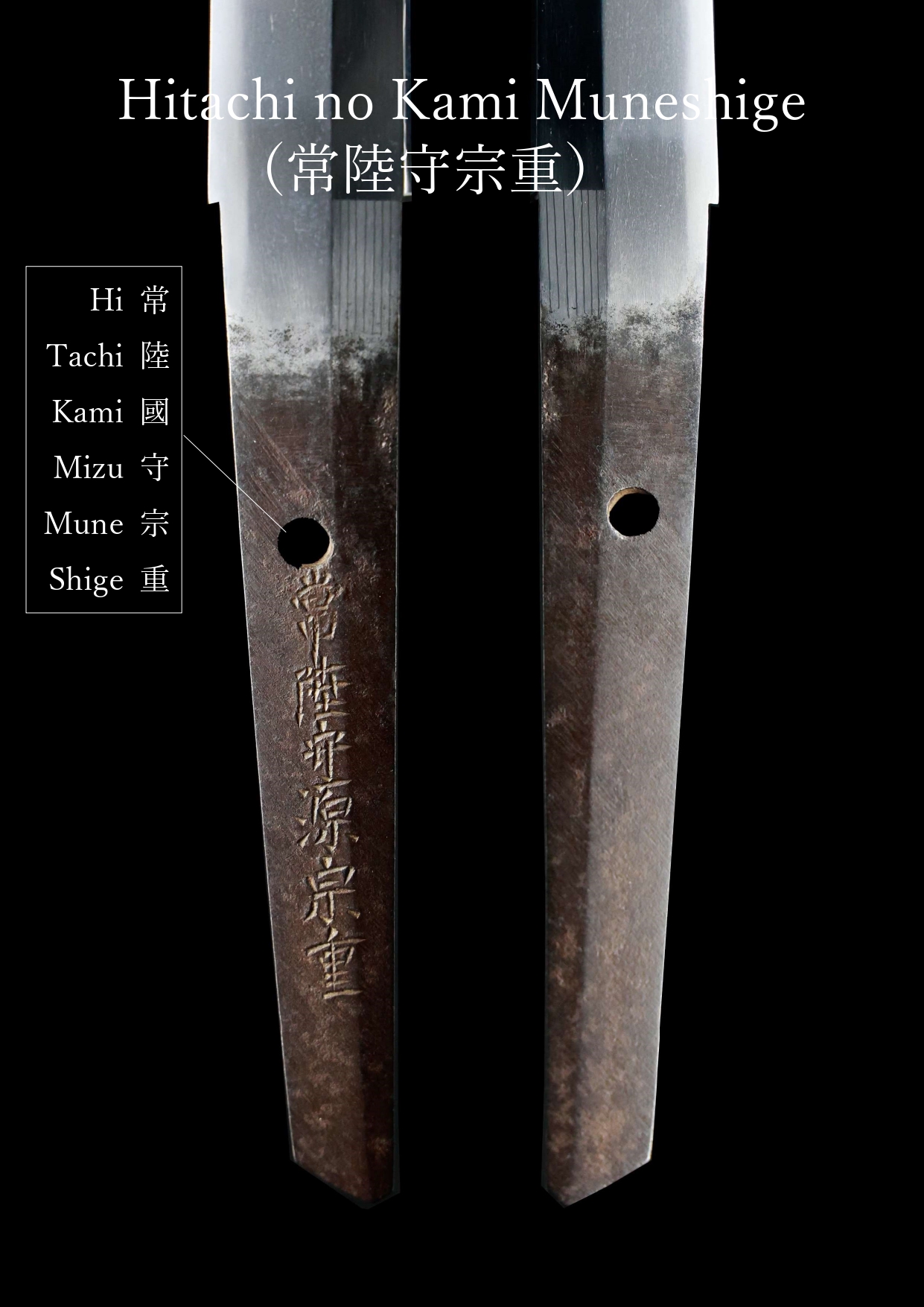
This blade was signed by Hitachi no Kami Muneshige (常陸守宗重) in the early Edo Period(Approx. 350 years old). Muneshige was originally from the Harima area(Hyogo prefecture today). He then moved to Osaka to forge swords during the Kanbun era. (the early Edo period). His master was the first generation Tsuda Sukehiro(津田助広), one of the greatest swordsmiths in the early Edo period in Osaka. The reputation of Sukehiro was closed to Kotetsu, another renowned swordsmith in the Edo period. It is said that Muneshige’s sword-forging technique was so great that he forged some swords on behalf of his master Sukehiro. Muneshige received the title of Hitachi no Kami. The imperial court only gave the title of kami(守) to the swordsmiths who did excellent work. It was honorable for any swordsmiths to receive such a title and only extremely skilled swordsmiths deserved this title. The blades forged by Muneshige are categorized as Osaka Shinto. Shinto is Japanese Sword generic term that refers to the swords forged during 1596-1781. The blades made in Osaka area during this period are called Osaka Shinto. There are many famous swordsmiths in this Osaka Shinto era. After Hideyoshi Toyotomi built Osaka castle, Osaka city flourished as a castle town and became the business center. Many swordsmiths moved to Osaka to look for better opportunities. They not only forged swords for those Samurai who lived in Osaka but also for feudal lords nationwide. Ikanshi Tadatsuna(Awataguchi Omi no Kami Tadatsuna), Inoue Shinkai, and Tsuda Sukehiro are the most famous ones among those many swordsmiths. It is appraised as a Tokubetsu Hozon Token (特別保存刀剣) issued by NBTHK (Nihon Bijutsu Touken Hozon Kyokai:日本美術刀剣保存協会). *Please keep in mind that there is one small Kizu on the Shinogiji part (we uploaded the part in one of the photos). If you like to see more detailed conditions, please feel free to contact us. Fuchi-Kashira The motif of the Fuchi-Kashira is “Bamboo with Tigers” (竹に虎: Take ni Tora), a traditional Japanese design symbolizing strength and resilience. Bamboo represents flexibility and endurance, while the tiger embodies power and courage. Additionally, the Fuchi-Kashira features a Nanako (魚々子) texture, a decorative technique of tiny, bead-like dots often used in Japanese metalwork to create a refined and elegant surface. Tsuba and Habaki The theme of the Tsuba is the dragon (Ryū, 龍)—a powerful and revered creature in Japanese culture. In Japan, the dragon and the tiger are often depicted together as symbolic opposites, representing balance and harmony. The dragon symbolizes wisdom, protection, and divine power, often associated with water and the heavens. In contrast, the tiger represents strength, courage, and earthly forces. Their dynamic interaction in Japanese art reflects the balance between heavenly and earthly energies, wisdom and power. Kozuka The Kozuka (小柄), a small utility knife attached to the Katana, is decorated with the motif “Peonies with Chinese Lions” (Botan ni Karajishi, 牡丹に唐獅子). This design comes from a well-known Japanese proverb: “Peonies with Chinese Lions, Bamboo with Tigers” (牡丹に唐獅子、竹に虎), which describes harmonious and visually striking pairings. The Fuchi-Kashira features the latter motif, “Bamboo with Tigers,” while this Kozuka showcases the former, “Peonies with Chinese Lions.” In Japanese culture, the lion (Karajishi, 唐獅子) is considered the king of beasts, strong and invincible. However, it has one weakness—a tiny parasitic insect known as “Shishi-shinchū no mushi” (獅子身中の虫). This insect lives in the lion’s fur, eventually burrowing into its skin, consuming its flesh, and potentially leading to its demise. According to legend, the only cure for this parasite is the dew that forms on peony flowers at night. Because of this, lions are said to stay close to peonies, relying on them for survival. Thus, the phrase “Shishi ni Botan” (獅子に牡丹, Lions and Peonies) is not just a metaphor for an aesthetically pleasing combination but also a symbol of essential balance—power paired with its necessary support. This deep meaning is reflected in traditional Japanese art and craftsmanship, making the motif popular in samurai sword fittings, paintings, and other cultural expressions. Saya The surface of this Saya is decorated with the Ishime-Ji (石目地) or Ishime-Nuri (石目塗). Its base was hit by Tagane (鏨, chisel for metalworking), and it makes a rough surface that seems stone. Authentication Paper They authenticated the blade on February 21st in the 6th year of Reiwa (2023). They appraised it as Tokubetsu Hozon Touken, the blade especially worth preserving for Japanese society.
Offered by Samurai Museum
This piece has sold
Get an email when a new Muneshige piece hits the market.

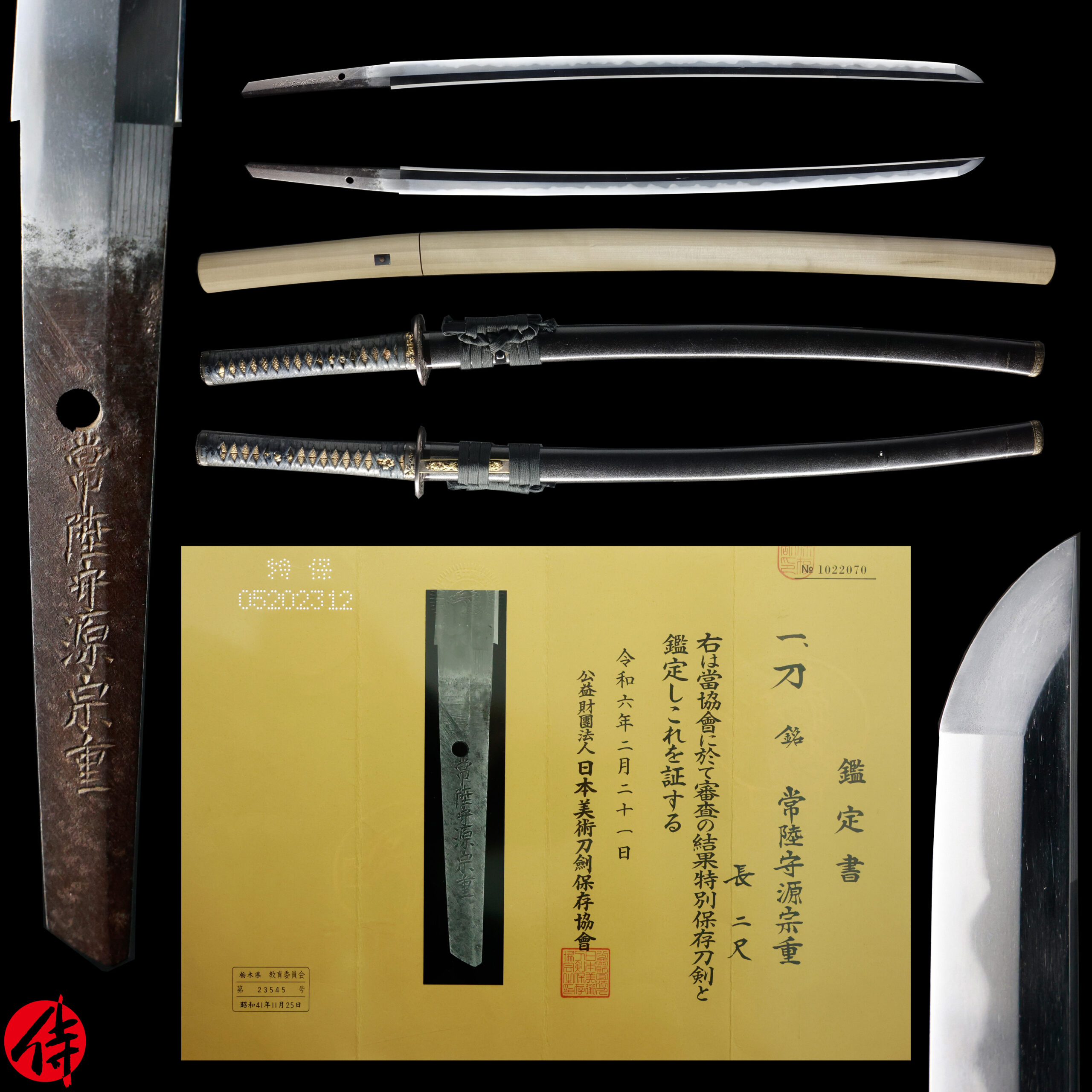
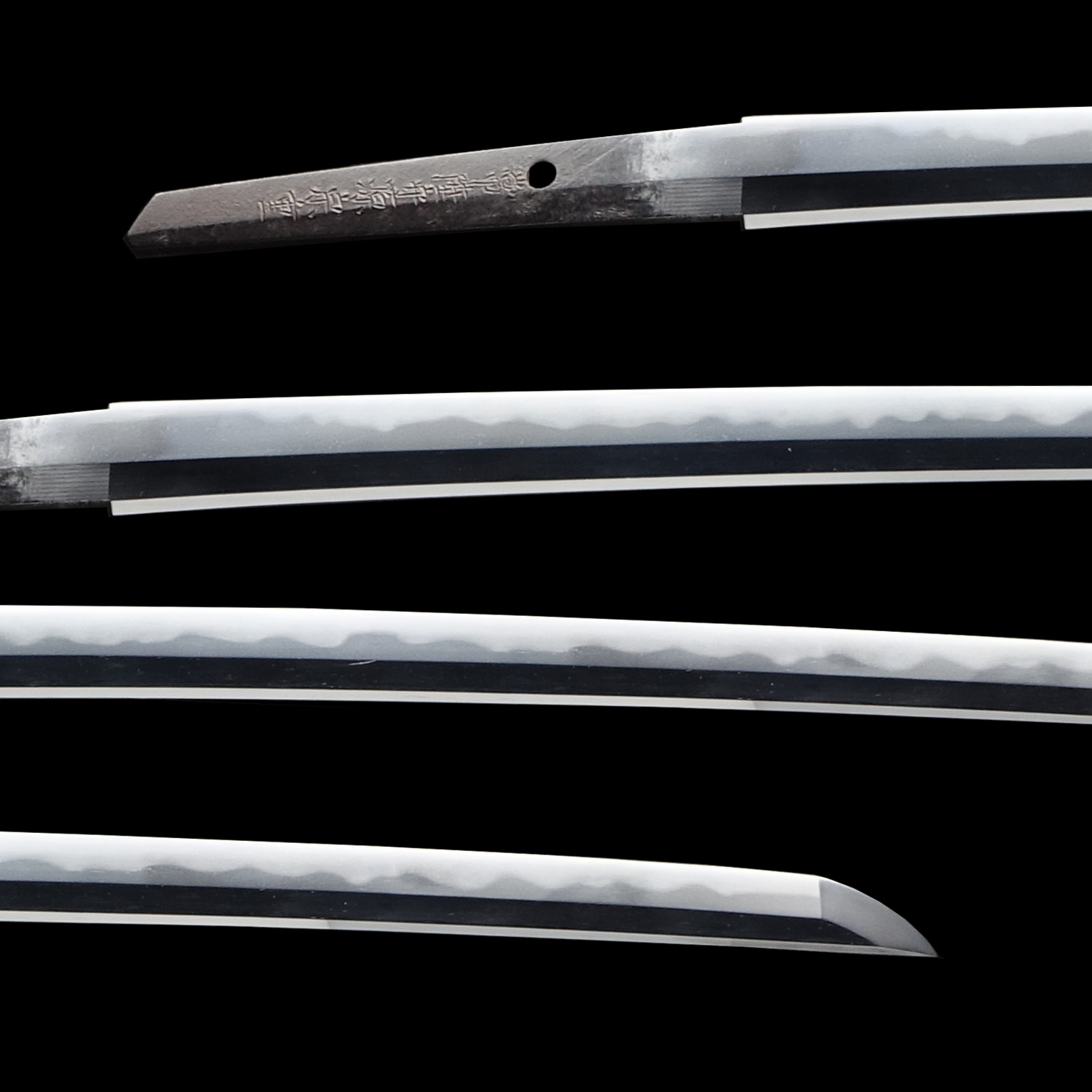
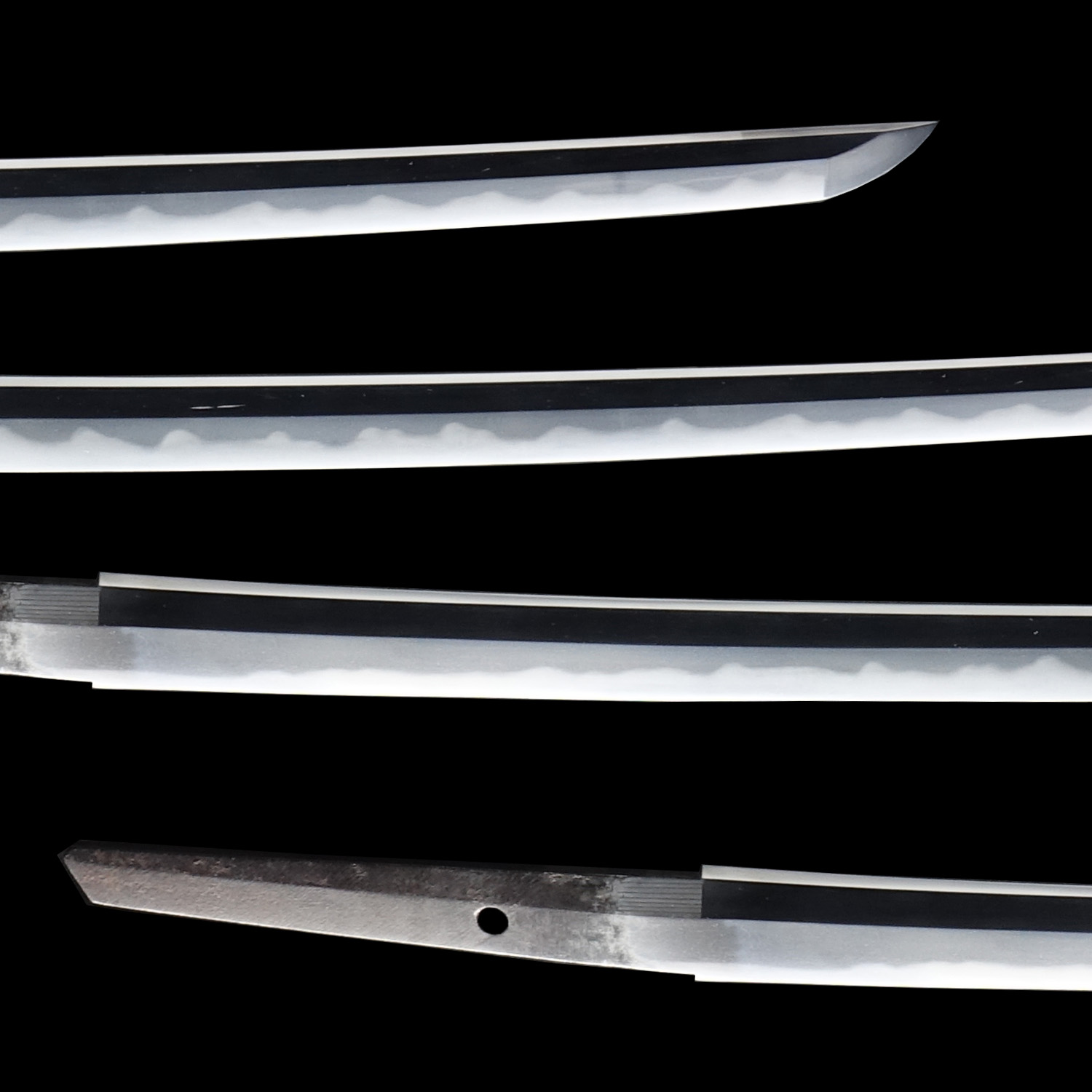


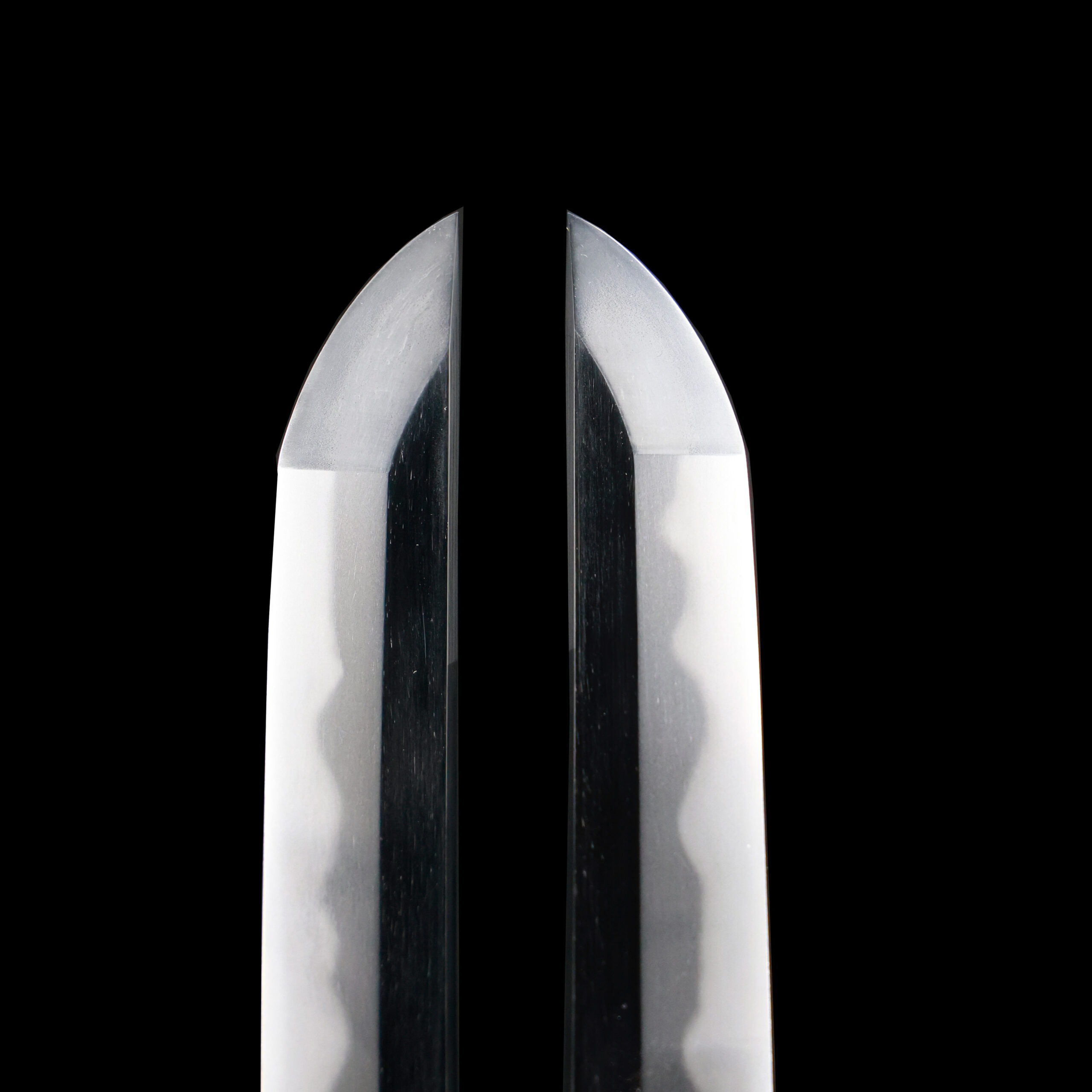
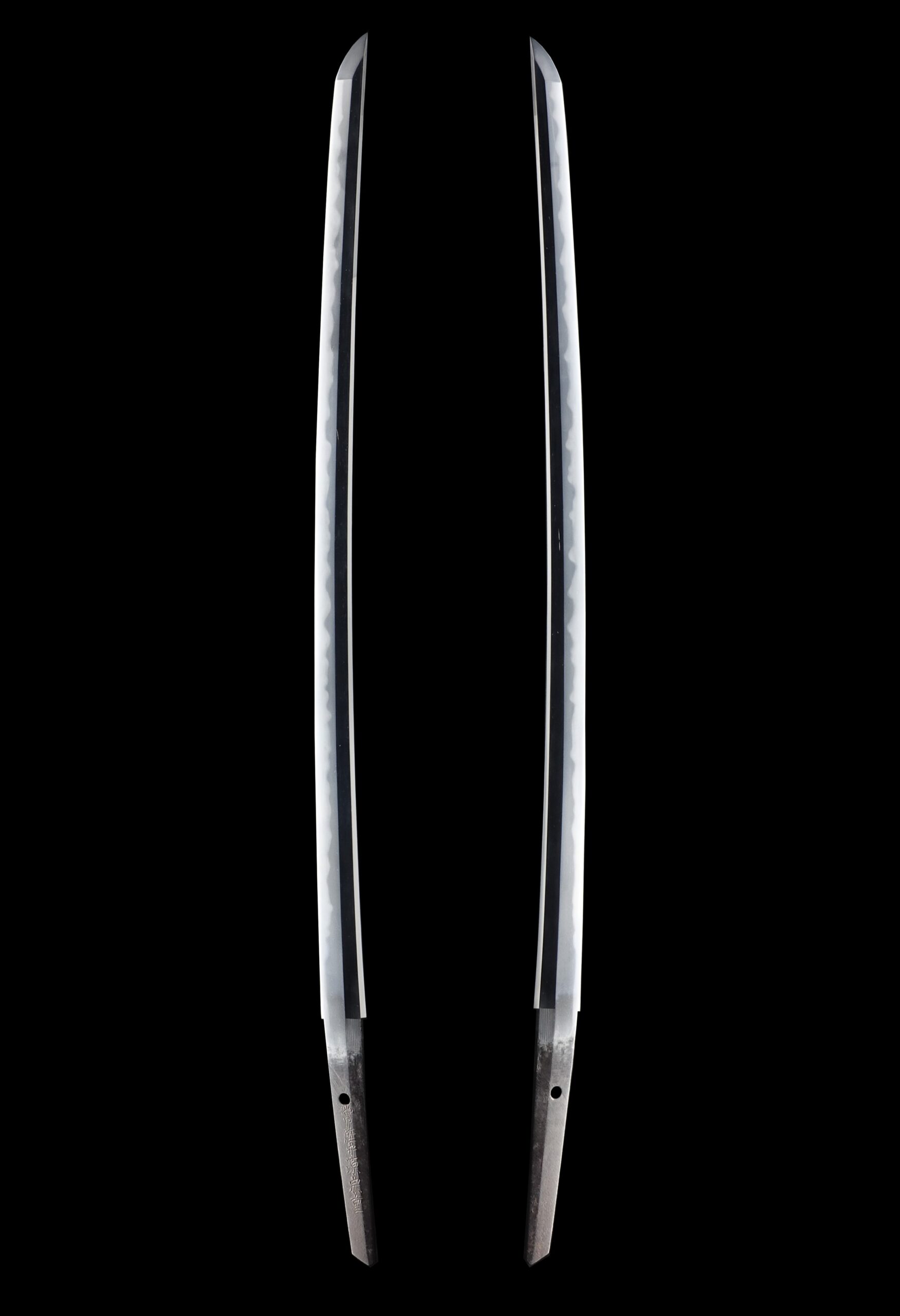
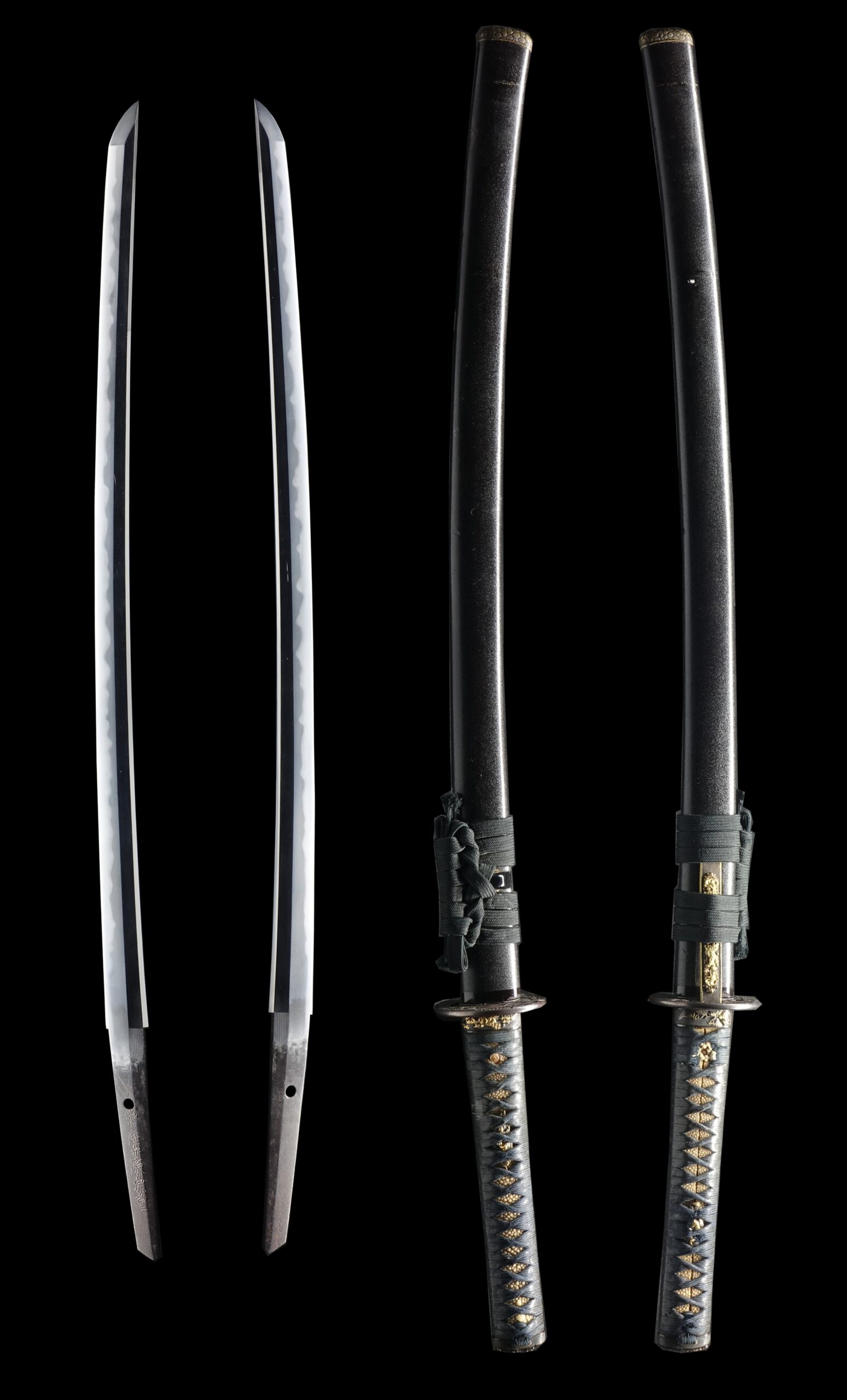
Settsu · around 1661-1673
Fujishiro Chu-jo saku · Tōken Taikan top 76%
1 piece on the market now
The Edo period (1615 to 1868)
Edo was the sword’s age of connoisseurship: the Hon’ami appraisers, the shogunal register of famous blades of 1719, and a thriving literature turned the sword into an object of study even as it ceased to be drawn in war.
A Hozon-certified blade judged to show notably superior workmanship and a better state of preservation. The bar is higher: re-tempered blades and most unsigned Muromachi/Edo works are excluded.
The NBTHK (Nihon Bijutsu Tōken Hozon Kyōkai, the Society for the Preservation of Japanese Art Swords) is a public-interest incorporated foundation founded in 1948 and supervised by Japan’s Agency for Cultural Affairs (Bunkachō); it is based at the Japanese Sword Museum in Tokyo. Its expert panels physically examine each submitted work (shinsa) and issue a certificate (kanteishō) ranking it by artistic and historical merit. NBTHK papers are the most widely recognized standard of authentication for Japanese swords and fittings.
NBTHK official siteReturns/exchanges limited to defects caused by shipping (except willful misconduct or gross negligence by the company); customers must contact within 72 hours of receiving the product.