The Shintō era was largely invented in Kyōto: Umetada Myōju’s workshop trained the movement, Horikawa Kunihiro raised a generation, and the Hon’ami appraisers, who held no forge, governed the meaning of famous blades.
 NihontoWatchNihontoWatch
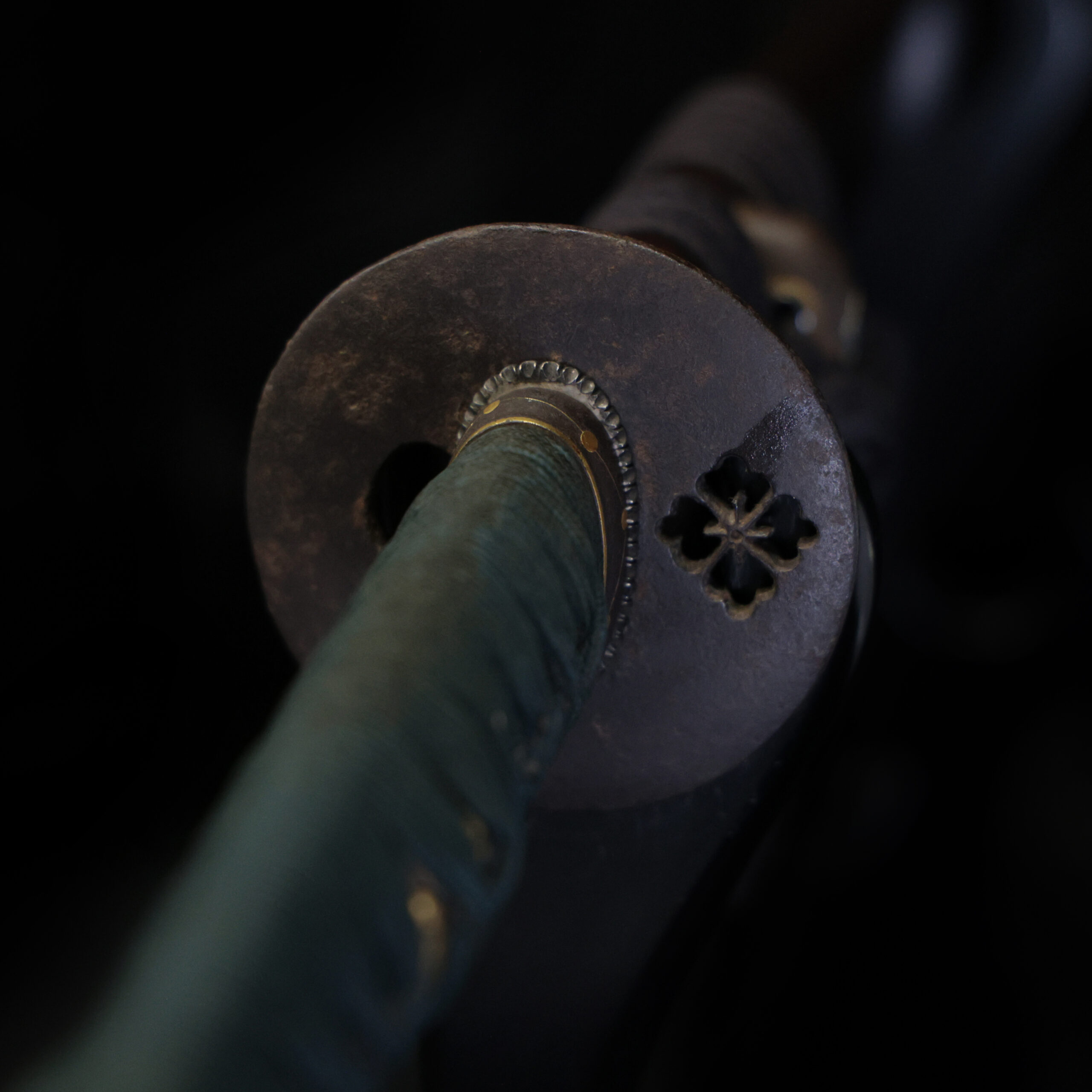
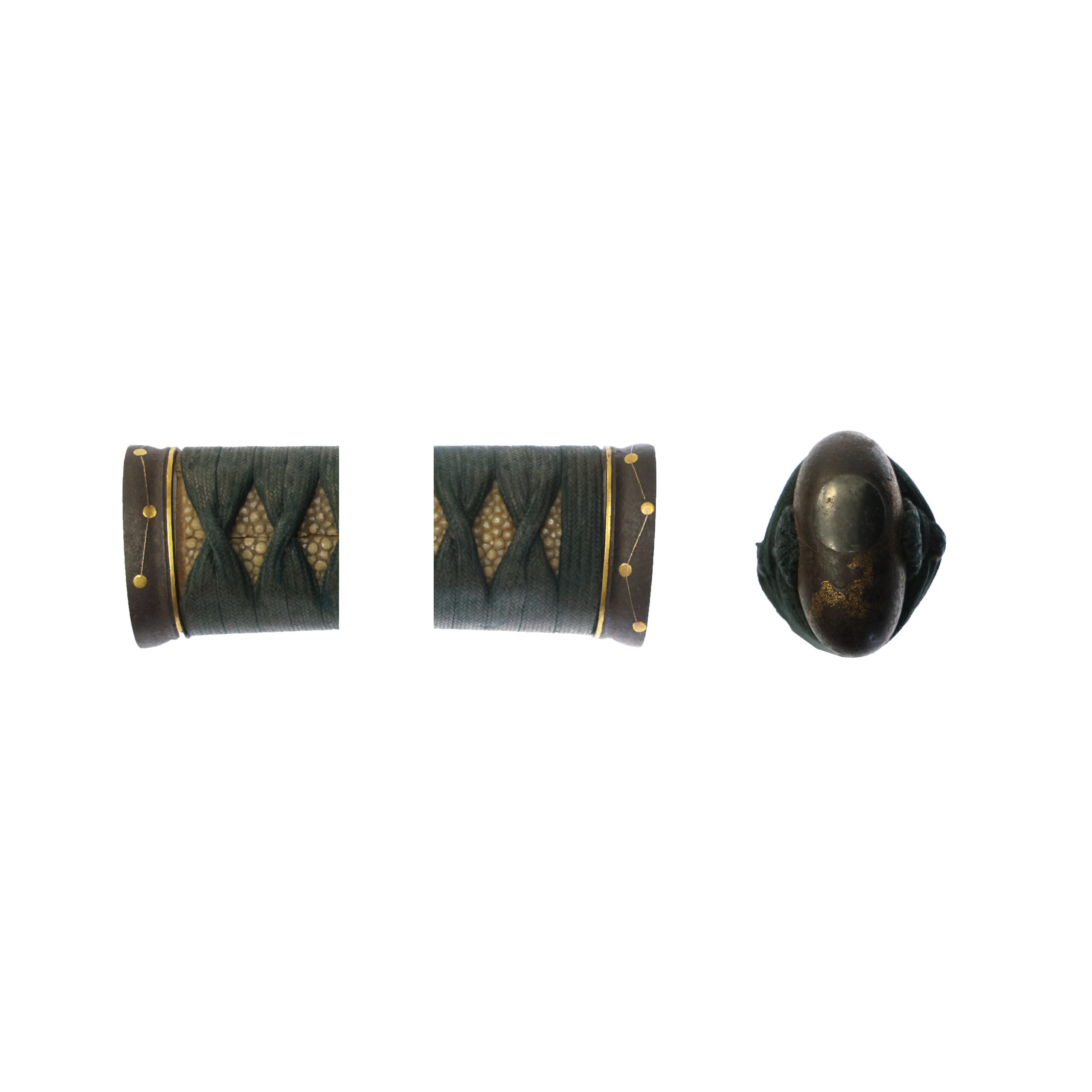
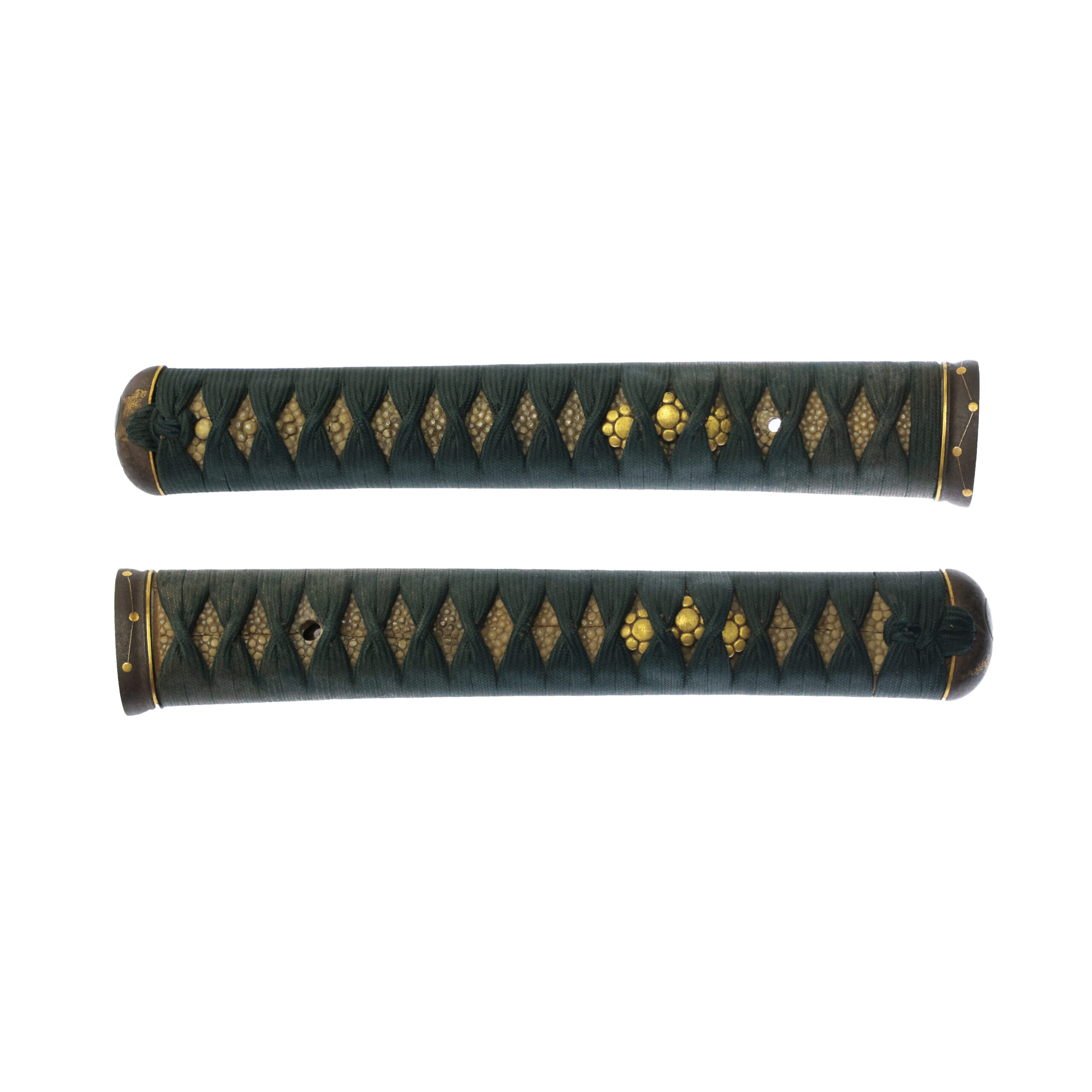
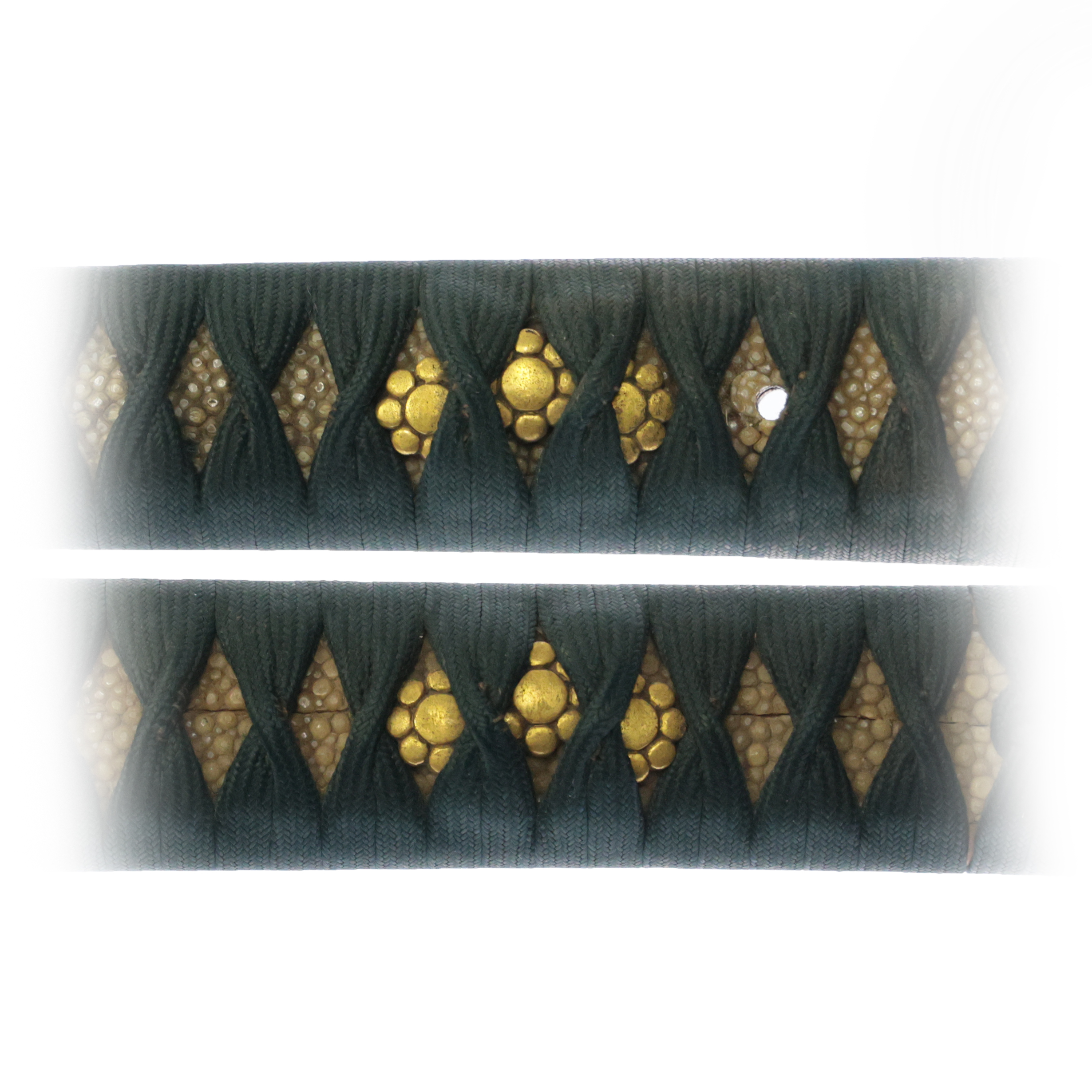
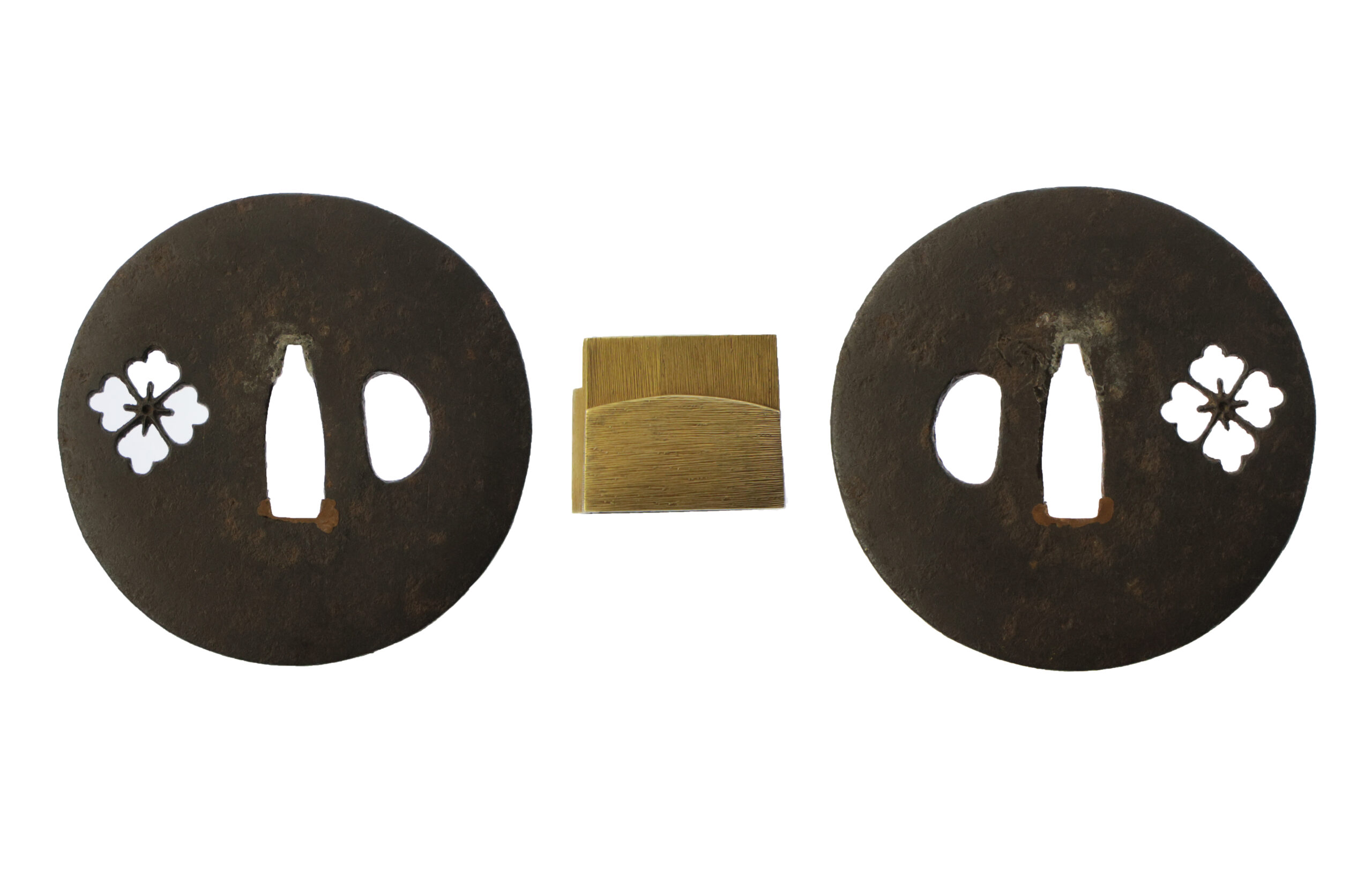
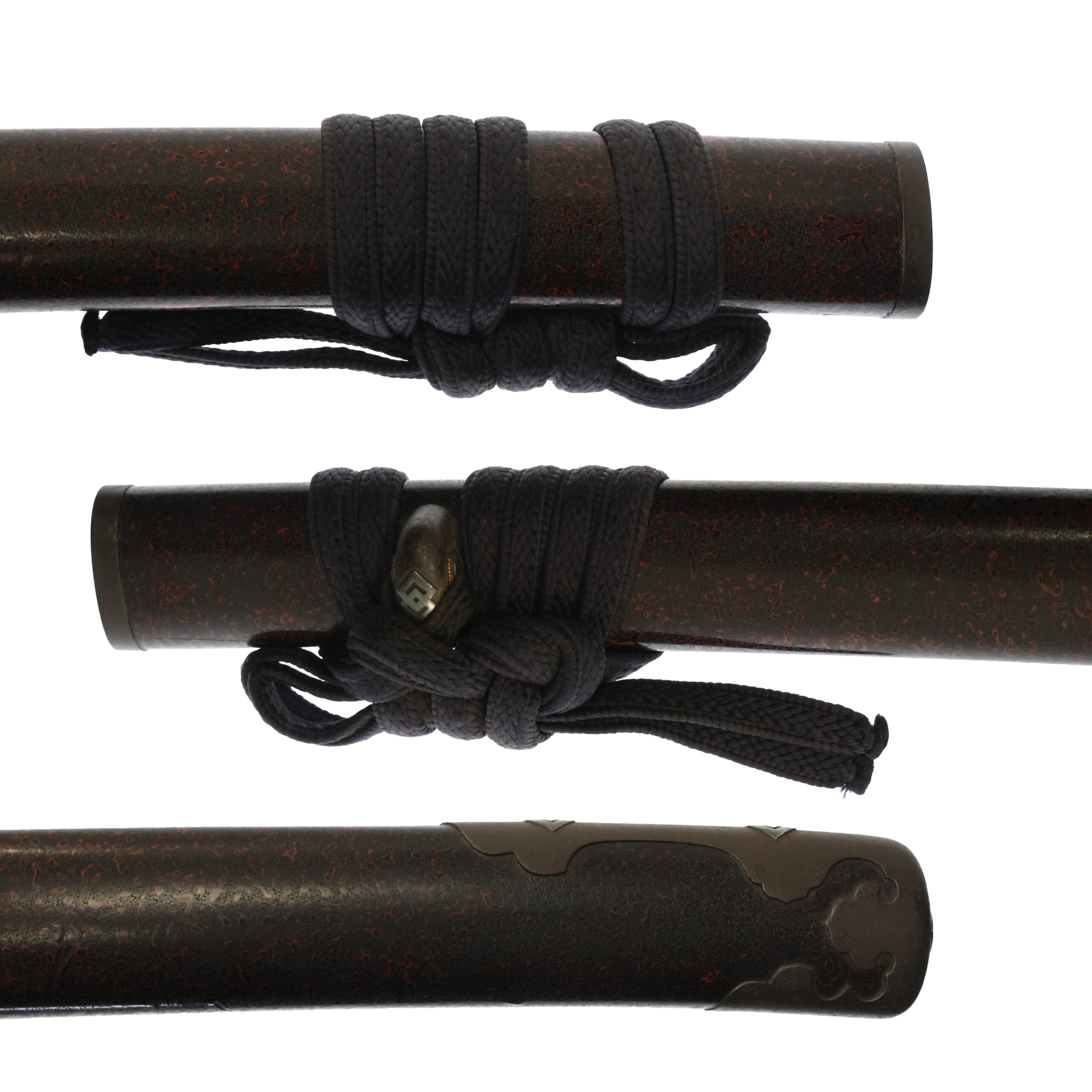
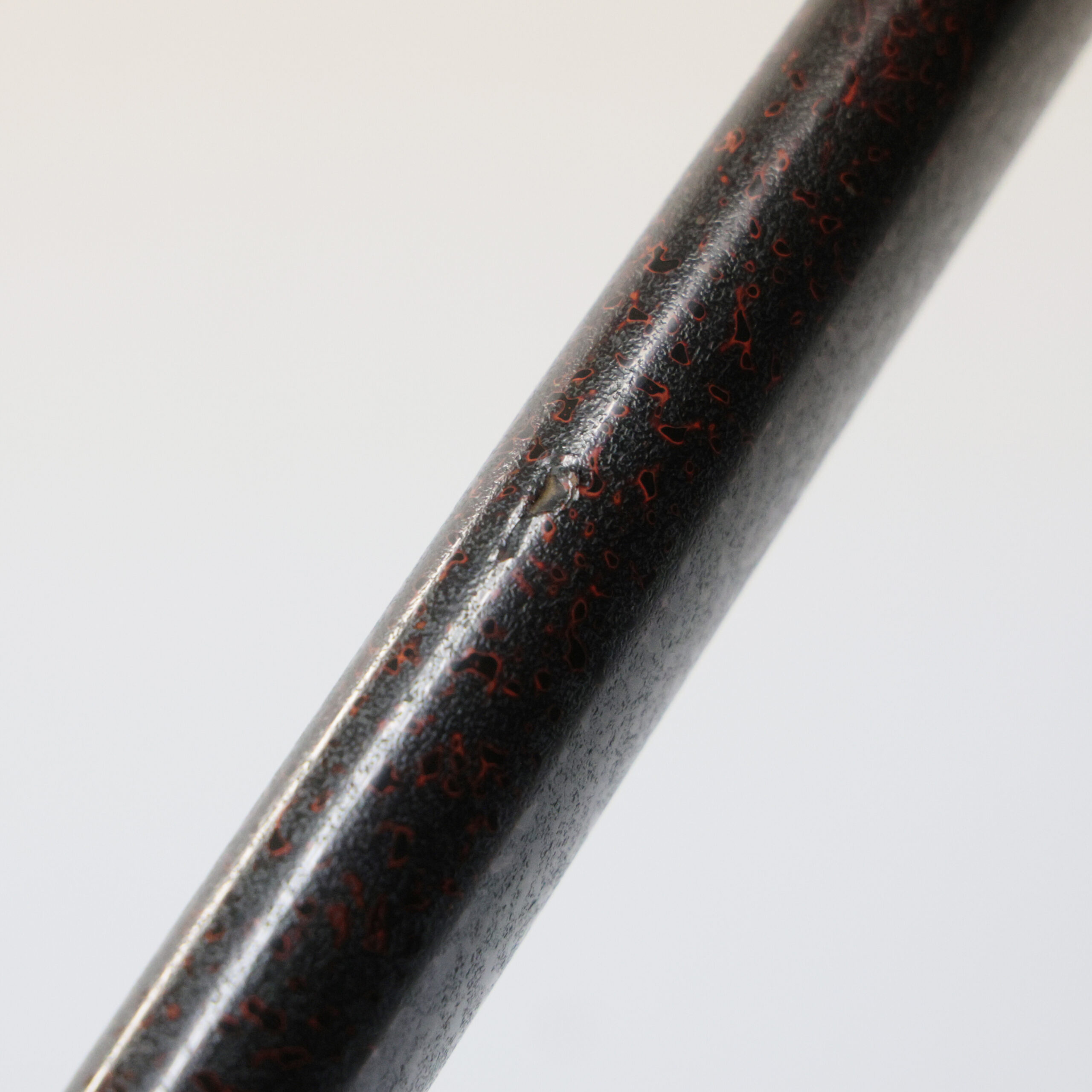
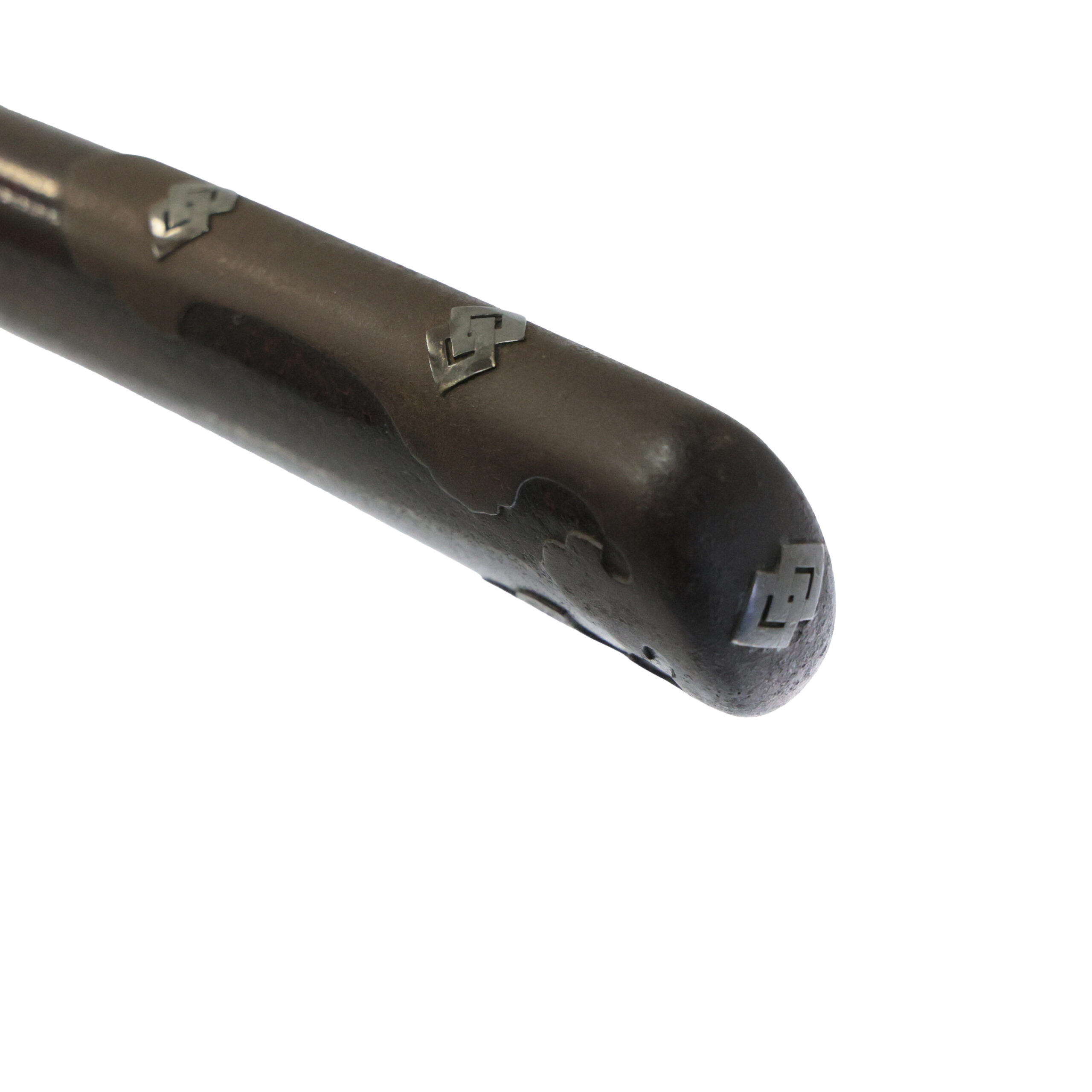
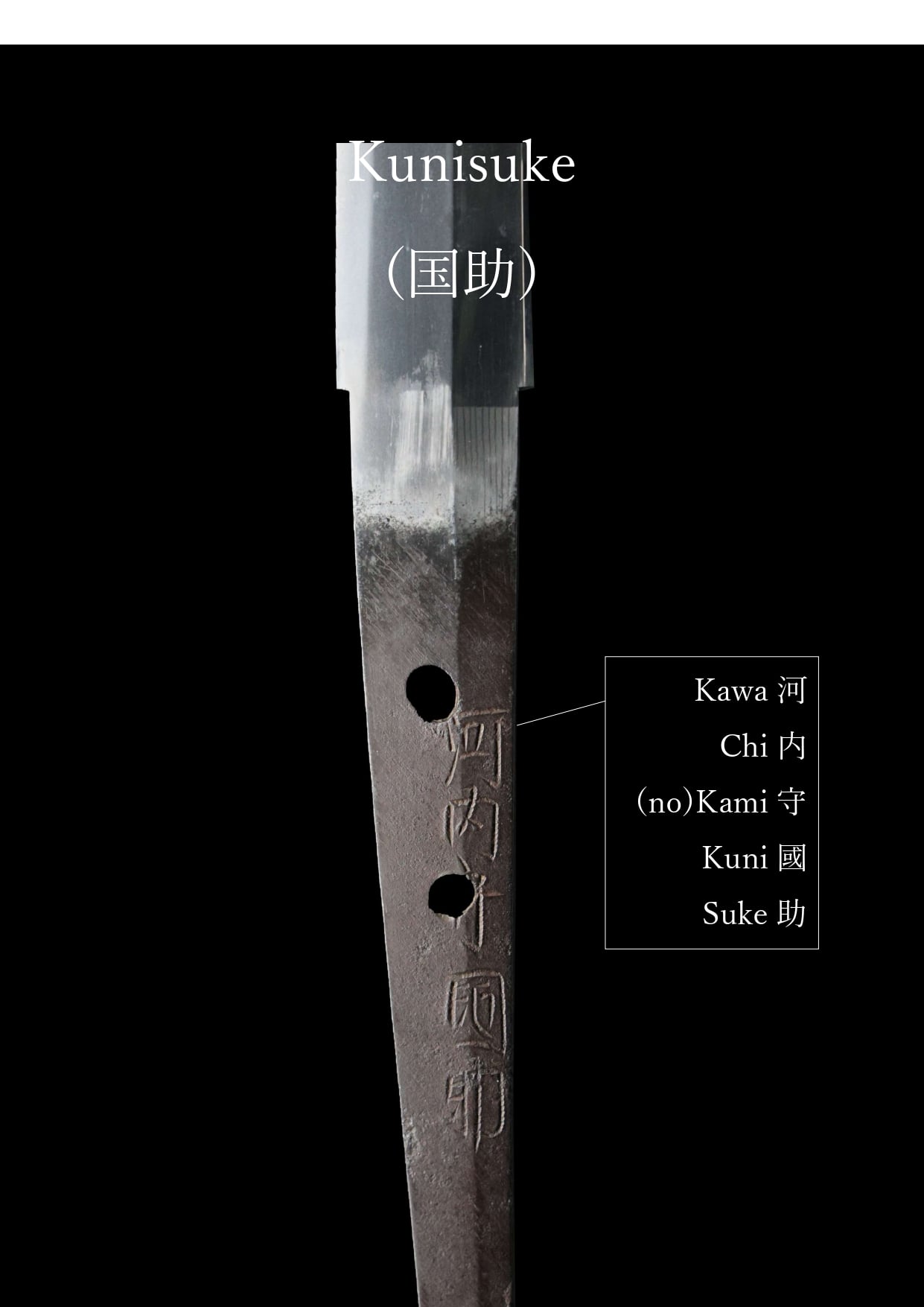
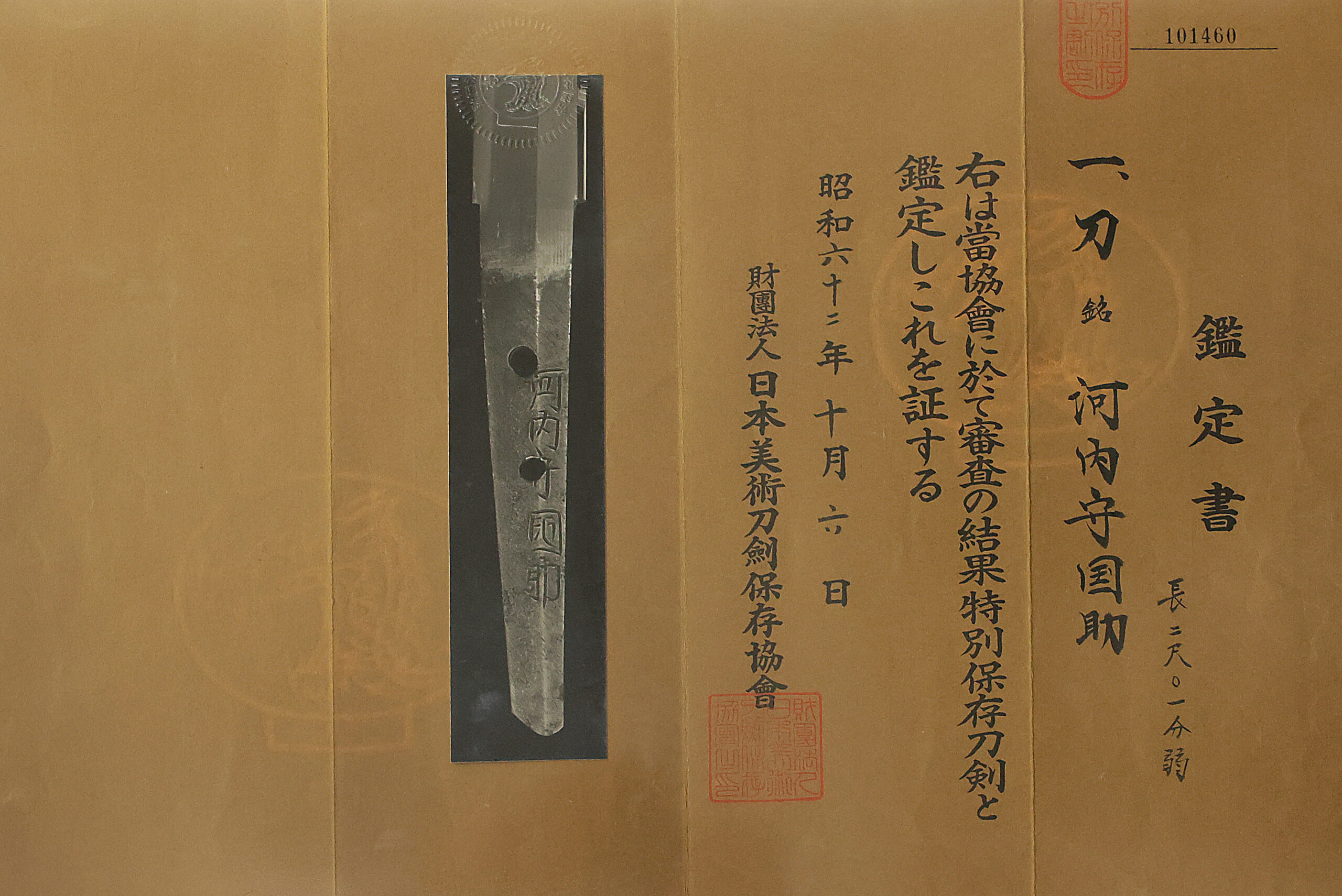
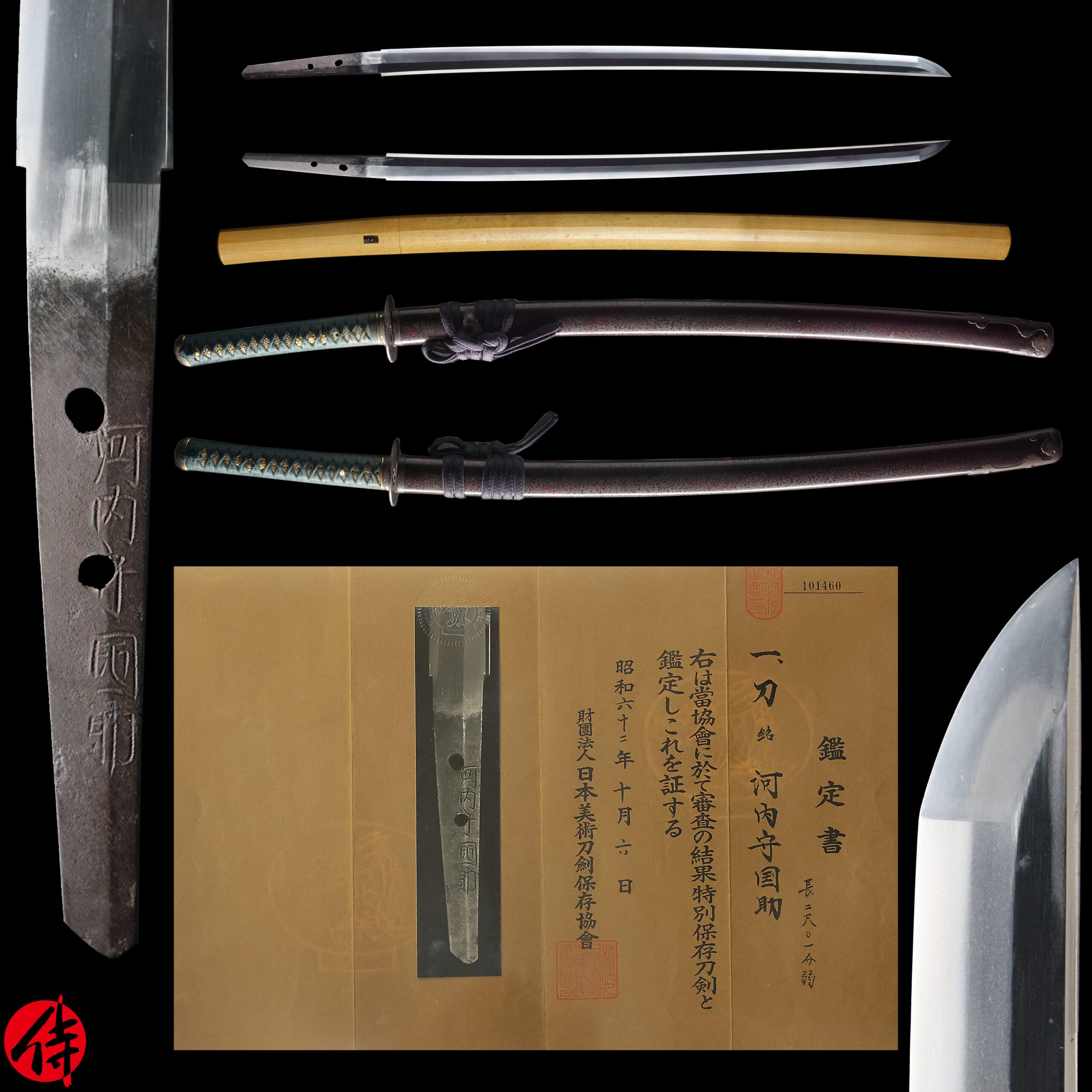
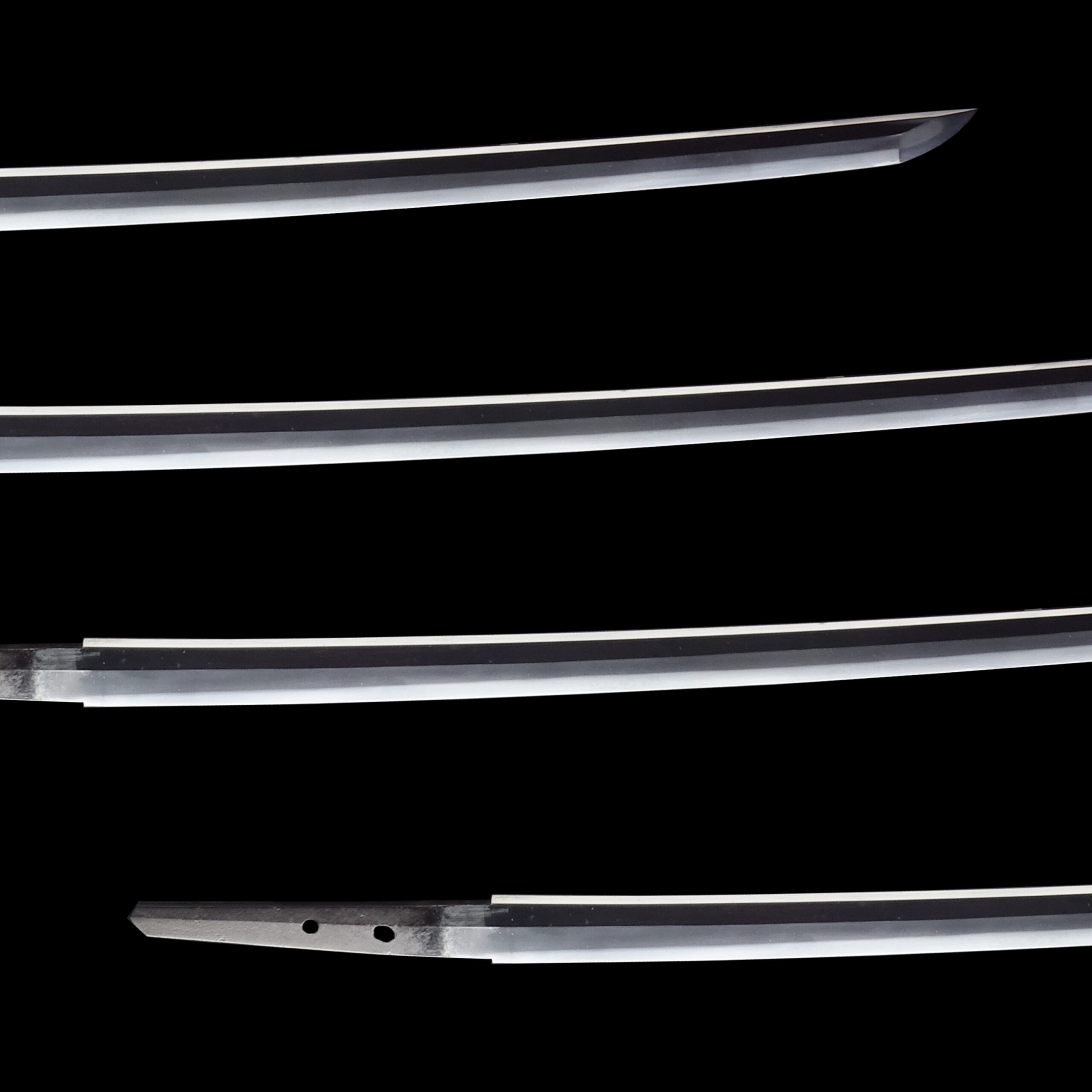
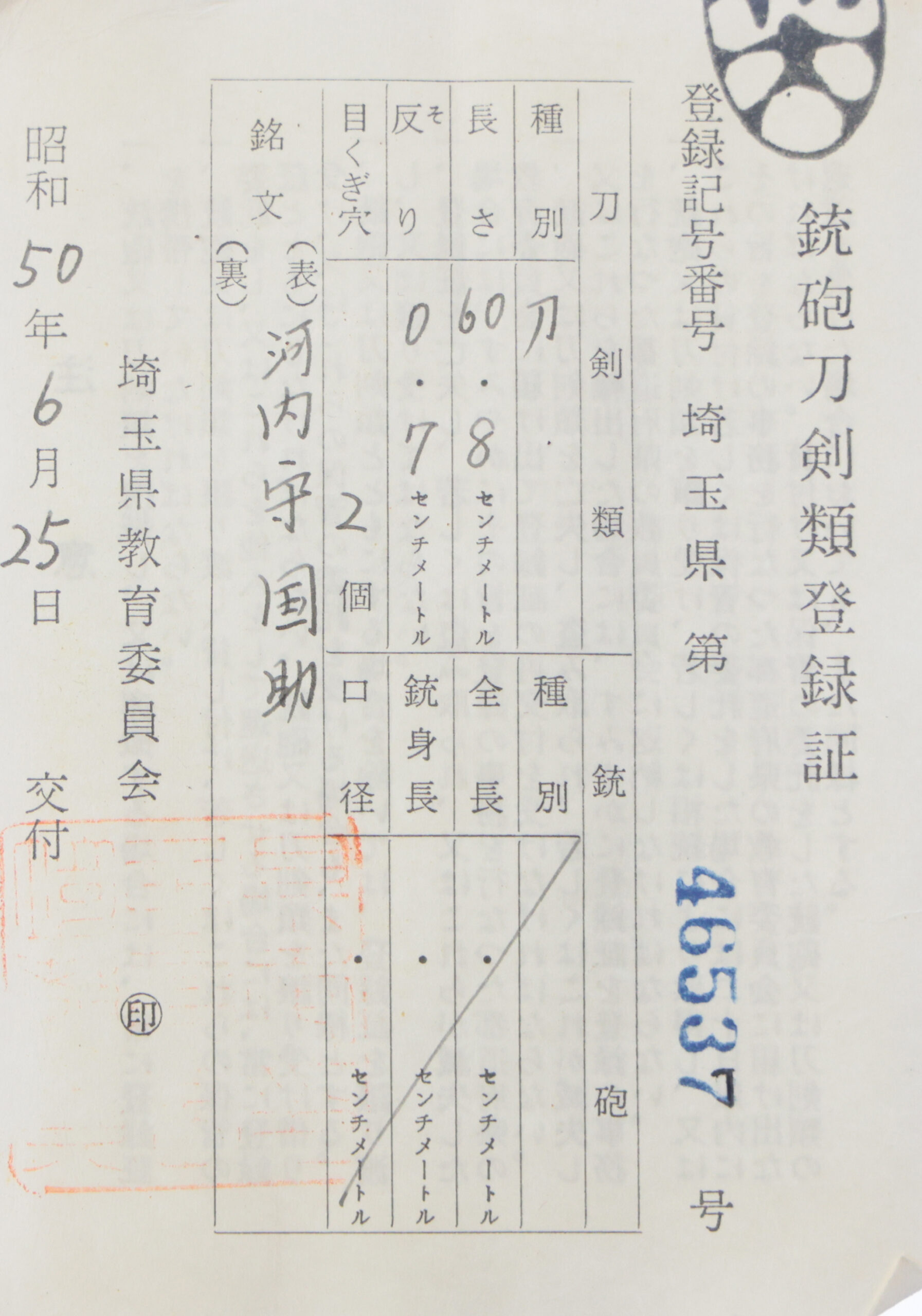
This blade was signed by Kawachi no Kami Kunisuke (河内守国助). Based on the characteristics of the blade, we believe that this sword was forged by the second-generation Kunisuke, who was active as a swordsmith during 1658–1673, in the early Edo period. Kunisuke was one of the most renowned swordsmiths working in Osaka during the early Edo period. There were three generations of swordsmiths who used the name Kunisuke. As the second-generation Kunisuke worked between the first and third generations, he was also known as Naka Kawachi (中河内). “Kawachi” is an abbreviated form of Kawachi no Kami, the honorary title granted to this swordsmith, while Naka means “middle” in Japanese. The first-generation Kunisuke was born in Ise Province (present-day Mie Prefecture) and served Seki Kazumasa, lord of Kameyama Castle. However, after the Seki clan lost its position, Kunisuke moved to Kyoto, where he became an apprentice of Horikawa Kunihiro, one of the most celebrated swordsmiths of his time. After Kunihiro passed away, Kunisuke continued his training under Echigo no Kami Kunitomo. Eventually, he moved to Osaka together with Izumi no Kami Kunisada and established himself as an independent swordsmith in 1630. He is said to have played an important role in the development of the Osaka Shinto tradition, and his superb craftsmanship was passed down to the second-generation Kunisuke. The blades forged by the second-generation Kunisuke are categorized as Osaka Shinto. Shinto (新刀, “new swords”) is a term used in Japanese sword history for blades generally forged during the period from 1596 to 1781. Swords produced in the Osaka area during this period are known as Osaka Shinto. Many highly accomplished swordsmiths were active in Osaka during the Shinto period. After Toyotomi Hideyoshi built Osaka Castle, the city flourished as a castle town and developed into one of Japan’s major commercial centers. This prosperity attracted many swordsmiths seeking new opportunities. They forged swords not only for samurai residing in Osaka but also for feudal lords and other clients throughout Japan. Among the most celebrated Osaka Shinto swordsmiths were Ikanshi Tadatsuna (Awataguchi Omi no Kami Tadatsuna), Inoue Shinkai, and Tsuda Sukehiro. One of the most notable characteristics of Osaka Shinto is the beauty and refinement of its jigane. Jigane refers to the visible surface texture and grain of the steel, created through the repeated folding, forging, and hammering of the metal. The exceptional quality of Osaka Shinto jigane was partly made possible by Osaka’s favorable location and access to high-quality tamahagane, the traditional high-carbon steel used in Japanese swordmaking. Swordsmiths working in Osaka were therefore able to obtain excellent materials, contributing to the refined appearance and high quality for which Osaka Shinto blades are renowned. It is appraised as a Tokubetsu Hozon Token (特別保存刀剣) issued by NBTHK (Nihon Bijutsu Touken Hozon Kyokai:日本美術刀剣保存協会). *Please keep in mind that there are a couple of Kitae Kizu and light black rusts on the blade. Fuchi-Kashira The theme of this Fuchi-Kashira (縁頭, hilt collar and pommel) is the Hokuto Shichisei (北斗七星, the Big Dipper, the Plough). It is the seven stars included in the constellation Ursa Major in the northern sky. It was named because its shape looks similar to a dipper. These stars have been used for measuring time and as a guide for voyages since ancient times. Also, people thought the Big Dipper controls the fate of humans and the country along with the Polestar. The Big Dipper was enshrined in the palace. However, the ritual in the Imperial court was a secret and did not spread to the private sector. Instead, a theory says it was esoteric Buddhism monks and practitioners who spread this faith to the private sector to meet the people’s demands. This worship was already popular in the Nara period. After the Heian period, private Onmyoji (陰陽師, a professional practitioner of Japanese occultism) appeared and spread this faith. The reason why it became popular is, people believed, “If you pray to the Big Dipper and the Polestar, you can avoid any disaster and obtain a healthy and long life.” Tsuka and Menuki The Menuki is decorated with a family crest known as the Kuyo-mon (九曜紋). The nine circles represent the planets, and this arrangement and design are based on ancient Indian mythology. According to the myth, the ancient Indians worshiped seven planets—Sun, Moon, Mars, Mercury, Jupiter, Venus, and Saturn along with two additional planets, Ragō (羅睺) and Keito (羅睺), as deities. In Buddhist thought, derived from this mythology, the Kuyo-mon is believed to serve as a protector during journeys. Tsuba and Habaki This circular tsuba is decorated with Hanabishi (花菱) is engraved with openwork in the up and down, left and right. In this Hanabishi pattern, petals are designed in a rhombus. This pattern became a Yusoku Monyou (有職文様, generic term for designs of court nobles’ clothing or furnishings, these designs have unique and elegant styles) during the Heian period (794-1185). People loved it as an auspicious pattern. Also, it is said that since this pattern is elegant and prestigious, it was appropriate for festive occasions such as weddings, and considered to represent longevity and prosperity of descendants. Saya The surface of this saya is finished in Aka Ishime-ji (赤石目地), also known as Ishime-nuri (石目塗), a traditional red lacquer technique. Its base was textured using a tagane (鏨)—a small metalworking chisel—to create a fine, stone-like surface that gives the lacquer a distinctive sense of depth and refinement. Also, the end of the saya is fitted with a metal cap known as a kojiri(鐺). It is decorated with the Chigai-bishi family crest (違い菱), a design consisting of two partially overlapping diamond shapes placed side by side. *Please note that there is a minor dent in the saya (scabbard). If you would like more information about its condition, please feel free to contact us.. Authentication Paper They authenticated the blade on October 6th in the 62nd year of Showa (1987). They appraised it as Tokubetsu Hozon Touken, the blade especially worth preserving for Japanese society.
Offered by Samurai Museum
64 on the market

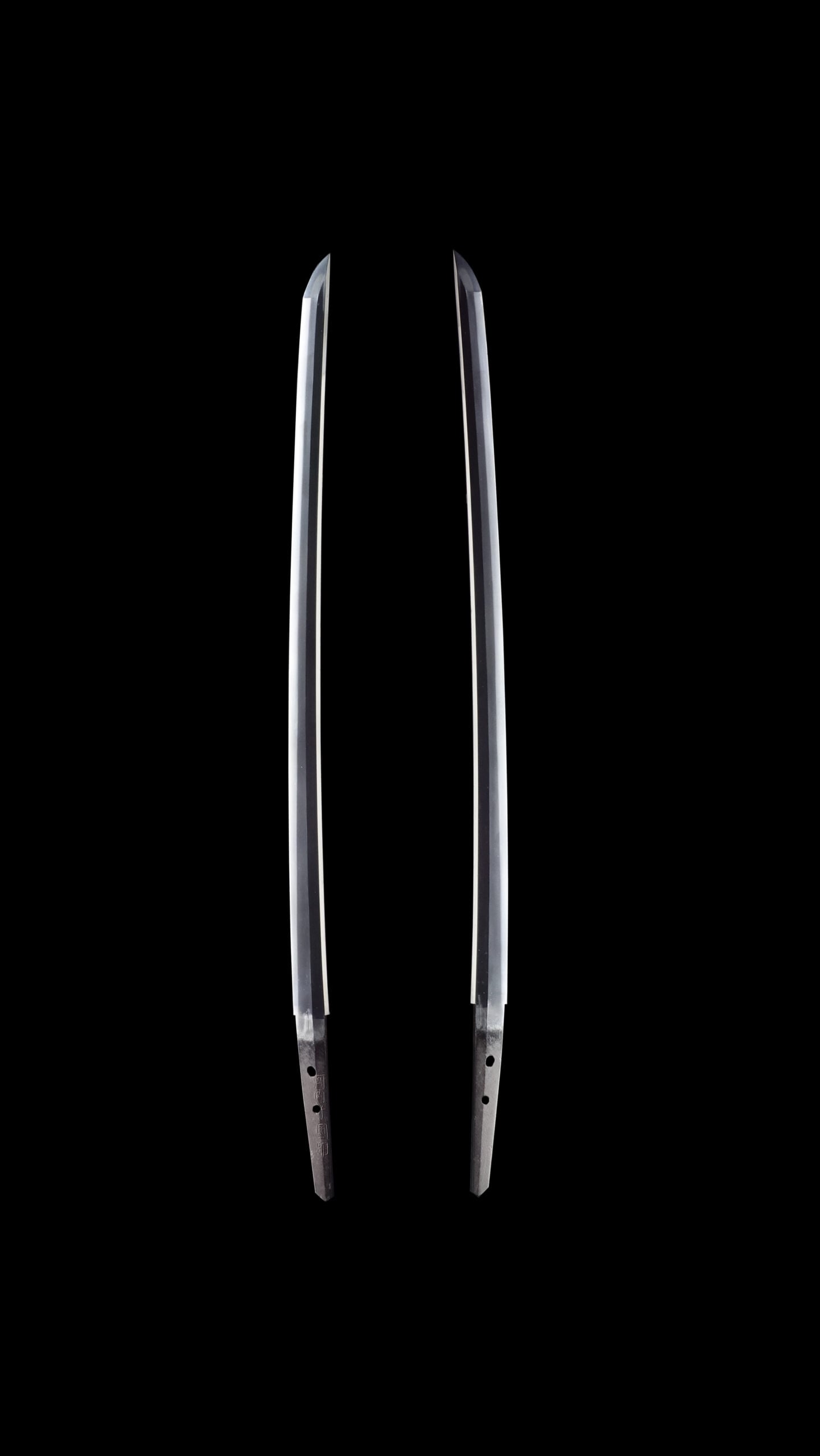
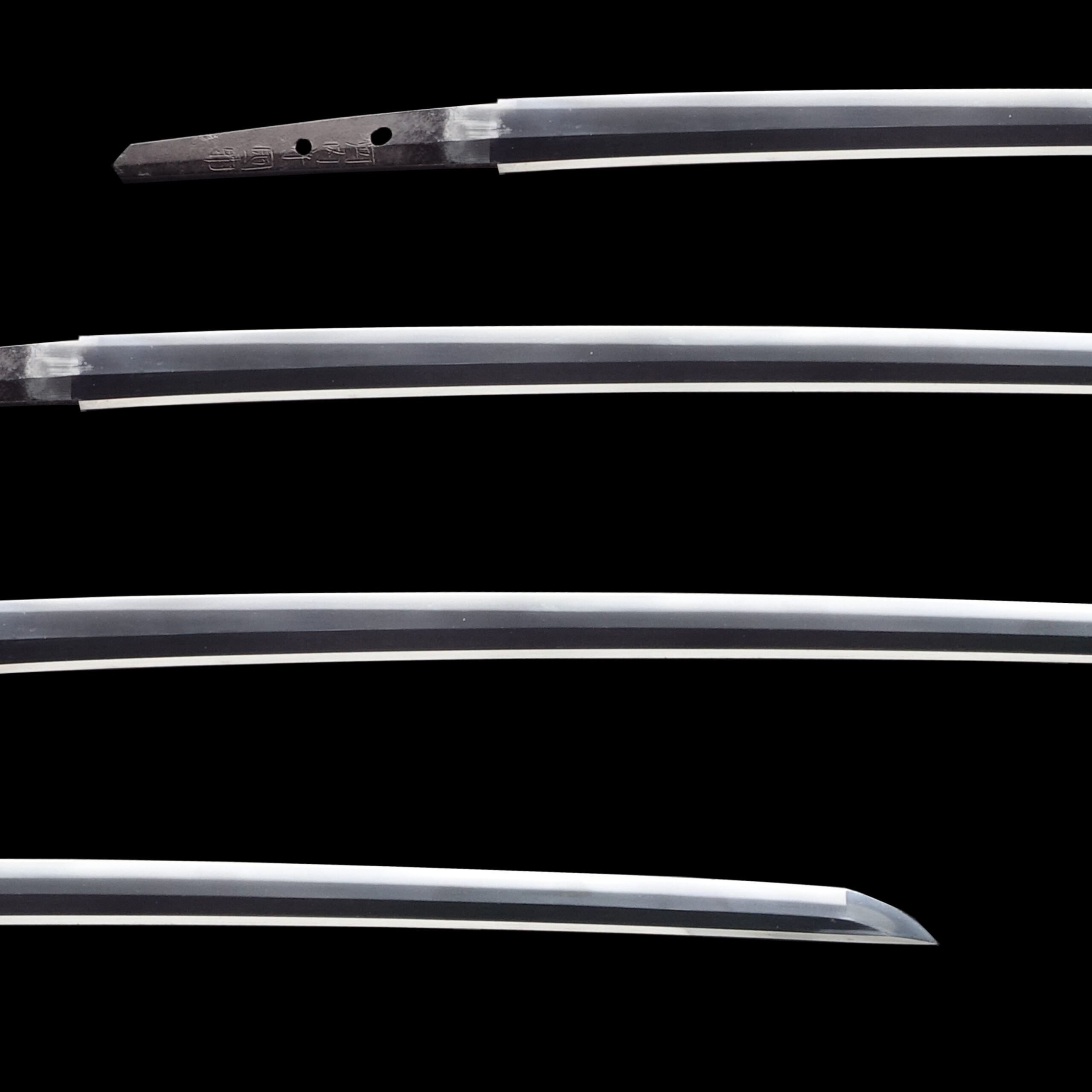
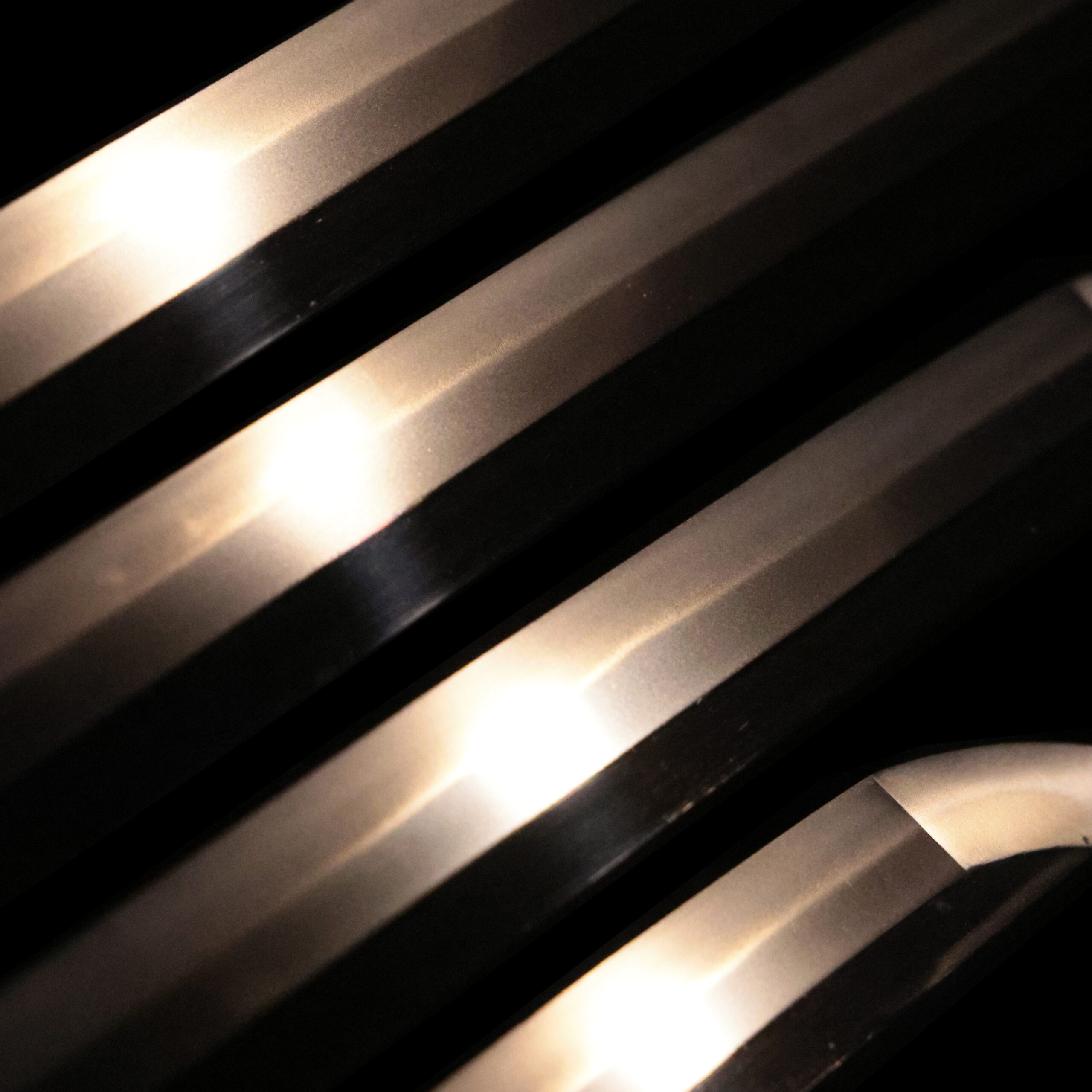
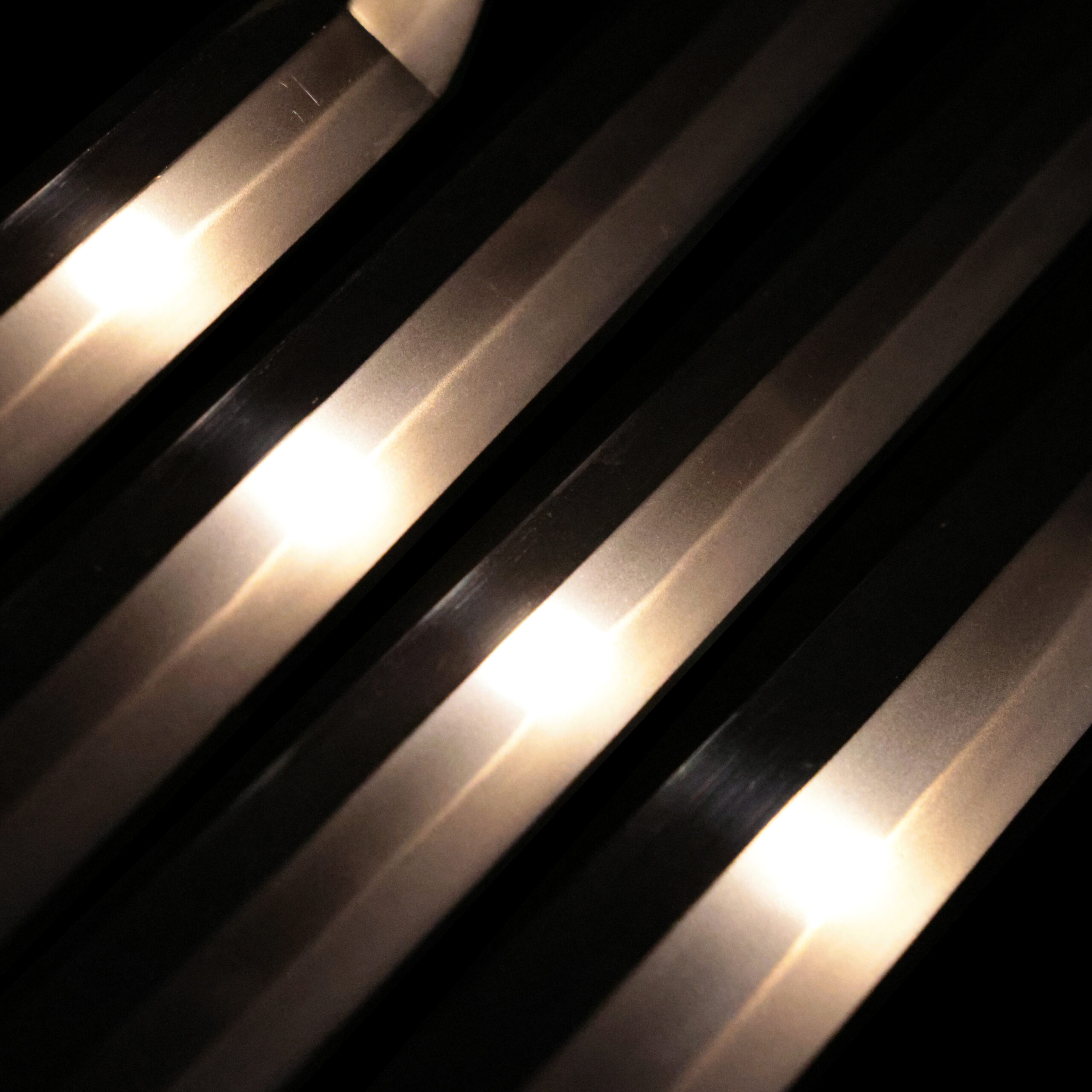
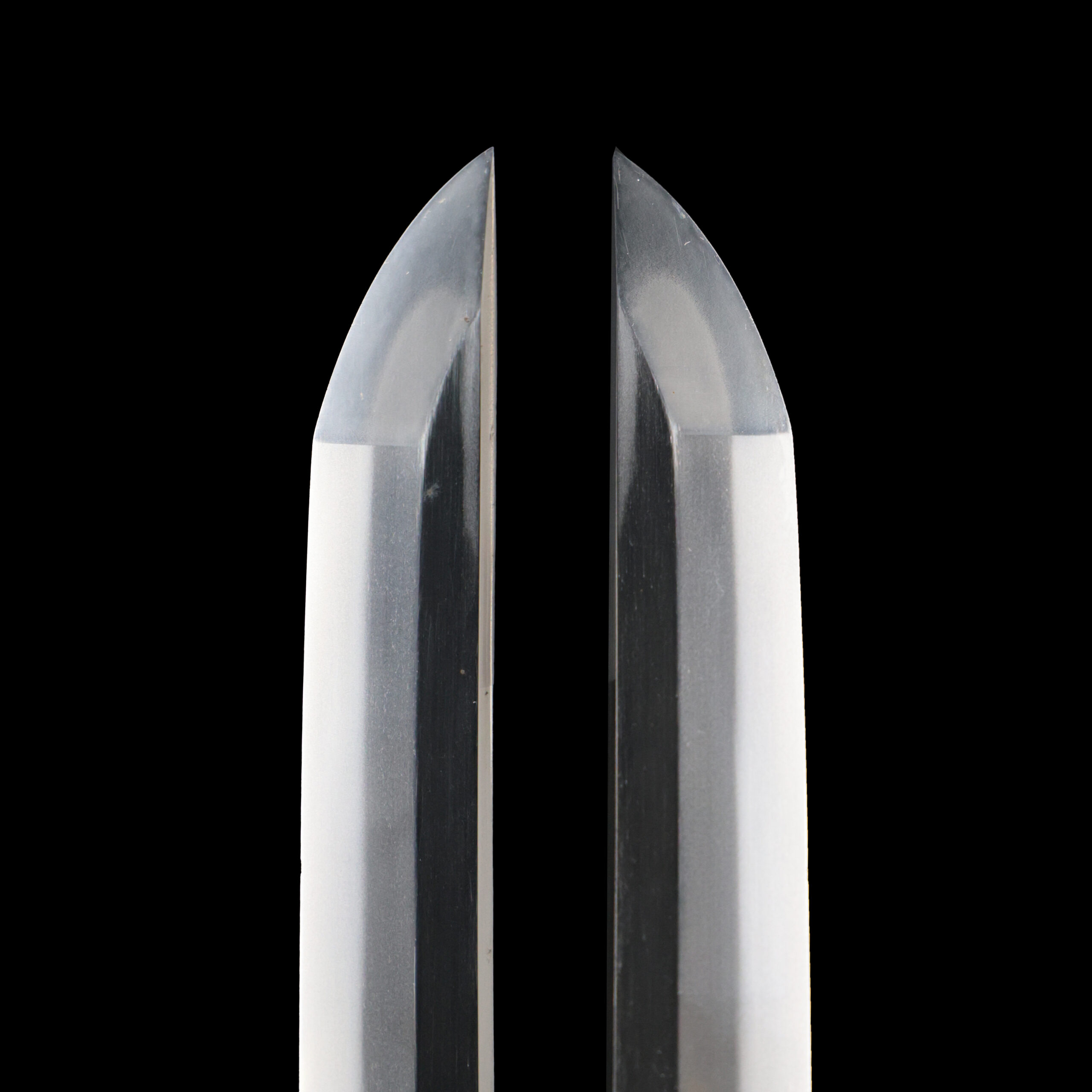
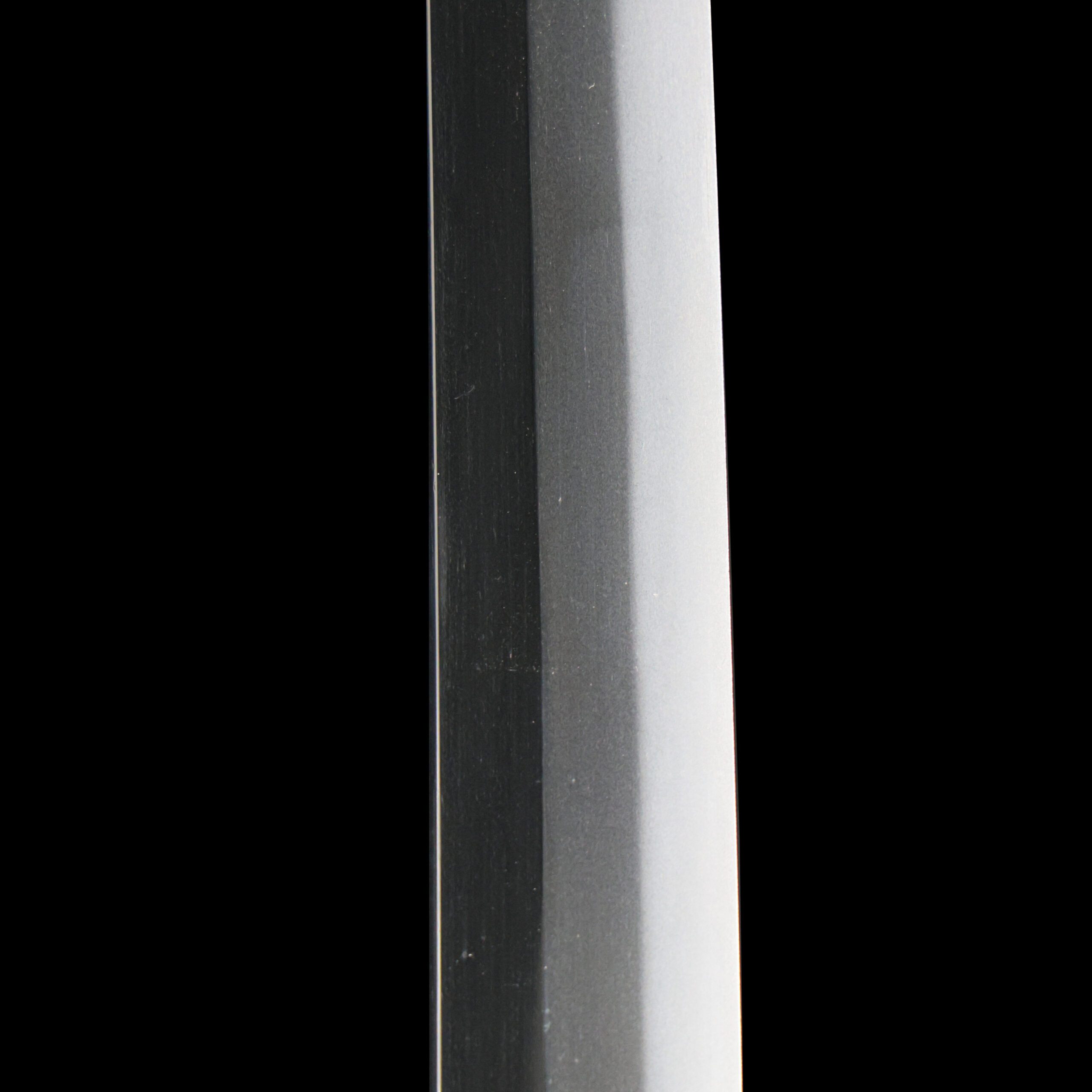
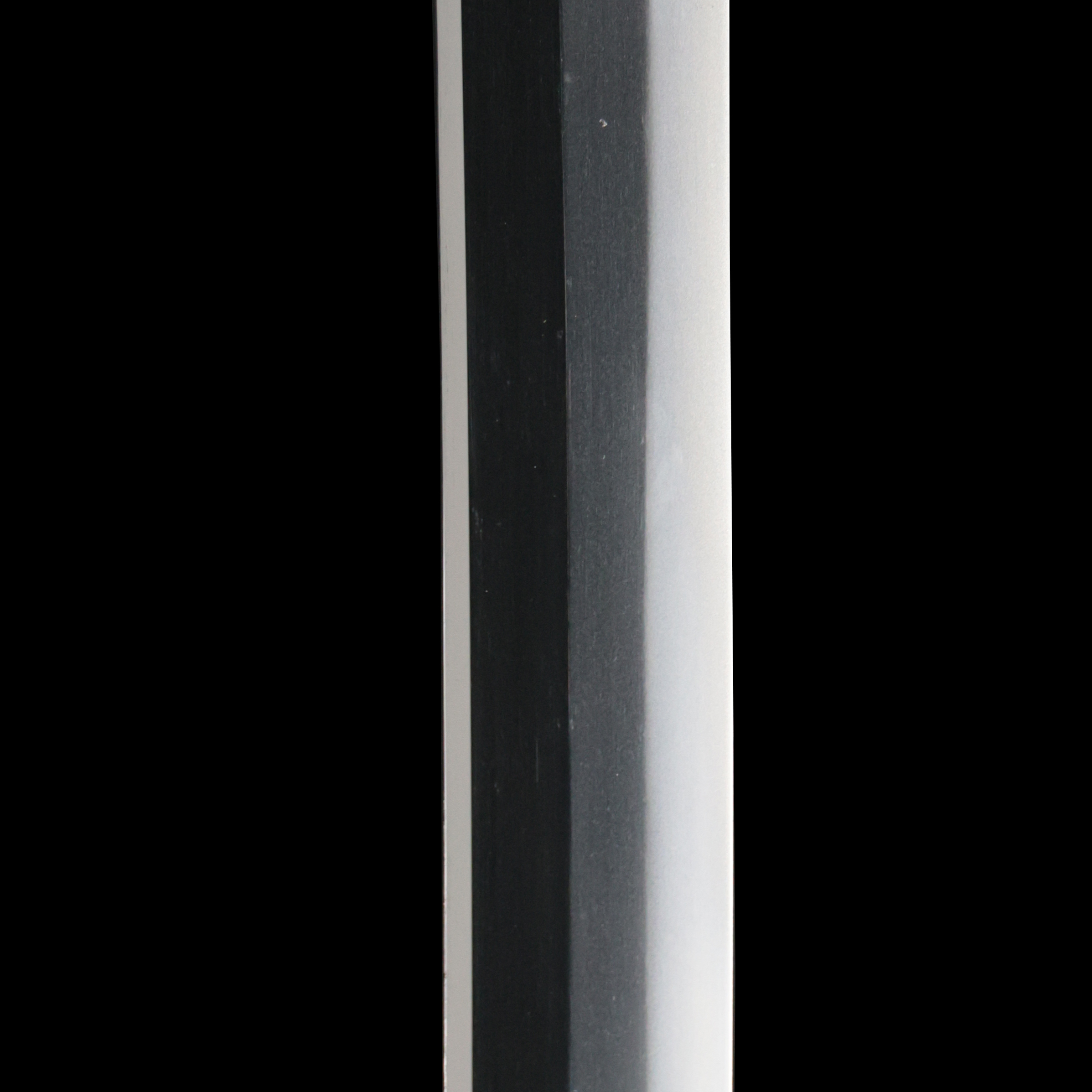
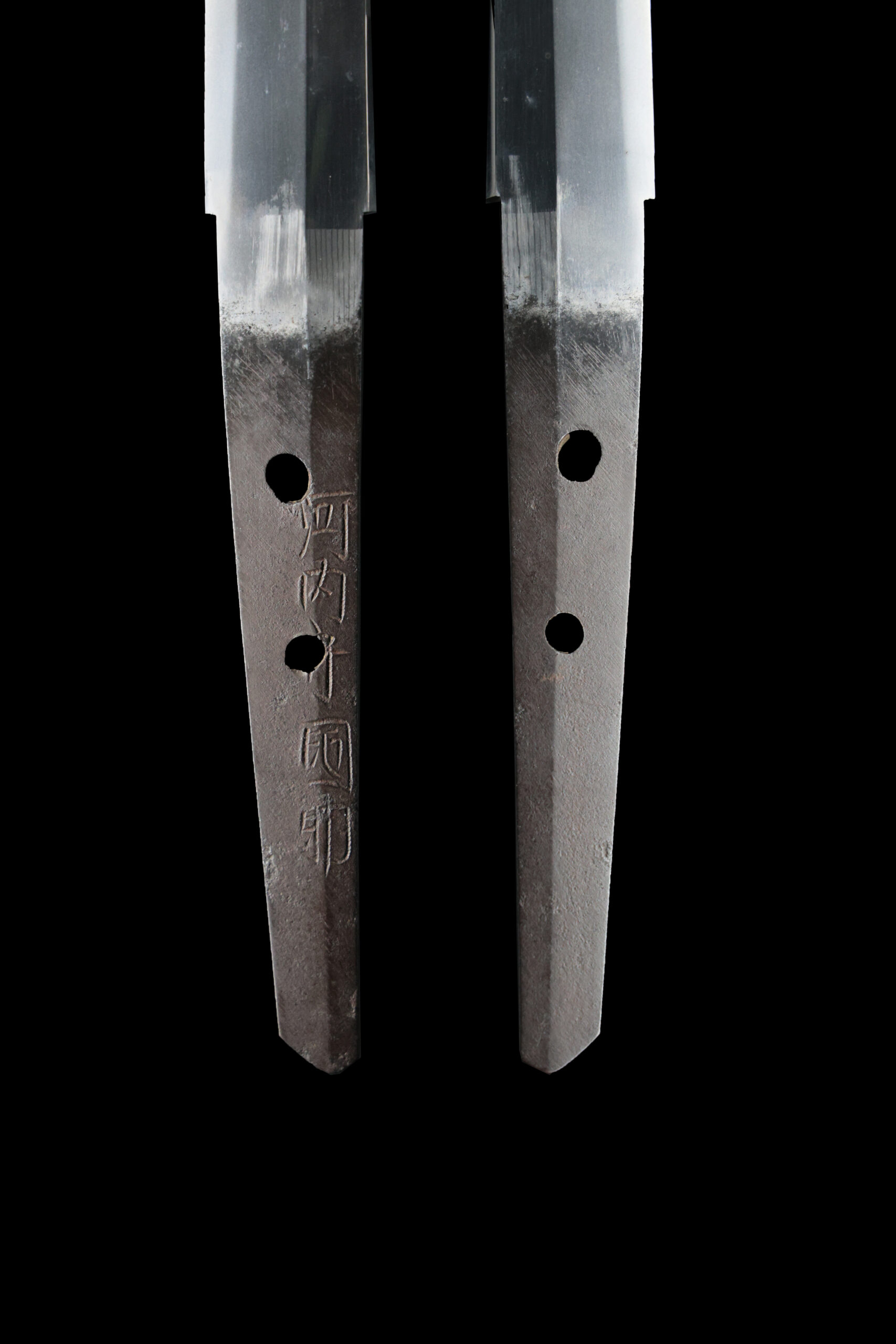
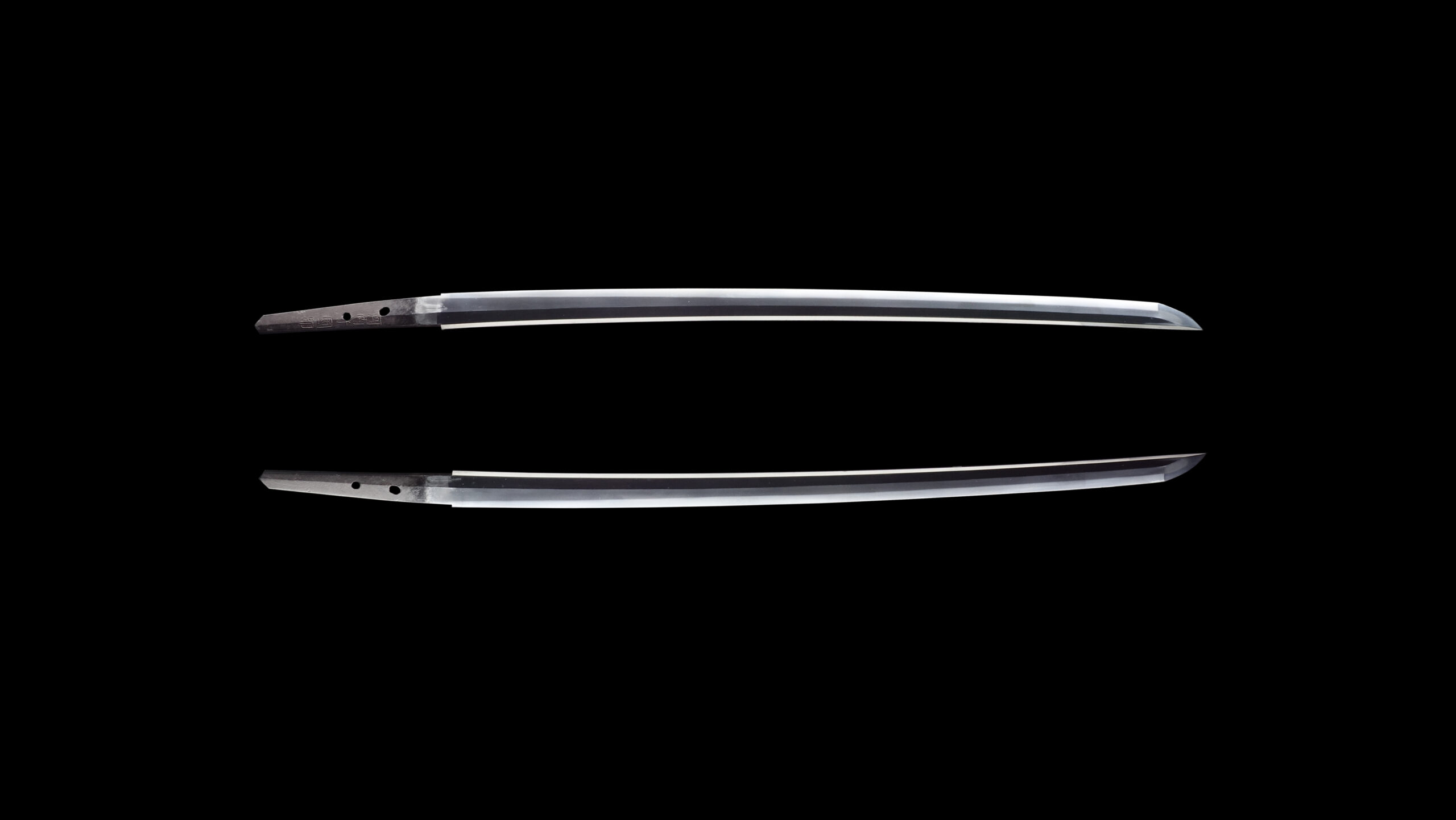
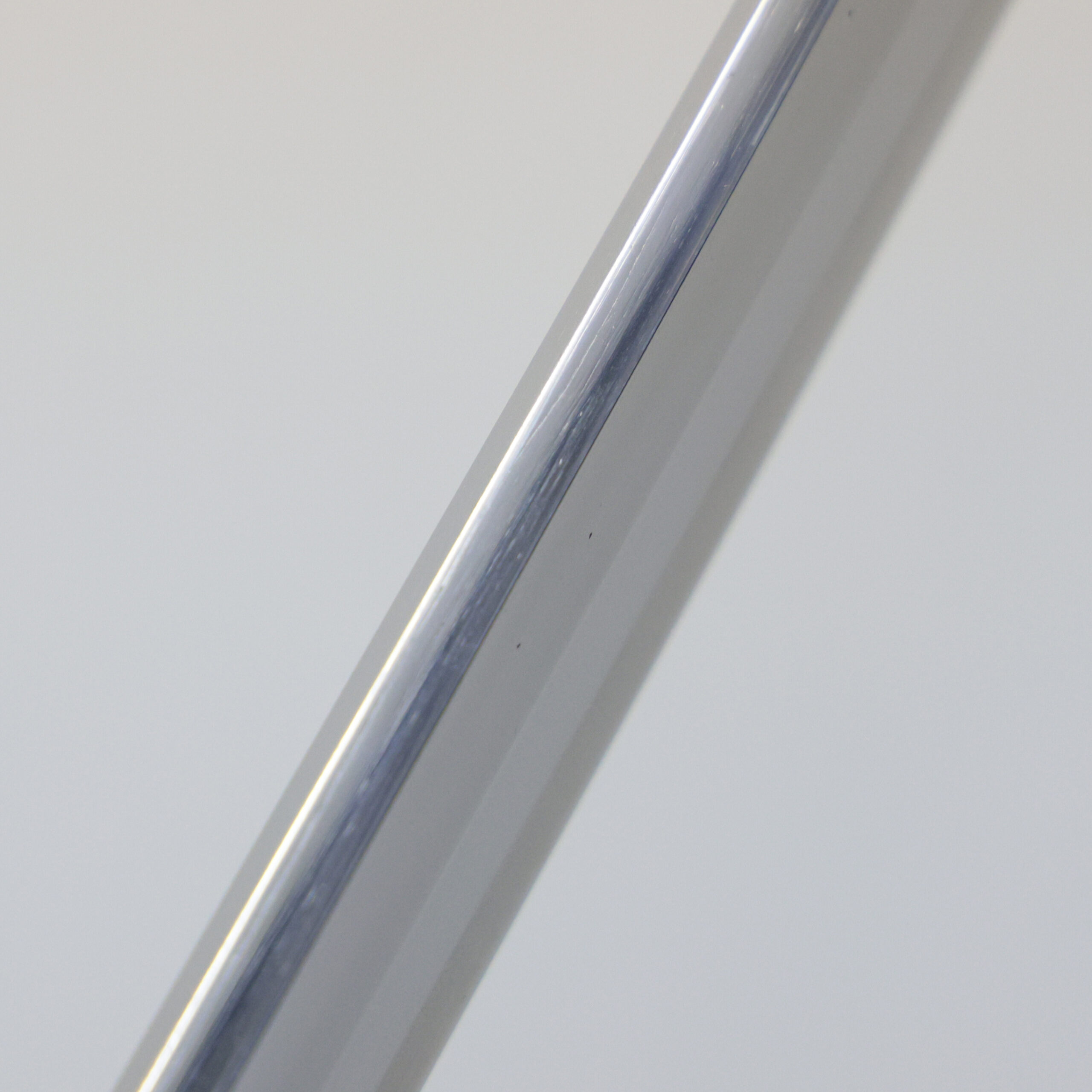
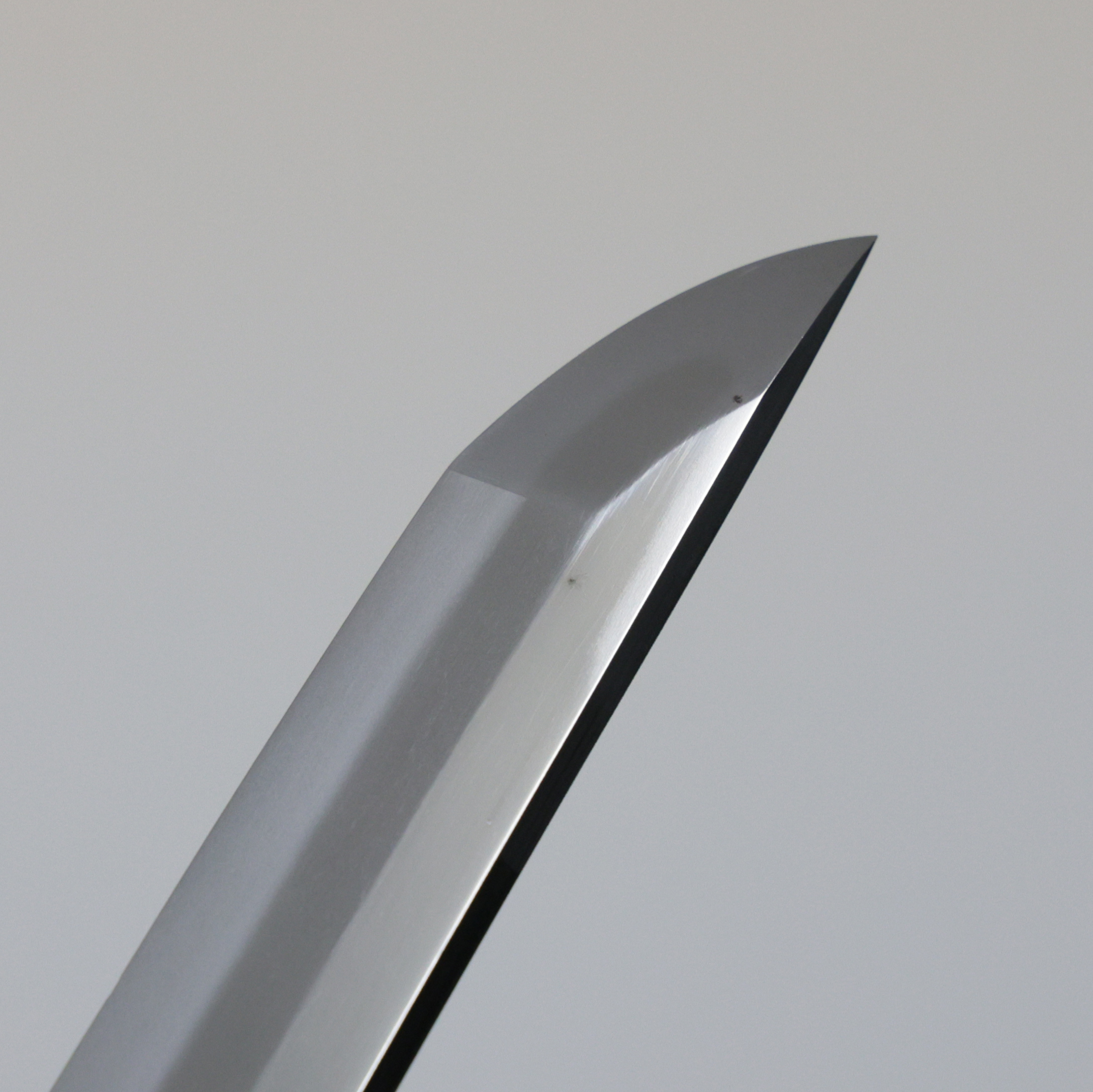
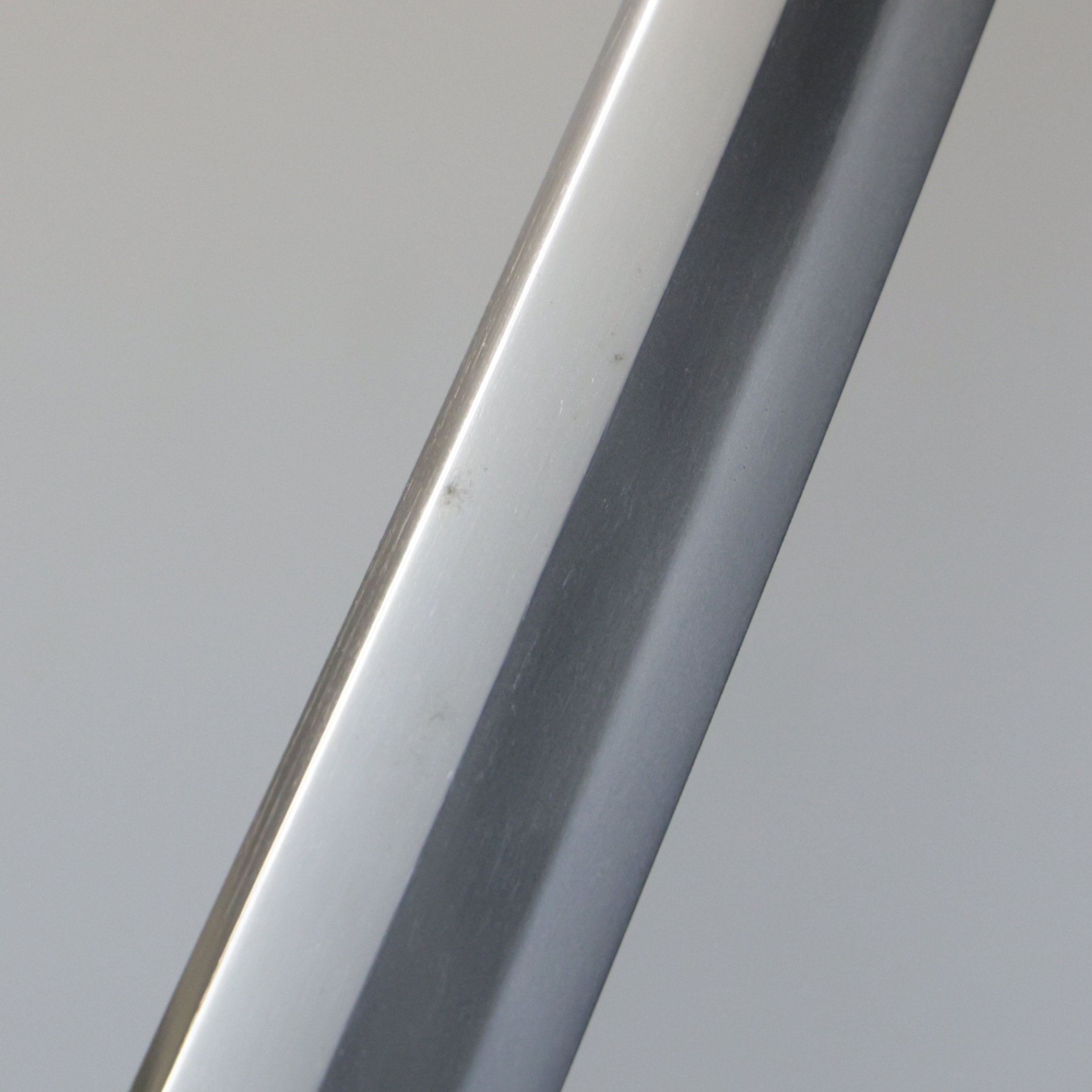
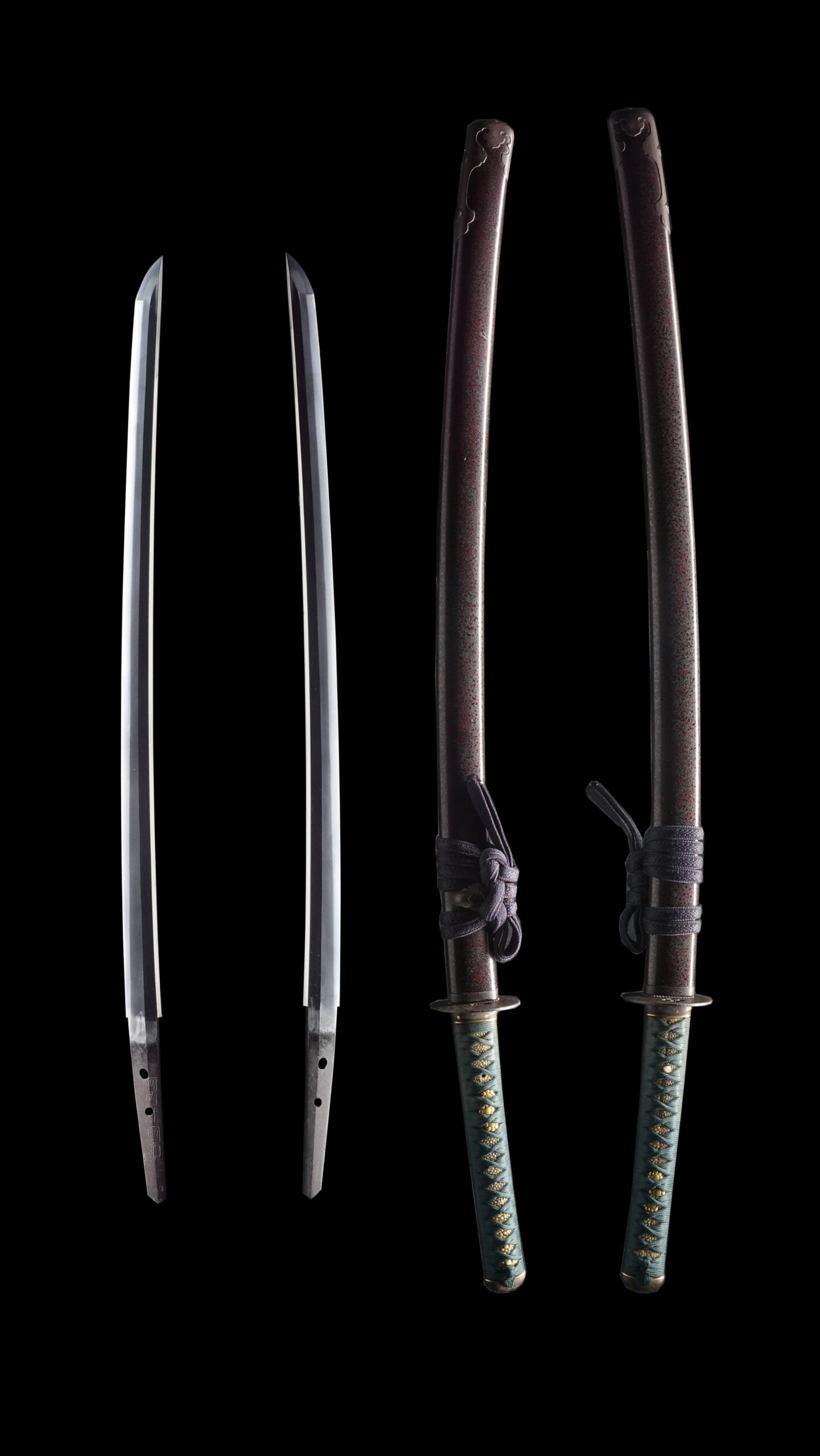
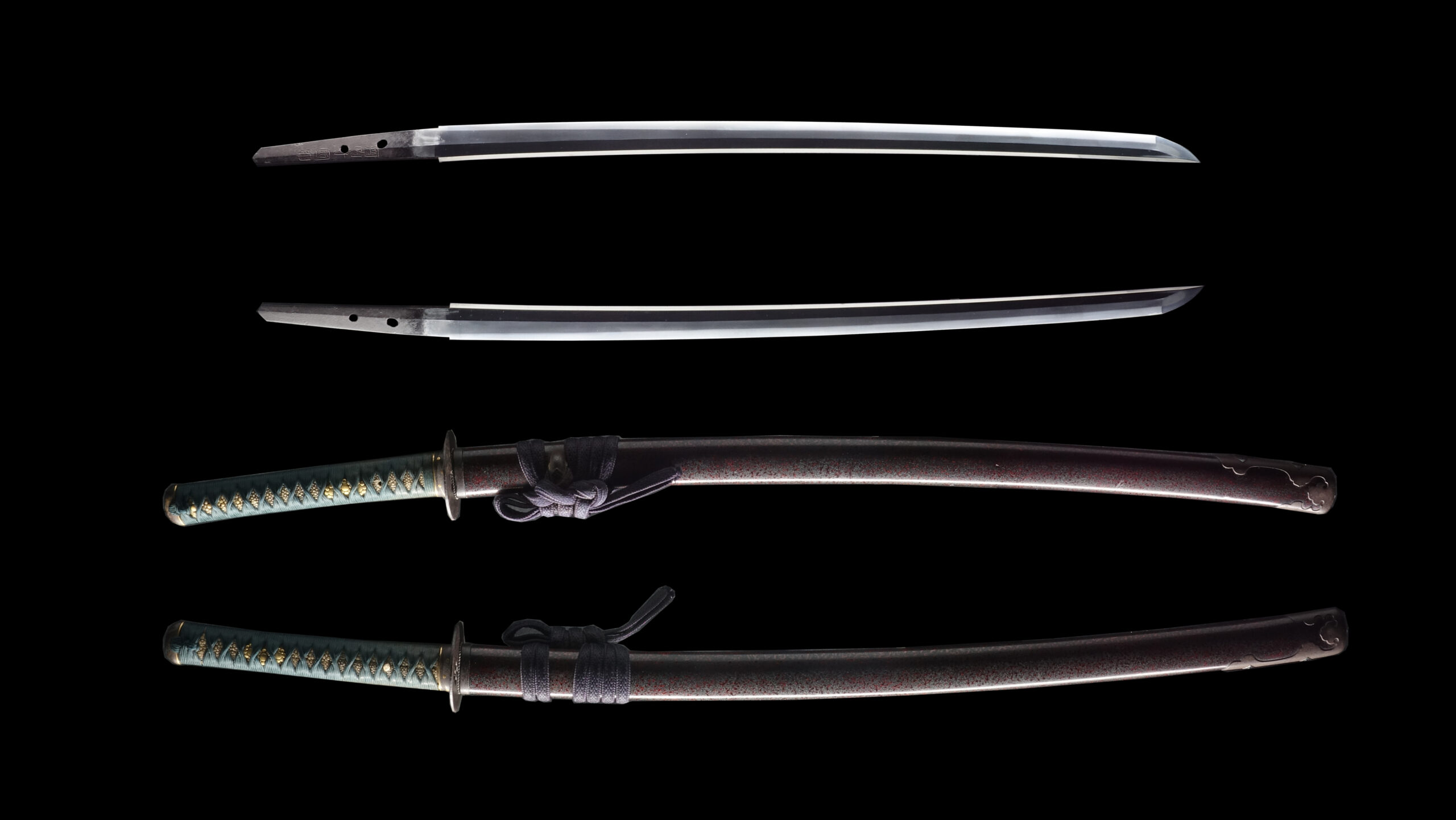
Shinto · Yamashiro
64 pieces on the market now
At Ichijo Horikawa in Kyoto, from Keicho 4 (1599), Horikawa Kunihiro gathered the pupils whose work the published sources name with his own as the opening of the shinto age. Kunihiro himself reached forging late and by a roundabout road. Born Tanaka and serving as a warrior under the Ito of Obi castle in Hyuga, he wandered the provinces after that house fell, forging where he stopped, his earliest dated blade cut in Hyuga in Tensho 4 (1576); his itinerant Tensho-uchi looked to late Soshu and late Seki, often run toward a hitatsura-like effect over devotional carving. The settlement in Kyoto changed that. There his stated aim, the sources write, lay in the revival of the Soshu-den tradition, the leaning strongest toward Shizu, and around that ideal he trained the men who carried his manner forward: Dewa no Kami Kunimichi, Kuniyasu, Osumi no Jo Masahiro, Echigo no Kami Kunitomo, the elder Kunisada and Kunisuke, with later and minor hands reaching Settsu, Echizen and Edo. Many of them, born like the master at Obi, followed him from Hyuga to the capital. The shared vocabulary is read first in the steel. The school forges an itame mixed with mokume that stands up, the grain raised into the loose, granular surface the commentaries name outright, the zanguri hada particular to Horikawa work, with ji-nie lying thick and chikei entering; on many blades a mizukage rises obliquely from the machi. Over that ground the prime manner is the Keicho-shinto sugata, wide with little taper and an extended chu-kissaki or o-kissaki, the build likened to a Nanbokucho odachi cut down, tempered in a notare and gunome with thick nie, sunagashi and long kinsuji, the nioiguchi often sinking into shizumi. Within that frame the pupils diverge sharply.
Kunimichi runs the flamboyant Shizu copy fully out and turns his boshi pointed in the Mishina manner, the Sanpin boshi the school otherwise does not show. Masahiro keeps the same Soshu-den worked at lower temperature, his temper calm and his mokume conspicuous; Kuniyasu and Kunitsugu stand closest of all to the master and signed for him. Kunitomo turns alone toward late Seki, his gunome round-headed and his chisel the finest in the group, and the elder Kunisada and Kunisuke carry the zanguri steel south into Osaka, the latter keeping the Ishido clove he was born to. Hiroyuki holds suguha over a blackish steel that recalls old Yamato, and the two Echizen Kunikiyo forge a dark, dense hokkoku-gane under a calm chu-suguha. A collector seeks Horikawa because the school stands at a hinge: Kunihiro is read as the first hand of the new-sword age, and the line he taught runs forward into the Osaka tradition through Kunisada and Kunisuke and into Echizen through Kunikiyo. To kantei the work, read the steel first, the standing zanguri surface and the oblique mizukage, then the sinking nioiguchi and the Soshu-revival notare with its sunagashi and kinsuji; the individual hand declares itself in the departures, Kunimichi's pointed boshi, Kunitomo's Seki gunome and compact tang, Kuniyasu's reversed file marks and two-character mei, Hiroyuki's kiri-yasuri. The founder and his closest pupils sit at the top of the line, Kunihiro signing almost everything he made, the large kata-ochi two-character mei beside his long residence signatures; because Kuniyasu, Masahiro, Kunitsugu and Hiromi worked as his daisaku, a share of the blades signed Kunihiro are in fact theirs. Provenance runs through the houses of the founder's own story and of the country, the Hyuga Ito he had served, the Shimazu of Kagoshima, the Imperial Family and Toyotomi Hideyori, with the tachi Kunihiro dedicated to the Hataeda Hachimangu still in the shrine's keeping. A signed Horikawa blade reaches a private collection only from time to time, carrying on its nakago the hand with which the new sword begins. Learn more →
| Smith | Era | Designated |
|---|---|---|
| Kunihiro國廣 | 1573-1613 | 147 |
| Kunimichi國路 | 1615-1624 | 75 |
| Kunisada國貞 | 1624-1646 | 87 |
| Kunitomo國儔 | 1596-1615 | 27 |
| Masahiro正弘 | 1596-1615 | 16 |
Kyōto: the revival workshop
The Shintō era was largely invented in Kyōto: Umetada Myōju’s workshop trained the movement, Horikawa Kunihiro raised a generation, and the Hon’ami appraisers, who held no forge, governed the meaning of famous blades.
A Hozon-certified blade judged to show notably superior workmanship and a better state of preservation. The bar is higher: re-tempered blades and most unsigned Muromachi/Edo works are excluded.
The NBTHK (Nihon Bijutsu Tōken Hozon Kyōkai, the Society for the Preservation of Japanese Art Swords) is a public-interest incorporated foundation founded in 1948 and supervised by Japan’s Agency for Cultural Affairs (Bunkachō); it is based at the Japanese Sword Museum in Tokyo. Its expert panels physically examine each submitted work (shinsa) and issue a certificate (kanteishō) ranking it by artistic and historical merit. NBTHK papers are the most widely recognized standard of authentication for Japanese swords and fittings.
NBTHK official siteReturns/exchanges limited to defects caused by shipping (except willful misconduct or gross negligence by the company); customers must contact within 72 hours of receiving the product.
¥1,200,000