Edo was the sword’s age of connoisseurship: the Hon’ami appraisers, the shogunal register of famous blades of 1719, and a thriving literature turned the sword into an object of study even as it ceased to be drawn in war.
 NihontoWatchNihontoWatch
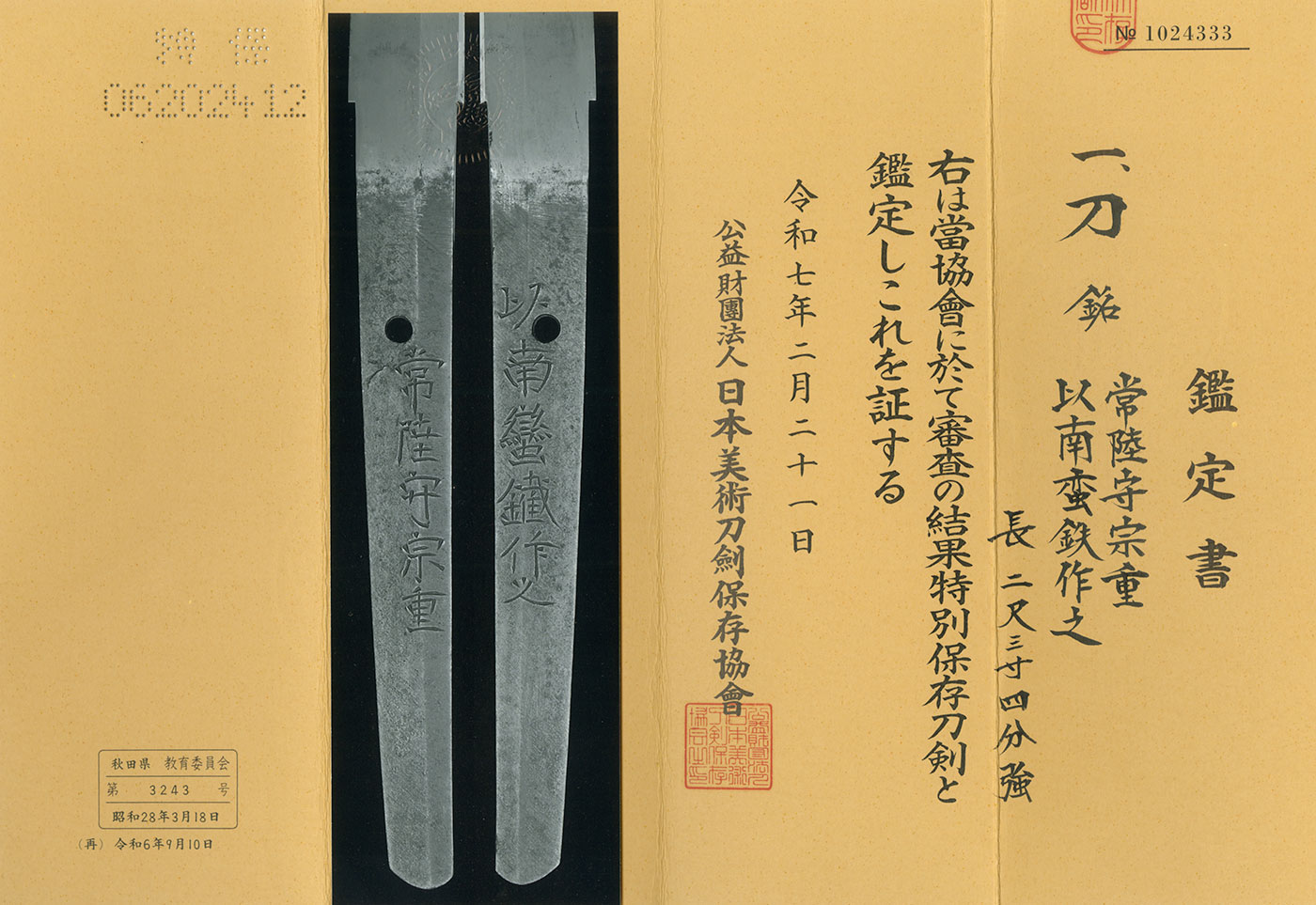
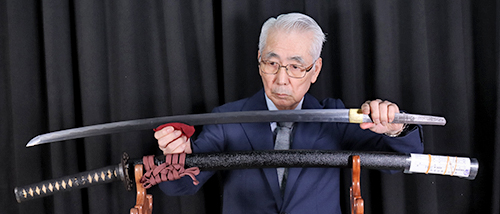
Ordering Number: AS25529Katana in Shirasaya with Koshirae (NBTHK Tokubetsu Hozon Token)Signature: Hitachi Kami MuneshigeMotte Nanbantetsu Saku Kore常陸守宗重以南蛮鉄作之Shinto: Chujosaku: SettsuWe classify swords into Saijyo Saku, Jyojyo Saku, Jyo Saku, and Regular Saku based on the swordsmith's skill.This work is ranked as Jyojyo Saku for Hitachi Kami Muneshige.Habaki: Single-layer suaka (raw copper) with gold iroe.Blade Length: 71.0 cm (27.95 in)Curvature (Sori): 2.0 cm (0.79 in)Mekugi-ana (peg hole): 1Width at Base (Motohaba): 2.96 cm (1.17 in)Width at Tip (Sakihaba): 1.84 cm (0.72 in)Thickness (Kasane): 0.70 cm (0.28 in)Sword Weight: 705 gramsShape: The blade has a somewhat wide mihaba with a standard kasane, deep curvature, and a slightly elongated kissaki.Jigane: The ko-itame hada is well-forged into a fine, high-quality jigane.Hamon: Begins as suguha (straight temper line) at the hamachi, then turns into gunome-midare (irregular wavy pattern).Sunagashi (flowing sand-like activity) is mixed within the gunome-midare, and the boshi turns back in ko-maru (small round).Features: Hitachi Kami Muneshige originally came from Harima Province.His real name was Tada Uhyoe, and he became a disciple of Tsuda Sukehiro.He first received the title of Hitachi Daijo.Because Nanban-tetsu (imported steel) was used, this is inscribed accordingly on the nakago (tang).At that time, swordsmiths favored Nanban-tetsu for its excellent cutting ability.Koshirae:Tsuba: A circular iron tsuba with chrysanthemum flowers in openwork (sukashi) carving.Signed Choshu Hagi Ju Kawai Tomonao Saku.Fuchikashira: Carved with a wave design on a shibuichi base.Saya: Black ishime-ji (stone-grain finish) saya.Menuki: Carved with a crane design on a shakudo base.NBTHK Tokubetsu Hozon TokenAoi Art estimation paper: Whole OshigataPlease note: the price does not include the shipping fees.Auction Starting Price:700,000JPY落札者ありRelated Items:Katana:Echigo no Kami Kanesada(NBTHK Tokubetsu Hozon Token)Katana:Osaka Gassan Sa
NihontoWatchOffered by Aoi Art
This piece has sold
Get an email when a new Muneshige piece hits the market.

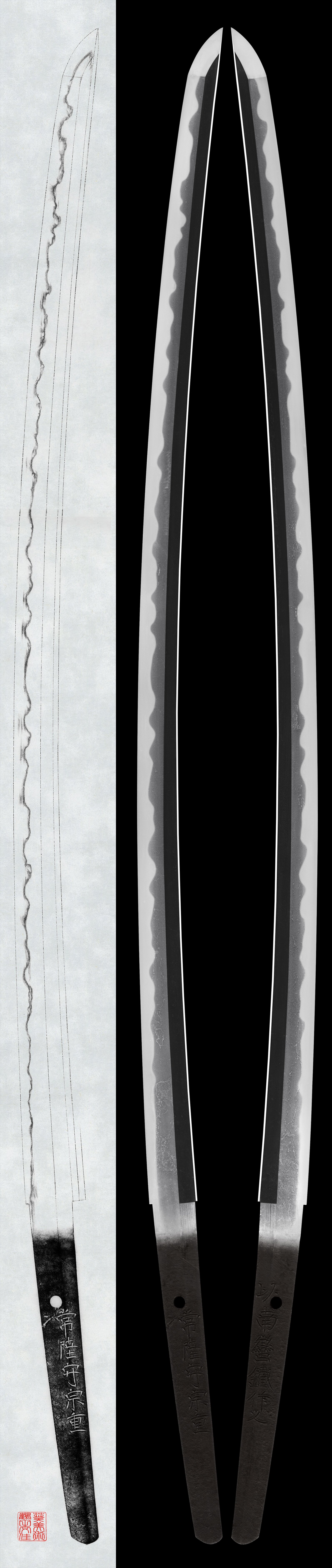
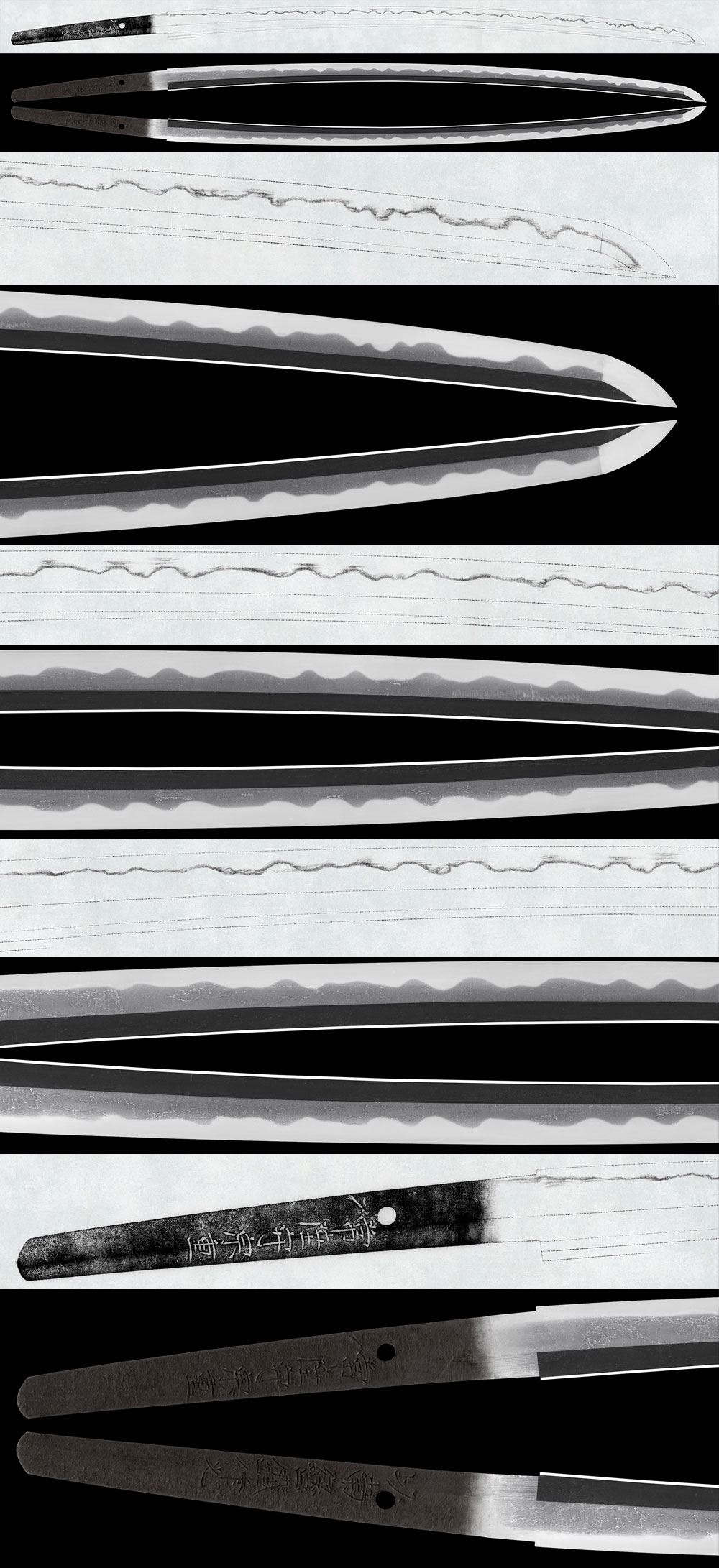
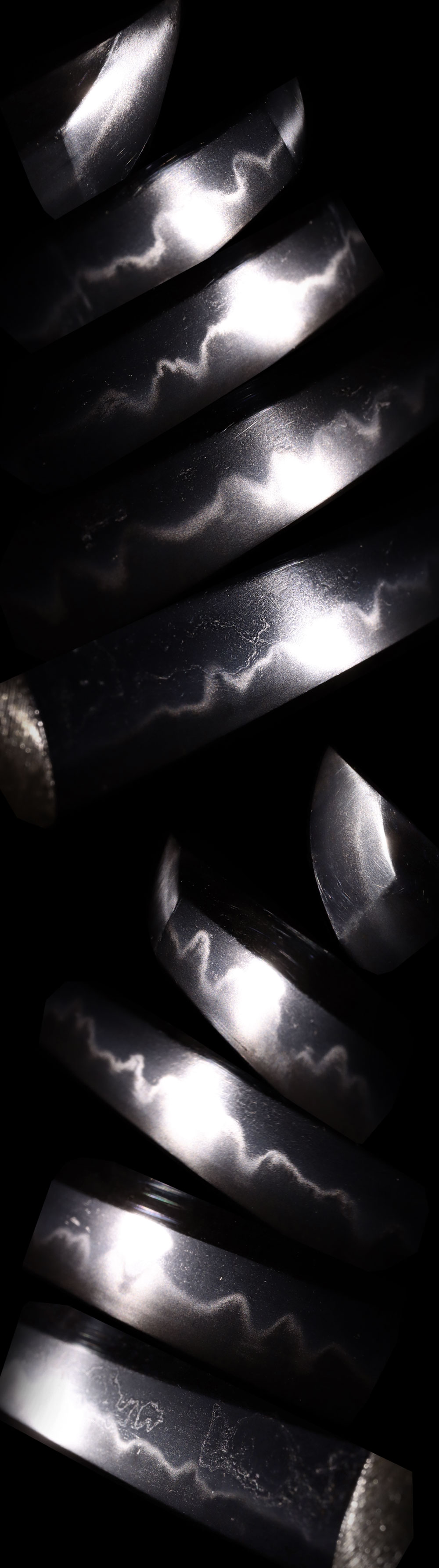

Settsu · around 1661-1673
Fujishiro Chu-jo saku · Tōken Taikan top 76%
1 piece on the market now
The Edo period (1615 to 1868)
Edo was the sword’s age of connoisseurship: the Hon’ami appraisers, the shogunal register of famous blades of 1719, and a thriving literature turned the sword into an object of study even as it ceased to be drawn in war.
A Hozon-certified blade judged to show notably superior workmanship and a better state of preservation. The bar is higher: re-tempered blades and most unsigned Muromachi/Edo works are excluded.
The NBTHK (Nihon Bijutsu Tōken Hozon Kyōkai, the Society for the Preservation of Japanese Art Swords) is a public-interest incorporated foundation founded in 1948 and supervised by Japan’s Agency for Cultural Affairs (Bunkachō); it is based at the Japanese Sword Museum in Tokyo. Its expert panels physically examine each submitted work (shinsa) and issue a certificate (kanteishō) ranking it by artistic and historical merit. NBTHK papers are the most widely recognized standard of authentication for Japanese swords and fittings.
NBTHK official siteIf you wish to return an item, please notify us within 3 days of receipt. After this period we cannot accept cancellations. Please ship the return to us within 5 business days. Cancellation is conditional on the item being kept in the same condition as at the time of sale, so please handle it with care.