The twentieth century nearly killed the craft twice: wartime distortion, then the occupation ban. The NBTHK’s founding in 1948 and licensed forging from 1953 rebuilt the sword as an art, crowned by Living National Treasures and the mukansa rank.
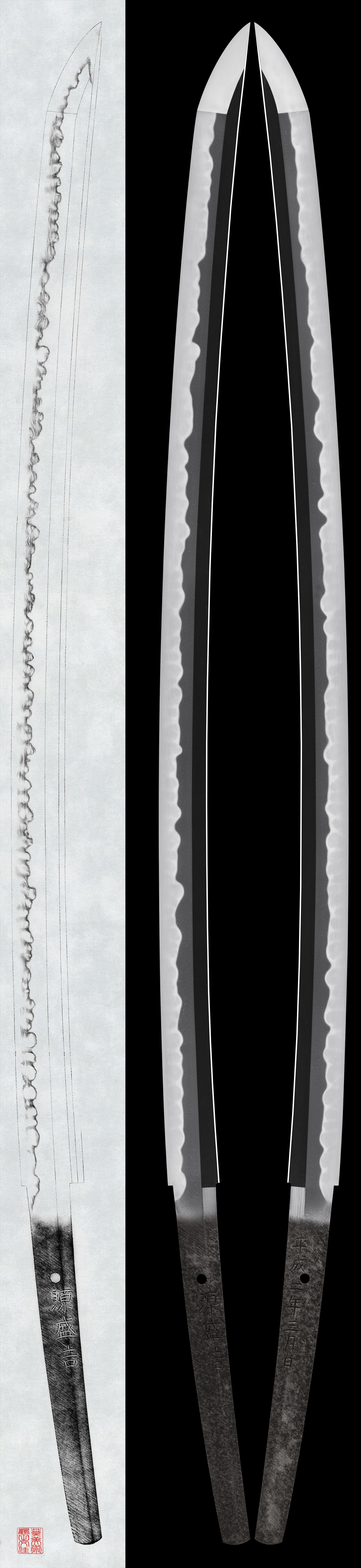
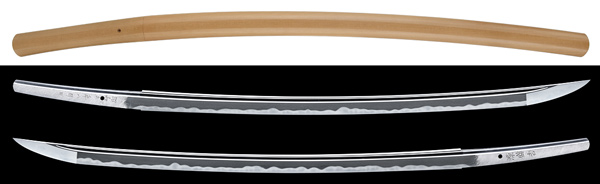
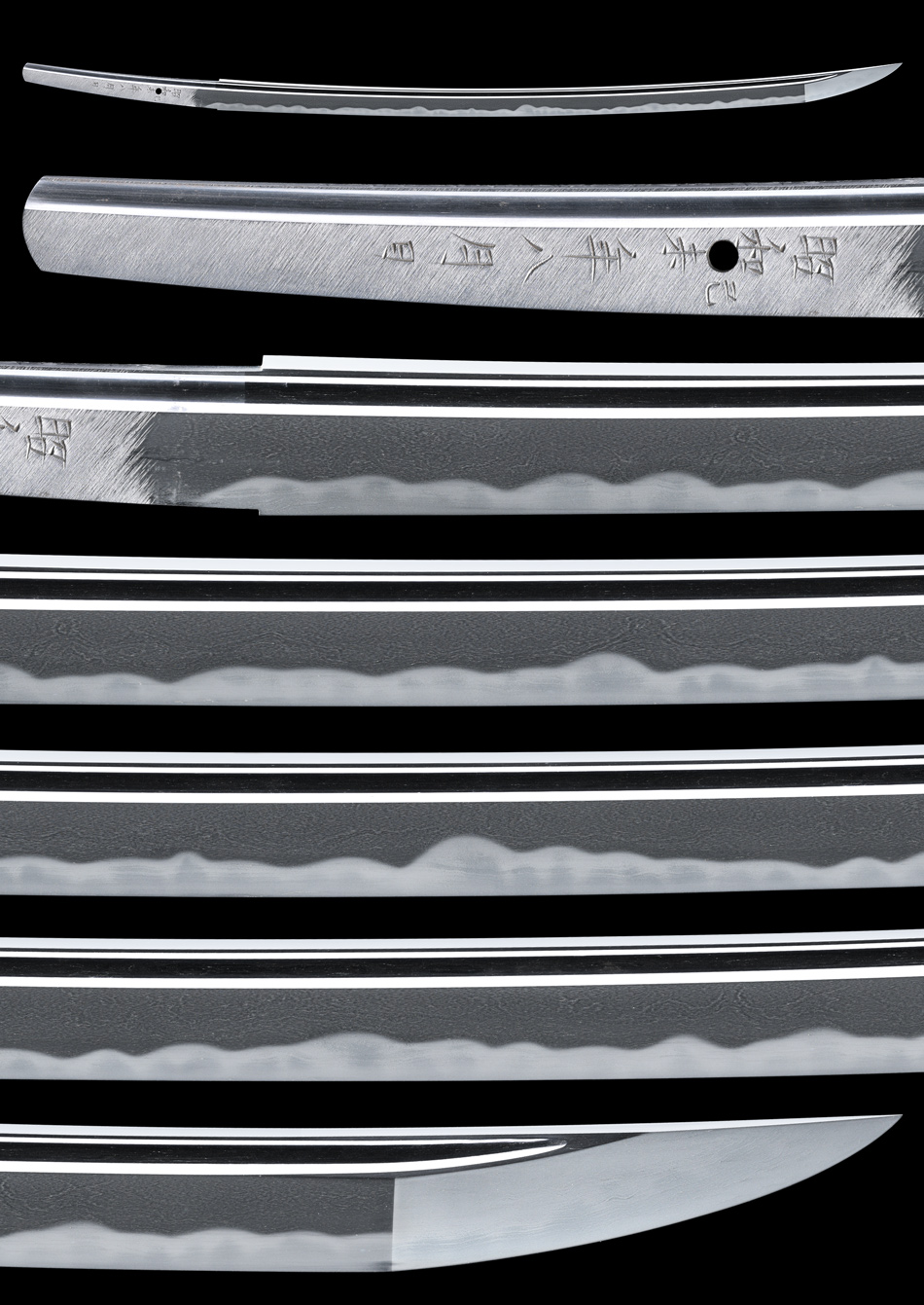
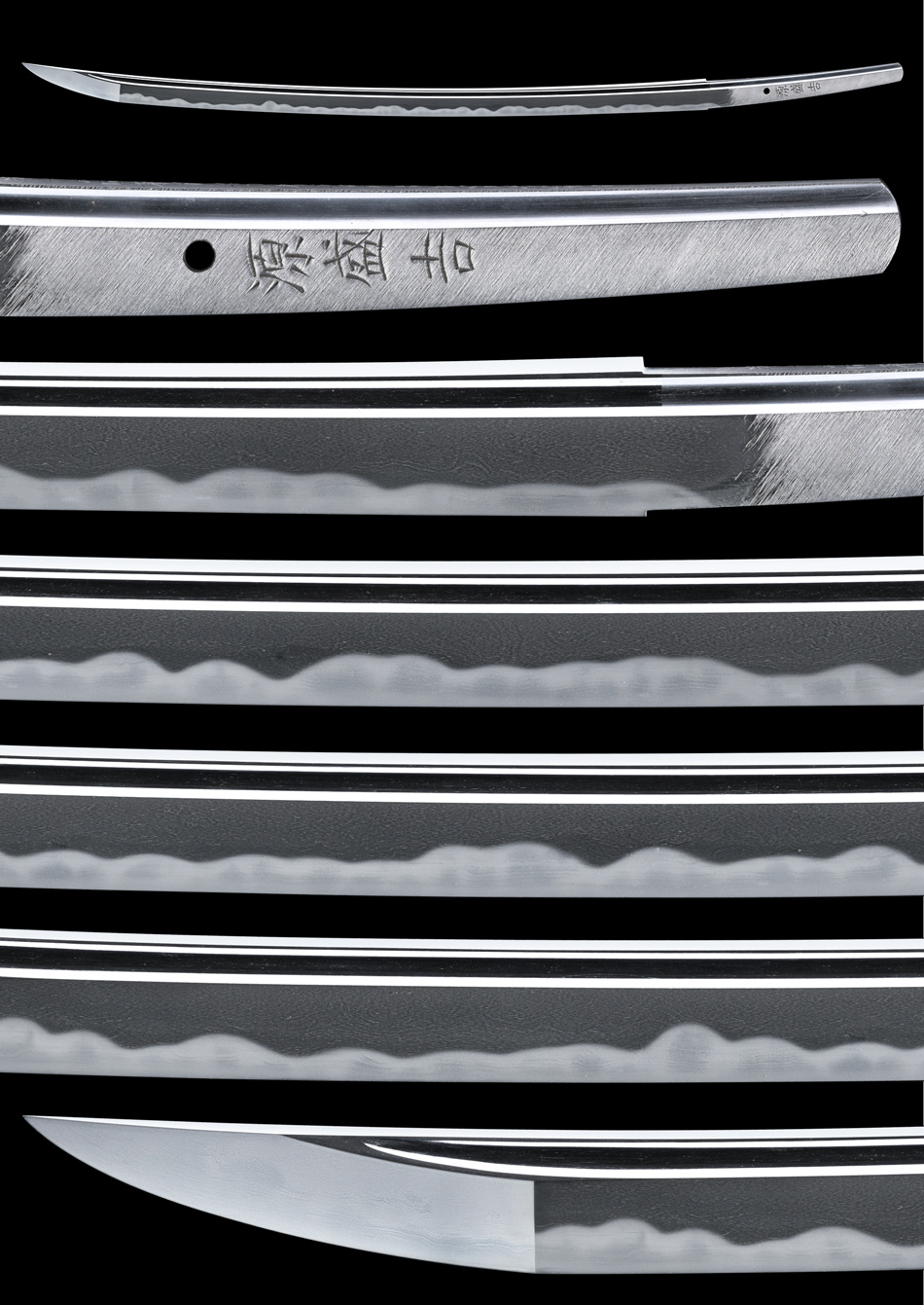
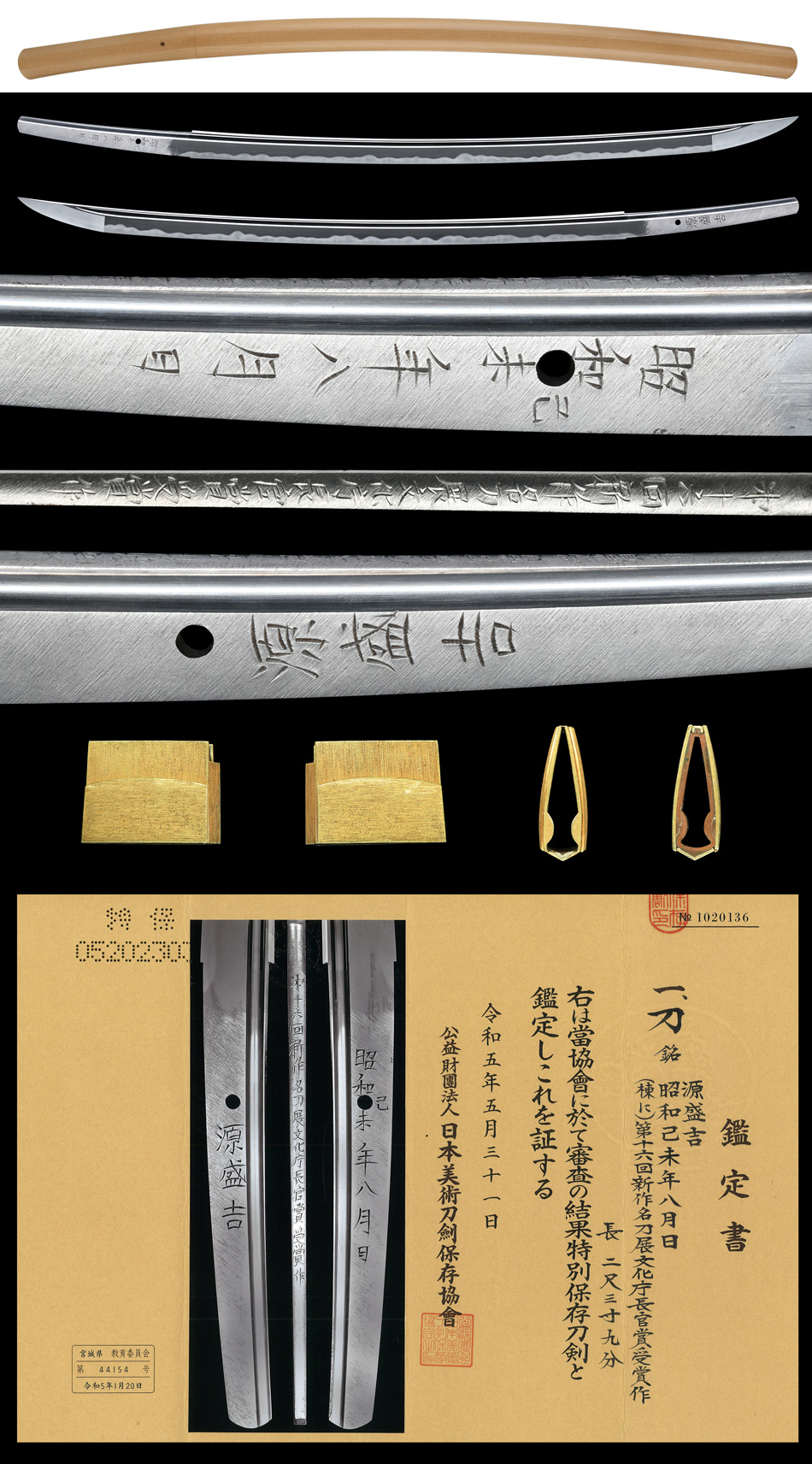
This katana is a masterpiece by Minamoto-no Moriyoshi, a renowned modern swordsmith from Kumamoto, born in 1920. He was known as a master of Kiyomaro-utsushi (reproductions of Kiyomaro's work) and was designated a Mukansa (unexamined) swordsmith in 1985. The blade features a robust form with a wide body and thick kasane, a moderate sori, and a large kissaki, characteristic of Kiyomaro's style. The jigane is a well-forged itame with thick ji-nie and strong chikei, while the hamon is a vibrant gunome-choji-midare with abundant nie, kinsuji, and sunagashi, culminating in a midarekomi boshi with a pointed, shallow return.
 NihontoWatch
mei · Gendaito · nagasa 72.4cm · sori 1.8cm

Kumamoto · around 1926-1989
8 pieces on the market now
Shōwa to the present: destruction and revival
The twentieth century nearly killed the craft twice: wartime distortion, then the occupation ban. The NBTHK’s founding in 1948 and licensed forging from 1953 rebuilt the sword as an art, crowned by Living National Treasures and the mukansa rank.
A Hozon-certified blade judged to show notably superior workmanship and a better state of preservation. The bar is higher: re-tempered blades and most unsigned Muromachi/Edo works are excluded.
The NBTHK (Nihon Bijutsu Tōken Hozon Kyōkai, the Society for the Preservation of Japanese Art Swords) is a public-interest incorporated foundation founded in 1948 and supervised by Japan’s Agency for Cultural Affairs (Bunkachō); it is based at the Japanese Sword Museum in Tokyo. Its expert panels physically examine each submitted work (shinsa) and issue a certificate (kanteishō) ranking it by artistic and historical merit. NBTHK papers are the most widely recognized standard of authentication for Japanese swords and fittings.
NBTHK official siteNo cooling-off period or returns; refund only if the purchased sword is proven fake, capped at purchase price (excludes commission sales, accessories, auction items).
This katana is a masterpiece by Minamoto-no Moriyoshi, a renowned modern swordsmith from Kumamoto, born in 1920. He was known as a master of Kiyomaro-utsushi (reproductions of Kiyomaro's work) and was designated a Mukansa (unexamined) swordsmith in 1985. The blade features a robust form with a wide body and thick kasane, a moderate sori, and a large kissaki, characteristic of Kiyomaro's style. The jigane is a well-forged itame with thick ji-nie and strong chikei, while the hamon is a vibrant gunome-choji-midare with abundant nie, kinsuji, and sunagashi, culminating in a midarekomi boshi with a pointed, shallow return.
NihontoWatchmei · Gendaito · nagasa 72.4cm · sori 1.8cm
Kumamoto · around 1926-1989
8 pieces on the market now
Shōwa to the present: destruction and revival
The twentieth century nearly killed the craft twice: wartime distortion, then the occupation ban. The NBTHK’s founding in 1948 and licensed forging from 1953 rebuilt the sword as an art, crowned by Living National Treasures and the mukansa rank.
A Hozon-certified blade judged to show notably superior workmanship and a better state of preservation. The bar is higher: re-tempered blades and most unsigned Muromachi/Edo works are excluded.
The NBTHK (Nihon Bijutsu Tōken Hozon Kyōkai, the Society for the Preservation of Japanese Art Swords) is a public-interest incorporated foundation founded in 1948 and supervised by Japan’s Agency for Cultural Affairs (Bunkachō); it is based at the Japanese Sword Museum in Tokyo. Its expert panels physically examine each submitted work (shinsa) and issue a certificate (kanteishō) ranking it by artistic and historical merit. NBTHK papers are the most widely recognized standard of authentication for Japanese swords and fittings.
NBTHK official siteNo cooling-off period or returns; refund only if the purchased sword is proven fake, capped at purchase price (excludes commission sales, accessories, auction items).