Muromachi turned sword making into an industry: the uchigatana rose with massed infantry warfare, Osafune and Seki produced bundle swords beside custom orders, and the Ming trade carried Japanese blades abroad by the tens of thousands.
 NihontoWatchNihontoWatch
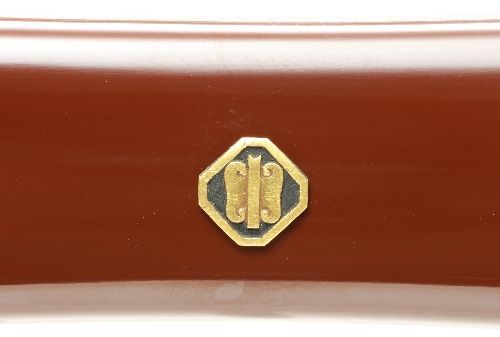
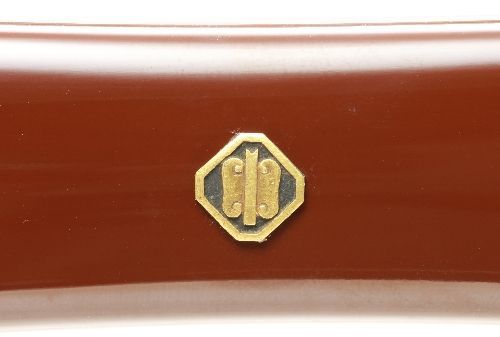
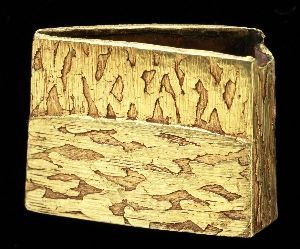
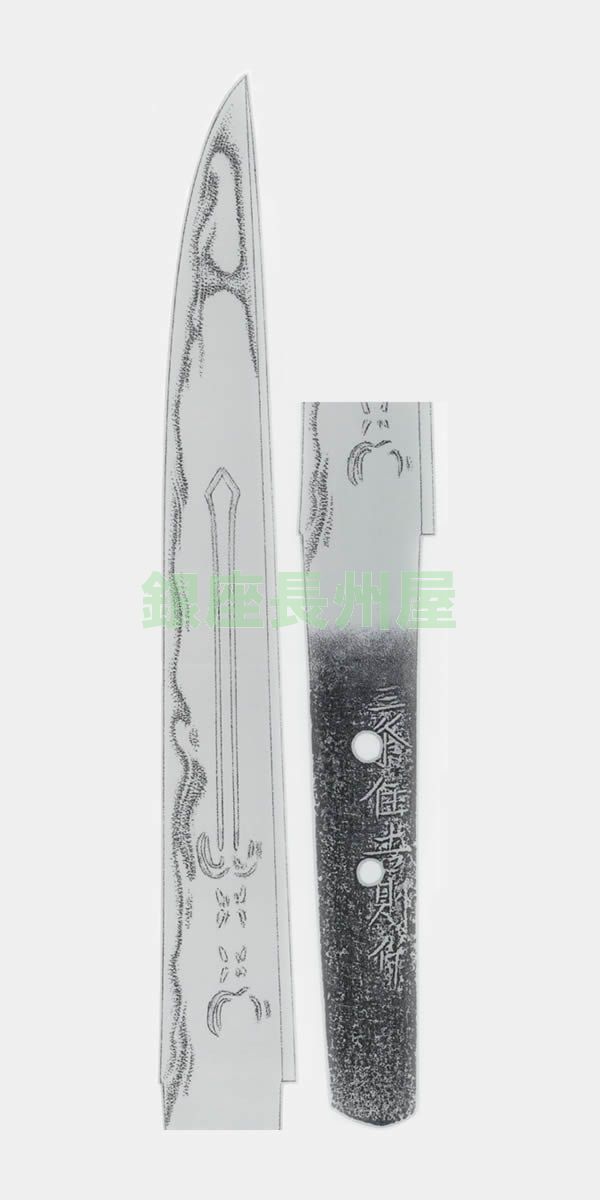
三条吉則は室町後期文明頃の京都の刀工で、遺作には精良な地鉄に梵字や倶利迦羅の刀身彫刻が映えた刀、脇差、槍等があり、「於和泉國作」「於越前」の駐鎚銘のある作が知られている。これは、室町将軍と守護大名の間の様々な思惑に起因する軍勢の移動に、吉則など山城鍛冶が従った事を示唆するもの。別けても「三条布施藤原吉則於越前作小布施四郎左衛門源久慶重代不可渡他手」の銘のある刀(第十八回重要刀剣)は、吉則の姓が布施であったことや越前朝倉氏の領国で鎚を振るった事実を伝えて大変興味深い(注)。 鎧通しとされたこの短刀は、充分な身幅に元来の重ねが厚く、身幅の割に寸法を控え、わずかに内反りが付いてふくらが枯れ、茎は掌に丁度よく収まる長さに仕立てられて片手での操作性優れ、敵の鎧の隙間を突くに適した鋭利な構造。しかも詰み澄んだ小板目鍛えの地鉄に三鈷柄剣と護摩箸の彫がくっきりと映え、美観が頗る優れている。地景が細密に入った地鉄は刃寄り深く澄み、沸映りが鮮やかに立ち、彫と地肌の景色から信國以来の京の系譜は歴然。浅い湾れに互の目を間遠く配した刃文は、小沸が付いて匂口明るく、刃境に湯走り、打ちのけが掛かり、刃中も沸で明るい。帽子は焼を充分に残して乱れ込み、やや突き上げて長めに返る。茎の保存状態は良好で、細鏨による小振りの銘字が鮮明に遺されている。戦国武将が肌身離さず所持した短刀の全貌を伝える優品となっている。 幕政時代には、守り刀として懐中に備えられた作であろう、隅切角に唐団扇紋の金目貫が映えた、茶潤塗鞘の合口拵が付されている。 注...同族と思われる平安城長吉には三河打がある。また、伊勢村正との交流も考えられている。
NihontoWatchOffered by Choshuya
This piece has sold
Get an email when a new Heianjo Yoshinori piece hits the market.






Yamashiro-den · Yamashiro · around 1469-1487
Fujishiro Jo saku · Tōken Taikan top 31%
2 pieces on the market now
Where Yoshinori stands among comparable artisans: across all of nihontō, and within tradition, era, and period. The tiers (Foremost · Leading · Major · Notable) weigh official designations from the NBTHK and Japan's Agency for Cultural Affairs, together with historical honors of lasting repute such as the Sansaku and Meibutsu-chō.
Select a lens to see how it's measured.
Yamashiro-den · Kyoto
11 pieces on the market now
The Heianjō school (平安城) of swordsmiths represents the principal lineage of Kyōto sword production during the Muromachi period. "Heianjō" is the classical name for Kyōto (Heian-kyō), and the school's smiths — resident in the Sanjō district of the capital — signed variously with the 平安城 (Heianjō) and 三条 (Sanjō) prefixes, a usage that has often caused them to be confused with the far earlier Sanjō school of Munechika. They are an entirely distinct, late group: its two representative masters, Heianjō Nagayoshi (平安城長吉, also read Chōkichi) and Sanjō Yoshinori (三条吉則, of the Fuse 布施 family), are counted as the leading makers of Muromachi-period Kyō-mono (Kyoto-made blades), carrying forward the capital's swordmaking after the Nanbokuchō-period Nobukuni and Hasebe lineages. Both names continued through several generations from the late Nanbokuchō era into the sixteenth century, and the smiths are known to have travelled to forge (desaku) in provinces such as Izumi, Mikawa, and Echizen during the late Muromachi period. The Heianjō style is dominated by a flamboyant hitatsura (full-temper) idiom adopted from Sōshū tradition: a foundation of large gunome-midare mixed with chōji, togariba, and yahazu-ba, with abundant tobiyaki and muneyaki spreading temper across the entire blade surface, nie adhering strongly, and sunagashi and kinsuji coursing through a bright, clear nioiguchi.
The finest examples are so accomplished that they are difficult to distinguish from late Sōshū (Sue-Sōshū) work. A quieter suguha- and ko-notare-based mode close to the Nobukuni tradition is also seen. High-quality horimono — kurikara, bonji, suken, and gomabashi — frequently accompany the blades. The school is not to be confused with the unrelated Heianjō-zōgan (平安城象嵌) inlay tradition of tōsōgu makers. Learn more →
| Smith | Era | Designated |
|---|---|---|
| Nagayoshi長吉 | 1469-1492 | 15 |
| Yoshinori吉則 | 1469-1487 | 3 |
| Nagayoshi長吉 | 1449-1452 | 0 |
| Nobusada信貞 | 1346-1370 | 0 |
| Yoshinaga吉長 | 1381-1384 | 0 |
The Muromachi period (1392 to 1573)
Muromachi turned sword making into an industry: the uchigatana rose with massed infantry warfare, Osafune and Seki produced bundle swords beside custom orders, and the Ming trade carried Japanese blades abroad by the tens of thousands.
A Hozon-certified blade judged to show notably superior workmanship and a better state of preservation. The bar is higher: re-tempered blades and most unsigned Muromachi/Edo works are excluded.
The NBTHK (Nihon Bijutsu Tōken Hozon Kyōkai, the Society for the Preservation of Japanese Art Swords) is a public-interest incorporated foundation founded in 1948 and supervised by Japan’s Agency for Cultural Affairs (Bunkachō); it is based at the Japanese Sword Museum in Tokyo. Its expert panels physically examine each submitted work (shinsa) and issue a certificate (kanteishō) ranking it by artistic and historical merit. NBTHK papers are the most widely recognized standard of authentication for Japanese swords and fittings.
NBTHK official siteIf, due to our fault, the item differs significantly from its proper condition, the item may be returned. Cooling-off is within one week of the item's arrival.