Osafune Norimitsu of the Eikyo to Kyotoku eras is known from four dated works: a tanto of Eikyo 2 (1430), tachi of Eikyo 10 (1438) and Bun'an 2 (1445), and a tachi of Kyotoku 2 (1453) that was designated Juyo Token at the 43rd session and raised to Tokubetsu Juyo the following year. The published sources trace the name back to a first Norimitsu said to have been a pupil of Nagamitsu, whose tanto dated Kagen 3 survives. They record the meikan sequence in full: 「銘鑑では, これを初代とし, 二代を延文頃, 三代が応永で家助の子とし, 四代が永享頃, 五代が長禄・寛正頃で, 以後室町末期まで名跡の継承があったことを記している」 (the meikan count that smith as the first generation, a second around Enbun, a third in Oei as the son of Iesuke, a fourth around Eikyo, and a fifth around Choroku and Kansho, with the name carried on to the end of the Muromachi period).
Within that sequence the published sources place the present smith as the fourth. They note that works up to the Oei era at the start of the Muromachi period are very few; one paper puts it that the line lapsed and was revived in the Muromachi period[[c:1]]. By contrast, the maker of the Kyotoku tachi is held to be the fourth generation of the meikan, with comparatively many surviving works, and famed alongside Sukemitsu as one of the two pillars of Eikyo Bizen[[c:2]]. The paper on the Bun'an tachi gives his common name: 「この文安の則光はその四代目にあたり, 五郎左衛門を名のっている」.
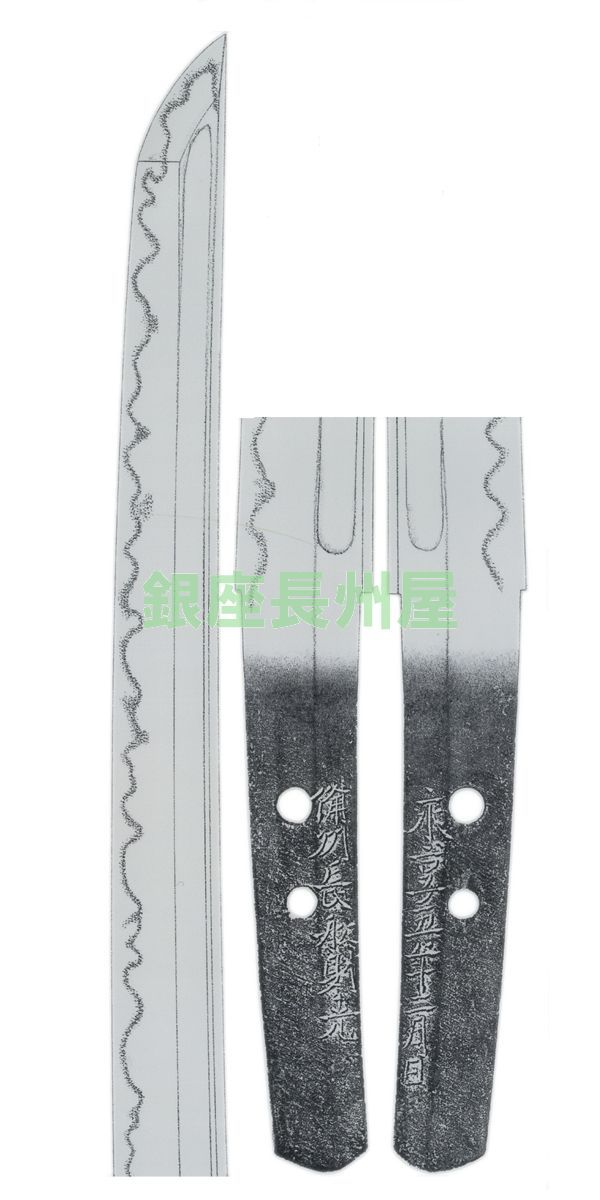
His tachi share a recognisable manner. On the Kyotoku tachi the ko-itame is finely forged, with minute ji-nie, fine chikei and a clear midare-utsuri. The hamon is based on gunome open at the base, mixed with angular ko-gunome, ko-choji and pointed elements. Ashi and yo enter freely, the nioiguchi is slightly tight with ko-nie, and there are scattered tobiyaki. The boshi runs in irregular, small and round on the omote and pointed on the ura, with fine hakikake. The published sources find the features of Norimitsu well displayed here. They call it a masterpiece among his works, more varied than usual in the rise and fall of the temper and in its ashi and yo[[c:3]].
The Bun'an tachi shows the same pattern: a midare-utsuri in the ji, gunome open at the base with a choji feeling, ashi and yo, and a boshi that runs in and turns back pointed. Its paper reads this as the inheritance of the Oei Bizen manner, the nioiguchi bright and clear[[c:4]]. The Eikyo 10 tachi, long even after shortening, has a flowing itame with mokume that tends to stand, and a hamon of gunome mixed with choji and ko-choji, deep in nioi. The published sources write 「この太刀は姿・作柄にいまなお応永備前の風を保ち, 地刃の出来が見事である」 (in shape and workmanship this tachi still keeps the manner of Oei Bizen, and its ji and ha are splendid).
The Eikyo 2 tanto is a different register. It is hira-zukuri, without sori and somewhat thick, with Sanskrit characters carved on both faces. Over a well-forged itame with bo-utsuri runs a naka-suguha in nioi-deki with a little ko-nie. The published sources call it one of his representative works and find in it the features of Osafune work of the period[[c:5]].
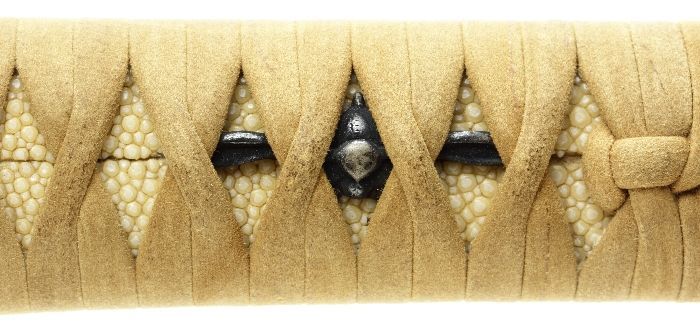
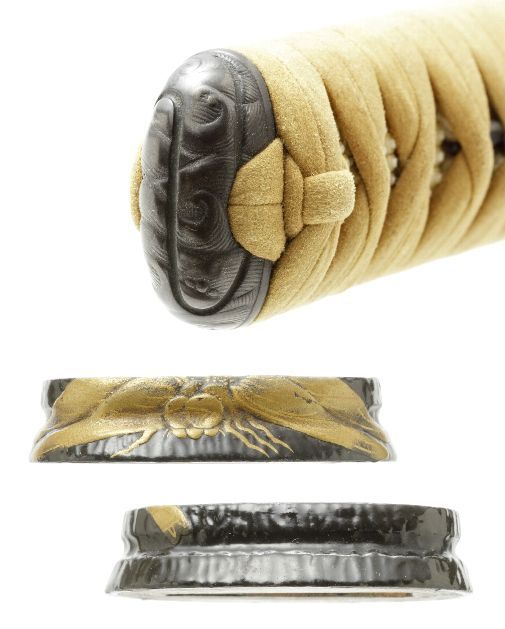
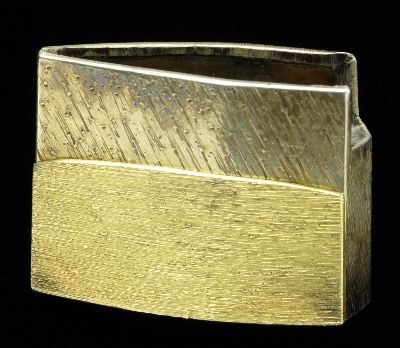
The Kyotoku tachi comes with a contemporary black-lacquered tachi koshirae, an iron tachi chain fitting, a silver brocade tachi bag woven with large chrysanthemums on a dark blue field, and a vermilion-lacquered box. The published sources describe the mounting as a valuable example of an archaic military black-lacquered tachi koshirae that carries the Nanbokucho style[[c:6]]. They consider the bag a very rare Japanese silver brocade datable to the Muromachi period.











 NihontoWatch