 NihontoWatchNihontoWatch
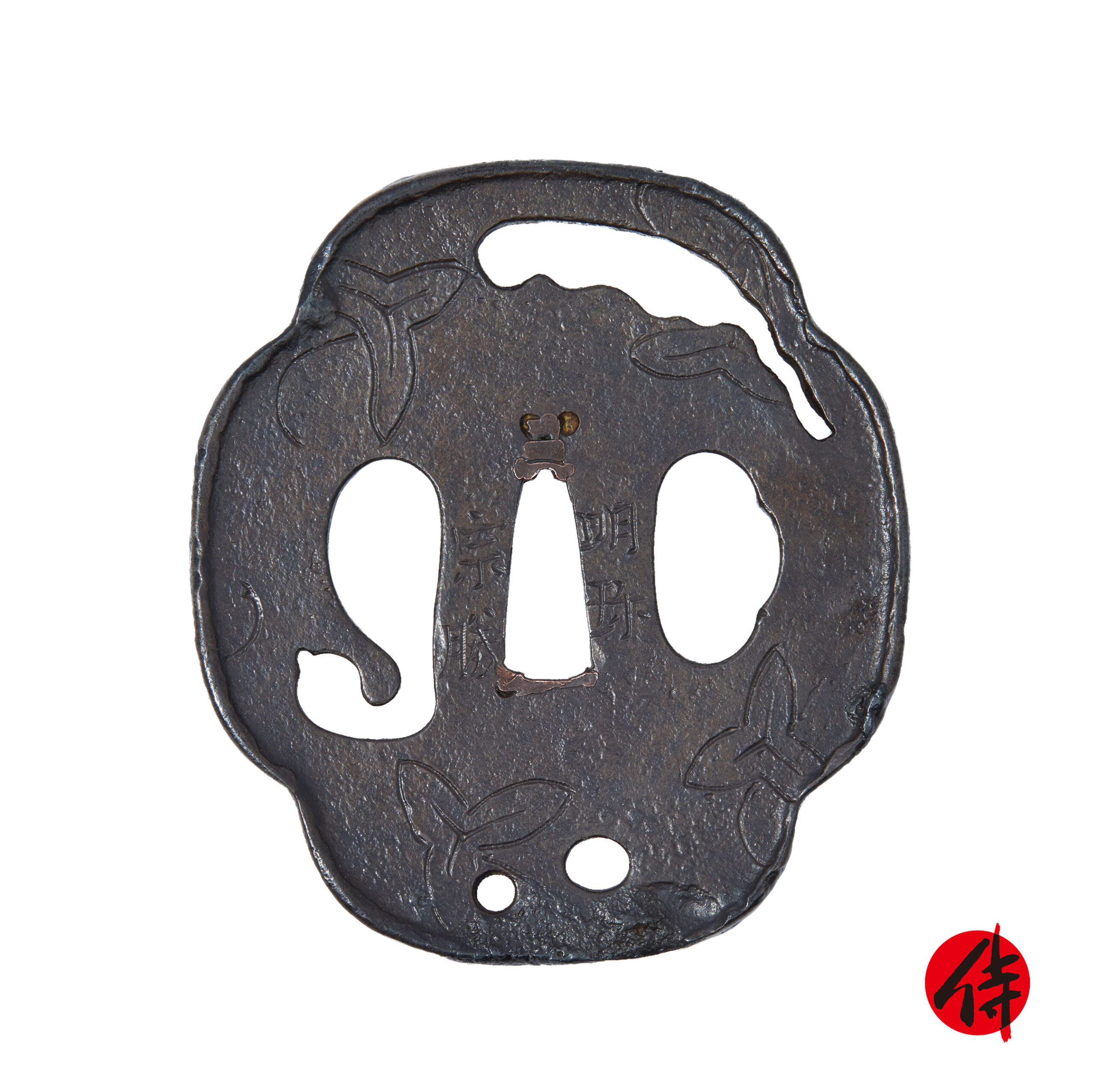
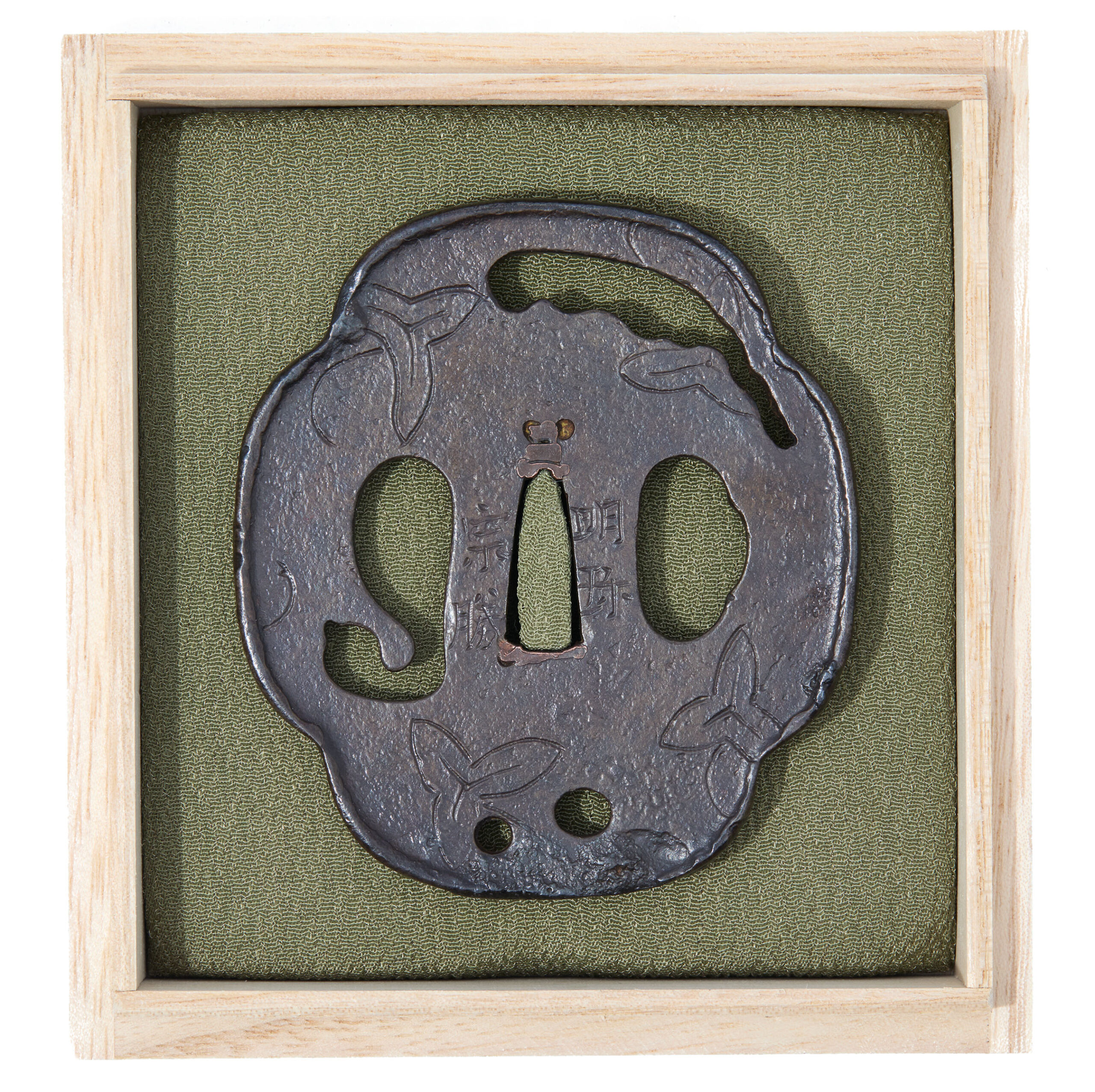
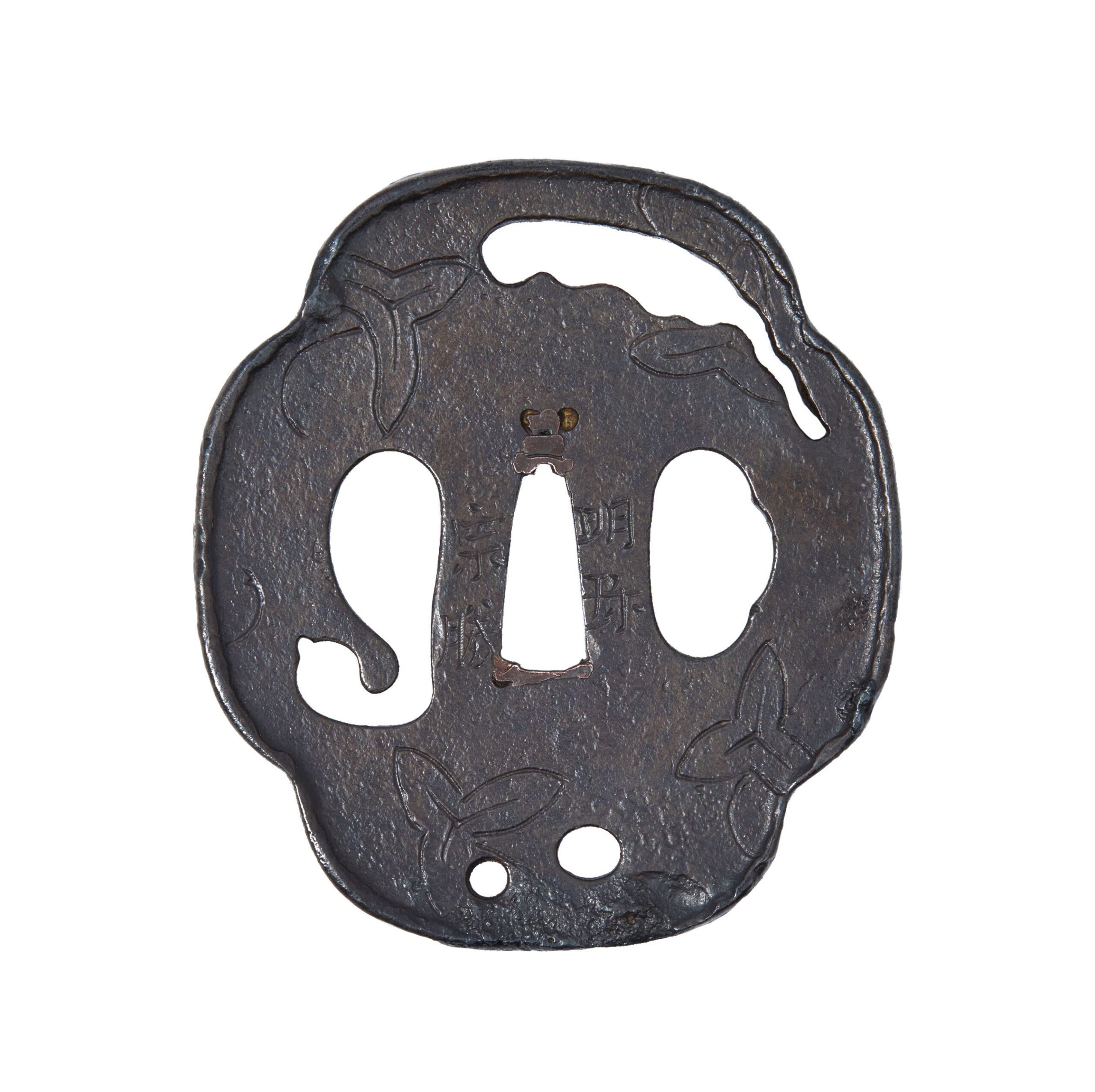
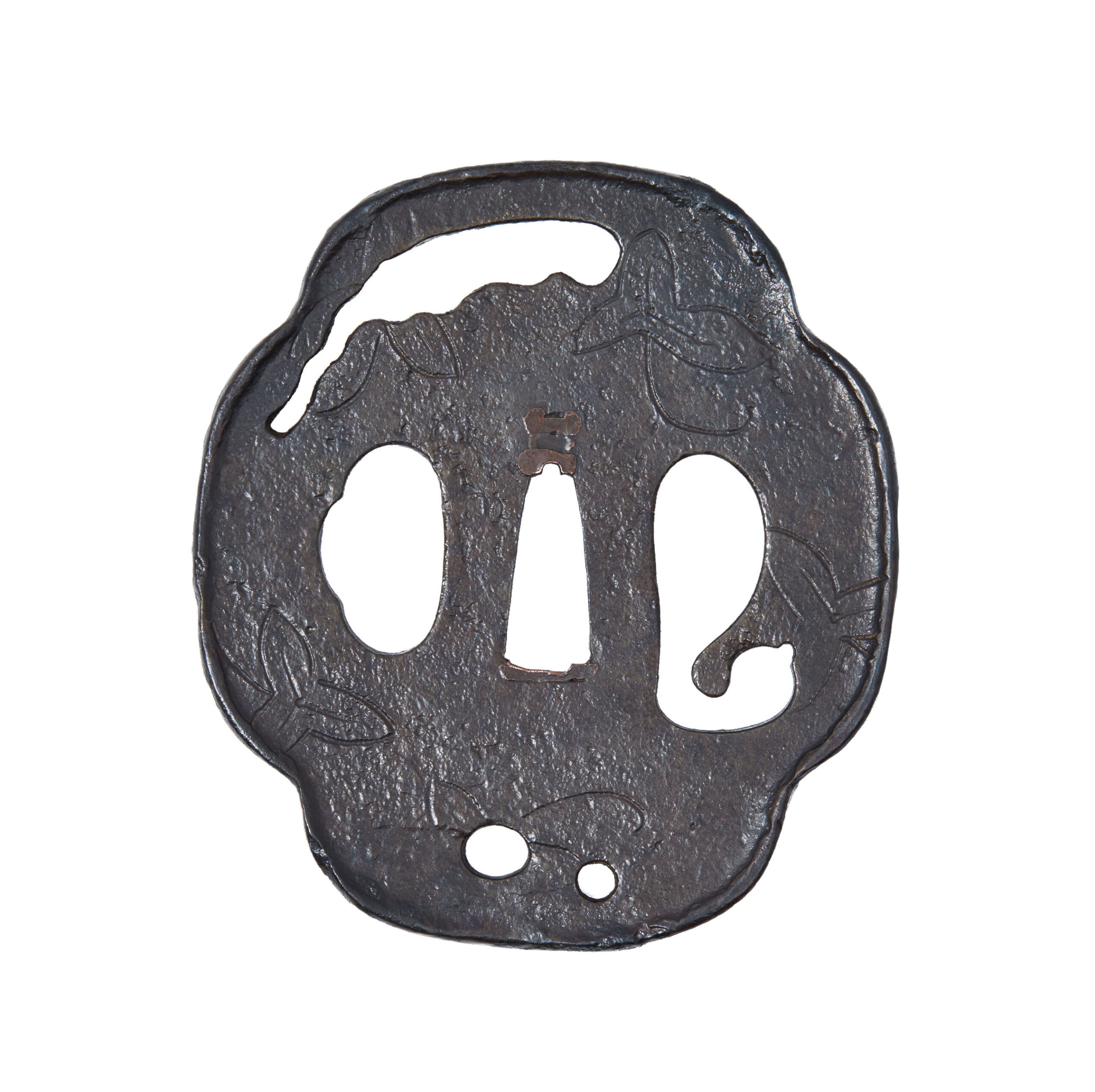
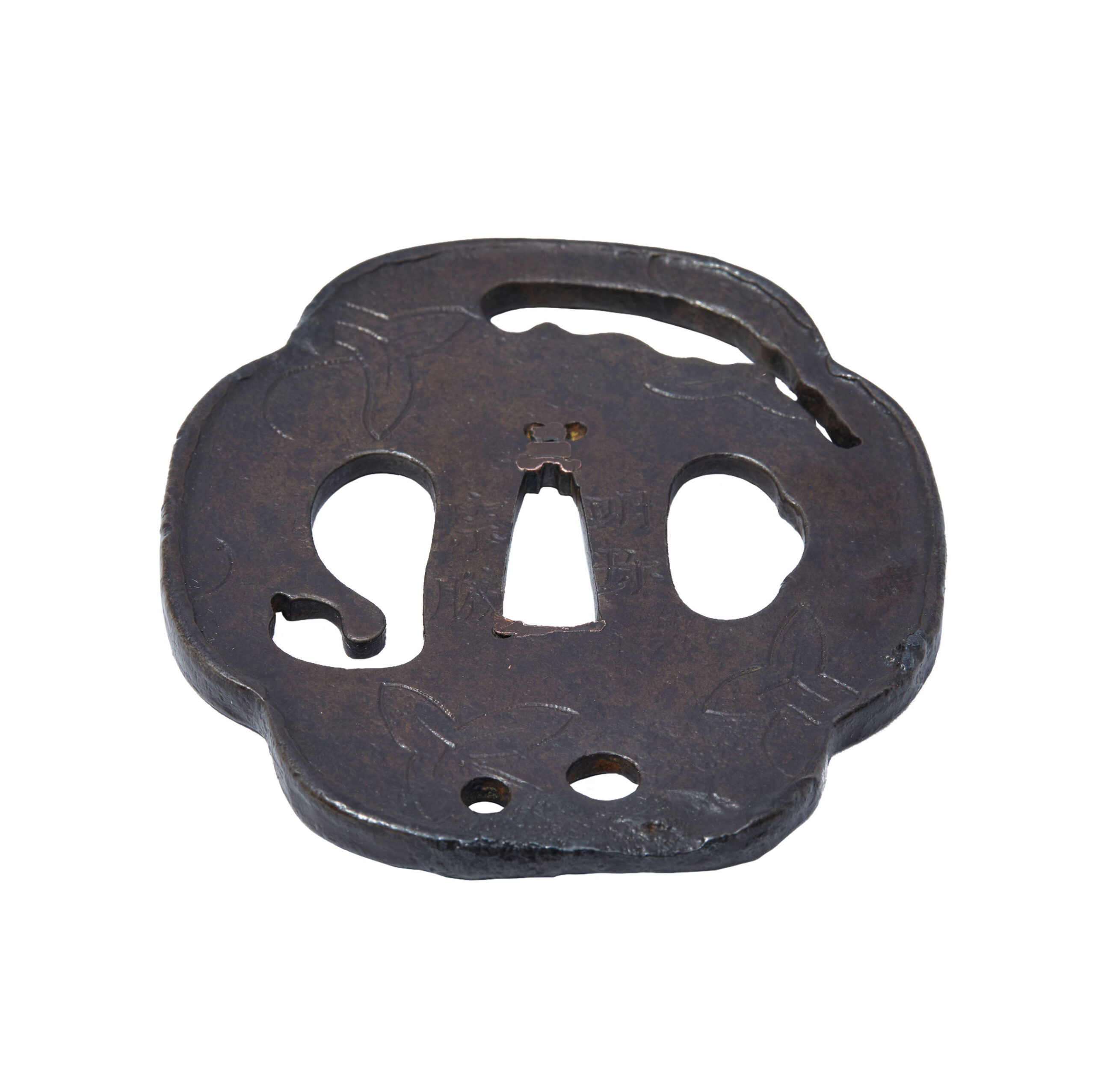
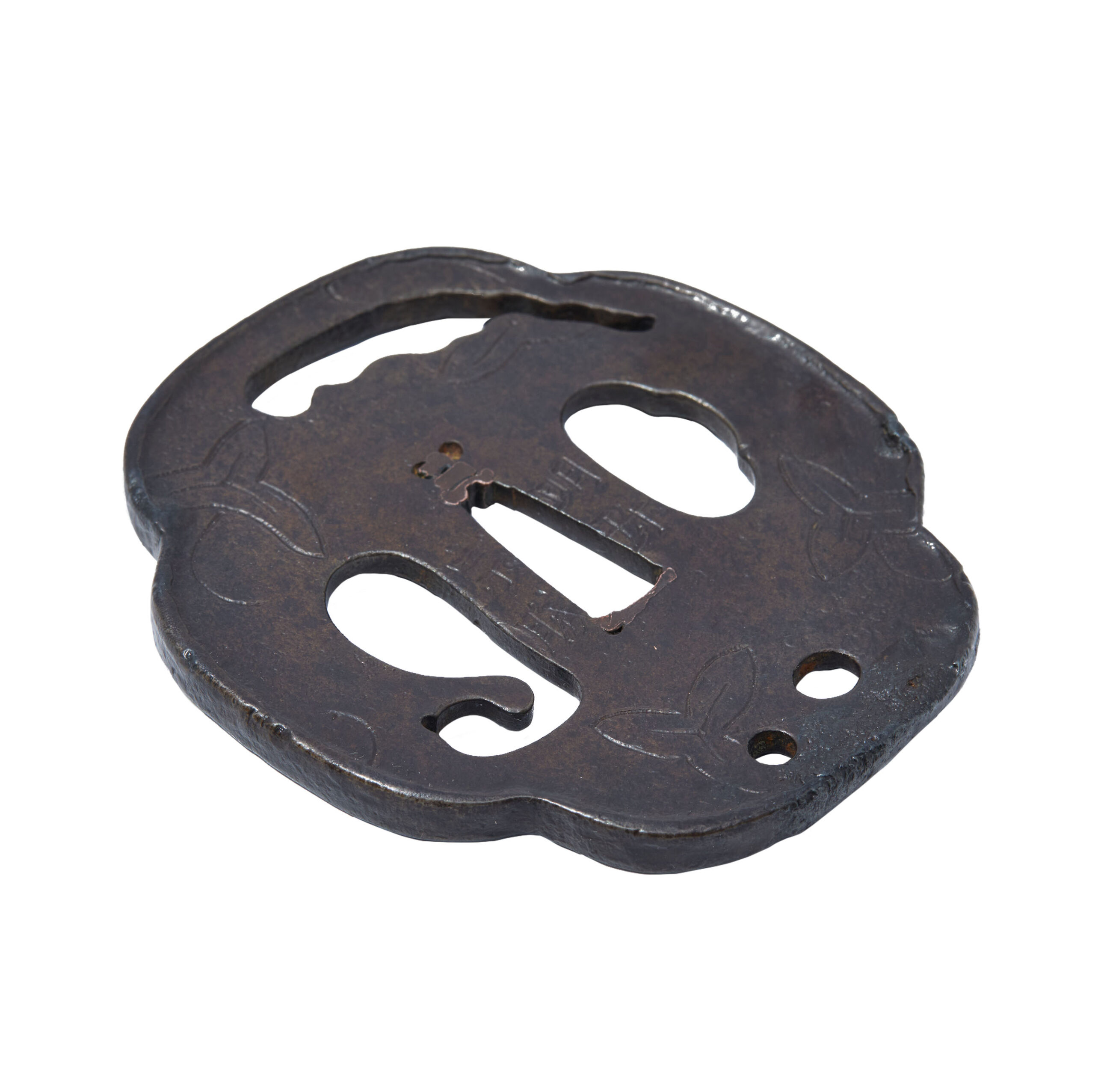
This tsuba is made in a yotsu-mokkō (四ツ木瓜, four-lobed mokkō) shape with an iron plate. The surface has a lively, slightly uneven texture, and the openings around the seppa-dai (the central raised area) are cut in soft, flowing shapes, giving the whole guard a light and open feeling even though the plate itself is quite solid. The plant motif appears to be tsuta (蔦), the Japanese creeper often called natsuzuta, because the leaves are drawn as three-lobed leaves, which is a typical feature of this plant. Across the face, you can see several leaves placed at different angles, connected by thin, curving stems. R In terms of technique, the design combines sukashi (透かし, openwork) with fine carving: the leaf forms are defined with crisp lines, and parts of the motif are modeled with a light ukibori (浮き彫り, shallow raised relief) effect so the leaves read clearly against the darker ground. This tsuba is also signed, bearing the inscription “Myōchin Munekatsu. The Myōchin school is a long-established lineage best known for the production of iron armor, particularly helmets (kabuto) and cuirasses (dō). Because armor-making required highly advanced forging and finishing skills, the Myōchin name became closely associated with superior ironworking techniques. In later periods, craftsmen connected to this tradition also produced other iron objects, and the Myōchin name occasionally appears in connection with sword fittings as well.
NihontoWatchOffered by Samurai Museum
This piece has sold
21 on the market
Get an email when new Myochin School work hits the market.

Tosho-Katchushi · Kyoto
21 pieces on the market now
| Smith | Era | Designated |
|---|---|---|
| Munemasa宗政 | — | 0 |
| Yasutsugu保次 | — | 0 |
| Munesada宗定 | — | 0 |
| Munetsugu宗次 | — | 0 |
| Yoshitada義忠 | — | 0 |
Returns/exchanges limited to defects caused by shipping (except willful misconduct or gross negligence by the company); customers must contact within 72 hours of receiving the product.