 NihontoWatchNihontoWatch
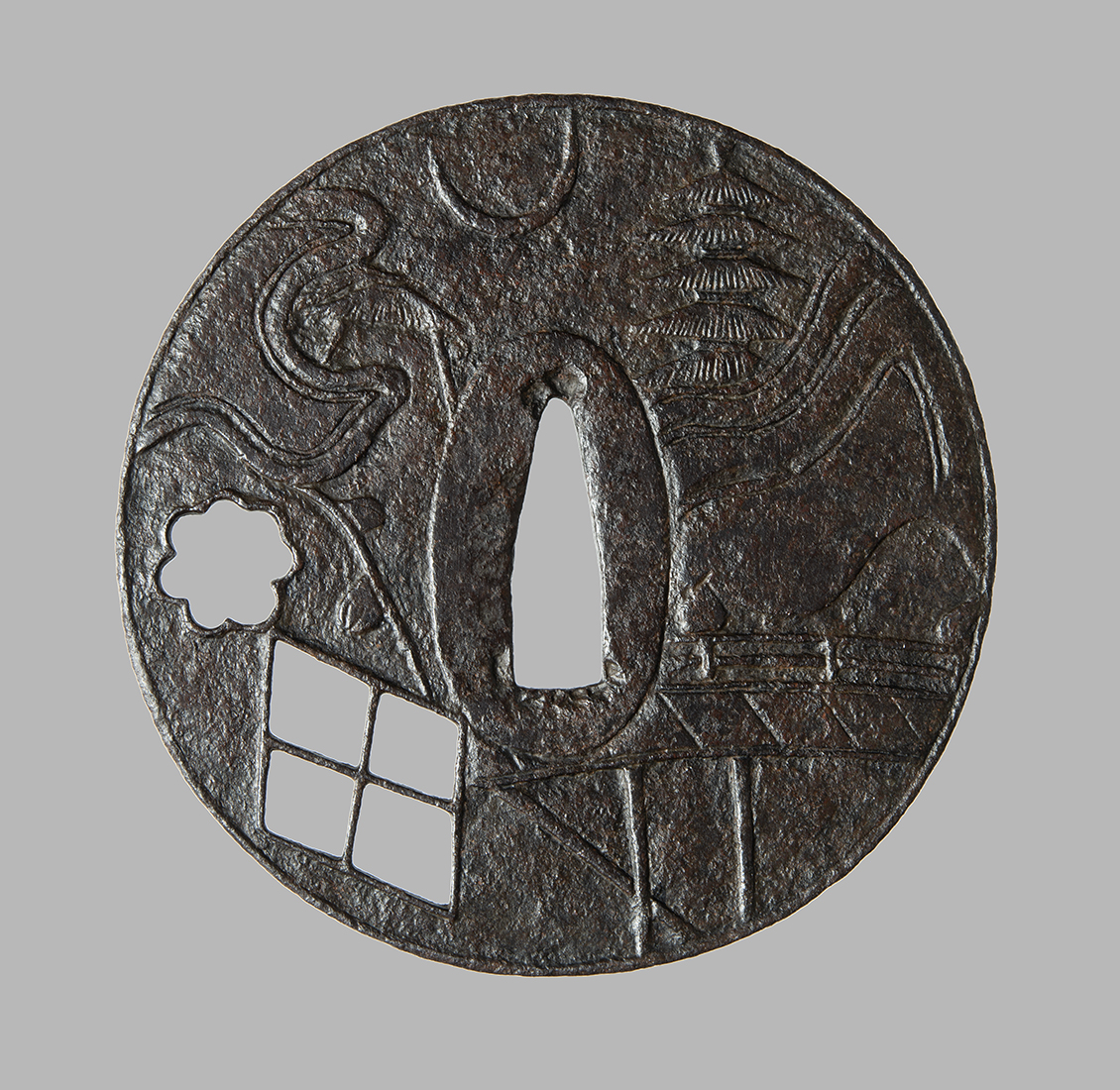
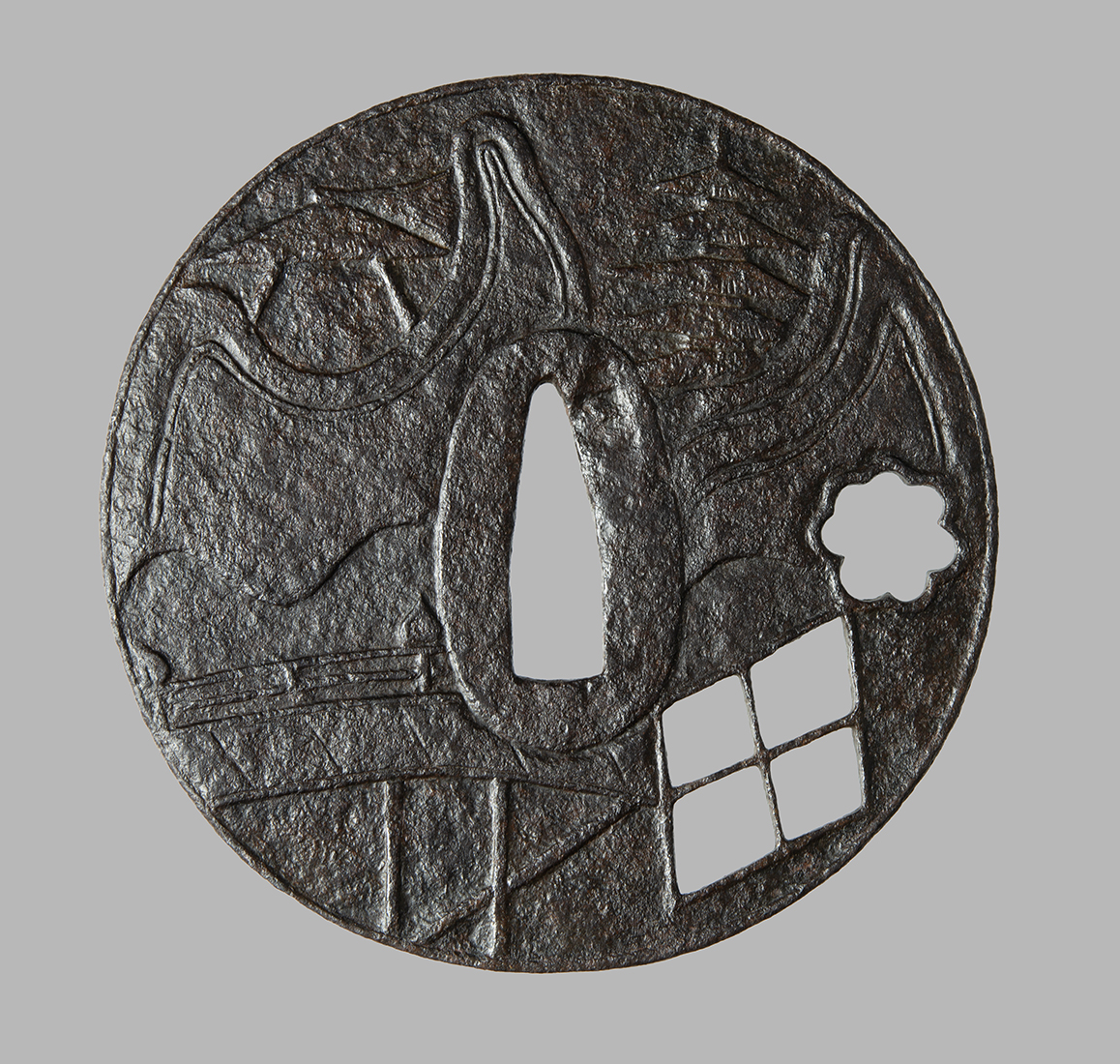
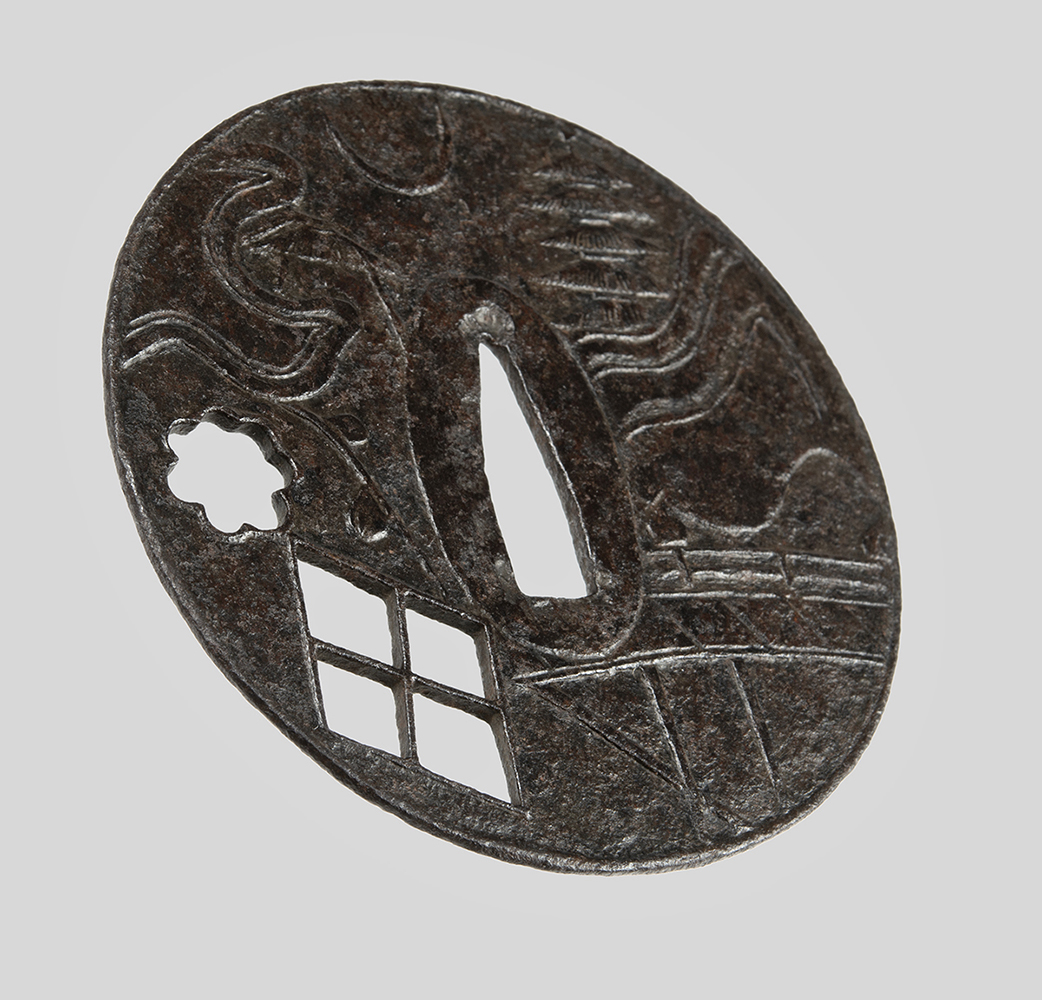
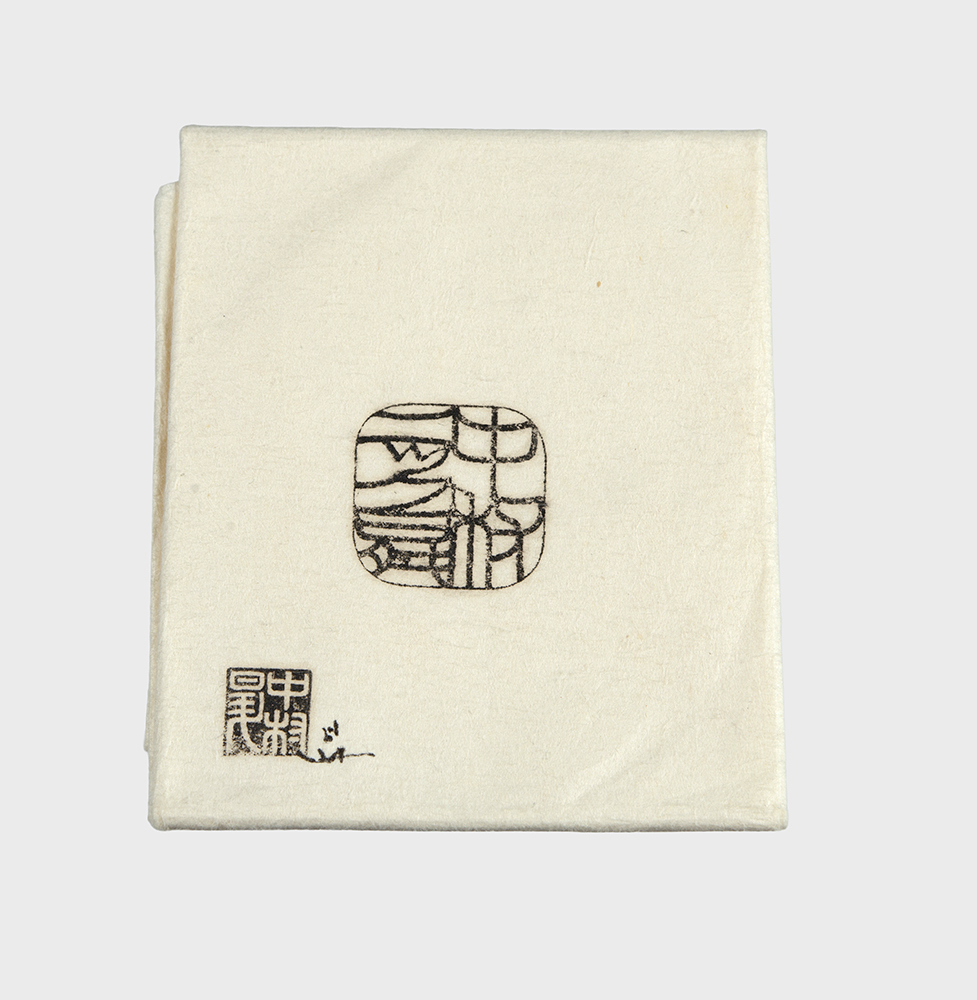
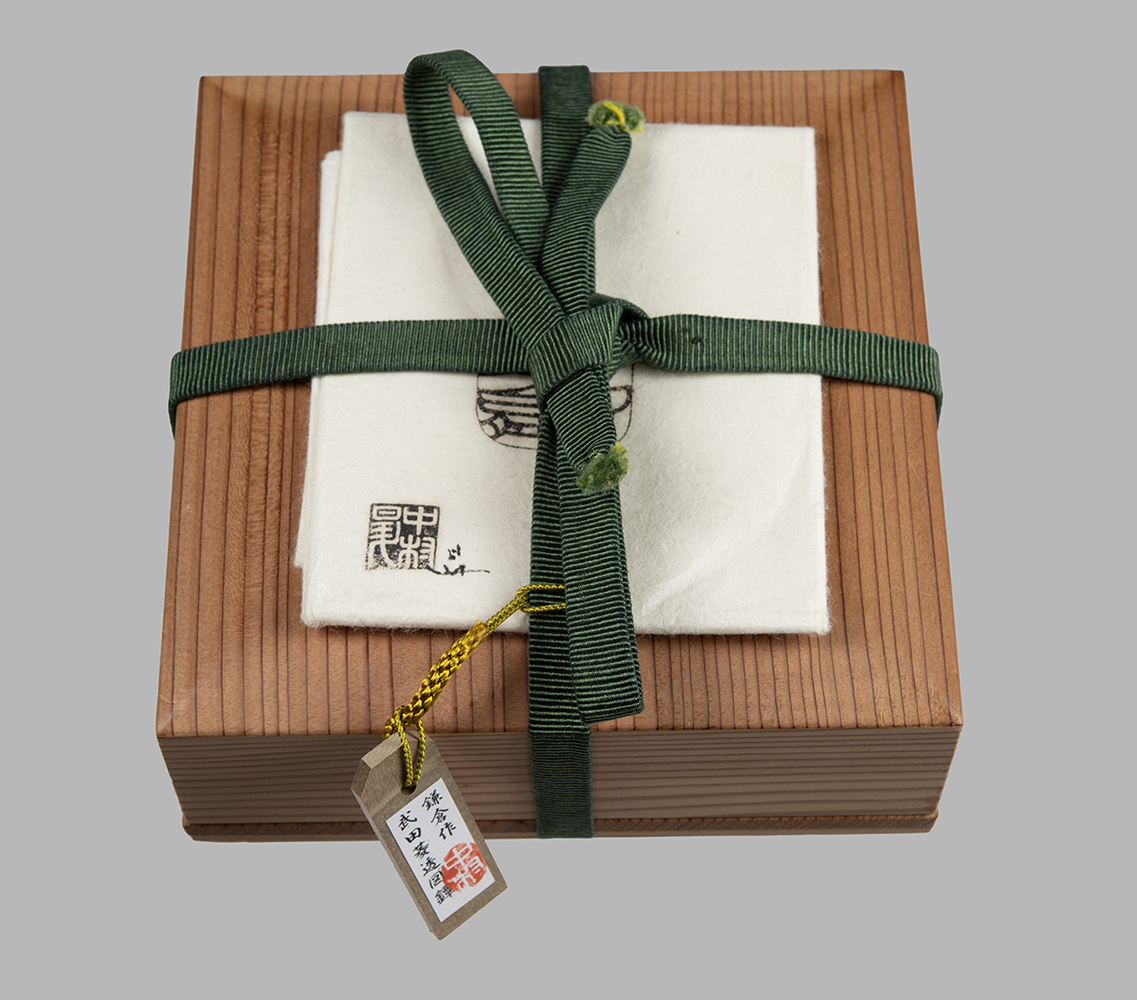
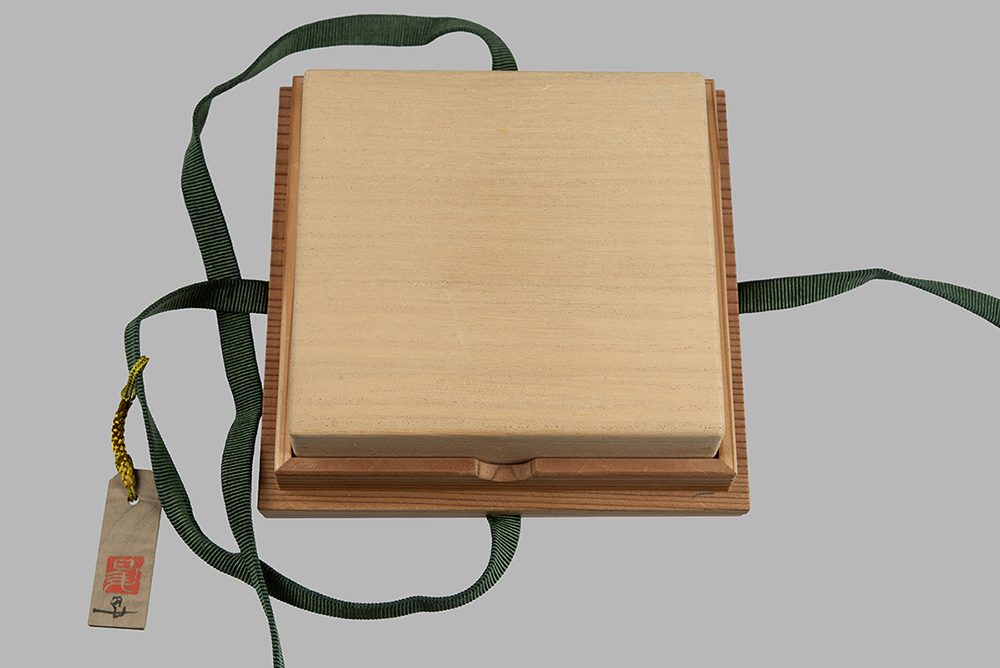
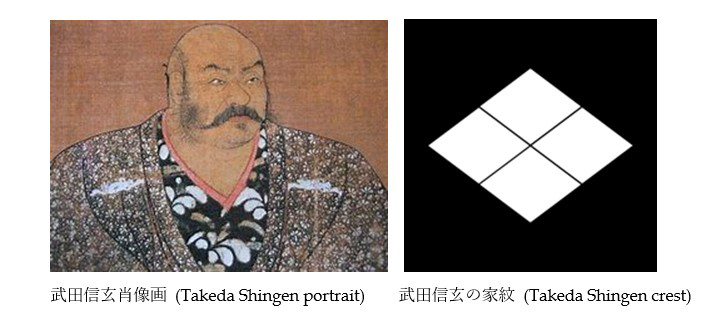
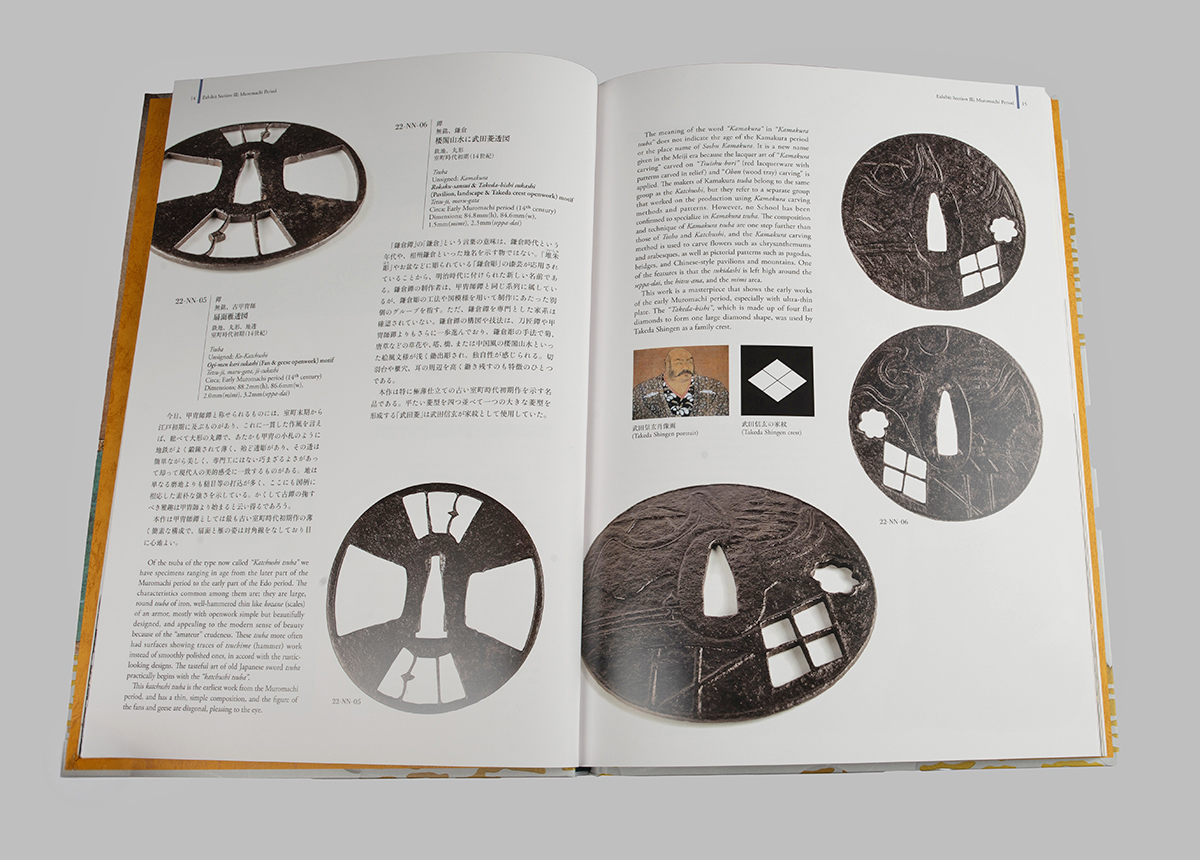
Tsuba Unsigned; Kamakura Rokaku-sansui and Takeda-bishi sukashi (Pavilion, landscape and Takeda crest openwork) motif Tetsu-ji, maru-gata Circa; Early Muromachi period A fine Kamakura Bori Tsuba from the collection of Mr. Nick Nakamura. This tsuba was published in the 22nd Kokusai Tosogu Kai catalogue in 2026. It is accompanied by custom fitted double kiri bako with sanada-himo ribbon. There is a washi paper sleeve for the tsuba with Mr. Nakamura's seal. Please enjoy Mr. Nakamura's description below from the KTK publication. A copy of the book is included with the tsuba. The meaning of the word "Kamakura" in "Kamakura tsuba" does not indicate the age of the Kamakura period or the place name of Soshu Kamakura. It is a new name given in the Meiji era because the lacquer art of "Kamakura carving" carved on "Tsuishu-bori" (red lacquerware with patterns carved in relief) and "Obon (wood tray) carving" is applied. The makers of Kamakura tsuba belong to the same group as the Katchushi, but they refer to a separate group that worked on the production using Kamakura carving methods and patterns. However, no School has been confirmed to specialize in Kamakura tsuba. The composition and technique of Kamakura tsuba are one step further than those of Tosho and Katchushi, and the Kamakura carving method is used to carve flowers such as chrysanthemums and arabesques, as well as pictorial patterns such as pagodas, bridges, and Chinese-style pavilions and mountains. One of the features is that the sukidashi is left high around the seppa-dai, the hitsu-ana, and the mimi area. This work is a masterpiece that shows the early works of the early Muromachi period, especially with ultra-thin plate. The "Takeda-bishi", which is made up of four flat diamonds to form one large diamond shape, was used by Takeda Shingen as a family crest.
NihontoWatchOffered by Nihontocraft
Its photos show a certificate that isn’t in our records yet. Papers can come from different bodies (the NBTHK, the NTHK and smaller societies), and only current NBTHK or NTHK shinsa papers are the independent check we rely on. Please ask the dealer which body issued them. — Hoshi

Tosho-Katchushi
We could not find an authenticity certificate on the seller’s listing. Japanese swords and fittings are normally papered by the NBTHK (or the NTHK). Without one, the attribution is the seller’s own assessment and has not been independently verified — treat it with caution and ask the dealer about certification before buying.
3 day inspection period on all sales. Items can be returned for any reason for a full refund, less return shipping cost. Returned items must be in the same condition as when purchased.
$3,850