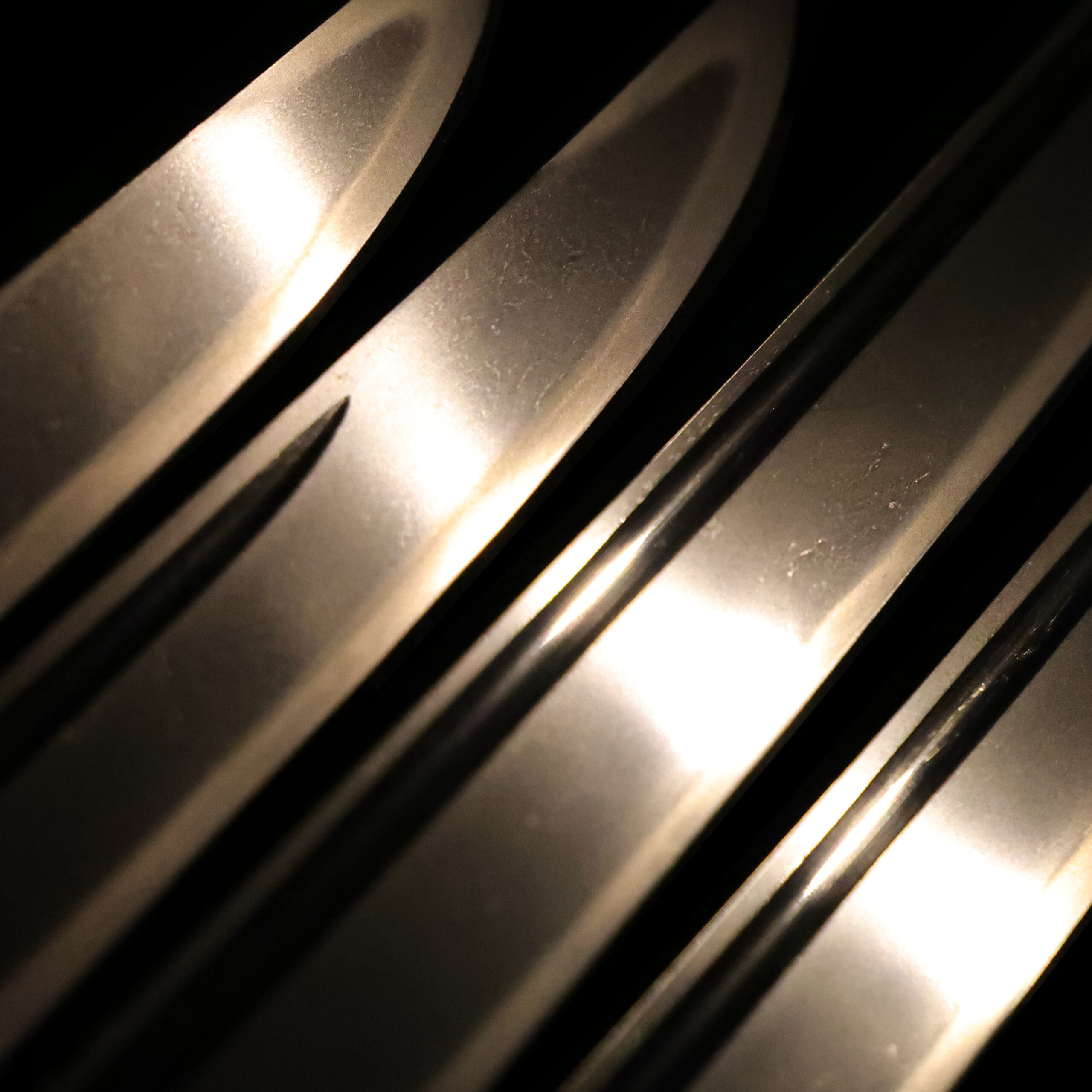
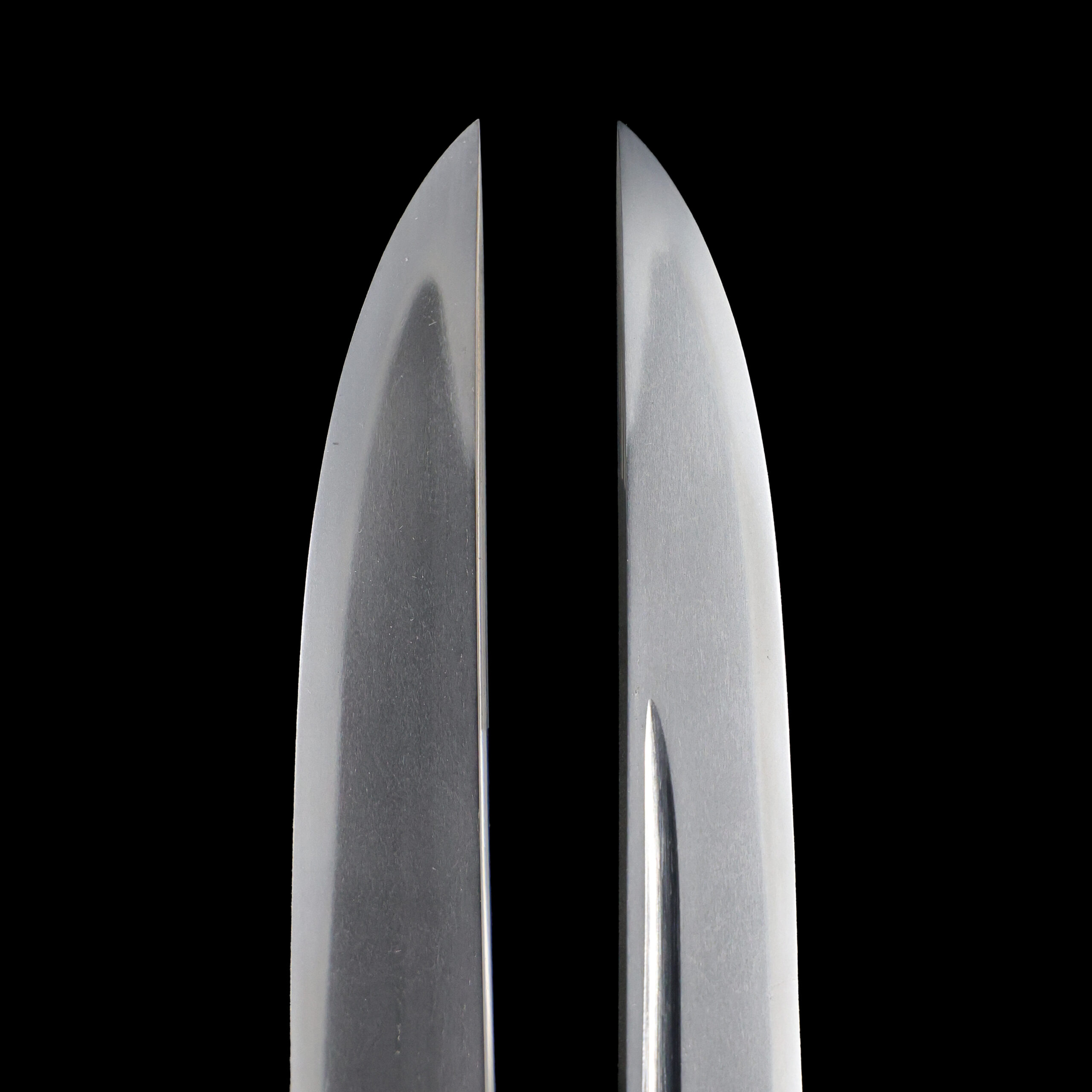
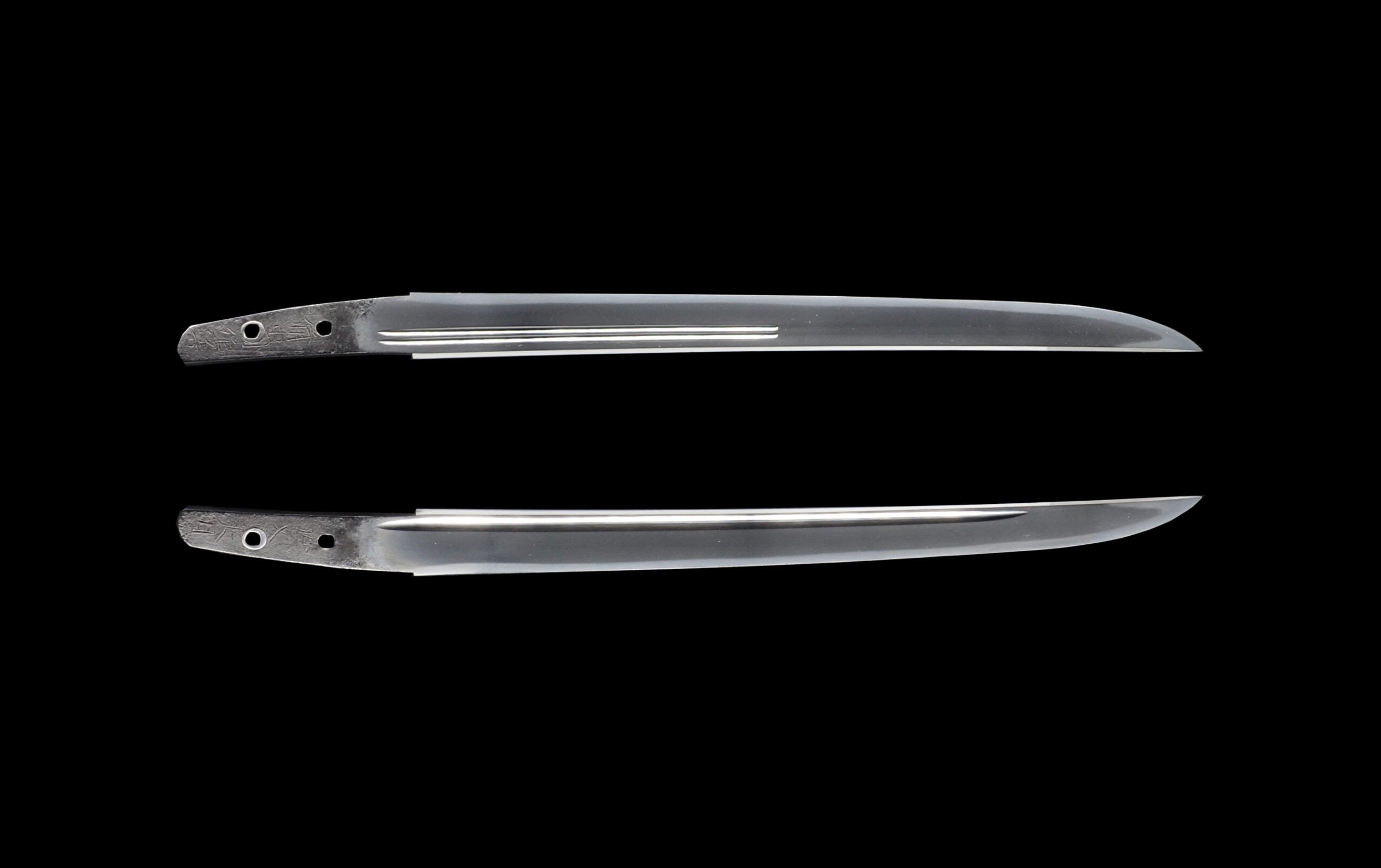
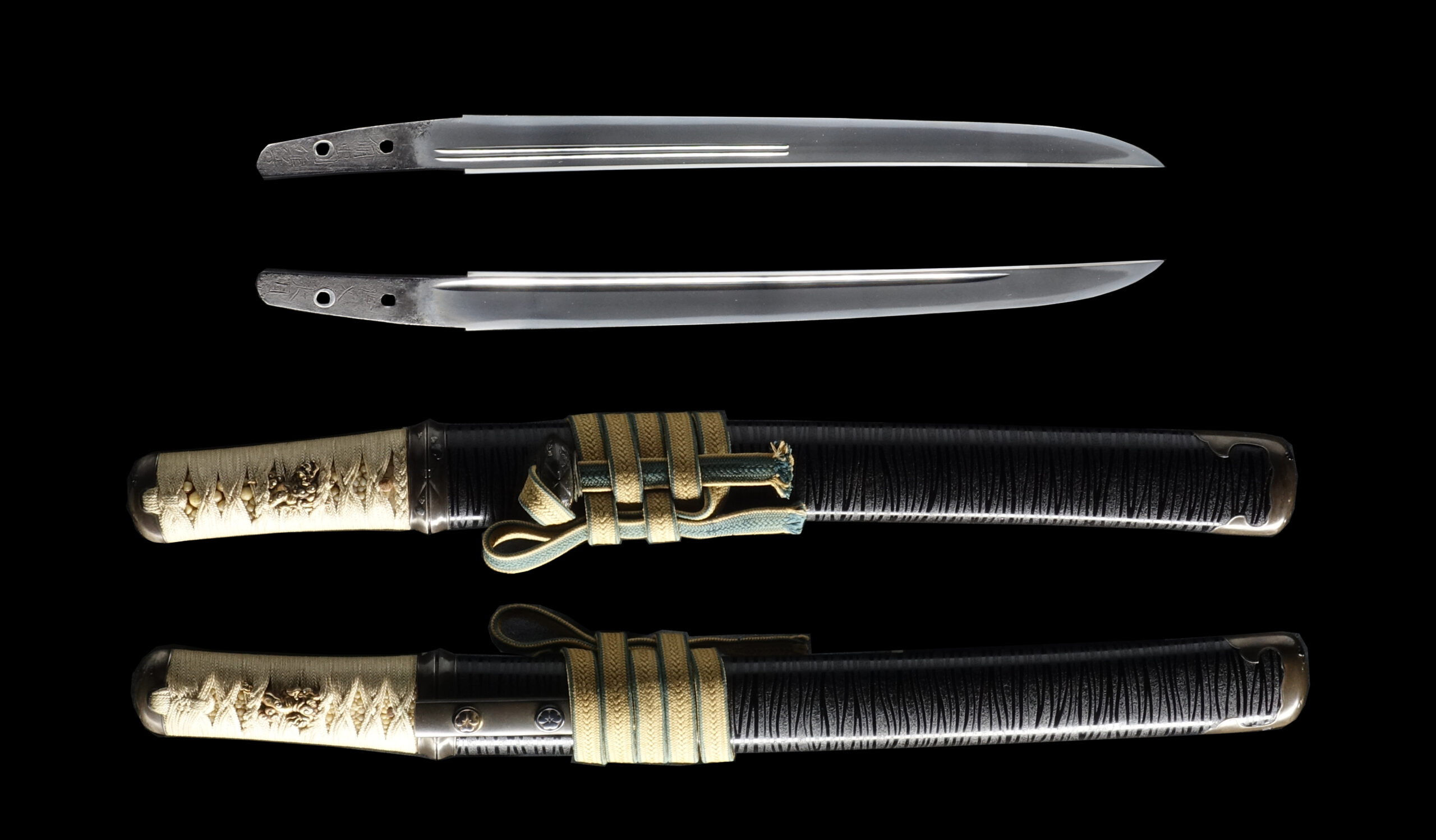
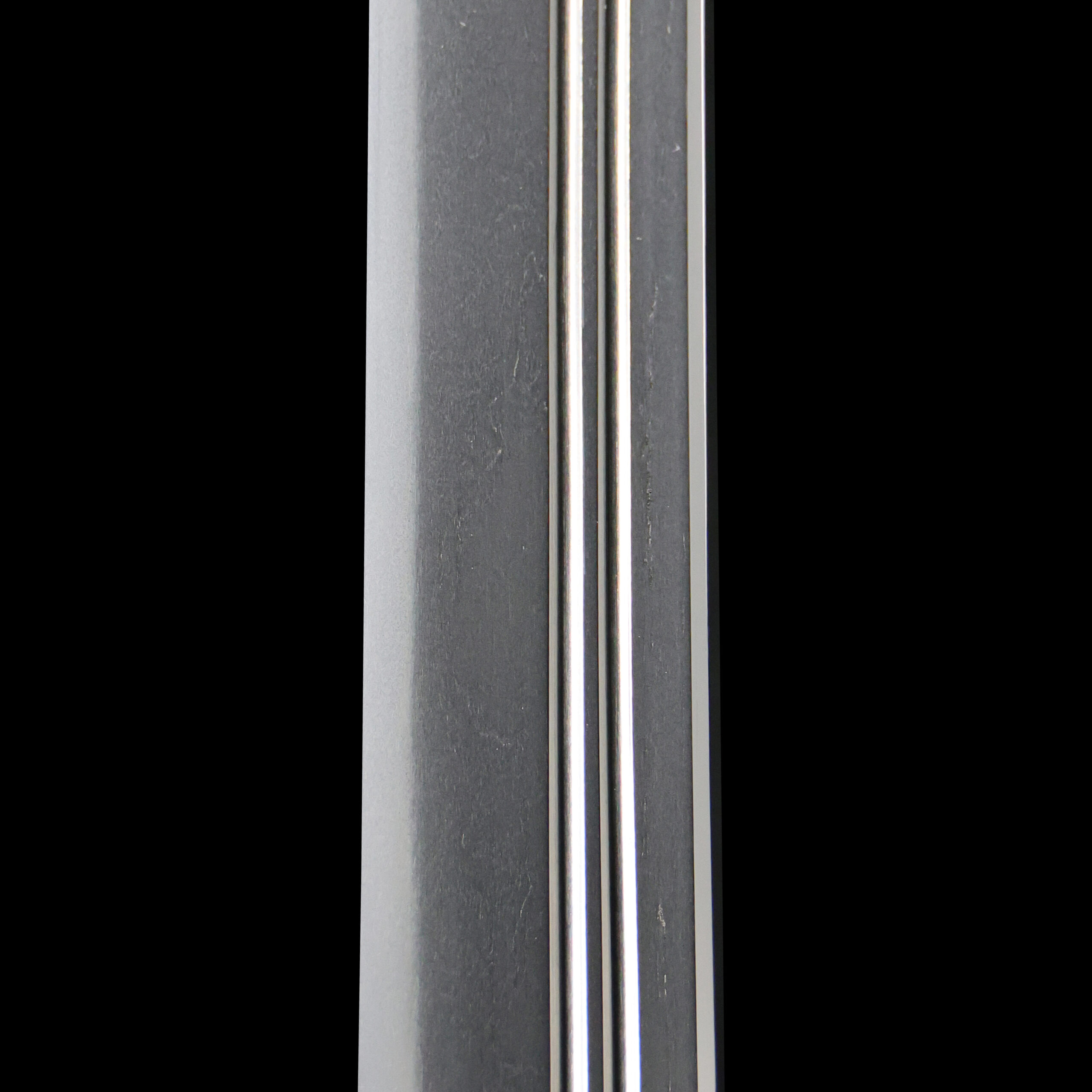
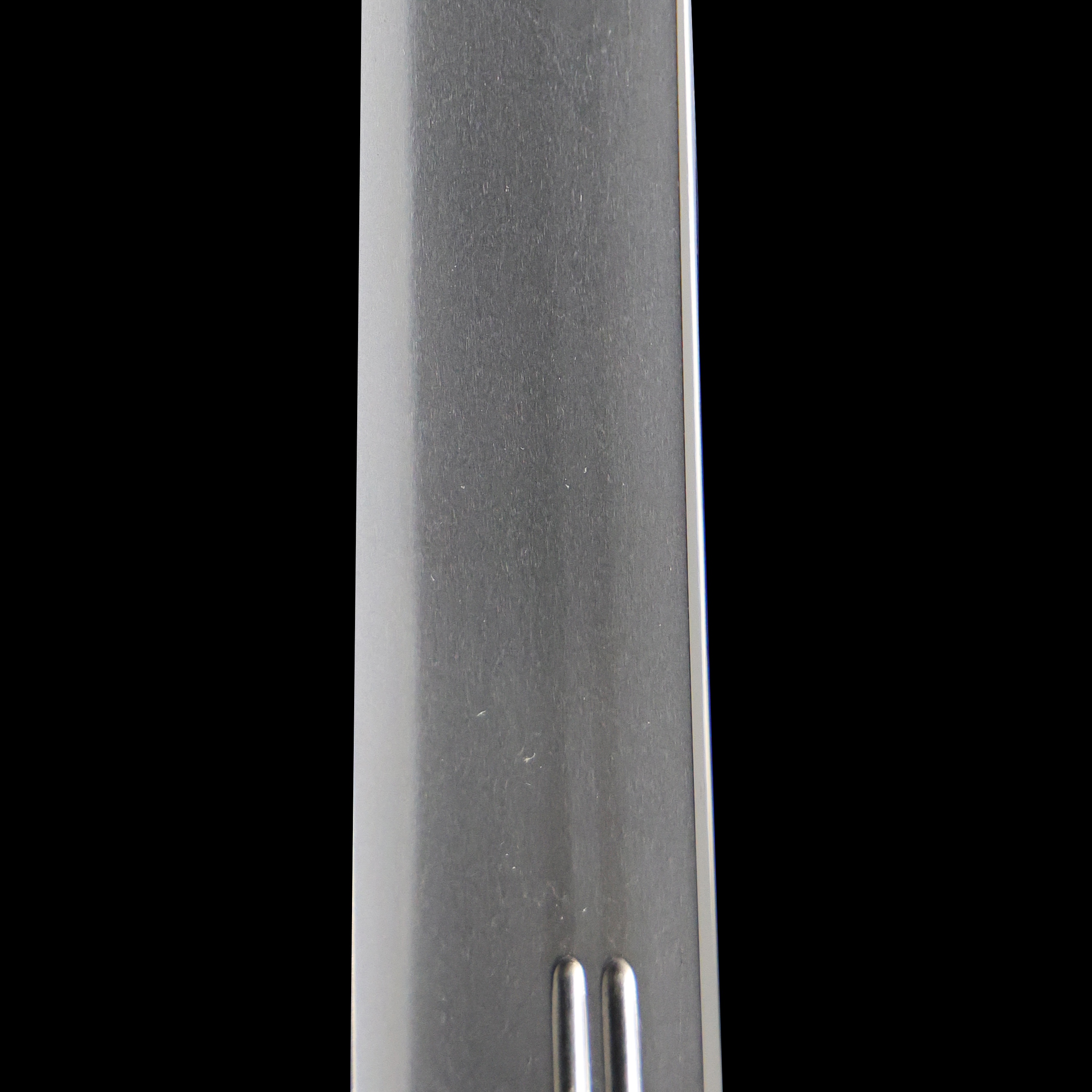
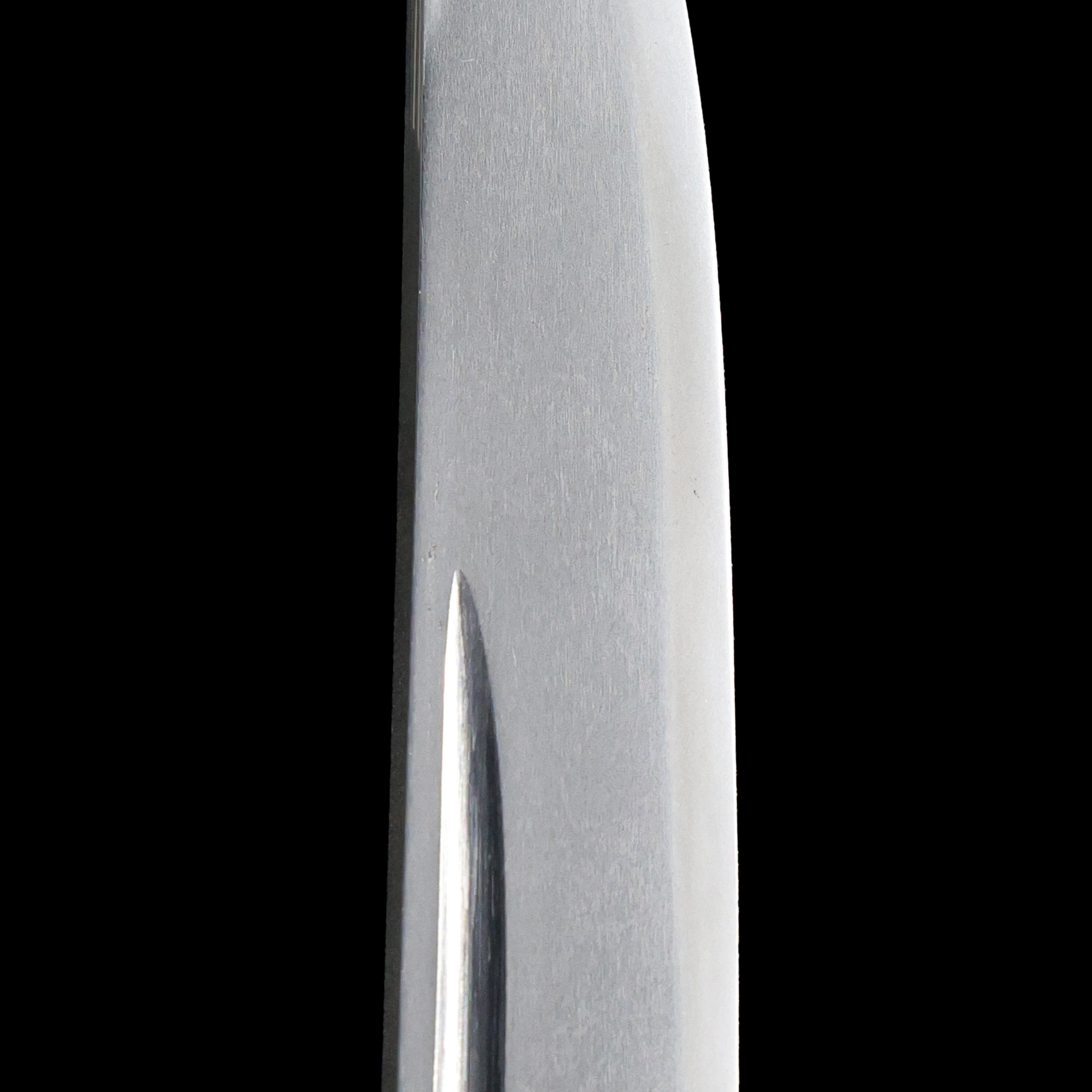
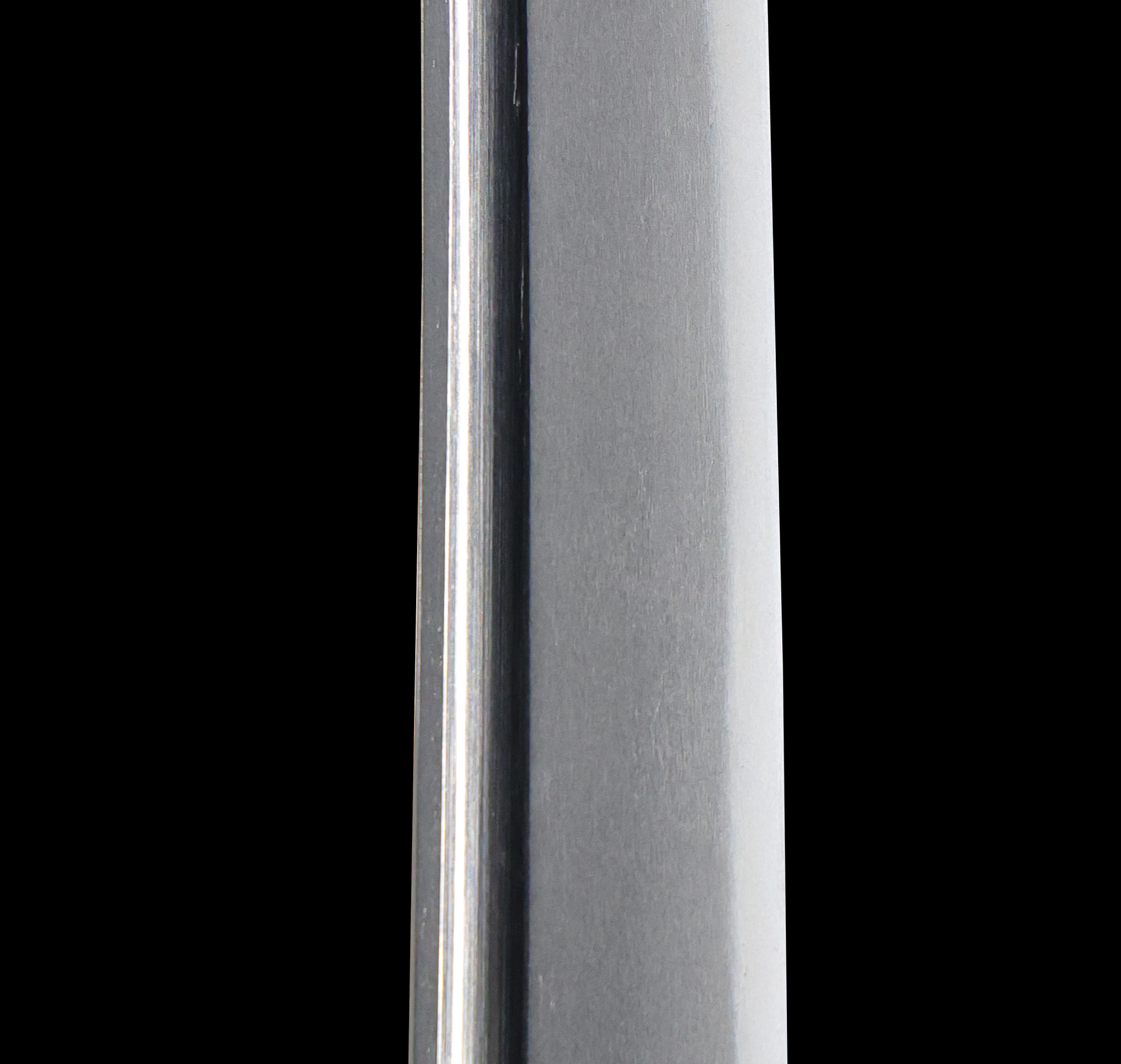
Sixty years of war between two courts drove blades long and broad, and Osafune met the demand: Kanemitsu and Chōgi led forges serving the provincial warriors who did the fighting, while Sōshū influence arrived with the armies to create Sōden-Bizen.
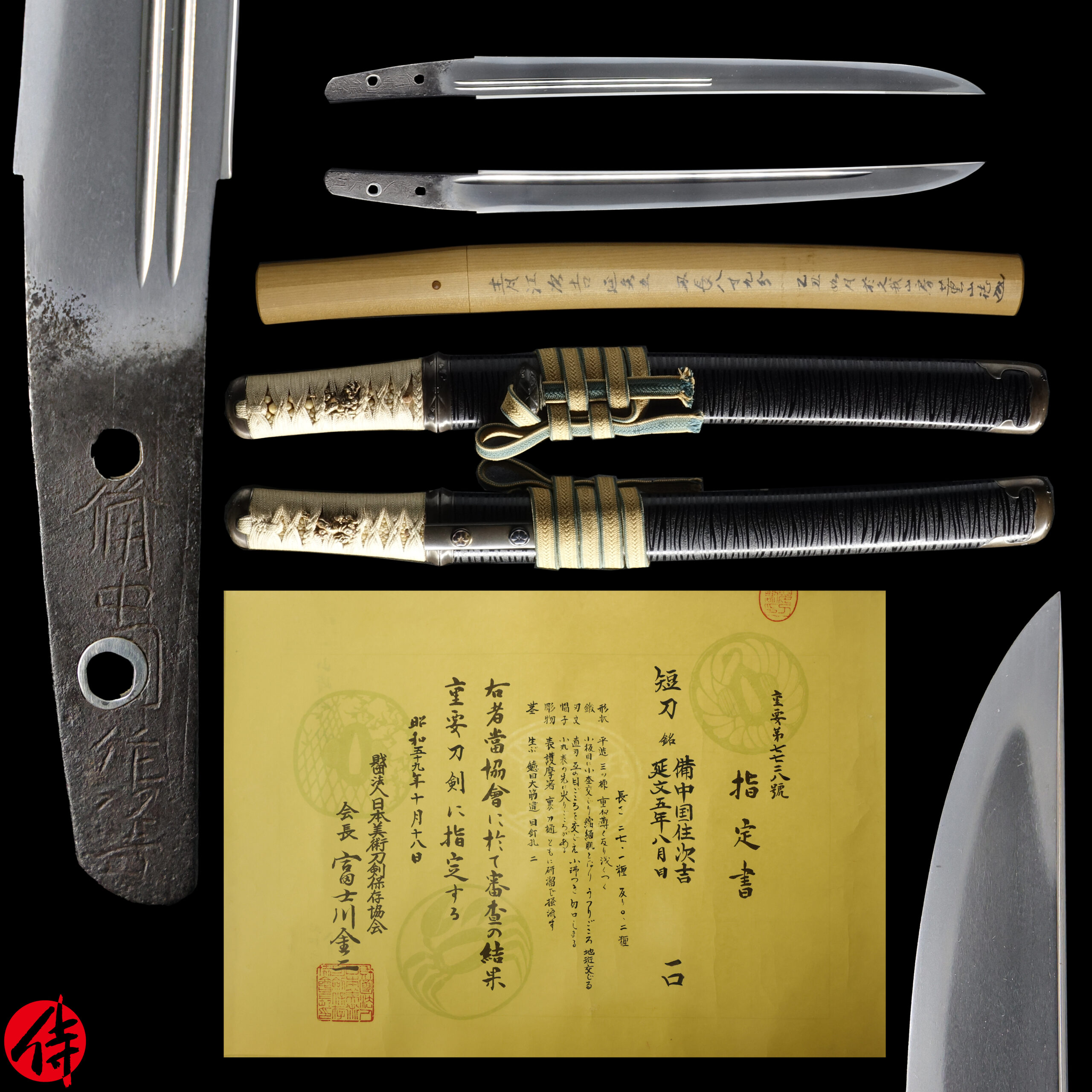
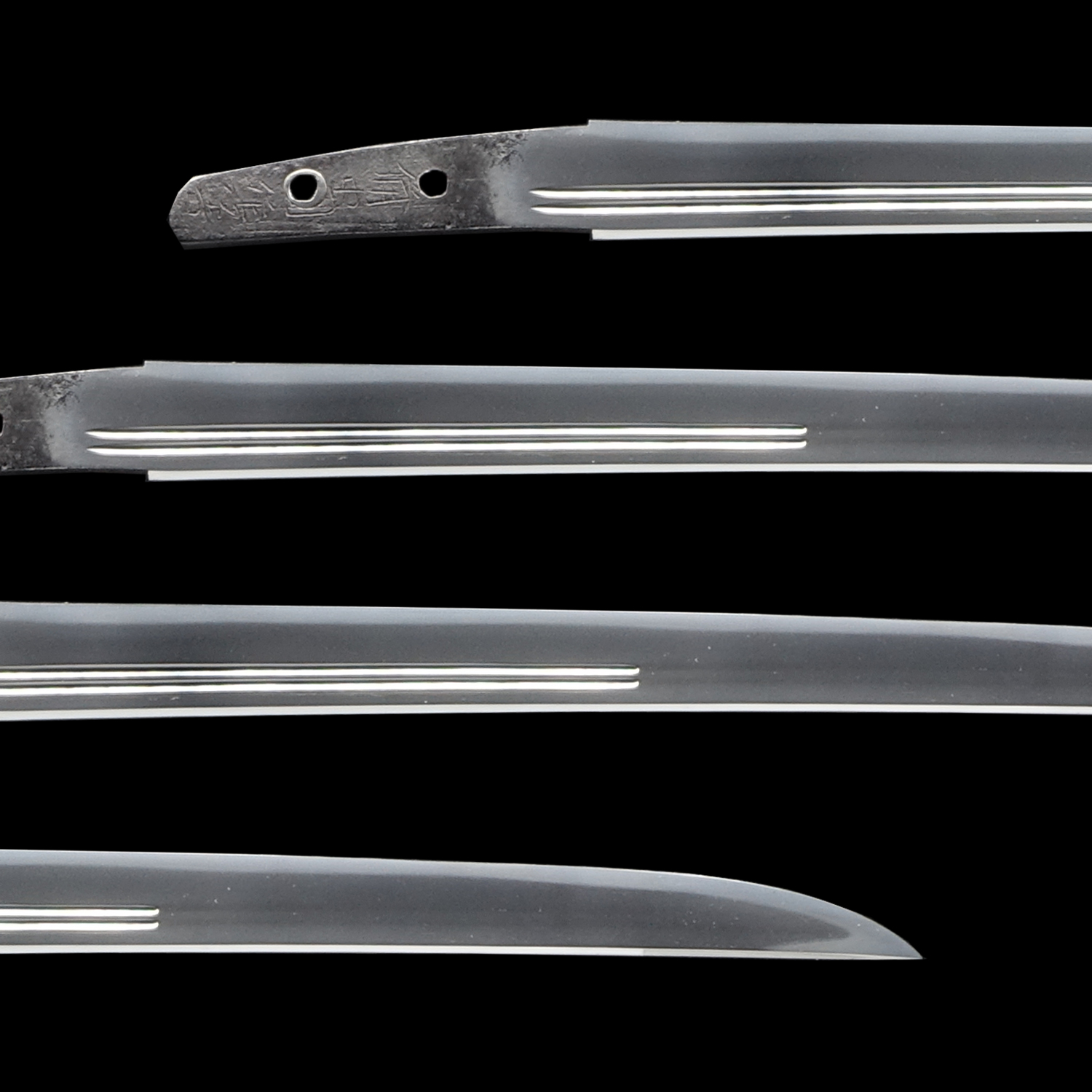
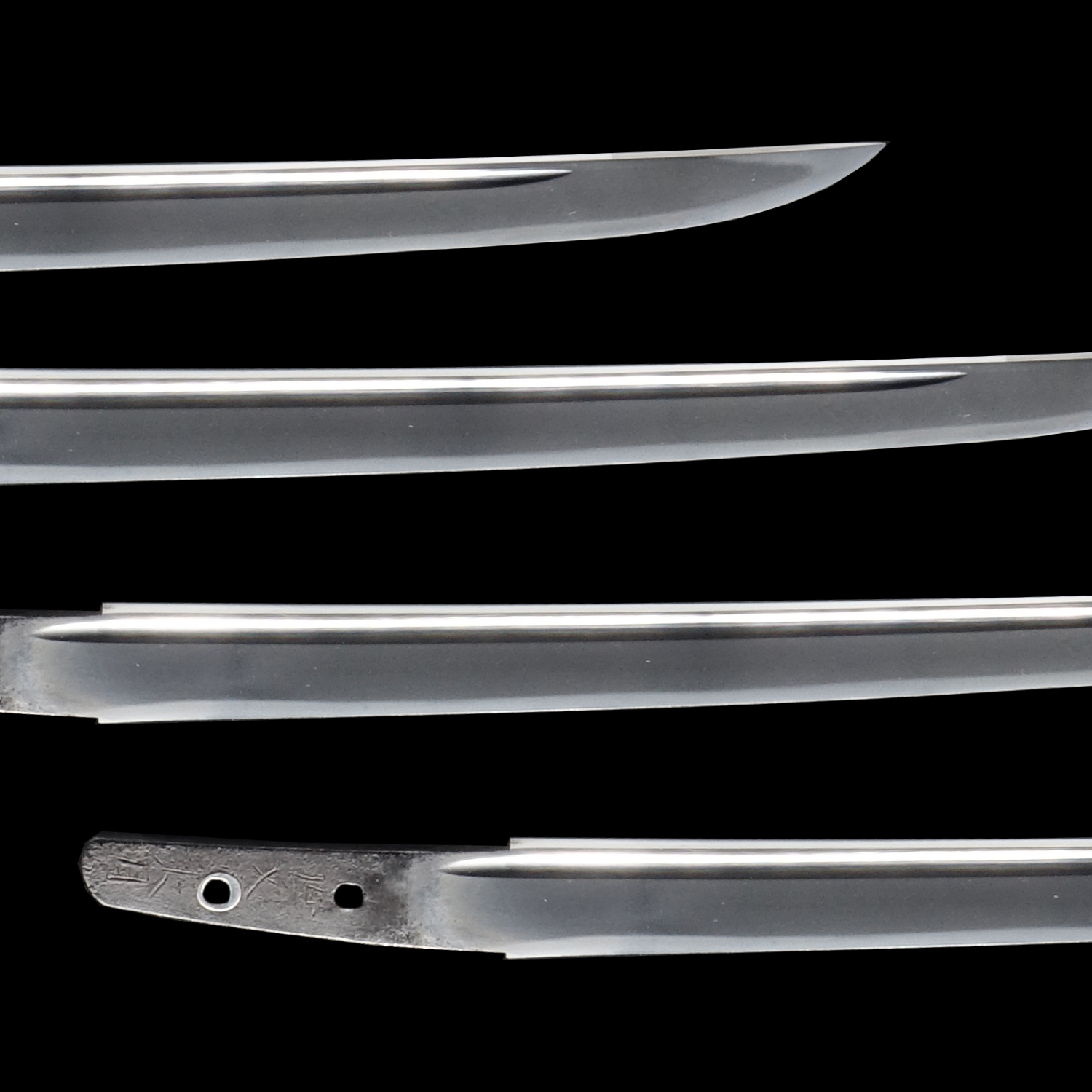
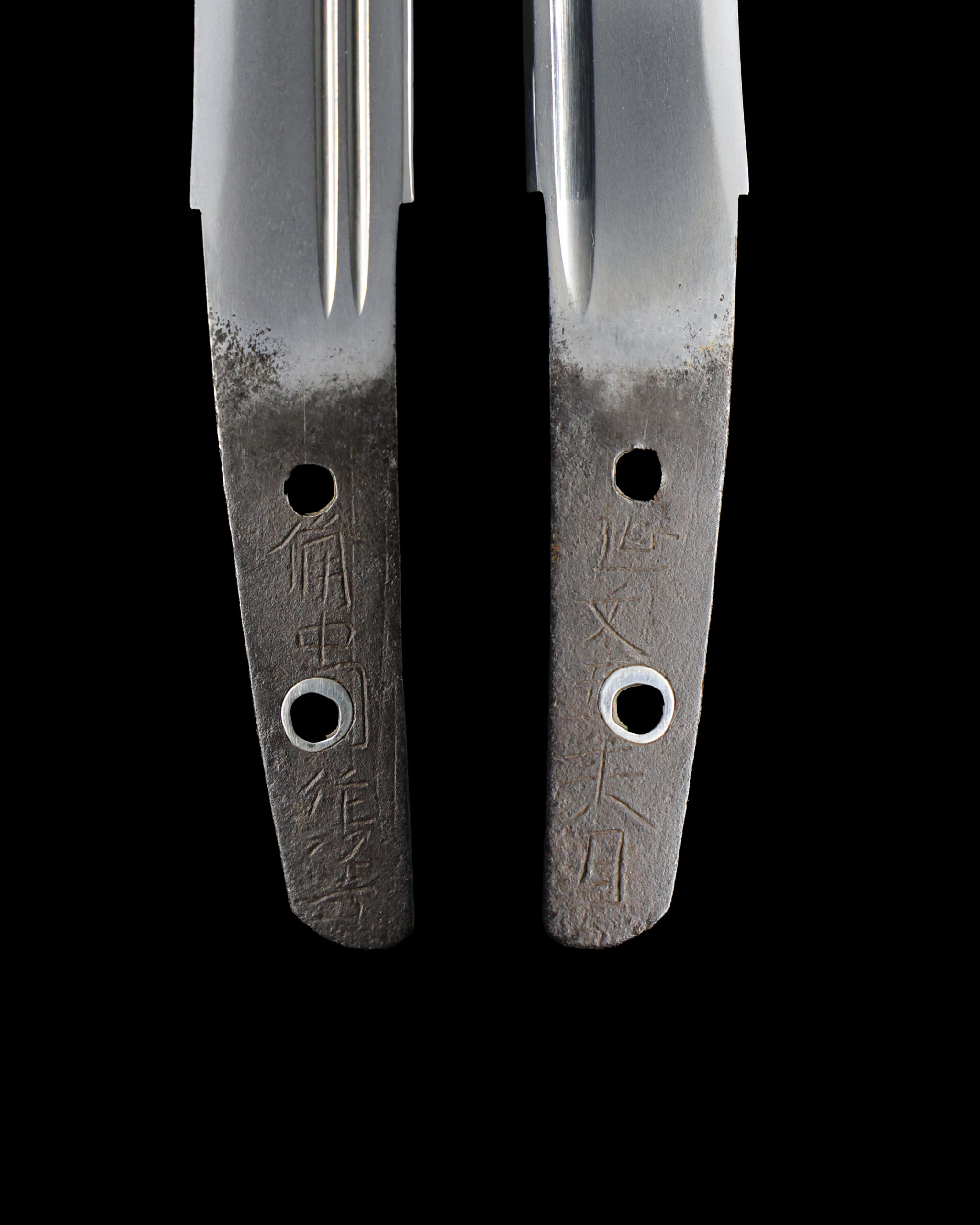
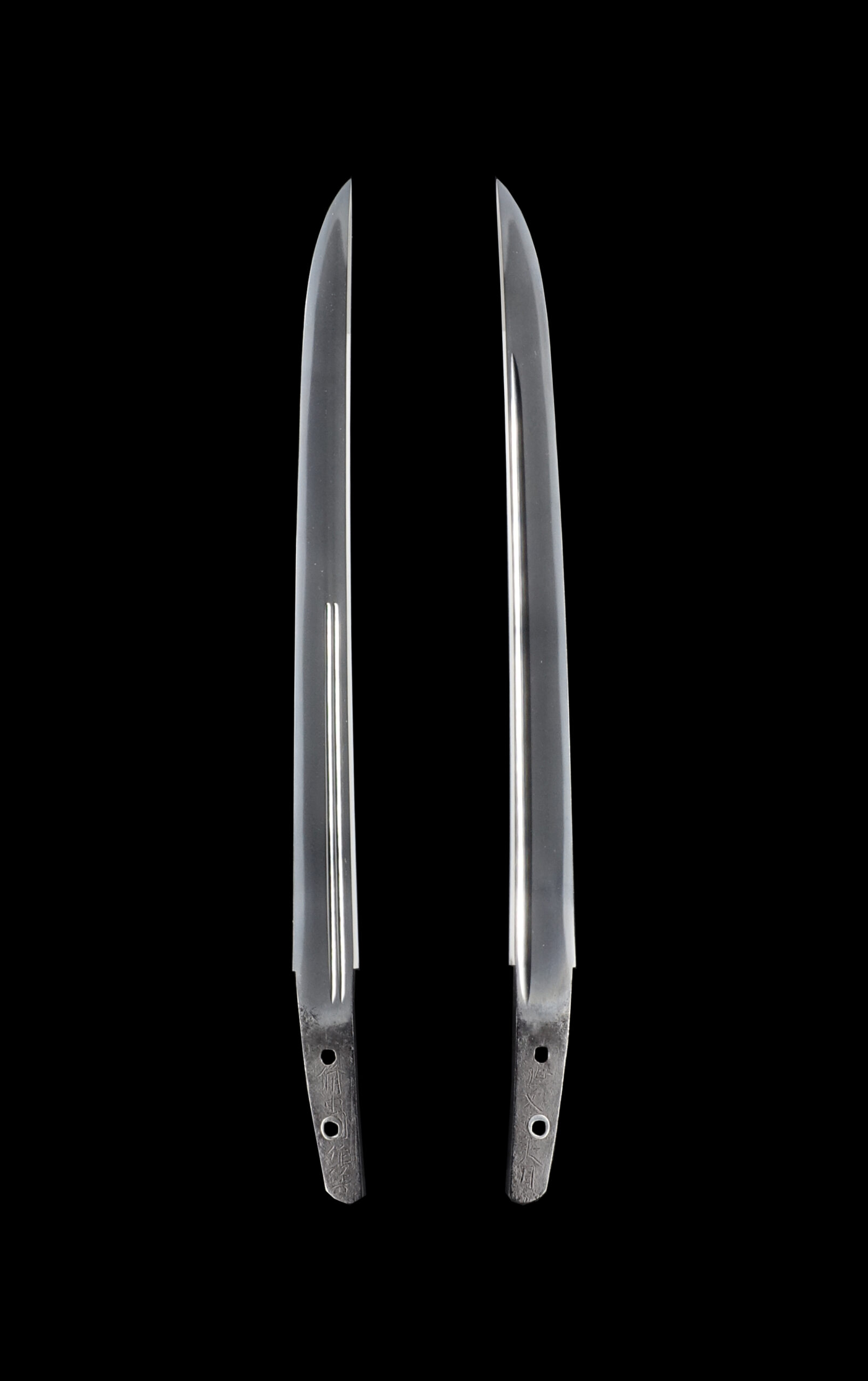
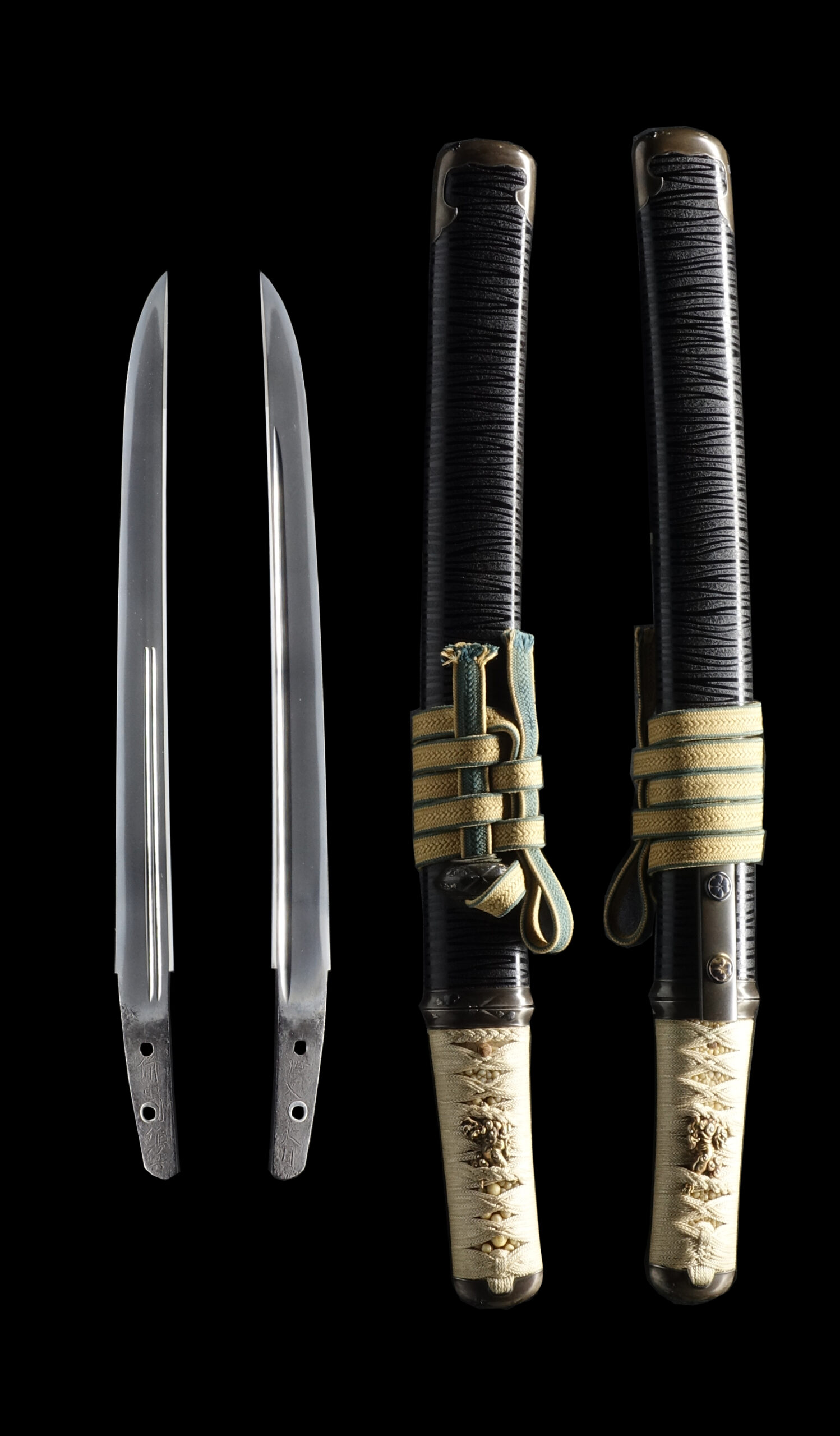
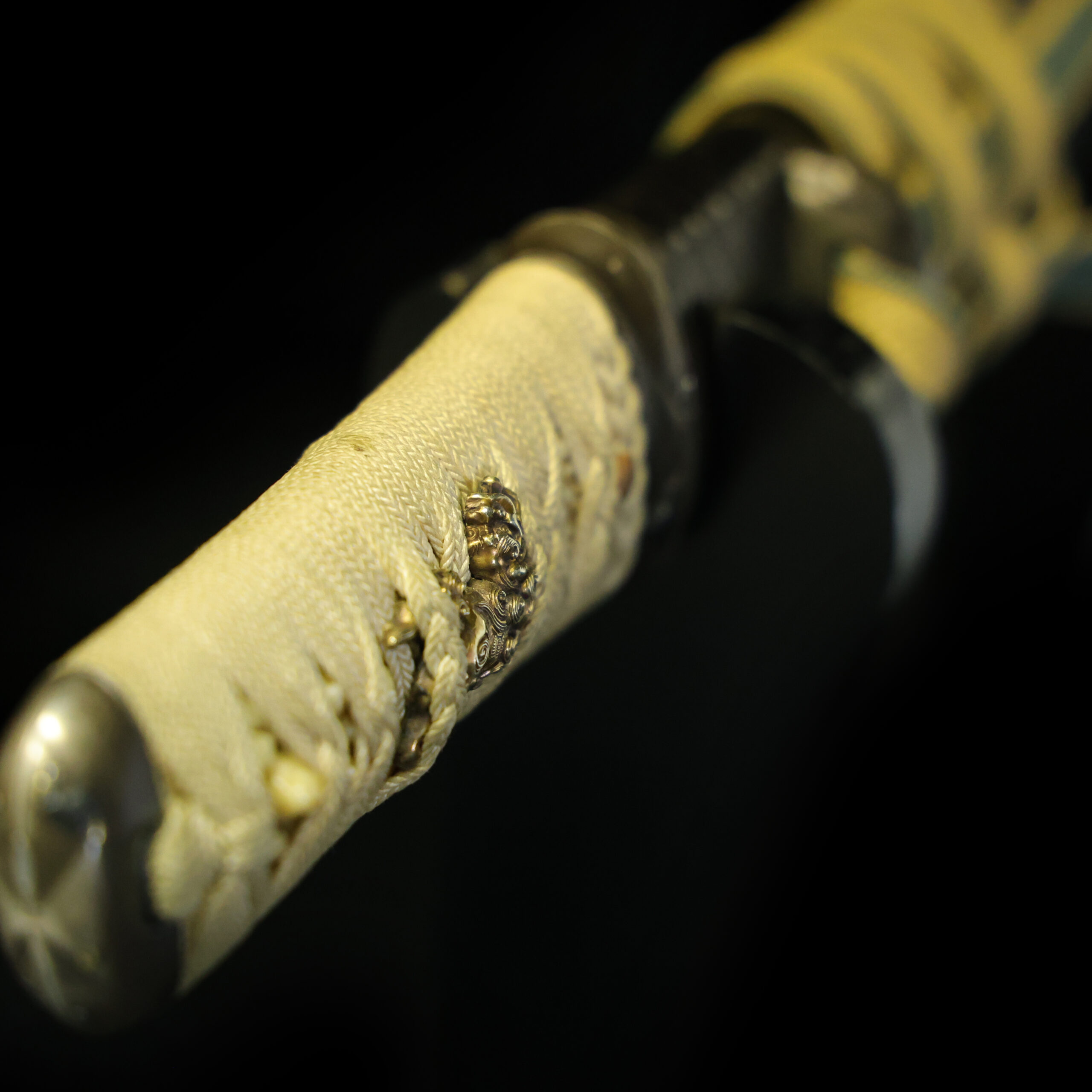
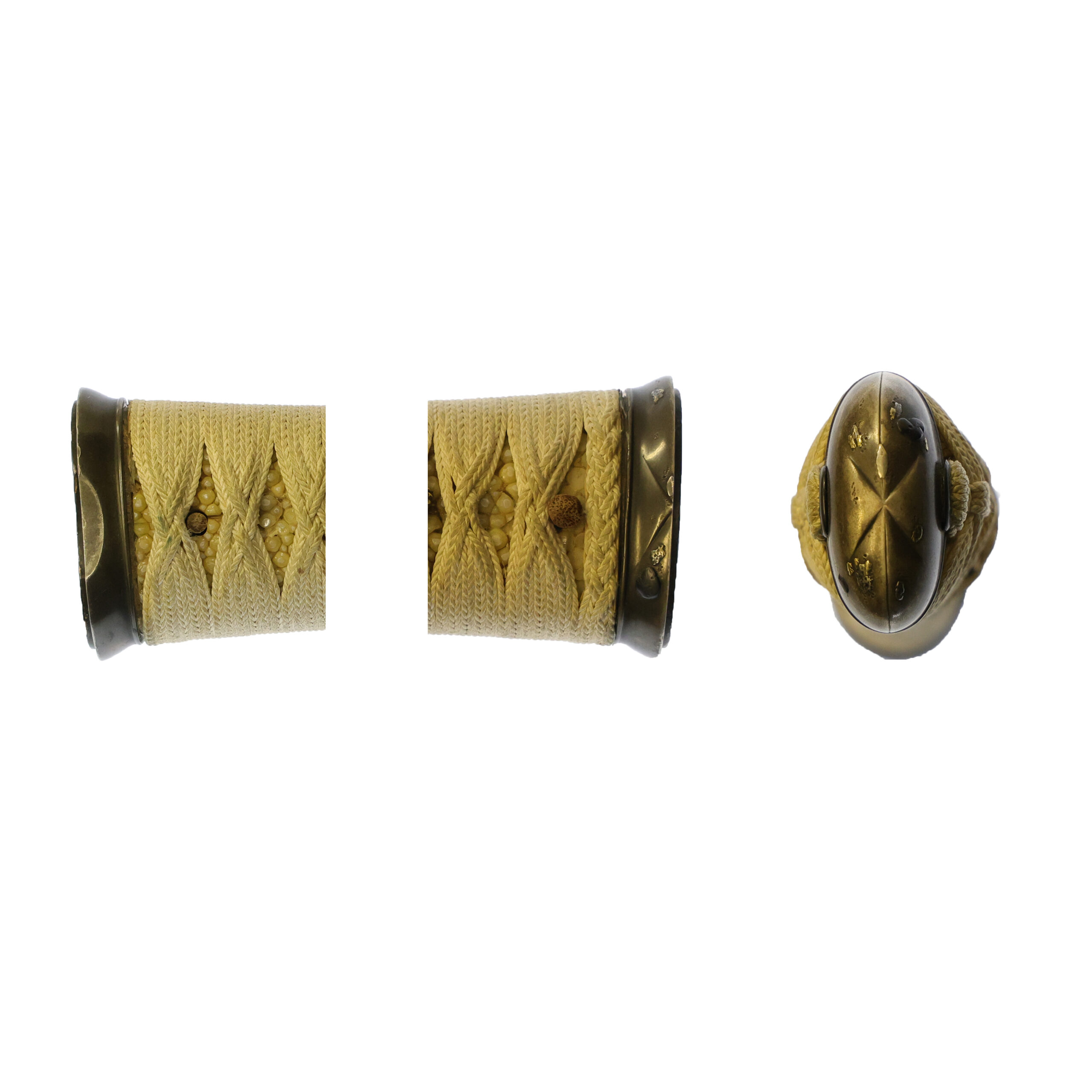
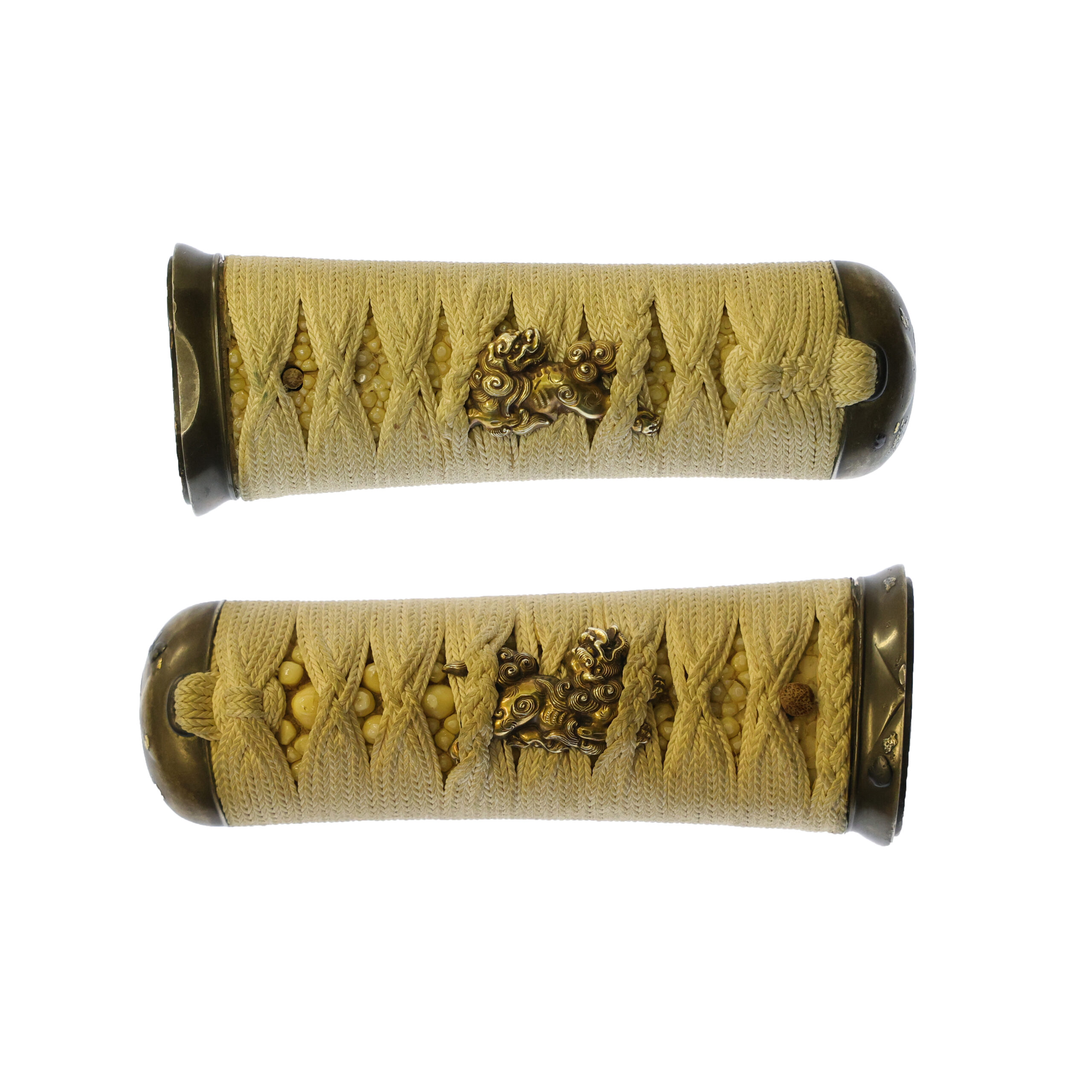
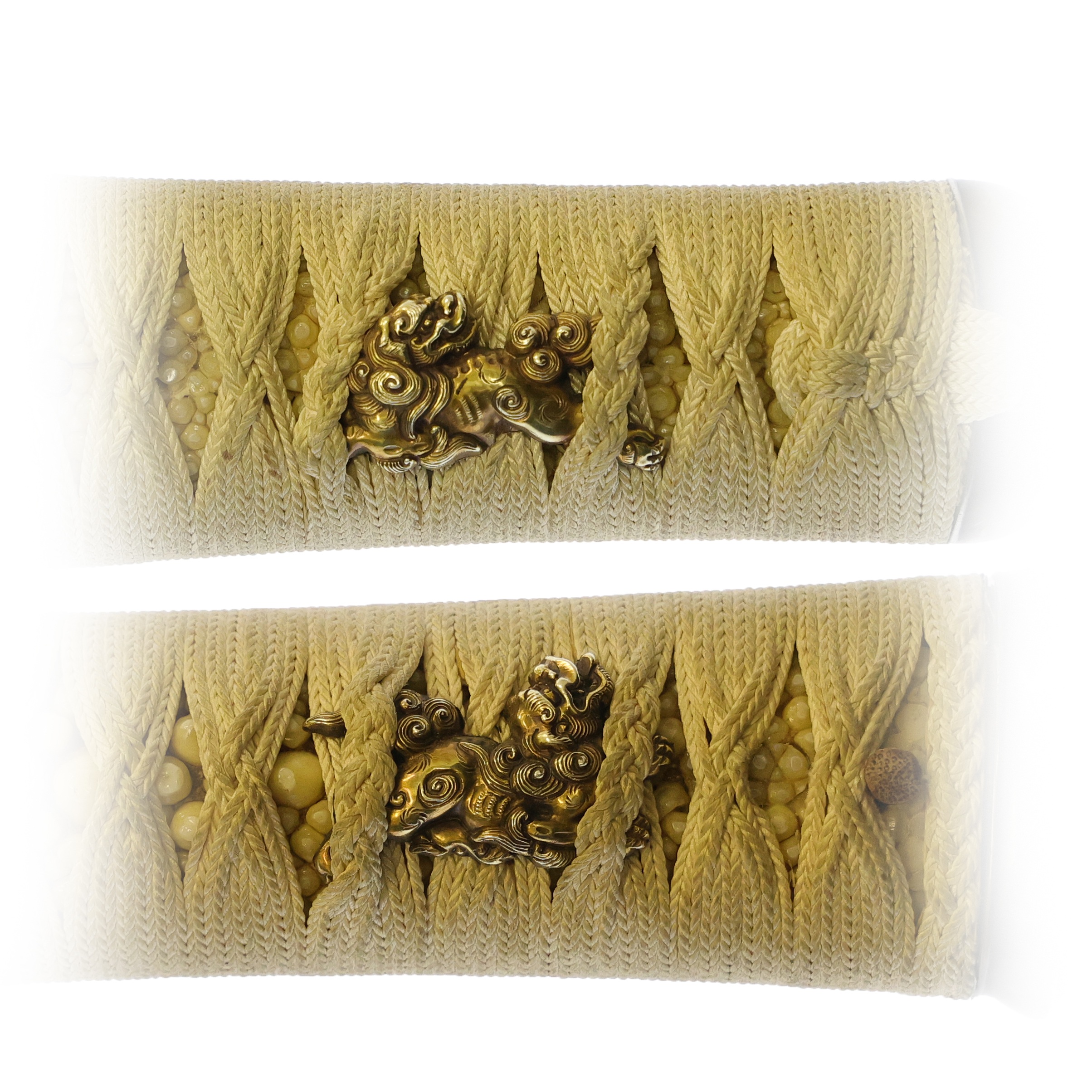
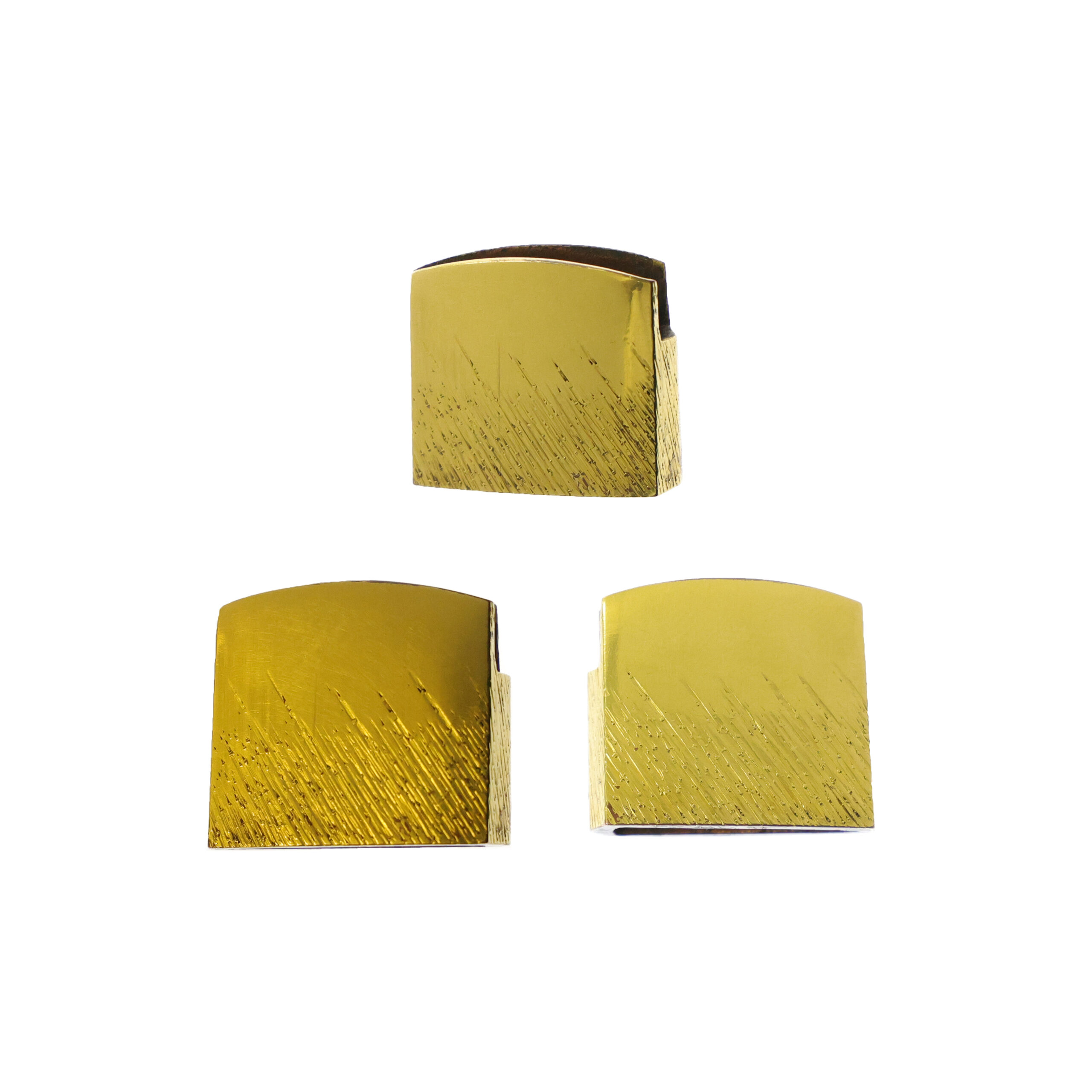
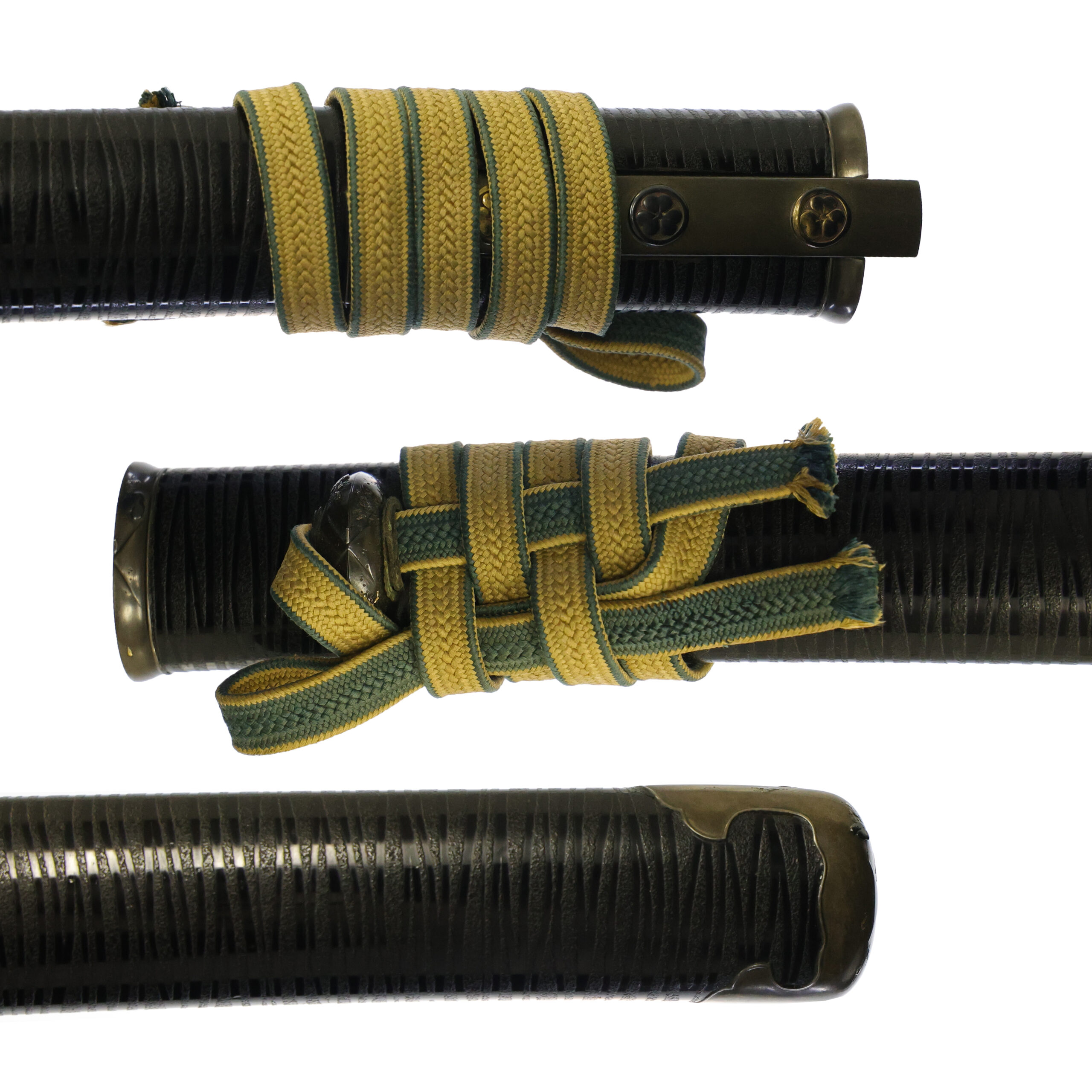
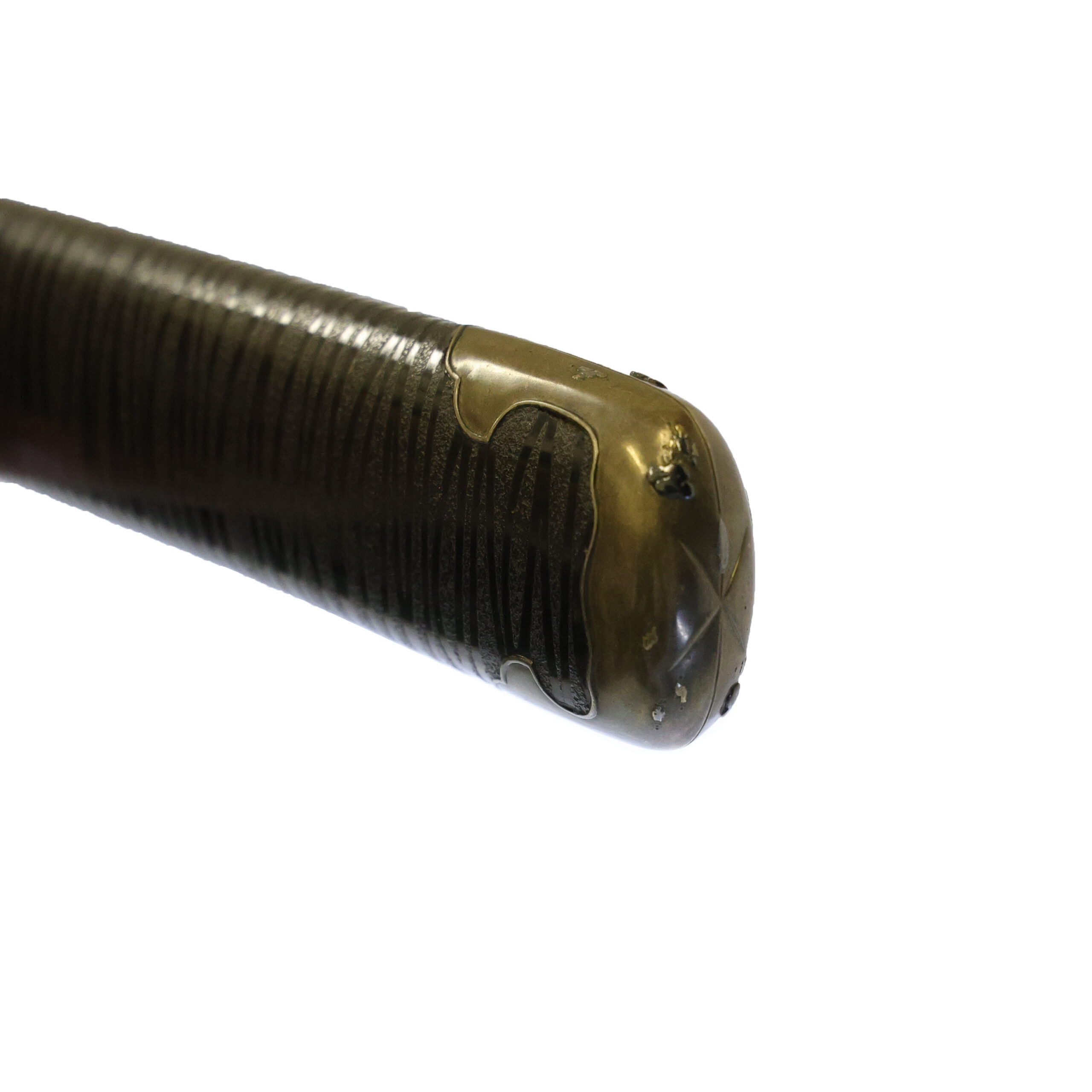
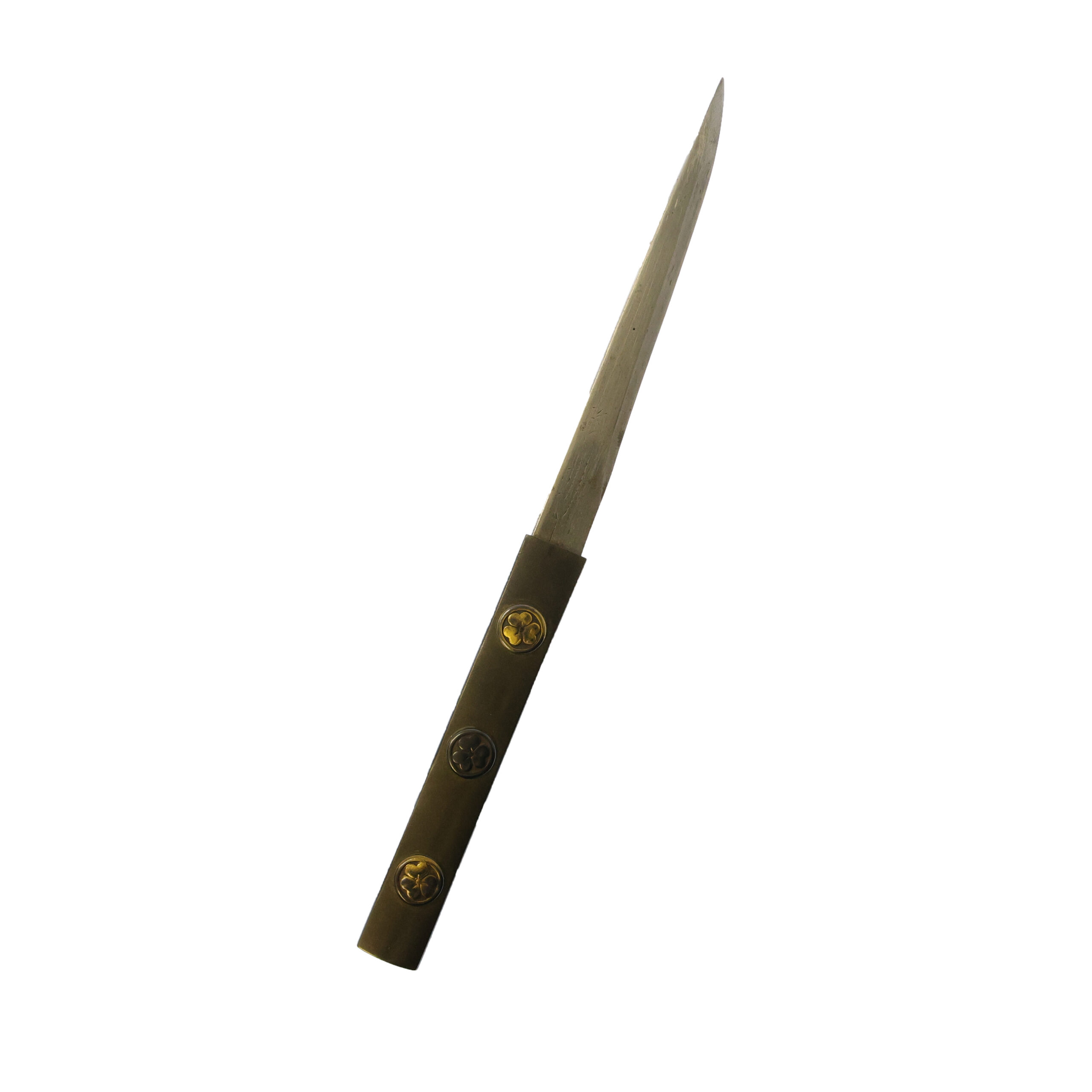
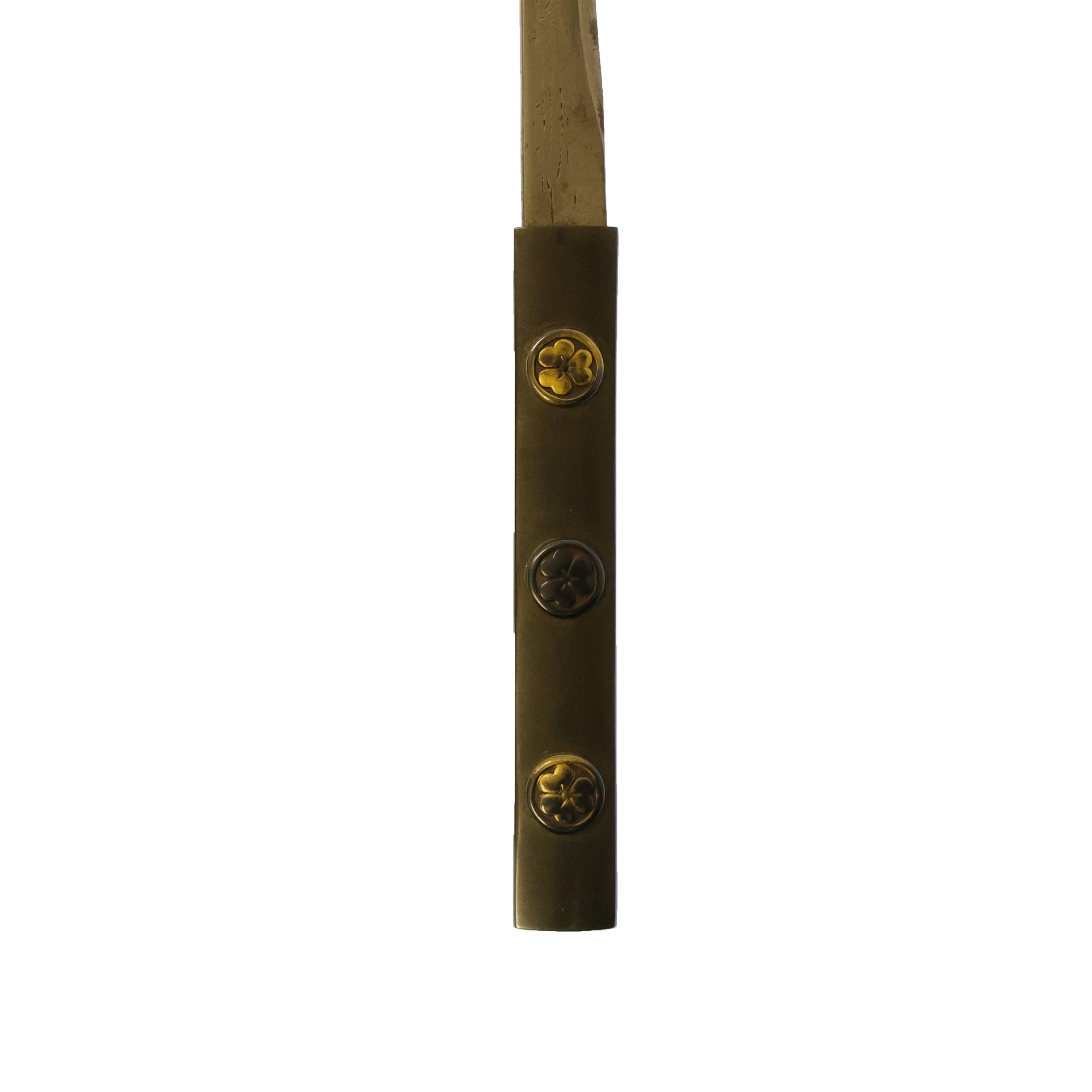
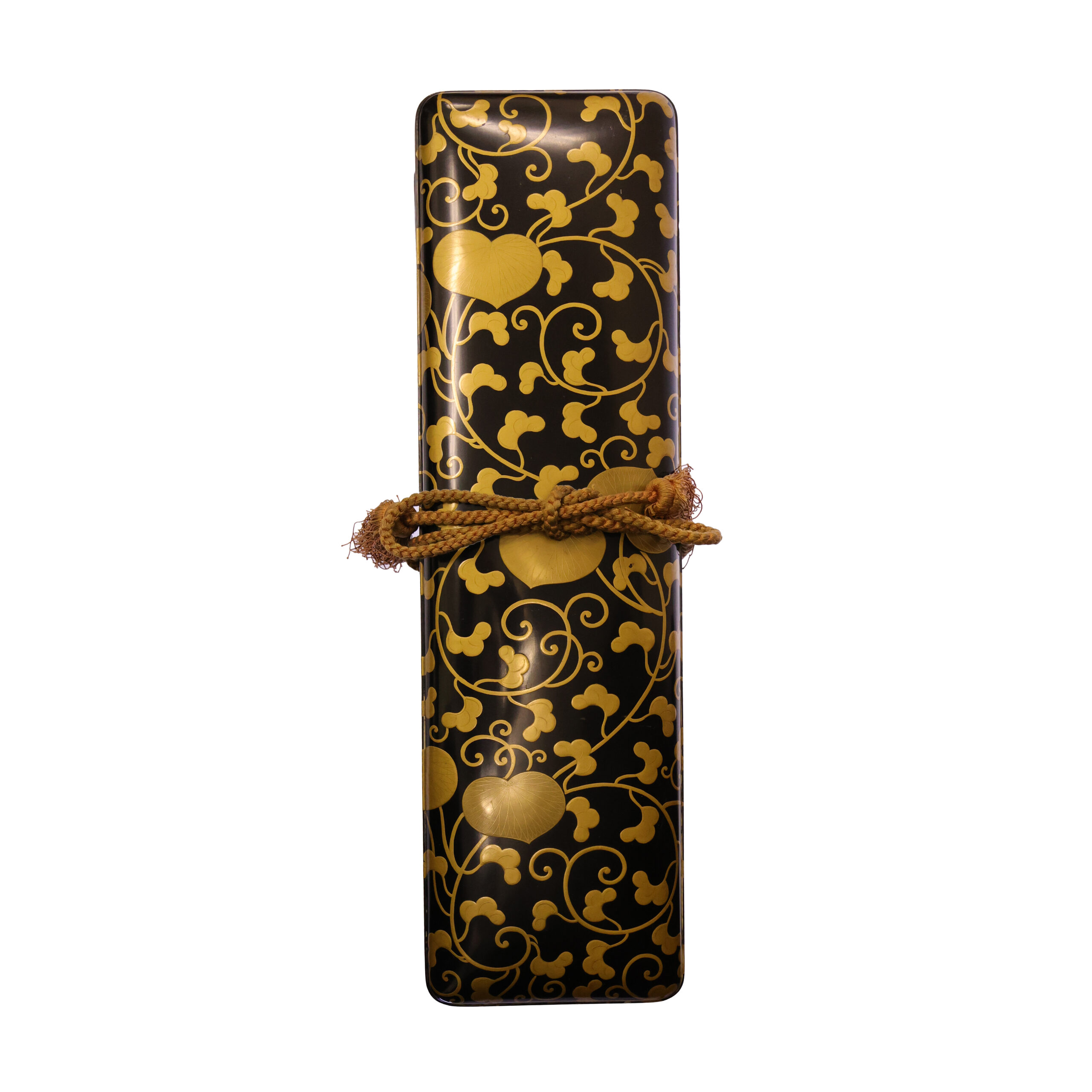
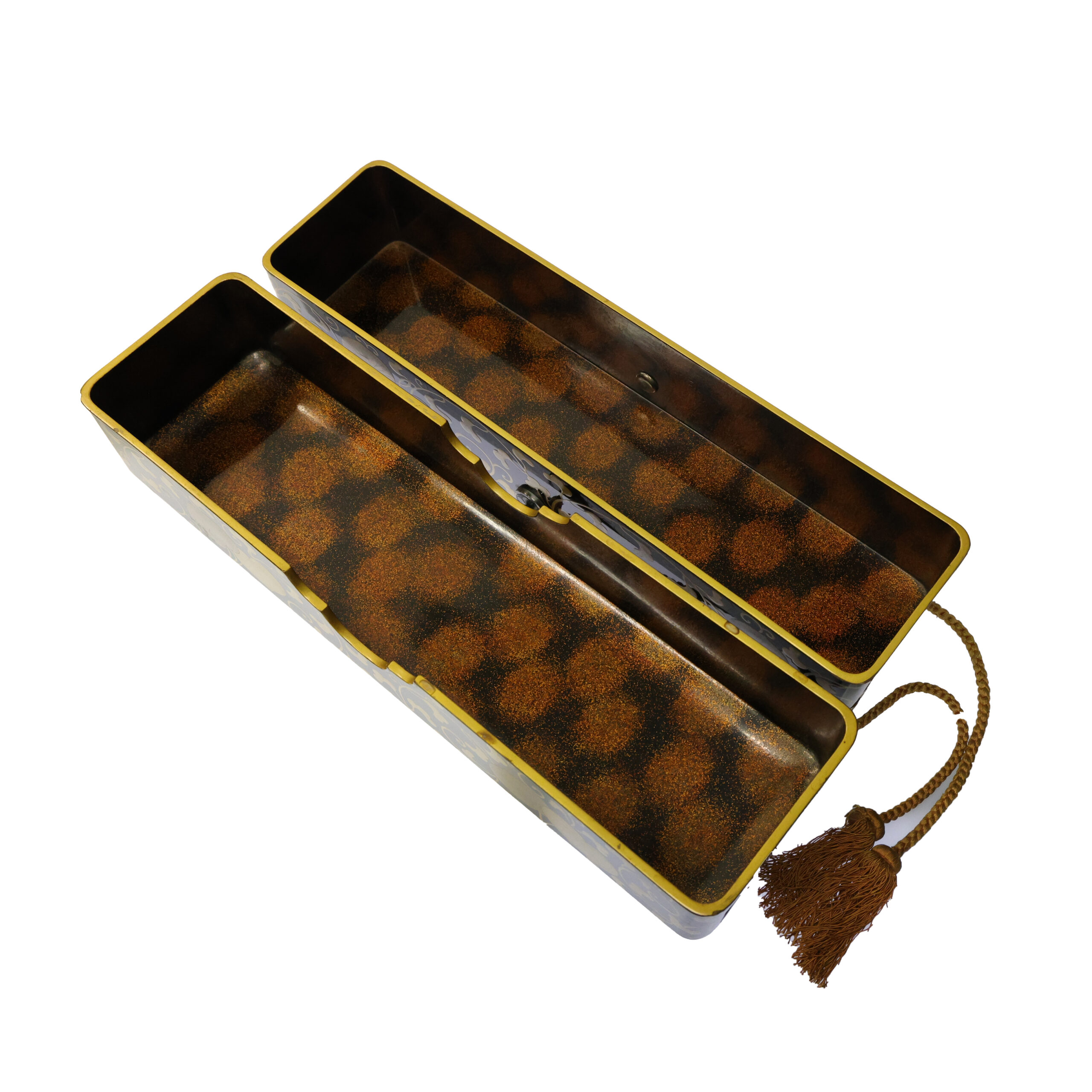
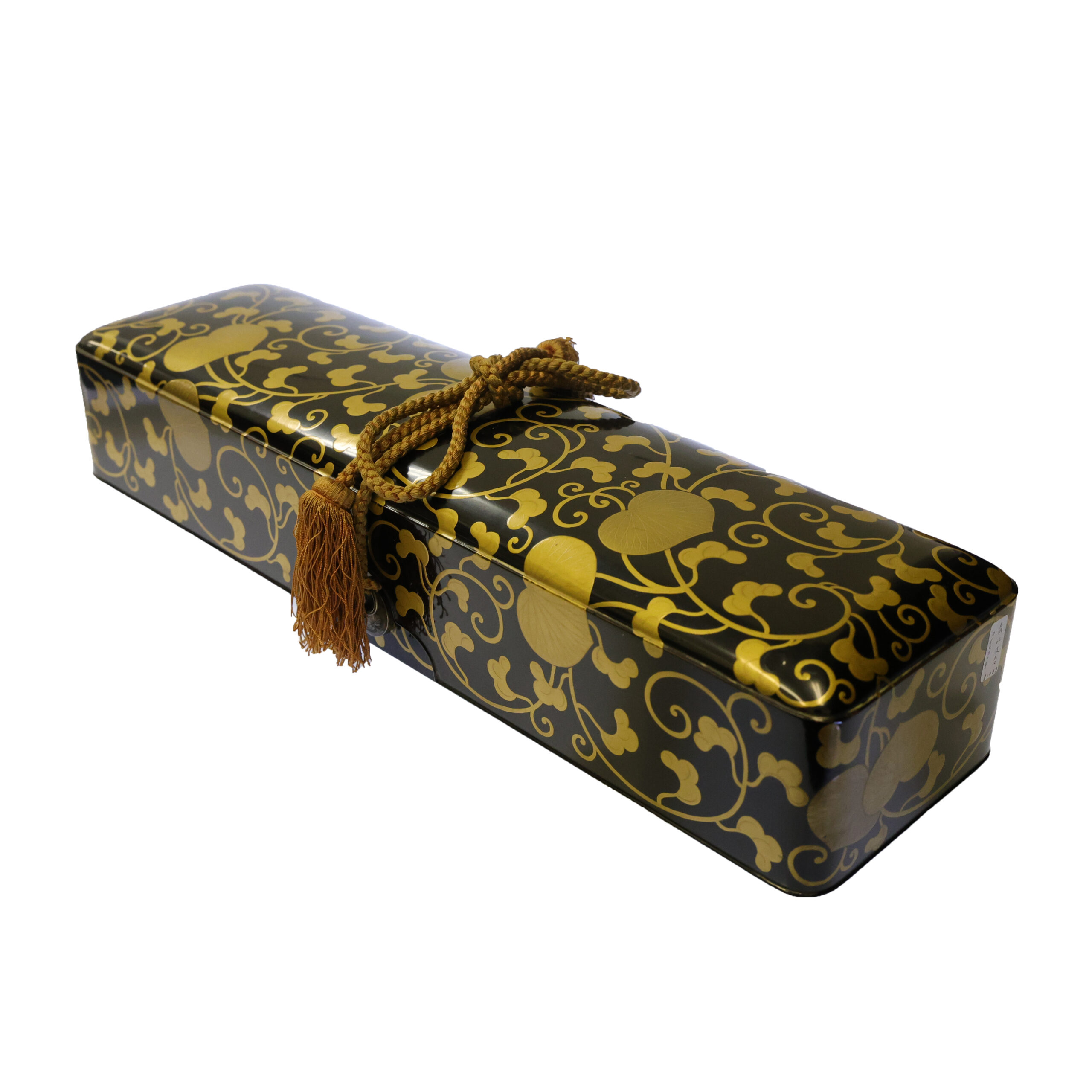
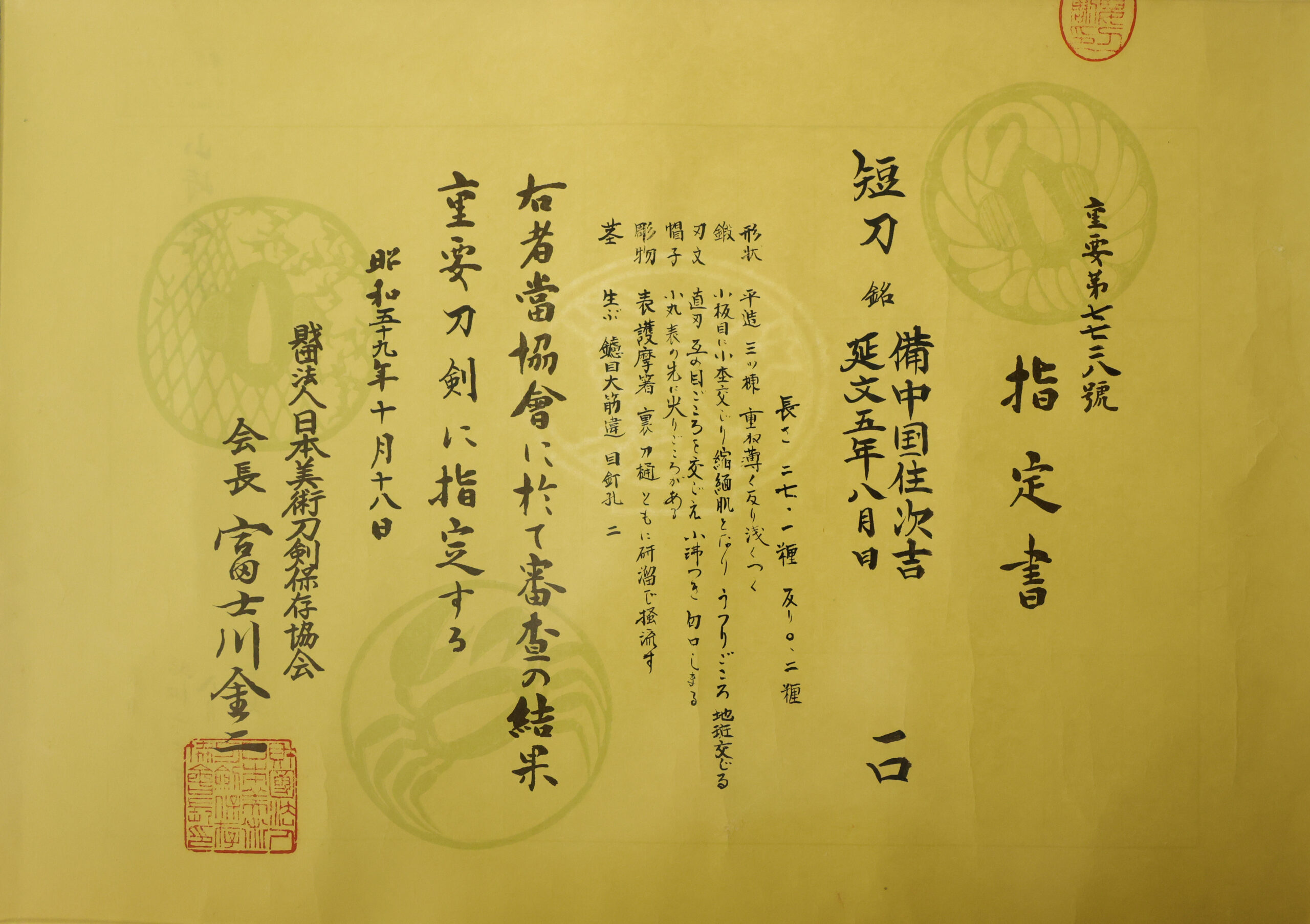
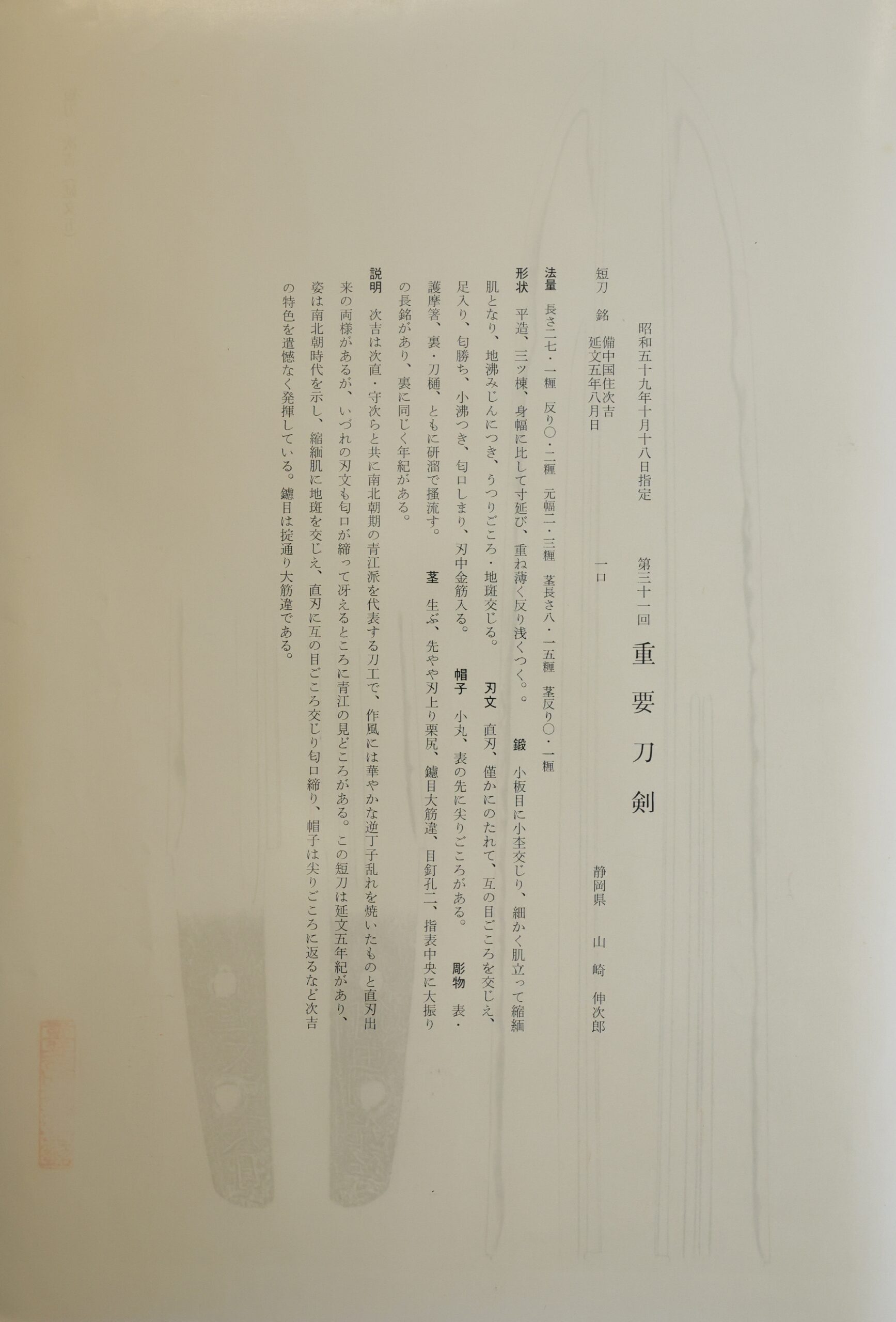
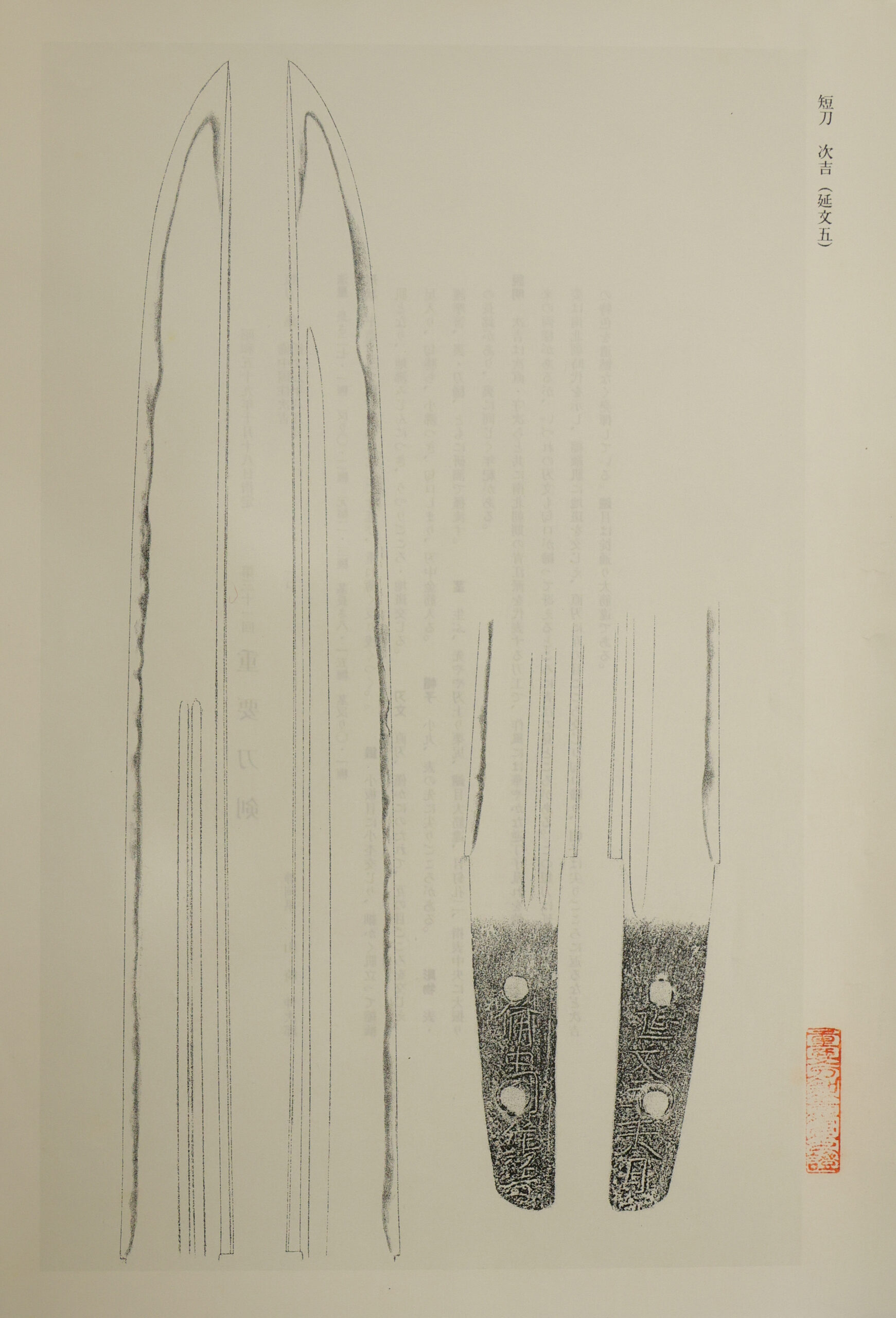
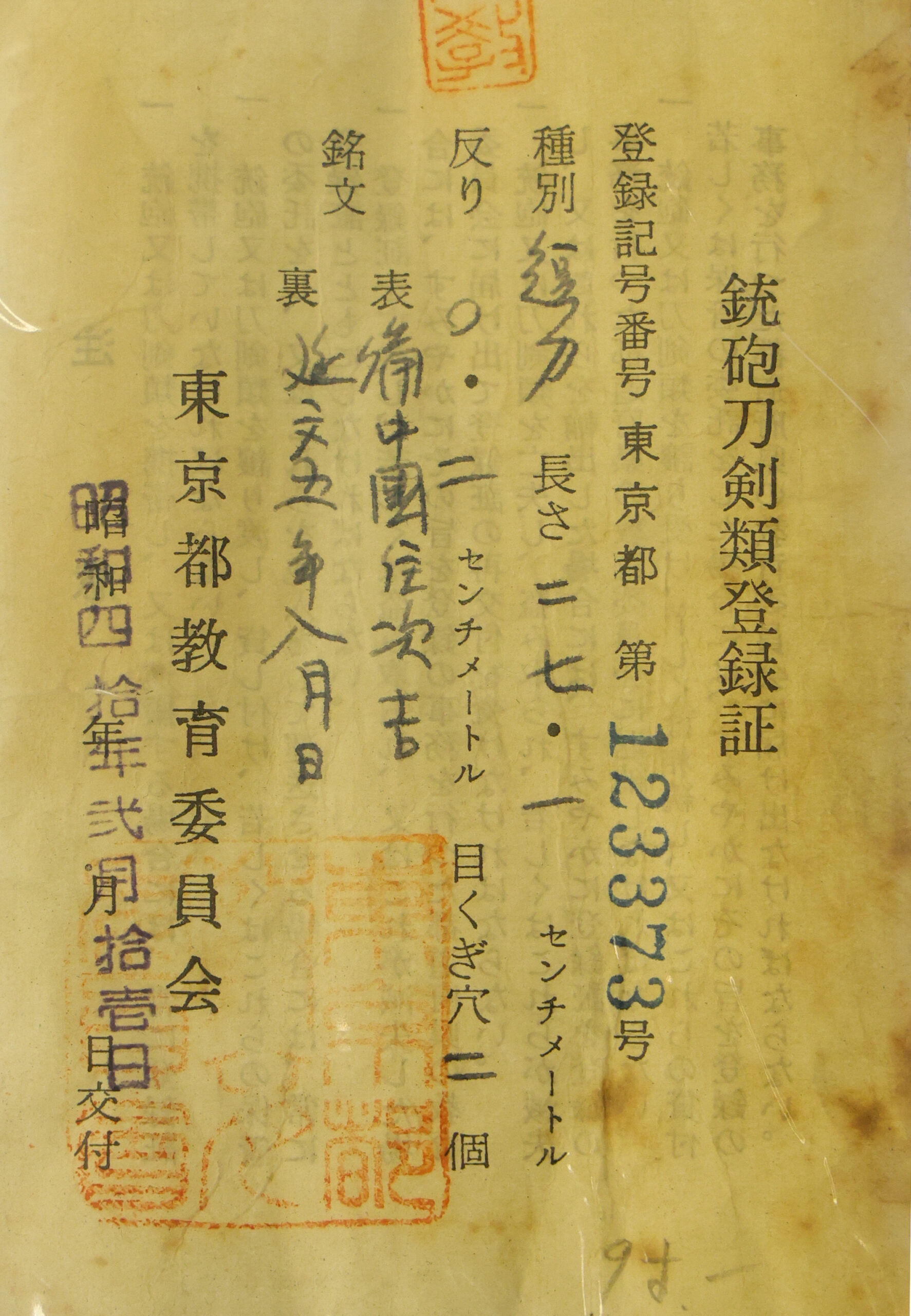
Summary This blade was signed by Bitchu no Kuni ju Tsuguyoshi (備中国住次吉), dated to the 5th year of the Enbun era (1360, mid-Nanbokucho period), according to its NBTHK appraisal. Bitchu corresponds to today’s Okayama Prefecture. Tsuguyoshi was one of the most prominent swordsmiths of the Aoe school during the mid-Nanbokucho period. Aoe school was founded by Yasutsugu (安次) during the late Heian period (Early 12th century), and it was located in today’s Kurashiki town, Okayama prefecture. In Bitchu province, there were two prestigious schools during that time. One is Aoe school, and the other is Seno school, established by Noritaka (則高). Aoe school was prosperous from the late Heian to the late Nanbokucho period. Aoe school is divided into three categories in Japanese sword terminology depending on the period. When the blade is from the late Heian-mid Kamakura period, it is called *Ko-Aoe (Old Mihara). It is called Chu Mihara(Middle Aoe) for those forged in the mid Kamakura-early Nanbokucho period. Finally, Sue-Aoe (Late Aoe) is used for the late Nanbokucho period or later. Based on the inscription on the tang, we believe it is categorized as Chu Aoe or Sue Aoe. One of the most famous figures in Aoe school is Moritsugu, who trained Sadatsugu, Tsuguie, and Tsunetsugu. These three swordsmiths were famous for Gobankaji (御番鍛冶). Gobankaji is a unique system created by the retired emperor Go-Toba (後鳥羽上皇), who was enthusiastic about the Japanese sword-forging. He summoned twelve of the finest swordsmiths nationwide, and one swordsmith forged a blade for the emperor each month. Tsuguyoshi was the son of Tusuguie, who must have mastered superb craftsmanship. Bitchu is located near the Chugoku Mountains, where iron sands, one of the essential materials for making Japanese swords, were abundant. Furthermore, BIZEN swordsmiths had close access to the Takahashi River, where they could find water and charcoal. This geological location contributed to the swordsmiths forging high-quality refined blades. When Aoe school flourished in the Nanbokucho period, Japan was tumultuous because the imperial court was split into two sides(south and north). There were many conflicts, and many Samurai were deployed. The Aoe school must have dedicated itself to forging high-quality blades for those Samurai who fought in battles. It is said that they were land owners and Samurai as well. They served the southern imperial court, which ended up losing the battle against the northern imperial court. After the southern side was lost, the school’s property was ended. However, the descendants of a member of Aoe school established another school called Mizuta school in the Muromachi period, and lasted during the Edo period. What is Tanto? Japanese swords under the blade length of 30cm (11.6 inches) are generally called TANTO, and sometimes TSUBA(鍔; Hand-Guard) is not attached to the TANTO. It was easy to carry and convenient for close combats. It was initially used as a supplemental weapon for Samurai on horseback, who used a pole weapon or long sword in the Kamaura-Muromachi period. Samurai aimed at an unprotected area of his enemy’s armor with Tanto while having to fight with close distance. TANTO was named accordingly, depending on how you carry it, such as HUTOKORO-GATANA (懐刀; Stomach-Sword) or KOSHI-GATANA(腰刀; Waist-Sword) or elsewise. TANTO was also a gift for a bride from her family in a traditional Japanese wedding, as it is believed that TANTO would be divine protection from evil power. Appraisal This blade is appraised as a JUYO TOKEN (重要刀剣) issued by NBTHK (Nihon Bijutsu Touken Hozon Kyokai: 日本美術刀剣保存協会). JUYO is one rank higher than Tokubetsu Hozon. To be eligible for a Juyo Token, it needs to be appraised as a Tokubetsu Hozon Token first. It is extremely rare for an antique Japanese sword to be appraised as JUYO TOKEN, and it is highly desirable among Japanese sword collectors. *Please keep in mind that there is a couple of Kitae Kizu on this blade. Fuchi-Kashira We believe the theme of this Fuchi Kashira is Seashells (貝尽くし, Kai Dukushi). This pattern is a combination of different types of seashells. It is often designed with a seaside scene or wave pattern. You would feel the refreshing atmosphere of summer. Bivalves, especially clam, its shells cannot be combined with any other clam’s frame; therefore, its pattern represents happy marriage. Seashell is called Kai (貝) in Japanese. Because of its pronunciation, the seashell has another meaning. There is a word Yarigai (やりがい, worthwhile). As a part of this word has the same accent as Kai (貝 is read Gai in some cases), Japanese people found this meaning. Also, since seashells are hard and combine only with their pair, people thought it represented a robust defense. Due to these meanings that inspire warriors who go to the battlefields, Samurais might have loved this motif. Tsuka and Menuki The theme of the Menuki is Karajishi (唐獅子, lion). The Shishi (獅子) means a lion in Japanese, and the Karajishi is a lion brought from the continent to Japan in the Toh period (唐, Tang dynasty, 618-907). The Karajishi typically has curly hair for its head, neck, body, and tail, as seen on this work. In Buddhism, the Karajishi is regarded as a symbol of wisdom, and Monju Bosatu (文殊菩薩, Manjushri Bodhisattva) rides lions. According to a theory, the Karajishi is the origin of Komainu (狛犬, stone guardian dogs that exorcize evil spirits). It shows this animal motif has been familiar to Japanese people since ancient times. Kozuka The theme of this Kozuka seems to be Ume (梅, Japanese apricot blossom). Japanese apricot blossoms begin to bloom in winter that snow still covers its tree so that people thought this flower tells the arrival of spring. Same as cherry blossom, it has been appreciated for a long time in Japan. People enjoy its adorable petal shape and scent, gracefully branched tree, and compose many poems. As it comes out in the cold season, it symbolizes the power of perseverance and vitality. Saya This saya features a decorative lacquer technique known as Fuemaki-nuri (笛巻塗). The name literally means “flute-wrap lacquer” and refers to a method in which thin cords or strings are wrapped around the scabbard before being coated with multiple layers of lacquer. Once dried and polished, the surface reveals a textured, ridged pattern reminiscent of the wrapping on a traditional Japanese flute (fue, 笛). Lacquer box (Tanto box) The theme of this lacquer box is the Aoi-Karakusa (葵唐草). Aoi (Asarum caulescens, 葵) is a plant pattern in which each stem branches and has characteristic heart-shaped leaves. As its leaves have a habit of always facing the sun, and the word “Aoi” is taken as “Aogu (仰ぐ, looking up)” for the sun, people thought the Aoi pattern would bring good fortune. Karakusa (Arabesque) is a pattern in which stems and leaves of vines are twined and make curves. Since ivy has a strong vitality and grows up without interruption, people regarded this design as a symbol of prosperity and longevity. Vine is called Tsuru (蔓) in Japanese, and it has another pronunciation; “Man.” There is a word 万 (it is also read Man), which means ten thousand. In the Karakusa pattern, leaves and vines are connected like Obi (帯, belt). The word “帯” can also be read “Tai.” Due to its pronunciation, the term “代 (Tai)” is associated. From this word-association game, an idiom 万代 is associated, and it means a thousand generations. In other words, we could imagine that people used this design wishing prosperity and longevity for their clans for a long time. Thus, the Aoi-Karakusa pattern, which combines the motifs of these plants that were mentioned above, has long been cherished in Japan as a symbol of good fortune. Authentication Paper They authenticated the blade on October 18th in the 59th year of Showa (1984). They appraised it as JUYO TOKEN, the blade exceptionally worth preserving for Japanese society.
Offered by Samurai Museum
This piece has sold
Get an email when a new Aoe Tsuguyoshi piece hits the market.


Aoe (Bicchu) · Bitchu · around 1357-1368
Fujishiro Jo-jo saku
The early eleventh-century travel-text Shin Sarugakki, listing the famous products of the provinces, already names "the swords of Bitchū," and it was the Aoe smiths, flourishing along the lower reaches of the Takahashi River, who inherited that reputation. Tsuguyoshi works at the Nanbokuchō height of the line, and the published sources count him, together with Tsugunao and Moritsugu, among the representative Aoe smiths of the mid-fourteenth century. His dated, signed blades run across the Enbun, Jōji and Kōan years of the 1350s and 1360s, almost all of them tantō and sun-nobi wakizashi: wide in body, thin in kasane, shallow in sori, the period shape stated without ornament. Several are still ubu, carrying a long signature on the omote and a date on the reverse, so his hand can be followed year by year.
His manner is the one the published sources draw most carefully, because it divides cleanly in two. He works in a tight, bright suguha and in a flamboyant saka-chōji-midare, and the judges return again and again to the same distinction between the two Aoe masters: "as a rule Tsuguyoshi runs to suguha, Tsugunao to saka-chōji-midare,[[c:1]]" while in either temper the nioiguchi is tight and clear. The suguha is by far his own register. On these blades he tempers a chū-suguha or a narrow hoso-suguha, in places a shallow notare, into which small ko-ashi, yō and a reversed saka-ashi tendency enter, the temper nioi-dominant with ko-nie, fine kinsuji running within, the nioiguchi tight and notably bright. It is this clarity that the published sources name his and the school's chief point of appreciation, the nioiguchi that "is tight, and bright and clear.[[c:2]]"
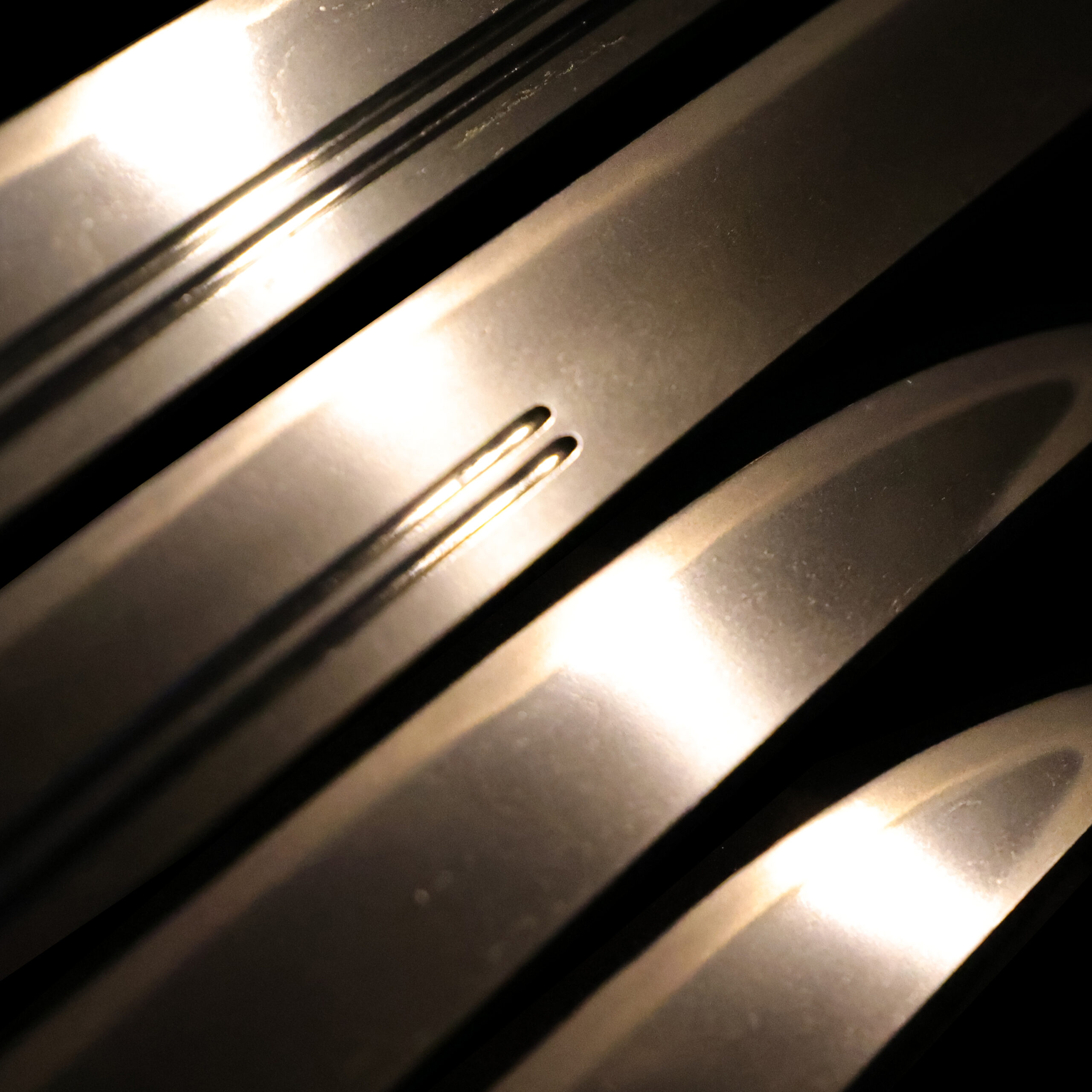
The jigane carries the rest of the Aoe signature. Over a well-packed ko-itame, at times mixed with ko-mokume and standing a little, lie fine ji-nie set in minute density and delicate chikei, with the speckled ji-madara the sources also call chirimen-hada and patches of clear sumihada. A midare-utsuri stands toward the mune, and on his finest blades a further linear utsuri runs along the edge so that the two layer into a banded dan-utsuri, the steel left clear. The bōshi runs straight to a ko-maru, frequently with a pointed turn, sometimes with a long kaeri or a little hakikake; and the tang is filed, by the school's rule, in ō-sujikai. On one Kōan tantō the judges single out a kaeri "boldly tempered down deep to the machi,[[c:3]]" an unusual flourish in a suguha work that they hold sharpens rather than coarsens the blade.
The second register is the rarer face. On a small number of pieces the temper opens into a showy saka-chōji-midare mixed with gunome, the ashi reversed and yō entering, nioi-dominant with ko-nie and fine kinsuji, the bōshi entering as midare and turning with a pointed flavor; the midare-utsuri on the same blades stands conspicuously. The judges call one such wakizashi a representative work whose saka-chōji and utsuri together show the school plainly, and on a dated tantō of this kind they record an oral remark of Honma's that, within this Nanbokuchō line, "the smith who tempers the clove pattern in a tantō with the clearest nioiguchi is this craftsman, or else Tsugunao.[[c:4]]" Beyond the signed work stands a third record, the ō-suriage mumei katana attributed to him, a wide blade of imposing shape that keeps a 1657 Hon'ami origami naming Tsuguyoshi; its itame jigane with emerging jifu and its nioi-deki suguha with saka-ashi let the judges affirm it as his from the jihada and hamon rather than from any personal tell.
What sets Tsuguyoshi apart within his own school is exactly this balance. Against Tsugunao, whose hand leans to the brilliant reverse clove pattern, his work is read as the suguha master of the pair, the nioiguchi tight and bright on both their hands but the quiet temper his by preference. Against the earlier Ko-Aoe, whose suguha the published sources describe as ko-nie-deki with a somewhat subdued nioiguchi, his is the Nanbokuchō clarity, the line tightened and brightened. The judges call the suguha his family specialty, the manner in which "he displays his true capabilities," and name his best blades the outstanding examples among his surviving work.
For the collector he is a Nanbokuchō name of real standing rather than a rarity beyond reach. Fujishiro grades him Jō-jō saku. He has no National Treasures and no Important Cultural Properties; his record runs instead through the modern designations, fourteen of his blades falling in the Tokubetsu Jūyō and Jūyō tiers, two of them at Tokubetsu Jūyō. The published sources prize his ubu, dated, signed pieces as reference material for the study of the smith, and name one Tokubetsu Jūyō wakizashi outstanding among his works. His provenance runs through the daimyō houses: a Tokubetsu Jūyō wakizashi transmitted in the Maeda family with a black-lacquer aikuchi koshirae bearing eight gold umebachi crests, a tantō held in the Kan'in-no-miya princely house with its Hon'ami origami and crested storage box, and further blades recorded with the Maeda and Arima families. A signed Tsuguyoshi is not often offered, and most designated examples are held rather than traded, but a Jūyō tantō or wakizashi of his does appear from time to time, and a dated, signed one is among the more knowable things a collector of Bitchū Aoe could hope to encounter.
Where Tsuguyoshi stands among comparable artisans: across all of nihontō, and within tradition, era, and period. The tiers (Foremost · Leading · Major · Notable) weigh official designations from the NBTHK and Japan's Agency for Cultural Affairs, together with historical honors of lasting repute such as the Sansaku and Meibutsu-chō.
Select a lens to see how it's measured.
Years he was demonstrably active, proven by signed-and-dated blades
Bizen-den · Bitchu
Phase: Sue-Aoe末青江· 1334–1500
21 pieces on the market now
Sue-Aoe names the closing chapter of the Bitchū tradition, the work made after the Aoe smiths reached the height of their powers in the Nanbokuchō era and then carried the lineage forward into Muromachi decline. The window is anchored by the hands the NBTHK repeatedly groups together as the representative smiths of the period: Tsuguyoshi (次吉), Tsugunao or Tsuginao (次直), and Moritsugu (守次), with Naotsugu (直次), Yoshitsugu (吉次), and a Sadatsugu (貞次) name carried down from the late Kamakura masters into this later age. Dated blades fix the chronology firmly, from a Moritsugu tantō of Enbun 3 (1358) and a Naotsugu in the Ryakuō years through Tsuguyoshi pieces of Teiji 2 (1363) and Kōan 2 (1362). These men succeeded the late-Kamakura-into-early-Nanbokuchō generation that produced Sadatsugu and the earlier Moritsugu, and they worked at the moment the Southern Court's fortunes were turning, after which the school thinned out. The very tail of the line surfaces in obscure later Bitchū hands such as Munesada and Sōtei of Kasaoka, dated Bunmei 13 (1481), whose lineage the records leave unknown and whose work the setsumei describe as nearly indistinguishable from late Bizen. Sugata is the first tell. Setsumei after setsumei records a wide mihaba with little taper from base to tip, thin kasane, sun-nobi proportion in the tantō and an extended chū-kissaki or outright ō-kissaki in the larger blades, the broad Nanbokuchō build that the earlier Aoe never carried. The jihada keeps the school signature of ko-itame mixed with mokume, finely standing, with mottled jifu and patches of sumihada drifting through the steel. Above all the period is read in its utsuri: streak-like suji-utsuri rises near the edge and stacks into the layered dan-utsuri the catalogues prize, seen plainly on the Tsugiyoshi tachi of Tokuju 21 and the dated Tsuguyoshi tantō of Juyo 58.
Two tempers divide the leading hands. Tsuguyoshi favors a tight, bright suguha with ko-ashi and saka-ashi; Tsugunao favors the flamboyant saka-chōji-midare with its reverse slant, ashi and yō pouring in, that matured around Enbun. Against this the Ko-Aoe of the mid-Kamakura ran ko-nie-deki with a subdued, shizumi nioiguchi over a refined chirimen-hada, while the late-Kamakura Chū-Aoe of Sadatsugu and Moritsugu stood between, the nie growing calmer and the reverse-slanting yakiba only beginning to foreshadow the later drama. Crucially the period remained nioi-deki where other provinces took up Sōshū nie, a holding distinction the setsumei mark out by name. For kantei the cluster reads together. A broad Nanbokuchō sugata, dan-utsuri over sumihada, ō-sujikai file marks on the tang, and a nioiguchi that is tight and clear point to this window rather than to Bizen of the same age; the choice between bright suguha and reverse saka-chōji then separates Tsuguyoshi from Tsugunao, while Naotsugu's forceful reverse-chisel mei and nezumi-ashi, and Moritsugu's kinsuji in a tight suguha, mark their own hands. The named masters carry strong provenance: a Tsugiyoshi wakizashi dated Enbun 2 descended in the Maeda family, a Yoshitsugu tantō passed to the Sakai of Himeji by gift of Tokugawa Ietsuna, and an ō-suriage den Tsuguyoshi katana ran through the Yanagisawa house with Hon'ami origami from Mitsuatsu. Honma's own remark singling out Tsugiyoshi and Tsuginao as the makers of the clearest chōji in tantō fixes their standing at the close of the Aoe story. Learn more →
| Smith | Era | Designated |
|---|---|---|
| Tsugunao次直 | 1345-1361 | 26 |
| Masatsune正恒 | 1213-1219 | 31 |
| Naotsugu直次 | 1288-1350 | 20 |
| Yasutsugu康次 | 1211-1213 | 10 |
| Kanetsugu包次 | 1211-1213 | 9 |
Bizen in the Nanbokuchō period
Sixty years of war between two courts drove blades long and broad, and Osafune met the demand: Kanemitsu and Chōgi led forges serving the provincial warriors who did the fighting, while Sōshū influence arrived with the armies to create Sōden-Bizen.
A blade of top-grade workmanship and condition, formally judged to rank with a nationally recognized Important Art Object (Jūyō Bijutsuhin). Awarded only at the NBTHK’s competitive annual examination.
Of Japan’s roughly 2.5 million registered swords, only 12,348 (about 1 in 202) have ever attained Jūyō.
The NBTHK (Nihon Bijutsu Tōken Hozon Kyōkai, the Society for the Preservation of Japanese Art Swords) is a public-interest incorporated foundation founded in 1948 and supervised by Japan’s Agency for Cultural Affairs (Bunkachō); it is based at the Japanese Sword Museum in Tokyo. Its expert panels physically examine each submitted work (shinsa) and issue a certificate (kanteishō) ranking it by artistic and historical merit. NBTHK papers are the most widely recognized standard of authentication for Japanese swords and fittings.
NBTHK official siteReturns/exchanges limited to defects caused by shipping (except willful misconduct or gross negligence by the company); customers must contact within 72 hours of receiving the product.