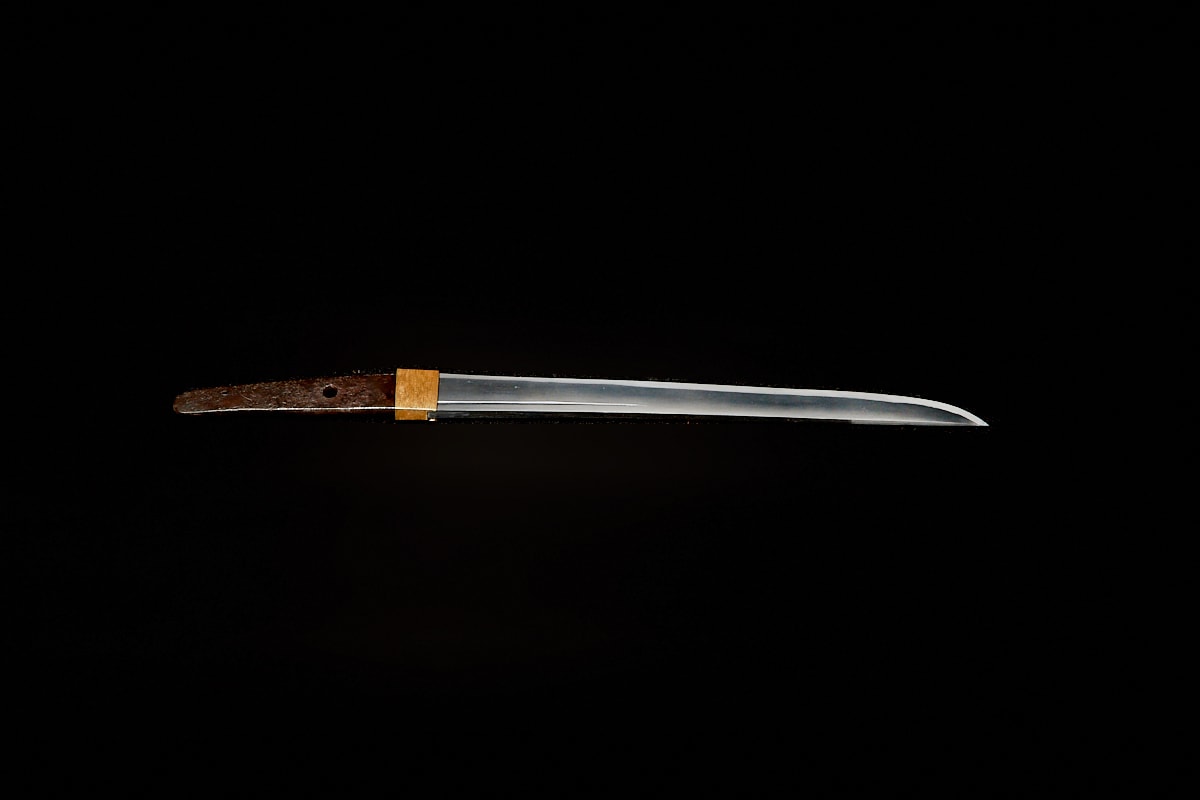
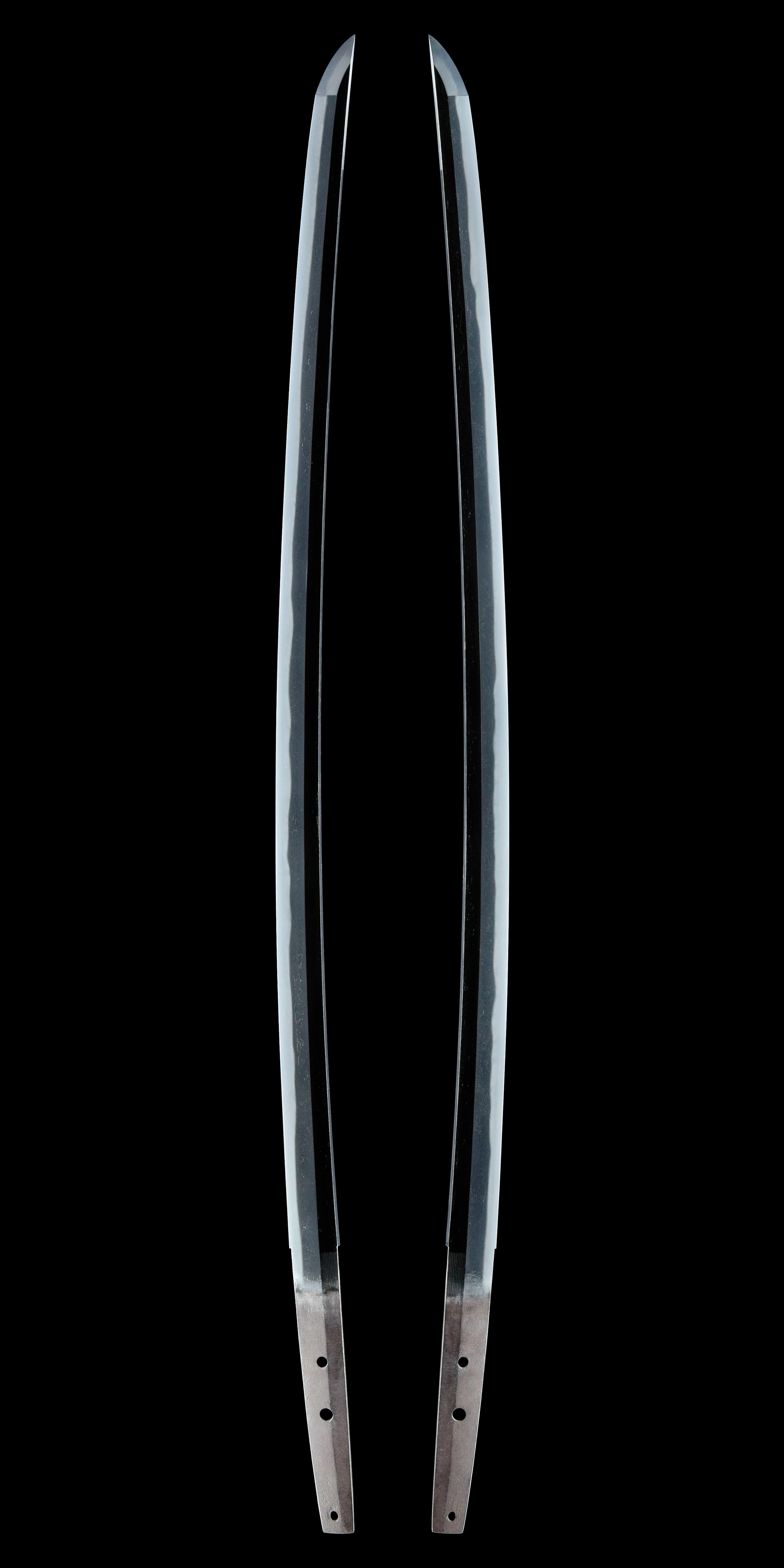
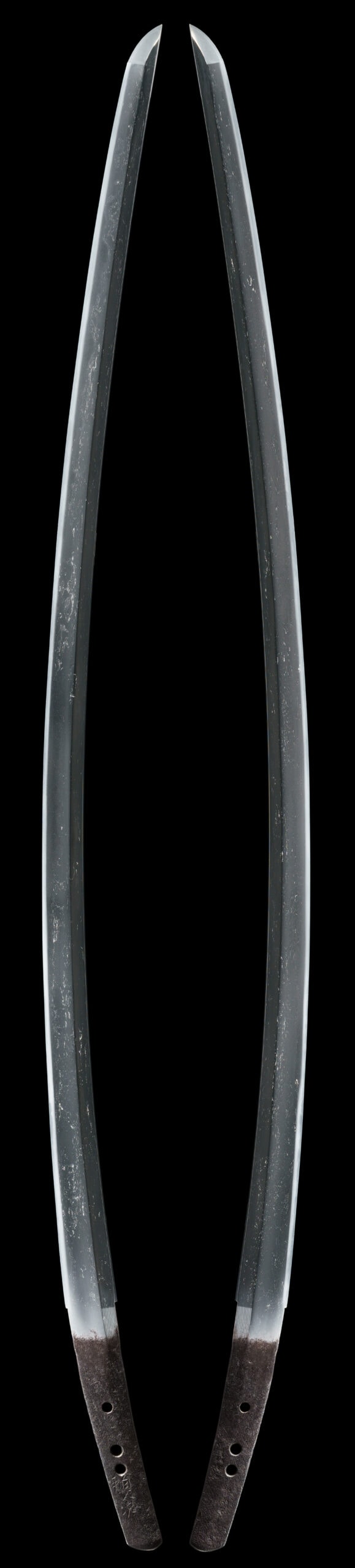
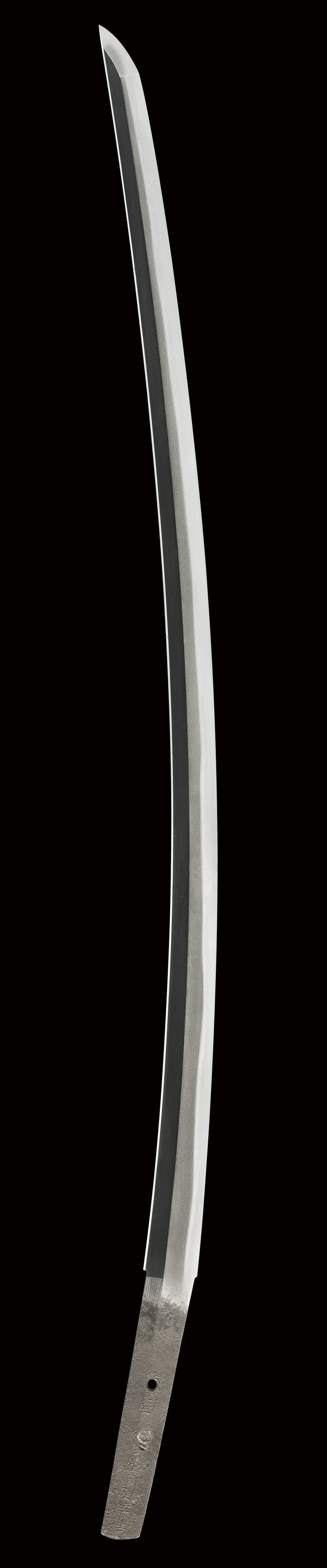
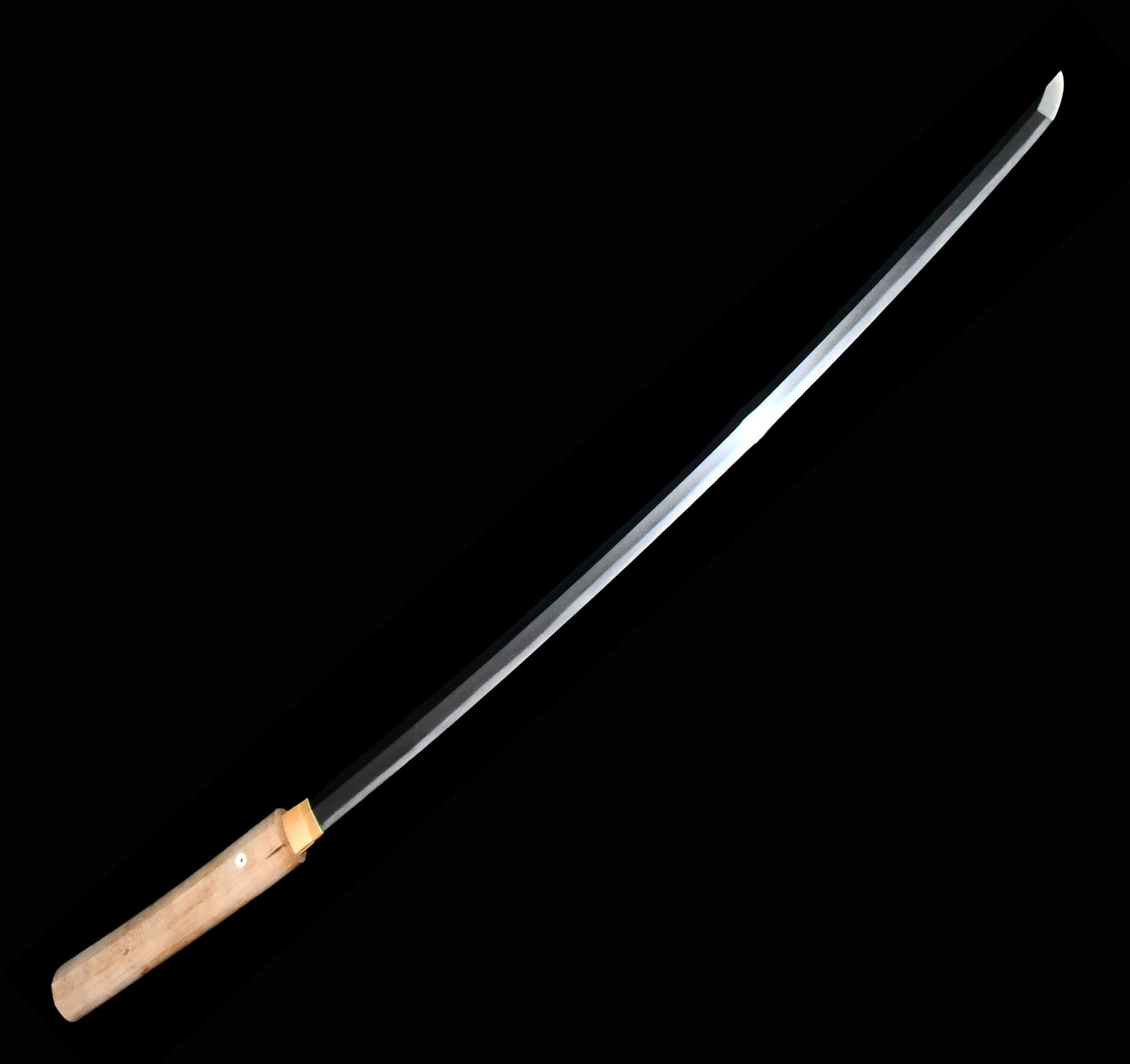
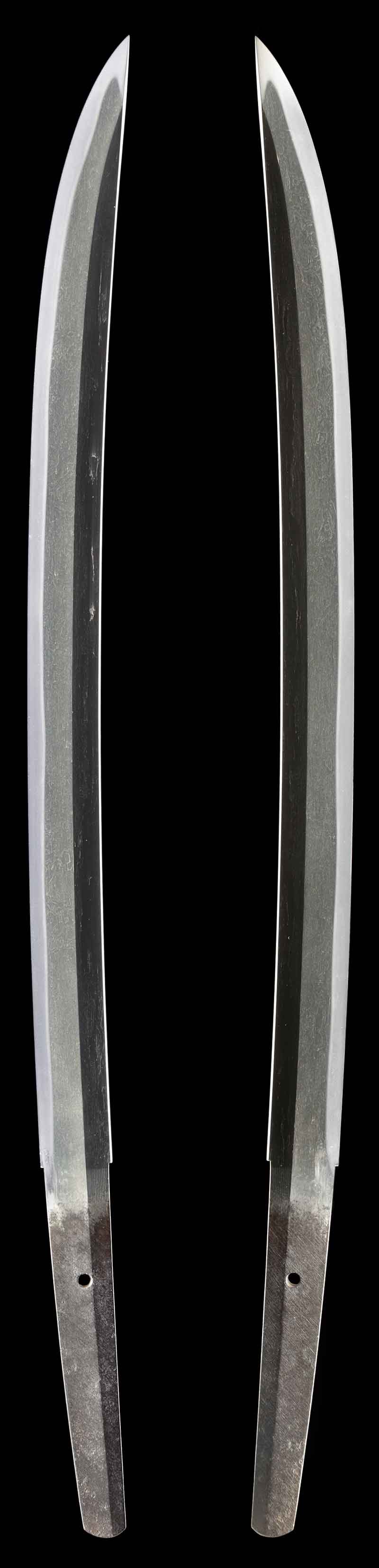
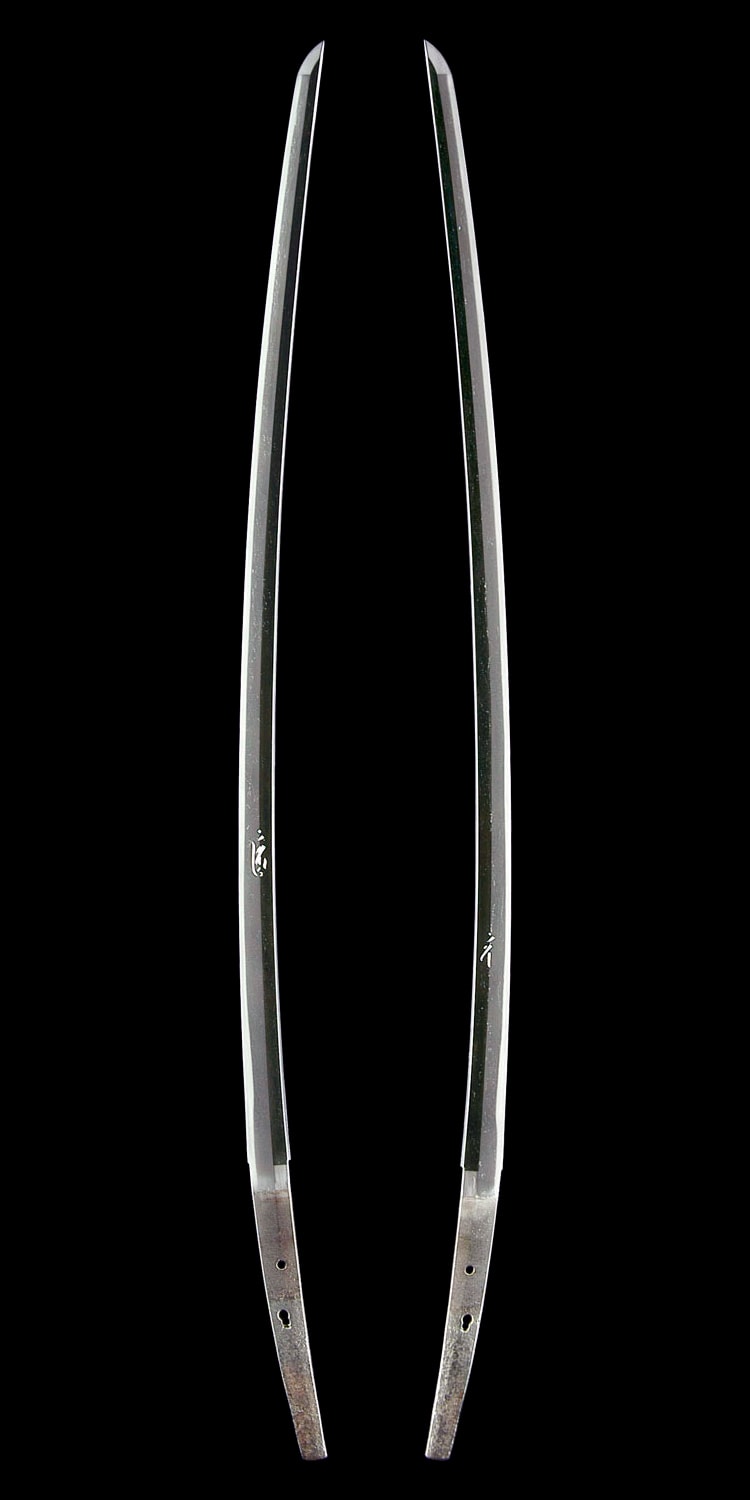
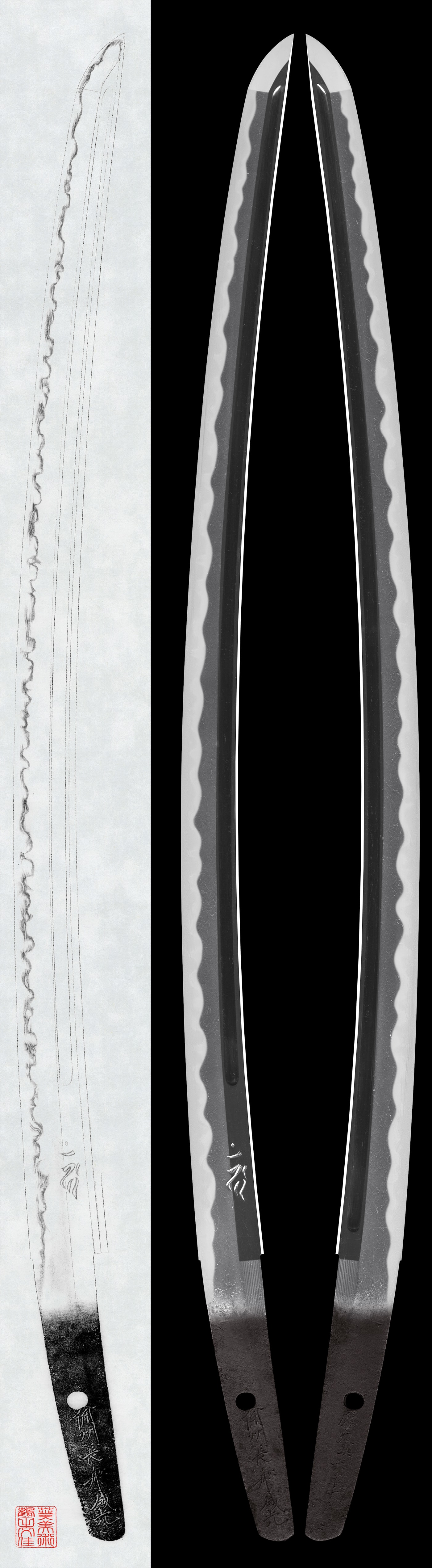
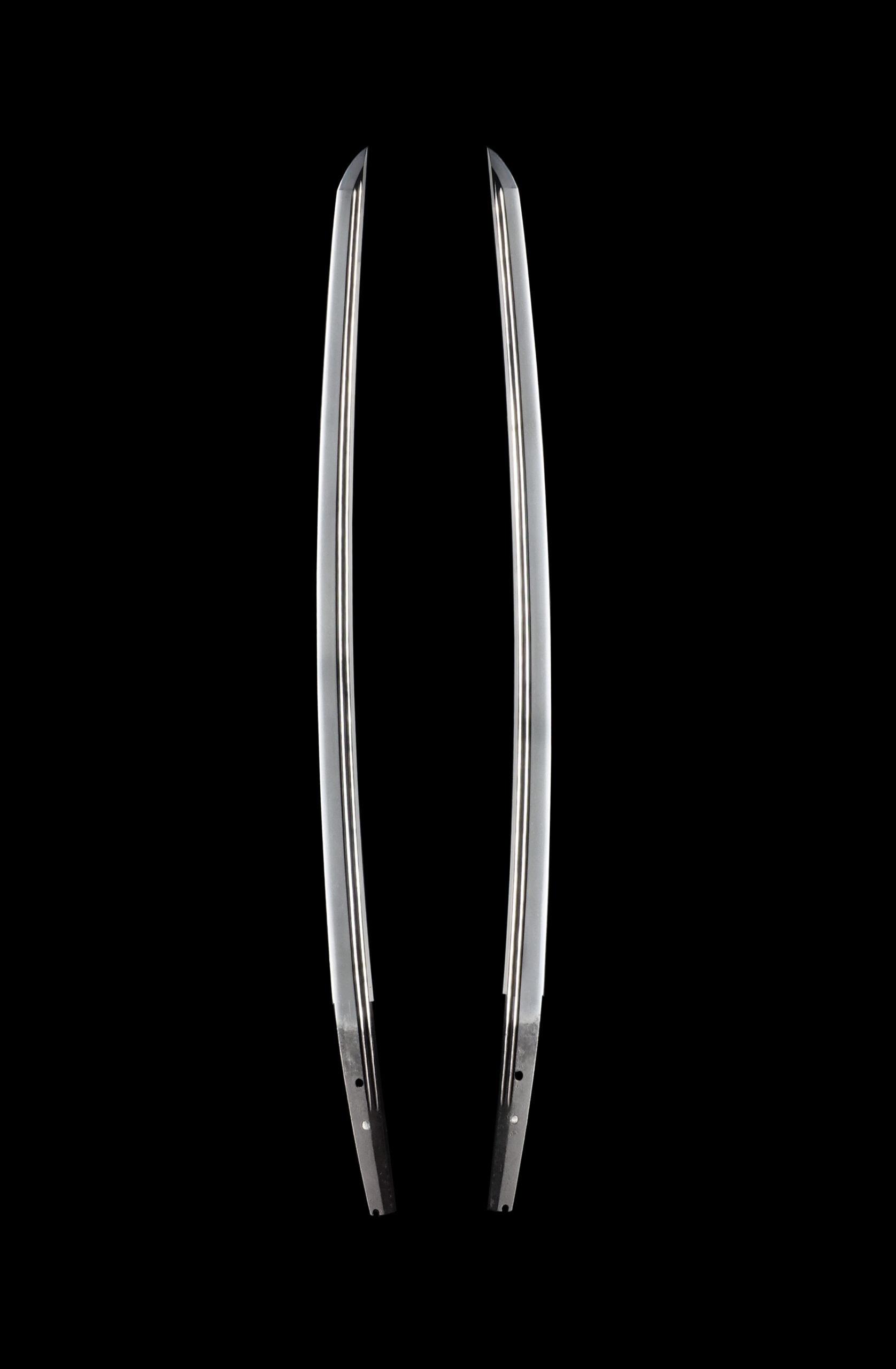
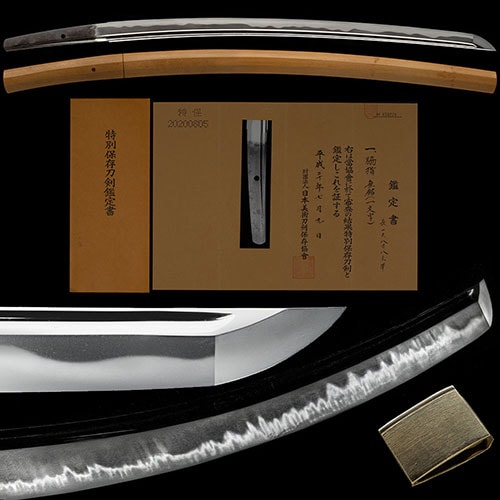
The early eleventh-century travel-text Sarugakki, listing the famous products of the provinces, already names "the swords of ," and it was the smiths, flourishing along the lower reaches of the Takahashi River, who inherited that reputation. Tsuguyoshi works at the height of the line, and the published sources count him, together with Tsugunao and Moritsugu, among the representative smiths of the mid-fourteenth century. His dated, signed blades run across the Enbun, Jōji and Kōan years of the 1350s and 1360s, almost all of them and : wide in body, thin in , shallow in , the period shape stated without ornament. Several are still , carrying a long signature on the and a date on the reverse, so his hand can be followed year by year.
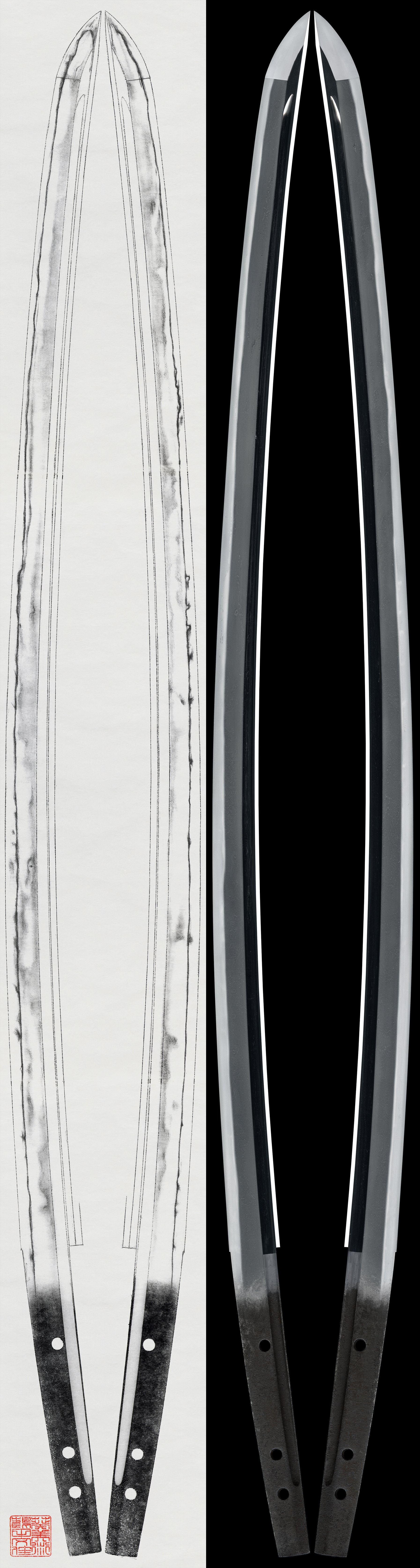
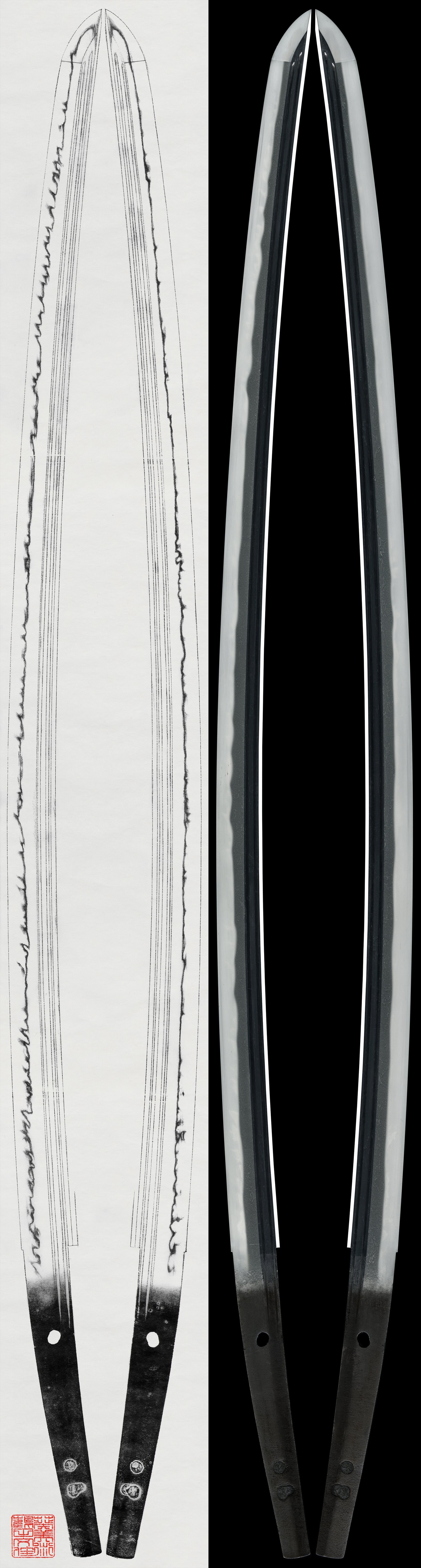
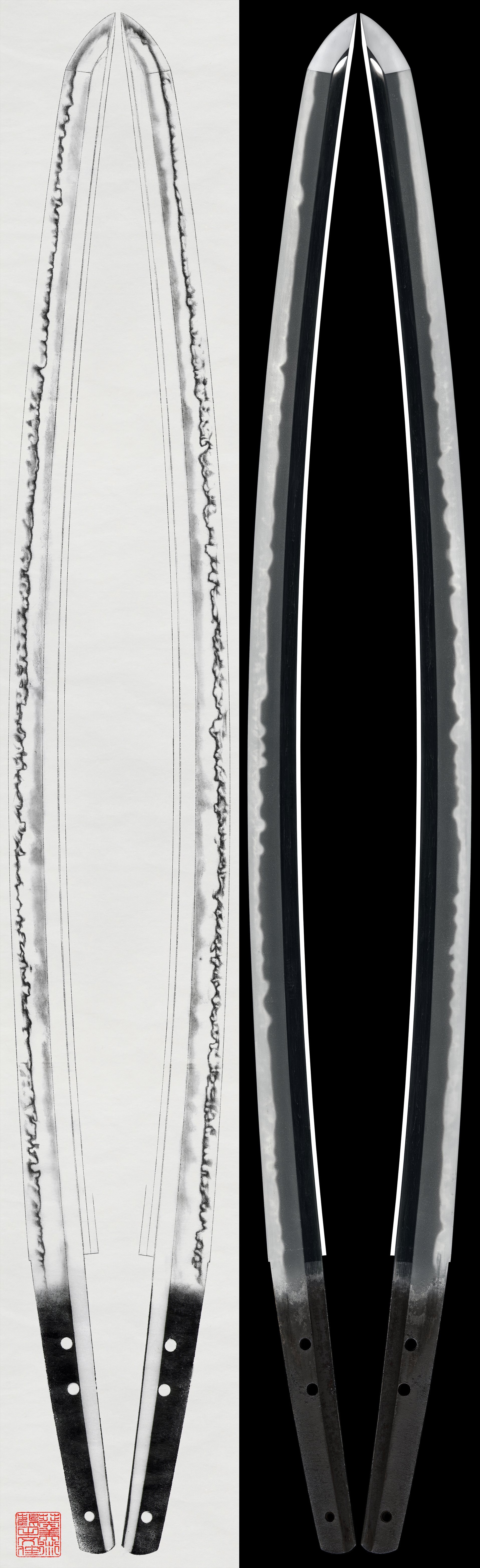
His manner is the one the published sources draw most carefully, because it divides cleanly in two. He works in a tight, bright and in a flamboyant saka-chōji-midare, and the judges return again and again to the distinction between the two masters: "as a rule Tsuguyoshi runs to , Tsugunao to saka-chōji-midare," while in either temper the is tight and clear. The is by far his own register. On these blades he tempers a or a narrow , in places a shallow , into which small , and a reversed tendency enter, the temper -dominant with , fine running within, the tight and notably bright. It is this clarity that the published sources name his and the school's chief point of appreciation, the that "is tight, and bright and clear."
The carries the rest of the signature. Over a well-packed , at times mixed with and standing a little, lie fine set in minute density and delicate , with the speckled the sources also call and patches of clear . A stands toward the , and on his finest blades a further linear runs along the edge so that the two layer into a banded , the steel left clear. The runs straight to a , frequently with a pointed turn, sometimes with a long or a little ; and the tang is filed, by the school's rule, in . On one Kōan the judges single out a "boldly tempered down deep to the ," an unusual flourish in a work that they hold sharpens rather than coarsens the blade.
The second register is the rarer face. On a small number of pieces the temper opens into a showy saka-chōji-midare mixed with , the reversed and entering, -dominant with and fine , the entering as and turning with a pointed flavor; the on the blades stands conspicuously. The judges call one such a representative work whose saka-chōji and together show the school plainly, and on a dated of this kind they record an oral remark of Honma's that, within this line, "the smith who tempers the clove pattern in a with the clearest is this craftsman, or else Tsugunao." Beyond the signed work stands a third record, the attributed to him, a wide blade of imposing shape that keeps a 1657 naming Tsuguyoshi; its with emerging and its - with let the judges affirm it as his from the and rather than from any personal tell.
What sets Tsuguyoshi apart within his own school is exactly this balance. Against Tsugunao, whose hand leans to the brilliant reverse clove pattern, his work is read as the master of the pair, the tight and bright on both their hands but the quiet temper his by preference. Against the earlier , whose the published sources describe as with a somewhat subdued , his is the clarity, the line tightened and brightened. The judges call the his family specialty, the manner in which "he displays his true capabilities," and name his best blades the outstanding examples among his surviving work.
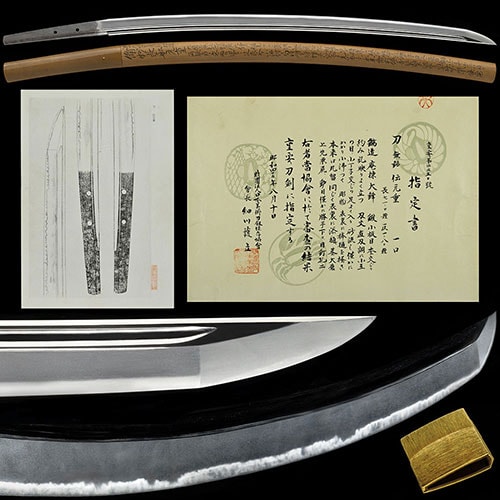
For the collector he is a name of real standing rather than a rarity beyond reach. Fujishiro grades him Jō-jō . He has no National Treasures and no Important Cultural Properties; his record runs instead through the modern designations, fourteen of his blades falling in the and tiers, two of them at . The published sources prize his , dated, signed pieces as reference material for the study of the smith, and name one outstanding among his works. His provenance runs through the houses: a transmitted in the Maeda family with a black-lacquer bearing eight gold umebachi crests, a held in the 'in-no-miya princely house with its and crested storage box, and further blades recorded with the Maeda and Arima families. A signed Tsuguyoshi is not often offered, and most designated examples are held rather than traded, but a or of his does appear from time to time, and a dated, signed one is among the more knowable things a collector of Bitchū Aoe could hope to encounter.