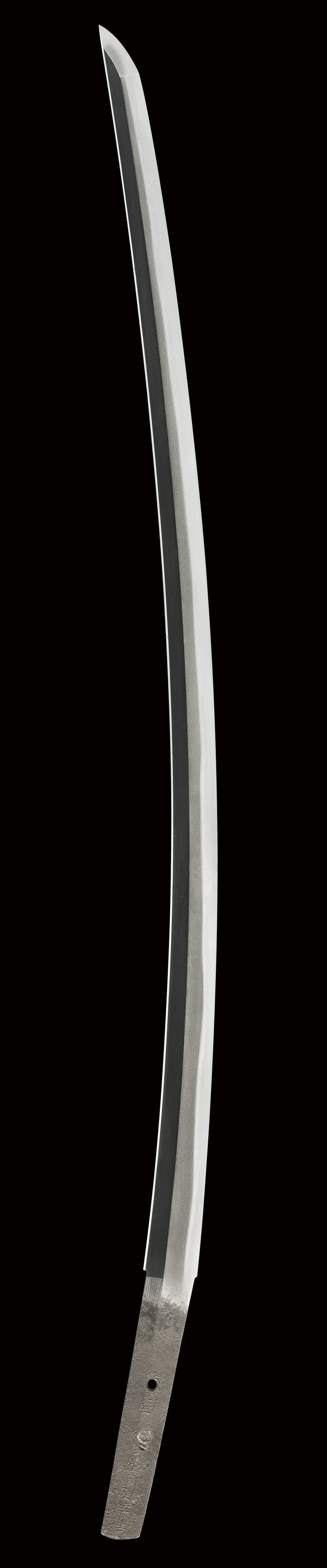
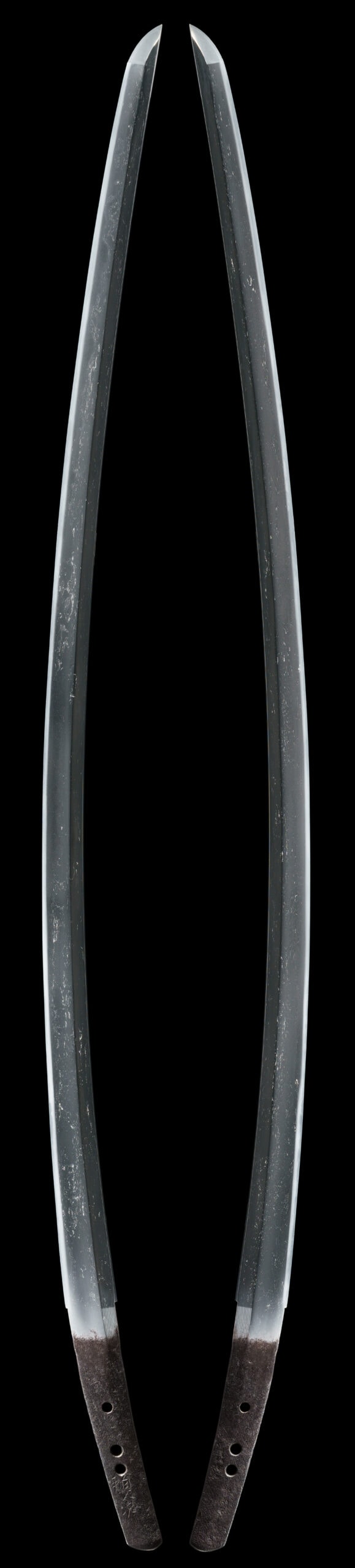
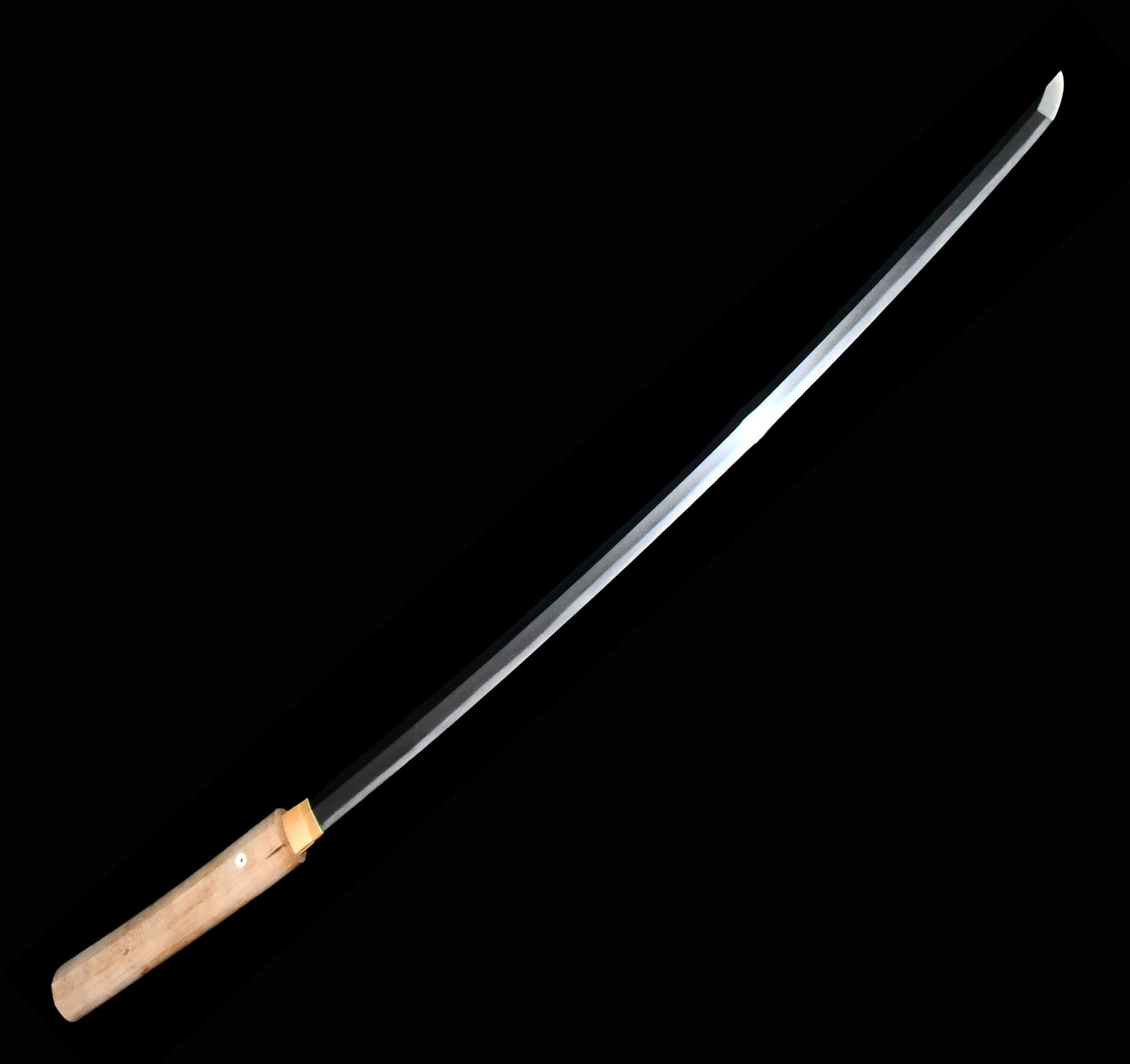
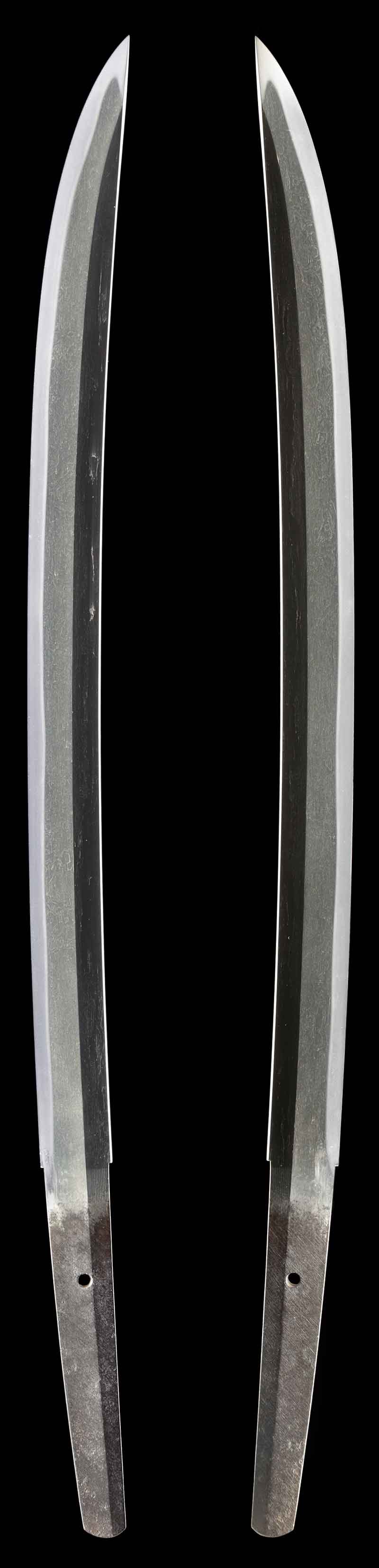
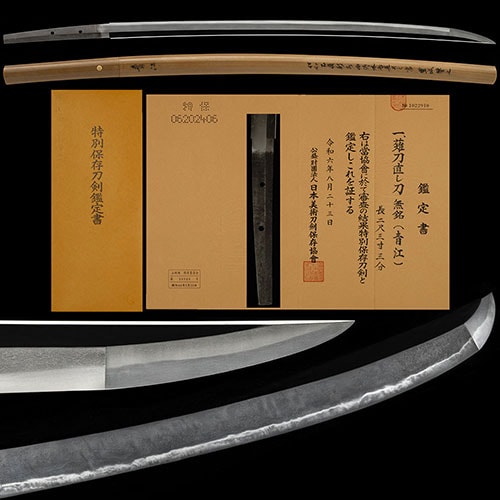
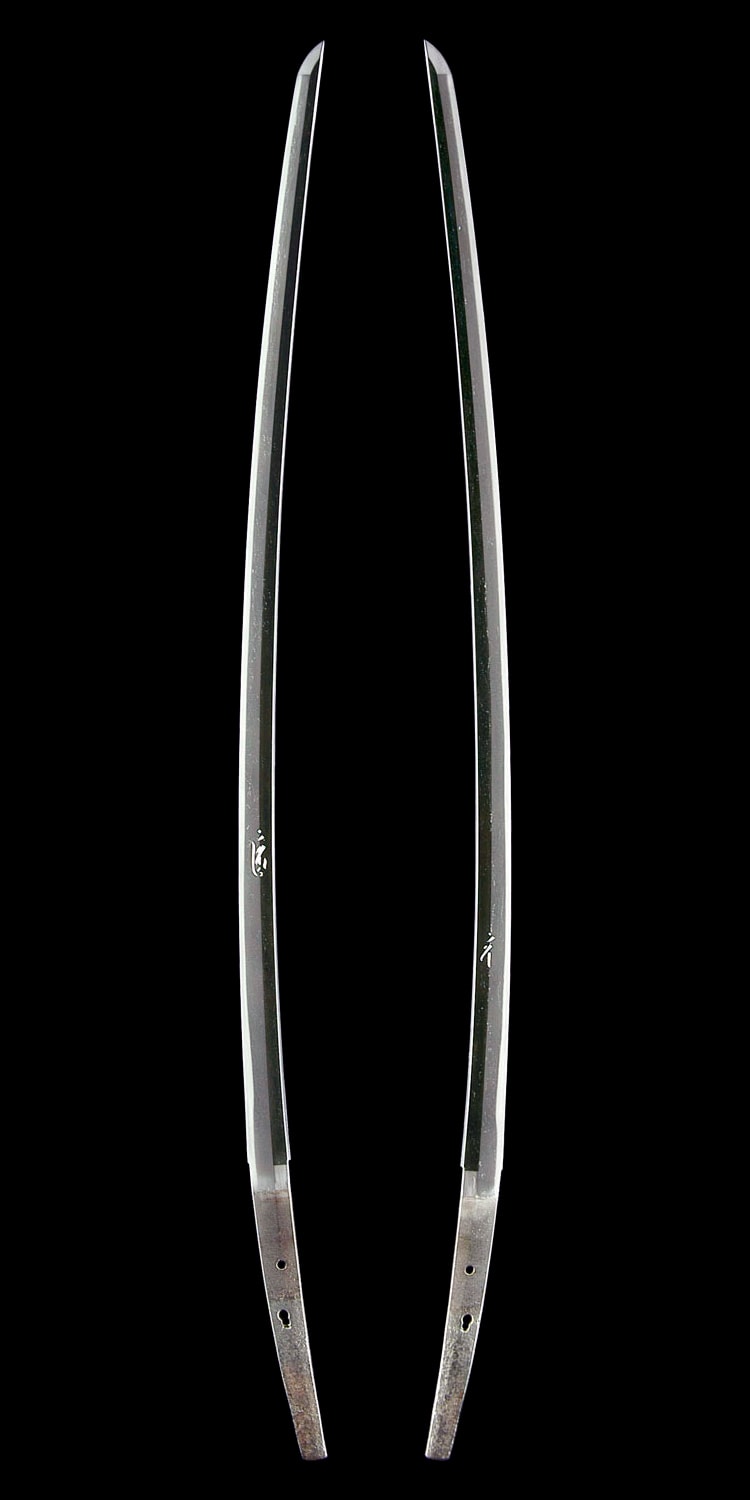
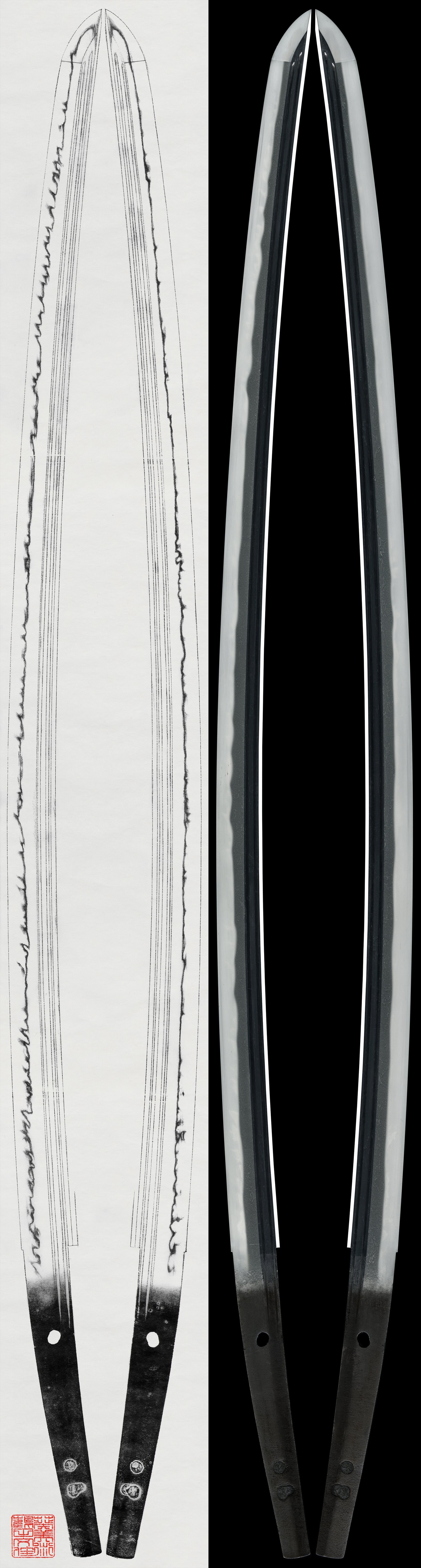
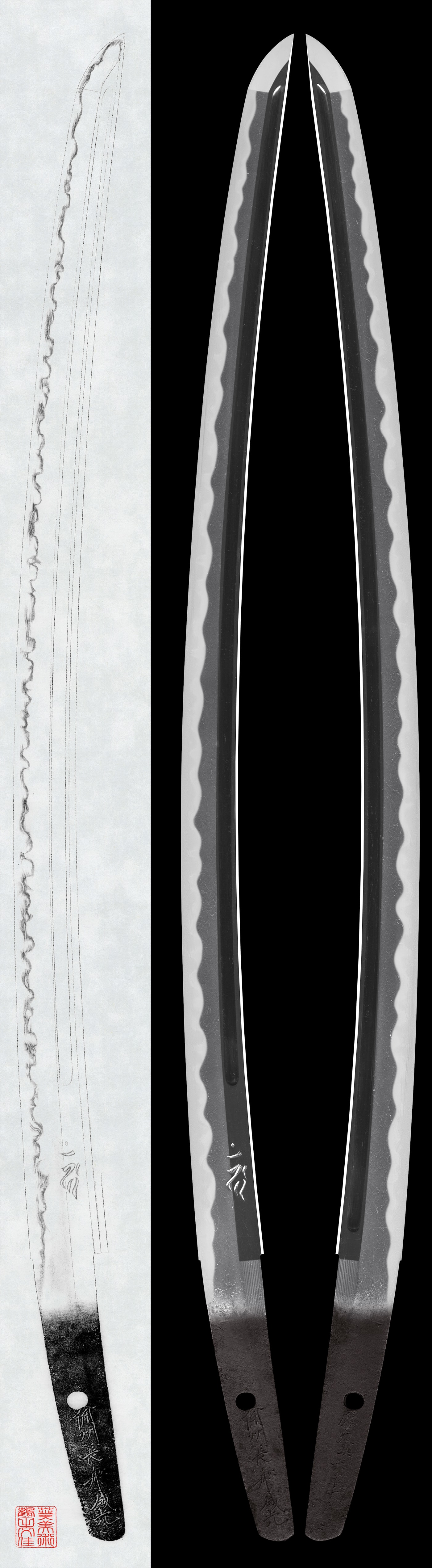
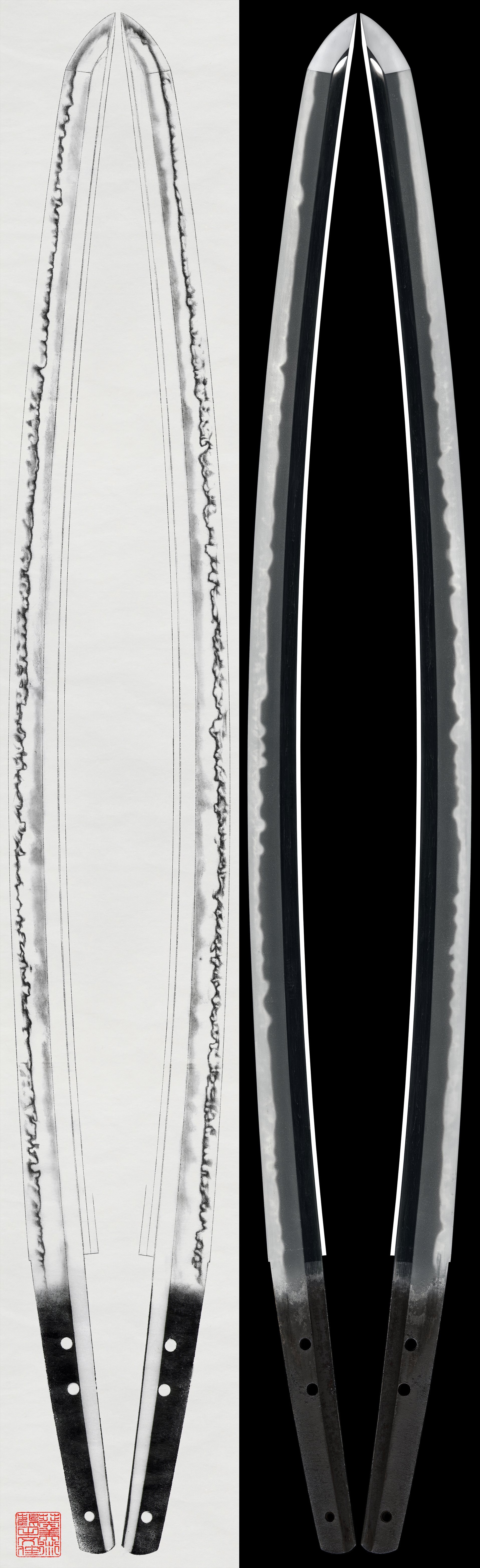
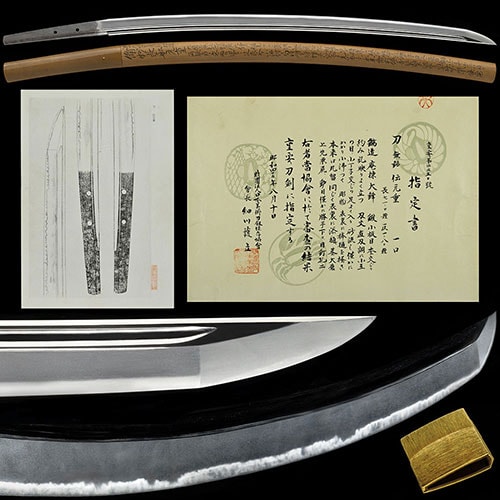
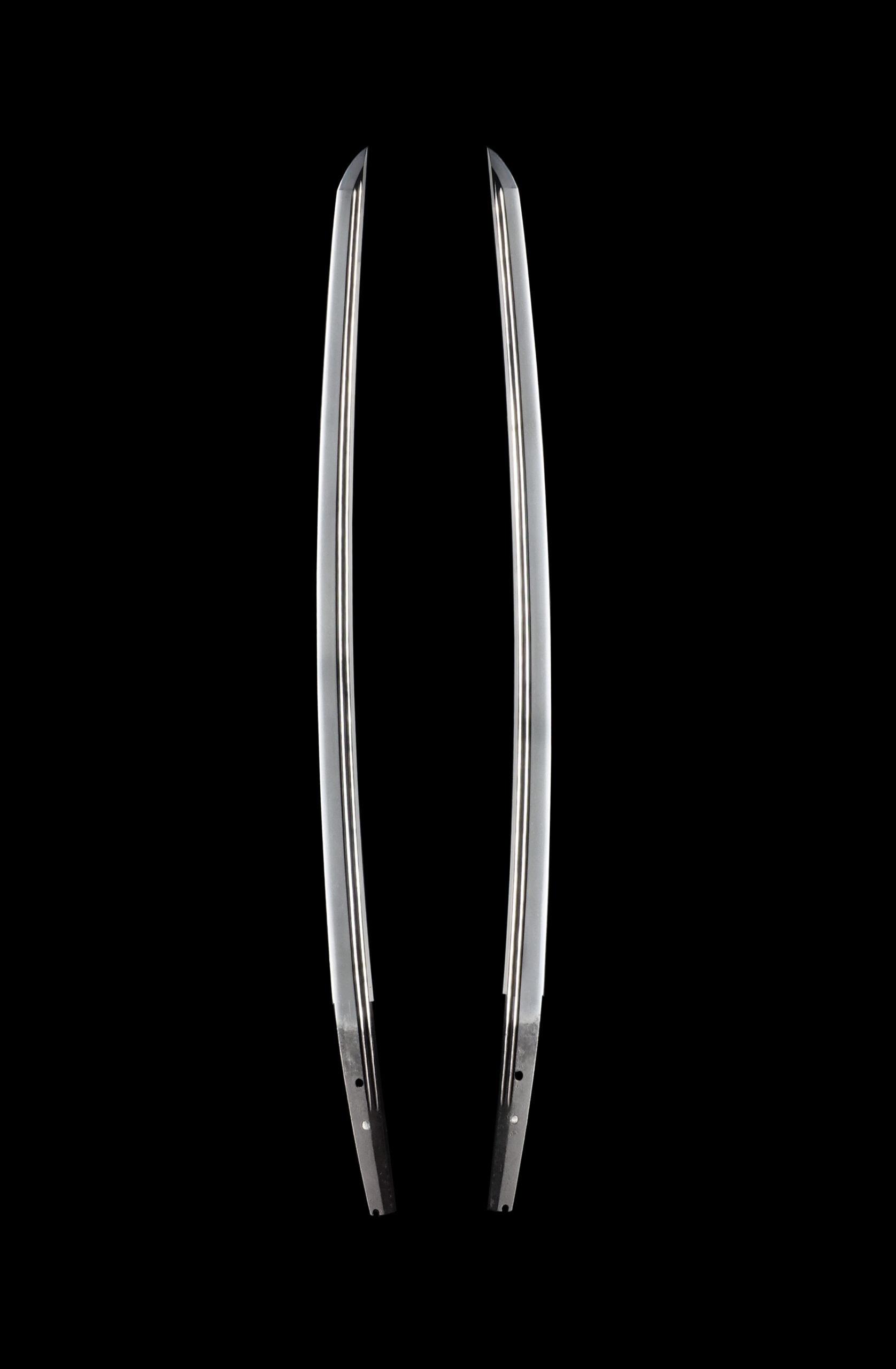
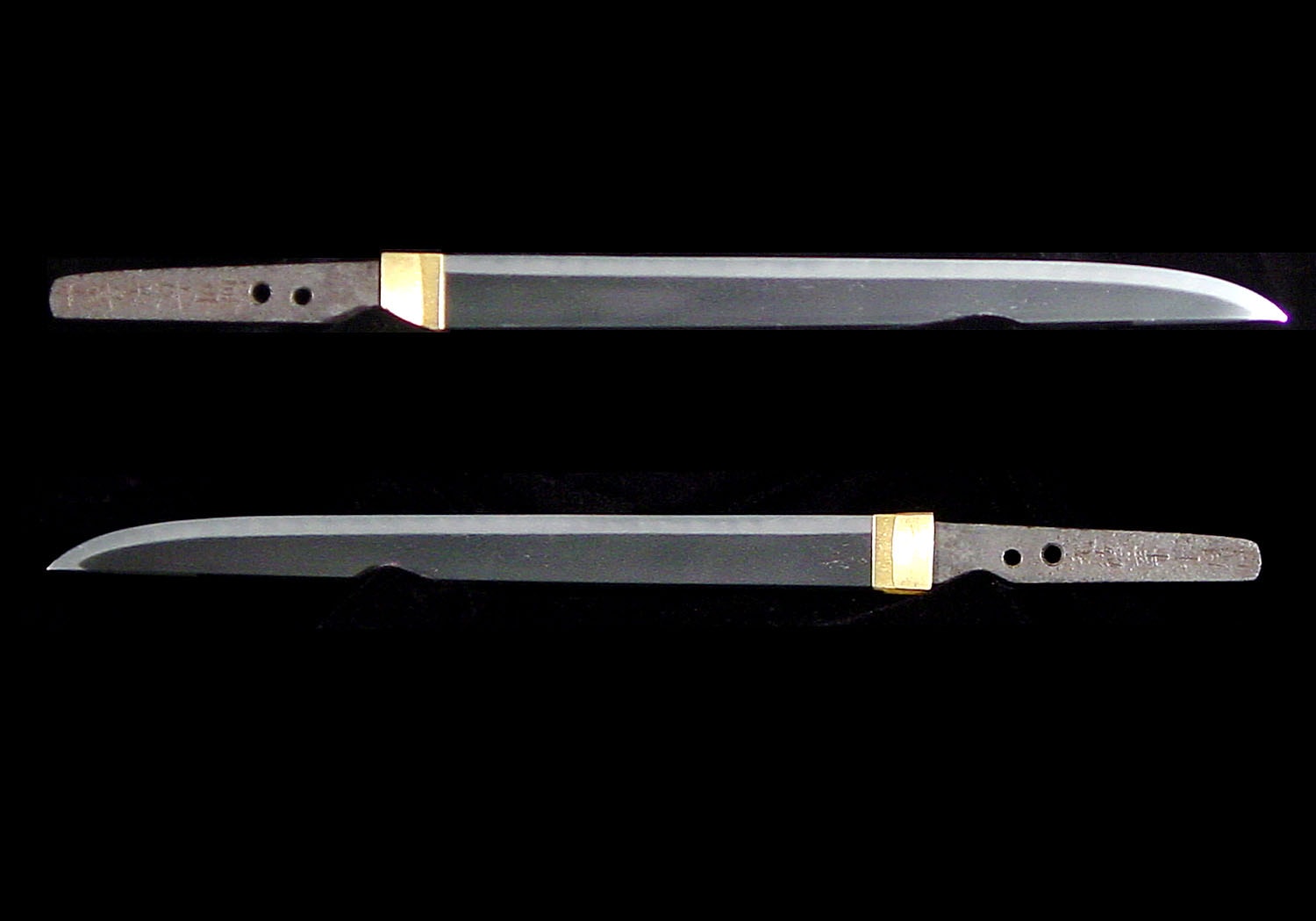
Tsugunao of stands with Tsuguyoshi and Moritsugu as a representative master of the school in the mid period, and his record is unusually legible for that age: the published sources list extant dated works through the Jowa, 'o, Shohei, Bunna and Enbun eras (1345 to 1361), the center of his activity falling around Bunna and Enbun, and most pieces carry the long signature no ju Tsugunao with the date cut on the reverse. The prewar designation record adds that this Tsugunao is said to have been a son of Yoshitsugu. Behind him the school divides in two. work, up to about the mid period, is generally -based with a subdued and a large, standing ; from the end of the manner changes, and by the period the published sources describe work that is -based, with a vividly clear over a tightly packed . Tsugunao belongs wholly to this later, clear-tempered , the line the sources call , and he stands near its close.
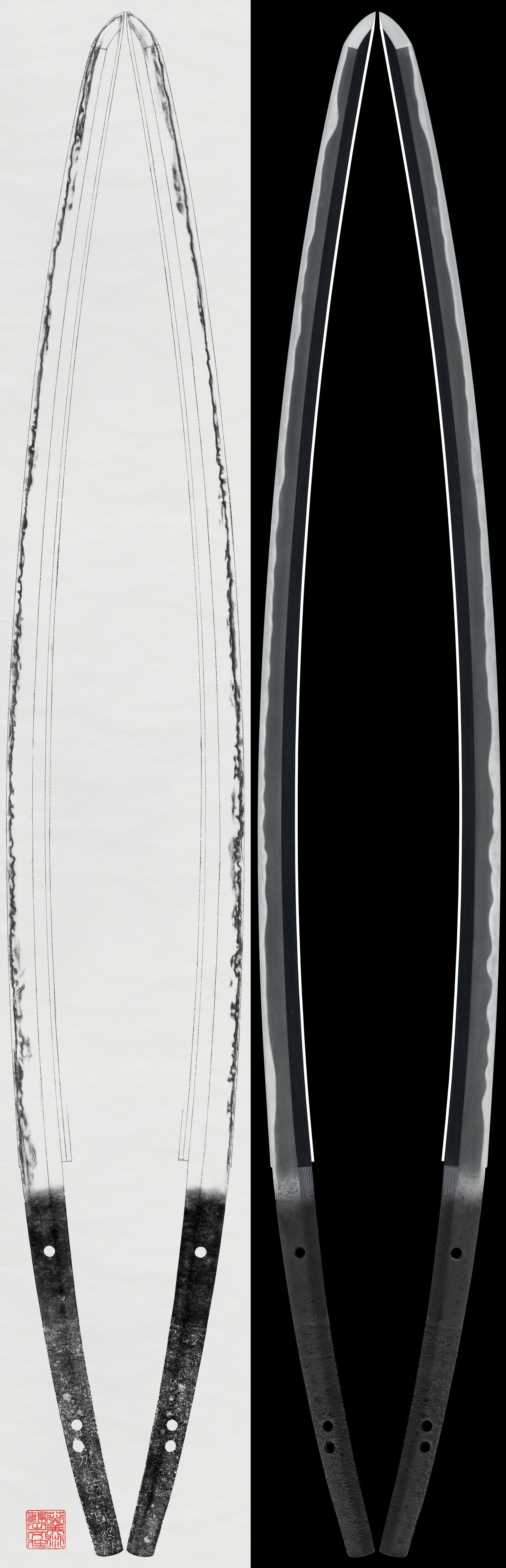
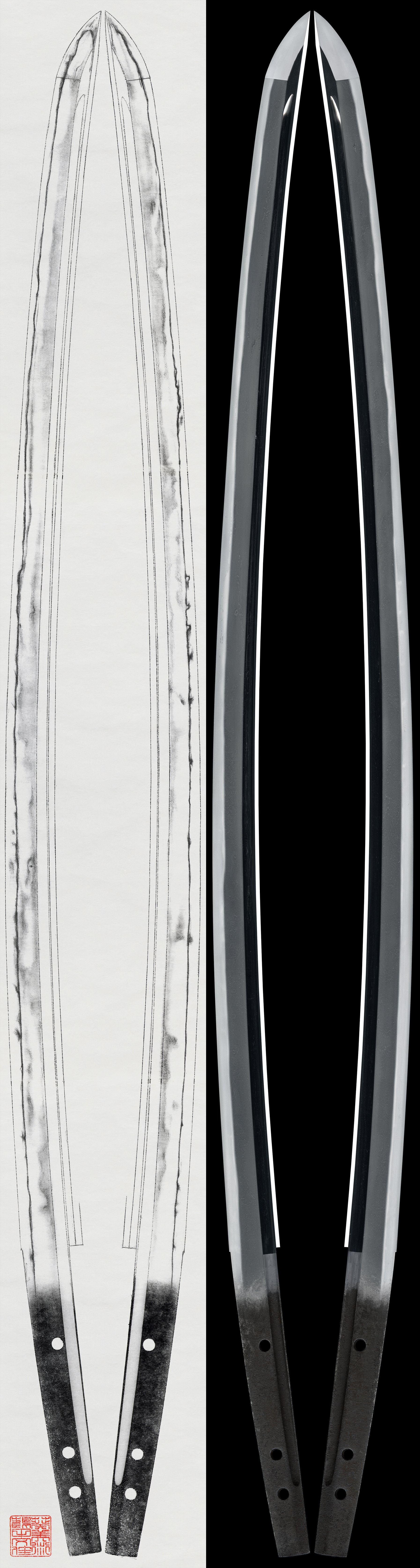
The published sources state his work in a single recurring formula: two manners, one a flamboyant -, the other a with a tightened , both -based and both executed at a high level. The first is the celebrated hand. One designation text speaks of "the - that may be called Tsugunao's family art", and another judges that this manner, its tight and so bright and clear, "was, within the period, the sole domain of this school" and its emblematic territory. In these blades and enter the frequently, the temper is -dominant with , fine and run through it, and the comes in , thrusts up, points and returns deeply. At its most flamboyant the can even leave the slant behind: an Enbun 6 , its lively in variation and rise and fall, is described as "a truly florid workmanship that recalls the Fukuoka ", the single such comparison in his record.
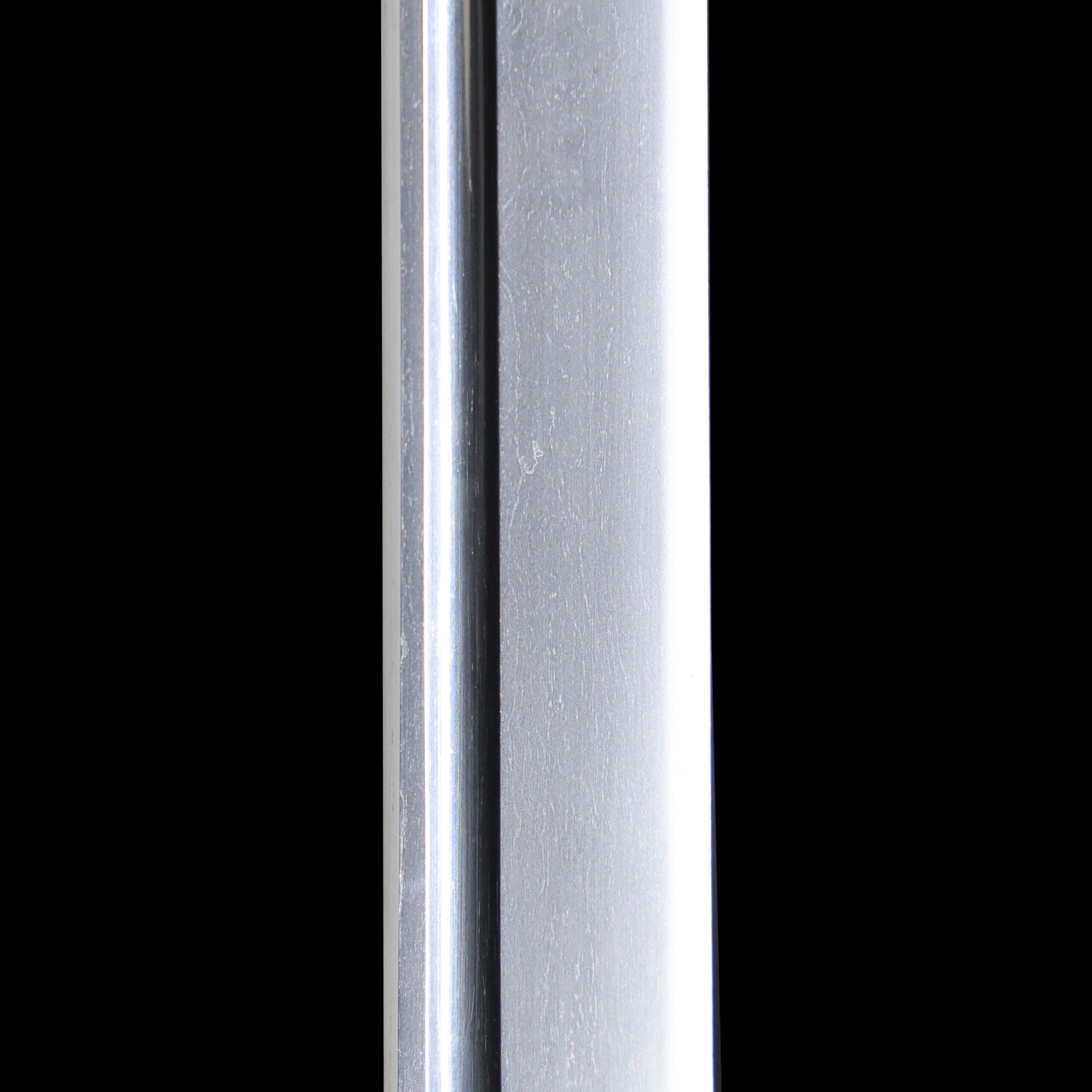
The beneath both manners is the school's own. Some blades retain what the published sources call the 's original , but most show a tightly packed mixed with , adhering thickly in fine particles, the peculiar mottled the sources name , and clear patches of emerging here and there. On the finest pieces the reflection doubles: a stands toward the while a straight band rises along the , together forming what the texts call . The second manner rests on this steel. It is a , at times shading into shallow , mixed with and , slanting here and there so that and enter even within the straight line; the is tight, bright and clear, and on a dated Shohei 7 the sources note the fine . Famed though he is for the slanted , the designation texts repeat that "even when he tempers he is skillful, and shows high technique", and one in is praised for a so crisply tightened and bright that it imparts a serene, restrained taste. Whichever manner he works, the sources observe, the thrusts up with a pointed tip, a school tell that survives both hands.
The two manners divide largely by form. Of his records nearly all, eleven of twelve, run to , whether or , while the flamboyant - is carried by the blades, the and of wide , thin and shallow that wear the typical silhouette, and by . His signing habits are themselves a study: the long with the date written down in one line, the , is noted as not rare in the of this period, as is the rounded construction; the southern court year Shohei 7 appears beside the northern Bunna and Enbun dates; and where most long blades of the period were later shortened into , his record preserves signed and dated , among them an blade of 89.8 centimeters dated Jowa 3. carry attributions to Tsugunao by the Honami, Mitsutada or Kotsune, which the upholds. The boundary of the name is drawn from the work itself: a in -dominant , unlike the -led temper of the Enbun-dated pieces, is read in Honma's recorded comment as "possibly later than the works with Enbun dates", and a is judged "probably a little later in date than the Enbun-dated works of Tsugunao", so the published record itself holds open the question of a later generation under the name.
Within the school the manners divide between the masters: Tsugunao left more - and Tsuguyoshi more , and the sources write that "in this point he may be said to stand in contrast to Tsuguyoshi". What marks a blade as his are his own documented features in combination: the slanting set of the and , the tight bright over a -based , the and mottling in the packed , the stepped on the finest work, and the thrusting, pointed . He stands at the close of the line the sources call ; no individual pupil is named in his record, but the blades judged later than his Enbun-dated work show the Tsugunao name carrying on past the prime master.
Fujishiro grades him Jo-jo , and twenty-seven designated works stand on record: three Important Cultural Properties, five Bijutsuhin, seven and twelve . The provenance behind them runs through the great houses. The Maeda of held his Enbun 5 as a treasure of the house, styled the Dai- (大青江) after the famous pair of ; a dated formerly of the Yanagisawa is documented by the note on its old scabbard as the shogun Tsunayoshi's gift on his first visit to the Yanagisawa mansion in Genroku 4; a dated descended in the Choshu Mori, a bears Mori Motoyasu's possession inscription in gold inlay beside the record of 's shortening, another was transmitted in the Kishu Tokugawa house, and one is accompanied by a letter of commendation of Tokugawa Hidetada together with its period . The Important Cultural Property blades are patrimony, held by the Tokyo National Museum, the Tokugawa Art Museum and the , and the Hayashibara Museum of Art holds one of the Bijutsuhin. For the private collector the realistic field is the nineteen blades of the and tiers, most of recorded whereabouts in private hands; these are held rather than traded, and a signed, dated Tsugunao, of a kind the published sources themselves call rare among the survivors of this school and period, comes to market only seldom and is an occasion when it does.