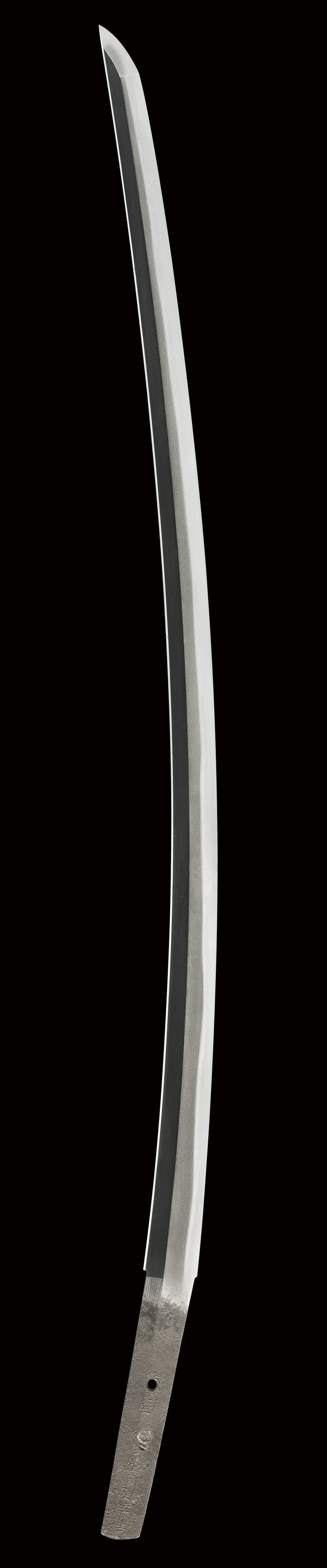
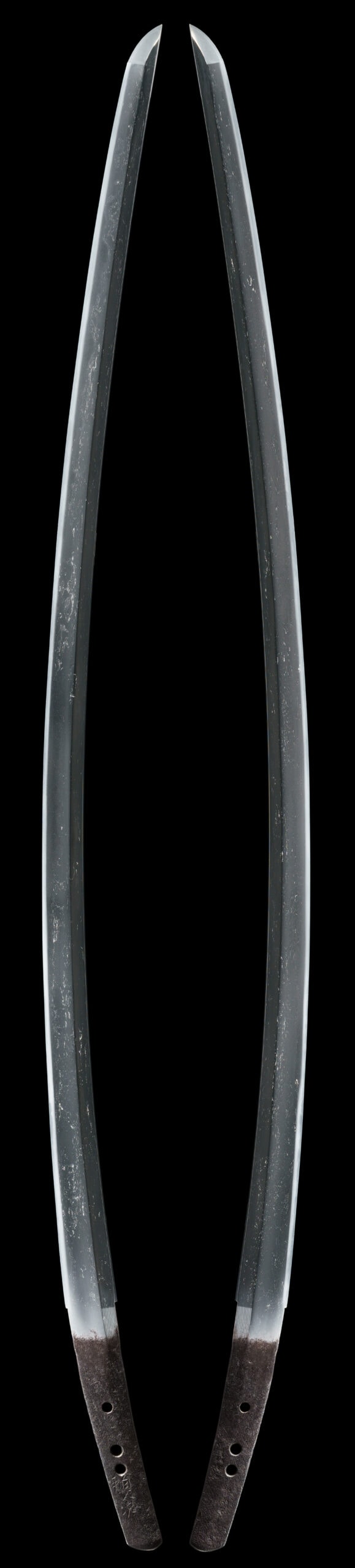
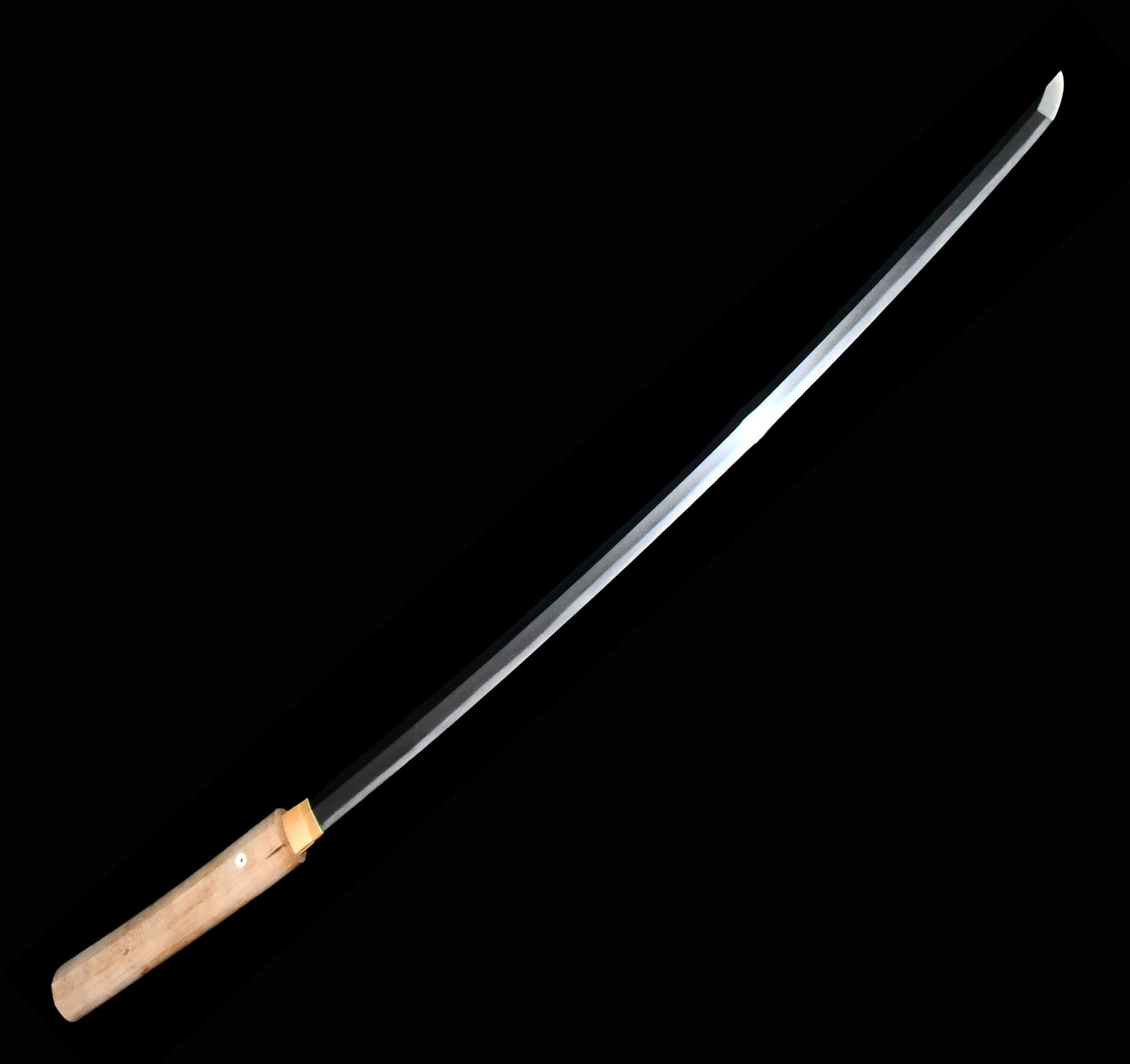
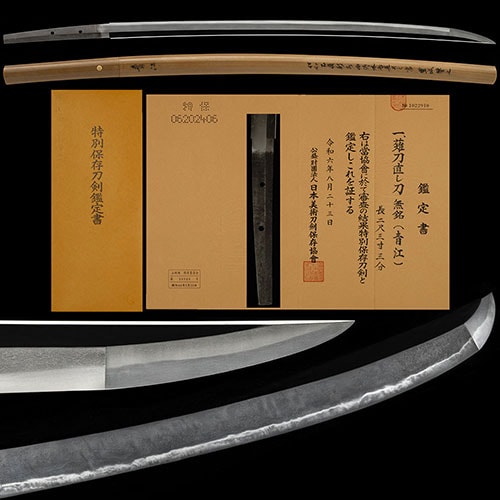
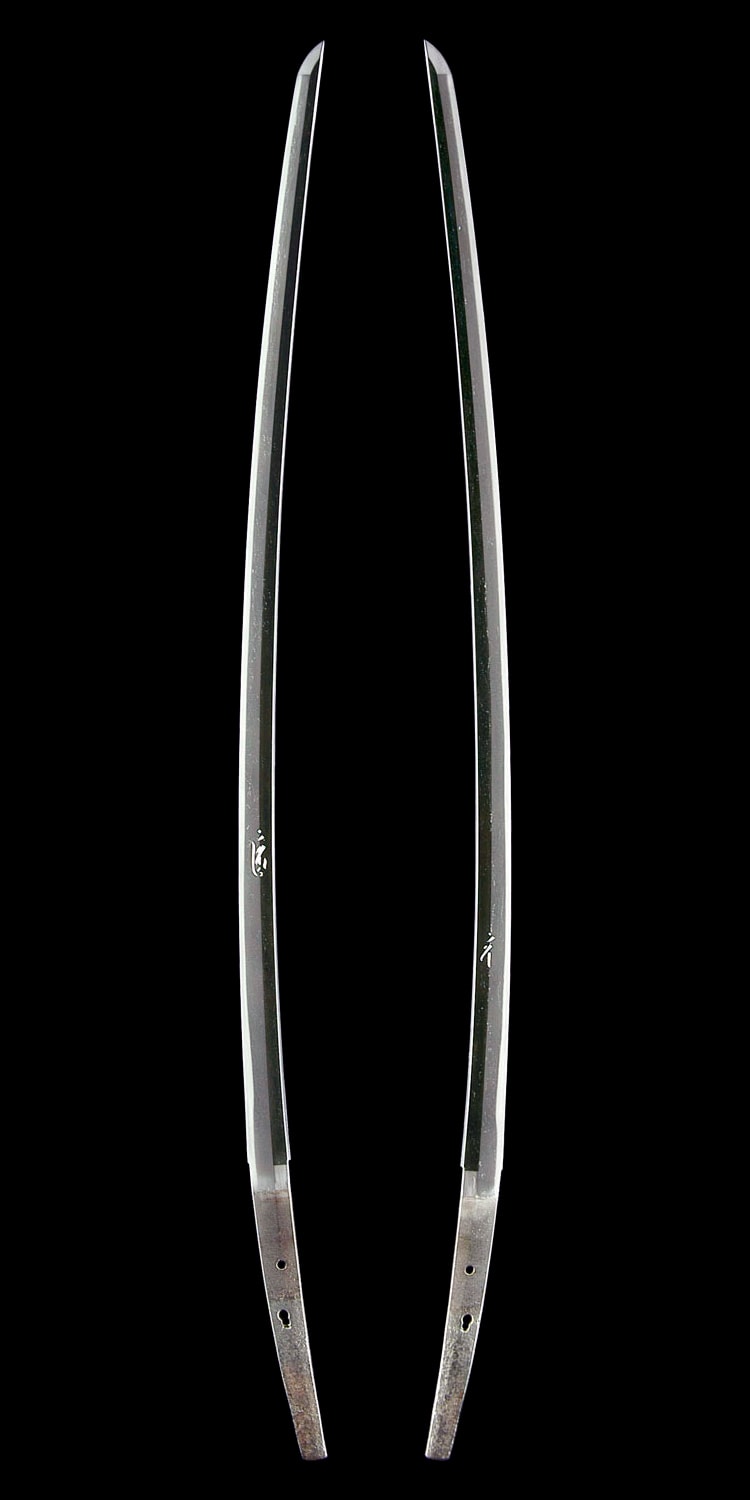
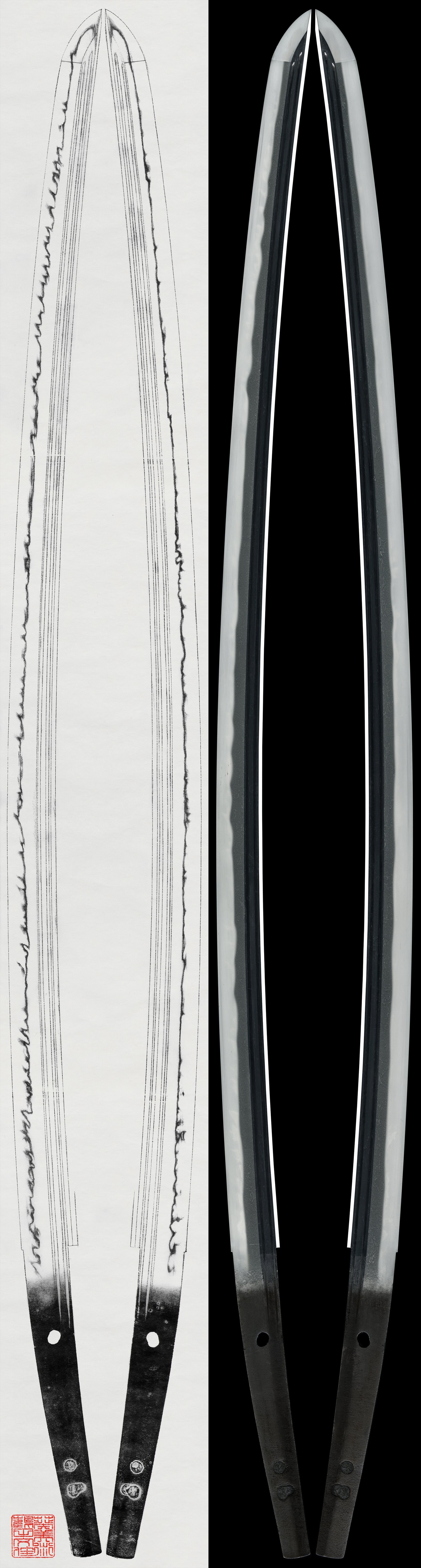
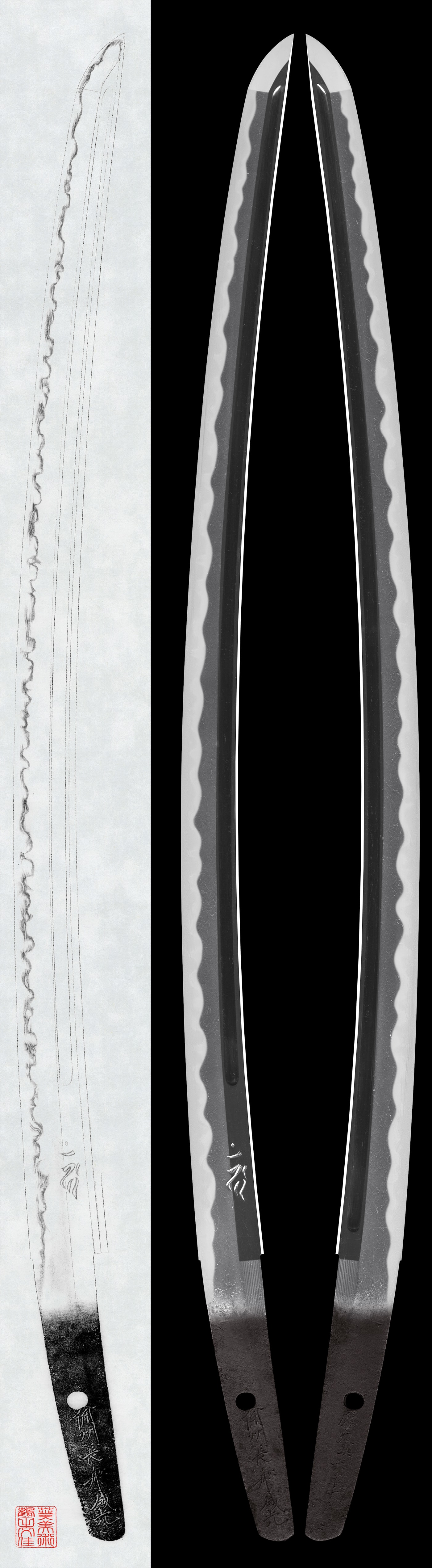
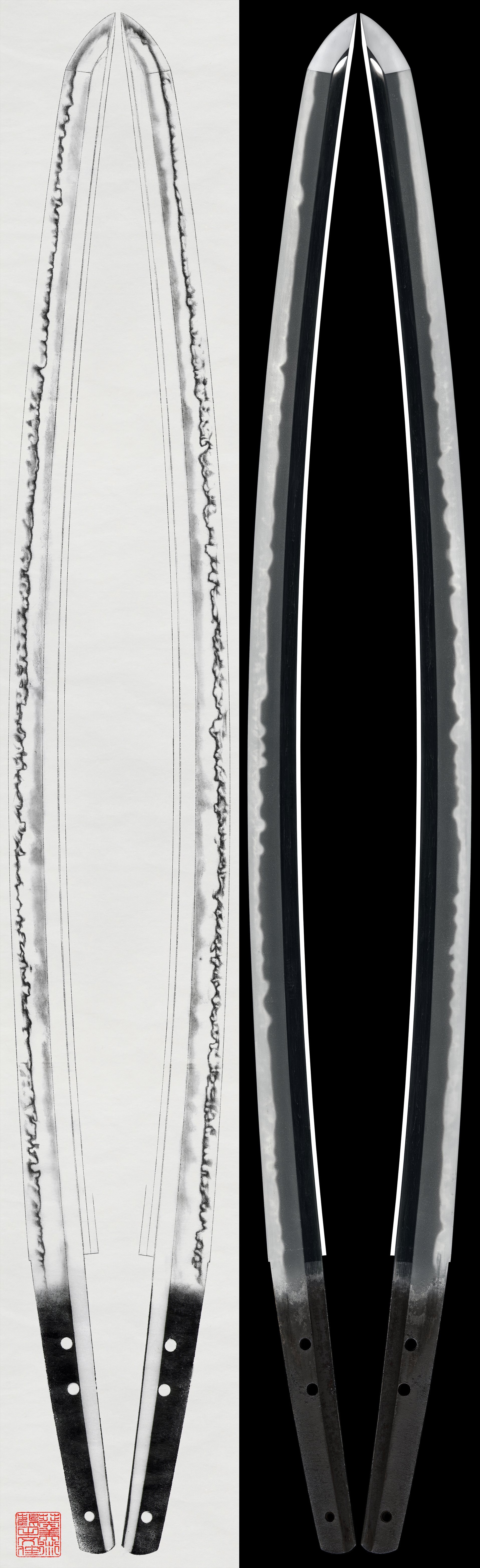
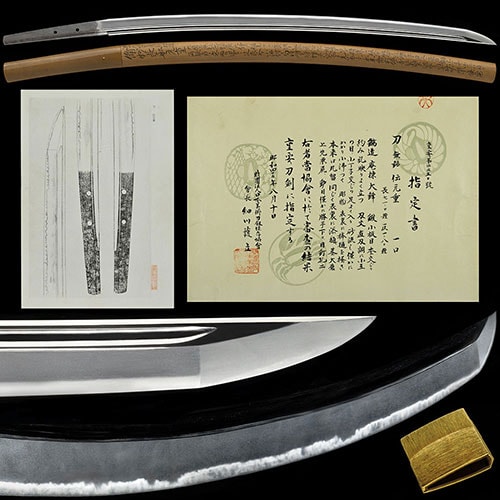
A dated Shōhei 5 (1350), signed in full as Ōsumi no Gon no Taira Sadatsugu of Province and long held in the Naitō house of Nobeoka, fixes the Sadatsugu of this entry in time: not the early- smith of the name, but the continuation of the line in . The published sources treat Sadatsugu as one of the representative houses of , the name carried in unbroken succession from the close of the period down through the era. Within that long descent they recognize several distinct smiths working in different generations under the single name, a point the states outright when it observes that within the Bitchū Aoe line 'multiple smiths of the name are recognized'. The most individual of the hands is Ōsumi no Gon no Taira Sadatsugu, whose dated works run from Genkō through Shōhei and whom the published sources call a smith who 'reflects a notably strong individuality in his workmanship even within his school'.
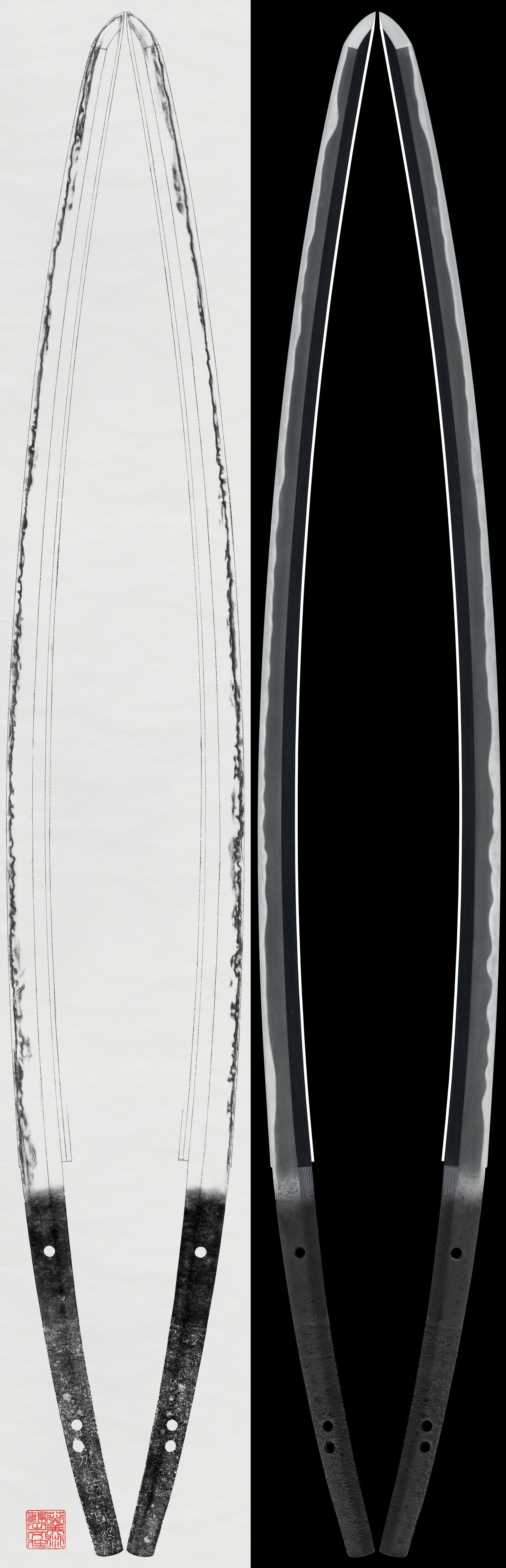
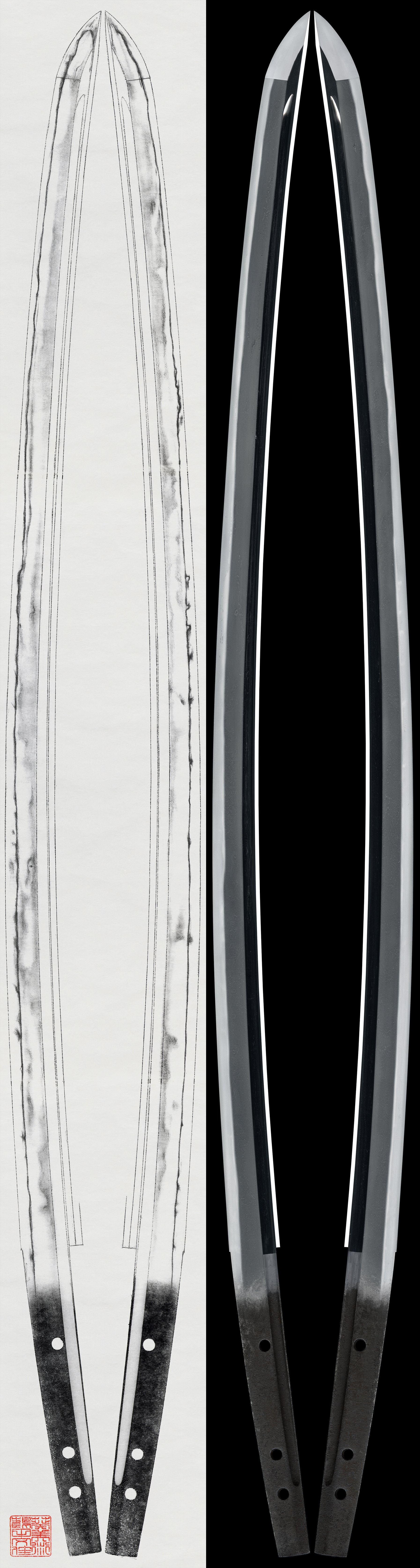
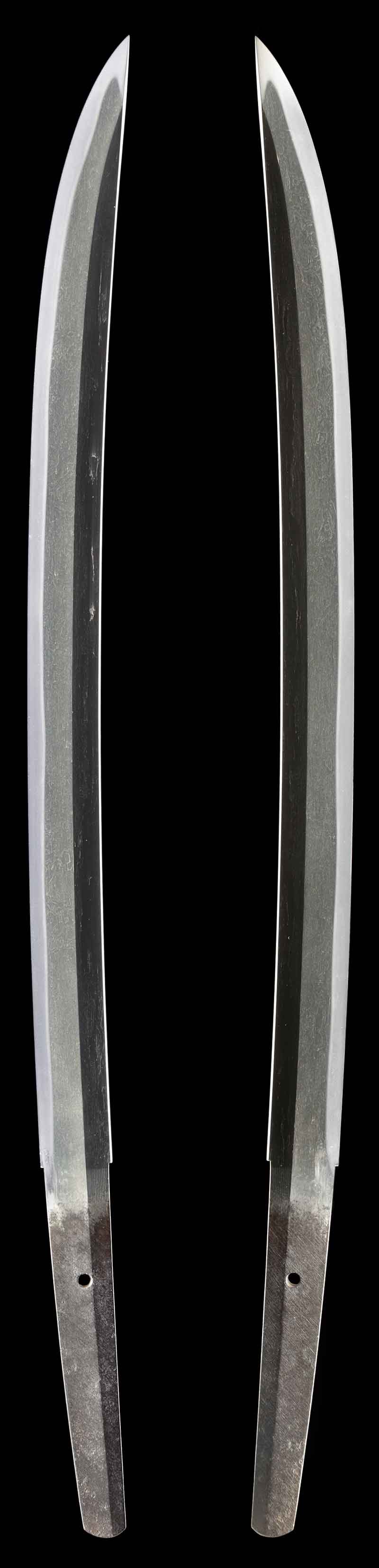
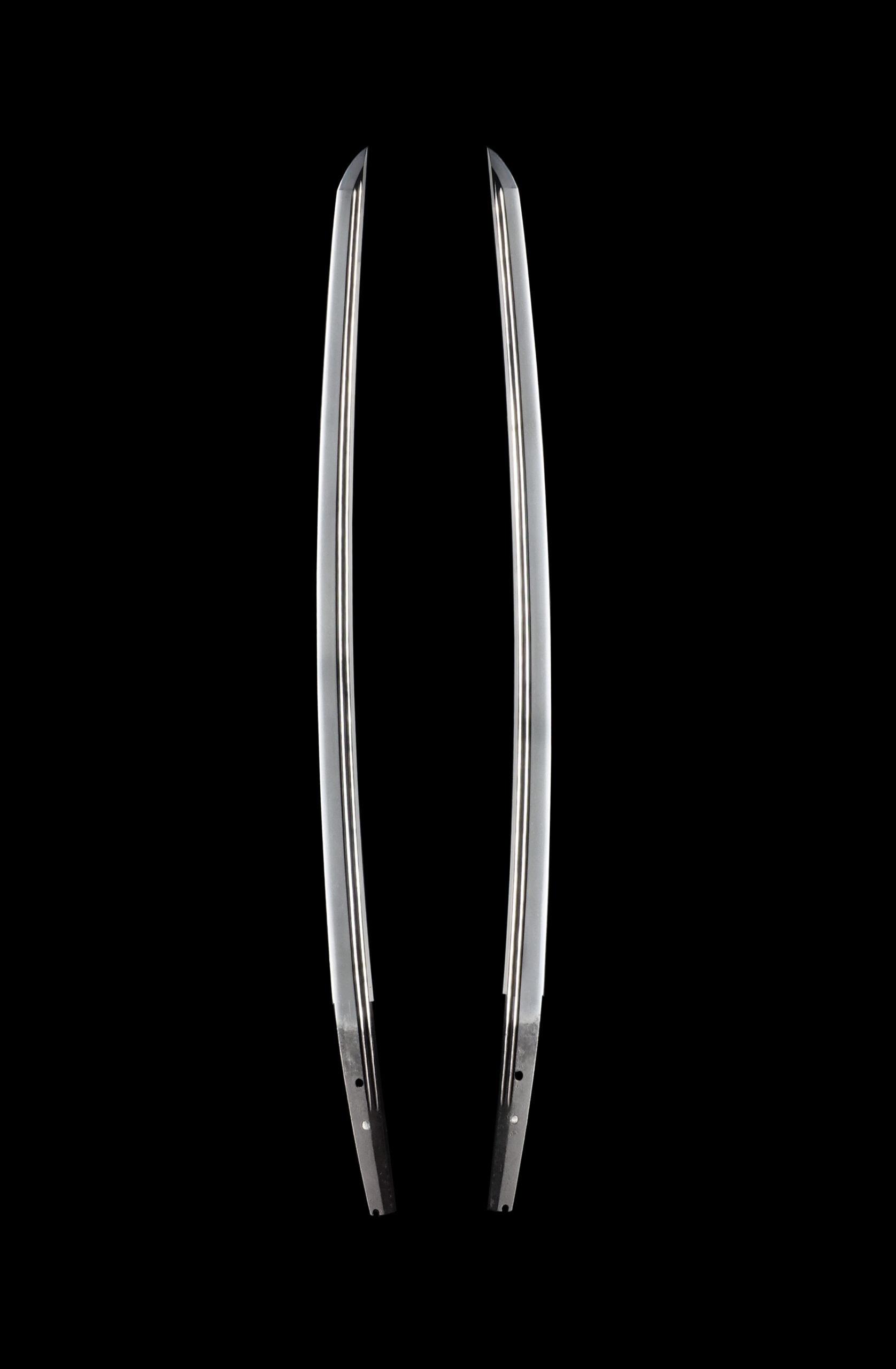
His recognized work is the and , wide in body and , thin in with shallow , the bold and powerful shape of the peak. Over a mixed with whose grain stands finely into the so-called , with minute , , and patches of clear -toned , he takes the broad, mixing in slight . The is tight and somewhat subdued, with thick ; and enter densely, carrying the inward-slanting of the school. The most striking thing his judges name is what happens inside the temper. The gathers and condenses into , islands of hardening within the ; and are active; and the turns back in a tempered deeply and long down the side. It is this that the published sources mean when they write that 'a certain bold, uninhibited flavour overflowing with vigour is why he is said to be an atypical presence within his school'.
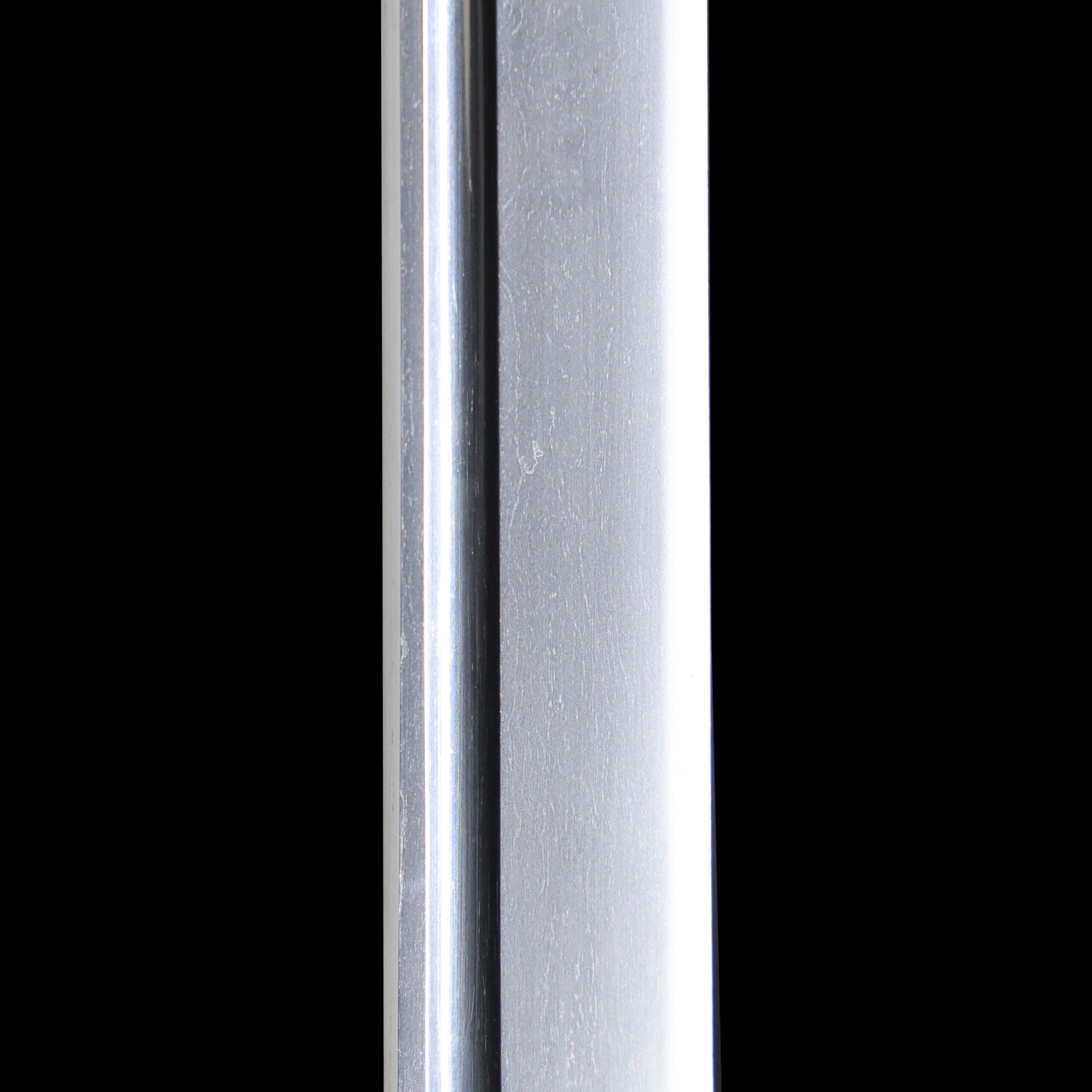
The is the constant beneath that activity. The forging is a tightly worked with , the grain standing finely to a crêpe-like texture, into which enter fine in minute particles, delicate , and the -toned mottling that the published sources call the clear-steel patches of ; over it a faint, -leaning rises. The carving program on the is devotional and economical, a seed-syllable with a or cut beneath it and run off; the long signature sits centrally in somewhat thick chisel, and the file marks are the steep of . These last two, the tang and the reverse-chisel manner of the inscription, are the tang tells the published sources set against the file when they place a blade with rather than its near neighbour.
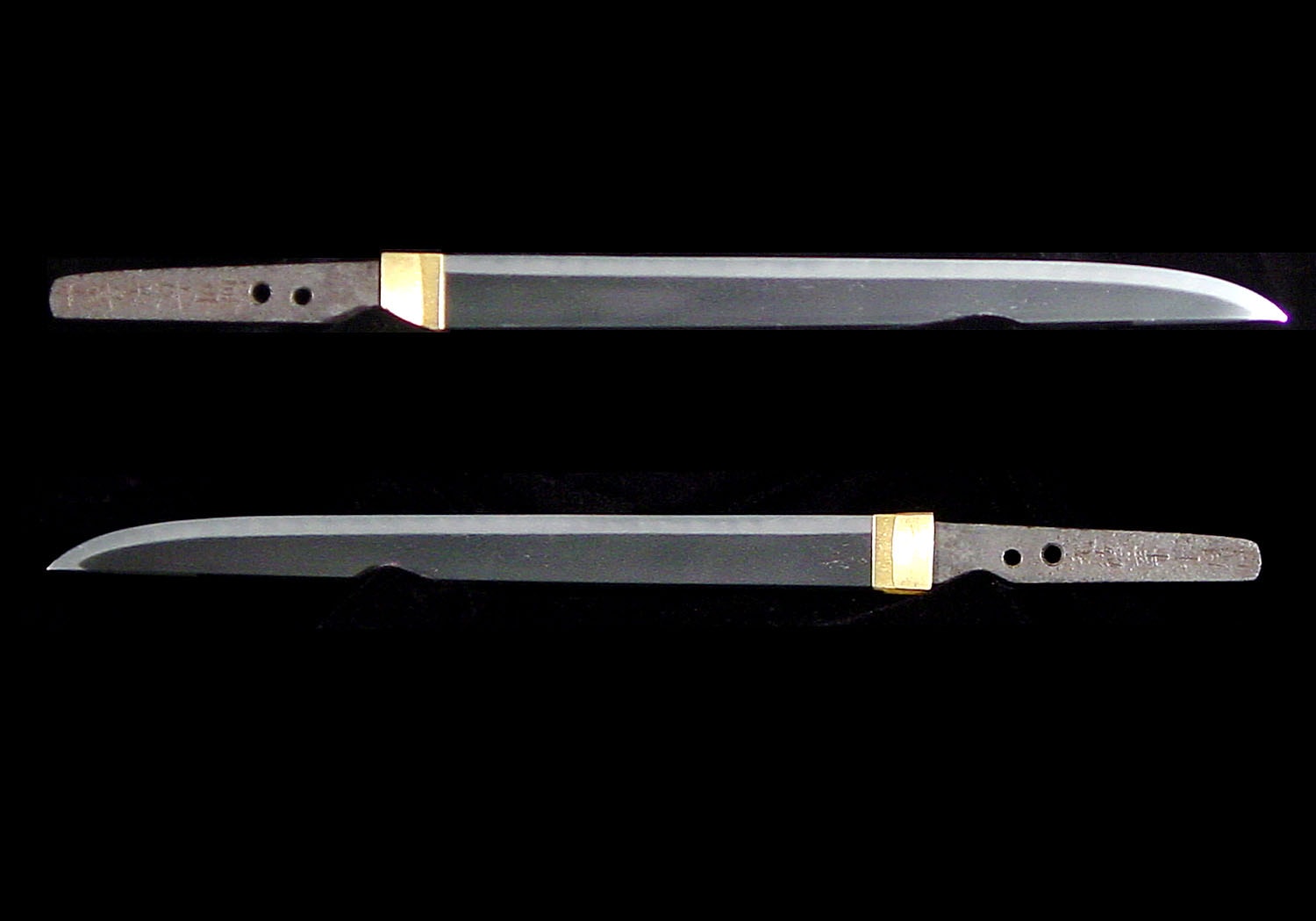
The Sadatsugu name in the does not resolve to one man. A second body of signed work, dated through Jōji, Eiwa, and Kōryaku, is by a different and slightly later smith whom the published sources connect with the title Saiga Tarōbyōe no Jō, a maker known for cutting comparatively small signatures and favouring a calm, low-tempered straight . His and run a narrow over a that flows toward the edge, the tight with , the edge breaking into , the a small or a finish. One such the judges read as sharing a common thread with neighbouring Ko- in its standing - and the of its fine , yet on close view deeper and more active in the , and so affirmed as . The third face of the record is the or gold-inlaid judged Sadatsugu, and the explains the practice plainly: because Sadatsugu has been held first-rank since the Kanchiin-bon Meizukushi, with the Shinkan Hiden-shō valuing work at the supreme grade, there is an old habit of attributing a typical, finely made unsigned blade to him. On the Ebi Kusari-giri they make it explicit, that such a gold-inlaid 'Sadatsugu' does not point to the smith himself but uses the name 'in the sense of a representative superior work of the school'.
What sets this apart is exactly what the published sources name as its own. Where the work resembles its neighbours it is by tradition rather than by borrowing: the standing with and is the , and the temper, the judges write, follows 'what may be called the tradition, a into which enter'. On the attributions a bright stands clear, and over it a mixed with , , and small takes a turn, -dominant and bright, and fine. The inward-slanting feet and clusters, the clear , and the bright tight are the marks that hold a blade to and away from the it might otherwise be mistaken for; against the famed name the surviving signed and attributed work is read.
For the collector Sadatsugu is a scarce name rather than a common one. Fujishiro grades him Jō . He has no National Treasures and no Important Cultural Properties; his record runs instead through one and fourteen , with one prewar Jūyō Bijutsuhin, sixteen designated works in all on record. The published sources call the Shōhei 5 Ōsumi no Gon no a and the very finest among his works, sound in both and , and note that as surviving examples by this smith are few the dated pieces carry high documentary value. His blades descend through documented houses: the in the Naitō family, lords of the Nobeoka domain in ; a dated held by the Onuki family, hereditary chief retainers of the Satake lords of Akita; and two of the gold-inlaid , bearing the names Kitakaze and Ebi Kusari-giri, owned by Miura Shōgen, a senior retainer of the Kishū Tokugawa, one of them received from the prelate Tenkai. With only a small number in the and tiers, a signed Sadatsugu comes to market only seldom, and a privately held example is a notable thing for a collector to encounter, a document of how the celebrated name was carried into the age.