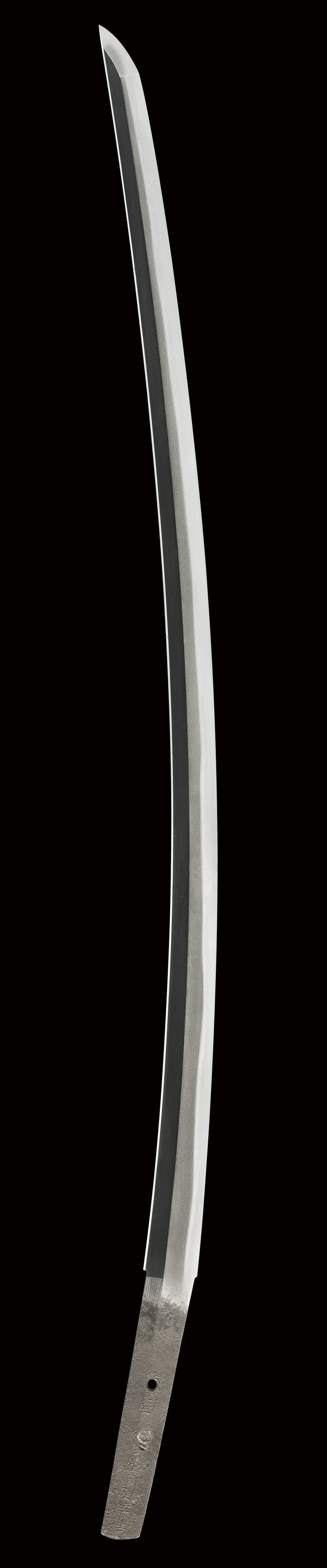
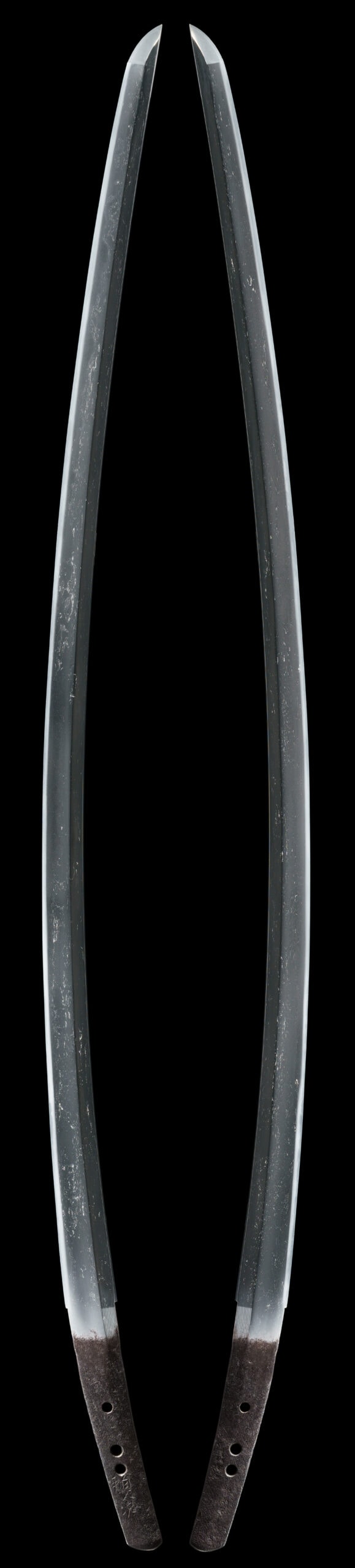
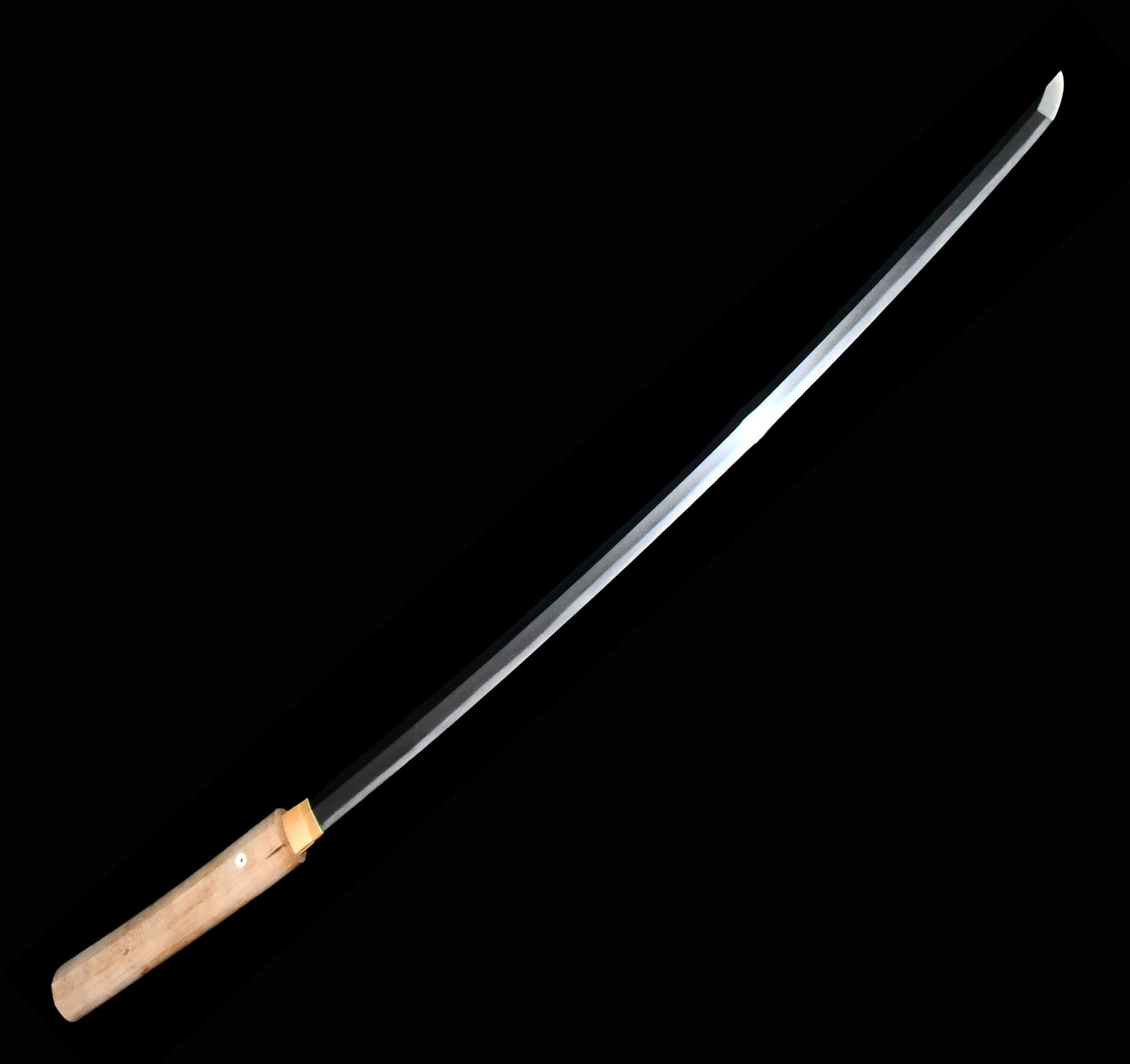
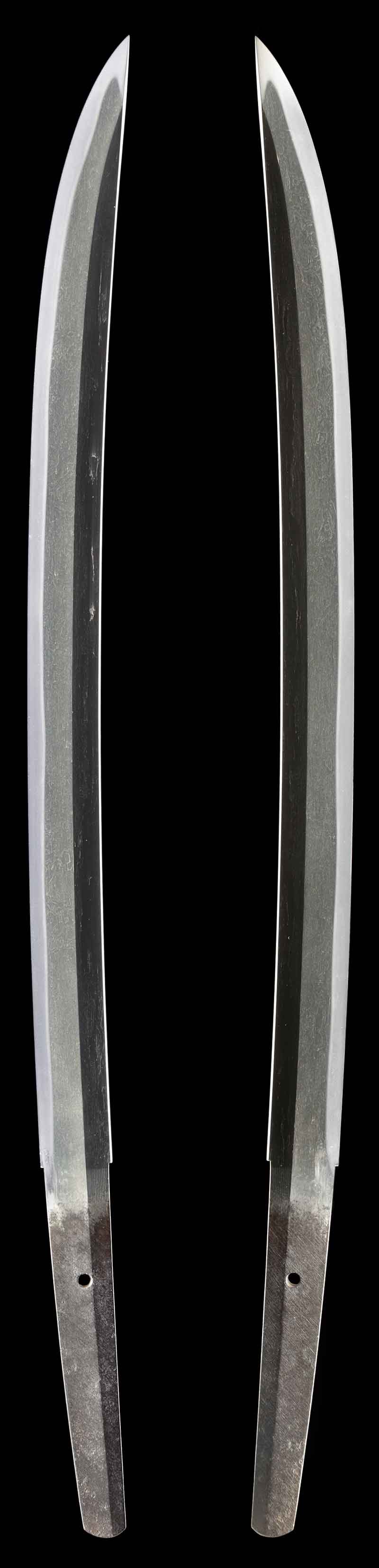
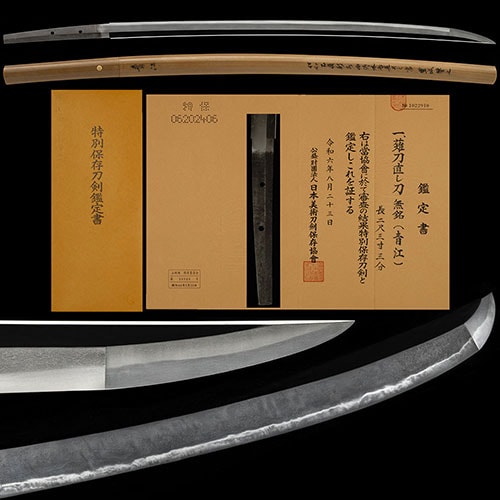
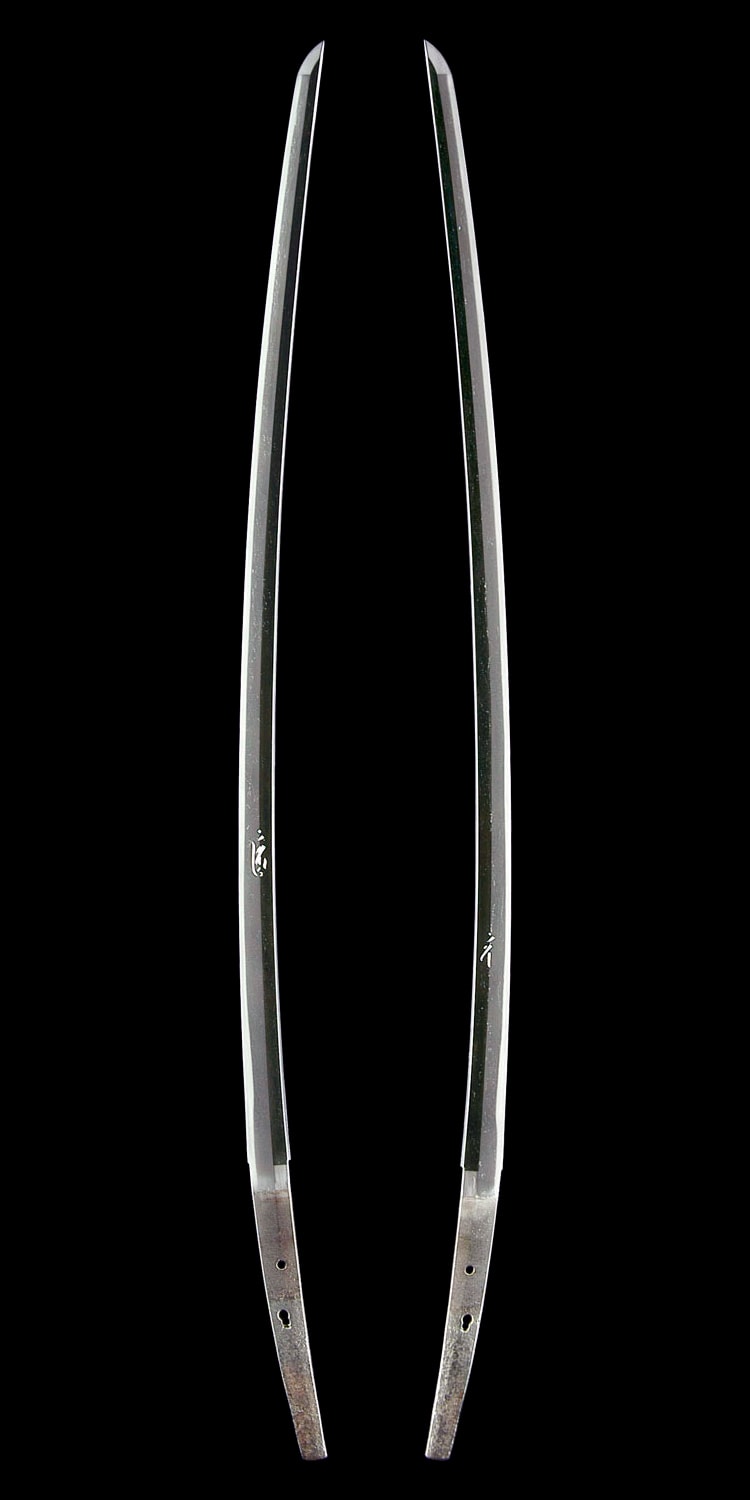
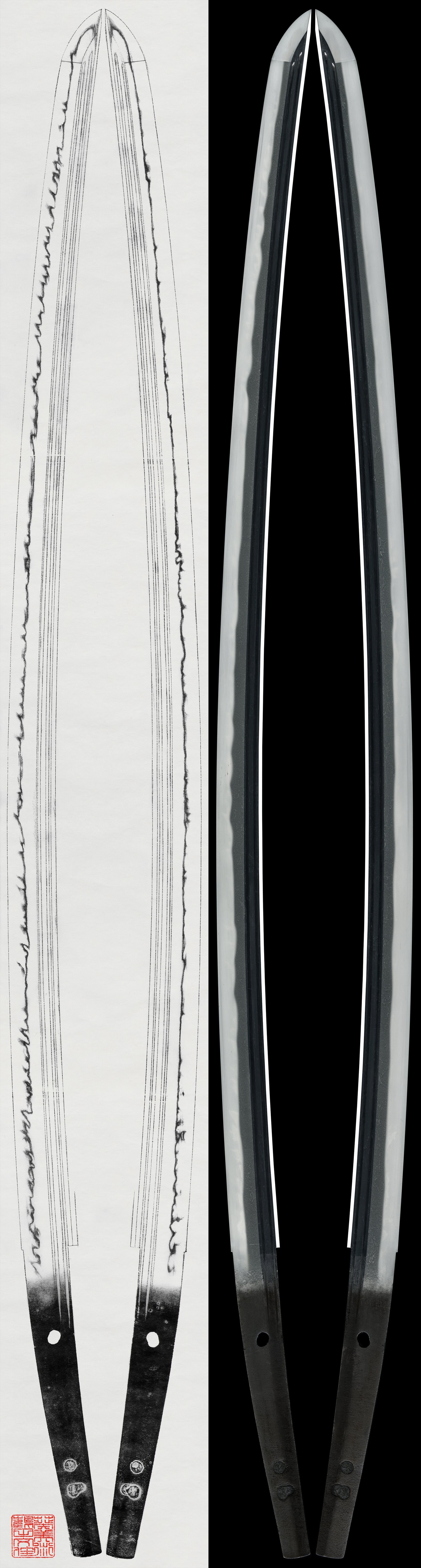
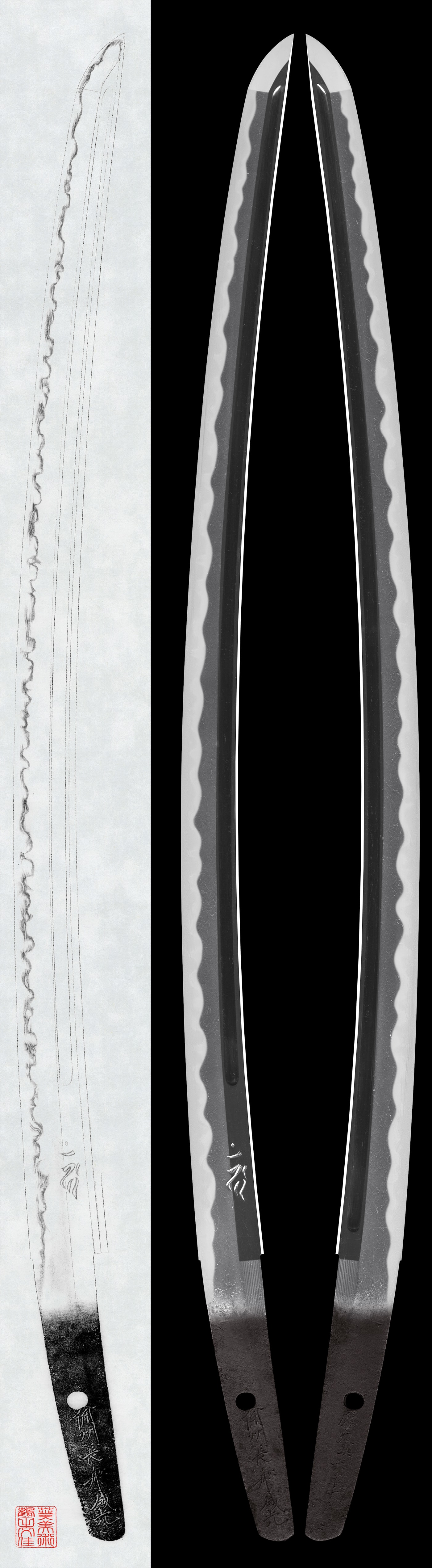
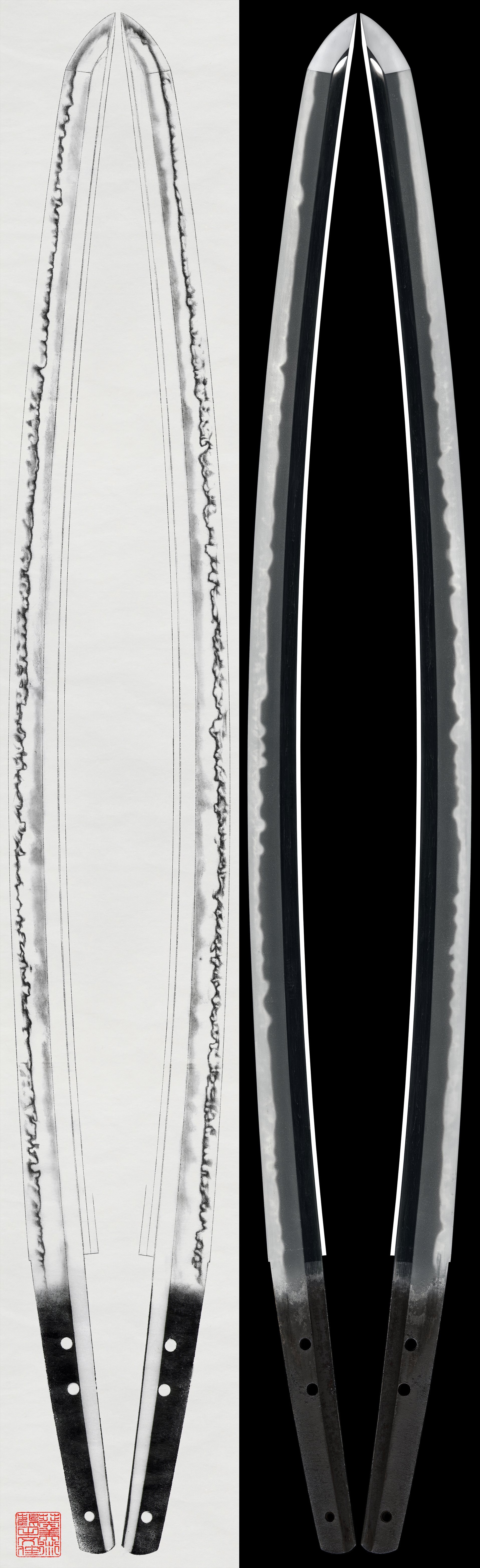
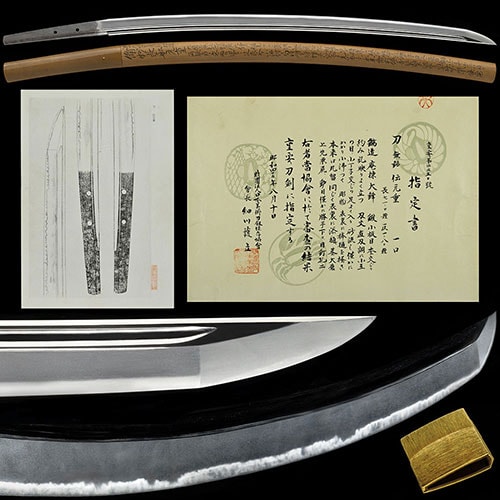
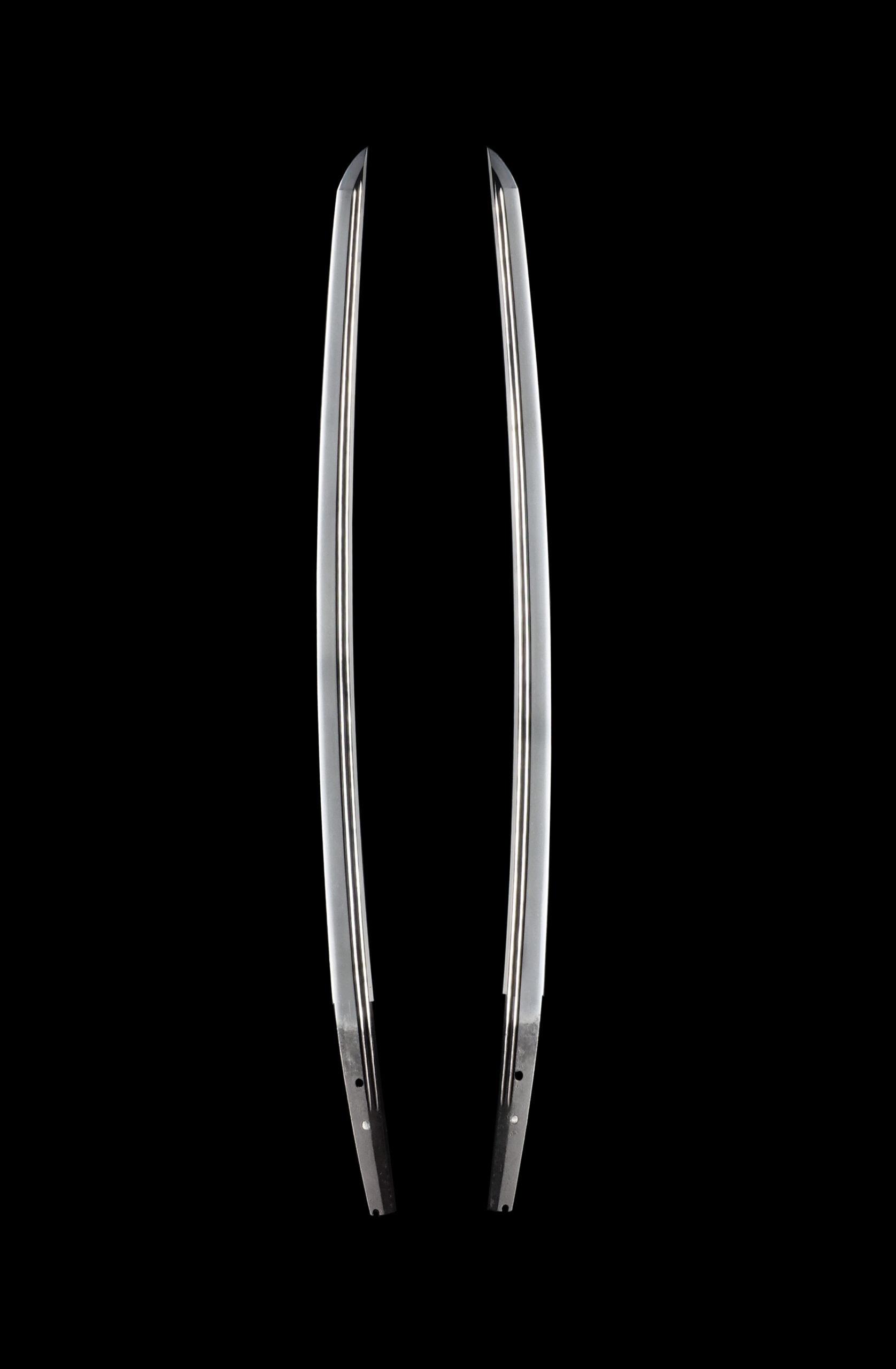
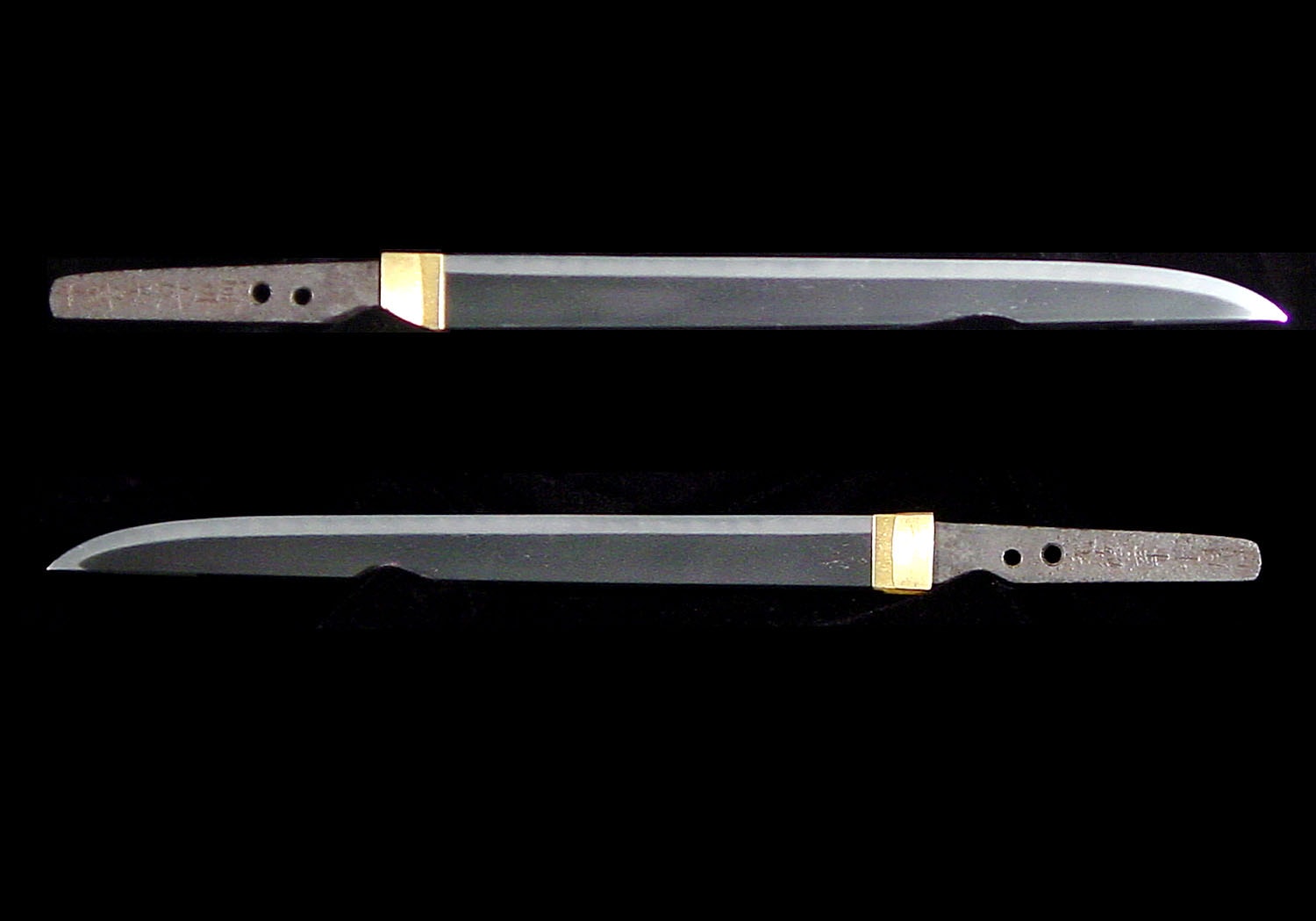
In Gentoku 2 (1330) Naotsugu (直次) of signed a slender, high- " no jū Sahyōe-no-jō Naotsugu ", the year cut in parallel on the , and the judges that title inscription with its date "valuable documentary material" within his surviving work. He belongs to the school, which flourished along the lower reaches of the Takahashi river; the published sources open his records with the early eleventh-century Sarugakuki (新猿楽記), which already lists "the swords of " among the famous products of the provinces. Work to about mid- is called ; what follows, into , simply . The places Naotsugu's activity around the Karyaku era (1326-29); he styled himself Saemon-no-jō and Sahyōe-no-jō, and with Yoshitsugu (吉次) he is counted among the representative smiths of the school from the very end of into the opening of . His dated works begin with Gentoku, the oldest, and run across Jōwa and Kannō, Shōkei, Kenmu and Ryakuō standing between; the title heads the Gentoku and Kenmu pieces.
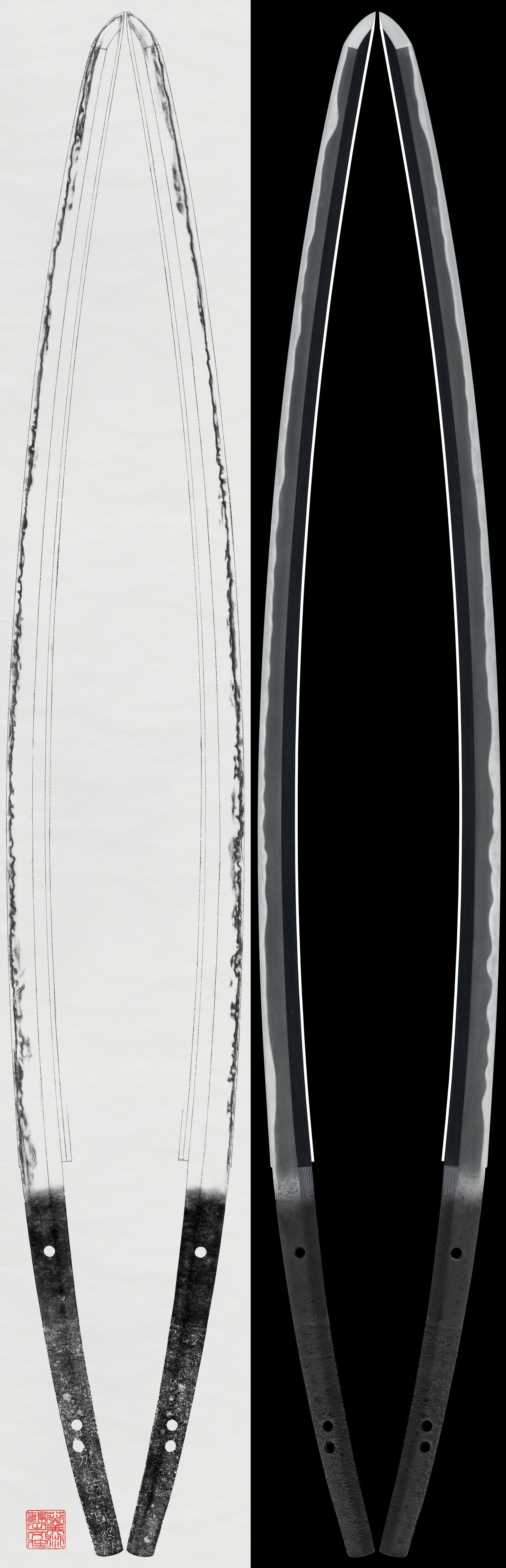
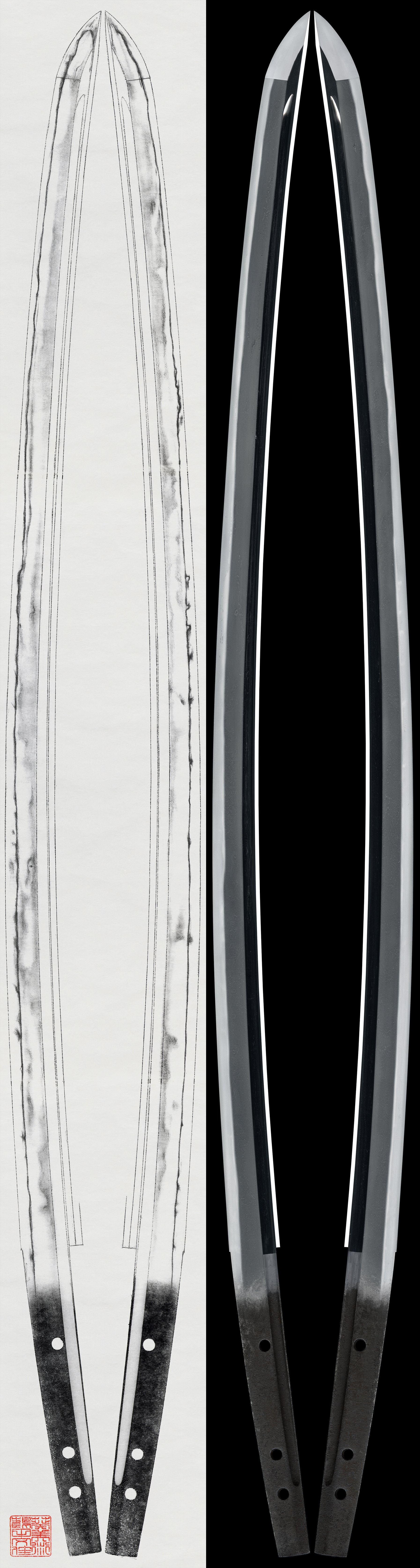
The foundation of his work is the of this generation. Like the smiths of his time, the published sources note, his works are mostly built on a basis, and in his hands that line is a or , undulating only very shallowly, mixing a little , with , and entering. The is tight, carries a light , and of one slender the judges write that "both and are bright and brilliantly clear". The school's slanting habit rides in him on this quiet line rather than on a : recur from the Ryakuō , where the rare also enters, to the of the broad -Sahyōe-no-jō , whose wide admits , and slanting, squarish elements. He holds to the narrow bright more constantly than Tsugunao, the school's other great name. Activity beyond the line is sparing but fine: on the Jōwa-dated , and on the Gentoku 2 fine with and along the , a deeply tasteful scenery at the edge.
The is 's own. He forges a tightly knit mixed with , thick and extremely fine, entering minutely; (地斑) mixes in again and again, the clear (澄肌) patches of the school appear, and a faint rises, sometimes a , sometimes a thin straight close to the , and on the broadest a forming dark bands. Of one two-character-signed the writes that the well-refined, tightly packed forging, laid thickly and minutely, is exceptional. The runs straight to a return or tends to a point, at times lightly brushed with ; the published sources warn that the shallow with its tip tending to point "must not be overlooked", one of the important viewing points of work in this period.
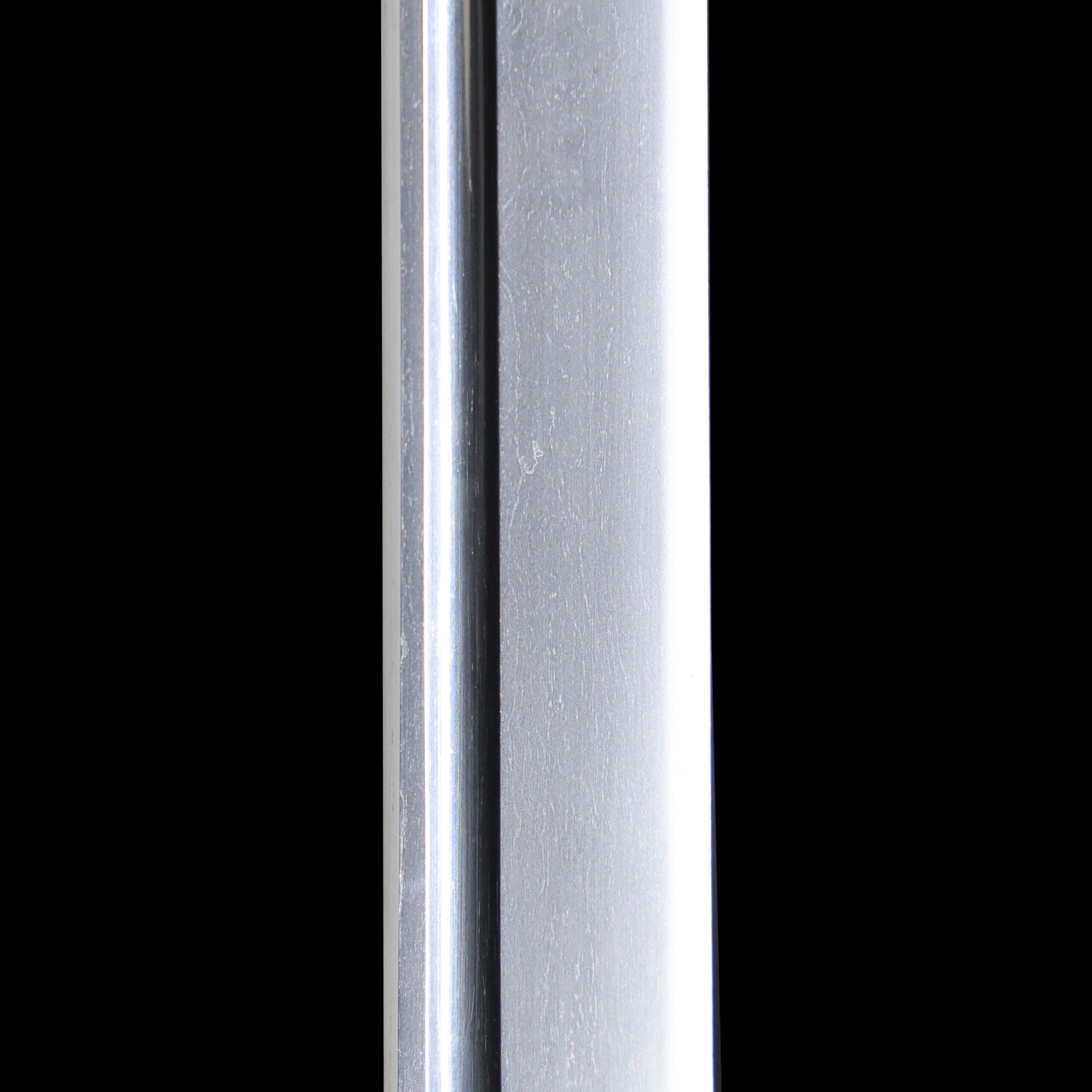
The signed and dated core of his work is remarkably consistent. His are with , the firm, the curvature absent or slightly inward; the Kenmu 2 (1335) grows broad and slightly extended, the invocation Namu Kanzeon on its , and the Ryakuō is judged in both of its records an outstanding work within his oeuvre. On the takes the furisode form, and the steep filing remains, "the viewing point of the school, vividly remaining"; down the center runs a long struck deep with a thick chisel (太鏨), its reverse-chisel work so sharp that it, the published sources say, "carries on the tradition". Two write the signature down the tang in a single line, and the -Sahyōe-no-jō is cut, unusually for this smith, in , as both of its records note. The generation question stands as the sources leave it: the Jōwa-dated is laden with where work is generally , and so stands "close to the -period work of the school"; the , the record adds, reads the Ryakuō and Enbun dates as a second generation, by which the Jōwa would likewise fall to the second, while the designation records otherwise treat one representative Naotsugu across the passage.
A second register stands on authority. Three , certified Jūyō Bijutsuhin between 1939 and 1947, carry the grand build, "broad in width and large in point, a bold and powerful figure", their turning -predominant with saka-chōji and : Kōon set his judgment in gold inlay, "Naotsugu, kore, Hon'a", and Kōshitsu attributed the of the Owari Tokugawa house. At the edge stands the Shōhei 18 (1363) made for one Murahashi Chōgo, its florid saka-chōji praised, its corroded signature transmitted as Naotsugu. Set against the school's arc, his place is the bridge. worked a with the slightly subdued; at the peak the tightens into bright, clear and the characteristic saka-chōji-midare; and Naotsugu's quiet keen line, still carrying its , stands immediately before that peak, the manner his -attributed grand works adjoin.
Fifteen designated works stand on the official record: two Important Cultural Properties, a and a ; three ; seven ; and the three Jūyō Bijutsuhin , so that ten blades sit in the and tiers. Twelve of the fifteen carry a ; his name is anchored on those signed, dated pieces. The provenance recorded against his blades runs through the Tokugawa: the Reimeikai was the personal sword of Munechika (宗睦), ninth lord of the Owari Tokugawa, and remains with the Tokugawa Reimeikai; the gold-inlaid was held by Tokugawa Iesato at its certification; the third, once with Sumio, now belongs to the Sano Art Museum. Of recorded whereabouts they rest with the Tokugawa Art Museum, the Kyoto National Museum and the Sano Art Museum. The two Important Cultural Properties are preserved as cultural patrimony and will never trade; what a collector may realistically encounter is the and tier, ten blades in all, and a signed, dated Naotsugu comes to the open market only rarely, a small and quiet masterpiece of the late when it does.