Perry’s arrival in 1853 unraveled the Tokugawa peace and created the first mass demand for working swords in two centuries. Kiyomaro, called the Masamune of Yotsuya, died on its eve; Munetsugu and Yukihide carried the boom to the end.
 NihontoWatchNihontoWatch
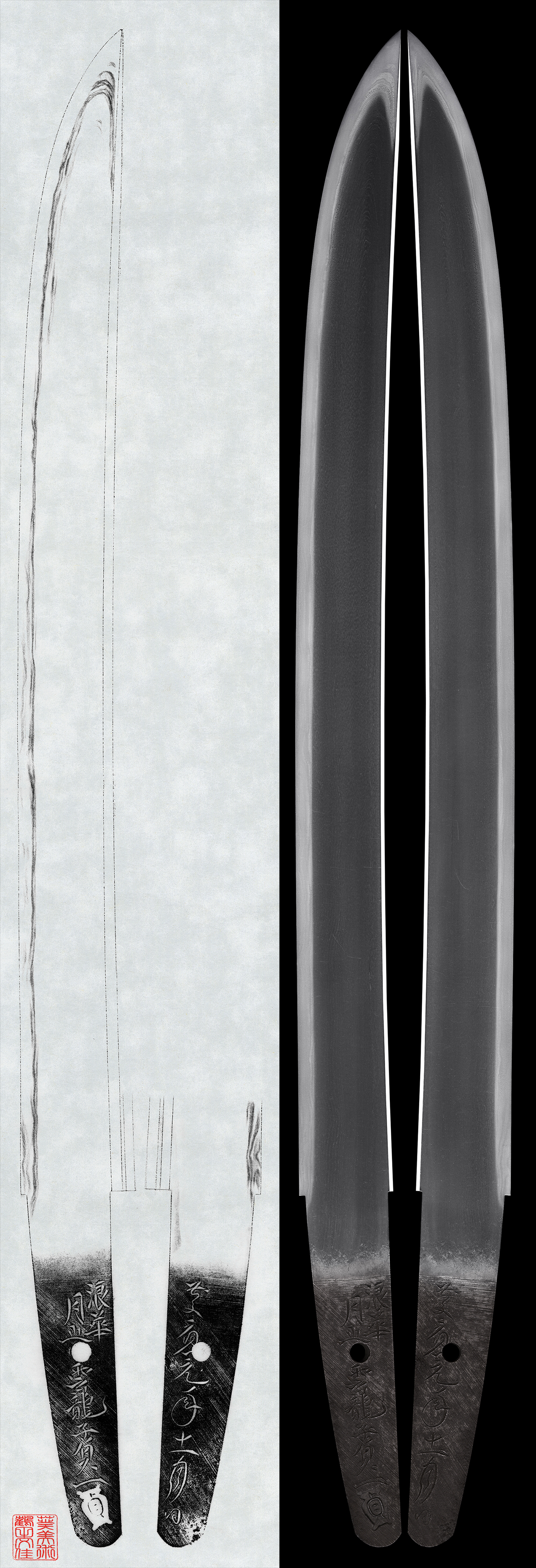
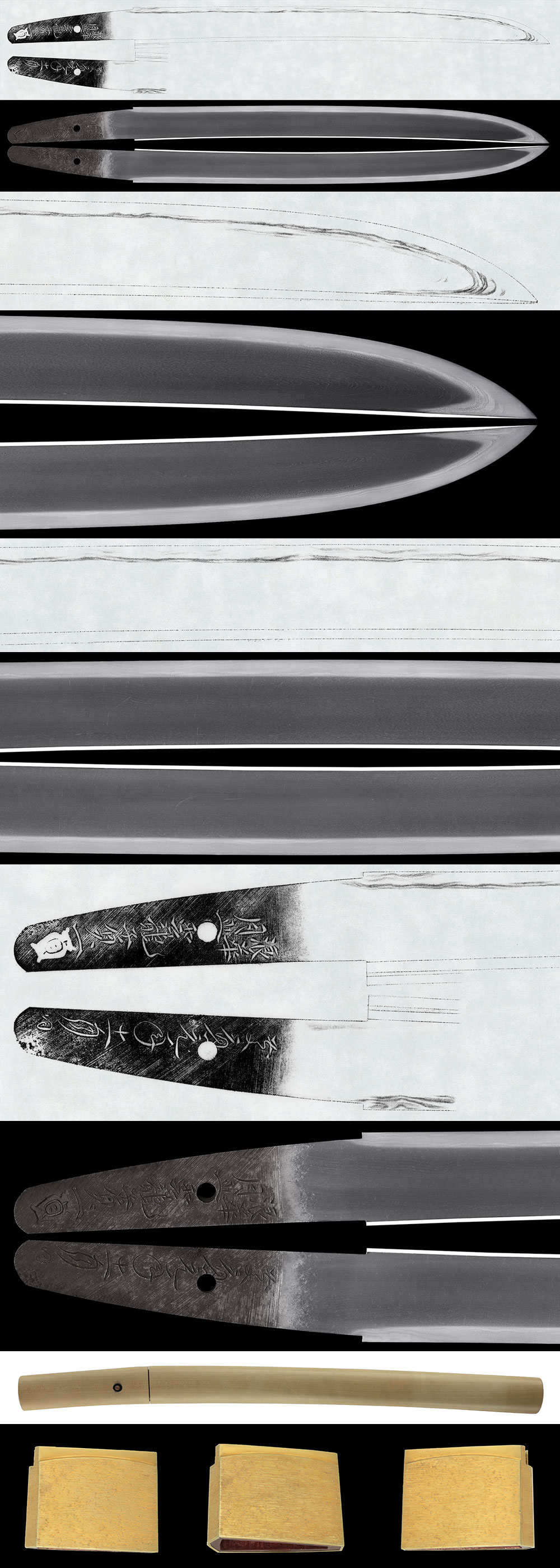
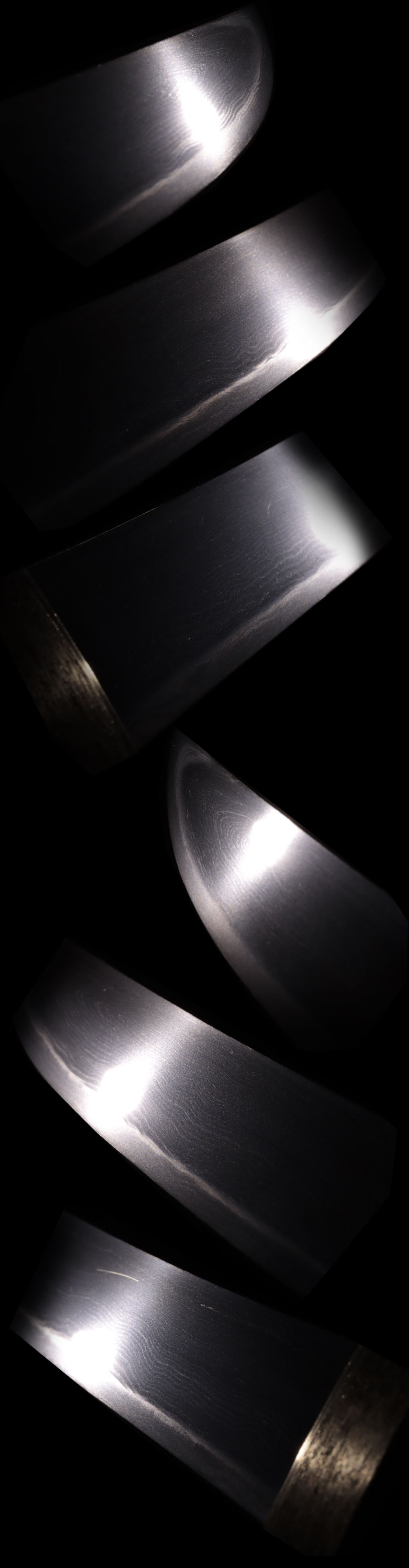
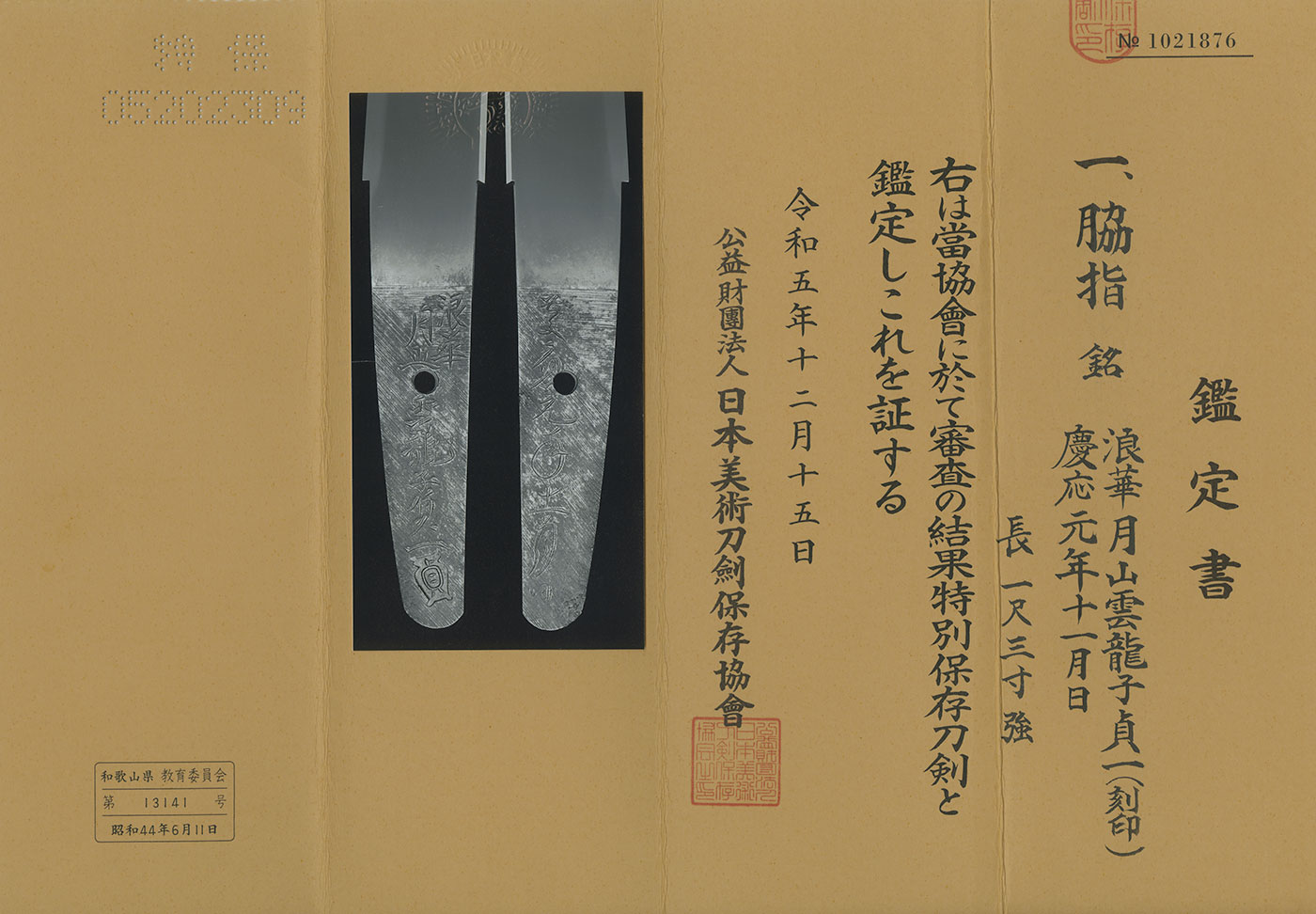
Wakizashi in Shirasaya (NBTHK Tokubetsu Hozon Token) This work is ranked as Jyojyo Saku (Excellent work) among the works of Naniwa Gassan Unryushi Sadakazu. Shape: The sword has a wide body, thick kasane, and a healthy san-dome shape. Jigane: Well-grained straight masame hada. Hamon: The blade features a nie-deki suguha with double hamon near the edge, a double boshi, turning into a triple hamon towards the kissaki (point). Features: A work of Sadakazu from the Edo period around the Keio era, made in the Yamato tradition, with well-packed straight masame hada, indicating a well-made piece. Aoi Art’s Comment: Upon careful inspection, the straight masame hada is prominently visible. Sadakazu was adopted by Sadayoshi and given the name Yagoro. He was appointed as an Imperial Household Artist on April 4, 1876, and passed away at the age of 84 on July 7, 1918. In his later years, he produced works on behalf of Sadayoshi, and his son, Sadakatsu, created works for Sadakazu when Sadakazu was too old to forge himself. After the edict of 1871, which prohibited the production of ranked swords, Sadakazu was eventually allowed to resume making swords as an Imperial Household Artist, contributing to a large number of swords with his exceptional skills, particularly in sword engraving and perfecting the production of the Yamato-hada, or ayasugi hada, representing their roots. During the Meiji and Taisho eras, as wars with foreign countries increased, many swords were made by Sadakazu, Sadakatsu, and other disciples, flourishing the era from Meiji to Taisho despite the sword abolition edict which forced many swordsmiths to cease their craft. NBTHK Tokubetsu Hozon Token AoiArt estimation paper Whole Oshigata
Certificate reading — 銘 浪華月山雲龍子貞一(刻印) 慶応元年十一月日
NihontoWatchOffered by Aoi Art
7 on the market

As written by the shop
Shinshinto · Settsu · around 1864-1865
Fujishiro Jo saku · Tōken Taikan top 23%
7 pieces on the market now
Where Sadakazu stands among comparable artisans: across all of nihontō, and within tradition, era, and period. The tiers (Foremost · Leading · Major · Notable) weigh official designations from the NBTHK and Japan's Agency for Cultural Affairs, together with historical honors of lasting repute such as the Sansaku and Meibutsu-chō.
Select a lens to see how it's measured.
Shinshinto · Settsu
27 pieces on the market now
| Smith | Era | Designated |
|---|---|---|
| Sadaharu貞晴 | 1865-1868 | 0 |
| Sadayoshi貞吉 | 1926-1989 | 0 |
| Yoshiaki吉明 | 1844-1848 | 0 |
| Naonobu直信 | 1854-1860 | 0 |
| Sadayoshi貞吉 | 1830-1863 | 0 |
Bakumatsu: the last war market
Perry’s arrival in 1853 unraveled the Tokugawa peace and created the first mass demand for working swords in two centuries. Kiyomaro, called the Masamune of Yotsuya, died on its eve; Munetsugu and Yukihide carried the boom to the end.
A Hozon-certified blade judged to show notably superior workmanship and a better state of preservation. The bar is higher: re-tempered blades and most unsigned Muromachi/Edo works are excluded.
The NBTHK (Nihon Bijutsu Tōken Hozon Kyōkai, the Society for the Preservation of Japanese Art Swords) is a public-interest incorporated foundation founded in 1948 and supervised by Japan’s Agency for Cultural Affairs (Bunkachō); it is based at the Japanese Sword Museum in Tokyo. Its expert panels physically examine each submitted work (shinsa) and issue a certificate (kanteishō) ranking it by artistic and historical merit. NBTHK papers are the most widely recognized standard of authentication for Japanese swords and fittings.
NBTHK official siteIf you wish to return an item, please notify us within 3 days of receipt. After this period we cannot accept cancellations. Please ship the return to us within 5 business days. Cancellation is conditional on the item being kept in the same condition as at the time of sale, so please handle it with care.
¥700,000