 NihontoWatchNihontoWatch
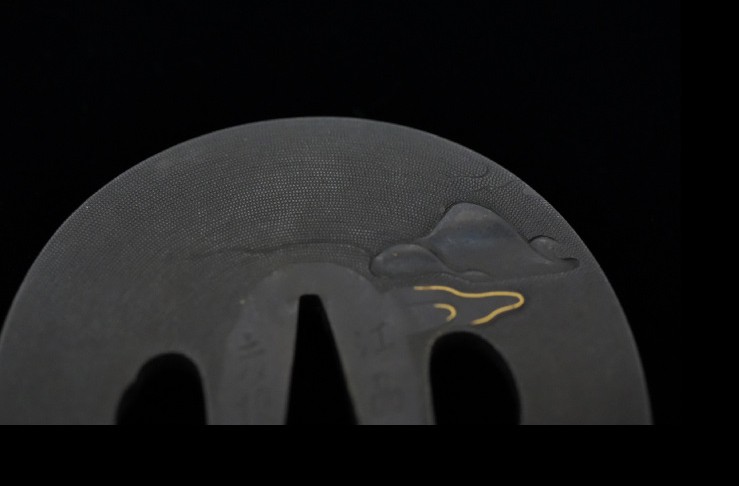
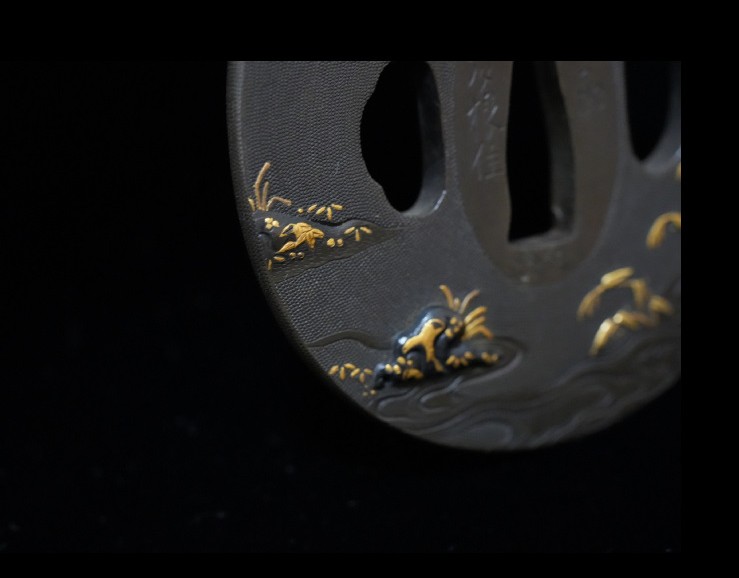
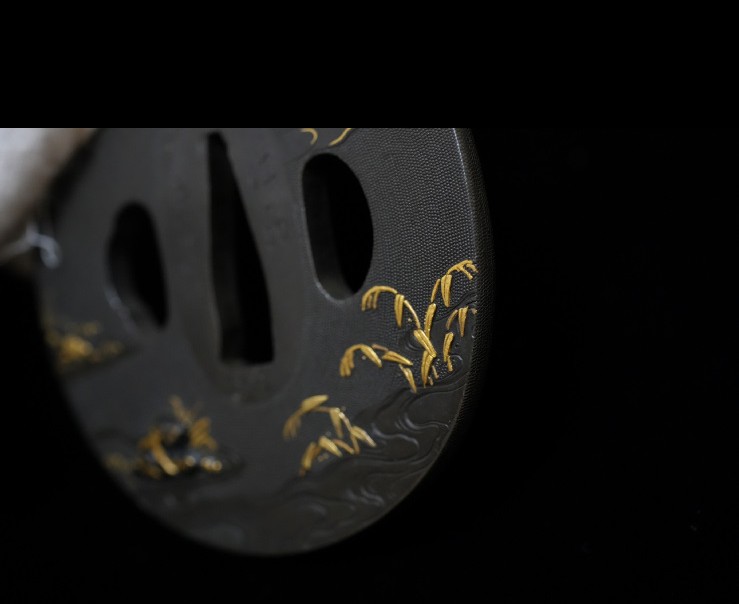
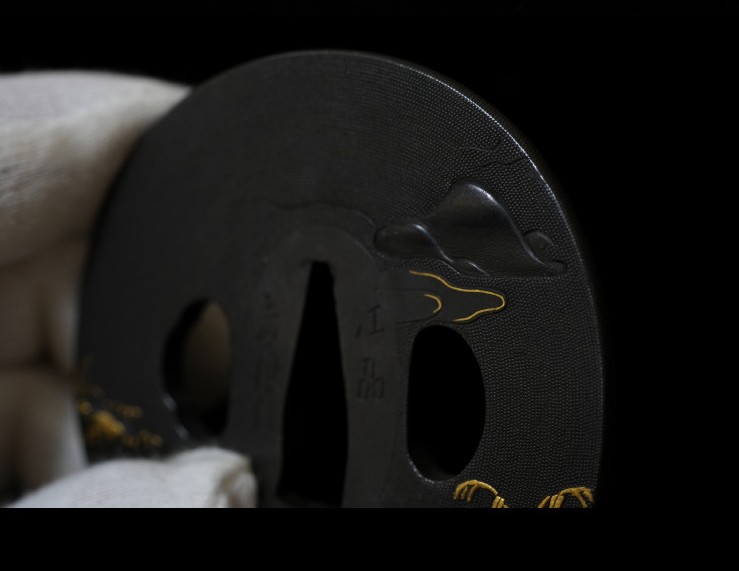
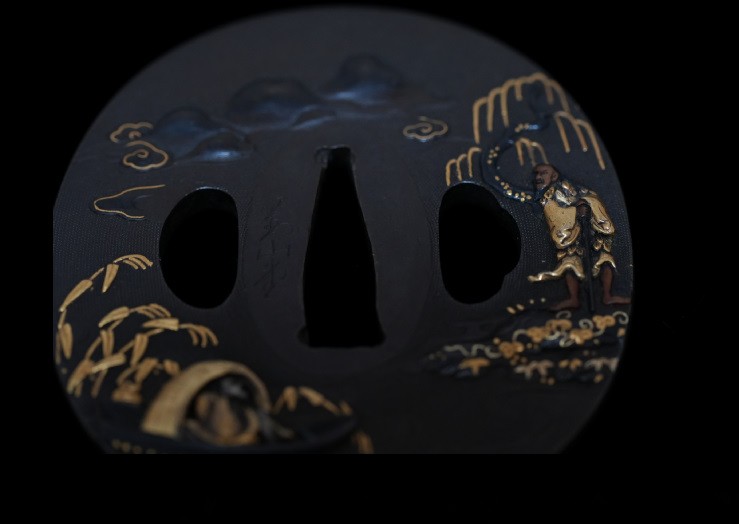
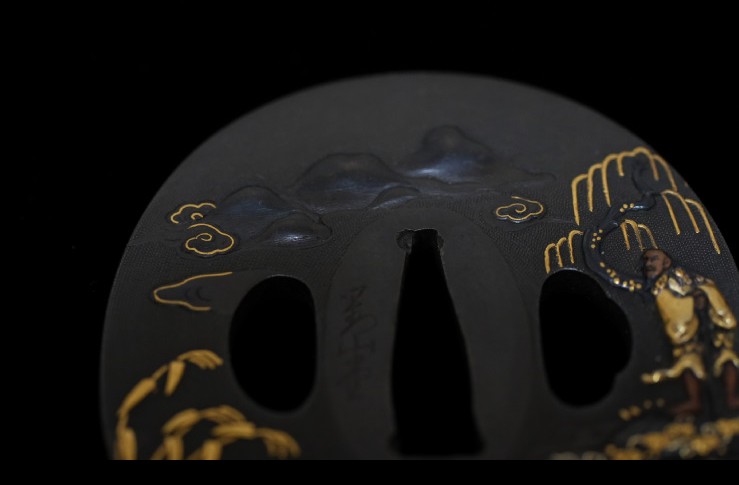
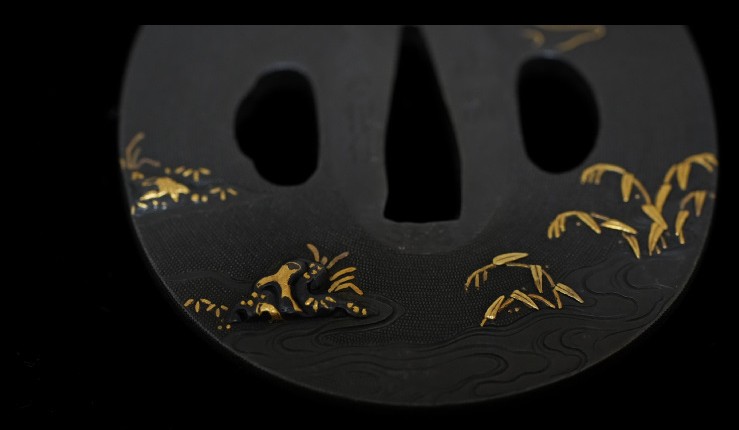
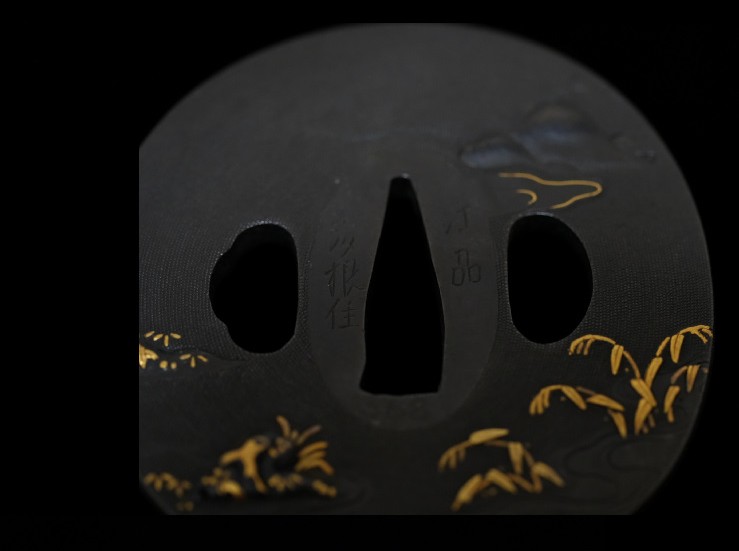
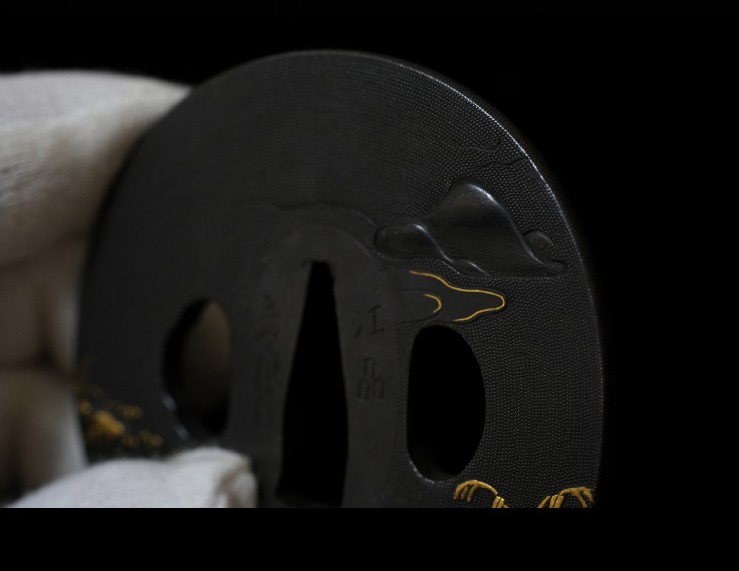
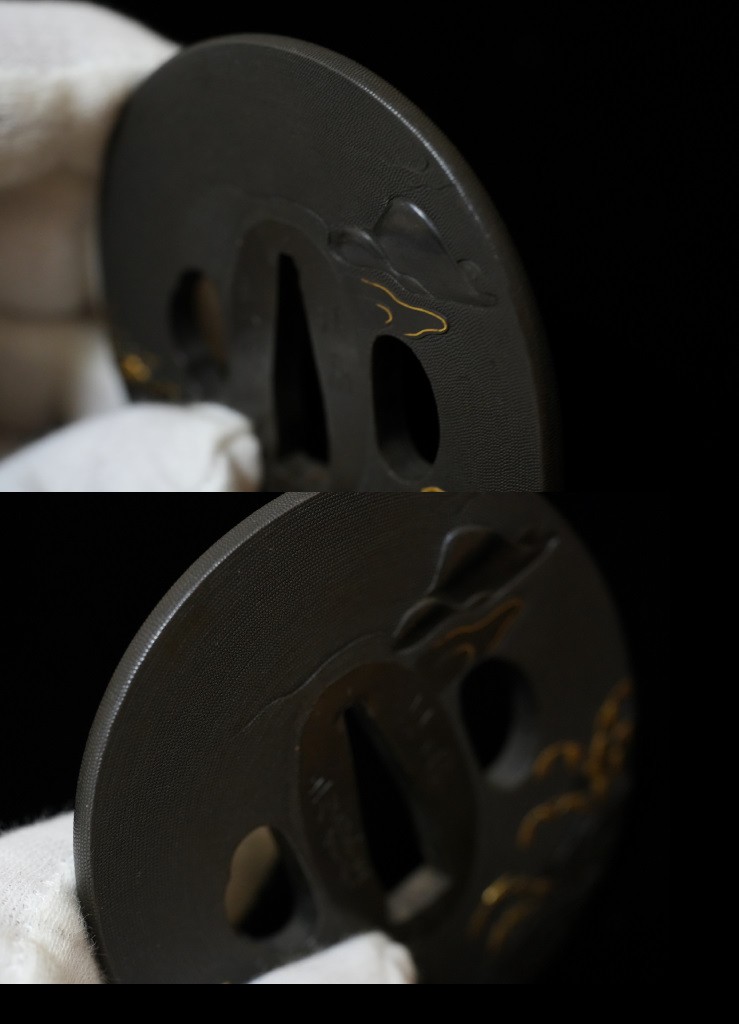
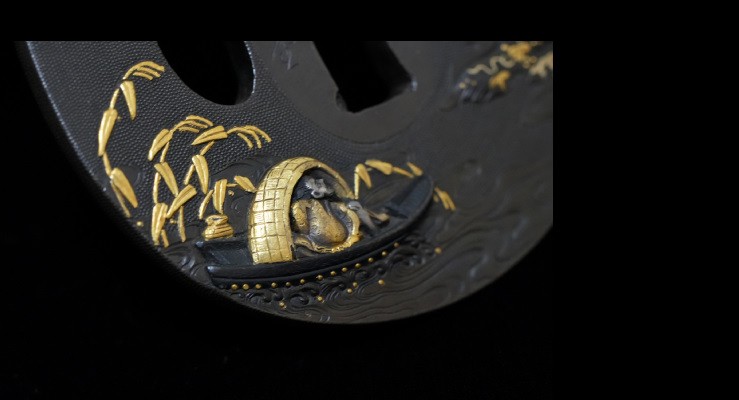
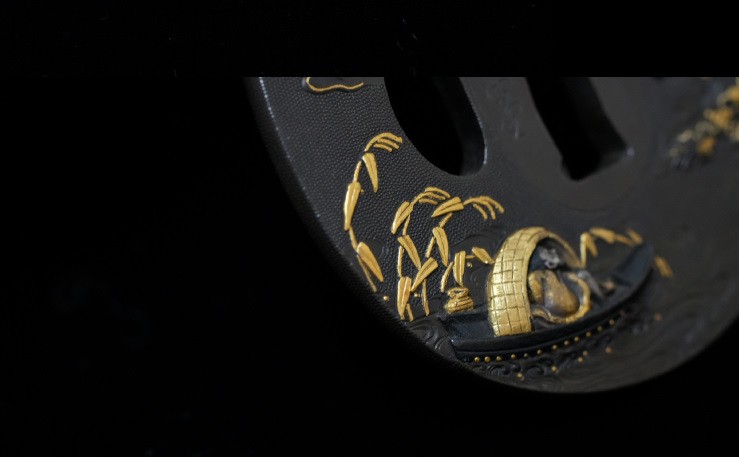
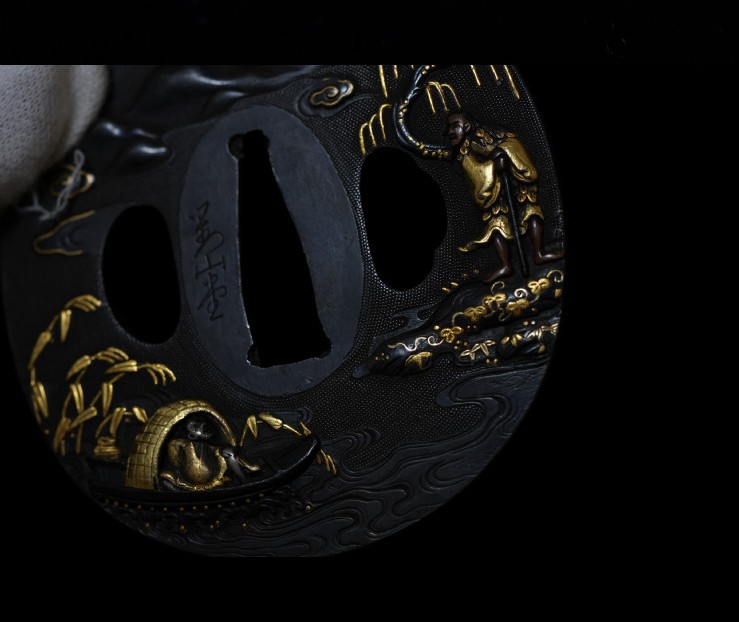
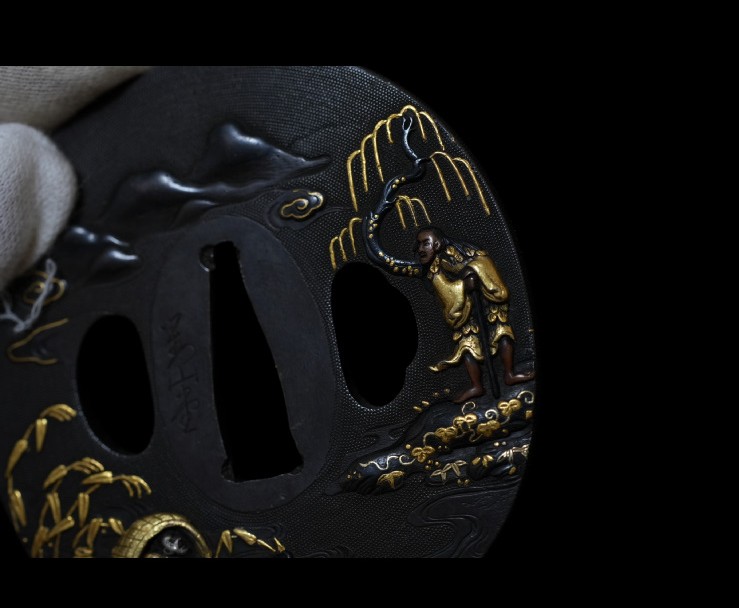
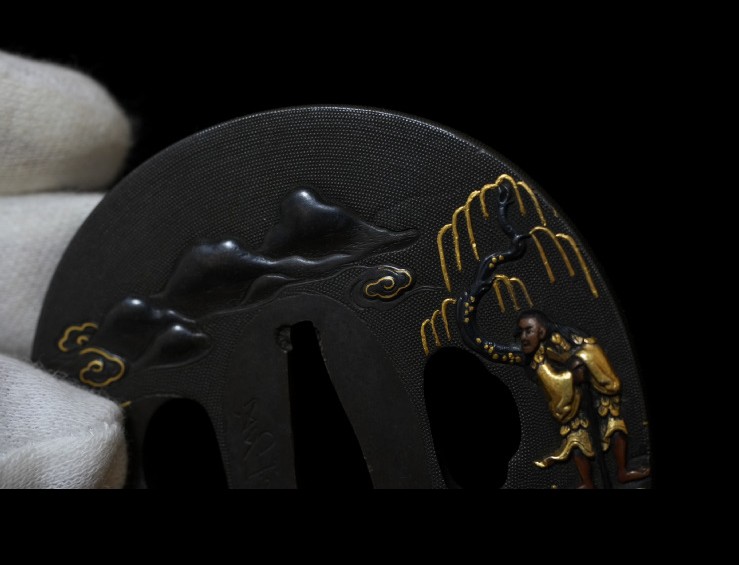
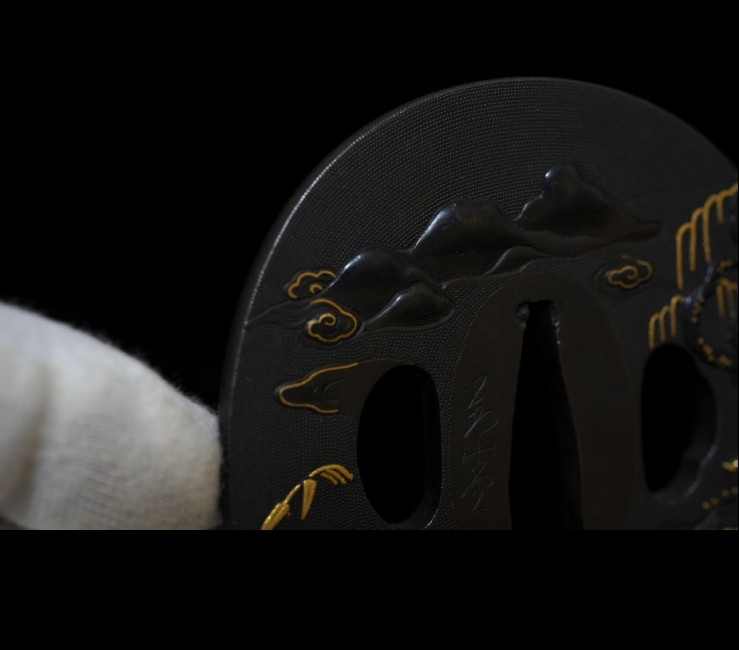
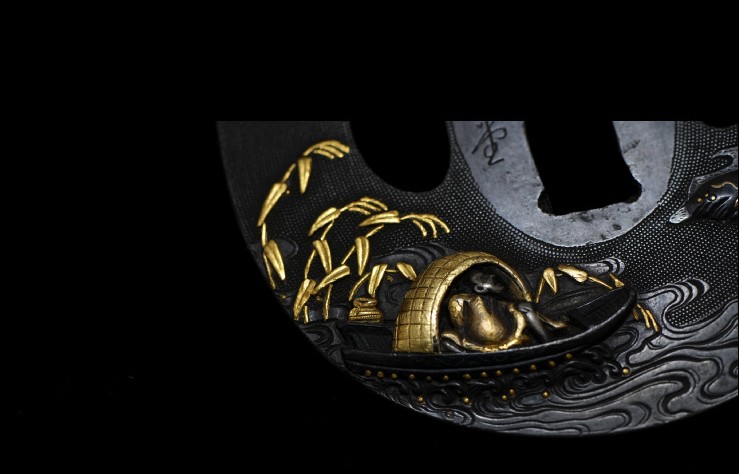
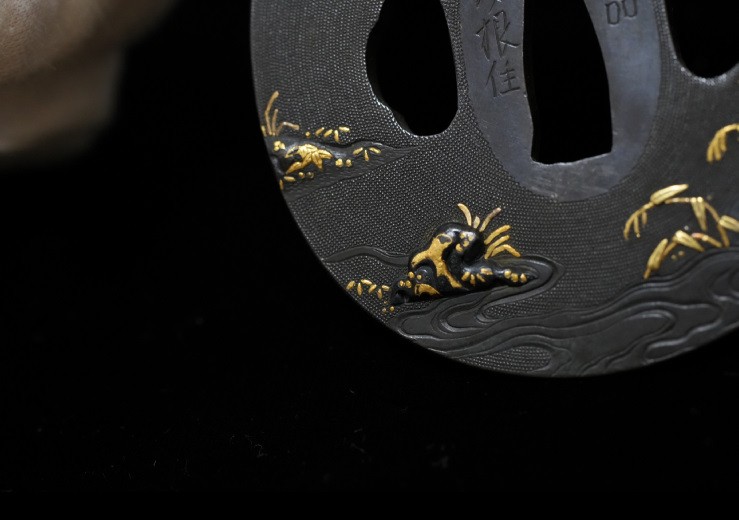
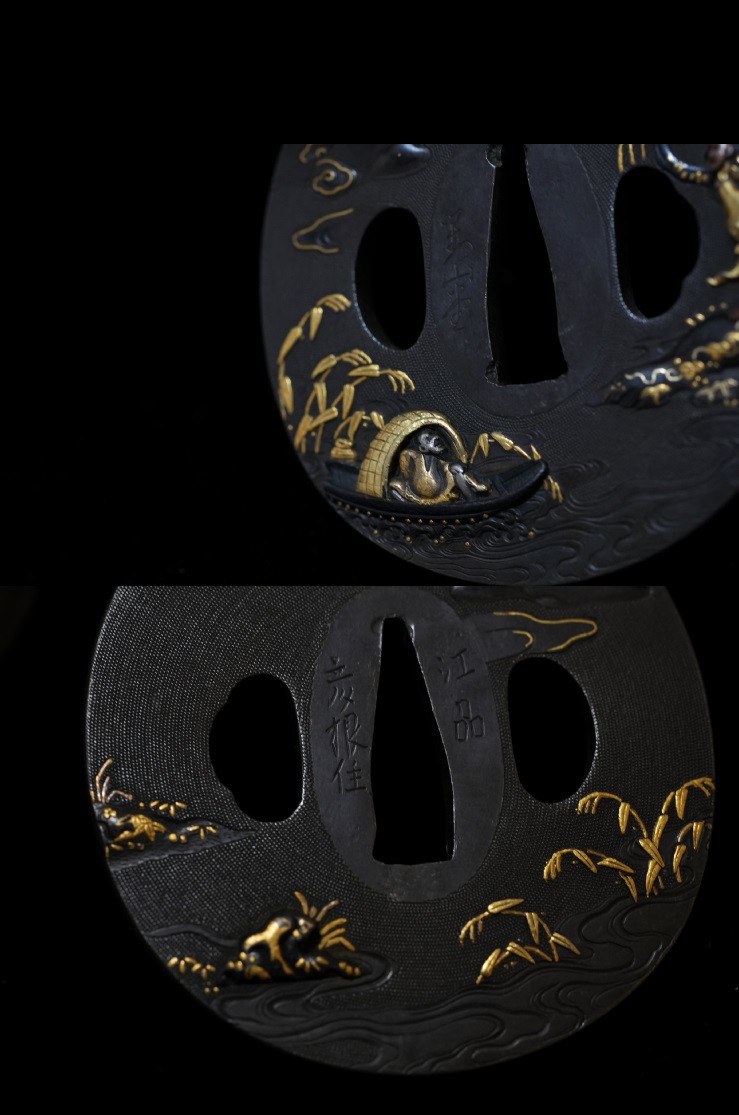
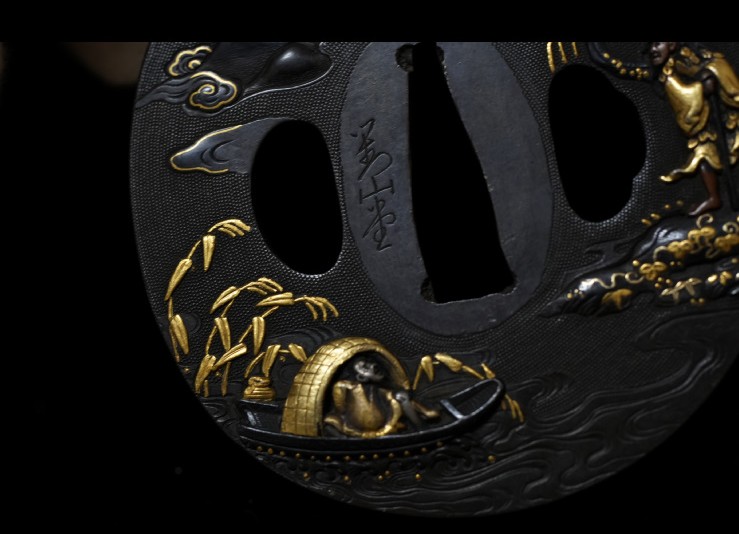
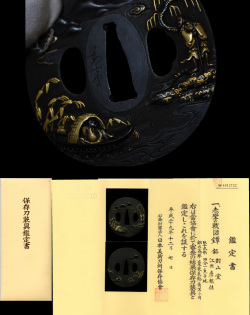
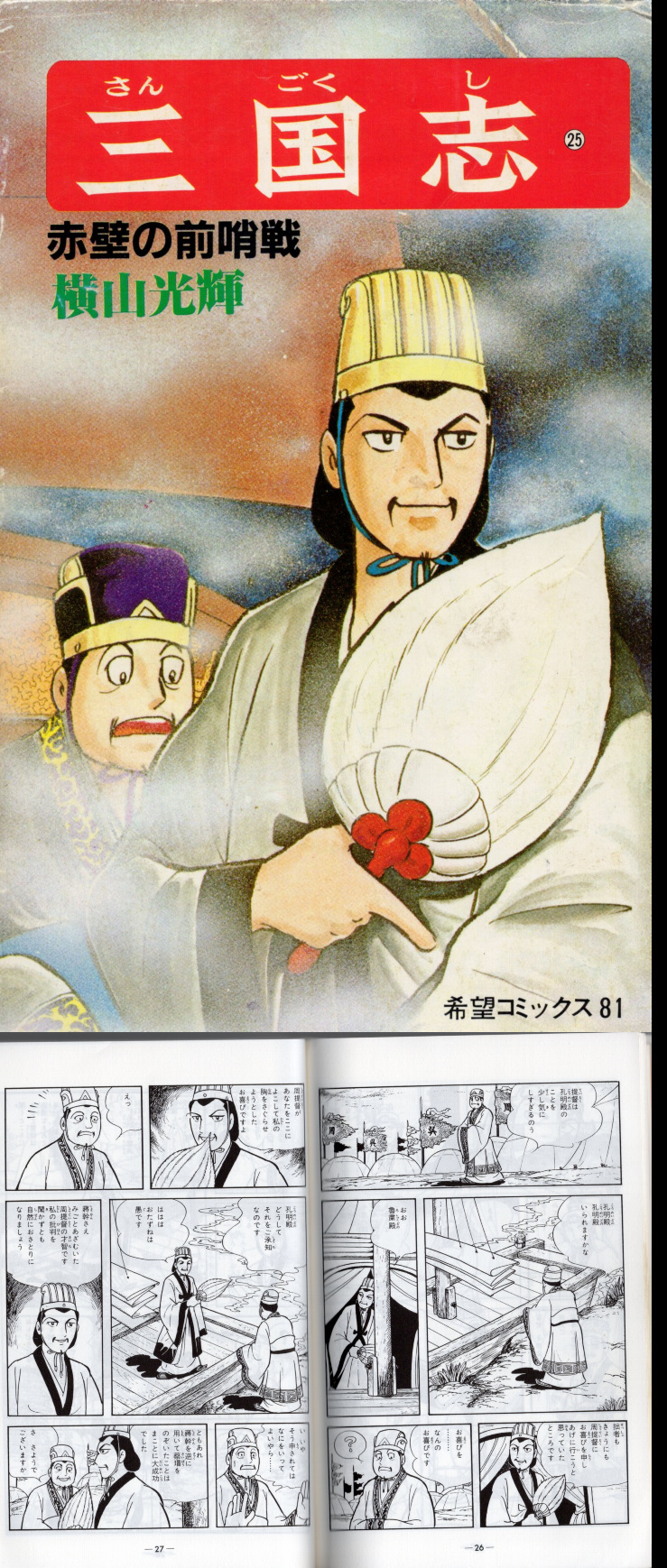
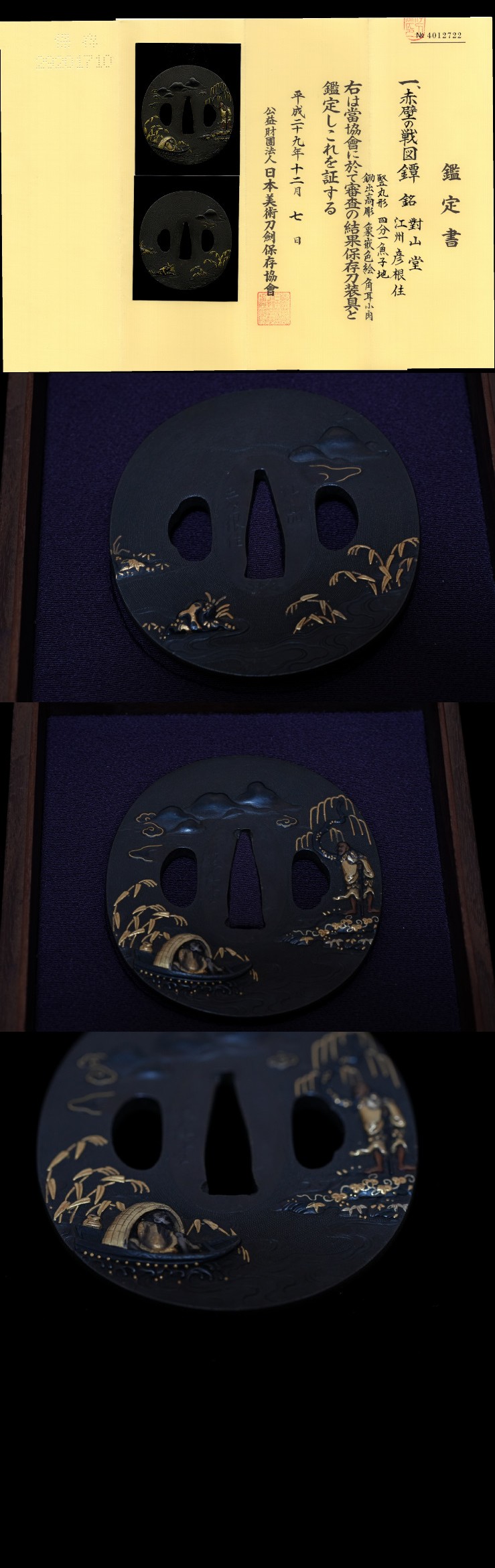
Shibuichi? (I actually think it is a shakudo ji, but I have appraised it according to the kantei) nanako ji, sukidashi takabori, zogan iroe, kakumimi koniku. Tate-haba 72.5 mm, yoko-haba 68 mm, kasane 4.9 mm, weight 135 grams (all are approximate). With Nippon Bijutsu Token Hozon Kyokai kanteisho. It is a masterpiece depicting the prelude to the famous Battle of Sekkibe, faithfully telling the story of the time when Zhuge Liang Kongming saw through the stratagem where Lu Su Zijing was ordered by Zhou Yu Gongjin to visit Kongming, after Zhou Yu had Jiang Gan (who had approached him on the orders of Cao Cao Mengde) steal fake documents to have Cai Mao and others executed. When Lu Su reported to Zhou Yu that Zhuge Liang Kongming had seen through this plan, Zhou Yu became strongly determined to eliminate Kongming. Then, Zhou Yu gave Kongming the impossible task of producing 1,000,000 arrows in 10 days; Kongming predicted the fog would thicken and advanced toward Cao Cao's camp in empty boats, obtaining the 1,000,000 arrows by having them fire at him. For details, the Ushio Shuppansha Kibou Comics "Sangokushi Volume 25: Sekkibe Zenshosen" by Yokoyama Mitsuteru Sensei is an easy-to-understand manga. (I have posted a comparison as the scene on the tsuba and a part of that manga scene overlap and are easy to understand, but this is strictly used for the purpose of explaining this tsuba. As this content considers copyright, please purchase this comic for details.) It is truly a prelude where every resource of ingenuity was exhausted, and it is thought that extant examples of this design appearing on a tsuba are almost non-existent. In the Sangokushi, the Battle of Sekkibe is one of the greatest highlights passed down to future generations. Within the nanako, the waves, figures in zogan, the expression of fog, and the mountains are a design that truly captures the essence, and the composition on the ura is a powerful work with magnificent, elegant, and flamboyant zogan that faithfully depicts the scene of fog hanging over Cao Cao's camp. It is likely made of shakudo rather than iron, making it a rare masterpiece of high scarcity value. However, as the Kyokai has judged it to be shibuichi, and while shibuichi is also expensive, I have evaluated the price as shibuichi. Soten was a kinko representing Omi Province who devised a unique method of applying flamboyant zogan to labor-intensive carving, also called Omi-bori, and his dense carving won great acclaim throughout the land. The Taizan mei is rarely encountered and is truly a phantom masterpiece.
NihontoWatchOffered by Kusanagi

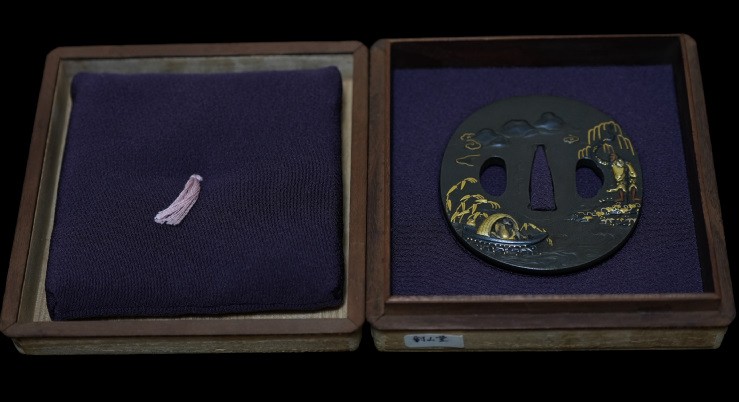
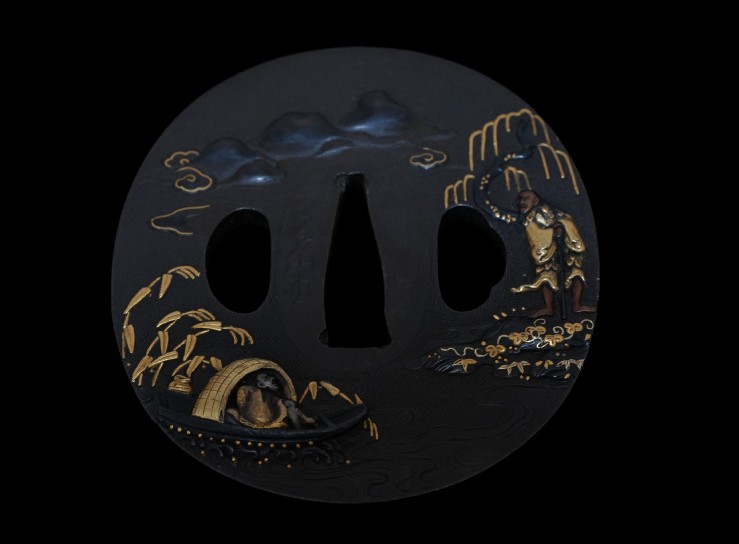
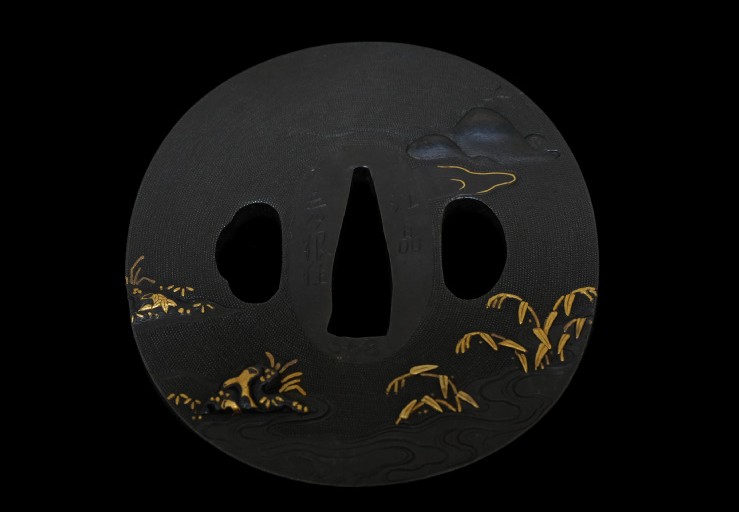
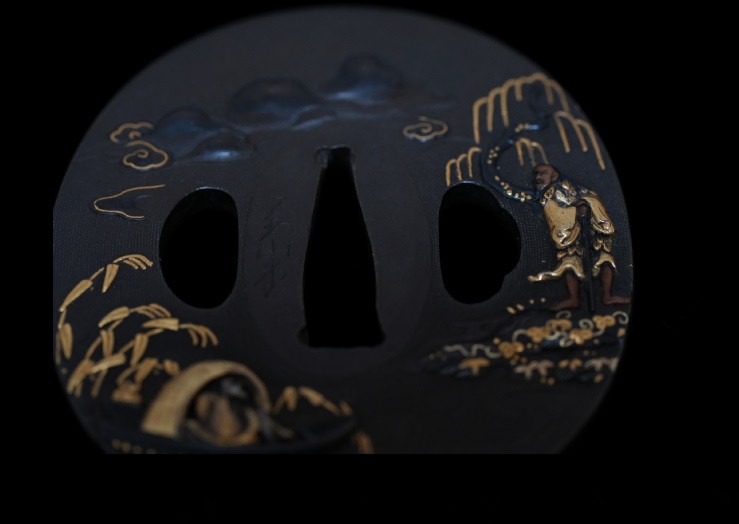
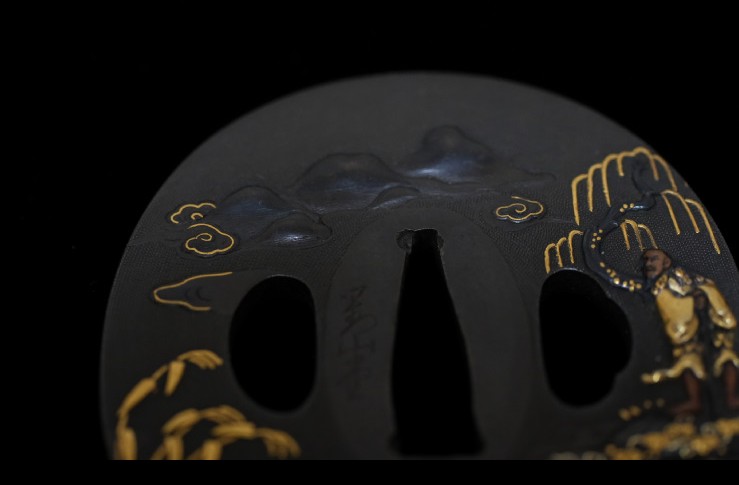
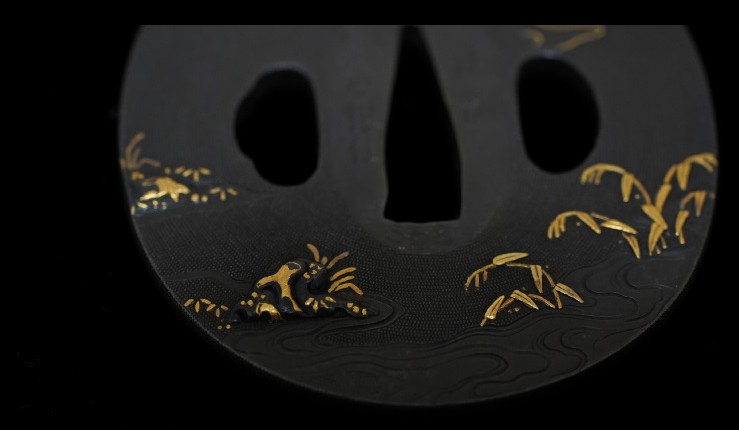
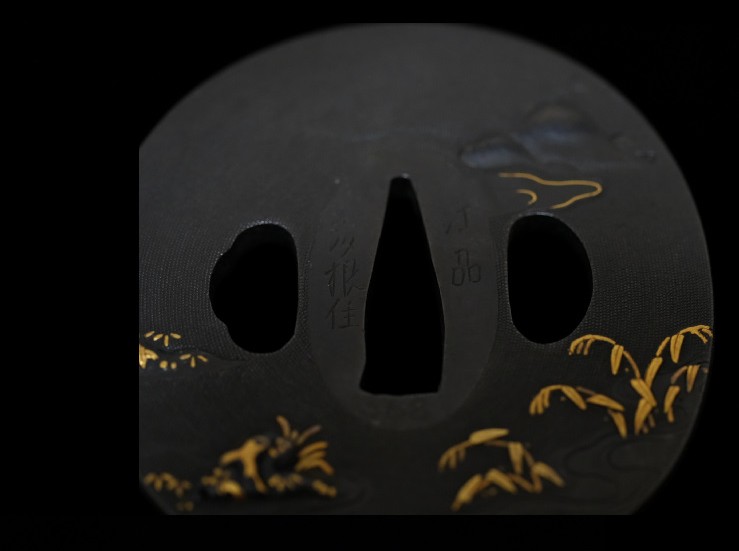
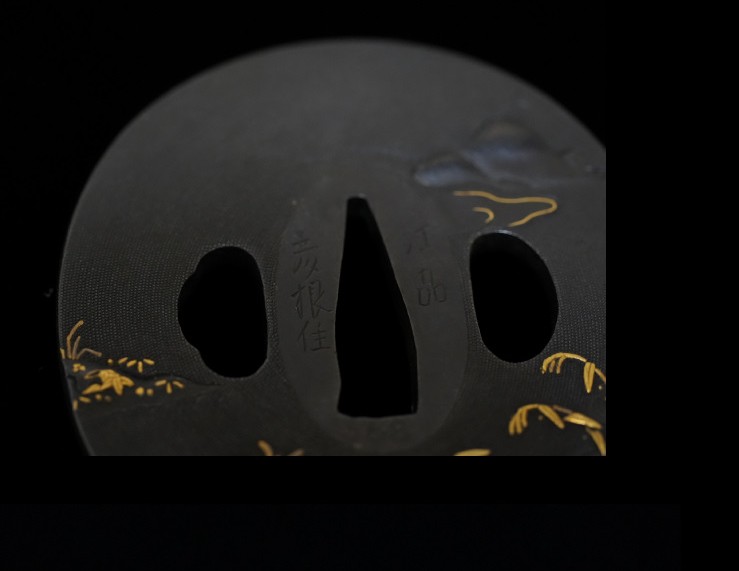
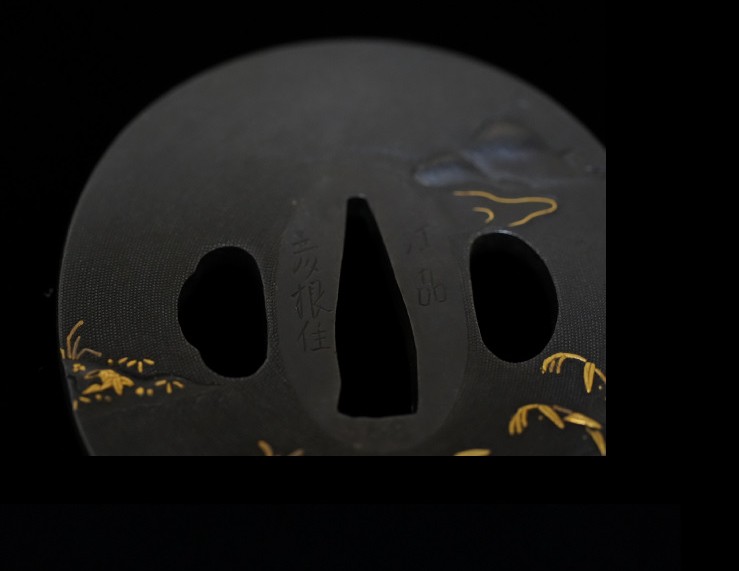
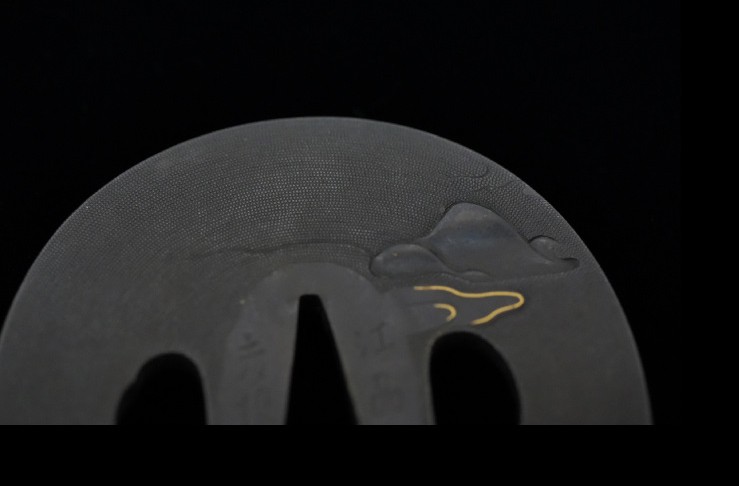
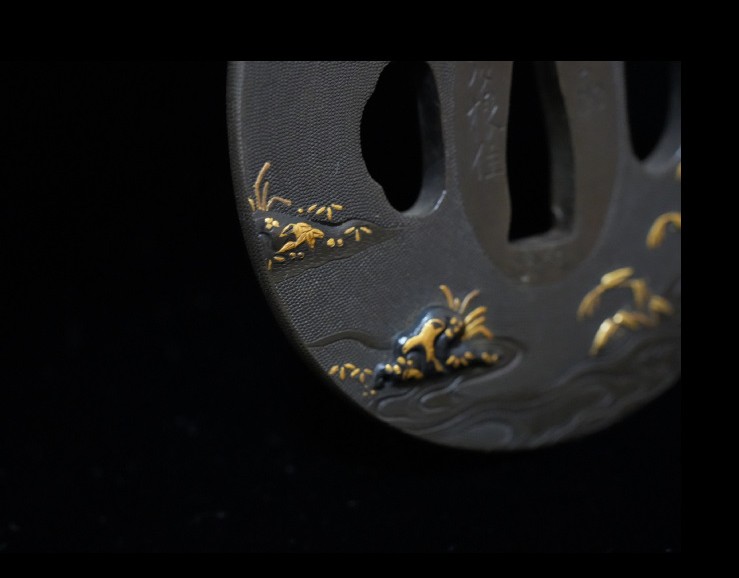
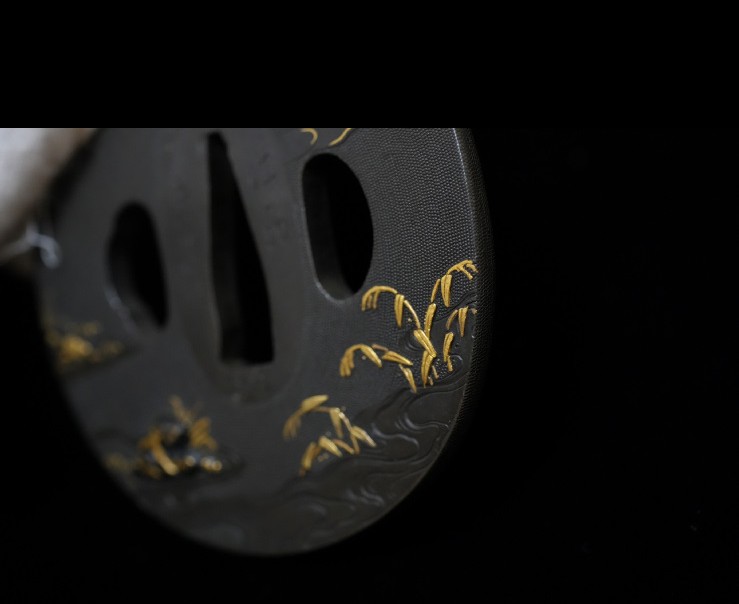
Soten
近江
Hozon (NBTHK)
As written by the shop
Machine translation from the shop's Japanese · may contain errors ·
Certifies a genuine fitting worth preserving: a correct signature, or, if unsigned, an identifiable era and school, with recognized artistic and craft value.
The NBTHK (Nihon Bijutsu Tōken Hozon Kyōkai, the Society for the Preservation of Japanese Art Swords) is a public-interest incorporated foundation founded in 1948 and supervised by Japan’s Agency for Cultural Affairs (Bunkachō); it is based at the Japanese Sword Museum in Tokyo. Its expert panels physically examine each submitted work (shinsa) and issue a certificate (kanteishō) ranking it by artistic and historical merit. NBTHK papers are the most widely recognized standard of authentication for Japanese swords and fittings.
NBTHK official sitePlease notify us of your intention to return, by email or fax, no later than the day after the item's arrival. Return shipping, insurance, and refund transfer fees are the customer's responsibility.
¥380,000