 NihontoWatchNihontoWatch
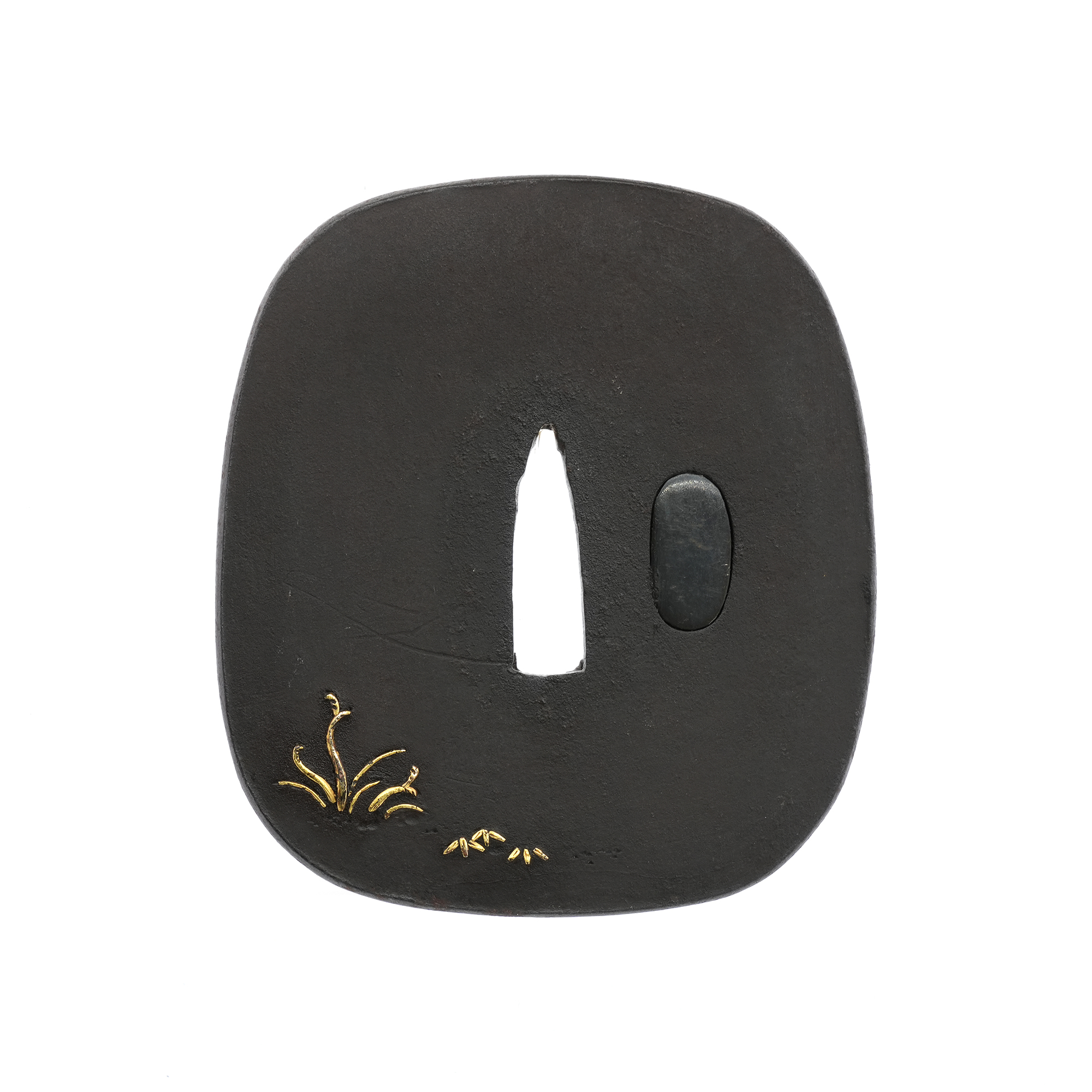
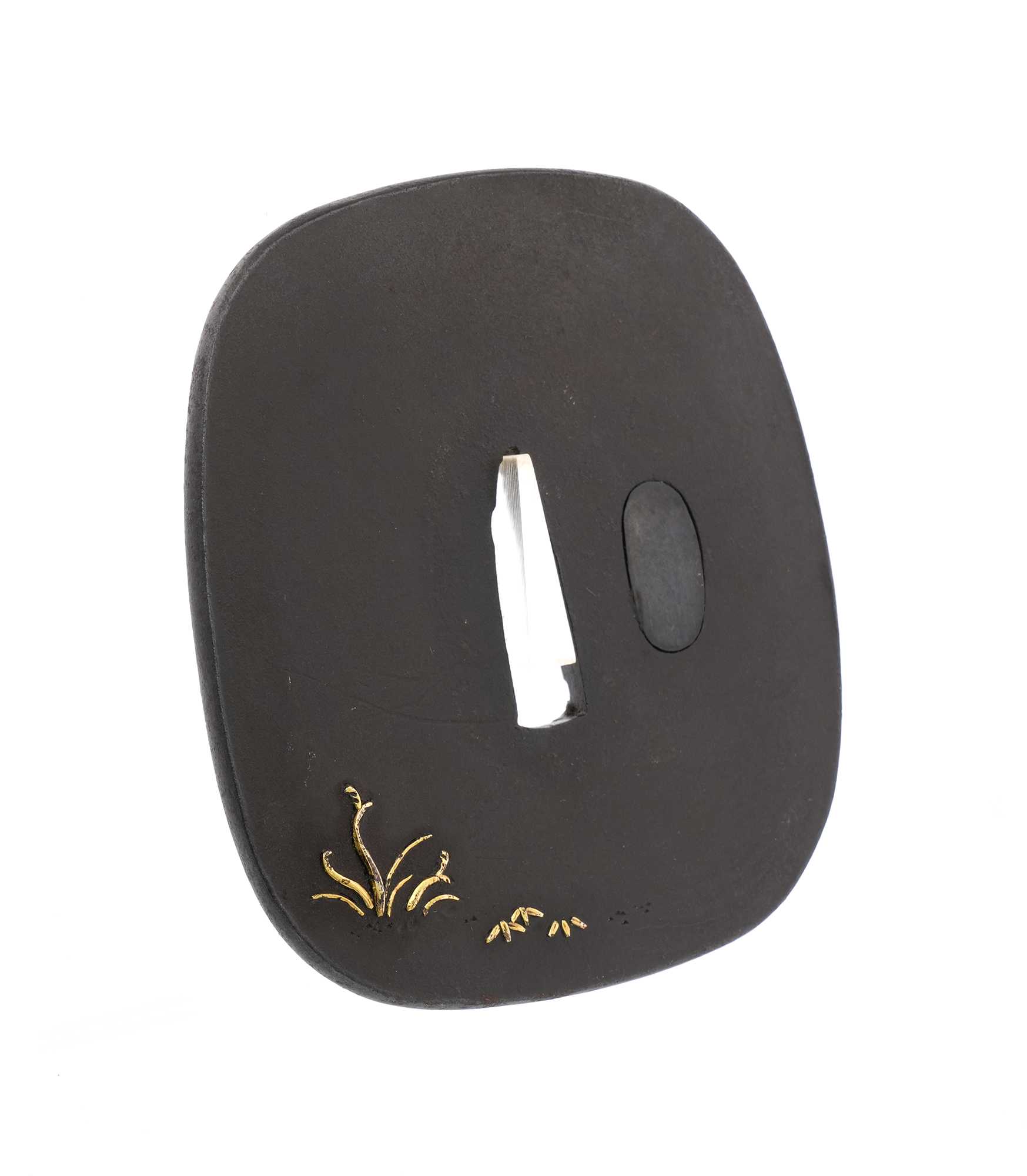
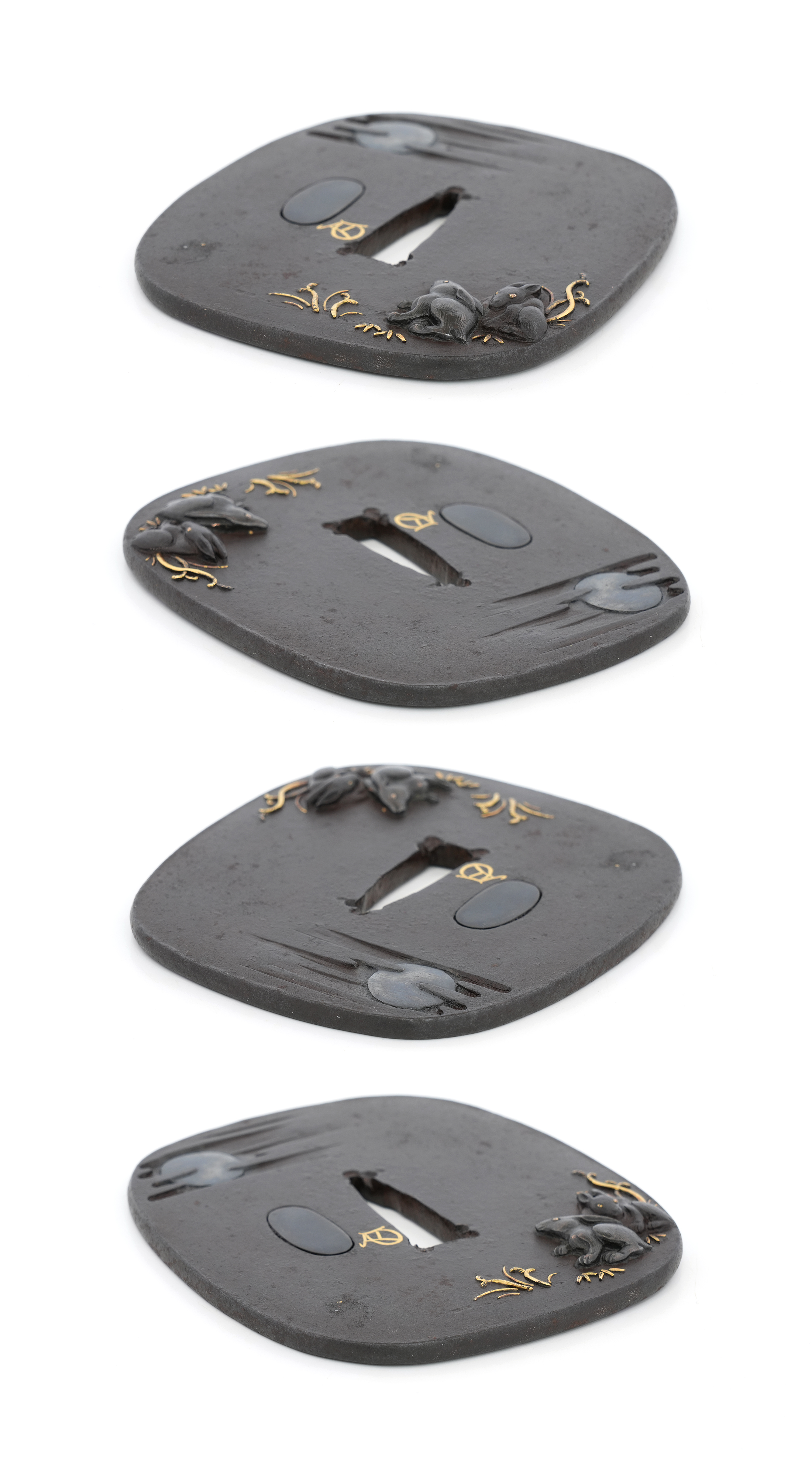
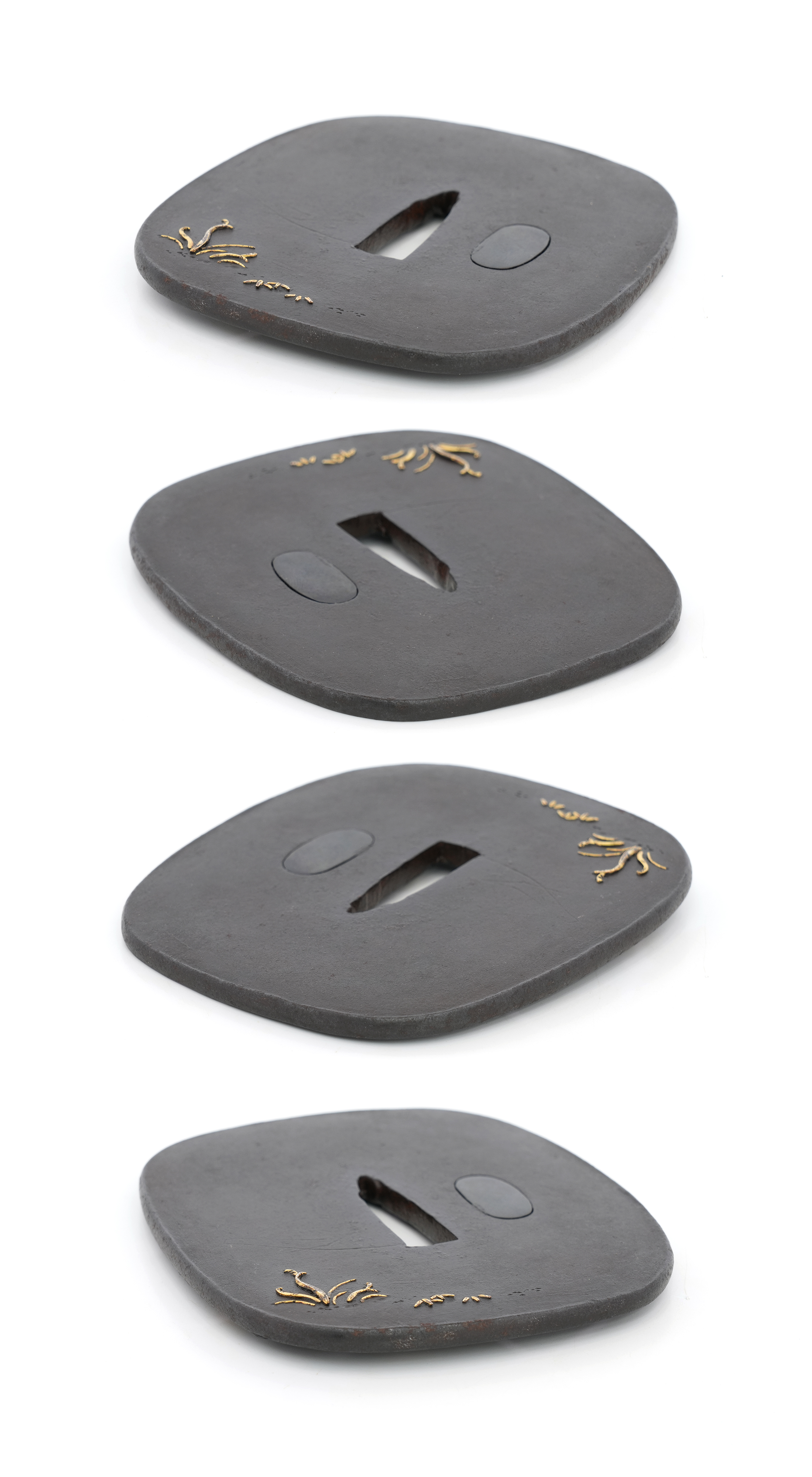
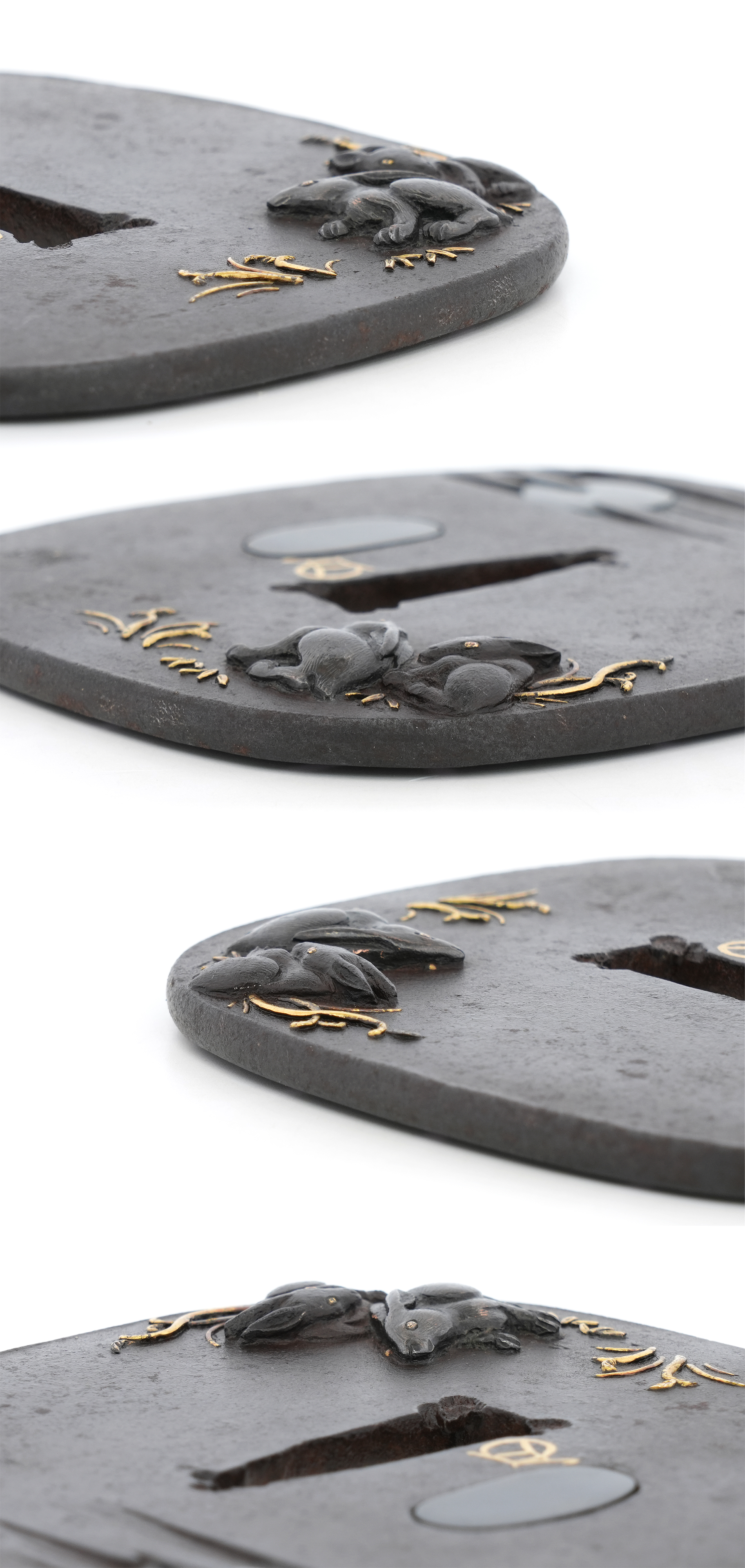
Since ancient times, rabbits have been deeply associated with the moon and have been popular in paintings and crafts as auspicious animals symbolizing leaps, longevity, and the prosperity of descendants. In this design, one rabbit on the left looks up at the moon, while another nestles behind it. Rather than limiting the relationship between the two to parent and child or male and female, they are captured as "two rabbits," yet the sight of them huddling together has a warm charm that can be appreciated as a design wishing for marital harmony, family peace, and the prosperity of life. This piece leaves a wide area of the imposing 79 millimeter vertical nade-kaku gata tetsu-ji, arranging trailing clouds and a full moon horizontally toward the upper left of the omote, and two rabbits toward the lower right, creating a beautiful composition of diagonal flow and yohaku. The clouds flowing while covering the moon create depth in the night sky, and while the left rabbit turns its face upward, the right rabbit nestles quietly behind it; a natural story rises from a moment on a moonlit night through the difference in the two animals' gazes and postures. The left rabbit is carved plumply in gin and the right rabbit in shakudo, with kin zogan applied to the eyes of both to give them a sense of life. Bracken and grass are arranged to the left and right of the two, and by adding kin iroe to the slenderly extending stems and leaves, a delicate radiance as if illuminated by moonlight is added to the deep iron color. The kiyoaki color of the silver, the warm color of the shakudo, and the small lights of gold complement each other, and the difference in the irogane itself is a skillful arrangement that can be felt as the individuality of the two animals. The kozuka hitsu-ana is carefully filled with shakudo, and the author's kao is kin zogan on the seppa-dai. The ura depicts grass and bracken simply toward the lower left, and while quietly inheriting the scene from the omote, it is a composition where the calm hada of the wide tetsu-ji can be fully appreciated. With a substantial weight of 139 grams, a large-scale screen, and the highly popular auspicious motif of two rabbits under the moon, combined with dignified work that accurately uses gin, shakudo, and kin, this is a piece that can be enjoyed for its rich presence whether fitted to a koshirae or displayed as an independent metalwork art piece.
NihontoWatchOffered by Toushin
We couldn’t find current papers for this piece. Ask the dealer whether it has been, or can be, submitted to shinsa. — Hoshi

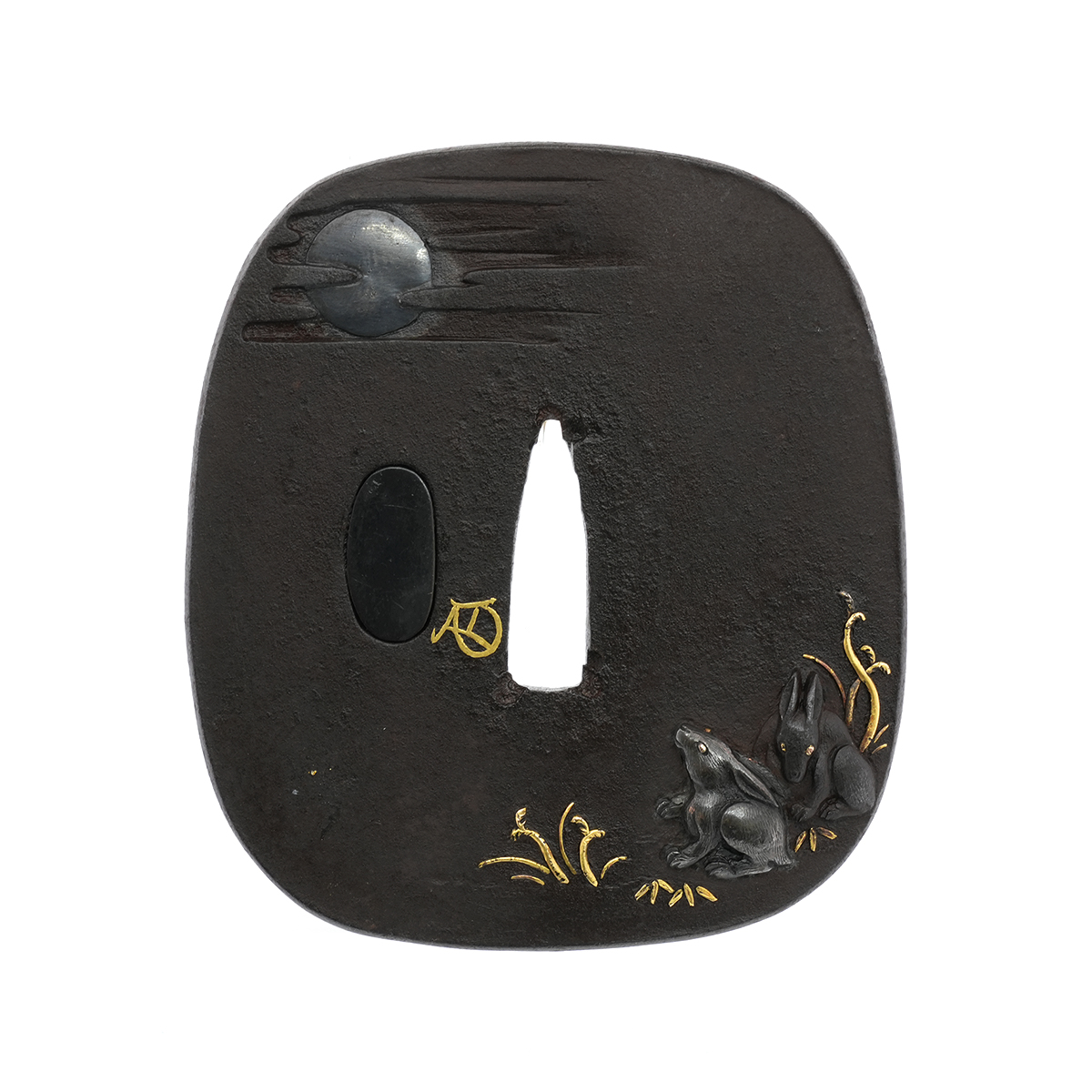
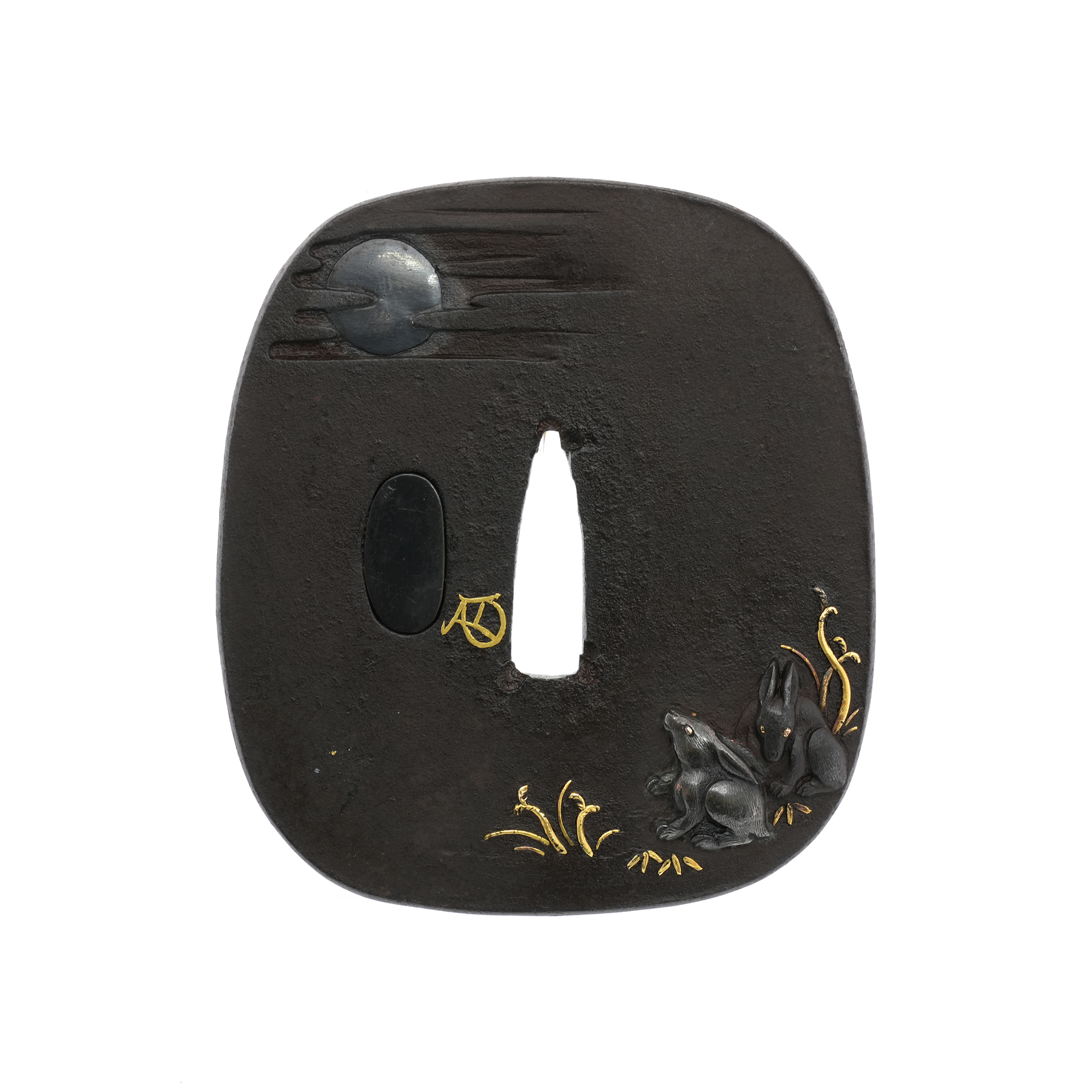
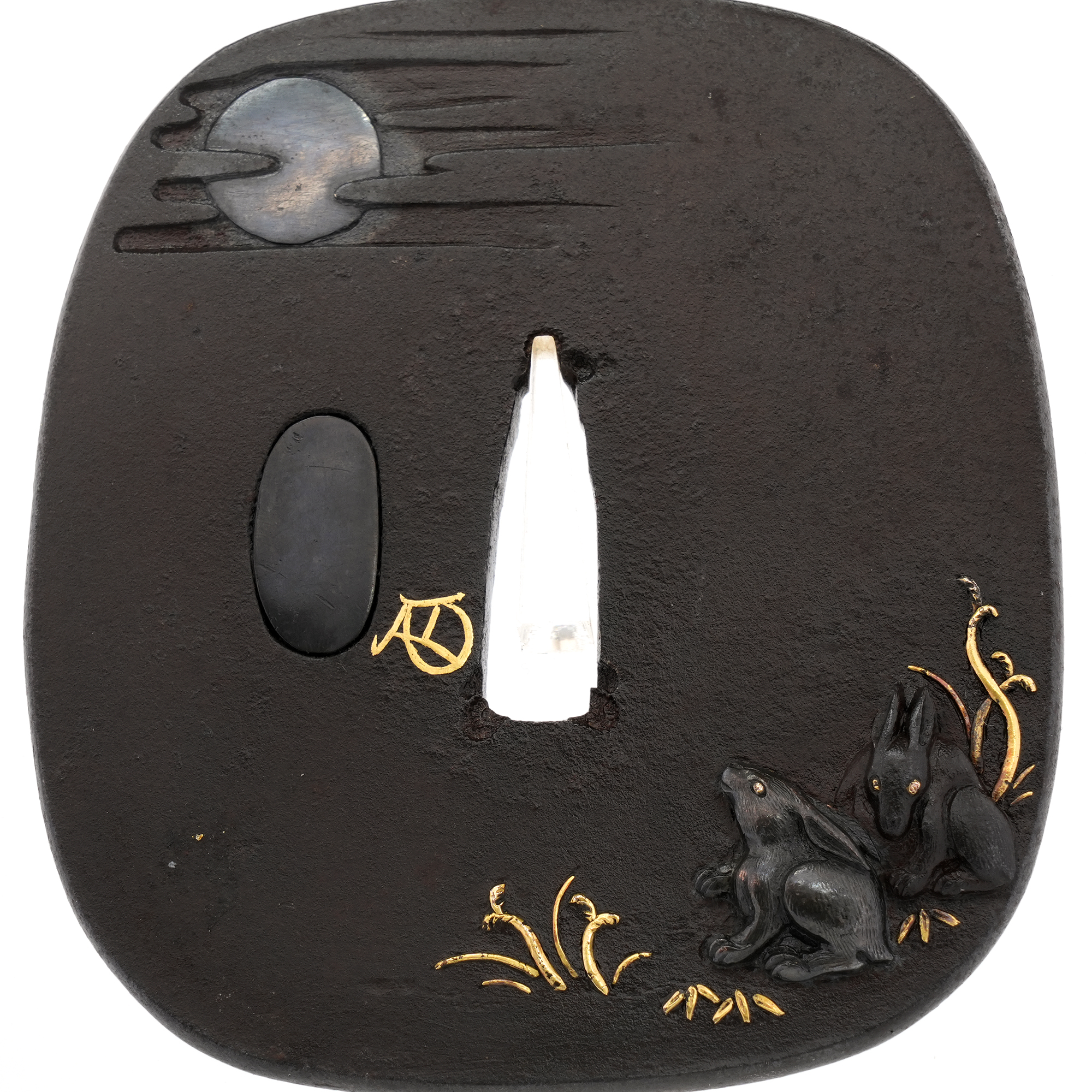
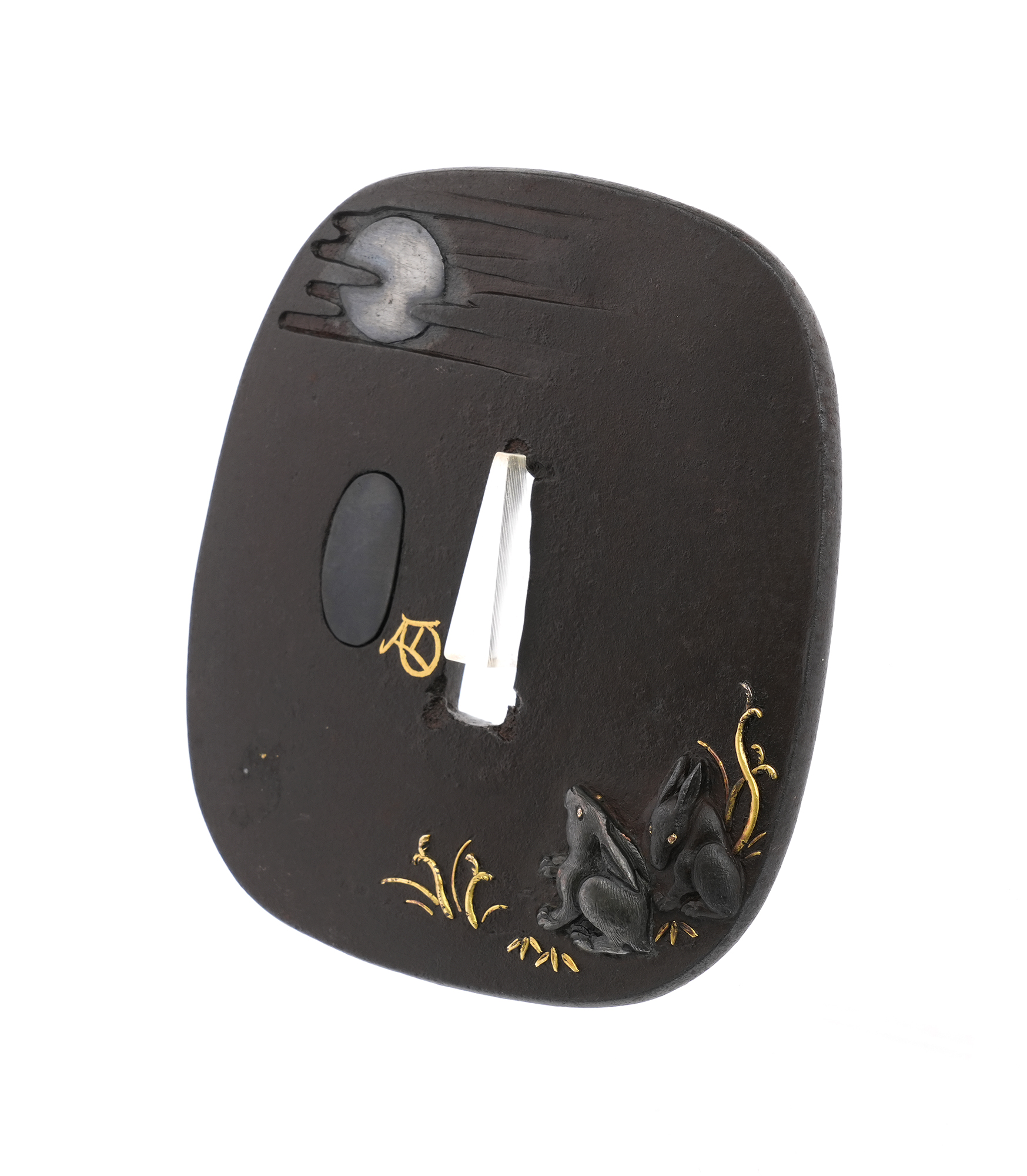
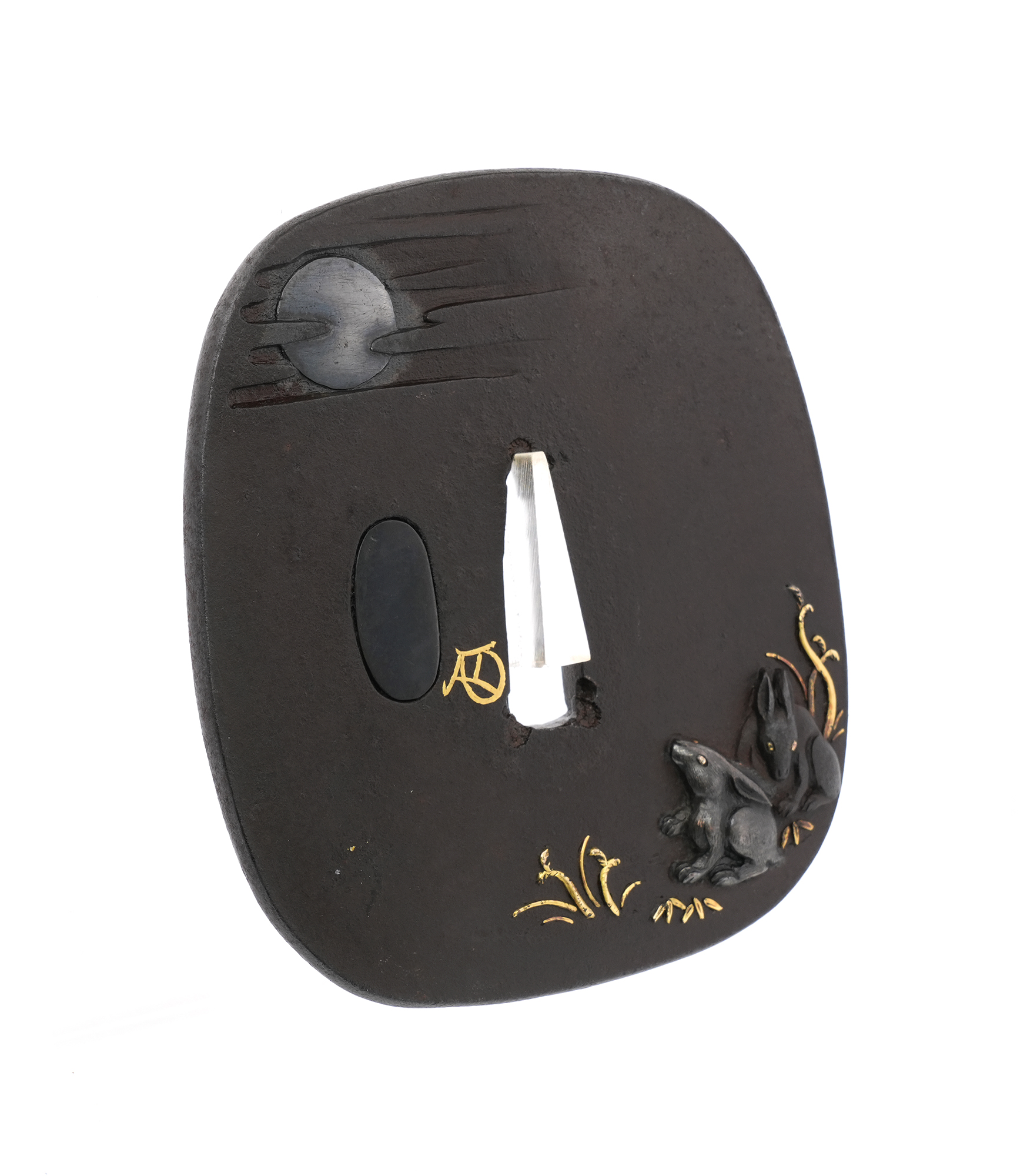
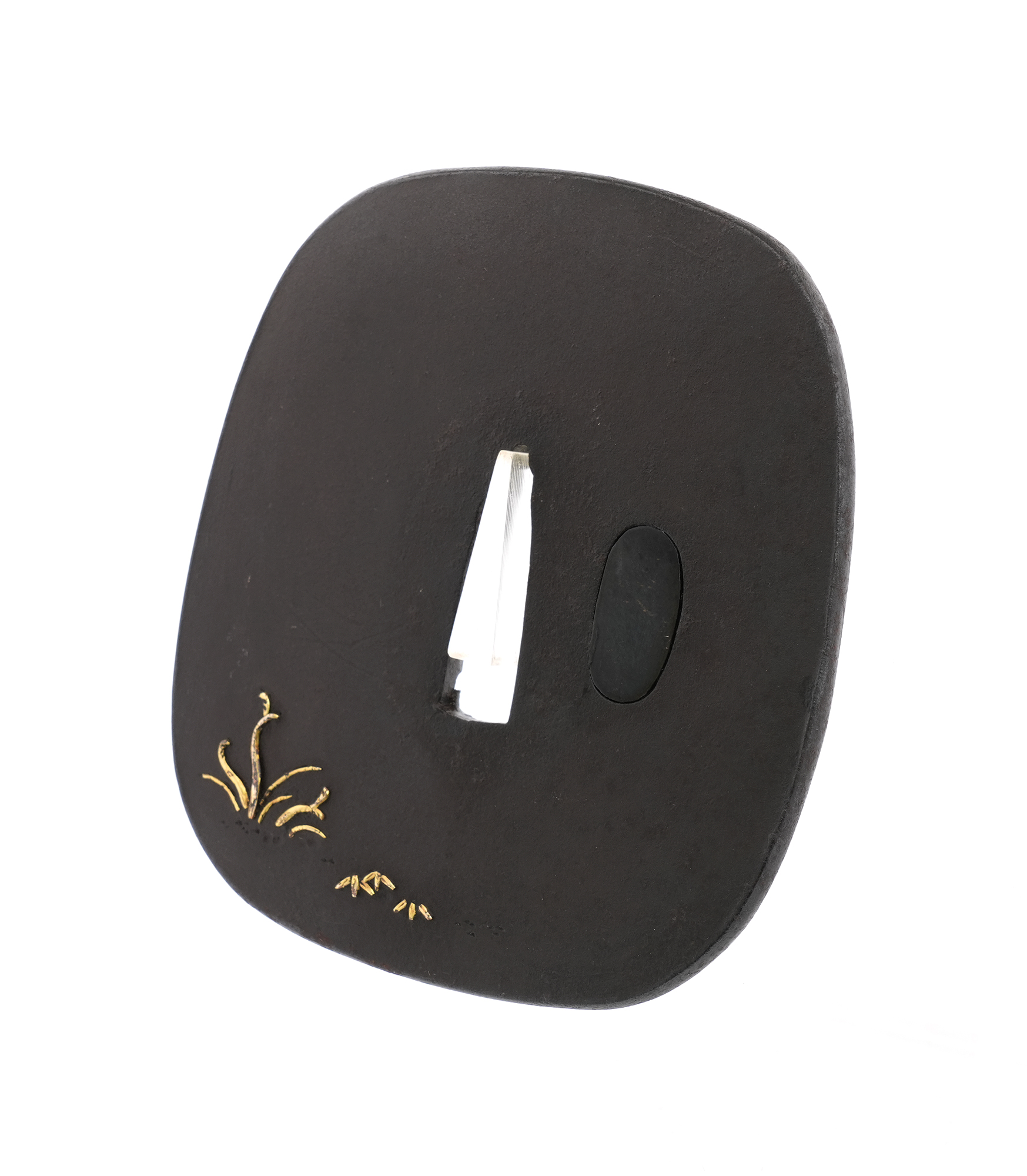
Kinzogan Mei (gold inlay)
As written by the shop
Machine translation from the shop's Japanese · may contain errors ·
We could not find an authenticity certificate on the seller’s listing. Japanese swords and fittings are normally papered by the NBTHK (or the NTHK). Without one, the attribution is the seller’s own assessment and has not been independently verified — treat it with caution and ask the dealer about certification before buying.
As a rule we do not accept returns, except when we have sent a different item from the one ordered or when there is a significant discrepancy between the description and the item. If you wish to return an item, please contact us within 3 days of its arrival and then send it back.
¥275,000