The twentieth century nearly killed the craft twice: wartime distortion, then the occupation ban. The NBTHK’s founding in 1948 and licensed forging from 1953 rebuilt the sword as an art, crowned by Living National Treasures and the mukansa rank.
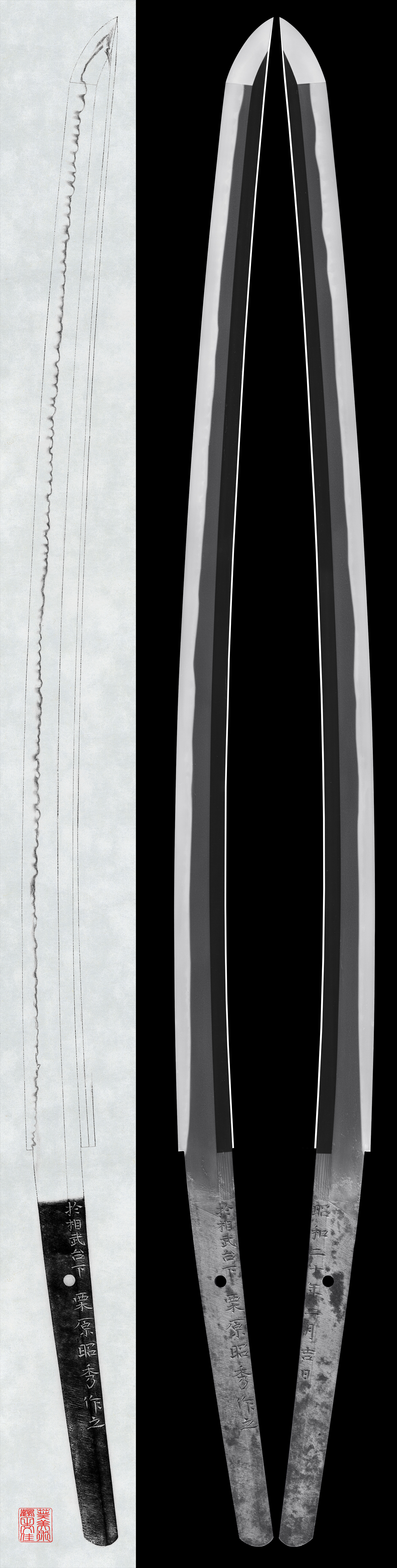
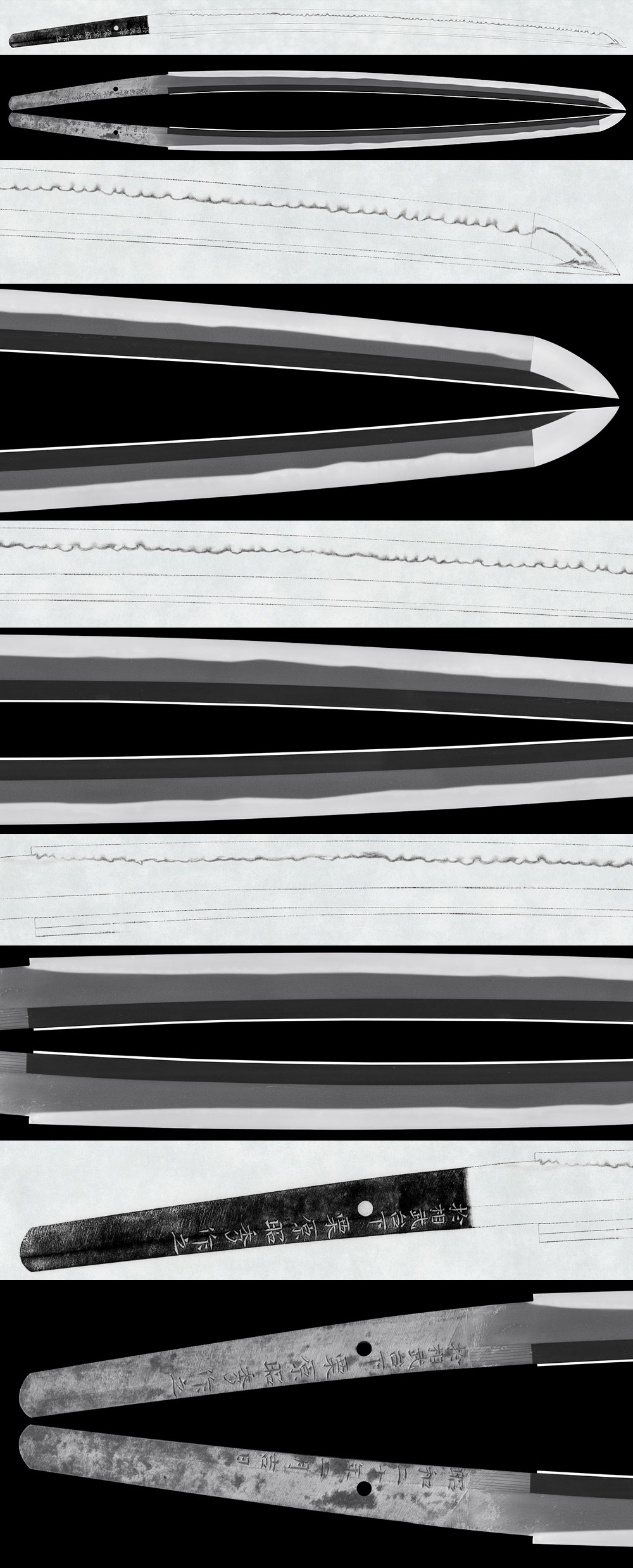
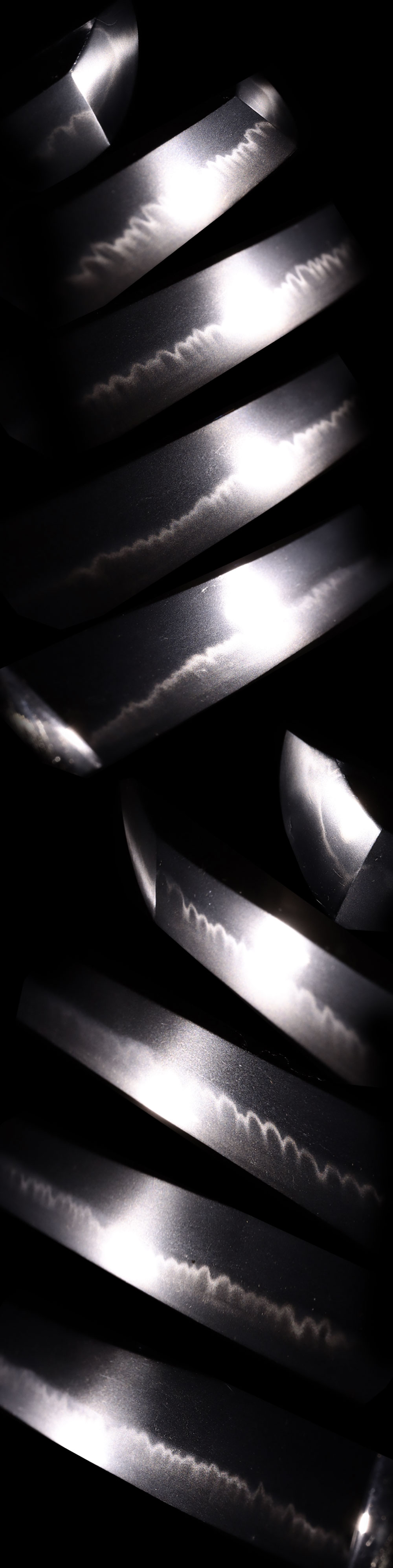
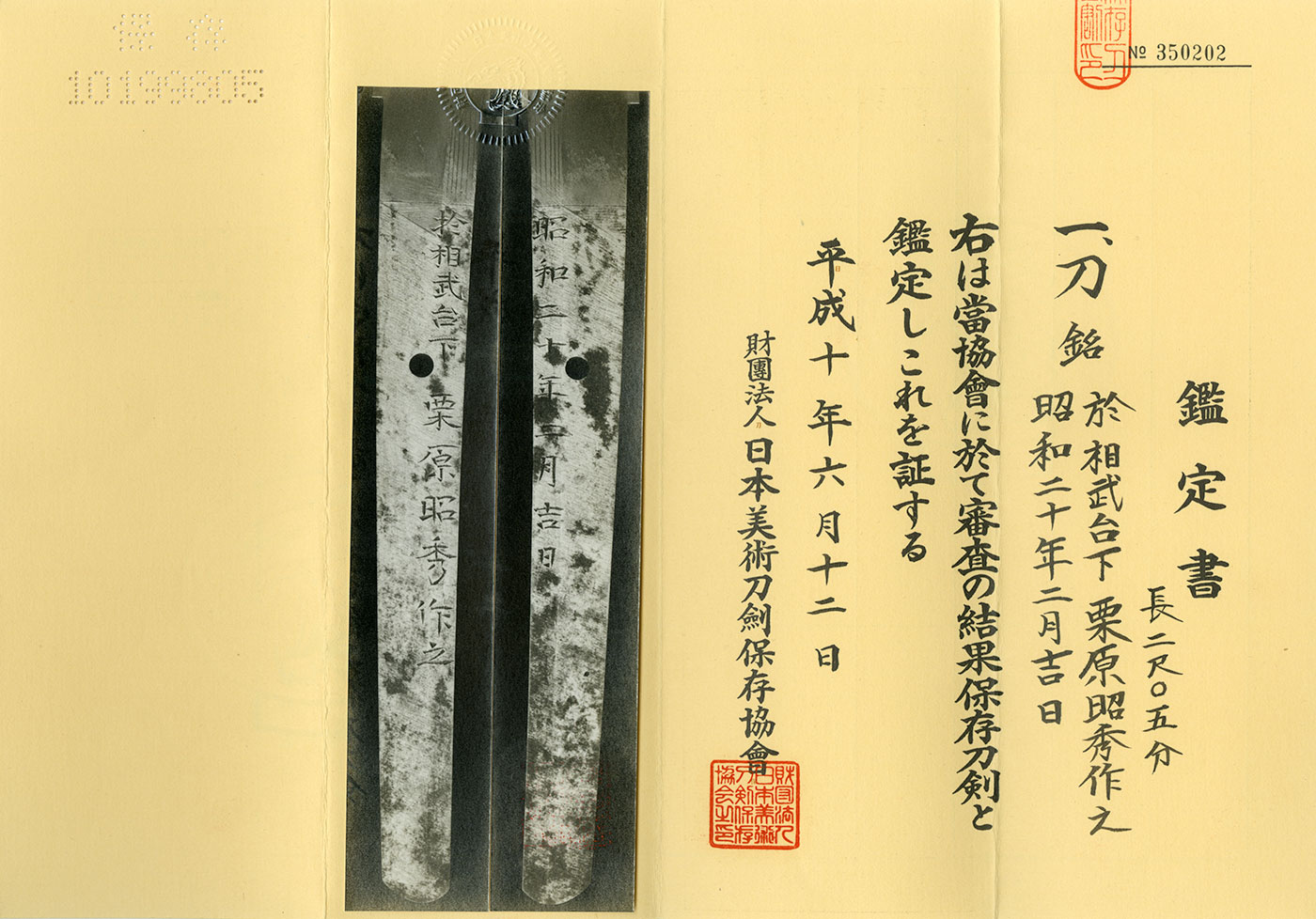
Katana in Shirasaya with Koshirae (NBTHK Hozon Token) (We divide 4 sections for each sword as Saijyo Saku, Jyojyo Saku, Jyo Saku and Regular Saku). This blade is ranked as Jyojyo Saku among the works of Kurihara Akihide. Shape: A well-proportioned blade with standard mihaba, slightly deep curvature, and a relatively long kissaki. The original cutting edge remains in excellent condition. Jigane: Well-forged ko-itame hada producing a beautiful and refined jigane. Hamon: Ko-nie-deki chōji-midare. The boshi turns back in a rounded form. Features: Kurihara Akihide was born in Tochigi Prefecture on March 25, 1879 (Meiji 12). He was a disciple of Horii Taneaki, and his real name was Kurihara Hikosaburō, who also served as a member of the House of Representatives. In 1933 (Showa 8), he established the Japanese Sword Training Institute at his residence in Akasaka, Tokyo, where he studied sword forging under Kasama Shigetsugu. He passed away on May 5, 1954, and is remembered as one of the leading contributors to the modern Japanese sword community. Historical Background: On August 15, 1945, Emperor Shōwa announced Japan's acceptance of the Potsdam Declaration by radio broadcast (the Gyokuon-hōsō), informing the nation of the end of the war. This date is generally recognized as the day on which World War II ended for Japan. NBTHK Hozon Token.
Akihide昭秀
Offered by Aoi Art
6 on the market


As written by the shop
Tochigi · around 1926-1989
Tōken Taikan top 95%
6 pieces on the market now
Shōwa to the present: destruction and revival
The twentieth century nearly killed the craft twice: wartime distortion, then the occupation ban. The NBTHK’s founding in 1948 and licensed forging from 1953 rebuilt the sword as an art, crowned by Living National Treasures and the mukansa rank.
Certifies a genuine blade worth preserving: a signature confirmed correct, or, if unsigned, an era, province, and school that the NBTHK can reliably identify.
The NBTHK (Nihon Bijutsu Tōken Hozon Kyōkai, the Society for the Preservation of Japanese Art Swords) is a public-interest incorporated foundation founded in 1948 and supervised by Japan’s Agency for Cultural Affairs (Bunkachō); it is based at the Japanese Sword Museum in Tokyo. Its expert panels physically examine each submitted work (shinsa) and issue a certificate (kanteishō) ranking it by artistic and historical merit. NBTHK papers are the most widely recognized standard of authentication for Japanese swords and fittings.
NBTHK official siteIf you wish to return an item, please notify us within 3 days of receipt. After this period we cannot accept cancellations. Please ship the return to us within 5 business days. Cancellation is conditional on the item being kept in the same condition as at the time of sale, so please handle it with care.
¥650,000